The advantages of controlled release products are
well known in the pharmaceutical field and include the
ability to maintain a desired blood level of a medicament
over a comparatively longer period of time while increasing
patient compliance by reducing the number of administrations
necessary to achieve the same. These advantages
have been attained by a wide variety of methods.
For example, different hydrogels have been described
for use in controlled release medicines, some of which
are synthetic, but most of which are semi-synthetic or of
natural origin. A few contain both synthetic and
non-synthetic material. However, some of the systems
require special process and production equipment, and in
addition some of these systems are susceptible to
variable drug release.
Oral controlled release delivery systems should
ideally be adaptable so that release rates and profiles
can be matched to physiological and chronotherapeutic
requirements.
For the most part, the release rate of oral delivery
systems have been classified according to the mechanism
of release, such as zero order, first order, second
order, pseudo-first order, etc., although many pharmaceutical
compounds release medicament via other,
complicated mechanisms.
First order mechanisms refer to situations where the
reaction rate is dependent on the concentration of the
reacting substance (and therefore is dependent on the
first power of the reactant). In such mechanisms, the
substance decomposes directly into one or more products.
Second order mechanisms occur when the experimentally
determined rate of reaction is proportional to the
concentration of each of two reactants, or to the second
power of the concentration of one reactant.
Pseudo first order reactions are generally defined
as second order reactions which behave as though they are
governed by a first order mechanism, and occur, for
example, when the amount of one reacting material is
manipulated by being present in great excess or being
maintained at a constant concentration as compared to the
other substance. In such circumstances, the reaction
rate is determined by the manipulated substance.
Zero order mechanisms refer to situations where the
reaction rate is independent of the concentration of the
reacting substance (and therefore is dependent on the
zero power of the reactant), the limiting factor being
something other than the concentration of the reacting
substance (e.g., the medicament). The limiting factor in
a zero order mechanism may be, for example, the
solubility of the reacting substance or the light
intensity in photochemical reactions.
As previously mentioned, however, many chemical
reactions are not simple reactions of zero-, first-, or
second-order, etc., and instead comprise a combination of
two or more reactions.
Moreover, other factors may influence the reaction
rate, including temperature, pH, food effect variability,
ions and ionic strength dependency, viscosity dependency,
corrosion/ erosion variability, content uniformity
problems, flow and weight uniformity problems, carrying
capacity and mechanical strength problems, hydrolysis,
photochemical decomposition, interaction between
components (such as interactions between the drug and
other ingredients in the formulation, such as buffers,
preservatives, etc.), the concentration of solvents of
low dielectric constant (when the reaction involves
oppositely charged ions), etc.
Generally, controlled release pharmaceutical
formulations which provide zero order release
characteristics have been considered most desirable
because such a mechanism would theoretically provide
constant drug levels. This is based on the assumption
that the rate of elimination is determinative of the
release rate of the medicament from the formulation,
rather than the rate of absorption, etc.
However, for medicaments which are not very soluble
in the stomach and where absorption is desired for a
prolonged period of time, a bimodal release mechanism is
considered to be desirable.
Bimodal or multi-phasic release is characterized by
an initial high rate followed by a slower rate as the
dosage form passes the upper portion of the small
intestine where absorption is maximum and finally another
higher rate as the dosage form passes into the further
end of the intestine where absorption is less than
before.
Bimodal release is considered to be advantageous for
a number of reasons, including but not limited to the
fact that bimodal release allows the formulator to compensate
for changing absorption rates of the medicament
in the gastrointestinal tract by providing a rapid onset
of action (when the formulation is located in the
stomach) and compensate for relatively slow absorption by
providing a relatively rapid release rate (e.g., when the
formulation is located in the large intestine).
Bimodal release formulations have been provided in a
number of different manners to date.
For example, International Publication Number
WO/87/00044 describes therapeutic formulations including
certain hydroxypropylmethylcellulose which are said to
have bimodal release characteristics.
See also, A.C. Shah et al., "Gel-Matrix Systems
Exhibiting Bimodal Controlled Release For Oral Drug
Delivery", Journal of Controlled Release, 9(1989), pp.
169-175, which also reports that certain "types" of
hydroxypropylmethylcellulose ethers are found to display
a bimodal drug release profile. P. Giunchedi et al.,
"Ketoprofen Pulsatile Absorption From 'Multiple Unit'
Hydrophilic Matrices", International Journal of Pharmaceutics,
77(1991), pp. 177-181 described an extended
release oral formulation of Ketoprofen comprising a
multiple unit formulation constituted by four hydrophilic
matrices of identical composition, each containing 50 mg
of drug and prepared with hydroxypropylmethylcellulose
(Methocel®) and placed in a gelatin capsule. Pulsatile
plasma levels (2 peaks at 2nd and 8th hours after dosing)
were said to be obtained, whereas in vitro tests resulted
in a fairly constant drug release. U. Conte et al., "A
New Ibuprofen Pulsed Release Oral Dosage Form", Drug
Development And Industrial Pharmacy, 15(14-16), pp.
2583-2596 (1989) reported that a pulsed released pattern
was obtained from a 3-layer tablet wherein two layers
contained a dose of drug, and an intermediate layer acted
as a control element (a mixture of hydroxypropylmethylcelluloses)
separating the drug layers. K. A. Kahn et
al, "Pharmaceutical Aspects And In-Vivo Performance Of
Brufen Retard - An Ibuprofen SR Matrix Tablet", Proced.
Intern. Symp. Control. Rel. Bioact. Mater., 18(1991),
Controlled Release Society, Inc., describes a formulation
containing 800 mg of ibuprofen which is said to provide a
bimodal release pattern, the release retarding agent
utilized therein being xanthan gum.
The Assignee's U.S. Patent Nos. 4,994,276,
5,128,143, and 5,135,757, reported that a controlled
release excipient which is comprised of synergistic
heterodisperse polysaccharides (e.g., a heteropolysaccharide
such as xanthan gum in combination with a
polysaccharide gum capable of cross-linking with the
heteropolysaccharide, such as locust bean gum) is capable
of processing into oral solid dosage forms using either
direct compression, following addition of drug and
lubricant powder, conventional wet granulation, or a
combination of the two. The release of the medicament
from the formulations therein proceeded according to
zero-order or first-order mechanisms.
The controlled release excipients disclosed in U.S.
Patent Nos. 4,994,276, 5,128,143, and 5,135,757 are
commercially available under the tradename TIMERx™ from
Edward Mendell Co., Inc., Patterson, N.Y., which is the
assignee of the present invention.
It is therefore an object of the present invention
to provide a formulation capable of providing multi-phasic
or bi-phasic controlled release of a therapeutically
active medicament.
It is a further object of the present invention to
provide a means of converting the mechanism of drug
release provided by formulations comprising the excipient
described in U.S. Patent Nos. 4,994,276, 5,128,143, and
5,135,757 from zero-order or first-order to a bi-phasic
or multi-phasic mechanism.
It is a further object of the present invention to
provide a controlled release multi-phasic excipient which
can be mixed with a medicament and tableted to thereby
provide a multi-phasic release of the active agent when
the tablet is exposed to aqueous fluids, gastrointestinal
fluids, etc.
It is a further object of the present invention to
provide a controlled release tablet which releases a
therapeutically active medicament according to bi- or
multi-phasic kinetics.
The above-mentioned objects and others are achieved
by virtue of the present invention, which relates in part
to a controlled release formulation comprising a controlled
release excipient comprising a heterodisperse
polysaccharide component and a saccharide component; a
further component comprising a surfactant and/or a
wetting agent; and a therapeutically active medicament.
More particularly, it has now been surprisingly discovered
that combination of pharmaceutically acceptable
surfactants and/or wetting agents in the controlled release
excipients disclosed in U.S. Patent Nos. 4,994,276,
5,128,143, and 5,135,757 can be used to cause changes in
release patterns and produce bi- or multi-phasic profiles
of the final formulation, possibly via further changes in
cross-linking, gel strength and gel-sol transitions.
The present invention further relates to a controlled
release oral solid dosage form, comprising a
heterodisperse material comprising a heteropolysaccharide
gum and a homopolysaccharide gum capable of cross-linking
said heteropolysaccharide gum in the presence of aqueous
solutions, the ratio of said heteropolysaccharide gum to
said homopolysaccharide gum being from about 1:3 to about
3:1; an inert pharmaceutical diluent selected from the
group consisting of monosaccharide, a disaccharide, a
polyhydric alcohol, and mixtures thereof, the ratio of
said inert diluent to said heterodisperse material being
from about 3:7 to about 7:3; and an effective amount of a
pharmaceutically acceptable surfactant or wetting agent
to provide a multi-phasic release of a therapeutically
active agent. In a preferred embodiment, the formulation
of the present invention comprises a tablet.
The present invention further relates to a method
for preparing an oral solid dose formulation providing a
multi-phasic release of a therapeutically active medicament
when said dosage form is exposed to aqueous or
gastric fluid. In the method, a heteropolysaccharide gum
is mixed with a homopolysaccharide gum capable of cross-linking
said heteropolysaccharide gum in the presence of
aqueous solutions, such that the ratio of said heteropolysaccharide
gum to said homopolysaccharide gum is from
about 1:3 to about 3:1, to obtain a heterodisperse gum
matrix. An inert pharmaceutical diluent is added to said
heterodisperse gum matrix such that the ratio of the
inert diluent to said heterodisperse gum matrix is from
about 3:7 to about 7:3.
An effective amount of a medicament is added to
render a therapeutic effect. An effective amount of a
pharmaceutically acceptable surfactant or wetting agent
is added to provide a multi-phasic release of said
medicament when the dosage form is exposed to aqueous
fluid.
The present invention is further related to a controlled
release multi-phasic pharmaceutical excipient
comprising a heterodisperse gum matrix comprising a
heteropolysaccharide gum and a homopolysaccharide gum
capable of cross-linking the heteropolysaccharide gum in
the presence of aqueous solutions, an inert pharmaceutical
diluent selected from the group consisting of monosaccharide,
a disaccharide, a polyhydric alcohol, and
mixtures thereof, and from about 1 to about 20 percent by
weight of a pharmaceutically acceptable surfactant or
wetting agent. The ratio of heteropolysaccharide gum to
homopolysaccharide gum, as well as the ratio of inert
diluent to heterodisperse gum matrix in the controlled
release multi-phasic excipient is as set forth above with
respect to the final formulation.
The present invention further relates to a method
for preparing a controlled release dosage form which
exhibits multi-phasic release of a medicament incorporated
therein, comprising preparing a controlled release
multi-phasic excipient as described above, and incorporating
a therapeutically effective amount of a medicament
along with any pharmaceutically necessary additives such
as a lubricant, and tableting the mixture.
The following drawings are illustrative of embodiments
of the invention and are not meant to limit the
scope of the invention as encompassed by the claims.
The term "heteropolysaccharide" as used in the
present invention is defined as a water-soluble
polysaccharide containing two or more kinds of sugar
units, the heteropolysaccharide having a branched or
helical configuration, and having excellent water-wicking
properties and immense thickening properties. When
admixed with an appropriate homopolysaccharide gum
capable of cross-linking with the heteropolysaccharide in
accordance with the present invention and exposed to an
aqueous solution, gastric fluid, etc., the gums pack
closely and many intermolecular attachments are formed
which make the structure strong and provide a hydrophilic
gum matrix having high gel strength.
Xanthan gum, the preferred heteropolysaccharide, is
produced by microorganisms, for instance, by fermentation
with the organism xanthomonas compestris. Most preferred
is xanthan gum which is a high molecular weight (>106)
heteropolysaccharide.
Other preferred heteropolysaccharides include derivatives
of xanthan gum, such as deacylated xanthan gum,
the carboxymethyl ether, and the propylene glycol ester.
The homopolysaccharide gums used in the present
invention which are capable of cross-linking with the
heteropolysaccharide include the galactomannans, i.e.,
polysaccharides which are composed solely of mannose and
galactose.
A possible mechanism for the interaction between the
galactomannan and the heteropolysaccharide involves the
interaction between the helical regions of the heteropolysaccharide
and the unsubstituted mannose regions of the
galactomannan. Galactomannans which have higher proportions
of unsubstituted mannose regions have been found to
achieve more interaction with the heteropolysaccharide.
Hence, locust bean gum, which has a higher ratio of
mannose to the galactose, is especially preferred as
compared to other galactomannans such as guar and
hydroxypropyl guar.
The inert filler of the excipient preferably
comprises a pharmaceutically acceptable saccharide,
including a monosaccharide, a disaccharide, and/or
mixtures thereof. Examples of suitable inert pharmaceutical
fillers include sucrose, dextrose, lactose,
microcrystalline cellulose, fructose, xylitol, sorbitol,
mixtures thereof and the like. However, it is preferred
that a soluble pharmaceutical filler such as lactose,
dextrose, sucrose, or mixtures thereof be used.
The excipient of the present invention has uniform
packing characteristics over a range of different
particle size distributions and is capable of processing
into tablets using either direct compression, following
addition of drug and lubricant powder or conventional wet
granulation.
The properties and characteristics of a specific
excipient system prepared according to the present invention
is dependent in part on the individual characteristics
of the homo and hetero polysaccharide constituents,
in terms of polymer solubility, glass transition
temperatures etc., as well as on the synergism both
between different homo and heteropolysaccharides and
between the homo and heteropolysaccharides and the inert
saccharide constituent(s) in modifying dissolution
fluid-excipient interactions.
A homodisperse system of a heteropolysaccharide
typically produces a highly ordered, helical or double
helical molecular conformation which provides high
viscosity without gel formation. In contrast, a homodisperse
system of a homopolysaccharide typically is only
slowly soluble and ungelled at low temperatures. Two
steps which are generally required for gelation are the
fast hydration of the macromolecules which comprise the
hydrodisperse polysaccharide material and thereafter the
association of the molecules to form gels. These two
important properties which are necessary to achieve a
slow release hydrophilic matrix are maximized in the
present invention by the particular combination of
materials. Prolonged exposure to the dissolution fluid
promotes solubilization, which allows molecules to
associate and undergo gelation, and may result in inter-macromolecular
cross-linking in ribbon or helical
"smooth" regions.
The heterodisperse excipient of the present invention
comprises both hetero- and homo- polysaccharides
which exhibit synergism. The heteropolysaccharide
component acts to produce a faster gelation of the
homopolysaccharide component and the homopolysaccharide
acts to cross-link the normally free heteropolysaccharide
helices. The resultant gel is faster-forming and more
rigid. Heteropolysaccharides such as xanthan gum have
excellent water wicking properties which provide fast
hydration. On the other hand, the combination of xanthan
gum with homopolysaccharide gums which are capable of
cross-linking the rigid helical ordered structure of the
xanthan gum (i.e. with unsubstituted mannose regions in
the galactomannans) thereby act synergistically to provide
a higher than expected viscosity (i.e., high gel
strength) of the matrix. The combination of xanthan gum
with locust bean gum with or without the other homopolysaccharide
gums is especially preferred. However, the
combination of any homopolysaccharide gums known to
produce a synergistic effect when exposed to aqueous
solutions may be used in accordance with the present
invention. By synergistic effect, it is meant that the
combination of two or more polysaccharide gums produce a
higher viscosity and/or faster hydration than that which
would be expected by either of the gums alone.
It is also possible that the type of synergism which
is present with regard to the gum combination of the
present invention could also occur between two homogeneous
or two heteropolysaccharides.
In the present invention, it has been discovered
that the controlled release properties of the tablets are
optimized when the ratio of heteropolysaccharide gum to
homopolysaccharide material is about 1:1, although
heteropolysaccharide gum in an amount of from about 20 to
about 80 percent or more by weight of the heterodisperse
polysaccharide material provides an acceptable slow
release product.
The mixed individual and synergistic viscosity modifying
and gel-forming characteristics of the excipient
system of the present invention produce a variety of
possible release-controlling mechanisms in any given
excipient system. Some of this behavior has been described,
for example, by Frisch, "Sorption and Transport
in Glassy Polymers - A Review", Polymer Eng. Sci. 20
(1980), pp. 2-13, Fan & Singh, "Controlled Release: A
Quantitative Treatment", published by Springer Verlag,
Berlin and London (1989), pp; 111-156; and Korsmeyer et
al., "Mechanisms of Solute Release from Porous Hydrophilic
Polymers", Int. H. Pharm. 15 (1983), pp. 25-35.
The rate-limiting step for the dissolution of tablets
of the present invention is believed to be dependent
to a large extent upon the penetration of water (or
gastric fluid) into the tablet to dissolve the polysaccharides
and the drug(s). It is further believed that
the presence of the surfactant in the formulation allows
faster initial penetration of fluid and an initial
"burst" of drug release from the formulation. A second
burst of drug release may then occur due to the further
action of the surfactant, as the fluid front from one
side of the tablet meets the fluid front on the opposite
side. The above hypotheses are included for discussion
purposes only and are not intended to limit the scope of
the present invention.
The chemistry of certain of the ingredients comprising
the excipients of the present invention such as
xanthan gum is such that the excipients are considered to
be self-buffering agents which are substantially insensitive
to the solubility of the medicament and likewise
insensitive to the pH changes along the length of the
gastrointestinal tract.
The final formulation of the present invention
comprises a sufficient amount of surfactant or wetting
agent to provide a multi-phasic release of the drug(s).
In certain preferred embodiments, the surfactant or
wetting agent comprises from about 1 to about 10 of the
final formulation, by weight. However, the upper limit
of the amount of surfactant or wetting agent included in
the formulations of the present invention may be higher
than 10%; the limiting concern being that the final
product should provide a pharmaceutically acceptable
formulation. For example, in the case of tablets, the
upper limit of the amount of surfactant or wetting agent
included is determined by the production of a pharmaceutically
acceptable tablet, e.g., a tablet which has a
friability of less than about 1% and a hardness of 6-8
kg.
The surfactants which may be used in the present
invention generally include pharmaceutically acceptable
anionic surfactants, cationic surfactants, amphoteric
(amphipathic/amphophilic) surfactants, and non-ionic
surfactants. Suitable pharmaceutically acceptable
anionic surfactants include, for example, monovalent
alkyl carboxylates, acyl lactylates, alkyl ether
carboxylates, N-acyl sarcosinates, polyvalent alkyl
carbonates, N-acyl glutamates, fatty acid-polypeptide
condensates, sulfuric acid esters, alkyl sulfates (including
sodium lauryl sulfate (SLS)), ethoxylated alkyl
sulfates, ester linked sulfonates (including docusate
sodium or dioctyl sodium succinate (DSS)), alpha olefin
sulfonates, and phosphated ethoxylated alcohols.
Suitable pharmaceutically acceptable cationic
surfactants include, for example, monoalkyl quaternary
ammonium salts, dialkyl quaternary ammonium compounds,
amidoamines, and aminimides.
Suitable pharmaceutically acceptable amphoteric
(amphipathic/amphophilic) surfactants, include, for
example, N-substituted alkyl amides, N-alkyl betaines,
sulfobetaines, and N-alkyl 6-aminoproprionates.
Suitable pharmaceutically acceptable wetting (solubilizing)
agents, include pharmaceutically acceptable
non-ionic surfactants such as, for example, polyoxyethylene
compounds, ethoxylated alcohols, ethoxylated esters,
ethoxylated amides, polyoxypropylene compounds, propoxylated
alcohols, ethoxylated/ propoxylated block polymers,
and propoxylated esters, alkanolamides, amine oxides,
fatty acid esters of polyhydric alcohols, ethylene glycol
esters, diethylene glycol esters, propylene glycol
esters, glyceryl esters, polyglyceryl fatty acid esters,
sorbitan esters, sucrose esters, and glucose (dextrose)
esters.
Other suitable pharmaceutically acceptable wetting
(solubilizing) agents include acacia, benzalkonium
chloride, cholesterol, emulsifying wax, docusate sodium,
glyceryl monostearate, lanolin alcohols, lecithin, poloxamer,
poloxyethylene castor oil derivatives, poloxyethylene
sorbitan fatty acid esters, poloxyethylene stearates,
sodium lauryl sulfates, sorbitan esters, stearic acid,
and triethanolamine.
Mixed surfactant/wetting agent systems are also
useful in conjunction with the present invention.
Examples of such mixed systems include, for example,
sodium lauryl sulfate/polyethylene glycol (PEG) 6000 and
sodium lauryl sulfate/PEG 6000/stearic acid.
The change in the mechanism of drug release from the
excipients of the present invention from mono-phasic to
bi- or multi-phasic release may further be altered or
enhanced by process changes during the manufacture of the
excipient, or by formulation alteration. Further modifications
in bi- or multi-phasic release profiles can be
effected by addition of synergism-modifying components.
For example, this can occur as a result of selection of
interacting polysaccharides in which the synergism is
potentiated by ionic strength of pH. In addition, the
saccharide component may also be changed, although the
effect of different saccharides on drug release is much
smaller than that of different polysaccharides, but may
still be important in achieving fine control of drug
release. The dissolution profiles of a tablet formulation
containing an excipient system with a given heterodisperse
polysaccharide component can also be modified by
alteration of the ratios of heteropolysaccharide to
homopolysaccharide. Alternatively or additionally, the
drug release profiles can also be controlled by changing
the ratio of heterodisperse polysaccharides to saccharides
in the excipient system.
Delays in the onset of mono or multi-phasic release,
which may be desirable in order to optimize colonic
absorption, can be produced through changes in core
formulation or by application of tablet coatings to
further modify drug release patterns.
In addition to the inclusion of surfactants/wetting
agents, the drug release mechanism of the controlled
release excipient of the present invention may be further
manipulated by altering the process utilized for tableting
i.e. direct compression v/s wet granulation v/s
combination of both, and via changes in the formulation
itself (i.e., changes in the ratio of heterodisperse
polysaccharide to insert saccharide, etc.).
An effective amount of any generally accepted
pharmaceutical lubricant, including the calcium or
magnesium soaps may be added to the above-mentioned
ingredients of the excipient be added at the time the
medicament is added, or in any event prior to compression
into a said dosage form. Most preferred is magnesium
stearate in any amount of about 0.5-3% by weight of the
solid dosage form.
The combination of the heterodisperse polysaccharide
material (i.e., a mixture of xanthan gum and locust bean
gum) with the inert saccharide diluent provides a ready-to-use
product in which a formulator need only blend the
desired active medicament and an optional lubricant with
the excipient and then compress the mixture to form slow
release tablets. The excipient may comprise a physical
admix of the gums along with a soluble excipient such as
compressible sucrose, lactose or dextrose, although it is
preferred to granulate or agglomerate the gums with plain
(i.e., crystalline) sucrose, lactose, dextrose, etc., to
form an excipient. The granulate form has certain advantages
including the fact that it can be optimized for
flow and compressibility; it can be tableted, formulated
in a capsule, extruded and spheronized with an active
medicament to form pellets, etc.
The pharmaceutical excipients prepared in accordance
with the present invention may be prepared according to
any agglomeration technique to yield an acceptable
excipient product. In wet granulation techniques, the
desired amounts of the heterpolysaccharide gum, the
homopolysaccharide gum, and the inert saccharide diluent
are mixed together and thereafter a moistening agent such
as water, propylene glycol, glycerol, alcohol or the like
is added to prepare a moistened mass. Next, the moistened
mass is dried. The dried mass is then milled with
conventional equipment into granules. Therefore, the
excipient product is ready to use.
The excipient is free-flowing and directly compressible.
Accordingly, the excipient may be mixed in the
desired proportion with a therapeutically active medicament
and optional lubricant (dry granulation). Alternatively,
all or part of the excipient may be subjected to
a wet granulation with the active ingredient and thereafter
tableted. The complete mixture, in an amount
sufficient to make a uniform batch of tablets, is then
subjected to tableting in a conventional production scale
tableting machine at normal compression pressure, i.e.
about 2000-1600 lbs/sq in. However, the mixture should
not be compressed to such a degree that there is
subsequent difficulty in its hydration when exposed to
gastric fluid.
One of the limitations of direct compression as a
method of tablet manufacture is the size of the tablet.
If the amount of active is high a pharmaceutical formulator
may choose to wet granulate the active with other
excipients to attain an acceptable tablet size with the
correct compact strength. Usually the amount of filler/binder
or excipients needed in wet granulation is less
than that in direct compression since the process of wet
granulation contributes to some extent toward the desired
physical properties of a tablet.
The average tablet size for round tablets is preferably
about 500 mg to 750 mg and for capsule-shaped tablets
about 750 mg to 1000 mg. The average particle size
of the granulated excipient of the present invention
ranges from about 50 microns to about 400 microns and
preferably from about 185 microns to about 265 microns.
The particle size of the granulation is not narrowly
critical, the important parameter being that the average
particle size of the granules, must permit the formation
of a directly compressible excipient which forms pharmaceutically
acceptable tablets. The desired tap and bulk
densities of the granulation of the present invention are
normally between from about 0.3 to about 0.8 g/ml, with
an average density of from about 0.5 to about 0.7 g/ml.
For best results, the tablets formed from the granulations
of the present invention are from about 6 to about
8 kg hardness. The average flow of the granulations prepared
in accordance with the present invention are from
about 25 to about 40 g/sec. Tablets compacted using an
instrumented rotary tablet machine have been found to
possess strength profiles which are largely independent
of the inert saccharide component. Scanning electron
photomicrographs of largely tablet surfaces have provided
qualitative evidence of extensive plastic deformation on
compaction, both at the tablet surface and across the
fracture surface, and also show evidence of surface pores
through which initial solvent ingress and solution egress
may occur.
A wide variety of therapeutically active agents can
be used in conjunction with the present invention. The
therapeutically active agents (e.g., pharmaceutical
agents) which may be used in the compositions of the
present invention include both water soluble and water
insoluble drugs. Examples of such therapeutically active
agents include antihistamines (e.g., dimenhydrinate,
diphenhydramine, chlorpheniramine and dexchlorpheniramine
maleate), analgesics (e.g., aspirin, codeine, morphine,
dihydromorphone, oxycodone, etc.), anti-inflammatory
agents (e.g., naproxyn, diclofenac, indomethacin,
ibuprofen, acetaminophen, aspirin, sulindac), gastro-intestinals
and anti-emetics (e.g., metoclopramide),
anti-epileptics (e.g., phenytoin, meprobamate and
nitrezepam), vasodilators (e.g., nifedipine, papaverine,
diltiazem and nicardirine), anti-tussive agents and
expectorants (e.g., codeine phosphate), anti-asthmatics
(e.g. theophylline), anti-spasmodics (e.g. atropine,
scopolamine), hormones (e.g., insulin, heparin), diuretics
(e.g., eltacrymic acid, bendrofluazide), anti-hypotensives
(e.g., propranolol, clonidine), bronchodilators
(e.g., albuterol), anti-inflammatory steroids
(e.g., hydrocortisone, triamcinolone, prednisone),
antibiotics (e.g., tetracycline), antihemorrhoidals,
hypnotics, psychotropics, antidiarrheals, mucolytics,
sedatives, decongestants, laxatives, antacids, vitamins,
stimulants (including appetite suppressants such as
phenylpropanolamine). The above list is not meant to be
exclusive.
The ratio of medicament to the heterodisperse polysaccharide
is based in part upon the relatively solubility
of the medicament and the desired rate of release.
A computer aided pharmacokinetic model can be used
to predict likely in vivo drug blood levels from
condition-independent in-vitro drug profiles.
The following examples illustrate various aspects of
the present invention. They are not to be construed to
limit the claims in any manner whatsoever.
EXAMPLE 1 (Prior Art)
Tablets containing appropriate amounts of propranolol
hydrochloride together with a homodisperse polysaccharide
(locust bean gum) and a heterodisperse
polysaccharide controlled release excipient (xanthan
gum/locust bean gum in a 1:1 ratio), inert pharmaceutical
diluent (saccharide component), and 1% magnesium stearate
are prepared either using direct compression or following
wet granulation in a high speed mixer processor (Baker
Perkins Ltd., Stoke on Trent, U.K.), as described in U.S.
Patent Nos. 4,994,276, 5,128,143 and 5,135,757. Tablets
are compacted to approximately 14kP crushing force and
in-vitro testing is carried out using an automated dissolution
apparatus and the U.S.P. paddle method with a
stirring speed of 50 rev min-1. All of the dissolution
studies are carried out in distilled water.
In-vitro release profiles for propranolol hydrochloride
tablets are found to have first order profiles
using a homodisperse polysaccharide whereas a heterodisperse
polysaccharide excipient provides a zero order
release profile.
EXAMPLE 2 - Prior Art
A slow release excipient is prepared by combining
xanthan gum, locust bean gum, and dextrose in the amounts
set forth in Table 1 below, and dry blending (Baker
Perkin [Machine # 5407], blender settings (chopper =
1000rpm, impeller = 800 rpm)) the mixture for 2 minutes.
| Excipient Granulation |
| Ingredient | % | g/1000g |
| Xanthan gum | 25.0 | 225.0 |
| Locust bean gum | 25.0 | 225.0 |
| Dextrose | 50.0 | 450.0 |
| Total | 100.0% | 900g |
Thereafter, water (115 ml) is added slowly and the
mixture is blended for 1.5 minutes. The mixture is then
dried overnight at 50°C in an oven. Next, the mixture is
screened through a 20 mesh screen, with particles larger
than 20 mesh being discarded.
Next, 354.5 grams of the granulated slow release
excipient and 35.5 grams of phenylpropanolamine HCl are
added into a 2 quart V-blender and blended for 10
minutes. Next, 8 grams of Lubritab™ is added, and the
mixture is blended for 5 minutes. Thereafter, 2.0 grams
of magnesium stearate is added and the mixture is blended
for 5 minutes. Finally, the mixture is tableted to provide
tablets of approximately 846 mg and approximately
5-7 Kp. Further information concerning Example 2 is set
forth in Table 2 below:
| Example 2 |
| Ingredient | mg/tablet | % | g/400g |
| Excipient | 750.0 | 88.6 | 354.5 |
| Phenylpropanolamine | 75.0 | 8.9 | 35.5 |
| Lubritab | 17.0 | 2.0 | 8.0 |
| Magnesium stearate | 4.0 | 0.5 | 2.0 |
| Total | 846mg/tab | 100% | 400g |
In Example 3, the slow release granulation is prepared
in similar fashion to Example 2, except that after
the gums and dextrose are combined, 130 ml of water is
added, and the mixture is dried in an aeromatic fluid bed
dryer for 45 minutes at 70°C (Type Strea-1). The ingredients
of the slow release granulation of Example 3 are
set forth in Table 3 below:
| Excipient Granulation |
| Ingredient | % | g/1000g |
| Xanthan gum | 25.0 | 250.0 |
| Locust bean gum | 25.0 | 250.0 |
| Dextrose | 50.0 | 500.0 |
| Total | 100.0% | 1000g |
Thereafter, 336.4 grams of the granulated slow
release excipient and 33.6 grams of phenylpropanolamine
HCl are added into a 2 quart V-blender and blended for 10
minutes. Next, 20.0 grams of surfactant (sodium lauryl
sulfate) and 8 grams of lubritab™ are added, and the
mixture is blended for 5 minutes. Thereafter, 2.0 grams
of magnesium stearate is added and the mixture is blended
for 5 minutes. Finally, the mixture is tableted to
provide tablets of approximately 892 mg and approximately
5-7 Kp. Further information concerning Example 3 is set
forth in Table 4 below:
| Example 3 |
| Ingredient | mg/tablet | % | g/400g |
| Excipient | 750/0 | 84.1 | 336.4 |
| Phenylpropanolamine | 75.0 | 8.4 | 33.6 |
| *Surfactant (SLS) | 44.7 | 5.0 | 20.0 |
| Lubritab | 17.8 | 2.0 | 8.0 |
| Magnesium stearate | 4.5 | 0.5 | 2.0 |
| Total | 892mg/tab | 100.0% | 400g |
Examples 4-10 are prepared in similar fashion to
Example 3. In each of Examples 4-10, the formulations
are dry blended with a 1:5 drug:gum ratio. The percent of
gum in the xanthan gum/locust bean gum/dextrose mixture
in each formulation is 50%. Each formulation contains 75
mg phenylpropanolamine HCl and 750 mg of the slow release
excipient granulation, and this mixture is blended in a 2
quart v-blender for 10 minutes. Then, 2% lubritab is added
along with the surfactant, and blended for 5 minutes.
The surfactant used is sodium lauryl sulfate and/or docusate
sodium. Finally, 0.5% of magnesium stearate is added
and the mixture is blended for 5 minutes, and tableted
to the specified tablet weight. The tablet weights,
amount (percentage) and type of surfactants used in
Examples 3-10 are set forth in Table 5 below:
| Example | Surfactant | Granulation % Surfactant | Tablet wt. (mg) |
| Ex. 3 | SLS | 2 | 863.9 |
| Ex. 4 | SLS | 5 | 891.9 |
| Ex. 5 | SLS | 10 | 942.9 |
| Ex. 6 | DSS | 2 | 863.9 |
| Ex. 7 | DSS | 5 | 891.9 |
| Ex. 8 | DSS | 10 | 942.9 |
| Ex. 9 | SLS + DSS | 1 + 1 | 863.9 |
| Ex. 10 | SLS + DSS | 2 + 2 | 882.4 |
Next, dissolution studies are conducted for the
tablets of Examples 2-10 in order to determine the
percent dissolved of drug over time, as well as the
release rate of the drug (phenylpropanolamine HCl). The
dissolution tests were conducted in a DI water medium
having a volume of 1000 mL by the paddle method. The
mixer rotation is 100 rpm, the height is 2.5 cm, the
temperature is 37° C, and the wavelength used is 210 nm.
The calibration factor is determined according to the
following equation:
calibration factor = concentration of standard * 100concentration of sample * absorbance of std
The percent of the drug dissolved is then determined
according to the following equation:
% active
dissolved = calibration factor * absorbance of sample
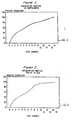
The dissolution and release rate data for Examples
2-10 is based on a 6 tablet dissolution study. Figs. 1-9
are graphical representations of the dissolution curves
(expressed as percent dissolved over time) provided by
the tablets of Example 2 (no surfactant added) and Examples
3-10 (surfactant(s) included), respectively. Figs.
10-18 are graphical representations of the dissolution
curves (expressed as release rate over time) provided by
the tablets of Example 2 (no surfactant added) and
Examples 3-10 (surfactant(s) included). As is readily
apparent from the results, the formulations of Examples
3-10 provide a multi-phasic release of phenylpropanolamine
HCl.
EXAMPLES 13-16
Preparation of Controlled Release Excipient For Multiphasic Dosage Forms
Controlled release excipients for multiphasic dosage
forms according to the present application are prepared
as follows.
In Examples 13-14, 250 grams of xanthan gum, 250
grams of locust bean gum, 50 grams of surfactant and 450
grams of dextrose are blended for two minutes in a mixer
(Baker Perkins blender), blender setting (chopper = 1,000
rpm, impeller = 800 rpm).
In Examples 15-16, 100 grams of surfactant and 400
grams of dextrose are blended with 250 grams of xanthan
gum and 250 grams of locust bean gum for two minutes.
The surfactant in Examples 13 and 16 is sodium
lauryl sulfate (SLS), while in Examples 14 and 15, the
surfactant is docusate sodium succinate (DSS).
Thereafter, about 112 ml of water is slowly added to
the mixtures and then blended for an additional 1.5
minutes. The mixed product, which is now in the form of
granules, is removed from the blender and dried in an
aeromatic fluid bed dryer (type: Strea-1) for 30 minutes
at a temperature of 70°C. The dried granulation is then
passed through a 20 mesh screen.
In Examples 13-14, the final composition of the mixture
is 25.0% xanthan gum, 25.0% locust bean gum, 5.0%
surfactant and 45.0% dextrose by weight. In Examples 15-16,
the final composition of the mixture is 25.0% xanthan
gum, 25.0% locust bean gum, 10.0% surfactant and 40.0%
dextrose by weight.
The product of Examples 13-16 is now ready to be
used as a controlled release excipient for multiphasic
dosage forms, and may now be admixed with one or more
active ingredients and any other pharmaceutically
necessary additives, and tableted.
The weight and percentages of the ingredients for
the controlled release excipients used in Examples 13-16
are set forth in Tables 12-15 below:
| EXAMPLE 13 |
| Ingredient | g/1000g | % |
| Xanthan Gum | 250.0 | 25.0 |
| Locust Bean Gum | 250.0 | 25.0 |
| Surfactant (TYPE) | 50.0 (SLS) | 5.0 |
| Dextrose | 450.0 | 45.0 |
| TOTAL | 1000g | | 100% |
| EXAMPLE 14 |
| Ingredient | g/1000g | % |
| Xanthan Gum | 250.0 | 25.0 |
| Locust Bean Gum | 250.0 | 25.0 |
| Surfactant (TYPE) | 50.0 (DSS) | 5.0 |
| Dextrose | 450.0 | 45.0 |
| TOTAL | 1000g | | 100% |
| EXAMPLE 15 |
| Ingredient | g/1000g | % |
| Xanthan Gum | 250.0 | 25.0 |
| Locust Bean Gum | 250.0 | 25.0 |
| Surfactant (TYPE) | 100.0 (DSS) | 10.0 |
| Dextrose | 400.0 | 40.0 |
| TOTAL | 1000g | | 100% |
| EXAMPLE 20 |
| Ingredient | g/1000g | % |
| Xanthan Gum | 250.0 | 25.0 |
| Locust Bean Gum | 250.0 | 25.0 |
| Surfactant (TYPE) | 100.0 (SLS) | 10.0 |
| Dextrose | 400.0 | 40.0 |
| TOTAL | 1000g | | 100% |
Controlled release tablets according to the present
invention are prepared as follows.
In Examples 17-19, 278.43 grams of the excipient of
the present invention is first blended with 27.82 grams
of phenylpropanolamine HCl for 10 minutes in a 2-quart V-blender.
The excipient of Example 13 is used in Example 17,
the excipient of Example 14 is used in Example 18 and the
excipient of Example 16 is used in Example 19.
After the initial blending of the mixtures in Examples
17-19, 7 grams of Lubritab™ and 35 grams of MCC-50M
are blended with each mixture for an additional 5 minutes.
Thereafter, 1.75 grams of magnesium stearate is
added to the mixtures of Examples 17-19, and then blended
for another 5 minutes.
Finally, the mixtures in Examples 17-19 are tableted
to provide tablets of approximately 942.8 mg and
approximately 2.0 Kp.
In Examples 17-19, the final composition of the mixture
is 79.5% excipient, 7.95% phenylpropanolamine HCl,
2.0% Lubritab™, 10.0% MCC-50M (microcrystalline cellulose)
and 0.5% of magnesium stearate by weight. Further
information concerning Examples 17-19 are set forth in
Tables 16-18 below:
| EXAMPLE 17 |
| Ingredient | mg/tab | % | g/350g |
| Excipient | 750.0 | 79.55 | 278.43 |
| PPA | 750.0 | 7.95 | 27.82 |
| Lubritab | 18.86 | 2.00 | 7.00 |
| MCC-50M | 94.28 | 10.00 | 35.00 |
| Mag. Stear. | 4.71 | 0.50 | 1.75 |
| TOTAL | 942.85 | 100% | 350g |
| PPA HCl = Phenylpropanolamine Hydrogen Chloride |
| Mag. Stear. = Magnesium Stearate |
| EXAMPLE 18 |
| Ingredient | mg/tab | % | g/350g |
| Excipient | 750.0 | 79.55 | 278.43 |
| PPA | 75.0 | 7.95 | 27.82 |
| Lubritab | 18.86 | 2.00 | 7.00 |
| MCC-50M | 94.28 | 10.00 | 35.00 |
| Mag. Stear. | 4.71 | 0.50 | 1.75 |
| TOTAL | 942.85 | 100% | 350g |
| PPA HCl = Phenylpropanolamine Hydrogen Chloride |
| Mag. Stear. = Magnesium Stearate |
| EXAMPLE 19 |
| Ingredient | mg/tab | % | g/350g |
| Excipient | 750.0 | 79.55 | 278.43 |
| PPA | 75.0 | 7.95 | 27.82 |
| Lubritab | 18.86 | 2.00 | 7.00 |
| MCC-50M | 94.28 | 10.00 | 35.00 |
| Mag. Stear. | 4.71 | 0.50 | 1.75 |
| TOTAL | 942.85 | 100% | 350g |
| PPA HCl = Phenylpropanolamine Hydrogen Chloride |
| Mag. Stear. = Magnesium Stearate |
In Example 20, 292.50 grams of the excipient of
Example 13 are blended with 48.75 grams of phenylpropanolamine
HCl for 10 minutes in a 2-quart V-blender.
After the initial blending, 7 grams of Lubritab™ and
1.75 grams of magnesium stearate are added to the mixture
which is then blended for another 5 minutes.
Finally, the mixture is tableted to provide tablets
of approximately 538.46 mg and approximately 20 Kp.
In Example 20, the final composition of the mixture
is 83.57% excipient of Example 13, 13.93% phenylpropanolamine
HCl, 2.0% Lubritab™ and 0.5% magnesium
stearate by weight. Further information concerning
Example 20 is set forth in Table 19 below:
| EXAMPLE 20 |
| Ingredient | mg/tab | % | g/350g |
| Excipient | 450.0 | 83.57 | 292.50 |
| PPA HCl | 75.0 | 13.93 | 48.75 |
| Lubritab | 10.77 | 2.00 | 7.00 |
| Mag. Stear. | 2.69 | 0.50 | 1.75 |
| TOTAL | 538.46 | 100% | 350g |
| PPA HCl = Phenylpropanolamine Hydrogen Chloride |
| Mag. Stear. = Magnesium Stearate |
In Example 21, 487.5 grams of the excipient of
Example 15 is first blended with 48.75 grams of
phenylpropanolamine HCl for 10 minutes in a 2-quart V-blender.
After the initial blending, 11 grams of Lubritab™
and 2.75 grams of magnesium stearate is added to the
mixture and blended for an additional 5 minutes.
The mixture is then tableted to provide tablets of
approximately 846.15 mg and approximately 2.0 kg.
In Example 21, the final composition of the mixture
is 88.64% excipient of Example 15, 8.86% phenylpropanolamine
HCl, 2.0% Lubritab™ and 0.5% magnesium
stearate by weight. Further information concerning
Example 21 is set forth in Table 20 below:
| EXAMPLE 21 |
| Ingredient | mg/tab | % | G/350g |
| Excipient | 750.0 | 88.64 | 487.50 |
| PPA HCl | 75.0 | 8.86 | 48.75 |
| Lubritab™ | 16.92 | 2.00 | 11.00 |
| Mag. Stear. | 4.23 | 0.50 | 2.75 |
| TOTAL | 846.15 | 100% | 550g |
| PPA HCl = Phenylpropanolamine Hydrogen Chloride |
| Mag. Stear. = Magnesium Stearate |
The examples provided above are not meant to be
exclusive. Many other variations of the present
invention would be obvious to those skilled in the art,
and are contemplated to be within the scope of the
appended claims.