EP1577759A2 - Verfahren und System für das zur Verfügungstellen von Dokumentation und Ausbildung in der Software-Entwicklung - Google Patents
Verfahren und System für das zur Verfügungstellen von Dokumentation und Ausbildung in der Software-Entwicklung Download PDFInfo
- Publication number
- EP1577759A2 EP1577759A2 EP05005656A EP05005656A EP1577759A2 EP 1577759 A2 EP1577759 A2 EP 1577759A2 EP 05005656 A EP05005656 A EP 05005656A EP 05005656 A EP05005656 A EP 05005656A EP 1577759 A2 EP1577759 A2 EP 1577759A2
- Authority
- EP
- European Patent Office
- Prior art keywords
- software
- documentation
- module
- modules
- training
- Prior art date
- Legal status (The legal status is an assumption and is not a legal conclusion. Google has not performed a legal analysis and makes no representation as to the accuracy of the status listed.)
- Ceased
Links
Images


Classifications
-
- G—PHYSICS
- G06—COMPUTING OR CALCULATING; COUNTING
- G06F—ELECTRIC DIGITAL DATA PROCESSING
- G06F8/00—Arrangements for software engineering
- G06F8/70—Software maintenance or management
- G06F8/73—Program documentation
Definitions
- Embodiments of the present invention relate generally to the technical field of software development and, in one example embodiment, to methods and systems for providing documentation and training in a software development activity within a software development system.
- a system for generating software documentation and training materials within a software development activity includes a software coding module. a user interface module; and a testing module for providing an integrated testing environment within a software development system.
- the testing module includes an automated documentation generation module for generating documentation for an application and related software modules and automated software training generation module for generating user training materials for an application and related software modules.
- the automated documentation generation module and the automated software training generation module utilize software specification structure defining the application and related software modules.
- a method for generating software documentation and training materials within a software development activity identifies process elements and various elements of software structure from an application and its related modules, describes user interfaces using requirements analysis after the completion of all user interface design processes, describes design elements for implementation of the application and related modules after the end of all module design has occurred; describes software artifacts and corresponding deployment map for the application and related modules during software module implementation; and generates documentation and training materials using the identified process elements, the user interfaces, the design elements, and the software artifacts.
- a machine-readable medium storing a set of instructions that, when executed by a machine, cause of the machine to perform a method for generating software documentation and training materials within a software development activity, the method identifies process elements and various elements of software structure from an application and its related modules, describes user interfaces using requirements analysis after the completion of all user interface design processes, describes design elements for implementation of the application and related modules after the end of all module design has occurred; describes software artifacts and corresponding deployment map for the application and related modules during software module implementation. and generates documentation and training materials using the identified process elements, the user interfaces, the design elements, and the software artifacts.
- FIG. 1 is a block diagram depicting a system having a software development system in accordance with one exemplary embodiment of the present invention.
- FIG. 2 is a block diagram illustrating a general programmable processing system for use in programmable processing system in accordance with various embodiments of the present invention.
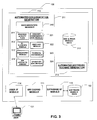
- FIG. 3 is a block diagram depicting an automated documentation generation module within a software development system in accordance with one exemplary embodiment of the present invention.
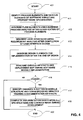
- FIG. 4 a flowchart for an automated documentation generation module within a software development system in accordance with one exemplary embodiment of the present invention.
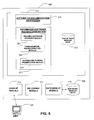
- FIG. 5 is a block diagram depicting an automated software training generation module within a software development system in accordance with one example embodiment of the present invention.
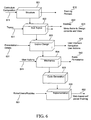
- FIG. 6 a flowchart for an automated software documentation and training software in accordance with one exemplary embodiment of the present invention.
- FIG. 1 is a block diagram depicting a system having a software development system in accordance with one exemplary embodiment of the present invention.
- a software development system 100 is constructed using a set of processing modules to perform the development, maintenance and testing of applications and related processing modules.
- the set of processing modules may include in part a software coding module 111, software documentation and training module 112, a user interface module 113, and a database interface module 114.
- Users 101 of system 100 communicate with the system through the user interface module 113 while performing all of the development and testing activities. Users 101 typically interact with the system 100 using a terminal or client computing system 101 that communicates with the system using a data transfer protocol.
- This communications may be a serial connection, a modem connection, a hard-wired connection and a network connection that permits user 101 to interact with system 100.
- User interface module 113 performs the processing functions necessary to permit the communications to occur over the connection between user 101 and system 100. While the example embodiment disclosed herein uses a client-server architecture, one skilled in the art will recognize that other architectures including a single processing system containing all of the processing modules as well as a distributed processing system having a collection of different processing systems for each of the processing functions may be utilized without departing from the present invention as recited within the attached claims.
- Software coding module 111 generates the applications and related software modules that are part of the software development activities. These applications and software modules may include executable modules, source code, object code libraries and any other form of software modules used within the software development process. These modules may be stored within a software module database 102 that system 100 accesses using database interface module 114.
- Software documentation and training module 112 automated generation of documentation and training materials for applications and related software modules during the software development process, This documentation and training generation process may utilize a set of test rented modules that include an automated documentation generation module 211, an automated software training module 212, and a documentation and training data database 213, These modules operate together as part of the documentation and training generation process.
- FIG. 2 is an overview diagram of a hardware and operating environment in conjunction with which embodiments of the invention may be practiced.
- the description of FIG. 2 is intended to provide a brief, general description of suitable computer hardware and a suitable computing environment in conjunction with which the invention may be implemented.
- the invention is described in the general context of computer-executable instructions, such as program modules, being executed by a computer, such as a personal computer.
- program modules include routines, programs, objects, components, data structures, etc., that perform particular tasks or implement particular abstract data types.
- FIG. 2 a hardware and operating environment is provided that is applicable to any of the servers and/or remote clients shown in the other Figures.
- one embodiment of the hardware and operating environment includes a general purpose computing device in the form of a computer 20 (e.g., a personal computer, workstation, or server), including one or more processing units 21, a system memory 22, and a system bus 23 that operatively couples various system components including the system memory 22 to the processing unit 21.
- a computer 20 e.g., a personal computer, workstation, or server
- processing units 21 e.g., a personal computer, workstation, or server
- system bus 23 that operatively couples various system components including the system memory 22 to the processing unit 21.
- the processor of computer 20 comprises a single central-processing unit (CPU), or a plurality of processing units, commonly referred to as a multiprocessor or parallel-processor environment.
- CPU central-processing unit
- computer 20 is a conventional computer, a distributed computer, or any other type of computer.
- the system bus 23 can be any of several types of bus structures including a memory bus or memory controller, a peripheral bus, and a local bus using any of a variety of bus architectures.
- the system memory can also be referred to as simply the memory, and, in some embodiments, includes read-only memory (ROM) 24 and random-access memory (RAM) 25.
- ROM read-only memory
- RAM random-access memory
- a basic input/output system (BIOS) program 26 containing the basic routines that help to transfer information between elements within the computer 20, such as during start-up, may be stored in ROM 24.
- the computer 20 further includes a hard disk drive 27 for reading from and writing to a hard disk, not shown, a magnetic disk drive 28 for reading from or writing to a removable magnetic disk 29, and an optical disk drive 30 for reading from or writing to a removable optical disk 31 such as a CD ROM or other optical media.
- a hard disk drive 27 for reading from and writing to a hard disk, not shown
- a magnetic disk drive 28 for reading from or writing to a removable magnetic disk 29
- an optical disk drive 30 for reading from or writing to a removable optical disk 31 such as a CD ROM or other optical media.
- the hard disk drive 27, magnetic disk drive 28, and optical disk drive 30 couple with a hard disk drive interface 32, a magnetic disk drive interface 33, and an optical disk drive interface 34, respectively.
- the drives and their associated computer-readable media provide non volatile storage of computer-readable instructions, data structures, program modules and other data for the computer 20. It should be appreciated by those skilled in the art that any type of computer-readable media which can store data that is accessible by a computer, such as magnetic cassettes, flash memory cards, digital video disks, Bernoulli cartridges, random access memories (RAMs), read only memories (RON[s), redundant arrays of independent disks (e.g., RAID storage devices) and the like, can be used in the exemplary operating environment.
- a plurality of program modules can be stored on the hard disk, magnetic disk 29, optical disk 31, ROM 24, or RAM 25, including an operating system 35, one or more application programs 36, other program modules 37, and program data 38.
- a plug in containing a security transmission engine for the present invention can be resident on any one or number of these computer-readable media.
- a user may enter commands and information into computer 20 through input devices such as a keyboard 40 and pointing device 42.
- Other input devices can include a microphone, joystick, game pad, satellite dish, scanner, or the like.
- These other input devices are often connected to the processing unit 21 through a serial port interface 46 that is coupled to the system bus 23, but can be connected by other interfaces, such as a parallel port, game port, or a universal serial bus (USB).
- a monitor 47 or other type of display device can also be connected to the system bus 23 via an interface, such as a video adapter 48.
- the monitor 40 can display a graphical user interface for the user.
- computers typically include other peripheral output devices (not shown), such as speakers and printers.
- the computer 20 may operate in a networked environment using logical connections to one or more remote computers or servers, such as remote computer 49. These logical connections are achieved by a communication device coupled to or a part of the computer 20; the invention is not limited to a particular type of communications device.
- the remote computer 49 can be another computer, a server, a router, a network PC, a client, a peer device or other common network node, and typically includes many or all of the elements described above I/O relative to the computer 20, although only a memory storage device 50 has been illustrated.
- the logical connections depicted in FIG. 3 include a local area network (LAN) 51 and/or a wide area network (WAN) 52.
- LAN local area network
- WAN wide area network
- the computer 20 When used in a LAN-networking environment, the computer 20 is connected to the LAN 51 through a network interface or adapter 53, which is one type of communications device.
- the computer 20 when used in a WAN-networking environment, the computer 20 typically includes a modem 54 (another type of communications device) or any other type of communications device, e.g., a wireless transceiver, for establishing communications over the wide-area network 52, such as the internet.
- the modem 54 which may be internal or external, is connected to the system bus 23 via the serial port interface 46.
- program modules depicted relative to the computer 20 can be stored in the remote memory storage device 50 of remote computer, or server 49.
- network connections shown are exemplary and other means of, and communications devices for, establishing a communications link between the computers may be used including hybrid fiber-coax connections, T1-T3 lines, DSL's, OC-3 and/or OC-12, TCP/IP, microwave, wireless application protocol, and any other electronic media through any suitable switches, routers, outlets and power lines, as the same are known and understood by one of ordinary skill in the art.
- FIG. 3 is a block diagram depicting an automated documentation generation module within a software development system in accordance with one example embodiment of the present invention.
- the automated documentation generation module 211 includes a documentation manager module 310, a set of specification analysis modules 311-314 and a set of documentation generation modules 321-324.
- the set of specification analysis modules 311-314 include a process and activity flow analysis module 311, a user interface elements analysis module 312, a design specification analysis module 313, and a software artifact analysis module 314.
- the set of documentation generation modules 321-324 include a concept generation documentation module 321, user documentation module 322, technical documentation module 323, and operations documentation module 324. Data utilizes and generated by these modules are stored within the documentation and training data database 213 throughout the entire software development process.
- Process flow and activity flow specifications that describe the overall operational flow of the intended system may be processed by process and activity flow analysis module 311.
- User interfaces and the elements of the user interface including the navigational specifications across the user interfaces may be analyzed by user interface elements analysis module 312.
- Design specifications that are linked to the actions performed on the user interfaces may be processed by design specification analysis module 313.
- Software artifacts linked to the structure of specifications may be detected by software artifact analysis module 314.
- Documentation and training unit will use the descriptions and changes supplied by the relevant development units to update the final documentation.
- Documentation work can begin on various levels mentioned before when these stages are reached in the specification repository for the work products. Since change management is integrated, these activities may begin and run in parallel to the development activities through out the life cycle.
- FIG. 4 a flowchart for an automated documentation generation module within a software development system in accordance with one example embodiment of the present invention.
- the processing begins 401 and process elements and various elements of software structure from an application and its related modules are identified from software specification in module 411.
- process flow elements are described in module 412 using business process analysis after identification of all process elements has been completed.
- User interfaces are described in module 413 using requirements analysis after the completion of all user interface design processes.
- Design elements for implementation of the application and related modules is described in module 414 after the end of all module design has occurred,
- software artifacts and corresponding deployment map for the modules are described in module 415 during software module implementation.
- Documentation may evolve during the development process as changes are made to the requirements and specification for an application and its supporting modules. If no changes have been made at a point on time, the documentation generation process ends 402. If test module 416 determines that changes have been made, processing continues to module 417 in which changes in soft ware structure and corresponding impacted training and documentation artifacts are identified for updating. Documentation may be completed in module 418 based upon all specifications and changes made during implementation of the application and supporting software modules before the processing may end 402.
- FIG, 5 is a block diagram depicting an automated software training generation module within a software development system in accordance with one example embodiment of the present invention.
- the present invention is a software application that automates training on software applications. It makes available modular self-paced multi-media training units through the development of self-describing software components using model transformation techniques.
- the automated software training generation module 212 generates these training units using a training software manager module 521 that coordinates the operation of a training module transformation module 522 and a training multi-media presentation module 523.
- the present invention generates self-paced instructional materials relating to a software application by transformation of software models.
- the information held in the requirements model of a model-driven software application is mined and transformed into training modules for requirements engineers.
- the information thus generated is then rendered in a modular fashion for the user by the training module transformation module 522 to create units that assist users to learn the use of the complex software systems.
- the rendering of the instructional material is done using both textual and vector-driven graphical tools by the training multi-media presentation module 523.
- another software application is generated whose exclusive purpose is the description of the software application for which training is required.
- this invention by making software programs self-elucidating, automates the process of automated software training of users.
- the present invention trains a user on a particular software application by making visible, tangible, and explicit all navigable pathways in the targeted application. It provides a traversable cognitive map of the target software application.
- the present invention makes evident in a structured manner potential ways in which a software application might be used.
- the present invention models use of a software application as a process and then generates the training application as shown in FIG. 6.
- FIG. 6 a flowchart for an automated software documentation and training software in accordance with one example embodiment of the present invention.
- the process of training material generation may be viewed as following a hierarchical process flow that begins with an analysis of the structure 601 of an application and its related software modules and ends with the generation of the detailed implementation of the training software modules 606. Between these two processing steps, analysis of subtopics 602, layout design 603, software module mechanics 604, and code generation 605 occurs in a hierarchical order.
- curriculum and composition of training material 611 that is to be included within the training material is processed. From all of this analysis, an outline for a training process 612 to be generated is defined. This outline provides the overall framework for the training material generated.
- subtopics 602 are generated from a set of general topics 621 that are to be covered when the training material is completed.
- the analysis and generation of subtopics 602 results in generation of a sitemap 622 and a set of menu items 623 that define the design contents and views to be covered by the training materials generated.
- layout design 603 for the training materials may be processed. This analysis process accepts specification for presentation details 631 that are to be included within completed training materials. The analysis also generated a set of user interface elements, navigation definitions and user actions 632 to be supported by the training materials.
- the user interface elements, navigation definitions and user actions 632 are then used in an analysis of the mechanics 604 of the application and its modules that uses definitions of user actions 641. From the processing, operating rules and persistence rules 642 are specified. These are used in defining the training materials and its operation
- code generation 605 that creates the training materials and its multi-media components
- the generated code 605 is used in creating a final implementation 606 of the training materials using definitions of roles, users and modules 661.
- the final set of training materials 662 typically in the form of multi-media applications as well as supporting documents, is generated from the processing of these software modules.
Landscapes
- Engineering & Computer Science (AREA)
- Software Systems (AREA)
- General Engineering & Computer Science (AREA)
- Theoretical Computer Science (AREA)
- Library & Information Science (AREA)
- Physics & Mathematics (AREA)
- General Physics & Mathematics (AREA)
- Stored Programmes (AREA)
Applications Claiming Priority (6)
| Application Number | Priority Date | Filing Date | Title |
|---|---|---|---|
| US55320304P | 2004-03-15 | 2004-03-15 | |
| US553203P | 2004-03-15 | ||
| US55347004P | 2004-03-16 | 2004-03-16 | |
| US553470P | 2004-03-16 | ||
| US11/078,461 US7533369B2 (en) | 2004-03-15 | 2005-03-11 | Method and system for providing documentation and training in a software development activity |
| US78461 | 2005-03-11 |
Publications (2)
| Publication Number | Publication Date |
|---|---|
| EP1577759A2 true EP1577759A2 (de) | 2005-09-21 |
| EP1577759A3 EP1577759A3 (de) | 2007-04-25 |
Family
ID=34841624
Family Applications (1)
| Application Number | Title | Priority Date | Filing Date |
|---|---|---|---|
| EP05005656A Ceased EP1577759A3 (de) | 2004-03-15 | 2005-03-15 | Verfahren und System für das zur Verfügungstellen von Dokumentation und Ausbildung in der Software-Entwicklung |
Country Status (2)
| Country | Link |
|---|---|
| US (1) | US7533369B2 (de) |
| EP (1) | EP1577759A3 (de) |
Cited By (2)
| Publication number | Priority date | Publication date | Assignee | Title |
|---|---|---|---|---|
| EP3220218A1 (de) * | 2016-03-14 | 2017-09-20 | Omron Corporation | Programmentwicklungsunterstützungsvorrichtung, programmentwicklungsunterstützungsverfahren und programmentwicklungsunterstützungsprogramm |
| WO2020232899A1 (zh) * | 2019-05-23 | 2020-11-26 | 平安科技(深圳)有限公司 | 数据分析系统会诊方法及相关装置 |
Families Citing this family (35)
| Publication number | Priority date | Publication date | Assignee | Title |
|---|---|---|---|---|
| US7788640B2 (en) * | 2004-12-28 | 2010-08-31 | Microsoft Corporation | Using code analysis to generate documentation |
| US20060230389A1 (en) * | 2005-04-12 | 2006-10-12 | Moulckers Ingrid M | System and method for specifying business requirements for dynamically generated runtime solution to a business problem |
| US20060229894A1 (en) * | 2005-04-12 | 2006-10-12 | Moulckers Ingrid M | System and method for estimating expense and return on investment of a dynamically generated runtime solution to a business problem |
| US8219923B2 (en) * | 2006-03-10 | 2012-07-10 | National Instruments Corporation | Automatic generation of documentation for specified systems |
| US7650316B2 (en) * | 2006-03-10 | 2010-01-19 | National Instruments Corporation | Automatic generation of help information for specified systems |
| US7844942B2 (en) * | 2006-06-12 | 2010-11-30 | International Business Machines Corporation | System and method for model driven transformation filtering |
| US7849392B2 (en) * | 2007-02-28 | 2010-12-07 | Sap Ag | Systems and methods for generating technical documentation from enterprise service-oriented architecture content |
| US8464209B2 (en) * | 2007-03-19 | 2013-06-11 | Microsoft Corporation | Using collaborative development information in a team environment |
| US8191045B2 (en) * | 2007-09-04 | 2012-05-29 | Nec Laboratories America, Inc. | Mining library specifications using inductive learning |
| US8200618B2 (en) | 2007-11-02 | 2012-06-12 | International Business Machines Corporation | System and method for analyzing data in a report |
| US10452768B2 (en) * | 2007-11-03 | 2019-10-22 | International Business Machines Corporation | Managing source annotation metadata |
| US8336028B2 (en) * | 2007-11-26 | 2012-12-18 | International Business Machines Corporation | Evaluating software sustainability based on organizational information |
| US9047168B2 (en) * | 2009-05-14 | 2015-06-02 | National Instruments Corporation | Automatically generating documentation for a diagram including a plurality of states and transitions |
| US20110224939A1 (en) * | 2010-03-10 | 2011-09-15 | Jayaswal Manish K | Integrated tool for persisting development environment test scenario information |
| US8479151B2 (en) | 2010-05-12 | 2013-07-02 | National Instruments Corporation | Converting a statechart from a first statechart format to a second statechart format |
| US8850268B2 (en) | 2011-11-23 | 2014-09-30 | Brainlab Ag | Analysis of system test procedures for testing a modular system |
| US9123023B2 (en) * | 2012-02-23 | 2015-09-01 | Oracle International Corporation | Configurable document generator to provide dynamic views of user defined elements |
| US9015666B2 (en) | 2012-07-11 | 2015-04-21 | International Business Machines Corporation | Updating product documentation using automated test scripts |
| US9081900B2 (en) | 2012-10-15 | 2015-07-14 | Toyota Motor Engineering & Manufacturing North America, Inc. | Systems and methods for mining temporal requirements from block diagram models of control systems |
| US9753620B2 (en) | 2014-08-01 | 2017-09-05 | Axure Software Solutions, Inc. | Method, system and computer program product for facilitating the prototyping and previewing of dynamic interactive graphical design widget state transitions in an interactive documentation environment |
| EP3043259A1 (de) | 2015-01-09 | 2016-07-13 | Tata Consultancy Services Limited | Analyse von abhängigkeiten zwischen softwarekomponenten |
| US9954746B2 (en) | 2015-07-09 | 2018-04-24 | Microsoft Technology Licensing, Llc | Automatically generating service documentation based on actual usage |
| US20180082242A1 (en) * | 2016-09-22 | 2018-03-22 | LucidLift LLC | Data-driven training and coaching system and method |
| US11256502B2 (en) * | 2018-10-25 | 2022-02-22 | Affirm, Inc. | Automatic generation of documentation and aggregation of community content |
| US12067601B2 (en) | 2018-11-09 | 2024-08-20 | Honeywell International Inc. | Systems and methods for generating a digital identity of equipment on an equipment online marketplace platform |
| US11640630B2 (en) | 2018-11-09 | 2023-05-02 | Honeywell International Inc. | Systems and methods for verifying identity of a user on an equipment online marketplace platform |
| US11494832B2 (en) | 2018-11-09 | 2022-11-08 | Honeywell International Inc. | Systems and methods for securely creating a listing of equipment on an equipment online marketplace platform |
| US11314503B2 (en) | 2020-06-08 | 2022-04-26 | Bank Of America Corporation | Software development documentation using machine learning |
| US11461090B2 (en) | 2020-06-26 | 2022-10-04 | Whatfix Private Limited | Element detection |
| US11372661B2 (en) * | 2020-06-26 | 2022-06-28 | Whatfix Private Limited | System and method for automatic segmentation of digital guidance content |
| US11243788B1 (en) | 2020-10-01 | 2022-02-08 | Bank Of America Corporation | Cognitive tracking and navigation training system for improved application performance |
| US11704232B2 (en) | 2021-04-19 | 2023-07-18 | Whatfix Private Limited | System and method for automatic testing of digital guidance content |
| US11669353B1 (en) | 2021-12-10 | 2023-06-06 | Whatfix Private Limited | System and method for personalizing digital guidance content |
| US12566825B2 (en) | 2022-01-07 | 2026-03-03 | Capital One Services, Llc | Systems and methods for generating customized training |
| US12405812B2 (en) | 2023-10-24 | 2025-09-02 | Whatfix Private Limited | Computer vision template matching system and method |
Citations (1)
| Publication number | Priority date | Publication date | Assignee | Title |
|---|---|---|---|---|
| US6212677B1 (en) | 1994-02-02 | 2001-04-03 | Fujitsu Limited | Generating a natural language specification of a computer program by generating an intermediate expression table based on a flow chart from analyzed syntax of the program |
Family Cites Families (5)
| Publication number | Priority date | Publication date | Assignee | Title |
|---|---|---|---|---|
| DE19926370A1 (de) | 1999-06-10 | 2000-12-14 | Abb Research Ltd | System zur Dokumentation, Archivierung und zum Auffinden wiederverwendbarer Software-Komponenten |
| US20020059348A1 (en) * | 2000-11-14 | 2002-05-16 | Cypress Semiconductor Corp. | Automatic documentation generation tool and associated method |
| AU2002240429B2 (en) * | 2001-02-22 | 2007-12-13 | Accenture Global Services Limited | Distributed development environment for building internet applications by developers at remote locations |
| WO2003036469A2 (en) * | 2001-10-26 | 2003-05-01 | Codagen Technologies Inc. | A template-based method and system for reverse engineering |
| US20040010772A1 (en) * | 2001-11-13 | 2004-01-15 | General Electric Company | Interactive method and system for faciliting the development of computer software applications |
-
2005
- 2005-03-11 US US11/078,461 patent/US7533369B2/en active Active
- 2005-03-15 EP EP05005656A patent/EP1577759A3/de not_active Ceased
Patent Citations (1)
| Publication number | Priority date | Publication date | Assignee | Title |
|---|---|---|---|---|
| US6212677B1 (en) | 1994-02-02 | 2001-04-03 | Fujitsu Limited | Generating a natural language specification of a computer program by generating an intermediate expression table based on a flow chart from analyzed syntax of the program |
Cited By (3)
| Publication number | Priority date | Publication date | Assignee | Title |
|---|---|---|---|---|
| EP3220218A1 (de) * | 2016-03-14 | 2017-09-20 | Omron Corporation | Programmentwicklungsunterstützungsvorrichtung, programmentwicklungsunterstützungsverfahren und programmentwicklungsunterstützungsprogramm |
| US10095512B2 (en) | 2016-03-14 | 2018-10-09 | Omron Corporation | Program development support device, non-transitory storage medium storing thereon computer-readable program development support program, and program development support method |
| WO2020232899A1 (zh) * | 2019-05-23 | 2020-11-26 | 平安科技(深圳)有限公司 | 数据分析系统会诊方法及相关装置 |
Also Published As
| Publication number | Publication date |
|---|---|
| US7533369B2 (en) | 2009-05-12 |
| US20050216891A1 (en) | 2005-09-29 |
| EP1577759A3 (de) | 2007-04-25 |
Similar Documents
| Publication | Publication Date | Title |
|---|---|---|
| US7533369B2 (en) | Method and system for providing documentation and training in a software development activity | |
| Auber et al. | TULIP 5 | |
| Bracewell et al. | Capturing design rationale | |
| Buckner et al. | JRipples: A tool for program comprehension during incremental change | |
| Brackett | Software requirements | |
| Finkelstein et al. | The future of requirements management tools | |
| Martínez et al. | Efficient plagiarism detection for software modeling assignments | |
| Ding et al. | Using intelligent ontology technology to extract knowledge from successful project in IoT enterprise systems | |
| Tunjic et al. | Supporting the model-driven organization vision through deep, orthographic modeling | |
| Rob | Dilemma between the structured and object-oriented approaches to systems analysis and design | |
| Brilliant et al. | Empirical research in software engineering: a workshop | |
| Hugues et al. | A principled approach to elicit digital thread specification from User Stories | |
| Gomes et al. | Investigating tool usage in ontology engineering: A survey. | |
| Capilla et al. | Viability for codifying and documenting architectural design decisions with tool support | |
| Wąsowski et al. | Using Modeling Languages | |
| Carrillo de Gea et al. | Are the expected benefits of requirements reuse hampered by distance? An experiment | |
| Ullner et al. | Lessons learned from implementing a msdl scenario editor | |
| Honoré‐Livermore et al. | Academic application of trade‐off studies to support a CubeSat project | |
| Riley | An object-oriented approach to software process modeling and definition | |
| Charpentier et al. | Revticulate: An R framework for interaction with | |
| Mondrian | 1 Using Modeling Languages | |
| Okudan | A multi-criteria decision-making methodology for optimum selection of a solid modeller for design teaching and practice | |
| Satish et al. | VTrace-a tool for visualizing traceability links among software artefacts for an evolving system | |
| Warman | Developing complex information systems: the use of a geometric data structure to aid the specification of a multi-media information environment | |
| Gaffar | Studies on pattern dissemination and reuse to support interaction design/cAshraf Gaffar. |
Legal Events
| Date | Code | Title | Description |
|---|---|---|---|
| PUAI | Public reference made under article 153(3) epc to a published international application that has entered the european phase |
Free format text: ORIGINAL CODE: 0009012 |
|
| AK | Designated contracting states |
Kind code of ref document: A2 Designated state(s): AT BE BG CH CY CZ DE DK EE ES FI FR GB GR HU IE IS IT LI LT LU MC NL PL PT RO SE SI SK TR |
|
| AX | Request for extension of the european patent |
Extension state: AL BA HR LV MK YU |
|
| PUAL | Search report despatched |
Free format text: ORIGINAL CODE: 0009013 |
|
| AK | Designated contracting states |
Kind code of ref document: A3 Designated state(s): AT BE BG CH CY CZ DE DK EE ES FI FR GB GR HU IE IS IT LI LT LU MC NL PL PT RO SE SI SK TR |
|
| AX | Request for extension of the european patent |
Extension state: AL BA HR LV MK YU |
|
| 17P | Request for examination filed |
Effective date: 20071010 |
|
| AKX | Designation fees paid |
Designated state(s): AT BE BG CH CY CZ DE DK EE ES FI FR GB GR HU IE IS IT LI LT LU MC NL PL PT RO SE SI SK TR |
|
| 17Q | First examination report despatched |
Effective date: 20080117 |
|
| STAA | Information on the status of an ep patent application or granted ep patent |
Free format text: STATUS: THE APPLICATION HAS BEEN REFUSED |
|
| 18R | Application refused |
Effective date: 20121031 |