EP1576579B1 - Identification apparatus and method - Google Patents
Identification apparatus and method Download PDFInfo
- Publication number
- EP1576579B1 EP1576579B1 EP03783669.9A EP03783669A EP1576579B1 EP 1576579 B1 EP1576579 B1 EP 1576579B1 EP 03783669 A EP03783669 A EP 03783669A EP 1576579 B1 EP1576579 B1 EP 1576579B1
- Authority
- EP
- European Patent Office
- Prior art keywords
- user
- audible
- command
- audible command
- identity
- Prior art date
- Legal status (The legal status is an assumption and is not a legal conclusion. Google has not performed a legal analysis and makes no representation as to the accuracy of the status listed.)
- Expired - Lifetime
Links
Images

Classifications
-
- G—PHYSICS
- G06—COMPUTING OR CALCULATING; COUNTING
- G06F—ELECTRIC DIGITAL DATA PROCESSING
- G06F21/00—Security arrangements for protecting computers, components thereof, programs or data against unauthorised activity
- G06F21/30—Authentication, i.e. establishing the identity or authorisation of security principals
- G06F21/31—User authentication
- G06F21/32—User authentication using biometric data, e.g. fingerprints, iris scans or voiceprints
-
- G—PHYSICS
- G10—MUSICAL INSTRUMENTS; ACOUSTICS
- G10L—SPEECH ANALYSIS TECHNIQUES OR SPEECH SYNTHESIS; SPEECH RECOGNITION; SPEECH OR VOICE PROCESSING TECHNIQUES; SPEECH OR AUDIO CODING OR DECODING
- G10L17/00—Speaker identification or verification techniques
- G10L17/06—Decision making techniques; Pattern matching strategies
-
- G—PHYSICS
- G10—MUSICAL INSTRUMENTS; ACOUSTICS
- G10L—SPEECH ANALYSIS TECHNIQUES OR SPEECH SYNTHESIS; SPEECH RECOGNITION; SPEECH OR VOICE PROCESSING TECHNIQUES; SPEECH OR AUDIO CODING OR DECODING
- G10L15/00—Speech recognition
- G10L15/22—Procedures used during a speech recognition process, e.g. man-machine dialogue
- G10L2015/223—Execution procedure of a spoken command
Definitions
- This invention relates generally to identification and/or verification of an individual, and more particularly to voice-based identification of an individual.
- Such mechanisms include biometric-based approaches (using, for example, fingerprints, retinal patterns, and speech recognition/voice pattern recognition) and knowledge-based or device-based approaches (using, for example, passwords and personal identification numbers, radio frequency based tags, and magnetically-encoded cards and identification tags).
- US patent application publication no. US 2002/0194003 describes a client-server security system which includes a client system receiving first biometric data, such as a speech data, and having a first level security authorization procedure, such as a first speaker recognition algorithm.
- a server system is provided for receiving second biometric data, such as speech data, and includes a second level security authorization procedure, such as a second speaker recognition algorithm.
- the client system sends a first level security authorization signal to the server system when the first biometric algorithm indicates that a first portion of biometric data corresponds to an authorised user.
- a second portion of the biometric data is analyzed by the second biometric algorithm which provides s second level security authorization when the second biometric algorithm indicates that the second portion of the biometric data corresponds to an authorized user.
- the system enables access to resources on the server system through the client system when the second level security authorization is provided.
- the speech data is a spoken password.
- a user's audible command is automatically processed with respect to previously developed identification information in order to correlate the speaker with a likely identity. Based upon the results of that correlation process, the user's audible command is then automatically responded to in a predetermined way.
- the audible command can correspond to at least one of a plurality of user-controllable parameters for a device (such as, for example, a two-way wireless communications device). In effect, these embodiments permit identification of a user in real-time in conjunction with the processing of a verbally issued command.
- the previously developed identification information comprises biometric information previously extracted from previous audible samples.
- the resultant biometric information can comprise text independent biometric information, text dependent biometric information, or even a combination of both.
- one or more levels of permission status can be utilized and processed in combination with the audible command itself and the likely identity of the user to facilitate ascertaining whether the user has an appropriate permission level to permit acceptance and implementation of the command itself.
- a temporal aspect can be introduced as well (for example, to determine whether the user has sought to implement a current command within a required predetermined time of having previously entered an earlier command).
- such identification can be used to positively deny acceptance of a given command from a given individual rather than to positively facilitate acceptance of the command.
- a platform 10 suitable to support and facilitate such identification generally includes a speech transducer 11, a user identifier 12, a speech recognition engine 13, and a user controllable interface 14.
- a platform 10 can be wholly or partially realized through use of a shared integrated platform (such as an appropriately configured microprocessor of programmable gate array and/or through use of dedicated circuitry or discrete logic elements as well understood in the art).
- the speech transducer 11 will typically comprise one or more microphones.
- the speech transducer 11 serves, in this embodiment, to at least receive audible commands as uttered by a user and to convert such audible information into corresponding electrical impulses.
- the audible command will typically comprise one of a plurality of audible commands and will have a pre-existing correlated relationship with one of a plurality of user-controllable parameters for the device this platform serves with (for example, the device can comprise a two-way wireless communication device and the user-controllable parameters can include parameters such as volume, channel selection, and other features as appropriate and/or desired).
- additional stages (such as gain, filtering, analog-to-digital conversion, and the like) will also likely be used in a commercially viable embodiment.
- additional stages are well understood in the art and hence are not shown here to preserve focus and for the sake of brevity.
- the user identifier 12 serves to receive the output of the speech transducer 11 and to determine a likely identity for the user who uttered the corresponding audible command.
- the user identifier 12 has access to identification information 15 (stored, for example, in memory) to facilitate this determination.
- the identification information 15 comprises previously developed identification information comprising, at least in part, biometric information extracted from previous audible samples for this (or other) users.
- the biometric information comprises text independent biometric information, but text dependent biometric information alone or in combination with text independent biometric information can be used if desired. Both text independent and text dependent biometric information mechanisms are known in the art and can be used here to good effect.
- such mechanisms tend to extract and characterize audiblization features that tend to be individually unique to a given speaker and collectively substantially unique to a given speaker.
- the identification information can be readily utilized to identify a likely speaker of a given audible command regardless of the textual content of the audible command itself.
- the text dependent or text independent biometric information is developed from previous audibilizations of each user for whom identification is desired and again in accordance with well understood prior art technique.
- the user identifier 12 extracts at least one item of characterizing biometric information from an audible command as received via the speech transducer 11 and compares at least portions of the characterizing biometric information with at least one item of identifying information to determine at least a likelihood that the audible command was uttered by a particular user.
- the characterizing biometric information as is extracted from the audible command will equate with and be of the same form and type as the biometric information that comprises the identification information described earlier.
- the user identifier 12 then provides this resultant identification determination to the speech recognition engine 13, to the user controllable interface 14, or both as desired and appropriate to a given embodiment and configuration.
- the user identifier 12 provides the identification information to an appropriate location where it can be used to otherwise facilitate the various teachings set forth herein.
- the speech recognition engine 13 can be any known or hereafter developed speech recognition mechanism that will generally serve to recognize the textual content of a verbalized communication such as the audible command. Also as desired, the speech recognition engine 13 can be of the speaker dependent or speaker independent variety as well understood in the art. In a preferred embodiment, there exist one or more predetermined commands 16 that each correlate to a particular user-controllable parameter. In this embodiment these commands 16 are available to the speech recognition engine 13 to facilitate a determination by the speech recognition engine 13 as to whether a given audible command matches any of the predetermined audible commands 16. (If desired, a comparison between the speech as recognized and such predetermined audible commands can be effected elsewhere and as appropriate to the capabilities of a given platform.)
- this platform 10 permits recognition of the textual content of an audible command to permit correlation of that command with a specific user-controllable parameter and action. This platform 10 also permits over-riding permission and security control of such processes based upon a likely identity of the speaker of the audible command as described below in more detail. It will be appreciated that, in a preferred embodiment, the speaker need not annunciate any dedicated identification facilitation expression(s) to achieve these ends. Instead, the audible command itself can serve to both permit identification of the speaker and corresponding compliance with the command itself.
- the platform Upon receiving 20 an audible command, the platform processes 21 the audible command as described above. In particular, extracted characterizing content of the audible command is compared against previously developed identification information 23.
- the identification information 23 correlates to specific individuals. This processing 21, therefore, serves to determine whether a likely identification of the speaker can be had. When the user can not be identified (at least to an acceptable level of confidence), the process 21 can simply conclude 24. So configured, the audible command will then be essentially ignored and no resultant change to the user controllable interface 14 will occur. When, however, the process 21 can provide an appropriate identification of the speaker (again, at least to an acceptable level of confidence), the command process can continue.
- the command process can simply conclude with compliance 27 with the audible command itself (wherein the textual content of the audible command has been recognized as described above and correlated to a specific user-controllable parameter).
- an additional process 25 can determine whether the specific identified individual constitutes a user that has been previously associated with an appropriate corresponding permission status 26 (for the specific audible command at issue or for all audible commands in general, as desired). When true, the process can again continue with compliance 27 with the audible command.
- the permission check determines, however, that the user either does not have permission (in general and/or for this specific command) or, if so configured, that the user has a specific level of denial associated with him or her, the process 25 can conclude 24 without permitting compliance 27 with the audible command.
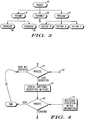
- the plurality of user-controllable parameters can include a plurality of hierarchically organized user-controllable parameters.
- a "radio" 30 parameter can comprise a parameter that must be asserted prior to having access to three other parameters, "volume,” 31 "channel,” 32 and “special” 33.
- the "volume” 31 parameter must be asserted prior to having access to the two parameters "increase” 34 and "decrease” 35.
- a corresponding permission can be associated with each hierarchical level or tier and/or with each (or some of the) commands.
- permission to accept a given audio command (such as "increase” 34 in this illustration) from a given user can be predicated upon having already received a hierarchically required command (such as "volume” 31 in this illustration) by this same user (and, if desired, a further requirement can be that these commands by an identified individual having appropriate corresponding permissions are also received within a predetermined period of time of one another and/or that there be no intervening other commands).
- an audible command can be simply implemented upon identifying the speaker of that command based upon the audible command itself.
- one or more levels or points of permission as correlate to specific commands and/or individuals can be utilized to further control which user controllable parameters are submitted to control and variation by any given individual even when otherwise identified by the system.
- the additional identifying metric(s) is processed 42 with respect to previously determined additional identifying metric information 43 to determine whether an appropriate match exists. If not, the process can conclude 24 and thereby deny accommodation of the audible command. Otherwise, when the additional identifying metric(s) proves valid, the process can continue as otherwise set forth above.
- such supplemental identifying metric serves to essentially comprise an additional parallel layer of required identification and authentication. If desired, such information could also be used to better inform the identification of the user via the voice analysis described herein.
- the supplemental identifying metric can be used to establish a single particular user. The user identifier 12 can then be used to determine whether that particular user in fact appears to have likely been the speaker who uttered the audible command.
- the platform 10 comprises a part of a device such as a two-way wireless communications device
- speech recognition can be readily utilized to permit functional control of the device without also creating an undue risk that unauthorized individuals or utterances will mischievously impact the device.
- the benefits of this should be readily apparent for applications such as firefighter and police radio settings.
- many of these approaches provide satisfactory identification/permission-based controls without requiring that time or attention be paid to identification-unique utterances or actions. Instead, the user need only provide the desired audible command. The device can then both determine the identity of the user and provide an appropriate response that corresponds to the command itself, thereby saving execution time as well as providing a considerably more intuitive user interface.
- many of these embodiments provide such transparent identification capability that they require virtually no training for the user whatsoever.
- a user may utter the command "radio" and the earlier described processes might determine the identify of the speaker as being a particular given authorized individual with only a 60% degree of assurance. For present purposes, however, that degree of likelihood may be sufficient and accepted.
- the process can refine the initial determination as based upon this fresh input of exemplary voice. This may permit, for example, the confidence level to be raised to 85% that the speaker is indeed the previously identified individual. If this level of assurance is deemed sufficient to permit a user to assert the corresponding command, then the command can be validated as described above. If, however, the level of assurance is not sufficient to permit a user to assert a particular command, then that particular audible command can be refused. Repeated utterances by the user of this denied command may then be used as further grist for analysis to permit an upgrading of the identification and thereby to permit a genuinely authorized individual to effect the desired command.
Landscapes
- Engineering & Computer Science (AREA)
- Physics & Mathematics (AREA)
- Computer Security & Cryptography (AREA)
- Theoretical Computer Science (AREA)
- Game Theory and Decision Science (AREA)
- Human Computer Interaction (AREA)
- General Physics & Mathematics (AREA)
- Software Systems (AREA)
- Business, Economics & Management (AREA)
- Computer Vision & Pattern Recognition (AREA)
- Computer Hardware Design (AREA)
- Health & Medical Sciences (AREA)
- Audiology, Speech & Language Pathology (AREA)
- General Engineering & Computer Science (AREA)
- Acoustics & Sound (AREA)
- Multimedia (AREA)
- Collating Specific Patterns (AREA)
- Lock And Its Accessories (AREA)
- Telephonic Communication Services (AREA)
- User Interface Of Digital Computer (AREA)
- Storage Device Security (AREA)
Applications Claiming Priority (3)
| Application Number | Priority Date | Filing Date | Title |
|---|---|---|---|
| US329586 | 1981-12-10 | ||
| US10/329,586 US7415410B2 (en) | 2002-12-26 | 2002-12-26 | Identification apparatus and method for receiving and processing audible commands |
| PCT/US2003/036919 WO2004061818A2 (en) | 2002-12-26 | 2003-11-19 | Identification apparatus and method |
Publications (3)
| Publication Number | Publication Date |
|---|---|
| EP1576579A2 EP1576579A2 (en) | 2005-09-21 |
| EP1576579A4 EP1576579A4 (en) | 2010-06-02 |
| EP1576579B1 true EP1576579B1 (en) | 2016-06-01 |
Family
ID=32654325
Family Applications (1)
| Application Number | Title | Priority Date | Filing Date |
|---|---|---|---|
| EP03783669.9A Expired - Lifetime EP1576579B1 (en) | 2002-12-26 | 2003-11-19 | Identification apparatus and method |
Country Status (6)
| Country | Link |
|---|---|
| US (1) | US7415410B2 (pl) |
| EP (1) | EP1576579B1 (pl) |
| CN (1) | CN101405739B (pl) |
| AU (1) | AU2003291081A1 (pl) |
| PL (1) | PL377115A1 (pl) |
| WO (1) | WO2004061818A2 (pl) |
Families Citing this family (23)
| Publication number | Priority date | Publication date | Assignee | Title |
|---|---|---|---|---|
| EP1679696A1 (en) * | 2005-01-05 | 2006-07-12 | Alcatel | Speech verification for dispatching request |
| US8234494B1 (en) * | 2005-12-21 | 2012-07-31 | At&T Intellectual Property Ii, L.P. | Speaker-verification digital signatures |
| US20070299670A1 (en) * | 2006-06-27 | 2007-12-27 | Sbc Knowledge Ventures, Lp | Biometric and speech recognition system and method |
| US8140325B2 (en) * | 2007-01-04 | 2012-03-20 | International Business Machines Corporation | Systems and methods for intelligent control of microphones for speech recognition applications |
| DE102007021772B4 (de) * | 2007-05-09 | 2013-01-24 | Voicecash Ip Gmbh | Digitales Verfahren und Anordnung zur Authentifizierung eines Nutzers einer Datenbasis |
| US20090164473A1 (en) * | 2007-12-19 | 2009-06-25 | Harman International Industries, Incorporated | Vehicle infotainment system with virtual personalization settings |
| US9071440B2 (en) * | 2008-12-22 | 2015-06-30 | Google Technology Holdings LLC | Method and system of authenticating the identity of a user of a public computer terminal |
| US8620666B1 (en) * | 2009-08-07 | 2013-12-31 | West Corporation | System, method, and computer-readable medium that facilitate voice biometrics user authentication |
| DE102009051508B4 (de) * | 2009-10-30 | 2020-12-03 | Continental Automotive Gmbh | Vorrichtung, System und Verfahren zur Sprachdialogaktivierung und -führung |
| CN101833951B (zh) * | 2010-03-04 | 2011-11-09 | 清华大学 | 用于说话人识别的多背景模型建立方法 |
| CN102254559A (zh) * | 2010-05-20 | 2011-11-23 | 盛乐信息技术(上海)有限公司 | 基于声纹的身份认证系统及方法 |
| CN102496366B (zh) * | 2011-12-20 | 2014-04-09 | 上海理工大学 | 一种与文本无关的说话人识别方法 |
| CN103366740B (zh) * | 2012-03-27 | 2016-12-14 | 联想(北京)有限公司 | 语音命令识别方法及装置 |
| US10438591B1 (en) | 2012-10-30 | 2019-10-08 | Google Llc | Hotword-based speaker recognition |
| US9978260B2 (en) * | 2012-12-18 | 2018-05-22 | Samsung Electronics Co., Ltd. | Method and apparatus for controlling a home device remotely in a home network system |
| US9460715B2 (en) * | 2013-03-04 | 2016-10-04 | Amazon Technologies, Inc. | Identification using audio signatures and additional characteristics |
| KR102210433B1 (ko) | 2014-01-21 | 2021-02-01 | 삼성전자주식회사 | 전자 장치 및 이의 음성 인식 방법 |
| US9384738B2 (en) | 2014-06-24 | 2016-07-05 | Google Inc. | Dynamic threshold for speaker verification |
| US9626495B2 (en) | 2014-11-17 | 2017-04-18 | International Business Machines Corporation | Authenticating a device based on availability of other authentication methods |
| EP3596726B1 (en) * | 2017-03-15 | 2024-02-14 | Carrier Corporation | A wireless event notification system with voice-based interaction |
| CN109241699A (zh) * | 2018-07-27 | 2019-01-18 | 安徽云图信息技术有限公司 | 授权安全审计系统 |
| CN112413832B (zh) * | 2019-08-23 | 2021-11-30 | 珠海格力电器股份有限公司 | 一种基于用户行为的用户身份识别方法及其电器设备 |
| CN110838292A (zh) * | 2019-09-29 | 2020-02-25 | 广东美的白色家电技术创新中心有限公司 | 一种语音交互方法及电子设备、计算机存储介质 |
Family Cites Families (20)
| Publication number | Priority date | Publication date | Assignee | Title |
|---|---|---|---|---|
| US5623539A (en) * | 1994-01-27 | 1997-04-22 | Lucent Technologies Inc. | Using voice signal analysis to identify authorized users of a telephone system |
| US5712625A (en) * | 1995-05-15 | 1998-01-27 | Delco Electronics Corporation | Vehicle operator verification system that prevents vehicle adapting systems from adapting |
| GB9517808D0 (en) * | 1995-08-31 | 1995-11-01 | Philips Electronics Uk Ltd | Interactive entertainment personalisation |
| US5815252A (en) * | 1995-09-05 | 1998-09-29 | Canon Kabushiki Kaisha | Biometric identification process and system utilizing multiple parameters scans for reduction of false negatives |
| US6073101A (en) * | 1996-02-02 | 2000-06-06 | International Business Machines Corporation | Text independent speaker recognition for transparent command ambiguity resolution and continuous access control |
| US6167117A (en) * | 1996-10-07 | 2000-12-26 | Nortel Networks Limited | Voice-dialing system using model of calling behavior |
| US5917891A (en) * | 1996-10-07 | 1999-06-29 | Northern Telecom, Limited | Voice-dialing system using adaptive model of calling behavior |
| US6088669A (en) * | 1997-01-28 | 2000-07-11 | International Business Machines, Corporation | Speech recognition with attempted speaker recognition for speaker model prefetching or alternative speech modeling |
| US5930751A (en) * | 1997-05-30 | 1999-07-27 | Lucent Technologies Inc. | Method of implicit confirmation for automatic speech recognition |
| US5930804A (en) * | 1997-06-09 | 1999-07-27 | Philips Electronics North America Corporation | Web-based biometric authentication system and method |
| US5897616A (en) * | 1997-06-11 | 1999-04-27 | International Business Machines Corporation | Apparatus and methods for speaker verification/identification/classification employing non-acoustic and/or acoustic models and databases |
| US6016476A (en) * | 1997-08-11 | 2000-01-18 | International Business Machines Corporation | Portable information and transaction processing system and method utilizing biometric authorization and digital certificate security |
| US6219639B1 (en) * | 1998-04-28 | 2001-04-17 | International Business Machines Corporation | Method and apparatus for recognizing identity of individuals employing synchronized biometrics |
| US6108592A (en) * | 1998-05-07 | 2000-08-22 | International Business Machines Corporation | Voice-controlled motorized wheelchair with sensors and displays |
| US6421453B1 (en) * | 1998-05-15 | 2002-07-16 | International Business Machines Corporation | Apparatus and methods for user recognition employing behavioral passwords |
| US6519563B1 (en) * | 1999-02-16 | 2003-02-11 | Lucent Technologies Inc. | Background model design for flexible and portable speaker verification systems |
| IL129451A (en) * | 1999-04-15 | 2004-05-12 | Eli Talmor | System and method for authentication of a speaker |
| US6393305B1 (en) * | 1999-06-07 | 2002-05-21 | Nokia Mobile Phones Limited | Secure wireless communication user identification by voice recognition |
| US6411933B1 (en) * | 1999-11-22 | 2002-06-25 | International Business Machines Corporation | Methods and apparatus for correlating biometric attributes and biometric attribute production features |
| US20020194003A1 (en) | 2001-06-05 | 2002-12-19 | Mozer Todd F. | Client-server security system and method |
-
2002
- 2002-12-26 US US10/329,586 patent/US7415410B2/en not_active Expired - Lifetime
-
2003
- 2003-11-19 PL PL377115A patent/PL377115A1/pl not_active Application Discontinuation
- 2003-11-19 EP EP03783669.9A patent/EP1576579B1/en not_active Expired - Lifetime
- 2003-11-19 CN CN2003801074500A patent/CN101405739B/zh not_active Expired - Lifetime
- 2003-11-19 AU AU2003291081A patent/AU2003291081A1/en not_active Abandoned
- 2003-11-19 WO PCT/US2003/036919 patent/WO2004061818A2/en not_active Ceased
Also Published As
| Publication number | Publication date |
|---|---|
| EP1576579A2 (en) | 2005-09-21 |
| US20040128131A1 (en) | 2004-07-01 |
| US7415410B2 (en) | 2008-08-19 |
| CN101405739A (zh) | 2009-04-08 |
| CN101405739B (zh) | 2011-12-14 |
| WO2004061818A3 (en) | 2009-06-18 |
| AU2003291081A8 (en) | 2009-07-30 |
| WO2004061818A2 (en) | 2004-07-22 |
| PL377115A1 (pl) | 2006-01-23 |
| EP1576579A4 (en) | 2010-06-02 |
| AU2003291081A1 (en) | 2004-07-29 |
Similar Documents
| Publication | Publication Date | Title |
|---|---|---|
| US7415410B2 (en) | Identification apparatus and method for receiving and processing audible commands | |
| US5913196A (en) | System and method for establishing identity of a speaker | |
| US6691089B1 (en) | User configurable levels of security for a speaker verification system | |
| US7487089B2 (en) | Biometric client-server security system and method | |
| US6084967A (en) | Radio telecommunication device and method of authenticating a user with a voice authentication token | |
| EP1839273B1 (en) | Enhancing the response of biometric access systems | |
| US6510415B1 (en) | Voice authentication method and system utilizing same | |
| US7212613B2 (en) | System and method for telephonic voice authentication | |
| US7386448B1 (en) | Biometric voice authentication | |
| US20140350932A1 (en) | Voice print identification portal | |
| EP1728244A2 (en) | Multiple choice challenge-response user authorization system and method | |
| JP2008501992A (ja) | ユーザ認証のための対話システム及び方法 | |
| EP1461781B1 (en) | User identification method and device | |
| US10803873B1 (en) | Systems, devices, software, and methods for identity recognition and verification based on voice spectrum analysis | |
| JP2002055956A (ja) | 本人認証装置及び記憶媒体 | |
| KR20180049422A (ko) | 화자 인증 시스템 및 그 방법 | |
| KR20010019772A (ko) | 음성비밀단어를 이용한 사용자 인증 시스템 및 방법 | |
| US11244688B1 (en) | Systems, devices, software, and methods for identity recognition and verification based on voice spectrum analysis | |
| US20210349980A1 (en) | Method and Apparatus for Processing Requests for Access by Biometric Verification | |
| US20030004726A1 (en) | Access control arrangement and method for access control | |
| JP2005107668A (ja) | 生体認証方法及びプログラム並びに装置 | |
| BR102013024095A2 (pt) | método de autenticação de transações com reconhecimento biométrico | |
| Kounoudes et al. | Intelligent Speaker Verification based Biometric System for Electronic Commerce Applications | |
| IL119651A (en) | Method and apparatus for supervised access to secured systems | |
| Wang et al. | An overview of Biometric Authentication using Voice |
Legal Events
| Date | Code | Title | Description |
|---|---|---|---|
| PUAI | Public reference made under article 153(3) epc to a published international application that has entered the european phase |
Free format text: ORIGINAL CODE: 0009012 |
|
| 17P | Request for examination filed |
Effective date: 20050623 |
|
| AK | Designated contracting states |
Kind code of ref document: A2 Designated state(s): AT BE BG CH CY CZ DE DK EE ES FI FR GB GR HU IE IT LI LU MC NL PT RO SE SI SK TR |
|
| AX | Request for extension of the european patent |
Extension state: AL LT LV MK |
|
| DAX | Request for extension of the european patent (deleted) | ||
| RBV | Designated contracting states (corrected) |
Designated state(s): DE FR GB IT |
|
| PUAK | Availability of information related to the publication of the international search report |
Free format text: ORIGINAL CODE: 0009015 |
|
| RIC1 | Information provided on ipc code assigned before grant |
Ipc: G10L 15/06 20060101AFI20090625BHEP |
|
| A4 | Supplementary search report drawn up and despatched |
Effective date: 20100507 |
|
| RIC1 | Information provided on ipc code assigned before grant |
Ipc: G10L 17/00 20060101ALI20100429BHEP Ipc: G10L 15/06 20060101AFI20090625BHEP |
|
| RAP1 | Party data changed (applicant data changed or rights of an application transferred) |
Owner name: MOTOROLA MOBILITY, INC. |
|
| 17Q | First examination report despatched |
Effective date: 20110324 |
|
| RAP1 | Party data changed (applicant data changed or rights of an application transferred) |
Owner name: MOTOROLA MOBILITY LLC |
|
| REG | Reference to a national code |
Ref country code: DE Ref legal event code: R079 Ref document number: 60349011 Country of ref document: DE Free format text: PREVIOUS MAIN CLASS: G10L0011000000 Ipc: G10L0017060000 |
|
| GRAP | Despatch of communication of intention to grant a patent |
Free format text: ORIGINAL CODE: EPIDOSNIGR1 |
|
| RIC1 | Information provided on ipc code assigned before grant |
Ipc: G10L 17/06 20130101AFI20151120BHEP Ipc: G06F 21/32 20130101ALI20151120BHEP |
|
| INTG | Intention to grant announced |
Effective date: 20151217 |
|
| RAP1 | Party data changed (applicant data changed or rights of an application transferred) |
Owner name: GOOGLE TECHNOLOGY HOLDINGS LLC |
|
| GRAS | Grant fee paid |
Free format text: ORIGINAL CODE: EPIDOSNIGR3 |
|
| GRAA | (expected) grant |
Free format text: ORIGINAL CODE: 0009210 |
|
| AK | Designated contracting states |
Kind code of ref document: B1 Designated state(s): DE FR GB IT |
|
| REG | Reference to a national code |
Ref country code: GB Ref legal event code: FG4D |
|
| REG | Reference to a national code |
Ref country code: DE Ref legal event code: R096 Ref document number: 60349011 Country of ref document: DE |
|
| REG | Reference to a national code |
Ref country code: FR Ref legal event code: PLFP Year of fee payment: 14 |
|
| REG | Reference to a national code |
Ref country code: DE Ref legal event code: R097 Ref document number: 60349011 Country of ref document: DE |
|
| PLBE | No opposition filed within time limit |
Free format text: ORIGINAL CODE: 0009261 |
|
| STAA | Information on the status of an ep patent application or granted ep patent |
Free format text: STATUS: NO OPPOSITION FILED WITHIN TIME LIMIT |
|
| 26N | No opposition filed |
Effective date: 20170302 |
|
| REG | Reference to a national code |
Ref country code: FR Ref legal event code: PLFP Year of fee payment: 15 |
|
| PGFP | Annual fee paid to national office [announced via postgrant information from national office to epo] |
Ref country code: IT Payment date: 20221123 Year of fee payment: 20 Ref country code: GB Payment date: 20221128 Year of fee payment: 20 Ref country code: FR Payment date: 20221123 Year of fee payment: 20 Ref country code: DE Payment date: 20221125 Year of fee payment: 20 |
|
| P01 | Opt-out of the competence of the unified patent court (upc) registered |
Effective date: 20230511 |
|
| REG | Reference to a national code |
Ref country code: DE Ref legal event code: R071 Ref document number: 60349011 Country of ref document: DE |
|
| REG | Reference to a national code |
Ref country code: GB Ref legal event code: PE20 Expiry date: 20231118 |
|
| PG25 | Lapsed in a contracting state [announced via postgrant information from national office to epo] |
Ref country code: GB Free format text: LAPSE BECAUSE OF EXPIRATION OF PROTECTION Effective date: 20231118 |
|
| PG25 | Lapsed in a contracting state [announced via postgrant information from national office to epo] |
Ref country code: GB Free format text: LAPSE BECAUSE OF EXPIRATION OF PROTECTION Effective date: 20231118 |