EP1575217A1 - Kommunikationsverarbeitungsvorrichtung und - verfahren sowie computerprogramm - Google Patents
Kommunikationsverarbeitungsvorrichtung und - verfahren sowie computerprogramm Download PDFInfo
- Publication number
- EP1575217A1 EP1575217A1 EP03777338A EP03777338A EP1575217A1 EP 1575217 A1 EP1575217 A1 EP 1575217A1 EP 03777338 A EP03777338 A EP 03777338A EP 03777338 A EP03777338 A EP 03777338A EP 1575217 A1 EP1575217 A1 EP 1575217A1
- Authority
- EP
- European Patent Office
- Prior art keywords
- communication
- processing
- information
- pico
- access points
- Prior art date
- Legal status (The legal status is an assumption and is not a legal conclusion. Google has not performed a legal analysis and makes no representation as to the accuracy of the status listed.)
- Withdrawn
Links
Images



Classifications
-
- H—ELECTRICITY
- H04—ELECTRIC COMMUNICATION TECHNIQUE
- H04L—TRANSMISSION OF DIGITAL INFORMATION, e.g. TELEGRAPHIC COMMUNICATION
- H04L12/00—Data switching networks
- H04L12/28—Data switching networks characterised by path configuration, e.g. LAN [Local Area Networks] or WAN [Wide Area Networks]
-
- H—ELECTRICITY
- H04—ELECTRIC COMMUNICATION TECHNIQUE
- H04W—WIRELESS COMMUNICATION NETWORKS
- H04W48/00—Access restriction; Network selection; Access point selection
- H04W48/16—Discovering, processing access restriction or access information
-
- H—ELECTRICITY
- H04—ELECTRIC COMMUNICATION TECHNIQUE
- H04L—TRANSMISSION OF DIGITAL INFORMATION, e.g. TELEGRAPHIC COMMUNICATION
- H04L9/00—Cryptographic mechanisms or cryptographic arrangements for secret or secure communications; Network security protocols
- H04L9/40—Network security protocols
Definitions
- the present invention relates to a communication processing device, a communication processing method, and a computer program. More particularly, the present invention relates to a communication processing device, a communication processing method, and a computer program, wherein with master-slave type small-scale wireless communication processing, setting a mobile terminal of a user as a master and an access point which the mobile terminal can access as a slave, enables the mobile terminal to perform communication using access points as multiple slaves, so data processing using resources connected to two or more access points can be performed.
- Patent Document No. 1 Japanese Unexamined Patent Application Publication No. 8-56263.
- the system disclosed in Patent Document No. 1 according to the present invention is a system which enables integrating and using different networks such as mail services or phone services or the like.
- the system disclosed in this Patent Document No. 1 comprises a resource control program which manages various hardware resources such as a PC connected to a physical network, a service control program which controls a physical network for each user ID as user identification information, and a service control device having a directory for searching each of the control programs and hardware, and in the event of performing communication processing wherein a user inputs a user ID and uses resources for example, the service control device performs a directory search, and performs transfer destination search for input signals from the user, routing processing, and so forth.
- a resource control program which manages various hardware resources such as a PC connected to a physical network
- a service control program which controls a physical network for each user ID as user identification information
- a service control device having a directory for searching each of the control programs and hardware, and in the event of performing communication processing wherein a user inputs a user ID and uses resources for example, the service control device performs a directory search, and performs transfer destination search for input signals from the user, routing processing, and so forth.
- a master-slave type communication method such as Bluetooth for example
- a master-slave type communication control method a master for performing communication intermediary processing within a small-scale network (pico-network) is disposed, and a communication device (slave) in a pico-network can perform communication via the master.
- a master-slave type communication control method entering a newly participating slave to a pico-network is easily carried out, and breakaway from the pico-network is also easily carried out, accordingly, it can be said that this method is suitable for communication with mobile terminals.
- a wireless communication system using Bluetooth has the advantage that there is no directivity and transparency is high, as compared with infrared data communication methods such as the conventional IrDA (Infrared Data Association).
- IrDA Infrared Data Association
- Bluetooth SIG Inc. The standards of Bluetooth are managed by Bluetooth SIG Inc., and details can be freely obtained by anyone from Bluetooth SIG Inc.; for example, with communication using Bluetooth, a device detection message for detecting devices which exist in a surrounding area is transmitted by broadcasting from a master device controlling communication.
- a master can detect devices which exist in a surrounding area, that is, communicable devices, by response messages transmitted from devices (slaves) which receive this device detection message. Also, in the event of establishing communication with a specific device from the detected devices, the master identifies the device based on identification information of each device included in the response message, and establishes the communication.
- Bluetooth device address In Bluetooth, information referred to as a Bluetooth device address is assigned to each device as information identifying such a device. This address is unique as to each device, which is employed in various kinds of processing such as administering devices.
- Up to seven slaves can belong to one master in the same pico-net in Bluetooth communication. All devices belonging to the same pico-net are in a synchronized state on a frequency axis (frequency hopping pattern) and time axis (time slot). Furthermore, a network can be configured by connecting multiple pico-nets as well, which is referred to as a scatter net.
- a communication method between slaves in a pico-net is regulated so that the pico-net is regarded as one network, and devices belonging to the pico-net configured based on the PAN profile can transmit and receive various kinds of data.
- a scatter net stipulations are being planned wherein the scatter net is regarded as one network so as to transmit and receive various kinds of data.
- This network may be a network based on IP (Internet Protocol), for example.
- the master obtains information regarding to peripheral devices using the aforementioned device detection messages to determine which device should be a master, and which device should be a slave, or which service should be employed to perform communication, based on user instructions, for example.
- Application of a mobile wireless communication terminal of a user to master-slave type wireless communication involves the mobile terminal belonging to various pico-nets and performing communication via the master set in the pico-net.
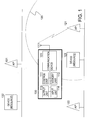
- a mobile terminal 100 which a user owns comprises a control unit 111, memory unit 112, output unit 113, input unit 114, and a communication device 101 for performing short-distance communication such as Bluetooth.
- a communication device 101 for performing short-distance communication such as Bluetooth.
- access points (AP) 121, 122, and 131 which are disposed in space with a distributed and fixed formation, and various devices (hardware resources) 123 and 132 such as a VTR, printer, PC, and so forth are connected to each access point.
- AP access points
- devices hardware resources
- an access point (AP) 121 fixedly provided is set as a master, and forms a pico-net 120, and in the event that the mobile terminal 100 which the user owns moves into a region of the pico-net 120, the mobile terminal 100 is identified as a slave through predetermined device search processing, thereby enabling communication via the access point 121 which is the master in the pico-net 120 to be performed. Consequently, the device (resource) 123 connected to the access point 121 can be used.
- the mobile terminal 100 cannot use the device 132 shown in the upper portion of Fig. 1.
- the mobile terminal 100 does not belong to the pico-net set as a communicable region of the access point (AP) 131 connected to the device 132, so the access point (AP) 131 set as a master does not identify the mobile terminal 100 as its slave.
- the mobile terminal 100 In order to solve this situation, it is necessary, as shown in Fig. 2 for example, for the mobile terminal 100 to comprise multiple wireless communication devices 211, 212, and 213, and perform communication via each device, so that the mobile terminal 100 can belong to multiple pico-nets and communicate with the access points (AP) set as the master of each pico-net to use the resources connected to each access point in parallel.
- AP access points
- the mobile terminal 100 belongs to a pico-net 163 set as a communicable region of the access point (AP) 121, to a pico-net 161 set as a communicable region of the access point (AP) 131, and to a pico-net 162 set as a communicable region of the access point (AP) 122, wherein each access point is assigned to be a master, and the mobile terminal 100 is assigned to be a slave, thereby enabling communication in each pico-net to be performed in parallel. Consequently, connection resources 123 and 132 at each access point can be used in parallel.
- the mobile terminal 100 needs to comprise multiple wireless communication devices 151, 152 and 153, which causes a problem.
- Fig. 3 illustrates device and software configuration which a mobile terminal requires.
- (a) illustrates a configuration of hardware 172 and software 171 which a mobile terminal has to be equipped with in order to perform communication by connection to only one access point as described above with reference to Fig. 1.
- one communication device for transmitting/receiving data as hardware and one each of a device driver for controlling a communication device, a network protocol stack for executing processing of a specific communication protocol, and an application program for executing specific processing for transmitting/receiving data, as software, is sufficient for communication processing conforming to a specific protocol.
- the mobile terminal needs hardware 172 and software 171 in a configuration shown in Fig. 3(b).
- three communication devices for transmitting/receiving data as hardware are required, and with regard to software, three types of device drivers for controlling each communication device, three network protocol stacks for executing processing of three types of communication protocols, and further an application program for executing specific processing for transmitting/receiving data, are required.
- the present invention has been made in light of the above-described problems, and accordingly, it is an object thereof to provide a communication processing device, a communication processing method, and a computer program, wherein in master-slave type small-scale wireless communication processing, a mobile terminal of a user is set as a master, and access points accessible from mobile terminals are set as slaves, thereby enabling the mobile terminals to perform communication using two or more access points as multiple slaves, and data processing to use multiple resources connected to each access point.
- a communication processing device comprises:
- the communication processing device has a configuration wherein parallel communication processing is performed as to different access points to which different communication protocols are applied, or different connection resources via the different access points, by parallel processing to which a plurality of different network protocol stacks in the control unit are applied.
- control unit has a configuration wherein a small-scale network is set such that the device itself is a master and one or more communicable access points are slaves, and resource information collection processing regarding a resource connected by cable to the access point from one or more access points set as slaves is performed, and processing to enter the collected resource information to the mapping table is executed.
- the communication processing device performs wireless communication with Bluetooth communication; with the control unit executing processing for searching one or more communicable access points with inquiry packet transmission using broadcasting, setting a pico-net wherein an access point which transmits a response packet for a broadcast packet is a slave, performing service search processing using SDP (Service Discovery Protocol) as to one or more communicable access points set as slaves, and registering obtained resource information to the mapping table based on the service search processing.
- SDP Service Discovery Protocol
- the mapping table is a table which stores information for performing communication processing conforming to each communication protocol as a directory configuration, including an address information data file which stores address information required for communication to which each communication protocol is applied, and a resource information file which stores accessible resource information based on communication conforming to each communication protocol; with the control unit having a configuration wherein address and resource information is obtained from the mapping table, and processing to generate and send a data processing request packet in which a resource address is set as a destination address is performed based on the obtained resource information.
- communication status setting processing based on the pico-cell information processed by the control unit includes synchronization processing in a physical layer comprising a communication unit.
- control unit has a configuration wherein search processing for communicable access points is performed as transmission processing for a broadcast packet, with generating and updating processing for the pico-cell information performed based on response transmission for the broadcast packet.
- control unit has a configuration wherein information including commands information applicable to resource address information and resources, as resource information regarding a resource connected by cable to an access point from one or more communicable access points is collected, with processing to enter the collected information to the mapping table being executed.
- a communication processing method for performing data communication as to an external device comprises:
- the communication processing method further includes a step for performing parallel communication processing which covers different access points to which different communication protocols are applied, and different connection resources via the different access points, by parallel processing to which a plurality of different network protocol stacks are applied.
- the communication processing method further includes a step for setting a small-scale network wherein the device itself is a master and one or more communicable access points are slaves, and performing resource information collection processing regarding resources connected by cable to the access point from one or more communicable access points set as slaves, and performing processing to register the collected resource information to the mapping table.
- the communication processing method performs wireless communication using Bluetooth communication, with the search step being a step wherein one or more communicable access points with inquiry packet transmission using broadcasting is searched, and a pico-net wherein the access points which transmit a response packet as to a broadcast packet are slaves is set; the method further comprising a step for performing service search processing using SDP (Service Discovery Protocol) as to one or more communicable access points set as slaves, and performing processing to enter resource information obtained based on the service search processing to the mapping table.
- SDP Service Discovery Protocol
- the mapping table being a table which stores information for performing communication processing conformed to each communication protocol as a directory configuration, and includes an address information data file which stores address information required for communication to which each communication protocol is applied, and a resource information file which stores accessible resource information based on communication conforming to each communication protocol; with the communication processing method including a step which obtains address information and resource information from the mapping table, and generating and transmitting data processing request packet on which a resource address is set as a destination address based on the obtained resource information.
- communication status setting processing based on the pico-cell information includes synchronization processing in a physical layer comprising a communication unit.
- the search step performs transmission processing for a broadcast packet, with the pico-cell information generating step performing processing based on response transmission for the broadcast packet.
- the mapping table generating step includes processing wherein information including commands information applicable to resource address information and resources, is collected as resource information regarding resources connected by cable to an access point from one or more communicable access points, and the collected information is registered to the mapping table.
- a computer program written for executing communication processing to perform data communication on a computer system as to an external device comprises:
- parallel communication processing wherein different access points applying different communication protocols, or different connection resources via different access points can be carried out, by parallel processing applying multiple different network protocol stacks.
- resource information regarding a resources connected to access points is collected from one or more communicable access points and registered in a table, which includes address information of the resources and commands information applicable to the resources, thereby enabling precise requests for data processing to be transmitted with reference to the table as to the registered resource.
- the computer program according to the present invention is a computer program which is provided to general-purpose computer systems capable of executing various types of program codes which can be provided by a computer-readable storage medium or a communication medium, for example, by storage media such as CDs, FDs, MOs, or the like, or by a communication medium such as a network. Providing such a program in a computer-readable format allows processing corresponding to the program on the computer system to be realized.
- system implies a logical convergence configuration of multiple devices, and each of the devices in the configuration are not restricted to being stored in one housing.
- the communication processing device has a configuration wherein a user can carry the device, and is a mobile type communication processing device which moves to various spaces along with the user.
- a mobile communication processing device 200 which a user owns comprises a control unit 211, memory unit 212, output unit 213, input unit 214, and a communication device 201 for performing short-distance wireless communication such as Bluetooth, IEEE 802.11, and so forth.
- the detailed configuration of the mobile communication processing device 200 will be described later.
- Access points (AP) 221, 222, and 231 are distributed and fixedly disposed in spatially distanced positions. Any device which can perform communication processing conforming to a predetermined communication protocol may serve as an access point, so for example, a PC serving as a information processing device including a communication device, a home information appliance, or the like, can be set to serve as an access point. Further, each access point is connected with various devices (hardware resources) 223 and 232 such as a VTR, printer, PC, and so forth. The user can establish communication with an access point using the mobile communication processing device 200, thereby enabling a device (resource) connected to the access point to be available.
- devices hardware resources
- the mobile communication processing device 200 is set as the master, two or more access points (AP) 221, 222, and 231 provided fixedly are set as slaves, and thus, a small-scale network (pico-net) 220 is formed.
- the two or more access points (AP) 221, 222, and 223 belong to the pico-net 220 set around the mobile communication processing device 200 which the user owns, are set as slaves, so the mobile communication processing device 200 can perform communication via the slaves in parallel. Consequently, multiple devices (resources) 223 and 232 connected to each of access points 221, 222, and 231 are available.
- each device performing master-slave type communication processing that is, the configuration of a mobile communication processing device carried by a user to be the master, and a configuration example of an access point device serving as a slave, and a resource device, will be made with reference to the drawings.
- Any device capable of performing communication processing conforming to a predetermined communication protocol may serve as the access point as described above, so a PC serving as an information processing device having a communication device, a home information appliance, and so forth, can be configurable as an access point device.
- a CPU (Central Processing Unit) 301 is a processor for executing various programs functioning as control means.
- ROM (Read-Only-Memory) 302 stores programs executed by the CPU 301 or fixed data as computing parameters.
- RAM (Random Access Memory) 303 serves as a storage area to store programs executed in the processing of the CPU 301, and as a work area for storing parameters which change as appropriate during the program processing.
- Storage means 304 include, for example, a hard disk, flash memory, or the like, which store the aforementioned mobile directory information and the like. Moreover, positional portions of the mobile directory information may be stored in the ROM 302 or the RAM 303.
- a bus 305 is configured of a PCI (Peripheral Component Internet/Interface) bus or the like, so data transfer as to each input/output device can be performed via each module and input/output interface.
- PCI Peripheral Component Internet/Interface
- Input means 306 are input units including various input switches, buttons, keyboards, and pointing devices, for example.
- the CPU 301 receives a command and executes a program stored in the ROM (Read Only Memory) 302.
- Display means 307 for example, such as a CRT, liquid crystal display, etc., display various information using text, images, and the like.
- the communication unit 308 performs wireless communication using for example, Bluetooth, IEEE 802.11, infrared data communication, and so forth.
- Bluetooth is a short-distance wireless communication technique meant to replace cable or IrDA (Infrared Data Association) which is an infrared data communication technique, and transmits/receives data and audio information using a 2.45-GHz ISM (Industrial Scientific Medical).
- IrDA Infrared Data Association
- ISM Industrial Scientific Medical
- one master has seven slaves, the communication speed is 721 [Kbps], and output is 0 [dBm] and 20 [dBm] and power consumption is low, and the frequency is high even compared with other hopping and spectrum diffusion methods wherein the frequency is hopped (change frequency) constantly on the transmitting side and the receiving side.
- a feature thereof is that directivity is not restricted on transmission/reception of data and audio between the transmitting side and the receiving side.
- FIG. 6 a configuration example with access point devices disposed in a space where a user with a mobile communication processing device moves, and devices as resources, will be described.
- Access point devices and devices serving as resources can be configured with various devices such as a locally-connected information processing device for example, specifically a PC, TV, printer, phone, or the like, with a configuration corresponding to each device.
- Fig. 6 illustrates two examples, (a) and (b).
- the configuration example shown in (a) includes a system control unit 323 for performing various sorts of control corresponding to each device.
- the system control unit 323 has, specifically, control means such as a CPU or the like, and storage means such as a ROM or RAM or the like. Alternatively, a configuration including a dedicated processor for performing processing peculiar to a device may be made.
- the storage means 324 device IDs serving as device identifiers, address information required for communication processing, and so forth are stored therein, moreover, information or the like of devices connected to an access point by LAN is stored therein.
- the configuration example shown in (a) includes both wireless communication means 321 and cable communication means 322, with wireless communication such as communication with the aforementioned Bluetooth, IEEE 802.11, infrared data communication and so forth, for example, being performed, and further, a cable connection to a LAN or the like is also made, so communication with other devices via communication means or communication via a network can be performed in this configuration.
- Fig. 6(b) is a configuration example including different access points from (a) and an information processing device as a local connection device.
- the information processing device shown in (b) includes control means such as a CPU or the like and storage means such as ROM and RAM or the like. Or, a dedicated processor for performing device-specific processing is included, and a system control unit 332 for performing various control corresponding to each device is included.
- control means such as a CPU or the like and storage means such as ROM and RAM or the like.
- storage means such as ROM and RAM or the like.
- a dedicated processor for performing device-specific processing is included
- a system control unit 332 for performing various control corresponding to each device is included.
- With the storage means 333 device IDs as device identifiers, and address information required for communication processing are stored therein, and information of devices connected by LAN to the access points is stored therein.
- the configuration example shown in Fig. 6(b) includes wireless communication means 331, and wireless communication, such as communication by the aforementioned Bluetooth, infrared data communication, or the like, is performed.
- wireless communication such as communication by the aforementioned Bluetooth, infrared data communication, or the like
- input means 334 such as switches, a keyboard, mouse, or the like
- output means 335 such as a display, speakers, or the like, are included.
- Fig. 6 illustrates two configuration examples, (a) and (b), for an information processing device settable as an access point are shown, however, various devices can be set as access points, and hardware configurations corresponding each device are made.
- the access points are devices communicable to the mobile communication processing device 200 with wireless communication, and the devices (resources) can communicate to the mobile communication processing device 200 via an access point with cable communication such as LAN or the like. Accordingly, in the configuration shown in (a) in Fig. 6, the devices (resources) are set as a configuration without the wireless communication means 321. Moreover, if the devices (resources) include the wireless communication means, they can become access points as well.
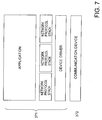
- the communication processing device has a configuration wherein processing conforming to multiple communication protocols can be performed in parallel.
- Fig. 7 a configuration example capable of performing three different communication protocols is shown.
- the communication processing device includes one communication device as hardware 372, and performs communication conforming to different communication protocols applying multiple network addresses with the one communication device.
- the communication device is used in common, so only one device driver needs to be set in the software 371 for performing control processing of communication devices.
- Network protocol stacks are set as software for performing processing of each different communication protocol, here, three network protocol stacks are set. Further, one application program for performing specific processing for transmitting/received data is set.
- An application 381 for the mobile communication processing device performs start or end processing of communication based on input from the user.
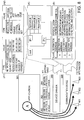
- a device driver 385 performs processing referring to a mapping table 411 stored in the memory unit of the communication processing device.
- mapping table 411 With regard to a detailed configuration of the mapping table 411, as shown in (A) in Fig. 8, information for performing communication processing conforming to each communication protocol is stored in this table with a directory configuration. As shown in (A1) in Fig. 8, [IP-1], [IP-2], ... are address information data files where address information for performing one communication protocol is stored.
- a network address, subnet mask information, and router address information, set for the device itself, are stored in the address data file, and further, one or more addresses of access points (AP) to be connected to in the event of performing communication conforming to the communication protocol thereof, are stored therein.
- AP access points
- a network protocol stack for performing processing of a communication protocol corresponding to [IP-1] is a network protocol stack 382 shown in Fig. 8, and in the event that access points for performing communication conforming to the communication protocol thereof are two access points 401 and 402 shown to the bottom left in Fig. 8, address information for these two access points 401 and 402 is stored. These access points 401 and 402 are set as slaves in the network where the mobile communication processing device is set as the master.
- the communication protocol [IP-1] and [IP-2] are different communication protocols, so with the mobile communication processing device, a different address corresponding to each communication protocol is set, the address information data files are set for each communication protocol [IP-n], and address information applied to each communication protocol is stored. That is to say, with the mobile communication processing device, in the small-scale network (pico-net) where the device itself is set as the master, an address corresponding to a protocol applied to communication as to each access point is set, thus, addresses are selected and used according to the access point to communicate with.
- pico-net small-scale network
- the address information data files [IP-1], [IP-2], ... of the mapping table 411 further include resource information files [Resource-1] ...
- the details of the resource information files are shown in (A2) in Fig. 8.
- available resource information is stored in the event of communicating with the communication protocol corresponding to the address information data file [IP-1].
- the device (resource) 223 in the event of connecting with the access point 221, the device (resource) 223 is available, and in the event that the address information data file as to a communication protocol to be applied to communication with the access point 221 is [IP-1], the resource information of the device (resource) 223 connected to the access point 221 is stored in the resource information file [Resource-1].
- the device type, device IP address, and control command information available in communication with a device are stored in the resource information files.
- the communication processing device referrers to an address information data file [IP-n] stored in such a mapping table 411 and a resource information file [Resource-m], and obtains address information and device (resource) information therefrom, and performs communication with various resources conforming to a predetermined communication protocol via an access point, and also performs various services using the resources.
- the communication device 386 of the communication processing device performs settings following the pico-cell information 412 stored in the memory unit of the communication processing device.
- a control program controlling communication devices performs settings changing processing, and pico-cell information is generated and used by the control program.
- Pico-cell information 412 stores both destination device addresses as slave information for access points (AP) and the like for performing communication with the mobile communication processing device, and physical layer communication conditions information as setting conditions of communication devices.
- the control unit made up of the CPU and so forth in the mobile communication processing device performs processing control following the software 371 as described above with reference to Fig. 7.
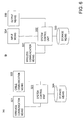
- the processing of the control unit is mainly classified into communication information acquisition processing for collecting various types of information required for communication, and communication preparatory processing for performing address settings, synchronization settings and the like, following the collected information.
- the communication information acquisition processing includes searching for communicable access points, processing for generating pico-cell information from communication settings information for each searched access point, and processing for generating a mapping table for storing available address information corresponding to a communication protocol with each access point set in the pico-cell information; and the communication preparatory processing includes address setting processing according to a communication protocol based on the mapping table, and communication status setting processing based on the pico-cell information.
- the control unit of the mobile communication processing device performs control of parallel communication processing with different access points applying different communication protocol or different connection resources via different access points, by parallel processing applying with multiple different network protocol stacks included in the aforementioned software 371 described with reference to Fig. 7.
- the mobile communication processing device sets itself as the master, and sets a small-scale network (pico-net) where one or more communicable access points are slaves and performs resource information collection processing regarding a resource connected to an access point from one or more communicable access points set as slaves, and performs processing to register collected resource information on a mapping table.
- pico-net small-scale network
- the communication processing sequence is generally divided into the following three phases.
- the device search phase (1) is processing wherein the mobile communication processing device which a user owns is set as the host, and access points within the communicable region of the mobile communication processing device are searched.
- the service search phase (2) is a processing phase wherein the mobile communication processing device obtains, via an access point, available service information with a connectable device (resource) via a successfully searched and settable access point as a communicable slave.
- the data processing phase (3) is a phase wherein the mobile communication processing device performs data processing (service) using resources based on the device (resource) information obtained in the service search (2).
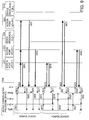
- FIG. 9 illustrates the communication sequence wherein the aforementioned network configuration of Fig. 4 is assumed.
- the two or more access points (AP) 221, 222 and 231 serving as slaves are in a communicable state, and the device (resource) 223 is connected to the access points 221 and 222 by a cable LAN.
- the device (resource) 232 is connected to the access point 231 by cable LAN.
- Fig. 9 illustrates processing sequence to be executed in the state shown in Fig. 4.
- the processing of the mobile communication processing device 200, access point 221, access point 222, device (resource) 223, access point 231, and device (resource) 232 are illustrated.
- the mobile communication processing device 200 includes the following:
- the access point (AP1-IP-1) 221 and the access point (AP2-IP-1) 222 are in a configuration to perform communication processing applying the same communication protocol [IP-1].
- the access point (AP1-IP-1) 221, the access point (AP2-IP-1) 222, and the device (resource) 223, are connected by cable LAN.
- the access point (AP3-Ip-2) 231 performs communication processing applying the communication protocol [IP-2].
- the access point (AP3-IP-2) 231 and the device (resource) 232 are connected by cable LAN.
- the mobile communication processing device first performs device search processing (steps S601 through S612).
- step S601 a device search request is transmitted to the device driver from an application of the mobile communication processing device.
- the device driver activates the device search function of the communication device.
- step S603 broadcasting of the device search protocol is performed. This is performed as processing for searching communicable access points at the present position of the mobile communication processing device.
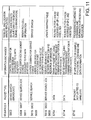
- Fig. 11 shows a diagram summarizing transmission/reception of information between devices and processing performed based on transmission/reception of information.
- the processing in steps S601 through S603 is equivalent to, for example, the broadcast transmission for inquiry in Bluetooth.
- the master confirms the existence of surrounding slaves as the first stage for establishing synchronous in a pico-net.
- the mobile communication processing device cannot identify whether the master exists in the pico-net or not, and so transmits an inquiry by broadcast with itself as a pseudo-master.
- This transmission of inquiry by broadcast shows that the mobile communication processing device exists as the master, and is performed to obtain an address (Bluetooth device address: BD-Address in the event of Bluetooth communication) from access points as slaves communicable to the mobile communication processing device as the master, and establishes synchronization between the mobile communication processing device as the master and the access points as slaves.
- Bluetooth device address Bluetooth device address: BD-Address in the event of Bluetooth communication
- step S604 the mobile communication processing device receives a response for the inquiry from the access point (AP1-IP-1) 221 serving as a slave which is communicable thereto.
- AP1-IP-1 the access point
- BD-Address the slave address
- step S605 the mobile communication processing device notifies the payload of a reception packet to the driver from the access point (AP1-IP-1) 221 serving as a slave.
- step S606 the driver notifies the results to the application.
- the application performs update processing of the pico-cell information (see Fig. 8) based on the results of notification. That is to say, the application registers the address of the access point (AP1-IP-1) 221 in the pico-cell information based on the reception packet, and records information required for communication processing, such as clock information and so forth.
- the steps S607 through S609 are processing of the response from the access point (AP3-IP-2) 231 as to broadcasting from the mobile communication processing device, and processing the response, with the same processing as with the aforementioned steps S604 through S606 being performed.
- the steps S610 through S612 are processing of the response from the access point (AP2-IP-1) 222 as to the broadcast from the mobile communication processing device, and processing of the response, with the same processing as with the aforementioned steps S604 through S606 being performed.
- the mobile communication processing device performs service search processing (steps S613 through S632).
- the service search request is transmitted from the application of the mobile communication processing device to the protocol stack (P-IP-1) for performing protocol processing of the protocol [IP-1], the device driver, and the access point (AP1-IP-1) 221 via the communication device.
- This request is output as a packet, whose address is the address of the access point (AP1-IP-1) 221 obtained at the aforementioned device search processing and registered in the pico-cell information, clearly shown as a service search request from the mobile communication processing device.
- the access point (AP1-IP-1) 221 receiving the service search request generates a response packet storing information required for performing services using a device, such as service information which the access point (AP1-IP-1) 221 and the connected device (resource) 223 can provide, both address information applied to communication processing between the mobile communication processing device and each device, available control commands set and so forth, and transmits the packet to the mobile communication processing device.
- a device such as service information which the access point (AP1-IP-1) 221 and the connected device (resource) 223 can provide, both address information applied to communication processing between the mobile communication processing device and each device, available control commands set and so forth, and transmits the packet to the mobile communication processing device.
- step S617 the response packet received by the communication device of the mobile communication processing device is notified to the device driver.
- step S618 the contents of the response packet is notified from the device driver to the application via the protocol stack (P-IP-1) for performing protocol processing of the protocol [IP-1].
- the application performs update processing of the mapping table (see Fig. 8) based on the result of notification.
- the mapping table is a table storing information for performing communication processing conforming to each communication protocol, and includes the address information data file and the resource information file.
- a network address to be set in itself, subnet mask information, and router address information, and further, addresses of access points (AP) to be connected to in the event of communication with the communication protocol thereof, are stored in the address information data file, and the resource information file has a configuration wherein available resource information is stored therein in the event of communication with a communication protocol corresponding to the address information data file.
- the device type, IP address of device, and control commands information available for communication with devices are stored in the resource information file.
- This processing is performed as processing with SDP (Service Discovery Protocol) performed between a master and slaves with synchronization established therebetween in the event of Bluetooth communication, for example.
- SDP Service Discovery Protocol
- the SDP is a protocol to confirm available services at that time, and to search functions and services provided by the master as communication processing devices making up of the pico-network or slaves.
- various providable services by the master and slaves serving as communication processing devices making up the pico-network such as playing music data, network access, or the like, can be confirmed.
- a device having Bluetooth modules stores services which it can provide as a database, and provides providable service information based on the database in the event of processing with the SDP.
- the steps S620 through S625 are service search processing performed between the mobile communication processing device and access point (AP3-IP-2) 231, wherein the same processing as with the steps S613 through S618 is performed, and a response packet storing providable service information of the access point (AP3-IP-2) 231 and the connected device (resource) 232 is transmitted to the mobile communication processing device.
- the application of the mobile communication processing device performs updating processing of the mapping table (see Fig. 8) based on the notified results.
- the steps S627 through S632 are service search processing performed between the mobile communication processing device and access point (AP2-IP-1) 222, wherein the same processing as with the steps S613 through S618 is performed, a response packet storing providable service information of the access point (AP2-IP-1) 222 and the connected device (resource) 223 is transmitted to the mobile communication processing device.
- the application of the mobile communication processing device performs update processing of the mapping table (see Fig. 8) based on the result of notification.
- mapping table (see Fig. 8) of the mobile communication processing device, registration of the required information for performing services with devices such as the service information providable with the connected devices (resources) via the access points (AP1-IP-1) 221, (AP3-IP-2) 231 and (AP2-IP-1) 222, address information of each device, available control commands set and so forth, is completed.
- devices such as the service information providable with the connected devices (resources) via the access points (AP1-IP-1) 221, (AP3-IP-2) 231 and (AP2-IP-1) 222, address information of each device, available control commands set and so forth, is completed.
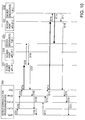
- the mobile communication processing device performs data processing (see Fig. 10, steps S701 through S721) with devices (resources).
- the device (resource) 223 is connected thereto via the access point (AP1-IP-1) 221, and the device (resource) 232 is connected thereto via the access point (AP3-IP-2) 231, accordingly, data processing services with two devices are performed.
- the processing depends on the resource to be employed.
- the device (resource) 232 is a hard disk storing contents
- the device (resource) 223 is a display for displaying received contents.
- a processing example will be described wherein the data belonging to the device (resource) 232 is transmitted to the device (resource) 223.
- a data processing request packet based on the data processing request information as to the device (resource) 223, generated by the application of the mobile communication processing device is transmitted to the device (resource) 223 through the protocol stack (P-IP-1) for performing protocol processing of the protocol [IP-1], the device driver, the communication device, and the access point (AP1-IP-1) 221.
- P-IP-1 protocol stack
- AP1-IP-1 access point
- destination addresses of packets the address of the device (resource) 223 registered in the mapping table (see Fig. 8) generated in the service search processing by the mobile communication processing device, is set therein, and information showing the contents of data processing request such as commands, parameters, and so forth is also stored therein as a payload.
- the device (resource) 223 which receives the data processing request packet, in the steps S706 through S710, notifies the received response (Ack) for data processing request to the application based on the reception packet through the access point (AP1-IP-1) 221, the communication device, device driver, and the protocol stack (P-IP-1) for performing protocol processing of the protocol [IP-1] of the mobile communication processing device.
- AP1-IP-1 access point
- P-IP-1 protocol stack
- a data processing request packet based on the data processing request information as to the device (resource) 232, generated by the application of the mobile communication processing device is transmitted to the device (resource) 232 through the protocol stack (P-IP-2) for performing protocol processing of the protocol [Ip-2], the device driver, the communication device and the access point (AP3-IP-2) 231.
- the address of the device (resource) 232 registered in the mapping table (see Fig. 8) generated in the service search processing by the mobile communication processing device is set therein, and information showing the contents of the data processing request such as commands, parameters and so forth is also stored therein as a payload.
- the data processing request is a data transmission as to the device (resource) 223, so the address information of the device (resource) 223 is stored in the data processing request packet, and then transmitted to the device (resource) 232.
- the device (resource) 232 which has received the data processing request packet performs data processing based on the received packet.
- the data processing request is a data transmission as to the device (resource) 223, so the device (resource) 232 sets the address of the device (resource) 223 as the destination address in step S716, and generates a packet whose transmission data is a payload, which is transmitted to the device (resource) 223.
- the device (resource) 232 transmits the received response (Ack) for the data processing request to the application, as a reception response to the data processing request packet from the mobile communication processing device via the access point (AP3-IP-2) 231, and the communication device, device driver, and protocol stack (P-IP-2) for performing protocol processing of the protocol [IP-2], of the mobile communication processing device.
- Ack received response
- P-IP-2 protocol stack
- the data processing request from the mobile communication processing device is transmitted to two different devices each via different access points, whereby data processing services using two separated devices (resources) can be realized.
- the data processing feature with two devices has been described, however, service with three or more devices (resources) may be realized with the same procedures as with the aforementioned embodiment.
- a CPU (Central Processing Unit) 551 is a processor for executing various programs, functioning as control means.
- ROM (Read-Only-Memory) 552 stores programs executed by the CPU 551 or fixed data as computing parameters.
- RAM (Random Access Memory) 553 is used as a storage area and work area for a program executed in processing of the CPU 551 and for parameters changing as appropriate in the program processing.
- HDD 554 performs control of a hard disk, and performs storing processing and readout processing of various data and programs as to the hard disk.
- a bus 561 is configured of a PCI (Peripheral Component Internet/Interface) bus and so forth, and enables data transfer as to each input/output device via each module and input/output interface 562.
- PCI Peripheral Component Internet/Interface
- An input unit 556 is a input unit including, for example, various input buttons, keyboards, and pointing devices. In the event of the input unit 556 being operated via a keyboard or a mouse or the like, or in the event of receiving data from a communication unit 558, a command is input to the CPU 551, and a program stored in the ROM (Read-Only-Memory) 552 is executed.
- An output unit 557 is a CRT or liquid crystal display or the like, for example, displaying various types of information by text or images or the like.
- the communication unit 558 performs communication processing as to various devices, under control of the CPU 551, and transmits data supplied from each memory unit or data transacted by the CPU 551, and performs processing for receiving data from other devices.
- a drive 559 is a drive for performing recording/playback of a removable storage medium 560 such as a flexible disk, CD-ROM (Compact Disc Read Only Memory), MO (Magneto Optical) disc, DVD (Digital Versatile Disc), magnetic disc, semiconductor memory or the like, and reproduces programs or data from each removable storage medium 560, and stores programs or data to the removable storage medium 560.
- a removable storage medium 560 such as a flexible disk, CD-ROM (Compact Disc Read Only Memory), MO (Magneto Optical) disc, DVD (Digital Versatile Disc), magnetic disc, semiconductor memory or the like, and reproduces programs or data from each removable storage medium 560, and stores programs or data to the removable storage medium 560.
- the CPU 551 reads out a program or data stored in each storage medium, and executes the program or performs the data
- the readout program or data is supplied to, for example, the RAM 553 connected via the input/output interface 562 and the bus 561, and the CPU 551 performs various processing following programs set in the RAM.
- a program storing processing sequences may be installed in the memory within a computer having built-in dedicated hardware and executed, or the program may be installed in a general-purpose computer which can execute various processing, and executed.
- a program can be stored in a storage medium such as a hard disk or ROM (Read-Only-Memory) beforehand.
- a program can be temporally or eternally stored (recorded) in a removable storage medium such as a flexible disk, CD-ROM (Compact Disc Read Only Memory), MO (Magneto Optical) disc, DVD (Digital Versatile Disc), magnetic disc, semiconductor memory, or the like.
- a removable storage medium can be provided as so called packaged software.
- a program can be transferred to a computer using wireless transfer from a download site, or using online transfer via a LAN (Local Area Network) or the Internet besides installation from the aforementioned removable media, with the computer receiving the program transferred thus, so as to be installed in a storage medium such as a built-in hard disk or the like.
- a LAN Local Area Network
- a mobile communication processing device which a user can carry searches communicable access points, generates pico-cell information from communication settings information for each searched access point, generates a mapping table storing available address information conforming to a communication protocol applied to communication with each access point set in the pico-cell information, and sets an address corresponding to a communication protocol based on the mapping table, wherein communication status setting processing is performed based on the pico-cell information, so a network wherein the device itself becomes the master and one or more access points are slaves is configured, allowing communication to each access point to be performed even in the event that two or more access points set as slaves in the network have different applicable communication protocols, and accordingly, data processing using connected resources of each access point can be performed.
- a configuration is employed wherein information, including address information of resources and commands information applicable to the resources as resource information regarding resources connected to access points obtained from one or more communicable access points, is collected and registered in a table, allowing precise data processing requests referring to the table as to registered resources, to be transmitted.
Landscapes
- Engineering & Computer Science (AREA)
- Computer Security & Cryptography (AREA)
- Computer Networks & Wireless Communication (AREA)
- Signal Processing (AREA)
- Mobile Radio Communication Systems (AREA)
- Small-Scale Networks (AREA)
Applications Claiming Priority (3)
| Application Number | Priority Date | Filing Date | Title |
|---|---|---|---|
| JP2002356981A JP4211374B2 (ja) | 2002-12-09 | 2002-12-09 | 通信処理装置、および通信処理方法、並びにコンピュータ・プログラム |
| JP2002356981 | 2002-12-09 | ||
| PCT/JP2003/015653 WO2004054177A1 (ja) | 2002-12-09 | 2003-12-08 | 通信処理装置、および通信処理方法、並びにコンピュータ・プログラム |
Publications (2)
| Publication Number | Publication Date |
|---|---|
| EP1575217A1 true EP1575217A1 (de) | 2005-09-14 |
| EP1575217A4 EP1575217A4 (de) | 2010-06-23 |
Family
ID=32500835
Family Applications (1)
| Application Number | Title | Priority Date | Filing Date |
|---|---|---|---|
| EP03777338A Withdrawn EP1575217A4 (de) | 2002-12-09 | 2003-12-08 | Kommunikationsverarbeitungsvorrichtung und - verfahren sowie computerprogramm |
Country Status (6)
| Country | Link |
|---|---|
| US (1) | US7292850B2 (de) |
| EP (1) | EP1575217A4 (de) |
| JP (1) | JP4211374B2 (de) |
| KR (1) | KR101013766B1 (de) |
| CN (1) | CN100347995C (de) |
| WO (1) | WO2004054177A1 (de) |
Families Citing this family (20)
| Publication number | Priority date | Publication date | Assignee | Title |
|---|---|---|---|---|
| JP4211374B2 (ja) * | 2002-12-09 | 2009-01-21 | ソニー株式会社 | 通信処理装置、および通信処理方法、並びにコンピュータ・プログラム |
| US7162270B2 (en) * | 2003-10-30 | 2007-01-09 | Kuo Liang Chen | Dual communication mode wireless network transmission device |
| KR100695201B1 (ko) | 2004-10-01 | 2007-03-14 | 에스케이 텔레콤주식회사 | 블루투스 기기와 이동통신망 간의 통신 중계 방법 및 시스템 |
| KR100750999B1 (ko) * | 2004-12-20 | 2007-08-22 | 삼성전자주식회사 | 휴대단말기의 통화/메시지 관련 이벤트 처리 장치 및 방법 |
| TWI308018B (en) * | 2005-11-23 | 2009-03-21 | Inst Information Industry | Wireless communication system, apparatus, method and computer readable medium therefor for packet transmission |
| CN101480013B (zh) * | 2006-06-30 | 2013-05-29 | 艾利森电话股份有限公司 | 用于提供对附着于网络注册装置的媒体资源的访问的技术 |
| KR101315304B1 (ko) | 2006-12-08 | 2013-10-04 | 삼성전자주식회사 | 유비셀 기지국의 자동 설치 시스템 및 그 방법 |
| US7664894B2 (en) * | 2007-09-14 | 2010-02-16 | Broadcom Corporation | Wireless human interface device (HID) coordination |
| US20090249457A1 (en) * | 2008-03-25 | 2009-10-01 | Graff Bruno Y | Accessing secure network resources |
| US20110153891A1 (en) * | 2008-08-20 | 2011-06-23 | Akihiro Ebina | Communication apparatus and communication control method |
| KR101086540B1 (ko) * | 2009-11-03 | 2011-11-23 | 주식회사 팬택 | 소형 기지국 진입을 위한 단말, 네트워크 장치 및 이의 동작 방법 |
| CN102378303B (zh) * | 2010-08-26 | 2015-06-10 | 中国移动通信有限公司 | 一种选择wifi接入点接入网络的方法及装置 |
| CN102186164B (zh) * | 2011-02-18 | 2014-04-02 | 华为技术有限公司 | 操作设备资源的方法和管理装置 |
| US9184987B2 (en) * | 2011-02-23 | 2015-11-10 | Tyco Fire & Security Gmbh | System and method for automatic configuration of master/slave devices on a network |
| JP5655672B2 (ja) * | 2011-03-31 | 2015-01-21 | 富士通株式会社 | プログラム、情報通信機器および連携方法 |
| WO2013109300A1 (en) * | 2012-01-19 | 2013-07-25 | Intel Corporation | Systems and methods for service discovery |
| JP6008617B2 (ja) * | 2012-06-29 | 2016-10-19 | キヤノン株式会社 | 通信装置およびその制御方法、並びにプログラム |
| CN108268328B (zh) * | 2013-05-09 | 2022-04-22 | 华为技术有限公司 | 数据处理装置及计算机 |
| JP6501624B2 (ja) * | 2015-05-29 | 2019-04-17 | キヤノン株式会社 | 情報処理装置、制御方法及びプログラム |
| JP6388410B2 (ja) * | 2016-08-31 | 2018-09-12 | キヤノン株式会社 | 通信装置およびその制御方法、並びにプログラム |
Family Cites Families (15)
| Publication number | Priority date | Publication date | Assignee | Title |
|---|---|---|---|---|
| JP3454947B2 (ja) * | 1994-06-07 | 2003-10-06 | 富士通株式会社 | パーソナル通信サービス分散制御システム |
| GB2290195B (en) * | 1994-06-10 | 1998-08-05 | Northern Telecom Ltd | Automatic determination and tuning of pico-cell topology for low-power wireless systems |
| CA2129193C (en) * | 1994-07-29 | 1999-07-20 | Peter E. Reissner | Access point tracking for mobile wireless network node |
| JP3251797B2 (ja) * | 1995-01-11 | 2002-01-28 | 富士通株式会社 | ワイヤレスlanシステム |
| JP3242283B2 (ja) | 1995-04-26 | 2001-12-25 | 株式会社日立製作所 | 無線通信システムおよび移動無線端末装置 |
| US6014406A (en) | 1995-04-26 | 2000-01-11 | Hitachi, Ltd. | Frequency-hopped wireless communication system and mobile wireless terminal |
| JPH1188331A (ja) * | 1997-09-05 | 1999-03-30 | Toshiba Corp | 通信システムにおける通信方法のプログラム情報を格納したコンピュータ読み取り可能な記憶媒体 |
| US6026297A (en) * | 1997-09-17 | 2000-02-15 | Telefonaktiebolaget Lm Ericsson | Contemporaneous connectivity to multiple piconets |
| US5862452A (en) * | 1997-10-20 | 1999-01-19 | Motorola, Inc. | Method, access point device and peripheral devices for low complexity dynamic persistence mode for random access in a wireless communication system |
| US6600734B1 (en) * | 1998-12-17 | 2003-07-29 | Symbol Technologies, Inc. | Apparatus for interfacing a wireless local network and a wired voice telecommunications system |
| JP2002290420A (ja) * | 2001-03-23 | 2002-10-04 | Toshiba Corp | 無線通信における多端末アクセス制御方法およびシステム |
| KR20040002416A (ko) * | 2001-05-01 | 2004-01-07 | 코닌클리케 필립스 일렉트로닉스 엔.브이. | 무선 통신 장치 |
| JP2002353978A (ja) * | 2001-05-25 | 2002-12-06 | Pioneer Electronic Corp | 主局又は従局機能を有する無線通信端末 |
| KR100447411B1 (ko) * | 2001-12-26 | 2004-09-04 | 한국전자통신연구원 | 이동 단말기의 위치 추적 장치 및 방법 |
| JP4211374B2 (ja) * | 2002-12-09 | 2009-01-21 | ソニー株式会社 | 通信処理装置、および通信処理方法、並びにコンピュータ・プログラム |
-
2002
- 2002-12-09 JP JP2002356981A patent/JP4211374B2/ja not_active Expired - Fee Related
-
2003
- 2003-12-08 EP EP03777338A patent/EP1575217A4/de not_active Withdrawn
- 2003-12-08 WO PCT/JP2003/015653 patent/WO2004054177A1/ja not_active Ceased
- 2003-12-08 US US10/533,529 patent/US7292850B2/en not_active Expired - Fee Related
- 2003-12-08 KR KR1020057007857A patent/KR101013766B1/ko not_active Expired - Fee Related
- 2003-12-08 CN CNB2003801054846A patent/CN100347995C/zh not_active Expired - Fee Related
Also Published As
| Publication number | Publication date |
|---|---|
| CN100347995C (zh) | 2007-11-07 |
| US20060019652A1 (en) | 2006-01-26 |
| JP2004193775A (ja) | 2004-07-08 |
| KR20050072785A (ko) | 2005-07-12 |
| US7292850B2 (en) | 2007-11-06 |
| KR101013766B1 (ko) | 2011-02-14 |
| CN1723655A (zh) | 2006-01-18 |
| WO2004054177A1 (ja) | 2004-06-24 |
| JP4211374B2 (ja) | 2009-01-21 |
| EP1575217A4 (de) | 2010-06-23 |
Similar Documents
| Publication | Publication Date | Title |
|---|---|---|
| US7292850B2 (en) | Communication processing apparatus, communication processing method, and computer program | |
| CN101247610B (zh) | 管理多种短距离无线技术通信的方法、设备及系统 | |
| US8265004B2 (en) | Transferring data using ad hoc networks | |
| CN114697929B (zh) | 连接建立方法及电子设备 | |
| US8559410B2 (en) | Self-configuring, self-optimizing wireless local area network system | |
| KR101707364B1 (ko) | 무선 도킹 서비스를 수행하기 위한 방법 및 장치 | |
| EP3461225B1 (de) | Kommunikationsvorrichtung | |
| US20180220311A1 (en) | Wireless communication device, wireless communication system, wireless communication method, and program | |
| US20050136909A1 (en) | Radio device communication setting method | |
| US20120179737A1 (en) | System and method for searching for mobile devices, and for establishing connections and data exchange between the mobile devices | |
| US20060253559A1 (en) | Discovering proximate apparatus and services in a wireless network | |
| TW201141151A (en) | Wireless communication device, wireless communication system, program and wireless communication method | |
| KR20160091058A (ko) | 영상처리장치 및 그 제어방법 | |
| EP1458136B1 (de) | Datenkommunikationssystem, datenkommunikationsvorrichtung und datenkommunikationsverfahren | |
| JP2011135325A (ja) | 無線通信システム、無線通信機器および情報通知方法 | |
| CN102065479B (zh) | 无线通信系统、无线通信装置和无线通信方法 | |
| EP1947818B1 (de) | Kommunikationssystem und kommunikationsverfahren | |
| EP1531581B1 (de) | Information, verarbeitungsgerät, datenverarbeitungssystem und -verfahren sowie -computerprogramm | |
| TW200824399A (en) | Mobile communication system and device, network access device and key setting method thereof | |
| RU2574775C1 (ru) | Аппарат связи и способ управления таким аппаратом | |
| RU2574835C1 (ru) | Устройство связи и способ управления таким устройством |
Legal Events
| Date | Code | Title | Description |
|---|---|---|---|
| PUAI | Public reference made under article 153(3) epc to a published international application that has entered the european phase |
Free format text: ORIGINAL CODE: 0009012 |
|
| 17P | Request for examination filed |
Effective date: 20050512 |
|
| AK | Designated contracting states |
Kind code of ref document: A1 Designated state(s): AT BE BG CH CY CZ DE DK EE ES FI FR GB GR HU IE IT LI LU MC NL PT RO SE SI SK TR |
|
| AX | Request for extension of the european patent |
Extension state: AL LT LV MK |
|
| DAX | Request for extension of the european patent (deleted) | ||
| RBV | Designated contracting states (corrected) |
Designated state(s): DE FR GB |
|
| A4 | Supplementary search report drawn up and despatched |
Effective date: 20100526 |
|
| RIC1 | Information provided on ipc code assigned before grant |
Ipc: H04W 48/16 20090101AFI20100519BHEP |
|
| 17Q | First examination report despatched |
Effective date: 20100908 |
|
| GRAP | Despatch of communication of intention to grant a patent |
Free format text: ORIGINAL CODE: EPIDOSNIGR1 |
|
| INTG | Intention to grant announced |
Effective date: 20141216 |
|
| STAA | Information on the status of an ep patent application or granted ep patent |
Free format text: STATUS: THE APPLICATION IS DEEMED TO BE WITHDRAWN |
|
| 18D | Application deemed to be withdrawn |
Effective date: 20150429 |