EP1574994A1 - Computerprogramm, Verfahren und Vorrichtung zur Bewegungsschätzung aus einer Sequenz zweidimensionaler Arrays von Abtastwerten, optische Maus, die eine solche Vorrichtung beinhaltet - Google Patents
Computerprogramm, Verfahren und Vorrichtung zur Bewegungsschätzung aus einer Sequenz zweidimensionaler Arrays von Abtastwerten, optische Maus, die eine solche Vorrichtung beinhaltet Download PDFInfo
- Publication number
- EP1574994A1 EP1574994A1 EP04354011A EP04354011A EP1574994A1 EP 1574994 A1 EP1574994 A1 EP 1574994A1 EP 04354011 A EP04354011 A EP 04354011A EP 04354011 A EP04354011 A EP 04354011A EP 1574994 A1 EP1574994 A1 EP 1574994A1
- Authority
- EP
- European Patent Office
- Prior art keywords
- motion
- along
- resolution
- axis
- given
- Prior art date
- Legal status (The legal status is an assumption and is not a legal conclusion. Google has not performed a legal analysis and makes no representation as to the accuracy of the status listed.)
- Granted
Links
Images


Classifications
-
- G—PHYSICS
- G06—COMPUTING OR CALCULATING; COUNTING
- G06T—IMAGE DATA PROCESSING OR GENERATION, IN GENERAL
- G06T7/00—Image analysis
- G06T7/20—Analysis of motion
- G06T7/207—Analysis of motion for motion estimation over a hierarchy of resolutions
Definitions
- the present invention relates to techniques for estimating motion from a sequence of bidimensional arrays of sampled values such as e.g. video frames.
- the invention was developed by paying specific attention to the possible application to estimating global motion in a consecutive stream of pictures taken for example by a camera.
- a preferred, yet non-limiting field of application of the invention are optical mouse applications where an optical sensor (“finger sensor”) generates a signal comprised of a sequence of bidimensional arrays of sampled values indicative of mouse displacement.
- Recursive motions estimation is frequently used in a digital video encoding techniques, as witnessed e.g. by EP-A-0 917 363 or EP-A-0 944 245.
- EP-A-1 361 541 proposes a possible application of motion estimation to an optical mouse.
- EP-A-1 361 541 discloses a method of estimating global motion based on a sequence of subsequent video images (i.e. bidimensional arrays of sampled values), such as those received via an optical mouse for the purposes of detecting its movement. Subsequent video images are represented by digital signals arranged in frames.
- the method provides for choosing, from amongst a series of vectors originating from linear combinations of motion vectors resulting from estimates of previous frames and/or constant vectors, a vector considered as the best match for estimating the motion occurring between the two frames.
- the selection operation in turn includes the operations of:
- Motion estimation of an object involves estimating the global motion flow intrinsic in a sequence of subsequent images, that is bidimensional arrays of sampled values.
- Each frame is generally comprised of few pixels (for instance 20x20), but the frame rate is generally rather high (up to 10,000 frames/second) if swift movements are to be detected.
- the figure in questions shows (in continuous line, designated A) the actual movement of e.g. a mouse over an x-y plane.
- the same figures shows (in dotted chain line, designated B) how such a movement may be detected by means of an arrangement as disclosed in e.g. EP-A-1 361 541 if a fixed (highest) level of resolution is used.
- the object of the present invention is thus to provide an improved arrangement dispensing with the drawbacks of the prior art arrangements considered in the foregoing, with special emphasis placed on possible application in an optical mouse context.
- the invention also relates to a corresponding system, a mouse arrangement including such a system as well as a computer program product loadable in the memory of at least one computer and including software code portions for performing the method of the invention.
- a preferred embodiment of the invention is thus a method for estimating motion in a sequence of bidimensional arrays of sampled values (e.g. video frames), the method including the step of generating estimated motion vectors having at least one component and preferably two components along two reference axes (i.e. x and y axes).
- Motion estimation is performed with a given resolution and the method described herein includes at least one, and preferably both of:
- a particularly preferred embodiment of the invention is directed to estimating global motion in a consecutive stream of pictures taken from example by a camera. Preferably, this is achieved via a block matching recursive motion estimation technique, with an adaptive estimation arrangement.
- the arrangement described herein is particularly adapted for use in new-generation mouses using a video sensor in the place of the ball in order to detect the motion imposed by the user.
- the arrangement described herein can also be used e.g. in capacitive sensors for acquiring digital fingerprints, new generation telephone terminals, personal digital assistants (PDAs), optical pens for electronic writing.
- PDAs personal digital assistants
- the list reproduced here is obviously non-limiting and this explains i.a. why the annexed claims generally refer to estimating motion from a sequence of bidimensional arrays of sampled values, irrespective of whether these may be termed "images" in a proper sense.
- the arrangement described herein derives the motion imposed to the mouse by the user starting from the output frames from a sensor (such as e.g. a video sensor or a camera). As a result of motion, the detector will capture moving images of the surface over which it is moving. Once the relative motion between the two images is detected, a corresponding displacement will be imposed onto the screen pointer controlled by the optical mouse.
- a sensor such as e.g. a video sensor or a camera
- object is achieved via an adaptive estimation algorithm wherein the resolution (e.g. precision, accuracy) of estimation to be changed depending on whether the input video frame is representative of high speed motion or, alternatively, of a relatively slow or very slow, detailed motion.
- the resolution e.g. precision, accuracy
- the arrangement described herein is in a position to automatically adapt the resolution of estimation to the current motion detected, using a higher or lower resolution, i.e. more or less accuracy as necessary.
- the arrangement described here can be used as a stand-alone arrangement or in conjunction with adaptive frame rate arrangement as described in a parallel application filed on even date by the same applicants.
- reference M indicates a mouse associated with a personal computer PC.
- the mouse M sends the image signal generated by the camera C (capable of adequately defining any image detected within the surrounding environment) to the personal computer PC, upon which the processing functions described in the following are preferable executed.
- image processing could be performed directly by the mouse, via dedicated circuitry, with only estimated motion information being sent to the PC.
- the senor C can be configured in a manner to supply images in digital format directly in output, ready for transmission to the personal computer PC via any type of connection (indicated in the example herein in the form of a cable W) existing between the mouse M and the personal computer PC.
- the sensor C does not necessarily need to be a camera, and could be some other type of sensor, even based on other physical principles, but suitable for supplying an array of N values/pixels in output, 20x20 for example, which can be used as frames.
- the "video frames” referred to herein are thus exemplary of a sequence of bidimensional arrays of sampled values as generated by the sensor C, irrespective of whether these can be properly regarded as constituting "video signals" or "images".
- the (relative) movement estimate of the said frames generated by the sensor C can be converted (according to known criteria and therefore not requiring a detailed description in this context) into an estimate of the movement of the sensor C and, in consequence, of the mouse M as a whole.
- Estimates are typically carried out on the frames sampled by the sensor C starting from the video signal generated by the sensor C. Each frame is estimated with respect to one or more preceding "reference" frames, for example (but not necessarily) with respect to the immediately preceding one.
- Each vector is thus expressed in coordinates having a precision in fractions of a pixel, according to the implementation and depending to the desired precision of estimation.
- Pixels with a non-integer precision can be derived via known standard interpolation techniques, such as a simple two-dimensional linear interpolation for example.
- Starting vectors are constructed, in a known manner and therefore not requiring a detailed description in this context, starting from the last K winning vectors.
- the last K winners are stored in a FIFO (First In First Out) memory and the below described linear combinations applied (e.g. for constant acceleration, the difference between the last and penultimate winners is added to the last winner).
- FIFO First In First Out
- the digital video signal is then analysed by considering a series (consisting of a variable number of readers from 0 to N) of vectors originating from linear combinations of vectors produced by previous frame estimates (so-called SEED vectors) and/or constant vectors).
- SEED vectors a series of vectors originating from linear combinations of vectors produced by previous frame estimates
- constant vectors a selection process to determine which vector is the best for estimating the motion that has effectively occurred between the two frames.
- V(t) is an estimated vector for indicating the motion between the frame t and the frame t-1
- some (non exhaustive) examples of what these SEED vectors could be are given below - naturally with reference to the movement estimate for frame T 0 :
- identification number of the individual SEED vectors could dynamically change over time, following measurements related to operating conditions (estimated motion is null, slow, rapid etc.).
- motion and “motion estimation” generally indicate the difference(s) and the corresponding estimation processes that may be performed, in a manner known by itself, over a sequence of bidimensional arrays of sampled values irrespective of whether these represent "images" in a proper sense.
- estimated null motion can assume a significant role, as it corresponds to all situations in which the mouse M is not being used by the user or is moved so slowly that movement is not detected.
- At least one of the component of the motion vector estimated may in fact be "null", when the corresponding component of physical motion is in fact non-null, but simply so small that it cannot be detected in view of the degree of resolution of detection. Consequently, a non-null component of a very slow motion may well result in a null component in the estimated motion vector.
- the adaptive resolution arrangement described herein is based on the principle of selecting the degree of resolution adapted for estimation dynamically and in an independent manner in the two directions.
- resolution can be full pixel in the horizontal x-direction while being 1/16 pixel in the vertical y-direction, or vice-versa.
- the arrangement described herein is thus in a position to estimate based on the current motion the optimum resolution for each axis.
- a basic concept is that the degree of resolution is varied for each axis dynamically depending on the amount motion detected up to that moment.
- a value of resolution can be set for instance at the average value between the maximum and the minimum interpolation (for instance 1/4 pixel).
- the finest interpolation value by assuming that the sensor (e.g. the camera C on the mouse M) is a standstill.
- Motion estimation is started in a step 104 using that resolution, until a number of values equal to K (for instance 8 or 16) is reached. Thereafter, in a step 106, the adaptation metrics can be estimated independently for each axis (x and y).
- the average of a certain number of estimated values of the homologous component of the motion vector can be taken for that purpose.
- the number in question can be possibly selected differently for the x axis and the y axis.
- a step 108 the average values in question are compared with two threshold S 1 and S 2 .
- the resolution is increased (for instance, from 1/4 pixel to 1/8 pixel) for the axis in question.
- the resolution will be reduced (for instance from 1/4 pixel to 1/2 pixel).
- the block 114 indicates a motion estimation step carried out (on both axes x and y) by using the resolution estimated independently for each axis in steps 110 and 112 based on the last motion vectors estimated.
- the estimation process is continued by dynamically adapting the interpolation resolution at each step along the lines of the process detailed in the foregoing.
- the arrangement is dimensioned for operating with the maximum resolution available (for instance 1/64 pixel).
- the measurement unit for the motion vector is 1/64 pixel, whereby motion over a pixel will therefore be represented by the value 64.
- a linear interpolator having a resolution 1/64 is implemented.
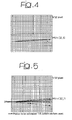
- both figures 4 and 5 refer to a 1/32 pixel grid.
- figure 5 shows the possibility of adapting to an unbalanced motion, where the motion is equal to 1/32 along the y axis and one pixel the x axis. In that case, an update with a value 1/32 is used along the y axis and an update with a value 1/2 is used along the x axis.
- figures 4 and 5 show the possibility for the arrangement described herein to estimate a motion that is fast along the x axis and slow along the y axis.
- Figure 5 shows that by using updates of different lengths (e.g.+/-16 or +/- 32 along the x axis and +/- 1 along the y axis as previously indicated) it is possible to approximate the movement in both directions with a high degree of accuracy.
- +/- 1 is used along the y axis independently of +/- 32 being used along the x axis.
- That arrangement includes the steps of performing motion estimation between a current frame and a reference frame to derive an estimated motion vector. If at least one of the components of said estimated motion vector is null, at least one of the following steps is performed:
- these two arrangements can be used disjointly or jointly in order to achieve the maximum degree of estimation quality. This both in the case of motion having different speeds over the two axes, and in the case of slow motion along both axes.
- the arrangement described herein can also be used in the area of digital video processing (for instance for moto-compensated frame rate conversion) and encoding (for instance full-pixel, half-pixel or quarter-pixel motion estimation as is the case of e.g. MPEG-2, MPEG-4 and H.264).
- digital video processing for instance for moto-compensated frame rate conversion
- encoding for instance full-pixel, half-pixel or quarter-pixel motion estimation as is the case of e.g. MPEG-2, MPEG-4 and H.264).
Landscapes
- Engineering & Computer Science (AREA)
- Multimedia (AREA)
- Computer Vision & Pattern Recognition (AREA)
- Physics & Mathematics (AREA)
- General Physics & Mathematics (AREA)
- Theoretical Computer Science (AREA)
- Image Analysis (AREA)
Priority Applications (1)
| Application Number | Priority Date | Filing Date | Title |
|---|---|---|---|
| EP04354011A EP1574994B1 (de) | 2004-03-11 | 2004-03-11 | Computerprogramm, Verfahren und Vorrichtung zur Bewegungsschätzung aus einer Sequenz zweidimensionaler Arrays von Abtastwerten, optische Maus, die eine solche Vorrichtung beinhaltet |
Applications Claiming Priority (1)
| Application Number | Priority Date | Filing Date | Title |
|---|---|---|---|
| EP04354011A EP1574994B1 (de) | 2004-03-11 | 2004-03-11 | Computerprogramm, Verfahren und Vorrichtung zur Bewegungsschätzung aus einer Sequenz zweidimensionaler Arrays von Abtastwerten, optische Maus, die eine solche Vorrichtung beinhaltet |
Publications (2)
| Publication Number | Publication Date |
|---|---|
| EP1574994A1 true EP1574994A1 (de) | 2005-09-14 |
| EP1574994B1 EP1574994B1 (de) | 2012-05-30 |
Family
ID=34814433
Family Applications (1)
| Application Number | Title | Priority Date | Filing Date |
|---|---|---|---|
| EP04354011A Expired - Lifetime EP1574994B1 (de) | 2004-03-11 | 2004-03-11 | Computerprogramm, Verfahren und Vorrichtung zur Bewegungsschätzung aus einer Sequenz zweidimensionaler Arrays von Abtastwerten, optische Maus, die eine solche Vorrichtung beinhaltet |
Country Status (1)
| Country | Link |
|---|---|
| EP (1) | EP1574994B1 (de) |
Cited By (3)
| Publication number | Priority date | Publication date | Assignee | Title |
|---|---|---|---|---|
| EP1860529A1 (de) * | 2006-05-24 | 2007-11-28 | Stmicroelectronics Sa | Maus mit variabler Verstärkung |
| EP1998288A1 (de) * | 2007-05-31 | 2008-12-03 | Stmicroelectronics Sa | Verfahren zur Bewegungsbestimmung einer Einheit, die mit einem Bildsequenzsensor ausgestattet ist, sowie entsprechendes Computerprogramm, Modul und optische Maus |
| US7889468B2 (en) | 2007-01-31 | 2011-02-15 | Stmicroelectronics Sa | Protection of integrated electronic circuits from electrostatic discharge |
Citations (2)
| Publication number | Priority date | Publication date | Assignee | Title |
|---|---|---|---|---|
| US6014181A (en) * | 1997-10-13 | 2000-01-11 | Sharp Laboratories Of America, Inc. | Adaptive step-size motion estimation based on statistical sum of absolute differences |
| US20030189548A1 (en) * | 2002-04-09 | 2003-10-09 | Fabrizio Rovati | Process and device for global motion estimation in a sequence of images and a computer program product therefor |
-
2004
- 2004-03-11 EP EP04354011A patent/EP1574994B1/de not_active Expired - Lifetime
Patent Citations (2)
| Publication number | Priority date | Publication date | Assignee | Title |
|---|---|---|---|---|
| US6014181A (en) * | 1997-10-13 | 2000-01-11 | Sharp Laboratories Of America, Inc. | Adaptive step-size motion estimation based on statistical sum of absolute differences |
| US20030189548A1 (en) * | 2002-04-09 | 2003-10-09 | Fabrizio Rovati | Process and device for global motion estimation in a sequence of images and a computer program product therefor |
Non-Patent Citations (2)
| Title |
|---|
| ACAME M ET AL SOCIETY OF PHOTO-OPTICAL INSTRUMENTATION ENGINEERS (SPIE): "Adaptive-size hierarchival block matching for efficient motion compensation of video sequences", ADVANCED IMAGE AND VIDEO COMMUNICATIONS AND STORAGE TECHNOLOGIES. AMSTERDAM, MAR. 20 - 23, 1995, BELLINGHAM, SPIE, US, vol. VOL. 2451, 1995, pages 112 - 120, XP000732651, ISBN: 0-8194-1802-1 * |
| BUSCHMANN R: "Efficiency of displacement estimation techniques", SIGNAL PROCESSING. IMAGE COMMUNICATION, ELSEVIER SCIENCE PUBLISHERS, AMSTERDAM, NL, vol. 10, no. 1-3, 1 July 1997 (1997-07-01), pages 43 - 61, XP004082701, ISSN: 0923-5965 * |
Cited By (5)
| Publication number | Priority date | Publication date | Assignee | Title |
|---|---|---|---|---|
| EP1860529A1 (de) * | 2006-05-24 | 2007-11-28 | Stmicroelectronics Sa | Maus mit variabler Verstärkung |
| US8471816B2 (en) | 2006-05-24 | 2013-06-25 | Stmicroelectronics Sa | Variable gain mouse |
| US7889468B2 (en) | 2007-01-31 | 2011-02-15 | Stmicroelectronics Sa | Protection of integrated electronic circuits from electrostatic discharge |
| EP1998288A1 (de) * | 2007-05-31 | 2008-12-03 | Stmicroelectronics Sa | Verfahren zur Bewegungsbestimmung einer Einheit, die mit einem Bildsequenzsensor ausgestattet ist, sowie entsprechendes Computerprogramm, Modul und optische Maus |
| US8264462B2 (en) | 2007-05-31 | 2012-09-11 | Stmicroelectronics S.A. | Motion estimation with adaptation of the correlation block size |
Also Published As
| Publication number | Publication date |
|---|---|
| EP1574994B1 (de) | 2012-05-30 |
Similar Documents
| Publication | Publication Date | Title |
|---|---|---|
| US5103305A (en) | Moving object detecting system | |
| KR101861722B1 (ko) | 비디오 데이터를 처리하는 방법과 이미지 처리 회로 | |
| WO2006078861A2 (en) | Method, system and apparatus for a time stamped visual motion sensor | |
| JP2003076486A (ja) | ポインティングデバイス | |
| JP2003533800A (ja) | Mcアップコンバージョンにおけるハローを低減する動き推定器 | |
| KR20080072826A (ko) | 견고한 온라인 얼굴 트래킹을 위한 방법 및 시스템 | |
| US7099512B2 (en) | Process and device for global motion estimation in a sequence of images and a computer program product therefor | |
| CN101557516B (zh) | 视频质量评估方法及装置 | |
| KR20050012768A (ko) | 현재 모션 벡터를 추정하는 유닛 및 방법 | |
| KR100217485B1 (ko) | 동영상 부호기 또는 복호기에서 이동보상방법 | |
| EP1574994B1 (de) | Computerprogramm, Verfahren und Vorrichtung zur Bewegungsschätzung aus einer Sequenz zweidimensionaler Arrays von Abtastwerten, optische Maus, die eine solche Vorrichtung beinhaltet | |
| JPH08201464A (ja) | テレビジョン映像信号のs/n値検出方法 | |
| US8189054B2 (en) | Motion estimation method, device, and system for image processing | |
| CN105869108B (zh) | 一种用于动平台移动目标侦测中的图像配准方法 | |
| CN118334560B (zh) | 一种基于视频监控的三轴转台状态监测方法 | |
| JP3175914B2 (ja) | 画像符号化方法および画像符号化装置 | |
| EP1574993B1 (de) | Computerprogramm, Verfahren und Vorrichtung zur Bewegungsschätzung aus einer Sequenz zweidimensionaler Arrays von Abtastwerten, optische Maus, die eine solche Vorrichtung beinhaltet | |
| KR0123077B1 (ko) | 국부 최소치를 이용한 이동량 측정 방법 및 장치 | |
| KR100436593B1 (ko) | 능동 카메라 환경에서의 고속 움직임 검출을 위한 배경보상 장치 및 방법 | |
| JP4674920B2 (ja) | 対象個数検出装置および対象個数検出方法 | |
| JP2001307104A (ja) | 動画像のオブジェクト抽出装置 | |
| TWI874269B (zh) | 動態影像中固定圖像偵測方法與系統 | |
| CN1648939A (zh) | 手持式指向装置以及估计一位移量的方法 | |
| Khan et al. | Real time object tracking using BMA | |
| JP3271387B2 (ja) | 動き量検出装置及び動き量検出方法 |
Legal Events
| Date | Code | Title | Description |
|---|---|---|---|
| PUAI | Public reference made under article 153(3) epc to a published international application that has entered the european phase |
Free format text: ORIGINAL CODE: 0009012 |
|
| AK | Designated contracting states |
Kind code of ref document: A1 Designated state(s): AT BE BG CH CY CZ DE DK EE ES FI FR GB GR HU IE IT LI LU MC NL PL PT RO SE SI SK TR |
|
| AX | Request for extension of the european patent |
Extension state: AL LT LV MK |
|
| 17P | Request for examination filed |
Effective date: 20051110 |
|
| AKX | Designation fees paid |
Designated state(s): DE FR GB IT |
|
| 17Q | First examination report despatched |
Effective date: 20090318 |
|
| RAP1 | Party data changed (applicant data changed or rights of an application transferred) |
Owner name: STMICROELECTRONICS SRL Owner name: STMICROELECTRONICS S.A. |
|
| GRAP | Despatch of communication of intention to grant a patent |
Free format text: ORIGINAL CODE: EPIDOSNIGR1 |
|
| GRAS | Grant fee paid |
Free format text: ORIGINAL CODE: EPIDOSNIGR3 |
|
| GRAA | (expected) grant |
Free format text: ORIGINAL CODE: 0009210 |
|
| RAP1 | Party data changed (applicant data changed or rights of an application transferred) |
Owner name: STMICROELECTRONICS SRL Owner name: STMICROELECTRONICS S.A. |
|
| AK | Designated contracting states |
Kind code of ref document: B1 Designated state(s): DE FR GB IT |
|
| REG | Reference to a national code |
Ref country code: GB Ref legal event code: FG4D |
|
| REG | Reference to a national code |
Ref country code: DE Ref legal event code: R096 Ref document number: 602004037965 Country of ref document: DE Effective date: 20120802 |
|
| PG25 | Lapsed in a contracting state [announced via postgrant information from national office to epo] |
Ref country code: IT Free format text: LAPSE BECAUSE OF FAILURE TO SUBMIT A TRANSLATION OF THE DESCRIPTION OR TO PAY THE FEE WITHIN THE PRESCRIBED TIME-LIMIT Effective date: 20120530 |
|
| PLBE | No opposition filed within time limit |
Free format text: ORIGINAL CODE: 0009261 |
|
| STAA | Information on the status of an ep patent application or granted ep patent |
Free format text: STATUS: NO OPPOSITION FILED WITHIN TIME LIMIT |
|
| 26N | No opposition filed |
Effective date: 20130301 |
|
| REG | Reference to a national code |
Ref country code: DE Ref legal event code: R097 Ref document number: 602004037965 Country of ref document: DE Effective date: 20130301 |
|
| REG | Reference to a national code |
Ref country code: FR Ref legal event code: ST Effective date: 20131129 |
|
| PG25 | Lapsed in a contracting state [announced via postgrant information from national office to epo] |
Ref country code: FR Free format text: LAPSE BECAUSE OF NON-PAYMENT OF DUE FEES Effective date: 20130402 |
|
| PGFP | Annual fee paid to national office [announced via postgrant information from national office to epo] |
Ref country code: GB Payment date: 20230222 Year of fee payment: 20 Ref country code: DE Payment date: 20230221 Year of fee payment: 20 |
|
| REG | Reference to a national code |
Ref country code: DE Ref legal event code: R071 Ref document number: 602004037965 Country of ref document: DE |
|
| REG | Reference to a national code |
Ref country code: GB Ref legal event code: PE20 Expiry date: 20240310 |
|
| PG25 | Lapsed in a contracting state [announced via postgrant information from national office to epo] |
Ref country code: GB Free format text: LAPSE BECAUSE OF EXPIRATION OF PROTECTION Effective date: 20240310 |