EP1574000B1 - Verfahren zur Protokollerkennung und Analyse in Datennetzwerken - Google Patents
Verfahren zur Protokollerkennung und Analyse in Datennetzwerken Download PDFInfo
- Publication number
- EP1574000B1 EP1574000B1 EP03748200A EP03748200A EP1574000B1 EP 1574000 B1 EP1574000 B1 EP 1574000B1 EP 03748200 A EP03748200 A EP 03748200A EP 03748200 A EP03748200 A EP 03748200A EP 1574000 B1 EP1574000 B1 EP 1574000B1
- Authority
- EP
- European Patent Office
- Prior art keywords
- protocol
- name
- data structure
- information
- signature
- Prior art date
- Legal status (The legal status is an assumption and is not a legal conclusion. Google has not performed a legal analysis and makes no representation as to the accuracy of the status listed.)
- Expired - Lifetime
Links
- 238000000034 method Methods 0.000 title claims description 28
- 230000007246 mechanism Effects 0.000 claims description 63
- 230000008569 process Effects 0.000 claims description 3
- 230000004044 response Effects 0.000 description 10
- 238000012546 transfer Methods 0.000 description 7
- 239000012634 fragment Substances 0.000 description 6
- 238000013467 fragmentation Methods 0.000 description 5
- 238000006062 fragmentation reaction Methods 0.000 description 5
- 230000004048 modification Effects 0.000 description 3
- 238000012986 modification Methods 0.000 description 3
- 230000009471 action Effects 0.000 description 2
- 238000010276 construction Methods 0.000 description 2
- 238000012544 monitoring process Methods 0.000 description 2
- 238000003909 pattern recognition Methods 0.000 description 2
- 230000004913 activation Effects 0.000 description 1
- 230000006399 behavior Effects 0.000 description 1
- 238000004364 calculation method Methods 0.000 description 1
- 230000000694 effects Effects 0.000 description 1
- 239000000284 extract Substances 0.000 description 1
- 230000006870 function Effects 0.000 description 1
- 238000003306 harvesting Methods 0.000 description 1
- 230000006872 improvement Effects 0.000 description 1
- 238000013507 mapping Methods 0.000 description 1
- 230000000750 progressive effect Effects 0.000 description 1
- 238000009877 rendering Methods 0.000 description 1
- 230000004043 responsiveness Effects 0.000 description 1
- 238000010200 validation analysis Methods 0.000 description 1
- XLYOFNOQVPJJNP-UHFFFAOYSA-N water Substances O XLYOFNOQVPJJNP-UHFFFAOYSA-N 0.000 description 1
Images


Classifications
-
- H—ELECTRICITY
- H04—ELECTRIC COMMUNICATION TECHNIQUE
- H04L—TRANSMISSION OF DIGITAL INFORMATION, e.g. TELEGRAPHIC COMMUNICATION
- H04L69/00—Network arrangements, protocols or services independent of the application payload and not provided for in the other groups of this subclass
- H04L69/18—Multiprotocol handlers, e.g. single devices capable of handling multiple protocols
-
- H—ELECTRICITY
- H04—ELECTRIC COMMUNICATION TECHNIQUE
- H04L—TRANSMISSION OF DIGITAL INFORMATION, e.g. TELEGRAPHIC COMMUNICATION
- H04L43/00—Arrangements for monitoring or testing data switching networks
-
- H—ELECTRICITY
- H04—ELECTRIC COMMUNICATION TECHNIQUE
- H04L—TRANSMISSION OF DIGITAL INFORMATION, e.g. TELEGRAPHIC COMMUNICATION
- H04L43/00—Arrangements for monitoring or testing data switching networks
- H04L43/18—Protocol analysers
-
- H—ELECTRICITY
- H04—ELECTRIC COMMUNICATION TECHNIQUE
- H04L—TRANSMISSION OF DIGITAL INFORMATION, e.g. TELEGRAPHIC COMMUNICATION
- H04L63/00—Network architectures or network communication protocols for network security
- H04L63/02—Network architectures or network communication protocols for network security for separating internal from external traffic, e.g. firewalls
- H04L63/0227—Filtering policies
- H04L63/0254—Stateful filtering
-
- H—ELECTRICITY
- H04—ELECTRIC COMMUNICATION TECHNIQUE
- H04L—TRANSMISSION OF DIGITAL INFORMATION, e.g. TELEGRAPHIC COMMUNICATION
- H04L63/00—Network architectures or network communication protocols for network security
- H04L63/14—Network architectures or network communication protocols for network security for detecting or protecting against malicious traffic
- H04L63/1408—Network architectures or network communication protocols for network security for detecting or protecting against malicious traffic by monitoring network traffic
-
- H—ELECTRICITY
- H04—ELECTRIC COMMUNICATION TECHNIQUE
- H04L—TRANSMISSION OF DIGITAL INFORMATION, e.g. TELEGRAPHIC COMMUNICATION
- H04L67/00—Network arrangements or protocols for supporting network services or applications
- H04L67/01—Protocols
- H04L67/02—Protocols based on web technology, e.g. hypertext transfer protocol [HTTP]
-
- H—ELECTRICITY
- H04—ELECTRIC COMMUNICATION TECHNIQUE
- H04L—TRANSMISSION OF DIGITAL INFORMATION, e.g. TELEGRAPHIC COMMUNICATION
- H04L69/00—Network arrangements, protocols or services independent of the application payload and not provided for in the other groups of this subclass
- H04L69/22—Parsing or analysis of headers
Definitions
- a classification of traffic circulating on a data network makes it possible to decide which behavior to adopt for each traffic according to its classification.
- setting up a security system generally relies on a recognition of protocol properties to prevent certain transfers.
- QoS management equipment prioritizes data based on complex rules that describe scenarios.
- a correspondence between these scenarios and data packets conveyed within connections uses classification techniques of these connections.
- network monitoring equipment performs statistics to measure and monitor the state of the network at a particular point. This requires a classification and recognition of the different flows that pass through this point.
- a classification of different streams is useful for billing services because the costs vary depending on whether these services are audio, video, email or database query.
- it is often essential correctly identify the users of these services to ensure billing.
- Network control and management operations thus require a classification of connections between different transmitters and receivers that generate digital data streams on these networks. It is then necessary to have efficient and reliable methods of classification.
- a data packet observation task is assigned to a node of the network such as, for example, a proxy server through which connections that generate these data packets pass. .
- the patent application WO 0101272 discloses a method and apparatus for monitoring traffic in a network.
- Pattern matching techniques applied to predetermined fields of analyzed data packets identify a protocol that succeeds a previously identified protocol in a protocol stack connection, provided that the previously identified protocol allows to determine the fields and the patterns or values to be recognized in order to identify the following protocol (s).
- the aforementioned method and apparatus identify the only explicit protocols.
- the pattern recognition process involved is performed on a hierarchical type protocol tree, with no possible backtracking to the already analyzed protocol patterns.
- the ethernet protocol for which the header of the packets specifies whether the following protocol in the protocol stack is for example the LLC protocol or the IP protocol with possibly its version.
- the header of IP packets specifies whether the following protocol in the protocol stack is for example the TCP, UDP or ICMP protocol.
- a problem that arises is the recognition of implicit protocols.
- a protocol is said to be implicit when it is not explicitly identifiable by a protocol header that precedes it in the protocol stack. This is the case of many application-level protocols such as Pointcast or Kazaa whose use in the protocol stack of a connection depends on the context of the connection generally established by prior negotiations, difficult to compile with a real-time poll over the wire. water, circulating packets within the connection.
- Some known protocols such as HTTP, Telnet, FTP, are today at the limit of explicit and implicit protocols. These protocols can be considered as explicit when a reserved port number appearing in a TCP protocol header, gives a destination indicator that allows to definitively identify the protocol that is transported, for example a number 80 corresponding to the HTTP protocol , a number 23 corresponding to the Telnet protocol, a number 21 corresponding to the FTP protocol.
- a client station uses TCP port number 80 to establish an HTTP request connection with a server station by allocating a dynamic port number to an even connection that allows the server station to respond to the client station. It is already noted here that the explicit character of the HTTP protocol on the even connection to convey the responses of the server station to the client station is lessened.
- a conventional architecture for using the Telnet protocol is known by stacking the ordered sequence of ethernet, IP, TCP and Telnet protocols.
- Other architectures are possible by stacking the ordered sequence of Ethernet, IP, TCP, HTTP, Telnet or Ethernet protocols, IP, IP, TCP, HTTP, Telnet to manage roaming.
- the invention relates to a method for classifying by means of a computer system as defined in claim 1. Particular embodiments of this method are defined in claims 1 to 9.
- the self-identifying mechanisms associated with the names of usable protocols and the usable protocol lists each associated with a usable protocol offer a modularity that makes it possible to adapt the method to any modification of architecture.
- When there is an architecture that creates a new possible dependency between the parent protocol and the child protocol simply add the child protocol name in the list associated with the parent protocol name.
- When a new usable protocol exists it is sufficient to add in the system a new auto-identifier mechanism associated with the name of the new usable protocol.
- a classification of connection can then be done by progressive construction of an ordered sequence of used protocols of which at each step, the last protocol constitutes a father protocol. The classification is complete when it is no longer possible to find a child protocol used for a parent protocol that is the last of the protocols in the ordered sequence.
- the computer kernel submits the information conveyed to each auto-identifier mechanism associated with a name of the list of child protocol names until one of the mechanisms self-identifier declares to recognize critical information or until no self-identifying mechanism can declare to recognize critical information.
- the auto-identifier mechanism can easily check whether the information submitted belongs to this language.
- the computer kernel submits the information conveyed to the auto-identifier mechanism associated with the last name of said ordered sequence, so that this self-identifier mechanism finds the name of the child protocol among the determining information of the father protocol.
- the auto-identifier mechanism can easily find among the information submitted, those that specify the child protocol.
- the connection with which it is associated is classified by type of application level. This makes it possible, for example, for a firewall to block any file transfer type connection or for a network manager to measure a volume of Internet browsing connections (WWW).
- WWW Internet browsing connections
- the computer core generates a current signature for each detected connection, by submitting all or part of the information conveyed to at least one self-identifying mechanism associated with one of the low rank names in said ordered sequence, of so that this self-identifying mechanism finds among the determining information, source and destination indicators, incorporated in said current signature by the computer core.
- weak ranks In the orderly sequence that constitutes a protocol stack image, weak ranks generally correspond to physical, network, and transport level layers.
- the signature distinguishes each connection. Such a distinction among connections of the same application type, for example allows a firewall to block any file transfer type connection from or to a particular computer equipment. This allows for example still a network manager to measure a volume of web browsing type connections initiated by a client equipment or to a particular server equipment.
- the computer core lists each first data structure in a first table by establishing a first correspondence associative between each first data structure and the current signature elaborated for the associated connection.
- the additional technical effect provided by the signature is then that of allowing the computer core to refer to the same connection during the construction of the data structure when the information conveyed is disparate without being grouped by an accessory mechanism.
- the computer core establishes in said first table a second associative correspondence between each current signature and an even signature whose source indicators are the destination indicators of the current signature and whose destination indicators are the source indicators. of the current signature.
- the second associative correspondence and or the second data structure makes it possible to provide connections of the same semantic stream even before detecting them and then to complete the classification of several connections of the same semantic stream from the information conveyed in one detected connections of this same semantic stream.
- the computer core lists each second data structure in a second table by establishing an associative correspondence between each second data structure and a potential signature elaborated by the self-identifier mechanism associated with the detected name.
- the computer kernel lists the useful information in a second table by establishing an associative correspondence between the useful information which then comprises membership links to the same connection, until the useful information is sufficient to develop the current signature.
- a table 101 contains in a column 102 a protocol name usable on each line marked 001 to 021 without the number of lines being limiting. On the corresponding line, a list is associated with each usable protocol name of column 102, then called parent protocol. In the columns 105 to 110 without the number of columns being limiting, each list is here established by pointers to rows of the table whose protocol name in column 102 is then said child protocol.
- the line marked 001 contains the name Base, which identifies a so-called basic protocol which by exception is not really a protocol usable by the connections but rather a root protocol that can be used to start a protocol graph run consisting of a concatenation closer and closer to all the child protocol lists.
- the list of child protocol names, associated with the name Base contains here the names of ethernet, ATM, PPP protocols that are physical layer protocols, the first ones to be actually usable for connections.
- the column pointer 105 points to the line 002
- the pointer to column 106 points to line 003
- the column pointer 107 points to line 004.
- the list of names of child protocols, associated with the name ethernet contains the names of protocols LLC, Ipv6, Ipv4 pointed each respectively in line 005, 007, 008 by the pointers located respectively in column 105, 106, 107 .
- the list of names of child protocols, associated with the name LLC, contains the names of STP protocols, Ipv4 each pointed respectively in line 006, 008, by the pointers respectively located in column 105, 106.
- the list of names of child protocols, associated with the name STP is empty.
- the STP protocol name is on a sheet of the protocol graph, ie there is no child protocol for this parent protocol.
- the list of names of child protocols, associated with the name Ipv6, contains the names of protocols Ipv6, Ipv4, TCP, UDP and ICMP each pointed respectively in line 007, 008, 009, 010, 011 by the pointers located in column 105, 106, 107, 108, 109 respectively.
- the name Ipv6 is both the parent protocol name and the child protocol name. This materializes an opportunity to put a network layer over an identical protocol network layer to manage roaming in a known manner by creating a network tunnel. A different protocol network layer can also be overlaid over a network layer to handle differences in network compatibility, example an Ipv4 compatible network on which to pass Ipv6 connections.
- Column 103 contains for each protocol name, an indicator that indicates whether the protocol is explicit or implicit, that is, whether the protocol as a child protocol is specified by the parent protocol or not.
- the online indicator 103 indicates that the protocol named Base is root because it does not have a parent protocol.
- Column 104 contains for each protocol name, another indicator that indicates whether the protocol is capable of generating dynamic connections. This is for example the case of the FTP protocol online 012 or the http protocol online 013.
- Each usable protocol name in column 102 is associated with a self-identifier mechanism.
- Each self-identifier mechanism is arranged to be activated by a computer core by means of the protocol name with which it is associated.
- Each self-identifier mechanism comprises filters which preferably are arranged in the form of rules compliant with the protocol language on whose behalf the self-identifier mechanism is associated.
- the self-identifier mechanism is arranged to search in a data packet submitted to it by the computer core, those that satisfy rules to respond to a request from the computer core.
- a rule comprises a premise part and an action part that generates a response when the rule is activated and the premise part is validated.
- the inference engine of the self-identifier mechanism is arranged to progressively validate a rule premise as the data kernel is successively submitted by the computer kernel, so that the action part can generate a negative, probable or positive response to each submission, respectively invalidation or partial or complete validation of the premise part.
- the method is activated in a step 1000 for each data packet that the computer system deviates from the network to the physical level.
- all the connections to be detected physically pass through a coupler of the computer system, for example ethernet type (IEEE 802 standards), ATM (Asynchronous Transfer Mode) type, point to point protocol (PPP) type or any other type. type of physical level.
- the computer system has a bit string that physically constitutes the packet.
- the computer kernel extracts a signature from the packet by subjecting the contents of the packet to a self-identifier mechanism associated with the protocol used by the physical coupler that receives the packet.
- the kernel asks the auto-identifier mechanism to return a source flag, a destination flag, and a transported protocol name.
- the self-identifier mechanism has filters arranged to recognize in the packet the source and destination indicators, for example MAC addresses in the case of Ethernet type physical coupler, Virtual Circuit Identifiers (VCIs) and path VPI for Virtual Path Identifier in the case of ATM type physical coupler, calling and called telephone numbers in the case of physical coupler type PPP.
- the destination indicator is the one that corresponds to the physical address of the coupler of the computer system. Since a physical layer protocol is generally of an explicit nature, the self-identifier mechanism also has filters arranged to recognize the transported protocol.
- the kernel receives the source and destination flags from the self-identifier mechanism, the kernel generates a physical-level signature that contains the source and destination identifiers.
- the computer kernel submits the packet data to the associated self-identifier mechanism and requests it to return a source indicator, a destination indicator, and if possible a transported protocol name.
- the self-identifier mechanism has filters arranged to recognize in the packet the source and destination indicators, for example IP addresses in the case of IP protocol. Since a network layer protocol is generally of an explicit nature, the self-identifier mechanism also has filters arranged to recognize the transported protocol.
- the kernel receives the source and destination flags from the self-identifier mechanism, the kernel generates a network-level signature that contains the source and destination identifiers.
- the computer kernel submits the packet data to the associated self-identifier mechanism to generate as previously, a corresponding level signature and repeat the previously described operations until a self-identifying mechanism indicates that it can not give a transported protocol name.
- the computer core concatenates the generated signatures for each level so as to obtain a global signature that is specific to a connection within which the packet is conveyed.
- Some protocols implement fragmentation, ie divide a packet into multiple packets of a size compatible with lower layer protocols. This is for example the case when a higher-level protocol handles packets larger than the maximum size of the data that can be contained in a physical frame (MTU for Maximum Transfer Unit in English).
- MTU Maximum Transfer Unit
- the original header is not fully reproduced on all fragments.
- a packet that comes is actually only a packet fragment, it does not necessarily contain all the information to generate the signature specific to a connection.
- a UDP fragment may occur without it containing the UDP header, in particular the source and destination ports that allow a signature calculation.
- Each self-identifier mechanism associated with a protocol name capable of implementing fragmentation has at least one filter arranged to recognize a full packet size indication greater than a current packet size and or to recognize an identifier. full package return.
- the rendition ID is usually a serial number assigned by the source to each packet fragment.
- the self-identifier mechanism then signals fragmentation to the computer core and the rendering identifier.
- the kernel uses an associative table that maps each computable signature to the fragmentation level, the global signature for the entire package. Thus, when a packet or packet fragment satisfies the conditions of the associative table, the computer kernel associates directly with this packet or packet fragment, the corresponding global signature.
- the computer core uses in this implementation of the method, the signature extracted in step 1001 to construct a first data structure for the connection detected by the packet presentation in step 1000.
- the computer kernel searches in an associative table 1 for current connections if there is a correspondence with the global signature extracted in step 1001.
- the computer kernel applies to the global signature a function hash to calculate a hash key that uniquely references a row in the table associative 1 in known manner by means of a hash table.
- step 1005 If the computer kernel finds a match in the associative table 1, it activates a step 1005, otherwise it activates a step 1003. Thus, the computer kernel checks in step 1002 whether the packet whose signature is extracted belongs to an existing connection already listed in the associative table of current connections.
- the computer kernel creates a row in associative table 1 by mapping the detected connection to the global signature retrieved in step 1001.
- the kernel initializes in the created row the first Data structure with an ordered sequence of used protocol names that starts with the protocol named Base.
- the first data structure also includes a string of binary variables each assigned to a table column 101 from the column 105.
- the computer kernel reads each cell of the table 101 that is in the table. intersection of a column from column 105 and the row of table 101 which contains in column 102 the last protocol name of the ordered sequence. For a non-empty cell, the computer kernel sets the corresponding rank binary variable to 1 to indicate a non-zero probability of using the protocol name referenced by this cell.
- the computer kernel For an empty cell, the computer kernel sets the corresponding rank binary variable to 0 to indicate a null probability of name usage protocol referenced by this cell. At the same time, the computer kernel calculates an even connection signature so that each source indicator of the even connection signature is the corresponding level destination indicator that is in the overall signature and so that each destination of the even connection signature is the corresponding level source indicator that appears in the global signature. The computer kernel then looks in the associative table 1 if there is a match with the even connection signature.
- the computer kernel finds in the associative table 1 a match with the even connection signature, it establishes a cross-reference between the line that contains a match with the current global signature and the line that contains a match with the even connection signature . If the kernel does not find in the associative table 1 a match with the even connection signature, it creates a row in the associative table 1 by establishing an even connection match with the even connection signature and then the computer kernel establishes a cross-reference between the line that contains the correspondence with the current global signature and the line that contains the match with the even connection signature.
- step 1034 the computer core activates a step 1004.
- step 1005 the kernel looks in the row of the associative table 1 that contains a detected connection match with the signature global, if the connection is marked with a classified state.
- the computer kernel activates a step 1006, otherwise, the computer kernel activates step 1004.
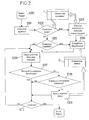
- step 1004 the computer core continues to build the first data structure by executing the steps now described with reference to the figure 3 .
- the computer core points firstly on the line of the associative table 1 that was found in step 1002 or created in step 1003 and secondly on the packet received in step 1000.
- the computer core reads as the parent protocol name, the used protocol name that is at the end of the ordered sequence of used protocols of the dotted line.
- the computer kernel looks in the first data structure if the binary variable string contains a binary variable of non-zero value. If all binary variables are null, the kernel activates a step 2010. If there is at least one non-zero binary variable, the kernel activates a step 2001.
- step 2001 the kernel looks in column 103 of table 101 if the parent protocol is of implicit type. If the father protocol is of implicit type, the computer kernel activates a step 2004. Otherwise, ie if the father protocol is of explicit type, the computer kernel activates a step 2002.
- the kernel transmits the contents of the packet to the self-identifier mechanism associated with the parent protocol name and requests the self-identifier mechanism to return the child protocol name.
- the self-identifier mechanism of the parent protocol applies to the data contained in the submitted packet, the recognition rules of the child protocol and returns to the computer kernel, a response containing the child protocol name if the data are sufficient to validate the entirety of the premises. or returns a waiting response of additional data if the data is insufficient to validate the entirety of the premises.
- the computer core Upon receipt of the response of the self-identifier mechanism, the computer core completes step 1004 if the response is waiting type of additional data. If the response contains the child protocol name, the kernel activates a 2003 step.
- the computer kernel adds the child protocol name in the ordered sequence of used protocol names and reactivates the step 2000 for which the last child protocol name added in step 2003 then constitutes a parent protocol name.
- the first data structure comprises a string of binary variables each assigned to a table column 101 from column 105.
- the computer kernel reads each cell of table 101 which is located at the intersection of a column from column 105 and the row of table 101 which contains in column 102 the last protocol name of the ordered sequence. For a non-empty cell, the computer core sets the corresponding bit variable to 1 to indicate a non-zero probability of using protocol name referenced by this cell. For an empty cell, the computer kernel sets the corresponding rank binary variable to 0 to indicate a null probability of using the protocol name referenced by this cell.
- the step 2004 is activated if the father protocol is of implicit type, that is to say that it does not definitively identify the transported protocol.
- the computer kernel looks in a second associative table 2, if there is a match between the current signature and a second ordered sequence of protocol names that contains the first ordered sequence of protocol names that is the one listed. in the first associative table 1. If the kernel finds such a second ordered sequence in table 2, it activates a step 2005. Otherwise, the kernel activates a step 2006.
- the computer kernel retrieves in the second ordered sequence, the protocol name (s) that follow the parent protocol name while keeping the order.
- the computer kernel then deletes the second ordered sequence in associative table 2 and then activates step 2003.
- step 2003 the computer kernel adds the child protocol name or child protocol names in the first ordered sequence of protocol names used while maintaining their order.
- the kernel positions the variables of the binary variable string for the last name of protocol added in the ordered sequence of used protocol names.
- step 2006 the computer kernel successively reads a non-zero variable from the string of binary variables in the first data structure, starting with the first non-zero binary variable. From the cell of table 101 with a rank corresponding to the non-zero binary variable, the computer kernel deduces a so-called probable child protocol name. The kernel submits the data packet to the self-identifier mechanism associated with the probable child protocol name by asking the self-identifier mechanism if the packet that is submitted to it, allows it to unambiguously identify that the child protocol is a protocol used. Upon receipt of the auto-identifier mechanism response, the computer core activates a step 2007.
- step 2007, the kernel activates step 2003 if auto-identifier mechanism responds that the child protocol is used, the kernel activates a step 2008 if auto-identifier mechanism responds that the child protocol is not used, the kernel activates a 2012 step if auto-identifier mechanism responds that the child protocol may be used.
- step 2008 the computer kernel sets the current binary variable to 0 to indicate that the child protocol name is not that of a used protocol.
- the computer core then activates the 2012 step.
- step 2012 the kernel looks in the binary variable string if there is a variable non-zero binary after the one that led to the previous activation of step 2006. If there is a non-zero binary variable, the computer kernel activates step 2006 for the new non-zero binary variable detected in step 2012. S there is no non-zero binary variable, the computer kernel activates a step 2009.
- step 2009 the kernel looks at whether the string of binary variables contains only null values. If the string of binary variables contains only null values, the kernel activates step 2010. Otherwise, ie if the string of binary variables contains at least one non-zero value, the computer kernel activates a step 2011 .
- the computer core marks a classified connection state in the first data structure and then activates the step 2011.
- step 2011 the computer kernel updates the even connection by completing the first data structure associated with the even connection with the ordered sequence of used protocol names and the string of binary variables contained in the first associated data structure. at the current connection.
- the computer core then completes step 1004.
- step 1004 the computer core activates step 1006 now described with reference to the figure 2 .
- step 1006 the computer kernel successively considers a protocol name of the ordered sequence of protocol names used starting with the protocol name following the Base name.
- the computer kernel looks in column 104 if the protocol name considered is a dynamic connection generator protocol. If the protocol name considered does not correspond to a dynamic connection generator protocol, the computer core activates a step 1010. If the protocol name considered corresponds to a dynamic connection generator protocol, the computer core activates a step 1008.
- step 1008 the computer kernel submits the data packet to the self-identifier mechanism associated with the protocol name under consideration to request the self-identifier mechanism if it detects that a dynamic connection is generated in the submitted data packet and if yes return the intended protocol names and source and destination identifiers of the dynamic connection that is generated. If the auto-identifier mechanism returns predicted protocol names and source and destination identifiers for a dynamic connection, the kernel activates a step 1009. Otherwise, that is, if the auto-identifier mechanism responds that it does not detect no dynamic connection generation, the computer core activates step 1010.
- step 1009 the computer kernel adds in the second associative table 2 a second data structure associated with a future connection using the first data structure associated with the current connection and using the response returned by the auto mechanism. -identifier in step 1008.
- step 1010 the kernel looks to see if there is a next protocol name in the ordered sequence of used protocol names. If there is a name of following protocol in the ordered sequence of used protocol names, the computer core reactivates step 1006 for that next protocol name. Otherwise, that is, if there is no next protocol name in the ordered sequence of protocol names used, the kernel ejects the packet received in step 1000 for that packet to continue on its way to its destination. next destination.
Landscapes
- Engineering & Computer Science (AREA)
- Computer Networks & Wireless Communication (AREA)
- Signal Processing (AREA)
- Computer Security & Cryptography (AREA)
- Computer Hardware Design (AREA)
- Computing Systems (AREA)
- General Engineering & Computer Science (AREA)
- Computer And Data Communications (AREA)
- Data Exchanges In Wide-Area Networks (AREA)
- Communication Control (AREA)
Claims (9)
- Verfahren zur Klassifizierung mittels eines Informatiksystems der Verbindungen, die zwischen Sendern und Empfängern in Kommunikationsnetzen erfasst werden, die einen Stack von Protokollen verwenden, die jeweils mit einem verwendbaren Protokollnamen benannt sind, wobei ein Protokoll des Stacks explizit genannt wird, wenn er sicher von einer Kopfzeile des Protokolls identifizierbar ist, die ihm in dem Protokoll-Stack vorangestellt ist, und wobei ein Protokoll andernfalls implizit genannt wird, wobei das Verfahren in dem Informatiksystem folgendes umfasst:- zu jedem verwendbaren Namen eines impliziten oder expliziten Protokolls Zuordnen eines Autoidentifikationsmechanismus eines Protokolls, der derart vorgesehen ist, dass er bestimmende Informationen des mit diesem Namen benannten Protokolls unter Informationen, die in einer erfassten Verbindung transportiert werden, erkennt,- zu jedem verwendbaren Protokollnamen, Mutterprotokoll genannt, Zuordnen einer leeren oder nicht leeren Liste von verwendbaren Protokollnamen, Töchterprotokolle genannt,- zu jeder erfassten Verbindung Zuordnen (1002, 1003) einer ersten Datenstruktur in einem Informatikkern, die derart vorgesehen ist, dass sie eine geordnete Folge von verwendeten Protokollnamen enthält, wobei sie mit einem so genannten Basisprotokollnamen initialisiert wird,- für jede erfasste Verbindung Erstellen (1004) der ersten Datenstruktur in dem Informatikkern, wobei in der Liste von Töchterprotokollnamen, die dem letzten Namen der geordneten Folge zugeordnet ist, wobei zwischen Töchterprotokollnamen impliziter Natur und Töchterprotokollnamen expliziter Natur unterschieden wird (2001), ein Töchterprotokollname gesucht wird (2000), für den der zugehörige Autoidentifikationsmechanismus bestimmende Informationen unter den transportierten Informationen erkannt (2002, 2007), wobei sodann am Ende der geordneten Folge der Töchterprotokollname hinzugefügt wird (2003), wenn er gefunden wird, und wobei wieder mit der Suche begonnen wird, solange es möglich ist, in der Liste von Töchterprotokollnamen, die dem letzten Namen der geordneten Folge zugeordnet ist, einen Töchterprotokollnamen zu finden (2009), für den der zugehörige Autoidentifikationsmechanismus bestimmende Informationen unter den transportierten Informationen erkennt,- Erklären (2010) der in dem Informatikkern erfassten Verbindung für klassifiziert, wenn es nicht mehr möglich ist, in der Liste von Töchterprotokollnamen, die dem letzten Namen der geordneten Folge zugeordnet ist, einen Töchterprotokollnamen zu finden, für den der zugehörige Autoidentifikationsmechanismus bestimmende Informationen unter den transportierten Informationen erkennt,bei dem für die Suche eines Töchterprotokollnamens impliziter Natur der Informatikkern die transportierte Information jedem Autoidentifikationsmechanismus unterzieht (2006), der einem Namen der Liste von Töchterprotokollnamen zugeordnet ist, bis einer der Autoidentifikationsmechanismen erklärt (2007), dass er bestimmende Informationen aus Sprachregeln des Töchterprotokolls erkennt, oder bis kein Autoidentifikationsmechanismus erklären kann, dass er bestimmende Informationen erkennt (2012),
und bei dem für die Suche eines Töchterprotokollnamens expliziter Natur der Informatikkern die transportierte Information dem Autoidentifikationsmechanismus unterzieht (2002), der dem letzten Namen der geordneten Folge zugeordnet ist, so dass dieser Autoidentifikationsmechanismus den Namen des Töchterprotokolls unter den bestimmenden Informationen des Mutterprotokolls findet. - Verfahren zur Klassifizierung von Verbindungen nach Anspruch 1, dadurch gekennzeichnet, dass der Informatikkern eine laufende Signatur für jede erfasste Verbindung ausarbeitet (1001), wobei die Ausarbeitung der laufenden Signatur das Unterziehen der Gesamtheit oder eines Teils der transportierten Information mindestens einem Autoidentifikationsmechanismus umfasst, der einem der Namen von geringerem Rang in der geordneten Folge zugeordnet ist, so dass dieser Autoidentifikationsmechanismus Indikatoren zur Quelle und zur Bestimmung unter den bestimmenden Informationen findet, wobei die laufende Signatur vom Informatikkern derart ausgearbeitet wird, dass sie die Quellen- und Bestimmungsindikatoren enthält.
- Verfahren zur Klassifizierung von Verbindungen nach Anspruch 1, dadurch gekennzeichnet, dass der Informatikkern jede erste Datenstruktur in einer ersten Tabelle (1) repertorisiert, wobei er eine erste assoziative Entsprechung zwischen jeder ersten Datenstruktur und der für die zugehörige Verbindung ausgearbeitete laufende Signatur (1001) erstellt.
- Verfahren zur Klassifizierung von Verbindungen nach Anspruch 3, dadurch gekennzeichnet, dass der Informatikkern in der ersten Tabelle (1) eine zweite assoziative Entsprechung zwischen jeder laufenden Signatur und einer Paarsignatur erstellt (1003, 2011), deren Quellenindikatoren die Bestimmungsindikatoren der laufenden Struktur sind, und deren Bestimmungsindikatoren die Quellenindikatoren der laufenden Signatur sind.
- Verfahren zur Klassifizierung von Verbindungen nach einem der Ansprüche 3 oder 4, dadurch gekennzeichnet, dass- der Informatikkern in Datenpaketen, die das Informatiksystem innerhalb von zu erfassenden Verbindungen durchlaufen, die nützlichen transportierten Informationen sammelt (1000), um eine Signatur auszuarbeiten, um die laufende Signatur immer dann auszuarbeiten (1001), wenn die nützlichen transportierten Informationen ausreichend sind,- der Informatikkern die laufende Signatur, wie in Echtzeit ausgearbeitet, verwendet, um eine Verbindung zu erfassen, um in der ersten Tabelle (1) die erste Datenstruktur zu suchen (1002), die der laufenden Signatur entspricht, eine neue erste Datenstruktur der erfassten Verbindung zuzuordnen (1003), wenn keine erste Datenstruktur vorhanden ist, die der laufenden Signatur entspricht, und mit der Erstellung der ersten Datenstruktur zu beginnen oder fortzufahren (2000), wenn eine erste Datenstruktur vorhanden ist, die der laufenden Signatur entspricht (1002), wobei in den Datenpaketen die nützlichen transportierten Informationen gesammelt werden (1000), um eine erste Datenstruktur zu erstellen.
- Verfahren zur Klassifizierung von Verbindungen nach Anspruch 5, dadurch gekennzeichnet, dass, wenn die in einem Datenpaket gesammelten nützlichen Informationen nicht ausreichend sind, um eine Signatur auszuarbeiten, der Informatikkern die nützlichen Informationen in einer zweiten Tabelle repertorisiert, wobei eine assoziative Entsprechung zwischen den nützlichen Informationen, die nun Zugehörigkeitsbande zu einer selben Verbindung umfassen, erstellt wird, bis die nützlichen Informationen ausreichend sind, um die laufende Signatur auszuarbeiten.
- Verfahren zur Klassifizierung von Verbindungen nach einem der vorhergehenden Ansprüche, dadurch gekennzeichnet, dass- der Informatikkern die verwendeten Protokollnamen der geordneten Liste in der Datenstruktur, die er erstellt, durchläuft (1006), um jeden Protokollnamen mit dynamischer Verbindung zu erfassen (1007),- für jeden erfassten Protokollnamen mit dynamischer Verbindung der Informatikkern die transportierten Informationen dem Autoidentifikationsmechanismus, der dem erfassten Namen zugeordnet ist, unterzieht (1008), um zu bestimmen, ob eine spätere dynamische Verbindung besteht, und ob eine spätere Verbindung besteht, und um ihr eine zweite Datenstruktur zuzuordnen (1009), die derart vorgesehen ist, dass sie eine geordnete Folge von potentiellen Protokollnamen enthält, die mit dem so genannten BasisProtokollnamen beginnt.
- Verfahren zur Klassifizierung von Verbindungen nach den Ansprüchen 3 und 7, dadurch gekennzeichnet, dass der Informatikkern jede zweite Datenstruktur in einer zweiten Tabelle (2) repertorisiert (1009), wobei eine assoziative Entsprechung zwischen jeder zweiten Datenstruktur und einer potentiellen Signatur erstellt wird, die von dem dem erfassten Namen zugeordneten Autoidentifikationsmechanismus ausgearbeitet wird.
- Verfahren zur Klassifizierung von Verbindungen nach Anspruch 8, dadurch gekennzeichnet, dass der Informatikkern ferner die erste Datenstruktur erstellt:- wobei in den geordneten Folgen von potentiellen Protokollnamen, in die die geordnete Folge von verwendeten Protokollnamen integriert ist, gesucht wird, und- wobei, wenn eine geordnete Folge von potentiellen Protokollnamen vorhanden ist (2005), deren potentielle Signatur der laufenden Signatur entspricht, die erste Datenstruktur mit Hilfe der zweiten Datenstruktur vervollständigt wird (2003).
Applications Claiming Priority (3)
| Application Number | Priority Date | Filing Date | Title |
|---|---|---|---|
| FR0209599A FR2842970B1 (fr) | 2002-07-29 | 2002-07-29 | Procede de reconnaissance et d'analyse de protocoles dans des reseaux de donnees |
| FR0209599 | 2002-07-29 | ||
| PCT/FR2003/002075 WO2004017595A2 (fr) | 2002-07-29 | 2003-07-04 | Procede de reconnaissance et d'analyse de protocols dans des reseaux de donnees |
Publications (2)
| Publication Number | Publication Date |
|---|---|
| EP1574000A2 EP1574000A2 (de) | 2005-09-14 |
| EP1574000B1 true EP1574000B1 (de) | 2013-03-20 |
Family
ID=30011563
Family Applications (1)
| Application Number | Title | Priority Date | Filing Date |
|---|---|---|---|
| EP03748200A Expired - Lifetime EP1574000B1 (de) | 2002-07-29 | 2003-07-04 | Verfahren zur Protokollerkennung und Analyse in Datennetzwerken |
Country Status (9)
| Country | Link |
|---|---|
| US (1) | US7522530B2 (de) |
| EP (1) | EP1574000B1 (de) |
| JP (1) | JP4203012B2 (de) |
| KR (1) | KR100957827B1 (de) |
| CN (1) | CN1703890B (de) |
| AU (1) | AU2003267510A1 (de) |
| ES (1) | ES2408158T3 (de) |
| FR (1) | FR2842970B1 (de) |
| WO (1) | WO2004017595A2 (de) |
Families Citing this family (20)
| Publication number | Priority date | Publication date | Assignee | Title |
|---|---|---|---|---|
| US20050065915A1 (en) * | 2003-09-23 | 2005-03-24 | Allen Wayne J. | Method and system to add protocol support for network traffic tools |
| US7519718B2 (en) * | 2004-02-27 | 2009-04-14 | International Business Machines Corporation | Server-side protocol configuration of accessing clients |
| CN100367722C (zh) * | 2004-12-10 | 2008-02-06 | 中兴通讯股份有限公司 | 一种通信协议一致性测试系统 |
| ES2323244T3 (es) * | 2005-05-13 | 2009-07-09 | Qosmos | Analisis del trafico en redes de alta velocidad. |
| US8793390B2 (en) * | 2006-05-23 | 2014-07-29 | Blue Coat Systems, Inc. | Systems and methods for protocol detection in a proxy |
| US8108844B2 (en) * | 2006-06-20 | 2012-01-31 | Google Inc. | Systems and methods for dynamically choosing a processing element for a compute kernel |
| FR2925807B1 (fr) | 2007-12-20 | 2010-02-19 | Inst Nat Rech Inf Automat | Moniteur de systeme de communication par messages ameliore |
| CN101577704A (zh) * | 2008-05-08 | 2009-11-11 | 北京东华合创数码科技股份有限公司 | 一种网络应用层协议识别方法和系统 |
| US8284786B2 (en) * | 2009-01-23 | 2012-10-09 | Mirandette Olivier | Method and system for context aware deep packet inspection in IP based mobile data networks |
| FR2961985B1 (fr) | 2010-06-23 | 2013-06-28 | Qosmos | Dispositif de collecte de donnees pour la surveillance de flux dans un reseau de donnees |
| US8724473B2 (en) | 2010-07-16 | 2014-05-13 | Ixia | Locating signatures in packets |
| FR2973188B1 (fr) | 2011-03-25 | 2013-04-19 | Qosmos | Procede et dispositif d'extraction de donnees |
| US8347391B1 (en) * | 2012-05-23 | 2013-01-01 | TrustPipe LLC | System and method for detecting network activity of interest |
| US8873753B2 (en) * | 2012-08-27 | 2014-10-28 | Verizon Patent And Licensing Inc. | Analysis of network operation |
| DE102014201234A1 (de) * | 2014-01-23 | 2015-07-23 | Siemens Aktiengesellschaft | Verfahren, Verwaltungsvorrichtung und Gerät zur Zertifikat-basierten Authentifizierung von Kommunikationspartnern in einem Gerät |
| CN104023018A (zh) * | 2014-06-11 | 2014-09-03 | 中国联合网络通信集团有限公司 | 一种文本协议的逆向解析方法和系统 |
| FR3083659B1 (fr) * | 2018-07-06 | 2020-08-28 | Qosmos Tech | Identification de protocole d'un flux de donnees |
| CA3226756A1 (fr) | 2021-09-07 | 2023-03-16 | Francois Courvoisier | Procede et systeme d'analyse de flux de donnees |
| FR3126830A1 (fr) * | 2021-09-07 | 2023-03-10 | Nano Corp | Procede et système d’analyse de flux de données |
| CN114024868B (zh) * | 2022-01-06 | 2022-03-25 | 北京安博通科技股份有限公司 | 流量统计方法、流量质量分析方法及装置 |
Family Cites Families (8)
| Publication number | Priority date | Publication date | Assignee | Title |
|---|---|---|---|---|
| US5802065A (en) * | 1995-10-23 | 1998-09-01 | Kawasaki Steel Corporation | Data receiving device |
| US5793954A (en) * | 1995-12-20 | 1998-08-11 | Nb Networks | System and method for general purpose network analysis |
| FI105985B (fi) * | 1997-12-18 | 2000-10-31 | Nokia Networks Oy | Menetelmä tunnistaa ilmarajapinnan verkkokerroksen protokollatietoyksikkö solukkoradioverkossa |
| US6157955A (en) * | 1998-06-15 | 2000-12-05 | Intel Corporation | Packet processing system including a policy engine having a classification unit |
| EP1791063A1 (de) * | 1999-06-30 | 2007-05-30 | Apptitude, Inc. | Verfahren und Vorrichtung zur Überwachung des Verkehrs in einem Netzwerk |
| US6598034B1 (en) * | 1999-09-21 | 2003-07-22 | Infineon Technologies North America Corp. | Rule based IP data processing |
| US7006452B2 (en) * | 2001-05-22 | 2006-02-28 | Intel Corporation | Matching DSL data link layer protocol detection |
| US7289498B2 (en) * | 2002-06-04 | 2007-10-30 | Lucent Technologies Inc. | Classifying and distributing traffic at a network node |
-
2002
- 2002-07-29 FR FR0209599A patent/FR2842970B1/fr not_active Expired - Lifetime
-
2003
- 2003-07-04 KR KR1020057001676A patent/KR100957827B1/ko not_active Expired - Lifetime
- 2003-07-04 US US10/523,339 patent/US7522530B2/en not_active Expired - Lifetime
- 2003-07-04 EP EP03748200A patent/EP1574000B1/de not_active Expired - Lifetime
- 2003-07-04 ES ES03748200T patent/ES2408158T3/es not_active Expired - Lifetime
- 2003-07-04 CN CN038202700A patent/CN1703890B/zh not_active Expired - Lifetime
- 2003-07-04 JP JP2004528561A patent/JP4203012B2/ja not_active Expired - Lifetime
- 2003-07-04 WO PCT/FR2003/002075 patent/WO2004017595A2/fr not_active Ceased
- 2003-07-04 AU AU2003267510A patent/AU2003267510A1/en not_active Abandoned
Also Published As
| Publication number | Publication date |
|---|---|
| WO2004017595A2 (fr) | 2004-02-26 |
| WO2004017595A3 (fr) | 2005-08-11 |
| ES2408158T3 (es) | 2013-06-18 |
| FR2842970B1 (fr) | 2005-03-18 |
| KR100957827B1 (ko) | 2010-05-13 |
| EP1574000A2 (de) | 2005-09-14 |
| AU2003267510A8 (en) | 2004-03-03 |
| US7522530B2 (en) | 2009-04-21 |
| KR20050033637A (ko) | 2005-04-12 |
| JP4203012B2 (ja) | 2008-12-24 |
| JP2005537705A (ja) | 2005-12-08 |
| US20060106583A1 (en) | 2006-05-18 |
| FR2842970A1 (fr) | 2004-01-30 |
| AU2003267510A1 (en) | 2004-03-03 |
| CN1703890B (zh) | 2010-05-12 |
| CN1703890A (zh) | 2005-11-30 |
Similar Documents
| Publication | Publication Date | Title |
|---|---|---|
| EP1574000B1 (de) | Verfahren zur Protokollerkennung und Analyse in Datennetzwerken | |
| CN112714045B (zh) | 一种基于设备指纹和端口的快速协议识别方法 | |
| US6820121B1 (en) | Methods systems and computer program products for processing an event based on policy rules using hashing | |
| CN112231700B (zh) | 行为识别方法和装置、存储介质及电子设备 | |
| US20100076919A1 (en) | Method and apparatus for pattern matching | |
| CN112054992B (zh) | 恶意流量识别方法、装置、电子设备及存储介质 | |
| WO2008056041A1 (fr) | Methode et appareil pour fournir un equilibrage de charge base sur le flux | |
| WO2009068822A2 (fr) | Procede et dispositif de tri de paquets | |
| CN102193948A (zh) | 特征匹配方法和装置 | |
| KR101326983B1 (ko) | 트래픽 제어 장치 및 방법 | |
| JP2000029813A (ja) | サーバ選択システム | |
| WO2011114060A2 (fr) | Procédé d'identification d'un protocole à l'origine d'un flux de données | |
| EP1566043B1 (de) | Verfahren und datenverarbeitendes system zur auslösung einer handlung von daten aus digitalkommunikationen | |
| EP1335565A2 (de) | Verfahren und Vorrichtung zur Verarbeitung von Datenpaketen | |
| EP2689560B1 (de) | Verfahren und vorrichtung zur extraktion von in einem ip-netwerk laufenden daten | |
| CN114760216A (zh) | 一种扫描探测事件确定方法、装置及电子设备 | |
| US20110264802A1 (en) | Optimized mirror for p2p identification | |
| KR100608541B1 (ko) | 샘플링과 시그너쳐 검색 기능을 구비한 인터넷 프로토콜패킷 수집 장치 및 그 방법 | |
| CN113037705B (zh) | 一种网络终端端口扫描方法及网络终端端口扫描系统 | |
| CN114584632A (zh) | 一种高效深度报文检测方法和装置 | |
| CN116451138B (zh) | 基于多模态学习的加密流量分类方法、装置及存储介质 | |
| CN110121175A (zh) | 一种用于移动物联网智能终端的数据监测方法及系统 | |
| CN114826679B (zh) | 面向物联网设备的分布式dga域名检测方法及系统 | |
| EP2225853B1 (de) | Verbesserter monitor für ein meldungsbasiertes kommunikationssystem | |
| Tsegu et al. | Ensemble-Based DDoS Attack Detection Model for Software-Defined Networks |
Legal Events
| Date | Code | Title | Description |
|---|---|---|---|
| PUAI | Public reference made under article 153(3) epc to a published international application that has entered the european phase |
Free format text: ORIGINAL CODE: 0009012 |
|
| PUAK | Availability of information related to the publication of the international search report |
Free format text: ORIGINAL CODE: 0009015 |
|
| 17P | Request for examination filed |
Effective date: 20050209 |
|
| AK | Designated contracting states |
Kind code of ref document: A2 Designated state(s): AT BE BG CH CY CZ DE DK EE ES FI FR GB GR HU IE IT LI LU MC NL PT RO SE SI SK TR |
|
| AX | Request for extension of the european patent |
Extension state: AL LT LV MK |
|
| AK | Designated contracting states |
Kind code of ref document: A3 Designated state(s): AT BE BG CH CY CZ DE DK EE ES FI FR GB GR HU IE IT LI LU MC NL PT RO SE SI SK TR |
|
| AX | Request for extension of the european patent |
Extension state: AL LT LV MK |
|
| DAX | Request for extension of the european patent (deleted) | ||
| RIN1 | Information on inventor provided before grant (corrected) |
Inventor name: HORLAIT, ERIC Inventor name: PUJOLLE, GUY Inventor name: HARMEL, GAUTIER Inventor name: FDIDA, SERGE Inventor name: TOLLET, JEROME |
|
| 17Q | First examination report despatched |
Effective date: 20061113 |
|
| RAP1 | Party data changed (applicant data changed or rights of an application transferred) |
Owner name: QOSMOS |
|
| GRAP | Despatch of communication of intention to grant a patent |
Free format text: ORIGINAL CODE: EPIDOSNIGR1 |
|
| GRAS | Grant fee paid |
Free format text: ORIGINAL CODE: EPIDOSNIGR3 |
|
| GRAA | (expected) grant |
Free format text: ORIGINAL CODE: 0009210 |
|
| AK | Designated contracting states |
Kind code of ref document: B1 Designated state(s): AT BE BG CH CY CZ DE DK EE ES FI FR GB GR HU IE IT LI LU MC NL PT RO SE SI SK TR |
|
| REG | Reference to a national code |
Ref country code: DE Ref legal event code: R081 Ref document number: 60343556 Country of ref document: DE Owner name: QOSMOS TECH, FR Free format text: FORMER OWNER: QOSMOS, AMIENS, FR Ref country code: GB Ref legal event code: FG4D Free format text: NOT ENGLISH |
|
| REG | Reference to a national code |
Ref country code: CH Ref legal event code: EP |
|
| REG | Reference to a national code |
Ref country code: IE Ref legal event code: FG4D Free format text: LANGUAGE OF EP DOCUMENT: FRENCH |
|
| REG | Reference to a national code |
Ref country code: AT Ref legal event code: REF Ref document number: 602647 Country of ref document: AT Kind code of ref document: T Effective date: 20130415 |
|
| REG | Reference to a national code |
Ref country code: DE Ref legal event code: R096 Ref document number: 60343556 Country of ref document: DE Effective date: 20130516 |
|
| REG | Reference to a national code |
Ref country code: ES Ref legal event code: FG2A Ref document number: 2408158 Country of ref document: ES Kind code of ref document: T3 Effective date: 20130618 |
|
| PG25 | Lapsed in a contracting state [announced via postgrant information from national office to epo] |
Ref country code: SE Free format text: LAPSE BECAUSE OF FAILURE TO SUBMIT A TRANSLATION OF THE DESCRIPTION OR TO PAY THE FEE WITHIN THE PRESCRIBED TIME-LIMIT Effective date: 20130320 Ref country code: BG Free format text: LAPSE BECAUSE OF FAILURE TO SUBMIT A TRANSLATION OF THE DESCRIPTION OR TO PAY THE FEE WITHIN THE PRESCRIBED TIME-LIMIT Effective date: 20130620 |
|
| REG | Reference to a national code |
Ref country code: NL Ref legal event code: T3 |
|
| PG25 | Lapsed in a contracting state [announced via postgrant information from national office to epo] |
Ref country code: SI Free format text: LAPSE BECAUSE OF FAILURE TO SUBMIT A TRANSLATION OF THE DESCRIPTION OR TO PAY THE FEE WITHIN THE PRESCRIBED TIME-LIMIT Effective date: 20130320 Ref country code: GR Free format text: LAPSE BECAUSE OF FAILURE TO SUBMIT A TRANSLATION OF THE DESCRIPTION OR TO PAY THE FEE WITHIN THE PRESCRIBED TIME-LIMIT Effective date: 20130621 Ref country code: FI Free format text: LAPSE BECAUSE OF FAILURE TO SUBMIT A TRANSLATION OF THE DESCRIPTION OR TO PAY THE FEE WITHIN THE PRESCRIBED TIME-LIMIT Effective date: 20130320 |
|
| PG25 | Lapsed in a contracting state [announced via postgrant information from national office to epo] |
Ref country code: CZ Free format text: LAPSE BECAUSE OF FAILURE TO SUBMIT A TRANSLATION OF THE DESCRIPTION OR TO PAY THE FEE WITHIN THE PRESCRIBED TIME-LIMIT Effective date: 20130320 Ref country code: EE Free format text: LAPSE BECAUSE OF FAILURE TO SUBMIT A TRANSLATION OF THE DESCRIPTION OR TO PAY THE FEE WITHIN THE PRESCRIBED TIME-LIMIT Effective date: 20130320 Ref country code: RO Free format text: LAPSE BECAUSE OF FAILURE TO SUBMIT A TRANSLATION OF THE DESCRIPTION OR TO PAY THE FEE WITHIN THE PRESCRIBED TIME-LIMIT Effective date: 20130320 Ref country code: PT Free format text: LAPSE BECAUSE OF FAILURE TO SUBMIT A TRANSLATION OF THE DESCRIPTION OR TO PAY THE FEE WITHIN THE PRESCRIBED TIME-LIMIT Effective date: 20130722 Ref country code: SK Free format text: LAPSE BECAUSE OF FAILURE TO SUBMIT A TRANSLATION OF THE DESCRIPTION OR TO PAY THE FEE WITHIN THE PRESCRIBED TIME-LIMIT Effective date: 20130320 |
|
| PG25 | Lapsed in a contracting state [announced via postgrant information from national office to epo] |
Ref country code: CY Free format text: LAPSE BECAUSE OF FAILURE TO SUBMIT A TRANSLATION OF THE DESCRIPTION OR TO PAY THE FEE WITHIN THE PRESCRIBED TIME-LIMIT Effective date: 20130320 |
|
| PLBE | No opposition filed within time limit |
Free format text: ORIGINAL CODE: 0009261 |
|
| STAA | Information on the status of an ep patent application or granted ep patent |
Free format text: STATUS: NO OPPOSITION FILED WITHIN TIME LIMIT |
|
| BERE | Be: lapsed |
Owner name: QOSMOS Effective date: 20130731 |
|
| PG25 | Lapsed in a contracting state [announced via postgrant information from national office to epo] |
Ref country code: DK Free format text: LAPSE BECAUSE OF FAILURE TO SUBMIT A TRANSLATION OF THE DESCRIPTION OR TO PAY THE FEE WITHIN THE PRESCRIBED TIME-LIMIT Effective date: 20130320 |
|
| 26N | No opposition filed |
Effective date: 20140102 |
|
| PG25 | Lapsed in a contracting state [announced via postgrant information from national office to epo] |
Ref country code: MC Free format text: LAPSE BECAUSE OF FAILURE TO SUBMIT A TRANSLATION OF THE DESCRIPTION OR TO PAY THE FEE WITHIN THE PRESCRIBED TIME-LIMIT Effective date: 20130320 |
|
| REG | Reference to a national code |
Ref country code: CH Ref legal event code: PL |
|
| REG | Reference to a national code |
Ref country code: DE Ref legal event code: R097 Ref document number: 60343556 Country of ref document: DE Effective date: 20140102 |
|
| REG | Reference to a national code |
Ref country code: IE Ref legal event code: MM4A |
|
| PG25 | Lapsed in a contracting state [announced via postgrant information from national office to epo] |
Ref country code: BE Free format text: LAPSE BECAUSE OF NON-PAYMENT OF DUE FEES Effective date: 20130731 Ref country code: CH Free format text: LAPSE BECAUSE OF NON-PAYMENT OF DUE FEES Effective date: 20130731 Ref country code: LI Free format text: LAPSE BECAUSE OF NON-PAYMENT OF DUE FEES Effective date: 20130731 |
|
| PG25 | Lapsed in a contracting state [announced via postgrant information from national office to epo] |
Ref country code: IE Free format text: LAPSE BECAUSE OF NON-PAYMENT OF DUE FEES Effective date: 20130704 |
|
| PG25 | Lapsed in a contracting state [announced via postgrant information from national office to epo] |
Ref country code: TR Free format text: LAPSE BECAUSE OF FAILURE TO SUBMIT A TRANSLATION OF THE DESCRIPTION OR TO PAY THE FEE WITHIN THE PRESCRIBED TIME-LIMIT Effective date: 20130320 |
|
| REG | Reference to a national code |
Ref country code: FR Ref legal event code: PLFP Year of fee payment: 13 |
|
| PG25 | Lapsed in a contracting state [announced via postgrant information from national office to epo] |
Ref country code: HU Free format text: LAPSE BECAUSE OF FAILURE TO SUBMIT A TRANSLATION OF THE DESCRIPTION OR TO PAY THE FEE WITHIN THE PRESCRIBED TIME-LIMIT; INVALID AB INITIO Effective date: 20030704 Ref country code: LU Free format text: LAPSE BECAUSE OF NON-PAYMENT OF DUE FEES Effective date: 20130704 |
|
| REG | Reference to a national code |
Ref country code: FR Ref legal event code: PLFP Year of fee payment: 14 |
|
| REG | Reference to a national code |
Ref country code: DE Ref legal event code: R081 Ref document number: 60343556 Country of ref document: DE Owner name: QOSMOS TECH, FR Free format text: FORMER OWNER: QOSMOS, PARIS, FR |
|
| REG | Reference to a national code |
Ref country code: GB Ref legal event code: 732E Free format text: REGISTERED BETWEEN 20170622 AND 20170628 |
|
| REG | Reference to a national code |
Ref country code: FR Ref legal event code: PLFP Year of fee payment: 15 |
|
| REG | Reference to a national code |
Ref country code: NL Ref legal event code: PD Owner name: QOSMOS TECH; FR Free format text: DETAILS ASSIGNMENT: CHANGE OF OWNER(S), ASSIGNMENT; FORMER OWNER NAME: QOSMOS Effective date: 20170609 |
|
| REG | Reference to a national code |
Ref country code: ES Ref legal event code: PC2A Owner name: QOSMOS TECH Effective date: 20170928 |
|
| REG | Reference to a national code |
Ref country code: FR Ref legal event code: CA Effective date: 20170925 Ref country code: FR Ref legal event code: TP Owner name: QOSMOS TECH, FR Effective date: 20170925 |
|
| REG | Reference to a national code |
Ref country code: FR Ref legal event code: PLFP Year of fee payment: 16 |
|
| REG | Reference to a national code |
Ref country code: AT Ref legal event code: PC Ref document number: 602647 Country of ref document: AT Kind code of ref document: T Owner name: QOSMOS TECH, FR Effective date: 20180716 |
|
| REG | Reference to a national code |
Ref country code: DE Ref legal event code: R079 Ref document number: 60343556 Country of ref document: DE Free format text: PREVIOUS MAIN CLASS: H04L0029060000 Ipc: H04L0065000000 |
|
| PGFP | Annual fee paid to national office [announced via postgrant information from national office to epo] |
Ref country code: NL Payment date: 20220623 Year of fee payment: 20 |
|
| PGFP | Annual fee paid to national office [announced via postgrant information from national office to epo] |
Ref country code: FR Payment date: 20220621 Year of fee payment: 20 |
|
| PGFP | Annual fee paid to national office [announced via postgrant information from national office to epo] |
Ref country code: IT Payment date: 20220714 Year of fee payment: 20 Ref country code: GB Payment date: 20220718 Year of fee payment: 20 Ref country code: ES Payment date: 20220802 Year of fee payment: 20 Ref country code: DE Payment date: 20220624 Year of fee payment: 20 Ref country code: AT Payment date: 20220621 Year of fee payment: 20 |
|
| REG | Reference to a national code |
Ref country code: DE Ref legal event code: R071 Ref document number: 60343556 Country of ref document: DE |
|
| REG | Reference to a national code |
Ref country code: NL Ref legal event code: MK Effective date: 20230703 |
|
| REG | Reference to a national code |
Ref country code: GB Ref legal event code: PE20 Expiry date: 20230703 |
|
| REG | Reference to a national code |
Ref country code: ES Ref legal event code: FD2A Effective date: 20230727 |
|
| REG | Reference to a national code |
Ref country code: AT Ref legal event code: MK07 Ref document number: 602647 Country of ref document: AT Kind code of ref document: T Effective date: 20230704 |
|
| PG25 | Lapsed in a contracting state [announced via postgrant information from national office to epo] |
Ref country code: GB Free format text: LAPSE BECAUSE OF EXPIRATION OF PROTECTION Effective date: 20230703 Ref country code: ES Free format text: LAPSE BECAUSE OF EXPIRATION OF PROTECTION Effective date: 20230705 |