EP1570943B1 - Geschichtetes abgelagertes Hartlotmaterial - Google Patents
Geschichtetes abgelagertes Hartlotmaterial Download PDFInfo
- Publication number
- EP1570943B1 EP1570943B1 EP05251248.0A EP05251248A EP1570943B1 EP 1570943 B1 EP1570943 B1 EP 1570943B1 EP 05251248 A EP05251248 A EP 05251248A EP 1570943 B1 EP1570943 B1 EP 1570943B1
- Authority
- EP
- European Patent Office
- Prior art keywords
- metal
- comprised
- interlayer material
- component assembly
- ceramic
- Prior art date
- Legal status (The legal status is an assumption and is not a legal conclusion. Google has not performed a legal analysis and makes no representation as to the accuracy of the status listed.)
- Expired - Lifetime
Links
Images
Classifications
-
- C—CHEMISTRY; METALLURGY
- C04—CEMENTS; CONCRETE; ARTIFICIAL STONE; CERAMICS; REFRACTORIES
- C04B—LIME, MAGNESIA; SLAG; CEMENTS; COMPOSITIONS THEREOF, e.g. MORTARS, CONCRETE OR LIKE BUILDING MATERIALS; ARTIFICIAL STONE; CERAMICS; REFRACTORIES; TREATMENT OF NATURAL STONE
- C04B37/00—Joining burned ceramic articles with other burned ceramic articles or other articles by heating
- C04B37/02—Joining burned ceramic articles with other burned ceramic articles or other articles by heating with metallic articles
- C04B37/023—Joining burned ceramic articles with other burned ceramic articles or other articles by heating with metallic articles characterised by the interlayer used
- C04B37/026—Joining burned ceramic articles with other burned ceramic articles or other articles by heating with metallic articles characterised by the interlayer used consisting of metals or metal salts
-
- B—PERFORMING OPERATIONS; TRANSPORTING
- B23—MACHINE TOOLS; METAL-WORKING NOT OTHERWISE PROVIDED FOR
- B23K—SOLDERING OR UNSOLDERING; WELDING; CLADDING OR PLATING BY SOLDERING OR WELDING; CUTTING BY APPLYING HEAT LOCALLY, e.g. FLAME CUTTING; WORKING BY LASER BEAM
- B23K35/00—Rods, electrodes, materials, or media, for use in soldering, welding, or cutting
- B23K35/001—Interlayers, transition pieces for metallurgical bonding of workpieces
- B23K35/005—Interlayers, transition pieces for metallurgical bonding of workpieces at least one of the workpieces being of a refractory metal
-
- B—PERFORMING OPERATIONS; TRANSPORTING
- B23—MACHINE TOOLS; METAL-WORKING NOT OTHERWISE PROVIDED FOR
- B23K—SOLDERING OR UNSOLDERING; WELDING; CLADDING OR PLATING BY SOLDERING OR WELDING; CUTTING BY APPLYING HEAT LOCALLY, e.g. FLAME CUTTING; WORKING BY LASER BEAM
- B23K35/00—Rods, electrodes, materials, or media, for use in soldering, welding, or cutting
- B23K35/22—Rods, electrodes, materials, or media, for use in soldering, welding, or cutting characterised by the composition or nature of the material
- B23K35/24—Selection of soldering or welding materials proper
- B23K35/32—Selection of soldering or welding materials proper with the principal constituent melting at more than 1550°C
- B23K35/325—Ti as the principal constituent
-
- C—CHEMISTRY; METALLURGY
- C04—CEMENTS; CONCRETE; ARTIFICIAL STONE; CERAMICS; REFRACTORIES
- C04B—LIME, MAGNESIA; SLAG; CEMENTS; COMPOSITIONS THEREOF, e.g. MORTARS, CONCRETE OR LIKE BUILDING MATERIALS; ARTIFICIAL STONE; CERAMICS; REFRACTORIES; TREATMENT OF NATURAL STONE
- C04B37/00—Joining burned ceramic articles with other burned ceramic articles or other articles by heating
- C04B37/02—Joining burned ceramic articles with other burned ceramic articles or other articles by heating with metallic articles
- C04B37/023—Joining burned ceramic articles with other burned ceramic articles or other articles by heating with metallic articles characterised by the interlayer used
-
- A—HUMAN NECESSITIES
- A61—MEDICAL OR VETERINARY SCIENCE; HYGIENE
- A61N—ELECTROTHERAPY; MAGNETOTHERAPY; RADIATION THERAPY; ULTRASOUND THERAPY
- A61N1/00—Electrotherapy; Circuits therefor
- A61N1/18—Applying electric currents by contact electrodes
- A61N1/32—Applying electric currents by contact electrodes alternating or intermittent currents
- A61N1/36—Applying electric currents by contact electrodes alternating or intermittent currents for stimulation
- A61N1/372—Arrangements in connection with the implantation of stimulators
- A61N1/37205—Microstimulators, e.g. implantable through a cannula
-
- B—PERFORMING OPERATIONS; TRANSPORTING
- B23—MACHINE TOOLS; METAL-WORKING NOT OTHERWISE PROVIDED FOR
- B23K—SOLDERING OR UNSOLDERING; WELDING; CLADDING OR PLATING BY SOLDERING OR WELDING; CUTTING BY APPLYING HEAT LOCALLY, e.g. FLAME CUTTING; WORKING BY LASER BEAM
- B23K2103/00—Materials to be soldered, welded or cut
- B23K2103/08—Non-ferrous metals or alloys
- B23K2103/14—Titanium or alloys thereof
-
- B—PERFORMING OPERATIONS; TRANSPORTING
- B23—MACHINE TOOLS; METAL-WORKING NOT OTHERWISE PROVIDED FOR
- B23K—SOLDERING OR UNSOLDERING; WELDING; CLADDING OR PLATING BY SOLDERING OR WELDING; CUTTING BY APPLYING HEAT LOCALLY, e.g. FLAME CUTTING; WORKING BY LASER BEAM
- B23K2103/00—Materials to be soldered, welded or cut
- B23K2103/18—Dissimilar materials
-
- B—PERFORMING OPERATIONS; TRANSPORTING
- B23—MACHINE TOOLS; METAL-WORKING NOT OTHERWISE PROVIDED FOR
- B23K—SOLDERING OR UNSOLDERING; WELDING; CLADDING OR PLATING BY SOLDERING OR WELDING; CUTTING BY APPLYING HEAT LOCALLY, e.g. FLAME CUTTING; WORKING BY LASER BEAM
- B23K2103/00—Materials to be soldered, welded or cut
- B23K2103/50—Inorganic materials other than metals or composite materials
- B23K2103/52—Ceramics
-
- B—PERFORMING OPERATIONS; TRANSPORTING
- B32—LAYERED PRODUCTS
- B32B—LAYERED PRODUCTS, i.e. PRODUCTS BUILT-UP OF STRATA OF FLAT OR NON-FLAT, e.g. CELLULAR OR HONEYCOMB, FORM
- B32B2311/00—Metals, their alloys or their compounds
- B32B2311/18—Titanium
-
- C—CHEMISTRY; METALLURGY
- C04—CEMENTS; CONCRETE; ARTIFICIAL STONE; CERAMICS; REFRACTORIES
- C04B—LIME, MAGNESIA; SLAG; CEMENTS; COMPOSITIONS THEREOF, e.g. MORTARS, CONCRETE OR LIKE BUILDING MATERIALS; ARTIFICIAL STONE; CERAMICS; REFRACTORIES; TREATMENT OF NATURAL STONE
- C04B2235/00—Aspects relating to ceramic starting mixtures or sintered ceramic products
- C04B2235/65—Aspects relating to heat treatments of ceramic bodies such as green ceramics or pre-sintered ceramics, e.g. burning, sintering or melting processes
- C04B2235/658—Atmosphere during thermal treatment
- C04B2235/6581—Total pressure below 1 atmosphere, e.g. vacuum
-
- C—CHEMISTRY; METALLURGY
- C04—CEMENTS; CONCRETE; ARTIFICIAL STONE; CERAMICS; REFRACTORIES
- C04B—LIME, MAGNESIA; SLAG; CEMENTS; COMPOSITIONS THEREOF, e.g. MORTARS, CONCRETE OR LIKE BUILDING MATERIALS; ARTIFICIAL STONE; CERAMICS; REFRACTORIES; TREATMENT OF NATURAL STONE
- C04B2237/00—Aspects relating to ceramic laminates or to joining of ceramic articles with other articles by heating
- C04B2237/02—Aspects relating to interlayers, e.g. used to join ceramic articles with other articles by heating
- C04B2237/12—Metallic interlayers
- C04B2237/122—Metallic interlayers based on refractory metals
-
- C—CHEMISTRY; METALLURGY
- C04—CEMENTS; CONCRETE; ARTIFICIAL STONE; CERAMICS; REFRACTORIES
- C04B—LIME, MAGNESIA; SLAG; CEMENTS; COMPOSITIONS THEREOF, e.g. MORTARS, CONCRETE OR LIKE BUILDING MATERIALS; ARTIFICIAL STONE; CERAMICS; REFRACTORIES; TREATMENT OF NATURAL STONE
- C04B2237/00—Aspects relating to ceramic laminates or to joining of ceramic articles with other articles by heating
- C04B2237/02—Aspects relating to interlayers, e.g. used to join ceramic articles with other articles by heating
- C04B2237/12—Metallic interlayers
- C04B2237/123—Metallic interlayers based on iron group metals, e.g. steel
-
- C—CHEMISTRY; METALLURGY
- C04—CEMENTS; CONCRETE; ARTIFICIAL STONE; CERAMICS; REFRACTORIES
- C04B—LIME, MAGNESIA; SLAG; CEMENTS; COMPOSITIONS THEREOF, e.g. MORTARS, CONCRETE OR LIKE BUILDING MATERIALS; ARTIFICIAL STONE; CERAMICS; REFRACTORIES; TREATMENT OF NATURAL STONE
- C04B2237/00—Aspects relating to ceramic laminates or to joining of ceramic articles with other articles by heating
- C04B2237/30—Composition of layers of ceramic laminates or of ceramic or metallic articles to be joined by heating, e.g. Si substrates
- C04B2237/32—Ceramic
- C04B2237/34—Oxidic
- C04B2237/343—Alumina or aluminates
-
- C—CHEMISTRY; METALLURGY
- C04—CEMENTS; CONCRETE; ARTIFICIAL STONE; CERAMICS; REFRACTORIES
- C04B—LIME, MAGNESIA; SLAG; CEMENTS; COMPOSITIONS THEREOF, e.g. MORTARS, CONCRETE OR LIKE BUILDING MATERIALS; ARTIFICIAL STONE; CERAMICS; REFRACTORIES; TREATMENT OF NATURAL STONE
- C04B2237/00—Aspects relating to ceramic laminates or to joining of ceramic articles with other articles by heating
- C04B2237/30—Composition of layers of ceramic laminates or of ceramic or metallic articles to be joined by heating, e.g. Si substrates
- C04B2237/32—Ceramic
- C04B2237/34—Oxidic
- C04B2237/345—Refractory metal oxides
- C04B2237/346—Titania or titanates
-
- C—CHEMISTRY; METALLURGY
- C04—CEMENTS; CONCRETE; ARTIFICIAL STONE; CERAMICS; REFRACTORIES
- C04B—LIME, MAGNESIA; SLAG; CEMENTS; COMPOSITIONS THEREOF, e.g. MORTARS, CONCRETE OR LIKE BUILDING MATERIALS; ARTIFICIAL STONE; CERAMICS; REFRACTORIES; TREATMENT OF NATURAL STONE
- C04B2237/00—Aspects relating to ceramic laminates or to joining of ceramic articles with other articles by heating
- C04B2237/30—Composition of layers of ceramic laminates or of ceramic or metallic articles to be joined by heating, e.g. Si substrates
- C04B2237/32—Ceramic
- C04B2237/34—Oxidic
- C04B2237/345—Refractory metal oxides
- C04B2237/348—Zirconia, hafnia, zirconates or hafnates
-
- C—CHEMISTRY; METALLURGY
- C04—CEMENTS; CONCRETE; ARTIFICIAL STONE; CERAMICS; REFRACTORIES
- C04B—LIME, MAGNESIA; SLAG; CEMENTS; COMPOSITIONS THEREOF, e.g. MORTARS, CONCRETE OR LIKE BUILDING MATERIALS; ARTIFICIAL STONE; CERAMICS; REFRACTORIES; TREATMENT OF NATURAL STONE
- C04B2237/00—Aspects relating to ceramic laminates or to joining of ceramic articles with other articles by heating
- C04B2237/30—Composition of layers of ceramic laminates or of ceramic or metallic articles to be joined by heating, e.g. Si substrates
- C04B2237/40—Metallic
- C04B2237/403—Refractory metals
-
- C—CHEMISTRY; METALLURGY
- C04—CEMENTS; CONCRETE; ARTIFICIAL STONE; CERAMICS; REFRACTORIES
- C04B—LIME, MAGNESIA; SLAG; CEMENTS; COMPOSITIONS THEREOF, e.g. MORTARS, CONCRETE OR LIKE BUILDING MATERIALS; ARTIFICIAL STONE; CERAMICS; REFRACTORIES; TREATMENT OF NATURAL STONE
- C04B2237/00—Aspects relating to ceramic laminates or to joining of ceramic articles with other articles by heating
- C04B2237/30—Composition of layers of ceramic laminates or of ceramic or metallic articles to be joined by heating, e.g. Si substrates
- C04B2237/40—Metallic
- C04B2237/405—Iron metal group, e.g. Co or Ni
-
- C—CHEMISTRY; METALLURGY
- C04—CEMENTS; CONCRETE; ARTIFICIAL STONE; CERAMICS; REFRACTORIES
- C04B—LIME, MAGNESIA; SLAG; CEMENTS; COMPOSITIONS THEREOF, e.g. MORTARS, CONCRETE OR LIKE BUILDING MATERIALS; ARTIFICIAL STONE; CERAMICS; REFRACTORIES; TREATMENT OF NATURAL STONE
- C04B2237/00—Aspects relating to ceramic laminates or to joining of ceramic articles with other articles by heating
- C04B2237/50—Processing aspects relating to ceramic laminates or to the joining of ceramic articles with other articles by heating
- C04B2237/70—Forming laminates or joined articles comprising layers of a specific, unusual thickness
- C04B2237/708—Forming laminates or joined articles comprising layers of a specific, unusual thickness of one or more of the interlayers
Definitions
- This invention relates to component assemblies and a method of producing a hermetically sealed ceramic to metal bond for implantation in living tissue.
- the present invention provides component assemblies for use in living tissue as set forth in claims 1, 5 and 10.
- the invention also provides a method of producing a ceramic to metal bond as set forth in claim 19.
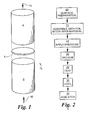
- FIG. 1 shows component assembly 2 having metal part 4, ceramic part 6, and laminated interlayer material 8.
- Component assembly 2 is heated to a specific process temperature, that is below the melting point of metal part 4 or of the ceramic part 6, for a specific period of time, at a pressure that is created by force 10 and that is exerted so as to place laminated interlayer material 8 in intimate contact with the metal and ceramic parts.
- Laminated interlayer material 8 comprises a metal foil having a thickness of about five-thousandths of an inch or less (130 ⁇ m or less).
- Laminated interlayer material 8 is a bonded thin stack of metal foil layers selected from the group of materials that are compatible with the ceramic chosen for ceramic part 6 in that they wet the surface during the bonding process and enter into a diffusion process with the ceramic part 6 thereby creating a strong bond joint during processing.
- the inventors prefer the term "laminated” versus other descriptive, but equally applicable, terms for the invention, such as "clad" material.
- Laminated interlayer material 8 also is selected from the group of materials that are compatible with the metal chosen for a metal part 4.
- Laminated interlayer material 8 forms a bond with the metal part 4 by virtue of developing a eutectic alloy at the bonding temperature and pressure utilized during processing.
- the lowest eutectic temperature, for example, in the nickel-titanium system is about 942°C at about 28 weight percent nickel and 72 weight percent titanium.
- the group of laminated interlayer materials include substantially pure nickel, i.e., pure nickel and nickel containing approximately two percent or less by weight of other alloy metals and substantially pure titanium, i.e., pure titanium and titanium containing approximately two percent or less by weight of other alloy metals.
- laminated interlayer material 8 contains layer 12 comprising commercially pure nickel foil having at least 99.0% nickel and less than 1.0% of other elements with a thickness of approximately 0.0003 inches.
- Mating layer 14 comprises commercially pure titanium foil having at least 99.0% titanium and less than 1.0% of other elements with a thickness of approximately 0.0003 inches.
- Metal part 4 may be selected from a group of biocompatible materials, such as a titanium alloy, and is Ti-6AI-4V in a preferred embodiment.
- Ceramic part 6 may be alumina, titania, zirconia, stabilized-zirconia, partially-stabilized zirconia, tetragonal zirconia, magnesia-stabilized zirconia, ceria-stabilized zirconia, yttria-stabilized zirconia, and calcia-stabilized zirconia, and in a preferred embodiment ceramic part 6 is yttria-stabilized zirconia.
- interlayer material 8 may be a stack of thin coatings that are applied to either the metal part 4 or ceramic part 6 surface to be bonded by any of a variety of chemical processes such as electroless plating and electroplating, or by any of a variety of thermal processes such as sputtering, evaporating, or ion beam enhanced deposition.
- Laminated interlayer material 8 may also be applied as layers of thin coatings of metallic beads or metallic powders.
- step 20 The process steps that are employed to create assembly 2 with a strong bond between metal part 4 and ceramic part 6 are schematically represented in FIG. 2 .
- the surfaces to be bonded are prepared in step 20 by machining to assure that they will intimately conform to each other during bonding.
- the surfaces are smoothed and cleaned.
- step 22 component assembly 2 is prepared with laminated interlayer material 8 between metal part 4 and ceramic part 6.
- step 24 force 10 is applied to compress laminated interlayer material 8 between metal part 4 and ceramic part 6. Force 10 is sufficient to create intimate contact between the parts. Force 10 is applied to assure that a homogeneous bond is formed between metal part 4 and ceramic part 6, thus creating a hermetic seal between the two parts.
- step 26 the assembly to be heat processed is placed in a furnace in a non-reactive atmosphere, which is preferably vacuum, but which can be argon in an alternative embodiment.
- a vacuum is applied before the furnace is heated to the processing temperature in step 28.
- a preliminary holding temperature may be used to allow the thermal mass of the parts to achieve equilibrium before proceeding with heating.
- the process temperature is lower than the melting point of metal part 4, but greater than the temperature of the eutectic formed by metal 4 and laminated interlayer material 8 (or the eutectic formed within the interlayer or material). It is notable that the laminated interlayer material 8 behaves significantly differently from an alloy of nickel-titanium when heated, as in the application of a braze foil.
- an alloy of nickel-titanium will behave according to the phase diagram relationships that exist for that alloy composition or that exist for that same alloy composition that is heated in contact with a nickel body.
- heating a pure nickel material in contact with a pure titanium material results in at least some liquidus formation at the lowest eutectic temperature, which is about 942°C (at the eutectic composition of about 28 weight percent nickel and 72 weight percent titanium).
- the vacuum is 10 -6 to 10 -7 torr, to assure that the laminated interlayer material 8 and metal part 4 do not oxidize.
- Component assembly 2 is held at the selected temperature, which is typically between approximately 942° and 1080°C, for approximately 5 to 20 minutes, while force 10 continues to be exerted on laminated interlayer material 8. The exact time, temperature and pressure are variable with each other so as to achieve a homogeneous and strong bond of metal part 4 with ceramic part 6.
- an yttria-stabilized zirconia part bonds to a Ti-6Al-4V part in vacuum at 10 -6 torr at approximately 980°C for 10 minutes with a pressure of approximately 5 to 20 psi on a laminated foil comprised of at least one commercially pure nickel layer of approximately 0.0007 inches thickness and at least one titanium layer of 0.0013 inches, yielding a 50 weight percent nickel and 50 weight percent mean composition titanium laminated interlayer material 8.
- the component assembly 2 is furnace cooled to room temperature in step 30.
- component assembly 2 is cleaned by being placed in a bath, after thermal processing is complete, to assure removal of all nickel and nickel salts.
- This bath is preferably an acid bath that etches the exposed surfaces of component assembly 2.
- the bath is nitric acid. Removal of nickel and nickel salts in the bath etch insures that component assembly 2 is biocompatible. Nickel and nickel salts are detrimental to living animal tissue. In a preferred embodiment, however, all of the nickel that is introduced as laminated interlayer material 8 is combined with the titanium and is combined chemically to be unavailable as free nickel or as a nickel salt.
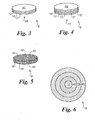
- FIG. 3 represents the laminated interlayer material 8 that is preferably comprised of at least two layers of foil each having a thickness of about 0.001 inches.
- layer 12 is comprised of a substantially pure nickel while mating layer 14 is comprised of substantially pure titanium.
- the two layers are in intimate contact and are bonded by conventional processes to perform as a single thin foil.
- the mean composition of the laminated interlayer material 8 is controlled by adjusting the thickness of layer 12 and layer 14 by well known methods that utilizes the thickness alone to arrive at a volume percentage or alternately that utilizes the density of each material to calculate the required thickness to arrive at a desired weight percentage of each metal.
- FIG. 3 illustrates an alternative embodiment where laminated interlayer material 8 is comprised of three layers, and the combination of an odd number of layers results in layer 12 being on both the top outer surface 42 and the bottom outer surface 44.
- multiple layers of laminating metals may be chosen of varying thicknesses to effect a desired property in the laminated interlayer material 8. It is preferred that the mean composition of the laminated interlayer material 8 be chosen so that depletion of the material, nickel or titanium, for example, does not occur during the brazing operation. Preferred mean compositions for laminated interlayer material 8 contain about 20 to 70 weight percent of nickel with the balance titanium.
- a five layer laminated interlayer material 8 may be comprised of a mean composition of 50 weight percent nickel and 50 weight percent titanium, where both the top outer surface 42 and the bottom outer surface 44 are metal foil layers 15' and 15", preferably comprised of nickel, the middle foil layer 15 is comprised of nickel, and the two inner mating foil layers 17 and 17', on either side of the middle foil layer 15, are comprised of titanium.
- the total thickness of all of the nickel layers and the total thickness of both of the titanium layers being equal to each other, thereby maintaining the 50:50 volume percentages.
- either or both of the metal foil layers 15' and/or 15" may be preferentially thickened at the expense of the middle metal foil layer 15, thereby maintaining the desired overall mean composition of 50 volume percent nickel and 50 volume percent titanium.
- the top outer surface 42 and the bottom outer surface 44 are nickel.
- the nickel layer contacts the titanium metal part thereby facilitating the forming of a nickel-titanium eutectic alloy.
- a compact interlayer material 8' is comprised of a multitude of smell spherical metal composite particles, each having a controlled composition.
- spheres of two distinct compositions primary alloy sphere 16, which may be nickel, and secondary alloy sphere 16', which may be titanium, are uniformly combined into a homogeneous compact that sinters into a dense compact at temperature and optionally under pressure, as previously illustrated with force 10 of FIG. 1 .
- primary alloy sphere 16 which may be nickel
- secondary alloy sphere 16' which may be titanium
- the small particles may have other shapes than spheres and that they may not be uniform in size or shape.
- the final composition of the compact interlayer material 8' is controlled by total volume of primary alloy sphere 16 and secondary alloy sphere 16' and as the compact interlayer material 8' has been additionally alloyed by diffusion from metal part 4 and/or ceramic part 6 of FIG. 1 . It is preferred that the mean composition of the compact interlayer material 8' be chosen so that depletion of either or any of the materials, nickel or titanium, for example, does not occur during the brazing operation. Preferred mean compositions for compact interlayer material 8' contain about 20 to 70 volume percent of nickel with the balance titanium.
- the primary alloy sphere 16 or the secondary alloy sphere 16' may be comprised of layered materials, as illustrated by composite sphere 19, FIG. 6 , wherein the sets of spheres, illustrated in FIG. 5 , may have the same composition or they may have different compositions of layered materials.
- composite sphere 19 presents the cross-sectional view of a layered composite sphere that is comprised of primary sphere laminate layer 18, optionally titanium, alternated with secondary sphere laminate layer 40, optionally nickel.
- Compact interlayer material 8' is comprised of a plurality of composite spheres 19, wherein the distribution of sizes, morphologies, and shapes is varied to achieve the desired bond between metal part 4 and ceramic part 6 when temperature and optionally pressure are applied.
- the mean composition of the compact interlayer material 8' be chosen so that depletion of the material, nickel or titanium, for example, does not occur during the brazing operation.
- Preferred mean compositions for compact interlayer material 8' contain about 20 to 70 volume percent of nickel with the balance titanium. It is preferred that the mean composition of primary alloy sphere 16 of FIG. 6 comply with this compositional guideline. While numerous metals demonstrate formation of eutectic compositions, nickel and titanium are exemplar selections that are useful in an implantable device.
- the layered spheres 19 are made by any of a number of known techniques, including aerosol techniques or vapor deposition techniques. In this manner, the total composition of the compact interlayer material is controllable on a macro level as well as on a micro (intersphere) level, thereby aiding densification of the compact interlayer material 8' and the bonding of component assembly 2. It is known to the inventor to vary the composition of the outer layer of the secondary sphere laminate layer 40, as illustrated in FIG. 6 , to enhance densification and bonding at low temperatures and, optionally, to enhance bonding at low pressure/forces 10.
- Component assembly 2 is preferably biocompatible after bonding and processing.
- Metal part 4, ceramic part 6, and laminated interlayer material 8 are selected to be compatible with the environment in a living body.
- metal part 4 is typically a titanium alloy and ceramic part 6 is typically zirconia.
- component assembly 2 is either an electrical sensor or an electrical stimulator that is implanted in a human body, although it could equally well be implanted in any animal. It must survive long periods in the hostile environment of a living body, which is basically a warm saline solution.
- component assembly 2 is either a sensor or stimulator comprised of a hollow ceramic tube that contains various electronic components that is bonded to a metal electrode end. The component assembly is preferably watertight; hence, the bond is hermetic, resisting salt-water intrusion as well as growth of living tissue into the metal-to-ceramic bond joint.
- component assembly 2 does not corrode while implanted in the body.
- the materials are chosen such that post-bonding they are not susceptible to corrosion either individually or in the as-bonded state.
- Component assembly 2 resists electrolytic corrosion as well as crevice corrosion, because of the materials selected for component assembly 2.
Landscapes
- Chemical & Material Sciences (AREA)
- Engineering & Computer Science (AREA)
- Ceramic Engineering (AREA)
- Materials Engineering (AREA)
- Structural Engineering (AREA)
- Organic Chemistry (AREA)
- Mechanical Engineering (AREA)
- Materials For Medical Uses (AREA)
Claims (19)
- Komponentenanordnung (2) zur Verwendung in Lebendgewebe, die Folgendes umfasst:ein Keramikteil (6),ein Metallteil (4) undein kompaktes Zwischenschichtmaterial (8') aus zumindest einem Satz kugelförmiger Metallverbundteilchen (19), wobei der zumindest eine Satz von Metallverbundteilchen (19) aus zumindest einer Primärteilchenlaminatschicht (18) und zumindest einer Sekundärteilchenlaminatschicht (40) besteht, wobei jede Schicht ein Metall umfasst, das aus der aus eutektische Zusammensetzungen bildenden Metallen bestehenden Gruppe ausgewählt ist, um das Keramikteil (6) haftschlüssig mit dem Metallteil (4) zu verbinden.
- Komponentenanordnung (2) nach Anspruch 1, worin die zumindest eine Kugel-Primärteilchenlaminatschicht (18) aus im Wesentlichen reinem Nickel besteht und die zumindest eine Kugel-Sekundärteilchenlaminatschicht (40) aus im Wesentlichen reinem Titan besteht.
- Komponentenanordnung (2) nach Anspruch 1, worin die zumindest eine Primärteilchenlaminatschicht (18) aus im Wesentlichen reinem Nickel besteht und die zumindest eine Sekundärteilchenlaminatschicht (40) aus einer Titanlegierung besteht.
- Komponentenanordnung (2) nach einem der vorangegangenen Ansprüche, worin der zumindest eine Satz von Verbundteilchen (19) eine Außenschicht aufweist, die aus im Wesentlichen reinem Nickel besteht.
- Komponentenanordnung (2) zur Verwendung in Lebendgewebe, die Folgendes umfasst:ein Keramikteil (6),ein Metallteil (4) undein kompaktes Zwischenschichtmaterial (8') aus zumindest zwei Sätzen kugelförmiger Metallverbundteilchen (16, 16'), wobei jeder Satz aus einem Metall besteht, das aus der aus eutektische Zusammensetzungen bildenden Metallen bestehenden Gruppe ausgewählt ist, um das Keramikteil (6) haftschlüssig mit dem Metallteil (4) zu verbinden.
- Komponentenanordnung (2) nach Anspruch 5, worin die zumindest zwei Sätze von Metallteilchen aus im Wesentlichen reinen Metallen bestehen.
- Komponentenanordnung (2) nach Anspruch 5 oder 6, worin das kompakte Zwischenschichtmaterial (8') aus einem Satz Primärmetallteilchen, die aus Nickelteilchen bestehen, und einem Satz Sekundärmetallteilchen, die aus Titanteilchen bestehen, besteht, um das Keramikteil (6) haftschlüssig mit dem Metallteil (4) zu verbinden.
- Komponentenanordnung (2) nach Anspruch 7, worin die Nickelteilchen und die Titanteilchen etwa kugelförmig sind.
- Komponentenanordnung (2) nach einem der Ansprüche 1 bis 7, worin die Metallteilchen Kügelchen sind.
- Komponentenanordnung (2) zur Verwendung in Lebendgewebe, die Folgendes umfasst:ein Keramikteil (6),ein Metallteil (4) undein kompaktes Zwischenschichtmaterial (8) aus zumindest drei Metalllaminatschichten (15, 17, 15', 17'), die jeweils aus einem Metall bestehen, das aus der aus eutektische Zusammensetzungen bildenden Metallen bestehenden Gruppe ausgewählt ist, um das Keramikteil (6) haftschlüssig mit dem Metallteil (4) zu verbinden.
- Komponentenanordnung nach Anspruch 10, worin zumindest eine der zumindest drei Laminatschichten im Wesentlichen reiner Nickel ist und eine weitere der Schichten im Wesentlichen reines Titan ist.
- Komponentenanordnung nach Anspruch 10 oder 11, worin das Zwischenschichtmaterial eine laminierte Metallfolie ist.
- Komponentenanordnung nach Anspruch 10 oder 11, worin das Zwischenschichtmaterial Schichten dünner Beschichtungen aus Metallperlen oder Metallpulvern umfasst.
- Komponentenanordnung (2) nach einem der vorangegangenen Ansprüche, worin das Keramikteil (6) aus der aus folgenden bestehenden Gruppe ausgewählt ist: Aluminiumdioxid, Titandioxid, Zirkoniumoxid, stabilisiertem Zirkoniumoxid, teilweise stabilisiertem Zirkoniumoxid, tetragonalem Zirkoniumoxid, mit Magnesiumoxid stabilisiertem Zirkoniumoxid, mit Cerdioxid stabilisiertem Zirkoniumoxid, mit Yttriumoxid stabilisiertem Zirkoniumoxid, mit Calciumoxid stabilisiertem Zirkoniumoxid und mit Yttriumoxid stabilisiertem Zirkoniumoxid.
- Komponentenanordnung (2) nach einem der vorangegangenen Ansprüche, worin das Metallteil (4) aus der aus Titan und Titanlegierungen bestehenden Gruppe ausgewählt ist.
- Komponentenanordnung (2) nach einem der vorangegangenen Ansprüche, worin das kompakte Zwischenschichtmaterial (8') mit dem Keramikteil (6) und dem Metallteil (4) reagiert und eine haftschlüssige Verbindung zwischen diesen bildet.
- Komponentenanordnung (2) nach einem der vorangegangenen Ansprüche, worin das kompakte Zwischenschichtmaterial (8') eine Dicke von etwa 0,005 Zoll oder weniger (130 µm oder weniger) aufweist.
- Komponentenanordnung (2) nach einem der vorangegangenen Ansprüche, worin diese auf eine Temperatur erhitzt wird, die geringer ist als der Schmelzpunkt des Metallteils (4), aber höher als die eutektische Temperatur des Komponentenzwischenschichtmaterials (8') und des Metallteils (4), wodurch eine haftschlüssige Verbindung gebildet wird.
- Verfahren zur Herstellung einer hermetisch abgedichteten haftschlüssigen Keramik-Metall-Verbindung zur Implantation in menschliches Gewebe, wobei das Verfahren folgende Schritte umfasst:die Auswahl eines Keramikteils (6),die Auswahl eines Metallteils (4),die Auswahl eines kompakten Zwischenschichtmaterials (8), wobei das Zwischenschichtmaterial aus Folgendem besteht:a) zumindest einem Satz Metallverbundteilchen (19), wobei der zumindest eine Satz von Metallverbundteilchen (19) aus zumindest einer Primärteilchenlaminatschicht (18) und zumindest einer Sekundärteilchenlaminatschicht (40) besteht, wobei jede Schicht ein Metall umfasst, das aus der aus eutektische Zusammensetzungen bildenden Metallen bestehenden Gruppe ausgewählt ist, um das Keramikteil (6) haftschlüssig mit dem Metallteil (4) zu verbinden; oderb) zumindest zwei Sätzen Metallverbundteilchen (16, 16'), wobei jeder Satz aus einem Metall besteht, das aus der aus eutektische Zusammensetzungen bildenden Metallen bestehenden Gruppe ausgewählt ist, um das Keramikteil (6) haftschlüssig mit dem Metallteil (4) zu verbinden; oderc) zumindest drei Metalllaminatschichten, die jeweils aus einem Metall bestehen, das aus der aus eutektische Zusammensetzungen bildenden Metallen bestehenden Gruppe ausgewählt ist, um das Keramikteil (6) haftschlüssig mit dem Metallteil (4) zu verbinden;das Anordnen des Zwischenschichtmaterials (8) zwischen dem Keramikteil (6) und dem Metallteil (4);das Ausüben einer Kraft auf das Keramikteil und den Metallteil, um das dazwischen angeordnete Zwischenschichtmaterial zu komprimieren;das Platzieren der Anordnung aus dem Keramik- und dem Metallteil und dem Zwischenschichtmaterial in einer nicht reaktiven Atmosphäre;das Erhitzen der Anordnung auf eine Verfahrenstemperatur, die geringer ist als der Schmelzpunkt des Metallteils (4), aber höher als die eutektische Temperatur des Komponentenzwischenschichtmaterials (8') und des Metallteils (4);das Halten der Anordnung auf dieser Verfahrenstemperatur für eine vorbestimmte Dauer, um eine haftschlüssige Verbindung zwischen dem Keramikteil (6) und dem Metallteil (4) zu bilden, unddas Abkühlen der Anordnung.
Applications Claiming Priority (4)
| Application Number | Priority Date | Filing Date | Title |
|---|---|---|---|
| US793006 | 2004-03-03 | ||
| US10/793,006 US20050196631A1 (en) | 2004-03-03 | 2004-03-03 | Layered deposition braze material |
| US10/793,457 US7022415B2 (en) | 2004-03-03 | 2004-03-03 | Layered sphere braze material |
| US793457 | 2004-03-03 |
Publications (2)
| Publication Number | Publication Date |
|---|---|
| EP1570943A1 EP1570943A1 (de) | 2005-09-07 |
| EP1570943B1 true EP1570943B1 (de) | 2013-05-08 |
Family
ID=34753206
Family Applications (1)
| Application Number | Title | Priority Date | Filing Date |
|---|---|---|---|
| EP05251248.0A Expired - Lifetime EP1570943B1 (de) | 2004-03-03 | 2005-03-02 | Geschichtetes abgelagertes Hartlotmaterial |
Country Status (1)
| Country | Link |
|---|---|
| EP (1) | EP1570943B1 (de) |
Family Cites Families (6)
| Publication number | Priority date | Publication date | Assignee | Title |
|---|---|---|---|---|
| GB813829A (en) * | 1956-02-10 | 1959-05-27 | Gen Electric | Improvements relating to metallic bonds to a ceramic material |
| US3897223A (en) * | 1967-03-21 | 1975-07-29 | Arco Nuclear Co | Nb joined to alumina with Ni-Ti eutectic seal |
| JPH0437660A (ja) * | 1990-05-31 | 1992-02-07 | Shin Etsu Chem Co Ltd | セラミックス―金属接合体の製造方法 |
| JP3012094B2 (ja) * | 1992-09-29 | 2000-02-21 | 京セラ株式会社 | 複合インプラント部材とその製造方法 |
| US6221513B1 (en) * | 1998-05-12 | 2001-04-24 | Pacific Coast Technologies, Inc. | Methods for hermetically sealing ceramic to metallic surfaces and assemblies incorporating such seals |
| US6521350B2 (en) * | 2001-06-18 | 2003-02-18 | Alfred E. Mann Foundation For Scientific Research | Application and manufacturing method for a ceramic to metal seal |
-
2005
- 2005-03-02 EP EP05251248.0A patent/EP1570943B1/de not_active Expired - Lifetime
Also Published As
| Publication number | Publication date |
|---|---|
| EP1570943A1 (de) | 2005-09-07 |
Similar Documents
| Publication | Publication Date | Title |
|---|---|---|
| US8177116B2 (en) | Method of bonding titanium to stainless steel | |
| US6521350B2 (en) | Application and manufacturing method for a ceramic to metal seal | |
| EP1543951B1 (de) | Keramik verbunden mit edelmetall durch ti/ni-lötverbindung sowie verfahren zur herstellung | |
| US6986453B2 (en) | Manufacturing method for a ceramic to metal seal | |
| US7771838B1 (en) | Hermetically bonding ceramic and titanium with a Ti-Pd braze interface | |
| EP2047937B1 (de) | Verfahren zum Verbinden einer Tantalstruktur mit einem Kobaltlegierungssubstrat | |
| EP3079762B1 (de) | Direkte integration einer durchführung in das gehäuse einer implantierbaren medizinischen vorrichtung durch sintern | |
| JP2001010874A (ja) | 無機材料とアルミニウムを含む金属との複合材料の製造方法とその関連する製品 | |
| US7022415B2 (en) | Layered sphere braze material | |
| US7157150B2 (en) | Brazing titanium to stainless steel using layered particulate | |
| EP1570942B1 (de) | Biokompatibles implantierbares Teil zur Verwendung in lebende Gewebe aus einem rostfreien Stahlteil und einem Titanteil bei nickelhaltiges Hartlot verbunden und Verfahren zur Herstellung dieses Teil. | |
| US20050196631A1 (en) | Layered deposition braze material | |
| EP1570943A1 (de) | Geschichtetes abgelagertes Hartlotmaterial | |
| US20050228467A1 (en) | Implantable miniature titanium to stainless steel connector | |
| US20050277989A1 (en) | Layered deposition braze material | |
| EP1584407B1 (de) | Verbinden von Titan mit rostfreiem Sahl | |
| US8329314B1 (en) | Hermetically bonding ceramic and titanium with a palladium braze | |
| JP4349722B2 (ja) | 生体インプラント材とその製造方法 | |
| JPH0341962A (ja) | 骨内インプラント | |
| JP2005226140A (ja) | チタン−ハイドロキシアパタイト複合体 | |
| JPS6016877A (ja) | セラミツクス焼結体と金属部材の接合体およびその製造方法 | |
| JPS63239167A (ja) | セラミツクス接合体 |
Legal Events
| Date | Code | Title | Description |
|---|---|---|---|
| PUAI | Public reference made under article 153(3) epc to a published international application that has entered the european phase |
Free format text: ORIGINAL CODE: 0009012 |
|
| AK | Designated contracting states |
Kind code of ref document: A1 Designated state(s): AT BE BG CH CY CZ DE DK EE ES FI FR GB GR HU IE IS IT LI LT LU MC NL PL PT RO SE SI SK TR |
|
| AX | Request for extension of the european patent |
Extension state: AL BA HR LV MK YU |
|
| 17P | Request for examination filed |
Effective date: 20060113 |
|
| AKX | Designation fees paid |
Designated state(s): DE GB |
|
| 17Q | First examination report despatched |
Effective date: 20100601 |
|
| GRAP | Despatch of communication of intention to grant a patent |
Free format text: ORIGINAL CODE: EPIDOSNIGR1 |
|
| GRAS | Grant fee paid |
Free format text: ORIGINAL CODE: EPIDOSNIGR3 |
|
| GRAA | (expected) grant |
Free format text: ORIGINAL CODE: 0009210 |
|
| AK | Designated contracting states |
Kind code of ref document: B1 Designated state(s): DE GB |
|
| REG | Reference to a national code |
Ref country code: GB Ref legal event code: FG4D |
|
| REG | Reference to a national code |
Ref country code: DE Ref legal event code: R096 Ref document number: 602005039465 Country of ref document: DE Effective date: 20130704 |
|
| PLBE | No opposition filed within time limit |
Free format text: ORIGINAL CODE: 0009261 |
|
| STAA | Information on the status of an ep patent application or granted ep patent |
Free format text: STATUS: NO OPPOSITION FILED WITHIN TIME LIMIT |
|
| 26N | No opposition filed |
Effective date: 20140211 |
|
| REG | Reference to a national code |
Ref country code: DE Ref legal event code: R097 Ref document number: 602005039465 Country of ref document: DE Effective date: 20140211 |
|
| PGFP | Annual fee paid to national office [announced via postgrant information from national office to epo] |
Ref country code: DE Payment date: 20240327 Year of fee payment: 20 Ref country code: GB Payment date: 20240327 Year of fee payment: 20 |
|
| REG | Reference to a national code |
Ref country code: DE Ref legal event code: R071 Ref document number: 602005039465 Country of ref document: DE |
|
| REG | Reference to a national code |
Ref country code: GB Ref legal event code: PE20 Expiry date: 20250301 |
|
| PG25 | Lapsed in a contracting state [announced via postgrant information from national office to epo] |
Ref country code: GB Free format text: LAPSE BECAUSE OF EXPIRATION OF PROTECTION Effective date: 20250301 |