EP1569093A2 - Unterstützung mehrerer Versionen in objektorientierten Programmiersprachen und Werkzeugen - Google Patents
Unterstützung mehrerer Versionen in objektorientierten Programmiersprachen und Werkzeugen Download PDFInfo
- Publication number
- EP1569093A2 EP1569093A2 EP04030842A EP04030842A EP1569093A2 EP 1569093 A2 EP1569093 A2 EP 1569093A2 EP 04030842 A EP04030842 A EP 04030842A EP 04030842 A EP04030842 A EP 04030842A EP 1569093 A2 EP1569093 A2 EP 1569093A2
- Authority
- EP
- European Patent Office
- Prior art keywords
- component
- version
- target component
- requesting
- target
- Prior art date
- Legal status (The legal status is an assumption and is not a legal conclusion. Google has not performed a legal analysis and makes no representation as to the accuracy of the status listed.)
- Withdrawn
Links
Images


Classifications
-
- G—PHYSICS
- G06—COMPUTING OR CALCULATING; COUNTING
- G06F—ELECTRIC DIGITAL DATA PROCESSING
- G06F9/00—Arrangements for program control, e.g. control units
- G06F9/06—Arrangements for program control, e.g. control units using stored programs, i.e. using an internal store of processing equipment to receive or retain programs
- G06F9/44—Arrangements for executing specific programs
- G06F9/445—Program loading or initiating
- G06F9/44536—Selecting among different versions
-
- G—PHYSICS
- G06—COMPUTING OR CALCULATING; COUNTING
- G06F—ELECTRIC DIGITAL DATA PROCESSING
- G06F8/00—Arrangements for software engineering
- G06F8/70—Software maintenance or management
- G06F8/71—Version control; Configuration management
Definitions
- This invention relates to systems, methods, and computer program products for coordinating software components in a software environment.
- Computerized, electronic systems are increasingly common, in part because such computerized systems automate much of what people previously had to perform manually. Accordingly, computerized systems have added a certain amount of efficiency to people's ability to perform tasks.
- components are sets of computer-executable instructions, much like a larger application program, although tending to be smaller and less complicated since they are typically geared toward providing one or few functions. Since a given component can run sometimes as an independent program, and can also communicate with other components, a more complicated program can also sometimes be referred to interchangeably as a "component”. Furthermore, components can be referred to generally as either a “requesting component” or as a “target component”, although such a designation may be arbitrary depending on which component or program is accessing the other.
- a program designer can design one component on a computerized system to request access to any number of the computerized system's other components.
- Target components may include functions that provide basic information such as the user's name and age, or that provide more complicated information such as the user's level of use or sophistication with a given application program.
- Software components can also provide system functions such as executing a command to open a file, indicating communication protocols so that one component or program can interact with still other components, and so forth.
- system functions such as executing a command to open a file, indicating communication protocols so that one component or program can interact with still other components, and so forth.
- a large operating system can include many components that are configured to operate with multiple different programs, and vice versa.
- a requesting component includes a reference to a target component. It may be that a requesting component references a specific version of the target component (a strict reference). Referencing a specific version of target component may occur, for example, when a developer of the requesting component has prior knowledge of the target component and desires to make the requesting component expressly dependent on a specified version of the target component. For example, a requesting "component 1" may be configured to reference a target "version 1.1" of "component 3" to cause “component 1" to expressly depend on version 1.1" of "component 3. On the other hand, it may be that a requesting component references a target component that may or may not even exist when the requesting component was developed (a loose reference).
- the requesting component may discover the existence of a version of the target component at run-time. For example, at run-time “component 1" may discover “version 2.1" of "component 3"
- a computerized system identifies the version number of a given target component when it is installed on the computer system, or when the target component is first run. The computerized system then stores the identified target component information along with other information about any other versions of the target component that have also been installed on the system. When a requesting component on the computerized system requests access of a target component, the computerized system then matches the requesting component to the requested version of the target component, as appropriate.
- the only information available for a target component when it is installed on the system may be the version of the target component.
- the system cannot identify whether the particular version of the target component is an upgrade of a prior version of the target component.
- the system also cannot identify whether a developer intends to upgrade the particular version of the target component at some later point in time, since that information is unknown. This information, as well as other necessary operating parameters must be supplied by the system administrator.
- a system administrator must try to configure a system based on what little information about the given target component is available, or what the administrator expects, and then provide this information about the target component to the system when the given target component is installed, or first run.
- the system administrator must often provide access rules for different target components that indicate whether some requesting components are required to access specific versions of other target components, and whether still other requesting components are allowed to access updated versions of other target components, and so forth.
- the system administrator must also provide any other information to the system as conflicts between versions of requesting and target components are realized.
- the system typically grants access to the target component based on the version of the target requested, any versions of the target component stored on the system, and any other system administrator-supplied information.
- an advantage in the art can be realized with systems, methods, and computer program products that allow present and future versions of requesting and target components to cooperate in a computerized system as configured.
- an advantage in the art can be realized with systems and methods that allow such component cooperation automatically, such that programs and components can continue to work effectively with little or no input from a system administrator.
- the present invention solves one or more of the foregoing problems in the prior art with systems, methods, and computer program products that allow program developers to easily accommodate changes in components, modules, and operating systems without impairing program function.
- systems are disclosed that allow programs and components that access each other through static or dynamic references to compatibly coexist in an operating system.
- a determining module can receive a request to access a specified version of a target component from a requesting component.
- the request may include the versioning policy of the specified target component.
- the determining module can identify the versioning policy of the specified target component.
- a versioning policy can be included in a data field within the target component. Identification of the versioning policy and specified version can be done in response to the request, when the target component is installed, or when the target component is deployed on the computerized system. Other policies, such as, for example, component scope, can also be identified, as well as any system administrator-provided policies where appropriate.
- a requesting component is therefore granted access to an appropriate version of the target component primarily based on information contained within the request and contained within the target component.
- the determining module receives a target component upgrade, and can identify a versioning policy that is associated with the target component and/or the requesting component. Based on the information provided in the versioning policy, the determining module can replace the target component with the upgraded component, or can simply add the target component upgrade to the system so that the original and upgraded versions of the target component coexist.
- upgrades are processed for target components as appropriate for requesting components, such that any requesting component that accesses the target component will continue to access the original or prior version of the target component if necessary.
- Figure 1 illustrates an example computer architecture for providing a requesting component with access to a target component, in accordance with the principles of the present invention
- FIG. 2A illustrates an example computer architecture that receives newer versions of existing components in accordance with the principles of the present invention
- Figure 2B illustrates the example computer architecture of Figure 2A after a determination module has determined the versions of the components that are to be retained in accordance with the principles of the present invention
- FIG. 3 illustrates an example computer architecture for stratifying component scope at different processing levels in accordance with the principles of the present invention
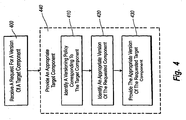
- Figure 4 illustrates an example flow chart of a method for providing component access in accordance with the principles of the present invention
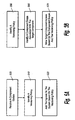
- Figure 5A illustrates an example flow chart of a method for managing component upgrades in accordance with the principles of the present invention
- Figure 5B illustrates an example flow chart of a method for limiting component scope in accordance with the principles of the present invention.
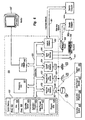
- Figure 6 illustrates a suitable environment for practicing aspects of the present invention.
- the present invention extends to systems, methods, and computer program products that allow program developers to easily accommodate changes in components, modules, and operating systems without impairing program function.
- systems are disclosed that allow programs and components that access each other through static or dynamic references to compatibly coexist in an operating system.
- the embodiments of the present invention may comprise a special purpose or general-purpose computer including various computer hardware, as discussed in greater detail below.
- Embodiments within the scope of the present invention also include computer-readable media for carrying or having computer-executable instructions or data structures stored thereon.
- Such computer-readable media can be any available media that can be accessed by a general purpose or special purpose computer.
- Such computer-readable media can comprise RAM, ROM, EEPROM, CD-ROM or other optical disk storage, magnetic disk storage or other magnetic storage devices, or any other medium which can be used to carry or store desired program code means in the form of computer-executable instructions or data structures and which can be accessed by a general purpose or special purpose computer.
- Computer-executable instructions comprise, for example, instructions and data which cause a general purpose computer, special purpose computer, or special purpose processing device to perform a certain function or group of functions.
- Figure 1 shows exemplary computer architecture for practicing an implementation of the present invention in which a determining module 100 receives one or more requests from a requesting component 105 to access another component or program, such as components 120, 125, and 130.
- a "determining module" 100 can include any type of module having executable instructions configured, for example, for identifying a reference to a target component, which includes the name of the component and the originally intended version, and choosing an appropriate target component which will be used to satisfy the request. In some situations, this can include deciding that there is no such target component available, such that the determining module 100 would be configured to return an error.
- the determining module 100 can also be configured to identify other information, such as which other components have already been made available for access within a computer system, process, or subprocess.
- a “component”, for the purposes of this specification and claims will be understood to include any form of executable instructions that can be run on a computerized system, such as, for example, an interpreted text format file, as well as a file that has been compiled into machine-readable instructions.
- the term component therefore, can include both larger application programs and systems that provide a large variety of functions, as well as smaller program and/or system components that provide other components or programs with specific functionality.
- Embodiments of the presentation invention can access components that have been classified as “platform” or “library” components.
- “Platform” components are components that can be accessed by multiple other components or programs in a computerized system. Platform components are normally accessed only in the most recent form, or upgraded form, such that a requesting component may simply request the target component generally, or a minimum version of the target component, rather than request a specific version of the target component.
- the determining module may, for example, be configured to provide a version of a platform component other than the most recent version.
- platform components can be overwritten by a component upgrade when the upgrade is received, although there are reasons why this may not be done in practice. Platform components may also sometimes be referred to as "binary compatible" components.
- library components are accessed by another component or program only if precisely the same version of the library component has been referenced.
- a determining module 100 can receive a request or declaration from a requesting component 105, to access a target component, such as component 120, 125, and 130.
- a target component such as component 120, 125, and 130.
- target component refers to a component for which access is sought by a requesting component.
- a component is a target component or a requesting component is primarily one of perspective, depending on which component requests access of the other.
- the discussion as applied to target components in this specification and claims can apply equally to requesting components, and vice versa.
- a requesting component 105 can initiate a component access request 110 through the determining module 100, where the request indicates that the requesting component 105 is configured to access a given version of a target component 120, 125, and 130.
- the request 110 can be a reference found in the source code of the requesting component 105 when the requesting component 105 is first installed on a given computerized system (not shown).
- a request 110 can be made by the requesting component 105 when the requesting component 105 requests access of a given version of a target component, such as components 120, 125, and 130, at run time.
- a "versioning policy”, for the purposes of this specification and claims includes any of a given set of properties that can be conveyed from a target component (e.g., 120, 125, 130) to a determining module 100.
- the versioning policy 131, 132, or 133 specifies whether the corresponding target component 120, 125, 130 can be used instead of a version of the given target component with a lower version number.
- the versioning policy can include additional information intended to be used by the determining module 100 to decide whether the target component can be used in a given configuration.
- the versioning policy 132 may specify that target component 125 (version 1.2) can be used when version 1.1 is requested.
- the versioning policy will be found in a predefined location within a target component.
- the versioning policy can be conveyed to the determining module 100 when the component is installed on the system, or when a first request is made to access a given component, and so forth.
- a requesting component can request access to a target component by requesting a specific version of the target component, e.g., request 110 for "component 1" "version 1.1".
- determining module 100 can provide the requesting component 105 with access to a specific version of the component, depending on the versioning policy 131, 132, 133 that is present in the target component. As shown in Figure 1, for example, requesting component 105 requests “version 1" of "component 1" by sending a request 110.
- determining module 100 grants requesting component 105 access to "version 1.1" of "component 1" even though a more recent version of "component 1", e.g., "version 1.2" 125, exists in the system.
- a request for one version of a component results in access to another (e.g., updated or more recent) version of a component.
- request 100 may be a request to access "version 1.1" of "component 1".
- versioning policy 131 may indicate that "version 1.1” is a platform component (and thus a most recent version of "component 1" is to be provided in response to a request).
- there may nevertheless be multiple versions of a given platform component on a system.
- the requesting component can also include information in its request that indicates the lowest possible version of the platform target component that the requesting component 105 can accept. For example, it may be that requesting component 105 requests "version 1.4" of component 1" and that lower versions of "component 1" are not to be returned in response to the request. Accordingly, determining module 100 can provide requesting component 105 with access to "version 3" of "component 1", even though "version 1.1” and "version 1.2" are accessible.
- determining module 100 can return an appropriate response (e.g.., an error message) to a requesting component. For example, when determining module 100 does not have access to "version 3" of "component 1", determining module 100 can send an error message to requesting component 105 in response to a request for "version 1.4 or higher" of component 1".
- an appropriate response e.g.., an error message
- a version number includes two parts, a version and a servicing.
- Components that have a version number indicating an updated servicing are allowed to replace components that have version numbers indicating older servicing.
- Utilizing servicing values to facilitate component replacement is particularly advantageous for implementing minor changes that have a reduced likelihood of causing incompatibility with other components, for fixing bugs, or for fixing security issues whether related to library or platform components. That is, servicing values can facilitate "patching" a version of a component. For example, if target component 120 is identified as a library component (such that version 1.1. of the target component is not to be replaced), a developer can still update the target component 120 by updating (e.g., incrementing) a servicing value in the component's version number. Accordingly, the updated target component 120 would essentially be a different servicing of "version 1.1".
- FIG. 2A illustrates an example computer architecture that receives newer versions of existing components. That is, determination module 100 can receive upgrades to target components that are already resident at a corresponding computerized system. For example, determining module 100 can receive components 215 and 210 from a network service provider (not shown) connected to network 240. Determining module 100 can receive components 215 and 210 as the result of executing an installation program at the corresponding computerized system (or at the network service provider).
- components 210 and 215 include versioning policy information, such as, for example that upgraded component 210 is a "version 3" upgrade of "component 2", and that the component is a platform component.
- component 215 can include information in the form of a versioning policy that the component 215 is library component, or that component 215 otherwise configured such that requesting components can be given access to the specific version represented by component 215.
- the determining module 100 determines whether to retain prior versions (which may be referred to as “side-by-side” updating) or replace prior versions (which may be referred to as "in-place” updating) of each received upgraded component.
- prior versions which may be referred to as "side-by-side” updating
- replace prior versions which may be referred to as "in-place” updating
- components 220 and 235 are library and platform components respectively. More specifically, in response to receiving the component 215, the determining module 100 can identify that, since "component 1" is a library component, other programs or components may be configured to specifically access "version 1" of "component 1". Accordingly, determining module 100 can determine that both component 215 and component 220 are to be retained.
- the determining module 100 can identify that, since "component 2" is platform component, requesting programs and components will be given access to the most recent version of component 2. Accordingly, determining module 100 can determine that component 235 is to be replaced with component 210.
- Figure 2B illustrates the example computer architecture of Figure 2A after a determination module has determined the versions of the components that are to be retained. As depicted in Figure 2B, both “version 1" (component 220) and “version 2" (component 215) of component 1 remain on the system (a side-by-side update). Also as depicted in Figure 2B, only “version 3" of "component 2" (component 210) remains on the system (an in-place update).
- Figure 3 illustrates exemplary computer architecture for stratifying component scope at different processing levels in accordance with an implementation of the present invention. Stratification is based on component scope that applies to target components. By way of explanation and not of limitation, Figure 3 indicates three levels of scope, i.e., a "Machine” level 330, a "Process” level 340, and a "Sub-Process” level 350. One will appreciate, however, after reading this disclosure and claims that there can be greater or fewer numbers of levels, as appropriate. In particular, aspects of the invention allow a target component to supply a versioning policy that requires only one version of the target be made available at a given level (i.e. only one version on the entire machine or only one in a given process or only one in a given subprocess).
- a versioning policy that is associated with a given target component 300 can include a set of component scope.
- the component scope can indicate that a requesting component 105 must access the target component 300 at a given process level.
- “component 1" "version 1" 300 is identified for machine-level access. Any requesting component installed in the system that requests access of the target component 300, must use “component 1" "version 1" since the target component 300 is configured for machine-level access.
- this process level limitation can be indicated by the developer of a target component before the component is installed on a given system.
- Component scope can also indicate larger or smaller scopes for a target component 300, 310, 315, 320, and 325.
- "versioning policies" identified with a given component 310 can indicate that a given version of the target component 310 is required only within a certain process 342, 345, or sub-process 352, 355.
- any requesting component 105 that requests access to a given version of a component 310 can do so within a process 342 without requiring other requesting components (on the system) to use the same target component in other processes 315.
- component 310 can be used in process 342, while component 315 can be used in process 345.
- sub-process 350 when process A 342 has not selected a particular version, sub-process 350, which depends from process 340, can use different versions of component 310, such as components 320 and 325. This level of granular access to different components can therefore be indicated when the given component is developed, rather than by a system administrator when the given component is installed on the system.
- the determining module 100 can combine any identified component scope for each target or requesting component to provide a requesting component with appropriate target component access.
- identification of an appropriate version of a target component can be based on other policies, such as, for example, component.
- a determining module can therefore identify an appropriate version of a target component based on any identified policy, such as the versioning policy and component scope of the specified target component, as well as any other system administrator-provided policies where appropriate
- Figures 4, 5A, and 5B illustrate exemplary flow charts for allowing component access by other programs or components in a computerized system. The methods of Figures 4, 5A, and 5B will be discussed with respect to the modules of the programs illustrated in the preceding Figures.
- Figure 4 illustrates an example flow chart of a method for providing component access in accordance with an implementation of the present invention.
- the method of Figure 4 includes an act 400 of receiving a request for a version of a target component.
- Act 400 can include receiving a request to access a specified version of a target component, the request being received from a requesting component.
- a requesting component 105 can request access of a target component, such as component 120, 125, and 130 through a determining module 100. It may also be that the request includes the versioning policy of the version of the target component.
- the method also includes a functional result-oriented step 440 of providing an appropriate target component.
- Step 440 can include any number of corresponding acts for implementing the present invention.
- step 440 includes an act 410 of identifying a versioning policy.
- Act 410 can include identifying a versioning policy of the specified version of the target component. If a versioning policy was included in the request, the determine module 100 may identify such a n included versioning policy. Alternately, the determine module 100 can refer to one or more versions of the target component and identify versioning policies stored in the one or more versions of the target component.
- the determining module 100 can identify that multiple versions of a component such as a "version 1" 120 and a “version 2" 125 of the same "component 1" exist on the system, each having a corresponding versioning policy 131, 132, and 133.
- a software developer can include a versioning policy in target components 120, 125, and 130, etc., such that a determining module 100 identifies the versioning policy upon compiling, installing, and or running the developed program or component.
- Step 440 also includes an act 430 of providing an appropriate version of the target component.
- Act 430 can include identifying an appropriate version of the target component based on the versioning policy of the specified target component.
- the determining module 100 can provide a requesting component 105 with a specific version of the requested target component (a library component), such as component 120.
- the determining module 100 can provide the requesting component 105 with a more recent version of a component (a platform component), such as component 130.
- Figure 5A illustrates an example flow chart of a method for managing component upgrades in accordance with an implementation of the present invention.
- the method of Figure 5A can be implemented such that a requesting component that accesses the target component continues to operate effectively after the target component has been upgraded.
- the method depicted in Figure 5A includes an act 500 of receiving a component update.
- Act 500 can also include identifying that a target component is accessed by a requesting component.
- a determining module 100 may be linked to, or contain, a registry or database that, upon installation of a requesting component 105, identifies that the installed program or component or component 105 is configured to access a specific version of a target component such as a "version 1" 120 of "component 1".
- This determining module 100 can gain this information based on any versioning policy contained in the installed program, as well as contained within any components that program is configured to access.
- the method depicted in Figure 5A includes an act 510 of identifying a versioning policy.
- Act 510 can include identifying a versioning policy in a prior version of the target component, and an updated version of the target component.
- the determining module 100 identifies the versioning policy in any of the target components 120, 125, and 130, which, as previously described, can indicate the version of the target component 120, 125, and 130, and can indicate that the target component is intended to be a platform or a library component.
- the method depicted in Figure 5A further includes an act 520 of adding the component update to the system based at least in part on the versioning policy.
- Act 520 can include deleting a prior version of the target component and/or adding the updated version of the target component based on the identified versioning policy. For example, if a specific prior version 220 of the component is required for access by another program or component, such as if the component is a library component, the determining module 100 will not overwrite the prior version 220. The determining module 100 will simply add the new version 215 of the component such that programs or components that request a new version 215 of the component can access it.
- programs or components that require the prior version 220 of the component may also access that as well, which preserves the integrity of the requesting program or component.
- the determining module 100 can simply overwrite the prior version 235 of the component with the recent version 210 of the component.
- Figure 5B illustrates an example flow chart of a method for providing component access at one or more process levels in accordance with an implementation of the present invention.
- the method of Figure 5B can be implemented to organize one or more target components such that access to the one or more target components is limited.
- the method depicted in Figure 5B includes an act 550 of identifying a versioning policy.
- Act 550 can include identifying a versioning policy in a target component.
- a determining module 100 can receive a component access request from a requesting component, and can identify a versioning from within a received upgrade 215, 210, within an existing target component 220, 225, , and so forth.
- the versioning policy can help the system identify a version number of the target component, as well as whether the target component 220, 225, and 230 is intended to be a library or platform component.
- the method depicted in Figure 5B includes an act 560 of identifying a component scope associated with the component.
- Act 560 can include identifying a component scope associated with the target component where the component scope identifies a property that is associated with a requesting component that can be configured to access the target component.
- the target component or the requesting program or component can be associated with a specific component scope that indicates that a version of the target component can be accessed at one of a machine layer, a sub-process layer, and so forth.
- the method depicted in Figure 5B includes an act 570 of allowing target component access based on the component scope and the versioning policy.
- Act 570 can include allowing at least one of the one or more requesting components to access the target component based on the access property associated with a requesting component and the identified versioning policy. For example, if one or more programs or components 300 are indicated for machine-wide processes 330, only that version of the component 300 will be available to any given requesting component at any given process level.
- the determining module 100 can allow other requesting components to access different versions of the same target component for a given corresponding process or sub-process, as appropriate.
- FIG. 6 and the following discussion are intended to provide a brief, general description of a suitable computing environment in which the invention may be implemented.
- the invention will be described in the general context of computer-executable instructions, such as program modules, being executed by computers in network environments.
- program modules include routines, programs, objects, components, data structures, etc. that perform particular tasks or implement particular abstract data types.
- Computer-executable instructions, associated data structures, and program modules represent examples of the program code means for executing steps of the methods disclosed herein.
- the particular sequence of such executable instructions or associated data structures represents examples of corresponding acts for implementing the functions described in such steps.
- the invention may be practiced in network computing environments with many types of computer system configurations, including personal computers, hand-held devices, multi-processor systems, microprocessor-based or programmable consumer electronics, network PCs, minicomputers, mainframe computers, and the like.
- the invention may also be practiced in distributed computing environments where tasks are performed by local and remote processing devices that are linked (either by hardwired links, wireless links, or by a combination of hardwired or wireless links) through a communications network.
- program modules may be located in both local and remote memory storage devices.
- the invention may be practiced in network computing environments with many types of computer system configurations, including personal computers, hand-held devices, multi-processor systems, microprocessor-based or programmable consumer electronics, network PCs, minicomputers, mainframe computers, and the like.
- the invention may also be practiced in distributed computing environments where local and remote processing devices perform tasks and are linked (either by hardwired links, wireless links, or by a combination of hardwired or wireless links) through a communications network.
- program modules may be located in both local and remote memory storage devices.
- an exemplary system for implementing the invention includes a general-purpose computing device in the form of a conventional computer 620, including a processing unit 621, a system memory 622, and a system bus 623 that couples various system components including the system memory 622 to the processing unit 621.
- the system bus 623 may be any of several types of bus structures including a memory bus or memory controller, a peripheral bus, and a local bus using any of a variety of bus architectures.
- the system memory includes read only memory (ROM) 624 and random access memory (RAM) 625.
- ROM read only memory
- RAM random access memory
- a basic input/output system (BIOS) 626 containing the basic routines that help transfer information between elements within the computer 620, such as during start-up, may be stored in ROM 624.
- the computer 620 may also include a magnetic hard disk drive 627 for reading from and writing to a magnetic hard disk 639, a magnetic disc drive 628 for reading from or writing to a removable magnetic disk 629, and an optical disc drive 630 for reading from or writing to removable optical disc 631 such as a CD ROM or other optical media.
- the magnetic hard disk drive 627, magnetic disk drive 628, and optical disc drive 630 are connected to the system bus 623 by a hard disk drive interface 632, a magnetic disk drive-interface 633, and an optical drive interface 634, respectively.
- the drives and their associated computer-readable media provide nonvolatile storage of computer-executable instructions, data structures, program modules and other data for the computer 620.
- exemplary environment described herein employs a magnetic hard disk 639, a removable magnetic disk 629 and a removable optical disc 631
- other types of computer readable media for storing data can be used, including magnetic cassettes, flash memory cards, digital versatile disks, Bernoulli cartridges, RAMs, ROMs, and the like.
- Program code means comprising one or more program modules may be stored on the hard disk 639, magnetic disk 629, optical disc 631, ROM 624 or RAM 625, including an operating system 635, one or more application programs 636, other program modules 637, and program data 638.
- a user may enter commands and information into the computer 620 through keyboard 640, pointing device 642, or other input devices (not shown), such as a microphone, joy stick, game pad, satellite dish, scanner, or the like.
- These and other input devices are often connected to the processing unit 621 through a serial port interface 646 coupled to system bus 623.
- the input devices may be connected by other interfaces, such as a parallel port, a game port or a universal serial bus (USB).
- a monitor 647 or another display device is also connected to system bus 623 via an interface, such as video adapter 648.
- personal computers typically include other peripheral output devices (not shown), such as speakers and printers.
- the computer 620 may operate in a networked environment using logical connections to one or more remote computers, such as remote computers 649a and 649b.
- Remote computers 649a and 649b may each be another personal computer, a server, a router, a network PC, a peer device or other common network node, and typically include many or all of the elements described above relative to the computer 620, although only memory storage devices 650a and 650b and their associated application programs 636a and 636b have been illustrated in Figure 6.
- the logical connections depicted in Figure 6 include a local area network (LAN) 651 and a wide area network (WAN) 652 that are presented here by way of example and not limitation.
- LAN local area network
- WAN wide area network
- Such networking environments are commonplace in office-wide or enterprise-wide computer networks, intranets and the Internet.
- the computer 620 When used in a LAN networking environment, the computer 620 is connected to the local network 651 through a network interface or adapter 653. When used in a WAN networking environment, the computer 620 may include a modem 654, a wireless link, or other means for establishing communications over the wide area network 652, such as the Internet.
- the modem 654, which may be internal or external, is connected to the system bus 623 via the serial port interface 646.
- program modules depicted relative to the computer 620, or portions thereof may be stored in the remote memory storage device. It will be appreciated that the network connections shown are exemplary and other means of establishing communications over wide area network 652 may be used.
Landscapes
- Engineering & Computer Science (AREA)
- Software Systems (AREA)
- Theoretical Computer Science (AREA)
- General Engineering & Computer Science (AREA)
- Physics & Mathematics (AREA)
- General Physics & Mathematics (AREA)
- Computer Security & Cryptography (AREA)
- Stored Programmes (AREA)
Applications Claiming Priority (2)
| Application Number | Priority Date | Filing Date | Title |
|---|---|---|---|
| US10/772,992 US20050177826A1 (en) | 2004-02-05 | 2004-02-05 | Versioning support in object-oriented programming languages and tools |
| US772992 | 2004-02-05 |
Publications (2)
| Publication Number | Publication Date |
|---|---|
| EP1569093A2 true EP1569093A2 (de) | 2005-08-31 |
| EP1569093A3 EP1569093A3 (de) | 2007-08-29 |
Family
ID=34750443
Family Applications (1)
| Application Number | Title | Priority Date | Filing Date |
|---|---|---|---|
| EP04030842A Withdrawn EP1569093A3 (de) | 2004-02-05 | 2004-12-27 | Unterstützung mehrerer Versionen in objektorientierten Programmiersprachen und Werkzeugen |
Country Status (16)
| Country | Link |
|---|---|
| US (1) | US20050177826A1 (de) |
| EP (1) | EP1569093A3 (de) |
| JP (1) | JP2005222524A (de) |
| KR (1) | KR20050079625A (de) |
| CN (1) | CN100507836C (de) |
| AU (1) | AU2005200252A1 (de) |
| BR (1) | BRPI0405607A (de) |
| CA (1) | CA2491188A1 (de) |
| IL (1) | IL166169A (de) |
| MX (1) | MXPA05000366A (de) |
| NO (1) | NO20050043L (de) |
| NZ (1) | NZ537385A (de) |
| RU (1) | RU2377648C2 (de) |
| SG (1) | SG113547A1 (de) |
| TW (1) | TW200527294A (de) |
| ZA (1) | ZA200500054B (de) |
Cited By (3)
| Publication number | Priority date | Publication date | Assignee | Title |
|---|---|---|---|---|
| WO2009030897A2 (en) | 2007-09-06 | 2009-03-12 | Sony Computer Entertainment Europe Limited | Entertainment apparatus and method |
| EP2241977A1 (de) * | 2009-04-17 | 2010-10-20 | ACCENTURE Global Services GmbH | Austauschbare Anwendungskomponenten |
| EP2433200A4 (de) * | 2009-05-21 | 2013-04-24 | Salesforce Com Inc | System, verfahren und computerprogrammprodukt zur versionsfeststellung von komponenten einer anwendung |
Families Citing this family (13)
| Publication number | Priority date | Publication date | Assignee | Title |
|---|---|---|---|---|
| JP2006268752A (ja) * | 2005-03-25 | 2006-10-05 | Seiko Epson Corp | 複数のバージョンに対応したモジュールの起動 |
| US8060865B2 (en) * | 2006-01-12 | 2011-11-15 | Microsoft Corporation | Build-time enforcement of architectural partitioning in computer application |
| US8584109B2 (en) * | 2006-10-27 | 2013-11-12 | Microsoft Corporation | Virtualization for diversified tamper resistance |
| US9477462B2 (en) * | 2008-01-16 | 2016-10-25 | Oracle International Corporation | System and method for software product versioning packaging, distribution, and patching |
| US8667483B2 (en) * | 2009-03-25 | 2014-03-04 | Microsoft Corporation | Device dependent on-demand compiling and deployment of mobile applications |
| TW201142709A (en) | 2009-12-11 | 2011-12-01 | Ibm | A method, system and computer program for deciding whether to install a first application within one of a plurality of candiate environments |
| RU2628176C2 (ru) * | 2012-12-14 | 2017-08-15 | Телефонактиеболагет Л М Эрикссон (Пабл) | Системы, способы и компьютерные программные продукты для процесса сборки и загрузки программного обеспечения с использованием службы компиляции и развертывания |
| WO2015167480A1 (en) * | 2014-04-29 | 2015-11-05 | Hewlett-Packard Development Company, L.P. | Hardware assisted software versioning of clustered applications |
| US10572275B2 (en) * | 2017-06-15 | 2020-02-25 | Microsoft Technology Licensing, Llc | Compatible dictionary layout |
| TWI727084B (zh) * | 2017-08-21 | 2021-05-11 | 中華電信股份有限公司 | 微服務軟體開發基礎架構下自動化持續整合方法 |
| US11153238B2 (en) * | 2019-01-08 | 2021-10-19 | Snap Inc. | Dynamic application configuration |
| JP7532325B2 (ja) | 2021-09-16 | 2024-08-13 | 株式会社東芝 | 情報処理システム、情報処理装置、情報処理方法及びプログラム |
| US12524227B2 (en) * | 2023-10-06 | 2026-01-13 | Boomi, LP | Automated generation of semantic software versions for application programming interfaces |
Family Cites Families (20)
| Publication number | Priority date | Publication date | Assignee | Title |
|---|---|---|---|---|
| US5805899A (en) * | 1995-07-06 | 1998-09-08 | Sun Microsystems, Inc. | Method and apparatus for internal versioning of objects using a mapfile |
| US6065046A (en) * | 1997-07-29 | 2000-05-16 | Catharon Productions, Inc. | Computerized system and associated method of optimally controlled storage and transfer of computer programs on a computer network |
| US5974428A (en) * | 1997-08-29 | 1999-10-26 | International Business Machines Corporation | Method and apparatus for class version naming and mapping |
| US6151700A (en) * | 1997-10-20 | 2000-11-21 | International Business Machines Corporation | Object oriented distributed programming system for computer controlled networks with selective capture of program property data identifying a particular program version |
| US5890161A (en) * | 1997-10-28 | 1999-03-30 | Microsoft Corporation | Automatic transaction processing of component-based server applications |
| US6014666A (en) * | 1997-10-28 | 2000-01-11 | Microsoft Corporation | Declarative and programmatic access control of component-based server applications using roles |
| US6631425B1 (en) * | 1997-10-28 | 2003-10-07 | Microsoft Corporation | Just-in-time activation and as-soon-as-possible deactivation or server application components |
| US6230318B1 (en) * | 1998-02-24 | 2001-05-08 | Microsoft Corporation | Application programs constructed entirely from autonomous component objects |
| US6499137B1 (en) * | 1998-10-02 | 2002-12-24 | Microsoft Corporation | Reversible load-time dynamic linking |
| US6381735B1 (en) * | 1998-10-02 | 2002-04-30 | Microsoft Corporation | Dynamic classification of sections of software |
| US6438590B1 (en) * | 1999-04-13 | 2002-08-20 | Hewlett-Packard Company | Computer system with preferential naming service |
| JP4484001B2 (ja) * | 1999-07-05 | 2010-06-16 | ネッツエスアイ東洋株式会社 | ライブラリ関数バージョン一致方法。 |
| US6564377B1 (en) * | 1999-07-26 | 2003-05-13 | Microsoft Corporation | Self-describing components within a software catalog |
| JP3570940B2 (ja) * | 1999-11-25 | 2004-09-29 | 北海道日本電気ソフトウェア株式会社 | ダイナミックリンクライブラリ制御方式,方法および記録媒体 |
| US6658659B2 (en) * | 1999-12-16 | 2003-12-02 | Cisco Technology, Inc. | Compatible version module loading |
| US6871344B2 (en) * | 2000-04-24 | 2005-03-22 | Microsoft Corporation | Configurations for binding software assemblies to application programs |
| JP2001331324A (ja) * | 2000-05-19 | 2001-11-30 | Sony Corp | 情報処理方法および装置、ならびに、記録媒体 |
| US20030101251A1 (en) * | 2001-11-27 | 2003-05-29 | Varros Telecom | Customizable element management system and method using element modeling and protocol adapters |
| WO2004090672A2 (en) * | 2003-04-02 | 2004-10-21 | Network Clarity, Inc. | Methods and systems for controlling network infrastructure devices |
| US7383541B1 (en) * | 2003-08-07 | 2008-06-03 | Cisco Technology, Inc. | Method and apparatus providing interoperation of execution images of different versions |
-
2004
- 2004-02-05 US US10/772,992 patent/US20050177826A1/en not_active Abandoned
- 2004-12-14 JP JP2004361656A patent/JP2005222524A/ja active Pending
- 2004-12-17 BR BR0405607-8A patent/BRPI0405607A/pt not_active IP Right Cessation
- 2004-12-20 KR KR1020040108806A patent/KR20050079625A/ko not_active Withdrawn
- 2004-12-21 TW TW093139877A patent/TW200527294A/zh unknown
- 2004-12-22 NZ NZ537385A patent/NZ537385A/en not_active IP Right Cessation
- 2004-12-27 EP EP04030842A patent/EP1569093A3/de not_active Withdrawn
- 2004-12-29 CA CA002491188A patent/CA2491188A1/en not_active Abandoned
- 2004-12-30 RU RU2004139189/09A patent/RU2377648C2/ru not_active IP Right Cessation
- 2004-12-30 CN CN200410011653.6A patent/CN100507836C/zh not_active Expired - Fee Related
-
2005
- 2005-01-03 SG SG200500021A patent/SG113547A1/en unknown
- 2005-01-04 ZA ZA200500054A patent/ZA200500054B/en unknown
- 2005-01-04 NO NO20050043A patent/NO20050043L/no not_active Application Discontinuation
- 2005-01-06 MX MXPA05000366A patent/MXPA05000366A/es not_active Application Discontinuation
- 2005-01-06 IL IL166169A patent/IL166169A/en not_active IP Right Cessation
- 2005-01-21 AU AU2005200252A patent/AU2005200252A1/en not_active Abandoned
Cited By (6)
| Publication number | Priority date | Publication date | Assignee | Title |
|---|---|---|---|---|
| WO2009030897A2 (en) | 2007-09-06 | 2009-03-12 | Sony Computer Entertainment Europe Limited | Entertainment apparatus and method |
| WO2009030897A3 (en) * | 2007-09-06 | 2009-06-04 | Sony Comp Entertainment Europe | Entertainment apparatus and method |
| US8360856B2 (en) | 2007-09-06 | 2013-01-29 | Sony Computer Entertainment Europe Limited | Entertainment apparatus and method |
| EP2241977A1 (de) * | 2009-04-17 | 2010-10-20 | ACCENTURE Global Services GmbH | Austauschbare Anwendungskomponenten |
| EP2433200A4 (de) * | 2009-05-21 | 2013-04-24 | Salesforce Com Inc | System, verfahren und computerprogrammprodukt zur versionsfeststellung von komponenten einer anwendung |
| US8510729B2 (en) | 2009-05-21 | 2013-08-13 | Salesforce.Com, Inc. | System, method and computer program product for versioning and deprecation of components of an application |
Also Published As
| Publication number | Publication date |
|---|---|
| JP2005222524A (ja) | 2005-08-18 |
| IL166169A (en) | 2010-03-28 |
| IL166169A0 (en) | 2006-01-15 |
| RU2004139189A (ru) | 2006-06-10 |
| CA2491188A1 (en) | 2005-08-05 |
| US20050177826A1 (en) | 2005-08-11 |
| SG113547A1 (en) | 2005-08-29 |
| TW200527294A (en) | 2005-08-16 |
| CN100507836C (zh) | 2009-07-01 |
| AU2005200252A1 (en) | 2005-08-25 |
| NZ537385A (en) | 2006-06-30 |
| ZA200500054B (en) | 2006-09-27 |
| MXPA05000366A (es) | 2005-08-19 |
| KR20050079625A (ko) | 2005-08-10 |
| BRPI0405607A (pt) | 2005-09-27 |
| EP1569093A3 (de) | 2007-08-29 |
| NO20050043D0 (no) | 2005-01-04 |
| NO20050043L (no) | 2005-08-08 |
| CN1652077A (zh) | 2005-08-10 |
| RU2377648C2 (ru) | 2009-12-27 |
Similar Documents
| Publication | Publication Date | Title |
|---|---|---|
| US7539985B2 (en) | Systems and methods for dynamic component versioning | |
| US6301710B1 (en) | System and method for creating a substitute registry when automatically installing an update program | |
| EP1569093A2 (de) | Unterstützung mehrerer Versionen in objektorientierten Programmiersprachen und Werkzeugen | |
| EP1224543B1 (de) | Reparieren von anwendungen, die inkompatibel zum betriebssystem sind durch bereitstellung von stubs für api's | |
| US7472385B2 (en) | Method and computer-readable medium for installing an upgrade to an application program | |
| US6408434B1 (en) | System and method for using a substitute directory to automatically install an update program | |
| US7987459B2 (en) | Application programming interface for identifying, downloading and installing applicable software updates | |
| US7814476B2 (en) | Systems and methods for updating software | |
| US9477462B2 (en) | System and method for software product versioning packaging, distribution, and patching | |
| US8843918B2 (en) | System and method for deployable templates | |
| US8060871B2 (en) | Servicing software through versioning | |
| US6317880B1 (en) | Patch source list management | |
| US7934210B1 (en) | System and method for updating one or more programs and their environment | |
| US7574481B2 (en) | Method and system for enabling offline detection of software updates | |
| US5537596A (en) | Method and apparatus for overriding resource maps in a computer system | |
| US7779389B2 (en) | System and method for dynamic VM settings | |
| US8352915B2 (en) | Organization of application state and configuration settings | |
| US20070257715A1 (en) | System and method for abstract configuration | |
| US20060048129A1 (en) | Patch un-installation | |
| US20070143379A1 (en) | Metadata driven deployment of applications | |
| US8819196B2 (en) | Selection and configuration of servers | |
| US7689999B2 (en) | Sharing dynamically changing resources in software systems | |
| US20070156904A1 (en) | System and method for system information centralization | |
| HK1081289A (en) | Versioning support in object-oriented programming languages and tools | |
| US20060037013A1 (en) | Program update apparatus, method, and medium |
Legal Events
| Date | Code | Title | Description |
|---|---|---|---|
| PUAI | Public reference made under article 153(3) epc to a published international application that has entered the european phase |
Free format text: ORIGINAL CODE: 0009012 |
|
| AK | Designated contracting states |
Kind code of ref document: A2 Designated state(s): AT BE BG CH CY CZ DE DK EE ES FI FR GB GR HU IE IS IT LI LT LU MC NL PL PT RO SE SI SK TR |
|
| AX | Request for extension of the european patent |
Extension state: AL BA HR LV MK YU |
|
| REG | Reference to a national code |
Ref country code: HK Ref legal event code: DE Ref document number: 1081289 Country of ref document: HK |
|
| PUAL | Search report despatched |
Free format text: ORIGINAL CODE: 0009013 |
|
| AK | Designated contracting states |
Kind code of ref document: A3 Designated state(s): AT BE BG CH CY CZ DE DK EE ES FI FR GB GR HU IE IS IT LI LT LU MC NL PL PT RO SE SI SK TR |
|
| AX | Request for extension of the european patent |
Extension state: AL BA HR LV MK YU |
|
| 17P | Request for examination filed |
Effective date: 20071109 |
|
| 17Q | First examination report despatched |
Effective date: 20080124 |
|
| AKX | Designation fees paid |
Designated state(s): AT BE BG CH CY CZ DE DK EE ES FI FR GB GR HU IE IS IT LI LT LU MC NL PL PT RO SE SI SK TR |
|
| STAA | Information on the status of an ep patent application or granted ep patent |
Free format text: STATUS: THE APPLICATION IS DEEMED TO BE WITHDRAWN |
|
| 18D | Application deemed to be withdrawn |
Effective date: 20110701 |
|
| REG | Reference to a national code |
Ref country code: HK Ref legal event code: WD Ref document number: 1081289 Country of ref document: HK |