EP1561812A1 - Modified sarcosine oxidase, process for producing the same and reagent composition using the same - Google Patents
Modified sarcosine oxidase, process for producing the same and reagent composition using the same Download PDFInfo
- Publication number
- EP1561812A1 EP1561812A1 EP03774008A EP03774008A EP1561812A1 EP 1561812 A1 EP1561812 A1 EP 1561812A1 EP 03774008 A EP03774008 A EP 03774008A EP 03774008 A EP03774008 A EP 03774008A EP 1561812 A1 EP1561812 A1 EP 1561812A1
- Authority
- EP
- European Patent Office
- Prior art keywords
- sarcosine oxidase
- amino acid
- acid sequence
- seq
- modified
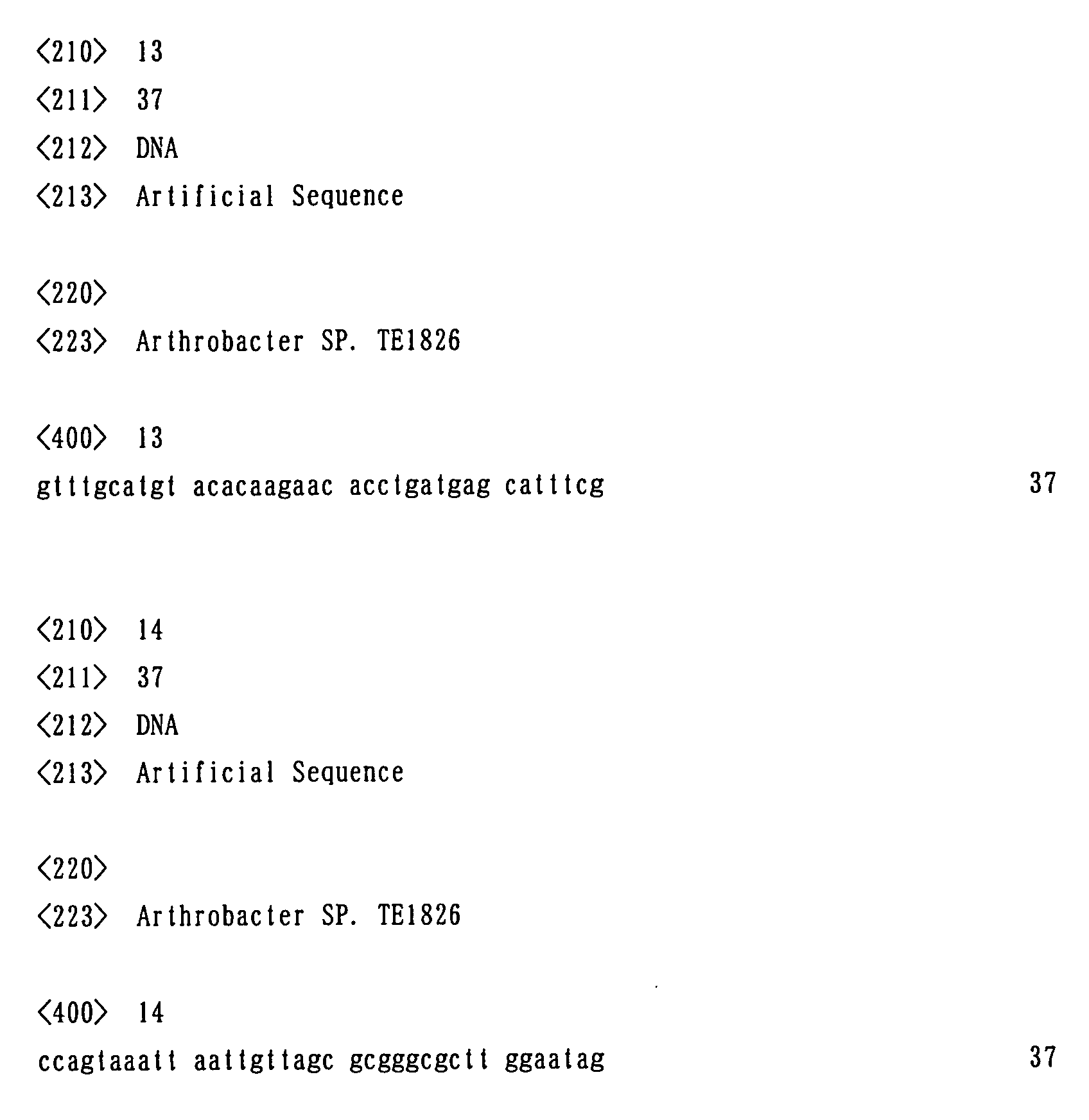
- Prior art date
- Legal status (The legal status is an assumption and is not a legal conclusion. Google has not performed a legal analysis and makes no representation as to the accuracy of the status listed.)
- Granted
Links
Classifications
-
- C—CHEMISTRY; METALLURGY
- C12—BIOCHEMISTRY; BEER; SPIRITS; WINE; VINEGAR; MICROBIOLOGY; ENZYMOLOGY; MUTATION OR GENETIC ENGINEERING
- C12N—MICROORGANISMS OR ENZYMES; COMPOSITIONS THEREOF; PROPAGATING, PRESERVING, OR MAINTAINING MICROORGANISMS; MUTATION OR GENETIC ENGINEERING; CULTURE MEDIA
- C12N9/00—Enzymes; Proenzymes; Compositions thereof; Processes for preparing, activating, inhibiting, separating or purifying enzymes
- C12N9/0004—Oxidoreductases (1.)
- C12N9/0012—Oxidoreductases (1.) acting on nitrogen containing compounds as donors (1.4, 1.5, 1.6, 1.7)
- C12N9/0026—Oxidoreductases (1.) acting on nitrogen containing compounds as donors (1.4, 1.5, 1.6, 1.7) acting on CH-NH groups of donors (1.5)
- C12N9/0032—Oxidoreductases (1.) acting on nitrogen containing compounds as donors (1.4, 1.5, 1.6, 1.7) acting on CH-NH groups of donors (1.5) with oxygen as acceptor (1.5.3)
- C12N9/0034—Sarcosine oxidase (1.5.3.1)
-
- C—CHEMISTRY; METALLURGY
- C12—BIOCHEMISTRY; BEER; SPIRITS; WINE; VINEGAR; MICROBIOLOGY; ENZYMOLOGY; MUTATION OR GENETIC ENGINEERING
- C12Q—MEASURING OR TESTING PROCESSES INVOLVING ENZYMES, NUCLEIC ACIDS OR MICROORGANISMS; COMPOSITIONS OR TEST PAPERS THEREFOR; PROCESSES OF PREPARING SUCH COMPOSITIONS; CONDITION-RESPONSIVE CONTROL IN MICROBIOLOGICAL OR ENZYMOLOGICAL PROCESSES
- C12Q1/00—Measuring or testing processes involving enzymes, nucleic acids or microorganisms; Compositions therefor; Processes of preparing such compositions
- C12Q1/26—Measuring or testing processes involving enzymes, nucleic acids or microorganisms; Compositions therefor; Processes of preparing such compositions involving oxidoreductase
-
- G—PHYSICS
- G01—MEASURING; TESTING
- G01N—INVESTIGATING OR ANALYSING MATERIALS BY DETERMINING THEIR CHEMICAL OR PHYSICAL PROPERTIES
- G01N33/00—Investigating or analysing materials by specific methods not covered by groups G01N1/00 - G01N31/00
- G01N33/48—Biological material, e.g. blood, urine; Haemocytometers
- G01N33/50—Chemical analysis of biological material, e.g. blood, urine; Testing involving biospecific ligand binding methods; Immunological testing
- G01N33/70—Chemical analysis of biological material, e.g. blood, urine; Testing involving biospecific ligand binding methods; Immunological testing involving creatine or creatinine
Definitions
- the present invention relates to sarcosine oxidase obtained by modifying a protein having a sarcosine oxidase activity by a protein engineering technique, characterized by having an improved stability in the state of a liquid, an excellent substrate specificity and a lowered action on proline, as well as a process for producing sarcosine oxidase and a reagent composition by the use thereof.
- Sarcosine oxidase (EC 1.5.3.1) is used as an enzyme for measuring creatine and creatinine in the body fluid, which are clinical indicators of diagnosis of muscular diseases and renal diseases, together with the other enzymes such as creatininase, creatinase and peroxidase.
- Sarcosine oxidase acts on sarcosine which is a substrate in the presence of water and oxygen to produce glycine, formaldehyde and hydrogen peroxide.
- sarcosine oxidase can be modified to have an improved stability in a liquid or have a lowered action on proline without impairing an action on sarcosine.
- sarcosine oxidase can be modified to keep high affinity with sarcosine and have the lowered action on L-proline, and thereby completed the present invention.
- the present invention is composed of the following constitution.
- the modified sarcosine oxidase of the present invention is useful for analysis of creatine and creatinine in the clinical examination field.
- One embodiment of the present invention is a protein modified by addition, deletion, insertion or substitution of at least one amino acid in an amino acid sequence constituting a protein having a sarcosine oxidase activity, and modified sarcosine oxidase characterized by having the sarcosine oxidase activity, an improved stability in a liquid compared with an unmodified one, a sufficiently lowered action on proline compared with sarcosine which is an original substrate, or having the sarcosine oxidase activity and a lowered action on proline compared with the unmodified one.
- the action on proline can be obtained by a relative ratio (%) of an enzymatic activity using L-proline as the substrate to an enzymatic activity using sarcosine as the substrate.
- the action on L-proline is 0.7% or less and preferably 0.5% or less based on the action on sarcosine.
- the sarcosine oxidase has a high Km value (Michaelis-Menten constant). for proline, and is unlikely to be affected by proline in a sample when applied to a reagent for measuring creatinine and creatine.
- the sarcosine oxidase of the present invention has the Km value of 150 mM or more and preferably 200 mM or more for L-proline.
- the sarcosine oxidase of the present invention has the Km value of preferably 10 mM or less and more preferably 5 mM or less for sarcosine in terms of suppressing a necessary amount to be added in the measurement reagent and taking advantage of the high substrate specificity.
- the sarcosine oxidase of the present invention is not particularly limited as long as it has the above characters.
- enzymes derived from microorganisms and mammals can be used. Enzymes obtained by modifying the publicly known sarcosine oxidase using gene engineering/protein engineering technology and enzymes whose property is improved by chemical modification are also included.
- the modified sarcosine oxidase in one embodiment of the present invention is characterized in that the stability in the liquid is further improved compared with the unmodified one.
- the stability in the liquid in the present invention means, for example, a proportion of a residual enzyme activity after the modified enzyme has been dissolved in an appropriate buffer and stored at an appropriate temperature for a certain time period.
- the "appropriate buffer” is not particularly limited as long as a type thereof and the temperature is selected so that sufficient buffer capacity is kept at pH of around 7 to 8 which is an optimal pH of the sarcosine oxidase.
- 50 mM potassium phosphate buffer (pH 7.5) or 50 mM PIPES-NaOH buffer (pH 7.5) is selected.
- surfactants, salts, chelating agents and preservatives may be contained in the buffer if necessary.
- a condition of "storage at the appropriate temperature for the certain time period” is not particularly limited, but preferably, a condition of an acceleration (harshness) test is selected with long term storage stability in a liquid diagnostic reagent in mind. Specifically, “storage at 40°C for 3 days” or “storage at 60°C for 30 min” is included. When time permits, the storage under a cooling condition at 2 to 10°C commonly used as the temperature at which the liquid diagnostic drug is actually stored for a long time, for 6 months or more may be selected.
- a concentration of the sarcosine oxidase in the storage is not particularly limited, and the concentration of 1 to 30 U/mL is preferably selected on the assumption of the concentration typically used for the diagnostic reagent. More preferably, the concentration of 5 to 20 U/mL is selected.
- the "stability being further improved compared with the unmodified one" refers to that an activity keeping proportion after the storage for the certain period is higher than an activity keeping proportion of an unmodified enzyme when measured under the same condition.
- One embodiment of the present invention is modified sarcosine oxidase where a residual enzyme activity proportion after storing in 50 mM potassium phosphate buffer (pH 7.5) at 60°C for 30 min is improved compared with the unmodified one.
- Another embodiment is the modified sarcosine oxidase where the residual enzyme activity proportion after storing in 50 mM PIPES-NaOH buffer (pH 7.5) containing 2 mM EDTA, 50 mM NaCl, 0.1% (w/v) 2-methylisothiazolone, and 0.1% (w/v) TritonX-100 at 40°C for 3 days is improved compared with the unmodified one.
- the modified sarcosine oxidase in one embodiment of the present invention is characterized in that a reactivity to proline is lowered compared with the unmodified one.
- the reactivity to proline means the relative ratio of the enzyme activity using proline as the substrate to the enzyme activity using sarcosine which is the original substrate as the substrate. And, as long as the reactivity to proline is lowered, even if a specific activity using sarcosine as the substrate is changed, the enzyme is included in the modified sarcosine oxidase of the present invention.
- the Km value for sarcosine may be changed, but when applied to the reagent for measuring creatinine and creatine, it causes lowered reactivity, and thus, the Km value for sarcosine is preferably within 3 times, and more preferably within 1.5 times of that before the modification.
- Sarcosine oxidase used for the modification of the present invention is not particularly limited, and for example, the sarcosine oxidase derived from bacteria belonging to genera Bacillus, Pseudomonas and Corynebacterium known publicly can be used.
- JP-2-265478-A sarcosine oxidase derived from Arthrobacter sp. TE1826 (Accession No. 10637, Fermentation Research Institute, the Agency of Industrial Science and Technology) was modified in a protein engineering manner is shown as one example in the present invention.
- the group of the present inventors have successfully isolated a sarcosine oxidase gene from chromosomal DNA extracted from Arthrobacter sp. TE1826, determined an entire DNA structure thereof (described in Journal of Fermentation and Bioengineering, Vol. 75, No. 4:239-244, 1999), successfully produced the sarcosine oxidase in transformants at a high density by a gene engineering technique, and enabled to inexpensively supply the sarcosine oxidase with high purity on a large scale (JP-6-113840-A).
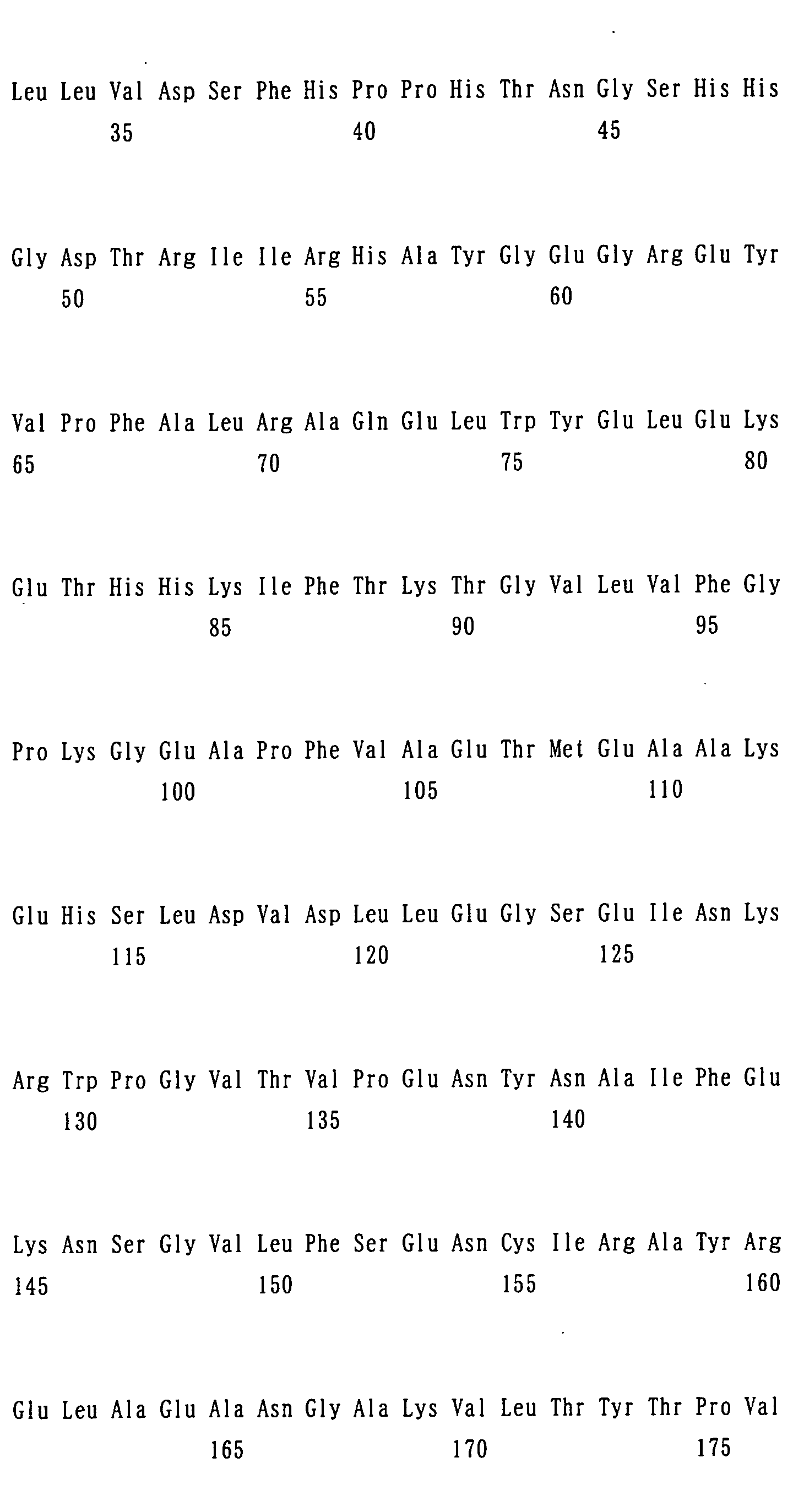
- An amino acid sequence of the sarcosine oxidase from Arthrobacter sp. TE1826 is shown in SEQ ID NO:1.
- a DNA sequence encoding this amino acid sequence is shown in SEQ ID NO:2.
- the present invention is not limited to the modified sarcosine oxidase having the amino acid sequence described in SEQ ID NO:1, and may be the other modified protein having the sarcosine oxidase activity.
- Suitable examples of the other protein having the sarcosine oxidase activity include sarcosine oxidase whose three dimensional structure is similar to that of the sarcosine oxidase having the amino acid sequence described in SEQ ID NO:1, and specifically include other proteins having 50% or more homologous amino acid sequence, more preferably 80% or more homologous amino acid sequence, and having the sarcosine oxidase activity. This is based on the respect that enzyme proteins having 50 to 80% or more homology in the amino acid sequence and exhibiting the same catalytic activity are often similar in the three dimensional structure and often have the same amino acid residues involved in the substrate specificity and the same reaction mechanism.
- one or more amino acids may be further deleted, substituted or added.
- one which has added a histidine tag at the N- or C-terminus of the amino acid sequence in order to simplify the purification of sarcosine oxidase is exemplified (e.g., "Jikken Igaku" 20:479-482, 2002).
- the homology in the amino acid sequences in the present invention can be calculated using publicly known gene analysis software (e.g., Genetyx-win ver. 3, Genetyx Corporation).
- the homology refers to a percentage of identical amino acid residues in the range having similarity to the amino acid sequence to be compared.
- Another embodiment of the present invention is the modified sarcosine oxidase characterized in that at least one amino acid in the amino acid sequence described in SEQ ID NO:1 is substituted with other amino acid, and having the improved stability in the liquid compared with the unmodified one.
- Another embodiment of the present invention is the modified sarcosine oxidase characterized in that at least one amino acid in sites corresponding to positions 155 to 250 in the amino acid sequence from Arthrobacter sp. TE1826 described in SEQ ID NO:1 or sites corresponding to positions 155 to 250 in the amino acid sequence described in SEQ ID NO:1 in sarcosine oxidase from other than Arthrobacter sp. TE1826 is substituted with the other amino acid, and having the improved stability in the liquid compared with the unmodified one.
- Another embodiment of the present invention is the modified sarcosine oxidase characterized in that at least one amino acid in sites corresponding to positions 82 to 92 in the amino acid sequence from Arthrobacter sp. TE1826 described in SEQ ID NO:1 or sites corresponding to positions 82 to 92 of the amino acid sequence described in SEQ ID NO:1 in sarcosine oxidase from other than Arthrobacter sp. TE1826 is substituted with the other amino acid, and having the improved stability in the liquid compared with the unmodified one.
- TE1826 constitute a linked site of a catalytic domain and an FAD binding domain of the sarcosine oxidase.
- Another embodiment of the present invention is the modified sarcosine oxidase characterized in that at least one amino acid in sites corresponding to positions 354 to 366 presumed to constitute ⁇ -helix containing the position 364 in the amino acid sequence from Arthrobacter sp. TE1826 described in SEQ ID NO:1 or sites corresponding to positions 354 to 366 in the amino acid sequence described in SEQ ID NO:1 in the sarcosine oxidase from other than Arthrobacter sp. TE1826 is substituted with the other amino acid, and having the improved stability in the liquid compared with the unmodified one.
- the modified sarcosine oxidase where at least one amino acid selected from the group consisting of positions 89, 155, 166, 204, 213, 233, 240, 250 and 364 in the amino acid sequence described in SEQ ID NO:1 or corresponding positions in the other sarcosine oxidase is substituted with the other amino acid.
- modified sarcosine oxidase where at least one amino acid selected from the following group is substituted with the other amino acid.
- Another embodiment of the present invention is the modified sarcosine oxidase where the protein having the sarcosine oxidase activity has the amino acid sequence described in SEQ ID NO:1.
- Another embodiment of the present invention is the modified sarcosine oxidase where at least one amino acid in a region which constitutes the catalytic domain and the linked site of the catalytic domain and the FAD binding domain is substituted with the other amino acid. It has been predicted that positions 82 to 152 and positions 216 to 328 in the amino acid sequence described in SEQ ID NO:1 constitute the catalytic domain and the linked site of the catalytic domain and the FAD binding domain of the sarcosine oxidase, from the sarcosine oxidase having the homology to the amino acid sequence described in SEQ ID NO:1, whose three dimensional structure has been demonstrated by the X-ray crystal analysis (e.g., "Structure" Vol. 7, No. 3:331-345, 1999).
- the modified sarcosine oxidase where at least one amino acid in the region which constitutes the linked site of the catalytic domain and the FAD binding domain, and a ⁇ -sheet structure of the catalytic domain proximal thereto is substituted with the other amino acid. It has been predicted that positions 82 to 97 and positions 313 to 328 in the amino acid sequence described in SEQ ID NO:1 constitute the linked site of the catalytic domain and the FAD binding domain, and the ⁇ -sheet structure of the catalytic domain proximal thereto of the sarcosine oxidase (e.g., "Structure" Vol. 7, No. 3:331-345, 1999).
- Another embodiment of the present invention is the modified sarcosine oxidase where at least one amino acid selected from the group consisting of positions 89, 94 and 322 in the amino acid sequence described in SEQ ID NO:1 is substituted with the other amino acid.
- lysine at position 89 is substituted with arginine
- valine at position 94 is substituted with glycine
- lysine at position 322 is substituted with arginine in the amino acid sequence described in SEQ ID NO:1.
- Another embodiment of the present invention is a gene encoding the above modified sarcosine oxidase, a vector containing the gene, a transformant transformed with the vector, and further a process for producing the modified sarcosine oxidase characterized in that the transformant is cultured and the sarcosine oxidase is collected from the culture.
- the process for producing the sarcosine oxidase of the present invention is not particularly limited, and when the publicly known enzyme is improved using the protein engineering technique, it is possible to produce by the procedure shown below.
- the typically performed technique for modifying gene information is used as a method for modifying the amino acid sequence which constitutes the protein having the sarcosine oxidase activity. That is, a DNA having the gene information of the modified protein is made by converting a certain base of a DNA having the gene information of the protein, or inserting or deleting a certain base.
- Specific methods for converting the base in the DNA molecule include the use of commercially available kits (Transformer Mutagenesis kit supplied from Clonetech; EXOIII/Mung Bean Deletion Kit supplied from Stratagene; QuickChange Site Directed Mutagenesis Kit supplied from Stratagene) or the utilization of polymerase chain reaction (PCR).
- Transformer Mutagenesis kit supplied from Clonetech EXOIII/Mung Bean Deletion Kit supplied from Stratagene
- QuickChange Site Directed Mutagenesis Kit supplied from Stratagene QuickChange Site Directed Mutagenesis Kit supplied from Stratagene
- PCR polymerase chain reaction
- the DNA having the gene information of the produced modified protein is ligated to a plasmid and transfected into a host microorganism, which then becomes a transformant which produces the modified protein.
- Escherichia coli is used as the host microorganism
- pBluescript and pUC18 can be used as the plasmid.
- Escherichia coli W3110, Escherichia coli C600, Escherichia coli JM109, Escherichia coli DH5 ⁇ and the like can be utilized.
- the method for transfecting a recombinant vector into the host microorganism when the host is the microorganism belonging to genus Escherichia, it is possible to employ the method in which the recombinant DNA is transfected in the presence of calcium ions, and further, an electroporation method may be used. Furthermore, commercially available competent cells (e.g., Competent High JM109 supplied from Toyobo Co., Ltd.) may be used.
- Competent High JM109 supplied from Toyobo Co., Ltd.
- the modified protein can be stably produced on a large scale by culturing the microorganism which is the transformant obtained in this way in a nutrient medium.
- a culture condition could be selected in consideration of nutritional physiological natures of the host, typically the liquid culture is often performed, but industrially, it is advantageous to perform an aeration stirring culture.
- nutritious sources of the medium those used for the culture of the microorganism can be widely used.
- Carbon sources may be carbon compounds capable of being utilized, and for example, glucose, sucrose, lactose, maltose, fructose, treacle, pyruvic acid and the like are used.
- Nitrogen sources may be usable nitrogen compounds, and for example, peptone, meat extract, yeast extract, hydrolyzed casein, alkali extract of soy bean cake, and the like are used. Additionally, phosphate salts, carbonate salts, sulfate salts, salts of magnesium, calcium, potassium, iron, manganese and zinc, certain amino acids, certain vitamins are used if necessary.
- a culture temperature can be appropriately changed in the range where the bacteria grow and produce the modified protein, and in the case of Escherichia coli it is preferably about 20 to 42°C.
- a culture period is changed more or less depending on the condition, and is typically about 6 to 48 hours because the culture may be appropriately terminated when the modified protein has been yield maximally.
- Medium pH can be appropriately changed in the range where the bacteria grow and produce the modified protein, and in particular is preferably about pH 6.0 to 9.0.
- the sarcosine oxidase can be collected by culturing the microorganism having the sarcosine oxidase of the present invention as a wild type enzyme under the culture condition suitable for growth of each microorganism using an appropriate nutritious medium. At that time, in order to induce the enzyme expression, it is desirable to add sarcosine, creatine and dimethyl glycine at an appropriate amount into the medium.
- a culture fluid containing microbial cells which produce the modified protein in the culture can be employed as it is and utilized, but in general, when the modified protein is present in the culture fluid in accordance with standard methods, a modified protein-containing solution is utilized after separating from the microbial cells by filtration, centrifugation and the like.
- the modified protein is present in the microbial cells, the microbial cells are collected by means of filtration, centrifugation and the like from the culture, then these microbial cells are disrupted by a mechanical method or an enzymatic method such as lysosome, and if necessary the modified protein is solubilized by adding a chelating agent such as EDTA or a surfactant to separate/collect as an aqueous solution.
- the modified protein-containing solution obtained in this way may be precipitated by, for example, concentration under reduced pressure, concentration via a membrane, salting out by ammonium sulfate or sodium sulfate, or fractional precipitation by hydrophilic organic solvent such as methanol, ethanol and acetone. Treatment with heat and treatment taking advantage of isoelectric point are also effective purification means.
- the purified modified protein can be obtained by gel filtration, adsorption chromatography, ion exchange chromatography or affinity chromatography by an adsorption agent and a gel filtrating agent.
- Another embodiment of the present invention is a reagent for measuring creatine or creatinine containing the above modified sarcosine oxidase.
- an active period of the reagent can be prolonged or measurement accuracy can be enhanced by using the modified sarcosine oxidase having the improved liquid stability and the lowered action on proline.
- An effect degree of proline can be suppressed to less than 7% and preferably less than 5%.
- the reagent for measuring creatine of the present invention includes the modified sarcosine oxidase having the improved stability in the liquid, the small substrate specificity for proline or the lowered reaction to proline, creatine amidinohydrolase, peroxidase and a reagent for detecting hydrogen peroxide.
- the reagent for measuring creatinine includes the modified sarcosine oxidase having the improved stability in the liquid, the small substrate specificity for proline or the lowered reaction to proline, creatinine amidohydrolase, creatine amidinohydrolase, peroxidase and a reagent for detecting hydrogen peroxide.
- the reagent for detecting hydrogen peroxide is a reagent which measures hydrogen peroxide produced by the sarcosine oxidase as a produced pigment in the presence of peroxidase, and includes an oxidative coloring reagent and if necessary a coupler such as 4-aminoantipyrine and 3-methyl-2-benzothiazolinone.
- the reagent for detecting hydrogen peroxide of the present invention is not particularly limited, and various commercially available ones can be used. Furthermore, in the above reagent for measuring creatine or creatinine, metal salts, proteins, amino acids, sugars, organic acids and the like can be also used as stabilizing agents. Preservatives and surfactants are usually added in the range where no harmful effect is given to reagent performance, and used together with an appropriate buffer. One or more are selected for types, concentrations and pH of the buffer depending on the purposes such as storage of each reagent ingredient and enzyme reaction, and when using any buffer, pH at the enzyme reaction is preferably in the range of 5.0 to 10.0.
- the sarcosine oxidase activity is measured under the following condition.
- a reaction mixture is prepared by mixing the above Tris-HC1 buffer, 4-aminoantipyrine solution, phenol solution and peroxidase solution at a ratio of 5:1:2:2.
- the reaction mixture (1 mL) is taken to a test tube, preliminarily warmed at 37°C for about 5 min, and 0.05 mL of an enzyme solution is added to start the reaction.
- the reaction at 37°C is performed accurately for 10 min, then 2.0 mL of an aqueous solution of 0.25% SDS is added to stop the reaction, and an absorbance at 500 nm of this solution is measured.
- distilled water instead of the enzyme solution is added to the reagent mixture, and the same manipulation is followed to measure the absorbance.
- the modified sarcosine oxidase having the improved liquid stability it became possible to supply the modified sarcosine oxidase having the improved liquid stability, the modified sarcosine oxidase having the lowered action on proline, and the modified sarcosine oxidase having the small action on L-proline and the excellent substrate specificity by modifying the protein having the sarcosine oxidase activity by the protein engineering technique.
- modified sarcosine oxidase of the present invention as the enzyme for measuring creatine and creatinine in the body fluid, which are clinical indicators of the diagnosis for muscular diseases and renal diseases, it becomes possible to accurately measure creatine and creatinine without being affected by coexisting substance (e.g., proline), and the liquid stability of the reagent can be improved.
- coexisting substance e.g., proline
- SAOM1 is a mutant where lysine at position 89 is substituted with arginine in the amino acid sequence of SEQ ID NO:1
- SAOM2 is a mutant where valine at position 94 is substituted with glycine in the amino acid sequence of SEQ ID NO:1.
- one or several amino acids may further be deleted, substituted or added within the range where the performance of the mutant is not substantially affected. This is the same for mutants other than SAOM1 and SAOM2.
- An expression plasmid, pSAOEP3 for sarcosine oxidase derived from Arthrobacter sp. TE1826 strain was constructed in accordance with the method described in JP-7-163341-A.
- This expression plasmid contains an inserted DNA fragment of about 1.7 Kbp containing a gene encoding the sarcosine oxidase of TE1826 at a multiple cloning site of pUC18.
- a nucleotide sequence thereof is shown in SEQ ID NO:2
- an amino acid sequence of the sarcosine oxidase deduced from the nucleotide sequence is shown in SEQ ID NO:1.
- Example 2A Preparation of modified sarcosine oxidase gene
- a recombinant plasmid (pSAOM1A) encoding modified sarcosine oxidase where lysine at position 89 was substituted with arginine in the amino acid sequence of SEQ ID NO:1 was obtained by using the expression plasmid pSAOEP3 containing a sarcosine oxidase gene and a synthetic oligonucleotide in SEQ ID NO:3 and a synthetic oligonucleotide complementary thereto, using QuickChange TM Site-Directed Mutagenesis Kit (supplied from Stratagene), manipulating in accordance with the protocol, and further sequencing.
- a recombinant plasmid (pSAOM2A) encoding modified sarcosine oxidase where cysteine at position 155 was substituted with isoleucine in the amino acid sequence of SEQ ID NO:1 was obtained by using pSAOEP3 and a synthetic oligonucleotide in SEQ ID NO:4 and a synthetic oligonucleotide complementary thereto, using QuickChange TM Site-Directed Mutagenesis Kit (supplied from Stratagene), and manipulating in the same way as in the above.
- a recombinant plasmid (pSAOM3A) encoding modified sarcosine oxidase where asparagine at position 166 was substituted with lysine in the amino acid sequence of SEQ ID NO:1 was obtained by using pSAOEP3 and a synthetic oligonucleotide in SEQ ID NO:5 and a synthetic oligonucleotide complementary thereto, and manipulating in the same way as in the above.
- a recombinant plasmid (pSAOM4A) encoding modified sarcosine oxidase where methionine at position 204 was substituted with alanine in the amino acid sequence of SEQ ID NO:1 was obtained by using pSAOEP3 and a synthetic oligonucleotide in SEQ ID NO:6 and a synthetic oligonucleotide complementary thereto, and manipulating in the same way as in the above.
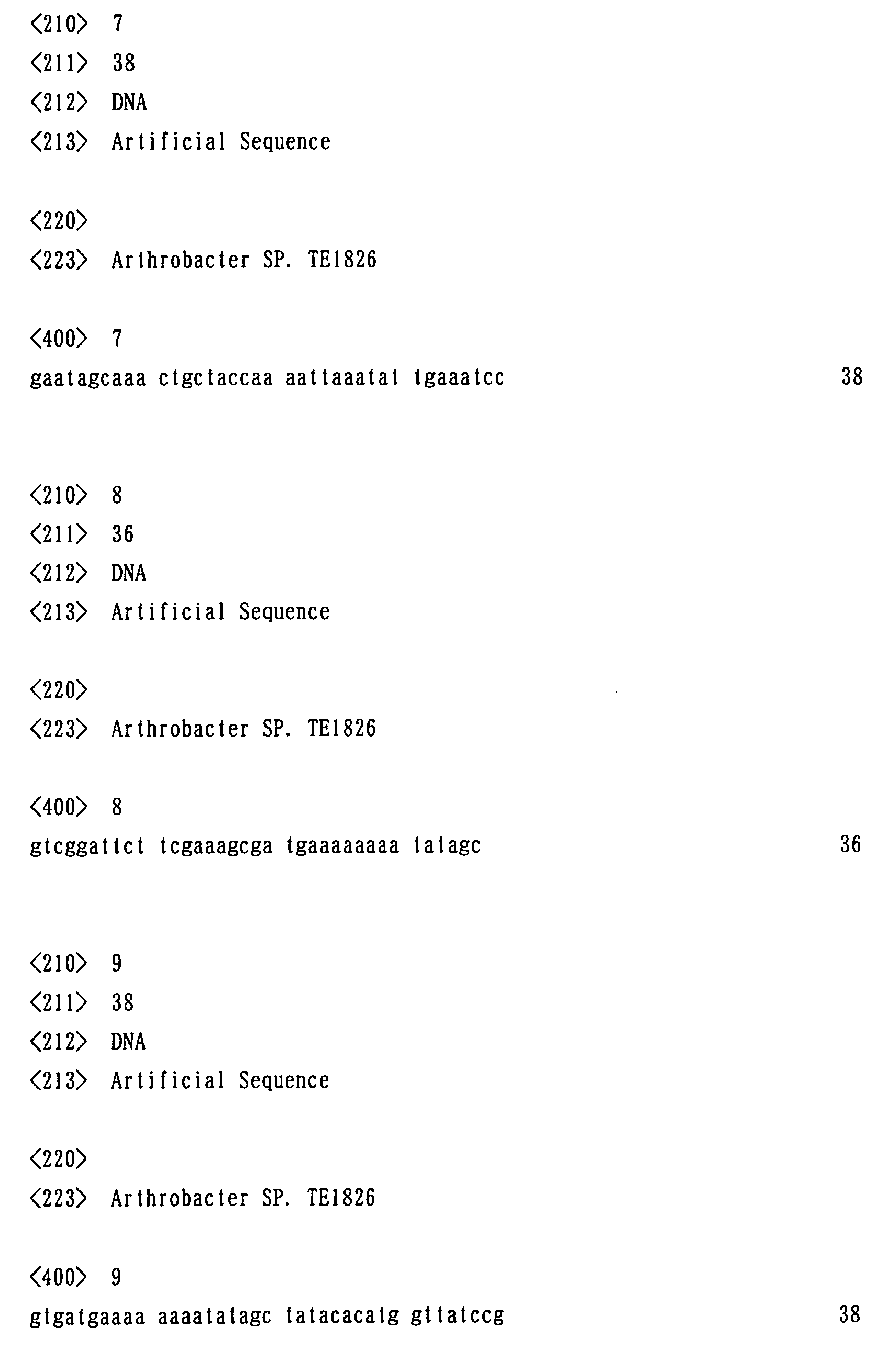
- a recombinant plasmid (pSAOM5A) encoding modified sarcosine oxidase where serine at position 213 was substituted with proline in the amino acid sequence of SEQ ID NO:1 was obtained by using pSAOEP3 and a synthetic oligonucleotide in SEQ ID NO:7 and a synthetic oligonucleotide complementary thereto, and manipulating in the same way as in the above.
- a recombinant plasmid (pSAOM6A) encoding modified sarcosine oxidase where cysteine at position 233 was substituted with serine in the amino acid sequence of SEQ ID NO:1 was obtained by using pSAOEP3 and a synthetic oligonucleotide in SEQ ID NO:8 and a synthetic oligonucleotide complementary thereto, and manipulating in the same way as in the above.
- a recombinant plasmid (pSAOM7A) encoding modified sarcosine oxidase where asparagine at position 240 was substituted with tyrosine in the amino acid sequence of SEQ ID NO:1 was obtained by using pSAOEP3 and a synthetic oligonucleotide in SEQ ID NO:9 and a synthetic oligonucleotide complementary thereto, and manipulating in the same way as in the above.
- a recombinant plasmid (pSAOM8A) encoding modified sarcosine oxidase where glutamic acid at position 250 was substituted with glutamine in the amino acid sequence of SEQ ID NO:1 was obtained by using pSAOEP3 and a synthetic oligonucleotide in SEQ ID NO:10 and a synthetic oligonucleotide complementary thereto, and manipulating in the same way as in the above.
- a recombinant plasmid (pSAOM9A) encoding modified sarcosine oxidase where alanine at position 364 was substituted with valine in the amino acid sequence of SEQ ID NO:1 was obtained by using pSAOEP3 and a synthetic oligonucleotide in SEQ ID NO:11 and a synthetic oligonucleotide complementary thereto, and manipulating in the same way as in the above.
- a recombinant plasmid (pSAOM10A) encoding modified sarcosine oxidase where lysine at position 89 was substituted with arginine and serine at position 213 was substituted with proline in the amino acid sequence of SEQ ID NO:1 was obtained by using pSAOM1A and a synthetic oligonucleotide in SEQ ID NO:7 and a synthetic oligonucleotide complementary thereto, and manipulating in the same way as in the above.
- a recombinant plasmid (pSAOM11A) encoding modified sarcosine oxidase where lysine at position 89 was substituted with arginine, serine at position 213 was substituted with proline and glutamic acid at position 250 was substituted with glutamine in the amino acid sequence of SEQ ID NO:1 was obtained by using pSAOM10A and a synthetic oligonucleotide in SEQ ID NO:10 and a synthetic oligonucleotide complementary thereto, and manipulating in the same way as in the above.
- a recombinant plasmid (pSAOM12A) encoding modified sarcosine oxidase where lysine at position 89 was substituted with arginine, cysteine at position 155 was substituted with isoleucine, asparagine at position 166 was substituted with lysine, serine at position 213 was substituted with proline, glutamic acid at position 250 was substituted with glutamine and alanine at position 364 was substituted with valine in the amino acid sequence of SEQ ID NO:1 was obtained by using pSAOM11A and synthetic oligonucleotides in SEQ ID NOS:4, 5, 11 and synthetic oligonucleotides complementary thereto, and manipulating in the same way as in the above.
- a recombinant plasmid (pSAOM13A) encoding modified sarcosine oxidase where lysine at position 89 was substituted with arginine, methionine at position 204 was substituted with alanine, serine at position 213 was substituted with proline, cysteine at position 233 was substituted with serine, asparagine at position 240 was substituted with tyrosine, and glutamic acid at position 250 was substituted with glutamine in the amino acid sequence of SEQ ID NO:1 was obtained by using pSAOM11A and synthetic oligonucleotides in SEQ ID NOS:6, 8, 9 and synthetic oligonucleotides complementary thereto, and manipulating in the same way as in the above.
- Competent cells of Escherichia coli JM109 were transformed with each recombinant plasmid of pSAOM1A, pSAOM2A, pSAOM3A, pSAOM4A, pSAOM5A, pSAOM6A, pSAOM7A, pSAOM8A, pSAOM9A, pSAOM10A, pSAOM11A, pSAOM12A, and pSAOM13A to obtain the transformants.
- the above microbial cells were collected by centrifugation, suspended in 20 mM phosphate buffer (pH 7.5), subsequently disrupted ultrasonically, and further centrifuged to yield a supernatant as a crud enzyme solution.
- Nucleic acids were removed using polyethyleneimine from the resulting crude enzyme solution, ammonium sulfate fractionation was given thereto, and then separation and purification was performed by dialyzing with 20 mM phosphate buffer (pH 7.5), applying on DEAE Sepharose CL-6B (supplied from Amersham Bioscience) and further treating with heat for one hour to yield a purified enzyme preparation.
- the preparation obtained by the present method exhibited a nearly single band on SDS-PAGE. This mutant was designated as SAOM1A.
- a purified enzyme preparation was obtained by the same way in the above, and the obtained enzyme preparation was each designated as SAOM2A, SAOM3A, SAOM4A, SAOM5A, SAOM6A, SAOM7A, SAOM8A, SAOM9A, SAOM10A, pSAOM11A, pSAOM12A, and pSAOM13A.
- Escherichia coli JM109 was transformed with pSAOEP3, and for the resulting transformant, a purified preparation of the unmodified enzyme was obtained in the same way as the above.
- Example 4A Evaluation of modified sarcosine oxidases 1
- Example 4A Evaluation of modified sarcosine oxidases 2
- Example 5A Evaluation of modified sarcosine oxidases 3
- Example 6A Evaluation of modified sarcosine oxidases 4
- Example 2B Preparation of modified sarcosine oxidase gene
- a recombinant plasmid (pSAOM1B) encoding modified sarcosine oxidase where lysine at position 89 was substituted with arginine in the amino acid sequence of SEQ ID NO:1 was obtained by using the expression plasmid pSAOEP3 containing a sarcosine oxidase gene and a synthetic oligonucleotide in SEQ ID NO:3 and a synthetic oligonucleotide complementary thereto, using QuickChange TM Site-Directed Mutagenesis Kit (supplied from Stratagene), manipulating in accordance with the protocol, and further sequencing.
- a recombinant plasmid (pSAOM2B) encoding modified sarcosine oxidase where valine at position 94 was substituted with glycine in the amino acid sequence of SEQ ID NO:1 was obtained by using pSAOEP3 and a synthetic oligonucleotide in SEQ ID NO:12 and a synthetic oligonucleotide complementary thereto, using QuickChange TM Site-Directed Mutagenesis Kit (supplied from Stratagene), and manipulating in the same way as in the above.
- a recombinant plasmid (pSAOM3B) encoding modified sarcosine oxidase where lysine at position 322 was substituted with arginine in the amino acid sequence of SEQ ID NO:1 has was by using pSAOEP3 and a synthetic oligonucleotide in SEQ ID NO:13 and a synthetic oligonucleotide complementary thereto, and manipulating in the same way as in the above.
- a recombinant plasmid (pSAOM4B) encoding modified sarcosine oxidase where valine at position 94 was substituted with glycine and glutamic acid at position 250 was substituted with glutamine in the amino acid sequence of SEQ ID NO:1 was obtained by using pSAOM2B and a synthetic oligonucleotide in SEQ ID NO:10 and a synthetic oligonucleotide complementary thereto, and manipulating in the same way as in the above.
- a recombinant plasmid (pSAOM5B) encoding modified sarcosine oxidase where lysine at position 89 was substituted with arginine, valine at position 94 was substituted with glycine and glutamic acid at position 250 was substituted with glutamine in the amino acid sequence of SEQ ID NO:1 was obtained by using pSAOM4B and the synthetic oligonucleotide in SEQ ID NO:3 and the synthetic oligonucleotide complementary thereto, and manipulating in the same way as in the above.
- a recombinant plasmid (pSAOM7B) encoding modified sarcosine oxidase where lysine at position 89 was substituted with arginine, valine at position 94 was substituted with glycine, methionine at position 204 was substituted with alanine, serine at position 213 was substituted with proline and glutamic acid at position 250 was substituted with glutamine in the amino acid sequence of SEQ ID NO:1 was obtained by using pSAOM6B and a synthetic oligonucleotide in SEQ ID NO:14 and a synthetic oligonucleotide complementary thereto, and manipulating in the same way as in the above.
- a recombinant plasmid (pSAOM8B) encoding modified sarcosine oxidase where lysine at position 89 was substituted with arginine, valine at position 94 was substituted with glycine, asparagine at position 166 was substituted with lysine, methionine at position 204 was substituted with alanine, serine at position 213 was substituted with proline and glutamic acid at position 250 was substituted with glutamine in the amino acid sequence of SEQ ID NO:1 was obtained by using pSAOM7B and a synthetic oligonucleotide in SEQ ID NO:5 and a synthetic oligonucleotide complementary thereto, and manipulating in the same way as in the above.
- Competent cells of Escherichia coli JM109 were transformed with each recombinant plasmid of pSAOM1B, pSAOM2B, pSAOM3B, pSAOM4B, pSAOM5B, pSAOM6B, pSAOM7B, pSAOM8B, and pSAOM9B to obtain the transformants.
- the above microbial cells were collected by centrifugation, suspended in 20 mM phosphate buffer (pH 7.5), subsequently disrupted ultrasonically, and further centrifuged to yield a supernatant as a crud enzyme solution.
- Nucleic acids were removed using polyethyleneimine from the resulting crude enzyme solution, ammonium sulfate fractionation was given thereto, and then separation and purification was performed by dialyzing with 20 mM phosphate buffer (pH 7.5), applying on DEAE Sepharose CL-6B (supplied from Amersham Bioscience) and further treating with heat for one hour to yield a purified enzyme preparation.
- the preparation obtained by the present method exhibited a nearly single band on SDS-PAGE. This mutant was designated as SAOM1B.
- a purified enzyme preparation was obtained by the same way in the above, and the obtained enzyme preparation was each designated as SAOM2B, SAOM3B, SAOM4B, SAOM5B, SAOM6B, SAOM7B, SAOM8B, and SAOM9B.
- Example 4B Evaluation of modified sarcosine oxidases
- Example 3B Various sarcosine oxidases obtained in Example 3B and Comparative Example 1 were evaluated.
- Action on proline was calculated from a relative ratio (%) of the enzyme activity using L-proline as the substrate to the enzyme activity suing sarcosine as the substrate in the above activity measurement method.
- Km values for sarcosine and L-proline were measured by changing the substrate concentration in the above activity measurement method. The results are shown in Table 5.
- the modified sarcosine oxidase of the present invention has at least either one of the reactivity to proline of 0.7% or less or Km value of 150 mM or more for L-proline as its property.
Landscapes
- Life Sciences & Earth Sciences (AREA)
- Health & Medical Sciences (AREA)
- Chemical & Material Sciences (AREA)
- Engineering & Computer Science (AREA)
- Organic Chemistry (AREA)
- Zoology (AREA)
- Molecular Biology (AREA)
- Wood Science & Technology (AREA)
- Bioinformatics & Cheminformatics (AREA)
- Biomedical Technology (AREA)
- Biotechnology (AREA)
- Immunology (AREA)
- Microbiology (AREA)
- Genetics & Genomics (AREA)
- General Health & Medical Sciences (AREA)
- Biochemistry (AREA)
- Analytical Chemistry (AREA)
- Urology & Nephrology (AREA)
- Physics & Mathematics (AREA)
- Proteomics, Peptides & Aminoacids (AREA)
- General Engineering & Computer Science (AREA)
- Medicinal Chemistry (AREA)
- Hematology (AREA)
- Biophysics (AREA)
- Food Science & Technology (AREA)
- Cell Biology (AREA)
- General Physics & Mathematics (AREA)
- Pathology (AREA)
- Enzymes And Modification Thereof (AREA)
- Micro-Organisms Or Cultivation Processes Thereof (AREA)
- Measuring Or Testing Involving Enzymes Or Micro-Organisms (AREA)
Abstract
Description
| Modified one | Mutant | Residual activity ratio (%) |
| SAOM1A | K89R | 34 |
| SAOM2A | C155I | 46 |
| SAOM3A | N166K | 37 |
| SAOM4A | M204A | 51 |
| SAOM5A | S213P | 47 |
| SAOM7A | N240Y | 52 |
| SAOM8A | E250Q | 31 |
| Unmodified | - | 19 |
| Modified one | Mutant | Residual activity ratio (%) |
| SAOM1A | K89R | 41 |
| SAOM2A | C155I | 47 |
| SAOM5A | S213P | 49 |
| SAOM6A | C233S | 72 |
| SAOM7A | N240Y | 73 |
| SAOM8A | E250Q | 40 |
| SAOM9A | A364V | 45 |
| Unmodified | - | 30 |
| Modified one | Mutant | Residual activity ratio (%) |
| SAOM1A | K89R | 28 |
| SAOM10A | K89R, S213P | 44 |
| SAOM11A | K89R, S213P, E250Q | 51 |
| SAOM12A | K89R, C155I, N166K, S213P, E250Q, A364V | 77 |
| SAOM13A | K89R, M204A, S213P, C233S, N240Y, E250Q | 79 |
| Unmodified | - | 16 |
| Modified one | Mutant | Residual activity ratio (%) |
| SAOM1A | K89R | 31 |
| SAOM10A | K89R, S213P | 44 |
| SAOM11A | K89R, S213P, E250Q | 52 |
| SAOM12A | K89R, C155I, N166K, S213P, E250Q, A364V | 80 |
| SAOM13A | K89R, M204A, S213P, C233S, N240Y, E250Q | 77 |
| Unmodified (control) | - | 14 |
| Modified one | Mutant | Acting upon proline | Km value (proline) | Km value (sarcosine) |
| SAOM1B | K89R | 0.70% | 151 mM | 3.4 mM |
| SAOM2B | V94G | 0.45% | 214 mM | 4.1 mM |
| SAOM3B | K322R | 0.42% | 122 mM | 4.7 mM |
| SAOM4B | V94G, E250Q | 0.58% | 213 mM | 3.4 mM |
| SAOM5B | V94G, E250Q, K89R | 0.55% | 198 mM | 3.3 mM |
| SAOM6B | K89R, V94G, S213P, E250Q | 0.54% | 210 mM | 3.5 mM |
| SAOM7B | K89R, V94G, M204A, S213P, E250Q | 0.41% | 203 mM | 3.4 mM |
| SAOM8B | K89R, V94G, N166K, M204A, S213P, E250Q | 0.41% | 205 mM | 3.4 mM |
| SAOM9B | K89R, V94G, N166K, M204A, S213P, E250Q, K322R | 0.28% | 202 mM | 4.4 mM |
| Unmodified (control) | - | 0.85% | 142 mM | 3.4 mM |
| Modified one | Mutant | Effect of proline |
| SAOM1B | K89R | 5.7% |
| SAOM2B | V94G | 3.6% |
| SAOM3B | K322R | 3.5% |
| SAOM4B | V94G, E250Q | 3.8% |
| SAOM5B | V94G, E250Q, K89R | 3.5% |
| SAOM6B | K89R, V94G, S213P, E250Q | 3.4% |
| SAOM7B | K89R, V94G, M204A, S213P, E250Q | 3.2% |
| SAOM8B | K89R, V94G, N166K, M204A, S213P, E250Q | 3.3% |
| SAOM9B | K89R, V94G, N166K, M204A, S213P, E250Q,K322R | 1.9% |
| Unmodified (control) | - | 7.2% |
| Modified one | Mutant | Effect of proline |
| SAOM1B | K89R | 5.3% |
| SAOM2B | V94G | 3.1% |
| SAOM3B | K322R | 3.2% |
| SAOM4B | V94G, E250Q | 3.0% |
| SAOM5B | V94G, E250Q, K89R | 3.4% |
| SAOM6B | K89R, V94G, S213P, E250Q | 3.1% |
| SAOM7B | K89R, V94G,M204A, S213P, E250Q | 2.9% |
| SAOM8B | K89R, V94G, N166K, M204A, S213P, E250Q | 3.1% |
| SAOM9B | K89R, V94G, N166K, 204A, S213P, E250Q,K322R | 1.9% |
| Unmodified (control) | - | 7.0% |




Claims (41)
- Modified sarcosine oxidase which is a protein converted by adding, deleting, inserting or substituting at least one amino acid in an amino acid sequence which constitutes a protein having a sarcosine oxidase activity, characterized by having the sarcosine oxidase activity and having improved stability in a liquid compared one before conversion.
- The modified sarcosine oxidase according to claim 1 characterized in that at least one amino acid in the amino acid sequence which constitutes the protein having the sarcosine oxidase activity is substituted with other amino acid.
- The modified sarcosine oxidase according to claim 1 wherein the protein having the sarcosine oxidase activity has homology of at least 50% or more to an amino acid sequence of SEQ ID NO:1.
- The modified sarcosine oxidase according to claim 1 wherein the protein having the sarcosine oxidase activity has homology of at least 80% or more to the amino acid sequence of SEQ ID NO:1.
- The modified sarcosine oxidase according to claim 1 wherein the protein having the sarcosine oxidase activity has the amino acid sequence of SEQ ID NO:1.
- The modified sarcosine oxidase according to claim 1 characterized in that at least one amino acid in a region corresponding to positions 155 to 250 in the amino acid sequence of SEQ ID NO:1 is substituted with other amino acid.
- The modified sarcosine oxidase according to claim 1 characterized in that at least one amino acid in a region corresponding to positions 82 to 92 or 354 to 366 in the amino acid sequence of SEQ ID NO:1 is substituted with other amino acid.
- The modified sarcosine oxidase according to claim 1 characterized in that at least one amino acid selected from the group consisting of a region corresponding to positions 89, 155, 166, 204, 213, 233, 240, 250 and 364 in the amino acid sequence of SEQ ID NO:1 is substituted with other amino acid.
- The modified sarcosine oxidase according to claim 1 characterized in that lysine at position 89 is substituted with arginine in the amino acid sequence of SEQ ID NO:1.
- The modified sarcosine oxidase according to claim 1 characterized in that cysteine at position 155 is substituted with isoleucine in the amino acid sequence of SEQ ID NO:1.
- The modified sarcosine oxidase according to claim 1 characterized in that asparagine at position 166 is substituted with lysine in the amino acid sequence of SEQ ID NO:1.
- The modified sarcosine oxidase according to claim 1 characterized in that methionine at position 204 is substituted with alanine in the amino acid sequence of SEQ ID NO:1.
- The modified sarcosine oxidase according to claim 1 characterized in that serine at position 213 is substituted with proline in the amino acid sequence of SEQ ID NO:1.
- The modified sarcosine oxidase according to claim 1 characterized in that cysteine at position 233 is substituted with serine in the amino acid sequence of SEQ ID NO:1.
- The modified sarcosine oxidase according to claim 1 characterized in that asparagine at position 240 is substituted with tyrosine in the amino acid sequence of SEQ ID NO:1.
- The modified sarcosine oxidase according to claim 1 characterized in that glutamic acid at position 250 is substituted with glutamine in the amino acid sequence of SEQ ID NO:1.
- The modified sarcosine oxidase according to claim 1 characterized in that alanine at position 364 is substituted with valine in the amino acid sequence of SEQ ID NO:1.
- Modified sarcosine oxidase which is a protein converted by adding, deleting, inserting or substituting at least one amino acid in an amino acid sequence which constitutes a protein having a sarcosine oxidase activity, characterized by having the sarcosine oxidase activity and having a lowered action on L-proline compared with one before conversion.
- The modified sarcosine oxidase according to claim 18 characterized in that at least one amino acid is substituted with other amino acid in the amino acid sequence which constitutes the protein having the sarcosine oxidase activity.
- The modified sarcosine oxidase according to claim 18 wherein the protein having the sarcosine oxidase activity has homology of at least 50% or more to an amino acid sequence of SEQ ID NO:1.
- The modified sarcosine oxidase according to claim 18 wherein the protein having the sarcosine oxidase activity has homology of at least 80% or more to the amino acid sequence of SEQ ID NO:1.
- The modified sarcosine oxidase according to claim 18 wherein the protein having the sarcosine oxidase activity has the amino acid sequence of SEQ ID NO:1.
- The modified sarcosine oxidase according to claim 18 characterized in that at least one amino acid at positions 82 to 152 or 216 to 328 in the amino acid sequence of SEQ ID NO:1 is substituted with other amino acid.
- The modified sarcosine oxidase according to claim 18 characterized in that at least one amino acid at positions 82 to 97 or 313 to 328 in the amino acid sequence of SEQ ID NO:1 is substituted with other amino acid.
- The modified sarcosine oxidase according to claim 18 characterized in that at least one amino acid selected from the group consisting of positions 89, 94, and 322 in the amino acid sequence of SEQ ID NO:1 is substituted with other amino acid.
- The modified sarcosine oxidase according to claim 18 characterized in that lysine at position 89 is substituted with arginine in the amino acid sequence of SEQ ID NO:1.
- The modified sarcosine oxidase according to claim 18 characterized in that valine at position 94 is substituted with glycine in the amino acid sequence of SEQ ID NO:1.
- The modified sarcosine oxidase according to claim 18 characterized in that lysine at position 322 is substituted with arginine in the amino acid sequence of SEQ ID NO:1.
- The modified sarcosine oxidase according to claim 18 characterized in that a Km value for sarcosine after the modification is within 3 times compared with unmodified one.
- The modified sarcosine oxidase according to claim 18 characterized in that a Km value for sarcosine after the modification is within 1.5 times compared with unmodified one.
- Sarcosine oxidase having at least one property of the followings under a measurement condition at 37°C and pH 8.0:action on L-proline: 0.7% or less based on sarcosine, andKm value for L-proline: 150 mM or more.
- The sarcosine oxidase according to claim 31 characterized by having at least one property of the followings under the measurement condition at 37°C and pH 8.0:action on L-proline: 0.5% or less based on sarcosine, andKm value for L-proline: 200 mM or more.
- The sarcosine oxidase according to claim 31 wherein the Km value for sarcosine is 10 mM or less.
- The sarcosine oxidase according to claim 31 wherein the Km value for sarcosine is 5 mM or less.
- A gene encoding the modified sarcosine oxidase according to any one of claims 1 to 17 and 18 to 30.
- A vector containing the gene according to claim 35.
- A transformant transformed with the vector according to claim 36.
- A process for producing modified sarcosine oxidase characterized in that the transformant according to claim 37 is cultured and sarcosine oxidase is collected from the culture.
- A process for producing modified sarcosine oxidase which is excellent in substrate specificity, characterized in that a microorganism capable of producing the sarcosine oxidase according to any one of claims 31 to 34 is cultured and sarcosine oxidase is collected from the culture.
- A reagent for measuring creatine containing the sarcosine oxidase according to any one of claims 1 to 17, 18 to 30, and 31 to 34.
- A reagent for measuring creatinine containing the sarcosine oxidase according to any one of claims 1 to 17, 18 to 30 and 31 to 34.
Applications Claiming Priority (7)
| Application Number | Priority Date | Filing Date | Title |
|---|---|---|---|
| JP2002329427 | 2002-11-13 | ||
| JP2002329428 | 2002-11-13 | ||
| JP2002329427A JP2004159565A (en) | 2002-11-13 | 2002-11-13 | Sarcosine oxidase having excellent substrate specificity, method for producing the same and reagent composition using the same |
| JP2002329428A JP4419044B2 (en) | 2002-11-13 | 2002-11-13 | Modified sarcosine oxidase |
| JP2003033641 | 2003-02-12 | ||
| JP2003033641A JP2004242526A (en) | 2003-02-12 | 2003-02-12 | Stabilized sarcosine oxidase |
| PCT/JP2003/014423 WO2004044193A1 (en) | 2002-11-13 | 2003-11-13 | Modified sarcosine oxidase, process for producing the same and reagent composition using the same |
Publications (3)
| Publication Number | Publication Date |
|---|---|
| EP1561812A1 true EP1561812A1 (en) | 2005-08-10 |
| EP1561812A4 EP1561812A4 (en) | 2007-01-10 |
| EP1561812B1 EP1561812B1 (en) | 2014-10-01 |
Family
ID=32314787
Family Applications (1)
| Application Number | Title | Priority Date | Filing Date |
|---|---|---|---|
| EP03774008.1A Expired - Lifetime EP1561812B1 (en) | 2002-11-13 | 2003-11-13 | Modified sarcosine oxidase, process for producing the same and reagent composition using the same |
Country Status (4)
| Country | Link |
|---|---|
| US (1) | US7229812B2 (en) |
| EP (1) | EP1561812B1 (en) |
| AU (1) | AU2003284548A1 (en) |
| WO (1) | WO2004044193A1 (en) |
Families Citing this family (1)
| Publication number | Priority date | Publication date | Assignee | Title |
|---|---|---|---|---|
| US11479757B2 (en) | 2016-09-15 | 2022-10-25 | Kikkoman Corporation | Modified sarcosine oxidase, and gene and production method therefor |
Family Cites Families (15)
| Publication number | Priority date | Publication date | Assignee | Title |
|---|---|---|---|---|
| JPS6029473B2 (en) | 1977-10-04 | 1985-07-10 | 東洋醸造株式会社 | Process for producing sarcosine oxidase |
| JPS5692790A (en) | 1979-12-26 | 1981-07-27 | Hideaki Yamada | Preparation of sarcosine oxidase |
| DE3326888A1 (en) | 1983-07-26 | 1985-02-14 | Boehringer Mannheim Gmbh, 6800 Mannheim | SARCOSINE OXIDASE |
| JPS61162174A (en) | 1985-01-11 | 1986-07-22 | Noda Sangyo Kagaku Kenkyusho | Heat-resistant sarcosine oxidase n and production thereof |
| JP2593481B2 (en) * | 1987-08-10 | 1997-03-26 | 旭化成工業株式会社 | DNA having genetic information of sarcosine oxidase and use thereof |
| JPH0787780B2 (en) | 1989-04-04 | 1995-09-27 | 東洋紡績株式会社 | Novel sarcosine oxidase and its production method |
| JPH05115281A (en) | 1991-10-25 | 1993-05-14 | Kikkoman Corp | New sarcosine oxidase m, its gene and new recombinant dna and production of new sarcosine oxidase m |
| JPH06113840A (en) | 1992-10-02 | 1994-04-26 | Toyobo Co Ltd | Protein having sarcosine oxidase activity, DNA having genetic information thereof, and method for producing sarcosine oxidase |
| JP3132618B2 (en) | 1993-12-15 | 2001-02-05 | 東洋紡績株式会社 | Stabilized modified protein |
| JPH07170976A (en) * | 1993-12-16 | 1995-07-11 | Toyobo Co Ltd | Novel enzyme having N-methylvaline oxidase activity |
| JP2729045B2 (en) | 1995-12-20 | 1998-03-18 | 旭化成工業株式会社 | Sarcosine oxidase and method for producing the same |
| JP3904098B2 (en) | 1997-03-10 | 2007-04-11 | 東洋紡績株式会社 | Modified sarcosine oxidase and uses thereof |
| JP2000175685A (en) | 1998-12-14 | 2000-06-27 | Kikkoman Corp | Sarcosine oxidase and method for producing the same |
| JP2001120273A (en) * | 1999-10-22 | 2001-05-08 | Toyobo Co Ltd | Protein modification method and modified protein |
| CA2404293C (en) * | 2001-09-20 | 2007-05-15 | F. Hoffmann-La Roche Ag | Variants of an erwinia-type creatinase |
-
2003
- 2003-11-13 US US10/534,583 patent/US7229812B2/en not_active Expired - Lifetime
- 2003-11-13 AU AU2003284548A patent/AU2003284548A1/en not_active Abandoned
- 2003-11-13 EP EP03774008.1A patent/EP1561812B1/en not_active Expired - Lifetime
- 2003-11-13 WO PCT/JP2003/014423 patent/WO2004044193A1/en not_active Ceased
Also Published As
| Publication number | Publication date |
|---|---|
| EP1561812B1 (en) | 2014-10-01 |
| EP1561812A4 (en) | 2007-01-10 |
| US7229812B2 (en) | 2007-06-12 |
| AU2003284548A1 (en) | 2004-06-03 |
| US20060051832A1 (en) | 2006-03-09 |
| WO2004044193A1 (en) | 2004-05-27 |
Similar Documents
| Publication | Publication Date | Title |
|---|---|---|
| EP2011868B1 (en) | Modified creatinine amide hydrolase having improved affinity for substrate, and reagent composition for determination of creatinine | |
| US7479383B2 (en) | Modified pyrroloquinoline quinone (PQQ) dependent glucose dehydrogenase excellent in substrate specificity | |
| US7229812B2 (en) | Modified sarcosine oxidase, process for producing the same and reagent composition using the same | |
| CN1711353B (en) | Modified sarcosine oxidase, preparation method and reagent composition thereof | |
| JP3132618B2 (en) | Stabilized modified protein | |
| JP4419044B2 (en) | Modified sarcosine oxidase | |
| JP3904098B2 (en) | Modified sarcosine oxidase and uses thereof | |
| JP3743535B2 (en) | Modified sarcosine oxidase | |
| JP3743534B2 (en) | Novel chloride ion measuring method and reagent | |
| JP4890133B2 (en) | Stable uric acid measurement reagent | |
| JP2004242526A (en) | Stabilized sarcosine oxidase | |
| US7618800B2 (en) | Glycerol kinase, which has high resistance against preservative | |
| JP2009072196A (en) | Modified sarcosine oxidase | |
| JP2009055919A (en) | Modified sarcosine oxidase | |
| JP2004313172A (en) | Modified product of pyrrolo-quinoline quinone (ppq)-dependent glucose dehyrogenase excellent in substrate specificity or stability | |
| JP2009022302A (en) | Stabilized sarcosine oxidase | |
| JP2009055914A (en) | Stabilized sarcosine oxidase | |
| JP2009077721A (en) | Stabilized sarcosine oxidase | |
| JP2009050272A (en) | Stabilized sarcosine oxidase | |
| JP2009050274A (en) | Stabilized sarcosine oxidase | |
| JP2009072195A (en) | Stabilized sarcosine oxidase | |
| JP2009050273A (en) | Stabilized sarcosine oxidase | |
| JP2009077720A (en) | Stabilized sarcosine oxidase | |
| JP2009082132A (en) | Stabilized sarcosine oxidase | |
| JP2009022304A (en) | Stabilized sarcosine oxidase |
Legal Events
| Date | Code | Title | Description |
|---|---|---|---|
| PUAI | Public reference made under article 153(3) epc to a published international application that has entered the european phase |
Free format text: ORIGINAL CODE: 0009012 |
|
| 17P | Request for examination filed |
Effective date: 20050514 |
|
| AK | Designated contracting states |
Kind code of ref document: A1 Designated state(s): AT BE BG CH CY CZ DE DK EE ES FI FR GB GR HU IE IT LI LU MC NL PT RO SE SI SK TR |
|
| AX | Request for extension of the european patent |
Extension state: AL LT LV MK |
|
| RBV | Designated contracting states (corrected) |
Designated state(s): AT BE BG CH CY CZ DE DK EE ES FI FR GB GR HU IE IT LI LU MC NL PT RO SE SI SK TR |
|
| DAX | Request for extension of the european patent (deleted) | ||
| RBV | Designated contracting states (corrected) |
Designated state(s): DE FR GB |
|
| A4 | Supplementary search report drawn up and despatched |
Effective date: 20061213 |
|
| 17Q | First examination report despatched |
Effective date: 20070518 |
|
| RAP1 | Party data changed (applicant data changed or rights of an application transferred) |
Owner name: TOYOBO CO., LTD. |
|
| REG | Reference to a national code |
Ref country code: DE Ref legal event code: R079 Ref document number: 60346831 Country of ref document: DE Free format text: PREVIOUS MAIN CLASS: C12N0009020000 Ipc: C12N0009060000 |
|
| GRAP | Despatch of communication of intention to grant a patent |
Free format text: ORIGINAL CODE: EPIDOSNIGR1 |
|
| RIC1 | Information provided on ipc code assigned before grant |
Ipc: C12N 15/53 20060101ALI20140328BHEP Ipc: C12Q 1/26 20060101ALI20140328BHEP Ipc: C12N 9/06 20060101AFI20140328BHEP Ipc: G01N 33/70 20060101ALI20140328BHEP |
|
| INTG | Intention to grant announced |
Effective date: 20140424 |
|
| GRAS | Grant fee paid |
Free format text: ORIGINAL CODE: EPIDOSNIGR3 |
|
| GRAA | (expected) grant |
Free format text: ORIGINAL CODE: 0009210 |
|
| AK | Designated contracting states |
Kind code of ref document: B1 Designated state(s): DE FR GB |
|
| REG | Reference to a national code |
Ref country code: GB Ref legal event code: FG4D |
|
| REG | Reference to a national code |
Ref country code: DE Ref legal event code: R096 Ref document number: 60346831 Country of ref document: DE Effective date: 20141106 |
|
| REG | Reference to a national code |
Ref country code: DE Ref legal event code: R097 Ref document number: 60346831 Country of ref document: DE |
|
| PLBE | No opposition filed within time limit |
Free format text: ORIGINAL CODE: 0009261 |
|
| STAA | Information on the status of an ep patent application or granted ep patent |
Free format text: STATUS: NO OPPOSITION FILED WITHIN TIME LIMIT |
|
| REG | Reference to a national code |
Ref country code: FR Ref legal event code: ST Effective date: 20150731 |
|
| 26N | No opposition filed |
Effective date: 20150702 |
|
| GBPC | Gb: european patent ceased through non-payment of renewal fee |
Effective date: 20150101 |
|
| PG25 | Lapsed in a contracting state [announced via postgrant information from national office to epo] |
Ref country code: GB Free format text: LAPSE BECAUSE OF NON-PAYMENT OF DUE FEES Effective date: 20150101 |
|
| PG25 | Lapsed in a contracting state [announced via postgrant information from national office to epo] |
Ref country code: FR Free format text: LAPSE BECAUSE OF NON-PAYMENT OF DUE FEES Effective date: 20141201 |
|
| PGFP | Annual fee paid to national office [announced via postgrant information from national office to epo] |
Ref country code: DE Payment date: 20220621 Year of fee payment: 20 |
|
| P01 | Opt-out of the competence of the unified patent court (upc) registered |
Effective date: 20230517 |
|
| REG | Reference to a national code |
Ref country code: DE Ref legal event code: R071 Ref document number: 60346831 Country of ref document: DE |