EP1559256B1 - Dispositif utilisateur dote d'un ensemble de codes d'acces - Google Patents
Dispositif utilisateur dote d'un ensemble de codes d'acces Download PDFInfo
- Publication number
- EP1559256B1 EP1559256B1 EP03751197A EP03751197A EP1559256B1 EP 1559256 B1 EP1559256 B1 EP 1559256B1 EP 03751197 A EP03751197 A EP 03751197A EP 03751197 A EP03751197 A EP 03751197A EP 1559256 B1 EP1559256 B1 EP 1559256B1
- Authority
- EP
- European Patent Office
- Prior art keywords
- key
- user device
- access codes
- server
- new
- Prior art date
- Legal status (The legal status is an assumption and is not a legal conclusion. Google has not performed a legal analysis and makes no representation as to the accuracy of the status listed.)
- Expired - Lifetime
Links
- 238000000034 method Methods 0.000 claims abstract description 48
- 238000004891 communication Methods 0.000 claims abstract description 30
- 230000004044 response Effects 0.000 claims description 17
- 238000004590 computer program Methods 0.000 claims description 14
- 238000012795 verification Methods 0.000 description 10
- 230000006870 function Effects 0.000 description 8
- 238000012545 processing Methods 0.000 description 8
- 238000010586 diagram Methods 0.000 description 7
- 230000000007 visual effect Effects 0.000 description 3
- 230000008901 benefit Effects 0.000 description 2
- 238000013479 data entry Methods 0.000 description 2
- 230000001939 inductive effect Effects 0.000 description 2
- 238000012986 modification Methods 0.000 description 2
- 230000004048 modification Effects 0.000 description 2
- 238000012546 transfer Methods 0.000 description 2
- 230000001960 triggered effect Effects 0.000 description 2
- 230000004913 activation Effects 0.000 description 1
- 230000001419 dependent effect Effects 0.000 description 1
- 230000000694 effects Effects 0.000 description 1
- 238000005516 engineering process Methods 0.000 description 1
- 239000000284 extract Substances 0.000 description 1
- 238000003780 insertion Methods 0.000 description 1
- 230000037431 insertion Effects 0.000 description 1
- 230000007246 mechanism Effects 0.000 description 1
- 238000003825 pressing Methods 0.000 description 1
- 238000012360 testing method Methods 0.000 description 1
Images




Classifications
-
- H—ELECTRICITY
- H04—ELECTRIC COMMUNICATION TECHNIQUE
- H04L—TRANSMISSION OF DIGITAL INFORMATION, e.g. TELEGRAPHIC COMMUNICATION
- H04L63/00—Network architectures or network communication protocols for network security
- H04L63/06—Network architectures or network communication protocols for network security for supporting key management in a packet data network
- H04L63/061—Network architectures or network communication protocols for network security for supporting key management in a packet data network for key exchange, e.g. in peer-to-peer networks
-
- H—ELECTRICITY
- H04—ELECTRIC COMMUNICATION TECHNIQUE
- H04L—TRANSMISSION OF DIGITAL INFORMATION, e.g. TELEGRAPHIC COMMUNICATION
- H04L63/00—Network architectures or network communication protocols for network security
- H04L63/06—Network architectures or network communication protocols for network security for supporting key management in a packet data network
- H04L63/062—Network architectures or network communication protocols for network security for supporting key management in a packet data network for key distribution, e.g. centrally by trusted party
-
- H—ELECTRICITY
- H04—ELECTRIC COMMUNICATION TECHNIQUE
- H04L—TRANSMISSION OF DIGITAL INFORMATION, e.g. TELEGRAPHIC COMMUNICATION
- H04L9/00—Cryptographic mechanisms or cryptographic arrangements for secret or secure communications; Network security protocols
- H04L9/40—Network security protocols
-
- H—ELECTRICITY
- H04—ELECTRIC COMMUNICATION TECHNIQUE
- H04W—WIRELESS COMMUNICATION NETWORKS
- H04W12/00—Security arrangements; Authentication; Protecting privacy or anonymity
- H04W12/08—Access security
Definitions
- the present invention generally relates to methods, apparatus, and computer program elements for providing a user device with sets of access codes such as one time authentication codes via data communications networks such as wireless communications networks.
- One time authentication codes with paper based scratch lists of transaction authentication numbers (TANs) or one time credit card numbers are increasingly popular in the field of on line transactions. It would be desirable to permit secure storage and distribution of OTACs. It would be equally desirable to permit convenient access to OTACs wherever and whenever needed.
- paper based scratch lists are both relatively insecure and inconvenient to access. Typically, a scratch list is sent from a service provider such as a bank to a customer via plain mail. A mailed scratch list can be intercepted en route to the customer and copied. In addition, many customers cannot be relied upon to store scratch lists in a secure location such as a safe. This is especially the case where the scratch list is used regularly.
- a regularly used scratch list may be left in the open, on a desk for example. This provides others with access to the scratch list. If a scratch list is carried by a customer, it may be lost or stolen.
- OTACs on scratch lists are not usually encrypted. Customer account numbers, which are generally combined with an OTAC to effect a transaction, are widely regarded as being publicly known. It is inconvenient for many customers to manually keep track of which OTACs have been used. When moving from one scratch list to another, customers need to temporarily store or carry two scratch lists. This enhances security risk. Furthermore, paper based scratch lists are complicated for the issuing service providers to print and mail in a timely manner.
- US2002/141588 describes a mechanism for a user to request a file to be transfered and for the server to encrypt the requested file and to deliver it to the requestor.
- WO98/37524 describes a transaction method using a mobile device. This method employs International Debit User Identification (IDUI) numbers to identify individual accounts.
- IDUI is analogous to a customer bank account number. Specifically, the IDUI is pre-loaded onto credit/debit card.
- POS point of sale
- POS terminal reads the IDUI from a credit/debit card and display an amount to be deducted from an identified account. The customer completes the transaction by pressing an OK button of the POS terminal. The POS terminal sends a transaction receipt to a server in the bank responsible for the account.
- SIM Subscriber Identification Module
- the IDUI is then read from the smart card by the terminal in a contact-less manner.
- Transaction receipts are sent to the server for verification by SMS messages.
- This scheme discusses only the uses of IDUIs for transactions with POS terminals via a contact-less interface and exchanging SMS messages for transaction verification.
- the scheme is not suitable for OTAC delivery. This is because IDUIs are fixed for each account. OTACs, however, are not.
- Similar electronic payment systems are described in EP1 176 844, WO99/16029, WO00/495585, WO01/09851, WO02/21464, and WO01/93528.
- the present invention aims to solve this object according to the methods, computer program and apparatuses of claims 1, 7, 13, 17, 22, 34 and 38.
- Advantagous embodiments thereof are defined in the respective dependent claims.
- a method for providing a user device with a set of access codes comprising: in the user device, storing an encryption key and an identification code, and sending a message containing the identification code to a server via a communications network; in the server, storing an encryption key corresponding to the key stored in the user device, allocating the set of access codes on receipt of the identification code from the user device, performing a look up function based on the identification code received in the message to retrieve the key from storage, encrypting the set of access codes using the retrieved key to produce an encrypted set, and sending a message containing the encrypted set to the user device via the network; and, in the user device, decrypting the encrypted set received from the server using the key in storage, and storing the decrypted set of access codes for use by a user of the user device.
- the method further comprises: in the server, generating a new key, encrypting the new key with the previous key, and sending a message containing the encrypted new key to the user device via the network; and, in the user device, decrypting the new key received from the server using the previous key, and storing the decrypted new key in place of the previous key.
- the method may also extend to, in the server, encrypting a new set of access codes with the new key to produce a new key encrypted set, and sending a message containing the new key encrypted set to the user device via the network; and, in the user device, decrypting the new key encrypted set using the new key, and storing the decrypted new set for use by a user of the user device.
- the method further comprises: in the server, sending a message containing a new set of access codes to the user device via the network; and, in the user device, storing the new set for use by a user of the user device.
- the method may further comprise: in the user device, tracking the access codes used by the user, generating a request in response to the number of unused access codes reaching a predetermined threshold, and sending a message containing the request to the server; and, in the server, sending the message containing the new set of access codes on receipt of the request.
- the method may comprise: in the server, tracking the access codes used by the user, and sending the message containing the new set of access codes to the user device in response to the number of unused access codes reaching a predetermined threshold.
- the method may comprise: in the user device, generating a request in response to a manual input from the user, and sending a message containing the request to the server; and, in the server, sending the message containing the new set of access codes on receipt of the request.
- the method further comprises: in the user device, generating a public/private key pair, and sending a message containing the public key of the pair to the server via the network; in the server, generating a session key, encrypting the set of access codes with the session key to produce a session key encrypted set, encrypting the session key with the public key to produce an encrypted session key, sending a message containing the session key encrypted set and the encrypted session key to the user device via the network; and, in the user device, decrypting the encrypted session key with the private key of the pair to recover the session key, decrypting the session key encrypted set with the recovered session key to recover the set, and storing the decrypted set for use by a user of the user device.
- a method for providing a user device with a set of access codes comprising, in the user device: storing an encryption key and an identification code; sending a message containing the identification code to a server via a communications network; receiving from the server a message containing the set of access codes encrypted with the key; decrypting the received set of access codes using the key in storage; and, storing the decrypted set of access codes for use by a user of the user device.
- the present invention also extends to a computer program element comprising computer program code mean when loaded in a processor of a user device, configures the processor to perform a method as described in this paragraph.
- a method for providing a user device with a set of access codes comprising, in a server for communicating with the user device via a network: storing an encryption key corresponding to an encryption key stored in the user device; allocating the set of access codes to the user device on receipt of a message containing an identification code from the user device via the network; performing a look up function based on the identification code received in the message to retrieve the key from storage; encrypting the set of access codes using the retrieved key to produce an encrypted set; and, sending a message containing the encrypted set to the user device via the network.
- the present invention also extends to a computer program element comprising computer program code mean when loaded in a processor of a server computer system, configures the processor to perform a method as described in this paragraph.
- the access codes are one time authentication codes.
- the network comprises a wireless communication network.
- the user device may comprise a mobile phone.
- the user device may comprise a smart card.
- the messages are SMS messages.
- apparatus for providing a user with a set of access codes comprising: a user device; and, server for communicating with the user device via a communications network; the user device comprising means for storing an encryption key and an identification code, and means for sending a message containing the identification code to the server via the network; the server comprising means for storing an encryption key corresponding to the key stored in the user device, means for allocating the set of access codes on receipt of the identification code from the user device, means for performing a look up function based on the identification code received in the message to retrieve the key from storage, means for encrypting the set of access codes using the retrieved key to produce an encrypted set, and means for sending a message containing the encrypted set to the user device via the network; and, the user device further comprising means for decrypting the encrypted set received from the server using the key stored in the user device, and means for storing the decrypted set of access codes for use by the user.
- the present invention further extends to a user device for receiving a set of access codes from a server via a communications network, the device comprising: means for storing an encryption key and an identification code; means for sending a message containing the identification code to a server via a communications network; means for receiving from the server a message containing the set of access codes encrypted with the key; means for decrypting the received set of access codes using the key in storage; and, means for storing the decrypted set of access codes for use by a user of the user device.
- the present invention extends to a server for providing a user device with a set of access codes via a communications network
- the server comprising: means for storing an encryption key corresponding to an encryption key stored in the user device; means for allocating the set of access codes to the user device on receipt of a message containing an identification code from the user device via the network; means for performing a look up function based on the identification code received in the message to retrieve the key from storage; means for encrypting the set of access codes using the retrieved key to produce an encrypted set; and, means for sending a message containing the encrypted set to the user device via the network.
- a particularly preferred embodiment of the present invention comprises: a smart card on which one or more scratch lists are stored in a tamper resistant manner; a mobile device for conveniently accessing the scratch lists stored on the smart card; and, encrypted messaging over a wireless communications channel between the mobile device and a server computer for updating the scratch lists stored on the smart card.
- the mobile device may be a mobile phone, personal digital assistant (PDA) or the like.
- the smart card may be a SIM module for insertion into a mobile phone or the like.
- the wireless communications channel may be a Short Message Service (SMS) in a GSM channel or the like.
- SMS Short Message Service
- the mobile device is implemented by a mobile phone; the smart card is implemented by a SIM module, and the wireless communications channel is implemented by an SMS channel in a GSM network.
- the customer is equipped with a mobile phone having a SIM module.
- the SIM module comprises a central processing unit and a memory.
- Java (trademark of Sun Microsystems) compatible operating platform software and Java tool kit applet software are stored in the memory.
- the operating platform software configures the CPU for executing the tool kit.
- the tool kit facilitates handling of OTACs.
- the tool kit may be loaded into the memory during personalizing of the SIM for the customer. Alternatively, if permitted by the GSM network service provider, the tool kit may be loaded into the memory and refreshed dynamically via the GSM network. Access to the tool kit in the memory is protected by a Personal Identification Number (PIN) set by the customer via the mobile phone.
- PIN Personal Identification Number
- a bank sends the customer an initializing paper mail via the conventional postal system.
- the initializing paper mail contains: a customer specific symmetrical key K, such as a 16 byte DES key; a customer identification (ID) code N; and a phone number for an SMS compatible server at the bank.
- K customer specific symmetrical key
- ID customer identification
- the ID code N is used by the bank to identify the customer.
- the ID code need not be the customer's account number and may instead be implemented by unique random information.
- the tool kit asks the customer to enter the key K, the information N, and the phone number of the server via the keypad of the mobile phone.
- the tool kit then sends an initialization SMS message containing the identification code N to the server.
- the initialization message indicates that the tool kit is enabled.
- the server responds to receipt of the initialization message by sending an SMS reply message to the customer containing a list of OTACs encrypted with the key K.
- the OTAC list may be spread across a series of SMS messages depending on the amount of data to transferred.
- the tool kit decrypts the OTAC list received using the key K. Initialization is then complete.
- the customer When the customer needs an OTAC, to perform an on-line banking transaction over the Internet for example, the customer again enters the PIN into the mobile phone to unlock the tool kit and requests from the tool kit the next OTAC or a specific OTAC, depending on the bank's OTAC allocation system.
- the tool kit keeps track of the OTACs issued. When all the OTACs stored by the tool kit have been issued, a new OTAC list is obtained from the server. The new list is again delivered via the SMS channel as herein before described.
- the server also keeps track of how many and which OTACs have been used by each customer at any time, and automatically initiates updates when required. Note this scheme involves only an end to end encryption between the server and the tool kit in the customer's SIM module. No assumptions need be made regarding the security of the intervening wireless channel.
- the key K can be updated on demand by sending a new key K' encrypted with the key K to the tool kit from the server via the wireless channel. Thereafter, the tool kit accepts only messages encrypted with the new key K'. Distribution of the new key K' may be performed with distribution of new OTAC lists. Alternatively, distribution of the new key K' may be performed independently of new OTAC list distribution.
- the server may send another key S encrypted with the key K to the tool kit via the wireless channel.
- the other key S may be used for signature verification for example. Further messages from the server are then signed with the signature key S prior to being encrypted with the key K.
- the tool kit can then verify the signature accordingly.
- asymmetric cryptography is employed in place of the symmetric cryptography herein before described.
- the customer need not manually enter the initial symmetric key K.
- the tool kit generates a public/private key pair, such as a 1024 bit RSA key pair, on the SIM module.
- the tool kit then enables itself by sending the public key E together with the ID code N to the server via the communications channel.
- the server now generates a symmetric session key.
- the server encrypts the message with the secure session key, encrypts the session key with the public key E, and sends the encrypted message, together with the encrypted session key to the tool kit via the wireless channel.
- the tool kit decrypts the session key with it private key D.
- the tool kit then decrypts the or each message using the decrypted session key to recover the OTAC list.
- the server may also employ a public/private key pair for signature generation and verification, sending its public key to the tool kit for future verification actions. Note that the server may issue the same public key for signature verification to all tool kits, possibly signed by a trusted third party certificate authority having a public key pre-stored on the smart card.
- At least one of the mobile device and the smart card comprises a contact-less interface such as an infrared or inductive interface.
- the interface permits access to the tool kit on the smart card via a data terminal.
- OTACs can be read through the interface on issuance of a request from the customer via the data terminal. Such a request may be issued for example via a keyboard of the data terminal. Alternatively, OTACs may be read through the interface without requiring such manual requests.
- Various challenge and response schemes may be employed between the smart card and the data terminal. For example, the data terminal itself may not gain access to the OTAC. Instead, the data terminal may send a challenge to the tool kit.
- the tool kit generates a response to the challenge based on the OTAC.
- the OTAC effectively comprises a cryptographic key, such as a 3 DES key
- the tool kit may digitally sign and/or encrypt the challenge with the OTAC.
- the response thus calculated may be used for authentication or to enable a transaction.
- One advantage of the present invention in that it provides a secure technique for distributing OTACs to user devices.
- user devices include mobile devices equipped with tamper resistant smart card technology, without preventing convenient access to the OTACs whenever and wherever needed. Such access can be manually initiated or automatically initiated via a wireless channel.
- the present invention is particularly attractive for banking applications because no changes are required to typical computer infrastructures conventionally employed in banks. Distribution of OTAC lists is made cheaper, simpler, and more secure.
- utilizing existing infrastructure means that no additional OTAC specific mobile devices and/or smart cards need be issued to customers already in possession of a mobile phone with a SIM card that allows downloading and execution of tool kit applets.
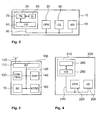
- a data processing network embodying the present invention comprises a user device 100 in the form of a mobile phone connectable to a server computer system 200 via a communications network infrastructure 300 having a wireless access network in the form of a GSM access network.
- a smart card 10 in the form of a SIM card is also connectable to the network via the user device 100.
- the smart card 10 comprises a memory 20, a central processing unit (CPU) 30, an encryption engine 90, and an input/output (I/O) subsystem 40, all interconnected via a bus subsystem 50.
- the memory 20 is stored computer program code executable by the CPU 30.
- the computer program code comprises an operating system 60 in the form of a Java compatible operating platform and tool kit 70 application software in the form of a Java applet.
- the memory 20 also facilitates the storage of a scratch list 80 in a tamper resistant manner.
- the scratch list 80 comprises a plurality of OTACs.
- the operating system 60 configures the CPU 30 for executing the tool kit 70.
- the tool kit 70 facilitates handling of OTACs in the scratch list 80.
- the encryption engine 80 comprises cryptographic processing logic for encrypting and decrypting data to be transmitted from and received by the smart card 10.
- the cryptographic processing logic may be implemented in hardware, software, or hardware and software in combination.
- the user device 100 comprises a radio frequency (RF) stage 110 having an RF antenna 170, control logic 130, a visual display 140, and a keypad 160 all interconnected by a bus subsystem 120.
- the smart card 10 is removeably inserted into the user device 100 and the I/O subsystem 40 of the smart card 10 is releasably connected to the bus subsystem 120 of the user device 100.
- the RF stage 110 and RF antenna facilitate wireless communications between the user device 100 and other devices connected to the network 300.
- the visual display 140 provides a graphical user interface between the user and the mobile devices for functions such as preparing messages and reading messages.
- the key pad 160 provides the user with keyboard control of the user device 10 for functions such as data entry and call handling.
- the control logic 130 controls functions of the user device 100 such as call handling based on inputs received from, for example, the keypad 160. Outputs from the user device 100, such as data displays on the visual display unit 140 or outgoing calls via the RF stage 110, are also controlled by the control logic 130. Similarly, the control logic 130 coordinates transfers of data from the smart card 10 and the other elements of the user device 100 via the bus subsystem 120.
- the control logic 130 may implemented in dedicated hardware, a programmed CPU, or a combination of a dedicated hardware and a programmed CPU.
- the server 200 comprises a memory 210, a CPU 220, and an I/O subsystem 230 all interconnected by a bus subsystem 240.
- the memory 210 is stored computer program code executable by the CPU 220.
- the computer program code comprises an operating system 250 and OTAC service application software 260.
- the operating system 250 configures the CPU 220 for executing the OTAC service 260.
- the OTAC service 260 facilitates handling of OTACs in the user device 100. Aspects of the functionality of the OTAC service 260 will be described in detail shortly.
- a wireless communication channel in the form of an SMS channel is established between the user device 100 and the server 200.
- the SMS channel facilitates secure transfer of the scratch list 80 from the OTAC service 260 in the server 200 to the smart card 10 via the user device 100.
- the tool kit 70 may be loaded into the memory 20 of the user device 100 during configuration of the smart card 10 for the user. Alternatively, if permitted by the network infrastructure 300, the tool kit 70 may be loaded into the memory 20 and refreshed dynamically via the network infrastructure 300. Access to the tool kit 70 in the memory 20 is protected by a PIN set by the user via the user device 100.
- the keypad 160 may be employed for this purpose. Alternatively, if the user device 100 has voice recognition, the PIN may be set and reset orally. Other devices may support still further means of data entry.
- the server 200 is located at a bank and the user of the user device 100 is a customer of the bank.
- the bank supplies the user with a paper mail.
- the paper mail may be supplied via, for example, the conventional postal system.
- the paper mail contains: a customer specific symmetrical key K, such as a 16 byte DES key; a customer identification (ID) code N; and a phone number for accessing the server 200 via the network infrastructure 300.
- the banks uses the ID code N to identify the user.
- the ID code need not be the user's customer account number and may instead be implemented by unique random information.
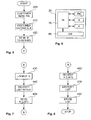
- the user enters the PIN via the key pad 160. See step 400.
- the tool kit 70 requests that the user enters the key K, the ID code N, and the phone number of the server 200 via the key pad 160. See step 410. Again, if the user device 100 has voice recognition, this data may be entered orally. However, it will be appreciated that, this is a less secure entry technique as the user may be overheard reciting the data.
- the tool kit 70 sends an initialization SMS message containing the identification code N to the OTAC service 260 on the server 200. See step 420. The initialization message indicates to the OTAC service 260 that the tool kit 70 has been enabled.
- the memory 20 on the smart card now contains the PIN, the key K, and the ID code N.
- the OTAC service 260 on receipt of the initialization message at the server 200, the OTAC service 260 looks up the user based on the ID code N and retrieves the key K issued to the user. See step 430. The OTAC service 260 then encrypts a new scratch list of OTACs for the user with the key K. See step 440. The OTAC service 260 then sends a SMS reply message containing the encrypted list to the tool kit 70. The list may be spread across a series of SMS messages depending on the amount of data to transferred.
- the tool kit 70 extracts the encrypted list. See step 460.
- the tool kit 70 utilizes the encryption engine 90 to decrypt the list using the key K. See step 470.
- the tool kit 70 then stores the decrypted list in the memory 60. See step 480.
- Initialization is then complete.
- the memory 20 now contains, the key K, the PIN, the ID code N, and the list of OTACs.
- the user when the user needs an OTAC, to perform a banking transaction over the Internet for example, the user again enters the PIN via the key pad 160 to unlock the tool kit 70. See step 500.
- the user requests an OTAC from the tool kit 70.
- the OTAC may be the next OTAC in the list or a specific OTAC, depending on the OTAC allocation system employed by the bank.
- the tool kit 70 tracks the OTACs issued. See step 520.
- refreshment of the list 80 of OTACs is automatically triggered by the tool kit 70.
- a test is performed by the tool kit 70 to determine if the number of unused OTACs remaining in the list 80 is less than a predetermined threshold. See 540. In the event that the number of unused OTACs is greater than the threshold, the tool kit 70 waits for the next OTAC to be used.
- the tool kit 70 automatically generates and sends a message to the server 200 via the network 300 to request a new list of OTACs.
- the ID code N is included in the request message as herein before described with reference to Figure 5 in order that the OTAC service 260 in the server 200 can look up the appropriate key for encrypting the new list of OTACs.
- the new list is delivered to the smart card 10 via the channel as herein before described with reference to Figure 7.
- the list 80 of OTACs stored in the memory 20 is automatically refreshed by the OTAC service 260 on the server 200.
- the OTAC service 260 on the server 200 now keeps track of how many and which OTACs have been used by each user at any time. See step 530. Each time an OTAC is used, the OTAC service 260 determines if the number of unused OTACs remaining on the list is less than a predetermined threshold. See step 540. If not, the OTAC service 260 waits for the next OTAC to be used. If so, the OTAC service 260 automatically sends a new list, encrypted with the key K, to the tool kit 70 as herein before described with reference to Figure 7.
- the thresholds herein before described may be set such that a new list 80 is issued when all previously issued OTACs are used up.
- the thresholds may be set such that a new list 80 is issued when only a preset number of OTACs are left unused in the previous list.
- refreshment of the list 80 of OTACs stored in the memory 20 may be triggered manually by the user.
- the tool kit 70 in response to manual input to the user device 100, the tool kit 70 generates and sends a message to the server 200 via the network 300 to request a new list of OTACs.
- the ID code N is included in the request message as herein before described with reference to Figure 5 in order that the OTAC service 260 in the server 200 can look up the appropriate key for encrypting the new list of OTACs.
- the key K stored in the memory 20 can be updated on demand.
- the OTAC service 260 generates a new key K'. See step 550.
- the OTAC service 260 encrypts the new key K' with the existing key K. See step 560.
- the OTAC service 260 then sends a SMS message containing the new key K' encrypted by the existing key K to the tool kit 70 via the network infrastructure 300.
- the tool kit 70 receives the encrypted new key K'. See step 600.
- the tool kit 70 decrypts the new key K' via the encryption engine 280 using the preexisting key K stored in the memory 20. See step 610. Then, the tool kit 70 replaces the preexisting key K in the memory 20 with the new key K'. Thereafter, the tool kit 70 accepts only messages encrypted with the new key K'.
- Distribution of the new key K' may be performed with distribution of new lists by the server 200. Alternatively, distribution of the new key K' may be performed independently of new list distribution.
- the OTAC service 260 sends another key S encrypted with the key K to the tool kit 70 via the network infrastructure 300.
- the other key S may be used for signature verification for example. Further messages from the OTAC service 260 are then signed with the signature key S prior to encryption with the key K. The tool kit 70 can then verify the signature accordingly. Keys K and S are not necessarily different.
- symmetric cryptography is employed.
- asymmetric cryptography is employed.
- the user need not manually enter the initial symmetric key K.
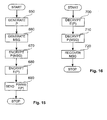
- the tool kit 70 via the encryption engine 280, instead generates a public/private key pair such as a 1024 bit RSA key pair. See step 630.
- the tool kit 70 then sends the public key E of the pair together with the ID code N to the OTAC service 260 via the network infrastructure 300. See step 640.
- the tool kit 70 is now enabled.
- the OTAC service 260 now generates a symmetric secure session key P. See step 650.
- the OTAC service 260 generates a message containing a list of OTACs. See step 660.
- the OTAC service 260 now encrypts the message with the session key P. See step 670.
- the OTAC service 260 also encrypts the session key P with the public key E. See step 680.
- the OTAC service 260 then sends the encrypted message, together with the encrypted session key P, to the tool kit 70 via the network infrastructure 300. See step 690.
- the tool kit 70 decrypts the session key P with its private key D via the encryption engine 280. See step 700.
- the tool kit 70 then decrypts the message using the decrypted session key via the encryption engine 280. See step 710.
- the tool kit 70 recovers the list from the decrypted message. See step 720.
- the OTAC service 260 also employs a public/private key pair for signature generation and verification.
- the OTAC service 260 sends its public key to the tool kit 70 for future verification actions.
- the OTAC service 260 may issue the same public key for signature verification to all tool kits 70 it services, possibly signed by a trusted third party certificate authority having a public key pre-stored on the smart card 10.
- the user device 100 comprises a contact-less interface 800 such as an infrared or inductive interface.
- the interface 800 permits access to the tool kit 70 on the smart card 10 via a data terminal 810.
- the data terminal 810 also comprises a contact-less interface 880 for communicating with the interface 800 of the user device 100.
- the data terminal 800 further comprises a keypad 830, display 840, and I/O subsystem 850 all interconnected, together with the interface 880 via a bus subsystem 820.
- the I/O subsystem 850 is connected to a remote transaction processing computer system 870 via an intervening data network 860.
- OTACs can be read by the data terminal 810 from the smart card 10 resident in the user device 100 via the interfaces 800 and 880 in response to a request issued by the customer via the keypad 830 of the date terminal 810.
- OTACs may be read by the data terminal 810 through the interfaces 800 and 880 without requiring such manual requests.
- Various challenge and response schemes may be employed between the smart card 10 and the data terminal 810.
- the data terminal 810 does not gain access to the OTACs. Instead, the data terminal 810 sends a challenge to the tool kit 70 in the smart card 10. In turn, the tool kit 70 generates a response to the challenge based on the OTAC. For example, if the OTAC effectively comprises a cryptographic key such as a 3 DES key, the tool kit 70 may digitally sign and encrypt the challenge with the OTAC. The response thus calculated may be used for authentication or to enable a transaction. In other embodiments of the present invention, the contact less interface 800 may be integral to the smart card 800 rather than the user device 100.
- the user device 100 is in the form of a mobile phone.
- the user device 100 may be of a different form, such as a PDA, portable computer, desktop computer, or the like.
- a wireless network is employed for effecting communications between the user device 100 and the server 200.
- a wired network or a combination of wireless and wired networks may be employed for effecting communications between the user device 100 and the server 200.
- wireless communications between the user device 100 and the server 200 are effected via an SMS channel.
- the smart card 10 is in the form of a SIM module.
- the smart card 10 may be in different form, such as a credit or charge card form factor.
- Other analogous forms of dedicated processor systems may be employed in place of the smart card 10.
- a Java compliant operating system 60 is employed in the smart card 10 for executing the tool kit 70 in the form of a Java applet.
- a different form of smart card operating system and a correspondingly different form of tool kit application software may be employed.
- the access codes are in the form of one time authentication codes.
- the present invention is equally applicable to delivery of other types of access codes, such as entry codes for gaining access to restricted areas, for example. Many other applications of the present invention will be apparent.
- a method for providing a user device with a set of access codes comprises, in the user device, storing an encryption key and an identification code, and sending a message containing the identification code to a server via a communications network.
- an encryption key is stored corresponding to the key stored in the user device, allocating the set of access codes on receipt of the identification code from the user device.
- a look up function is performed based on the identification code received in the message to retrieve the key from storage.
- the set of access codes is encrypted using the retrieved key to produce an encrypted set.
- a message containing the encrypted set is sent to the user device via the network.
- the encrypted set received from the server is decrypted using the key in storage, and storing the decrypted set of access codes for use by a user of the user device.
Landscapes
- Engineering & Computer Science (AREA)
- Computer Security & Cryptography (AREA)
- Computer Networks & Wireless Communication (AREA)
- Signal Processing (AREA)
- Computer Hardware Design (AREA)
- Computing Systems (AREA)
- General Engineering & Computer Science (AREA)
- Mobile Radio Communication Systems (AREA)
- Storage Device Security (AREA)
- Computer And Data Communications (AREA)
- Telephonic Communication Services (AREA)
- Measurement Of Radiation (AREA)
- Radar Systems Or Details Thereof (AREA)
- Vending Machines For Individual Products (AREA)
- Information Transfer Between Computers (AREA)
- Indicating And Signalling Devices For Elevators (AREA)
- Measurement Of The Respiration, Hearing Ability, Form, And Blood Characteristics Of Living Organisms (AREA)
- Measuring Pulse, Heart Rate, Blood Pressure Or Blood Flow (AREA)
Claims (41)
- Un procédé pour fournir à un dispositif utilisateur un jeu de codes d'accès, le procédé comprenant :dans le dispositif utilisateur, le stockage d'une clé de chiffrement et d'un code d'identification et l'envoi d'un message contenant le code d'identification à un serveur, via un réseau de communication ;dans le serveur, le stockage d'une clé de chiffrement correspondant à la clé stockée dans le dispositif utilisateur, l'allocation du jeu de codes d'accès à réception du code d'identification de la part du dispositif utilisateur, l'accomplissement d'une fonction de consultation basée sur le code d'identification reçu dans le message, afin de récupérer la clé du stockage, le chiffrement du jeu de codes d'accès en utilisant la clé récupérée, pour produire une clé chiffrée, et l'envoi d'un message contenant le jeu chiffré au dispositif utilisateur, via le réseau ; etdans le dispositif utilisateur, le déchiffrement du jeu chiffré reçu du serveur, en utilisant la clé en stockage et le stockage du jeu déchiffré de codes d'accès, pour utilisation par un utilisateur du dispositif utilisateur ; etlorsque le nombre de codes d'accès non utilisés atteint un seuil prédéterminé, le serveur envoie un message, contenant un nouveau jeu de codes d'accès, au dispositif utilisateur, via le réseau ; etdans le dispositif utilisateur, le stockage du nouveau jeu pour utilisation par un utilisateur du dispositif utilisateur.
- Un procédé selon la revendication 1, comprenant, en outre :dans le dispositif utilisateur, le suivi des codes d'accès utilisés par l'utilisateur, la génération d'une requête, en réponse au fait que le nombre de codes d'accès non utilisés atteint un seuil prédéterminé, et l'envoi d'un message contenant la requête au serveur ; etdans le serveur, l'envoi du message contenant le nouveau jeu de codes d'accès, à réception de la requête.
- Un procédé selon la revendication 1, comprenant, en outre :dans le serveur, le suivi des codes d'accès utilisés par l'utilisateur et l'envoi du message contenant le nouveau jeu de codes d'accès au dispositif utilisateur, en réponse au fait que le nombre de codes d'accès non utilisés atteint un seuil prédéterminé.
- Un procédé tel que revendiqué à la revendication 1, comprenant, en outre :dans le serveur, la génération d'une nouvelle clé, le chiffrement de la nouvelle clé avec la clé antérieure et l'envoi d'un message contenant la nouvelle clé chiffrée au dispositif utilisateur, via le réseau etdans le dispositif utilisateur, le déchiffrement de la nouvelle clé reçue du serveur utilisant la clé antérieure, et le stockage de la nouvelle clé déchiffrée, au lieu de la clé antérieure.
- Un procédé tel que revendiqué à la revendication 4, comprenant, en outre :dans le serveur, le chiffrement d'un nouveau jeu de codes d'accès par la nouvelle clé, pour produire un nouveau jeu chiffré de clés et l'envoi d'un message contenant le nouveau jeu chiffré de clés au dispositif utilisateur, via le réseau ; etdans le dispositif utilisateur, le déchiffrement du nouveau jeu chiffré de clés, en utilisant la nouvelle clé, et le stockage du nouveau jeu déchiffré, pour utilisation par un utilisateur du dispositif utilisateur.
- Un procédé tel qu'indiqué à la revendication 1, comprenant, en outre :dans le dispositif utilisateur, la génération d'une paire de clés publique/privée et l'envoi d'un message contenant la clé publique de la paire au serveur, via le réseau,dans le serveur, la génération d'une clé de session, le chiffrement du jeu de codes d'accès par la clé de session pour produire un jeu chiffré de clés de session, le chiffrement de la clé de session avec la clé publique pour produire une clé de session chiffrée, l'envoi d'un message contenant le jeu chiffré de clés de session et la clé de session chiffrée au dispositif utilisateur, via le réseau ; etdans le dispositif utilisateur, le déchiffrement de la clé de session chiffrée par la clé privée de la paire, afin de récupérer la clé de session, le déchiffrement du jeu chiffré de clés de session avec la clé de session récupérée, pour récupérer le jeu, et le stockage du jeu déchiffré, pour utilisation par un utilisateur du dispositif utilisateur.
- Un procédé de fourniture à un dispositif utilisateur d'un jeu de codes d'accès, le procédé comprenant, dans le dispositif utilisateur :le stockage d'une clé de chiffrement et d'un code d'identification, l'envoi d'un message, contenant le code d'identification, à un serveur via un réseau de communication, la réception de la part du serveur d'un message contenant le jeu de codes d'accès chiffré avec la clé,le déchiffrement du jeu reçu de codes d'accès en utilisant la clé dans le stockage ; etle stockage du jeu déchiffré de codes d'accès, pour utilisation par un utilisateur du dispositif utilisateur ;lorsque le nombre de codes d'accès non utilisés atteint un seuil prédéterminé, réception par le serveur d'un message contenant un nouveau jeu de codes d'accès ; etdans le dispositif utilisateur, le stockage du nouveau jeu, pour utilisation par un utilisateur du dispositif utilisateur.
- Un procédé tel qu'indiqué à la revendication 7, comprenant, en outre : dans le dispositif utilisateur, le suivi des codes d'accès utilisés par l'utilisateur, la génération d'une requête en réponse au fait que le nombre de codes d'accès non utilisés atteint un seuil prédéterminé, et l'envoi d'un message contenant la requête au serveur.
- Un procédé tel qu'indiqué à la revendication 7, comprenant en outre, dans le dispositif utilisateur :le déchiffrement d'une nouvelle clé reçue du serveur, en utilisant la clé antérieure ; etle stockage de la nouvelle clé déchiffrée, au lieu de la clé antérieure.
- Un procédé tel que revendiqué à la revendication 9, comprenant en outre, dans le dispositif utilisateur :la réception par le serveur d'un message contenant un nouveau jeu chiffré de clés de codes d'accès, via le réseau,le déchiffrement du nouveau jeu chiffré de clés en utilisant la nouvelle clé ; etle stockage du nouveau jeu déchiffré, pour utilisation par un utilisateur du dispositif utilisateur.
- Un procédé tel que revendiqué à la revendication 7, comprenant, dans le dispositif utilisateur :la génération d'une paire de clés publique/privée,l'envoi d'un message contenant la clé publique de la paire, au serveur, via le réseau,la réception d'un message contenant un jeu chiffré de clés de session, de codes d'accès et une clé de session chiffrée par clé publique depuis le serveur, via le réseau,le déchiffrement de la clé de session chiffrée par clé publique, avec la clé privée de la paire, pour récupérer un jeu chiffré de clés de session et une clé de session correspondante,le déchiffrement du jeu chiffré de clés de session par la clé de session récupérée pour récupérer le jeu ; etle stockage du jeu déchiffré, pour utilisation par un utilisateur du dispositif utilisateur.
- Un élément de programme d'ordinateur comprenant des moyens de code de programme d'ordinateur, qui, lorsqu'ils sont chargés dans un processeur d'un dispositif utilisateur, configurent le processeur pour mettre en oeuvre un procédé tel que revendiqué à l'une quelconque des revendications 7 à 11.
- Un procédé de fourniture à un dispositif utilisateur d'un jeu de codes d'accès, le procédé comprenant, dans un serveur pour communiquer avec le dispositif via un réseau :le stockage d'une clé de chiffrement correspondant à une clé de chiffrement stockée dans le dispositif utilisateur,l'allocation du jeu de codes d'accès au dispositif utilisateur à réception d'un message contenant un code d'identification depuis le dispositif utilisateur via le réseau,l'accomplissement d'une fonction de consultation, basée sur le code d'identification reçu dans le message, pour récupérer la clé du stockage,le chiffrement du jeu de codes d'accès, en utilisant la clé récupérée pour produire un jeu chiffré ; etl'envoi d'un message contenant le jeu chiffré au dispositif utilisateur, via le réseau ; etlorsque le nombre de codes d'accès non utilisés atteint un seuil prédéterminé, envoi d'un message contenant un nouveau jeu de codes d'accès au dispositif utilisateur, via le réseau.
- Un procédé tel que revendiqué à la revendication 13, comprenant en outre, dans le serveur :la génération d'une nouvelle clé, le chiffrement de la nouvelle clé avec la clé antérieure ; etl'envoi d'un message contenant la nouvelle clé chiffrée au dispositif utilisateur, via le réseau.
- Un procédé tel que revendiqué à la revendication 14, comprenant en outre, dans le serveur :le chiffrement du nouveau jeu de codes d'accès, via la nouvelle clé, afin de produire un nouveau jeu chiffré de clés de codes d'accès.
- Un procédé tel que revendiqué à la revendication 13, comprenant en outre, dans le serveur :la réception d'un message contenant une clé publique d'une paire clé privée/publique depuis le dispositif utilisateur ;la génération d'une clé session ;le chiffrement du jeu de codes d'accès avec la clé de session, pour produire un jeu chiffré de clés de session ;le chiffrement de la clé de session avec la clé publique, pour produire une clé de session chiffrée de clé publique ; etl'envoi d'un message, contenant le jeu chiffré de clés de session et la clé de session chiffrée par clé publique, au dispositif utilisateur, via le réseau.
- Un élément de programme pour ordinateur, comprenant des moyens de code de programme d'ordinateur qui, une fois chargés dans un processeur d'un système d'ordinateur serveur, configurent le processeur pour mettre en oeuvre un procédé tel que revendiqué à l'une quelconque des revendications 13 à 16.
- Un procédé tel que revendiqué à l'une quelconque des revendications 1 à 16, dans lequel les codes d'accès sont des codes d'authentification valables une seule fois.
- Un procédé tel que revendiqué à l'une quelconque des revendications 1 à 16, ou 18, dans lequel le réseau comprend un réseau de communication sans fil.
- Un procédé tel que revendiqué à la revendication 19, dans lequel le dispositif utilisateur comprend l'un d'un téléphone mobile, d'un assistant numérique personnel, et d'une carte à mémoire.
- Un procédé tel que revendiqué à la revendication 19, dans lequel les messages sont des messages SMS.
- Dispositif pour fournir à un utilisateur un jeu de codes d'accès, le dispositif comprenant : un dispositif utilisateur ; et un serveur pour communiquer avec le dispositif utilisateur, via un réseau de communications ; le dispositif utilisateur comprenant, des moyens pour stocker une clé de chiffrement et un code d'identification, et des moyens, pour envoyer un message contenant le code d'identification au serveur, via le réseau ; le serveur comprenant des moyens pour stocker une clé de chiffrement correspondant à la clé stockée dans le dispositif utilisateur, des moyens pour allouer le jeu de codes d'accès à réception du code d'identification venant du dispositif utilisateur, des moyens pour accomplir une fonction de consultation basée sur le code d'identification reçu dans le message pour récupérer la clé du message, des moyens pour chiffrer le jeu de codes d'accès en utilisant la clé récupérée pour produire un jeu chiffré, et des moyens pour envoyer un message contenant le jeu chiffré au dispositif utilisateur, via le réseau, et pour, lorsque le nombre de codes d'accès non utilisés atteint un seuil prédéterminé, envoyer un message contenant un nouveau jeu de codes d'accès au dispositif utilisateur, via le réseau ; et, dans le dispositif utilisateur, le stockage du nouveau jeu, pour utilisation par un utilisateur du dispositif utilisateur,
et, le dispositif utilisateur comprenant en outre des moyens pour déchiffrer le jeu chiffré reçu du serveur en utilisant la clé stockée dans le dispositif utilisateur, et des moyens pour stocker le jeu déchiffré de codes d'accès pour utilisation par l'utilisateur. - Dispositif tel que revendiqué à la revendication 22, dans lequel le serveur comprend en outre des moyens pour générer une nouvelle clé, des moyens pour chiffrer la nouvelle clé avec la clé antérieure, et des moyens pour envoyer un message contenant la nouvelle clé chiffrée au dispositif utilisateur, via le réseau, et dans lequel le dispositif utilisateur comprend en outre des moyens pour déchiffrer la nouvelle clé reçue du serveur en utilisant la clé antérieure, et des moyens pour stocker la nouvelle clé déchiffrée au lieu de la clé antérieure.
- Dispositif tel que revendiqué à la revendication 23, dans lequel le serveur comprend en outre des moyens pour chiffrer le nouveau jeu de codes d'accès avec la nouvelle clé, pour produire un nouveau jeu chiffré de clés ; et des moyens pour envoyer un message, contenant le nouveau jeu chiffré de clés, au dispositif utilisateur, via le réseau, et dans lequel le dispositif utilisateur comprend en outre des moyens, pour déchiffrer le nouveau jeu chiffré de clés, en utilisant la nouvelle clé, et des moyens pour stocker le nouveau jeu déchiffré, pour utilisation par un utilisateur du dispositif utilisateur.
- Dispositif tel que revendiqué à la revendication 22, comprenant en outre, dans le dispositif utilisateur, des moyens pour stocker le nouveau jeu, pour utilisation par un utilisateur du dispositif utilisateur.
- Dispositif tel que revendiqué à la revendication 25, comprenant, en outre : dans le dispositif utilisateur, des moyens pour suivre les codes d'accès utilisés par l'utilisateur, des moyens pour générer une requête, en réponse au fait que le nombre de codes d'accès non utilisés atteint un seuil prédéterminé, et des moyens pour envoyer un message contenant la requête au serveur ; et, dans le serveur, des moyens pour envoyer le message contenant le nouveau jeu de codes d'accès, à réception de la requête.
- Dispositif tel que revendiqué à la revendication 25, comprenant, en outre : dans le serveur, des moyens pour suivre les codes d'accès utilisés par l'utilisateur, et des moyens pour envoyer le message contenant le nouveau jeu de codes d'accès au dispositif utilisateur, en réponse au fait que le nombre de codes d'accès non utilisés atteint un seuil prédéterminé.
- Dispositif tel que revendiqué à la revendication 25, comprenant, en outre : dans le dispositif utilisateur, des moyens pour générer une requête, en réponse à une entrée manuelle par l'utilisateur, et des moyens pour envoyer un message contenant la requête au serveur ; et, dans le serveur, des moyens pour envoyer le message contenant le nouveau jeu de codes d'accès, à réception de la requête.
- Dispositif tel que revendiqué à la revendication 22, dans lequel le dispositif utilisateur comprend en outre des moyens pour générer une paire de clés publique/privée et des moyens pour envoyer un message contenant la clé publique de la paire au serveur via le réseau, dans lequel le serveur comprend en outre des moyens pour générer un clé de session, des moyens pour chiffrer le jeu de codes d'accès avec la clé de session, pour produire un jeu chiffré de clés de session, des moyens pour chiffrer la clé de session avec la clé publique pour produire une clé de session chiffrée par clé publique, et des moyens pour envoyer un message contenant le jeu chiffré de clés de session et la clé de session chiffrée par clé publique au dispositif utilisateur, via le réseau, et dans lequel le dispositif utilisateur comprend en outre des moyens pour déchiffrer la clé de session chiffrée par clé publique, avec la clé privée de la paire, pour récupérer la clé de session, des moyens pour déchiffrer le jeu chiffré de clés de session avec la clé de session récupérée, pour récupérer le jeu, et des moyens pour stocker le jeu déchiffré pour utilisation par un utilisateur du dispositif utilisateur.
- Dispositif tel que revendiqué à l'une quelconque des revendications 22 à 29, dans lequel les codes d'accès sont des codes d'authentification utilisés une seule fois.
- Dispositif tel que revendication à l'une quelconque des revendications 22 à 28, dans lequel le réseau comprend un réseau de communication sans fil.
- Dispositif tel que revendiqué à la revendication 31 dans lequel le dispositif utilisateur comprend l'un d'un téléphone mobile, un assistant numérique personnel et une carte à mémoire.
- Dispositif tel que revendiqué à la revendication 31 dans lequel les messages sont des messages SMS.
- Un dispositif utilisateur pour réception d'un jeu de codes d'accès depuis un serveur via un réseau de communication, le dispositif comprenant : des moyens pour stocker une clé de chiffrement et un code d'identification, des moyens pour envoyer un message contenant le code identification à un serveur, via un réseau de communication ; des moyens pour recevoir du serveur un message contenant le jeu de codes d'accès chiffrés avec la clé ; des moyens pour déchiffrer le jeu reçu de codes d'accès, en utilisant la clé dans le stockage ; et des moyens pour stocker le jeu déchiffré de codes d'accès; pour utilisation par un utilisateur du dispositif utilisateur ; et
des moyens pour, lorsque le nombre de codes d'accès non utilisés atteint un seuil prédéterminé, de la part du serveur, recevoir un message contenant un nouveau jeu chiffré de clés de code d'accès, via le réseau. - Un dispositif utilisateur tel que revendiqué à la revendication 34, comprenant, en outre : des moyens pour déchiffrer une nouvelle clé reçue du serveur en utilisant la clé antérieure ; et des moyens pour stocker la nouvelle clé déchiffrée, au lieu de la clé antérieure.
- Un dispositif utilisateur tel que revendiqué à la revendication 35, comprenant, en outre : des moyens pour déchiffrer le nouveau jeu chiffré de clés en utilisant la nouvelle clé ; et des moyens pour stocker le nouveau jeu déchiffré, pour utilisation par un utilisateur du dispositif utilisateur.
- Un dispositif utilisateur tel que revendiqué à la revendication 34, comprenant, en outre :des moyens pour générer une paire clé publique/privée ; des moyens pour envoyer un message contenant la clé publique de la paire au serveur, via le réseau ; des moyens pour recevoir un message contenant un jeu chiffré de clés de session, de codes d'accès et une clé de session chiffrée par clé publique depuis le serveur via le réseau ; des moyens pour déchiffrer la clé de session chiffrée par clé publique avec la clé privée de la paire pour récupérer la clé de session ; des moyens pour déchiffrer le jeu chiffré de clés de session par la clé de session récupérée, pour récupérer le jeu ; et des moyens pour stocker le jeu déchiffré, pour utilisation par un utilisateur du dispositif utilisateur.
- Un serveur pour fournir à un dispositif utilisateur un jeu de codes d'accès, via un réseau de communication, le serveur comprenant : des moyens pour stocker une clé de chiffrement, correspondant à une clé de chiffrement stockée dans le dispositif utilisateur ; des moyens pour allouer le jeu de codes d'accès au dispositif utilisateur, à réception d'un message contenant un code d'identification venant du dispositif utilisateur, via le réseau ; des moyens, pour effectuer une fonction de consultation, d'après le code d'identification reçu dans le message, pour récupérer la clé du stockage ; des moyens pour chiffrer le jeu de codes d'accès en utilisant la clé récupérée pour produire un jeu chiffré ; et
des moyens pour envoyer un message contenant le jeu chiffré au dispositif utilisateur, via le réseau, des moyens pour, lorsque le nombre de codes d'accès non utilisés atteint un seuil prédéterminé, envoyer un message contenant le nouveau jeu de codes d'accès au dispositif utilisateur, via le réseau. - Un serveur tel que revendiqué à la revendication 38, comprenant, en outre :des moyens pour générer une nouvelle clé, chiffrer la nouvelle clé avec la clé antérieure ; et des moyens pour envoyer un message contenant la nouvelle clé chiffrée au dispositif utilisateur, via le réseau.
- Un serveur tel que revendiqué à la revendication 40, comprenant, en outre : des moyens pour chiffrer le nouveau jeu de codes d'accès par la nouvelle clé, pour produire un nouveau jeu chiffré de clés.
- Un serveur tel que revendiqué à la revendication 38, comprenant, en outre : des moyens pour récupérer un message contenant une clé publique d'une paire de clés publique/privée depuis le dispositif utilisateur ; des moyens pour générer une clé de session ; des moyens pour chiffrer le jeu de codes d'accès avec la clé de session pour produire un jeu chiffré de clés de session ; des moyens pour chiffrer la clé de session avec la clé publique, pour produire une clé de session chiffrée par clé publique ; et
des moyens, pour envoyer un message contenant le jeu chiffré de clés de session et la clé de session chiffrée par clé publique, au dispositif utilisateur, via le réseau.
Priority Applications (1)
| Application Number | Priority Date | Filing Date | Title |
|---|---|---|---|
| EP03751197A EP1559256B1 (fr) | 2002-11-06 | 2003-10-24 | Dispositif utilisateur dote d'un ensemble de codes d'acces |
Applications Claiming Priority (4)
| Application Number | Priority Date | Filing Date | Title |
|---|---|---|---|
| EP02405954 | 2002-11-06 | ||
| EP02405954 | 2002-11-06 | ||
| EP03751197A EP1559256B1 (fr) | 2002-11-06 | 2003-10-24 | Dispositif utilisateur dote d'un ensemble de codes d'acces |
| PCT/IB2003/004720 WO2004043037A1 (fr) | 2002-11-06 | 2003-10-24 | Dispositif utilisateur dote d'un ensemble de codes d'acces |
Publications (2)
| Publication Number | Publication Date |
|---|---|
| EP1559256A1 EP1559256A1 (fr) | 2005-08-03 |
| EP1559256B1 true EP1559256B1 (fr) | 2006-08-09 |
Family
ID=32309513
Family Applications (1)
| Application Number | Title | Priority Date | Filing Date |
|---|---|---|---|
| EP03751197A Expired - Lifetime EP1559256B1 (fr) | 2002-11-06 | 2003-10-24 | Dispositif utilisateur dote d'un ensemble de codes d'acces |
Country Status (11)
| Country | Link |
|---|---|
| US (2) | US20060168657A1 (fr) |
| EP (1) | EP1559256B1 (fr) |
| JP (1) | JP2006505993A (fr) |
| KR (1) | KR100791432B1 (fr) |
| CN (1) | CN100539581C (fr) |
| AT (1) | ATE336135T1 (fr) |
| AU (1) | AU2003269415A1 (fr) |
| CA (1) | CA2504843C (fr) |
| DE (1) | DE60307498T2 (fr) |
| TW (1) | TWI246289B (fr) |
| WO (1) | WO2004043037A1 (fr) |
Cited By (1)
| Publication number | Priority date | Publication date | Assignee | Title |
|---|---|---|---|---|
| US8214642B2 (en) | 2007-04-05 | 2012-07-03 | International Business Machines Corporation | System and method for distribution of credentials |
Families Citing this family (51)
| Publication number | Priority date | Publication date | Assignee | Title |
|---|---|---|---|---|
| US8171567B1 (en) | 2002-09-04 | 2012-05-01 | Tracer Detection Technology Corp. | Authentication method and system |
| KR100791432B1 (ko) * | 2002-11-06 | 2008-01-07 | 인터내셔널 비지네스 머신즈 코포레이션 | 액세스 코드들의 세트를 사용자 디바이스에 제공하는 방법및 장치 |
| CN100375424C (zh) * | 2004-03-22 | 2008-03-12 | 国际商业机器公司 | 多媒体消息收发方法、系统、网关和客户设备 |
| ITMI20041913A1 (it) * | 2004-10-08 | 2005-01-08 | Sergio Sestili | Sistema e metodo di identificazione intrinsecamente sicura su reti telematiche non sicure |
| US7099477B2 (en) * | 2004-10-21 | 2006-08-29 | International Business Machines Corporation | Method and system for backup and restore of a context encryption key for a trusted device within a secured processing system |
| WO2006064359A1 (fr) * | 2004-12-17 | 2006-06-22 | Telefonaktiebolaget Lm Ericsson (Publ) | Authentification mutuelle resistant au clone dans un reseau de radio communication |
| JP4498165B2 (ja) * | 2005-02-10 | 2010-07-07 | 株式会社エヌ・ティ・ティ・データ | 暗号通信鍵管理装置及びプログラム |
| JP4188340B2 (ja) * | 2005-05-10 | 2008-11-26 | ソニー・エリクソン・モバイルコミュニケーションズ株式会社 | 携帯端末及び機能制限方法 |
| FR2886034B1 (fr) * | 2005-05-20 | 2007-11-23 | Neopost Ind Sa | Procede de paiement de service d'affranchissement dans une machine de traitement de courrier en libre acces |
| JP4713955B2 (ja) * | 2005-06-13 | 2011-06-29 | 株式会社日立製作所 | 認証システム、無線通信端末及び無線基地局 |
| FR2893797A1 (fr) * | 2005-11-23 | 2007-05-25 | Proton World Internatinal Nv | Personnalisation d'une carte bancaire pour d'autres applications |
| US8117453B2 (en) * | 2005-11-23 | 2012-02-14 | Proton World International N.V. | Customization of an electronic circuit |
| US8965416B2 (en) * | 2006-05-25 | 2015-02-24 | Celltrust Corporation | Distribution of lottery tickets through mobile devices |
| US8280359B2 (en) * | 2006-05-25 | 2012-10-02 | Celltrust Corporation | Methods of authorizing actions |
| US9848081B2 (en) | 2006-05-25 | 2017-12-19 | Celltrust Corporation | Dissemination of real estate information through text messaging |
| AU2007267898B2 (en) * | 2006-05-25 | 2012-06-14 | Celltrust Corporation | Secure mobile information management system and method |
| US9572033B2 (en) | 2006-05-25 | 2017-02-14 | Celltrust Corporation | Systems and methods for encrypted mobile voice communications |
| US8225380B2 (en) | 2006-05-25 | 2012-07-17 | Celltrust Corporation | Methods to authenticate access and alarm as to proximity to location |
| US8260274B2 (en) * | 2006-05-25 | 2012-09-04 | Celltrust Corporation | Extraction of information from e-mails and delivery to mobile phones, system and method |
| JP4783236B2 (ja) * | 2006-08-09 | 2011-09-28 | 株式会社リコー | 画像読取装置、画像情報検証装置、画像読取方法、画像情報検証方法、及び、画像読取プログラム |
| US8769275B2 (en) * | 2006-10-17 | 2014-07-01 | Verifone, Inc. | Batch settlement transactions system and method |
| CN101192918B (zh) * | 2006-11-24 | 2011-05-11 | 中兴通讯股份有限公司 | 一种广播网络中处理加密流的方法及系统 |
| US20080214111A1 (en) * | 2007-03-02 | 2008-09-04 | Celltrust Corporation | Lost phone alarm system and method |
| CN102037708A (zh) * | 2008-03-28 | 2011-04-27 | 赛尔特拉斯特公司 | 用于保护短消息服务和多媒体消息服务的系统和方法 |
| PL2187363T3 (pl) * | 2008-11-12 | 2012-10-31 | Oberthur Tech Denmark A/S | Sposób i urządzenie do rozprowadzania osobistego numeru identyfikacyjnego |
| CN101800639A (zh) * | 2009-02-09 | 2010-08-11 | 华为终端有限公司 | 一种实现网银业务的方法、系统和设备 |
| US9069940B2 (en) * | 2010-09-23 | 2015-06-30 | Seagate Technology Llc | Secure host authentication using symmetric key cryptography |
| US9292840B1 (en) | 2011-04-07 | 2016-03-22 | Wells Fargo Bank, N.A. | ATM customer messaging systems and methods |
| US9589256B1 (en) | 2011-04-07 | 2017-03-07 | Wells Fargo Bank, N.A. | Smart chaining |
| US8690051B1 (en) | 2011-04-07 | 2014-04-08 | Wells Fargo Bank, N.A. | System and method for receiving ATM deposits |
| US10367642B1 (en) * | 2012-12-12 | 2019-07-30 | EMC IP Holding Company LLC | Cryptographic device configured to transmit messages over an auxiliary channel embedded in passcodes |
| US10789594B2 (en) | 2013-01-31 | 2020-09-29 | Moshir Vantures, Limited, LLC | Method and system to intelligently assess and mitigate security risks on a mobile device |
| US20150326576A1 (en) * | 2014-05-12 | 2015-11-12 | Key Systems, Inc. | Secure asset management system |
| EP3289749B1 (fr) * | 2015-04-29 | 2020-09-23 | Telefonaktiebolaget LM Ericsson (publ) | Procédé et appareil pour permettre le partage d'un actif |
| US10169600B2 (en) * | 2015-10-13 | 2019-01-01 | International Business Machines Corporation | Encryption policies for various nodes of a file |
| JP6523143B2 (ja) * | 2015-11-13 | 2019-05-29 | 株式会社東芝 | データ配布装置、通信システム、移動体およびデータ配布方法 |
| CN105872118A (zh) * | 2015-11-25 | 2016-08-17 | 乐视云计算有限公司 | Dns网络中节点服务器的检测方法及设备 |
| US11296960B2 (en) | 2018-03-08 | 2022-04-05 | Nicira, Inc. | Monitoring distributed applications |
| US11340931B2 (en) | 2019-07-23 | 2022-05-24 | Vmware, Inc. | Recommendation generation based on selection of selectable elements of visual representation |
| US11743135B2 (en) | 2019-07-23 | 2023-08-29 | Vmware, Inc. | Presenting data regarding grouped flows |
| US11288256B2 (en) * | 2019-07-23 | 2022-03-29 | Vmware, Inc. | Dynamically providing keys to host for flow aggregation |
| US11398987B2 (en) | 2019-07-23 | 2022-07-26 | Vmware, Inc. | Host-based flow aggregation |
| US11436075B2 (en) | 2019-07-23 | 2022-09-06 | Vmware, Inc. | Offloading anomaly detection from server to host |
| US11349876B2 (en) | 2019-07-23 | 2022-05-31 | Vmware, Inc. | Security policy recommendation generation |
| US11321213B2 (en) | 2020-01-16 | 2022-05-03 | Vmware, Inc. | Correlation key used to correlate flow and con text data |
| US11785032B2 (en) | 2021-01-22 | 2023-10-10 | Vmware, Inc. | Security threat detection based on network flow analysis |
| US11991187B2 (en) | 2021-01-22 | 2024-05-21 | VMware LLC | Security threat detection based on network flow analysis |
| US11997120B2 (en) | 2021-07-09 | 2024-05-28 | VMware LLC | Detecting threats to datacenter based on analysis of anomalous events |
| US11831667B2 (en) | 2021-07-09 | 2023-11-28 | Vmware, Inc. | Identification of time-ordered sets of connections to identify threats to a datacenter |
| US11792151B2 (en) | 2021-10-21 | 2023-10-17 | Vmware, Inc. | Detection of threats based on responses to name resolution requests |
| US12015591B2 (en) | 2021-12-06 | 2024-06-18 | VMware LLC | Reuse of groups in security policy |
Family Cites Families (27)
| Publication number | Priority date | Publication date | Assignee | Title |
|---|---|---|---|---|
| JPS57202154A (en) * | 1981-06-05 | 1982-12-10 | Hitachi Ltd | Terminal device with encryption function |
| JPS6231231A (ja) * | 1985-08-02 | 1987-02-10 | Nec Corp | パスワ−ド照合方式 |
| US4890321A (en) * | 1986-07-08 | 1989-12-26 | Scientific Atlanta, Inc. | Communications format for a subscription television system permitting transmission of individual text messages to subscribers |
| JPH06237249A (ja) * | 1992-12-18 | 1994-08-23 | Kawasaki Steel Corp | ネットワーク管理のセキュリティシステム |
| JP2828218B2 (ja) * | 1993-09-20 | 1998-11-25 | インターナシヨナル・ビジネス・マシーンズ・コーポレーシヨン | 分散通信ネットワークにおける許可パスワードまたはキーの変更方法およびシステム |
| GB9321357D0 (en) * | 1993-10-15 | 1993-12-22 | British Telecomm | Personal identification systems |
| US5812991A (en) * | 1994-01-03 | 1998-09-22 | E-Stamp Corporation | System and method for retrieving postage credit contained within a portable memory over a computer network |
| US5604803A (en) * | 1994-06-03 | 1997-02-18 | Sun Microsystems, Inc. | Method and apparatus for secure remote authentication in a public network |
| US5812671A (en) * | 1996-07-17 | 1998-09-22 | Xante Corporation | Cryptographic communication system |
| US5850444A (en) * | 1996-09-09 | 1998-12-15 | Telefonaktienbolaget L/M Ericsson (Publ) | Method and apparatus for encrypting radio traffic in a telecommunications network |
| FI115686B (fi) * | 1997-08-27 | 2005-06-15 | Teliasonera Finland Oyj | Menetelmä palvelun käyttämiseksi tietoliikennejärjestelmässä ja tietoliikennejärjestelmä |
| JP4683723B2 (ja) * | 1997-11-13 | 2011-05-18 | エイチ.スペース データ サービシズ エルエルシー | ファイル転送システム |
| MY141663A (en) * | 1998-02-17 | 2010-05-31 | Sia Yik Hei | Code based access systems |
| US7366702B2 (en) * | 1999-07-30 | 2008-04-29 | Ipass Inc. | System and method for secure network purchasing |
| US6300873B1 (en) * | 1999-09-16 | 2001-10-09 | Atlantes Services, Inc. | Locking mechanism for use with one-time access code |
| CN1313576A (zh) * | 2000-03-10 | 2001-09-19 | 刘国胜 | 辨别信用卡等卡或代码的使用者为原持卡者的方法 |
| DE60129682T2 (de) * | 2000-03-29 | 2008-04-30 | Vadium Technology Inc., Seattle | Einmalige pad-verschlüsselung mit zentralschlüsseldienst und schlüsselfähigen zeichen |
| US7308575B2 (en) * | 2000-03-30 | 2007-12-11 | Arris Group, Inc. | Data scrambling system for a shared transmission media |
| US7093128B2 (en) * | 2000-04-06 | 2006-08-15 | Sony Corporation | Information recording/reproducing apparatus and method |
| CN1142653C (zh) * | 2000-04-28 | 2004-03-17 | 杨宏伟 | 动态口令认证系统及方法 |
| BR0114768A (pt) * | 2000-10-20 | 2003-12-09 | Wave Sys Corp | Sistema e método de segurança de dados criptografados |
| US7526795B2 (en) * | 2001-03-27 | 2009-04-28 | Micron Technology, Inc. | Data security for digital data storage |
| US7228438B2 (en) * | 2001-04-30 | 2007-06-05 | Matsushita Electric Industrial Co., Ltd. | Computer network security system employing portable storage device |
| US7263192B2 (en) * | 2002-02-14 | 2007-08-28 | Hewlett-Packard Development Company, L.P. | Establishing an encrypted session |
| ATE366010T1 (de) * | 2002-09-17 | 2007-07-15 | Errikos Pitsos | Verfahren und vorrichtung zur bereitstellung einer liste von öffentlichen schlüsseln in einem public-key-system |
| US20040083373A1 (en) * | 2002-10-28 | 2004-04-29 | Perkins Gregory M. | Automatically generated cryptographic functions for renewable tamper resistant security systems |
| KR100791432B1 (ko) * | 2002-11-06 | 2008-01-07 | 인터내셔널 비지네스 머신즈 코포레이션 | 액세스 코드들의 세트를 사용자 디바이스에 제공하는 방법및 장치 |
-
2003
- 2003-10-24 KR KR1020057006238A patent/KR100791432B1/ko not_active Expired - Fee Related
- 2003-10-24 AU AU2003269415A patent/AU2003269415A1/en not_active Abandoned
- 2003-10-24 EP EP03751197A patent/EP1559256B1/fr not_active Expired - Lifetime
- 2003-10-24 CA CA2504843A patent/CA2504843C/fr not_active Expired - Fee Related
- 2003-10-24 CN CNB2003801028184A patent/CN100539581C/zh not_active Expired - Fee Related
- 2003-10-24 US US10/532,195 patent/US20060168657A1/en not_active Abandoned
- 2003-10-24 JP JP2004549440A patent/JP2006505993A/ja active Pending
- 2003-10-24 DE DE60307498T patent/DE60307498T2/de not_active Expired - Lifetime
- 2003-10-24 AT AT03751197T patent/ATE336135T1/de not_active IP Right Cessation
- 2003-10-24 WO PCT/IB2003/004720 patent/WO2004043037A1/fr not_active Ceased
- 2003-10-31 TW TW092130397A patent/TWI246289B/zh not_active IP Right Cessation
-
2008
- 2008-05-22 US US12/125,247 patent/US8302173B2/en not_active Expired - Fee Related
Cited By (1)
| Publication number | Priority date | Publication date | Assignee | Title |
|---|---|---|---|---|
| US8214642B2 (en) | 2007-04-05 | 2012-07-03 | International Business Machines Corporation | System and method for distribution of credentials |
Also Published As
| Publication number | Publication date |
|---|---|
| CA2504843C (fr) | 2011-02-22 |
| EP1559256A1 (fr) | 2005-08-03 |
| ATE336135T1 (de) | 2006-09-15 |
| US8302173B2 (en) | 2012-10-30 |
| CA2504843A1 (fr) | 2004-05-21 |
| KR20050073490A (ko) | 2005-07-13 |
| TWI246289B (en) | 2005-12-21 |
| DE60307498D1 (de) | 2006-09-21 |
| US20060168657A1 (en) | 2006-07-27 |
| CN100539581C (zh) | 2009-09-09 |
| US20080226076A1 (en) | 2008-09-18 |
| AU2003269415A1 (en) | 2004-06-07 |
| WO2004043037A1 (fr) | 2004-05-21 |
| JP2006505993A (ja) | 2006-02-16 |
| KR100791432B1 (ko) | 2008-01-07 |
| DE60307498T2 (de) | 2007-09-13 |
| CN1711738A (zh) | 2005-12-21 |
| TW200420060A (en) | 2004-10-01 |
Similar Documents
| Publication | Publication Date | Title |
|---|---|---|
| EP1559256B1 (fr) | Dispositif utilisateur dote d'un ensemble de codes d'acces | |
| US7107246B2 (en) | Methods of exchanging secure messages | |
| CN101098225B (zh) | 安全数据传输方法及支付方法、支付终端和支付服务器 | |
| US7362869B2 (en) | Method of distributing a public key | |
| US8517262B2 (en) | Automated banking machine that operates responsive to data bearing records | |
| US9852418B2 (en) | Trusted service manager (TSM) architectures and methods | |
| EP2481230B1 (fr) | Procédé d'authentification, procédé d'autorisation de paiement et équipements électroniques correspondants | |
| HU224268B1 (hu) | Eljárás elektronikus tranzakciók végrehajtására, továbbá chipkártya, valamint chipkártyát és felhasználó által vezérelt kommunikációs egységet tartalmazó rendszer | |
| EP1704544A1 (fr) | Transactions emv dans des terminaux mobiles | |
| WO2007138469A2 (fr) | Carte à circuit intégré avec client otp | |
| CN102063767B (zh) | 更新智能卡密钥的方法、系统及psam卡 | |
| EP2195769B1 (fr) | Procédé basé sur une carte sim pour effectuer des services ayant des caractéristiques de sécurité élevée | |
| US20230086015A1 (en) | Ic card asymmetric labelling system and ic card built-in password input system | |
| CN101223729B (zh) | 对移动支付设备进行更新 | |
| EP1703479A1 (fr) | Système informatique et dispositif d'utilisateur | |
| EP2415003A1 (fr) | Procédé et système de sécurisation d'une transaction de paiement à l'aide une base de code de confiance |
Legal Events
| Date | Code | Title | Description |
|---|---|---|---|
| PUAI | Public reference made under article 153(3) epc to a published international application that has entered the european phase |
Free format text: ORIGINAL CODE: 0009012 |
|
| 17P | Request for examination filed |
Effective date: 20050413 |
|
| AK | Designated contracting states |
Kind code of ref document: A1 Designated state(s): AT BE BG CH CY CZ DE DK EE ES FI FR GB GR HU IE IT LI LU MC NL PT RO SE SI SK TR |
|
| AX | Request for extension of the european patent |
Extension state: AL LT LV MK |
|
| GRAP | Despatch of communication of intention to grant a patent |
Free format text: ORIGINAL CODE: EPIDOSNIGR1 |
|
| DAX | Request for extension of the european patent (deleted) | ||
| GRAS | Grant fee paid |
Free format text: ORIGINAL CODE: EPIDOSNIGR3 |
|
| RIN1 | Information on inventor provided before grant (corrected) |
Inventor name: EIRICH, THOMAS Inventor name: HOERING, FRANK Inventor name: BAENTSCH, MICHAEL Inventor name: WEIGOLD, THOMAS, D. Inventor name: BUHLER, PETER Inventor name: KRAMP, THORSTEN Inventor name: OESTREICHER, MARCUS Inventor name: OSBORNE, MICHAEL |
|
| GRAA | (expected) grant |
Free format text: ORIGINAL CODE: 0009210 |
|
| AK | Designated contracting states |
Kind code of ref document: B1 Designated state(s): AT BE BG CH CY CZ DE DK EE ES FI FR GB GR HU IE IT LI LU MC NL PT RO SE SI SK TR |
|
| PG25 | Lapsed in a contracting state [announced via postgrant information from national office to epo] |
Ref country code: IT Free format text: LAPSE BECAUSE OF FAILURE TO SUBMIT A TRANSLATION OF THE DESCRIPTION OR TO PAY THE FEE WITHIN THE PRESCRIBED TIME-LIMIT;WARNING: LAPSES OF ITALIAN PATENTS WITH EFFECTIVE DATE BEFORE 2007 MAY HAVE OCCURRED AT ANY TIME BEFORE 2007. THE CORRECT EFFECTIVE DATE MAY BE DIFFERENT FROM THE ONE RECORDED. Effective date: 20060809 Ref country code: LI Free format text: LAPSE BECAUSE OF FAILURE TO SUBMIT A TRANSLATION OF THE DESCRIPTION OR TO PAY THE FEE WITHIN THE PRESCRIBED TIME-LIMIT Effective date: 20060809 Ref country code: CH Free format text: LAPSE BECAUSE OF FAILURE TO SUBMIT A TRANSLATION OF THE DESCRIPTION OR TO PAY THE FEE WITHIN THE PRESCRIBED TIME-LIMIT Effective date: 20060809 Ref country code: RO Free format text: LAPSE BECAUSE OF FAILURE TO SUBMIT A TRANSLATION OF THE DESCRIPTION OR TO PAY THE FEE WITHIN THE PRESCRIBED TIME-LIMIT Effective date: 20060809 Ref country code: AT Free format text: LAPSE BECAUSE OF FAILURE TO SUBMIT A TRANSLATION OF THE DESCRIPTION OR TO PAY THE FEE WITHIN THE PRESCRIBED TIME-LIMIT Effective date: 20060809 Ref country code: CZ Free format text: LAPSE BECAUSE OF FAILURE TO SUBMIT A TRANSLATION OF THE DESCRIPTION OR TO PAY THE FEE WITHIN THE PRESCRIBED TIME-LIMIT Effective date: 20060809 Ref country code: BE Free format text: LAPSE BECAUSE OF FAILURE TO SUBMIT A TRANSLATION OF THE DESCRIPTION OR TO PAY THE FEE WITHIN THE PRESCRIBED TIME-LIMIT Effective date: 20060809 Ref country code: SI Free format text: LAPSE BECAUSE OF FAILURE TO SUBMIT A TRANSLATION OF THE DESCRIPTION OR TO PAY THE FEE WITHIN THE PRESCRIBED TIME-LIMIT Effective date: 20060809 Ref country code: FI Free format text: LAPSE BECAUSE OF FAILURE TO SUBMIT A TRANSLATION OF THE DESCRIPTION OR TO PAY THE FEE WITHIN THE PRESCRIBED TIME-LIMIT Effective date: 20060809 Ref country code: NL Free format text: LAPSE BECAUSE OF FAILURE TO SUBMIT A TRANSLATION OF THE DESCRIPTION OR TO PAY THE FEE WITHIN THE PRESCRIBED TIME-LIMIT Effective date: 20060809 Ref country code: SK Free format text: LAPSE BECAUSE OF FAILURE TO SUBMIT A TRANSLATION OF THE DESCRIPTION OR TO PAY THE FEE WITHIN THE PRESCRIBED TIME-LIMIT Effective date: 20060809 |
|
| REG | Reference to a national code |
Ref country code: GB Ref legal event code: FG4D |
|
| REG | Reference to a national code |
Ref country code: CH Ref legal event code: EP |
|
| REG | Reference to a national code |
Ref country code: IE Ref legal event code: FG4D |
|
| REF | Corresponds to: |
Ref document number: 60307498 Country of ref document: DE Date of ref document: 20060921 Kind code of ref document: P |
|
| PG25 | Lapsed in a contracting state [announced via postgrant information from national office to epo] |
Ref country code: IE Free format text: LAPSE BECAUSE OF NON-PAYMENT OF DUE FEES Effective date: 20061024 |
|
| PG25 | Lapsed in a contracting state [announced via postgrant information from national office to epo] |
Ref country code: MC Free format text: LAPSE BECAUSE OF NON-PAYMENT OF DUE FEES Effective date: 20061031 |
|
| PG25 | Lapsed in a contracting state [announced via postgrant information from national office to epo] |
Ref country code: SE Free format text: LAPSE BECAUSE OF FAILURE TO SUBMIT A TRANSLATION OF THE DESCRIPTION OR TO PAY THE FEE WITHIN THE PRESCRIBED TIME-LIMIT Effective date: 20061109 Ref country code: BG Free format text: LAPSE BECAUSE OF FAILURE TO SUBMIT A TRANSLATION OF THE DESCRIPTION OR TO PAY THE FEE WITHIN THE PRESCRIBED TIME-LIMIT Effective date: 20061109 Ref country code: DK Free format text: LAPSE BECAUSE OF FAILURE TO SUBMIT A TRANSLATION OF THE DESCRIPTION OR TO PAY THE FEE WITHIN THE PRESCRIBED TIME-LIMIT Effective date: 20061109 |
|
| PG25 | Lapsed in a contracting state [announced via postgrant information from national office to epo] |
Ref country code: ES Free format text: LAPSE BECAUSE OF FAILURE TO SUBMIT A TRANSLATION OF THE DESCRIPTION OR TO PAY THE FEE WITHIN THE PRESCRIBED TIME-LIMIT Effective date: 20061120 |
|
| PG25 | Lapsed in a contracting state [announced via postgrant information from national office to epo] |
Ref country code: PT Free format text: LAPSE BECAUSE OF FAILURE TO SUBMIT A TRANSLATION OF THE DESCRIPTION OR TO PAY THE FEE WITHIN THE PRESCRIBED TIME-LIMIT Effective date: 20070109 |
|
| ET | Fr: translation filed | ||
| NLV1 | Nl: lapsed or annulled due to failure to fulfill the requirements of art. 29p and 29m of the patents act | ||
| REG | Reference to a national code |
Ref country code: CH Ref legal event code: PL |
|
| PLBE | No opposition filed within time limit |
Free format text: ORIGINAL CODE: 0009261 |
|
| STAA | Information on the status of an ep patent application or granted ep patent |
Free format text: STATUS: NO OPPOSITION FILED WITHIN TIME LIMIT |
|
| 26N | No opposition filed |
Effective date: 20070510 |
|
| PG25 | Lapsed in a contracting state [announced via postgrant information from national office to epo] |
Ref country code: GR Free format text: LAPSE BECAUSE OF FAILURE TO SUBMIT A TRANSLATION OF THE DESCRIPTION OR TO PAY THE FEE WITHIN THE PRESCRIBED TIME-LIMIT Effective date: 20061110 |
|
| PG25 | Lapsed in a contracting state [announced via postgrant information from national office to epo] |
Ref country code: EE Free format text: LAPSE BECAUSE OF FAILURE TO SUBMIT A TRANSLATION OF THE DESCRIPTION OR TO PAY THE FEE WITHIN THE PRESCRIBED TIME-LIMIT Effective date: 20060809 |
|
| PG25 | Lapsed in a contracting state [announced via postgrant information from national office to epo] |
Ref country code: TR Free format text: LAPSE BECAUSE OF FAILURE TO SUBMIT A TRANSLATION OF THE DESCRIPTION OR TO PAY THE FEE WITHIN THE PRESCRIBED TIME-LIMIT Effective date: 20060809 Ref country code: HU Free format text: LAPSE BECAUSE OF FAILURE TO SUBMIT A TRANSLATION OF THE DESCRIPTION OR TO PAY THE FEE WITHIN THE PRESCRIBED TIME-LIMIT Effective date: 20070210 Ref country code: LU Free format text: LAPSE BECAUSE OF NON-PAYMENT OF DUE FEES Effective date: 20061024 |
|
| REG | Reference to a national code |
Ref country code: GB Ref legal event code: 746 Effective date: 20080926 |
|
| PG25 | Lapsed in a contracting state [announced via postgrant information from national office to epo] |
Ref country code: CY Free format text: LAPSE BECAUSE OF FAILURE TO SUBMIT A TRANSLATION OF THE DESCRIPTION OR TO PAY THE FEE WITHIN THE PRESCRIBED TIME-LIMIT Effective date: 20060809 |
|
| PGFP | Annual fee paid to national office [announced via postgrant information from national office to epo] |
Ref country code: FR Payment date: 20121107 Year of fee payment: 10 |
|
| REG | Reference to a national code |
Ref country code: FR Ref legal event code: ST Effective date: 20140630 |
|
| PG25 | Lapsed in a contracting state [announced via postgrant information from national office to epo] |
Ref country code: FR Free format text: LAPSE BECAUSE OF NON-PAYMENT OF DUE FEES Effective date: 20131031 |
|
| PGFP | Annual fee paid to national office [announced via postgrant information from national office to epo] |
Ref country code: DE Payment date: 20191009 Year of fee payment: 17 |
|
| REG | Reference to a national code |
Ref country code: DE Ref legal event code: R119 Ref document number: 60307498 Country of ref document: DE |
|
| PG25 | Lapsed in a contracting state [announced via postgrant information from national office to epo] |
Ref country code: DE Free format text: LAPSE BECAUSE OF NON-PAYMENT OF DUE FEES Effective date: 20210501 |
|
| PGFP | Annual fee paid to national office [announced via postgrant information from national office to epo] |
Ref country code: GB Payment date: 20221025 Year of fee payment: 20 |
|
| REG | Reference to a national code |
Ref country code: GB Ref legal event code: PE20 Expiry date: 20231023 |
|
| PG25 | Lapsed in a contracting state [announced via postgrant information from national office to epo] |
Ref country code: GB Free format text: LAPSE BECAUSE OF EXPIRATION OF PROTECTION Effective date: 20231023 |
|
| PG25 | Lapsed in a contracting state [announced via postgrant information from national office to epo] |
Ref country code: GB Free format text: LAPSE BECAUSE OF EXPIRATION OF PROTECTION Effective date: 20231023 |