EP1558235B1 - Behandlungsmethoden während eingriffen in das gefässsystem - Google Patents
Behandlungsmethoden während eingriffen in das gefässsystem Download PDFInfo
- Publication number
- EP1558235B1 EP1558235B1 EP03809618A EP03809618A EP1558235B1 EP 1558235 B1 EP1558235 B1 EP 1558235B1 EP 03809618 A EP03809618 A EP 03809618A EP 03809618 A EP03809618 A EP 03809618A EP 1558235 B1 EP1558235 B1 EP 1558235B1
- Authority
- EP
- European Patent Office
- Prior art keywords
- carbons
- alkyl
- group
- rar
- inhibitor
- Prior art date
- Legal status (The legal status is an assumption and is not a legal conclusion. Google has not performed a legal analysis and makes no representation as to the accuracy of the status listed.)
- Expired - Lifetime
Links
- 238000011282 treatment Methods 0.000 title claims description 22
- 238000000034 method Methods 0.000 title abstract description 67
- 230000002792 vascular Effects 0.000 title abstract description 27
- 102000003702 retinoic acid receptors Human genes 0.000 claims abstract description 193
- 108090000064 retinoic acid receptors Proteins 0.000 claims abstract description 193
- 239000005557 antagonist Substances 0.000 claims abstract description 124
- 239000003112 inhibitor Substances 0.000 claims abstract description 100
- 210000002966 serum Anatomy 0.000 claims abstract description 58
- 150000003626 triacylglycerols Chemical class 0.000 claims abstract description 47
- 125000000217 alkyl group Chemical group 0.000 claims description 102
- 150000001875 compounds Chemical class 0.000 claims description 57
- 125000001997 phenyl group Chemical group [H]C1=C([H])C([H])=C(*)C([H])=C1[H] 0.000 claims description 43
- 238000001356 surgical procedure Methods 0.000 claims description 35
- 229910052739 hydrogen Inorganic materials 0.000 claims description 33
- 125000000753 cycloalkyl group Chemical group 0.000 claims description 22
- 208000037803 restenosis Diseases 0.000 claims description 19
- 150000003839 salts Chemical class 0.000 claims description 19
- 125000003342 alkenyl group Chemical group 0.000 claims description 18
- 125000001072 heteroaryl group Chemical group 0.000 claims description 18
- 125000005037 alkyl phenyl group Chemical group 0.000 claims description 17
- 238000002399 angioplasty Methods 0.000 claims description 17
- 239000000460 chlorine Substances 0.000 claims description 17
- 229910052801 chlorine Inorganic materials 0.000 claims description 17
- 239000001257 hydrogen Substances 0.000 claims description 14
- 125000004435 hydrogen atom Chemical group [H]* 0.000 claims description 14
- 102100033909 Retinoic acid receptor beta Human genes 0.000 claims description 13
- 229910052760 oxygen Inorganic materials 0.000 claims description 13
- 108091008761 retinoic acid receptors β Proteins 0.000 claims description 13
- 125000003545 alkoxy group Chemical group 0.000 claims description 11
- 239000003524 antilipemic agent Substances 0.000 claims description 11
- 125000004076 pyridyl group Chemical group 0.000 claims description 11
- 125000001544 thienyl group Chemical group 0.000 claims description 11
- 125000000304 alkynyl group Chemical group 0.000 claims description 10
- 125000001624 naphthyl group Chemical group 0.000 claims description 10
- 238000002203 pretreatment Methods 0.000 claims description 10
- -1 alkyl radical Chemical class 0.000 claims description 9
- 229910052717 sulfur Inorganic materials 0.000 claims description 9
- 125000000896 monocarboxylic acid group Chemical group 0.000 claims description 8
- 125000004414 alkyl thio group Chemical group 0.000 claims description 7
- 239000003814 drug Substances 0.000 claims description 7
- 125000002541 furyl group Chemical group 0.000 claims description 7
- 125000002883 imidazolyl group Chemical group 0.000 claims description 7
- 125000003373 pyrazinyl group Chemical group 0.000 claims description 7
- 125000002098 pyridazinyl group Chemical group 0.000 claims description 7
- 125000000714 pyrimidinyl group Chemical group 0.000 claims description 7
- 125000002971 oxazolyl group Chemical group 0.000 claims description 6
- 125000000335 thiazolyl group Chemical group 0.000 claims description 6
- 125000001153 fluoro group Chemical group F* 0.000 claims description 5
- 125000000547 substituted alkyl group Chemical group 0.000 claims description 5
- 125000005389 trialkylsiloxy group Chemical group 0.000 claims description 5
- 125000004665 trialkylsilyl group Chemical group 0.000 claims description 5
- 229940121710 HMGCoA reductase inhibitor Drugs 0.000 claims description 4
- 125000005842 heteroatom Chemical group 0.000 claims description 4
- 229910052757 nitrogen Inorganic materials 0.000 claims description 4
- HYAFETHFCAUJAY-UHFFFAOYSA-N pioglitazone Chemical compound N1=CC(CC)=CC=C1CCOC(C=C1)=CC=C1CC1C(=O)NC(=O)S1 HYAFETHFCAUJAY-UHFFFAOYSA-N 0.000 claims description 4
- 238000002360 preparation method Methods 0.000 claims description 4
- XUKUURHRXDUEBC-KAYWLYCHSA-N Atorvastatin Chemical compound C=1C=CC=CC=1C1=C(C=2C=CC(F)=CC=2)N(CC[C@@H](O)C[C@@H](O)CC(O)=O)C(C(C)C)=C1C(=O)NC1=CC=CC=C1 XUKUURHRXDUEBC-KAYWLYCHSA-N 0.000 claims description 3
- XUKUURHRXDUEBC-UHFFFAOYSA-N Atorvastatin Natural products C=1C=CC=CC=1C1=C(C=2C=CC(F)=CC=2)N(CCC(O)CC(O)CC(O)=O)C(C(C)C)=C1C(=O)NC1=CC=CC=C1 XUKUURHRXDUEBC-UHFFFAOYSA-N 0.000 claims description 3
- 125000005103 alkyl silyl group Chemical group 0.000 claims description 3
- 229960005370 atorvastatin Drugs 0.000 claims description 3
- GXPHKUHSUJUWKP-UHFFFAOYSA-N troglitazone Chemical group C1CC=2C(C)=C(O)C(C)=C(C)C=2OC1(C)COC(C=C1)=CC=C1CC1SC(=O)NC1=O GXPHKUHSUJUWKP-UHFFFAOYSA-N 0.000 claims description 3
- 229960001641 troglitazone Drugs 0.000 claims description 3
- GXPHKUHSUJUWKP-NTKDMRAZSA-N troglitazone Natural products C([C@@]1(OC=2C(C)=C(C(=C(C)C=2CC1)O)C)C)OC(C=C1)=CC=C1C[C@H]1SC(=O)NC1=O GXPHKUHSUJUWKP-NTKDMRAZSA-N 0.000 claims description 3
- ZGGHKIMDNBDHJB-NRFPMOEYSA-M (3R,5S)-fluvastatin sodium Chemical compound [Na+].C12=CC=CC=C2N(C(C)C)C(\C=C\[C@@H](O)C[C@@H](O)CC([O-])=O)=C1C1=CC=C(F)C=C1 ZGGHKIMDNBDHJB-NRFPMOEYSA-M 0.000 claims description 2
- ZOBPZXTWZATXDG-UHFFFAOYSA-N 1,3-thiazolidine-2,4-dione Chemical group O=C1CSC(=O)N1 ZOBPZXTWZATXDG-UHFFFAOYSA-N 0.000 claims description 2
- KYNSBQPICQTCGU-UHFFFAOYSA-N Benzopyrane Chemical group C1=CC=C2C=CCOC2=C1 KYNSBQPICQTCGU-UHFFFAOYSA-N 0.000 claims description 2
- ZAMOUSCENKQFHK-UHFFFAOYSA-N Chlorine atom Chemical compound [Cl] ZAMOUSCENKQFHK-UHFFFAOYSA-N 0.000 claims description 2
- PCZOHLXUXFIOCF-UHFFFAOYSA-N Monacolin X Natural products C12C(OC(=O)C(C)CC)CC(C)C=C2C=CC(C)C1CCC1CC(O)CC(=O)O1 PCZOHLXUXFIOCF-UHFFFAOYSA-N 0.000 claims description 2
- TUZYXOIXSAXUGO-UHFFFAOYSA-N Pravastatin Natural products C1=CC(C)C(CCC(O)CC(O)CC(O)=O)C2C(OC(=O)C(C)CC)CC(O)C=C21 TUZYXOIXSAXUGO-UHFFFAOYSA-N 0.000 claims description 2
- RYMZZMVNJRMUDD-UHFFFAOYSA-N SJ000286063 Natural products C12C(OC(=O)C(C)(C)CC)CC(C)C=C2C=CC(C)C1CCC1CC(O)CC(=O)O1 RYMZZMVNJRMUDD-UHFFFAOYSA-N 0.000 claims description 2
- AJLFOPYRIVGYMJ-UHFFFAOYSA-N SJ000287055 Natural products C12C(OC(=O)C(C)CC)CCC=C2C=CC(C)C1CCC1CC(O)CC(=O)O1 AJLFOPYRIVGYMJ-UHFFFAOYSA-N 0.000 claims description 2
- 125000006297 carbonyl amino group Chemical group [H]N([*:2])C([*:1])=O 0.000 claims description 2
- 229960005110 cerivastatin Drugs 0.000 claims description 2
- SEERZIQQUAZTOL-ANMDKAQQSA-N cerivastatin Chemical compound COCC1=C(C(C)C)N=C(C(C)C)C(\C=C\[C@@H](O)C[C@@H](O)CC(O)=O)=C1C1=CC=C(F)C=C1 SEERZIQQUAZTOL-ANMDKAQQSA-N 0.000 claims description 2
- YZFWTZACSRHJQD-UHFFFAOYSA-N ciglitazone Chemical compound C=1C=C(CC2C(NC(=O)S2)=O)C=CC=1OCC1(C)CCCCC1 YZFWTZACSRHJQD-UHFFFAOYSA-N 0.000 claims description 2
- 229950009226 ciglitazone Drugs 0.000 claims description 2
- IPZJQDSFZGZEOY-UHFFFAOYSA-N dimethylmethylene Chemical group C[C]C IPZJQDSFZGZEOY-UHFFFAOYSA-N 0.000 claims description 2
- 229960003765 fluvastatin Drugs 0.000 claims description 2
- 229960004844 lovastatin Drugs 0.000 claims description 2
- PCZOHLXUXFIOCF-BXMDZJJMSA-N lovastatin Chemical compound C([C@H]1[C@@H](C)C=CC2=C[C@H](C)C[C@@H]([C@H]12)OC(=O)[C@@H](C)CC)C[C@@H]1C[C@@H](O)CC(=O)O1 PCZOHLXUXFIOCF-BXMDZJJMSA-N 0.000 claims description 2
- QLJODMDSTUBWDW-UHFFFAOYSA-N lovastatin hydroxy acid Natural products C1=CC(C)C(CCC(O)CC(O)CC(O)=O)C2C(OC(=O)C(C)CC)CC(C)C=C21 QLJODMDSTUBWDW-UHFFFAOYSA-N 0.000 claims description 2
- 125000000956 methoxy group Chemical group [H]C([H])([H])O* 0.000 claims description 2
- 229950009116 mevastatin Drugs 0.000 claims description 2
- AJLFOPYRIVGYMJ-INTXDZFKSA-N mevastatin Chemical compound C([C@H]1[C@@H](C)C=CC2=CCC[C@@H]([C@H]12)OC(=O)[C@@H](C)CC)C[C@@H]1C[C@@H](O)CC(=O)O1 AJLFOPYRIVGYMJ-INTXDZFKSA-N 0.000 claims description 2
- BOZILQFLQYBIIY-UHFFFAOYSA-N mevastatin hydroxy acid Natural products C1=CC(C)C(CCC(O)CC(O)CC(O)=O)C2C(OC(=O)C(C)CC)CCC=C21 BOZILQFLQYBIIY-UHFFFAOYSA-N 0.000 claims description 2
- 229960005095 pioglitazone Drugs 0.000 claims description 2
- 229960002965 pravastatin Drugs 0.000 claims description 2
- TUZYXOIXSAXUGO-PZAWKZKUSA-N pravastatin Chemical compound C1=C[C@H](C)[C@H](CC[C@@H](O)C[C@@H](O)CC(O)=O)[C@H]2[C@@H](OC(=O)[C@@H](C)CC)C[C@H](O)C=C21 TUZYXOIXSAXUGO-PZAWKZKUSA-N 0.000 claims description 2
- 229960002855 simvastatin Drugs 0.000 claims description 2
- RYMZZMVNJRMUDD-HGQWONQESA-N simvastatin Chemical compound C([C@H]1[C@@H](C)C=CC2=C[C@H](C)C[C@@H]([C@H]12)OC(=O)C(C)(C)CC)C[C@@H]1C[C@@H](O)CC(=O)O1 RYMZZMVNJRMUDD-HGQWONQESA-N 0.000 claims description 2
- 239000000126 substance Substances 0.000 claims description 2
- 150000001467 thiazolidinediones Chemical class 0.000 claims description 2
- 125000002023 trifluoromethyl group Chemical group FC(F)(F)* 0.000 claims description 2
- KEIFWROAQVVDBN-UHFFFAOYSA-N 1,2-dihydronaphthalene Chemical group C1=CC=C2C=CCCC2=C1 KEIFWROAQVVDBN-UHFFFAOYSA-N 0.000 claims 1
- 238000004519 manufacturing process Methods 0.000 claims 1
- 125000003226 pyrazolyl group Chemical group 0.000 claims 1
- 208000014674 injury Diseases 0.000 abstract description 17
- 230000008733 trauma Effects 0.000 abstract description 11
- 238000007631 vascular surgery Methods 0.000 abstract description 6
- 229940125904 compound 1 Drugs 0.000 description 51
- 229940125425 inverse agonist Drugs 0.000 description 50
- 230000000694 effects Effects 0.000 description 43
- 239000000243 solution Substances 0.000 description 39
- HVYWMOMLDIMFJA-DPAQBDIFSA-N cholesterol Chemical compound C1C=C2C[C@@H](O)CC[C@]2(C)[C@@H]2[C@@H]1[C@@H]1CC[C@H]([C@H](C)CCCC(C)C)[C@@]1(C)CC2 HVYWMOMLDIMFJA-DPAQBDIFSA-N 0.000 description 33
- XEKOWRVHYACXOJ-UHFFFAOYSA-N Ethyl acetate Chemical compound CCOC(C)=O XEKOWRVHYACXOJ-UHFFFAOYSA-N 0.000 description 21
- FAPWRFPIFSIZLT-UHFFFAOYSA-M Sodium chloride Chemical compound [Na+].[Cl-] FAPWRFPIFSIZLT-UHFFFAOYSA-M 0.000 description 20
- HEDRZPFGACZZDS-MICDWDOJSA-N Trichloro(2H)methane Chemical compound [2H]C(Cl)(Cl)Cl HEDRZPFGACZZDS-MICDWDOJSA-N 0.000 description 20
- 150000007523 nucleic acids Chemical group 0.000 description 19
- 102000053642 Catalytic RNA Human genes 0.000 description 17
- 108090000994 Catalytic RNA Proteins 0.000 description 17
- 108091092562 ribozyme Proteins 0.000 description 17
- YMWUJEATGCHHMB-UHFFFAOYSA-N Dichloromethane Chemical compound ClCCl YMWUJEATGCHHMB-UHFFFAOYSA-N 0.000 description 16
- 229940126214 compound 3 Drugs 0.000 description 16
- UFTFJSFQGQCHQW-UHFFFAOYSA-N triformin Chemical compound O=COCC(OC=O)COC=O UFTFJSFQGQCHQW-UHFFFAOYSA-N 0.000 description 16
- 102100023606 Retinoic acid receptor alpha Human genes 0.000 description 15
- 229940125782 compound 2 Drugs 0.000 description 15
- 108091008726 retinoic acid receptors α Proteins 0.000 description 15
- CSNNHWWHGAXBCP-UHFFFAOYSA-L Magnesium sulfate Chemical compound [Mg+2].[O-][S+2]([O-])([O-])[O-] CSNNHWWHGAXBCP-UHFFFAOYSA-L 0.000 description 14
- WYURNTSHIVDZCO-UHFFFAOYSA-N Tetrahydrofuran Chemical compound C1CCOC1 WYURNTSHIVDZCO-UHFFFAOYSA-N 0.000 description 14
- 238000013293 zucker diabetic fatty rat Methods 0.000 description 14
- 230000027455 binding Effects 0.000 description 13
- 102000039446 nucleic acids Human genes 0.000 description 13
- 108020004707 nucleic acids Proteins 0.000 description 13
- 238000011084 recovery Methods 0.000 description 13
- HEMHJVSKTPXQMS-UHFFFAOYSA-M Sodium hydroxide Chemical compound [OH-].[Na+] HEMHJVSKTPXQMS-UHFFFAOYSA-M 0.000 description 12
- 150000002148 esters Chemical class 0.000 description 12
- 230000002829 reductive effect Effects 0.000 description 12
- 229920006395 saturated elastomer Polymers 0.000 description 12
- 238000005160 1H NMR spectroscopy Methods 0.000 description 11
- 241001465754 Metazoa Species 0.000 description 11
- 241000699670 Mus sp. Species 0.000 description 11
- 235000012000 cholesterol Nutrition 0.000 description 11
- 230000003902 lesion Effects 0.000 description 11
- 239000011780 sodium chloride Substances 0.000 description 11
- 241000282693 Cercopithecidae Species 0.000 description 10
- IAZDPXIOMUYVGZ-UHFFFAOYSA-N Dimethylsulphoxide Chemical compound CS(C)=O IAZDPXIOMUYVGZ-UHFFFAOYSA-N 0.000 description 10
- 102100033912 Retinoic acid receptor gamma Human genes 0.000 description 10
- 239000000556 agonist Substances 0.000 description 10
- 230000000692 anti-sense effect Effects 0.000 description 10
- 230000015572 biosynthetic process Effects 0.000 description 10
- 235000019439 ethyl acetate Nutrition 0.000 description 10
- VLKZOEOYAKHREP-UHFFFAOYSA-N n-Hexane Chemical class CCCCCC VLKZOEOYAKHREP-UHFFFAOYSA-N 0.000 description 10
- 108091008760 retinoic acid receptors γ Proteins 0.000 description 10
- 239000007787 solid Substances 0.000 description 10
- 238000003786 synthesis reaction Methods 0.000 description 10
- 239000003981 vehicle Substances 0.000 description 10
- 201000001320 Atherosclerosis Diseases 0.000 description 9
- RTZKZFJDLAIYFH-UHFFFAOYSA-N Diethyl ether Chemical compound CCOCC RTZKZFJDLAIYFH-UHFFFAOYSA-N 0.000 description 9
- OKKJLVBELUTLKV-UHFFFAOYSA-N Methanol Chemical compound OC OKKJLVBELUTLKV-UHFFFAOYSA-N 0.000 description 9
- JUJWROOIHBZHMG-UHFFFAOYSA-N Pyridine Chemical compound C1=CC=NC=C1 JUJWROOIHBZHMG-UHFFFAOYSA-N 0.000 description 9
- 230000014509 gene expression Effects 0.000 description 9
- 150000002632 lipids Chemical class 0.000 description 9
- 239000000203 mixture Substances 0.000 description 9
- 108091032973 (ribonucleotides)n+m Proteins 0.000 description 8
- LFQSCWFLJHTTHZ-UHFFFAOYSA-N Ethanol Chemical compound CCO LFQSCWFLJHTTHZ-UHFFFAOYSA-N 0.000 description 8
- 208000027418 Wounds and injury Diseases 0.000 description 8
- 230000007423 decrease Effects 0.000 description 8
- ZMANZCXQSJIPKH-UHFFFAOYSA-N Triethylamine Chemical compound CCN(CC)CC ZMANZCXQSJIPKH-UHFFFAOYSA-N 0.000 description 7
- 210000001367 artery Anatomy 0.000 description 7
- 239000002285 corn oil Substances 0.000 description 7
- 235000005687 corn oil Nutrition 0.000 description 7
- 230000006378 damage Effects 0.000 description 7
- 230000002401 inhibitory effect Effects 0.000 description 7
- 229910052943 magnesium sulfate Inorganic materials 0.000 description 7
- 239000012044 organic layer Substances 0.000 description 7
- YLQBMQCUIZJEEH-UHFFFAOYSA-N tetrahydrofuran Natural products C=1C=COC=1 YLQBMQCUIZJEEH-UHFFFAOYSA-N 0.000 description 7
- XKRFYHLGVUSROY-UHFFFAOYSA-N Argon Chemical compound [Ar] XKRFYHLGVUSROY-UHFFFAOYSA-N 0.000 description 6
- UHOVQNZJYSORNB-UHFFFAOYSA-N Benzene Chemical compound C1=CC=CC=C1 UHOVQNZJYSORNB-UHFFFAOYSA-N 0.000 description 6
- ZMXDDKWLCZADIW-UHFFFAOYSA-N N,N-Dimethylformamide Chemical compound CN(C)C=O ZMXDDKWLCZADIW-UHFFFAOYSA-N 0.000 description 6
- 230000001904 diabetogenic effect Effects 0.000 description 6
- 235000009200 high fat diet Nutrition 0.000 description 6
- 239000007924 injection Substances 0.000 description 6
- 238000002347 injection Methods 0.000 description 6
- AICOOMRHRUFYCM-ZRRPKQBOSA-N oxazine, 1 Chemical compound C([C@@H]1[C@H](C(C[C@]2(C)[C@@H]([C@H](C)N(C)C)[C@H](O)C[C@]21C)=O)CC1=CC2)C[C@H]1[C@@]1(C)[C@H]2N=C(C(C)C)OC1 AICOOMRHRUFYCM-ZRRPKQBOSA-N 0.000 description 6
- 108090000623 proteins and genes Proteins 0.000 description 6
- ITMCEJHCFYSIIV-UHFFFAOYSA-M triflate Chemical compound [O-]S(=O)(=O)C(F)(F)F ITMCEJHCFYSIIV-UHFFFAOYSA-M 0.000 description 6
- 108091028043 Nucleic acid sequence Proteins 0.000 description 5
- 108010038912 Retinoid X Receptors Proteins 0.000 description 5
- 102000034527 Retinoid X Receptors Human genes 0.000 description 5
- SHGAZHPCJJPHSC-YCNIQYBTSA-N all-trans-retinoic acid Chemical compound OC(=O)\C=C(/C)\C=C\C=C(/C)\C=C\C1=C(C)CCCC1(C)C SHGAZHPCJJPHSC-YCNIQYBTSA-N 0.000 description 5
- 230000008901 benefit Effects 0.000 description 5
- 238000013130 cardiovascular surgery Methods 0.000 description 5
- VZWXIQHBIQLMPN-UHFFFAOYSA-N chromane Chemical compound C1=CC=C2CCCOC2=C1 VZWXIQHBIQLMPN-UHFFFAOYSA-N 0.000 description 5
- 238000004440 column chromatography Methods 0.000 description 5
- 235000005911 diet Nutrition 0.000 description 5
- 230000037213 diet Effects 0.000 description 5
- 229940079593 drug Drugs 0.000 description 5
- 208000006575 hypertriglyceridemia Diseases 0.000 description 5
- 150000002576 ketones Chemical class 0.000 description 5
- 239000003921 oil Substances 0.000 description 5
- 235000019198 oils Nutrition 0.000 description 5
- 229930002330 retinoic acid Natural products 0.000 description 5
- 229960001727 tretinoin Drugs 0.000 description 5
- LFZAGIJXANFPFN-UHFFFAOYSA-N N-[3-[4-(3-methyl-5-propan-2-yl-1,2,4-triazol-4-yl)piperidin-1-yl]-1-thiophen-2-ylpropyl]acetamide Chemical compound C(C)(C)C1=NN=C(N1C1CCN(CC1)CCC(C=1SC=CC=1)NC(C)=O)C LFZAGIJXANFPFN-UHFFFAOYSA-N 0.000 description 4
- OFBQJSOFQDEBGM-UHFFFAOYSA-N Pentane Chemical compound CCCCC OFBQJSOFQDEBGM-UHFFFAOYSA-N 0.000 description 4
- WGLPBDUCMAPZCE-UHFFFAOYSA-N Trioxochromium Chemical compound O=[Cr](=O)=O WGLPBDUCMAPZCE-UHFFFAOYSA-N 0.000 description 4
- 238000007605 air drying Methods 0.000 description 4
- 210000004369 blood Anatomy 0.000 description 4
- 239000008280 blood Substances 0.000 description 4
- 230000037396 body weight Effects 0.000 description 4
- 210000004027 cell Anatomy 0.000 description 4
- 210000000497 foam cell Anatomy 0.000 description 4
- 238000009472 formulation Methods 0.000 description 4
- 239000007928 intraperitoneal injection Substances 0.000 description 4
- 239000003446 ligand Substances 0.000 description 4
- 108020004999 messenger RNA Proteins 0.000 description 4
- 230000004048 modification Effects 0.000 description 4
- 238000012986 modification Methods 0.000 description 4
- 210000001616 monocyte Anatomy 0.000 description 4
- 238000003305 oral gavage Methods 0.000 description 4
- CTSLXHKWHWQRSH-UHFFFAOYSA-N oxalyl chloride Chemical compound ClC(=O)C(Cl)=O CTSLXHKWHWQRSH-UHFFFAOYSA-N 0.000 description 4
- 239000008194 pharmaceutical composition Substances 0.000 description 4
- 239000000047 product Substances 0.000 description 4
- UMJSCPRVCHMLSP-UHFFFAOYSA-N pyridine Natural products COC1=CC=CN=C1 UMJSCPRVCHMLSP-UHFFFAOYSA-N 0.000 description 4
- 102000005962 receptors Human genes 0.000 description 4
- 108020003175 receptors Proteins 0.000 description 4
- 230000009467 reduction Effects 0.000 description 4
- 238000010992 reflux Methods 0.000 description 4
- 239000002904 solvent Substances 0.000 description 4
- WJKHJLXJJJATHN-UHFFFAOYSA-N triflic anhydride Chemical compound FC(F)(F)S(=O)(=O)OS(=O)(=O)C(F)(F)F WJKHJLXJJJATHN-UHFFFAOYSA-N 0.000 description 4
- 230000029663 wound healing Effects 0.000 description 4
- 108020004414 DNA Proteins 0.000 description 3
- 206010061218 Inflammation Diseases 0.000 description 3
- 239000007832 Na2SO4 Substances 0.000 description 3
- 108091034117 Oligonucleotide Proteins 0.000 description 3
- 241000283977 Oryctolagus Species 0.000 description 3
- 102000001708 Protein Isoforms Human genes 0.000 description 3
- 108010029485 Protein Isoforms Proteins 0.000 description 3
- 102000006382 Ribonucleases Human genes 0.000 description 3
- 108010083644 Ribonucleases Proteins 0.000 description 3
- PMZURENOXWZQFD-UHFFFAOYSA-L Sodium Sulfate Chemical compound [Na+].[Na+].[O-]S([O-])(=O)=O PMZURENOXWZQFD-UHFFFAOYSA-L 0.000 description 3
- YXFVVABEGXRONW-UHFFFAOYSA-N Toluene Chemical compound CC1=CC=CC=C1 YXFVVABEGXRONW-UHFFFAOYSA-N 0.000 description 3
- 102000040945 Transcription factor Human genes 0.000 description 3
- 108091023040 Transcription factor Proteins 0.000 description 3
- 239000002253 acid Substances 0.000 description 3
- 230000004913 activation Effects 0.000 description 3
- 238000004458 analytical method Methods 0.000 description 3
- 229910052786 argon Inorganic materials 0.000 description 3
- 230000003143 atherosclerotic effect Effects 0.000 description 3
- 230000004071 biological effect Effects 0.000 description 3
- 210000001715 carotid artery Anatomy 0.000 description 3
- 238000006243 chemical reaction Methods 0.000 description 3
- 230000001684 chronic effect Effects 0.000 description 3
- 238000003776 cleavage reaction Methods 0.000 description 3
- 238000011161 development Methods 0.000 description 3
- 206010012601 diabetes mellitus Diseases 0.000 description 3
- 238000002474 experimental method Methods 0.000 description 3
- 230000004054 inflammatory process Effects 0.000 description 3
- 238000007912 intraperitoneal administration Methods 0.000 description 3
- 208000031225 myocardial ischemia Diseases 0.000 description 3
- 230000000250 revascularization Effects 0.000 description 3
- 230000007017 scission Effects 0.000 description 3
- 210000000329 smooth muscle myocyte Anatomy 0.000 description 3
- 229910052938 sodium sulfate Inorganic materials 0.000 description 3
- 239000000725 suspension Substances 0.000 description 3
- 239000003826 tablet Substances 0.000 description 3
- 238000012360 testing method Methods 0.000 description 3
- 230000001225 therapeutic effect Effects 0.000 description 3
- VLPFTAMPNXLGLX-UHFFFAOYSA-N trioctanoin Chemical compound CCCCCCCC(=O)OCC(OC(=O)CCCCCCC)COC(=O)CCCCCCC VLPFTAMPNXLGLX-UHFFFAOYSA-N 0.000 description 3
- WRDYRGXFEHQRKW-UHFFFAOYSA-N (2,2-dimethyl-4-oxo-3h-thiochromen-6-yl) trifluoromethanesulfonate Chemical compound FC(F)(F)S(=O)(=O)OC1=CC=C2SC(C)(C)CC(=O)C2=C1 WRDYRGXFEHQRKW-UHFFFAOYSA-N 0.000 description 2
- BIWQNIMLAISTBV-UHFFFAOYSA-N (4-methylphenyl)boronic acid Chemical compound CC1=CC=C(B(O)O)C=C1 BIWQNIMLAISTBV-UHFFFAOYSA-N 0.000 description 2
- URFPRAHGGBYNPW-UHFFFAOYSA-N 1-bromo-4-ethylbenzene Chemical compound CCC1=CC=C(Br)C=C1 URFPRAHGGBYNPW-UHFFFAOYSA-N 0.000 description 2
- ANHULLCTXBJTJW-UHFFFAOYSA-N 2,2-dimethyl-6-(2-trimethylsilylethynyl)-3h-thiochromen-4-one Chemical compound C[Si](C)(C)C#CC1=CC=C2SC(C)(C)CC(=O)C2=C1 ANHULLCTXBJTJW-UHFFFAOYSA-N 0.000 description 2
- QRPOZDMXOXTFSH-UHFFFAOYSA-N 3-(4-methoxyphenyl)sulfanyl-3-methylbutanoic acid Chemical compound COC1=CC=C(SC(C)(C)CC(O)=O)C=C1 QRPOZDMXOXTFSH-UHFFFAOYSA-N 0.000 description 2
- AGNTUZCMJBTHOG-UHFFFAOYSA-N 3-[3-(2,3-dihydroxypropoxy)-2-hydroxypropoxy]propane-1,2-diol Chemical compound OCC(O)COCC(O)COCC(O)CO AGNTUZCMJBTHOG-UHFFFAOYSA-N 0.000 description 2
- YYPNJNDODFVZLE-UHFFFAOYSA-N 3-methylbut-2-enoic acid Chemical compound CC(C)=CC(O)=O YYPNJNDODFVZLE-UHFFFAOYSA-N 0.000 description 2
- LHUPKWKWYWOMSK-UHFFFAOYSA-N 4-[2-[4-(4-ethylphenyl)-2,2-dimethylthiochromen-6-yl]ethynyl]benzoic acid Chemical compound C1=CC(CC)=CC=C1C1=CC(C)(C)SC2=CC=C(C#CC=3C=CC(=CC=3)C(O)=O)C=C12 LHUPKWKWYWOMSK-UHFFFAOYSA-N 0.000 description 2
- KRHBJNQZNOFVRB-UHFFFAOYSA-N 6-ethynyl-2,2-dimethyl-3h-thiochromen-4-one Chemical compound C#CC1=CC=C2SC(C)(C)CC(=O)C2=C1 KRHBJNQZNOFVRB-UHFFFAOYSA-N 0.000 description 2
- HERROWJXACVBFN-UHFFFAOYSA-N 6-hydroxy-2,2-dimethyl-3h-thiochromen-4-one Chemical compound OC1=CC=C2SC(C)(C)CC(=O)C2=C1 HERROWJXACVBFN-UHFFFAOYSA-N 0.000 description 2
- BLDKYBCSARSGBR-UHFFFAOYSA-N 6-methoxy-2,2-dimethyl-3h-thiochromen-4-one Chemical compound S1C(C)(C)CC(=O)C2=CC(OC)=CC=C21 BLDKYBCSARSGBR-UHFFFAOYSA-N 0.000 description 2
- QTBSBXVTEAMEQO-UHFFFAOYSA-N Acetic acid Chemical compound CC(O)=O QTBSBXVTEAMEQO-UHFFFAOYSA-N 0.000 description 2
- WFDIJRYMOXRFFG-UHFFFAOYSA-N Acetic anhydride Chemical compound CC(=O)OC(C)=O WFDIJRYMOXRFFG-UHFFFAOYSA-N 0.000 description 2
- NLXLAEXVIDQMFP-UHFFFAOYSA-N Ammonia chloride Chemical compound [NH4+].[Cl-] NLXLAEXVIDQMFP-UHFFFAOYSA-N 0.000 description 2
- 108020000948 Antisense Oligonucleotides Proteins 0.000 description 2
- 229910004373 HOAc Inorganic materials 0.000 description 2
- 241000282567 Macaca fascicularis Species 0.000 description 2
- 102000007399 Nuclear hormone receptor Human genes 0.000 description 2
- 108020005497 Nuclear hormone receptor Proteins 0.000 description 2
- 235000019502 Orange oil Nutrition 0.000 description 2
- 241000283973 Oryctolagus cuniculus Species 0.000 description 2
- NQRYJNQNLNOLGT-UHFFFAOYSA-N Piperidine Chemical compound C1CCNCC1 NQRYJNQNLNOLGT-UHFFFAOYSA-N 0.000 description 2
- 108091028664 Ribonucleotide Proteins 0.000 description 2
- CDBYLPFSWZWCQE-UHFFFAOYSA-L Sodium Carbonate Chemical compound [Na+].[Na+].[O-]C([O-])=O CDBYLPFSWZWCQE-UHFFFAOYSA-L 0.000 description 2
- UIIMBOGNXHQVGW-UHFFFAOYSA-M Sodium bicarbonate Chemical compound [Na+].OC([O-])=O UIIMBOGNXHQVGW-UHFFFAOYSA-M 0.000 description 2
- 241000251131 Sphyrna Species 0.000 description 2
- QAOWNCQODCNURD-UHFFFAOYSA-N Sulfuric acid Chemical compound OS(O)(=O)=O QAOWNCQODCNURD-UHFFFAOYSA-N 0.000 description 2
- 210000001744 T-lymphocyte Anatomy 0.000 description 2
- 229940123464 Thiazolidinedione Drugs 0.000 description 2
- 241000251539 Vertebrata <Metazoa> Species 0.000 description 2
- 206010052428 Wound Diseases 0.000 description 2
- JLCPHMBAVCMARE-UHFFFAOYSA-N [3-[[3-[[3-[[3-[[3-[[3-[[3-[[3-[[3-[[3-[[3-[[5-(2-amino-6-oxo-1H-purin-9-yl)-3-[[3-[[3-[[3-[[3-[[3-[[5-(2-amino-6-oxo-1H-purin-9-yl)-3-[[5-(2-amino-6-oxo-1H-purin-9-yl)-3-hydroxyoxolan-2-yl]methoxy-hydroxyphosphoryl]oxyoxolan-2-yl]methoxy-hydroxyphosphoryl]oxy-5-(5-methyl-2,4-dioxopyrimidin-1-yl)oxolan-2-yl]methoxy-hydroxyphosphoryl]oxy-5-(6-aminopurin-9-yl)oxolan-2-yl]methoxy-hydroxyphosphoryl]oxy-5-(6-aminopurin-9-yl)oxolan-2-yl]methoxy-hydroxyphosphoryl]oxy-5-(6-aminopurin-9-yl)oxolan-2-yl]methoxy-hydroxyphosphoryl]oxy-5-(6-aminopurin-9-yl)oxolan-2-yl]methoxy-hydroxyphosphoryl]oxyoxolan-2-yl]methoxy-hydroxyphosphoryl]oxy-5-(5-methyl-2,4-dioxopyrimidin-1-yl)oxolan-2-yl]methoxy-hydroxyphosphoryl]oxy-5-(4-amino-2-oxopyrimidin-1-yl)oxolan-2-yl]methoxy-hydroxyphosphoryl]oxy-5-(5-methyl-2,4-dioxopyrimidin-1-yl)oxolan-2-yl]methoxy-hydroxyphosphoryl]oxy-5-(5-methyl-2,4-dioxopyrimidin-1-yl)oxolan-2-yl]methoxy-hydroxyphosphoryl]oxy-5-(6-aminopurin-9-yl)oxolan-2-yl]methoxy-hydroxyphosphoryl]oxy-5-(6-aminopurin-9-yl)oxolan-2-yl]methoxy-hydroxyphosphoryl]oxy-5-(4-amino-2-oxopyrimidin-1-yl)oxolan-2-yl]methoxy-hydroxyphosphoryl]oxy-5-(4-amino-2-oxopyrimidin-1-yl)oxolan-2-yl]methoxy-hydroxyphosphoryl]oxy-5-(4-amino-2-oxopyrimidin-1-yl)oxolan-2-yl]methoxy-hydroxyphosphoryl]oxy-5-(6-aminopurin-9-yl)oxolan-2-yl]methoxy-hydroxyphosphoryl]oxy-5-(4-amino-2-oxopyrimidin-1-yl)oxolan-2-yl]methyl [5-(6-aminopurin-9-yl)-2-(hydroxymethyl)oxolan-3-yl] hydrogen phosphate Polymers Cc1cn(C2CC(OP(O)(=O)OCC3OC(CC3OP(O)(=O)OCC3OC(CC3O)n3cnc4c3nc(N)[nH]c4=O)n3cnc4c3nc(N)[nH]c4=O)C(COP(O)(=O)OC3CC(OC3COP(O)(=O)OC3CC(OC3COP(O)(=O)OC3CC(OC3COP(O)(=O)OC3CC(OC3COP(O)(=O)OC3CC(OC3COP(O)(=O)OC3CC(OC3COP(O)(=O)OC3CC(OC3COP(O)(=O)OC3CC(OC3COP(O)(=O)OC3CC(OC3COP(O)(=O)OC3CC(OC3COP(O)(=O)OC3CC(OC3COP(O)(=O)OC3CC(OC3COP(O)(=O)OC3CC(OC3COP(O)(=O)OC3CC(OC3COP(O)(=O)OC3CC(OC3COP(O)(=O)OC3CC(OC3COP(O)(=O)OC3CC(OC3CO)n3cnc4c(N)ncnc34)n3ccc(N)nc3=O)n3cnc4c(N)ncnc34)n3ccc(N)nc3=O)n3ccc(N)nc3=O)n3ccc(N)nc3=O)n3cnc4c(N)ncnc34)n3cnc4c(N)ncnc34)n3cc(C)c(=O)[nH]c3=O)n3cc(C)c(=O)[nH]c3=O)n3ccc(N)nc3=O)n3cc(C)c(=O)[nH]c3=O)n3cnc4c3nc(N)[nH]c4=O)n3cnc4c(N)ncnc34)n3cnc4c(N)ncnc34)n3cnc4c(N)ncnc34)n3cnc4c(N)ncnc34)O2)c(=O)[nH]c1=O JLCPHMBAVCMARE-UHFFFAOYSA-N 0.000 description 2
- 230000002411 adverse Effects 0.000 description 2
- VSCWAEJMTAWNJL-UHFFFAOYSA-K aluminium trichloride Chemical compound Cl[Al](Cl)Cl VSCWAEJMTAWNJL-UHFFFAOYSA-K 0.000 description 2
- 239000000074 antisense oligonucleotide Substances 0.000 description 2
- 238000012230 antisense oligonucleotides Methods 0.000 description 2
- QVGXLLKOCUKJST-UHFFFAOYSA-N atomic oxygen Chemical compound [O] QVGXLLKOCUKJST-UHFFFAOYSA-N 0.000 description 2
- YNHIGQDRGKUECZ-UHFFFAOYSA-L bis(triphenylphosphine)palladium(ii) dichloride Chemical compound [Cl-].[Cl-].[Pd+2].C1=CC=CC=C1P(C=1C=CC=CC=1)C1=CC=CC=C1.C1=CC=CC=C1P(C=1C=CC=CC=1)C1=CC=CC=C1 YNHIGQDRGKUECZ-UHFFFAOYSA-L 0.000 description 2
- ILAHWRKJUDSMFH-UHFFFAOYSA-N boron tribromide Chemical compound BrB(Br)Br ILAHWRKJUDSMFH-UHFFFAOYSA-N 0.000 description 2
- 239000002775 capsule Substances 0.000 description 2
- 206010008118 cerebral infarction Diseases 0.000 description 2
- 208000026106 cerebrovascular disease Diseases 0.000 description 2
- 235000019504 cigarettes Nutrition 0.000 description 2
- 210000004351 coronary vessel Anatomy 0.000 description 2
- 239000006071 cream Substances 0.000 description 2
- 239000013078 crystal Substances 0.000 description 2
- 230000034994 death Effects 0.000 description 2
- 231100000517 death Toxicity 0.000 description 2
- 230000001419 dependent effect Effects 0.000 description 2
- ZFZSCWASFPMMOX-UHFFFAOYSA-N ethyl 4-[2-(2,2-dimethyl-4-oxo-3h-thiochromen-6-yl)ethynyl]benzoate Chemical compound C1=CC(C(=O)OCC)=CC=C1C#CC1=CC=C(SC(C)(C)CC2=O)C2=C1 ZFZSCWASFPMMOX-UHFFFAOYSA-N 0.000 description 2
- XSLHKWWBNMHWGA-UHFFFAOYSA-N ethyl 4-[2-[2,2-dimethyl-4-(trifluoromethylsulfonyloxy)thiochromen-6-yl]ethynyl]benzoate Chemical compound C1=CC(C(=O)OCC)=CC=C1C#CC1=CC=C(SC(C)(C)C=C2OS(=O)(=O)C(F)(F)F)C2=C1 XSLHKWWBNMHWGA-UHFFFAOYSA-N 0.000 description 2
- YCGIBQQQANUABI-UHFFFAOYSA-N ethyl 4-[2-[4-(4-ethylphenyl)-2,2-dimethylthiochromen-6-yl]ethynyl]benzoate Chemical compound C1=CC(C(=O)OCC)=CC=C1C#CC1=CC=C(SC(C)(C)C=C2C=3C=CC(CC)=CC=3)C2=C1 YCGIBQQQANUABI-UHFFFAOYSA-N 0.000 description 2
- 230000002496 gastric effect Effects 0.000 description 2
- 239000000499 gel Substances 0.000 description 2
- 230000002440 hepatic effect Effects 0.000 description 2
- 230000001227 hypertriglyceridemic effect Effects 0.000 description 2
- 230000001771 impaired effect Effects 0.000 description 2
- 230000004068 intracellular signaling Effects 0.000 description 2
- 238000001990 intravenous administration Methods 0.000 description 2
- 238000010253 intravenous injection Methods 0.000 description 2
- 208000028867 ischemia Diseases 0.000 description 2
- 238000002955 isolation Methods 0.000 description 2
- 238000013147 laser angioplasty Methods 0.000 description 2
- 239000010410 layer Substances 0.000 description 2
- KWGKDLIKAYFUFQ-UHFFFAOYSA-M lithium chloride Chemical compound [Li+].[Cl-] KWGKDLIKAYFUFQ-UHFFFAOYSA-M 0.000 description 2
- 239000006210 lotion Substances 0.000 description 2
- 210000002540 macrophage Anatomy 0.000 description 2
- 230000007246 mechanism Effects 0.000 description 2
- 230000002107 myocardial effect Effects 0.000 description 2
- 208000010125 myocardial infarction Diseases 0.000 description 2
- 230000001338 necrotic effect Effects 0.000 description 2
- 239000002773 nucleotide Substances 0.000 description 2
- 125000003729 nucleotide group Chemical group 0.000 description 2
- 239000002674 ointment Substances 0.000 description 2
- 239000010502 orange oil Substances 0.000 description 2
- 230000003647 oxidation Effects 0.000 description 2
- 238000007254 oxidation reaction Methods 0.000 description 2
- 239000001301 oxygen Substances 0.000 description 2
- NFHFRUOZVGFOOS-UHFFFAOYSA-N palladium;triphenylphosphane Chemical compound [Pd].C1=CC=CC=C1P(C=1C=CC=CC=1)C1=CC=CC=C1.C1=CC=CC=C1P(C=1C=CC=CC=1)C1=CC=CC=C1.C1=CC=CC=C1P(C=1C=CC=CC=1)C1=CC=CC=C1.C1=CC=CC=C1P(C=1C=CC=CC=1)C1=CC=CC=C1 NFHFRUOZVGFOOS-UHFFFAOYSA-N 0.000 description 2
- 239000006187 pill Substances 0.000 description 2
- BWHMMNNQKKPAPP-UHFFFAOYSA-L potassium carbonate Chemical compound [K+].[K+].[O-]C([O-])=O BWHMMNNQKKPAPP-UHFFFAOYSA-L 0.000 description 2
- 239000000843 powder Substances 0.000 description 2
- 102000004169 proteins and genes Human genes 0.000 description 2
- 239000011541 reaction mixture Substances 0.000 description 2
- 150000004492 retinoid derivatives Chemical class 0.000 description 2
- 102000027483 retinoid hormone receptors Human genes 0.000 description 2
- 108091008679 retinoid hormone receptors Proteins 0.000 description 2
- 239000002336 ribonucleotide Substances 0.000 description 2
- 125000002652 ribonucleotide group Chemical group 0.000 description 2
- 150000003384 small molecules Chemical class 0.000 description 2
- 230000000391 smoking effect Effects 0.000 description 2
- CRWJEUDFKNYSBX-UHFFFAOYSA-N sodium;hypobromite Chemical compound [Na+].Br[O-] CRWJEUDFKNYSBX-UHFFFAOYSA-N 0.000 description 2
- 239000000829 suppository Substances 0.000 description 2
- 208000024891 symptom Diseases 0.000 description 2
- 230000002194 synthesizing effect Effects 0.000 description 2
- 239000006188 syrup Substances 0.000 description 2
- 235000020357 syrup Nutrition 0.000 description 2
- 230000008719 thickening Effects 0.000 description 2
- 230000000699 topical effect Effects 0.000 description 2
- 238000002627 tracheal intubation Methods 0.000 description 2
- 230000024883 vasodilation Effects 0.000 description 2
- 238000005406 washing Methods 0.000 description 2
- 125000000008 (C1-C10) alkyl group Chemical group 0.000 description 1
- RYHBNJHYFVUHQT-UHFFFAOYSA-N 1,4-Dioxane Chemical compound C1COCCO1 RYHBNJHYFVUHQT-UHFFFAOYSA-N 0.000 description 1
- CZMRCDWAGMRECN-UHFFFAOYSA-N 2-{[3,4-dihydroxy-2,5-bis(hydroxymethyl)oxolan-2-yl]oxy}-6-(hydroxymethyl)oxane-3,4,5-triol Chemical compound OCC1OC(CO)(OC2OC(CO)C(O)C(O)C2O)C(O)C1O CZMRCDWAGMRECN-UHFFFAOYSA-N 0.000 description 1
- VMUXSMXIQBNMGZ-UHFFFAOYSA-N 3,4-dihydrocoumarin Chemical compound C1=CC=C2OC(=O)CCC2=C1 VMUXSMXIQBNMGZ-UHFFFAOYSA-N 0.000 description 1
- GNFTZDOKVXKIBK-UHFFFAOYSA-N 3-(2-methoxyethoxy)benzohydrazide Chemical compound COCCOC1=CC=CC(C(=O)NN)=C1 GNFTZDOKVXKIBK-UHFFFAOYSA-N 0.000 description 1
- WSNKEJIFARPOSQ-UHFFFAOYSA-N 3-[4-(aminomethyl)-6-(trifluoromethyl)pyridin-2-yl]oxy-N-(1-benzothiophen-2-ylmethyl)benzamide Chemical compound NCC1=CC(=NC(=C1)C(F)(F)F)OC=1C=C(C(=O)NCC2=CC3=C(S2)C=CC=C3)C=CC=1 WSNKEJIFARPOSQ-UHFFFAOYSA-N 0.000 description 1
- ZMCQQCBOZIGNRV-UHFFFAOYSA-N 3-[4-(aminomethyl)-6-(trifluoromethyl)pyridin-2-yl]oxy-N-[2-(1,2,4-triazol-1-yl)ethyl]benzamide Chemical compound NCC1=CC(OC2=CC=CC(=C2)C(=O)NCCN2C=NC=N2)=NC(=C1)C(F)(F)F ZMCQQCBOZIGNRV-UHFFFAOYSA-N 0.000 description 1
- ALYNCZNDIQEVRV-UHFFFAOYSA-N 4-aminobenzoic acid Chemical compound NC1=CC=C(C(O)=O)C=C1 ALYNCZNDIQEVRV-UHFFFAOYSA-N 0.000 description 1
- NIFAOMSJMGEFTQ-UHFFFAOYSA-N 4-methoxybenzenethiol Chemical compound COC1=CC=C(S)C=C1 NIFAOMSJMGEFTQ-UHFFFAOYSA-N 0.000 description 1
- WEVYAHXRMPXWCK-UHFFFAOYSA-N Acetonitrile Chemical compound CC#N WEVYAHXRMPXWCK-UHFFFAOYSA-N 0.000 description 1
- 206010067484 Adverse reaction Diseases 0.000 description 1
- 229910015845 BBr3 Inorganic materials 0.000 description 1
- FGUUSXIOTUKUDN-IBGZPJMESA-N C1(=CC=CC=C1)N1C2=C(NC([C@H](C1)NC=1OC(=NN=1)C1=CC=CC=C1)=O)C=CC=C2 Chemical compound C1(=CC=CC=C1)N1C2=C(NC([C@H](C1)NC=1OC(=NN=1)C1=CC=CC=C1)=O)C=CC=C2 FGUUSXIOTUKUDN-IBGZPJMESA-N 0.000 description 1
- 208000024172 Cardiovascular disease Diseases 0.000 description 1
- 208000010867 Carotid Artery injury Diseases 0.000 description 1
- 229910021595 Copper(I) iodide Inorganic materials 0.000 description 1
- 230000004568 DNA-binding Effects 0.000 description 1
- 206010014486 Elevated triglycerides Diseases 0.000 description 1
- 102000004190 Enzymes Human genes 0.000 description 1
- 108090000790 Enzymes Proteins 0.000 description 1
- WSFSSNUMVMOOMR-UHFFFAOYSA-N Formaldehyde Chemical compound O=C WSFSSNUMVMOOMR-UHFFFAOYSA-N 0.000 description 1
- 238000005727 Friedel-Crafts reaction Methods 0.000 description 1
- 206010017711 Gangrene Diseases 0.000 description 1
- 108010010803 Gelatin Proteins 0.000 description 1
- 239000007818 Grignard reagent Substances 0.000 description 1
- WZUVPPKBWHMQCE-UHFFFAOYSA-N Haematoxylin Chemical compound C12=CC(O)=C(O)C=C2CC2(O)C1C1=CC=C(O)C(O)=C1OC2 WZUVPPKBWHMQCE-UHFFFAOYSA-N 0.000 description 1
- 101001093899 Homo sapiens Retinoic acid receptor RXR-alpha Proteins 0.000 description 1
- 101000640876 Homo sapiens Retinoic acid receptor RXR-beta Proteins 0.000 description 1
- 101000640882 Homo sapiens Retinoic acid receptor RXR-gamma Proteins 0.000 description 1
- 101001112293 Homo sapiens Retinoic acid receptor alpha Proteins 0.000 description 1
- 101001132698 Homo sapiens Retinoic acid receptor beta Proteins 0.000 description 1
- 101001132658 Homo sapiens Retinoic acid receptor gamma Proteins 0.000 description 1
- 208000035150 Hypercholesterolemia Diseases 0.000 description 1
- 206010020772 Hypertension Diseases 0.000 description 1
- YQEZLKZALYSWHR-UHFFFAOYSA-N Ketamine Chemical compound C=1C=CC=C(Cl)C=1C1(NC)CCCCC1=O YQEZLKZALYSWHR-UHFFFAOYSA-N 0.000 description 1
- 108010013563 Lipoprotein Lipase Proteins 0.000 description 1
- 102100022119 Lipoprotein lipase Human genes 0.000 description 1
- 241000124008 Mammalia Species 0.000 description 1
- 241000699666 Mus <mouse, genus> Species 0.000 description 1
- 206010028851 Necrosis Diseases 0.000 description 1
- 208000008589 Obesity Diseases 0.000 description 1
- 208000031481 Pathologic Constriction Diseases 0.000 description 1
- 235000019483 Peanut oil Nutrition 0.000 description 1
- 102000012335 Plasminogen Activator Inhibitor 1 Human genes 0.000 description 1
- 108010022233 Plasminogen Activator Inhibitor 1 Proteins 0.000 description 1
- 108010009460 RNA Polymerase II Proteins 0.000 description 1
- 102000009572 RNA Polymerase II Human genes 0.000 description 1
- 102100035178 Retinoic acid receptor RXR-alpha Human genes 0.000 description 1
- 102100034253 Retinoic acid receptor RXR-beta Human genes 0.000 description 1
- 102100034262 Retinoic acid receptor RXR-gamma Human genes 0.000 description 1
- 229940124639 Selective inhibitor Drugs 0.000 description 1
- VYPSYNLAJGMNEJ-UHFFFAOYSA-N Silicium dioxide Chemical compound O=[Si]=O VYPSYNLAJGMNEJ-UHFFFAOYSA-N 0.000 description 1
- 206010049418 Sudden Cardiac Death Diseases 0.000 description 1
- 208000007536 Thrombosis Diseases 0.000 description 1
- 229910021627 Tin(IV) chloride Inorganic materials 0.000 description 1
- 108091026822 U6 spliceosomal RNA Proteins 0.000 description 1
- 208000035868 Vascular inflammations Diseases 0.000 description 1
- 108700005077 Viral Genes Proteins 0.000 description 1
- 241000700605 Viruses Species 0.000 description 1
- REAYFGLASQTHKB-UHFFFAOYSA-N [2-[3-(1H-pyrazol-4-yl)phenoxy]-6-(trifluoromethyl)pyridin-4-yl]methanamine Chemical compound N1N=CC(=C1)C=1C=C(OC2=NC(=CC(=C2)CN)C(F)(F)F)C=CC=1 REAYFGLASQTHKB-UHFFFAOYSA-N 0.000 description 1
- 230000002159 abnormal effect Effects 0.000 description 1
- NOSIYYJFMPDDSA-UHFFFAOYSA-N acepromazine Chemical compound C1=C(C(C)=O)C=C2N(CCCN(C)C)C3=CC=CC=C3SC2=C1 NOSIYYJFMPDDSA-UHFFFAOYSA-N 0.000 description 1
- 229960005054 acepromazine Drugs 0.000 description 1
- CSCPPACGZOOCGX-WFGJKAKNSA-N acetone d6 Chemical compound [2H]C([2H])([2H])C(=O)C([2H])([2H])[2H] CSCPPACGZOOCGX-WFGJKAKNSA-N 0.000 description 1
- WETWJCDKMRHUPV-UHFFFAOYSA-N acetyl chloride Chemical compound CC(Cl)=O WETWJCDKMRHUPV-UHFFFAOYSA-N 0.000 description 1
- 150000007513 acids Chemical class 0.000 description 1
- 230000009471 action Effects 0.000 description 1
- 239000004480 active ingredient Substances 0.000 description 1
- 150000001263 acyl chlorides Chemical class 0.000 description 1
- 230000006838 adverse reaction Effects 0.000 description 1
- 239000000443 aerosol Substances 0.000 description 1
- 229940064734 aminobenzoate Drugs 0.000 description 1
- 230000003042 antagnostic effect Effects 0.000 description 1
- 238000013459 approach Methods 0.000 description 1
- 239000007864 aqueous solution Substances 0.000 description 1
- 230000033228 biological regulation Effects 0.000 description 1
- 230000000903 blocking effect Effects 0.000 description 1
- 230000023555 blood coagulation Effects 0.000 description 1
- 230000036772 blood pressure Effects 0.000 description 1
- 230000031709 bromination Effects 0.000 description 1
- 238000005893 bromination reaction Methods 0.000 description 1
- 238000013131 cardiovascular procedure Methods 0.000 description 1
- 230000015556 catabolic process Effects 0.000 description 1
- 230000004663 cell proliferation Effects 0.000 description 1
- 230000001413 cellular effect Effects 0.000 description 1
- 230000008859 change Effects 0.000 description 1
- 230000035602 clotting Effects 0.000 description 1
- 239000012230 colorless oil Substances 0.000 description 1
- 238000012875 competitive assay Methods 0.000 description 1
- 230000009137 competitive binding Effects 0.000 description 1
- 230000000295 complement effect Effects 0.000 description 1
- 210000002808 connective tissue Anatomy 0.000 description 1
- LSXDOTMGLUJQCM-UHFFFAOYSA-M copper(i) iodide Chemical compound I[Cu] LSXDOTMGLUJQCM-UHFFFAOYSA-M 0.000 description 1
- 208000029078 coronary artery disease Diseases 0.000 description 1
- 230000008878 coupling Effects 0.000 description 1
- 238000010168 coupling process Methods 0.000 description 1
- 238000005859 coupling reaction Methods 0.000 description 1
- 238000006731 degradation reaction Methods 0.000 description 1
- 239000003599 detergent Substances 0.000 description 1
- DMSHWWDRAYHEBS-UHFFFAOYSA-N dihydrocoumarin Natural products C1CC(=O)OC2=C1C=C(OC)C(OC)=C2 DMSHWWDRAYHEBS-UHFFFAOYSA-N 0.000 description 1
- 239000000539 dimer Substances 0.000 description 1
- 201000010099 disease Diseases 0.000 description 1
- 208000037265 diseases, disorders, signs and symptoms Diseases 0.000 description 1
- 230000002222 downregulating effect Effects 0.000 description 1
- 238000001035 drying Methods 0.000 description 1
- 239000000839 emulsion Substances 0.000 description 1
- 210000002889 endothelial cell Anatomy 0.000 description 1
- 230000003511 endothelial effect Effects 0.000 description 1
- 210000003038 endothelium Anatomy 0.000 description 1
- 239000003623 enhancer Substances 0.000 description 1
- 230000002708 enhancing effect Effects 0.000 description 1
- YQGOJNYOYNNSMM-UHFFFAOYSA-N eosin Chemical compound [Na+].OC(=O)C1=CC=CC=C1C1=C2C=C(Br)C(=O)C(Br)=C2OC2=C(Br)C(O)=C(Br)C=C21 YQGOJNYOYNNSMM-UHFFFAOYSA-N 0.000 description 1
- 230000032050 esterification Effects 0.000 description 1
- 238000005886 esterification reaction Methods 0.000 description 1
- YCBJOQUNPLTBGG-UHFFFAOYSA-N ethyl 4-iodobenzoate Chemical compound CCOC(=O)C1=CC=C(I)C=C1 YCBJOQUNPLTBGG-UHFFFAOYSA-N 0.000 description 1
- 238000013265 extended release Methods 0.000 description 1
- 238000000605 extraction Methods 0.000 description 1
- 230000020764 fibrinolysis Effects 0.000 description 1
- 239000003527 fibrinolytic agent Substances 0.000 description 1
- 230000003480 fibrinolytic effect Effects 0.000 description 1
- 239000000706 filtrate Substances 0.000 description 1
- 235000012631 food intake Nutrition 0.000 description 1
- 239000007789 gas Substances 0.000 description 1
- 239000008273 gelatin Substances 0.000 description 1
- 229920000159 gelatin Polymers 0.000 description 1
- 235000019322 gelatine Nutrition 0.000 description 1
- 235000011852 gelatine desserts Nutrition 0.000 description 1
- 238000001415 gene therapy Methods 0.000 description 1
- 150000004795 grignard reagents Chemical class 0.000 description 1
- 230000035876 healing Effects 0.000 description 1
- 230000023597 hemostasis Effects 0.000 description 1
- 238000005734 heterodimerization reaction Methods 0.000 description 1
- 238000012735 histological processing Methods 0.000 description 1
- 230000007062 hydrolysis Effects 0.000 description 1
- 238000006460 hydrolysis reaction Methods 0.000 description 1
- 239000002471 hydroxymethylglutaryl coenzyme A reductase inhibitor Substances 0.000 description 1
- 206010020718 hyperplasia Diseases 0.000 description 1
- 238000000126 in silico method Methods 0.000 description 1
- 238000000338 in vitro Methods 0.000 description 1
- 238000012750 in vivo screening Methods 0.000 description 1
- 230000008595 infiltration Effects 0.000 description 1
- 238000001764 infiltration Methods 0.000 description 1
- 238000010255 intramuscular injection Methods 0.000 description 1
- 239000007927 intramuscular injection Substances 0.000 description 1
- 238000012977 invasive surgical procedure Methods 0.000 description 1
- 229960003299 ketamine Drugs 0.000 description 1
- 108020001756 ligand binding domains Proteins 0.000 description 1
- 239000007788 liquid Substances 0.000 description 1
- UBJFKNSINUCEAL-UHFFFAOYSA-N lithium;2-methylpropane Chemical compound [Li+].C[C-](C)C UBJFKNSINUCEAL-UHFFFAOYSA-N 0.000 description 1
- 230000007774 longterm Effects 0.000 description 1
- NXPHGHWWQRMDIA-UHFFFAOYSA-M magnesium;carbanide;bromide Chemical compound [CH3-].[Mg+2].[Br-] NXPHGHWWQRMDIA-UHFFFAOYSA-M 0.000 description 1
- 239000000463 material Substances 0.000 description 1
- 239000011159 matrix material Substances 0.000 description 1
- BPAKMNNACPYTAY-UHFFFAOYSA-N methyl 4-amino-2-fluorobenzoate Chemical compound COC(=O)C1=CC=C(N)C=C1F BPAKMNNACPYTAY-UHFFFAOYSA-N 0.000 description 1
- 238000010172 mouse model Methods 0.000 description 1
- 230000003387 muscular Effects 0.000 description 1
- 239000007922 nasal spray Substances 0.000 description 1
- 229940097496 nasal spray Drugs 0.000 description 1
- 230000017074 necrotic cell death Effects 0.000 description 1
- 235000020925 non fasting Nutrition 0.000 description 1
- 230000006911 nucleation Effects 0.000 description 1
- 238000010899 nucleation Methods 0.000 description 1
- 235000020824 obesity Nutrition 0.000 description 1
- 229920001542 oligosaccharide Polymers 0.000 description 1
- 150000002482 oligosaccharides Chemical class 0.000 description 1
- 210000000056 organ Anatomy 0.000 description 1
- 125000001181 organosilyl group Chemical group [SiH3]* 0.000 description 1
- KDLHZDBZIXYQEI-UHFFFAOYSA-N palladium Substances [Pd] KDLHZDBZIXYQEI-UHFFFAOYSA-N 0.000 description 1
- 239000000312 peanut oil Substances 0.000 description 1
- 125000006340 pentafluoro ethyl group Chemical group FC(F)(F)C(F)(F)* 0.000 description 1
- 229960001412 pentobarbital Drugs 0.000 description 1
- WEXRUCMBJFQVBZ-UHFFFAOYSA-N pentobarbital Chemical compound CCCC(C)C1(CC)C(=O)NC(=O)NC1=O WEXRUCMBJFQVBZ-UHFFFAOYSA-N 0.000 description 1
- 239000000816 peptidomimetic Substances 0.000 description 1
- 239000000546 pharmaceutical excipient Substances 0.000 description 1
- 125000002467 phosphate group Chemical group [H]OP(=O)(O[H])O[*] 0.000 description 1
- 229910000027 potassium carbonate Inorganic materials 0.000 description 1
- 125000002924 primary amino group Chemical group [H]N([H])* 0.000 description 1
- 230000008569 process Effects 0.000 description 1
- 108090000765 processed proteins & peptides Proteins 0.000 description 1
- 238000000159 protein binding assay Methods 0.000 description 1
- 238000000746 purification Methods 0.000 description 1
- 150000003230 pyrimidines Chemical group 0.000 description 1
- 238000011555 rabbit model Methods 0.000 description 1
- 238000011552 rat model Methods 0.000 description 1
- 239000002464 receptor antagonist Substances 0.000 description 1
- 229940044551 receptor antagonist Drugs 0.000 description 1
- 239000002469 receptor inverse agonist Substances 0.000 description 1
- 230000007115 recruitment Effects 0.000 description 1
- 230000022532 regulation of transcription, DNA-dependent Effects 0.000 description 1
- 230000001105 regulatory effect Effects 0.000 description 1
- 230000002441 reversible effect Effects 0.000 description 1
- 238000007127 saponification reaction Methods 0.000 description 1
- 238000012216 screening Methods 0.000 description 1
- 230000011664 signaling Effects 0.000 description 1
- 125000004469 siloxy group Chemical group [SiH3]O* 0.000 description 1
- 229910000030 sodium bicarbonate Inorganic materials 0.000 description 1
- WRIKHQLVHPKCJU-UHFFFAOYSA-N sodium bis(trimethylsilyl)amide Chemical compound C[Si](C)(C)N([Na])[Si](C)(C)C WRIKHQLVHPKCJU-UHFFFAOYSA-N 0.000 description 1
- 229910000029 sodium carbonate Inorganic materials 0.000 description 1
- 239000007921 spray Substances 0.000 description 1
- 238000010186 staining Methods 0.000 description 1
- 235000000891 standard diet Nutrition 0.000 description 1
- 238000010561 standard procedure Methods 0.000 description 1
- 230000036262 stenosis Effects 0.000 description 1
- 208000037804 stenosis Diseases 0.000 description 1
- 238000003756 stirring Methods 0.000 description 1
- 238000004441 surface measurement Methods 0.000 description 1
- 230000002459 sustained effect Effects 0.000 description 1
- 238000010189 synthetic method Methods 0.000 description 1
- 238000002560 therapeutic procedure Methods 0.000 description 1
- RYYWUUFWQRZTIU-UHFFFAOYSA-K thiophosphate Chemical compound [O-]P([O-])([O-])=S RYYWUUFWQRZTIU-UHFFFAOYSA-K 0.000 description 1
- HPGGPRDJHPYFRM-UHFFFAOYSA-J tin(iv) chloride Chemical compound Cl[Sn](Cl)(Cl)Cl HPGGPRDJHPYFRM-UHFFFAOYSA-J 0.000 description 1
- 210000001519 tissue Anatomy 0.000 description 1
- 239000012049 topical pharmaceutical composition Substances 0.000 description 1
- 230000001988 toxicity Effects 0.000 description 1
- 231100000419 toxicity Toxicity 0.000 description 1
- 238000013518 transcription Methods 0.000 description 1
- 230000035897 transcription Effects 0.000 description 1
- 238000013519 translation Methods 0.000 description 1
- LADGBHLMCUINGV-UHFFFAOYSA-N tricaprin Chemical compound CCCCCCCCCC(=O)OCC(OC(=O)CCCCCCCCC)COC(=O)CCCCCCCCC LADGBHLMCUINGV-UHFFFAOYSA-N 0.000 description 1
- 125000000026 trimethylsilyl group Chemical group [H]C([H])([H])[Si]([*])(C([H])([H])[H])C([H])([H])[H] 0.000 description 1
- CWMFRHBXRUITQE-UHFFFAOYSA-N trimethylsilylacetylene Chemical group C[Si](C)(C)C#C CWMFRHBXRUITQE-UHFFFAOYSA-N 0.000 description 1
- 238000005292 vacuum distillation Methods 0.000 description 1
- 230000004218 vascular function Effects 0.000 description 1
- 210000005166 vasculature Anatomy 0.000 description 1
- 210000003462 vein Anatomy 0.000 description 1
- 230000003612 virological effect Effects 0.000 description 1
- 238000010792 warming Methods 0.000 description 1
- 239000011592 zinc chloride Substances 0.000 description 1
- JIAARYAFYJHUJI-UHFFFAOYSA-L zinc dichloride Chemical compound [Cl-].[Cl-].[Zn+2] JIAARYAFYJHUJI-UHFFFAOYSA-L 0.000 description 1
Images


Classifications
-
- A—HUMAN NECESSITIES
- A61—MEDICAL OR VETERINARY SCIENCE; HYGIENE
- A61K—PREPARATIONS FOR MEDICAL, DENTAL OR TOILETRY PURPOSES
- A61K31/00—Medicinal preparations containing organic active ingredients
- A61K31/185—Acids; Anhydrides, halides or salts thereof, e.g. sulfur acids, imidic, hydrazonic or hydroximic acids
- A61K31/19—Carboxylic acids, e.g. valproic acid
- A61K31/195—Carboxylic acids, e.g. valproic acid having an amino group
- A61K31/196—Carboxylic acids, e.g. valproic acid having an amino group the amino group being directly attached to a ring, e.g. anthranilic acid, mefenamic acid, diclofenac, chlorambucil
-
- A—HUMAN NECESSITIES
- A61—MEDICAL OR VETERINARY SCIENCE; HYGIENE
- A61K—PREPARATIONS FOR MEDICAL, DENTAL OR TOILETRY PURPOSES
- A61K31/00—Medicinal preparations containing organic active ingredients
- A61K31/185—Acids; Anhydrides, halides or salts thereof, e.g. sulfur acids, imidic, hydrazonic or hydroximic acids
- A61K31/19—Carboxylic acids, e.g. valproic acid
- A61K31/20—Carboxylic acids, e.g. valproic acid having a carboxyl group bound to a chain of seven or more carbon atoms, e.g. stearic, palmitic, arachidic acids
- A61K31/202—Carboxylic acids, e.g. valproic acid having a carboxyl group bound to a chain of seven or more carbon atoms, e.g. stearic, palmitic, arachidic acids having three or more double bonds, e.g. linolenic
-
- A—HUMAN NECESSITIES
- A61—MEDICAL OR VETERINARY SCIENCE; HYGIENE
- A61K—PREPARATIONS FOR MEDICAL, DENTAL OR TOILETRY PURPOSES
- A61K31/00—Medicinal preparations containing organic active ingredients
- A61K31/33—Heterocyclic compounds
- A61K31/38—Heterocyclic compounds having sulfur as a ring hetero atom
- A61K31/382—Heterocyclic compounds having sulfur as a ring hetero atom having six-membered rings, e.g. thioxanthenes
-
- A—HUMAN NECESSITIES
- A61—MEDICAL OR VETERINARY SCIENCE; HYGIENE
- A61K—PREPARATIONS FOR MEDICAL, DENTAL OR TOILETRY PURPOSES
- A61K31/00—Medicinal preparations containing organic active ingredients
- A61K31/33—Heterocyclic compounds
- A61K31/38—Heterocyclic compounds having sulfur as a ring hetero atom
- A61K31/385—Heterocyclic compounds having sulfur as a ring hetero atom having two or more sulfur atoms in the same ring
Definitions
- the present invention relates generally to the field of medicine and, more specifically, to the field of treating cardiovascular disease.
- Coronary artery disease is the most common, serious, chronic, life-threatening illness in the United States, causing more deaths, disability and econonomic loss than many other illnesses.
- Atherosclerosis is a major cause of myocardial ischemia, which results in a lack of oxygen due to an imbalance between oxygen supply and demand.
- Atherosclerosis is responsible for the majority of cases of myocardial and cerebral infarction and thus represents the principal cause of death in the United States and western Europe.
- Atherosclerosis refers to the thickened and hardened lesions of the medium and large muscular and elastic arteries. Atherosclerosis is characterized by lipid-rich lesions that occur within the innermost layer of the artery, the intima. The lesions are usually eccentric and, if they become sufficiently large, can occlude the artery and thus the vascular supply to a tissue or organ, resulting in ischemia or necrosis. If this occurs, it often leads to the characteristic clinical sequelae of myocardial infarction, cerebral infarction, gangrene of the extremities, or sudden cardiac death.
- the two principal forms of atherosclerosis are the early lesion, or fatty streak, and the advanced lesion, or fibrous plaque, which can become an advanced complicated lesion.
- the fatty streak is the most common and ubiquitous lesion of atherosclerosis.
- the lesions of atherosclerosis are confined principally to the intima. Initially, the fatty streak appears to contain two cell types, foam cells that consist of macrophages filled with lipids, and T lymphocytes.
- the macrophages are derived from blood-borne monocytes that are chemotactically attracted into the artery wall, where they develop into foam cells.
- the fibrous plaque is also located in the intima and characteristically leads to the eccentric thickening of the artery that often results in an occluded lumen.
- the fibrous plaque is typically covered at its luminal aspect by a thickened cap of dense connective tissue containing a special form of flattened, pancake-shaped smooth muscle cell that has formed the dense collagenous matrix in which it is embedded. Beneath this cap, the lesion is highly cellular and contains large numbers of smooth muscle cells, some of which are full of lipid droplets. It also contains numerous macrphages, many of which take the form of foam cells, together with variable numbers of T lymphocytes. These collections of cells usually overlie a deeper area of necrotic foam cells and debris. This necrotic area sometimes becomes calcified and often contains cholesterol crystals.
- Risk factors for atherosclerosis include hypercholesterolemia, hypertension, cigarette smoking, obesity, as well as other factors.
- Atherosclerotic disease can be treated by life-style changes such as modified diet, exercise and stopping cigarette smoking.
- a variety of drug regimens can also be used, for example, to reduce cholesterol levels or blood pressure.
- ischemic heart disease a large number of individuals develop ischemic heart disease.
- Many patients who develop ischemic heart disease are improved by coronary revascularization procedures such as coronary artery bypass grafting or angioplasty.
- coronary artery bypass grafting the method is effective in relieving symptoms, can achieve complete revascularization and is widely applicable.
- Disadvantages of coronary bypass surgery include high cost, increased risk of the need to repeat the procedure due to late graft closure, and morbidity.
- Angioplasty provides the advantage of being less invasive, requiring a shorter hospital stay, having lower initial costs, and being effective in relieving symptoms. Disadvantages of angioplasty include restenosis, high incidence of incomplete revascularization, and uncertain long-term outcome. Restenosis occurs in about 30-45% of cases within 6 months of the angioplastic procedure.
- recurrence of stenosis means that a significant number of patients must undergo follow up procedures, including repeated angioplasty.
- the present invention satisfies this need, and provides related advantages as well.
- the invention provides in one embodiment a method for treating restenosis.
- the method can include administering to an individual undergoing restenosis an effective amount of a retinoic acid receptor (RAR) antagonist or an RAR inhibitor.
- RAR retinoic acid receptor
- the methods can be used to lower serum triglycerides in a patient undergoing an invasive vascular procedure such as vascular surgery.
- the present invention provides a method for treating restenosis by administering to an individual undergoing vascular trauma an effective amount of a retinoic acid receptor (RAR) antagonist or an RAR inhibitor.
- RAR retinoic acid receptor
- the methods of the invention are useful for facilitating patient recovery from an invasive vascular procedure such as angioplasty.
- An RAR antagonist or RAR inhibitor is administered prior to and after vascular surgery, and the administration of an RAR antagonist or RAR inhibitor enhances the recovery of the patient from the surgical procedure.
- Hypertriglyceridemia can affect vascular function in various ways. High triglycerides are known to impair myocardial recovery after low-flow ischemia ( Monti et al., Am. J. Physiol. Heart Circ. Physiol. 281:H1122-H1130 (2001 )). Hypertriglyceridemia is also known to enhance monocyte binding to endothelial cells ( Hoogerbrugge et al., Diabetes Care 19:1122-1125 (1996 )).
- RAR antagonists, inhibitors or inverse agonists are administered, resulting in a decrease in triglyceride levels, thereby reducing undesirable biological effects associated with hypertriglyceridemia.
- the methods can thus be used to maintain vascular integrity, avoid post-surgical complications and prevent or reduce the recurrence of vascular obstruction such as restenosis.
- the invention can be used in the treatment of a patient undergoing cardiovascular surgery and thereby benefit the patient by lowering serum triglycerides.
- the invention can be used to lower serum triglycerides to normal or even below normal levels.
- the invention can be used to enhance wound healing or normal re-epithelialization.
- the invention can be used in a vascular procedure such as angioplasty to decrease or prevent post-operational complications such as clot formation or restenosis.
- an RAR antagonist can be used to enhance wound healing or decrease post-operational complications associated with a surgical procedure.
- the invention provides in one embodiment a a retinoic acid receptor (RAR) antagonist, inhibitor, or inverse agonist for use in treating restenosis.
- RAR retinoic acid receptor
- RXR retinoid X receptors
- Retinoic acid receptors and retinoid X receptors are ligand-dependent transcription factors which regulate gene transcription by both upregulating gene expression through binding RA-responsive elements and down-regulating gene expression by antagonizing the enhancer action of other transcription factors such as AP1.
- RXR ⁇ , RXR ⁇ and RXR ⁇ isotypes are encoded by separate genes. Both RXR and RAR isotypes can be further expressed as several isoforms. RAR isoforms differ in the N-terminal A region; these isoforms are generated by alternative splicing or differential usage of two promoters. Like other nuclear hormone receptors, RAR and RXR receptors in their native form are localized at least in part to the nucleus and contain DNA-binding, and ligand binding domains.
- Nucleic acid sequences encoding human and other mammalian, vertebrate and non-vertebrate retinoic acid receptors readily can be obtained from a variety of sources, for example, from databases such as GenBank.
- Exemplary RARs include, for example, a nucleic acid sequence encoding human RAR ⁇ , which is available as GenBank accession AF088890; a nucleic acid sequence encoding human RAR ⁇ , which is available as GenBank accession NM_000965; and a nucleic acid sequence encoding human RAR ⁇ , which is available, for example, as GenBank accession M38258.
- a "retinoic acid receptor antogonist” or “RAR antagonist” refers to a chemical compound and/or complexes of compounds having binding activity for the retinoic acid binding site of RAR.
- An RAR antagonist blocks the binding of retinoic acid to the receptor and thereby prevents or inhibits RAR activation.
- An RAR antagonist can be readily determined using routine binding assays measuring competetive binding for retinoic acid to RAR.
- an "inverse agonist” is a chemical compound and/or complexes of compounds which is able to suppress the basal level of a retinoid receptor, for example an RAR, activity.
- Such activity can include homo- or heterodimerization and transacting transcriptional control of various genes whose regulation is normally responsive to RAR modulation.
- an "RAR inhibitor” refers to a compound that reduces RAR expression, activity or intracellular signaling in the presence or absence of ligand.
- Such an inhibitor can be, for example, a small molecule, protein, peptide, peptidomimetic, ribozyme, nucleic acid molecule or oligonucleotide, oligosaccharide, or combination thereof.
- An RAR inhibitor can include, for example, an antagonist; an inverse agonist; a dominant negative molecule that prevents RAR activation; antibodies, proteins, small molecules and oligonucleotides that prevent or diminish ligand binding to RAR; ribozymes, antisense nucleic acid molecules, and nucleic acid molecules encoding negative regulatory transcription factors that prevent or reduce RAR expression, as well as cells or viruses containing such ribozymes and nucleic acid molecules, and selective inhibitors of RAR intracellular signaling.
- An RAR inhibitor includes an RAR antagonist and an RAR inverse agonist since such molecules can inhibit RAR activity.
- a dominant negative molecule that prevents RAR activation refers to a variant of a wild type RAR that acts to reduce activity of wild type RAR. While it is recognized that a dominant negative receptor can function through a variety of mechanisms, exemplary mechanisms through which a dominant negative RAR can function include, without limitation, depletion of free ligand and formation of inactive wild type/dominant negative receptor dimers.
- a sequence-specific ribonuclease such as a ribozyme or an antisense nucleic acid molecule can also be used to inhibit the expression of RAR.
- a sequence-specific ribonuclease refers to a molecule that catalyzes the cleavage of RNA at a defined ribonucleotide sequence.
- a ribozyme refers to an RNA molecule that catalyzes the cleavage of RNA at a defined ribonucleotide sequence. Ribozymes such as hammerheads and hairpins can be designed and prepared by routine methods.
- ribozymes such as hammerheads and hairpins for a target cleavage site is determined by base-pairing between the ribozyme and its RNA target.
- Methods of designing ribozymes are well known as described, for example, in Hauswirth and Lewin, Prog. Retin. Eye Res. 19:689-710 (2000 ), and Lewin and Hauswirth, Trends. Mol. Med. 7:221-228 (2001 ).
- Sequence-specific ribonucleases can be designed as described above and prepared by standard methods for synthesis of nucleic acid molecules. See, also, Ke et al., Int. J. Oncol. 12:1391-1396 (1998 ); Doherty et al., Ann. Rev. Biophys. Biomol. Struct. 30:457-475 (2001 ); Hauswirth and Lewin, supra, 2000; and Lewin and Hauswirth, supra, 2001. Sequence-specific ribozymes also can be identified by in vitro selection from pools of random sequences.
- a ribozyme is to be administered to a patient without being delivered using a viral or other vector
- the ribozyme can be modified, if desired, to enhance stability. Modifications useful in a therapeutic ribozyme include, but are not limited to, blocking the 3' end of the molecule and the 2' positions of pyrimidines. Stabilized ribozymes can have half-lives of hours and can be administered repeatedly using, for example, intravenous or topical injection. Those skilled in the art understand that a ribozyme also can be administered by expression in a viral gene therapy vector.
- a DNA oligonucleotide encoding the ribozyme can be cloned downstream of a RNA pol II or RNA pol III promoter and, if desired, can be embedded within the transcripts of genes such as tRNAval, U6 snRNA or the adenoviral VA1 RNA.
- An antisense nucleic acid molecule refers to a nucleic acid molecule that is complementary in sequence to all or part of a molecule of messenger RNA or another specific RNA transcript.
- An antisense nucleic acid molecule can be, for example, DNA or RNA, and can include naturally occurring nucleotides as well as synthetic nucleotides or other non-naturally occurring modifications such as modifications to the phosphate backbone that improve stability.
- Antisense oligonucleotides, including phosphorothioate and other modified oligonucleotides, are encompassed by the term antisense nucleic acid molecule as used herein.
- an antisense nucleic acid molecule useful in the invention can reduce mRNA translation or increase mRNA degradation, thereby reducing expression of the target mRNA.
- the homology requirement for reduction of expression using antisense methodology can be determined empirically. Generally, at least about 80-90% nucleic acid sequence identity is present in an antisense nucleic acid molecule useful in the invention, with higher nucleic acid sequence identity often used in antisense oligonucleotides, which can be perfectly identical to the patient's endogenous transcript.
- the target sequence can be chosen, if desired, to have a small single-stranded region at which nucleation takes place, in addition to a doublestranded, helically ordered stem that is invaded by the antisense molecule to displace one of the strands ( Mir and Southern, Nature Biotech. 17:788-792 (1999 ).
- pan when used in reference to an RAR antagonist, RAR inhibitor, or RAR inverse agonist, refers to an RAR compound that binds to all forms of RAR, for example, RAR ⁇ , RAR ⁇ and RAR ⁇ .
- a pan RAR antagonist, inhibitor or inverse agonist can exhibit differential binding between the forms of RAR so long as the pan RAR antagonist, inhibitor or inverse agonist binds to each RAR form such as RAR ⁇ , RAR ⁇ and RAR ⁇ .
- selective when used in reference to an RAR antagonist, inhibitor or inverse agonist, refers to a compound that exhibits differential inhibitory activity between one form of RAR over at least one other form of RAR.
- a selective RAR antagonist can bind to RAR ⁇ and RAR ⁇ but not RAR ⁇ .
- Such an RAR antagonist is selective for RAR ⁇ and RAR ⁇ .
- an RAR antagonist selective for RAR ⁇ and RAR ⁇ binds to these forms but not RAR ⁇ .
- RAR inhibitor or inverse agonist that is not an RAR antagonist, that is, an inhibitor that decreases RAR activity but does not bind to the retinoic acid binding site of RAR, can be selective for inhibiting the activity of a subset of RAR forms, for example, selectively inhibiting the activity of RAR ⁇ and RAR ⁇ but not RAR ⁇ .
- a selective RAR antagonist, inhibitor or inverse agonist can also be selective for a particular RAR form without significant binding or inhibitory activity to other subtypes, for example, selective for RAR ⁇ but not RAR ⁇ or RAR ⁇ or selective for RAR ⁇ but not RAR ⁇ or RAR ⁇ .
- Such an RAR antagonist is selective for RAR ⁇ . It is understood that any single RAR form or combination of RAR forms can be applicable to a selective RAR antagonist, inhibitor, or inverse agonist, so long as the compound does not significantly inhibit activity of or bind to all of the RAR forms.
- a selective RAR antagonist, inhibitor or inverse agonist has at least about 10-fold higher affinity and/or inhibitory activity for one RAR form compared to at least one other RAR form.
- a selective RAR antagonist can have at least about 15-fold higher, about 20-fold higher, about 25-fold higher, about 30-fold higher, about 35-fold higher, about 40-fold higher, about 45-fold higher, about 50-fold higher, about 60-fold higher, about 70-fold higher, about 80-fold higher, or about 90-fold higher binding activity or even higher for one RAR form compared to another.
- a selective RAR inhibitor or inverse agonist can exhibit similar higher fold inhibitory activity as that recited above for an RAR antagonist.
- a specific RAR antagonist, inhibitor or inverse agonist has at least about 100-fold higher affinity and/or activity for one RAR form compared to at least one other RAR form.
- a specific RAR antagonist can have have at least about 150-fold higher, about 200-fold higher, about 250-fold higher, about 300-fold higher, about 400-fold higher, about 500-fold higher, about 600-fold higher, about 700-fold higher, about 800-fold higher, about 900-fold higher, or about 1000-fold higher or even higher binding activity for one RAR form over at least one other RAR form.
- a specific RAR inhibitor or inverse agonist can exhibit similar fold higher inhibitory activity as that recited above for an RAR antagonist.
- the invention provides methods using a pan RAR antagonist, inhibitor or inverse agonist.
- the invention additionally provides methods using a selective RAR antagonist, inhibitor or inverse agonist.
- the RAR antagonist, inhibitor or inverse agonist can be selective for RAR ⁇ and/or RAR ⁇ .
- the methods of the invention involve the administration of an RAR antagonist, RAR inhibitor or RAR inverse agonist. Any of a number of RAR antagonists, inhibitors or inverse agonists can be used in methods of the invention, as disclosed herein.
- retinoid receptor antagonists and/or inverse agonists for example RAR antagonists or inverse agonists
- a class of compounds of the invention has the structure:
- Another class of referential compounds has the structure:
- a further class of referential compounds is the class of the structure:
- a further class of such compounds has the structure:
- the compound has the structure:
- R 8 is H, lower alkyl of 1 to 6 carbons, or a pharmaceutically acceptable salt of said compound.
- Yet another compound is one having the following structure: where R 8 is H, lower alkyl of 1 to 6 carbons, or a pharmaceutically acceptable salt of said compound.
- R 8 is H
- this compound is termed Compound 4.
- RAR antagonists or inverse agonists are described in U.S. Patent No. 6,037,488, to Song and Chandraratna . Also, compounds useful in the methods of the present invention are disclosed in International Application Publication No. WO 94/14777, to Yoshimura et al .. This latter application discloses RAR antagonists.
- n is an integer from 1 to 10.
- n is an integer from 1 to 10.
- Additional exemplary RAR antagonists, inhibitors or inverse agonists of the invention include Compound 1, Compound 2 and Compound 3, as disclosed in the Examples.
- Compound 1 has the structure shown below and is an exemplary pan RAR antagonist. An exemplary synthesis of Compound 1 is described in Example I.
- Compound 2 has the structure shown below and is an exmplary selective RAR antagonist, selective for RAR ⁇ . An exemplary synthesis is described in Example II.
- a useful subgroup of RAR antagonists, inhibitors or inverse agonists is the set of those RAR antagonists or inverse agonists that lack antagonist, inhibitor or inverse agonist activity at one or more subclasses of RARs, such as the RAR ⁇ , RAR ⁇ , or RAR ⁇ receptors.
- Such a selective RAR antagonist, inhibitor or inverse agonist exhibits "subclass-specific" activity and can result in the minimization of toxicity of the drug.
- Such compounds can have activity for only on RAR receptor such as the RAR ⁇ , RAR ⁇ , or RAR ⁇ receptors, or at any combination of these, so long as the combination is less than all of the receptors.
- a compound having antagonist, inhibitor or inverse agonist activity for all of the RAR receptors is considered a pan-RAR antagonist, inhibitor or inverse agonist. Determination of whether a compound has subclass-specific inverse agonist activity can be performed using translational screening as disclosed in U.S. Patent No. 6,218,128, to Klein et al ., and Serial No. 09/108,298, to Nagpal et al ., RAR antagonist can be determined, for example, by testing for competitive binding with retinoic acid to an RAR using well known competitive binding assays.
- RAR antagonists Exemplary methods of synthesis of an RAR antagonist, inhibitor or inverse agonist are described in Examples I and II.
- Other exemplary methods of synthesis of RAR antagonists, inhibitors or inverse agonists are described in U.S. Patent Nos. 6,218,128 ; 6,037,488 ; 5,919,970 ; 5,877,207 and 5,958,954 and WO 94/14777 .
- These and other RAR antagonists, inhibitors or inverse agonists can be readily prepared by one skilled in the art in the same manner as that disclosed herein using well known methods of chemical synthesis, including methods similar to those exemplified herein (see Examples I and II).
- vascular trauma refers to an invasive vascular procedure in which the integrity of a vessel is disrupted.
- vascular trauma thus can include vascular surgery, including cardiovascular surgery.
- Cardiovascular surgery can include procedures such as bypass surgery or angioplasty. In the case of bypass surgery or angioplasty, such vascular procedures are performed intentionally.
- Vascular trauma can also include an accidental trauma in which the vasculature is injured or damaged.
- the invention provides a method for facilitating wound healing in a patient. Such methods can decrease the recovery time or otherwise facilitate the healing of a wound.
- the wound can be from an accident or the result of a surgical procedure.
- the invention is particularly useful for enhancing recovery from angioplasty since the methods of the invention reduce triglyceride levels.
- the reduction of triglycerides suppresses undesirable biological effects of high triglycerides, thus providing the patient with the benefit of enhanced recovery.
- the invention can be particularly useful in patients having high triglycerides, since such patients are more susceptible to the adverse consequences of high triglycerides before and after the surgical procedure.
- the invention can thus be applied to a number of angioplastic procedures.
- angioplastic procudures include, for example, the use of stents, balloon angioplasty, laser angioplasty, atherectomy catheters, and the like. Modification of such procedures are included, for example, the use of drug-coated stents to prevent restenosis.
- angioplasty results in up to 40% occurrence of restenosis
- the methods of the invention are applicable to a large number of individuals and can be used to inhibit restenosis, thus improving the recovery of patients undergoing such procedures.
- the invention provides ameliorating an adverse reaction to angioplasty such as restenosis.
- the invention can thus be used to reduce the time and/or severity of onset of restenosis.
- the invention can also be applied in combination with other forms of therapy that facilitate the recovery of a patient from vascular surgery.
- drugs are generally provided to a patient before and after surgery to enhance the patient's recovery.
- lipid-lowering agents such as atorvastatin is able to reverse the impaired vasodilation associated with chronic hypertriglyceridemic patients ( de Man et al., Arterioscerl. Thromb. Vasc. Biol. 20:744-750 (2000 )).
- Simvistatin has also been shown to inhibit myointimal hyperplasia following carotid artery injury in cholesterol fed rabbits ( Dol et al., Blood Coagulation Fibrinolysis 7:772-778 (1996 )).
- Other lipid-lowering agents such as troglitazone are also capable of suppressing intimal formation following balloon injury in a Zucker fatty rat model ( Shinohara et al., Atherosclorsis 136:275-279 (1998 )).
- a statin can be administered as a second lipid lowering agent.
- exemplary statins include, but are not limited to, lovastatin, pravastatin, simvastatin, cerivastatin, fluvastatin, atorvastatin and mevastatin.
- a thiazolidinedione can also be administered as a second lipid lowering agent.
- Exemplary thiazolidinediones include, but are not limited to, troglitazone, pioglitazone and ciglitazone.
- the RAR antagonist, RAR inhibitor RAR or inverse agonist compounds can be incorporated into pharmaceutical compositions, such as tablets, pills, capsules, solutions, suspensions, creams, ointments, gels, salves, lotions and the like, using such pharmaceutically acceptable excipients and vehicles which are well known in the art.
- pharmaceutical compositions such as tablets, pills, capsules, solutions, suspensions, creams, ointments, gels, salves, lotions and the like.
- preparation of various formulations such as topical formulations are well described in Remington's Pharmaceutical Science, Edition 17, Mack Publishing Company, Easton, Pa ;.
- the RAR antagonist, inhibitor or inverse agonist compounds can also be administered as a powder or spray, particularly in aerosol form.
- the RAR antagonist, inhibitor or inverse agonist can be prepared as a powder, pill, tablet or the like or as a syrup or elixir suitable for oral administration.
- the RAR antagonist, inhibitor or inverse agonist can be prepared as a solution or suspension capable of being administered by injection.
- it can be useful to formulate the antagonist, inhibitor or inverse agonist compounds in a solution for injection.
- it can be useful to formulate the antagonist, inhibitor or inverse agonist compounds in suppository form or as extended release formulation for deposit under the skin or intramuscular injection.
- a therapeutic concentration is that concentration which is effective to lower the concentration of lipids, for example triglycerol, in a mammal, for example, a human being.
- a particularly useful formulation generally contains between about 0.1 and about 3 mg of an RAR antagonist, inhibitor or inverse agonist/kg of body weight, for example, between about 0.3 mg/kg and 2 mg/kg, and particularly between about 0.7 mg/kg and about 1.5 mg/kg will constitute a therapeutically effective concentration for oral application, with routine experimentation providing adjustments to these concentrations for other routes of administration if necessary.
- One skilled in the art can readily determine an effective does by administering a dose and measuring the level of triglycerides compared to a control, for example, the individual prior to treatment.
- the dosage can be adjusted accordingly based on a desire to modulate triglyceride levels after treatment.
- a pharmaceutical composition comprising the RAR antagonist, inhibitor or inverse agonist is administered orally.
- Such composition can be in the form of a liquid, syrup, suspension, tablet, capsule, or gelatin-coated formulation.
- a pharmaceutical composition comprising an RAR antagonist, inhibitor or inverse agonist is topically administered.
- Such a composition can be in the form of a patch, cream, lotion, emulsion, or gel.
- a pharmaceutical composition comprising the RAR antagonist, inhibitor or inverse agonist can be inhaled.
- Such composition can be formulated as an inhalant, suppository or nasal spray.
- An RAR antagonist, inhibitor or inverse agonist is administered at an effective amount to lower serum triglycerides.
- the invention can be used to lower serum triglycerides by at least about 5%, at least about 10%, at least about 15%, at least about 20%, at least about 25%, at least about 30%, at least about 35%, at least about 40%, at least about 50%, at least about 60%, at least about 70%, at least about 80%, or at least about 90% relative to pre-treatment levels.
- the invention can be used to lower serum triglyceride levels at least about 20% relative to pre-treatment levels, for example, a pre-treatment level of about 100 mg/dl lowered to about 80 mg/dl would be at least about a 20% reduction in serum triglyceride levels relative to pre-treatment levels. In another embodiment, the invention can be used to lower serum triglyceride levels at least about 20% to at least about 50% relative to pre-treatment levels.
- administering to an individual "undergoing" vascular trauma can include administering an RAR antagonist, inhibitor or inverse agonist before, during and/or after vascular trauma, for example, before, during and/or after a planned surgical procedure. It is understood that one skilled in the art can readily determine an appropriate time before, during, and/or after a surgical procedure to administer an RAR antagonist, inhibitor or inverse agonist to effect a desired lowering of serum triglycerides.
- An RAR antagonist, inhibitor or inverse agonist can be administered prior to a planned surgical procedure so that serum triglycerides are lowered in advance of the procedure.
- an RAR antagonist, inhibitor or inverse agonist is administered at least about 1 day prior to surgery, for example, at least about 2 days prior, at least about 3 days prior, at least about 4 days prior, at least about 5 days prior, at least about 6 days prior, or at least about 7 days prior or even longer prior to surgery, if desired, for example, at least about 10 days, at least about 12 days, or at least about 14 days prior to the procedure.
- an RAR antagonist, inhibitor or inverse agonist is administered at least about 3 to about 7 days prior to an invasive vascular surgical procedure.
- An RAR antagonist, inhibitor or inverse agonist can be administered a sufficient amount of time in advance of surgery to lower serum triglycerides to a desired level prior to the surgical procedure.
- One skilled in the art can readily determine a suitable time in advance of a planned surgical procedure for administration of an RAR antagonist, inhibitor, or inverse agonist.
- an RAR antagonist, inhibitor or inverse agonist also can be administered after a surgical procedure so that serum triglycerides are continued to be lowered immediately following and during recovery from the surgical procedure.
- an RAR antagonist, inhibitor or inverse agonist is administered for at least about 1 day after surgery, for example, at least about 2 days after, at least about 3 days after, at least about 4 days after, at least about 5 days after, at least about 6 days after, at least about 7 days after, at least about 8 days after, at least about 9 days after, at least about 10 days after, at least about 11 days after, at least about 12 days after, at least about 13 days after, or at least about 14 days after, or even longer.
- an RAR antagonist, inhibitor or inverse agonist is adminstered for at least about 7 to about 14 days after an invasive surgical procedure.
- One skilled in the art can readily determine a suitable time to continue administering an RAR antagonist, inhibitor, or inverse agonist after a surgical procedure.
- Compound 1 has the following chemical structure:
- Compound 1 4-[[4-(4-ethylphenyl)-2,2-dimethyl-(2H)-thiochromen-6-yl]-ethynyl]-benzoic acid, can be synthesized using conventional organic synthetic methods. A method for synthesizing Compound 1 is described below.
- Step 1 A heavy-walled screw cap tube was charged with 3-methyl-2-butenoic acid (13.86g, 138.4 mmol), 4-methoxy thiophenol (20.0g, 138.4 mmol), and piperidine (3.45 g, 41.6 mmol). This mixture was heated to 105°C for 32 hours, cooled to room temperature and dissolved in ethyl acetate (EtOAc) (700mL). The resulting solution was washed with 1M aqueous HCl, H 2 O, and saturated aqueous NaCl before being dried over Na 2 SO 4 . Concentration of the dry solution under reduced pressure afforded an oil which, upon standing in the freezer, provided a crystalline solid.
- EtOAc ethyl acetate
- Step 2 To a solution of 3-(4-methoxyphenylsulfanyl)-3-methyl-butyric acid (20.0 g, 83.2 mmol) in 250 mL of benzene at room temperature was added a solution of oxalyl chloride (15.84g, 124.8 mmol) in 10 mL of benzene over 30 minutes. After 4 hours, the solution was washed with ice cold 5% aqueous NaOH (a large volume of gas is released during this procedure), followed by ice cold H 2 O, and finally saturated aqueous NaCl. The solution was dried (Na 2 SO 4 ) and concentrated under reduced pressure to give a clear yellow oil. This material was used without further purification in the next step.
- Step 3 To a solution of the acyl chloride product of Step 2 (21.5g, 83.2 mmol) in 250 mL of CH 2 Cl 2 at 0°C was added dropwise to a solution of SnCl 4 (21.7g, 83.2 mmol) in 30 mL of CH 2 Cl 2 . After 2 hours, the reaction was quenched by slow addition of 150 mL H 2 O. The organic layer was washed with 1M aqueous HCl, 5% aqueous NaOH, H 2 O, and finally saturated aqueous NaCl before being dried over MgSO 4 .
- Step 4 To a solution of 6-methoxy-2,2-dimethyl-thiochroman-4-one (6.0 g, 27 mmol) in 50 mL CH 2 Cl 2 cooled to -23°C was added BBr 3 (20.0 g, 80.0 mmol; 80.0 mL of a 1M solution in CH 2 Cl 2 ) over a 20 minute period. After stirring for 5 hours at -23°C the solution was cooled to -78°C and quenched by the slow addition of 50 mL of H 2 O.
- Step 5 To a solution of 6-hydroxy-2,2-dimethylthiochroman-4-one (165.0 mg, 0.79 mmol) in 5.0 mL of anhydrous pyridine at 0°C was added trifluoromethanesulfonic anhydride (245.0 mg, 0.87 mmol). After 4 hours at 0°C the solution was concentrated and the residual oil dissolved in Et 2 O, washed with H 2 O followed by saturated aqueous NaCl, and dried over MgSO 4 .
- Step 6 A solution of 2,2-dimethyl-4-oxo-thiochroman-6-yl trifluoromethanesulfonate (2.88 g, 8.50 mmol) in 10 mL triethylamine (Et 3 N) and 20.0 mL dimethylformamide (DMF) was sparged with argon for 10 minutes. To this solution was added trimethylsilylacetylene (4.15 g, 42.0 mmol) and bis(triphenylphosphine)-palladium(II) chloride (298.0 mg, 0.425 mmol). The solution was heated to 95°C for 5 hours, cooled to room temperature, and diluted with H 2 O.
- Et 3 N triethylamine
- DMF dimethylformamide
- Step 7 A solution of 2,2-dimethyl-6-trimethylsilanylethynyl-thiochroman-4-one (110.0 mg, 0.38 mmol) and K 2 CO 3 (40.0 mg, 0.29 mmol) in 10.0 mL MeOH was stirred overnight at room temperature. The solution was diluted with H 2 O and extracted with Et 2 O. The combined organic layers were washed with H 2 O and saturated aqueous NaCl and dried over MgSO 4 . Removal of the solvent under reduced pressure afforded 81 mg (99%) of the 6-ethynyl-2,2-dimethylthiochroman-4-one as an orange oil.
- Step 8 A solution of 6-ethynyl-2,2-dimethylthiochroman-4-one (82.0 mg, 0.38 mmol) and ethyl 4-iodobenzoate (104.9 mg, 0.38 mmol) in 5.0 mL Et 3 N was purged with argon for 10 minutes. To this solution were added bis(triphenylphosphine)-palladium(II) chloride (88.0 mg, 0.12 mmol) and copper(I) iodide (22.9 mg, 0.12 mmol). After sparging for an additional 5 minutes with argon, the solution was stirred overnight at room temperature. The reaction mixture was filtered through a pad of Celite using an Et 2 O wash.
- Step 9 A solution of sodium bis(trimethylsilyl)amide (1.12 g, 6.13 mmol) in 16.2 mL of tetrahydrofuran (THF) was cooled to -78°C and a solution of ethyl 4-(2,2-dimethyl-4-oxo-thiochroman-6-ylethynyl)-benzoate (1.86g, 5.10 mmol) in 15.0 mL was added slowly. After 30 minutes, a solution of 2-[N,N-bis(trifluoromethanesulfonyl)amino]-5-pyridine (2.40 g, 6.13 mmol) in 10 mL of THF was added.
- THF tetrahydrofuran
- Step 10 A solution of 4-ethylbromobenzene (670.9 mg, 3.63 mmol) in 4.0 mL of THF was cooled to -78°C and tert-butyllithium (464.5 mg, 7.25 mmol, 4.26 mL of a 1.7M solution in pentane) was added to give a yellow solution. After 30 minutes, a solution of ZnCl 2 (658.7 mg, 4.83 mmol) in 8.0 mL THF was slowly added via cannula.
- Step 11 To a solution of ethyl 4-[[4-(4-ethylphenyl)-2,2-dimethyl-(2H)-thiochromen-6-yl]-ethynyl]-benzoate (940.0 mg, 2.08 mmol) in 10.0 mL THF and 5.0 mL ethanol (EtOH) was added NaOH (416.0 mg, 10.4 mmol, 5.2 mL of a 2M aqueous solution). The resulting solution was stirred overnight at room temperature. The reaction mixture was acidified with 10% aqueous HCl and extracted with EtOAc.
- Compound 1 was provided as follows: the compound was dissolved in capric/caprylic triglyceride (CCT) at a variety of doses, either 0.001% (v/v) Compound 1, 0.003% (v/v) Compound 1, or 0.01% (v/v) Compound 1. Control animals received the CCT vehicle without the Compound 1 active ingredient (Compound 1 Vehicle). In other experiments, Compound 1 was dissolved in vehicle (2% dimethylsulfoxide (DMSO), 98% corn oil). Although many retinoids and retinoid analogs are light labile, this compound is relatively stable to normal light.
- CCT capric/caprylic triglyceride
- DMSO dimethylsulfoxide
- Compound 2 can be synthesized using conventional organic synthesis methods. A method for synthesizing Compound 2 is described below.
- FIG. 1 A synthetic scheme for the synthesis of Compound 2 is shown in Figure 1 .
- commercially available dihydrocoumarin structure 1 in Figure 1
- step a (i) MeMgBr, ether, 0°C; (ii) conc. H 2 SO 4 ) to give chroman 2.
- Chroman 2 was acetylated (step b: AcCl, AlCl 3 , CH 2 Cl 2 , 0°C) under Friedel-Craft's condition to give ketone 3.
- Oxidation of ketone 3 with NaOBr step c: NaOBr, dioxane/H 2 O afforded acid 4.
- Acid 4 was further converted to ester 5 via esterification, bromination and CrO 3 oxidation (step d: (i) EtOH, conc. H 2 SO 4 , reflux; (ii) Br 2 , HOAc; (iii) CrO 3 , Ac 2 O, HOAc).
- Ester 5 was treated with triflic anhydride and pyridine (step e: Tf 2 O, pyridine, CH 2 Cl 2 , reflux) to derive triflate 6.
- Triflate 6 was reacted with p-tolylboronic acid under Suzuki's condition (step f: p-tolylboronic acid, Pd(PPH 3 ) 4 , Na 2 CO 3(aq) , LiCl, toluene, MeOH, 95°C) to yield ester 7.
- the product, Compound 2 was derived from ester 7 through hydrolysis, coupling with aminobenzoate (step g: (i) KOH, EtOH, reflux, (ii) oxalyl chloride, CH 2 Cl 2 , 0°C to r.t. (iii) methyl 4-amino-2-fluorobenzoate, pyridine, 60°C) and saponification (step h: KOH, MeOH, reflux).
- composition of Compound 2 is C 26 H 21 BrFN0 4 ; mass 509.06, molecular weight 510.35 (C,61.19; H, 4.15; Br, 15.66; F, 3.72; N, 2.74 and O 12.54).
- This example describes the effect of RAR antagonists/inhibitors on triglyceride and cholesterol levels in female ZDF rats.
- ZDF rats which are hyperlipidemic and diabetic, were used as a model to test the effect of RAR antagonists/inhibitors on serum lipids.
- Female ZDF rats (10-11 weeks old) were fed a GMI 13004 diet, a diabetogenic, high fat diet, for 5-6 weeks.
- Compound 1 was dissolved in vehicle (2% DMSO, 98% corn oil).
- Compound 1 was administered at a dosage of 0.03 mg/kg, 0.1 mg/kg, and 0.3 mg/kg body weight. Dosings were performed at approximately 8 a.m. Serum was collected at approximately 12 p.m.
- Compound 1 was highly effective in lowering serum triglycerides in hyperlipidemic, diabetic ZDF rats.
- a dose of Compound 1 at 0.03, 0.1 and 0.3 mg/kg resulted in serum triglcyeride levels about 59%, 40%, and 14%, respectively, of pre-treatment triglyceride levels (see Table 1 and Figure 2A ).
- the effect was observed by Day 3 of administration and was sustained throughout Day 8.
- Compound 1 was found to be effective at lowering serum cholesterol levels, although the effect was more modest than observed for serum triglycerides.
- Compound 1 was effective at lowering serum triglycerides.
- Administration of Compound 1 resulted in a decrease in serum triglycerides to about 7% of levels when compared to pre-treatment.
- Compound 2 also lowered serum triglycerides to about 40% of pre-treatment levels.
- Compound 1 and Compound 2 also exhibited a more modest effect on lowering serum cholesterol.
- Compound 1 and Compound 2 are effective at lowering serum triglycerides and cholesterol.
- Compound 1 and Compound 2 are therefore effective treatments for lowering serum triglycerides during cardiovascular procedures such as cardiovascular surgery or angioplasty.
- This example describes treatment of cynomologus monkeys with an RAR antagonist/inhibitor.
- This example describes the effect of treating a SJL mouse model with RAR antagonists/inhibitors on serum triglycerides.
- test compounds were dissolved in corn oil and given at a dosage/volume of 20mg/5ml/kg.
- WR-1339 is a detergent that inactivates lipoprotein lipase and thus prevents the removal of triglycerides from circulation.
- HOG hepatic triglyceride
- male SJL mouse is a suitable model for in vivo screening of retinoid effect on serum triglycerides. The effect could be detected after 2 days of dosing.
- Serum triglycerides (Mean +/- SD) of mice treated with Compound 3 by oral gavage (100 mg/kg) on Days 1, 2, 3 (8 a.m.) and by intraperitoneal injection (100 mg/kg) on Day 3 (4 p.m.) and 4 (8 a.m.).
- Treatment Day 3, 8 a.m. Day 4, 8 a.m. Vehicle (N 5) 109 +/- 39 mg/dl 117 +/- 41 mg/dl
- This example describes the treatment of a New Zealand rabbit model with RAR antagonists/inhibitors.
- rabbits are anesthetized by intravenous injection of acepromazine and ketamine.
- the left carotid artery is exposed, and ligatures are placed at two locations, approximately 1.5 cm apart.
- a 27-gauge hypodermic needle is inserted into the proximal end of the segment, and a distal vent is created by a needle puncture.
- the arterial segment is flushed with saline, and endothelial damage is induced by filtered air infused at a rate of 240 ml/min for 5 min.
- ligatures are removed, allowing re-flow to occur. The incision is closed after hemostasis is established.
- Specimens are collected for determination of serum lipids and post-surgical analysis.
- blood samples are collected from the ear vein on day 13 after surgery for the analyses of serum triglycerides and cholesterol using standard protocols.
- the animals are sacrificed on day 13 by overdosed with sodium pentobarbital.
- the artery from the surgical side is isolated, rinsed with saline and fixed in 10% formaline before histological processing with hematoxyline and eosin staining.
- About 25 histological slides are prepared from each specimen and the one with the largest intimal surface is chosen for medial and intimal surface measurements. The value serves as an indicator of myointimal thickening.
- RAR antagonists The effect of RAR antagonists on serum lipid concentrations is determined. Serum triglycerides and cholesterol of the control, untreated animals are approximately 250 and 150 mg/dl, respectively. Upon treatment with an RAR antagonist/inhibitor such as Compound 1, the serum concentration in the treated animals is expected to be lowered to about 150 and 95 mg/dl, respectively. A clear lowering of serum lipid content is directly associated with RAR antagonist/inhibitor treatment.
- the effect of an RAR antagonist/inhibitor on the carotid artery is also determined following surgery.
- the air-drying injury induced by the surgical procedure described above results in an obvious smooth muscle cell proliferation in the intima and foamy cell infiltration in both intima and media in the artery which has been exposed to air-induced injury.
- these changes are inhibited by approximately 30 to 50% with the treatment of an RAR antagonist/inhibitor.
- treatment with an RAR antagonist/inhibitor can reduce the severity of vascular inflammation after air-drying injury.
- Common invasive vascular procedures such as balloon and laser angioplasties also induce a similar inflammation as air-drying injury.
- An excessive inflammation often is a contributing factor for restenosis after the angioplastic procedures.
- the ability of RAR antagonists/inhibitors to inhibit inflammation will not only accelerate the process of wound healing but also reduce the incidence of restenosis. Therefore, patients who are schduled to undergo invasive vascular procedures should benefit from the treatment of RAR antagonists prior to and after the invasive vasculare procedure.
- RAR antagonists/inhibitors can be used to enhance recovery and diminish undesirable postsurgical effects of invasive vascular procedures.
Landscapes
- Health & Medical Sciences (AREA)
- Animal Behavior & Ethology (AREA)
- Medicinal Chemistry (AREA)
- Pharmacology & Pharmacy (AREA)
- Epidemiology (AREA)
- Life Sciences & Earth Sciences (AREA)
- Chemical & Material Sciences (AREA)
- General Health & Medical Sciences (AREA)
- Public Health (AREA)
- Veterinary Medicine (AREA)
- Pharmaceuticals Containing Other Organic And Inorganic Compounds (AREA)
- Medicines That Contain Protein Lipid Enzymes And Other Medicines (AREA)
- Acyclic And Carbocyclic Compounds In Medicinal Compositions (AREA)
Claims (12)
- Retinoesäure-Rezeptor (RAR)-Antagonist oder RAR-Inhibitor zur Verwendung bei der Behandlung von Restenose, wobei der RAR-Antagonist die chemische Struktur hat:
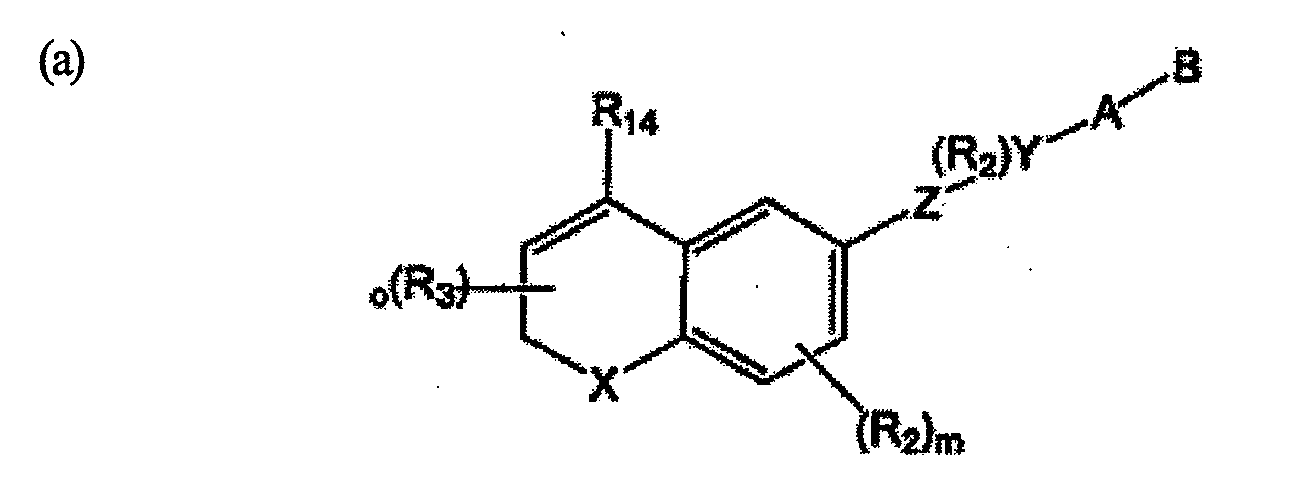 X [C(R1)2]n ist, wobei R1 unabhängig H oder Alkyl mit 1 bis 6 Kohlenstoffen ist und n eine ganze Zahl zwischen und einschließlich 0 und 2 ist, undR2 unabhängig Wasserstoff, Nieder-Alkyl mit 1 bis 6 Kohlenstoffen, F, Cl, Br, J, CF3, mit Fluor substituiertes Alkyl mit 1 bis 6 Kohlenstoffen, OH, SH, Alkoxy mit 1 bis 6 Kohlenstoffen oder Alkylthio mit 1 bis 6 Kohlenstoffen ist, undR3 unabhängig Wasserstoff, Nieder-Alkyl mit 1 bis 6 Kohlenstoffen oder F ist, undm eine ganze Zahl mit einem Wert von 0-3 ist, undo eine ganze Zahl mit einem Wert von 0-3 ist, undZ -C=C-,
-N=N-,
-N=CR1-,
-CR1=N,
-(CR1=CR1)n'- ist, wobei n' eine ganze Zahl mit einem Wert von 0-5 ist,
-CO-NR1-,
-CS-NR1-,
-NR1-CO,
-NR1-CS,
-COO-,
-OCO-,
-CSO-,
-OCS- ist,Y eine Phenyl- oder Naphthyl-Gruppe ist, oder Heteroaryl, ausgewählt aus einer Gruppe bestehend aus Pyridyl, Thienyl, Furyl, Pyridazinyl, Pyrimidinyl, Pyrazinyl, Thiazolyl, Oxazolyl, Imidazolyl und Pyrazolyl, wobei die Phenyl- und Heteroaryl-Gruppen wahlweise mit einer oder zwei R2-Gruppen substituiert sind, oder
wenn Z -(CR1=CR1)n'- und n' 3, 4 oder 5 ist, Y eine direkte Valenzbindung zwischen der (CR2=CR2)n'-Gruppe and B darstellt,A (CH2)q ist, wobei q 0-5 ist, verzweigtkettiges Nieder-Alkyl mit 3-6 Kohlenstoffen, Cycloalkyl mit 3-6 Kohlenstoffen, Alkenyl mit 2-6 Kohlenstoffen und 1 oder 2 Doppelbindungen, Alkinyl mit 2-6 Kohlenstoffen und 1 oder 2 Dreifachbindungen,B Wasserstoff, COOH oder ein pharmazeutisch akzeptables Salz davon ist, COOR8, CONR9R10, -CH2OH, CH2OR11, CH2OCOR11, CHO, CH(OR12)2, CHOR13O, -COR7, CR7(OR12)2, CR7OR13O oder dreifaches Nieder-Alkylsilyl, wobei R7 eine Alkyl-, Cycloalkyl- oder Alkenylgruppe ist, enthaltend 1 bis 5 Kohlenstoffe, R8 eine Alkylgruppe mit 1 bis 10 Kohlenstoffen ist oder Trimethylsilylalkyl, wobei die Alkylgruppe 1 bis 10 Kohlenstoffe hat, oder eine Cycloalkylgruppe mit 5 bis 10 Kohlenstoffen, oder R8 Phenyl oder Nieder-Alkylphenyl ist, R9 und R10 unabhängig Wasserstoff, eine Alkylgruppe mit 1 bis 10 Kohlenstoffen oder eine Cycloalkylgruppe mit 5-10 Kohlenstoffen oder Phenyl oder NiederAlkylphenyl sind, R11 Nieder-Alkyl, Phenyl oder Nieder-Alkylphenyl ist, R12 Nieder-Alkyl ist, und R13 ein zweiwertiges Alkylradikal mit 2-5 Kohlenstoffen ist, undR14 (R15)r-Phenyl, (R15)r-Naphthyl oder (R15)r-Heteroaryl ist, wobei die Heteroarylgruppe 1 bis 3 Heteroatome hat, ausgewählt aus der Gruppe bestehend aus O, S und N, r eine ganze Zahl mit den Werten von 0-5 ist, undR15 unabhängig H, F, Cl, Br, J, NO2, N(R8)2, N(R8)COR8, NR8CON(R8)2, OH, OCOR8, OR8, CN, eine Alkylgruppe mit 1 bis 10 Kohlenstoffen, eine mit Fluor substituierte Alkylgruppe mit 1 bis 10 Kohlenstoffen, eine Alkenylgruppe mit 1 bis 10 Kohlenstoffen und 1 bis 3 Doppelbindungen, eine Alkinylgruppe mit 1 bis 10 Kohlenstoffen und 1 bis 3 Dreifachbindungen, oder eine Trialkylsilyl- oder Trialkylsilyloxygruppe ist, wobei die Alkylgruppen unabhängig 1 bis 6 Kohlenstoffe haben; oderwobei X C(R1)2 oder O ist, und R1 H oder Alkyl mit 1 bis 6 Kohlenstoffen ist, undR2 ein unabhängiges Nieder-Alkyl mit 1 bis 6 Kohlenstoffen, F, Cl, Br, J, CF3, mit Fluor substituiertes Alkyl mit 1 bis 6 Kohlenstoffen, OH, SH, Alkoxy mit 1 bis 6 Kohlenstoffen oder Alkylthio mit 1 bis 6 Kohlenstoffen ist, undm eine ganze Zahl mit einem Wert von 0-3 ist, undR3 ein unabhängiges Nieder-Alkyl mit 1 bis 6 Kohlenstoffen oder F ist, undo eine ganze Zahl mit einem Wert von 0-3 ist, unds eine ganze Zahl mit einem Wert von 1-3 ist, undR8 eine Alkylgruppe mit 1 bis 10 Kohlenstoffen oder Trimethylsilylalkyl ist, wobei die Alkylgruppe 1 bis 10 Kohlenstoffe hat, oder eine Cycloalkylgruppe mit 5 bis 10 Kohlenstoffen, oder R8 ein Phenyl oder Nieder-Alkylphenyl ist, undR15 unabhängig H, F, Cl, Br, J, NO2, N(R8)2, COR8, NR8CON(R8)2, OCOR8, OR8, CN, eine Alkylgruppe mit 1 bis 10 Kohlenstoffen, eine mit Fluor substituierte Alkylgruppe mit 1 bis 10 Kohlenstoffen, ein Alkenylgruppe mit 1 bis 10 Kohlenstoffen und 1 bis 3 Doppelbindungen, eine Alkinylgruppe mit 1 bis 10 Kohlenstoffen und 1 bis 3 Dreifachbindungen, oder eine Trialkylsilyl- oder Trialkylsilyloxygruppe ist, wobei die Alkylgruppen unabhängig 1 bis 6 Kohlenstoffe haben, undt eine ganze Zahl mit den Werten 0, 1, 2, 3, 4 oder 5 ist, undwobei X C(CH3)2 oder O ist, und
die CONH-Gruppe in der 6- oder 7-Position des Benzopyrans ist und in der 2- oder 3-Position des Dihydronaphthalinrings, oder ein pharmazeutisch akzeptables Salz dieser Verbindung, oder R2 H oder Br ist, undR2' und R2" unabhängig H oder F sind, undR3 H oder CH3 ist, undR8 H, Nieder-Alkyl mit 1 bis 6 Kohlenstoffen ist oder ein pharmazeutisch akzeptables Salz dieser Verbindung, oder
 X2 CH oder N ist,R2 H, F, CF3 oder Alkoxy mit 1 bis 6 Kohlenstoffen ist,R2* H, F oder CF3 ist,R8 H oder Nieder-Alkyl mit 1 bis 6 Kohlenstoffen ist,R14 unsubstituiertes Phenyl, Thienyl oder Pyridyl ist, oder Phenyl, Thienyl oder Pyridyl, welches mit ein bis drei R15-Gruppen substituiert ist, wobei R15 NiederAlkyl mit 1 bis 6 Kohlenstoffen, Chlor, CF3 oder Alkoxy mit 1 bis 6 Kohlenstoffen ist, oder ein pharmazeutisch akzeptables Salz dieser Verbindung, oderwobei X2 CH oder N ist, und
 R2 H, F oder OCH3 ist, undR2* H oder F ist, undR8 H oder Nieder-Alkyl mit 1 bis 6 Kohlenstoffen ist, undR14 ausgewählt wird aus der Gruppe bestehend aus Phenyl, 4-(Nieder-Alkyl)phenyl, 5-(Nieder-Alkyl)-2-thienyl und 6-(Nieder-Alkyl)-3-pyridyl, wobei NiederAlkyl 1 bis 6 Kohlenstoffe hat, oder ein pharmazeutisch akzeptables Salz dieser Verbindung, oder
 R8 H oder Nieder-Alkyl mit 1 bis 6 Kohlenstoffen ist, undR14 ausgewählt wird aus der Gruppe, bestehend aus Phenyl und 4-(NiederAlkyl)phenyl, wobei Nieder-Alkyl 1 bis 6 Kohlenstoffe hat, oder ein pharmazeutisch akzeptables Salz dieser Verbindung; oder


- RAR-Antagonist oder -Inhibitor nach Anspruch 1, wobei der RAR-Antagonist oder -Inhibitor: (a) ein pan-RAR-Antagonist oder ein pan-RAR-Inhibitor ist, (b) ein selektiver RAR-Antagonist oder ein selektiver RAR-Inhibitor ist, und in welchem Falle dieser RAR-Antagonist oder -Inhibitor wahlweise selektiv für RARa oder RARβ ist.
- RAR-Antagonist oder -Inhibitor nach Anspruch 1, wobei die Restenose das Ergebnis ist, welches auf eine chirurgische Maßnahme folgt und wobei wahlweise diese chirurgische Maßnahme Angioplastie ist.
- RAR-Antagonist oder -Inhibitor nach Anspruch 1, wobei der RAR-Antagonist oder -Inhibitor vor der chirurgischen Maßnahme verabreicht wird und wobei dieser RAR-Antagonist wahlweise etwa 3 bis etwa 7 Tage vor dieser chirurgischen Maßnahme verabreicht wird.
- RAR-Antagonist oder -Inhibitor nach Anspruch 1, wobei der RAR-Antagonist oder -Inhibitor nach der chirurgischen Maßnahme verabreicht wird und wobei dieser RAR-Antagonist wahlweise zumindest etwa 7 bis etwa 14 Tage nach dieser chirurgischen Maßnahme verabreicht wird.
- RAR-Antagonist oder -Inhibitor nach Anspruch 1, wobei das Verabreichen wirksam ist bei der Verringerung von Serum-Triglyceriden auf einen Wert von: (a) zumindest etwa 20% niedriger als die Werte vor der Behandlung, (b) oder zumindest etwa 50% niedriger als die Werte vor der Behandlung.
- RAR-Antagonist oder -Inhibitor nach Anspruch 1, wobei dem Individuum ein zweites Lipid-Senkungsmittel verabreicht wird.
- RAR-Antagonist oder -Inhibitor nach Anspruch 7, wobei dieses zweite Lipid-Senkungsmittel ein Statin ist and wobei wahlweise dieses Statin ausgewählt wird aus der Gruppe bestehend aus Lovastatin, Pravastatin, Simvastatin, Cerivastatin, Fluvastatin, Atorvastatin und Mevastatin.
- RAR-Antagonist oder -Inhibitor nach Anspruch 7, wobei dieses zweite Lipid-Senkungsmittel ein Thiazolidindionanaloges ist und wobei wahlweise dieses Thiazolidindionanaloge ausgewählt wird aus Troglitazon, Pioglitazon und Ciglitazon.
- Kombiniertes Präparat zur Verwendung bei der gleichzeitigen, getrennten oder aufeinander folgenden Verabreichung bei der Behandlung von Restenose, wobei das kombinierte Präparat den RAR-Antagonist oder -Inhibitor gemäß irgendeinem der Ansprüche 1 bis 6 in Kombination mit einem zweiten Lipid-Senkungsmittel aufweist.
- Kombiniertes Präparat gemäß Anspruch 10, wobei das zweite Lipid-Senkungsmittel das in Anspruch 8 oder Anspruch 9 definierte zweite Lipid-Senkungsmittel ist.
- Verwendung eines RAR-Antagonisten oder -Inhibitors gemäß irgendeinem der Ansprüche 1 bis 6 für die Herstellung eines Medikaments zur Behandlung von Restenose.
Applications Claiming Priority (3)
| Application Number | Priority Date | Filing Date | Title |
|---|---|---|---|
| US278770 | 1994-07-22 | ||
| US10/278,770 US7105566B2 (en) | 2002-10-22 | 2002-10-22 | Methods of treatment during vascular procedures |
| PCT/US2003/033558 WO2004037243A2 (en) | 2002-10-22 | 2003-10-21 | Methods of treatment during vascular procedures |
Publications (2)
| Publication Number | Publication Date |
|---|---|
| EP1558235A2 EP1558235A2 (de) | 2005-08-03 |
| EP1558235B1 true EP1558235B1 (de) | 2008-12-10 |
Family
ID=32093435
Family Applications (1)
| Application Number | Title | Priority Date | Filing Date |
|---|---|---|---|
| EP03809618A Expired - Lifetime EP1558235B1 (de) | 2002-10-22 | 2003-10-21 | Behandlungsmethoden während eingriffen in das gefässsystem |
Country Status (6)
| Country | Link |
|---|---|
| US (1) | US7105566B2 (de) |
| EP (1) | EP1558235B1 (de) |
| AT (1) | ATE416764T1 (de) |
| AU (1) | AU2003301673A1 (de) |
| DE (1) | DE60325261D1 (de) |
| WO (1) | WO2004037243A2 (de) |
Families Citing this family (15)
| Publication number | Priority date | Publication date | Assignee | Title |
|---|---|---|---|---|
| EP1698696A4 (de) * | 2003-12-01 | 2007-01-10 | Reverse Proteomics Res Inst Co | Zielprotein eines antidiabetikums sowie dazugehöriges neues antidiabetikum insuful |
| LT1937244T (lt) | 2005-09-30 | 2018-11-12 | Io Therapeutics, Llc | Vėžio gydymas specifiniais rxr agonistais |
| CN101472572B (zh) * | 2006-05-16 | 2012-10-10 | Io治疗有限责任公司 | Rar拮抗剂或反向激动剂在治疗化学疗法和/或放射疗法副作用中的用途 |
| GB0915196D0 (en) * | 2009-09-01 | 2009-10-07 | King S College London | Therapeutic compounds and their use |
| CN110151745A (zh) | 2011-12-13 | 2019-08-23 | Io治疗公司 | 使用rxr激动剂的自身免疫紊乱的治疗 |
| US10653650B2 (en) | 2011-12-13 | 2020-05-19 | Io Therapeutics, Inc. | Treatment of diseases by concurrently eliciting remyelination effects and immunomodulatory effects using selective RXR agonists |
| KR102149321B1 (ko) | 2015-10-31 | 2020-08-28 | 아이오 테라퓨틱스, 인크. | Rxr 아고니스트와 갑상선 호르몬의 조합을 사용한 신경계 질환의 치료 |
| KR102549273B1 (ko) | 2016-03-10 | 2023-06-28 | 아이오 테라퓨틱스, 인크. | Rxr 작용제 및 갑상선 호르몬의 조합을 사용한 자가면역 질환의 치료 |
| NZ745704A (en) | 2016-03-10 | 2019-04-26 | Io Therapeutics Inc | Treatment of muscular disorders with combinations of rxr agonists and thyroid hormones |
| EP3684348A4 (de) | 2017-09-20 | 2021-08-18 | IO Therapeutics, Inc. | Behandlung von krankheiten mit estern von selektiven rxr-agonisten |
| US10966950B2 (en) | 2019-06-11 | 2021-04-06 | Io Therapeutics, Inc. | Use of an RXR agonist in treating HER2+ cancers |
| WO2021127250A1 (en) * | 2019-12-19 | 2021-06-24 | Orphagen Pharmaceuticals, Inc. | Rar-alpha compounds for inflammatory disease and male contraception |
| EP4334309A1 (de) * | 2021-05-04 | 2024-03-13 | Regents of the University of Minnesota | Empfängnisverhütende verbindungen und verfahren |
| EP4444287A4 (de) | 2021-12-07 | 2025-05-28 | Io Therapeutics, Inc. | Verwendung eines rxr-agonisten und taxanen zur behandlung von her2+-krebs |
| KR20240115316A (ko) | 2021-12-07 | 2024-07-25 | 아이오 테라퓨틱스, 인크. | 약물 내성 her2+ 암 치료에서의 rxr 작용제의 용도 |
Family Cites Families (16)
| Publication number | Priority date | Publication date | Assignee | Title |
|---|---|---|---|---|
| EP0638071B1 (de) | 1992-12-28 | 1997-04-09 | Eisai Co., Ltd. | Heterocyclische carbonsäure-derivate, die an rar rezeptoren binden können |
| US5648514A (en) | 1994-12-29 | 1997-07-15 | Allergan | Substituted acetylenes having retinoid-like biological activity |
| US5776699A (en) * | 1995-09-01 | 1998-07-07 | Allergan, Inc. | Method of identifying negative hormone and/or antagonist activities |
| US6218128B1 (en) * | 1997-09-12 | 2001-04-17 | Allergan Sales, Inc. | Methods of identifying compounds having nuclear receptor negative hormone and/or antagonist activities |
| US5958954A (en) | 1995-09-01 | 1999-09-28 | Allergan Sales, Inc. | Synthesis and use of retinoid compounds having negative hormone and/or antagonist activities |
| US6008204A (en) * | 1995-09-01 | 1999-12-28 | Allergan Sales, Inc. | Synthesis and use of retinoid compounds having negative hormone and/or antagonist activities |
| AU726450B2 (en) * | 1995-10-06 | 2000-11-09 | Ligand Pharmaceuticals Incorporated | Dimer-selective RXR modulators and methods for their use |
| US5877207A (en) | 1996-03-11 | 1999-03-02 | Allergan Sales, Inc. | Synthesis and use of retinoid compounds having negative hormone and/or antagonist activities |
| FR2753627B1 (fr) | 1996-09-20 | 2003-02-21 | Galderma Rech Dermatologique | Utilisation des inhibiteurs de l'activite de l'acide retinoique pour favoriser la cicatrisation |
| US6037488A (en) | 1997-04-19 | 2000-03-14 | Allergan Sales, Inc. | Trisubstituted phenyl derivatives having retinoid agonist, antagonist or inverse agonist type biological activity |
| US5919970A (en) | 1997-04-24 | 1999-07-06 | Allergan Sales, Inc. | Substituted diaryl or diheteroaryl methanes, ethers and amines having retinoid agonist, antagonist or inverse agonist type biological activity |
| BR9814957A (pt) * | 1997-11-12 | 2000-10-03 | Hoffmann La Roche | Tratamento de doenças imune mediadas por célula auxiliar "t" tipo 2 com antagonistas retinóides |
| US6521641B1 (en) * | 1998-10-08 | 2003-02-18 | Allergan, Inc. | Male anti-fertility agents |
| US6713515B2 (en) | 2000-09-13 | 2004-03-30 | Bristol Myers Squibb Company | Retinoic acid receptor antagonists as promoters of angiogenesis |
| US20020193403A1 (en) * | 2001-05-03 | 2002-12-19 | Allergan Sales, Inc. | Methods of treating hyperlipidemia |
| AU2002325752A1 (en) * | 2001-09-17 | 2003-04-01 | The University Of Western Ontario | Retinoid receptor pan-antagonists for stimulating chondrogenesis |
-
2002
- 2002-10-22 US US10/278,770 patent/US7105566B2/en not_active Expired - Fee Related
-
2003
- 2003-10-21 EP EP03809618A patent/EP1558235B1/de not_active Expired - Lifetime
- 2003-10-21 AU AU2003301673A patent/AU2003301673A1/en not_active Abandoned
- 2003-10-21 AT AT03809618T patent/ATE416764T1/de not_active IP Right Cessation
- 2003-10-21 WO PCT/US2003/033558 patent/WO2004037243A2/en not_active Ceased
- 2003-10-21 DE DE60325261T patent/DE60325261D1/de not_active Expired - Fee Related
Also Published As
| Publication number | Publication date |
|---|---|
| ATE416764T1 (de) | 2008-12-15 |
| US7105566B2 (en) | 2006-09-12 |
| EP1558235A2 (de) | 2005-08-03 |
| WO2004037243A2 (en) | 2004-05-06 |
| DE60325261D1 (de) | 2009-01-22 |
| US20040077710A1 (en) | 2004-04-22 |
| WO2004037243A3 (en) | 2004-09-30 |
| AU2003301673A1 (en) | 2004-05-13 |
Similar Documents
| Publication | Publication Date | Title |
|---|---|---|
| US7105566B2 (en) | Methods of treatment during vascular procedures | |
| EP0991636B1 (de) | Synthese und verwendung von retinoiden mit negativen hormonellen und/oder antagonistischen wirkungen | |
| EP1392284B1 (de) | Behandlung von hyperlipidämie | |
| AU2020235617B2 (en) | Cannabinoid acid ester compositions and uses thereof | |
| Zhang-Sun et al. | Targeting NR1D1 in organ injury: challenges and prospects | |
| CA2513427C (en) | Compounds having anti-proliferative properties | |
| US20230190710A1 (en) | Compositions and methods of reducing serum cholesterol and pcsk9 | |
| JP6689078B2 (ja) | 超高純度なテトラヒドロカンナビノール−11−酸 | |
| AU2005265413A1 (en) | Lipid-amino acid conjugates and methods of use | |
| EP1142870A1 (de) | Neue liganden eines kern-rezeptors | |
| CN119868356B (zh) | Cbl抑制剂nx1607在制备治疗动脉粥样硬化药物中的应用 | |
| JP2000086629A (ja) | 新規な酸化窒素放出化合物 | |
| EP1930001A1 (de) | Pharmazeutisches mittel zur prävention und/oder behandlung von darmerkrankungen | |
| JP2002506025A (ja) | ムチン分泌の阻害のためのアルファ−rarアンタゴニストの使用 | |
| WO2007126857A1 (en) | Diamidine inhibitors of tdp1 | |
| US20030176511A1 (en) | Compositions and methods for treating cardiovascular disorders | |
| CN101068548B (zh) | 用于减少、稳定富含脂质的斑块和/或防止富含脂质的斑块破裂的方法 | |
| JPH01503780A (ja) | プロスタサイクリン誘導体含有の局所適用剤 | |
| EP3806839A1 (de) | Zusammensetzungen und verfahren zur bereitstellung von kardioprotektiven effekten | |
| WO2026082873A1 (en) | Use of caspase-1 inhibitors for treating ineffective erythropoiesis in patients suffering from sickle cell disease | |
| CN1434709A (zh) | 基于狭窄性血管病变的疾病治疗剂 | |
| AU2002259030A1 (en) | Methods of treating hyperlipidemia | |
| JPWO2000035867A1 (ja) | 核内受容体の新規リガンド | |
| EP1677804A1 (de) | Silyl-phenole zur förderung der gefässgesundheit | |
| AU2001272191A1 (en) | Compositions and methods for treating cardiovascular disorders |
Legal Events
| Date | Code | Title | Description |
|---|---|---|---|
| PUAI | Public reference made under article 153(3) epc to a published international application that has entered the european phase |
Free format text: ORIGINAL CODE: 0009012 |
|
| 17P | Request for examination filed |
Effective date: 20050512 |
|
| AK | Designated contracting states |
Kind code of ref document: A2 Designated state(s): AT BE BG CH CY CZ DE DK EE ES FI FR GB GR HU IE IT LI LU MC NL PT RO SE SI SK TR |
|
| AX | Request for extension of the european patent |
Extension state: AL LT LV MK |
|
| DAX | Request for extension of the european patent (deleted) | ||
| 17Q | First examination report despatched |
Effective date: 20071213 |
|
| GRAP | Despatch of communication of intention to grant a patent |
Free format text: ORIGINAL CODE: EPIDOSNIGR1 |
|
| GRAS | Grant fee paid |
Free format text: ORIGINAL CODE: EPIDOSNIGR3 |
|
| GRAA | (expected) grant |
Free format text: ORIGINAL CODE: 0009210 |
|
| AK | Designated contracting states |
Kind code of ref document: B1 Designated state(s): AT BE BG CH CY CZ DE DK EE ES FI FR GB GR HU IE IT LI LU MC NL PT RO SE SI SK TR |
|
| REG | Reference to a national code |
Ref country code: GB Ref legal event code: FG4D |
|
| REG | Reference to a national code |
Ref country code: CH Ref legal event code: EP |
|
| REG | Reference to a national code |
Ref country code: IE Ref legal event code: FG4D |
|
| REF | Corresponds to: |
Ref document number: 60325261 Country of ref document: DE Date of ref document: 20090122 Kind code of ref document: P |
|
| PG25 | Lapsed in a contracting state [announced via postgrant information from national office to epo] |
Ref country code: SI Free format text: LAPSE BECAUSE OF FAILURE TO SUBMIT A TRANSLATION OF THE DESCRIPTION OR TO PAY THE FEE WITHIN THE PRESCRIBED TIME-LIMIT Effective date: 20081210 Ref country code: NL Free format text: LAPSE BECAUSE OF FAILURE TO SUBMIT A TRANSLATION OF THE DESCRIPTION OR TO PAY THE FEE WITHIN THE PRESCRIBED TIME-LIMIT Effective date: 20081210 Ref country code: FI Free format text: LAPSE BECAUSE OF FAILURE TO SUBMIT A TRANSLATION OF THE DESCRIPTION OR TO PAY THE FEE WITHIN THE PRESCRIBED TIME-LIMIT Effective date: 20081210 |
|
| NLV1 | Nl: lapsed or annulled due to failure to fulfill the requirements of art. 29p and 29m of the patents act | ||
| PG25 | Lapsed in a contracting state [announced via postgrant information from national office to epo] |
Ref country code: ES Free format text: LAPSE BECAUSE OF FAILURE TO SUBMIT A TRANSLATION OF THE DESCRIPTION OR TO PAY THE FEE WITHIN THE PRESCRIBED TIME-LIMIT Effective date: 20090321 Ref country code: RO Free format text: LAPSE BECAUSE OF FAILURE TO SUBMIT A TRANSLATION OF THE DESCRIPTION OR TO PAY THE FEE WITHIN THE PRESCRIBED TIME-LIMIT Effective date: 20081210 Ref country code: BG Free format text: LAPSE BECAUSE OF FAILURE TO SUBMIT A TRANSLATION OF THE DESCRIPTION OR TO PAY THE FEE WITHIN THE PRESCRIBED TIME-LIMIT Effective date: 20090310 Ref country code: BE Free format text: LAPSE BECAUSE OF FAILURE TO SUBMIT A TRANSLATION OF THE DESCRIPTION OR TO PAY THE FEE WITHIN THE PRESCRIBED TIME-LIMIT Effective date: 20081210 Ref country code: EE Free format text: LAPSE BECAUSE OF FAILURE TO SUBMIT A TRANSLATION OF THE DESCRIPTION OR TO PAY THE FEE WITHIN THE PRESCRIBED TIME-LIMIT Effective date: 20081210 |
|
| PG25 | Lapsed in a contracting state [announced via postgrant information from national office to epo] |
Ref country code: CZ Free format text: LAPSE BECAUSE OF FAILURE TO SUBMIT A TRANSLATION OF THE DESCRIPTION OR TO PAY THE FEE WITHIN THE PRESCRIBED TIME-LIMIT Effective date: 20081210 Ref country code: PT Free format text: LAPSE BECAUSE OF FAILURE TO SUBMIT A TRANSLATION OF THE DESCRIPTION OR TO PAY THE FEE WITHIN THE PRESCRIBED TIME-LIMIT Effective date: 20090511 Ref country code: SE Free format text: LAPSE BECAUSE OF FAILURE TO SUBMIT A TRANSLATION OF THE DESCRIPTION OR TO PAY THE FEE WITHIN THE PRESCRIBED TIME-LIMIT Effective date: 20090310 Ref country code: AT Free format text: LAPSE BECAUSE OF FAILURE TO SUBMIT A TRANSLATION OF THE DESCRIPTION OR TO PAY THE FEE WITHIN THE PRESCRIBED TIME-LIMIT Effective date: 20081210 |
|
| PG25 | Lapsed in a contracting state [announced via postgrant information from national office to epo] |
Ref country code: SK Free format text: LAPSE BECAUSE OF FAILURE TO SUBMIT A TRANSLATION OF THE DESCRIPTION OR TO PAY THE FEE WITHIN THE PRESCRIBED TIME-LIMIT Effective date: 20081210 |
|
| PLBE | No opposition filed within time limit |
Free format text: ORIGINAL CODE: 0009261 |
|
| STAA | Information on the status of an ep patent application or granted ep patent |
Free format text: STATUS: NO OPPOSITION FILED WITHIN TIME LIMIT |
|
| PG25 | Lapsed in a contracting state [announced via postgrant information from national office to epo] |
Ref country code: DK Free format text: LAPSE BECAUSE OF FAILURE TO SUBMIT A TRANSLATION OF THE DESCRIPTION OR TO PAY THE FEE WITHIN THE PRESCRIBED TIME-LIMIT Effective date: 20081210 |
|
| 26N | No opposition filed |
Effective date: 20090911 |
|
| PG25 | Lapsed in a contracting state [announced via postgrant information from national office to epo] |
Ref country code: MC Free format text: LAPSE BECAUSE OF NON-PAYMENT OF DUE FEES Effective date: 20091031 |
|
| REG | Reference to a national code |
Ref country code: CH Ref legal event code: PL |
|
| REG | Reference to a national code |
Ref country code: IE Ref legal event code: MM4A |
|
| REG | Reference to a national code |
Ref country code: FR Ref legal event code: ST Effective date: 20100630 |
|
| PG25 | Lapsed in a contracting state [announced via postgrant information from national office to epo] |
Ref country code: DE Free format text: LAPSE BECAUSE OF NON-PAYMENT OF DUE FEES Effective date: 20100501 Ref country code: FR Free format text: LAPSE BECAUSE OF NON-PAYMENT OF DUE FEES Effective date: 20091102 |
|
| PG25 | Lapsed in a contracting state [announced via postgrant information from national office to epo] |
Ref country code: IE Free format text: LAPSE BECAUSE OF NON-PAYMENT OF DUE FEES Effective date: 20091021 Ref country code: GR Free format text: LAPSE BECAUSE OF FAILURE TO SUBMIT A TRANSLATION OF THE DESCRIPTION OR TO PAY THE FEE WITHIN THE PRESCRIBED TIME-LIMIT Effective date: 20090311 Ref country code: LI Free format text: LAPSE BECAUSE OF NON-PAYMENT OF DUE FEES Effective date: 20091031 Ref country code: CH Free format text: LAPSE BECAUSE OF NON-PAYMENT OF DUE FEES Effective date: 20091031 |
|
| PG25 | Lapsed in a contracting state [announced via postgrant information from national office to epo] |
Ref country code: GB Free format text: LAPSE BECAUSE OF NON-PAYMENT OF DUE FEES Effective date: 20091021 |
|
| PG25 | Lapsed in a contracting state [announced via postgrant information from national office to epo] |
Ref country code: IT Free format text: LAPSE BECAUSE OF FAILURE TO SUBMIT A TRANSLATION OF THE DESCRIPTION OR TO PAY THE FEE WITHIN THE PRESCRIBED TIME-LIMIT Effective date: 20081210 |
|
| PG25 | Lapsed in a contracting state [announced via postgrant information from national office to epo] |
Ref country code: LU Free format text: LAPSE BECAUSE OF NON-PAYMENT OF DUE FEES Effective date: 20091021 |
|
| PG25 | Lapsed in a contracting state [announced via postgrant information from national office to epo] |
Ref country code: HU Free format text: LAPSE BECAUSE OF FAILURE TO SUBMIT A TRANSLATION OF THE DESCRIPTION OR TO PAY THE FEE WITHIN THE PRESCRIBED TIME-LIMIT Effective date: 20090611 |
|
| PG25 | Lapsed in a contracting state [announced via postgrant information from national office to epo] |
Ref country code: TR Free format text: LAPSE BECAUSE OF FAILURE TO SUBMIT A TRANSLATION OF THE DESCRIPTION OR TO PAY THE FEE WITHIN THE PRESCRIBED TIME-LIMIT Effective date: 20081210 |
|
| PG25 | Lapsed in a contracting state [announced via postgrant information from national office to epo] |
Ref country code: CY Free format text: LAPSE BECAUSE OF FAILURE TO SUBMIT A TRANSLATION OF THE DESCRIPTION OR TO PAY THE FEE WITHIN THE PRESCRIBED TIME-LIMIT Effective date: 20081210 |