EP1557808B1 - Elektrischer Arbeiter mit wechselwirkendem Laserlaser - Google Patents
Elektrischer Arbeiter mit wechselwirkendem Laserlaser Download PDFInfo
- Publication number
- EP1557808B1 EP1557808B1 EP04425911A EP04425911A EP1557808B1 EP 1557808 B1 EP1557808 B1 EP 1557808B1 EP 04425911 A EP04425911 A EP 04425911A EP 04425911 A EP04425911 A EP 04425911A EP 1557808 B1 EP1557808 B1 EP 1557808B1
- Authority
- EP
- European Patent Office
- Prior art keywords
- reading
- inclined plane
- movable
- plm
- book
- Prior art date
- Legal status (The legal status is an assumption and is not a legal conclusion. Google has not performed a legal analysis and makes no representation as to the accuracy of the status listed.)
- Expired - Lifetime
Links
- 230000002452 interceptive effect Effects 0.000 title abstract description 5
- 230000033001 locomotion Effects 0.000 claims description 34
- 230000001360 synchronised effect Effects 0.000 claims 1
- 238000012360 testing method Methods 0.000 abstract description 3
- 238000003780 insertion Methods 0.000 description 12
- 230000037431 insertion Effects 0.000 description 12
- 230000033228 biological regulation Effects 0.000 description 11
- 238000006073 displacement reaction Methods 0.000 description 11
- 229910000831 Steel Inorganic materials 0.000 description 10
- 230000007246 mechanism Effects 0.000 description 10
- 238000000034 method Methods 0.000 description 10
- 239000010959 steel Substances 0.000 description 10
- 230000006870 function Effects 0.000 description 9
- XEEYBQQBJWHFJM-UHFFFAOYSA-N Iron Chemical compound [Fe] XEEYBQQBJWHFJM-UHFFFAOYSA-N 0.000 description 8
- 239000011248 coating agent Substances 0.000 description 6
- 238000000576 coating method Methods 0.000 description 6
- 241000897276 Termes Species 0.000 description 5
- 230000008901 benefit Effects 0.000 description 5
- 239000000470 constituent Substances 0.000 description 5
- 230000008571 general function Effects 0.000 description 5
- 101100108659 Schizosaccharomyces pombe (strain 972 / ATCC 24843) alp7 gene Proteins 0.000 description 4
- 230000004913 activation Effects 0.000 description 4
- 230000008859 change Effects 0.000 description 4
- 229910052742 iron Inorganic materials 0.000 description 4
- 230000004224 protection Effects 0.000 description 4
- 229920000297 Rayon Polymers 0.000 description 3
- 101100290371 Schizosaccharomyces pombe (strain 972 / ATCC 24843) pca1 gene Proteins 0.000 description 3
- 229910052782 aluminium Inorganic materials 0.000 description 3
- XAGFODPZIPBFFR-UHFFFAOYSA-N aluminium Chemical compound [Al] XAGFODPZIPBFFR-UHFFFAOYSA-N 0.000 description 3
- 230000000903 blocking effect Effects 0.000 description 3
- 239000000463 material Substances 0.000 description 3
- 239000002964 rayon Substances 0.000 description 3
- PEDCQBHIVMGVHV-UHFFFAOYSA-N Glycerine Chemical compound OCC(O)CO PEDCQBHIVMGVHV-UHFFFAOYSA-N 0.000 description 2
- 241000283973 Oryctolagus cuniculus Species 0.000 description 2
- 241001080024 Telles Species 0.000 description 2
- 230000008033 biological extinction Effects 0.000 description 2
- 239000003638 chemical reducing agent Substances 0.000 description 2
- 230000004807 localization Effects 0.000 description 2
- 238000005259 measurement Methods 0.000 description 2
- 230000000630 rising effect Effects 0.000 description 2
- 235000014698 Brassica juncea var multisecta Nutrition 0.000 description 1
- 208000031968 Cadaver Diseases 0.000 description 1
- CWYNVVGOOAEACU-UHFFFAOYSA-N Fe2+ Chemical compound [Fe+2] CWYNVVGOOAEACU-UHFFFAOYSA-N 0.000 description 1
- 229910000760 Hardened steel Inorganic materials 0.000 description 1
- 101100436435 Mus musculus Atp5me gene Proteins 0.000 description 1
- 241000251184 Rajiformes Species 0.000 description 1
- 230000003213 activating effect Effects 0.000 description 1
- 230000005540 biological transmission Effects 0.000 description 1
- 230000008878 coupling Effects 0.000 description 1
- 238000010168 coupling process Methods 0.000 description 1
- 238000005859 coupling reaction Methods 0.000 description 1
- 238000013461 design Methods 0.000 description 1
- 229940082150 encore Drugs 0.000 description 1
- 230000004424 eye movement Effects 0.000 description 1
- 238000012423 maintenance Methods 0.000 description 1
- 229910052751 metal Inorganic materials 0.000 description 1
- 239000002184 metal Substances 0.000 description 1
- 239000011505 plaster Substances 0.000 description 1
- 231100000773 point of departure Toxicity 0.000 description 1
- 229920002635 polyurethane Polymers 0.000 description 1
- 239000004814 polyurethane Substances 0.000 description 1
- 230000033764 rhythmic process Effects 0.000 description 1
- 238000004904 shortening Methods 0.000 description 1
- 230000001131 transforming effect Effects 0.000 description 1
Images





Classifications
-
- G—PHYSICS
- G09—EDUCATION; CRYPTOGRAPHY; DISPLAY; ADVERTISING; SEALS
- G09B—EDUCATIONAL OR DEMONSTRATION APPLIANCES; APPLIANCES FOR TEACHING, OR COMMUNICATING WITH, THE BLIND, DEAF OR MUTE; MODELS; PLANETARIA; GLOBES; MAPS; DIAGRAMS
- G09B17/00—Teaching reading
- G09B17/003—Teaching reading electrically operated apparatus or devices
Definitions
- the field of the technique to which the invention refers is the mechanical and electronic field.
- the electric desk for reading thanks to the light guide represented by the plm on the lines of reading, it facilitates the way of reading, making reading less tiring and exhausting to ordinary people, but especially by facilitating it, to dyslexics. With the electric console you can read and study books, texts, documents etc. respecting the natural rhythms of reading and learning of each individual.
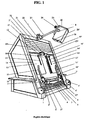
- Figure 1 shows the perspective view of the electrical panel for reading with most of the distinctive external and constituent elements of the device. For the remaining ones of its not visible elements one returns to the remaining illustrations.
- the electrical panel for reading is of inclined shape, constituted by a fixed outer frame of aluminum, (illustration 2), and a movable inner part, constituted by two lateral guides 19, 19 'to "U", (illustration 9), in which flows the pim, (movable inclined plane) 12 with adjustable support base 5 of the inclined floor, intended to support a book or document (Fig 4-12-13), using special locking means.
- the pim (moving inclined plane), 12, during its vertical rise and descent path through the two lateral guides, it is protected in the upper part by an upper bellows 2 'and in the lower part by a lower bellows 2.
- the electrical panel operates at low voltage by transforming the mains current to 24 volts and is endowed with all the protections provided for the operation of the lifting means between which safety photocells, as we will see during the description.
- the operator Before pressing the book on the adjustable base 5 of the inclined floor, the operator must perform the operations described in points a, b, c, d, f, g.
- the operator based on the size of the book to contain, must adjust the surface of the base 5, (Fig. 4), in the direction of the double arrow, by a button 4 (fig.11) located under the base itself, protected by a base bellows 3, (fig.11).
- buttons 16, 16' The operator must fix, on the two adjustable left and right folders 13, 13 ', the upper part of the two small covers, left and right of the book, by means of two respective screwing buttons 16, 16'.
- These small buttons slide, in the direction of the double arrow, inside two respective buttonholes 15, 15 ', fig. 4 drawn on the surface of the two aforesaid left and right folders 13, 13 '; the sliding of these two small buttons in the respective two buttonholes of the right and left backs, allows to adjust the blocking of the two small covers of the book according to their height.
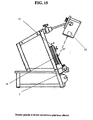
- the folders 13, 13 ' are set, opening and closing, in the direction of the double arrow, as it is observed in point 13 (fig.15).
- the operator must adjust these two folders so as to get with the open book, the side dx and sx in position perfectly symmetrical during playback. That is, a uniform reading surface on both sides and then the pages of the book.
- This page alignment operation made by the regulation set of the two folders 13, 13 ', is important because it allows the plm (moving light point) 52 "(FIG.
- Button dx screwing (blocks the small cover dx of the book on the pim).
- sx folder button for opening or closing the same.
- 17 '. Dx folder button for opening or closing the same.
- Small window with pommel that covers the two buttons of the files.
- Side sx guide to "U” where it flows pim (not visible).
- Lateral guide to "U” where it flows the pim (not visible).
- 21. Hollow cup (hooks hose of the container).
- 22. Pommel which blocks the movable pipe, that it hangs the container of the plm.
- Micrometer button which gives the inclination to the container and, consequently, to the light beam emitted by the laser plm contained therein.
- Figure 2 It shows the fixed outer frame of the device
- Figures 4, 5, 6, 7 are of assistance either in the general description of the positioning, or in the description of the electromechanical components constituting the auxiliary device plm laser, which allow the practical realization of the aforesaid positioning.
- the illustration n. 4 shows the parts of the device, all previously identified.
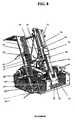
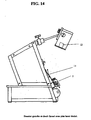
- the illustration n. 5 shows the mechanism and relative electromechanical components within the apparatus, through which the up-down vertical movement of the pim12 is performed and, consequently, the vertical up-down positioning of the plf 52 'on the reading lines. of the page.
- the plf of the first reading line (Fig. 4) moves on the D1 (last line), reading (fig 6), thanks to the lifting of the pim 12.
- This mechanism is managed by the keyboard in the initial plan phase via the push buttons mrm (manual fast climb), drm (manual fast descent), pos (position) whose functions will be illustrated during the description of the keyboard.
- the plm 52 "can traverse the page and then the rows of the read columns, that is to say, programmed in the vertical direction from top to bottom or vice versa, thanks to the displacement in the perpendicular direction of the pim, 12, actuated by the motor 1, 54. Such course is recorded by the record button in the memory of the controller to the programmable logic.
- the second plane concerns the right horizontal positioning and vice versa relative to the specific length of the line of the reading column on which the plm must perform the course, to go or read, and return or not read.
- the stepping motor 64 which, by turning with adjustable speed through the keyboard means (FIG. 10), displaces the plow 52 "in the left-right direction (going, that is to say clockwise or reading), and vice versa right-left, (back, that is to say in the opposite direction clockwise or not reading), on the line of the page.This movement is recorded with a special button (save) in the controller memory to the programmable logic.
- the columnar plan that is, the plane of the number of reading columns.
- the third plan concerns the number of reading columns that must be selected, present on the document or page of the book on which the 52 "he must make the journey back and forth. These columns, as we know, they can be either on each page of reading, left or right, than more than one This plane arrives, by means of the means of recording present on the keyboard, (FIG 10) united to the controller with the programmable logic.
- the goals of positioning are:
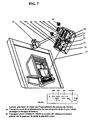
- Fig. 7 Electromechanical components of the laser plm.
- the auxiliary device where the laser 52 is located, that it emits the light source, or the plf (fixed light point), 52 '.
- This device is represented by an aluminum container 25, connected via a connecting pipe 23, to the front plate 42 (FIG 2) of the fixed outer frame of the apparatus and, exactly, in the hollow cup 21 where is housed the end portion of the connection pipe 23.
- This cup through the button, 22, it allows to adjust, longitudinally, in the direction of the double arrow, the position of the container, with regard to the inclined mobile stage, 12, (regulation made according to the requirement or convenience of the operator).
- the plf (fixed light point) (or light beam), 52 ', emitted by the laser, 52, through the container window, 26, is positioned by the operator, for manual rotation of the container, by means of a micrometer button, 24, on the LCL (letter begins line) of the first reading line of the book, (Fig. 4), (see also 90 90 ', Fig. 12, or 90, 90', 90 ", 90"', Fig. 13).
- This laser, 52 contained in a small cylinder, 63, united on the axis of a 3-step motor, 64, actuated by the controller to the programmable logic, it transforms the light beam, of fixed light point, 52 ' , in moving light point, 52 ".
- Protected from the rotational movement of the laser on the motor 3 step, 64 they are placed, at its extremes, two end magnetic stroke, left and right, 65, 66, motor three 3 to step, respectively set in the positioning by two left and right racks 69, 70, on which they are fixed.These racks are adjusted in the position via the gears of the two left and right buttons, 67, 68.
- the 3 step motor, 64 is endowed with a 1fm 3, a movable iron blade 3, 71, which by turning on the axis of the stepper motor, 64, in syntony with the laser, it determines the stopping of safety of the aforesaid motor in the case that, in phase of initial plan of the plm on the lines of reading, a plan was realized erroneous motor three steps, exceeding the safety limits provided in the left right rotation of the stepper motor 64.
- the sled couples through the clamping means, represented by the belt attachment plate cover, 73, with the surface of the inclined stage attachment plate cover, 88. From the coupling by the intermediate bolting of these two elements, is formed pim (inclined plane), 12, stirred by the engine 1, (54).
- Fig. not. 8 Components of the sled; counting of its parts.
- This support blocks, on the upper end, either the two axes sx and dx supporting, of support (74) 74 ', or the two axes of steel soaked sx and dx of the guide. 78.
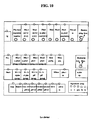
- Figure 10 shows the keypad (control panel) with all its constituent elements, push buttons, switches, potentiometers, buttons, signalers programs spies led, related to the programmer to the programmable logic, for the operation of the device.
- Nb Such button records the vertical path up low of the pim 12 and, consequently, the number of lines or lines in the vertical direction, on the column of the reading document of the plm 52 "-
- PLM push-button a / m Manual moving light point
- PLM r / m pushbutton (Manual return mobile light point).
- Push button pls t.p. (go light point mobile turns page)
- location pushbuttons they locate, they control the light point in the initial part of the reading line
- sx1-plf / 1c1 location sx1 luminous point fixed letter begins line
- sx1-plf / 1c1 location sx1 luminous point fixed letter begins line
- the plane of the fixed luminous point plf, 52 ' is carried out on four read columns, two on the left page, (sx1 and sx2) and two on the right page, (dx1 - dx2), by pressing
- the pusher loc. sx2 plf / lcl (location sx2 fixed luminous point / letter starts line) it is made, during the reading, the fixed luminous point plf, 52 ', on the lcl, (letter begins line), 90', of the column sx2 , 89 ", Fig. 13.
- the pusher locating dx2 fixed light point / letter starts line loc dx2 plf / lcl
- the fixed luminous point plf, 52 ' is made to appear on the lcl, (letter starts line), 90 "'of column dx2, 89"', Fig. 13.
- Push m + 1 r / r plm prog up one line / return plm program
- Push button m + 1r / plf prog. (rise of a line / fixed light point program)
- Push-button d-1 / plf prog. (down one line / fixed light point, program) At each key on it, it moves down the pim, 12, one line and it leaves unchanged the function of the plm, 52 " .Pulch mrm / pos. ( fast manual climb / positioning)
- Push drm / pos. I.G. fast manual descent / general switch positioning
- Push mia1 / a plm1 prog. i. 1 (automatic intermittent rise 1 / go plm1, intermittent program1)
- Pushbutton mca1 / a plm 1 prog. c.1 (continuous automatic up 1, plm1, continuous program 1) It activates the insertion of the continuous automatic program 1, that is to say the contemporary insertion of the program mca1 (automatic continuous up 1) of the pim, 12 , and the contemporary displacement of the program has plm 1 (go 1 moving light point) of plm, 52 ", on the selected column.
- Push button mca2 / a plm 2 prog. c.2 (continuous rise automatic 2 / go plm 2, continuous program 2)
- Push rmdtra (manual repeater of the very fast automatic descent).
- the dtra very fast automatic descent.
- the dtra is the equivalent of the manual repeater of the very fast automatic descent.
- Potentiometer mia1 m + 1 / d-1re (automatic intermittent rise 1 rise of a line / descent of a line) It regulates the program of automatic up and down intermittent 1 of the pim, 12. It regulates, at the same time, the manual rise of the pim, a line for times, which is activated by pressing the pusher m + 1r / r plm (prog.), or the manual descent of a line for times which is activated by pressing the pusher d- 1r / r plm (prog.).
- Potentiometer plm 1 a plm1-mca / mia1 (moving light point 1 go plm 1-continuous continuous automatic / automatic intermittent up 1). It adjusts the speed of going from the mobile light point 1 of the program to plm on the line of the selected reading column, indifferently, either for the program mca1 (continuous rise automatic) or for the program mia1 (automatic intermittent rise 1).
- Potentiometer mia2 m + 1r / d-1 (automatic intermittent rise 2 mounted one line / down one line) pim
- This potentiometer is used to adjust the automatic intermittent rise 2 of the pim. It regulates, at the same time, either the rise or the manual descent 2 of the pim of a line for the time that is activated by pressing, (by giving a key), or on the pusher m + 1r / r plm, prog. or on the pusher d-1r / r plm, prog.
- Potentiometer plm 2 has plm 2-mca / mia 2 (movable light point 2, go light point mobile 2-mounted continuous automatic / automatic intermittent rise2)
- plm 2 of program a plm 2 (go moving light point 2) to the reading line of the selected column, corresponding to either the automatic continuous up program 2 of the pim, or the automatic intermittent program 2 of the pim.
- Potentiometer PLM a / r m (light point mobile back and forth manual)
- plm a / m moving light point go / manual
- plm r / m moving light point return / manual
- the other led indicators on the keypad come on to indicate the operation of the program.
- Figure n. 12 shows the electric console with the open book with two reading columns.
Landscapes
- Engineering & Computer Science (AREA)
- Theoretical Computer Science (AREA)
- Physics & Mathematics (AREA)
- Educational Administration (AREA)
- Educational Technology (AREA)
- General Physics & Mathematics (AREA)
- Business, Economics & Management (AREA)
- Tables And Desks Characterized By Structural Shape (AREA)
- Image Input (AREA)
- Laser Surgery Devices (AREA)
- Radiation-Therapy Devices (AREA)
- Investigating Or Analysing Materials By The Use Of Chemical Reactions (AREA)
- Electrically Operated Instructional Devices (AREA)
Claims (7)
- Elektrisches Lesepult für das Lesen, bestehend aus:a) Ein äußerer fixierter Rahmen (Bild 2)b) Eine bewegliche schiefe Ebene (b.s.E. 12), die geeignet ist, ein auf der einstellbaren Ablagefläche (5) liegendes Buch oder Dokument durch gewisse Stützungen zu tragen, damit das Buch gelesen werden kann; diese schiefe Ebene ist an den äußeren fixierten Rahmen (Bild 2) durch zwei Seitenführungen (19, 19', Bild 9) angeschlossen, in denen sie wesentlich vertikal rutschen kann, so daß das Dokument senkrecht zu der Leserichtung verlegt wird.c) Eine Laserlichtquelle (52, Bild 7), die einen Lichtstrahl oder einen unbeweglichen (52') oder beweglichen (52") Lichtpunkt auf die Vorderseite des Dokuments werfen soll;(c1) Wenn der Operator die Tastatur (10) in Gang setzt, wird der unbeweglicher Lichtpunkt beweglich, und verschiebt sich waagerecht und senkrecht zu der Bewegung der schiefen Ebene (12), so daß er den Lesezeilen des Dokuments folgt.(c2) Diese Laserlichtquelle steht in einem Behälter, der durch einige mechanische Elemente mit dem äußeren fixierten Rahmen verbunden ist; solche Elemente erlauben dem Operator, sowohl den Abstand zwischen dem Behälter und der beweglichen schiefen Ebene wie auch die Neigung des Behälters einzustellen. Auf diese Weise kann er während der Programmierungsphase den Lichtstrahl direkt auf die erste Zeile des Dokuments lenken.d) Eine programmierbare Kontrolleinrichtung und ein Schalttafel bestehend aus einer Tastatur (10) mit Tasten, Schaltknöpfen, Potentiometern und LED Anzeigegeräten, welche die Bewegungen der beweglichen schiefen Ebene (12) und des beweglichen Lichtpunkts (52") steuern sollen, damit die beiden synchronisiert sind, und so daß der bewegliche Lichtpunkt den Textzeilen folgen kann, welche vorher unter allen Lesespalten der rechten oder linken Seite des Dokuments aussortiert worden waren.
- Elektrisches Lesepult für das Lesen wie lt. Punkt 1, mit einer programmierbaren Kontrolleinrichtung, einem Schalttafel oder Tastatur (10), bestehend aus:e) Geeigneten Einrichtungen für die automatische, halbautomatische oder manuelle Steuerung der verschiedenen Laufgeschwindigkeiten der beweglichen schiefen Ebene (12) und/oder des beweglichen Lichtpunkts (52") zu den Lesezeilen des Dokuments, so daß jeder Leser das Gerät mit der Geschwindigkeit verwenden kann, welche ihm am besten passt.
- Elektrisches Lesepult für das Lesen wie lt. Punkt 1 und 2, mit einer programmierbaren Kontrolleinrichtung, einem Schalttafel oder Tastatur (10), bestehend aus:f) Geeigneten Einrichtungen für die Steuerung der Stellen, wo das Lauf der beweglichen schiefen Ebene (12) starten und enden soll, und - dazu als Option- einigen Einrichtungen für die Steuerung der vertikalen Verschiebung von oben nach unten des beweglichen Lichtpunkts (52")
- Elektrisches Lesepult für das Lesen wie lt. Punkt 3, mit einer programmierbaren Kontrolleinrichtung, einem Schalttafel oder Tastatur (10), bestehend aus:(f1) Geeigneten Einrichtungen, um vor dem Lesen in dem Dokument gewisse Spalten auszusortieren, denen der bewegliche Lichtpunkt (52") folgen soll;(f2) Geeigneten Einrichtungen für die Steuerung des waagerechten Laufs des beweglichen Lichtpunkts (52") von rechts nach links und umgekehrt, indem man die wirkliche Länge der Zeile im Dokument berücksichtigt.
- Elektrisches Lesepult für das Lesen wie lt. Punkt von 1 zu 4, mit einer programmierbaren Kontrolleinrichtung, einem Schalttafel oder Tastatur (10), bestehend aus:g) Geeigneten Steuerungen auf der Tastatur (Bild 10), welche erlauben, zwischen zwei verschiedenen Funktionsweisen der schiefen Ebene (12) auszuwählen:(g1) eine kontinuierliche Fuktionsweise, wo die bewegliche schiefe Ebene (12) sich mit einer linearen Geschwindigkeit bewegt;(g2) eine taktierte Fuktionsweise, wo die bewegliche schiefe Ebene (12) sich mit einer intermittierenden Geschwindigkeit bewegt;
- Elektrisches Lesepult für das Lesen wie lt. Punkt von 1 zu 5, bestehend aus:h) Eine Vorrichtung, welche das Buch an die waagerechte einstellbare Stützfläche der schiefen Ebene befestigt; solche Befestigungsvorrichtungen bestehen aus:(h1) einem Drehknopf (4, Bild 11), der die Bewegung der Stützfläche der schiefen Ebene (5, Bild 11, Bild 4) einstellt, je nach der Größe oder den Dimensionen des Buches zu lesen;(h2) einem flexiblen röhrenförmigen drehenden Hebel (9), der durch 2 Seitenachsen rechts und links mit einigen Elementen (7, 7') an die Stützfläche der schiefen Ebene angeschlossen ist, und da kann sich der o.g. Hebel drehen und das Buch befestigen (Bild 4, Bild 12, Bild 13);(h3) einigen kleinen Schraubenhebeln (16, 16'), die vertikal in ihre eigene Stellungen rutschen und welche -je nach der Größe des Buches - den rechten und linken Bucheinband an die rechte und linke Seite des Pults (13, 13') befestigen.i) Geeigneten Vorrichtungen, die die Seiten des Buches fest während des Lesens auf der vertikalen Stützfläche der schiefen Ebene halten sollen; solche Vorrichtungen bestehen aus:(i1) zwei fadenförmigen Stäben rechts und links (11, 11'), die der Länge nach und/oder mit einer Drehbewegung eingestellt werden können; aus solchen Stäben - durch die Drehbewegung des röhrenförmigen Hebels - entsteht ein leichter Druck, der dann erlaubt, die Seiten des Dokuments während des Lesens zu befestigen und fest zu halten (Bild 4, 12, 13);l) Geeigneten Vorrichtungen, um die symmetrische Stellung der rechten und linken Seiten des Buches auf der schiefen Ebene einzustellen; solche Reihung versichert den linearen Lauf des beweglichen Lichtpunkts (52") auf die Zeilen des Dokuments während des Lesens ohne Interferenzen; diese Vorrichtungen bestehen aus:(l1) zwei Platten, rechts und links (13, 13'), die durch 2 Hebel einstellbar sind (17, 17');
- Elektrisches Lesepult für das Lesen wie lt. Punkt von 1 zu 5, bestehend aus:m) Geeigneten Einrichtungen, welche die Sicherheit des Mitarbeiters während des Lesens und des Fuktionierens des Geräts gewährleisten;(m1) solche Einrichtungen bestehen aus zwei Fotozellen (1, 1'), welche in dem unteren Teil des Geräts stehen, und die mit dem Schalttafel der programmierbaren Kontrolleinrichtung verbunden sind; solche Fotozellen -wenn aktiviert- können (wenn nötig) die Bewegung der beweglichen schiefen Ebene stoppen.(m2) die programmierbare Kontrolleinrichtung muß dazu auch den sofortige Stillstand der beweglichen schiefen Ebene gewährleisten können, im Falle eines unabsichtlichen Stromausfalls während des Laufens des Geräts.
Applications Claiming Priority (2)
| Application Number | Priority Date | Filing Date | Title |
|---|---|---|---|
| ITNA20040004 | 2004-01-13 | ||
| IT000004A ITNA20040004A1 (it) | 2004-01-13 | 2004-01-13 | Leggio elettrico con lettore interattivo laser. |
Publications (2)
| Publication Number | Publication Date |
|---|---|
| EP1557808A1 EP1557808A1 (de) | 2005-07-27 |
| EP1557808B1 true EP1557808B1 (de) | 2007-03-28 |
Family
ID=34631180
Family Applications (1)
| Application Number | Title | Priority Date | Filing Date |
|---|---|---|---|
| EP04425911A Expired - Lifetime EP1557808B1 (de) | 2004-01-13 | 2004-12-03 | Elektrischer Arbeiter mit wechselwirkendem Laserlaser |
Country Status (4)
| Country | Link |
|---|---|
| EP (1) | EP1557808B1 (de) |
| AT (1) | ATE358312T1 (de) |
| DE (1) | DE602004005563T2 (de) |
| IT (1) | ITNA20040004A1 (de) |
Families Citing this family (2)
| Publication number | Priority date | Publication date | Assignee | Title |
|---|---|---|---|---|
| CN108379041A (zh) * | 2018-02-22 | 2018-08-10 | 丛繁滋 | 一种长时间用眼不累的能防治近视等眼病的仿生用眼系统 |
| CN112650459A (zh) * | 2019-10-11 | 2021-04-13 | 张雯 | 一种看远的学习用眼设施及方法 |
Citations (5)
| Publication number | Priority date | Publication date | Assignee | Title |
|---|---|---|---|---|
| US2782528A (en) * | 1952-08-27 | 1957-02-26 | Max E Wastl | Reader training device |
| US4385461A (en) * | 1980-07-08 | 1983-05-31 | Hale Wingfield | Sequentially highlighting copy holder |
| DE9114208U1 (de) * | 1991-11-14 | 1992-01-16 | Magnetic Elekromotoren AG Liestal, Liestal | Rednerpult |
| US5213508A (en) * | 1991-02-25 | 1993-05-25 | Turner Maurice O | Textscan |
| US6832915B1 (en) * | 2004-03-01 | 2004-12-21 | Candy J. Kirby | Educational reading aid |
-
2004
- 2004-01-13 IT IT000004A patent/ITNA20040004A1/it unknown
- 2004-12-03 DE DE602004005563T patent/DE602004005563T2/de not_active Expired - Lifetime
- 2004-12-03 EP EP04425911A patent/EP1557808B1/de not_active Expired - Lifetime
- 2004-12-03 AT AT04425911T patent/ATE358312T1/de not_active IP Right Cessation
Patent Citations (5)
| Publication number | Priority date | Publication date | Assignee | Title |
|---|---|---|---|---|
| US2782528A (en) * | 1952-08-27 | 1957-02-26 | Max E Wastl | Reader training device |
| US4385461A (en) * | 1980-07-08 | 1983-05-31 | Hale Wingfield | Sequentially highlighting copy holder |
| US5213508A (en) * | 1991-02-25 | 1993-05-25 | Turner Maurice O | Textscan |
| DE9114208U1 (de) * | 1991-11-14 | 1992-01-16 | Magnetic Elekromotoren AG Liestal, Liestal | Rednerpult |
| US6832915B1 (en) * | 2004-03-01 | 2004-12-21 | Candy J. Kirby | Educational reading aid |
Also Published As
| Publication number | Publication date |
|---|---|
| EP1557808A1 (de) | 2005-07-27 |
| DE602004005563T2 (de) | 2008-07-10 |
| ATE358312T1 (de) | 2007-04-15 |
| ITNA20040004A1 (it) | 2004-04-13 |
| DE602004005563D1 (de) | 2007-05-10 |
Similar Documents
| Publication | Publication Date | Title |
|---|---|---|
| Berridge | Events design and experience | |
| Elkins | How to use your eyes | |
| Morin | How portraits turned their eyes upon us: Visual preferences and demographic change in cultural evolution | |
| Wölfflin et al. | How one should photograph sculpture | |
| Huhtamo | The Pleasures of the Peephole: An Archaeological Exploration of Peep Media | |
| US4104810A (en) | Display device | |
| FR2956800A1 (fr) | Siege de piano motorise | |
| Ang | Stalking the wild viewer | |
| Music et al. | E-BOOK | |
| Wasson | Big, Fast Museums/Small, Slow Movies: Film, Scale and the Art Museum | |
| Seccombe et al. | A handbook for heritage interpreters and interpretation managers | |
| Stronach | Icons of dominion: review scenes at Til Barsip and Persepolis | |
| Elcott | Darkened Rooms: A Genealogy of Avant-Garde Filmstrips from Man Ray to the London Film-Makers' Co-op and Back Again | |
| Budd et al. | Web standards creativity: Innovations in Web design with XHTML, CSS, and DOM scripting | |
| Pietroni et al. | Beyond the Museum’s object. Envisioning stories | |
| O’Shea | Unbalancing the Authentic/Partnering Classicism: Shobana Jeyasingh’s Choreography and the Bharata Natyam ‘Tradition’ | |
| KR101596122B1 (ko) | 컨텐츠 제공 책상 및 이에 사용되는 두루마리형 컨텐츠 키트 | |
| Le Coat | The Triumph of Art for the Public: The Emerging Role of Exhibitions and Critics | |
| DE602004005563T2 (de) | Elektrischer Arbeiter mit wechselwirkendem Laserlaser | |
| Minier | Questioning the ‘of’in Performance-as-translation: Multimedia as a Subtext in the 2003 Pécs Performance ‘of’Hamlet | |
| Fan | Nostalgic for Love: An examination of Taiwanese youth romance films in South Korean public media and social media spaces | |
| Popescu | The Arch and The Looking Glass: Umbli Cu Cioara Vopsitǎ | |
| Genon | Dialogues, altérités et je (ux) de miroirs dans l'oeuvre d'Hervé Guibert | |
| Pilon | L'évolution du féminisme dans l'oeuvre de Marie Laberge | |
| Touati | Jonathan Berkey, The Transmission of Knowledge in Medieval Cairo. A Social History of Islamic Education, Princeton, Princeton UP, 1992, 238 p. |
Legal Events
| Date | Code | Title | Description |
|---|---|---|---|
| PUAI | Public reference made under article 153(3) epc to a published international application that has entered the european phase |
Free format text: ORIGINAL CODE: 0009012 |
|
| AK | Designated contracting states |
Kind code of ref document: A1 Designated state(s): AT BE BG CH CY CZ DE DK EE ES FI FR GB GR HU IE IS IT LI LT LU MC NL PL PT RO SE SI SK TR |
|
| AX | Request for extension of the european patent |
Extension state: AL BA HR LV MK YU |
|
| 17P | Request for examination filed |
Effective date: 20051007 |
|
| AKX | Designation fees paid |
Designated state(s): AT BE BG CH CY CZ DE DK EE ES FI FR GB GR HU IE IS IT LI LT LU MC NL PL PT RO SE SI SK TR |
|
| GRAP | Despatch of communication of intention to grant a patent |
Free format text: ORIGINAL CODE: EPIDOSNIGR1 |
|
| GRAS | Grant fee paid |
Free format text: ORIGINAL CODE: EPIDOSNIGR3 |
|
| GRAA | (expected) grant |
Free format text: ORIGINAL CODE: 0009210 |
|
| AK | Designated contracting states |
Kind code of ref document: B1 Designated state(s): AT BE BG CH CY CZ DE DK EE ES FI FR GB GR HU IE IS IT LI LT LU MC NL PL PT RO SE SI SK TR |
|
| PG25 | Lapsed in a contracting state [announced via postgrant information from national office to epo] |
Ref country code: NL Free format text: LAPSE BECAUSE OF FAILURE TO SUBMIT A TRANSLATION OF THE DESCRIPTION OR TO PAY THE FEE WITHIN THE PRESCRIBED TIME-LIMIT Effective date: 20070328 Ref country code: FI Free format text: LAPSE BECAUSE OF FAILURE TO SUBMIT A TRANSLATION OF THE DESCRIPTION OR TO PAY THE FEE WITHIN THE PRESCRIBED TIME-LIMIT Effective date: 20070328 Ref country code: SI Free format text: LAPSE BECAUSE OF FAILURE TO SUBMIT A TRANSLATION OF THE DESCRIPTION OR TO PAY THE FEE WITHIN THE PRESCRIBED TIME-LIMIT Effective date: 20070328 Ref country code: PL Free format text: LAPSE BECAUSE OF FAILURE TO SUBMIT A TRANSLATION OF THE DESCRIPTION OR TO PAY THE FEE WITHIN THE PRESCRIBED TIME-LIMIT Effective date: 20070328 Ref country code: AT Free format text: LAPSE BECAUSE OF FAILURE TO SUBMIT A TRANSLATION OF THE DESCRIPTION OR TO PAY THE FEE WITHIN THE PRESCRIBED TIME-LIMIT Effective date: 20070328 |
|
| REG | Reference to a national code |
Ref country code: GB Ref legal event code: FG4D Free format text: NOT ENGLISH |
|
| REG | Reference to a national code |
Ref country code: CH Ref legal event code: EP |
|
| REF | Corresponds to: |
Ref document number: 602004005563 Country of ref document: DE Date of ref document: 20070510 Kind code of ref document: P |
|
| REG | Reference to a national code |
Ref country code: IE Ref legal event code: FG4D Free format text: LANGUAGE OF EP DOCUMENT: FRENCH |
|
| PG25 | Lapsed in a contracting state [announced via postgrant information from national office to epo] |
Ref country code: SE Free format text: LAPSE BECAUSE OF FAILURE TO SUBMIT A TRANSLATION OF THE DESCRIPTION OR TO PAY THE FEE WITHIN THE PRESCRIBED TIME-LIMIT Effective date: 20070628 |
|
| PG25 | Lapsed in a contracting state [announced via postgrant information from national office to epo] |
Ref country code: ES Free format text: LAPSE BECAUSE OF FAILURE TO SUBMIT A TRANSLATION OF THE DESCRIPTION OR TO PAY THE FEE WITHIN THE PRESCRIBED TIME-LIMIT Effective date: 20070709 |
|
| PG25 | Lapsed in a contracting state [announced via postgrant information from national office to epo] |
Ref country code: IS Free format text: LAPSE BECAUSE OF FAILURE TO SUBMIT A TRANSLATION OF THE DESCRIPTION OR TO PAY THE FEE WITHIN THE PRESCRIBED TIME-LIMIT Effective date: 20070728 |
|
| PG25 | Lapsed in a contracting state [announced via postgrant information from national office to epo] |
Ref country code: PT Free format text: LAPSE BECAUSE OF FAILURE TO SUBMIT A TRANSLATION OF THE DESCRIPTION OR TO PAY THE FEE WITHIN THE PRESCRIBED TIME-LIMIT Effective date: 20070828 |
|
| GBT | Gb: translation of ep patent filed (gb section 77(6)(a)/1977) |
Effective date: 20070809 |
|
| NLV1 | Nl: lapsed or annulled due to failure to fulfill the requirements of art. 29p and 29m of the patents act | ||
| PG25 | Lapsed in a contracting state [announced via postgrant information from national office to epo] |
Ref country code: SK Free format text: LAPSE BECAUSE OF FAILURE TO SUBMIT A TRANSLATION OF THE DESCRIPTION OR TO PAY THE FEE WITHIN THE PRESCRIBED TIME-LIMIT Effective date: 20070328 |
|
| REG | Reference to a national code |
Ref country code: IE Ref legal event code: FD4D |
|
| PG25 | Lapsed in a contracting state [announced via postgrant information from national office to epo] |
Ref country code: RO Free format text: LAPSE BECAUSE OF FAILURE TO SUBMIT A TRANSLATION OF THE DESCRIPTION OR TO PAY THE FEE WITHIN THE PRESCRIBED TIME-LIMIT Effective date: 20070328 Ref country code: CZ Free format text: LAPSE BECAUSE OF FAILURE TO SUBMIT A TRANSLATION OF THE DESCRIPTION OR TO PAY THE FEE WITHIN THE PRESCRIBED TIME-LIMIT Effective date: 20070328 |
|
| PG25 | Lapsed in a contracting state [announced via postgrant information from national office to epo] |
Ref country code: DK Free format text: LAPSE BECAUSE OF FAILURE TO SUBMIT A TRANSLATION OF THE DESCRIPTION OR TO PAY THE FEE WITHIN THE PRESCRIBED TIME-LIMIT Effective date: 20070328 Ref country code: IE Free format text: LAPSE BECAUSE OF FAILURE TO SUBMIT A TRANSLATION OF THE DESCRIPTION OR TO PAY THE FEE WITHIN THE PRESCRIBED TIME-LIMIT Effective date: 20070328 |
|
| PLBE | No opposition filed within time limit |
Free format text: ORIGINAL CODE: 0009261 |
|
| STAA | Information on the status of an ep patent application or granted ep patent |
Free format text: STATUS: NO OPPOSITION FILED WITHIN TIME LIMIT |
|
| PG25 | Lapsed in a contracting state [announced via postgrant information from national office to epo] |
Ref country code: LT Free format text: LAPSE BECAUSE OF FAILURE TO SUBMIT A TRANSLATION OF THE DESCRIPTION OR TO PAY THE FEE WITHIN THE PRESCRIBED TIME-LIMIT Effective date: 20070328 |
|
| 26N | No opposition filed |
Effective date: 20080102 |
|
| PG25 | Lapsed in a contracting state [announced via postgrant information from national office to epo] |
Ref country code: GR Free format text: LAPSE BECAUSE OF FAILURE TO SUBMIT A TRANSLATION OF THE DESCRIPTION OR TO PAY THE FEE WITHIN THE PRESCRIBED TIME-LIMIT Effective date: 20070629 |
|
| PG25 | Lapsed in a contracting state [announced via postgrant information from national office to epo] |
Ref country code: MC Free format text: LAPSE BECAUSE OF NON-PAYMENT OF DUE FEES Effective date: 20071231 |
|
| PG25 | Lapsed in a contracting state [announced via postgrant information from national office to epo] |
Ref country code: EE Free format text: LAPSE BECAUSE OF FAILURE TO SUBMIT A TRANSLATION OF THE DESCRIPTION OR TO PAY THE FEE WITHIN THE PRESCRIBED TIME-LIMIT Effective date: 20070328 |
|
| PGFP | Annual fee paid to national office [announced via postgrant information from national office to epo] |
Ref country code: FR Payment date: 20081218 Year of fee payment: 5 |
|
| PGFP | Annual fee paid to national office [announced via postgrant information from national office to epo] |
Ref country code: CH Payment date: 20090105 Year of fee payment: 5 |
|
| PG25 | Lapsed in a contracting state [announced via postgrant information from national office to epo] |
Ref country code: CY Free format text: LAPSE BECAUSE OF FAILURE TO SUBMIT A TRANSLATION OF THE DESCRIPTION OR TO PAY THE FEE WITHIN THE PRESCRIBED TIME-LIMIT Effective date: 20070328 |
|
| PG25 | Lapsed in a contracting state [announced via postgrant information from national office to epo] |
Ref country code: LU Free format text: LAPSE BECAUSE OF NON-PAYMENT OF DUE FEES Effective date: 20071203 Ref country code: BG Free format text: LAPSE BECAUSE OF FAILURE TO SUBMIT A TRANSLATION OF THE DESCRIPTION OR TO PAY THE FEE WITHIN THE PRESCRIBED TIME-LIMIT Effective date: 20070628 |
|
| PG25 | Lapsed in a contracting state [announced via postgrant information from national office to epo] |
Ref country code: HU Free format text: LAPSE BECAUSE OF FAILURE TO SUBMIT A TRANSLATION OF THE DESCRIPTION OR TO PAY THE FEE WITHIN THE PRESCRIBED TIME-LIMIT Effective date: 20070929 Ref country code: TR Free format text: LAPSE BECAUSE OF FAILURE TO SUBMIT A TRANSLATION OF THE DESCRIPTION OR TO PAY THE FEE WITHIN THE PRESCRIBED TIME-LIMIT Effective date: 20070328 |
|
| REG | Reference to a national code |
Ref country code: FR Ref legal event code: ST Effective date: 20090831 |
|
| PG25 | Lapsed in a contracting state [announced via postgrant information from national office to epo] |
Ref country code: FR Free format text: LAPSE BECAUSE OF NON-PAYMENT OF DUE FEES Effective date: 20081231 |
|
| REG | Reference to a national code |
Ref country code: CH Ref legal event code: PL |
|
| PG25 | Lapsed in a contracting state [announced via postgrant information from national office to epo] |
Ref country code: LI Free format text: LAPSE BECAUSE OF NON-PAYMENT OF DUE FEES Effective date: 20091231 Ref country code: CH Free format text: LAPSE BECAUSE OF NON-PAYMENT OF DUE FEES Effective date: 20091231 |
|
| PGFP | Annual fee paid to national office [announced via postgrant information from national office to epo] |
Ref country code: IT Payment date: 20071231 Year of fee payment: 4 |
|
| PGFP | Annual fee paid to national office [announced via postgrant information from national office to epo] |
Ref country code: BE Payment date: 20111229 Year of fee payment: 8 |
|
| BERE | Be: lapsed |
Owner name: CARRELLA, DOMENICO Effective date: 20121231 |
|
| PG25 | Lapsed in a contracting state [announced via postgrant information from national office to epo] |
Ref country code: BE Free format text: LAPSE BECAUSE OF NON-PAYMENT OF DUE FEES Effective date: 20121231 |
|
| PGFP | Annual fee paid to national office [announced via postgrant information from national office to epo] |
Ref country code: DE Payment date: 20141230 Year of fee payment: 11 |
|
| REG | Reference to a national code |
Ref country code: DE Ref legal event code: R119 Ref document number: 602004005563 Country of ref document: DE |
|
| PG25 | Lapsed in a contracting state [announced via postgrant information from national office to epo] |
Ref country code: DE Free format text: LAPSE BECAUSE OF NON-PAYMENT OF DUE FEES Effective date: 20160701 |
|
| PGFP | Annual fee paid to national office [announced via postgrant information from national office to epo] |
Ref country code: GB Payment date: 20201217 Year of fee payment: 17 |
|
| GBPC | Gb: european patent ceased through non-payment of renewal fee |
Effective date: 20211203 |
|
| PG25 | Lapsed in a contracting state [announced via postgrant information from national office to epo] |
Ref country code: GB Free format text: LAPSE BECAUSE OF NON-PAYMENT OF DUE FEES Effective date: 20211203 |