EP1553201A1 - Steel for machine structural use excellent in friability of chips - Google Patents
Steel for machine structural use excellent in friability of chips Download PDFInfo
- Publication number
- EP1553201A1 EP1553201A1 EP03784554A EP03784554A EP1553201A1 EP 1553201 A1 EP1553201 A1 EP 1553201A1 EP 03784554 A EP03784554 A EP 03784554A EP 03784554 A EP03784554 A EP 03784554A EP 1553201 A1 EP1553201 A1 EP 1553201A1
- Authority
- EP
- European Patent Office
- Prior art keywords
- steel
- machine structural
- breakability
- inclusion
- structural use
- Prior art date
- Legal status (The legal status is an assumption and is not a legal conclusion. Google has not performed a legal analysis and makes no representation as to the accuracy of the status listed.)
- Withdrawn
Links
Images

Classifications
-
- C—CHEMISTRY; METALLURGY
- C22—METALLURGY; FERROUS OR NON-FERROUS ALLOYS; TREATMENT OF ALLOYS OR NON-FERROUS METALS
- C22C—ALLOYS
- C22C38/00—Ferrous alloys, e.g. steel alloys
- C22C38/002—Ferrous alloys, e.g. steel alloys containing In, Mg, or other elements not provided for in one single group C22C38/001 - C22C38/60
-
- C—CHEMISTRY; METALLURGY
- C21—METALLURGY OF IRON
- C21D—MODIFYING THE PHYSICAL STRUCTURE OF FERROUS METALS; GENERAL DEVICES FOR HEAT TREATMENT OF FERROUS OR NON-FERROUS METALS OR ALLOYS; MAKING METAL MALLEABLE, e.g. BY DECARBURISATION OR TEMPERING
- C21D6/00—Heat treatment of ferrous alloys
- C21D6/005—Heat treatment of ferrous alloys containing Mn
-
- C—CHEMISTRY; METALLURGY
- C21—METALLURGY OF IRON
- C21D—MODIFYING THE PHYSICAL STRUCTURE OF FERROUS METALS; GENERAL DEVICES FOR HEAT TREATMENT OF FERROUS OR NON-FERROUS METALS OR ALLOYS; MAKING METAL MALLEABLE, e.g. BY DECARBURISATION OR TEMPERING
- C21D6/00—Heat treatment of ferrous alloys
- C21D6/008—Heat treatment of ferrous alloys containing Si
-
- C—CHEMISTRY; METALLURGY
- C22—METALLURGY; FERROUS OR NON-FERROUS ALLOYS; TREATMENT OF ALLOYS OR NON-FERROUS METALS
- C22C—ALLOYS
- C22C38/00—Ferrous alloys, e.g. steel alloys
- C22C38/02—Ferrous alloys, e.g. steel alloys containing silicon
-
- C—CHEMISTRY; METALLURGY
- C22—METALLURGY; FERROUS OR NON-FERROUS ALLOYS; TREATMENT OF ALLOYS OR NON-FERROUS METALS
- C22C—ALLOYS
- C22C38/00—Ferrous alloys, e.g. steel alloys
- C22C38/04—Ferrous alloys, e.g. steel alloys containing manganese
-
- C—CHEMISTRY; METALLURGY
- C22—METALLURGY; FERROUS OR NON-FERROUS ALLOYS; TREATMENT OF ALLOYS OR NON-FERROUS METALS
- C22C—ALLOYS
- C22C38/00—Ferrous alloys, e.g. steel alloys
- C22C38/14—Ferrous alloys, e.g. steel alloys containing titanium or zirconium
-
- C—CHEMISTRY; METALLURGY
- C22—METALLURGY; FERROUS OR NON-FERROUS ALLOYS; TREATMENT OF ALLOYS OR NON-FERROUS METALS
- C22C—ALLOYS
- C22C38/00—Ferrous alloys, e.g. steel alloys
- C22C38/18—Ferrous alloys, e.g. steel alloys containing chromium
-
- C—CHEMISTRY; METALLURGY
- C22—METALLURGY; FERROUS OR NON-FERROUS ALLOYS; TREATMENT OF ALLOYS OR NON-FERROUS METALS
- C22C—ALLOYS
- C22C38/00—Ferrous alloys, e.g. steel alloys
- C22C38/18—Ferrous alloys, e.g. steel alloys containing chromium
- C22C38/22—Ferrous alloys, e.g. steel alloys containing chromium with molybdenum or tungsten
-
- C—CHEMISTRY; METALLURGY
- C22—METALLURGY; FERROUS OR NON-FERROUS ALLOYS; TREATMENT OF ALLOYS OR NON-FERROUS METALS
- C22C—ALLOYS
- C22C38/00—Ferrous alloys, e.g. steel alloys
- C22C38/60—Ferrous alloys, e.g. steel alloys containing lead, selenium, tellurium, or antimony, or more than 0.04% by weight of sulfur
-
- C—CHEMISTRY; METALLURGY
- C21—METALLURGY OF IRON
- C21D—MODIFYING THE PHYSICAL STRUCTURE OF FERROUS METALS; GENERAL DEVICES FOR HEAT TREATMENT OF FERROUS OR NON-FERROUS METALS OR ALLOYS; MAKING METAL MALLEABLE, e.g. BY DECARBURISATION OR TEMPERING
- C21D2211/00—Microstructure comprising significant phases
- C21D2211/004—Dispersions; Precipitations
-
- C—CHEMISTRY; METALLURGY
- C21—METALLURGY OF IRON
- C21D—MODIFYING THE PHYSICAL STRUCTURE OF FERROUS METALS; GENERAL DEVICES FOR HEAT TREATMENT OF FERROUS OR NON-FERROUS METALS OR ALLOYS; MAKING METAL MALLEABLE, e.g. BY DECARBURISATION OR TEMPERING
- C21D2261/00—Machining or cutting being involved
Definitions
- the present invention concerns a steel for machine structural use having excellent chip-breakability at machining with cemented carbide tools.
- the steel for machine structural use of the invention is characterized by configuration of sulfide inclusions in the steel.
- Ca-containing sulfide inclusion means the inclusion of the structure formed by a core inclusion mainly consisting of CaO, and another inclusion mainly consisting of sulfides and surrounding the core.
- MnS inclusion the phrase “finely dispersed” means that the inclusion particles are finer than the MnS inclusion particles in the conventional steel, and that they are homogeneously dispersed throughout the steel without either coagulation or concentration.
- the “aspect ratio” is defined as the value given by dividing the longest diameter by the shortest diameter of the inclusion particles observed on the surface formed by cutting a steel sample along the direction of rolling.
- the recent knowledge on improving the chip breakability and ensuring a certain level of the effect, in addition to the increase of tool lives, by controlling the configuration of the sulfide inclusion particles is that it is necessary to form numerous fine sulfide inclusion particles for realizing good chip breakability. More specifically, it is necessary to satisfy the condition that at least five MnS inclusion particles having averaged size of 1.0 ⁇ m or more exist per S-content 0.01%.
- the object of the invention is to provide, on the basis of the above mentioned our discovery, a free cutting steel for machine structural use which facilitates automation of machining by controlling the configuration of the sulfide inclusion particles so that the good tool lives and improved chip breakability may be enjoyed.
- the steel for machine structural use having excellent chip breakability of the present invention which achieves the above mentioned object is a steel containing alloying elements necessary for a steel for machine structural use, without either Pb or Bi, and in the steel, at least five MnS inclusion particles having averaged particles sizes of 1.0 ⁇ m or more exists per mm 2 per S-content 0.01%, the condition that, in the microscopic fields, (area[ ⁇ m 2 ]/aspect ratio) ⁇ 10 is satisfied, and that the area percentage of Ca-containing sulfide inclusion particles containing at least 1.0wt.% of Ca is in the range of 15-40% of the area of all the sulfide inclusion particles.
- a typical steel containing alloy elements necessary for a steel for machine structural use consists essentially of, by wt.%, C: 0.05-0.8%, Si: 0.01-2.5%, Mn: 0.1-3.5%, S: 0.01-0.2%, Ca alone or both Ca and Mg (in case of the both is used, the total amount): 0.0005-0.02%, one or both of Ti: 0.002-0.010% and Zr: 0.002-0.025%, and O: 0.0005-0.010%, and the balance of inevitable impurities and Fe.
- Carbon is necessary for ensuring strength of the steel, and a C-content less than 0.05% will not give the sufficient strength to the steel for the machine structural use.
- carbon increases the activity of sulfur, and, at a higher C-content, it will be difficult to form the Ca-containing sulfide inclusion.
- a larger amount of carbon lowers the resilience and the machinability of the steel.
- the upper limit is set to 0.8%.
- Silicon is used as a deoxidizing agent at steelmaking and becomes a component of the steel. Si is useful because it enhances hardenability of the steel. The effect may not be expected at a small amount less than 0.01%. Si also increases the activity of sulfur, and a large amount of Si causes the same problem as that of a large amount of carbon, namely, formation of Ca-containing sulfide inclusion may be prevented. Also, a large amount of Si damages the resilience of the steel, which results in tendency of cracking at plastic processing. The addition amount of Si must be, therefore, up to 2.5%.
- Sulfur is an essential element for forming the sulfides, and added in an amount of 0.01% or more.
- sulfur of 0.01% or more is necessary.
- An S-content higher than 0.2% not only damages both the resilience and the ductility of the steel but also causes combination of S and Ca to form CaS. CaS will cause troubles in casting due to its high melting point.
- Calcium is a very important component for the present steel.
- Ca contained in the sulfide inclusion it is essential to add Ca amounting to 0.0005% or more.
- too much addition of Ca exceeding 0.02% brings about formation of the above mentioned high melting point CaS, which causes troubles in casting.
- a small amount of titanium or zirconium combines with oxygen in the steel which was deoxidized with calcium and aluminum to form finely divided oxides.
- the oxide inclusion particles act as the cores at precipitation of MnS, and are useful for the fine dispersion of the MnS inclusion particles. It is advantageous to use both Ti and Zr, because the fine dispersing effect on MnS will be stronger. In order to form suitable amounts of Ti-oxide and Zr-oxide it is necessary to control the addition amounts of Ti an Zr to be in the above ranges, i.e., 0.002-0.010% and 0.002-0.025%.
- Oxygen is an element essential for forming oxides. Because a large amount of CaS forms in an excessively deoxidized steel and causes troubles in casting, at least 0.0005% of oxygen is necessary, and 0.0015% or more is preferable. Oxygen of a content exceeding 0.01% will give a large amount of hard oxides, and as the results, the machinability will be damaged and formation of the desired Ca-containing sulfide inclusion will be difficult.
- Phosphor which is inevitable as an impurity in the steel, is halmful to the resilience, and therefore, should not be contained in an amount exceeding 0.2%.
- P is a component which improves the machinability, particularly, the properties of the finished surface. This effect may be observed at a content of 0.001% or more.
- the free cutting steel for machine structural use may optionally contain, in addition to the above mentioned basic alloying components, depending on the use of the steel, one or more of the elements of the following groups in the ranges defined below.
- the following explains the roles of the optional alloying elements and the reasons for limiting the composition ranges in the modified embodiments of the invention.
- Se up to 0.4%
- Te up to 0.2%
- REM up to 0.05%
- Cr up to 3.5%
- Mo up to 2.0%
- Cu up to 2.0%
- Ni up to 4.0%
- B 0.0005-0.01%
- Chromium and molybdenum enhance hardenability of the steel and addition of a suitable amount or amounts are recommended. Excess addition will damage the hot workability of the steel and cause cracking. With consideration of the costs of addition, the respective upper limits are set to 3.5% for Cr and 2.0% for Mo. Copper makes the matrix of the steel dense and heightens the strength. Because addition of Cu in a large amount is not favorable from the view points of both the hot workability and the machinability, addition amount should be up to 2.0%. Though nickel also enhances the hardenability like chromium and molybdenum, it is unfavorable element as far as the machinability is concerned. Taking this and the costs of addition into account, the upper limit is set to 4.0%. Boron enhances the hardenability even at a small amount of addition. In order to obtain this effect, boron must be added in an amount of 0.0005% or more. Addition of B exceeding 0.01% is unfavorable due to lowered hot workability.
- Nb up to 0.2% and V: up to 0.5%
- Niobium is useful for preventing coarsening of crystal grains at high temperature. Because the effect of addition saturates as the Nb-content increases, it is recommended to add it in an amount up to 0.2%. Vanadium combines with carbon and nitrogen to form the carbonitride, which makes the crystal grains fine. The effect saturates at a content exceeding 0.5%.
- the inclusions existing in the free cutting steel for machine structural use according to the invention are, as shown in Fig. 1, the Ca-containing sulfide inclusion and MnS inclusion.
- the Ca-containing sulfide inclusion has, according to EPMA analysis, the double structure consisting of the core of oxides of calcium, magnesium, silicon and aluminum, which are surrounded by MnS containing CaS.
- MnS inclusion is finely dispersed.
- MnS inclusion is, as shown in Fig. 2, of a large form and elongated during rolling of the steel.
- the improved chip breakability characterizing the free cutting steel for machine structural use according to the invention is brought about, in one aspect, as mentioned above, by disintegration of the MnS inclusion.
- disintegration means increase of the number of the inclusion particles.
- the amount of MnS inclusion in the present steel is determined mainly by S-content, and as the S-content varies in the range of 0.01-0.2% MnS-content also varies with varied number of the fine inclusion particles.
- the MnS inclusion particles are finer than MnS inclusion particles of the conventional steels.
- the inclusion particles which give substantial influence on the chip breakability are those having averaged particles size of 1.0 ⁇ m or more.
- the "averaged particle size” means, as defined above, averaged value of the longest diameter and the shortest diameter at the cross section of the particle in the microscopic fields.
- the Ca-containing sulfide inclusion contains at least 1.0 wt.% of Ca.
- the inclusion particles of the Ca-content of 1.0 wt.% or more are useful inclusion and their configuration is the subject of controlling in this invention.
- the inclusion particles satisfying the formula (area[ ⁇ m 2 ]/aspect ratio) ⁇ 10 are, in short, relatively large and not so elongated ones.
- the reason why the present free cutting steel for machine structural use exhibits excellent chip breakability is considered to attribute to the mechanism that, at turning in machining, the sulfide inclusion forms a melted film on the surface of the tool to minimize the curl diameter of the chips.
- the melted film of the sulfide inclusion exhibits so high lubricating effect that it may be useful for minimizing the curl diameter.
- test pieces were subjected to machining by turning with cemented carbide tools. Whether the melted inclusion forms a film to cover the surface of the tool and whether the formed film is stable is observed. Also, the chemical composition of the film was determined by EPMA analysis.
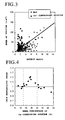
- Chips formed by turning under the conditions below were recovered and points "0" to "4" depending on the length of the chips were assigned thereto.
- the respective sums of the points of each 30 samples were recorded as the "Chip Breakability Index".
- the present invention was applied to S45C steels.
- the prepared steels were cast into ingots, and from the ingots test pieces in the form of round rods of diameter 72mm were taken, and subjected to the tests.
- the alloy compositions and the test results are shown in TABLE 2 (working examples) and TABLE 3 (control examples).
- the steel for machine structural use having good chip breakability according to the present invention has the same machinability as that of the previously disclosed free cutting steel. Namely, because the present steel also contains the inclusion giving high machinability, i.e., the Ca-containing sulfide inclusion particles of the double structure, at machining, particularly, at turning with cemented carbide tools, the targeted increase of the tool life ratio (the ratio of tool life of the present free cutting steel to the tool life of the conventional sulfur free cutting steel containing equal amounts of sulfur) to five times is easily achieved.
- the inclusion giving high machinability i.e., the Ca-containing sulfide inclusion particles of the double structure
- the present invention by choosing the requisite that the Ca-containing sulfide inclusion particles of the specific configuration is in the range of 15-40% of all the sulfide inclusions, improved the chip breakability so remarkably that the possible entanglement of the chips to the tools and works does not occur, and thus, eliminated the troubles in transfer of the chips on chip conveyers.
- the bottleneck for automation of machining for manufacturing machine parts was solved by the present invention, and therefore, contribution by the invention to decrease of the manufacturing costs of various machine parts, particularly, parts for automobiles is remarkable.
Landscapes
- Chemical & Material Sciences (AREA)
- Engineering & Computer Science (AREA)
- Materials Engineering (AREA)
- Mechanical Engineering (AREA)
- Metallurgy (AREA)
- Organic Chemistry (AREA)
- Physics & Mathematics (AREA)
- Thermal Sciences (AREA)
- Crystallography & Structural Chemistry (AREA)
- Treatment Of Steel In Its Molten State (AREA)
- Heat Treatment Of Steel (AREA)
Abstract
Description
| Number of MnS Inclusion Particles in Steel | ||
| S-content in the Steel | Number of MnS Inclusion Particles | Number of MnS Inclusion Particles Per S-content 0.01% |
| 0.01% | 5.4/mm2 | 5.4/mm2 |
| 0.03% | 16.2/mm2 | 5.4/mm2 |
| 0.062% | 32.0/mm2 | 5.2/mm2 |
| 0.125% | 32.0/mm2 | 6.2/mm2 |


Claims (5)
- A steel for machine structural use having excellent chip-breakability, characterized in that the steel contains neither Pb nor Bi but alloying elements necessary for a machine structural steel, that at least five MnS-inclusions having averaged particle size of 1.0µm or more exist per mm2 per S-content 0.01%, that, in the microscopic field, the condition (area[µm2]/aspect ratio)≧10 is met, that the area percentage of Ca-containing sulfide inclusion particles containing at least 1.0wt.% of Ca is in the range of 15-40% of the area of all the sulfide inclusion particles and that film of sulfide inclusions is formed on the tool surface during turning thereby to minimize curl diameter of chips.
- The steel for machine structural use having excellent chip-breakability according to claim 1, characterized in that the steel consists essentially of, by wt.%, C: 0.05-0.8%, Si: 0.01-2.5%, Mn: 0.1-3.5%, S: 0.01-0.2%, Ca alone or both Ca and Mg (in case of the both, the total amount): 0.0005-0.02%, one or both of Ti: 0.002-0.010% and Zr: 0.002-0.025%, O: 0.0005-0.010%, and the balance of inevitable impurities and Fe.
- The steel for machine structural use having excellent chip-breakability according to claim 2, characterized in that the steel further contains, in addition to the alloy components defined in claim 2, one or more of Se: up to 0.4%, Te: up to 0.2% and REM: up to 0.05%.
- The steel for machine structural use having excellent chip-breakability according to one of claims 2 and 3, characterized in that the steel further contains, in addition to the alloy components defined in claim 2 and 3, one or more of Cr: up to 3.5%, Mo: up to 2.0%, Cu: up to 2.0%, Ni: up to 4.0% and B: 0.0005-0,01%.
- The steel for machine structural use having excellent chip-breakability according to one of claims 2 to 4, characterized in that the steel further contains, in addition to the alloy components defined in claim 2 to 4, one or both of Nb: up to 0.2% and V: up to 0.5%.
Applications Claiming Priority (3)
| Application Number | Priority Date | Filing Date | Title |
|---|---|---|---|
| JP2002232425A JP2004068128A (en) | 2002-08-09 | 2002-08-09 | Machine structural steel with excellent chip breaking properties |
| JP2002232425 | 2002-08-09 | ||
| PCT/JP2003/010029 WO2004015155A1 (en) | 2002-08-09 | 2003-08-06 | Steel for machine structural use excellent in friability of chips |
Publications (2)
| Publication Number | Publication Date |
|---|---|
| EP1553201A1 true EP1553201A1 (en) | 2005-07-13 |
| EP1553201A4 EP1553201A4 (en) | 2005-10-05 |
Family
ID=31711831
Family Applications (1)
| Application Number | Title | Priority Date | Filing Date |
|---|---|---|---|
| EP03784554A Withdrawn EP1553201A4 (en) | 2002-08-09 | 2003-08-06 | Steel for machine structural use excellent in friability of chips |
Country Status (4)
| Country | Link |
|---|---|
| US (1) | US20050265886A1 (en) |
| EP (1) | EP1553201A4 (en) |
| JP (1) | JP2004068128A (en) |
| WO (1) | WO2004015155A1 (en) |
Cited By (2)
| Publication number | Priority date | Publication date | Assignee | Title |
|---|---|---|---|---|
| RU2607505C1 (en) * | 2015-09-17 | 2017-01-10 | Федеральное Государственное Унитарное Предприятие "Центральный Научно-Исследовательский Институт Конструкционных Материалов "Прометей" (Фгуп "Цнии Км "Прометей") | Method of thermodiffusion zinc coating fasteners from bainite class steels with simultaneous increase of cold resistance thereof |
| CN113957338A (en) * | 2021-10-09 | 2022-01-21 | 南京钢铁股份有限公司 | Magnesium-containing 45 steel and preparation process thereof |
Families Citing this family (6)
| Publication number | Priority date | Publication date | Assignee | Title |
|---|---|---|---|---|
| CN101405419B (en) * | 2006-03-16 | 2012-06-27 | 杰富意钢铁株式会社 | High-strength pearlitic steel rail with excellent delayed failure resistance |
| CN102459679B (en) * | 2009-05-20 | 2017-03-29 | Skf公司 | Bearing parts |
| CA2865910C (en) | 2012-03-07 | 2017-10-17 | Nippon Steel & Sumitomo Metal Corporation | Steel sheet for hot stamping, method for production thereof, and hot stamping steel material |
| CN102925806B (en) * | 2012-12-01 | 2014-12-31 | 新余钢铁集团有限公司 | Y55 mark free-cutting steel plate and manufacture method thereof |
| CN108603260B (en) * | 2016-02-19 | 2021-08-13 | 日本制铁株式会社 | steel |
| JP6930662B2 (en) * | 2018-05-31 | 2021-09-01 | 日本製鉄株式会社 | Steel materials for steel pistons |
Family Cites Families (10)
| Publication number | Priority date | Publication date | Assignee | Title |
|---|---|---|---|---|
| JPH11293385A (en) * | 1998-04-14 | 1999-10-26 | Hitachi Metals Ltd | Steel for metal mold for plastic molding, excellent in machinability |
| JP3587348B2 (en) * | 1998-07-14 | 2004-11-10 | 大同特殊鋼株式会社 | Machine structural steel with excellent turning workability |
| JP4031607B2 (en) * | 2000-04-05 | 2008-01-09 | 新日本製鐵株式会社 | Machine structural steel with reduced grain coarsening |
| JP4148311B2 (en) * | 2000-12-12 | 2008-09-10 | トヨタ自動車株式会社 | Lead-free mechanical structural steel with excellent machinability and small strength anisotropy |
| JP2003049241A (en) * | 2001-06-01 | 2003-02-21 | Daido Steel Co Ltd | Free cutting steel |
| JP3753054B2 (en) * | 2001-06-08 | 2006-03-08 | 大同特殊鋼株式会社 | Free-cutting steel for machine structures with excellent carbide tool machinability |
| CN1169992C (en) * | 2001-11-15 | 2004-10-06 | 住友金属工业株式会社 | Mechanical structural steel |
| US6764645B2 (en) * | 2001-11-28 | 2004-07-20 | Diado Steel Co., Ltd. | Steel for machine structural use having good machinability and chip-breakability |
| JP4216507B2 (en) * | 2002-01-29 | 2009-01-28 | 田中精密工業株式会社 | Rocker arm steel |
| EP1471159B1 (en) * | 2002-01-29 | 2009-01-14 | Tanaka Seimitsu Kogyo Co., Ltd. | Bainite type non-refined steel for nitriding and nitrided product |
-
2002
- 2002-08-09 JP JP2002232425A patent/JP2004068128A/en active Pending
-
2003
- 2003-08-06 US US10/523,990 patent/US20050265886A1/en not_active Abandoned
- 2003-08-06 EP EP03784554A patent/EP1553201A4/en not_active Withdrawn
- 2003-08-06 WO PCT/JP2003/010029 patent/WO2004015155A1/en not_active Ceased
Cited By (2)
| Publication number | Priority date | Publication date | Assignee | Title |
|---|---|---|---|---|
| RU2607505C1 (en) * | 2015-09-17 | 2017-01-10 | Федеральное Государственное Унитарное Предприятие "Центральный Научно-Исследовательский Институт Конструкционных Материалов "Прометей" (Фгуп "Цнии Км "Прометей") | Method of thermodiffusion zinc coating fasteners from bainite class steels with simultaneous increase of cold resistance thereof |
| CN113957338A (en) * | 2021-10-09 | 2022-01-21 | 南京钢铁股份有限公司 | Magnesium-containing 45 steel and preparation process thereof |
Also Published As
| Publication number | Publication date |
|---|---|
| EP1553201A4 (en) | 2005-10-05 |
| US20050265886A1 (en) | 2005-12-01 |
| WO2004015155A1 (en) | 2004-02-19 |
| JP2004068128A (en) | 2004-03-04 |
Similar Documents
| Publication | Publication Date | Title |
|---|---|---|
| EP1316624B1 (en) | Steel for machine structural use having good machinability and chip-breakability | |
| EP1312689B1 (en) | Steel for machine structural use | |
| EP1335035A1 (en) | Low-carbon free cutting steel | |
| JP3524479B2 (en) | Free-cutting steel for machine structures with excellent mechanical properties | |
| US6783728B2 (en) | Free-cutting steel for machine structural use having good machinability in cutting by cemented carbide tool | |
| EP1270757A1 (en) | Machine structural steel being free of lead, excellent in machinability and reduced in strength anisotropy | |
| CA2443400C (en) | Sulfur-containing free-cutting steel | |
| US6773661B2 (en) | Free-cutting steel | |
| EP1553201A1 (en) | Steel for machine structural use excellent in friability of chips | |
| US4326886A (en) | Steel for cold forging having good machinability and the method of making the same | |
| JP2017203190A (en) | Ferritic free-cutting stainless steel and manufacturing method thereof | |
| US6649125B2 (en) | Free-cutting steel | |
| JP4348163B2 (en) | Steel excellent in machinability and manufacturing method thereof | |
| JP4023196B2 (en) | Machine structural steel with excellent machinability | |
| JP2005307241A (en) | High sulfur free cutting steel | |
| AU2006241390B2 (en) | Free-cutting steel having excellent high temperature ductility | |
| JP2001152280A (en) | Free cutting steel | |
| JP4041274B2 (en) | Free-cutting steel for machine structures with excellent mechanical properties and chip breaking | |
| JPS62103340A (en) | Ca free cutting steel for mechanical structure | |
| JP2000265243A (en) | Bi FREE-CUTTING STEEL | |
| US20040081575A1 (en) | Corrosion resistant steel having good cold-workability and machinability | |
| JP4222112B2 (en) | High sulfur free cutting steel | |
| JP2008126273A (en) | Method for producing B-containing low-carbon lead-free free-cutting steel | |
| JPH0273950A (en) | Free-cutting steel with excellent hot ductility | |
| JPH0971838A (en) | Free cutting steel |
Legal Events
| Date | Code | Title | Description |
|---|---|---|---|
| PUAI | Public reference made under article 153(3) epc to a published international application that has entered the european phase |
Free format text: ORIGINAL CODE: 0009012 |
|
| 17P | Request for examination filed |
Effective date: 20050209 |
|
| AK | Designated contracting states |
Kind code of ref document: A1 Designated state(s): DE GB |
|
| A4 | Supplementary search report drawn up and despatched |
Effective date: 20050822 |
|
| RIC1 | Information provided on ipc code assigned before grant |
Ipc: 7C 22C 38/02 B Ipc: 7C 22C 38/14 B Ipc: 7C 22C 38/00 A Ipc: 7C 22C 38/04 B |
|
| 17Q | First examination report despatched |
Effective date: 20071108 |
|
| STAA | Information on the status of an ep patent application or granted ep patent |
Free format text: STATUS: THE APPLICATION IS DEEMED TO BE WITHDRAWN |
|
| 18D | Application deemed to be withdrawn |
Effective date: 20100727 |