EP1552838A1 - Rubrofusarin glycoside-containing composition - Google Patents
Rubrofusarin glycoside-containing composition Download PDFInfo
- Publication number
- EP1552838A1 EP1552838A1 EP03733206A EP03733206A EP1552838A1 EP 1552838 A1 EP1552838 A1 EP 1552838A1 EP 03733206 A EP03733206 A EP 03733206A EP 03733206 A EP03733206 A EP 03733206A EP 1552838 A1 EP1552838 A1 EP 1552838A1
- Authority
- EP
- European Patent Office
- Prior art keywords
- rubrofusarin
- composition
- glutathione
- composition according
- glycoside
- Prior art date
- Legal status (The legal status is an assumption and is not a legal conclusion. Google has not performed a legal analysis and makes no representation as to the accuracy of the status listed.)
- Withdrawn
Links
Images




Classifications
-
- A—HUMAN NECESSITIES
- A23—FOODS OR FOODSTUFFS; TREATMENT THEREOF, NOT COVERED BY OTHER CLASSES
- A23L—FOODS, FOODSTUFFS OR NON-ALCOHOLIC BEVERAGES, NOT OTHERWISE PROVIDED FOR; PREPARATION OR TREATMENT THEREOF
- A23L33/00—Modifying nutritive qualities of foods; Dietetic products; Preparation or treatment thereof
- A23L33/10—Modifying nutritive qualities of foods; Dietetic products; Preparation or treatment thereof using additives
- A23L33/125—Modifying nutritive qualities of foods; Dietetic products; Preparation or treatment thereof using additives containing carbohydrate syrups; containing sugars; containing sugar alcohols; containing starch hydrolysates
-
- A—HUMAN NECESSITIES
- A23—FOODS OR FOODSTUFFS; TREATMENT THEREOF, NOT COVERED BY OTHER CLASSES
- A23L—FOODS, FOODSTUFFS OR NON-ALCOHOLIC BEVERAGES, NOT OTHERWISE PROVIDED FOR; PREPARATION OR TREATMENT THEREOF
- A23L29/00—Foods or foodstuffs containing additives; Preparation or treatment thereof
- A23L29/30—Foods or foodstuffs containing additives; Preparation or treatment thereof containing carbohydrate syrups; containing sugars; containing sugar alcohols, e.g. xylitol; containing starch hydrolysates, e.g. dextrin
-
- A—HUMAN NECESSITIES
- A23—FOODS OR FOODSTUFFS; TREATMENT THEREOF, NOT COVERED BY OTHER CLASSES
- A23L—FOODS, FOODSTUFFS OR NON-ALCOHOLIC BEVERAGES, NOT OTHERWISE PROVIDED FOR; PREPARATION OR TREATMENT THEREOF
- A23L33/00—Modifying nutritive qualities of foods; Dietetic products; Preparation or treatment thereof
- A23L33/10—Modifying nutritive qualities of foods; Dietetic products; Preparation or treatment thereof using additives
- A23L33/105—Plant extracts, their artificial duplicates or their derivatives
-
- A—HUMAN NECESSITIES
- A23—FOODS OR FOODSTUFFS; TREATMENT THEREOF, NOT COVERED BY OTHER CLASSES
- A23L—FOODS, FOODSTUFFS OR NON-ALCOHOLIC BEVERAGES, NOT OTHERWISE PROVIDED FOR; PREPARATION OR TREATMENT THEREOF
- A23L33/00—Modifying nutritive qualities of foods; Dietetic products; Preparation or treatment thereof
- A23L33/10—Modifying nutritive qualities of foods; Dietetic products; Preparation or treatment thereof using additives
- A23L33/17—Amino acids, peptides or proteins
- A23L33/175—Amino acids
-
- A—HUMAN NECESSITIES
- A23—FOODS OR FOODSTUFFS; TREATMENT THEREOF, NOT COVERED BY OTHER CLASSES
- A23L—FOODS, FOODSTUFFS OR NON-ALCOHOLIC BEVERAGES, NOT OTHERWISE PROVIDED FOR; PREPARATION OR TREATMENT THEREOF
- A23L33/00—Modifying nutritive qualities of foods; Dietetic products; Preparation or treatment thereof
- A23L33/10—Modifying nutritive qualities of foods; Dietetic products; Preparation or treatment thereof using additives
- A23L33/17—Amino acids, peptides or proteins
- A23L33/19—Dairy proteins
-
- A—HUMAN NECESSITIES
- A23—FOODS OR FOODSTUFFS; TREATMENT THEREOF, NOT COVERED BY OTHER CLASSES
- A23L—FOODS, FOODSTUFFS OR NON-ALCOHOLIC BEVERAGES, NOT OTHERWISE PROVIDED FOR; PREPARATION OR TREATMENT THEREOF
- A23L5/00—Preparation or treatment of foods or foodstuffs, in general; Food or foodstuffs obtained thereby; Materials therefor
-
- A—HUMAN NECESSITIES
- A61—MEDICAL OR VETERINARY SCIENCE; HYGIENE
- A61K—PREPARATIONS FOR MEDICAL, DENTAL OR TOILETRY PURPOSES
- A61K31/00—Medicinal preparations containing organic active ingredients
- A61K31/185—Acids; Anhydrides, halides or salts thereof, e.g. sulfur acids, imidic, hydrazonic or hydroximic acids
- A61K31/19—Carboxylic acids, e.g. valproic acid
- A61K31/195—Carboxylic acids, e.g. valproic acid having an amino group
- A61K31/197—Carboxylic acids, e.g. valproic acid having an amino group the amino and the carboxyl groups being attached to the same acyclic carbon chain, e.g. gamma-aminobutyric acid [GABA], beta-alanine, epsilon-aminocaproic acid or pantothenic acid
- A61K31/198—Alpha-amino acids, e.g. alanine or edetic acid [EDTA]
-
- A—HUMAN NECESSITIES
- A61—MEDICAL OR VETERINARY SCIENCE; HYGIENE
- A61K—PREPARATIONS FOR MEDICAL, DENTAL OR TOILETRY PURPOSES
- A61K31/00—Medicinal preparations containing organic active ingredients
- A61K31/33—Heterocyclic compounds
- A61K31/335—Heterocyclic compounds having oxygen as the only ring hetero atom, e.g. fungichromin
- A61K31/365—Lactones
- A61K31/375—Ascorbic acid, i.e. vitamin C; Salts thereof
-
- A—HUMAN NECESSITIES
- A61—MEDICAL OR VETERINARY SCIENCE; HYGIENE
- A61K—PREPARATIONS FOR MEDICAL, DENTAL OR TOILETRY PURPOSES
- A61K31/00—Medicinal preparations containing organic active ingredients
- A61K31/70—Carbohydrates; Sugars; Derivatives thereof
- A61K31/7042—Compounds having saccharide radicals and heterocyclic rings
- A61K31/7048—Compounds having saccharide radicals and heterocyclic rings having oxygen as a ring hetero atom, e.g. leucoglucosan, hesperidin, erythromycin, nystatin, digitoxin or digoxin
-
- A—HUMAN NECESSITIES
- A61—MEDICAL OR VETERINARY SCIENCE; HYGIENE
- A61K—PREPARATIONS FOR MEDICAL, DENTAL OR TOILETRY PURPOSES
- A61K36/00—Medicinal preparations of undetermined constitution containing material from algae, lichens, fungi or plants, or derivatives thereof, e.g. traditional herbal medicines
- A61K36/18—Magnoliophyta (angiosperms)
- A61K36/185—Magnoliopsida (dicotyledons)
- A61K36/48—Fabaceae or Leguminosae (Pea or Legume family); Caesalpiniaceae; Mimosaceae; Papilionaceae
- A61K36/482—Cassia, e.g. golden shower tree
-
- A—HUMAN NECESSITIES
- A61—MEDICAL OR VETERINARY SCIENCE; HYGIENE
- A61P—SPECIFIC THERAPEUTIC ACTIVITY OF CHEMICAL COMPOUNDS OR MEDICINAL PREPARATIONS
- A61P1/00—Drugs for disorders of the alimentary tract or the digestive system
- A61P1/16—Drugs for disorders of the alimentary tract or the digestive system for liver or gallbladder disorders, e.g. hepatoprotective agents, cholagogues, litholytics
-
- A—HUMAN NECESSITIES
- A61—MEDICAL OR VETERINARY SCIENCE; HYGIENE
- A61P—SPECIFIC THERAPEUTIC ACTIVITY OF CHEMICAL COMPOUNDS OR MEDICINAL PREPARATIONS
- A61P17/00—Drugs for dermatological disorders
- A61P17/16—Emollients or protectives, e.g. against radiation
-
- A—HUMAN NECESSITIES
- A61—MEDICAL OR VETERINARY SCIENCE; HYGIENE
- A61P—SPECIFIC THERAPEUTIC ACTIVITY OF CHEMICAL COMPOUNDS OR MEDICINAL PREPARATIONS
- A61P21/00—Drugs for disorders of the muscular or neuromuscular system
-
- A—HUMAN NECESSITIES
- A61—MEDICAL OR VETERINARY SCIENCE; HYGIENE
- A61P—SPECIFIC THERAPEUTIC ACTIVITY OF CHEMICAL COMPOUNDS OR MEDICINAL PREPARATIONS
- A61P25/00—Drugs for disorders of the nervous system
- A61P25/28—Drugs for disorders of the nervous system for treating neurodegenerative disorders of the central nervous system, e.g. nootropic agents, cognition enhancers, drugs for treating Alzheimer's disease or other forms of dementia
-
- A—HUMAN NECESSITIES
- A61—MEDICAL OR VETERINARY SCIENCE; HYGIENE
- A61P—SPECIFIC THERAPEUTIC ACTIVITY OF CHEMICAL COMPOUNDS OR MEDICINAL PREPARATIONS
- A61P27/00—Drugs for disorders of the senses
- A61P27/02—Ophthalmic agents
-
- A—HUMAN NECESSITIES
- A61—MEDICAL OR VETERINARY SCIENCE; HYGIENE
- A61P—SPECIFIC THERAPEUTIC ACTIVITY OF CHEMICAL COMPOUNDS OR MEDICINAL PREPARATIONS
- A61P35/00—Antineoplastic agents
-
- A—HUMAN NECESSITIES
- A61—MEDICAL OR VETERINARY SCIENCE; HYGIENE
- A61P—SPECIFIC THERAPEUTIC ACTIVITY OF CHEMICAL COMPOUNDS OR MEDICINAL PREPARATIONS
- A61P37/00—Drugs for immunological or allergic disorders
- A61P37/02—Immunomodulators
- A61P37/04—Immunostimulants
-
- A—HUMAN NECESSITIES
- A61—MEDICAL OR VETERINARY SCIENCE; HYGIENE
- A61P—SPECIFIC THERAPEUTIC ACTIVITY OF CHEMICAL COMPOUNDS OR MEDICINAL PREPARATIONS
- A61P39/00—General protective or antinoxious agents
-
- A—HUMAN NECESSITIES
- A61—MEDICAL OR VETERINARY SCIENCE; HYGIENE
- A61P—SPECIFIC THERAPEUTIC ACTIVITY OF CHEMICAL COMPOUNDS OR MEDICINAL PREPARATIONS
- A61P43/00—Drugs for specific purposes, not provided for in groups A61P1/00-A61P41/00
-
- C—CHEMISTRY; METALLURGY
- C07—ORGANIC CHEMISTRY
- C07H—SUGARS; DERIVATIVES THEREOF; NUCLEOSIDES; NUCLEOTIDES; NUCLEIC ACIDS
- C07H17/00—Compounds containing heterocyclic radicals directly attached to hetero atoms of saccharide radicals
- C07H17/04—Heterocyclic radicals containing only oxygen as ring hetero atoms
-
- A—HUMAN NECESSITIES
- A23—FOODS OR FOODSTUFFS; TREATMENT THEREOF, NOT COVERED BY OTHER CLASSES
- A23L—FOODS, FOODSTUFFS OR NON-ALCOHOLIC BEVERAGES, NOT OTHERWISE PROVIDED FOR; PREPARATION OR TREATMENT THEREOF
- A23L21/00—Marmalades, jams, jellies or the like; Products from apiculture; Preparation or treatment thereof
-
- A—HUMAN NECESSITIES
- A23—FOODS OR FOODSTUFFS; TREATMENT THEREOF, NOT COVERED BY OTHER CLASSES
- A23V—INDEXING SCHEME RELATING TO FOODS, FOODSTUFFS OR NON-ALCOHOLIC BEVERAGES AND LACTIC OR PROPIONIC ACID BACTERIA USED IN FOODSTUFFS OR FOOD PREPARATION
- A23V2002/00—Food compositions, function of food ingredients or processes for food or foodstuffs
Definitions
- the present invention relates to an oral composition containing rubrofusarin glycoside as an active ingredient, the composition being capable of increasing an in-vivo glutathione level.
- Glutathione is a tripeptide composed of glutamic acid, cysteine, glycine and a polyfunctional biological substance contained at a high concentration of 1 to 10 mM within cells. Glutathione has antioxidative activity. Besides this, it serves as a substrate for glutathione peroxidase, and thus plays an important role in eliminating hydrogen peroxide and lipid peroxide, and it further serves as a substrate for the xenobiotic metabolizing enzyme, glutathione-S-transferase, and thus takes part in detoxication metabolism. Glutathione is also used as a substrate for glutathione dehydrogenase for reactivating dehydroascorbic acid.
- WO94/12527 discloses an acyl derivative of ⁇ -L-pyroglutamyl-L-cysteine, which is effective for treating various diseases caused by a decrease or deficit of glutathione, such as morbid states involved in oxidative tissue damages and especially damage caused by excessive free radials.
- diseases mentioned herein include intracellular oxidation states caused by drinking excessive amounts of alcohol, xenobiotic substances, X-ray damage, hepatopathy, toxic effects caused by pharmaceutical drugs or compounds, toxic effects caused by heavy metals, physiological aging of the brain (e.g., memory loss and loss of learning ability, Parkinson's degeneration, which is degeneration of the brain caused by a decrease of glutathione level involved in a change in protection mechanism against in-vivo oxidative substances), acute or chronic neurologic diseases (as acute disorders, mention is made of brain attack being an acute ischemic state, low blood sugar level, and epileptic stroke; and as chronic disorders, mention is made of amyotrophic lateral sclerosis, Alzheimer's disease, and Huntington's disease, etc.), and dysfunction of immune mechanism, in particular, a decrease in immunological protection against cancer, and infertility, in particular, male infertility. Furthermore, WO 94/12527 discloses that the aforementioned compound is also suitable for treating ischemia/reperfusion disorders
- Japanese Patent Laid-Open No. 1-26516 discloses ⁇ -L-glutamyl-L-cysteine methyl ester serving as a compound capable of increasing glutathione level which is effective for treating or preventing diseases including cataract, hepatopathy and nephropathy.
- S-lower fatty acid glutathione derivatives are disclosed as an anti-inflammatory agent, an anti-allergic agent, or a hepatopathy preventing agent (WO91/12262, WO91/16337), and sugar-containing glutathione derivatives are disclosed as a liver-protecting agent (Japanese Patent Laid-Open No. 9-25292), which suggests that a wide variety of diseases can be effectively treated and prevented by increasing tissue glutathione.
- glutathione ester derivatives have protective effects against tissue/cell damages as follows: buthionine sulfoximine-induced cataract (Pro. Natl, Acad. Sci. 86, 8727,1988); acetaminophen-induced hepatopathy (Biochem. Pharmacol, 39, 1877, 1990); damage by anti-cancer agent such as Cisplatin and alkylating agents (FASEB J. 4, 3251, 1990, Cancer 62, 1275, 1988); cytotoxicity by ultraviolet-B (UV-B) Radiation(Biol. Pham. Bull. 18, 1219, 1995); t-butyl hydroperoxide-induced stomach cell damage (Eur. J.
- the present invention provides an oral composition capable of stimulating intracellular biosynthesis of glutathione in order to maintain in-vivo (i.e., in tissues and cells) glutathione level to be high, wherein the composition comprises an active ingredient other than an amino acid precursor from a viewpoint of increasing intracellular glutathione synthesis.
- the composition provides a method which can be replace or be combined with a method of supplying an amino acid precursor for glutathione biosynthesis.
- the present inventors investigated food materials widely in use with a view to finding an active ingredient capable of increasing the ability of cells to synthesize glutathione and suitable for solving the abovementioned problem. As a result, they found that a Cassia obtusifolia extract contains an active ingredient identified as rubrofusarin glycoside.
- synthetic compounds such as ⁇ -naphthoflavone (J. Biol. Chem, (1998) 273, 14683)) and naturally occurring compounds such as silimarin (Planta Med. 55, 420, 1989), cyano hydroxy butene (Toxicol. Appl. Pharmacol/ 123, 257, 1993), apocynin (FEBS Lett, 443, 235, 1999) are already known; however, the effect of rubrofusarin glycoside in increasing intracellular glutathione level has until now not been known.
- Cassia seed is the seed of Cassia obtusifolia (Japanese name: ebisugusa) belonging to the leguminous family.
- Cassia seed has traditionally been used by being roasted and brewed.
- Choyaku Dai-jiten (published by Shanghai Science Technology publisher, edited by Shogakukan Inc.), there is a description reading "Cassia seed has efficacy in cleansing the liver, making eyes clear, being good for diuresis, and causing bowel movement”, and in particular, it is described that Cassia seed is a herbal medicine effective for eyes, by referring to the teaching of a sacred script (Shin Nouhon Soukei) that "(Cassia seed) cures acyanopsia, edematous eye, hemorrhagic conjunctivitis, red eyes, eye pain, and incessant tearing, and long term use will be beneficial for eyelight”.
- glutathione is used as an ophthalmological drug (therapeutic agent for cataract) for treating early-stage senile cataract, corneal ulcer, ectocorneal exfoliation, and keratitis (refer to Regular Medicine Information Miscellany for Pharmacists, published by Hirokawa Shoten).
- ophthalmological drug therapeutic agent for cataract
- corneal ulcer corneal ulcer
- ectocorneal exfoliation corneal ulcer
- keratitis Refer to Regular Medicine Information Miscellany for Pharmacists, published by Hirokawa Shoten.
- the present invention is directed to an oral composition containing rubrofusarin glycoside as an active ingredient for maintaining in-vivo (in tissue and cells) glutathione level at a high level.
- Rubrofusarin glycoside is represented by the following formula: where, A represents a sugar component.
- sugar component A examples include gentiobiose and glucose and the like.
- a preferable sugar component is gentiobiose.
- the rubrofusarin glycoside is rubrofusarin gentiobioside.
- Rubrofusarin glycoside is contained in an extract derived from naturally occurring substances.
- Naturally occurring substances are Cassia obtusifolia and Cassia occidentalis belonging to the Cassia genus.
- Rubrofusarin glycoside may be used as an active ingredient of the composition of the present invention in a pure form or in a crude product extracted from a naturally occurring substance.
- a naturally occurring substance to be used as a raw material is Cassia seed, but is not limited thereto. Any substance may be used as long as it contains rubrofusarin glycoside, and hence, Cassia occidentalis and others may be similarly used.
- a concentrate composition containing a predetermined amount of rubrofusarin glycoside which is obtained by subjecting a raw material, dry Cassia seed containing rubrofusarin glycoside, to appropriate treatments including extraction.
- solvents useful for extracting rubrofusarin glycoside from a naturally occurring raw material water or an organic solvent can be mentioned.
- organic solvent include alcohols such as ethanol and methanol, esters such as ethyl acetate, ketones such as acetone, and ethers such as methylethyl ether. It is also possible to use two or more selected from water and these organic solvents in combination. To produce foods and drinks, water or an aqueous ethanol solution is appropriate.
- the following method may be used.
- a method and conditions capable of providing as high a level of rubrofusarin glycoside as possible in the concentrate should be employed.
- the concentrate desirably contains rubrofusarin glycoside in a ratio of 1 to 30 wt% based on the concentrate (dry amount).
- a solvent is directly added to Cassia seed or it is added after Cassia seed is pulverized by a conventional method in order to increase extraction efficiency.
- extraction is performed for a time of from about 30 minutes to 4 hours under warming or for 1 to 3 days at room temperature.
- the extraction solution is filtered to obtain a crude extraction filtrate. Warming is preferably performed at a temperature of 50 to 95°C.
- the volume of a solvent for use in extraction may be, for example, 3 to 10 fold that of the raw material.
- the content and purity of rubrofusarin glycoside extracted and contained in the filtrate will be about 2.2% by extraction with 70% ethanol and about 1.1% by extraction under heating (see Table 1). However, there are some cases where it is desirable to further improve purity.
- an adsorbent resin such as Diaion HP20 (Mitsubishi Chemical Corporation) generally used industrially and activated charcoal may be used.
- a filtrate of the extract is brought into direct contact with the resin.
- rubrofusarin glycoside is extracted with an aqueous ethanol solution as a solvent, the ethanol concentration is reduced under a vacuum or the like and the resultant extract is brought into contact with the resin. This reduction of the ethanol concentration is preferred since it facilitates sufficient adsorption of rubrofusarin glycoside. Specifically, it is preferred to reduce the concentration of ethanol to 20% or less.
- a desired concentration (% by weight) of the active ingredient is first selected depending upon the purpose, and a suitable method to provide the concentration may be chosen.
- a suitable method to provide the concentration may be chosen.
- the extraction may be performed by a stepwise elution or concentration gradient method.
- a stepwise elution can be performed with, but is not limited to, 20% ethanol wash/80% ethanol elution or 30% ethanol wash/60% ethanol elution.
- the eluate thus obtained can be concentrated or formed into dry powder by a method such as conventional vacuum concentration and lyophilization.
- a method such as conventional vacuum concentration and lyophilization.
- dextrin, a high molecular weight starch hydrolysis product, or a high molecular weight peptide preparation can be used as a conventional excipient to produce a dry powder.
- the extraction concentrate obtained above may be subjected to a conventional process such as column chromatography, high-performance liquid column chromatography, or liquid-liquid distribution chromatography to obtain a product of a desired purity.
- a conventional process such as column chromatography, high-performance liquid column chromatography, or liquid-liquid distribution chromatography to obtain a product of a desired purity.
- an active ingredient can be eluted as a finely separated peak with a good reproducibility. From the fraction of the peak, rubrofusarin glycoside (for example, rubrofusarin gentiobioside) can be obtained substantially as a single ingredient.
- the assay method described in Example 2 may be used.
- Rubrofusarin glycoside is an ingredient contained in an amount of 3 mg or more per 1 g of fresh Cassia seed, as listed in Table 1 shown later. Rubrofusarin glycoside has traditionally been taken as a conventional drink in a dose of 5 to 30 g per day in terms of fresh Cassia seed as Cassia brewed tea or senna tea. Since rubrofusarin glycoside has been orally taken as mentioned above, the safety of rubrofusarin glycoside is considered to be high. These factors must be taken into consideration in deciding the amount of rubrofusarin glycoside in the present invention.
- the content of rubrofusarin glycoside serving as the active ingredient in the composition substantially has no upper limit; however, rubrofusarin glycoside is preferably contained in an amount of 0.5 wt% to 30 wt%, more preferably, 1 wt% to 15 wt% of the solid matter.
- an oral composition from which one can intake an effective amount of rubrofusarin glycoside, by admixing it in the composition as the pure substance or as a concentrate derived from a naturally occurring raw material.
- Rubrofusarin glycoside has sufficiently high stability to pH, water content, oxidation, light and the like and its taste is somewhat bitter. Consequently, the oral composition of the present invention can be provided in various forms such as foods and drinks, seasonings, alcohol beverages, functional foods, and medicinal products and is capable of preventing a decrease of glutathione level within cells, tissues and organs induced by oxidative stress or of maintaining the glutathione level.
- rubrofusarin glycoside is effective for maintaining and improving functions of the liver, brain, and vision, and immune system; mitigating fatigue; suppressing damage of organs involved in enhanced detoxication metabolism; reducing risk of cancer; maintaining and activating the immune system ; recovering from muscle fatigue; preventing dullness of the skin; preventing lifestyle-related diseases; preventing smoking induced disorders; treating chronic fatigue syndrome due to AIDS; and preventing aging, all of which are related to oxidative stress.
- compositions As specific forms of the composition, mention may be made of a solid form, semi-fluid form, and fluid form.
- solid-forms of foods include general foods and health foods such as in biscuit-form, sheet-form, tablet-form (such as capsules and tablets) and grain powder-form.
- semi-fluid forms of foods include general foods and health foods in paste-form, jelly-form, and gel-form.
- fluid forms of foods include general foods and health foods in juice-form, cold beverage-form, tea-form, and health drink-form.
- composition of the present invention is not particularly limited except that it contains rubrofusarin glycoside in such an amount that plays a role in increasing intracellular glutathione level, and is safe to be taken orally.
- rubrofusarin glycoside may be contained either as a single active ingredient in the foods or drinks as mentioned above or in combination with a precursor of glutathione for intracellular biosynthesis, in particular, L-cysteine/L-cystine, which is a nutritionally rate-determining amino acid, (however, free L-cysteine is toxic if orally administered in a significant amount as is known from Am. J. Clin. Nutr. 50, 1401, 1989) and L-methionine with a view to achieving a synergistic glutathione increasing effect.
- L-cysteine/L-cystine which is a nutritionally rate-determining amino acid
- the "synergistic increase” means that when the sum of the intracellular glutathione level increasing effect by a composition containing rubrofusarin glycoside alone and that by a composition containing a precursor alone is compared to the increasing effect by a composition containing both ingredients at the same time, the latter effect is greater than the former effect.
- precursors include animal proteins such as egg white, egg membrane and milk whey rich in L-cysteine/L-cystine and L-methionine; vegetable proteins such as soy bean; proteins derived from yeast and the like; or peptides processed and prepared from these proteins; or approved food additives such as L-cystine, and L-methionine. It is preferable that these precursors or food containing the precursors in a large amount may contain L-cysteine in the composition in an amount of about 0.1 to 10 wt% on a solid basis.
- glutathione to maintain intracellular glutathione level and allow glutathione to act efficiently, it will be preferred not only to stimutate biosynthesis of glutathione from its precursor but also to supply vitamin C (ascorbic acid) which is capable of reducing glutathione consumption.
- vitamin C ascorbic acid
- the oral composition is effective for mitigating the aforementioned defective physical conditioning brought about by life style.
- the oral composition may be taken before and after a meal, during a meal or between meals, and particularly desirably between meals.
- the oral composition may be taken desirably at a frequency of 3 times per day, but is not limited to this and may be taken at any time.
- the tablet shown in Example 10 is designed in accordance with such an intake plan.
- the oral composition of the present invention is particularly and desirably taken by persons who are concerned about bloodshot eyes and decreased vision, persons who are at risk of senile cataract due to aging, persons who are at risk of the affects of smoking, and persons who are at risk of rough skin, wrinkles, and spots due to smoking, ultraviolet rays including sunlight, and aging.
- Reverse-phase high performance liquid chromatography was performed by using a develosil ODS-HG5 column (6 ⁇ 100 mm, manufactured by Nomura Chemical Co., Ltd.) on a device equipped with a three dimensional monitor. 10 ⁇ l of the extraction concentrate (89 mg/ml aqueous solution) was injected and elution was carried out by a linear gradient of acetonitrile in 0.1% trifluoroacetic acid changing from 25% to 40% in 12 minutes. Fractions were taken at 15-second intervals, dried under reduced pressure, and thereafter dissolved in 20 ⁇ l of dimethylsulfoxide (DMSO).
- DMSO dimethylsulfoxide
- the activity to increase intracellular glutathione level was determined by use of human hepatoma HepG2 cells. More specifically, HepG2 cells were cultured in RPMI1640 medium and added to a 96-well microplate at a density of 2.5 ⁇ 10 4 cells (100 ⁇ l) per well. After the HepG2 cells settled on the wall, 25 ⁇ l of each of the aforementioned samples was added and the mixture was cultured in a CO 2 incubator for 48 hours.
- Fresh seeds and roasted seeds were broken into pieces respectively.
- a 10-fold volume of 70% (v/v) ethanol was added and extraction was performed for 2 days (at room temperature).
- a 20-fold volume of water was added and extraction was performed under warming at 95°C for 30 minutes.
- the extract solutions were filtered to obtain filtrates.
- the weights of the solid matter in the filtrates and the contents of rubrofusarin glycoside in accordance with the method shown in Example 2 were measured. The results are summarized in Table 1.
- HepG2 cells were dispensed at a density of 2.5 ⁇ 10 4 cells (100 ⁇ l) per well of a microplate and allowed to settle thereto, and then, 25 ⁇ l of an evaluation sample diluted to a predetermined concentration in RPMI1640 medium was added. The cells were cultured for 0, 6, 12, 24, and 48 hours.
- the evaluation sample use was made of the concentrate (containing 10.2% (w/w) rubrofusarin gentiobioside) of the present invention prepared in accordance with the method shown in Example 4.
- HepG2 cells Using human hepatoma HepG2 cells, dose dependency of the effect of rubrofusarin glycoside upon intracellular glutathione level was investigated. The method was similar to that in Example 5. Briefly, HepG2 cells were dispensed at a density of 2.5 ⁇ 10 4 cells (100 ⁇ l) per well of a microplate and allowed to settle thereon, and then, 25 ⁇ l of the concentrate subjected to 2-fold serial dilution to predetermined concentrations in RPMI1640 medium was added to give a final concentration from 0 to 20 ⁇ M in terms of the active ingredient, rubrofusarin gentiobioside.
- ⁇ -naphthoflavone purchased from Nacalai-tesque
- silibinin purchased from Sigma Chemical
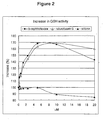
- Figure 2 the intracellular glutathione level was measured to be compared with that of the cells containing no test-compound or that of the cells containing comparative compound, ⁇ -naphthoflavone (purchased from Nacalai-tesque) or silibinin (purchased from Sigma Chemical).
- ⁇ -naphthoflavone is known as a compound which increases the activity of ⁇ -glutamylcysteine synthetase, the rate-determining enzyme of the glutathione biosynthesis system, and intracellular glutathione level in a dose dependent manner, based on cellular level analysis similar to that of this example(J. Biol. Chem.
- HepG2 cells were dispensed at a density of 2.5 ⁇ 10 4 cells (100 ⁇ l) per well of a microplate and allowed to settle thereto, and then, 25 ⁇ l of the concentrate diluted in RPMI1640 medium to a final concentration of 10 ⁇ M in terms of rubrofusarin gentiobioside was added.
- t-BHP t-butyl hydroperoxide
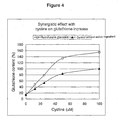
- Example 2 Using human hepatoma HepG2 cells, the synergistic effect between rubrofusarin glycoside having the intracellular glutathione increasing activity and a precursor for synthesizing glutathione in vivo was investigated.
- the method was similar to that of Example 1 except that D-MEM medium (supplemented with 10% serum) containing no L-cystine was prepared, since RPMI 1649 medium containing a sufficient amount of L-cystine was not suitable for the purpose of this Example.
- HepG2 cells were dispensed at a density of 2.5 ⁇ 10 4 cells (100 ⁇ l) per well of a microplate and allowed to settle thereto, and then, the medium was exchanged with the D-MEM medium (100 ⁇ l) containing no L-cystine.
- D-MEM medium 100 ⁇ l
- a diluted concentrate containing rubrofusarin glycoside at a final concentration of 10 ⁇ M in L-cystine free D-MEM medium, and cystine solutions of predetermined concentrations were prepared. An aliquot of 25 ⁇ l was taken from each of them and added to wells, and culturing was continued for 40 hours. Thereafter, intracellular glutathione levels were measured.
- a 0.5% Tween 80 aqueous solution was administered compulsively under the same conditions, and the restraint control group was subjected to the same stress mentioned above.
- the mice were released from restraint, the liver, and brain tissue except for the cerebellum were excised.
- the contents of glutathione and lipid peroxide (thiobarbituric acid reactive substance: TBARS) of each organ were measured. More specifically, after excision, the organs were stored at -80°C.
- An ice cold homogenization solution (154 mM KCl, 5 mM DTPA, 10 mM KPi buffer, pH 6.8) was added to each of the organs in a 9-fold volume to weight ratio. Homogenates were prepared by Physcotron (Microtec Co., Ltd.) and TBARS values were calculated in accordance with the method of Ohkawa et. al. (Anal. Biochem. 95. 351-358, 1979). Further, an acid buffer (40 mM HCl, 10 mM DTPA, 20 mM ascorbic acid, 10%TCA) was added to each homogenate in an equal amount and protein was removed by centrifugation. The glutathione content was determined in accordance with the method of Senft et. al. (Anal. Biochem. 280, 80-86, 2000).
- Example 10 Tablet composition containing the concentrate
- the mixture was compression-molded into tablets of 300 mg by using a tablet machine.
- the extraction concentrate used was prepared so as to contain 10 wt% of rubrofusarin glycoside in accordance with the method of Example 4.
- As a whey peptide LE80GF manufactured by DMV Japan was used.
- the standard dose amount per day is 6 tablets each containing 300 mg.
- tablets 1, 2 and 3 can supply rubrofusarin glycoside in amounts of 90, 40, 20 mg and L-cysteine/L-methionine in amounts of 0 mg/0 mg, 20 mg/13 mg, and 32 mg/45 mg.
- Example 11 Beverage composition containing the concentrate
- a beverage was prepared by mixing and dissolving 2.5 g of the extraction concentrate containing rubrofusarin glycoside in an amount of 10 wt% and manufactured in accordance with the method according to Example 4, 17.7 g of whey peptide (WE80B manufactured by DMV Japan), 1.2 g of sodium ascorbate, and 26.5 g of sucrose, 2.1 g of citric acid, and 950 g of dissolving water, dispensing the mixture into brown bottles at 120 ml, and subjecting the bottles to retort sterilization (121°C, 15 minutes). It is possible to supply 30 mg of rubrofusarin glycoside and 34 mg of L-cysteine to the body by consuming a single bottle of the beverage.
Landscapes
- Health & Medical Sciences (AREA)
- Life Sciences & Earth Sciences (AREA)
- Chemical & Material Sciences (AREA)
- Engineering & Computer Science (AREA)
- General Health & Medical Sciences (AREA)
- Public Health (AREA)
- Pharmacology & Pharmacy (AREA)
- Animal Behavior & Ethology (AREA)
- Medicinal Chemistry (AREA)
- Veterinary Medicine (AREA)
- Organic Chemistry (AREA)
- Nutrition Science (AREA)
- Polymers & Plastics (AREA)
- Food Science & Technology (AREA)
- Mycology (AREA)
- Chemical Kinetics & Catalysis (AREA)
- General Chemical & Material Sciences (AREA)
- Nuclear Medicine, Radiotherapy & Molecular Imaging (AREA)
- Molecular Biology (AREA)
- Epidemiology (AREA)
- Bioinformatics & Cheminformatics (AREA)
- Natural Medicines & Medicinal Plants (AREA)
- Proteomics, Peptides & Aminoacids (AREA)
- Biotechnology (AREA)
- Botany (AREA)
- Neurology (AREA)
- Immunology (AREA)
- Medical Informatics (AREA)
- Biomedical Technology (AREA)
- Genetics & Genomics (AREA)
- Biochemistry (AREA)
- Toxicology (AREA)
- Microbiology (AREA)
- Neurosurgery (AREA)
- Alternative & Traditional Medicine (AREA)
- Ophthalmology & Optometry (AREA)
- Pharmaceuticals Containing Other Organic And Inorganic Compounds (AREA)
- Psychiatry (AREA)
- Gastroenterology & Hepatology (AREA)
- Orthopedic Medicine & Surgery (AREA)
Abstract
There is provided an oral composition capable of
strimulating intracellular biosynthesis of glutathione in
order to maintain in-vivo (i.e., in tissues and cells)
glutathione level at a high level, by adding an active
ingredient other than an amino acid precursor from a
viewpoint of increasing intracellular glutathione synthesis,
as a method which is an alternative or can be combined with
a method of supplying an amino acid precursor to be used in
glutathione biosynthesis. The oral composition is used for
maintaining or increasing intracellular glutathione level
and contains at least one rubrofusarin glycoside in an
amount that is effective for increasing the intracellular
glutathione.
Description
The present invention relates to an oral composition
containing rubrofusarin glycoside as an active ingredient,
the composition being capable of increasing an in-vivo
glutathione level.
Glutathione is a tripeptide composed of glutamic acid,
cysteine, glycine and a polyfunctional biological substance
contained at a high concentration of 1 to 10 mM within
cells. Glutathione has antioxidative activity. Besides
this, it serves as a substrate for glutathione peroxidase,
and thus plays an important role in eliminating hydrogen
peroxide and lipid peroxide, and it further serves as a
substrate for the xenobiotic metabolizing enzyme,
glutathione-S-transferase, and thus takes part in
detoxication metabolism. Glutathione is also used as a
substrate for glutathione dehydrogenase for reactivating
dehydroascorbic acid. Further, in recent years, it has
been revealed that an in-vivo signal transfer varies
depending on an intracellular redox state, which suggests
that glutathione present in a high concentration plays a
role as an intracellular redox buffer (General remarks: Ann,
Rev. Biochem. 52, 711, 1983, Curr. Top. Cell, Regul., 36, 1,
2000, Curr. Top, Cell, Regul. 36, 151, 2000).
As the population rapidly ages, serious concerns have
arisen about increases in lifestyle-related diseases
represented by diabetes, its prodromal states, and brain
disorders such as Parkinson's disease and Alzheimer's
disease. It has been elucidated that in-vivo oxidative
stress is deeply involved in these morbid states. To
evaluate such oxidative stress, a decrease in tissue
glutathione level is often measured and used as an
indicator. As described, since a decrease in
tissue/intracellular glutathione level is observed in many
disorders due to oxidative stress, as well as to senescence
with aging, it is considered that an enhancement of in-vivo
glutathione level will be significantly effective from a
prophylactic point of view (general remarks: Ann,
Pharmacother, 29, 1263, 1995, Alt. Med. Rev. 2, 155, 1997,
Free Rad, Biol, Med. 28, 1405, 2000, Prog. Neurobiol. 62,
649, 2000).
As a method of increasing in vivo glutathione level,
oral intake of glutathione is readily apparent. However,
glutathione is rapidly decomposed by a glutathione-decomposing
enzyme (transpeptidase) in the digestive tract
and the liver. Even if a large amount of glutathione is
taken, blood glutathione level does not increase. From
these facts, it is known that oral intake of glutathione
does not directly contribute to increasing tissue
glutathione level (Eur. J. Clin. Pharmacol. 43, 667, 1992).
Therefore, since it is pointed out that
administration of glutathione itself is not effective in
increasing tissue glutathione level due to a half-life in
blood which is as short as only several minutes, attempts
to develop pharmaceutical agents have been made to solve
this problem.
As a compound for promoting biosynthesis of
endogenous glutathione, WO94/12527 discloses an acyl
derivative of γ-L-pyroglutamyl-L-cysteine, which is
effective for treating various diseases caused by a
decrease or deficit of glutathione, such as morbid states
involved in oxidative tissue damages and especially damage
caused by excessive free radials. Examples of such
diseases mentioned herein include intracellular oxidation
states caused by drinking excessive amounts of alcohol,
xenobiotic substances, X-ray damage, hepatopathy, toxic
effects caused by pharmaceutical drugs or compounds, toxic
effects caused by heavy metals, physiological aging of the
brain (e.g., memory loss and loss of learning ability,
Parkinson's degeneration, which is degeneration of the
brain caused by a decrease of glutathione level involved in
a change in protection mechanism against in-vivo oxidative
substances), acute or chronic neurologic diseases (as acute
disorders, mention is made of brain attack being an acute
ischemic state, low blood sugar level, and epileptic
stroke; and as chronic disorders, mention is made of
amyotrophic lateral sclerosis, Alzheimer's disease, and
Huntington's disease, etc.), and dysfunction of immune
mechanism, in particular, a decrease in immunological
protection against cancer, and infertility, in particular,
male infertility. Furthermore, WO 94/12527 discloses that
the aforementioned compound is also suitable for treating
ischemia/reperfusion disorders of organs which are main
causes for generating free radicals.
Furthermore, Japanese Patent Laid-Open No. 1-26516
discloses γ-L-glutamyl-L-cysteine methyl ester serving as a
compound capable of increasing glutathione level which is
effective for treating or preventing diseases including
cataract, hepatopathy and nephropathy.
Moreover, S-lower fatty acid glutathione derivatives
are disclosed as an anti-inflammatory agent, an anti-allergic
agent, or a hepatopathy preventing agent
(WO91/12262, WO91/16337), and sugar-containing glutathione
derivatives are disclosed as a liver-protecting agent
(Japanese Patent Laid-Open No. 9-25292), which suggests
that a wide variety of diseases can be effectively treated
and prevented by increasing tissue glutathione.
It has been reported that glutathione ester
derivatives have protective effects against tissue/cell
damages as follows: buthionine sulfoximine-induced cataract
(Pro. Natl, Acad. Sci. 86, 8727,1988); acetaminophen-induced
hepatopathy (Biochem. Pharmacol, 39, 1877, 1990);
damage by anti-cancer agent such as Cisplatin and
alkylating agents (FASEB J. 4, 3251, 1990, Cancer 62, 1275,
1988); cytotoxicity by ultraviolet-B (UV-B) Radiation(Biol.
Pham. Bull. 18, 1219, 1995); t-butyl hydroperoxide-induced
stomach cell damage (Eur. J. Phamacol, 351, 363, 1998); and
liver ischemic reperfusion injury (J. Surg. Res. 86, 2,
1999). Furthermore, as recent findings on L-2-oxothiazolidine-4-carboxylic
acid, which is a prodrug of
cysteine and increases tissue glutathione level, mention is
made of improvement of cerulein-induced pancreatitis
(Gastroenterology 112, 1681, 1997) and vascular endothelial
function of coronary arteriasis patients (J. Clin. Invest.
101, 1408, 1998), prevention of endotoxin-induced cardiac
dysfunction (Am. J. Respir. Crit. Care Med. 158, 1109,
1998), prevention of chronic alcohol hepatopathy
(Hepatology 31, 391, 2000), and mitigation of deuteropathy
involved in spinal injury (FASEB J. 15, 243, 2001).
It should be noted that such attempts to treat
disorders are for medical purposes and are directed to
medical care in emergency or serious cases. From a view
point of daily health-care for improving quality of life
(QOL), it has been expected to develop a means for
returning a reduced tissue glutathione level to normal in
consideration of the fact that glutathione is a biological
substance that is "synthesized and supplied by a living
body itself."
The present invention provides an oral composition
capable of stimulating intracellular biosynthesis of
glutathione in order to maintain in-vivo (i.e., in tissues
and cells) glutathione level to be high, wherein the
composition comprises an active ingredient other than an
amino acid precursor from a viewpoint of increasing
intracellular glutathione synthesis. The composition
provides a method which can be replace or be combined
with a method of supplying an amino acid precursor for
glutathione biosynthesis.
The present inventors investigated food materials
widely in use with a view to finding an active ingredient
capable of increasing the ability of cells to synthesize
glutathione and suitable for solving the abovementioned
problem. As a result, they found that a Cassia obtusifolia
extract contains an active ingredient identified as
rubrofusarin glycoside. As substances useful for
increasing intracellular glutathione level, synthetic
compounds such as β-naphthoflavone (J. Biol. Chem, (1998)
273, 14683)) and naturally occurring compounds such as
silimarin (Planta Med. 55, 420, 1989), cyano hydroxy butene
(Toxicol. Appl. Pharmacol/ 123, 257, 1993), apocynin (FEBS
Lett, 443, 235, 1999) are already known; however, the
effect of rubrofusarin glycoside in increasing
intracellular glutathione level has until now not been
known.
It should be noted that Cassia seed is the seed of
Cassia obtusifolia (Japanese name: ebisugusa) belonging to
the leguminous family. Cassia seed has traditionally been
used by being roasted and brewed. According to "Chuyaku
Dai-jiten" (published by Shanghai Science Technology
publisher, edited by Shogakukan Inc.), there is a
description reading "Cassia seed has efficacy in cleansing
the liver, making eyes clear, being good for diuresis, and
causing bowel movement", and in particular, it is described
that Cassia seed is a herbal medicine effective for eyes,
by referring to the teaching of a sacred script (Shin
Nouhon Soukei) that "(Cassia seed) cures acyanopsia,
edematous eye, hemorrhagic conjunctivitis, red eyes, eye
pain, and incessant tearing, and long term use will be
beneficial for eyelight". In the book "Chinese Medicine
for Clinical Cases" (Ishiyaku Publishers, Inc.), Section
"Cassia seed", there is a description reading: "Cassia seed
is referred to as a general medicine for eyes". However,
the mechanism underlying the efficacy of Cassia seed on
eyes is unknown. On the other hand, glutathione is known
to be accumulated in a significant amount in the ocular
tissue including the crystalline lens and has a role to
play in these tissues. Further, glutathione is used as an
ophthalmological drug (therapeutic agent for cataract) for
treating early-stage senile cataract, corneal ulcer,
ectocorneal exfoliation, and keratitis (refer to Regular
Medicine Information Miscellany for Pharmacists, published
by Hirokawa Shoten). Taking the above- mentioned knowledge
into consideration in combination with the findings of the
present invention, it is considered that the medical effect
of Cassia seed resides in that rubrofusarin glycoside
contained in Cassia seed increases the intracellular
glutathione level of the ocular tissue, thereby maintaining
and improving the function of eyes. Neither the mechanism
of the efficacy of Cassia seed nor the active ingredient in
Cassia seed was known prior to the present invention.
The present invention is directed to an oral
composition containing rubrofusarin glycoside as an active
ingredient for maintaining in-vivo (in tissue and cells)
glutathione level at a high level.
Rubrofusarin glycoside is represented by the
following formula:
 where, A represents a sugar component.
Examples of sugar component A include gentiobiose and
glucose and the like. A preferable sugar component is
gentiobiose. In that case, the rubrofusarin glycoside is
rubrofusarin gentiobioside.
Rubrofusarin glycoside is contained in an extract
derived from naturally occurring substances. Examples of
such naturally occurring substances are Cassia obtusifolia
and Cassia occidentalis belonging to the Cassia genus.
Rubrofusarin glycoside may be used as an active
ingredient of the composition of the present invention in a
pure form or in a crude product extracted from a naturally
occurring substance. Preferable a naturally occurring
substance to be used as a raw material is Cassia seed, but
is not limited thereto. Any substance may be used as long
as it contains rubrofusarin glycoside, and hence, Cassia
occidentalis and others may be similarly used.
When rubrofusarin glycoside is to be taken in the
form of Cassia seed itself for attaining the object of the
present invention, Cassia seed must be brewed and taken in
a dose of 5 to 30 g per day. However, in view of current
life styles, it is not easy to continue taking such a
medication. Furthermore, people tend to avoid taking
brewed Cassia seed because of its unpleasant odor, and
harsh and bitter taste. Although, some recent commercially
available blend teas contain roasted Cassia seed as senna
tea for the purpose of imparting flavor and taste, the
amount of rubrofusarin glycoside in such teas is
significantly low, and such preparations remain far from
satisfying the object of the present invention. This is
because when dry Cassia seed is roasted, the content of
rubrofusarin glycoside significantly decreases (see Example
3).
Therefore, it is preferred to use a concentrate
composition containing a predetermined amount of
rubrofusarin glycoside, which is obtained by subjecting a
raw material, dry Cassia seed containing rubrofusarin
glycoside, to appropriate treatments including extraction.
As solvents useful for extracting rubrofusarin
glycoside from a naturally occurring raw material, water or
an organic solvent can be mentioned. Examples of an
organic solvent include alcohols such as ethanol and
methanol, esters such as ethyl acetate, ketones such as
acetone, and ethers such as methylethyl ether. It is also
possible to use two or more selected from water and these
organic solvents in combination. To produce foods and
drinks, water or an aqueous ethanol solution is appropriate.
As an example of preparing the extraction concentrate
containing rubrofusarin glycoside according to the present
invention by using Cassia seed as a raw material, the
following method may be used. In this case, a method and
conditions capable of providing as high a level of
rubrofusarin glycoside as possible in the concentrate
should be employed. For example, the concentrate desirably
contains rubrofusarin glycoside in a ratio of 1 to 30 wt%
based on the concentrate (dry amount). A solvent is
directly added to Cassia seed or it is added after Cassia
seed is pulverized by a conventional method in order to
increase extraction efficiency. Thereafter, extraction is
performed for a time of from about 30 minutes to 4 hours
under warming or for 1 to 3 days at room temperature. The
extraction solution is filtered to obtain a crude
extraction filtrate. Warming is preferably performed at a
temperature of 50 to 95°C. The volume of a solvent for use
in extraction may be, for example, 3 to 10 fold that of the
raw material.
The content and purity of rubrofusarin glycoside
extracted and contained in the filtrate will be about 2.2%
by extraction with 70% ethanol and about 1.1% by extraction
under heating (see Table 1). However, there are some cases
where it is desirable to further improve purity. For this
purpose, for example, an adsorbent resin such as Diaion
HP20 (Mitsubishi Chemical Corporation) generally used
industrially and activated charcoal may be used. When
rubrofusarin glycoside is extracted with water, a filtrate
of the extract is brought into direct contact with the
resin. When rubrofusarin glycoside is extracted with an
aqueous ethanol solution as a solvent, the ethanol
concentration is reduced under a vacuum or the like and the
resultant extract is brought into contact with the resin.
This reduction of the ethanol concentration is preferred
since it facilitates sufficient adsorption of rubrofusarin
glycoside. Specifically, it is preferred to reduce the
concentration of ethanol to 20% or less.
When the active ingredient is eluted from the resin,
a desired concentration (% by weight) of the active
ingredient is first selected depending upon the purpose,
and a suitable method to provide the concentration may be
chosen. For example, in the case of an ethanol solution,
the extraction may be performed by a stepwise elution or
concentration gradient method. A stepwise elution can be
performed with, but is not limited to, 20% ethanol wash/80%
ethanol elution or 30% ethanol wash/60% ethanol elution.
The eluate thus obtained can be concentrated or
formed into dry powder by a method such as conventional
vacuum concentration and lyophilization. In a case that
dry powder is not easily obtained from the concentrate,
dextrin, a high molecular weight starch hydrolysis product,
or a high molecular weight peptide preparation can be used
as a conventional excipient to produce a dry powder.
To prepare a further purified rubrofusarin glycoside
preparation (for example, highly purified rubrofusarin
gentiobioside), the extraction concentrate obtained above
may be subjected to a conventional process such as column
chromatography, high-performance liquid column
chromatography, or liquid-liquid distribution
chromatography to obtain a product of a desired purity.
For example, when elution is performed by reverse-phase
chromatography using an aqueous acetonitrile solution
comprising a concentration gradient of acetonitrile from
10% to 80% in 0.1% trifluoroacetic acid as a solvent, an
active ingredient can be eluted as a finely separated peak
with a good reproducibility. From the fraction of the peak,
rubrofusarin glycoside (for example, rubrofusarin
gentiobioside) can be obtained substantially as a single
ingredient.
To monitor the purity and yield of rubrofusarin
glycoside in the extraction and purification process
mentioned above, the assay method described in Example 2
may be used.
Rubrofusarin glycoside is an ingredient contained in
an amount of 3 mg or more per 1 g of fresh Cassia seed, as
listed in Table 1 shown later. Rubrofusarin glycoside has
traditionally been taken as a conventional drink in a dose
of 5 to 30 g per day in terms of fresh Cassia seed as
Cassia brewed tea or senna tea. Since rubrofusarin
glycoside has been orally taken as mentioned above, the
safety of rubrofusarin glycoside is considered to be high.
These factors must be taken into consideration in deciding
the amount of rubrofusarin glycoside in the present
invention. Therefore, in the present invention, the
content of rubrofusarin glycoside serving as the active
ingredient in the composition substantially has no upper
limit; however, rubrofusarin glycoside is preferably
contained in an amount of 0.5 wt% to 30 wt%, more
preferably, 1 wt% to 15 wt% of the solid matter.
It is possible to provide an oral composition from
which one can intake an effective amount of rubrofusarin
glycoside, by admixing it in the composition as the pure
substance or as a concentrate derived from a naturally
occurring raw material. Rubrofusarin glycoside has
sufficiently high stability to pH, water content, oxidation,
light and the like and its taste is somewhat bitter.
Consequently, the oral composition of the present invention
can be provided in various forms such as foods and drinks,
seasonings, alcohol beverages, functional foods, and
medicinal products and is capable of preventing a decrease
of glutathione level within cells, tissues and organs
induced by oxidative stress or of maintaining the
glutathione level. For example, rubrofusarin glycoside is
effective for maintaining and improving functions of the
liver, brain, and vision, and immune system; mitigating
fatigue; suppressing damage of organs involved in
enhanced detoxication metabolism; reducing risk of cancer;
maintaining and activating the immune system ; recovering from
muscle fatigue; preventing dullness of the skin; preventing
lifestyle-related diseases; preventing smoking induced
disorders; treating chronic fatigue syndrome due to AIDS;
and preventing aging, all of which are related to oxidative
stress.
As specific forms of the composition, mention may be
made of a solid form, semi-fluid form, and fluid form.
Examples of solid-forms of foods include general foods and
health foods such as in biscuit-form, sheet-form, tablet-form
(such as capsules and tablets) and grain powder-form.
Examples of semi-fluid forms of foods include general foods
and health foods in paste-form, jelly-form, and gel-form.
Examples of fluid forms of foods include general foods and
health foods in juice-form, cold beverage-form, tea-form,
and health drink-form.
The composition of the present invention is not
particularly limited except that it contains rubrofusarin
glycoside in such an amount that plays a role in increasing
intracellular glutathione level, and is safe to be taken
orally.
Furthermore, rubrofusarin glycoside may be contained
either as a single active ingredient in the foods or drinks
as mentioned above or in combination with a precursor of
glutathione for intracellular biosynthesis, in particular,
L-cysteine/L-cystine, which is a nutritionally rate-determining
amino acid, (however, free L-cysteine is toxic
if orally administered in a significant amount as is known
from Am. J. Clin. Nutr. 50, 1401, 1989) and L-methionine
with a view to achieving a synergistic glutathione
increasing effect. The "synergistic increase" means that
when the sum of the intracellular glutathione level
increasing effect by a composition containing rubrofusarin
glycoside alone and that by a composition containing a
precursor alone is compared to the increasing effect by a
composition containing both ingredients at the same time,
the latter effect is greater than the former effect.
Examples of precursors include animal proteins such as egg
white, egg membrane and milk whey rich in L-cysteine/L-cystine
and L-methionine; vegetable proteins such as soy
bean; proteins derived from yeast and the like; or peptides
processed and prepared from these proteins; or approved
food additives such as L-cystine, and L-methionine. It is
preferable that these precursors or food containing the
precursors in a large amount may contain L-cysteine in the
composition in an amount of about 0.1 to 10 wt% on a solid
basis.
Furthermore, to maintain intracellular glutathione
level and allow glutathione to act efficiently, it will be
preferred not only to stimutate biosynthesis of glutathione
from its precursor but also to supply vitamin C (ascorbic
acid) which is capable of reducing glutathione consumption.
The oral composition is effective for mitigating the
aforementioned defective physical conditioning brought
about by life style. The oral composition may be taken
before and after a meal, during a meal or between meals,
and particularly desirably between meals. The oral
composition may be taken desirably at a frequency of 3
times per day, but is not limited to this and may be taken
at any time. The tablet shown in Example 10 is designed in
accordance with such an intake plan. The oral composition
of the present invention is particularly and desirably
taken by persons who are concerned about bloodshot eyes and
decreased vision, persons who are at risk of senile
cataract due to aging, persons who are at risk of the affects of
smoking, and persons who are at risk of rough skin,
wrinkles, and spots due to smoking, ultraviolet rays including
sunlight, and aging.
An 70% (v/v) ethanol extract of Cassia seed was
loaded on Diaion HP20 adsorbent column, washed with a 30%
ethanol solution and eluted with a 70% ethanol solution.
The resultant extraction concentrate was further purified
by reverse-phase high-performance liquid chromatography to
identify the active ingredient of the present invention.
Reverse-phase high performance liquid chromatography
was performed by using a develosil ODS-HG5 column (6 × 100
mm, manufactured by Nomura Chemical Co., Ltd.) on a device
equipped with a three dimensional monitor. 10 µl of the
extraction concentrate (89 mg/ml aqueous solution) was
injected and elution was carried out by a linear gradient
of acetonitrile in 0.1% trifluoroacetic acid changing from
25% to 40% in 12 minutes. Fractions were taken at 15-second
intervals, dried under reduced pressure, and
thereafter dissolved in 20 µl of dimethylsulfoxide (DMSO).
An aliquot of 6 µl was taken from the DMSO solution
of each of the factions and diluted with 194 µl of RPMI1640
medium (supplemented with 10% serum), and thereafter,
subjected to a serial two-fold dilution in RPMI1640 medium
to obtain 4 samples in different dilution stages and then
the activity of each sample to increase intracellular
glutathione level was determined.
The activity to increase intracellular glutathione
level was determined by use of human hepatoma HepG2 cells.
More specifically, HepG2 cells were cultured in RPMI1640
medium and added to a 96-well microplate at a density of
2.5 × 10⁴ cells (100 µl) per well. After the HepG2 cells
settled on the wall, 25µl of each of the aforementioned
samples was added and the mixture was cultured in a CO2
incubator for 48 hours. Thereafter, a culture solution was
removed and the cells were washed once with phosphate
buffered saline (PBS), 25 µl of a PBS solution containing
0.25 mM monochlorobimane was added and the mixture was
allowed to stand in the CO2 incubator (37°C) for 45 minutes.
After the mixture was returned to room temperature, 75 µl
of distilled water was added to the mixture to disperse it.
The fluorescent intensity of the fluorescent substance
produced by the reaction between Monochlorobimane and
glutathione was measured at 355 nm/460 nm to observe a
change in intracellular glutathione content. In this
manner, a fraction exhibiting a dose dependent and strong
intracellular glutathione increasing activity was
identified.
This fraction was again subjected to reverse-phase
high-performance liquid chromatography under the same
conditions performed above. As a result, it was confirmed
that the activity represents a single peak. In order to
determine the structure, nuclear magnetic resonance
(proton-NMR) analysis and mass analysis (FAB-MS) were
performed. Based on the mass analysis data of "(M+H)+ being
597.2 and the confirmation of H-NMR signals, it was found
that the main substance of the active ingredient of the
present invention was rubrofusarin 6-O-β-gentiobioside, as
described in Kitanaka & Takido (1988) Chem. Pharm, Bull, 36,
3980; and Hatanaka et al. (1999) ibid., 47, 1121.
It was desired to quantify rubrofusarin glycoside
contained in the extract as well as samples at various
purification steps in a simple manner. With respect to the
rubrofusarin 6-O-β-gentiobioside sample purified and
isolated by the method shown in Example 1, preparations
each comprising a predetermined weight of the ingredient
were prepared based on the molar extinction coefficient
(UVλ max nm (log ε)=276(4.72)(Kitanaka & Takido (1988) Chem.
Pharm, Bull, 36, 3980) in methanol. Aliquots were taken
from the preparations and subjected to reverse-phase high-performance
liquid chromatography as described in Example 1
and the heights of the peaks at 280 nm were measured. As a
result, it was found that the chromatography is useful for
quantitation. Therefore, in this manner, a small amount of
rubrofusarin glycoside contained in a sample can be easily
determined by chromatography.
Fresh seeds and roasted seeds were broken into pieces
respectively. To each of the pulverized samples, a 10-fold
volume of 70% (v/v) ethanol was added and extraction was
performed for 2 days (at room temperature). Alternatively,
to each of the pulverized samples, a 20-fold volume of
water was added and extraction was performed under warming
at 95°C for 30 minutes. The extract solutions were filtered
to obtain filtrates. The weights of the solid matter in
the filtrates and the contents of rubrofusarin glycoside in
accordance with the method shown in Example 2 were measured.
The results are summarized in Table 1.
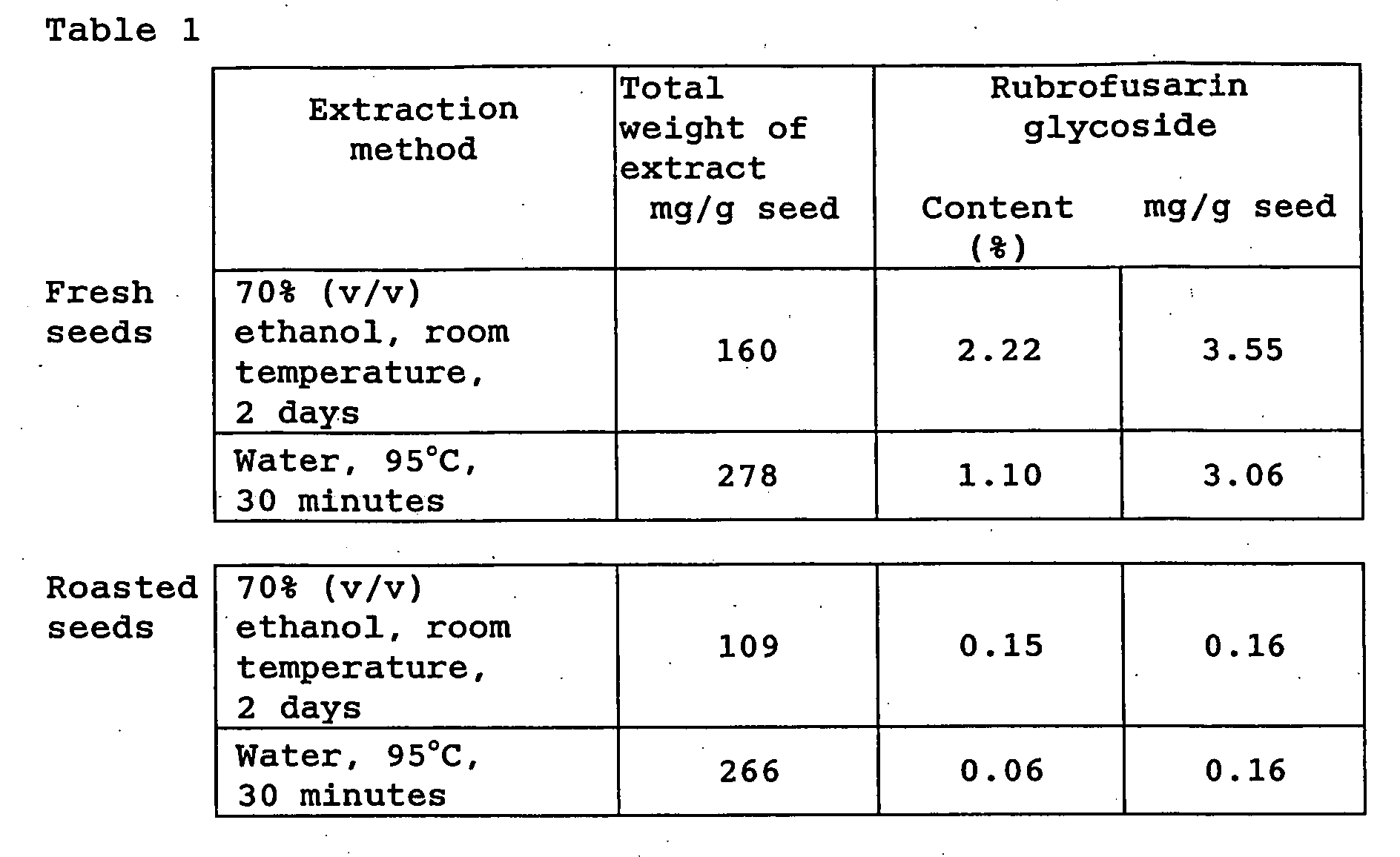
From this Table, it was clear that the content of
rubrofusarin glycoside significantly decreased by roasting.
In either case of fresh seeds and roasted seeds, the total
extraction amount was higher in extraction with water under
heating than that with 70% (v/v) ethanol. This is
conceivably because a highly viscous polysaccharide was
present. As to the extraction amount of rubrofusarin
glycoside, more specifically, in terms of extraction rate
and absolute extraction amount, 70% (v/v) ethanol
extraction was superior. In addition, it was found that
the roasted seed extract had a good aroma suitable for teas
and beverages, whereas the fresh seed extract had a grassy
and fishy odor.
To 100 g of non-roasted pulverized Cassia seed, 1.0 L
of a 70% (v/v) ethanol solution was added and extraction
was performed at room temperature for one whole day and
night. The extract was passed through a filter to obtain a
filtrate (dry weight: 14.5g, rubrofusarin glycoside: 3.0
wt%). The filtrate was concentrated under vacuum to
finally yield 500 ml of a 20% (v/v) ethanol solution, which
was then loaded on Diaion HP20 absorbent column (100 ml).
Unadsorbed material was washed off with 100 ml of the 20%
ethanol solution (total dry-weight of the unadsorbed
material: 10.8 g). Elution was performed stepwise with
1000 ml of a 30% (v/v) ethanol solution, and subsequently
with 100 ml each of 40%, 50%, 60%, 70%, 80%, and 100%(v/v)
ethanol solutions. The dry weight of the eluted material
and the weight (wt%) of rubrofusarin glycoside therein are
summarized in Table 2.
| Ethanol conc. for elution (%) | Amount of eluate (column volume) | Dry weight (g) | Rubrofusarin glycoside content (wt%) | Cumulative rubrofusarin glycoside yield(%) |
| 30% | 10 | 2.40 | 9.2 | 50.5 |
| 40% | 1 | 0.23 | 14.3 | 58.2 |
| 50% | 1 | 0.66 | 15.1 | 81.1 |
| 60% | 1 | 0.48 | 10.6 | 92.9 |
| 70% | 1 | 0.25 | 5.1 | 95.9 |
| 80% | 1 | 0.15 | 1.4 | 96.3 |
| 100% | 1 | 0.16 | 0 | 96.3 |
After sufficient washing with a 30% (v/v) ethanol
solution under the stated conditions, elution was performed
with a 50%(v/v) ethanol solution. As a result, an
extraction concentrate (dry weight: 0.89 g) containing 133
mg (14.9 wt%, yield: 30.5%) of rubrofusarin glycoside was
obtained from 100 g of Cassia seed.
Using human hepatoma HepG2 cells, time-dependent
induction effect of rubrofusarin glycoside upon
intracellular glutathione level was investigated. The
procedure was similar to that of Example 1. Briefly, HepG2
cells were dispensed at a density of 2.5 × 10⁴ cells (100
µl) per well of a microplate and allowed to settle thereto,
and then, 25 µl of an evaluation sample diluted to a
predetermined concentration in RPMI1640 medium was added.
The cells were cultured for 0, 6, 12, 24, and 48 hours. As
the evaluation sample, use was made of the concentrate
(containing 10.2% (w/w) rubrofusarin gentiobioside) of the
present invention prepared in accordance with the method
shown in Example 4. As a control, a sample containing
silibinin (purchased from Sigma Chemical), a major active
ingredient of sirimalin (Planta Med. 55, 420, 1989), which
has been reported to increase tissue glutathione level in
rats was used to observe change in intracellular
glutathione level (Figure 1). In this figure, all data
points are expressed by relative values based on the
negative control containing no active agent being 100%. To
make comparison easier, the concentration of silibinin is
expressed in terms of concentration of rubrofusarin
glycoside (rubrofusarin gentiobioside) contained in the
concentrate (final concentration: 1.25, 2.5, 5.0 µM). As
is apparent from Figure 1, 12 hours after the addition of
the concentrate of the present invention, it was found that
the intracellular glutathione level significantly increased
in a dose dependent manner. On the other hand, in
silibinin, possibly due to a strong cytotoxicity in the
in-vitro cell evaluation system, only a small increase in
glutathione level was observed temporarily 12 hours after
the addition of silibinin.
Using human hepatoma HepG2 cells, dose dependency of
the effect of rubrofusarin glycoside upon intracellular
glutathione level was investigated. The method was similar
to that in Example 5. Briefly, HepG2 cells were dispensed
at a density of 2.5 × 10⁴ cells (100 µl) per well of a
microplate and allowed to settle thereon, and then, 25 µl
of the concentrate subjected to 2-fold serial dilution to
predetermined concentrations in RPMI1640 medium was added
to give a final concentration from 0 to 20 µM in terms of
the active ingredient, rubrofusarin gentiobioside. After
culturing for an additional 48 hours, the intracellular
glutathione level was measured to be compared with that of
the cells containing no test-compound or that of the cells
containing comparative compound, β-naphthoflavone
(purchased from Nacalai-tesque) or silibinin (purchased
from Sigma Chemical). The results are shown in Figure 2.
Note that β-naphthoflavone is known as a compound which
increases the activity of γ-glutamylcysteine synthetase,
the rate-determining enzyme of the glutathione biosynthesis
system, and intracellular glutathione level in a dose
dependent manner, based on cellular level analysis similar
to that of this example(J. Biol. Chem. 272, 7445, 1997).
As is apparent from these, it was demonstrated that the
glutathione increasing activity of the active ingredient of
the present invention, rubrofusarin glycoside, was
equivalent to that of β-naphthoflavone; however, its
cytotoxicity in a high-concentration range was lower.
Glutathione increasing activity of silibinin was not
observed due to the influence of cytotoxicity.
Using human hepatoma HepG2 cells, whether the cells
exhibit resistance to peroxides in the presence of
rubrofusarin glycoside was investigated. The method was
similar to that in Example 5. Briefly, HepG2 cells were
dispensed at a density of 2.5 × 10⁴ cells (100 µl) per well
of a microplate and allowed to settle thereto, and then,
25 µl of the concentrate diluted in RPMI1640 medium to a
final concentration of 10 µM in terms of rubrofusarin
gentiobioside was added. After culturing was performed for
a further 48 hours, a peroxide, t-butyl hydroperoxide (t-BHP)
was added so as to give a final concentration of 0 to
1 mM. The rate of surviving cells after 3 hours relative
to that of the cells containing no test compound was
compared with those containing comparative compounds, β-naphthoflavone
(6 µM) and silibinin (10 µM). The results
are shown in Figure 3. The rate of surviving cells was
checked by WST-1 staining and calculated based on a control
not containing t-BHP as being 100%. As shown in Figure 3,
although the protective effect against t-BHP was somewhat
lower than that of β-naphthoflavone, it was shown that the
active ingredient of the present invention, rubrofusarin
glycoside was able to mitigate the cytotoxicity of
peroxides in the in vivo t-butyl hydroperoxide model by
increasing the level of glutathione, which is a substrate
for glutathione peroxidase.
Using human hepatoma HepG2 cells, the synergistic
effect between rubrofusarin glycoside having the
intracellular glutathione increasing activity and a
precursor for synthesizing glutathione in vivo was
investigated. The method was similar to that of Example 1
except that D-MEM medium (supplemented with 10% serum)
containing no L-cystine was prepared, since RPMI 1649
medium containing a sufficient amount of L-cystine was not
suitable for the purpose of this Example. Briefly, HepG2
cells were dispensed at a density of 2.5 × 10⁴ cells (100
µl) per well of a microplate and allowed to settle thereto,
and then, the medium was exchanged with the D-MEM medium
(100 µl) containing no L-cystine. A diluted concentrate
containing rubrofusarin glycoside at a final concentration
of 10 µM in L-cystine free D-MEM medium, and cystine
solutions of predetermined concentrations were prepared.
An aliquot of 25 µl was taken from each of them and added
to wells, and culturing was continued for 40 hours.
Thereafter, intracellular glutathione levels were measured.
As is apparent from the results shown in Figure 4,
intracellular glutathione level increased as the
concentration of L-cystine added increased. However, no
increase in glutathione level was observed by the
concentrate of the present invention in the absence of the
precursor, L-cystine. However, the co-existence of L-cystine,
resulted in a higher glutathione level than that
obtained by L-cystine alone. These results indicate that
rubrofusarin glycoside having a glutathione increasing
activity acted synergistically in cooperation with the
glutathione precursor, thereby to increase intracellular
glutathione level.
Glutathione levels in organs are decreased as a
result of restraint stress. Whether or not rubrofusarin
glycoside has any effect in preventing or lessening such a
decrease was investigated. As test animals, 6 week old
C57BL/6 male mice, comprising 6 mice in a group, were used.
They were given an oral suspension of the concentrate
mentioned above in 0.5% Tween 80 at a dose of 200 mg/kg
(corresponding to 12 mg/kg in terms of rubrofusarin
glycoside) once a day for 8 days. The mice were then fixed
on a restraint net for 8 hours to subject them to restraint
stress. To a non-restraint control group (n=6), and a
restraint control group (n=6), a 0.5% Tween 80 aqueous
solution was administered compulsively under the same
conditions, and the restraint control group was subjected
to the same stress mentioned above. Immediately after the
mice were released from restraint, the liver, and brain
tissue except for the cerebellum were excised. The
contents of glutathione and lipid peroxide (thiobarbituric
acid reactive substance: TBARS) of each organ were measured.
More specifically, after excision, the organs were stored
at -80°C. An ice cold homogenization solution (154 mM KCl,
5 mM DTPA, 10 mM KPi buffer, pH 6.8) was added to each of
the organs in a 9-fold volume to weight ratio. Homogenates
were prepared by Physcotron (Microtec Co., Ltd.) and TBARS
values were calculated in accordance with the method of
Ohkawa et. al. (Anal. Biochem. 95. 351-358, 1979). Further,
an acid buffer (40 mM HCl, 10 mM DTPA, 20 mM ascorbic acid,
10%TCA) was added to each homogenate in an equal amount and
protein was removed by centrifugation. The glutathione
content was determined in accordance with the method of
Senft et. al. (Anal. Biochem. 280, 80-86, 2000).
The results in Figures 5 and 6 show that when
restraint stress was imparted, glutathione contents of both
the liver and brain tissue decreased; at the same time, the
TBARS values showing the content of lipid peroxide
increased. In contrast, by administering a composition of
the present invention containing rubrofusarin glycoside in
advance, these values tended to improve towards normal in
the liver, and a significant improvement (p<0.05) was
observed in brain tissue.
After the components shown in Table 3 were uniformly
mixed, the mixture was compression-molded into tablets of
300 mg by using a tablet machine. The extraction
concentrate used was prepared so as to contain 10 wt% of
rubrofusarin glycoside in accordance with the method of
Example 4. As a whey peptide, LE80GF manufactured by DMV
Japan was used. The standard dose amount per day is 6
tablets each containing 300 mg. In this case, tablets 1, 2
and 3 can supply rubrofusarin glycoside in amounts of 90,
40, 20 mg and L-cysteine/L-methionine in amounts of 0 mg/0
mg, 20 mg/13 mg, and 32 mg/45 mg.
| Tablet 1 | | Tablet 3 | |
| Component | Mixing amount (%) | Mixing amount (%) | Mixing amount (%) |
| Extraction concentrate | 50.0 | 22.2 | 11.1 |
| Whey peptide | 34.7 | 55.6 | |
| L-methionine | 1.4 | ||
| Vitamin C | 5.6 | 11.1 | |
| Cellulose | 6.0 | 20.4 | 11.6 |
| Lactose | 19.0 | 2.1 | |
| Reducing maltose | 16.0 | ||
| Cornstarch | 7.0 | 13.0 | 7.3 |
| Sucrose fatty acid ester | 2.0 | 2.0 | 2.0 |
A beverage was prepared by mixing and dissolving
2.5 g of the extraction concentrate containing rubrofusarin
glycoside in an amount of 10 wt% and manufactured in
accordance with the method according to Example 4, 17.7 g
of whey peptide (WE80B manufactured by DMV Japan), 1.2 g of
sodium ascorbate, and 26.5 g of sucrose, 2.1 g of citric
acid, and 950 g of dissolving water, dispensing the mixture
into brown bottles at 120 ml, and subjecting the bottles to
retort sterilization (121°C, 15 minutes). It is possible to
supply 30 mg of rubrofusarin glycoside and 34 mg of
L-cysteine to the body by consuming a single bottle of the
beverage.
As described above, it is possible to
maintain/increase glutathione level in cells/tissues by
taking the concentrate of the present invention containing
rubrofusarin glycoside, thereby preventing or mitigating
oxidative stress involved in life-style diseases and their
prodromal states, and dysfunction of the brain.
Claims (15)
- An oral composition for maintaining or increasing the intracellular glutathione level, wherein the composition contains at least one rubrofusarin glycoside in an amount effective for increasing the intracellular glutathione level.
- The composition according to claim 1, wherein the rubrofusarin glycoside is extracted from a plant containing rubrofusarin glycosides.
- The composition according to claim 2, wherein the plant containing rubrofusarin glycoside is Cassia seed or Senna.
- The composition according to any one of claims 1 to 3, wherein all or the most part of the rubrofusarin glycoside comprises rubrofusarin gentiobioside.
- The composition according to any one of claims 1 to 4, wherein the content of rubrofusarin glycoside is 0.5 wt% to 30 wt% on solid basis.
- The composition according to any one of claims 1 to 5, wherein the composition is a food or beverage containing rubrofusarin glycoside.
- The composition according to any one of claims 1 to 5, wherein the composition is a health food containing rubrofusarin glycoside.
- The composition according to any one of claims 1 to 5, wherein the composition is a pharmaceutical composition containing rubrofusarin glycoside.
- The composition according to any one of claims 1 to 8, wherein the composition further contains a precursor for intracellular glutathione biosynthesis and optionally a vitamin C component so as to synergistically increase the intracellular glutathione level.
- The composition according to claim 9, wherein the precursor for intracellular glutathione biosynthesis is selected from the group consisting of egg white, egg membrane, milk whey, yeast protein, vegetable protein such as soy bean, L-cystine, and L-methionine.
- The composition according to claim 9 or 10, wherein the composition further comprises a precursor for further augmenting the intracellular glutathione biosynthesis in an amount of 0.1 wt% to 10 wt% on solid basis in terms of L-cysteine or L-methionine.
- An oral composition for maintaining or increasing the intracellular glutathione level, wherein the composition contains an active ingredient obtained by extraction of pulverized Cassia seed or Senna seed with water or a 10 to 100% organic solvent to yield a crude extract, bringing the crude extract into contact with an adsorbent resin, and performing elution with a 10 to 100% organic solvent.
- The composition according to claim 12, wherein ethanol is used as the organic solvent for the extraction and the elution.
- The composition according to claim 12 or 13, wherein rubrofusarin glycoside is contained in an amount of 0.5 wt% to 30 wt% on solid basis.
- The composition according to claim 14, wherein the rubrofusarin glycoside is rubrofusarin gentiobioside.
Applications Claiming Priority (3)
| Application Number | Priority Date | Filing Date | Title |
|---|---|---|---|
| JP2002160176A JP4520089B2 (en) | 2002-05-31 | 2002-05-31 | Rubrofusarin glycoside-containing composition |
| JP2002160176 | 2002-05-31 | ||
| PCT/JP2003/006875 WO2003101466A1 (en) | 2002-05-31 | 2003-05-30 | Rubrofusarin glycoside-containing composition |
Publications (2)
| Publication Number | Publication Date |
|---|---|
| EP1552838A1 true EP1552838A1 (en) | 2005-07-13 |
| EP1552838A4 EP1552838A4 (en) | 2007-12-12 |
Family
ID=29706535
Family Applications (1)
| Application Number | Title | Priority Date | Filing Date |
|---|---|---|---|
| EP03733206A Withdrawn EP1552838A4 (en) | 2002-05-31 | 2003-05-30 | COMPOSITION CONTAINING RUBROBUSARIN GLYCOSIDE |
Country Status (4)
| Country | Link |
|---|---|
| US (2) | US20060110474A1 (en) |
| EP (1) | EP1552838A4 (en) |
| JP (1) | JP4520089B2 (en) |
| WO (1) | WO2003101466A1 (en) |
Cited By (4)
| Publication number | Priority date | Publication date | Assignee | Title |
|---|---|---|---|---|
| WO2008007063A3 (en) * | 2006-07-10 | 2008-08-21 | Chongquing Inst Of Ecological | Anti-obesity product and it's method of preparation |
| CN102093449A (en) * | 2011-01-06 | 2011-06-15 | 刘斌 | Method for separating and preparing fusarubin gentiobioside from cassia seeds |
| EP2484353A4 (en) * | 2009-09-30 | 2013-04-17 | Shiseido Co Ltd | Oral composition for alleviation of ultraviolet radiation-induced damage |
| CN103196847A (en) * | 2013-03-21 | 2013-07-10 | 湖南大学 | Quantitative detection method for intracellular active sulfhydryl compound of white-rot fungi under heavy metal stress |
Families Citing this family (6)
| Publication number | Priority date | Publication date | Assignee | Title |
|---|---|---|---|---|
| US20040057983A1 (en) * | 2002-09-25 | 2004-03-25 | David Schmidt | Biomolecular wearable apparatus |
| JP2006206509A (en) * | 2005-01-28 | 2006-08-10 | Towa Corporation 株式会社 | Maca extract manufacturing method |
| WO2007004570A1 (en) * | 2005-06-30 | 2007-01-11 | Suntory Limited | Composition having physical endurance improving effect and/or anti-fatigue effect |
| US8602961B2 (en) * | 2008-05-15 | 2013-12-10 | Lifewave Products Llc | Apparatus and method of stimulating elevation of glutathione levels in a subject |
| CN107200760A (en) * | 2016-04-06 | 2017-09-26 | 长沙博海生物科技有限公司 | A kind of preparation method of high-purity rubrofusarin -6-O- β-O-gentibioside |
| KR102121915B1 (en) * | 2018-09-03 | 2020-06-11 | 한국과학기술연구원 | Composition for protecting neuronal cells comprising naphthopyrone derivatives derived from the sprout of Cassia obtusifolia L. |
Family Cites Families (12)
| Publication number | Priority date | Publication date | Assignee | Title |
|---|---|---|---|---|
| US5075116A (en) * | 1989-04-20 | 1991-12-24 | Lahaye Laboratories, Inc. | Composition and method for treatment of macular degeneration |
| IT1256178B (en) * | 1992-11-30 | 1995-11-29 | Lorenzo Ferrari | COMPOUNDS WITH THERAPEUTIC ACTIVITIES USEFUL FOR THE TREATMENT OF DISEASES CONNECTED WITH A GLUTATION DEFICIENCY, PROCEDURE FOR THEIR PREPARATION AND PHARMACEUTICAL COMPOSITIONS THAT CONTAIN THEM. |
| CN1090134A (en) * | 1993-01-20 | 1994-08-03 | 李缯宏 | Health-care candy for watching TV |
| JPH08283172A (en) * | 1995-04-14 | 1996-10-29 | Kose Corp | Active oxygen scavenger and external preparation for skin containing the same |
| JPH108049A (en) * | 1996-06-25 | 1998-01-13 | Shiseido Co Ltd | Antioxidant composition |
| US5958417A (en) * | 1996-10-24 | 1999-09-28 | Hsu; Chau-Shin | Herbal combinations |
| US20010002269A1 (en) * | 1997-05-06 | 2001-05-31 | Zhao Iris Ginron | Multi-phase food & beverage |
| EP1094824B1 (en) * | 1998-06-10 | 2006-04-05 | Albert B. Crum | Prophylactic and therapeutic nutritional supplement for creation/maintenance of health-protective intestinal microflora and enhancement of the immune system |
| JP2000128728A (en) * | 1998-10-20 | 2000-05-09 | Ichimaru Pharcos Co Ltd | Cosmetic composition |
| WO2000057726A1 (en) * | 1999-03-29 | 2000-10-05 | The Nutrasweet Company | NUTRACEUTICALS HAVING N-[N-(3,3-DIMETHYLBUTYL)-L-α-ASPARTYL]-L-PHENYLALANINE 1-METHYL ESTER |
| US6238672B1 (en) * | 1999-04-23 | 2001-05-29 | E. Excel International Inc. | Dietary supplements containing dehydrated cactus fruit juice and ginseng berry juice |
| CN1336208A (en) * | 2001-08-21 | 2002-02-20 | 张民析 | Compound garlic powder for eliminating toxic metals from human body |
-
2002
- 2002-05-31 JP JP2002160176A patent/JP4520089B2/en not_active Expired - Fee Related
-
2003
- 2003-05-30 US US10/516,288 patent/US20060110474A1/en not_active Abandoned
- 2003-05-30 WO PCT/JP2003/006875 patent/WO2003101466A1/en not_active Ceased
- 2003-05-30 EP EP03733206A patent/EP1552838A4/en not_active Withdrawn
-
2007
- 2007-11-26 US US11/984,931 patent/US20080182803A1/en not_active Abandoned
Cited By (6)
| Publication number | Priority date | Publication date | Assignee | Title |
|---|---|---|---|---|
| WO2008007063A3 (en) * | 2006-07-10 | 2008-08-21 | Chongquing Inst Of Ecological | Anti-obesity product and it's method of preparation |
| US8247001B2 (en) | 2006-07-10 | 2012-08-21 | Chongquing Institute of Ecological Materia Medica Co. Ltd | Anti-obesity product and its method of preparation |
| EP2484353A4 (en) * | 2009-09-30 | 2013-04-17 | Shiseido Co Ltd | Oral composition for alleviation of ultraviolet radiation-induced damage |
| CN102093449A (en) * | 2011-01-06 | 2011-06-15 | 刘斌 | Method for separating and preparing fusarubin gentiobioside from cassia seeds |
| CN103196847A (en) * | 2013-03-21 | 2013-07-10 | 湖南大学 | Quantitative detection method for intracellular active sulfhydryl compound of white-rot fungi under heavy metal stress |
| CN103196847B (en) * | 2013-03-21 | 2015-09-30 | 湖南大学 | The quantitative detecting method of sulfhydryl-group activity compound in white-rot fungi born of the same parents under heavy metal stress |
Also Published As
| Publication number | Publication date |
|---|---|
| WO2003101466A1 (en) | 2003-12-11 |
| JP4520089B2 (en) | 2010-08-04 |
| US20060110474A1 (en) | 2006-05-25 |
| JP2004002231A (en) | 2004-01-08 |
| EP1552838A4 (en) | 2007-12-12 |
| US20080182803A1 (en) | 2008-07-31 |
Similar Documents
| Publication | Publication Date | Title |
|---|---|---|
| US20080182803A1 (en) | Rubrofusarin glycoside-containing composition | |
| US20230125075A1 (en) | Composition Containing Paper Mulberry Extracts | |
| US20120052138A1 (en) | Composition comprising green tea extract | |
| US20110038959A1 (en) | Plant-origin drug for preventing or improving hyperuricemia | |
| CN103313696A (en) | Skin whitening agent | |
| JP6773303B2 (en) | Composition for prevention or treatment of benign prostatic hyperplasia containing Combretaceae extract | |
| JP2011195503A (en) | Protein glycation inhibitor | |
| KR100924216B1 (en) | Hepatoprotective composition comprising pectolinarin or pectolinarigenin | |
| KR102519649B1 (en) | Composition for the prevention or treatment of prostate-related disease comprising Rhodiola sachalinensis root extract containing kaempferol and epicatechin gallate | |
| KR102362988B1 (en) | Composition for improving, protecting or treating of muscle disease, or improvement of muscle function comprising whey protein hydrolysate and Panax ginseng berry extract | |
| JP2011195531A (en) | Protein glycation inhibitor | |
| US20030129269A1 (en) | Extracts of cacao and cacao bean husk with inhibitory effects on carcinogenesis | |
| KR20150072660A (en) | Hepatoprotective composition containing adenophora triphylla extract | |
| KR20130107947A (en) | Composition comprising diphlorethohydroxycarmalol for protecting nerve cells | |
| KR20210002378A (en) | Hepatoprotective composition containing pini pollen extract as effective component | |
| JPWO2007001080A1 (en) | Foods and beverages and pharmaceuticals containing loquat leaf extract | |
| KR20190006925A (en) | Novel dihydro-2'H,3H-spiro[furan-2,3'-furo[3,2-b]furan]-2',5(3a'H,4H,5'H)-dione derivative and composition for prevention or treatment of inflammatory eye disease comprising the same | |
| JP5362976B2 (en) | Blood flow improver | |
| WO2005099486A1 (en) | Process for preparing lagerstroemia speciosa l. extract | |
| KR20110080998A (en) | Composition for improving and preventing skin wrinkles containing black currant anthocyanin | |
| KR102815968B1 (en) | A composition for improving, preventing and treating of obesity comprising sargassum thunbergii fraction | |
| KR101938055B1 (en) | A composition for treating, improving and preventing of artheriosclerosis comprising Gracilariopsis chorda ohmi extract or Gracilariopsis chorda ohmi fraction | |
| KR101526435B1 (en) | Compositions for skin-whitening comprising extract of Vitis amurensis ruprecht | |
| KR101794924B1 (en) | Method for Isolating Isorhamnetin for Prevention or Treatment of Non-alcoholic Fatty Liver Disease derived from Salicornia SPP. | |
| US12133857B2 (en) | Method for prolonging half-life of theanine in vivo |
Legal Events
| Date | Code | Title | Description |
|---|---|---|---|
| PUAI | Public reference made under article 153(3) epc to a published international application that has entered the european phase |
Free format text: ORIGINAL CODE: 0009012 |
|
| 17P | Request for examination filed |
Effective date: 20041231 |
|
| AK | Designated contracting states |
Kind code of ref document: A1 Designated state(s): AT BE BG CH CY CZ DE DK EE ES FI FR GB GR HU IE IT LI LU MC NL PT RO SE SI SK TR |
|
| A4 | Supplementary search report drawn up and despatched |
Effective date: 20071112 |
|
| 17Q | First examination report despatched |
Effective date: 20080617 |
|
| RAP1 | Party data changed (applicant data changed or rights of an application transferred) |
Owner name: SUNTORY HOLDINGS LIMITED |
|
| STAA | Information on the status of an ep patent application or granted ep patent |
Free format text: STATUS: THE APPLICATION IS DEEMED TO BE WITHDRAWN |
|
| 18D | Application deemed to be withdrawn |
Effective date: 20110301 |