EP1548587A2 - Selbstbeschreibende Programmbildaktualisierungskomponente - Google Patents
Selbstbeschreibende Programmbildaktualisierungskomponente Download PDFInfo
- Publication number
- EP1548587A2 EP1548587A2 EP04029579A EP04029579A EP1548587A2 EP 1548587 A2 EP1548587 A2 EP 1548587A2 EP 04029579 A EP04029579 A EP 04029579A EP 04029579 A EP04029579 A EP 04029579A EP 1548587 A2 EP1548587 A2 EP 1548587A2
- Authority
- EP
- European Patent Office
- Prior art keywords
- package
- file
- files
- information
- manifest file
- Prior art date
- Legal status (The legal status is an assumption and is not a legal conclusion. Google has not performed a legal analysis and makes no representation as to the accuracy of the status listed.)
- Ceased
Links
Images




Classifications
-
- G—PHYSICS
- G06—COMPUTING OR CALCULATING; COUNTING
- G06F—ELECTRIC DIGITAL DATA PROCESSING
- G06F8/00—Arrangements for software engineering
- G06F8/40—Transformation of program code
- G06F8/54—Link editing before load time
-
- G—PHYSICS
- G06—COMPUTING OR CALCULATING; COUNTING
- G06F—ELECTRIC DIGITAL DATA PROCESSING
- G06F8/00—Arrangements for software engineering
- G06F8/60—Software deployment
- G06F8/65—Updates
- G06F8/658—Incremental updates; Differential updates
Definitions
- the invention relates generally to computing devices, and more particularly to updating non-volatile storage of computing devices.
- Mobile computing devices such as personal digital assistants, contemporary mobile telephones, and hand-held and pocket-sized computers are becoming important and popular user tools. In general, they have become small enough to be extremely convenient, while consuming less battery power, and at the same time have become capable of running more powerful applications.
- embedded operating system images are typically built into a monolithic image file and stored in non-volatile storage (e.g., NAND or NOR flash memory, a hard disk and so forth) of each device.
- non-volatile storage e.g., NAND or NOR flash memory, a hard disk and so forth
- updating such a device is necessary or desirable from time-to-time.
- a monolithic operating system has a number of disadvantages, including that to install an update, a large amount of resources (e.g., temporary storage and bandwidth) are needed to replace the entire monolithic image. At the same time, installing some subset components of the operating system is a difficult task, for various reasons. What is needed are mechanisms that facilitate the updating of some subset of an operating system image.
- the present invention is directed towards a system and method that provide installation and update packages, wherein each package comprises an encapsulation of a set of files that which are treated the same for the purposes of installation, and wherein the format of the package is self-describing, thereby facilitating the replacement of only component parts of an image.
- the system and method maps operating system features (comprising files, metadata, configuration information and so forth) into packages as part of a software build process.
- packaging logic handles cases where specific files and/or settings are shared between related features, which the user in turn chooses to map to differing packages.
- the logic generally ensures that individual files/settings are mapped to the correct package, given a number of possible higher level package mapping requests.
- packages optionally convey dependency information, and thus a mechanism is provided (via feature-level dependency specifications) by which packages acquire the dependency information. Logic resolves conflicts and dependencies below the feature level.
- a build manifest file is created by taking a binary image builder file for the operating system image and a component to package mapping file as inputs.
- the build manifest file specifies the file contents for a particular package. These file contents are reviewed, and any executable code is processed prior to insertion into the package to enable executable code relocation/fix-up on the device at install time.
- a package generation process creates the device manifest based on information in the build manifest and a package definition file.
- the registry for the operating system image is broken up and assigned to packages based on a similar algorithm, and XML files may be similarly broken up and assigned to specific packages.
- the result is a number of files for each package that is to be constructed, possibly including a package definition file, a component mapping file, a component relations file, a build manifest file; registry file and an XML settings file. From these files a package generation process constructs a final package file by creating a package collection from the packages, including mapping each package to the package definition, reading the build manifest file for that package and generating the package from that data.
- a device manifest file is created during the packaging process and stored in the package itself.
- the device manifest file is used during the installation process.
- Package dependency and shadow (package settings priority) data is also part of the data accompanying a package, e.g., by writing it into the device manifest file.
- FIG. 1 shows functional components of one such handheld computing device 120, including a processor 122, a memory 124, a display 126, and a keyboard 128 (which may be a physical or virtual keyboard, or may represent both).
- a microphone 129 may be present to receive audio input.
- the memory 124 generally includes both volatile memory (e.g., RAM) and non-volatile memory (e.g., ROM, PCMCIA cards, and so forth).
- An operating system 130 is resident in the memory 124 and executes on the processor 122, such as the Windows® operating system from Microsoft Corporation, or another operating system.
- One or more application programs 132 are loaded into memory 124 (or execute in place in ROM) and run on the operating system 130. Examples of applications include email programs, scheduling programs, PIM (personal information management) programs, word processing programs, spreadsheet programs, Internet browser programs, and so forth.
- the handheld personal computer 120 may also include a notification manager 134 loaded in the memory 124, which executes on the processor 122. The notification manager 134 handles notification requests, e.g., from the application programs 132.
- the handheld personal computer 120 includes networking software 136 (e.g., hardware drivers and the like) and network components 138 (e.g., a radio and antenna) suitable for connecting the handheld personal computer 120 to a network, which may include making a telephone call.
- the handheld personal computer 120 has a power supply 140, which is implemented as one or more batteries.
- the power supply 140 may further include an external power source that overrides or recharges the built-in batteries, such as an AC adapter or a powered docking cradle.
- the exemplary handheld personal computer 120 represented in FIG. 1 is shown with three types of external notification mechanisms: one or more light emitting diodes (LEDs) 142 and an audio generator 144. These devices may be directly coupled to the power supply 140 so that when activated, they remain on for a duration dictated by a notification mechanism even though the handheld personal computer processor 122 and other components might shut down to conserve battery power.
- the LED 142 preferably remains on indefinitely until the user takes action.
- contemporary versions of the audio generator 144 use too much power for today's handheld personal computer batteries, and so it is configured to turn off when the rest of the system does or at some finite duration after activation.
- the present invention is generally directed towards installing and/or updating software that is stored on small mobile computing devices, such as Microsoft Windows® CE-based portable devices, including those in which the initial software or software update is written to the embedded device's non-volatile memory, e.g., flash memory.
- small mobile computing devices such as Microsoft Windows® CE-based portable devices
- the present invention provides benefits to computing in general, and thus may apply to other computing devices and other types of storage, including various types of memory and/or other types of storage media such as hard disk drives.
- flash hereinafter may be used with reference to the updatable storage of a device, although it is understood that any storage mechanism is equivalent.
- image will generally include the concept of the initial software installation image as well as subsequent software updates to an image, even when only part of an existing image is updated.
- conditional feature variable When a conditional feature variable is set at build time, the associated contents of the .bib and .reg files are included in the image, and as such the user of the system has the ability to select, at a granular feature level, what the resultant image should contain.
- images including software updates are built from self-contained, secure entities.
- a fundamental update primitive is referred to as a package, wherein in general, a package is an encapsulation of a set of files that are versioned the same and are updated as a unit.
- the present invention provides a package format as one which is self-describing, a significant improvement when updating images, and one that facilitates replacing only a component part of an image.
- Images are built from packages and contain both executable code and data that may be applied to storage.
- executable code is customized to the virtual address space environment of the embedded device at install time; for example, depending on the underlying flash memory technology, some devices allow executable code to be run directly from the flash (execute-in-place, which means that the code cannot be stored in a compressed format) while other devices require that the code be copied (including decompressing the code as necessary) into RAM in order to run.
- image update technology uses packages to break the operating system image into updateable components that can be updated in isolation, while maintaining any cross-component dependencies.
- a system and method that maps operating system features (comprising files, metadata, configuration information and so forth) into packages as part of a software build process.
- the packages can be used for initial device installation, and also for updates.
- software update packages may be in various forms, for example some may contain only the changes (deltas) to a previous update, while others may contain files that entirely replace other files.
- One other type of package can contain other packages.
- the package concept described herein is a component part of the updating process.
- the process by which operating system features (generally an abstract concept that maps to specific files, metadata, configuration information, and so forth) are mapped into packages provides an ease-of-use advantage for the user (e.g., the provider of the image), including that instead of having to identify the lowest level components of an operating system image, the user is able to refer to higher level handles that describe a full set of associated files, metadata, configuration information and so forth for a particular aspect of the operating system image.
- the terms "feature” and "component” ordinarily may be used interchangeably. By referring to a feature handle, the user is able to gain an advantage in terms of managing packaging complexity through abstraction.
- DLLs dynamically-linked libraries
- resource/data files resource/data files
- registry information registry information
- the present invention enables the user to refer to this associated information with a single "Internet Explorer" handle and thus map it at the feature level to a package.
- the present invention also provides packaging logic to handle cases where specific files/settings are shared between related features, which the user in turn chooses to map to differing packages.
- the logic in various algorithms (described below) generally ensures that individual files/settings are mapped to the correct package, given a number of possible higher level package mapping requests. In situations in which the logic cannot determine a correct course of action, messaging is provided to the user to indicate any issues that require user intervention to resolve.
- packages optionally convey dependency information. For example, when the contents of a package rely on the contents of another package, the relationship is captured during the build process and encoded into the package for later analysis during the installation process.
- the present invention also provides a mechanism (via feature-level dependency specifications) by which packages acquire the dependency information.
- feature selections can be mapped to an array (one or more) of packages, resulting in specific files and settings being mapped to an appropriate package.
- logic resolves conflicts and dependencies below the feature level. For example, if two features logically refer to the same specific file and the features are mapped to different packages, the logic determines into which package the shared file is to be placed.
- package files are defined at build time by three different files: a package definition file (pkd), a component mapping file (cpm), and a component relations file (crf).
- the pkd file defines the global attributes of the contents of a package.
- the pkd file is an XML file that is validated during the build process against the following XSD:
- GUID globally-unique ID
- package name serves to provide a handle that is used when mapping an operating system feature / component to the package.
- the cpm file is a comma-separated value file that contains component-to-package mapping information. It is of the form:
- the component relations file denotes dependency and shadow relations (shadow refers to a precedence ordering for settings) between components.
- the component relations file is of the form:
- Terms Term General Definition Module A single executable file (.EXE, .DLL, etc.) Settings A collection of configuration information that may contain Registry settings, file system initialization instructions (.DAT file), Database initializations, and Provisioning XML.
- Component A collection of modules, files (non-module files including templates, fonts, etc.), and settings that make up a feature unit. Components are typically associated with sysgen MODULES tags.
- Package A collection of components that is signed and packaged for distribution Manifest (package, build and device) A file which describes the contents of a package.
- a package manifest file (with a .BIB extension) that contains entries which describe the names of each file in the package; and a different manifest file, a device side manifest (with a .DSM extension), is a binary file that describes the complete set of information about a package (described below with reference to FIG. 9).
- a build manifest file is created from the package manifest file, and used by a package generation process that generates the device manifest file (and the rest of the package).
- Shadow Order Tool Build tool which processes the Component Relationships File and generates the Package Shadow Files.
- .dsm Device Side Manifest file File on the device which describes the package (files in the package, name, guid, signature, version, shadows, dependencies, CRC, root certs, etc.) .pkg.cab Canonical Package file Full version of a package which contains the complete file for all files in the package. .pku.cab Update Package file A file which facilitates the update of a device from a specific version of a single package to a different version of the same package. This file may contain binary diffs of individual files, or complete files, whichever minimizes the size of the update package. .pks.cab Super Package file A file which contains a collection of Update Packages and/or Canonical Packages.
- a build manifest file 202 is created by taking a binary image builder file 204 (the .bib file, also referred to as a package manifest file) for the operating system image and a component to package mapping file 206 as inputs.
- the build manifest file 202 specifies the file contents for a particular package.
- FIG. 3 generally shows an example build manifest file creation process 208 by which the build manifest file 202 is created from the binary image builder file 204.
- each line in the binary image builder file 204 is parsed; lines that parse as a .bib file entry having valid tags (looked up in an execute-in-place table (steps 310 and 312) may be compressed as desired (step 318), and written to the build manifest file 202 (step 320).
- the resultant build manifest file 202 is an XML file that is validated with the following XSD:
- the registry for the operating system image is broken up (into what is sometimes referred to as an RGU file) and assigned to packages based on a similar algorithm.
- An example of such a process 210 is depicted in FIG. 4, wherein the registry settings 212 (FIG. 2) associated with valid tags (step 414), including their registry key names as appropriate, are written into the package RGU file (step 422). Note that the registry key names are written to that package's RGU file whenever a package being processed changes (steps 418 and 420).
- XML files 218 may be broken up and assigned to specific packages.
- An example process 220 for doing this is depicted in FIG. 5, wherein valid tags for the children nodes (evaluated at step 508) are assigned to a node of the package (step 514).
- the result of this intermediate step of the package-creation process is a number of files, shown in FIG. 2, for each package that is to be constructed, including:
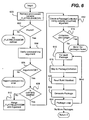
- a package generation process 230 constructs a final package file 232, generally in accordance with the flowchart shown in FIG. 6.
- a package collection is created from the packages (step 612), including mapping each package to the package definition, reading the build manifest file 208 for that package and generating the package from that data (steps 618-622).
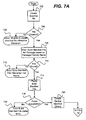
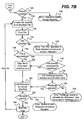
- FIGS. 7A and 7B The process of converting the build manifest file into a final package file list form and processing each executable with a relmerge tool 250 (the tool that inserts relocation information into an executable as described below with reference to FIG. 8) is generally depicted in FIGS. 7A and 7B.
- a directive file is created and the build manifest file is located and parsed, (assuming no errors occurred). If the parsing is successful (step 716), a device manifest object is created at step 720, and the process continues to step 726 of FIG. 7B, which ensures that the device manifest object was properly created.
- each file listed in the build manifest file is processed.
- the file is found and determined whether to be executable at step 738. If not, the file is copied as is to a temporary build directory, otherwise the file needs to be processed by a tool 250 (FIG. 2, e.g., named relmerge.exe) that enables executable code relocation/fix-up on the device at install time (if not already processed, as tested via step 740). If the file needs relmerge processing, described below with reference to FIGS. 8A and 8B, the tool is called at step 744, and if it executes successfully, the filename is added to the device manifest.
- a tool 250 e.g., named relmerge.exe
- each executable is processed with the relmerge tool 250 that compresses the relocation information that is already in the file, and optionally (if a .REL file is provided) provides more detailed relocation information that allows the operating system to separate the code and data sections into discontiguous memory regions.
- the relmerge tool operations are generally depicted in the flow diagram of FIG. 8. As represented by step 802, a copy of the input file is made, because the input file will be modified by running this too.
- the relmerge tool 250 makes a thus copy of the input file and works from that copy, which is deleted when the program exits.
- the signature is removed, because the signature would otherwise cause a later portion of the process (a space accounting check, described below) to fail. Note that since the tool 250 will be outputting a completely different file, the signature would have no relevance to the output file in any event.
- the signature is stored at the end of the file outside of any section in the file, wherein each section corresponds to a unit with which data is loaded into memory by the loader. Each section has a header, called an 032 header, or identified with the IMAGE_SECTION_HEADER structure.
- the tool 250 parses the PE file headers for the PE file and its sections into suitable internal data structures.
- the IMAGE_SECTION_HEADER structure represents the image section header format (additional details about the IMAGE_SECTION_HEADER may be found at msdn.microsoft.com):
- a space accounting check (step 808) is performed to verify that there is no information in the file that is not included in the sections of the file.
- data is stored in an .EXE or .DLL file outside of the Sections, including file signatures and Codeview debug directory entries, (which are handled by the tool 250).
- There are other applications that may store data outside of a section such as a self-extracting executable file which stores the data to be extracted after the .EXE itself.
- the compressed data is not stored in a section, otherwise the loader would attempt to load the compressed data into memory, which is not how a self-extracting executable should operate.
- the tool does not support these instances.
- Space Accounting is implemented by an instance of the CSpaceAccounting class, which maintains an array of SpaceBlock structures, each of which accounts for block of data in the file.
- Space Accounting the areas in the file that can be accounted for are added to the SpaceAccounting as individual blocks. This is done for the file headers (including the E32 and 032 headers), and for each of the sections in the file. To accommodate CodeView debug entries, each of those are also added as a separate block. The blocks are then sorted by their offset within the file. Blocks which are adjacent in the new ordering (e.g., Block 2 begins on the byte immediately after the last byte of Block 1) are merged.
- the list should contain one and only one block, which starts at offset 0 and has a length which is the length of the entire file. If that condition is true, then the test passes. If not, an error is reported and the tool exits.
- the tool 250 searches for the .REL file in the same directory where the input file is specified, as represented by step 810. If so, it is processed via step 812, otherwise the relocation section of the PE file is processed via step 814. More particularly, the relocation parsing tool can parse two different types of relocation information, namely the relocation information in a .REL file, which contains destination section information, and the relocation information in the .reloc section of a PE file, which does not contain destination section information. To this end, relocation parsing has two entry points corresponding to parsing either a .REL file or the internal relocations in a PE file; in a current implementation, it is legal to call either one or the other, but not both.
- a two dimensional array of CRelocData classes is maintained, wherein the two dimensions of this array are the source section and the destination section for the relocation in question.
- the source section for a relocation is the section where the relocation is located, wherein a relocation is an instruction to update a particular piece of data in the file when the file is fixed up to load at a particular address; the source section identifies in which section that piece of data occurs.
- the source section is inferred by looking at the relative virtual address of the relocation and comparing that with the relative virtual address ranges of the sections in the file.
- the destination section for a relocation identifies which section contains the piece of data to which the relocation is pointing.
- An inspection technique does not always work, because optimizers have been known to optimize the code in such a way that the relocations appear to point to other sections, e.g., it will optimize out an addition or subtraction and place it in the reference instead of in the code. For this reason, the destination section is not inferred from the data.
- the difference between the two relocation formats (.REL or .reloc) is whether the destination section for the relocation is known.
- the .REL file explicitly identifies the destination section, while the .reloc section does not.
- the process maintains a two dimensional array of CRelocData classes, and each CRelocData class builds its own stream of relocation data.
- This array is fixed size in both dimensions, meaning that the tool can only handle PE files with some maximum (e.g., sixteen) sections.
- the data format for persisting the relocations stores eight bits for each of the source and destination sections, leaving the possibility in the data format for 256 sections.
- Two other functions (CalculateRelocSize and WriteRelocationsToFile) then combine these individual streams by writing out a block header for each combination of source and destination section which has at least one relocation.
- Relocation encoding is implemented in the CRelocData class.
- This class takes a stream of relocation addresses (as individual calls to the CRelocData::AddReloc method), and creates a byte stream which represents the commands necessary to encode those relocations. That byte stream can be retrieved later.
- the class effectively stays one command behind, always starting out with a "Single" command, representing a single relocation. Then as new relocations arrive (at the AddReloc method), they are analyzed to see if a pattern can be formed using the previous command and the new location.
- the previous command is a "Single” command
- the previous command can only be extended by transforming it from a "Single” command to a "Pattern” command if the new relocation address is DWORD aligned, and is within the maximum skip range of the pattern command (which is 3 DWORDs). If the previous command is a pattern command, then that pattern already has an established form, and the next element in the pattern can be deduced. If the new address happens to match the next element in that pattern, the pattern is extended by one cycle. Otherwise, a new Single command is started.
- step 818 the old .RELOC section (if one existed) is removed, and the new .CRELOC section is added at the end, if there are any relocations to add.
- the output file is finally created at step 820, writing the headers then the data for each section to the output file.
- relmerge.exe now tests to see if the target output file is nk.exe. If the output file is nk.exe, then the relmerge tool 250 processes the contents of two files, to write out the pTOC information and RomExt information, (described below). The relmerge tool 250 looks at the output file because nk.exe is created by copying different files based on debug settings.
- the first file processed is config.bsm.xml. This file is produced by MakePkg.exe during Image Update processing. It contains a textual representation of the names and desired values for the FIXUPVARS in the system kernel. The contents of this file are parsed and stored for later use.
- the second file is the map file for the input file.
- This file is processed by ProcessFixupVars. It takes the source file path, copies it and replaces the .exe with .map and attempts to open the map file (map files are text files containing a large amount of information about the physical and virtual addresses of functions and variables within the PE file). If the map file is successfully opened, the first line is parsed to retrieve the timestamp of the map file. The timestamp is then compared against the timestamp in the PE file. If they are different, a warning is produced and map file processing stops. If the timestamps match, each line of the file is read and a regular expression string is used to look for each FIXUPVAR.
- ProcessFixupVars also looks for the pTOC (where TOC represents table of contents) and RomExt variables for later processing.
- pTOC where TOC represents table of contents
- a new .creloc header is created with the bSrcSection set to the section retrieved from the map file (adjusted from 1 based to 0 based), the bDstSection set to 254 and a length of four.
- This header is written to the target file followed by the 4 byte RVA+Base address information.
- the header is the same except that bSrcSection is set to 253.
- the pTOC/RomExt parsing operation is used because the operating system kernel requires information about the files in the ROMs, which is provided through the pTOC variable. This variable needs to be updated by the DiskImage tool and the update application running on the device. The information about this variable can only be retrieved through the .MAP file created during the compile and link phase of a system build. This file is parsed to retrieve this information.
- a device manifest file 260 (FIG. 2, shown in more detail in FIG. 9) is created during the packaging process and stored in the package itself.
- the device manifest file 260 is used during the installation process.
- the format and information contained in the device manifest file is shown in FIG. 9 and is also described with this structure definition:
- the contents of a device manifest file are derived from the pkd and processed crf file (called a psf file 280 once processed) information, as well as from the build manifest file (e.g., for the file list and attribute information).
- the crf file describes component-level dependencies, and is processed into a form that describes package-level dependencies.
- component settings can shadow one-another (in other words, there is a precedence ordering in events where two related settings exist on the system such that only one will win).
- Dependency and shadowing information at the component level are converted into package-level relations by way of a shadow order tool.
- the shadow order tool produces a package shadow file (packagename.psf) for each package which shadows other packages according to the component relationships file 226 (FIG. 2).
- the .psf file for a package lists (one per line) the GUIDs of shadowed packages.
- the shadow order tool's inputs are the merged component to package mapping file (.cpm), the merged component relationships file (.crf) and the merged package definition file (.pkd).
- the output is a text file, including formatted text lines of the form:
- the package generator creates a device manifest file, as shown in FIG. 2 by a Device Manifest File Creation Process 262 and as generally described in FIGS. 10A and 10B.
- each GUID in the .psf file is added to the device manifest file, as generally represented via step 1010 of FIG. 10A.
- this includes determining if the GUID is a dependency GUID or a shadow GUID, and calling the appropriate add function on the device manifest object.
- the device manifest object writes the device manifest file to the temporary directory, as generally represented via step 1030 of FIG. 10B.
- the package file 232 is created, including the processed files described in the directive file, the rgu file(s) 214, the xml file(s) 218, and the device manifest file 260, along with other package contents 282, using a package file creation process such as a CAB file API (CABAPI).
- CABAPI is intended to provide access to the contents of Cabinet files that are used as the transport mechanism for the files involved in an image update as part of the image update process.
- a PackageDefinition class is responsible for managing the overall creation of a Package.
- the PackageDefinition object creates a new subdirectory under the directory specified by the '_FLATRELEASEDIR' environment variable.
- the directory name is the package name, with the string "_PACKAGE_FILES” appended thereto, e.g., given a package named -- "LANG” --, a directory named "LANG_PACKAGE_FILES" would be created.
- This directory is created when the method SetDirectoryBase is called on the object.
- the name of the resulting package file is the friendly name of the package with a ".PKG" extension.
- the package file conforms to the Microsoft CAB file specification for CAB version 1.3.
- the PackagDefinition class provides the following public methods:
- executable code and data may be arranged in separate files.
- One significant advantage of is to facilitate a multi-language system, where the language-specific parts of a feature are placed into separate packages that are language specific. This creates a system where the packages that contain the executable code of the system are separate from the packages that contain language-specific components of the system. As a result, a patch for the executable code of a feature may be applied to any device, independent of any combination of languages that are installed on a that device.
- the executable code and language-independent data
- the language-dependent data are separated into one set of files, and the language-dependent data (and potentially code) into another set of files.
- These files are tagged as being part of the feature, but the language-dependent data files are further tagged being as language dependent.
- the system then moves those files into a separate package (e.g., described by a LocBuddy tag in the pkd file).
- a telephone-based feature may be in a library (e.g., tpcutil.dll) that is language-independent.
- the language-dependent resources for the phone feature are built into another resource dll, e.g., named tapres.dll, which is further localized for each language, e.g., it becomes tapres.dll.0409.mui (for US English), tapres.dll.0407.mui (for German), and so forth.
- These files are tagged as being part of the phone feature, but the language-specific files are further tagged as being language-specific, with suitable filenames.
- filenames may be constructed by substituting suitable language tags into a location-based variable in the name, such as represented by tapres.dll.%LOCID%.mui. Then the file is processed for each language that is supported, and multiple LANGPHONE (the locbuddy) packages are generated, e.g., LANGPHONE_0409 (for US English), LANGPHONE_0407 (for German), and so forth. As a result, the system can later update the LANGPHONE region such as to fix bugs in tpcutil.dll, independent of which languages are installed on the phone (via different LANGPHONE_xxxx packages).
- suitable language tags such as represented by tapres.dll.%LOCID%.mui.
- IMEs Input Method Editors
- cabinet verification may be performed.
- the cabinet verification module extracts the device manifest file 260 from the final package file 232 (a cabinet file) and verifying the cabinet file against the contents of the device manifest 260.
- a self-describing package file is provided, including dependency, shadow and other features that make updating of an image straightforward and correct.
Landscapes
- Engineering & Computer Science (AREA)
- General Engineering & Computer Science (AREA)
- Theoretical Computer Science (AREA)
- Software Systems (AREA)
- Physics & Mathematics (AREA)
- General Physics & Mathematics (AREA)
- Computer Security & Cryptography (AREA)
- Information Retrieval, Db Structures And Fs Structures Therefor (AREA)
- Stored Programmes (AREA)
Applications Claiming Priority (4)
| Application Number | Priority Date | Filing Date | Title |
|---|---|---|---|
| US53012903P | 2003-12-16 | 2003-12-16 | |
| US530129P | 2003-12-16 | ||
| US837024 | 2004-05-01 | ||
| US10/837,024 US7549148B2 (en) | 2003-12-16 | 2004-05-01 | Self-describing software image update components |
Publications (2)
| Publication Number | Publication Date |
|---|---|
| EP1548587A2 true EP1548587A2 (de) | 2005-06-29 |
| EP1548587A3 EP1548587A3 (de) | 2007-11-07 |
Family
ID=34556577
Family Applications (1)
| Application Number | Title | Priority Date | Filing Date |
|---|---|---|---|
| EP04029579A Ceased EP1548587A3 (de) | 2003-12-16 | 2004-12-14 | Selbstbeschreibende Programmbildaktualisierungskomponente |
Country Status (5)
| Country | Link |
|---|---|
| US (1) | US7549148B2 (de) |
| EP (1) | EP1548587A3 (de) |
| JP (1) | JP5208350B2 (de) |
| KR (1) | KR101143027B1 (de) |
| CN (1) | CN1641583B (de) |
Cited By (2)
| Publication number | Priority date | Publication date | Assignee | Title |
|---|---|---|---|---|
| CN101834885A (zh) * | 2010-03-10 | 2010-09-15 | 华为技术有限公司 | 一种软件下载方法和装置 |
| WO2019241028A1 (en) * | 2018-06-14 | 2019-12-19 | Microsoft Technology Licensing, Llc | Modification package |
Families Citing this family (58)
| Publication number | Priority date | Publication date | Assignee | Title |
|---|---|---|---|---|
| US20050132357A1 (en) * | 2003-12-16 | 2005-06-16 | Microsoft Corporation | Ensuring that a software update may be installed or run only on a specific device or class of devices |
| US7549042B2 (en) * | 2003-12-16 | 2009-06-16 | Microsoft Corporation | Applying custom software image updates to non-volatile storage in a failsafe manner |
| US7614051B2 (en) * | 2003-12-16 | 2009-11-03 | Microsoft Corporation | Creating file systems within a file in a storage technology-abstracted manner |
| US7568195B2 (en) * | 2003-12-16 | 2009-07-28 | Microsoft Corporation | Determining a maximal set of dependent software updates valid for installation |
| JP4479324B2 (ja) * | 2004-04-19 | 2010-06-09 | コニカミノルタビジネステクノロジーズ株式会社 | 情報処理装置 |
| US7853742B2 (en) * | 2004-04-26 | 2010-12-14 | Intel Corporation | System and method to conditionally shrink an executable module |
| US7661102B2 (en) * | 2004-08-20 | 2010-02-09 | Smith Micro Software, Inc. | Method for reducing binary image update package sizes |
| US8255363B2 (en) * | 2005-06-08 | 2012-08-28 | rPath | Methods, systems, and computer program products for provisioning software using dynamic tags to identify and process files |
| US20060288055A1 (en) * | 2005-06-08 | 2006-12-21 | Johnson Michael K | Methods, systems, and computer program products for provisioning software via a networked file repository in which a parent branch has a shadow associated therewith |
| US8255362B2 (en) * | 2005-06-08 | 2012-08-28 | rPath | Methods, systems, and computer program products for provisioning software using local changesets that represent differences between software on a repository and a local system |
| US8490082B2 (en) * | 2005-11-03 | 2013-07-16 | International Business Machines Corporation | System and method for representing user processes as software packages in a software package management system |
| US8869142B2 (en) * | 2006-01-27 | 2014-10-21 | Microsoft Corporation | Secure content publishing and distribution |
| KR100772399B1 (ko) * | 2006-02-28 | 2007-11-01 | 삼성전자주식회사 | 패치 파일 생성 방법 및 그 방법을 수행하는 프로그램을기록한 컴퓨터 판독 가능한 기록매체 |
| US8452981B1 (en) * | 2006-03-01 | 2013-05-28 | Nvidia Corporation | Method for author verification and software authorization |
| US8171482B1 (en) * | 2006-05-09 | 2012-05-01 | Vmware, Inc. | Application environment specifications for provisioning application specific runtime environments using subsets of resources required for execution |
| US7779401B2 (en) | 2006-06-26 | 2010-08-17 | Research In Motion Limited | Method and system for generating a reverse binary patch for undoing a software update |
| US7567984B1 (en) * | 2006-08-31 | 2009-07-28 | Symantec Operating Corporation | Operating system and application deployment based on stored user state and organizational policy |
| KR100810358B1 (ko) * | 2007-01-30 | 2008-03-04 | 삼성전자주식회사 | 컨테이너의 무결성을 확인하는 방법 및 그 dvb―h 단말 |
| US11262996B2 (en) | 2007-05-09 | 2022-03-01 | Vmware, Inc. | Repository including exclusion list |
| US8219987B1 (en) | 2007-08-24 | 2012-07-10 | Vmware, Inc. | Optimized virtual machine specification for provisioning application specific runtime environment |
| US9015180B1 (en) | 2007-05-09 | 2015-04-21 | Vmware, Inc. | Repository including file identification |
| US8347263B1 (en) * | 2007-05-09 | 2013-01-01 | Vmware, Inc. | Repository including installation metadata for executable applications |
| US8577937B1 (en) | 2007-05-09 | 2013-11-05 | Vmware, Inc. | Repository including exclusion list |
| US8146076B1 (en) * | 2007-09-17 | 2012-03-27 | Symantec Corporation | Systems and methods for customizing boot disk images using prioritization |
| US20090106730A1 (en) * | 2007-10-23 | 2009-04-23 | Microsoft Corporation | Predictive cost based scheduling in a distributed software build |
| US8335682B2 (en) * | 2007-10-30 | 2012-12-18 | Sercomm Corporation | Multi-language interfaces switch system and method therefor |
| US8291402B2 (en) * | 2007-11-29 | 2012-10-16 | Red Hat, Inc. | Using system fingerprints to accelerate package dependency resolution |
| US9424323B2 (en) * | 2008-01-31 | 2016-08-23 | Oracle International Corporation | Application tier data dictionary |
| GB0820427D0 (en) * | 2008-11-07 | 2008-12-17 | Inq Entpr Ltd | Mobile communication device and method |
| US8170706B2 (en) * | 2009-02-27 | 2012-05-01 | Xerox Corporation | Package generation system |
| US20130167136A1 (en) * | 2009-03-18 | 2013-06-27 | Adobe Systems Incorporated | Component-based installation |
| NO2460075T3 (de) | 2009-07-29 | 2018-04-21 | ||
| US9703550B1 (en) * | 2009-09-29 | 2017-07-11 | EMC IP Holding Company LLC | Techniques for building code entities |
| US20110119570A1 (en) * | 2009-11-18 | 2011-05-19 | Xerox Corporation | Automated variable dimension digital document advisor |
| US8533701B2 (en) * | 2010-03-15 | 2013-09-10 | Microsoft Corporation | Virtual machine image update service |
| US8495614B2 (en) * | 2010-05-28 | 2013-07-23 | Red Hat, Inc. | Mechanism for dynamically generating spec files for software package managers |
| US8732690B1 (en) * | 2011-10-27 | 2014-05-20 | Crimson Corporation | Computing device configured for installing an application |
| US8984502B2 (en) * | 2011-10-28 | 2015-03-17 | Hewlett-Packard Development Company, L.P. | Systems and methods for composing or decomposing a composite image for firmware update images |
| US8825722B2 (en) * | 2012-01-13 | 2014-09-02 | Microsoft Corporation | Calculation of properties of objects/shapes across versions of applications |
| US8757479B2 (en) | 2012-07-31 | 2014-06-24 | Xerox Corporation | Method and system for creating personalized packaging |
| US9507579B2 (en) | 2013-04-01 | 2016-11-29 | Oc Acquisition Llc | Interface for translating software commands and hardware commands for a distributed computing system |
| US9760659B2 (en) | 2014-01-30 | 2017-09-12 | Xerox Corporation | Package definition system with non-symmetric functional elements as a function of package edge property |
| US9892212B2 (en) | 2014-05-19 | 2018-02-13 | Xerox Corporation | Creation of variable cut files for package design |
| US9996339B2 (en) * | 2014-06-04 | 2018-06-12 | Microsoft Technology Licensing, Llc | Enhanced updating for digital content |
| DE102014216464A1 (de) * | 2014-08-19 | 2016-02-25 | Continental Automotive Gmbh | Vorrichtung und Verfahren zur Computerprogramminstallation für ein Kraftfahrzeug |
| US20160139909A1 (en) * | 2014-11-13 | 2016-05-19 | Martin Pospischil | Delta patch process |
| CN104657184B (zh) * | 2015-03-11 | 2018-09-28 | 成都广达新网科技股份有限公司 | 一种文件对应多嵌入式设备的升级方法 |
| US9916402B2 (en) | 2015-05-18 | 2018-03-13 | Xerox Corporation | Creation of cut files to fit a large package flat on one or more substrates |
| US9916401B2 (en) | 2015-05-18 | 2018-03-13 | Xerox Corporation | Creation of cut files for personalized package design using multiple substrates |
| EP3179688A1 (de) * | 2015-12-11 | 2017-06-14 | Koninklijke KPN N.V. | Aktualisierung eines teils einer manifestdatei auf patch-basis |
| US10503486B2 (en) * | 2016-12-09 | 2019-12-10 | Vmware, Inc. | Methods and apparatus to reduce application deployments sizes |
| US10394548B2 (en) * | 2017-07-25 | 2019-08-27 | Aurora Labs Ltd. | Assembling data deltas in vehicle ECUs and managing interdependencies between software versions in vehicle ECUs using tool chain |
| CN107608710B (zh) * | 2017-08-31 | 2021-08-31 | 华为技术有限公司 | 基于Jenkins工具的软件项目构建任务配置方法及装置 |
| EP3724757B1 (de) * | 2017-12-13 | 2023-06-28 | Absolute Software Corporation | Firmware-veröffentlichung von mehreren binären bildern |
| US10360017B1 (en) * | 2018-01-02 | 2019-07-23 | Microsoft Technology Licensing, Llc | Updating program packages at distribution endpoint |
| US20190265959A1 (en) * | 2018-02-23 | 2019-08-29 | Microsoft Technology Licensing, Llc | Automatically synchronizing the install and build directories of a software application |
| US20210349708A1 (en) * | 2020-05-05 | 2021-11-11 | Caterpillar Inc. | System and method involving multiple software targets packaged into one file |
| US20240152340A1 (en) * | 2022-11-04 | 2024-05-09 | Google Llc | Structured Product Assembly |
Family Cites Families (51)
| Publication number | Priority date | Publication date | Assignee | Title |
|---|---|---|---|---|
| US4974149A (en) * | 1985-08-02 | 1990-11-27 | Wang Laboratories, Inc. | Data distribution apparatus and method having a data description including information for specifying a time that a data distribution is to occur |
| US5303384A (en) | 1990-01-02 | 1994-04-12 | The United States Of America As Represented By The Administrator Of The National Aeronautics And Space Administration | High level language-based robotic control system |
| US5421006A (en) | 1992-05-07 | 1995-05-30 | Compaq Computer Corp. | Method and apparatus for assessing integrity of computer system software |
| US6157721A (en) | 1996-08-12 | 2000-12-05 | Intertrust Technologies Corp. | Systems and methods using cryptography to protect secure computing environments |
| US5625693A (en) | 1995-07-07 | 1997-04-29 | Thomson Consumer Electronics, Inc. | Apparatus and method for authenticating transmitting applications in an interactive TV system |
| US5757914A (en) | 1995-10-26 | 1998-05-26 | Sun Microsystems, Inc. | System and method for protecting use of dynamically linked executable modules |
| US5835777A (en) | 1996-03-20 | 1998-11-10 | Hewlett-Packard Company | Method of automatically generating a software installation package |
| US5721824A (en) | 1996-04-19 | 1998-02-24 | Sun Microsystems, Inc. | Multiple-package installation with package dependencies |
| WO1999026123A1 (en) | 1997-11-18 | 1999-05-27 | Christopher Benjamin Wakely | Improvements relating to software protection systems |
| US7503072B2 (en) | 1998-04-29 | 2009-03-10 | Microsoft Corporation | Hardware ID to prevent software piracy |
| US6243468B1 (en) | 1998-04-29 | 2001-06-05 | Microsoft Corporation | Software anti-piracy system that adapts to hardware upgrades |
| US6381742B2 (en) * | 1998-06-19 | 2002-04-30 | Microsoft Corporation | Software package management |
| US6330670B1 (en) | 1998-10-26 | 2001-12-11 | Microsoft Corporation | Digital rights management operating system |
| US6327652B1 (en) | 1998-10-26 | 2001-12-04 | Microsoft Corporation | Loading and identifying a digital rights management operating system |
| KR20000041146A (ko) * | 1998-12-21 | 2000-07-15 | 구자홍 | 네트워크 컴퓨터의 소프트웨어 업데이트 방법 |
| US6802006B1 (en) | 1999-01-15 | 2004-10-05 | Macrovision Corporation | System and method of verifying the authenticity of dynamically connectable executable images |
| US6697948B1 (en) | 1999-05-05 | 2004-02-24 | Michael O. Rabin | Methods and apparatus for protecting information |
| JP3852538B2 (ja) | 1999-05-14 | 2006-11-29 | 富士通株式会社 | コンピュータシステム、コンピュータネットワークシステム、コンピュータ及び記録媒体 |
| US6675382B1 (en) | 1999-06-14 | 2004-01-06 | Sun Microsystems, Inc. | Software packaging and distribution system |
| US6324692B1 (en) | 1999-07-28 | 2001-11-27 | Data General Corporation | Upgrade of a program |
| JP2001142683A (ja) * | 1999-11-16 | 2001-05-25 | Oki Electric Ind Co Ltd | プログラム更新媒体の作成方法及び更新プログラムのインストール方法 |
| AU1405000A (en) | 1999-12-15 | 2001-06-25 | Sun Microsystems, Inc. | Preparation of a software configuration using an xml type programming language |
| US6871344B2 (en) * | 2000-04-24 | 2005-03-22 | Microsoft Corporation | Configurations for binding software assemblies to application programs |
| US7140013B2 (en) | 2000-06-01 | 2006-11-21 | Aduva, Inc. | Component upgrading with dependency conflict resolution, knowledge based and rules |
| DE10028500A1 (de) | 2000-06-08 | 2002-01-03 | Deutsche Telekom Ag | Verfahren zur Installation von Software in einer Hardware |
| EP1186317B1 (de) * | 2000-06-13 | 2009-12-02 | Microsoft Corporation | Mehrspachige Benutzerschnittstelle für ein Betriebssystem |
| US7000230B1 (en) * | 2000-06-21 | 2006-02-14 | Microsoft Corporation | Network-based software extensions |
| US7117371B1 (en) | 2000-06-28 | 2006-10-03 | Microsoft Corporation | Shared names |
| DE10037397A1 (de) | 2000-08-01 | 2002-02-14 | Daimler Chrysler Ag | Verfahren zum Laden von Software |
| US6832373B2 (en) * | 2000-11-17 | 2004-12-14 | Bitfone Corporation | System and method for updating and distributing information |
| US6912591B2 (en) | 2001-05-02 | 2005-06-28 | Science Application International Corporation | System and method for patch enabled data transmissions |
| FI114416B (fi) | 2001-06-15 | 2004-10-15 | Nokia Corp | Menetelmä elektroniikkalaitteen varmistamiseksi, varmistusjärjestelmä ja elektroniikkalaite |
| US6947052B2 (en) * | 2001-07-13 | 2005-09-20 | Texas Instruments Incorporated | Visual program memory hierarchy optimization |
| US8200988B2 (en) | 2001-08-03 | 2012-06-12 | Intel Corporation | Firmware security key upgrade algorithm |
| US20030063896A1 (en) | 2001-09-28 | 2003-04-03 | Gonzalez Tovar Victor Manuel | System utility interface for software upgrades and system diagnostics in automotive or portable DVD players |
| US20030217358A1 (en) | 2002-05-17 | 2003-11-20 | Sun Microsystems, Inc. | Method, system, and article of manufacture for firmware downloads |
| US8549114B2 (en) | 2002-06-12 | 2013-10-01 | Bladelogic, Inc. | Method and system for model-based heterogeneous server configuration management |
| US20040060035A1 (en) * | 2002-09-24 | 2004-03-25 | Eric Ustaris | Automated method and system for building, deploying and installing software resources across multiple computer systems |
| US7085957B2 (en) | 2002-11-21 | 2006-08-01 | Texas Instruments Incorporated | Upgrading of firmware with tolerance to failures |
| US7228541B2 (en) * | 2003-01-17 | 2007-06-05 | National Instruments Corporation | Creation of application system installer |
| US7478385B2 (en) * | 2003-01-17 | 2009-01-13 | National Instruments Corporation | Installing software using programmatic component dependency analysis |
| US20060079254A1 (en) | 2003-02-11 | 2006-04-13 | Hogan Timothy J | Method and apparatus for updating a control file |
| US7072807B2 (en) * | 2003-03-06 | 2006-07-04 | Microsoft Corporation | Architecture for distributed computing system and automated design, deployment, and management of distributed applications |
| US7117304B2 (en) | 2003-06-03 | 2006-10-03 | Sun Microsystems, Inc. | System and method for determining a file system layout |
| EP1654640B1 (de) | 2003-06-04 | 2018-08-01 | Qualcomm Incorporated | Netzwerk mit konfiguriebaren generatoren von software-aktualisierungen und mit mobilen elektronischen geräten, die ein konfigurierbares programm zum aktualisieren von software besitzen |
| US7478381B2 (en) * | 2003-12-15 | 2009-01-13 | Microsoft Corporation | Managing software updates and a software distribution service |
| US7614051B2 (en) | 2003-12-16 | 2009-11-03 | Microsoft Corporation | Creating file systems within a file in a storage technology-abstracted manner |
| US7568195B2 (en) | 2003-12-16 | 2009-07-28 | Microsoft Corporation | Determining a maximal set of dependent software updates valid for installation |
| US7549042B2 (en) | 2003-12-16 | 2009-06-16 | Microsoft Corporation | Applying custom software image updates to non-volatile storage in a failsafe manner |
| US7765592B2 (en) * | 2004-01-10 | 2010-07-27 | Microsoft Corporation | Changed file identification, software conflict resolution and unwanted file removal |
| US7853609B2 (en) * | 2004-03-12 | 2010-12-14 | Microsoft Corporation | Update distribution system architecture and method for distributing software |
-
2004
- 2004-05-01 US US10/837,024 patent/US7549148B2/en not_active Expired - Fee Related
- 2004-12-10 JP JP2004358961A patent/JP5208350B2/ja not_active Expired - Fee Related
- 2004-12-14 EP EP04029579A patent/EP1548587A3/de not_active Ceased
- 2004-12-16 KR KR1020040107318A patent/KR101143027B1/ko not_active Expired - Fee Related
- 2004-12-16 CN CN2004101022860A patent/CN1641583B/zh not_active Expired - Fee Related
Cited By (2)
| Publication number | Priority date | Publication date | Assignee | Title |
|---|---|---|---|---|
| CN101834885A (zh) * | 2010-03-10 | 2010-09-15 | 华为技术有限公司 | 一种软件下载方法和装置 |
| WO2019241028A1 (en) * | 2018-06-14 | 2019-12-19 | Microsoft Technology Licensing, Llc | Modification package |
Also Published As
| Publication number | Publication date |
|---|---|
| CN1641583B (zh) | 2010-09-29 |
| JP2005182790A (ja) | 2005-07-07 |
| KR101143027B1 (ko) | 2012-05-24 |
| CN1641583A (zh) | 2005-07-20 |
| KR20050061380A (ko) | 2005-06-22 |
| EP1548587A3 (de) | 2007-11-07 |
| US7549148B2 (en) | 2009-06-16 |
| US20050132356A1 (en) | 2005-06-16 |
| JP5208350B2 (ja) | 2013-06-12 |
Similar Documents
| Publication | Publication Date | Title |
|---|---|---|
| US7549148B2 (en) | Self-describing software image update components | |
| US7516442B2 (en) | Resource manifest | |
| US7614051B2 (en) | Creating file systems within a file in a storage technology-abstracted manner | |
| EP1548586B1 (de) | Feststellung eines maximalen Satz von abhängigen Softwareaktualisierungen für gültige Installation | |
| US7984424B2 (en) | Isolating declarative code to preserve customizations | |
| JP4878715B2 (ja) | オペレーティングシステムに適合しないアプリケーションにパッチを当てる方法、コンピュータシステム及びコンピュータ可読記録媒体 | |
| US9086931B2 (en) | System for translating diverse programming languages | |
| US7305376B2 (en) | Multiple language-dependent resources compacted into a single resource file | |
| US20060026591A1 (en) | Method and apparatus for providing a pluggable and extendable J2EE architecture | |
| US20160026509A1 (en) | Method and system for improving startup performance and interoperability of a virtual application | |
| WO2014106000A1 (en) | Extending a development environment | |
| US7367013B2 (en) | Method for integrating Linux kernel and application software packages and generating installation file list based on CML2 computer language | |
| US20070061795A1 (en) | Method and system for automated code-source indexing in java virtual machine environment | |
| US20080276221A1 (en) | Method and apparatus for relations planning and validation | |
| US8001518B2 (en) | Configuring a shared library to accommodate relocatable data in a pervasive device | |
| WO2019005228A1 (en) | AUTOMATED ADAPTATION OF A SOURCE CODE IN ORDER TO INJECT FUNCTIONS BETWEEN VERSIONS OF A PLATFORM | |
| CN109032631B (zh) | 应用程序补丁包获取方法、装置、计算机设备及存储介质 | |
| KR101615295B1 (ko) | 클래스 파일 내에 네이티브 코드를 임베드시킴으로써 가상 머신에서의 플랫폼 의존성 루틴의 적용 | |
| Haase et al. | Introduction to openArchitectureWare 4.1. 2 | |
| Lestideau et al. | Towards automated software component configuration and deployment | |
| Kraas | Towards an extensible modeling and validation framework for SDL-UML | |
| CN118012520A (zh) | 小程序加载和上传方法、装置、设备及存储介质 | |
| KR20050016256A (ko) | 저장 기술-추출 방식으로 파일 내에 파일 시스템 생성하기 |
Legal Events
| Date | Code | Title | Description |
|---|---|---|---|
| PUAI | Public reference made under article 153(3) epc to a published international application that has entered the european phase |
Free format text: ORIGINAL CODE: 0009012 |
|
| AK | Designated contracting states |
Kind code of ref document: A2 Designated state(s): AT BE BG CH CY CZ DE DK EE ES FI FR GB GR HU IE IS IT LI LT LU MC NL PL PT RO SE SI SK TR |
|
| AX | Request for extension of the european patent |
Extension state: AL BA HR LV MK YU |
|
| PUAL | Search report despatched |
Free format text: ORIGINAL CODE: 0009013 |
|
| AK | Designated contracting states |
Kind code of ref document: A3 Designated state(s): AT BE BG CH CY CZ DE DK EE ES FI FR GB GR HU IE IS IT LI LT LU MC NL PL PT RO SE SI SK TR |
|
| AX | Request for extension of the european patent |
Extension state: AL BA HR LV MK YU |
|
| 17P | Request for examination filed |
Effective date: 20071127 |
|
| 17Q | First examination report despatched |
Effective date: 20080208 |
|
| AKX | Designation fees paid |
Designated state(s): AT BE BG CH CY CZ DE DK EE ES FI FR GB GR HU IE IS IT LI LT LU MC NL PL PT RO SE SI SK TR |
|
| STAA | Information on the status of an ep patent application or granted ep patent |
Free format text: STATUS: THE APPLICATION HAS BEEN REFUSED |
|
| 18R | Application refused |
Effective date: 20110919 |