<Field of the Invention>
The present invention relates to a rolling bearing which
is preferably used to bear the rotor of a motor such as air
conditioner fan motor, air purifier fan motor, cleaner
(electric cleaner) motor, car air conditioner fan motor, IC
cooling fan motor and kotatsu (Japanese foot warmer with a quilt
over it) fan motor.
<Description of the Related Art>
A conventional example of a rolling bearing (ball
bearing) for use in the above purposes is shown in Fig. 6(A).
As shown in the figure, a ball bearing is arranged such that
thickness ti and te at a bottom surface of race, which is the
thinnest section of inner and outer rings 91 and 93,
respectively, are the same taking into account a balance of
strength of the inner ring 91 and the outer ring 93.
Japanese Patent Unexamined Publication No.
JP-A-2001-90736 proposes that a pitch diameter Dp of ball is
sety to be smaller than a sectional center diameter of the
bearing as shown in Fig. 6(B) for the purpose of reducing
torque.
It is the actual circumstances that in the fan motor or
cleaner motor comprising a bearing having an inner diameter
of 3 mm or more and 17 mm or less and an outer diameter of 8
mm or more and 40 mm or less, load applied to the bearing is
very small. Durability of the bearing is governed by
lubrication life of grease enclosed in the bearing. Further,
the fan motor is often used particularly in a situation where
noise generated from the bearing is offensive.
In the fan motor and cleaner motor, the inner ring of
the bearing is mounted on the shaft with fitting allowance
(fasten and fit) and the outer ring of the bearing is generally
mounted on a housing formed by pressing a steel sheet with
clearance (clearance fit). Since precision (roundness,
cylindricality, etc.) of holes of the press-formed housing,
in which the outer ring of the bearing is fitted, is not so
high, the precision of the outer ring of the bearing which has
been prepared with substantially complete roundness can be
deteriorated by the housing, causing the generation of abnormal
noise from the bearing in this case.
Further, temperature of the atmosphere surrounding the
bearing of the fan motor occasionally exceeds more than 100°C
under some working atmospheres, etc. The inner ring, which
is generally mounted on the shaft with fitting allowance, is
made of bearing steel which performed heat treatment step.
Thus the inner ring contains residual austenite amount of about
10wt %. When the inner ring is left in the temperature
atmosphere of 100°C or more for a long time, the austenite is
decomposed and converted to martensite to cause the inner ring
to expand. Accordingly, fitting between the shaft and the
inner ring is changed into clearance fit and generates
vibration and noise.
The present invention has been worked out under the
circumstances described above and its object is to provide a
rolling bearing which has inner and outer diameters and a width
corresponding to standard bearing according to ISO
specification and can be affected by the effect of precision
of holes in housing, etc. so difficultly that abnormal noise,
vibration, etc. can be difficultly generated even in a working
atmosphere of 100°C or more.
<Disclosure of the Invention>
An object of the present invention is achieved by the
following constitutions.
In the above constitution, by setting the thickness te
of the outer ring at the bottom surface of race to 1.24 times
or more the thickness ti of the inner ring at the bottom surface
of the race, the deformation of the outer ring can be remarkably
inhibited because the deformation rigidity of the annular outer
ring is proportional to the moment of inertia of area, i.e.,
fourth power of thickness. Accordingly, even when the bearing
is inserted in a hole or the like having not too high a roundness
formed by pressing, the outer ring thereof can be difficultly
deformed, making it possible to inhibit the generation of
abnormal noise from the bearing. In other words, when the outer
ring of bearing is deformed following a hole formed by pressing,
the surface of the race is deformed (roundness is deteriorated),
making it impossible for balls to make smooth revolution and
causing the pocket of the retainer and each of the balls to
interfere with each other to generate retainer noise offensive
to the ear, but this deformation can be prevented in the present
embodiment.
It suffices if the relationship te ≥ 1.24 ti is
established.
Further, when the residual austenite content (γR)
contained in the inner ring is 7wt % or less, the aging
deformation of the inner ring due to volumetric expansion
developed when γR undergoes martensitic transformation occurs
little, preventing the shaft and the inner ring from making
clearance fit to each other, even if the bearing is used in
an atmosphere of 100°C or more for a long time. Accordingly,
the generation of vibration or noise due to clearance fit of
the shaft and the inner ring to each other can be remarkably
inhibited.
In the case where the initial fitting allowance is small,
it is more desirable that the content of residual austenite
in the inner ring be 3wt % or less.
Fig. 5 depicts a graph illustrating the relationship
between the elapsed time (decomposition time of residual
austenite) in the working atmosphere of ambient temperature
of 20°C and the dimensional change ratio shown when the residual
austenite contained in the inner ring of the bearing
incorporated in a motor is 10wt % (Comparative Example), 7wt %
(Embodiment Example 1) and 3wt % (Embodiment Example 2). When
the operating time of the motor reaches 25,000 hours,
Embodiment Example 1 shows a dimensional change ratio of about
half that of Comparative Example. Embodiment Example 2 shows
a dimensional change ratio of one fourth or less of that of
Comparative Example.
Further, by enclosing grease in the space inside the
bearing to employ grease lubrication in addition to provision
of a sealing member on the outer ring, the prolongation of the
life of the bearing can be realized.
As the grease there may be used a urea-based grease. By
using a urea-based grease, the entrance of foreign matters in
the space inside the bearing can be remarkably inhibited.
Grease including a urea-based thickening agent can easily
harden on the surface thereof as compared with grease including
a lithium soap-based thickening agent or the like and thus forms
a bank in the vicinity of the shoulder of the inner ring race
when discharged from the inner ring race. This bank can
remarkably prevent the entrance of foreign matters such as dust
and powder produced by abrasion of brush of DC motor.
Further, by shaping the area of the outer surface of the
inner ring except the inner ring race into substantially
cylindrical surface, the width dimension (thickness) of the
side of the inner ring can be assured. In this arrangement,
the elimination of fretting with the shoulder of the shaft,
the enhancement of the incorporatability into the shaft
(countermeasure against Brinell indentation), etc. can be made.
The term "substantially cylindrical surface" as used herein
is meant to include the case where an unevenness or step is
provided on the outer surface of the inner ring so far as the
width dimension of the side of the inner ring is not
substantially reduced. For example, in the case where a
U-shaped groove is provided on the outer surface of the inner
ring at the area thereof, which radially opposed to the forward
end of the sealing member, or the axial end of the outer surface
of the inner ring is somewhat chamfered, it is regarded as
substantially cylindrical surface.
Further, by setting the inner diameter of the bearing,
the outer diameter of the bearing and the width of the bearing
identical to the dimension of standard bearing according to
ISO, the mounting of the bearing or the motor having this
bearing incorporated therein on other mounting sites (shaft
or housing) can be made by the existing tools without any
necessity of changing the dimension of the mounting sites.
When the inner diameter of the bearing, the outer diameter of
the bearing and the width of the bearing are set to be specific
dimension, it is necessary that special tools be prepared,
leading to cost rise, but the above described arrangement can
prevent such a cost rise.
The motor having its motor rotary shaft supported by the
rolling bearing having the above arrangement operates with low
noise and vibration and maintains its performance for a long
time even in the working atmosphere of 100°C or more. Motor
rotary shafts include rotary shaft connected to the motor shaft
besides the motor shaft.
<Brief Description of the Drawings>
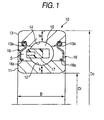
Fig. 1 is a sectional diagram illustrating a rolling
bearing according to a first embodiment of the present
invention;
Fig. 2 is a sectional diagram illustrating a rolling
bearing according to a second embodiment of the present
invention;
Fig. 3 is a sectional diagram illustrating a rolling
bearing according to a third embodiment of the present
invention;
Fig. 4 is a sectional diagram illustrating a motor to
which the rolling bearing according to the present invention
is applied;
Fig. 5 is a graph illustrating the relationship between
the decomposition of residual austenite and the dimensional
change ratio; and
Fig. 6A and 6B are sectional diagrams illustrating a
related art rolling bearing.
<Best Mode for Carrying Out the Invention>
Embodiments of the present invention will be described
in detail hereinafter in connection with the drawings. A
rolling bearing (ball bearing) 10 of the first embodiment shown
in Fig. 1 is arranged to have a plurality of balls 15 provided
interposed between an inner ring 11 and an outer ring 13. The
pluralities of balls 15 are retained apart circumferentially
from each other at an equal interval by a retainer 17
(crown-shaped retainer made of a resin herein). Shields 16,
16 are provided on the respective axial side of the ball 15
as sealing members. The shields 16, 16 each are fixed to an
interior of a groove 13a formed in the outer ring 13 at the
outer portion thereof and are opposed to the inner surface of
the inner ring 11 in non-contact manner with the inner surface
thereof. A grease is enclosed in space S of the bearing.
An inner ring race 12, which is groove of an arc shape
in sectional view, is provided at an axially central portion
of the outer surface of the inner ring 11. An outer ring race
13, which is groove of an arc shape in sectional view, is
provided at an axially central portion of the inner surface
of the outer ring 13.
Thickness te of the outer ring 13 at the bottom of the
groove of the outer ring race 14 is predetermined to be 1.24
times or more thickness ti of the inner ring 11 at the bottom
of the groove of the inner ring race 11, and te is set to be
equal to 1.47 ti in the present embodiment.
The inner diameter Di of the bearing is set to be 3 mm
or more and 17 mm or less and the outer diameter Do of the bearing
is set to be 8 mm or more and 40 mm or less. The inner diameter
Di of the bearing, the outer diameter Do of the bearing and
the width B of the bearing are set to be identical to the
dimension of standard bearing according to ISO.
For example, the following combinations of dimension are
employed.
In the present embodiment, the combination of dimension
(3) is applied.
The inner ring 11 and outer ring 13 are prepared in such
an arrangement that the content of residual austenite is 7wt %
or less. In the present embodiment, the content is set to be
3wt % or less.
In the present embodiment, the area of the outer surface
of the inner ring 11 except the inner ring race 12 is shaped
in cylindrical surface. A bent portion 16a extending toward
the ball 15 is provided at the forward end (inner portion) of
the shields 16, 16. The bent portion 16a is disposed
substantially parallel to the outer surface of the inner ring
11 with a minute clearance provided therebetween to form a
labyrinth. In this arrangement, leakage of the grease is
prevented.
Grease comprising base oil and thickening agent
including a urea compound is used.
The base oil for the grease is not specifically limited,
but an ester oil, hydrocarbon oil or mixture thereof are
preferred taking into account lubricity in high speed rotation,
heat resistance, etc. Examples of the hydrocarbon oil,
poly-α-olefins such as normal paraffin, isoparaffin,
polybutene, polyisobutyrene, 1-decene oligomer and
co-oligomer of 1-decene with ethylene, etc are acceptable.
Examples of the ester oil include diester oils such as dibutyl
sebacate, di-2-ethylhexyl sebacate, dioctyl adipate,
diisodecyl adipate, ditridecyl adipate, ditridecyl tallate
and methyl acetyl sinolate; aromatic ester oils such as
trioctyl trimellitate, tridecyl trimellitate and tetraocyl
pyromellitate; polyol ester oils such as trimethylol propane
caprylate, trimethylol propane peralgonate,
pentaerythritol-2-ethyl hexanoate and pentaerythritol
peralgonate, ester carbonate oils, etc.
In addition, aromatic base oils, ether-based oils, etc.
may be mixed as necessary. Examples of the aromatic oils
include alkyl naphthalene oils such as monoalkyl naphthalene,
dialkyl naphthalene and polyalkyl naphthalene. Examples of
the ether-based oils include polyglycols such as polyethylene
glycol, polypropylene glycol, polyethylene glycol monoether
and polypropylene glycol monoether; phenyl ether oils such as
monoalkyl triphenyl ether, alkyl diphenyl ether, dialkyl
diphenyl ether, pentaphenyl ether, tetraphenyl ether,
monoalkyl tetraphenyl ether and dialkyl tetraphenyl ether, etc.
Further, mineral oils can be used, and those which have been
subjected to purification such as distillation under reduced
pressure, lubricant deasphalting, solvent extraction,
hydrogenation-decomposition, solvent dewaxing, sulfuric
acid-rinsing, clay purification and hydrogenation-purification
may be used.
Further, as the urea compound which in the thickening
agent, a urea compound having from 2 to 5 urea bonds per molecule
(diurea, triurea, tetraurea, pentaurea) is particularly
preferred. As the number of urea bonds per molecule increases,
the heat resistance raises, giving a tendency for prolongation
of the durable life of the bearing. However, when the number
of urea bonds per molecule is 6 or more, it is disadvantageous
in that the grease can easily harden.
The thickening agent, i.e., the above described urea
compound is preferably incorporated in an amount of from 9 to
18.5wt % based on the total weight of the grease. It is
particularly preferred that the urea compound be incorporated
in an amount of from 10 to 15wt % based on the total weight
of the grease. When the amount of the urea compound to be
incorporated falls below 9wt %, the resulting capability of
retaining base oil is not sufficient, causing the separation
of a large amount of oil content and the leakage of grease at
one time during the initial stage of rotation and leading to
the reduction of the durable life of the bearing. On the
contrary, when the amount of the urea compound to be
incorporated exceeds 18.5wt %, the amount of the base oil
decreases relatively, causing early shortage of lubrication
and leading to the reduction of the durable life as in the
aforementioned case.
Further, the grease preferably includes at least one of
amine-based oxidation inhibitor and phenolic oxidation
inhibitor incorporated therein in an amount of 0.05 to 4wt %,
particularly from 0.1 to 4wt %. Among oxidation inhibitors,
amine-based oxidation inhibitors and phenolic oxidation
inhibitors are preferred in view of affinity for the urea
compound. When the amount of these oxidation inhibitors to
be incorporated falls below 0.05wt %, sufficient oxidation
inhibiting properties cannot be obtained and no great
difference in durable life of bearing for example from that
in the case where no oxidation inhibitor is added is shown.
Further, when these oxidation inhibitors are incorporated in
an amount of more than 4wt %, the enhancement of effect
corresponding to the increase of the added amount of these
oxidation inhibitors cannot be attained, giving poor economy.
Moreover, since the amount of base oil and thickening agent
decreases relatively, it is likely that the durability life
of lubrication can be adversely affected.
As the amine-based oxidation inhibitors there may be
exemplified thiodiphenylamine, etc. As the phenolic
oxidation inhibitors there may be exemplified 2,6-di-t-butyl-4-methylphenol,
etc.
Further, the above grease may include a rust preventive,
an oil-based agent, an extreme-pressure agent, etc.
incorporated therein as necessary. All these additives may
be known. The content of these additives to be incorporated
are preferably each 0.05wt % or more based on the total weight
of the grease. Also, it is preferable that total amount of
these additives is from 0.15 to 10wt % based on the total weight
of the grease. In particular, when the content of these
additives to be incorporated exceeds 10wt % in total, it is
not only disadvantageous in that the effect corresponding to
the increase of the content of these additives cannot be
expected but also disadvantageous in that the content of other
components decreases relatively, and these additives can be
agglomerated in the grease to cause undesirable phenomena such
as torque rise.
Fig. 2 depicts a rolling bearing of the second embodiment
of the present invention. In the embodiments described below,
where members have the same arrangement and action as those
described already, the same or corresponding signs and numeral
numbers are given in the drawings to simplify or omit their
description.
A rolling bearing (ball bearing) 30 shown in Fig. 2
includes a U-shaped portion (U-shaped groove) 31a provided at
the same axial position on the outer surface of the inner ring
31 as the shields 16, 16. In this arrangement, the leakage
of grease can be certainly prevented and the dust-proofing
effect can be enhanced.
Fig. 3 depicts a rolling bearing of the third embodiment
of the present invention. A rolling bearing (ball bearing)
50 shown in Fig. 3 comprises a non-contact type sealing member
56. The sealing member 56 is formed by integrating an elastic
material such as rubber with a core metal. The forward end
(elastic material) of the sealing member 56 comes in sliding
contact with the outer surface of the inner ring 51.
Fig. 4 depicts the configuration of a motor to which a
rolling bearing (angular ball bearing) of an embodiment of the
present invention is applied. The motor shown in Fig. 4 is
applied to air conditioner fan motor, ventilating fan motor,
cooling fan motor, etc. The motor comprises a rotor shaft 2
having a rotor 1 attached thereto, a stator core 3 provided
on the periphery of the rotor shaft 2 and a case 4 having these
components received therein. The rotor shaft 2 is supported
at the both ends thereof by a pair of bearings 5a, 5b
incorporated in the case 4. The bearing 5b has a wave washer
received therein at the side thereof and the bearings 5a, 5b
have a pilot pressure load applied thereto in axial direction.
The present invention is not limited to the
aforementioned embodiments and proper changes and
improvements can be made therein.
For example, the rolling bearing may be a double row
bearing, a combined bearing or a multi-point (three-points or
four-points) contact ball bearing. For example, the retainer
may be a drilled retainer.
While there has been described in connection with the
preferred embodiments of the present invention, it will be
obvious to those skilled in the art that various changes and
modification may be made therein without departing from the
present invention, and it is aimed, therefore, to cover in the
appended claim all such changes and modifications as fall
within the true spirit and scope of the present invention.
The present application is based on a Japanese patent
application (Japanese Patent Application No. 2002-253083)
filed on August 30, 2002 the content of which is hereby
incorporated by reference.
<Industrial Applicability>
A rolling bearing can be provided which has inner and
outer diameters and a width corresponding to standard bearing
according to ISO specification and can be affected by the effect
of precision of holes in housing, etc. so difficultly that
abnormal noise, vibration, etc. can be difficultly generated
even in a working atmosphere of 100°C or more.