EP1545054A1 - System und Verfahren zur Auswahl von Messungen eines Übertragungsnetzes - Google Patents
System und Verfahren zur Auswahl von Messungen eines Übertragungsnetzes Download PDFInfo
- Publication number
- EP1545054A1 EP1545054A1 EP04026614A EP04026614A EP1545054A1 EP 1545054 A1 EP1545054 A1 EP 1545054A1 EP 04026614 A EP04026614 A EP 04026614A EP 04026614 A EP04026614 A EP 04026614A EP 1545054 A1 EP1545054 A1 EP 1545054A1
- Authority
- EP
- European Patent Office
- Prior art keywords
- network
- measurements
- edge
- constraints
- metric
- Prior art date
- Legal status (The legal status is an assumption and is not a legal conclusion. Google has not performed a legal analysis and makes no representation as to the accuracy of the status listed.)
- Withdrawn
Links
- 238000005259 measurement Methods 0.000 title claims abstract description 60
- 238000000034 method Methods 0.000 title claims abstract description 34
- 238000004891 communication Methods 0.000 title claims abstract description 22
- 238000012774 diagnostic algorithm Methods 0.000 claims abstract description 15
- 239000011159 matrix material Substances 0.000 claims description 14
- 230000008439 repair process Effects 0.000 claims description 8
- 230000008569 process Effects 0.000 claims description 7
- 238000003745 diagnosis Methods 0.000 description 22
- 238000004422 calculation algorithm Methods 0.000 description 18
- 208000011580 syndromic disease Diseases 0.000 description 13
- 230000006870 function Effects 0.000 description 2
- 238000005457 optimization Methods 0.000 description 2
- 238000005293 physical law Methods 0.000 description 2
- 238000012545 processing Methods 0.000 description 2
- 125000004122 cyclic group Chemical group 0.000 description 1
- 230000006378 damage Effects 0.000 description 1
- 238000013461 design Methods 0.000 description 1
- 238000002405 diagnostic procedure Methods 0.000 description 1
- 238000000605 extraction Methods 0.000 description 1
- 230000006872 improvement Effects 0.000 description 1
- 230000002452 interceptive effect Effects 0.000 description 1
- 238000003012 network analysis Methods 0.000 description 1
- 238000012546 transfer Methods 0.000 description 1
Images


Classifications
-
- H—ELECTRICITY
- H04—ELECTRIC COMMUNICATION TECHNIQUE
- H04L—TRANSMISSION OF DIGITAL INFORMATION, e.g. TELEGRAPHIC COMMUNICATION
- H04L41/00—Arrangements for maintenance, administration or management of data switching networks, e.g. of packet switching networks
- H04L41/06—Management of faults, events, alarms or notifications
-
- H—ELECTRICITY
- H04—ELECTRIC COMMUNICATION TECHNIQUE
- H04L—TRANSMISSION OF DIGITAL INFORMATION, e.g. TELEGRAPHIC COMMUNICATION
- H04L41/00—Arrangements for maintenance, administration or management of data switching networks, e.g. of packet switching networks
- H04L41/06—Management of faults, events, alarms or notifications
- H04L41/0631—Management of faults, events, alarms or notifications using root cause analysis; using analysis of correlation between notifications, alarms or events based on decision criteria, e.g. hierarchy, tree or time analysis
-
- H—ELECTRICITY
- H04—ELECTRIC COMMUNICATION TECHNIQUE
- H04L—TRANSMISSION OF DIGITAL INFORMATION, e.g. TELEGRAPHIC COMMUNICATION
- H04L41/00—Arrangements for maintenance, administration or management of data switching networks, e.g. of packet switching networks
- H04L41/14—Network analysis or design
- H04L41/142—Network analysis or design using statistical or mathematical methods
-
- H—ELECTRICITY
- H04—ELECTRIC COMMUNICATION TECHNIQUE
- H04L—TRANSMISSION OF DIGITAL INFORMATION, e.g. TELEGRAPHIC COMMUNICATION
- H04L43/00—Arrangements for monitoring or testing data switching networks
- H04L43/08—Monitoring or testing based on specific metrics, e.g. QoS, energy consumption or environmental parameters
- H04L43/0805—Monitoring or testing based on specific metrics, e.g. QoS, energy consumption or environmental parameters by checking availability
- H04L43/0817—Monitoring or testing based on specific metrics, e.g. QoS, energy consumption or environmental parameters by checking availability by checking functioning
-
- H—ELECTRICITY
- H04—ELECTRIC COMMUNICATION TECHNIQUE
- H04L—TRANSMISSION OF DIGITAL INFORMATION, e.g. TELEGRAPHIC COMMUNICATION
- H04L41/00—Arrangements for maintenance, administration or management of data switching networks, e.g. of packet switching networks
- H04L41/14—Network analysis or design
- H04L41/147—Network analysis or design for predicting network behaviour
-
- H—ELECTRICITY
- H04—ELECTRIC COMMUNICATION TECHNIQUE
- H04L—TRANSMISSION OF DIGITAL INFORMATION, e.g. TELEGRAPHIC COMMUNICATION
- H04L43/00—Arrangements for monitoring or testing data switching networks
- H04L43/04—Processing captured monitoring data, e.g. for logfile generation
- H04L43/045—Processing captured monitoring data, e.g. for logfile generation for graphical visualisation of monitoring data
Definitions
- the invention is related to communication network modeling, network measurements, and network diagnosis.
- the applications typically gather measurements from a given network, process the measurements in some manner, and report the processed measurements to a user.
- Some applications attempt to diagnose a failure in a communications network by identifying one or several possible causes of the failure.
- applications that attempt to perform network diagnosis are limited by the measurements available.
- the measurements may be limited for any number of reasons. For example, network measurements may be limited to the pre-existing design of the network. Alternatively, it may be necessary to communicate the measurements from devices in the network to a particular processing system that performs the diagnosis. To prevent the communication from interfering with the ordinary operation of the network, it may be appropriate to only transmit a subset of available measurements to the processing system for the diagnosis function.
- Representative embodiments are directed to systems and methods for facilitating the selection of network measurements for diagnosis of a communications network.
- an expression e.g., a directed graph representation
- Contemplated sets of measurements are associated with selected elements of the expression of the network to identify the location and nature of the contemplated measurements.
- a metric is calculated that is related to the diagnostic accuracy of a diagnostic algorithm that processes the respective measurements.
- the metric may also possess a relationship to the probability of failure of devices within the network and/or the cost of repair of the devices.
- an integer programming methodology determines whether a diagnosis algorithm is able to correctly distinguish between a first communication link and a second communication link as the corrupting link when the first communication link corrupts a packet.
- a communications network may be modeled in the form of a directed graph. From the network model, packet flow constraints may be defined. Counter constraints may be created according to a contemplated selection of measurements. Another constraint is defined that identifies a particular edge that corresponds to the first communications link as corrupting at least one packet. Other appropriate constraints are also defined to identify other edges as causing no packet corruption. From the set of constraints, an attempt is made to solve the defined integer program using a suitable method (such as the "Branch and Bound" method).
- the set of measurements is known to enable packet corruption caused by the first communication link to be distinguished from the second communication link. If a solution is found, it is known that packet corruption caused by the first communication link could be misdiagnosed as being caused by the second link.
- a confusion matrix may be built that identifies the relationship between each communication link in the network.
- Each element (e,f) of the matrix identifies whether the e th edge is distinguishable from the f th edge.
- the matrix enables improvement in the selection of measurements. Specifically, for each element (e, f) of the matrix that identifies an edge as being indistinguishable from another edge, an additional measurement can be selected to enable the two edges to be distinguished.
- the matrix may facilitate the selection of measurements upon the basis of a priori information. For example, the matrix may be used in conjunction with the probability of failures of particular devices and the cost of repairs for the devices.
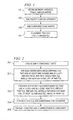
- FIGURE 1 depicts a flowchart for performing network diagnosis using an integer programming methodology.
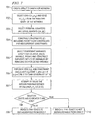
- FIGURE 2 depicts a flowchart for defining an integer program to facilitate network diagnosis.
- FIGURE 3 depicts a representation of a network to facilitate network diagnosis.
- FIGURE 4 depicts a set of constraints for an integer program using the network representation shown in FIGURE 3.
- FIGURE 5 depicts a table of syndromes.
- FIGURE 6 depicts a table of results of the integer programs defined by the constraints shown in FIGURE 4 and the syndromes shown in FIGURE 5.
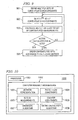
- FIGURE 7 depicts a flowchart for determining whether a first edge is distinguishable from a second edge according to an integer programming methodology.
- FIGURE 8 depicts a flowchart for calculating a metric for a contemplated set of measurements for network diagnosis.
- FIGURE 9 depicts a flowchart for determining the relative diagnostic accuracy associated with multiple sets of contemplated measurements for a diagnostic algorithm.
- FIGURE 10 depicts a system for analyzing contemplated network measurements.
- Representative embodiments employ a diagnostic algorithm that analyzes observed faults (instances of packet corruption) in a network in view of a packet flow constraints associated with the network.
- Suitable diagnostic algorithms include relaxation methods, theorem proving algorithms, linear programming methods, search methods, and constraint satisfaction algorithms.
- One embodiment employs an integer programming methodology to diagnose failures in a network. The diagnosis algorithm is described in greater detail in co-pending and commonly assigned U.S. Patent Serial No. 10/078,817 entitled "Diagnosis of Data Transfer Faults Using Constraints," docket no. 10011387-1, which is incorporated herein by reference. The details of the integer programming methodology shall be discussed with respect to FIGURES 1-6, before the discussion of the selection of network measurements occurs.
- a suitable integer program may be defined by modeling the network in the form of a directed graph.
- the term "network” may include any device or system capable of communicating packets.
- the term “network” may encompass devices that are ordinarily considered a sub-component of a network such as a router.
- the directed graph includes vertices that receive and/or transmit packets.
- the directed graph also includes edges between vertices that define the directions in which the packets may traverse the directed graph.
- a set of packet constraints is developed.
- the packet constraints specify limitations of possible network measurements. When actual packet measurements are determined, the packet constraints and the measurements are encoded in a suitable form.
- An optimization algorithm e.g., a suitable integer programming algorithm
- FIGURE 1 depicts a flowchart for analyzing intermittent failures in a network according to one representative embodiment.
- step 101 network vertices, edges, and counters are defined.
- step 102 packet flow constraints are added to a linear program.
- step 103 syndrome constraints are added to the linear program.
- Syndrome constraints refer to the measured data associated with an observed intermittent failure or failures.
- step 104 possible fault candidates are determined by solving the integer program using a suitable method such as the "Branch and Bound" method. Each of these steps are discussed in greater detail below.
- the diagnosis of intermittent failures in a network may begin by creating a model of the network (see step 101 of FIGURE 1).
- a vertex v ⁇ V of G is a location within the network where (i) measurements may take place; (ii) the "goodness" or “badness” of packets may be tested (e.g., utilizing cyclic redundancy code (CRC) algorithms); and/or (iii) bad or corrupted packets may be dropped. Vertices are tagged with information related to the behavior characteristics.
- CRC cyclic redundancy code
- a vertex designated by "prop” propagates bad packets, designated by “nonprop” drops bad packets, or designated by “bus” propagates received good packets on all out-edges.
- a vertex designated by "unconstrained” refers to a vertex for which no knowledge is available concerning the relationship between the number of packets received and transmitted by the respective vertex.
- Let A ⁇ prop, unprop, bus, unconstrained ⁇ be the set of possible vertex tags.
- Each vertex v ⁇ V has an associated set of tags given by the function T: V ⁇ 2 A .
- edges E ⁇ V ⁇ V are communication paths between vertices. Without loss of generality, only single direction edges (edges that communicate packets in one direction between respective vertices) are considered. That is, any physical edge that communicates packets bidirectionally is split into two single direction edges for the purpose of the network model.
- the edges (j,i) ⁇ E are called the in-edges of i and (i,j) ⁇ E are called the out-edges of i.
- a packet that flows in to any vertex v from any of v's in edges may flow out of any of v's out-edges. If a physical system is known to restrict the flow of packets that enter one of its vertices at a particular in-edge to exit from a particular out-edge or edges, the vertex may be split into multiple vertices for the purposes of the network model.
- the available network counters ⁇ and a related map M of the counters are defined.
- the map M is given by: E ⁇ ⁇ t,r ⁇ ⁇ ⁇ good, bad ⁇ ⁇ ⁇ .
- the map M provides the semantics of the counters as follows:
- the map M may be onto one-to-one but may not be one-to-one, i.e., multiple counter semantics may be mapped to the same counter. For example, suppose a vertex v has three in-edges (x,v), (y,v), and (z,v). The counter ⁇ may count all good packets arriving at v:
- the constraints on the network can be identified.
- the identified constraints e.g., the packet flow, the counter semantics, and/or the like and the measured counter values
- the diagnosis algorithm includes three subsections: extracting flow constraints, adding syndrome constraints, and determining fault candidates.
- the first subsection extracting flow constraints
- the first subsection extracting flow constraints
- the second and third subsections are re-iterated for each syndrome.
- Some representative embodiments employ the following set of variables: U (i,j) ⁇ E ⁇ g(i,j), b(i, j), mb(i, j), gd(i, j), bd(i, j) ⁇ .
- the variable g(i,j) represents the number of good packets transmitted on edge (i,j) and the variable b(i,j) represents the number of bad packets transmitted on edge (i,j).
- the variable mb(i,j) represents the number of packets made bad on edge (i,j) (packets transmitted as good but received as bad).
- the variable gd(i,j) represents the number of good packets transmitted on edge (i,j) that disappeared. Specifically, it is possible that a packet may experience sufficient corruption that the receiving device cannot identify it as a packet.
- the variable bd(i,j) represents the number of bad packets transmitted on edge (i,j) that disappeared.
- Some representative embodiments utilize "Kirchoff-like" constraints to analyze the propagation of packets through a network.
- Kirchoff laws constrain current flow in a circuit according to the physical law of conservation of current (i.e., charge can be neither created or destroyed within a circuit).
- Kirchoff laws cannot be applied on a one-to-one basis to network analysis, because there is no analogy in the packet flow of a network to the physical law of conservation of charge. Accordingly, representative embodiments generate Kirchoff-like constraints to adapt the possibility of packet creation and destruction in a network as will be discussed in greater detail below.
- step 202 For each vertex i with unconstrained ⁇ T(i) that has at least one in-edge and at least one out-edge, add to C: "KG(i)" if bus ⁇ T(j) and "KGB(i,j)" for each out-edge j of i if bus ⁇ T(i).
- the constraint KG(i) states that the number of good packets transmitted to vertex i less than number of packets that disappeared on i's in-edges and less the number of packets made bad within i's in-edges equals the number of good packets flowing out of i's out-edges.
- the constraint KGB(i,j) states that the number of good packets transmitted to vertex i less the number of packets that disappeared on i's in-edges and less the number of packets made bad with i's in-edges equals the number of good packets flowing out of out-edge j of i.
- step 203 for each vertex with unconstrained ⁇ T(i) that has at least one out-edge, add to C: KBP(i) if prop ⁇ T(i) and bus ⁇ T(i); KBPB(i,j) for each out-edge of i if prop ⁇ T(i) and bus ⁇ T(i); and KBNP(i) if prop ⁇ T(i).
- the constraint KBP(i) states that, for a vertex having the prop property, the number of bad packets transmitted to i less the number of packets that disappeared on i's in-edges plus the number of packets made bad within i's in-edges equals the number of bad packets flowing out of i.
- the constraint KBPB(i,j) states that for a vertex that has the prop and bus properties, the number of bad packets transmitted to i less the number of packets that disappeared on i's in-edges plus the number of packets made bad within i's in-edges equals the number of bad packets flowing out of each out-edge j of i.
- the constraint KBNP(i) states that for a vertex with the nonprop property, no bad packets are transmitted.
- step 204 for each edge (i,j) add constraint EDGECONSERVE.
- the constraint EDGECONSERVE is defined as follows: gd(i,j) + mb(i,j) ⁇ g(i,j) and bd(i,j) ⁇ b(i,j).
- the syndrome constraints are the measured values of the various counters in the network. For each counter, a constraint is added to the linear program to specify the measured value of the counter.
- each fault candidate may correspond to exactly one edge (i,j) ⁇ E.
- Each candidate has a corresponding variable mb(i,j).
- a fault candidate is identified if and only if there is a solution to the constraints where the fault candidate caused at least one bad packet. So, an edge (i,j) can be faulty if and only if max ⁇ mb(i,j)
- the constraints are all linear. Also, the variable values are all integers. Therefore, the maximization problem is an integer programming (IP) problem.
- IP integer programming
- FIGURE 3 depicts network 300 that includes vertices 301-306. It is assumed that vertex 301 (“start”) counts good packets transmitted and that vertices 302, 303, 305, and 306 ("n2pb,” “pbif1,” “pbif2,” and “cboc” respectively) each count good packets received.
- the packet flow is constrained to require packets to flow from vertex 301 ("start"), to vertex 302 ("n2pb"), to vertex 303 ("pbif1"), to vertex 304 (“buff”), to vertex 305 (“pbif2”), and to vertex 306 ("cboc”).
- Vertices 303 and 305 represent the same physical device in network 300. The same physical device is represented in two vertices to reflect the constrained packet flow in network 300. If either vertex 303 or vertex 305 is found to have corrupted packets, the same physical device is reported to the user as the identified source of the fault.
- the counter ⁇ 3 is increased whenever a good packet is received by either vertex 303 and 305, since vertices 303 and 305 refer to the same physical device.
- constraints 400 shown in FIGURE 4 may be derived according to representative embodiments.
- FIGURE 5 depicts table 500 of syndromes to define a plurality of integer programs corresponding to network 300.
- the example results of the integer programs illustrate that different amounts of diagnostic accuracy can be achieved depending on the measurements of the system that are available for analysis.
- Representative embodiments use the observed difference in diagnosability based upon differences in network measurements to facilitate the selection of network measurements.
- diagnosability is analyzed by determining whether edges are "distinguishable.” An edge e will be called distinguishable from edge f if and only if whenever edge e has corrupted at least one packet and no other edge has done so, it is impossible for f to be a diagnosis under ⁇ and M.
- FIGURE 7 depicts a flowchart for determining whether a first edge is distinguishable from a second edge according to an integer programming diagnosis algorithm.
- a directed graph for the network is constructed in the same manner as previously discussed.
- a first edge E (e 1 , e 2 ) and a second edge F (f 1 , f 2 ) are selected from the directed graph of the network.
- potential counters and measurements ⁇ and M
- constraints (C) are constructed including packet flow constraints and measurement constraints as discussed above with respect to steps 202-205 of FIGURE 2.
- each constraint in C except counter_value( ⁇ ) constraints, is selected to create a new corresponding constraint to duplicate the network model embodied in the constraints C.
- the duplication of the network model may occur by selecting each appropriate constraint in C and creating a new constraint by renaming the respective variable in the integer program using a suitable notation.
- the set of duplicate constraints is referred to by the set C'.
- the duplicate model C' is unconstrained by counter_value( ⁇ ) constraints.
- step 707 an attempt to solve the integer program defined by max ⁇ mb(f' 1 , f' 2 )
- the edge (f' 1 , f' 2 ) refers to the edge in the duplicate model of the network that corresponds to selected edge F in the original model of the network. Because the duplicate model C' is unconstrained by counter_value( ⁇ ) constraints, the attempt to solve the integer program attempts to determine whether any set of counter values exists that indicates that edge (f' 1 , f' 2 ) has caused at least one instance of packet corruption.
- step 708 a logical determination is made to determine whether a solution to the integer program exists that is greater than zero. If the logical determination is false, the process flow proceeds from step 708 to step 709 where an indication is made that edge E is distinguishable from edge F. If the logical determination of step 708 is true, the process flow proceeds to step 710 where an indication is made that edge E is not distinguishable from edge F.
- FIGURE 8 depicts a flowchart for calculating a metric that evaluates the effectiveness of selecting measurements for network diagnosis using a confusion matrix.
- a confusion matrix (C) is constructed by determining whether each edge is distinguishable from every other edge in a directed graph representation of a network.
- Each element (e, f) in the matrix identifies whether the e th edge is distinguishable from the f th edge.
- the matrix may be defined so that when an element equals zero, the e th edge is distinguishable from the f th edge. If an element equals one, the e th edge is not distinguishable from the f th edge.
- step 802 the probabilities of failures (PFP(e)) for devices corresponding to each edge are determined. If the information related to failures is unavailable, each PFP(e) may be assigned a value of one.
- step 803 the costs of repair (RC(e)) for devices corresponding to each edge are determined. If the information related to cost of repair is unavailable, each RC(e) may be assigned a value of one.
- step 804 an upper bound to the cost of erroneous repairs is calculated by ⁇ e ⁇ f C(e,f)PFP(e)RC(f). Specifically, each element (e,f) of the confusion matrix identifies whether an error caused by the edge e could be confused by an integer program diagnosis algorithm as being caused by edge f. By summing the multiple of the element of the confusion matrix, the probability of failure, and the cost of repair of the incorrect device across each edge in the network, the upper bound is determined.
- FIGURE 9 depicts a flowchart for analyzing the relatively diagnostic effectiveness of multiple sets of contemplated measurements for a network diagnostic algorithm.
- multiple sets of contemplated measurements ⁇ i and M i
- the i th set of contemplated measurements is selected.
- the suitable metric e.g., the metric defined by the flowchart shown in FIGURE 8
- a logical determination is made to determine whether a metric has been calculated for each set of contemplated measurements. If not, the process flow returns to step 902. If a metric has been calculated for each set, the process flow proceeds to step 905.
- the contemplated sets of measurements may be ordered according to the relative degrees of diagnostic effectiveness using the calculated metrics for presentation to a user.
- FIGURE 10 depicts computer system 1000 adapted to implement representative embodiments.
- Computer system 1000 includes general purpose processor 1001 that is operated under the control of suitable executable instructions. Executable instructions or code may be used to define the diagnostic process flows previously discussed. The executable instructions and related data structures may be stored in computer readable memory that is accessible by computer readable memory device 1002.
- Computer readable memory device 1002 may be implemented using any number of suitable storage devices such as a hard disk drive.
- Network representation 1003, packet flow constraints 104, sets of measurements 1005, counter constraints 1006, and other suitable data structures may be stored on the computer readable medium.
- Diagnostic algorithm 1007 may perform network diagnosis according to network representation 1003.
- Metric calculation algorithm 1008 may calculate a metric for each set in sets of measurements 1005 to determine the respective diagnostic effectiveness in view of diagnostic algorithm 1007.
- Suitable algorithms include relaxation methods, theorem proving algorithms, linear programming methods, search methods, and constraint satisfaction algorithms. Additionally, network representations used by such algorithms may be embodied using a variety of structures. Suitable structures include "tree-like" data structures, adjacencies or other suitable matrices, logical assertions encoded using suitable programming languages, and/or the like.
- Some representative embodiments may provide a number of advantages. Some representative embodiments enable measurements for a network diagnosis algorithm to be selected to optimize the effectiveness of the diagnosis algorithm. Some representative embodiments identify edges that could be confused as the source of a fault to facilitate the selection of measurements. Upon the basis of such identification, additional measurements may be selected. Additionally, when multiple sets of measurements are contemplated, a metric may be calculated to compare the relative effectiveness of the measurements when processed by a diagnostic algorithm.
Landscapes
- Engineering & Computer Science (AREA)
- Signal Processing (AREA)
- Computer Networks & Wireless Communication (AREA)
- General Physics & Mathematics (AREA)
- Physics & Mathematics (AREA)
- Algebra (AREA)
- Environmental & Geological Engineering (AREA)
- Mathematical Analysis (AREA)
- Mathematical Optimization (AREA)
- Mathematical Physics (AREA)
- Probability & Statistics with Applications (AREA)
- Pure & Applied Mathematics (AREA)
- Data Exchanges In Wide-Area Networks (AREA)
Applications Claiming Priority (2)
| Application Number | Priority Date | Filing Date | Title |
|---|---|---|---|
| US738145 | 1996-10-25 | ||
| US10/738,145 US7356443B2 (en) | 2003-12-17 | 2003-12-17 | Systems and methods for analyzing the selection of measurements of a communication network |
Publications (1)
| Publication Number | Publication Date |
|---|---|
| EP1545054A1 true EP1545054A1 (de) | 2005-06-22 |
Family
ID=34523164
Family Applications (1)
| Application Number | Title | Priority Date | Filing Date |
|---|---|---|---|
| EP04026614A Withdrawn EP1545054A1 (de) | 2003-12-17 | 2004-11-09 | System und Verfahren zur Auswahl von Messungen eines Übertragungsnetzes |
Country Status (6)
| Country | Link |
|---|---|
| US (1) | US7356443B2 (de) |
| EP (1) | EP1545054A1 (de) |
| KR (1) | KR20050061358A (de) |
| CN (1) | CN1630255A (de) |
| SG (1) | SG112927A1 (de) |
| TW (1) | TW200525973A (de) |
Cited By (2)
| Publication number | Priority date | Publication date | Assignee | Title |
|---|---|---|---|---|
| CN101001182B (zh) * | 2007-01-12 | 2010-09-29 | 中国电信股份有限公司 | 网管接口测试的自适应测试方法及系统 |
| WO2016053685A1 (en) * | 2014-09-29 | 2016-04-07 | Pivotal Software, Inc. | Determining and localizing anomalous network behavior |
Families Citing this family (8)
| Publication number | Priority date | Publication date | Assignee | Title |
|---|---|---|---|---|
| WO2005029602A1 (ja) * | 2003-09-24 | 2005-03-31 | Kyocera Corporation | 積層型圧電素子 |
| US7315181B1 (en) * | 2005-12-01 | 2008-01-01 | At&T Corp. | Method for automatically identifying component failure in a communication network |
| CN100592691C (zh) * | 2007-01-10 | 2010-02-24 | 中国电信股份有限公司 | 网管接口信息模型一致性测试的自动对比方法及系统 |
| US8024610B2 (en) * | 2007-05-24 | 2011-09-20 | Palo Alto Research Center Incorporated | Diagnosing intermittent faults |
| US9813307B2 (en) * | 2013-01-28 | 2017-11-07 | Rackspace Us, Inc. | Methods and systems of monitoring failures in a distributed network system |
| US9483334B2 (en) | 2013-01-28 | 2016-11-01 | Rackspace Us, Inc. | Methods and systems of predictive monitoring of objects in a distributed network system |
| US9397902B2 (en) | 2013-01-28 | 2016-07-19 | Rackspace Us, Inc. | Methods and systems of tracking and verifying records of system change events in a distributed network system |
| US10362137B2 (en) * | 2015-12-28 | 2019-07-23 | Verizon Patent And Licensing Inc. | Hebbian learning-based recommendations for social networks |
Citations (2)
| Publication number | Priority date | Publication date | Assignee | Title |
|---|---|---|---|---|
| EP1329734A1 (de) * | 2002-01-18 | 2003-07-23 | Agilent Technologies, Inc. | Diagnostisches Testsystem |
| US20030159093A1 (en) * | 2002-02-19 | 2003-08-21 | Manley Douglas R. | Diagnosis of data transfer faults using constraints |
Family Cites Families (8)
| Publication number | Priority date | Publication date | Assignee | Title |
|---|---|---|---|---|
| US5684807A (en) * | 1991-04-02 | 1997-11-04 | Carnegie Mellon University | Adaptive distributed system and method for fault tolerance |
| US5375126B1 (en) * | 1991-04-09 | 1999-06-22 | Hekimian Laboratories Inc | Integrated logical and physical fault diagnosis in data transmission systems |
| US6515967B1 (en) * | 1998-06-30 | 2003-02-04 | Cisco Technology, Inc. | Method and apparatus for detecting a fault in a multicast routing infrastructure |
| US6859755B2 (en) * | 2001-05-14 | 2005-02-22 | Rosemount Inc. | Diagnostics for industrial process control and measurement systems |
| US7355981B2 (en) * | 2001-11-23 | 2008-04-08 | Apparent Networks, Inc. | Signature matching methods and apparatus for performing network diagnostics |
| US7051240B2 (en) * | 2002-03-14 | 2006-05-23 | Agilent Technologies, Inc. | Diagnosis of data packet transfer faults using constraints |
| US6834256B2 (en) * | 2002-08-30 | 2004-12-21 | General Electric Company | Method and system for determining motor reliability |
| US20050068891A1 (en) * | 2003-09-25 | 2005-03-31 | Arsikere Amarnath R. | Method and apparatus for network throughput measurement |
-
2003
- 2003-12-17 US US10/738,145 patent/US7356443B2/en not_active Expired - Lifetime
-
2004
- 2004-10-08 TW TW093130570A patent/TW200525973A/zh unknown
- 2004-11-09 EP EP04026614A patent/EP1545054A1/de not_active Withdrawn
- 2004-11-24 SG SG200406769A patent/SG112927A1/en unknown
- 2004-12-14 CN CN200410098707.7A patent/CN1630255A/zh active Pending
- 2004-12-16 KR KR1020040106847A patent/KR20050061358A/ko not_active Withdrawn
Patent Citations (2)
| Publication number | Priority date | Publication date | Assignee | Title |
|---|---|---|---|---|
| EP1329734A1 (de) * | 2002-01-18 | 2003-07-23 | Agilent Technologies, Inc. | Diagnostisches Testsystem |
| US20030159093A1 (en) * | 2002-02-19 | 2003-08-21 | Manley Douglas R. | Diagnosis of data transfer faults using constraints |
Cited By (3)
| Publication number | Priority date | Publication date | Assignee | Title |
|---|---|---|---|---|
| CN101001182B (zh) * | 2007-01-12 | 2010-09-29 | 中国电信股份有限公司 | 网管接口测试的自适应测试方法及系统 |
| WO2016053685A1 (en) * | 2014-09-29 | 2016-04-07 | Pivotal Software, Inc. | Determining and localizing anomalous network behavior |
| US9747551B2 (en) | 2014-09-29 | 2017-08-29 | Pivotal Software, Inc. | Determining and localizing anomalous network behavior |
Also Published As
| Publication number | Publication date |
|---|---|
| TW200525973A (en) | 2005-08-01 |
| US20050138493A1 (en) | 2005-06-23 |
| US7356443B2 (en) | 2008-04-08 |
| CN1630255A (zh) | 2005-06-22 |
| SG112927A1 (en) | 2005-07-28 |
| KR20050061358A (ko) | 2005-06-22 |
Similar Documents
| Publication | Publication Date | Title |
|---|---|---|
| US8156377B2 (en) | Method and apparatus for determining ranked causal paths for faults in a complex multi-host system with probabilistic inference in a time series | |
| US11036572B2 (en) | Method, device, and computer program product for facilitating prediction of disk failure | |
| US8230262B2 (en) | Method and apparatus for dealing with accumulative behavior of some system observations in a time series for Bayesian inference with a static Bayesian network model | |
| US8069370B1 (en) | Fault identification of multi-host complex systems with timesliding window analysis in a time series | |
| US8291263B2 (en) | Methods and apparatus for cross-host diagnosis of complex multi-host systems in a time series with probabilistic inference | |
| US20030093250A1 (en) | System, method and computer product for incremental improvement of algorithm performance during algorithm development | |
| CN105468484A (zh) | 用于在存储系统中确定故障位置的方法和装置 | |
| CN111459692B (zh) | 用于预测驱动器故障的方法、设备和计算机程序产品 | |
| WO2007005586A1 (en) | System and method for using model analysis to generate directed test vectors | |
| CN118939562B (zh) | 基于分布式的金融系统非功能测试的方法及系统 | |
| US7356443B2 (en) | Systems and methods for analyzing the selection of measurements of a communication network | |
| CN114546256A (zh) | 从时间序列数据导出的用于kpi的基于数据质量的置信度计算 | |
| Han et al. | Robust data preprocessing for machine-learning-based disk failure prediction in cloud production environments | |
| US7051240B2 (en) | Diagnosis of data packet transfer faults using constraints | |
| US20210286713A1 (en) | System testing infrastructure using combinatorics | |
| US11334053B2 (en) | Failure prediction model generating apparatus and method thereof | |
| CN119835087A (zh) | 基于通用漏洞评分系统的网络安全漏洞评估方法和装置 | |
| US7024600B2 (en) | Diagnosis of data transfer faults using constraints | |
| US20210286711A1 (en) | System testing infrastructure for analyzing and preventing soft failure in active environment | |
| CN117336228A (zh) | 一种基于机器学习的igp仿真推荐方法、装置及介质 | |
| US11593256B2 (en) | System testing infrastructure for detecting soft failure in active environment | |
| Khan et al. | Finding symbolic bug patterns in sensor networks | |
| CN117591337B (zh) | 计算机信息数据交互传输管理系统及方法 | |
| Jha et al. | Causal AI-based Root Cause Identification: Research to Practice at Scale | |
| Abreu et al. | Techniques for diagnosing software faults |
Legal Events
| Date | Code | Title | Description |
|---|---|---|---|
| PUAI | Public reference made under article 153(3) epc to a published international application that has entered the european phase |
Free format text: ORIGINAL CODE: 0009012 |
|
| 17P | Request for examination filed |
Effective date: 20050302 |
|
| AK | Designated contracting states |
Kind code of ref document: A1 Designated state(s): AT BE BG CH CY CZ DE DK EE ES FI FR GB GR HU IE IS IT LI LU MC NL PL PT RO SE SI SK TR |
|
| AX | Request for extension of the european patent |
Extension state: AL HR LT LV MK YU |
|
| AKX | Designation fees paid |
Designated state(s): DE FR GB |
|
| 17Q | First examination report despatched |
Effective date: 20050727 |
|
| RAP1 | Party data changed (applicant data changed or rights of an application transferred) |
Owner name: AGILENT TECHNOLOGIES, INC. |
|
| STAA | Information on the status of an ep patent application or granted ep patent |
Free format text: STATUS: THE APPLICATION IS DEEMED TO BE WITHDRAWN |
|
| 18D | Application deemed to be withdrawn |
Effective date: 20070109 |