TECHNICAL FIELD
This invention relates to a method for removing membranous lead sulfate
(PbSO4) formed on electrodes of a lead-acid battery due to sulfation.
BACKGROUND ART
Sulfation has so far remained a significant problem in a lead-acid battery.
The sulfation is a phenomenon in which lead sulfate (PbSO4), which is formed by a
discharge of a lead-acid battery, precipitates on polar plates of the battery because of
vibration or fluctuation of discharging condition or an ambient temperature at which
the battery is left to stand, consequently to develop to a nonconducting film layer.
This phenomenon may possibly cause increase in internal resistance leading to
performance deterioration of the battery or inability to use.
In order to curb the growth of the aforementioned lead sulfate formed in a
film or membrane, the discharging conditions, temperature, vibration and other factors
must be controlled with the greatest possible care. However, it is nearly impossible to
have a user consistently render attention to the operative conditions of the battery.
Thus, there has been a great need for new method capable of reestablishing the
function of the lead-acid battery by removing the membranous lead sulfate deposited
on the polar plates.
There has been conventionally known a method for removing the
membranous lead sulfate by applying a pulse current to the battery to generate
electroconvulsive shock between the polar plate and the membranous lead sulfate
deposited on the polar plate.
As one example of the conventional methods of this kind, a battery activating
device, which incorporates a circuit for generating a pulse current for exfoliating lead
sulfate deposited on the polar plates of the lead-acid battery, is disclosed in Japanese
Patent Application Publication No. 2000-156247(A).
Also in Japanese Patent Application Publication No. 2000-323188(A), there
is disclosed a conventional lead-acid battery activating method featured in that a
charging pulse current having larger electric quantity than a discharging pulse current
is given immediately after applying the discharging pulse current. In this publication,
there is a disclosure that the electric quantity of the discharging pulse current is over
0.1 C and the pulse width thereof is 0.0001 sec. to 1 sec.
The other analogous arts are disclosed in Japanese Patent No. 3079212 and
Japanese Patent Application Publication No. 2000-40537(A).
The conventional arts thus disclosed all have a mere function of physically
exfoliating the membranous lead sulfate from the polar plate, thus to temporarily
renovate the lead-acid battery. That is, such a mere measure of physically exfoliating
the membranous lead sulfate has a fundamental problem such that lead sulfate flakes
exfoliating away in consequence of applying the pulse current fall onto the peripheries
of the lower parts of the polar plates or are suspended without dissolving in electrolytic
solution in the battery, consequently to be again deposited to the polar plates of the
battery during discharging.
Besides, because the exfoliated lead sulfate flakes do not quickly dissolve in
the electrolytic solution, thus to keep the specific gravity of the electrolytic solution
low, the battery suffers from the disadvantage of being irrecoverable to the normal
value. To bring the specific gravity of the electrolytic solution back to the normal
value, dilute sulfuric acid must be supplied into the battery.
The conventional methods have a further disadvantage in that the exfoliated
lead sulfate flakes sunk onto the peripheries of the lower parts of the polar plates are
gradually dissolved into the electrolytic solution after supplying the dilute sulfuric acid
into the battery, consequently to elevate the specific gravity of the electrolytic solution
in excess, resulting in damaging the polar plates to decrease the life of lead-acid
battery.
Furthermore, there are disadvantageous cases in the polar plate getting thinner
are sometimes exfoliated along with the falling lead sulfate flakes, consequently to
decrease the surface area of the polar plate producing a chemical reaction, with the
result of which sufficient electric power required in use cannot be outputted from the
battery. There is one other problem in which the pulse current applied for removing
the lead sulfate inevitably emits noise to the outside environment
In the light of the foregoing problems brought about by the conventional arts,
the present invention seeks to provide a novel method capable of removing
membranous lead sulfate deposited on electrodes of a lead-acid battery by dissolving
the membranous lead sulfate on the electrodes into fine particles without causing the
membranous lead sulfate to fall off or be suspended in the electrolytic solution, so that
the performance of the battery can be recovered to prolong the battery life.
The present invention further seeks to provide a novel method capable of
removing membranous lead sulfate without damaging the electrodes and emitting
noise to the outside environment.
DISCLOSURE OF THE INVENTION
To attain the objects as described above according to the present invention,
there is provided a method for removing membranous lead sulfate deposited on
electrodes of a lead-acid battery due to sulfation, which method is featured by using a
pulse current having a short pulse width to bring about a conductor skin effect for
intensively dissolving the surface layer of the membranous lead sulfate deposited on
the electrodes of the battery.
BRIEF DESCRIPTION OF THE DRAWINGS
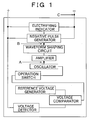
FIG 1 is a circuit diagram of a device to which a method for removing
membranous lead sulfate according to the present invention is applied.
FIG 2 is a waveform diagram showing currents at the points of A, B and C in
FIG. 1.
FIG 3 is an illustration showing one practical example of the device to which
the method for removing membranous lead sulfate according to the present invention
is applied.
FIG 4 is an illustration showing another practical example of the device to
which the method for removing membranous lead sulfate according to the present
invention is applied.
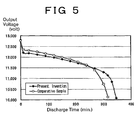
FIG 5 is a graph showing the results of performance measurements of
Embodiment 1 of the invention.
BEST MODE FOR CARRYING OUT AN INVENTION
To resolve common issues suffered from the conventional methods as
described above, the present invention provides a method for removing lead sulfate
deposited in a film or membrane on electrodes of the lead-acid battery due to sulfation.
The method of the invention is featured by using the pulse current having a short pulse
width, which brings about a conductor skin effect of intensively dissolving the surface
layer of the membranous lead sulfate deposited on the electrodes of the battery.
According to the invention noted above, the lead sulfate formed in a film or
membrane on the electrode of the lead-acid battery is sequentially dissolved into lead
ion and sulfate ion as the result of concentration of electrical charge into the surface
layer (skin depth) of the lead sulfate, which is caused by applying a pulse current
having a pulse width which is so short as to give rise to a conductor superficial effect
(skin effect) on the electrode with the membranous lead sulfate.
The method for removing membranous lead sulfate according to the
invention is further featured by charging the battery to again resolve the lead sulfate
once dissolved by applying the pulse current.
According to this method capable of again resolving the lead sulfate once
dissolved, lead ion and sulfate ion produced as the result of application of the pulse
current of a short pulse width can be reproduced into substrates of the electrodes of the
battery or sulfuric acid in the battery, thus to recover the performance of the lead-acid
battery.
The method for removing membranous lead sulfate deposited on the
electrodes of the lead-acid battery according to the invention is further featured by
using the pulse current with a pulse width of less than 1 µs.
According to the method noted above, the pulse width of the pulse current to
be applied to the electrodes can be made appropriate so as to effectively dissolve only
the surface layer part of the membranous lead sulfate in membrane on the electrodes
without damaging the electrodes. Furthermore, because the pulse current applied to
the method of the invention is very faint in intensity, no noise is emitted to the outside
environment.
The present invention will be described in detail hereinafter.
The method according to this invention is featured by using the pulse current
having a short pulse width, which brings about a conductor skin effect of intensively
dissolving the surface layer of the membranous lead sulfate deposited on the electrodes
of the battery.
The conductor skin effect (skin effect) herein is a phenomenon in which the
high-frequency current is localized in the surface layer of a conductor and does not
penetrate deep into the conductor. With the conductor skin effect, the electrical
charge is concentrated in the skin depth defined by the pulse width, so that the surface
layer of the membranous lead sulfate, can be sequentially dissolved into fine particles.
Particularly, the lead sulfate is dissolved in order from the pointed tips of crystallized
protuberances thereof.
Hence, unlike the conventional methods of this type, the method according to
this invention can prevent the lead sulfate deposit on the electrode from exfoliating or
falling off in clusters and suspending the lead sulfate dissolved in fine particles in an
electrolytic solution of the battery, remaining the crystallized state.
The pulse current with a pulse width, which is so short as to give rise to the
conductor skin effect, is very faint in intensity, and therefore, does not damage to the
electrodes. Besides, the method of the invention has an advantage of producing little
noise, thus not to affect the outside environment adversely.
Furthermore, the method of the invention serves to suppress generation of
Joule heat, thus to preventing the electrodes from deforming and the battery from
drying due to heat.
The pulse width of the pulse current used in this method may be determined
in a range capable of bringing about the conductor skin effect To be more specific,
the pulse width may preferably be of less than 1 µs, particularly, in the range of 0.1 µs
to 1 µs. The surface thickness calculated with the pulse width in the range specified
herein is to come to the order of 0.01 mm, so that the electrical charge can be
concentrated on the surface part without permitting the electrical charge to penetrate
into the inside of the membranous lead sulfate deposit.
The pulse current with a pulse width of over 1 µs is ineligible because it
causes thermal oscillation in a boundary face between the membranous lead sulfate
deposit and the electrode, consequently to permit the lead sulfate deposit on the
electrodes to exfoliate and fall off.
With increase of pulse number of the pulse current to be applied, a rate of
dissolving the membranous lead sulfate deposited on the electrodes is increased, but
there is a case where heat is generated. Hence, this condition must be taken into
account to determine the pulse number. Concretely speaking, it is preferable to
determine the pulse number of the pulse current to be the order of 8000 to 12000 per
second.
The pulse current with excessively small voltage and current values makes it
impossible to dissolve the membranous lead sulfate. Inversely, the pulse current with
excessively large voltage and current values generates heat bringing about an adverse
affect. Hence, this condition must be taken into account to determine the voltage and
current values of the pulse current to be applied. To be more specific, it is preferable
to determine the voltage and current values to be in the ranges of 12 to 108 volts and
10 to 120 mA. However, the optimum values, which depend on the pulse width and
pulse number, should not be understood as limitative.
The method of the invention is featured by charging the lead-acid battery
while or after applying the pulse current to the battery. By charging the battery, lead
ion being resoluble by the pulse current resolves itself to recover as an electrode of lead
or lead dioxide. As a result, the specific gravity of the electrolytic solution of the
battery turns back to its original optimum value, thus to swiftly recover the
performance of the battery. This function of effectively removing the lead sulfate
from the electrodes of the lead-acid battery could be eventually achieved by the present
invention enabling the surface part of the membranous lead sulfate to be dissolved into
fine particles, but cannot be materialized by any conventional removing method using
electric shock for exfoliating the lead sulfate from the electrodes because the
crystallized lead sulfate fragments exfoliated by the electric shock are again deposited
onto the electrodes even by charging the battery.
In the case of charging the battery while applying the pulse current, the
membranous lead sulfate deposit on the electrodes are constantly dissolved and
resolved, thus to suppress growth of the sulfation, with the result of which the
performance of the lead-acid battery can be maintained over a long period of time.
It is effective to repeatedly perform a course of processes of applying the
pulse current to the lead-acid battery having the electrodes onto which the lead sulfate
is deposited to degrade the performance of the battery and then charging the lead-acid
battery. Consequently, the lead sulfate deposited on the electrode resolves from the
surface layer part thereof to turn into a sponge-like state, thus to increase the specific
gravity of the electrolytic solution in proportion to the time of applying the pulse
current, so that the performance of the lead-acid battery can be restored to its original
state.
A device to which the method of the present invention is applied will be
described in detail hereinafter.
One embodiment of the circuitry of the device using the method for removing
the membranous lead sulfate according to the invention is shown in FIG 1. The
device of FIG 1 comprises a voltage detector, reference voltage generator, voltage
comparator, operation/nonoperation switch, oscillator, amplifier, waveform shaping
circuit, negative pulse generator, and electrifying indicator. The
operation/nonoperation switch serves to switching on or off the device and therefore is
not indispensable for the device of the invention.
In FIG 2, the waveforms at the points A, B and C in FIG 1 are illustrated.
In the device, a negative pulse current with a pulse width, which is so short as to give
rise to the conductor skin effect, is brought about at the point C and applied to the
lead-acid battery, consequently to dissolve the membranous lead sulfate deposited on
the electrode into fine particles.
The power source for the device shown in FIG 1 may be replaced with an
external power supply, but it is desirable to use the lead-acid battery in itself to which
the device of the invention is attached.
The device mentioned above can be mounted on the lead-acid battery by
being merely connected to the battery or in the other manner selected properly. As
one example in a passenger car, bus or truck, a cigarette lighter's socket can be used as
illustrated in FIG 3. Alternatively, terminals shown in FIG 4 may be brought in
direct connection to the lead-acid battery by use of screws.
The method for moving the membranous lead sulfate deposit according to the
present invention is applicable to various kinds of lead-acid batteries. For instance,
the device using the method of the invention may suitably be used for passenger motor
cars, motor tracks, buses, yachts, motor boats, fish boats, ships, farm machineries and
implements, construction tools and machines, fork lift trucks, electric carts, road
sweepers, electric wheelchairs, and backup power supplying systems for hospitals,
police stations and fire stations, but the present invention does not contemplate
imposing any limitation on applications and uses.
Hereinafter, the present invention will be further described in connection with
an embodiment
A lead-acid battery with a dedicated pulse generator (12 volts; 120 mW)
incorporating a circuitry shown in FIG 1 was discharged while a pulse current with a
pulse width (T neg. in FIG 2) of less than 1 µs was applied with a pulse rate of 10000
pulses per second to the battery. At that time, the value of the pulse current applied to
the battery was set to 10 mA.
While applying the pulse current to the battery, alteration of the output voltage
of the lead-acid battery was measured. In tandem with the measurement of the
battery with the device using the method of the invention, the performance of a
common battery was measured as a comparative example. The results of
measurement are shown in Table 1 and FIG 5.
As is apparent from Table 1 and FIG 5, the lead-acid battery connected to the
device using the method of the invention could maintain its output voltage constant
over a prolonged period of time in comparison with the comparative example.
Furthermore, as shown in Table 2, the lead-acid battery with the device using the
method of the invention could be more increased in capacity than the comparative
example. As a result, it turned out that the device using the method of the invention
contributes to extension of the life of the lead-acid battery.
In observing the interior of the lead-acid batteries discharged in the
experiments, there were lead sulfate particles suspended in dilute sulfuric acid solution
in the battery of comparative example and slightly deposited on the electrodes.
However, growth of lead sulfate on the electrodes occurred rarely in the lead-acid
battery with the device using the method of the invention.
| (Unit: Output Voltage (volt)) |
| DISCHARGE TIME (min.) | BATTERY WITH DEVICE OF THE INVENTION | BATTERY OF COMPARATIVE EXAMPLE |
| 0 | 12.805 | 12.766 |
| 10 | 12.215 | 12.369 |
| 30 | 12.181 | 12.320 |
| 60 | 12.119 | 12.248 |
| 90 | 12.051 | 12.169 |
| 120 | 11.976 | 12.083 |
| 150 | 11.894 | 11.992 |
| 180 | 11.807 | 11.895 |
| 210 | 11.711 | 11.774 |
| 240 | 11.603 | 11.628 |
| 270 | 11.474 | 11.388 |
| 300 | 11.294 | 10.733 |
| 315 | 11.146 | 10.123 |
| 330 | 10.845 |
| 345 | 10.075 |
| TOTAL | 5 hr. 45 min. | 5 hr. 18 min. |
| | BATTERY WITH DEVICE OF THE INVENTION | BATTERY OF COMPARATIVE EXAMPLE |
| 1 ○AVERAGE VOLTAGE (DCV) | 11.737 | 11.842 |
| 2 ○DISCHARGE TIME (hour) | 5.72 | 5.22 |
| 3 ○LOAD RESISTANCE (Ω) | 2.06 | 2.06 |
| 4 ○AVERAGE DISCHARGE CLTRRENT (A) (1 ○/3 ○) | 5.7 | 5.7 |
| 5 ○ CAPACITY (AH) (4 ○×2 ○) | 32.60 | 29.75 |
| 6 ○ 30°C REDUCED CAPACITY (AH) (5 ○/0.97) | 33.61 | 30.36 |
| 7 ○ SPECIFICATION CAPACITY RATIO OF BATTERY (%) (6 ○/28×100) | 120 120 | 108 108 |
As is apparent from the foregoing disclosure, the method for removing
membranous lead sulfate according to the present invention serves to concentrate the
electrical charge in the surface layer of the membranous lead sulfate by the conductor
skin effect, which is brought about by applying the pulse current with the short pulse
width of less than 1 µs to the lead-acid battery. Thus, the method of the invention
makes it possible to prevent the lead sulfate deposit on the electrode from exfoliating
or falling off in clusters and be resoluble into fine particles from the surface layer part
near a boundary face between dilute sulfuric acid and itself
Accordingly the method of the invention makes it possible to retrieve the
performance of a lead-acid battery deteriorated due to the lead sulfate deposit on the
electrodes and block recrystallization of lead sulfate, consequently to prevent growth
of sulfation, so that the battery life of the lead-acid battery can be prolonged
Furthermore, since the pulse current applied in the method of the invention is
very faint in intensity, no noise is emitted to the outside environment.