EP1543040B1 - Lösende chitosan-polymer mit hydrophilen und hydrophoben substituenten - Google Patents
Lösende chitosan-polymer mit hydrophilen und hydrophoben substituenten Download PDFInfo
- Publication number
- EP1543040B1 EP1543040B1 EP03748286.6A EP03748286A EP1543040B1 EP 1543040 B1 EP1543040 B1 EP 1543040B1 EP 03748286 A EP03748286 A EP 03748286A EP 1543040 B1 EP1543040 B1 EP 1543040B1
- Authority
- EP
- European Patent Office
- Prior art keywords
- polymer
- carbohydrate
- solubilising
- carbohydrate polymer
- depolymerised
- Prior art date
- Legal status (The legal status is an assumption and is not a legal conclusion. Google has not performed a legal analysis and makes no representation as to the accuracy of the status listed.)
- Expired - Lifetime
Links
- 229920000642 polymer Polymers 0.000 title claims description 165
- 229920001661 Chitosan Polymers 0.000 title claims description 67
- 125000001165 hydrophobic group Chemical group 0.000 title description 3
- LYCAIKOWRPUZTN-UHFFFAOYSA-N Ethylene glycol Chemical compound OCCO LYCAIKOWRPUZTN-UHFFFAOYSA-N 0.000 claims description 57
- 229920001282 polysaccharide Polymers 0.000 claims description 54
- 229940079593 drug Drugs 0.000 claims description 50
- 239000003814 drug Substances 0.000 claims description 50
- 230000002209 hydrophobic effect Effects 0.000 claims description 46
- XLYOFNOQVPJJNP-UHFFFAOYSA-N water Substances O XLYOFNOQVPJJNP-UHFFFAOYSA-N 0.000 claims description 39
- WGCNASOHLSPBMP-UHFFFAOYSA-N hydroxyacetaldehyde Natural products OCC=O WGCNASOHLSPBMP-UHFFFAOYSA-N 0.000 claims description 30
- 229960005205 prednisolone Drugs 0.000 claims description 29
- OIGNJSKKLXVSLS-VWUMJDOOSA-N prednisolone Chemical compound O=C1C=C[C@]2(C)[C@H]3[C@@H](O)C[C@](C)([C@@](CC4)(O)C(=O)CO)[C@@H]4[C@@H]3CCC2=C1 OIGNJSKKLXVSLS-VWUMJDOOSA-N 0.000 claims description 27
- 150000001720 carbohydrates Chemical class 0.000 claims description 24
- PMATZTZNYRCHOR-CGLBZJNRSA-N Cyclosporin A Chemical compound CC[C@@H]1NC(=O)[C@H]([C@H](O)[C@H](C)C\C=C\C)N(C)C(=O)[C@H](C(C)C)N(C)C(=O)[C@H](CC(C)C)N(C)C(=O)[C@H](CC(C)C)N(C)C(=O)[C@@H](C)NC(=O)[C@H](C)NC(=O)[C@H](CC(C)C)N(C)C(=O)[C@H](C(C)C)NC(=O)[C@H](CC(C)C)N(C)C(=O)CN(C)C1=O PMATZTZNYRCHOR-CGLBZJNRSA-N 0.000 claims description 22
- 108010036949 Cyclosporine Proteins 0.000 claims description 22
- 229960001265 ciclosporin Drugs 0.000 claims description 22
- 229930182912 cyclosporin Natural products 0.000 claims description 22
- 238000000034 method Methods 0.000 claims description 20
- 239000000178 monomer Substances 0.000 claims description 20
- 239000002253 acid Substances 0.000 claims description 13
- 150000001875 compounds Chemical class 0.000 claims description 13
- IJGRMHOSHXDMSA-UHFFFAOYSA-N Atomic nitrogen Chemical compound N#N IJGRMHOSHXDMSA-UHFFFAOYSA-N 0.000 claims description 11
- BDNJPBMUXHVPCT-UHFFFAOYSA-N hexadecanoic acid;1-hydroxypyrrolidine-2,5-dione Chemical compound ON1C(=O)CCC1=O.CCCCCCCCCCCCCCCC(O)=O BDNJPBMUXHVPCT-UHFFFAOYSA-N 0.000 claims description 11
- 150000002500 ions Chemical class 0.000 claims description 11
- IPCSVZSSVZVIGE-UHFFFAOYSA-N hexadecanoic acid Chemical compound CCCCCCCCCCCCCCCC(O)=O IPCSVZSSVZVIGE-UHFFFAOYSA-N 0.000 claims description 10
- VEXZGXHMUGYJMC-UHFFFAOYSA-N Hydrochloric acid Chemical compound Cl VEXZGXHMUGYJMC-UHFFFAOYSA-N 0.000 claims description 8
- 239000007788 liquid Substances 0.000 claims description 8
- MUMGGOZAMZWBJJ-DYKIIFRCSA-N Testostosterone Chemical compound O=C1CC[C@]2(C)[C@H]3CC[C@](C)([C@H](CC4)O)[C@@H]4[C@@H]3CCC2=C1 MUMGGOZAMZWBJJ-DYKIIFRCSA-N 0.000 claims description 6
- 239000003937 drug carrier Substances 0.000 claims description 6
- 239000008194 pharmaceutical composition Substances 0.000 claims description 6
- 239000007858 starting material Substances 0.000 claims description 6
- 235000021314 Palmitic acid Nutrition 0.000 claims description 5
- WQEPLUUGTLDZJY-UHFFFAOYSA-N n-Pentadecanoic acid Natural products CCCCCCCCCCCCCCC(O)=O WQEPLUUGTLDZJY-UHFFFAOYSA-N 0.000 claims description 5
- 229910052757 nitrogen Inorganic materials 0.000 claims description 5
- 238000000149 argon plasma sintering Methods 0.000 claims description 4
- 238000005227 gel permeation chromatography Methods 0.000 claims description 4
- VOXZDWNPVJITMN-ZBRFXRBCSA-N 17β-estradiol Chemical compound OC1=CC=C2[C@H]3CC[C@](C)([C@H](CC4)O)[C@@H]4[C@@H]3CCC2=C1 VOXZDWNPVJITMN-ZBRFXRBCSA-N 0.000 claims description 3
- 229930105110 Cyclosporin A Natural products 0.000 claims description 3
- 229920001400 block copolymer Polymers 0.000 claims description 3
- 239000002775 capsule Substances 0.000 claims description 3
- 235000014113 dietary fatty acids Nutrition 0.000 claims description 3
- 229930182833 estradiol Natural products 0.000 claims description 3
- 239000000194 fatty acid Substances 0.000 claims description 3
- 229930195729 fatty acid Natural products 0.000 claims description 3
- 150000004665 fatty acids Chemical class 0.000 claims description 3
- 239000000829 suppository Substances 0.000 claims description 3
- 229960003604 testosterone Drugs 0.000 claims description 3
- 125000000954 2-hydroxyethyl group Chemical group [H]C([*])([H])C([H])([H])O[H] 0.000 claims description 2
- WCSKKCNLXRDPEK-UHFFFAOYSA-N 2h-benzotriazole;carbonic acid;hexadecanoic acid Chemical compound OC(O)=O.C1=CC=C2NN=NC2=C1.CCCCCCCCCCCCCCCC(O)=O WCSKKCNLXRDPEK-UHFFFAOYSA-N 0.000 claims description 2
- QTBSBXVTEAMEQO-UHFFFAOYSA-M Acetate Chemical compound CC([O-])=O QTBSBXVTEAMEQO-UHFFFAOYSA-M 0.000 claims description 2
- VEXZGXHMUGYJMC-UHFFFAOYSA-M Chloride anion Chemical compound [Cl-] VEXZGXHMUGYJMC-UHFFFAOYSA-M 0.000 claims description 2
- 108090000790 Enzymes Proteins 0.000 claims description 2
- 102000004190 Enzymes Human genes 0.000 claims description 2
- GRYLNZFGIOXLOG-UHFFFAOYSA-N Nitric acid Chemical compound O[N+]([O-])=O GRYLNZFGIOXLOG-UHFFFAOYSA-N 0.000 claims description 2
- QAOWNCQODCNURD-UHFFFAOYSA-N Sulfuric acid Chemical compound OS(O)(=O)=O QAOWNCQODCNURD-UHFFFAOYSA-N 0.000 claims description 2
- 125000003277 amino group Chemical group 0.000 claims description 2
- ACBQROXDOHKANW-UHFFFAOYSA-N bis(4-nitrophenyl) carbonate Chemical compound C1=CC([N+](=O)[O-])=CC=C1OC(=O)OC1=CC=C([N+]([O-])=O)C=C1 ACBQROXDOHKANW-UHFFFAOYSA-N 0.000 claims description 2
- 230000001419 dependent effect Effects 0.000 claims description 2
- NIOYUNMRJMEDGI-UHFFFAOYSA-N hexadecanal Chemical compound CCCCCCCCCCCCCCCC=O NIOYUNMRJMEDGI-UHFFFAOYSA-N 0.000 claims description 2
- ARBOVOVUTSQWSS-UHFFFAOYSA-N hexadecanoyl chloride Chemical compound CCCCCCCCCCCCCCCC(Cl)=O ARBOVOVUTSQWSS-UHFFFAOYSA-N 0.000 claims description 2
- XMBWDFGMSWQBCA-UHFFFAOYSA-N hydrogen iodide Chemical compound I XMBWDFGMSWQBCA-UHFFFAOYSA-N 0.000 claims description 2
- 229910017604 nitric acid Inorganic materials 0.000 claims description 2
- 239000000843 powder Substances 0.000 claims description 2
- 230000002685 pulmonary effect Effects 0.000 claims description 2
- 150000003431 steroids Chemical class 0.000 claims description 2
- 239000003826 tablet Substances 0.000 claims description 2
- 150000003512 tertiary amines Chemical class 0.000 claims description 2
- 229930182480 glucuronide Natural products 0.000 claims 1
- 150000008134 glucuronides Chemical class 0.000 claims 1
- 125000000467 secondary amino group Chemical class [H]N([*:1])[*:2] 0.000 claims 1
- HEMHJVSKTPXQMS-UHFFFAOYSA-M Sodium hydroxide Chemical compound [OH-].[Na+] HEMHJVSKTPXQMS-UHFFFAOYSA-M 0.000 description 87
- FVAUCKIRQBBSSJ-UHFFFAOYSA-M sodium iodide Chemical compound [Na+].[I-] FVAUCKIRQBBSSJ-UHFFFAOYSA-M 0.000 description 87
- 239000000243 solution Substances 0.000 description 58
- LFQSCWFLJHTTHZ-UHFFFAOYSA-N Ethanol Chemical compound CCO LFQSCWFLJHTTHZ-UHFFFAOYSA-N 0.000 description 46
- INQOMBQAUSQDDS-UHFFFAOYSA-N iodomethane Chemical compound IC INQOMBQAUSQDDS-UHFFFAOYSA-N 0.000 description 34
- 235000009518 sodium iodide Nutrition 0.000 description 29
- RTZKZFJDLAIYFH-UHFFFAOYSA-N Diethyl ether Chemical compound CCOCC RTZKZFJDLAIYFH-UHFFFAOYSA-N 0.000 description 21
- 238000006467 substitution reaction Methods 0.000 description 19
- 210000004027 cell Anatomy 0.000 description 18
- 239000000203 mixture Substances 0.000 description 18
- WEVYAHXRMPXWCK-UHFFFAOYSA-N Acetonitrile Chemical compound CC#N WEVYAHXRMPXWCK-UHFFFAOYSA-N 0.000 description 15
- OKKJLVBELUTLKV-UHFFFAOYSA-N Methanol Chemical compound OC OKKJLVBELUTLKV-UHFFFAOYSA-N 0.000 description 15
- 125000001453 quaternary ammonium group Chemical group 0.000 description 15
- 229930012538 Paclitaxel Natural products 0.000 description 14
- 238000009472 formulation Methods 0.000 description 14
- 229960001592 paclitaxel Drugs 0.000 description 14
- BBEAQIROQSPTKN-UHFFFAOYSA-N pyrene Chemical compound C1=CC=C2C=CC3=CC=CC4=CC=C1C2=C43 BBEAQIROQSPTKN-UHFFFAOYSA-N 0.000 description 14
- 239000000463 material Substances 0.000 description 13
- 239000012071 phase Substances 0.000 description 13
- 125000001424 substituent group Chemical group 0.000 description 13
- RCINICONZNJXQF-MZXODVADSA-N taxol Chemical compound O([C@@H]1[C@@]2(C[C@@H](C(C)=C(C2(C)C)[C@H](C([C@]2(C)[C@@H](O)C[C@H]3OC[C@]3([C@H]21)OC(C)=O)=O)OC(=O)C)OC(=O)[C@H](O)[C@@H](NC(=O)C=1C=CC=CC=1)C=1C=CC=CC=1)O)C(=O)C1=CC=CC=C1 RCINICONZNJXQF-MZXODVADSA-N 0.000 description 12
- 239000003643 water by type Substances 0.000 description 12
- 235000014633 carbohydrates Nutrition 0.000 description 11
- 230000015556 catabolic process Effects 0.000 description 11
- 238000006731 degradation reaction Methods 0.000 description 11
- SECXISVLQFMRJM-UHFFFAOYSA-N N-Methylpyrrolidone Chemical compound CN1CCCC1=O SECXISVLQFMRJM-UHFFFAOYSA-N 0.000 description 10
- 239000000523 sample Substances 0.000 description 10
- 239000002904 solvent Substances 0.000 description 10
- BXCRLBBIZJSWNS-UHFFFAOYSA-N 2-hydroxyethyl hexadecanoate Chemical compound CCCCCCCCCCCCCCCC(=O)OCCO BXCRLBBIZJSWNS-UHFFFAOYSA-N 0.000 description 8
- 229920002307 Dextran Polymers 0.000 description 8
- -1 hydroxypropyl Chemical group 0.000 description 8
- 238000011534 incubation Methods 0.000 description 8
- 239000007787 solid Substances 0.000 description 8
- UIIMBOGNXHQVGW-UHFFFAOYSA-M Sodium bicarbonate Chemical compound [Na+].OC([O-])=O UIIMBOGNXHQVGW-UHFFFAOYSA-M 0.000 description 7
- 239000007864 aqueous solution Substances 0.000 description 7
- 230000015572 biosynthetic process Effects 0.000 description 7
- GVEPBJHOBDJJJI-UHFFFAOYSA-N fluoranthrene Natural products C1=CC(C2=CC=CC=C22)=C3C2=CC=CC3=C1 GVEPBJHOBDJJJI-UHFFFAOYSA-N 0.000 description 7
- 239000002953 phosphate buffered saline Substances 0.000 description 7
- 238000003786 synthesis reaction Methods 0.000 description 7
- QTBSBXVTEAMEQO-UHFFFAOYSA-N Acetic acid Chemical compound CC(O)=O QTBSBXVTEAMEQO-UHFFFAOYSA-N 0.000 description 6
- FAPWRFPIFSIZLT-UHFFFAOYSA-M Sodium chloride Chemical compound [Na+].[Cl-] FAPWRFPIFSIZLT-UHFFFAOYSA-M 0.000 description 6
- 125000000217 alkyl group Chemical group 0.000 description 6
- 239000000084 colloidal system Substances 0.000 description 6
- 101100408778 Neurospora crassa (strain ATCC 24698 / 74-OR23-1A / CBS 708.71 / DSM 1257 / FGSC 987) pns-1 gene Proteins 0.000 description 5
- 230000029936 alkylation Effects 0.000 description 5
- 238000005804 alkylation reaction Methods 0.000 description 5
- 239000012153 distilled water Substances 0.000 description 5
- 230000000694 effects Effects 0.000 description 5
- 238000004128 high performance liquid chromatography Methods 0.000 description 5
- 239000000047 product Substances 0.000 description 5
- 235000000346 sugar Nutrition 0.000 description 5
- 239000000725 suspension Substances 0.000 description 5
- HNTGIJLWHDPAFN-UHFFFAOYSA-N 1-bromohexadecane Chemical compound CCCCCCCCCCCCCCCCBr HNTGIJLWHDPAFN-UHFFFAOYSA-N 0.000 description 4
- 238000005160 1H NMR spectroscopy Methods 0.000 description 4
- 206010018910 Haemolysis Diseases 0.000 description 4
- 125000002252 acyl group Chemical group 0.000 description 4
- 125000003342 alkenyl group Chemical group 0.000 description 4
- 125000000304 alkynyl group Chemical group 0.000 description 4
- 238000006243 chemical reaction Methods 0.000 description 4
- 230000003013 cytotoxicity Effects 0.000 description 4
- 231100000135 cytotoxicity Toxicity 0.000 description 4
- 238000000502 dialysis Methods 0.000 description 4
- 210000003743 erythrocyte Anatomy 0.000 description 4
- 150000008282 halocarbons Chemical class 0.000 description 4
- 230000008588 hemolysis Effects 0.000 description 4
- 230000002949 hemolytic effect Effects 0.000 description 4
- 239000003446 ligand Substances 0.000 description 4
- 125000002496 methyl group Chemical group [H]C([H])([H])* 0.000 description 4
- 230000004048 modification Effects 0.000 description 4
- 238000012986 modification Methods 0.000 description 4
- 125000001312 palmitoyl group Chemical group O=C([*])C([H])([H])C([H])([H])C([H])([H])C([H])([H])C([H])([H])C([H])([H])C([H])([H])C([H])([H])C([H])([H])C([H])([H])C([H])([H])C([H])([H])C([H])([H])C([H])([H])C([H])([H])[H] 0.000 description 4
- 239000002245 particle Substances 0.000 description 4
- 235000017557 sodium bicarbonate Nutrition 0.000 description 4
- 229910000030 sodium bicarbonate Inorganic materials 0.000 description 4
- VHRSUDSXCMQTMA-UWKORSIYSA-N 6-methylprednisolone Chemical compound C([C@@]12C)=CC(=O)C=C1C(C)C[C@@H]1[C@@H]2[C@@H](O)C[C@]2(C)[C@@](O)(C(=O)CO)CC[C@H]21 VHRSUDSXCMQTMA-UWKORSIYSA-N 0.000 description 3
- WQZGKKKJIJFFOK-GASJEMHNSA-N Glucose Natural products OC[C@H]1OC(O)[C@H](O)[C@@H](O)[C@@H]1O WQZGKKKJIJFFOK-GASJEMHNSA-N 0.000 description 3
- DNIAPMSPPWPWGF-UHFFFAOYSA-N Propylene glycol Chemical compound CC(O)CO DNIAPMSPPWPWGF-UHFFFAOYSA-N 0.000 description 3
- 239000013504 Triton X-100 Substances 0.000 description 3
- 229920004890 Triton X-100 Polymers 0.000 description 3
- 239000012736 aqueous medium Substances 0.000 description 3
- 239000003125 aqueous solvent Substances 0.000 description 3
- 238000003556 assay Methods 0.000 description 3
- 125000002057 carboxymethyl group Chemical group [H]OC(=O)C([H])([H])[*] 0.000 description 3
- 230000006037 cell lysis Effects 0.000 description 3
- 239000008121 dextrose Substances 0.000 description 3
- 239000013583 drug formulation Substances 0.000 description 3
- 239000000839 emulsion Substances 0.000 description 3
- 239000000693 micelle Substances 0.000 description 3
- 125000000962 organic group Chemical group 0.000 description 3
- 239000003960 organic solvent Substances 0.000 description 3
- 230000026792 palmitoylation Effects 0.000 description 3
- 125000000913 palmityl group Chemical group [H]C([*])([H])C([H])([H])C([H])([H])C([H])([H])C([H])([H])C([H])([H])C([H])([H])C([H])([H])C([H])([H])C([H])([H])C([H])([H])C([H])([H])C([H])([H])C([H])([H])C([H])([H])C([H])([H])[H] 0.000 description 3
- 239000008188 pellet Substances 0.000 description 3
- 238000005191 phase separation Methods 0.000 description 3
- 239000011780 sodium chloride Substances 0.000 description 3
- 239000006228 supernatant Substances 0.000 description 3
- PUYOAVGNCWPANW-UHFFFAOYSA-N 2-methylpropyl 4-aminobenzoate Chemical compound CC(C)COC(=O)C1=CC=C(N)C=C1 PUYOAVGNCWPANW-UHFFFAOYSA-N 0.000 description 2
- AZKSAVLVSZKNRD-UHFFFAOYSA-M 3-(4,5-dimethylthiazol-2-yl)-2,5-diphenyltetrazolium bromide Chemical compound [Br-].S1C(C)=C(C)N=C1[N+]1=NC(C=2C=CC=CC=2)=NN1C1=CC=CC=C1 AZKSAVLVSZKNRD-UHFFFAOYSA-M 0.000 description 2
- CIWBSHSKHKDKBQ-JLAZNSOCSA-N Ascorbic acid Chemical compound OC[C@H](O)[C@H]1OC(=O)C(O)=C1O CIWBSHSKHKDKBQ-JLAZNSOCSA-N 0.000 description 2
- 229920002101 Chitin Polymers 0.000 description 2
- 229920002261 Corn starch Polymers 0.000 description 2
- 229920000742 Cotton Polymers 0.000 description 2
- 244000303965 Cyamopsis psoralioides Species 0.000 description 2
- OKKJLVBELUTLKV-MZCSYVLQSA-N Deuterated methanol Chemical compound [2H]OC([2H])([2H])[2H] OKKJLVBELUTLKV-MZCSYVLQSA-N 0.000 description 2
- IAZDPXIOMUYVGZ-UHFFFAOYSA-N Dimethylsulphoxide Chemical compound CS(C)=O IAZDPXIOMUYVGZ-UHFFFAOYSA-N 0.000 description 2
- DHMQDGOQFOQNFH-UHFFFAOYSA-N Glycine Chemical compound NCC(O)=O DHMQDGOQFOQNFH-UHFFFAOYSA-N 0.000 description 2
- GUBGYTABKSRVRQ-QKKXKWKRSA-N Lactose Natural products OC[C@H]1O[C@@H](O[C@H]2[C@H](O)[C@@H](O)C(O)O[C@@H]2CO)[C@H](O)[C@@H](O)[C@H]1O GUBGYTABKSRVRQ-QKKXKWKRSA-N 0.000 description 2
- NQTADLQHYWFPDB-UHFFFAOYSA-N N-Hydroxysuccinimide Chemical compound ON1C(=O)CCC1=O NQTADLQHYWFPDB-UHFFFAOYSA-N 0.000 description 2
- NBIIXXVUZAFLBC-UHFFFAOYSA-N Phosphoric acid Chemical compound OP(O)(O)=O NBIIXXVUZAFLBC-UHFFFAOYSA-N 0.000 description 2
- VMHLLURERBWHNL-UHFFFAOYSA-M Sodium acetate Chemical compound [Na+].CC([O-])=O VMHLLURERBWHNL-UHFFFAOYSA-M 0.000 description 2
- 229920002472 Starch Polymers 0.000 description 2
- 102000004338 Transferrin Human genes 0.000 description 2
- 108090000901 Transferrin Proteins 0.000 description 2
- 238000002835 absorbance Methods 0.000 description 2
- 239000008351 acetate buffer Substances 0.000 description 2
- 239000004480 active ingredient Substances 0.000 description 2
- 230000010933 acylation Effects 0.000 description 2
- 238000005917 acylation reaction Methods 0.000 description 2
- 150000001408 amides Chemical class 0.000 description 2
- 150000001412 amines Chemical class 0.000 description 2
- 239000003963 antioxidant agent Substances 0.000 description 2
- 235000006708 antioxidants Nutrition 0.000 description 2
- 125000003118 aryl group Chemical group 0.000 description 2
- WQZGKKKJIJFFOK-VFUOTHLCSA-N beta-D-glucose Chemical compound OC[C@H]1O[C@@H](O)[C@H](O)[C@@H](O)[C@@H]1O WQZGKKKJIJFFOK-VFUOTHLCSA-N 0.000 description 2
- 230000037396 body weight Effects 0.000 description 2
- 239000000969 carrier Substances 0.000 description 2
- HVYWMOMLDIMFJA-DPAQBDIFSA-N cholesterol Chemical group C1C=C2C[C@@H](O)CC[C@]2(C)[C@@H]2[C@@H]1[C@@H]1CC[C@H]([C@H](C)CCCC(C)C)[C@@]1(C)CC2 HVYWMOMLDIMFJA-DPAQBDIFSA-N 0.000 description 2
- 239000008120 corn starch Substances 0.000 description 2
- 230000009089 cytolysis Effects 0.000 description 2
- 231100000433 cytotoxic Toxicity 0.000 description 2
- 230000001472 cytotoxic effect Effects 0.000 description 2
- 230000003247 decreasing effect Effects 0.000 description 2
- KXGVEGMKQFWNSR-LLQZFEROSA-N deoxycholic acid Chemical compound C([C@H]1CC2)[C@H](O)CC[C@]1(C)[C@@H]1[C@@H]2[C@@H]2CC[C@H]([C@@H](CCC(O)=O)C)[C@@]2(C)[C@@H](O)C1 KXGVEGMKQFWNSR-LLQZFEROSA-N 0.000 description 2
- 229960003964 deoxycholic acid Drugs 0.000 description 2
- KXGVEGMKQFWNSR-UHFFFAOYSA-N deoxycholic acid Natural products C1CC2CC(O)CCC2(C)C2C1C1CCC(C(CCC(O)=O)C)C1(C)C(O)C2 KXGVEGMKQFWNSR-UHFFFAOYSA-N 0.000 description 2
- 238000001514 detection method Methods 0.000 description 2
- 238000010790 dilution Methods 0.000 description 2
- 239000012895 dilution Substances 0.000 description 2
- 239000006185 dispersion Substances 0.000 description 2
- VJJPUSNTGOMMGY-MRVIYFEKSA-N etoposide Chemical compound COC1=C(O)C(OC)=CC([C@@H]2C3=CC=4OCOC=4C=C3[C@@H](O[C@H]3[C@@H]([C@@H](O)[C@@H]4O[C@H](C)OC[C@H]4O3)O)[C@@H]3[C@@H]2C(OC3)=O)=C1 VJJPUSNTGOMMGY-MRVIYFEKSA-N 0.000 description 2
- 229960005420 etoposide Drugs 0.000 description 2
- 230000007717 exclusion Effects 0.000 description 2
- 239000000706 filtrate Substances 0.000 description 2
- 229940014144 folate Drugs 0.000 description 2
- OVBPIULPVIDEAO-LBPRGKRZSA-N folic acid Chemical compound C=1N=C2NC(N)=NC(=O)C2=NC=1CNC1=CC=C(C(=O)N[C@@H](CCC(O)=O)C(O)=O)C=C1 OVBPIULPVIDEAO-LBPRGKRZSA-N 0.000 description 2
- 235000019152 folic acid Nutrition 0.000 description 2
- 239000011724 folic acid Substances 0.000 description 2
- 239000008101 lactose Substances 0.000 description 2
- 125000000400 lauroyl group Chemical group O=C([*])C([H])([H])C([H])([H])C([H])([H])C([H])([H])C([H])([H])C([H])([H])C([H])([H])C([H])([H])C([H])([H])C([H])([H])C([H])([H])[H] 0.000 description 2
- 229920002521 macromolecule Polymers 0.000 description 2
- HQKMJHAJHXVSDF-UHFFFAOYSA-L magnesium stearate Chemical compound [Mg+2].CCCCCCCCCCCCCCCCCC([O-])=O.CCCCCCCCCCCCCCCCCC([O-])=O HQKMJHAJHXVSDF-UHFFFAOYSA-L 0.000 description 2
- 230000014759 maintenance of location Effects 0.000 description 2
- 239000002609 medium Substances 0.000 description 2
- 238000000569 multi-angle light scattering Methods 0.000 description 2
- 239000013642 negative control Substances 0.000 description 2
- 230000007935 neutral effect Effects 0.000 description 2
- 230000000269 nucleophilic effect Effects 0.000 description 2
- 230000003287 optical effect Effects 0.000 description 2
- 230000007170 pathology Effects 0.000 description 2
- 229920001223 polyethylene glycol Polymers 0.000 description 2
- 239000013641 positive control Substances 0.000 description 2
- 239000003755 preservative agent Substances 0.000 description 2
- 108090000765 processed proteins & peptides Proteins 0.000 description 2
- 102000004196 processed proteins & peptides Human genes 0.000 description 2
- 229920005989 resin Polymers 0.000 description 2
- 239000011347 resin Substances 0.000 description 2
- 230000000717 retained effect Effects 0.000 description 2
- 239000001632 sodium acetate Substances 0.000 description 2
- 235000017281 sodium acetate Nutrition 0.000 description 2
- 238000000527 sonication Methods 0.000 description 2
- 235000019698 starch Nutrition 0.000 description 2
- 238000003756 stirring Methods 0.000 description 2
- 238000003860 storage Methods 0.000 description 2
- 230000008685 targeting Effects 0.000 description 2
- 238000012360 testing method Methods 0.000 description 2
- 230000001988 toxicity Effects 0.000 description 2
- 231100000419 toxicity Toxicity 0.000 description 2
- 239000012581 transferrin Substances 0.000 description 2
- WRIDQFICGBMAFQ-UHFFFAOYSA-N (E)-8-Octadecenoic acid Natural products CCCCCCCCCC=CCCCCCCC(O)=O WRIDQFICGBMAFQ-UHFFFAOYSA-N 0.000 description 1
- PBLNBZIONSLZBU-UHFFFAOYSA-N 1-bromododecane Chemical compound CCCCCCCCCCCCBr PBLNBZIONSLZBU-UHFFFAOYSA-N 0.000 description 1
- IYLXCLAZLAWMIR-UHFFFAOYSA-N 1-hydroxypyrrolidine-2,5-dione;tetradecanoic acid Chemical compound ON1C(=O)CCC1=O.CCCCCCCCCCCCCC(O)=O IYLXCLAZLAWMIR-UHFFFAOYSA-N 0.000 description 1
- LQJBNNIYVWPHFW-UHFFFAOYSA-N 20:1omega9c fatty acid Natural products CCCCCCCCCCC=CCCCCCCCC(O)=O LQJBNNIYVWPHFW-UHFFFAOYSA-N 0.000 description 1
- FJKROLUGYXJWQN-UHFFFAOYSA-N 4-hydroxybenzoic acid Chemical compound OC(=O)C1=CC=C(O)C=C1 FJKROLUGYXJWQN-UHFFFAOYSA-N 0.000 description 1
- QSBYPNXLFMSGKH-UHFFFAOYSA-N 9-Heptadecensaeure Natural products CCCCCCCC=CCCCCCCCC(O)=O QSBYPNXLFMSGKH-UHFFFAOYSA-N 0.000 description 1
- GUBGYTABKSRVRQ-XLOQQCSPSA-N Alpha-Lactose Chemical compound O[C@@H]1[C@@H](O)[C@@H](O)[C@@H](CO)O[C@H]1O[C@@H]1[C@@H](CO)O[C@H](O)[C@H](O)[C@H]1O GUBGYTABKSRVRQ-XLOQQCSPSA-N 0.000 description 1
- JBRZTFJDHDCESZ-UHFFFAOYSA-N AsGa Chemical compound [As]#[Ga] JBRZTFJDHDCESZ-UHFFFAOYSA-N 0.000 description 1
- OKTJSMMVPCPJKN-UHFFFAOYSA-N Carbon Chemical compound [C] OKTJSMMVPCPJKN-UHFFFAOYSA-N 0.000 description 1
- 102100030497 Cytochrome c Human genes 0.000 description 1
- 108010075031 Cytochromes c Proteins 0.000 description 1
- FBPFZTCFMRRESA-KVTDHHQDSA-N D-Mannitol Chemical compound OC[C@@H](O)[C@@H](O)[C@H](O)[C@H](O)CO FBPFZTCFMRRESA-KVTDHHQDSA-N 0.000 description 1
- LVGKNOAMLMIIKO-UHFFFAOYSA-N Elaidinsaeure-aethylester Natural products CCCCCCCCC=CCCCCCCCC(=O)OCC LVGKNOAMLMIIKO-UHFFFAOYSA-N 0.000 description 1
- 229910001218 Gallium arsenide Inorganic materials 0.000 description 1
- 239000004471 Glycine Substances 0.000 description 1
- 238000010268 HPLC based assay Methods 0.000 description 1
- 229920000663 Hydroxyethyl cellulose Polymers 0.000 description 1
- XQFRJNBWHJMXHO-RRKCRQDMSA-N IDUR Chemical compound C1[C@H](O)[C@@H](CO)O[C@H]1N1C(=O)NC(=O)C(I)=C1 XQFRJNBWHJMXHO-RRKCRQDMSA-N 0.000 description 1
- 206010058467 Lung neoplasm malignant Diseases 0.000 description 1
- 229930195725 Mannitol Natural products 0.000 description 1
- BZLVMXJERCGZMT-UHFFFAOYSA-N Methyl tert-butyl ether Chemical compound COC(C)(C)C BZLVMXJERCGZMT-UHFFFAOYSA-N 0.000 description 1
- 229920000881 Modified starch Polymers 0.000 description 1
- 238000005481 NMR spectroscopy Methods 0.000 description 1
- 239000005642 Oleic acid Substances 0.000 description 1
- ZQPPMHVWECSIRJ-UHFFFAOYSA-N Oleic acid Natural products CCCCCCCCC=CCCCCCCCC(O)=O ZQPPMHVWECSIRJ-UHFFFAOYSA-N 0.000 description 1
- 239000002202 Polyethylene glycol Substances 0.000 description 1
- LRJOMUJRLNCICJ-JZYPGELDSA-N Prednisolone acetate Chemical compound C1CC2=CC(=O)C=C[C@]2(C)[C@@H]2[C@@H]1[C@@H]1CC[C@@](C(=O)COC(=O)C)(O)[C@@]1(C)C[C@@H]2O LRJOMUJRLNCICJ-JZYPGELDSA-N 0.000 description 1
- 235000021355 Stearic acid Nutrition 0.000 description 1
- 229930006000 Sucrose Natural products 0.000 description 1
- CZMRCDWAGMRECN-UGDNZRGBSA-N Sucrose Chemical compound O[C@H]1[C@H](O)[C@@H](CO)O[C@@]1(CO)O[C@@H]1[C@H](O)[C@@H](O)[C@H](O)[C@@H](CO)O1 CZMRCDWAGMRECN-UGDNZRGBSA-N 0.000 description 1
- 229940022663 acetate Drugs 0.000 description 1
- 150000001263 acyl chlorides Chemical class 0.000 description 1
- 150000003855 acyl compounds Chemical class 0.000 description 1
- 239000000654 additive Substances 0.000 description 1
- 239000000853 adhesive Substances 0.000 description 1
- 230000001070 adhesive effect Effects 0.000 description 1
- 238000004220 aggregation Methods 0.000 description 1
- 230000002776 aggregation Effects 0.000 description 1
- 230000001476 alcoholic effect Effects 0.000 description 1
- 229910000147 aluminium phosphate Inorganic materials 0.000 description 1
- 229940107816 ammonium iodide Drugs 0.000 description 1
- 150000008064 anhydrides Chemical class 0.000 description 1
- 230000000845 anti-microbial effect Effects 0.000 description 1
- 239000004599 antimicrobial Substances 0.000 description 1
- 239000008365 aqueous carrier Substances 0.000 description 1
- 239000008346 aqueous phase Substances 0.000 description 1
- 229960005070 ascorbic acid Drugs 0.000 description 1
- 235000010323 ascorbic acid Nutrition 0.000 description 1
- 239000011668 ascorbic acid Substances 0.000 description 1
- 229910001423 beryllium ion Inorganic materials 0.000 description 1
- 239000011230 binding agent Substances 0.000 description 1
- 210000004369 blood Anatomy 0.000 description 1
- 239000008280 blood Substances 0.000 description 1
- 239000000872 buffer Substances 0.000 description 1
- BPKIGYQJPYCAOW-FFJTTWKXSA-I calcium;potassium;disodium;(2s)-2-hydroxypropanoate;dichloride;dihydroxide;hydrate Chemical compound O.[OH-].[OH-].[Na+].[Na+].[Cl-].[Cl-].[K+].[Ca+2].C[C@H](O)C([O-])=O BPKIGYQJPYCAOW-FFJTTWKXSA-I 0.000 description 1
- 244000309466 calf Species 0.000 description 1
- 229910052799 carbon Inorganic materials 0.000 description 1
- 229920002678 cellulose Polymers 0.000 description 1
- 239000001913 cellulose Substances 0.000 description 1
- 235000010980 cellulose Nutrition 0.000 description 1
- 239000002738 chelating agent Substances 0.000 description 1
- 229920001429 chelating resin Polymers 0.000 description 1
- 239000003153 chemical reaction reagent Substances 0.000 description 1
- 235000012000 cholesterol Nutrition 0.000 description 1
- 238000004587 chromatography analysis Methods 0.000 description 1
- 229940110456 cocoa butter Drugs 0.000 description 1
- 235000019868 cocoa butter Nutrition 0.000 description 1
- 238000004440 column chromatography Methods 0.000 description 1
- 239000000356 contaminant Substances 0.000 description 1
- 238000005100 correlation spectroscopy Methods 0.000 description 1
- 239000006071 cream Substances 0.000 description 1
- 125000004122 cyclic group Chemical group 0.000 description 1
- XUJNEKJLAYXESH-UHFFFAOYSA-N cysteine Natural products SCC(N)C(O)=O XUJNEKJLAYXESH-UHFFFAOYSA-N 0.000 description 1
- 235000018417 cysteine Nutrition 0.000 description 1
- 238000011161 development Methods 0.000 description 1
- 239000003085 diluting agent Substances 0.000 description 1
- 229910001873 dinitrogen Inorganic materials 0.000 description 1
- LOKCTEFSRHRXRJ-UHFFFAOYSA-I dipotassium trisodium dihydrogen phosphate hydrogen phosphate dichloride Chemical compound P(=O)(O)(O)[O-].[K+].P(=O)(O)([O-])[O-].[Na+].[Na+].[Cl-].[K+].[Cl-].[Na+] LOKCTEFSRHRXRJ-UHFFFAOYSA-I 0.000 description 1
- 238000009826 distribution Methods 0.000 description 1
- 238000000295 emission spectrum Methods 0.000 description 1
- 230000001804 emulsifying effect Effects 0.000 description 1
- 229920001249 ethyl cellulose Polymers 0.000 description 1
- 235000019325 ethyl cellulose Nutrition 0.000 description 1
- LVGKNOAMLMIIKO-QXMHVHEDSA-N ethyl oleate Chemical compound CCCCCCCC\C=C/CCCCCCCC(=O)OCC LVGKNOAMLMIIKO-QXMHVHEDSA-N 0.000 description 1
- 229940093471 ethyl oleate Drugs 0.000 description 1
- 238000001704 evaporation Methods 0.000 description 1
- 230000005284 excitation Effects 0.000 description 1
- 238000002474 experimental method Methods 0.000 description 1
- 238000000605 extraction Methods 0.000 description 1
- 239000000796 flavoring agent Substances 0.000 description 1
- 235000019634 flavors Nutrition 0.000 description 1
- 238000001506 fluorescence spectroscopy Methods 0.000 description 1
- 238000002189 fluorescence spectrum Methods 0.000 description 1
- 235000003599 food sweetener Nutrition 0.000 description 1
- 238000004108 freeze drying Methods 0.000 description 1
- 238000001476 gene delivery Methods 0.000 description 1
- ZDXPYRJPNDTMRX-UHFFFAOYSA-N glutamine Natural products OC(=O)C(N)CCC(N)=O ZDXPYRJPNDTMRX-UHFFFAOYSA-N 0.000 description 1
- 125000003827 glycol group Chemical group 0.000 description 1
- 229920001600 hydrophobic polymer Polymers 0.000 description 1
- 235000019447 hydroxyethyl cellulose Nutrition 0.000 description 1
- 229960004716 idoxuridine Drugs 0.000 description 1
- 239000012535 impurity Substances 0.000 description 1
- 239000003701 inert diluent Substances 0.000 description 1
- 239000011261 inert gas Substances 0.000 description 1
- 230000010354 integration Effects 0.000 description 1
- 210000000936 intestine Anatomy 0.000 description 1
- XMBWDFGMSWQBCA-UHFFFAOYSA-M iodide Chemical compound [I-] XMBWDFGMSWQBCA-UHFFFAOYSA-M 0.000 description 1
- 230000000622 irritating effect Effects 0.000 description 1
- FZWBNHMXJMCXLU-BLAUPYHCSA-N isomaltotriose Chemical compound O[C@@H]1[C@@H](O)[C@H](O)[C@@H](CO)O[C@@H]1OC[C@@H]1[C@@H](O)[C@H](O)[C@@H](O)[C@@H](OC[C@@H](O)[C@@H](O)[C@H](O)[C@@H](O)C=O)O1 FZWBNHMXJMCXLU-BLAUPYHCSA-N 0.000 description 1
- QXJSBBXBKPUZAA-UHFFFAOYSA-N isooleic acid Natural products CCCCCCCC=CCCCCCCCCC(O)=O QXJSBBXBKPUZAA-UHFFFAOYSA-N 0.000 description 1
- BJHIKXHVCXFQLS-OTWZMJIISA-N keto-L-sorbose Chemical compound OC[C@H](O)[C@@H](O)[C@H](O)C(=O)CO BJHIKXHVCXFQLS-OTWZMJIISA-N 0.000 description 1
- 239000000314 lubricant Substances 0.000 description 1
- 201000005296 lung carcinoma Diseases 0.000 description 1
- 235000019359 magnesium stearate Nutrition 0.000 description 1
- 239000000845 maltitol Substances 0.000 description 1
- 235000010449 maltitol Nutrition 0.000 description 1
- VQHSOMBJVWLPSR-WUJBLJFYSA-N maltitol Chemical compound OC[C@H](O)[C@@H](O)[C@@H]([C@H](O)CO)O[C@H]1O[C@H](CO)[C@@H](O)[C@H](O)[C@H]1O VQHSOMBJVWLPSR-WUJBLJFYSA-N 0.000 description 1
- 229940035436 maltitol Drugs 0.000 description 1
- 239000000594 mannitol Substances 0.000 description 1
- 235000010355 mannitol Nutrition 0.000 description 1
- 238000004519 manufacturing process Methods 0.000 description 1
- 238000005259 measurement Methods 0.000 description 1
- 239000007758 minimum essential medium Substances 0.000 description 1
- 235000019426 modified starch Nutrition 0.000 description 1
- 239000002105 nanoparticle Substances 0.000 description 1
- 239000012457 nonaqueous media Substances 0.000 description 1
- 239000000346 nonvolatile oil Substances 0.000 description 1
- QIQXTHQIDYTFRH-UHFFFAOYSA-N octadecanoic acid Chemical compound CCCCCCCCCCCCCCCCCC(O)=O QIQXTHQIDYTFRH-UHFFFAOYSA-N 0.000 description 1
- OQCDKBAXFALNLD-UHFFFAOYSA-N octadecanoic acid Natural products CCCCCCCC(C)CCCCCCCCC(O)=O OQCDKBAXFALNLD-UHFFFAOYSA-N 0.000 description 1
- 239000003921 oil Substances 0.000 description 1
- 235000019198 oils Nutrition 0.000 description 1
- ZQPPMHVWECSIRJ-KTKRTIGZSA-N oleic acid Chemical compound CCCCCCCC\C=C/CCCCCCCC(O)=O ZQPPMHVWECSIRJ-KTKRTIGZSA-N 0.000 description 1
- 235000021313 oleic acid Nutrition 0.000 description 1
- 239000004006 olive oil Substances 0.000 description 1
- 235000008390 olive oil Nutrition 0.000 description 1
- 238000000424 optical density measurement Methods 0.000 description 1
- 150000002895 organic esters Chemical class 0.000 description 1
- 239000000546 pharmaceutical excipient Substances 0.000 description 1
- 239000008363 phosphate buffer Substances 0.000 description 1
- 239000002798 polar solvent Substances 0.000 description 1
- 108700040792 poly(lysine citramide) Proteins 0.000 description 1
- 229940068917 polyethylene glycols Drugs 0.000 description 1
- 238000001556 precipitation Methods 0.000 description 1
- 239000002243 precursor Substances 0.000 description 1
- 229960002800 prednisolone acetate Drugs 0.000 description 1
- 238000002360 preparation method Methods 0.000 description 1
- 239000011541 reaction mixture Substances 0.000 description 1
- 210000000664 rectum Anatomy 0.000 description 1
- 238000005057 refrigeration Methods 0.000 description 1
- 150000003839 salts Chemical class 0.000 description 1
- 150000003335 secondary amines Chemical class 0.000 description 1
- 210000002966 serum Anatomy 0.000 description 1
- 239000002195 soluble material Substances 0.000 description 1
- 241000894007 species Species 0.000 description 1
- 206010041823 squamous cell carcinoma Diseases 0.000 description 1
- 239000008117 stearic acid Substances 0.000 description 1
- 239000005720 sucrose Substances 0.000 description 1
- 239000004094 surface-active agent Substances 0.000 description 1
- 230000004083 survival effect Effects 0.000 description 1
- 239000003765 sweetening agent Substances 0.000 description 1
- 239000006188 syrup Substances 0.000 description 1
- 235000020357 syrup Nutrition 0.000 description 1
- 238000002560 therapeutic procedure Methods 0.000 description 1
- 238000000825 ultraviolet detection Methods 0.000 description 1
- 235000015112 vegetable and seed oil Nutrition 0.000 description 1
- 239000008158 vegetable oil Substances 0.000 description 1
- 239000003981 vehicle Substances 0.000 description 1
- 238000005406 washing Methods 0.000 description 1
- 210000002268 wool Anatomy 0.000 description 1
Images







Classifications
-
- C—CHEMISTRY; METALLURGY
- C08—ORGANIC MACROMOLECULAR COMPOUNDS; THEIR PREPARATION OR CHEMICAL WORKING-UP; COMPOSITIONS BASED THEREON
- C08B—POLYSACCHARIDES; DERIVATIVES THEREOF
- C08B37/00—Preparation of polysaccharides not provided for in groups C08B1/00 - C08B35/00; Derivatives thereof
- C08B37/0006—Homoglycans, i.e. polysaccharides having a main chain consisting of one single sugar, e.g. colominic acid
- C08B37/0024—Homoglycans, i.e. polysaccharides having a main chain consisting of one single sugar, e.g. colominic acid beta-D-Glucans; (beta-1,3)-D-Glucans, e.g. paramylon, coriolan, sclerotan, pachyman, callose, scleroglucan, schizophyllan, laminaran, lentinan or curdlan; (beta-1,6)-D-Glucans, e.g. pustulan; (beta-1,4)-D-Glucans; (beta-1,3)(beta-1,4)-D-Glucans, e.g. lichenan; Derivatives thereof
- C08B37/0027—2-Acetamido-2-deoxy-beta-glucans; Derivatives thereof
- C08B37/003—Chitin, i.e. 2-acetamido-2-deoxy-(beta-1,4)-D-glucan or N-acetyl-beta-1,4-D-glucosamine; Chitosan, i.e. deacetylated product of chitin or (beta-1,4)-D-glucosamine; Derivatives thereof
-
- A—HUMAN NECESSITIES
- A61—MEDICAL OR VETERINARY SCIENCE; HYGIENE
- A61P—SPECIFIC THERAPEUTIC ACTIVITY OF CHEMICAL COMPOUNDS OR MEDICINAL PREPARATIONS
- A61P35/00—Antineoplastic agents
-
- A—HUMAN NECESSITIES
- A61—MEDICAL OR VETERINARY SCIENCE; HYGIENE
- A61P—SPECIFIC THERAPEUTIC ACTIVITY OF CHEMICAL COMPOUNDS OR MEDICINAL PREPARATIONS
- A61P37/00—Drugs for immunological or allergic disorders
-
- A—HUMAN NECESSITIES
- A61—MEDICAL OR VETERINARY SCIENCE; HYGIENE
- A61K—PREPARATIONS FOR MEDICAL, DENTAL OR TOILETRY PURPOSES
- A61K47/00—Medicinal preparations characterised by the non-active ingredients used, e.g. carriers or inert additives; Targeting or modifying agents chemically bound to the active ingredient
- A61K47/30—Macromolecular organic or inorganic compounds, e.g. inorganic polyphosphates
- A61K47/34—Macromolecular compounds obtained otherwise than by reactions only involving carbon-to-carbon unsaturated bonds, e.g. polyesters, polyamino acids, polysiloxanes, polyphosphazines, copolymers of polyalkylene glycol or poloxamers
-
- A—HUMAN NECESSITIES
- A61—MEDICAL OR VETERINARY SCIENCE; HYGIENE
- A61K—PREPARATIONS FOR MEDICAL, DENTAL OR TOILETRY PURPOSES
- A61K9/00—Medicinal preparations characterised by special physical form
- A61K9/20—Pills, tablets, discs, rods
- A61K9/2004—Excipients; Inactive ingredients
- A61K9/2022—Organic macromolecular compounds
- A61K9/2031—Organic macromolecular compounds obtained otherwise than by reactions only involving carbon-to-carbon unsaturated bonds, e.g. polyethylene glycol, polyethylene oxide, poloxamers
Definitions
- This invention relates to novel carbohydrate polymers with hydrophobic and hydrophilic side-groups suitable for solubilising, for example, hydrophobic drugs.
- the chain length of the carbohydrate polymeric backbone, and the type and number of the hydrophobic and hydrophilic side-groups are specifically chosen to improve the solubility properties of the carbohydrate polymers.
- Soluble polymers bearing pendant amphiphilic or hydrophobic groups have been studied for a number of years and numerous applications proposed 1 based on exploiting their solubilisation capacity for hydrophobic molecules 2, 3 .
- These compounds form intramolecular micelles 4, 5 , usually several per molecule 6 , and their solubilisation capacity is not lost on dilution 1 unlike small molecular weight micelles 7 , making them especially useful as solubilisers.
- these molecules are well known they have not been exploited to any great extent as pharmaceutical solubilisers.
- Hydrophobic drugs are those drugs, which are practically insoluble in water.
- the definition of "practically insoluble” used by the British Pharmacopoeia is used here and is defined as a situation where 1g of such material requires more than 10,000 millilitres of solvent (e.g. water) to be solubilised 8 or alternatively a material which has a solubility of less than 0.1mg mL -1 in water.
- hydrophobically and hydrophilically modified chitosans namely: N-acyl 6-sulphated chitosans 10 , quaternary ammonium palmitoyl glycol chitosan 8 and alkylated poly(L-lysine citramide) 11 , although the effects of depolymerisation of the carbohydrate backbone was not explored in the work done on these carbohydrates 8, 9, 11 .
- the invention disclosed herein relates to the attributes of a solubilising polymer which produces optically clear solutions (devoid of appreciable light scattering) when hydrophobic drugs are added to an aqueous phase (devoid of organic solvents) in the presence of the solubilising polymer.
- Miwa and others on the other hand report that the precursor to N-lauroyl 6-carboxymethyl chitosan which contains no hydrophobic chain - carboxymethyl chitin "yielded a clear solution and the scattering phenomena detected in the case of micellar solution were not observed in the carboxymethyl chitin solution" 11 .
- the present invention thus differs from that reported by Miwa and others 11 in that an aqueous optically clear solution is prepared from the polymer and appropriate concentrations of poorly soluble drugs. Organic solvents are also not required in the preparation of the present solutions.
- Hydrophobically modified chitosans soluble in dilute acid solutions have also been reported 12, 13 .
- Other hydrophobically modified carbohydrates have been reported to yield particulate 4-19 dispersions in aqueous media as opposed to water soluble materials 13 - namely palmitoyl glycol chitosan 14, 15 , deoxycholic acid modified chitosan 16, 17 and cholesterol bearing pullulans 18, 19 or alternatively aqueous insoluble gel-like materials 20, 21 .
- hydrophobic and hydrophilic substitution have also been reported to affect a number of polymer properties.
- An increase in hydrophobic substitution from 20 substituents in every 100 monomers to 90 substituents in every 100 monomers with an associated decrease in the level of carboxymethyl substituents from 200 substituents in every 100 monomers to 140 substituents in every 100 monomers decreased the association of paclitaxel with the N-lauroyl 6-carboxymethyl chitosan colloids 11 , indicating that a more hydrophobic polymer promoted association of paclitaxel with the chitosan based colloid.
- amphiphilic polymer molecular weight alone this has been shown to have an indirect effect on the emulsifying activity of hydrophobised starches 26 and an optimum molecular weight has been identified for amphiphilic chitosans bearing deoxycholic acid pendant groups in the context of DNA - chitosan nanoparticles fabricated for gene delivery 27 .
- the molecular weight of hydrophobised (C6-acyl) dextrans influenced the phase separation of these systems with the high molecular weight material being more likely to phase separate 23 .
- the molecular weight of hydrophobic hydroxypropyl guar gums 28 was found to influence their flow properties.
- the molecular weight of N-lauroyl 6-carboxymethyl chitosan polymers did not affect their ability to encapsulate paclitaxel within the chitosan based colloid 11 .
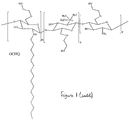
- m + n + p will be equal to 100%. It should also be understood that m, n and p may form any arrangement in the solubilising carbohydrate polymer. The arrangement of the m, n and p units may therefore be random or in a block copolymer form such as mnpmnpmnp etc. This is identified in the structure shown above by the dashed line between the different monomer units.
- the carbohydrate polymer may be positively charged with a counter ion.
- the counter ion may be represented by any negative ion.
- the counter ion may be ions of any of the following: chloride, iodide, acetate and glucoronide.
- the carbohydrate polymer may be uncharged and there will therefore be no counter ion.
- X is CH 3 (CH 2 ) 14 CONH, or CH 3 (CH 2 ) 15 NH.
- R 1 , R 2 and R 3 are CH 3 .
- the C2 nitrogen may not be fully substituted and may be present as a secondary or tertiary amine.
- R', R" and R'" are CH 2 CH 2 OH.
- the carbohydrate polymer starting material to which additional hydrophobic and hydrophilic groups are attached may have an average molecular weight of about 2 to 30 kD.
- the carbohydrate polymer starting material has a molecular weight of about 5 to 17 kD.
- the ratio of m:n:p has the following range: 0.1:1:98.9 to 9:91:0; 1:5:96 to 8:50:42; or 3:10:87 to 5:19:76.
- the total number of monomer units of m+n+p is from 10 to less than 200.
- the number of X groups may not exceed 10 for every 100 monomer groups in the carbohydrate backbone.
- the solubilising carbohydrate polymer may also contain additional targeting groups such as peptides, antibodies and other ligands, for example, folate and transferrin ligands which may allow the polymer to target endogenous receptors and thus target its drug payload to such endogenous receptors at the site of pathology.
- additional targeting groups such as peptides, antibodies and other ligands, for example, folate and transferrin ligands which may allow the polymer to target endogenous receptors and thus target its drug payload to such endogenous receptors at the site of pathology.
- a method of forming a solubilising carbohydrate polymer comprises; depolymerising a carbohydrate polymer to form depolymerised carbohydrate; reacting the depolymerised carbohydrate with a first reactive compound to form hydrophobic side-groups on the carbohydrate backbone and thus form hydrophobically substituted depolymerised carbohydrate; and adding a second reactive compound to the hydrophobically substituted depolymerised carbohydrate to quaternarise an amine group and thereby form the solubilising carbohydrate polymer.
- the carbohydrate polymer is selected from glycol chitosans.
- the carbohydrate polymer may be depolymerised with any of the following: an acid, a base, or enzyme.
- the acid used to depolymerise the carbohydrate polymer may be selected from any of the following: HCl, H 2 SO 4 , HNO 3 or HF.
- the carbohydrate polymer may be depolymerised for a few days, for example, 48 hours, then isolated and subjected to further depolymerisation dependent on the average molecular weight of solubilising carbohydrate polymer required.
- the average molecular weight of carbohydrate polymer to be depolymerised is about 3 to 30 kD and is preferably about 15 kD.
- the first reactive compound which forms the hydrophobic side-groups on the depolymerised carbohydrate polymer may be selected from any of the following: any type of fatty acid derivative of, for example, stearic acid, oleic acid, palmitic acid; organo halides such as alkyl, alkenyl, alkynyl, cyclic or non-aromatic halides, acyl chlorides, anhydrides, N-hydroxysuccinimide and other activated acyl compounds capable of being attacked on the C1 carbon by a compound capable of nucleophilic attack.
- nucleophilic attack is meant compounds which attack atoms with a low electron density.
- the acyl groups may also contain an alkyl, alkenyl or alkynyl group.
- the first reactive compound which forms the hydrophobic side-groups on the depolymerised glycol chitosan may be selected form any of the following: hexadecyl bromide, dodecyl bromide, myristic acid N-hydroxysuccinimide.
- the fatty acid derivative may be palmitic acid N-hydroxysuccinimide; palmitic acid benzotriazole carbonate; palmitaldehyde; palmitoyl chloride; and palmitic acid p-nitro phenyl carbonate.
- the second reactive compound may be an organo halide wherein the organo may be selected from any linear or branch, substituted or unsubstituted, or cyclo form of any alkyl, alkenyl, alkynyl, aryl, amine, amide, alcohol or acyl group.
- the second reactive compound may be any linear or branched, substituted or unsubstituted, or cyclo form of the following alkyl, alkenyl, alkynyl, aryl, amine, amide, alcohol or acyl groups: C 1 -C 30 ; C 1 -C 12 ; C 1 -C 8 ; or C 1 .
- the organo group of the organo halides may be short chain linear alkyl groups.
- the organo group of the organo halides may be CH 3 .
- the solubilising carbohydrate polymer obtained may be purified by column chromatography, dialysis and freeze drying.
- a carbohydrate polymer according to the first aspect and a pharmaceutically acceptable carrier.
- Pharmaceutically acceptable carriers are well known to those skilled in the art and include, but are not limited to, 0.1 M, or preferably 0.05 M phosphate buffer or 0.9% saline. Additionally, such pharmaceutically acceptable carriers may be aqueous or non-aqueous solutions, suspensions, and emulsions. Examples of non-aqueous solvents are propylene glycol, polyethyleneglycol, vegetable oils such as olive oil, and injectable organic esters such as ethyl oleate.
- Aqueous carriers include water, alcoholic/aqueous solutions, emulsions or suspensions, including saline and buffered media.
- Parenteral vehicles include sodium chloride solution, Ringer's dextrose, dextrose and sodium chloride, lactated Ringer's or fixed oils. Preservatives and other additives may also be present, such as, for example, anti-microbial, anti-oxidants, chelating agents, inert gases and the like.
- the ratio of carbohydrate polymer to pharmaceutical acceptable carrier ranges from 0.05 wt. % to 10 wt. %.
- a pharmaceutical composition comprising a carbohydrate polymer according to a first aspect and a drug.
- the drug may be poorly soluble in aqueous solvents such as water.
- the drug may be selected from any of the following: prednisolone; cyclosporine; oestradiol, testosterone, drugs with multicyclic ring structures which lack polar groups such as paclitaxel and drugs such as etoposide.
- the ratio of carbohydrate polymer to the drug may be 10 wt. % : 5000 wt. %.
- the ratio of carbohydrate polymer to drug to pharmaceutically acceptable carrier may be about 1 mg : 1-5 mg : 1 g.
- the pharmaceutical composition may be in the form of any of the following: tablets, suppositories, liquid capsule, powder form, or a form suitable for pulmonary delivery.
- typically used carriers include sucrose, lactose, mannitol, maltitol, dextran, corn starch, typical lubricants such as magnesium stearate, preservatives such as paraben, sorbin, anti-oxidants such as ascorbic acid, ⁇ -tocopheral, cysteine, disintegrators or binders.
- effective diluents include lactose and dry corn starch.
- a liquid for oral use includes syrup, suspension, solution and emulsion, which may contain a typical inert diluent used in this field, such as water, in addition, sweeteners or flavours may be contained.
- Suppositories may be prepared by admixing the compounds of the present invention with a suitable non-irritative excipient such as those that are solid at normal temperature but become liquid at the temperature in the intestine and melt in the rectum to release the active ingredient, such as cocoa butter and polyethyleneglycols.
- a suitable non-irritative excipient such as those that are solid at normal temperature but become liquid at the temperature in the intestine and melt in the rectum to release the active ingredient, such as cocoa butter and polyethyleneglycols.
- the dose can be determined on age, body weight, administration time, administration method, combination of drugs, the level or condition of which a patient is undergoing therapy and other factors. While the daily doses may vary depending on the conditions and body weight of patients, the species or active ingredient, and administration route, in the case of oral use, the daily doses may be about 0.1-2 mg/person/day, preferably 0.5-100 mg/person/day.
- a method of dissolving poorly soluble drugs in a carbohydrate chitosan polymer according to the first aspect whereby on dissolving a poorly soluble drug in the solubilising carbohydrate polymer a substantially clear solution is obtained.
- substantially optically clear solution herein is meant an optically clear solution which is devoid of appreciable light scattering and is clear to the naked eye.
- poorly soluble drugs where one gram of a drug requires more than 10,000 ml of solvent (water) to be solublised. Alternatively, this means a drug which has a solubility of less than 0.1 mg mL -1 in water.
- the poorly soluble drug may be selected from any of the following: cyclosporin, steroids such as prednisolone, oestradiol, testosterone, drugs with multicyclic ring structures which lack polar groups such as paclitaxel and drugs such as etoposide.
- Glycol chitosan, palmitic acid N-hydroxysuccinimde, methyl iodide, 1-bromohexadecane, pyrene and paclitaxel were all obtained from Sigma Aldrich Co, UK.
- Prednisolone acetate, prednisolone and cyclosporine were all obtained from Allergan, USA.
- Hydrochloric acid was obtained from Merck, UK and all organic solvents were purchased from the Department of Pure and Applied Chemistry, University of Strathclyde.
- Palmitoyl glycol chitosan was synthesised as previously described 14 .
- Glycol chitosan 500mg
- sodium bicarbonate 376mg
- water 76mL
- palmitic acid N-hydroxysuccinimide 198mg
- absolute ethanol 150mL
- Palmitic acid N-hydroxysuccinimide solution was added dropwise. The product was isolated after stirring for 72h by evaporating off most of the ethanol, extraction of the remaining liquid with three volumes of diethyl ether (100mL), exhaustive dialysis against water and freeze dried to give a white cotton wool like solid.
- Hexadecyl glycol chitosan was synthesised based on a modification of the method of Wakita and Hashimoto 29 .
- Glycol chitosan 500mg was dissolved in a 1:1 mixture of methanol and N-methyl pyrrolidinone (20mL) and to this was added drop wise a solution of sodium bicarbonate (376mg) dissolved in absolute ethanol (20mL).
- 1-bromhexadecane (3.5mL) was freshly dissolved in a mixture of methanol, N-methyl pyrrolidinone, absolute ethanol (5mL:5mL:10mL) and this solution was added to the basic glycol chitosan solution drop wise over a 1h time period.
- Quaternisation was carried out using essentially the same method as reported by Domard and others 30 .
- PGC or GCH 300 mg was dispersed in N -methyl-2-pyrrolidone (25 ml) overnight for 12 h at room temperature.
- Sodium hydroxide 40 mg
- methyl iodide 1.0 g
- sodium iodide 45 mg were added and the reaction stirred under a stream of nitrogen at 36oC for 3 h.
- the quaternary ammonium product was recovered by precipitation with diethyl ether, filtered and washed with copious amounts of absolute ethanol followed by copious amounts of diethyl ether to give a brown hygroscopic solid.
- the solid was dissolved in water (100 ml) to give a yellow viscous solution.
- the resultant aqueous solution was exhaustively dialysed against water (5L) with six changes over a 24 h period and the product freeze-dried to give a white cotton-like solid which was present as the iodide salt.
- the quaternary ammonium iodide was then dissolved in water (150 ml) to give a clear solution and the solution passed through a column (1 x 6 cm) packed with Amberlite IRA-93 Cl - .
- the column was packed with resin and subsequently with one volume of the resin (30 ml) and subsequently washed with hydrochloric acid solution (90 ml, 1 M) followed by distilled water (500 ml) to give a neutral pH.
- hydrochloric acid solution 90 ml, 1 M
- distilled water 500 ml
- GC degraded glycol chitosan
- GPC-MALLS i.e. gel permeation chromatography - multi angle laser light scattering. Polymers were dissolved in an acetate buffer (sodium acetate 0.3M, acetic acid 0.2M) and filtered (0.2 ⁇ m) samples (200 ⁇ L, 1 - 2mg mL -1 ) injected onto GPC columns using a Waters 717 plus Autosampler.
- ⁇ 690nm, Wyatt Technology, USA,
- a Rheodyne 7725 sample injector was used to load filtered (0.45 ⁇ m) polymer solutions of various concentrations and the data were processed using DNDC for Windows (v5.31) software.
- a dilute aqueous solution of pyrene (2 ⁇ M) was prepared by initially dissolving pyrene in ethanol (0.4mg/mL). 100 ⁇ l of this solution was pipetted into a volumetric flask (100mL) and the ethanol dried under a stream of nitrogen gas. The solution was then made up in distilled water. Using the aqueous pyrene solution as the solvent, polymer solutions were made at various concentrations. The fluorescence emission spectra were recorded (340nm - 600nm) at an excitation wavelength of 335nm.
- the I 3 /I 1 ratio was calculated from the intensity of the third (383nm) and first (375nm) vibronic peaks in the pyrene emission spectra 32 and an increase in the size of the I 3 peak relative to the I 1 peak indicates a more hydrophobic environment 32 . In polar solvents such as water this value is approximately 0.67.
- Prednisolone levels were analysed in filtered samples of the polymer - drug formulation by HPLC. Samples (20 ⁇ L), appropriately diluted with the mobile phase (acetonitrile, water 36: 64) were injected onto a reverse phase Symmetry C18, 3.5 ⁇ m column (4.6mm X 75mm, Waters Instruments, UK) by means of a Waters 717 autosampler and a Waters 515 isocratic pump. Peak detection was via a Waters 486 variable wavelength UV detector with the wavelength set at 243nm and data was collected using a Waters 746 data module. The mobile phase was set at a flow rate of 1ml min -1 . A standard curve was prepared with samples of prednisolone solubilised in the mobile phase (0.1 - 1.0mg Ml -1 ).
- Cyclosporine was analysed by HPLC on the same instrumentation as above except that the column was a Waters Spherisorb 5 ⁇ m, 4.6mm X 250mm column, maintained at 80°C with a Jones Chromatography Column Heater model 7971. Filtered Samples (20 ⁇ L) dissolved in acetonitrile, water (1: 1) were injected onto the column and the mobile phase was acetonitrile: water: tert-butyl-methyl-ether: phosphoric acid (600:350:50:1) at a flow rate of 1.2mL min -1 . Peaks were detected by UV detection at a wavelength of 210nm. A standard curve was prepared using solutions of the drug (1 - 10 ⁇ g mL -1 ).
- a human lung carcinoma cell line (A549, ATCC CCL - 185) and a human epidermoid carcinoma cell line (A431, ATCC CRL - 1555) were both maintained in Dulbecco's minimum essential medium (DMEM) supplemented with 10% foetal calf serum (FCS) and 2mM glutamine (GibcoBRL, U.K) at 10% CO 2 and 37°C.
- DMEM Dulbecco's minimum essential medium
- FCS foetal calf serum
- GibcoBRL, U.K 2mM glutamine
- a standard MTT (3-[4,5-dimethylthiazol-2-yl]2,5-diphenyltetrazolium bromide thiazolyl blue indicator dye) assay was carried out 33 .
- 96 well microtitre plates, 1 per formulation, were seeded with about 800 cells per well and incubated at 37°C with 10% CO 2 for 72 hours.
- the medium was then removed from the wells and varying concentrations of each formulation (200 ⁇ L, prepared in 6% dextrose and diluted in medium) were added to the wells.
- DMEM alone and Triton X-100 were used as positive and negative controls respectively.
- the plates were incubated under the standard conditions for 4 hours and the drug solutions then removed from the wells, replaced with DMEM and the cells further incubated for 72 hours.
- the indicator dye 50 ⁇ L, 50mg mL -1
- the indicator dye was then added to the cells, which were subsequently incubated in the dark for a further 4 hours.
- the dye was removed and the cells lysed by addition of dimethylsulfoxide (200 ⁇ L).
- Sorensen's glycine buffer 25 ⁇ L
- absorbance measured at 570nm. Values are expressed as a percentage of the control minus the background obtained from the wells containing just DMEM.
- Table 1 Molecular Weights of Glycol Chitosan Samples POLYMER Acid Degradation Time Molecular Weight (kD) Polydispersity Mw/Mn GCO Oh 104 1.05 GC48 48h 19.3 1.20 GC484 48h + 4h 17.9 1.23 GC488 48h +8h 17.2 1.28 GC4824 48h + 24h - - GC4848 48h + 48h 15.2 1.08
- the HI (derived from the 1 H NMR data) is a term used here to characterise the hydrophilicity of the polymers and this value quantifies the relationship between additional ionic hydrophilic substituents and hydrophobic substituents added to a previously aqueous soluble polymer or aqueous soluble polymer derivative.
- Aqueous soluble polymers are described as polymers soluble in water at a level of above 1mg mL -1 8 . These carbohydrate polymers may be additionally substituted with non-ionic hydrophilic units as is shown here.
- hydrophobic domains provide areas for the solubilisation of hydrophobic solutes while the hydrophilic substituents increase the affinity of the polymer with the aqueous solvent and prevent phase separation.
- the least polar polysoaps (with the lowest HI value) and the highest molecular weight i.e. - GCPQ484 and GCHQ484 are insoluble in water at a level of 1mg mL -1 (Tables 1 and 2).
- the solubilising polymer must thus be depolymerised as well as substituted with a controlled number of hydrophobic and hydrophilic moieties.
- HI when calculated from the 1 H NMR
- HI values above about 2 appear to be the most efficient polymers in the case of the more polar palmitoyl substituent
- HI values above about 3 appear to be the most efficient solubilisers in the case of the less polar hexadecyl substituents (Table 2).
- Tables 1 - 4 Clearly in the case of prednisolone and cyclosporine, a high level of quaternisation and low level of hydrophobic modification favours solubilisation with these polymers (Tables 1 - 4) .
- N-lauroyl 6-carboxymethyl chitosan polymers prepared previously 11 a shift to a higher level of the carboxymethyl groups and a lower level of lauroyl groups resulted in a decreased association of paclitaxel with the chitosan based colloid.
- the ability of the polymer molecule to be fully hydrated by water molecules plays a more important role than the ability of the polymer to aggregate into polymeric micelles (presence of hydrophobic groups) and provide a hydrophobic cavity within which hydrophobic solutes may be shielded.
- the solubilising polymer should be prepared from an aqueous soluble and depolymerised carbohydrate and the most effective polymers have a degree of polymerisation of less than 200 monomer units.
- the solubilising polymer may further have a level of hydrophobic substitution not exceeding 10 substituents per every 100 monomers and finally an additional ionic hydrophilic substitution level of equal to or more than 1 substituent per polymer chain.
- polymers encapsulating paclitaxel had a level of hydrophobic substitution exceeding 20 substituents per 100 monomers and a minimum level of 140 carboxymethyl groups per 100 monomers 11 .
- the present invention relates to a maximum level of 10 hydrophobic substituents per 100 monomer units.
- the solubilising polymer of the present invention may contain additional targeting groups such as peptides, antibodies and other ligands e.g. folate and transferrin ligands which will allow the polymer to target endogenous receptors and thus target its drug payload to such endogenous receptors at the site of pathology.
- additional targeting groups such as peptides, antibodies and other ligands e.g. folate and transferrin ligands which will allow the polymer to target endogenous receptors and thus target its drug payload to such endogenous receptors at the site of pathology.
- This Example relates to a high throughput method of selection of carbohydrate solubilisers
- Glycol chitosan, palmitic acid N-hydroxysuccinimide, methyl iodide, N-methyl pyrrolidone, sodium iodide, sodium hydroxide, prednisolone and 6-methyl prednisolone were all obtained from Sigma-Aldrich Co. UK. Absolute ethanol was supplied by Bamford Laboratories, UK and diethyl ether by BDH Laboratories, UK. Acetonitrile was supplied by Riedel de-Haen, Germany.
- Glycol chitosan (GC) was degraded for 48h as described above 15 .
- 25 quaternary ammonium palmitoyl glycol chitosan polymers were synthesised from the degraded material with differing levels of hydrophobic (palmitoyl) and hydrophilic (quaternary ammonium) substitution.
- 25 different polymers were synthesised by adding a solution of palmitic acid N-hydroxysuccinimide at the levels shown in Table 1 to the glycol chitosan - sodium bicarbonate solution (1mL) contained in a 25mL test tube. The tubes were shaken for 16h at room temperature and subsequently heated at 85oC for 4h to evaporate off the ethanol.
- Prednisolone levels were analysed in filtered (0.45 ⁇ m) samples of the polymer - drug formulation by HPLC. Samples (20 ⁇ L), appropriately diluted with the mobile phase (acetonitrile, water 36: 64) and containing 6-methyl prednisolone (1 ⁇ g mL -1 ) were injected onto a reverse phase Symmetry C18, 3.5 ⁇ m column (4.6mm X 75mm, Waters Instruments, UK) by means of a Waters 717 autosampler and a Waters 515 isocratic pump. Peak detection was via a Waters 486 variable wavelength UV detector with the wavelength set at 243nm and data was collected using Waters Empower software. The mobile phase was set at a flow rate of 1ml min -1 .
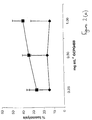
- the high through put method outlined above was able to select polymers with a high solubilising ability (e.g. Polymer E1) for a particular drug which in this case was prednisolone. Polymer E1 may then be synthesised in bulk quantities. Lower concentrations of the polymer (dilute polymer solutions) of about 0.01 - 5m m -1 were superior solubilisers of the model drug than higher concentrations (of about 5 - 10 mg mL -1 ) of the polymer.
Landscapes
- Health & Medical Sciences (AREA)
- Chemical & Material Sciences (AREA)
- Life Sciences & Earth Sciences (AREA)
- Organic Chemistry (AREA)
- General Health & Medical Sciences (AREA)
- Chemical Kinetics & Catalysis (AREA)
- Medicinal Chemistry (AREA)
- Engineering & Computer Science (AREA)
- Animal Behavior & Ethology (AREA)
- Materials Engineering (AREA)
- Pharmacology & Pharmacy (AREA)
- General Chemical & Material Sciences (AREA)
- Polymers & Plastics (AREA)
- Nuclear Medicine, Radiotherapy & Molecular Imaging (AREA)
- Public Health (AREA)
- Veterinary Medicine (AREA)
- Molecular Biology (AREA)
- Biochemistry (AREA)
- Bioinformatics & Cheminformatics (AREA)
- Immunology (AREA)
- Pharmaceuticals Containing Other Organic And Inorganic Compounds (AREA)
- Polysaccharides And Polysaccharide Derivatives (AREA)
- Medicinal Preparation (AREA)
- Medicines That Contain Protein Lipid Enzymes And Other Medicines (AREA)
Claims (21)
- Solubilisierendes Kohlenhydrat-Chitosan-Polymer mit einer durchschnittlichen Molekülmasse von 2 bis 30 kD, bestimmt durch Gelpermeationschromatographie, wie in der Beschreibung beschrieben, gemäß der folgenden Formel:
 X für CH3(CH2)14CONH, oder CH3(CH2)15NH steht;R', R", R'" für CH2CH2OH stehen; undR1, R2 und R3 für CH3 stehen.
 - Solubilisierendes Kohlenhydratpolymer nach Anspruch 1, wobei:(a) die m-, n- und p-Einheiten eine beliebige Anordnung in dem solubilisierenden Kohlenhydratpolymer bilden; oder(b) die Anordnung der m-, n- und p-Einheiten willkürlich oder in Blockcopolymerform ist; oder(c) das Blockcopolymer ist mnpmnpmnp.
- Solubilisierendes Kohlenhydratpolymer nach Anspruch 1 oder Anspruch 2, wobei das Kohlenhydratpolymer mit einem Gegenion positiv geladen ist.
- Solubilisierendes Kohlenhydratpolymer nach Anspruch 3, wobei das Gegenion durch ein beliebiges negatives Ion repräsentiert wird.
- Solubilisierendes Kohlenhydratpolymer nach Anspruch 3 oder Anspruch 4, wobei das Gegenion ein Ion von einem der folgenden ist: Chlorid, Jodid, Acetat und Glucuronid.
- Solubilisierendes Kohlenhydratpolymer nach Anspruch 1 oder Anspruch 2, wobei, wenn die durch n identifizierte Monomereinheit ungeladen ist (d. h., die hydrophile Seitengruppe ungeladen ist), dann ist das Kohlenhydratpolymer ungeladen und es wird deswegen kein Gegenion geben.
- Solubilisierendes Kohlenhydrat nach einem der vorhergehenden Ansprüche, wobei bei einigen Monomeren der C2-Stickstoff nicht vollständig substituiert ist und als sekundäres oder tertiäres Amin vorliegt.
- Solubilisierendes Kohlenhydratpolymer nach einem der vorhergehenden Ansprüche, wobei:(a) ein Kohlenhydratpolymer-Ausgangsmaterial, an das zusätzliche hydrophobe und hydrophile Gruppen gebunden sind, eine durchschnittliche Molekülmasse von 2 bis 30 kD aufweist; oder(b) ein Kohlenhydratpolymer-Ausgangsmaterial eine Molekülmasse von 5 bis 17 kD aufweist.
- Solubilisierendes Kohlenhydratpolymer nach einem der vorhergehenden Ansprüche, wobei das Verhältnis von m:n:p den folgenden Bereich aufweist: 1:5:96 bis 8:50:42; oder 3:10:87 bis 5:19:76.
- Verfahren zur Herstellung eines solubilisierenden Kohlenhydrat-Chitosan-Polymers nach einem der vorhergehenden Ansprüche, wobei das Verfahren umfasst:Depolymerisieren eines Kohlenhydrat-Glykol-Chitosan-Polymers, um depolymerisiertes Kohlenhydrat zu bilden;Umsetzen des depolymerisierten Kohlenhydrats mit einer ersten reaktiven Verbindung, um hydrophobe Seitengruppen an dem Kohlenhydratgerüst zu bilden und somit hydrophob substituiertes depolymerisiertes Kohlenhydrat zu bilden; undHinzufügen einer zweiten reaktiven Verbindung zu dem hydrophob substituierten depolymerisierten Kohlenhydrat, um eine Amingruppe zu quaternarisieren und dadurch das solubilisierende Kohlenhydrat-Chitosan-Polymer zu bilden.
- Verfahren nach Anspruch 10, wobei:(a) das Kohlenhydratpolymer mit einem von den folgenden depolymerisiert ist: einer Säure, einer Base oder einem Enzym; und/oder(b) die Säure, die zur Depolymerisation des Kohlenhydratpolymers verwendet wird, ausgewählt ist aus einem beliebigen der folgenden: HCl, H2SO4, HNO3 oder HF; und/oder(c) das Kohlenhydratpolymer für einige Tage depolymerisiert, danach isoliert und einer weiteren Depolymerisation unterworfen wird, abhängig von der durchschnittlichen Molekülmasse des benötigten solubilisierenden Kohlenhydratpolymers.
- Verfahren nach einem der Ansprüche 10 bis 11, wobei die durchschnittliche Molekülmasse des zu depolymerisierenden Kohlenhydratpolymers 3 bis 30 kD beträgt.
- Verfahren nach einem der Ansprüche 10 bis 12, wobei die erste reaktive Verbindung, welche die hydrophoben Seitengruppen an dem depolymerisierten Kohlenhydratpolymer bildet, ein Fettsäurederivat ist, das ausgewählt ist aus Palmitinsäure-N-hydroxysuccinimid, Palmitinsäurebenzotriazolcarbonat, Palmitaldehyd, Palmitoylchlorid oder Palmitinsäure-p-nitrophenylcarbonat.
- Kohlenhydratpolymer nach einem der Ansprüche 1 bis 9 und ein pharmazeutisch akzeptabler Träger.
- Kohlenhydratpolymer nach Anspruch 14, wobei das Verhältnis von Kohlenhydratpolymer zu pharmazeutisch akzeptablem Träger in dem Bereich von 0,05 Gew.-% bis 10 Gew.-% liegt.
- Pharmazeutische Zusammensetzung, umfassend ein Kohlenhydratpolymer nach einem der Ansprüche 1 bis 9 und ein Arzneimittel.
- Pharmazeutische Zusammensetzung nach Anspruch 16, wobei das Arzneimittel ausgewählt ist aus einem von den folgenden: Prednisolon; Cyclosporin;
Östradiol, Testosteron, Arzneimitteln mit multizyklischen Ringstrukturen, denen polare Gruppen fehlen. - Pharmazeutische Zusammensetzung nach Anspruch 16 oder 17, wobei:(a) das Verhältnis von Kohlenhydratpolymer zu dem Arzneimittel 10 Gew.-%: 5.000 Gew.-% beträgt; oder(b) das Verhältnis von Kohlenhydratpolymer zu Arzneimittel zu pharmazeutisch akzeptablem Träger 1 mg : 1 bis 5 mg : 1 g beträgt; und/oder(c) die pharmazeutische Zusammensetzung in Form eines der folgenden vorliegt: Tabletten, Zäpfchen, Flüssigkapseln, Pulverform oder in einer Form, die für die pulmonale Verabreichung geeignet ist.
- Verfahren zum Auflösen schwerlöslicher Arzneimittel in einem Kohlenhydratpolymer, wobei das solubilisierende Kohlenhydratpolymer wie in einem der Ansprüche 1 bis 9 definiert ist, wodurch beim Auflösen eines schwerlöslichen Arzneimittels in dem solubilisierenden Kohlenhydratpolymer eine optisch klare Lösung erhalten wird, die frei von nennenswerter Lichtstreuung ist und für das bloße Auge klar ist, wobei das schwerlösliche Arzneimittel eine Löslichkeit von weniger als 0,1 mg/ml in Wasser aufweist.
- Verfahren nach Anspruch 19, wobei das Kohlenhydratpolymer nach einem der Ansprüche 1 bis 9 verwendet wird.
- Verfahren nach einem der Ansprüche 19 bis 20, wobei das schwerlösliche Arzneimittel ausgewählt ist aus einem beliebigen der folgenden: Cyclosporin, Steroiden oder Arzneimitteln mit multizyklischen Ringstrukturen, denen polare Gruppen fehlen.
Applications Claiming Priority (3)
| Application Number | Priority Date | Filing Date | Title |
|---|---|---|---|
| GBGB0221941.8A GB0221941D0 (en) | 2002-09-20 | 2002-09-20 | Polysoaps |
| GB0221941 | 2002-09-20 | ||
| PCT/GB2003/004062 WO2004026912A1 (en) | 2002-09-20 | 2003-09-22 | Solubilising polysaccharides substituted with hydrophilic and hydrophobic groups |
Publications (2)
| Publication Number | Publication Date |
|---|---|
| EP1543040A1 EP1543040A1 (de) | 2005-06-22 |
| EP1543040B1 true EP1543040B1 (de) | 2019-02-13 |
Family
ID=9944515
Family Applications (1)
| Application Number | Title | Priority Date | Filing Date |
|---|---|---|---|
| EP03748286.6A Expired - Lifetime EP1543040B1 (de) | 2002-09-20 | 2003-09-22 | Lösende chitosan-polymer mit hydrophilen und hydrophoben substituenten |
Country Status (7)
| Country | Link |
|---|---|
| US (1) | US7741474B2 (de) |
| EP (1) | EP1543040B1 (de) |
| JP (1) | JP4865228B2 (de) |
| AU (1) | AU2003267594A1 (de) |
| CA (1) | CA2499686C (de) |
| GB (1) | GB0221941D0 (de) |
| WO (1) | WO2004026912A1 (de) |
Families Citing this family (33)
| Publication number | Priority date | Publication date | Assignee | Title |
|---|---|---|---|---|
| GB0221942D0 (en) * | 2002-09-20 | 2002-10-30 | Univ Strathclyde | Drug delivery |
| WO2006029452A1 (en) * | 2004-09-14 | 2006-03-23 | Ip Organisers Pty Ltd | Acylated saccharides and uses thereof |
| EP1971372B1 (de) | 2005-12-19 | 2018-11-14 | PharmaIN Corporation | Trägerzusammensetzungen mit hydrophobem kern zur abgabe von therapeutischen mitteln, herstellungs- und anwendungsverfahren damit |
| GB0615834D0 (en) * | 2006-08-09 | 2006-09-20 | Univ Glasgow | Polymeric micellar clusters and their uses in formulating drugs |
| US20090263346A1 (en) * | 2006-12-05 | 2009-10-22 | David Taft | Systems and methods for delivery of drugs |
| US20090246155A1 (en) * | 2006-12-05 | 2009-10-01 | Landec Corporation | Compositions and methods for personal care |
| US8399007B2 (en) * | 2006-12-05 | 2013-03-19 | Landec Corporation | Method for formulating a controlled-release pharmaceutical formulation |
| US20100004124A1 (en) * | 2006-12-05 | 2010-01-07 | David Taft | Systems and methods for delivery of materials for agriculture and aquaculture |
| CA2670749A1 (en) | 2006-12-05 | 2008-06-12 | Landec Corporation | Drug delivery |
| US8932560B2 (en) * | 2007-09-04 | 2015-01-13 | University of Maryland, College Parke | Advanced functional biocompatible polymeric matrix used as a hemostatic agent and system for damaged tissues and cells |
| US9066885B2 (en) * | 2007-03-16 | 2015-06-30 | University Of Maryland, College Park | Advanced functional biocompatible polymeric matrix containing nano-compartments |
| US8114883B2 (en) * | 2007-12-04 | 2012-02-14 | Landec Corporation | Polymer formulations for delivery of bioactive materials |
| US20090176892A1 (en) | 2008-01-09 | 2009-07-09 | Pharmain Corporation | Soluble Hydrophobic Core Carrier Compositions for Delivery of Therapeutic Agents, Methods of Making and Using the Same |
| US8877170B2 (en) * | 2009-02-21 | 2014-11-04 | Sofradim Production | Medical device with inflammatory response-reducing coating |
| GB0903559D0 (en) | 2009-03-02 | 2009-04-08 | Univ London Pharmacy | Oral delivery of hydrophilic drugs to the brain |
| GB0915449D0 (en) * | 2009-09-04 | 2009-10-07 | Univ Robert Gordon | Composition |
| EP2498820B1 (de) | 2009-11-13 | 2019-01-09 | University of Maryland, College Park | Erweiterter funktioneller biokompatibler schaumstoff als hämostasemittel für komprimierbare und nicht komprimierbare akute wunden |
| EP2603246B1 (de) | 2010-08-13 | 2019-04-03 | University of Maryland, College Park | Verfahren und system zur umkehrung der wechselwirkung zwischen hydrophob modifizierten biopolymeren und bläschen oder zellmembranen |
| US8858883B2 (en) | 2010-12-02 | 2014-10-14 | University Of Maryland, College Park | Method and system for capture and use of intact vesicles on electrodeposited hydrophobically modified biopolymer films |
| KR101502579B1 (ko) | 2012-10-31 | 2015-03-16 | 충남대학교산학협력단 | 소수성 치환기를 갖는 글리콜 키토산 유도체, 이의 제조방법 및 용도 |
| CA2914610C (en) | 2013-03-13 | 2022-08-02 | University Of Maryland | Advanced functional biocompatible polymer putty used as a hemostatic agent for treating damaged tissue and cells |
| US20150119505A1 (en) * | 2013-10-29 | 2015-04-30 | Edward Scott Williams | Paper Coating Composition |
| GB201319437D0 (en) * | 2013-11-04 | 2013-12-18 | Nanomerics Ltd | Delivery of drugs |
| CN104086670B (zh) * | 2014-05-22 | 2016-09-07 | 中国科学院烟台海岸带研究所 | 一种含三氮唑的壳聚糖季铵盐及其制备和应用 |
| GB201419540D0 (en) | 2014-11-03 | 2014-12-17 | Nanomerics Ltd | Delivery of drugs |
| CN105037583A (zh) * | 2015-08-07 | 2015-11-11 | 成都易胜科生物科技有限公司 | 一种n-三甲基壳聚糖的合成工艺 |
| US12403157B2 (en) | 2019-03-05 | 2025-09-02 | Medcura, Inc. | System and method to reduce tissue ororgan adhesion |
| CN111270419B (zh) * | 2020-03-05 | 2021-11-16 | 南通大学 | 一种壳聚糖改性纳米纤维缓释抗菌膜及其制备方法 |
| GB202007703D0 (en) | 2020-05-22 | 2020-07-08 | Nanomerics Ltd | Amphiphilic carbohydrate compounds |
| US20230330132A1 (en) * | 2020-08-24 | 2023-10-19 | Nanomerics Limited | Viral inhibitors |
| CN114184728B (zh) * | 2021-12-02 | 2024-06-07 | 武汉九珑人福药业有限责任公司 | 一种甲泼尼龙中间体的分析方法 |
| CN117470799B (zh) * | 2023-09-19 | 2025-01-10 | 海南省环境科学研究院 | 一种检测水环境沉积物中的微塑料的方法 |
| CN121060301B (zh) * | 2025-11-07 | 2026-01-16 | 广州市东源药业科技有限公司 | 芦荟多糖在提高难溶性物质溶解度和储存稳定性中的应用 |
Family Cites Families (7)
| Publication number | Priority date | Publication date | Assignee | Title |
|---|---|---|---|---|
| DE563013C (de) | 1932-10-31 | Johannes Schuermann | Ofenrohr | |
| IT1144697B (it) | 1981-04-06 | 1986-10-29 | Texcontor Ets | Derivato semi-sintetico della chitina processo per la sua preparazione e composizioni terapeutiche che lo comprendono come principio attivo |
| US5300494A (en) | 1986-06-06 | 1994-04-05 | Union Carbide Chemicals & Plastics Technology Corporation | Delivery systems for quaternary and related compounds |
| ATE152455T1 (de) * | 1990-08-17 | 1997-05-15 | Drug Delivery System Inst Ltd | N-acetylcarboxymethylchitosanderivat und verfahren zur herstellung |
| ATE152132T1 (de) | 1992-03-27 | 1997-05-15 | Ciba Geigy Ag | N-substituierte chitosanderivate, ein verfahren zu deren herstellung und deren verwendung |
| US6251959B1 (en) * | 1996-05-09 | 2001-06-26 | Nippon Suisan Kaisha, Ltd. | Chitin derivatives having carboxylated lower alkyl groups as hydrophilic substituents and hydrophobic substituents, and micellar aqueous composition thereof |
| JP3204620B2 (ja) * | 1996-11-01 | 2001-09-04 | アクセーヌ株式会社 | キトサン誘導体と、そのキトサン誘導体系高分子界面活性剤、及びそのキトサン誘導体を含有する化粧料 |
-
2002
- 2002-09-20 GB GBGB0221941.8A patent/GB0221941D0/en not_active Ceased
-
2003
- 2003-09-22 JP JP2004537308A patent/JP4865228B2/ja not_active Expired - Lifetime
- 2003-09-22 US US10/528,603 patent/US7741474B2/en not_active Expired - Lifetime
- 2003-09-22 CA CA2499686A patent/CA2499686C/en not_active Expired - Lifetime
- 2003-09-22 AU AU2003267594A patent/AU2003267594A1/en not_active Abandoned
- 2003-09-22 WO PCT/GB2003/004062 patent/WO2004026912A1/en not_active Ceased
- 2003-09-22 EP EP03748286.6A patent/EP1543040B1/de not_active Expired - Lifetime
Non-Patent Citations (1)
| Title |
|---|
| None * |
Also Published As
| Publication number | Publication date |
|---|---|
| WO2004026912A1 (en) | 2004-04-01 |
| AU2003267594A8 (en) | 2004-04-08 |
| CA2499686C (en) | 2012-08-21 |
| AU2003267594A1 (en) | 2004-04-08 |
| JP2006503933A (ja) | 2006-02-02 |
| GB0221941D0 (en) | 2002-10-30 |
| US7741474B2 (en) | 2010-06-22 |
| EP1543040A1 (de) | 2005-06-22 |
| CA2499686A1 (en) | 2004-04-01 |
| JP4865228B2 (ja) | 2012-02-01 |
| US20060167116A1 (en) | 2006-07-27 |
Similar Documents
| Publication | Publication Date | Title |
|---|---|---|
| US7741474B2 (en) | Solubilising polysaccharides substituted with dydrophilic and hydrophobic groups | |
| EP2051998B1 (de) | Polymere mizellenclusters und deren verwendung in der formulierung von medikamenten | |
| Jena et al. | Polymeric micelles of amphiphilic graft copolymer of α-tocopherol succinate-g-carboxymethyl chitosan for tamoxifen delivery: Synthesis, characterization and in vivo pharmacokinetic study | |
| Zhang et al. | Potential of amphiphilically modified low molecular weight chitosan as a novel carrier for hydrophobic anticancer drug: synthesis, characterization, micellization and cytotoxicity evaluation | |
| Qu et al. | Carbohydrate-based micelle clusters which enhance hydrophobic drug bioavailability by up to 1 order of magnitude | |
| EP2964678B1 (de) | Neue celluloseetherester mit niedriger viskosität | |
| Hou et al. | Preparation and characterization of β-cyclodextrin grafted N-maleoyl chitosan nanoparticles for drug delivery | |
| Breitenbach et al. | Amphiphilic polysaccharide block copolymers for pH-responsive micellar nanoparticles | |
| EP2964203B1 (de) | Neuartige veresterte celluloseether mit sehr hohem molekulargewicht | |
| Duhem et al. | Tocol modified glycol chitosan for the oral delivery of poorly soluble drugs | |
| EP2964679B1 (de) | Neue zelluloseesterether mit niedriger viskositàt und hohem molekulargewicht | |
| FR2936800A1 (fr) | Polysaccharide comportant des groupes fonctionnels carboxyles substitues par un derive d'alcool hydrophobe | |
| Gilani et al. | Development of respirable nanomicelle carriers for delivery of amphotericin B by jet nebulization | |
| Ravindran et al. | Preparation of Curdlan sulphate-Chitosan nanoparticles as a drug carrier to target Mycobacterium smegmatis infected macrophages | |
| Laha et al. | Novel propyl karaya gum nanogels for bosentan: In vitro and in vivo drug delivery performance | |
| Seyam et al. | Colonic targeting insulin-loaded trimethyl chitosan nanoparticles coated pectin for oral delivery: In vitro and In vivo studies | |
| WO2009016663A1 (en) | Amphiphilic dextrin conjugates and their use in pharmaceutical formulations as complexing agents for hydrophobic drugs to improve the aqueous solubility and consequently the therapeutic efficacy of the complexed drugs | |
| CN1879887B (zh) | 基于水溶性环糊精聚合物的难溶性药物给药系统 | |
| Sui et al. | Self-assembly of an amphiphilic derivative of chitosan and micellar solubilization of puerarin | |
| Silva-Carvalho et al. | Covalent conjugation of amphotericin B to hyaluronic acid: an injectable water-soluble conjugate with reduced toxicity and anti-leishmanial potential | |
| Fürst et al. | Mucoadhesive polymers: Design of S-protected thiolated cyclodextrin-based hydrogels | |
| EP3271404A1 (de) | Wasserlösliche veresterte celluloseether | |
| EP3270973B1 (de) | Wässrige lösung eines veresterten celluloseethers | |
| US10653784B2 (en) | Hydrophobic highly branched carbohydrate polymers | |
| CN107406520B (zh) | 用于分级分离酯化纤维素醚的方法 |
Legal Events
| Date | Code | Title | Description |
|---|---|---|---|
| PUAI | Public reference made under article 153(3) epc to a published international application that has entered the european phase |
Free format text: ORIGINAL CODE: 0009012 |
|
| 17P | Request for examination filed |
Effective date: 20050419 |
|
| AK | Designated contracting states |
Kind code of ref document: A1 Designated state(s): AT BE BG CH CY CZ DE DK EE ES FI FR GB GR HU IE IT LI LU MC NL PT RO SE SI SK TR |
|
| AX | Request for extension of the european patent |
Extension state: AL LT LV MK |
|
| DAX | Request for extension of the european patent (deleted) | ||
| RAP1 | Party data changed (applicant data changed or rights of an application transferred) |
Owner name: THE SCHOOL OF PHARMACY, UNIVERSITY OF LONDON |
|
| 17Q | First examination report despatched |
Effective date: 20110331 |
|
| RAP1 | Party data changed (applicant data changed or rights of an application transferred) |
Owner name: UNIVERSITY COLLEGE LONDON |
|
| STAA | Information on the status of an ep patent application or granted ep patent |
Free format text: STATUS: EXAMINATION IS IN PROGRESS |
|
| REG | Reference to a national code |
Ref country code: DE Ref legal event code: R079 Ref document number: 60351812 Country of ref document: DE Free format text: PREVIOUS MAIN CLASS: C08B0037000000 Ipc: C08B0037080000 |
|
| GRAP | Despatch of communication of intention to grant a patent |
Free format text: ORIGINAL CODE: EPIDOSNIGR1 |
|
| STAA | Information on the status of an ep patent application or granted ep patent |
Free format text: STATUS: GRANT OF PATENT IS INTENDED |
|
| RIC1 | Information provided on ipc code assigned before grant |
Ipc: A61K 9/20 19740701ALI20180816BHEP Ipc: A61K 47/34 19900101ALI20180816BHEP Ipc: C08B 37/08 19740701AFI20180816BHEP |
|
| INTG | Intention to grant announced |
Effective date: 20180831 |
|
| GRAS | Grant fee paid |
Free format text: ORIGINAL CODE: EPIDOSNIGR3 |
|
| GRAA | (expected) grant |
Free format text: ORIGINAL CODE: 0009210 |
|
| STAA | Information on the status of an ep patent application or granted ep patent |
Free format text: STATUS: THE PATENT HAS BEEN GRANTED |
|
| RIN1 | Information on inventor provided before grant (corrected) |
Inventor name: STEWART, AILSA Inventor name: WILSON, CLIVE Inventor name: UCHEGBU, IJEOMA Inventor name: SCHATZLEIN, ANDREAS |
|
| AK | Designated contracting states |
Kind code of ref document: B1 Designated state(s): AT BE BG CH CY CZ DE DK EE ES FI FR GB GR HU IE IT LI LU MC NL PT RO SE SI SK TR |
|
| REG | Reference to a national code |
Ref country code: GB Ref legal event code: FG4D |
|
| RIC1 | Information provided on ipc code assigned before grant |
Ipc: C08B 37/08 20060101AFI20180816BHEP Ipc: A61K 9/20 20060101ALI20180816BHEP Ipc: A61K 47/34 20170101ALI20180816BHEP |
|
| REG | Reference to a national code |
Ref country code: CH Ref legal event code: EP Ref country code: AT Ref legal event code: REF Ref document number: 1096167 Country of ref document: AT Kind code of ref document: T Effective date: 20190215 |
|
| REG | Reference to a national code |
Ref country code: IE Ref legal event code: FG4D |
|
| REG | Reference to a national code |
Ref country code: DE Ref legal event code: R096 Ref document number: 60351812 Country of ref document: DE |
|
| REG | Reference to a national code |
Ref country code: NL Ref legal event code: MP Effective date: 20190213 |
|
| PG25 | Lapsed in a contracting state [announced via postgrant information from national office to epo] |
Ref country code: PT Free format text: LAPSE BECAUSE OF FAILURE TO SUBMIT A TRANSLATION OF THE DESCRIPTION OR TO PAY THE FEE WITHIN THE PRESCRIBED TIME-LIMIT Effective date: 20190613 Ref country code: SE Free format text: LAPSE BECAUSE OF FAILURE TO SUBMIT A TRANSLATION OF THE DESCRIPTION OR TO PAY THE FEE WITHIN THE PRESCRIBED TIME-LIMIT Effective date: 20190213 Ref country code: FI Free format text: LAPSE BECAUSE OF FAILURE TO SUBMIT A TRANSLATION OF THE DESCRIPTION OR TO PAY THE FEE WITHIN THE PRESCRIBED TIME-LIMIT Effective date: 20190213 Ref country code: NL Free format text: LAPSE BECAUSE OF FAILURE TO SUBMIT A TRANSLATION OF THE DESCRIPTION OR TO PAY THE FEE WITHIN THE PRESCRIBED TIME-LIMIT Effective date: 20190213 |
|
| PG25 | Lapsed in a contracting state [announced via postgrant information from national office to epo] |
Ref country code: GR Free format text: LAPSE BECAUSE OF FAILURE TO SUBMIT A TRANSLATION OF THE DESCRIPTION OR TO PAY THE FEE WITHIN THE PRESCRIBED TIME-LIMIT Effective date: 20190514 Ref country code: BG Free format text: LAPSE BECAUSE OF FAILURE TO SUBMIT A TRANSLATION OF THE DESCRIPTION OR TO PAY THE FEE WITHIN THE PRESCRIBED TIME-LIMIT Effective date: 20190513 |
|
| REG | Reference to a national code |
Ref country code: AT Ref legal event code: MK05 Ref document number: 1096167 Country of ref document: AT Kind code of ref document: T Effective date: 20190213 |
|
| PG25 | Lapsed in a contracting state [announced via postgrant information from national office to epo] |
Ref country code: CZ Free format text: LAPSE BECAUSE OF FAILURE TO SUBMIT A TRANSLATION OF THE DESCRIPTION OR TO PAY THE FEE WITHIN THE PRESCRIBED TIME-LIMIT Effective date: 20190213 Ref country code: RO Free format text: LAPSE BECAUSE OF FAILURE TO SUBMIT A TRANSLATION OF THE DESCRIPTION OR TO PAY THE FEE WITHIN THE PRESCRIBED TIME-LIMIT Effective date: 20190213 Ref country code: IT Free format text: LAPSE BECAUSE OF FAILURE TO SUBMIT A TRANSLATION OF THE DESCRIPTION OR TO PAY THE FEE WITHIN THE PRESCRIBED TIME-LIMIT Effective date: 20190213 Ref country code: EE Free format text: LAPSE BECAUSE OF FAILURE TO SUBMIT A TRANSLATION OF THE DESCRIPTION OR TO PAY THE FEE WITHIN THE PRESCRIBED TIME-LIMIT Effective date: 20190213 Ref country code: DK Free format text: LAPSE BECAUSE OF FAILURE TO SUBMIT A TRANSLATION OF THE DESCRIPTION OR TO PAY THE FEE WITHIN THE PRESCRIBED TIME-LIMIT Effective date: 20190213 Ref country code: ES Free format text: LAPSE BECAUSE OF FAILURE TO SUBMIT A TRANSLATION OF THE DESCRIPTION OR TO PAY THE FEE WITHIN THE PRESCRIBED TIME-LIMIT Effective date: 20190213 Ref country code: SK Free format text: LAPSE BECAUSE OF FAILURE TO SUBMIT A TRANSLATION OF THE DESCRIPTION OR TO PAY THE FEE WITHIN THE PRESCRIBED TIME-LIMIT Effective date: 20190213 |
|
| REG | Reference to a national code |
Ref country code: DE Ref legal event code: R097 Ref document number: 60351812 Country of ref document: DE |
|
| PLBE | No opposition filed within time limit |
Free format text: ORIGINAL CODE: 0009261 |
|
| STAA | Information on the status of an ep patent application or granted ep patent |
Free format text: STATUS: NO OPPOSITION FILED WITHIN TIME LIMIT |
|
| PG25 | Lapsed in a contracting state [announced via postgrant information from national office to epo] |
Ref country code: AT Free format text: LAPSE BECAUSE OF FAILURE TO SUBMIT A TRANSLATION OF THE DESCRIPTION OR TO PAY THE FEE WITHIN THE PRESCRIBED TIME-LIMIT Effective date: 20190213 |
|
| 26N | No opposition filed |
Effective date: 20191114 |
|
| PG25 | Lapsed in a contracting state [announced via postgrant information from national office to epo] |
Ref country code: SI Free format text: LAPSE BECAUSE OF FAILURE TO SUBMIT A TRANSLATION OF THE DESCRIPTION OR TO PAY THE FEE WITHIN THE PRESCRIBED TIME-LIMIT Effective date: 20190213 |
|
| PG25 | Lapsed in a contracting state [announced via postgrant information from national office to epo] |
Ref country code: TR Free format text: LAPSE BECAUSE OF FAILURE TO SUBMIT A TRANSLATION OF THE DESCRIPTION OR TO PAY THE FEE WITHIN THE PRESCRIBED TIME-LIMIT Effective date: 20190213 |
|
| PG25 | Lapsed in a contracting state [announced via postgrant information from national office to epo] |
Ref country code: MC Free format text: LAPSE BECAUSE OF FAILURE TO SUBMIT A TRANSLATION OF THE DESCRIPTION OR TO PAY THE FEE WITHIN THE PRESCRIBED TIME-LIMIT Effective date: 20190213 |
|
| REG | Reference to a national code |
Ref country code: CH Ref legal event code: PL |
|
| PG25 | Lapsed in a contracting state [announced via postgrant information from national office to epo] |
Ref country code: CH Free format text: LAPSE BECAUSE OF NON-PAYMENT OF DUE FEES Effective date: 20190930 Ref country code: IE Free format text: LAPSE BECAUSE OF NON-PAYMENT OF DUE FEES Effective date: 20190922 Ref country code: LI Free format text: LAPSE BECAUSE OF NON-PAYMENT OF DUE FEES Effective date: 20190930 Ref country code: LU Free format text: LAPSE BECAUSE OF NON-PAYMENT OF DUE FEES Effective date: 20190922 |
|
| REG | Reference to a national code |
Ref country code: BE Ref legal event code: MM Effective date: 20190930 |
|
| PG25 | Lapsed in a contracting state [announced via postgrant information from national office to epo] |
Ref country code: BE Free format text: LAPSE BECAUSE OF NON-PAYMENT OF DUE FEES Effective date: 20190930 |
|
| PG25 | Lapsed in a contracting state [announced via postgrant information from national office to epo] |
Ref country code: CY Free format text: LAPSE BECAUSE OF FAILURE TO SUBMIT A TRANSLATION OF THE DESCRIPTION OR TO PAY THE FEE WITHIN THE PRESCRIBED TIME-LIMIT Effective date: 20190213 |
|
| PG25 | Lapsed in a contracting state [announced via postgrant information from national office to epo] |
Ref country code: HU Free format text: LAPSE BECAUSE OF FAILURE TO SUBMIT A TRANSLATION OF THE DESCRIPTION OR TO PAY THE FEE WITHIN THE PRESCRIBED TIME-LIMIT; INVALID AB INITIO Effective date: 20030922 |
|
| PGFP | Annual fee paid to national office [announced via postgrant information from national office to epo] |
Ref country code: GB Payment date: 20220919 Year of fee payment: 20 Ref country code: DE Payment date: 20220919 Year of fee payment: 20 |
|
| PGFP | Annual fee paid to national office [announced via postgrant information from national office to epo] |
Ref country code: FR Payment date: 20220919 Year of fee payment: 20 |
|
| P01 | Opt-out of the competence of the unified patent court (upc) registered |
Effective date: 20230522 |
|
| P02 | Opt-out of the competence of the unified patent court (upc) changed |
Effective date: 20230525 |
|
| REG | Reference to a national code |
Ref country code: DE Ref legal event code: R071 Ref document number: 60351812 Country of ref document: DE |
|
| REG | Reference to a national code |
Ref country code: GB Ref legal event code: PE20 Expiry date: 20230921 |
|
| PG25 | Lapsed in a contracting state [announced via postgrant information from national office to epo] |
Ref country code: GB Free format text: LAPSE BECAUSE OF EXPIRATION OF PROTECTION Effective date: 20230921 |