EP1542609B1 - Zusammensetzungen enthaltend Beta-Interferon zur Verwendung bei der Behandlung des Melanoms - Google Patents
Zusammensetzungen enthaltend Beta-Interferon zur Verwendung bei der Behandlung des Melanoms Download PDFInfo
- Publication number
- EP1542609B1 EP1542609B1 EP03749229A EP03749229A EP1542609B1 EP 1542609 B1 EP1542609 B1 EP 1542609B1 EP 03749229 A EP03749229 A EP 03749229A EP 03749229 A EP03749229 A EP 03749229A EP 1542609 B1 EP1542609 B1 EP 1542609B1
- Authority
- EP
- European Patent Office
- Prior art keywords
- ifn
- cell
- receptor agonist
- taa
- tumor
- Prior art date
- Legal status (The legal status is an assumption and is not a legal conclusion. Google has not performed a legal analysis and makes no representation as to the accuracy of the status listed.)
- Expired - Lifetime
Links
Images




Classifications
-
- C—CHEMISTRY; METALLURGY
- C07—ORGANIC CHEMISTRY
- C07K—PEPTIDES
- C07K16/00—Immunoglobulins [IG], e.g. monoclonal or polyclonal antibodies
- C07K16/18—Immunoglobulins [IG], e.g. monoclonal or polyclonal antibodies against material from animals or humans
- C07K16/28—Immunoglobulins [IG], e.g. monoclonal or polyclonal antibodies against material from animals or humans against receptors, cell surface antigens or cell surface determinants
- C07K16/30—Immunoglobulins [IG], e.g. monoclonal or polyclonal antibodies against material from animals or humans against receptors, cell surface antigens or cell surface determinants from tumour cells
- C07K16/3053—Skin, nerves, brain
-
- A—HUMAN NECESSITIES
- A61—MEDICAL OR VETERINARY SCIENCE; HYGIENE
- A61K—PREPARATIONS FOR MEDICAL, DENTAL OR TOILETRY PURPOSES
- A61K35/00—Medicinal preparations containing materials or reaction products thereof with undetermined constitution
- A61K35/12—Materials from mammals; Compositions comprising non-specified tissues or cells; Compositions comprising non-embryonic stem cells; Genetically modified cells
- A61K35/14—Blood; Artificial blood
- A61K35/15—Cells of the myeloid line, e.g. granulocytes, basophils, eosinophils, neutrophils, leucocytes, monocytes, macrophages or mast cells; Myeloid precursor cells; Antigen-presenting cells, e.g. dendritic cells
-
- A—HUMAN NECESSITIES
- A61—MEDICAL OR VETERINARY SCIENCE; HYGIENE
- A61K—PREPARATIONS FOR MEDICAL, DENTAL OR TOILETRY PURPOSES
- A61K38/00—Medicinal preparations containing peptides
- A61K38/16—Peptides having more than 20 amino acids; Gastrins; Somatostatins; Melanotropins; Derivatives thereof
- A61K38/17—Peptides having more than 20 amino acids; Gastrins; Somatostatins; Melanotropins; Derivatives thereof from animals; from humans
- A61K38/19—Cytokines; Lymphokines; Interferons
- A61K38/21—Interferons [IFN]
- A61K38/215—IFN-beta
-
- A—HUMAN NECESSITIES
- A61—MEDICAL OR VETERINARY SCIENCE; HYGIENE
- A61K—PREPARATIONS FOR MEDICAL, DENTAL OR TOILETRY PURPOSES
- A61K39/00—Medicinal preparations containing antigens or antibodies
- A61K39/0005—Vertebrate antigens
- A61K39/0011—Cancer antigens
-
- A—HUMAN NECESSITIES
- A61—MEDICAL OR VETERINARY SCIENCE; HYGIENE
- A61K—PREPARATIONS FOR MEDICAL, DENTAL OR TOILETRY PURPOSES
- A61K39/00—Medicinal preparations containing antigens or antibodies
- A61K39/0005—Vertebrate antigens
- A61K39/0011—Cancer antigens
- A61K39/001152—Transcription factors, e.g. SOX or c-MYC
-
- A—HUMAN NECESSITIES
- A61—MEDICAL OR VETERINARY SCIENCE; HYGIENE
- A61K—PREPARATIONS FOR MEDICAL, DENTAL OR TOILETRY PURPOSES
- A61K39/00—Medicinal preparations containing antigens or antibodies
- A61K39/0005—Vertebrate antigens
- A61K39/0011—Cancer antigens
- A61K39/001154—Enzymes
- A61K39/001156—Tyrosinase and tyrosinase related proteinases [TRP-1 or TRP-2]
-
- A—HUMAN NECESSITIES
- A61—MEDICAL OR VETERINARY SCIENCE; HYGIENE
- A61K—PREPARATIONS FOR MEDICAL, DENTAL OR TOILETRY PURPOSES
- A61K39/00—Medicinal preparations containing antigens or antibodies
- A61K39/0005—Vertebrate antigens
- A61K39/0011—Cancer antigens
- A61K39/001184—Cancer testis antigens, e.g. SSX, BAGE, GAGE or SAGE
- A61K39/001186—MAGE
-
- A—HUMAN NECESSITIES
- A61—MEDICAL OR VETERINARY SCIENCE; HYGIENE
- A61K—PREPARATIONS FOR MEDICAL, DENTAL OR TOILETRY PURPOSES
- A61K39/00—Medicinal preparations containing antigens or antibodies
- A61K39/0005—Vertebrate antigens
- A61K39/0011—Cancer antigens
- A61K39/001184—Cancer testis antigens, e.g. SSX, BAGE, GAGE or SAGE
- A61K39/001188—NY-ESO
-
- A—HUMAN NECESSITIES
- A61—MEDICAL OR VETERINARY SCIENCE; HYGIENE
- A61K—PREPARATIONS FOR MEDICAL, DENTAL OR TOILETRY PURPOSES
- A61K39/00—Medicinal preparations containing antigens or antibodies
- A61K39/0005—Vertebrate antigens
- A61K39/0011—Cancer antigens
- A61K39/00119—Melanoma antigens
- A61K39/001191—Melan-A/MART
-
- A—HUMAN NECESSITIES
- A61—MEDICAL OR VETERINARY SCIENCE; HYGIENE
- A61K—PREPARATIONS FOR MEDICAL, DENTAL OR TOILETRY PURPOSES
- A61K39/00—Medicinal preparations containing antigens or antibodies
- A61K39/0005—Vertebrate antigens
- A61K39/0011—Cancer antigens
- A61K39/00119—Melanoma antigens
- A61K39/001192—Glycoprotein 100 [Gp100]
-
- A—HUMAN NECESSITIES
- A61—MEDICAL OR VETERINARY SCIENCE; HYGIENE
- A61K—PREPARATIONS FOR MEDICAL, DENTAL OR TOILETRY PURPOSES
- A61K40/00—Cellular immunotherapy
- A61K40/10—Cellular immunotherapy characterised by the cell type used
- A61K40/11—T-cells, e.g. tumour infiltrating lymphocytes [TIL] or regulatory T [Treg] cells; Lymphokine-activated killer [LAK] cells
-
- A—HUMAN NECESSITIES
- A61—MEDICAL OR VETERINARY SCIENCE; HYGIENE
- A61K—PREPARATIONS FOR MEDICAL, DENTAL OR TOILETRY PURPOSES
- A61K40/00—Cellular immunotherapy
- A61K40/40—Cellular immunotherapy characterised by antigens that are targeted or presented by cells of the immune system
- A61K40/41—Vertebrate antigens
- A61K40/42—Cancer antigens
- A61K40/4242—Transcription factors, e.g. SOX or c-MYC
-
- A—HUMAN NECESSITIES
- A61—MEDICAL OR VETERINARY SCIENCE; HYGIENE
- A61K—PREPARATIONS FOR MEDICAL, DENTAL OR TOILETRY PURPOSES
- A61K40/00—Cellular immunotherapy
- A61K40/40—Cellular immunotherapy characterised by antigens that are targeted or presented by cells of the immune system
- A61K40/41—Vertebrate antigens
- A61K40/42—Cancer antigens
- A61K40/4244—Enzymes
- A61K40/4245—Tyrosinase or tyrosinase related proteinases [TRP-1 or TRP-2]
-
- A—HUMAN NECESSITIES
- A61—MEDICAL OR VETERINARY SCIENCE; HYGIENE
- A61K—PREPARATIONS FOR MEDICAL, DENTAL OR TOILETRY PURPOSES
- A61K40/00—Cellular immunotherapy
- A61K40/40—Cellular immunotherapy characterised by antigens that are targeted or presented by cells of the immune system
- A61K40/41—Vertebrate antigens
- A61K40/42—Cancer antigens
- A61K40/4267—Cancer testis antigens, e.g. SSX, BAGE, GAGE or SAGE
- A61K40/4268—MAGE
-
- A—HUMAN NECESSITIES
- A61—MEDICAL OR VETERINARY SCIENCE; HYGIENE
- A61K—PREPARATIONS FOR MEDICAL, DENTAL OR TOILETRY PURPOSES
- A61K40/00—Cellular immunotherapy
- A61K40/40—Cellular immunotherapy characterised by antigens that are targeted or presented by cells of the immune system
- A61K40/41—Vertebrate antigens
- A61K40/42—Cancer antigens
- A61K40/4267—Cancer testis antigens, e.g. SSX, BAGE, GAGE or SAGE
- A61K40/4269—NY-ESO
-
- A—HUMAN NECESSITIES
- A61—MEDICAL OR VETERINARY SCIENCE; HYGIENE
- A61K—PREPARATIONS FOR MEDICAL, DENTAL OR TOILETRY PURPOSES
- A61K40/00—Cellular immunotherapy
- A61K40/40—Cellular immunotherapy characterised by antigens that are targeted or presented by cells of the immune system
- A61K40/41—Vertebrate antigens
- A61K40/42—Cancer antigens
- A61K40/4271—Melanoma antigens
- A61K40/4272—Melan-A/MART
-
- A—HUMAN NECESSITIES
- A61—MEDICAL OR VETERINARY SCIENCE; HYGIENE
- A61K—PREPARATIONS FOR MEDICAL, DENTAL OR TOILETRY PURPOSES
- A61K40/00—Cellular immunotherapy
- A61K40/40—Cellular immunotherapy characterised by antigens that are targeted or presented by cells of the immune system
- A61K40/41—Vertebrate antigens
- A61K40/42—Cancer antigens
- A61K40/4271—Melanoma antigens
- A61K40/4273—Glycoprotein 100 [Gp100]
-
- A—HUMAN NECESSITIES
- A61—MEDICAL OR VETERINARY SCIENCE; HYGIENE
- A61P—SPECIFIC THERAPEUTIC ACTIVITY OF CHEMICAL COMPOUNDS OR MEDICINAL PREPARATIONS
- A61P35/00—Antineoplastic agents
-
- A—HUMAN NECESSITIES
- A61—MEDICAL OR VETERINARY SCIENCE; HYGIENE
- A61P—SPECIFIC THERAPEUTIC ACTIVITY OF CHEMICAL COMPOUNDS OR MEDICINAL PREPARATIONS
- A61P35/00—Antineoplastic agents
- A61P35/04—Antineoplastic agents specific for metastasis
-
- G—PHYSICS
- G01—MEASURING; TESTING
- G01N—INVESTIGATING OR ANALYSING MATERIALS BY DETERMINING THEIR CHEMICAL OR PHYSICAL PROPERTIES
- G01N33/00—Investigating or analysing materials by specific methods not covered by groups G01N1/00 - G01N31/00
- G01N33/48—Biological material, e.g. blood, urine; Haemocytometers
- G01N33/50—Chemical analysis of biological material, e.g. blood, urine; Testing involving biospecific ligand binding methods; Immunological testing
- G01N33/5005—Chemical analysis of biological material, e.g. blood, urine; Testing involving biospecific ligand binding methods; Immunological testing involving human or animal cells
- G01N33/5008—Chemical analysis of biological material, e.g. blood, urine; Testing involving biospecific ligand binding methods; Immunological testing involving human or animal cells for testing or evaluating the effect of chemical or biological compounds, e.g. drugs, cosmetics
- G01N33/5011—Chemical analysis of biological material, e.g. blood, urine; Testing involving biospecific ligand binding methods; Immunological testing involving human or animal cells for testing or evaluating the effect of chemical or biological compounds, e.g. drugs, cosmetics for testing antineoplastic activity
-
- A—HUMAN NECESSITIES
- A61—MEDICAL OR VETERINARY SCIENCE; HYGIENE
- A61K—PREPARATIONS FOR MEDICAL, DENTAL OR TOILETRY PURPOSES
- A61K39/00—Medicinal preparations containing antigens or antibodies
- A61K2039/555—Medicinal preparations containing antigens or antibodies characterised by a specific combination antigen/adjuvant
- A61K2039/55511—Organic adjuvants
- A61K2039/55522—Cytokines; Lymphokines; Interferons
Definitions
- the invention relates to the embodiments as characterised in the claims.
- TIL tumor-infiltrating lymphocytes
- TAAs tumor-associated antigens
- TAAs tumor-associated antigens
- antibodies that can recognize similar and unique antigens have also been shown to bind selectively to and facilitate killing of tumor cells.
- a method includes administering to a subject with a tumor an amount of IFN- ⁇ receptor agonist and tumor associated antigen (TAA) sufficient to increase an immune response against the tumor cell.
- TAA tumor associated antigen
- An immune response includes cell-mediated or humoral immune responses.
- a method includes administering to a subject with a tumor an amount of IFN- ⁇ receptor agonist sufficient to inhibit silencing of the tumor associated antigen (TAA).
- the subject has been administered a tumor associated antigen (TAA) prior to, substantially contemporaneously with or following IFN- ⁇ receptor agonist administration.
- a method includes contacting a cell capable of expressing a TAA with a compound that modulates an activity of an NFAT-motif binding protein in an amount sufficient to increase expression of a tumor associated antigen (TAA) of the cell.
- an IFN- ⁇ receptor agonist as defined in the claims and tumor associated antigen (TAA) is used to treat the tumor as defined in the claims.
- an IFN- ⁇ receptor agonist as defined in the claims and an antibody or a cell that produces an antibody that specifically binds to a tumor associated antigen (TAA) is used to treat the tumor as defined in the claims.
- an IFN- ⁇ receptor agonist as defined in the claims and an immune cell that interacts with a tumor cell is used to treat the tumor as defined in the claims.
- the treatment includes administering to the subject an amount of IFN- ⁇ receptor agonist and tumor associated antigen (TAA) sufficient to treat the subject.
- TAA tumor associated antigen
- the treatment also includes administering to the subject an amount of IFN- ⁇ receptor agonist and an antibody or a cell that produces an antibody that specifically binds to a tumor associated antigen (TAA) sufficient to treat the subject.
- the treatment also includes administering to the subject an amount of IFN- ⁇ receptor agonist and an immune cell that interacts with a tumor cell sufficient to treat the subject.
- a method includes administering to a subject that is undergoing or has undergone tumor therapy, an amount of IFN- ⁇ receptor agonist and tumor associated antigen (TAA) sufficient to increase effectiveness of the anti-tumor therapy.
- a methods includes administering to a subject that is undergoing or has undergone tumor therapy, an amount of IFN- ⁇ receptor agonist and an antibody or a cell that produces an antibody that specifically binds to a tumor associated antigen (TAA) sufficient to increase effectiveness of the anti-tumor therapy.
- a method includes administering to a subject that is undergoing or has undergone tumor therapy, an amount of IFN- ⁇ receptor agonist and an immune cell that interacts with a tumor cell sufficient to increase effectiveness of the anti-tumor therapy.
- IFN- ⁇ receptor agonists described herein for example, IFN- ⁇ , an JFN- ⁇ mimic, or an IFN- ⁇ receptor antibody.
- Compounds and agents described herein lso include molecules having similar activity as IFN- ⁇ (e.g., having TAA-inducing activity).
- Compounds that modulate an activity of an NFAT-motif binding protein include calcium flux modulators (e.g., ionomycin and verapimil), VIVIT, gossypol, an N-substituted benzamide, rapamycin, a quinazoline-2,4-dione, 1-3, a pyrrolo[3,4-d]pyrimidine-2,4-dione, 4-8, 1 alpha,25-dihydroxyvitamin D3, FK506, FK520, cyclosporin, 3,5-Bis(trifluoromethyl)pyrazoles, dithiocarbamates, Vasoactive intestinal peptide (VIP) and pituitary adenylate cyclase-activating polypeptide (PACAP), Carboxyamidotriazole, Morphine, a C32-O-arylethyl ether derivative of ascomycin, Ascomycin macrolactam derivative SDZ ASM 981, or MCIP1.
- Tumors disclosed herein include any metastatic or non-metastatic, solid or liquid (e.g., hematopoetic), malignant or non-malginant neplasia cancer in any stage, e.g., a stage I, II, III. IV or V tumor.
- stages e.g., a stage I, II, III. IV or V tumor.
- sarcoma a sarcoma, carcinoma, melanoma, myeloma, blastoma, lymphoma or leukemia.
- Treatments provided include a therapeutic benefit, for example, reducing tumor volume, inhibiting an increase in tumor volume, stimulating tumor cell lysis or apoptosis, reducing tumor metastasis, or inhibiting tumor progression. Treatments provided also include reducing one or more adverse symptoms associated with the tumor, including reducing mortality or prolonging lifespan.
- Treatments provided further include the use of an anti-tumor therapy (e.g., surgical resection, radiotherapy, or chemotherapy), immune enhancing therapy (e.g., an antibody or a cell that produces an antibody that specifically binds to a tumor associated antigen (TAA); or an immune cell that interacts with a tumor cell) and an immune-enhancing agent as defined in the claims.
- Immune enhancing therapy e.g., an antibody or a cell that produces an antibody that specifically binds to a tumor associated antigen (TAA) include a plasma cell, B-cell, or a mammalian or non-mammalian cell transfected with a nucleic acid encoding the antibody.
- Immune cells that interact with a tumor cell include T cell, NK cell, LAK cell, monocyte or macrophage, including cells pre-selected to bind to an antigen expressed by the tumor.
- a method includes contacting a cell capable of expressing a melanoma TAA (e.g., a melanoma cell) with a test agent; measuring the amount of TAA (e.g., Melan-A/MART-1, tyrosinase, gp100/pmel 17, TRP-1, TRP-2 or MITF-M) expressed in the presence of the test agent; and determining whether the amount of TAA expressed is greater in the presence than in the absence of the test agent.
- Increased TAA expression identifies the test agent as an agent that increases expression of a melanoma TAA.
- TAAs modulated include, for example, antigens whose expression is increased in a tumor cell in comparison to a non-tumor cell (e.g., normal) counterpart; antigens whose expression is approximately the same or less in tumor cell in comparison to a non-tumor cell counterpart; and antigens whose expression changes during development, differentiation or in response to a stimulus.
- TAAs can be present on or in a cell (e.g., in the cytoplasm or nucleus or attached to the cell surface). TAAs can be present on any tumor, for example, a sarcoma, carcinoma, melanoma, myeloma, blastoma, lymphoma or a leukemia.
- TAAs include: Melan-A/MART-1, tyrosinase, gp100/pmel 17, TRP-1, TRP-2, an MITF, MITF-A, MITF-M, melanoma GP75, Annexin I, Annexin II, adenosine deaminase-binding protein (ADAbp), PGP 9.5, Colorectal associated antigen (CRC)--C017-1A/GA733, Ab2 BR3E4, CI17-IA/GA733, Hsp70, Hsp90, Hsp96, Hsp105, Hsp110, HSPPC-96, stress protein gp96 (a human colorectal cancer tumor rejection antigen, Heike 2000), gp96-associated cellular peptide, G250, Dipeptidyl peptidase IV (DPPIV), Mammaglobin, thyroglobulin, STn, Carcinoembryonic Antigen (CEA),
- the invention is based at least in part on the finding that interferon-beta 1a or 1b (IFN- ⁇ ) increases expression of one or more tumor associated antigens (TAAs).
- TAAs tumor associated antigens
- Increasing expression of a tumor associated antigen of a cell, such as a tumor cell increases recognition by the immune system.
- treating a tumor cell or tumor cell population with IFN- ⁇ , an IFN- ⁇ receptor agonist, or a compound or agent having a TAA-inducing activity as IFN- ⁇ can increase antigenicity of tumor cells, thereby increasing recognition of tumor cells by T lymphocytes and antibodies. Consequently, the immune system is more likely to target the tumor cell(s) for destruction.
- TAA expression on a cell can be increased with IFN- ⁇ , an IFN- ⁇ receptor agonist, or a compound or agent having similar activity as IFN- ⁇ (has TAA-inducing activity).
- IFN- ⁇ , an IFN- ⁇ receptor agonist, or a compound or agent having a TAA-inducing activity as IFN- ⁇ can be combined with one or more other compounds, agents, treatments or therapies having an anti-tumor effect.
- IFN- ⁇ , an IFN- ⁇ receptor agonist, or a compound or agent having a TAA-inducing activity as IFN- ⁇ 1a or 1b can be used in combination with any other anti-tumor treatment or therapeutic protocol.
- IFN- ⁇ , an IFN- ⁇ receptor agonist, or a compound or agent having a TAA-inducing activity as IFN- ⁇ can be combined with any treatment that increases an immune response against a tumor, thereby inhibiting tumor cell growth.
- a method includes administering to a subject having a tumor an amount of IFN- ⁇ receptor agonist and a tumor associated antigen (TAA) sufficient to increase an immune response against the tumor cell.
- an IFN- ⁇ receptor agonist comprises IFN- ⁇ , an IFN- ⁇ mimic (e.g., variant or modifed form), or an IFN- ⁇ receptor antibody.
- the immune response is cell-mediated or tumoral.
- TAA is adminstered as full length or antigenic fragments, or with cells (e.g., cells that express TAA, such as tumor cells).
- immune response refers to a cell mediated or humoral (antibody mediated) response known in the art to be a function of the immune system. Stimulating, inducing or up-regulating an immune response means that either a cell mediated or humoral immune response is increased or triggered.
- a melanoma TAA e.g., an epitope of Melan-A/MART-1
- CTL cytotoxic T-lymphocyte
- an "IFN- ⁇ receptor agonist” means a molecule that binds to IFN-alpha/beta receptor (IFNAR), subunits IFNAR-1 or IFNAR-2, and which elicits a response typical of IFN- ⁇ .
- An exemplary response includes increasing TAA expression, i.e., a TAA inducing activity.
- a method includes administering to a subject having a tumor an amount of IFN- ⁇ receptor agonist and a tumor associated antigen (TAA) sufficient to increase tumor associated antigen expression on a tumor cell.
- an immune enhancing agent e.g., lymphocytes or antibody or antibody expressing cells specific for TAA expressed by the tumor
- TAA tumor associated antigen
- tumor associated antigen refers to an antigen capable of expression by a tumor cell, or on cells of the same lineage as the tumor.
- the TAA in tumor may be expressed in amounts greater than normal relative to a non-tumor (normal) cell counterpart, or may be expressed at similar levels, or at levels less than normal cell counterparts, particularly if the gene encoding the TAA is down-modulated in the tumor cell.
- Tumor associated antigens are antigenic molecules whose expression facilitates interaction of immune cells or immune molecules (e.g. antibodies) with tumor cells.
- TAAs are molecules or portions of the molecules that immune targeting molecules (i.e. receptors on immune cells and antibodies) bind. As discussed, TAAs may be present in or on normal cells; tumor TAA expression may but need not deviate from normal (non-tumor) counterpart cells (e.g., a normal cell not expressing TAA, expressing less of the TAA than a tumor cell, or expressing the same or more TAA than tumor.)
- a tumor associated antigen can be expressed during an earlier developmental or different differentiation stage of the cell; after progressing through the developmental stage, expression of the TAA is typically altered.
- a melanoma differentiation associated (mda) gene displaying enhanced or suppressed expression during growth inhibition and differentiation, such as MAGE and Melan-A/MART-1.
- TAA expression can also be induced or increased in response to a stimulus (e.g., IFN- ⁇ ).
- kinase inhibitors can up-regulate TAA expression ( Englaro et al. (1998).
- tumor-associated testis-specific antigen e.g., MAGE, BAGE, and GAGE
- melanocyte differentiation antigen e.g., tyrosinase, Melan-A/MART-1
- a mutated or aberrantly expressed molecule e.g., CDK4, MUM-1, beta-
- TAAs expressed by tumors include melanoma GP75, Annexin I, Annexin II, adenosine deaminase-binding protein (ADAbp), PGP 9.5 ( Rode, et al. (1985). Histopathology 9:147 ), colorectal associated antigen (CRC)--C017-1A/GA733, Ab2 BR3E4, CI17-1A/GA733, Hsp70 ( Chen, et al. (2002). Immunol Lett 84:81 ), Hsp90, Hsp96, Hsp105, Hsp110, HSPPC-96 ( Caudill, M. M. and Z. Li (2001).
- Curr Opin Mol Ther 2:453 Carcinoembryonic Antigen (CEA), Carcinoembryonic Antigen (CEA) epitope CAP-1, Carcinoembryonic Antigen (CEA) epitope CAP-2, etv6, aml1, Prostate Specific Antigen (PSA), PSA epitope PSA-1, PSA epitope PSA-2, PSA epitope PSA-3 ( Correale, et al. (1998). J Immunol 161:3186 ) ( Roehrbom, et al. (1996).
- Urology 47:59 Ad5-PSA, prostate-specific membrane antigen (PSMA), Prostatic Acid Phosphatase (PAP), Prostate epithelium-derived Ets transcription factor (PDEF), Parathyroid-hormone-related protein (PTH-rP), EGFR ( Plunkett, et al. (2001). J Mammary Gland Biol Neoplasia 6:467 ), PLU1 (Plunkett, et al. (2001). J Mammary Gland Biol Neoplasia 6:467), Oncofetal antigen-immature laminin receptor (OFA-iLR), MN/CA IX (CA9) ( Shimizu et al., (2003). Oncol. Rep.
- PSMA prostate-specific membrane antigen
- PAP Prostatic Acid Phosphatase
- PDEF Prostate epithelium-derived Ets transcription factor
- PTH-rP Parathyroid-hormone-related protein
- EGFR Plunkett, et al
- Curr Cancer Drug Targets 2:45 adenomatous polyposis coli protein (APC), PHF3, LAGE-1, SART3 ( Miyagi, et al. (2001). Clin Cancer Res 7:3950 ), SCP-1 ( Jager, et al. (2002). Cancer Immun 2:5 ), SSX-1, SSX-2, SSX-4, TAG-72 ( Buchsbaum, et al. (1999). Clin Cancer Res 5(10 Suppl): 3048s-3055s ), TRAG-3 ( Chen, et al. (2002). Lung Cancer 38:101 ), MBTAA ( Basu, et al. (2003).
- Immunogenic fragments (subsequences, including antigenic peptides that can be targeted) of TAAs are also included.
- variants and modified forms of TAA capable of eliciting, increasing or stimulating an immune response are also included.
- TAAs can be delivered by a variety of methods. For example, when administering one or more TAAs with IFN- ⁇ , an IFN- ⁇ receptor agonist, or a compound or agent having a TAA-inducing activity as IFN- ⁇ , the TAA can be formulated to be presented to the immune system to stimulate an immune response towards the TAA. Thus, a TAA or antigenic fragment, or tumor or other cell having TAA can be adminstered in vivo. Tumor cells expressing TAA can optionally be treated ex vivo (e.g., with IFN- ⁇ , an IFN- ⁇ receptor agonist, or a compound or agent having similar activity as IFN- ⁇ ) and transfused into a patient during therapy.
- Any agent that enhances antigen expression or antigenicity of the tumor can be used to treat the tumor in vivo or ex vivo.
- Tumor cell lysaees or extracts, or irradiated or heat killed cells that renders them incapable of growth, but still able to induce an immune response, can alo be administered.
- TAAs can be delivered as peptides ( Jäeger et al. (1996) Int J Cancer 66:162 ; Jäger et al. (2000) Proc Natl Acad Sci USA 97:12198 ; Marchand et al. (1999) Int J Cancer. 80:219 , or as peptides in combination with adjuvants ( Jäger et al. (1996). Int J Cancer 67:54 ; Rosenbere et al. (1998). Nat Med 4:321 ; Cormier et al. (1997). Cancer j Sci Am. 3:37 ; Wang et al. (1999). Clin Cancer Res. 5:2756 ).
- TAAs can be delivered with other cells.
- TAA peptides can be loaded into dendritic cells ( Chen et al. (2001) Gene Ther 8:316 ; Fong et al. (2001). J Immunol 167:7150 ; Theme et al. (1999). J Exp Med 190:1669 ; Tso et al. (2001). Cancer Res 61:7925 ), or loaded into other antigen presenting cells ( Pardoll (2002). Nature Rev Immunol 2:227 ).
- DNA encoding TAAs can be used 1) to modify dendritic cells, 2) as 'naked' DNA-vaccine or 3) to construct recombinant viral vaccines.
- Recombinant vaccines and vaccine strategies have been developed to induce and potentiate T-cell responses of a host to TAAs.
- a particular example of such a strategy is recombinant poxvirus vectors in which the tumor-associated antigen (TAA) is inserted as a transgene.
- TAA tumor-associated antigen
- Recombinant vaccinia vaccines and recombinant avipox (replication-defective) vaccines have been employed to stimulate immune response towards the TAA; the use of diversified prime and boost strategies using different vaccines; and the insertion of multiple T-cell co-stimulatory molecules into recombinant poxvirus vectors, along with the TAA gene, to enhance T-cell immune response to the TAA and enhance or induce anti-tumor immunity.
- a method includes administering to a subject with a tumor an amount of IFN- ⁇ receptor agonist sufficient to inhibit silencing of the tumor associated antigen (TAA).
- TAA tumor associated antigen
- the subject has been administered a tumor associated antigen (TAA) prior to, substantially contemporaneously with or following IFN- ⁇ receptor agonist administration.
- the term “silencing” refers to a down-regulation of TAA expression in tumor cells, a mechanism by which tumor cells reduce antigen expression to avoid immune detection and destruction.
- the terms “inhibiting silencing,” “reversing silencing,” “reducing silencing,” and grammatical variations thereof means that the down-regulation of TAAs observed in tumor cells is decreased or overcome. That is, “inhibiting silencing,” means that TAA expression is increased or TAA expression is at least stabilized to the extent that little if any additional reduction in TAA expression occurs in a tumor cell.
- TAA silencing occurs through suppression or inhibition of TAA gene expression at the transcriptional level, which may occur by what is referred to in the art as”gene silencing," or by a mechanism in which the gene promoter is inhibited ( Kurnick et al. (2001) J Immunol 167:1204 ; Durda et al. (2003) Mol Cancer Res 1:411 ).
- "Gene silencing” is believed to occur through chromatin remodeling or proteins that bind DNA and that directly or indirectly inhibit transcription of the gene. Promoter based inhibition can also occur by positive or negative influences on transcription factors required for gene transcription.
- An additional mechanism by which TAA silencing occurs is through increased TAA protein degradation or reduced TAA protein stability. The specification includes “inhibiting,” “reversing” and “reducing” TAA silencing, regardless of the biological mechanism.
- the invention provides means of treating a melanoma tumor.
- IFN- ⁇ receptor agonist as defined in the claims and tumor associated antigen (TAA) is used to treat the tumor as defined in the claims.
- TAA tumor associated antigen
- the treatment reduces tumor volume, inhibits an increase in tumor volume, stimulates tumor cell lysis or apoptosis, or reduces tumor metastasis.
- a further anti-tumor therapy is used (e.g., surgical resection, radiotherapy, immunotherapy or chemotherapy).
- an antibody or a cell that produces an antibody that specifically binds to a tumor associated antigen (TAA), an immune cell that interacts with a tumor cell, or an immune-enhancing agent is used as defined in the claims.
- a method includes administering to a subject an amount of IFN- ⁇ receptor agonist and tumor associated antigen (TAA) sufficient to treat the subject.
- TAA tumor associated antigen
- the subject is a candidate for, is undergoing, or has undergone and-tumor therapy.
- the subject is administered an immune cell that interacts with a tumor cell.
- a method includes administering to a subject that is undergoing or has undergone tumor therapy, an amount of IFN- ⁇ receptor agonist and tumor associated antigen (TAA) sufficient to increase effectiveness of the anti-tumor therapy.
- TAA tumor associated antigen
- the term “increase effectiveness,” “promote effectiveness,” or “improve effectiveness,” when used in reference to a therapy, such as an anti-tumor therapy or treatment protocol in combination with IFN- ⁇ receptor agonist alone or in combination with tumor associated antigen (TAA), means that the overall therapy is improved relative to the therapy without IFN- ⁇ receptor agonist or tumor associated antigen (TAA) treatment.
- the detectable or measurable therapeutic benefit to a subject is greater with IFN- ⁇ receptor agonist or tumor associated antigen (TAA) treatment, than in the absence of IFN- ⁇ receptor agonist or tumor associated antigen (TAA) treatment.
- IFN- ⁇ receptor agonists include, for example, IFN- ⁇ .
- Mammalian IFN- ⁇ sequences such as human ( Gray and Goeddel (1982). Nature, 298:859 ); rat ( Yokoyama, et al., (1997). Biochem Biophys Res Commun., 232:698 ); canine ( Iwata, et al., (1996). J Interferon Cytokine Res., 10:765 ); porcine ( J Interferon Res., (1992). 12:153 ) are known in the art.
- Another example of IFN agonist is anti-IFN anti-idotypic antibody ( Osheroff et al. (1985). J Immunol, 135:306 ).
- IFN- ⁇ receptor antibodies include mammalian, human, humanized or primatized forms of heavy or light chain, V H and V L , respectively, immunoglobulin (Ig) molecules.
- “Antibody” refers to any monoclonal or polyclonal immunoglobulin molecule, such as IgM, IgG, IgA, IgE, IgD, and any subclass thereof.
- the term “antibody” also includes functional fragment of immunoglobulins, such as Fab, Fab', (Fab') 2 , Fv, Fd, scFv and sdFv, unless otherwise expressly stated.
- IFN- ⁇ receptor antibody or "TAA antibody” means an antibody that specifically binds to IFN- ⁇ receptor and a TAA antibody, respectively. Specific binding is that which is selective for an epitope present in IFN- ⁇ receptor or a TAA. Selective binding can be distinguished from non-selective binding using assays known in the art (e.g., immunoprecipitation, ELISA, Western blotting).
- human when used in reference to an antibody, means that the amino acid sequence of the antibody is fully human, i.e., human heavy and light chain variable and constant regions. All of the antibody amino acids are coded for in the human DNA antibody sequences or exist in a human antibody. An antibody that is non-human may be made fully human by substituting the non-human amino acid residues with amino acid residues that exist in a human antibody. Amino acid residues present in human antibodies, CDR region maps and human antibody consensus residues are known in the art (see, e.g., Kabat, Sequences of Proteins of Immunological Interest, 4th Ed.US Department of Health and Human Services. Public Health Service (1987 ); Chothia and Lesk (1987). J. Mol. Biol.
- humanized when used in reference to an antibody, means that the amino acid sequence of the antibody has non-human amino acid residues (e.g., mouse, rat, goat, rabbit, etc.) of one or more determining regions (CDRs) that specifically bind to the desired antigen in an acceptor human immunoglobulin molecule, and one or more human amino acid residues in the Fv framework region (FR), which are amino acid residues that flank the CDRs.
- CDRs determining regions
- FR Fv framework region
- Human framework region residues of the immunoglobulin can be replaced with corresponding non-human residues. Residues in the human framework regions can therefore be substituted with a corresponding residue from the non-human CDR donor antibody.
- a humanized antibody may include residues, which are found neither in the human antibody nor in the donor CDR or framework sequences.
- Methods of producing humanized antibodies are known in the art (see, for example, U.S. Patent No. 5,225,539 ; 5,530,101 , 5,565,332 and 5,585,089 ; Riechmann, et al., (1988). Nature 332:323 ; EP 239,400 ; W091/09967 ; EP 592,106 ; EP 519,596 ; Padlan (1991). Molecular Immunol. 28:489 ; Studnicka et al., (1994). Protein Engineering 7:805 ; and Roguska. et al., (1994). Proc. Nat'l. Acad. Sci. USA 91:969 ).
- Antibodies referred to as "primatized” in the art are within the meaning of "humanized” as used herein, except that the acceptor human immunoglobulin molecule and framework region amino acid residues may be any primate residue, in addition to any human residue.
- IFN- ⁇ peptides and mimetics IFN- ⁇ receptor agonist peptides and mimetics, and modified (variant) forms, provided that the modified form retains, at least partial activity or function of unmodified or reference peptide or mimetic.
- a modified IFN- ⁇ peptide or mimetic will retain at least a part of a TAA inducing activity.
- Modified (variant) peptides can have one or more amino acid residues substituted with another residue, added to the sequence or deleted from the sequence. Specific examples include one or more amino acid substitutions, additions or deletions (e.g., 1-3, 3-5, 5-10, 10-20, or more).
- a modified (variant) peptide can have a sequence with 50%, 60%, 70%, 75%, 80%, 85%, 90%, 95%, 96%, 97%, 98%, or more identity to a reference sequence (e.g., IFN- ⁇ ).
- a reference sequence e.g., IFN- ⁇
- the crystal structure of recombinant interferon-beta (IFN-beta) can also be employed to predict the effect of IFN- ⁇ modifications ( Senda, et al., (1992). EMBO J. 11:3193 ).
- mimetic and “mimic” refer to a synthetic chemical compound which has substantially the same structural and/or functional characteristics as the reference molecule.
- the mimetic can be entirely composed of synthetic, non-natural amino acid analogues, or can be a chimeric molecule including one or more natural peptide amino acids and one or more non-natural amino acid analogs.
- the mimetic can also incorporate any number of natural amino acid conservative substitutions as long as such substitutions do not destroy activity. As with polypeptides which are conservative variants, routine testing can be used to determine whether a mimetic has detectable TAA inducing activity.
- Peptide mimetic compositions can contain any combination of non-natural structural components, which are typically from three structural groups: a) residue linkage groups other than the natural amide bond ("peptide bond") linkages; b) non-natural residues in place of naturally occurring amino acid residues; or c) residues which induce secondary structural mimicry, i.e., induce or stabilize a secondary structure, e.g., a beta turn, gamma turn, beta sheet, alpha helix conformation, and the like.
- a polypeptide can be characterized as a mimetic when one or more of the residues are joined by chemical means other than an amide bond.
- peptidomimetic residues can be joined by amide bonds, non-natural and non-amide chemical bonds other chemical bonds or coupling means including, for example, glutaraldehyde, N-hydroxysuccinimide esters, bifunctional maleimides, N,N'-dicyclohexylcarbodiimide (DCC) or N,N'-diisopropylcarbodiimide (DIC).
- glutaraldehyde N-hydroxysuccinimide esters
- bifunctional maleimides N,N'-dicyclohexylcarbodiimide (DCC) or N,N'-diisopropylcarbodiimide (DIC).
- DCC N,N'-dicyclohexylcarbodiimide
- DIC N,N'-diisopropylcarbodiimide
- a “conservative substitution” is the replacement of one amino acid by a biologically, chemically or structurally similar residue.
- Biologically similar means that the substitution is compatible with biological activity, e.g., a TAA inducing activity.
- Structurally similar means that the amino acids have side chains with similar length, such as alanine, glycine and serine, or having similar size.
- Chemical similarity means that the residues have the same charge or are both hydrophilic or hydrophobic.
- Particular examples include the substitution of one hydrophobic residue, such as isoleucine, valine, leucine or methionine for another, or the substitution of one polar residue for another, such as the substitution of arginine for lysine, glutamic for aspartic acids, or glutamine for asparagine, serine for threonine, and the like.
- IFN- ⁇ variant is Betaseron, an analogue of human beta-interferon in which serine is substituted for cysteine at position 17.
- IFN- ⁇ mimetic is SYR6 ( Sato and Sone, (2003). Biochem J., 371(Pt 2):603 ).
- Modified IFN- ⁇ sequence candidates are described, for example, in U.S. Patent Nos. 6,514,729 -recombinant interferon-beta muteins; 4,793,995 - modified (1-56) beta interferons; 4,753,795 - modified (80-113) beta interferons; and 4,738,845 - modified (115-145) beta interferons.
- Peptides and peptidomimetics can be produced and isolated using any method known in the art.
- Peptides can be synthesized, whole or in part, using chemical methods known in the art (see, e.g., Caruthers (1980). Nucleic Acids Res. Symp. Ser. 215 ; Horn (1980). Nucleic Acids Res. Symp. Ser. 225 ; and Banga, A.K., Therapeutic Peptides and Proteins, Formulation, Processing and Delivery Systems (1995) Technomic Publishing Co., Lancaster, PA ).
- Peptide synthesis can be performed using various solid-phase techniques (see, e.g., Roberge (1995) Science 269:202 ; Merrifield (1997). Methods Enzymol. 289:3 ) and automated synthesis may be achieved, e.g., using the ABI 431 A Peptide Synthesizer (Perkin Elmer) in accordance with the manufacturer's instructions.
- Modified peptides can be further produced by chemical modification methods (see, for example, Belousov (1997). Nucleic Acids Res. 25:3440 ; Frenkel (1995). Free Radic. Biol. Med. 19:373 ; and Blommers (1994). Biochemistry 33:7886 ).
- Peptides can also be synthesized and expressed as fusion proteins with one or more additional domains linked thereto for producing a more immunogenic peptide, or to more readily isolate a recombinantly synthesized peptide.
- Domains facilitating isolation include, for example, metal chelating peptides such as polyhistidine tracts and histidine-tryptophan modules that allow purification on immobilized metals; protein A domains that allow purification on immobilized immunoglobulin; and the domain utilized in the FLAGS extension/affinity purification system (Immunex Corp, Seattle WA).
- an expression vector can include a peptide-encoding nucleic acid sequence linked to six histidine residues followed by a thioredoxin and an enterokinase cleavage site (see e.g., William (1995). Biochemistry 34:1787 ; and Dobeli (1998). Protein Expr. Purif. 12:404 ).
- the histidine residues facilitate detection and purification of the fusion protein while the enterokinase cleavage site provides a means for purifying the peptide from the remainder of the fusion protein.
- Technology pertaining to vectors encoding fusion proteins and application of fusion proteins is known in the art (see e.g., Kroll (1993). DNA Cell. Biol., 12:441 ).
- the specification describes any metastatic or non-metastatic tumor, cancer, malignancy or neoplasia of any cell or tissue origin.
- the tumor may be in any stage, e.g., a stage I, II, III, IV or V tumor, or in remission.
- tumor As used herein, the terms “tumor,” “cancer,” “malignancy,” and “neoplasia” are used interchangeably and refer to a cell or population of cells whose growth, proliferation or survival is greater than growth, proliferation or survival of a normal counterpart cell, e.g. a cell proliferative or differentiative disorder.
- a normal counterpart cell e.g. a cell proliferative or differentiative disorder.
- Such disorders can affect virtually any cell or tissue type, e.g., carcinoma, sarcoma, melanoma, neural, and reticuloendothelial or haematopoietic neoplastic disorders (e.g., myeloma, lymphoma or leukemia).
- a tumor can arise from a multitude of primary tumor types, including but not limited to breast, lung, thyroid, head and neck, brain, lymphoid, gastrointestinal (mouth, esophagus, stomach, small intestine, colon, rectum), genitourinary tract (uterus, ovary, cervix, bladder, testicle, penis, prostate), kidney, pancreas, liver, bone, muscle, skin, and metastasize to other secondary sites.
- primary tumor types including but not limited to breast, lung, thyroid, head and neck, brain, lymphoid, gastrointestinal (mouth, esophagus, stomach, small intestine, colon, rectum), genitourinary tract (uterus, ovary, cervix, bladder, testicle, penis, prostate), kidney, pancreas, liver, bone, muscle, skin, and metastasize to other secondary sites.
- Cells comprising a tumor may be aggregated in a cell mass or be dispersed.
- a "solid tumor” refers to neoplasia or metastasis that typically aggregates together and forms a mass.
- Specific examples include visceral tumors such as melanomas, breast, pancreatic, uterine and ovarian cancers, testicular cancer, including seminomas, gastric or colon cancer, hepatomas, adrenal, renal and bladder carcinomas, lung, head and neck cancers and brain tumors/cancers.
- Carcinomas refer to malignancies of epithelial or endocrine tissue, and include respiratory system carcinomas, gastrointestinal system carcinomas, genitourinary system carcinomas, testicular carcinomas, breast carcinomas, prostatic carcinomas, endocrine system carcinomas, and melanomas.
- Melanoma refers to malignant tumors of melanocytes and other cells derived from pigment cell origin that may arise in the skin, the eye (including retina), or other regions of the body, including the cells derived from the neural crest that also gives rise to the melanocyte lineage.
- a pre-malignant form of melanoma known as dysplastic nevus or dysplastic nevus syndrome, is associated with melanoma development.
- Exemplary carcinomas include those forming from the uterine cervix, lung, prostate, breast, head and neck, colon, pancreas, testes, adrenal, kidney, esophagus, stomach, liver and ovary.
- the term also includes carcinosarcomas, e.g., which include malignant tumors composed of carcinomatous and sarcomatous tissues.
- Adenocarcinoma includes a carcinoma of a glandular tissue, or in which the tumor forms a gland like structure.
- Sarcomas refer to malignant tumors of mesenchymal cell origin.
- exemplary sarcomas include for example, lymphosarcoma, liposarcoma, osteosarcoma, chondrosarcoma, leiomyosarcoma, rhabdomyosarcoma and fibrosarcoma.
- Neural neoplasias include glioma, glioblastoma, meningioma, neuroblastoma, retinoblastoma, astrocytoma, oligodendrocytoma
- a “liquid tumor” refers to neoplasia of the reticuloendothelial or haematopoetic system, such as a lymphoma, myeloma and leukemia, or neoplasia that is diffuse in nature, as they do not typically form a solid mass.
- leukemias include acute and chronic lymphoblastic, myeolblastic and multiple myeloma.
- diseases arise from poorly differentiated acute leukemias, e.g., erythroblastic leukemia and acute megakaryoblastic leukemia.
- lymphoid malignancies include, but are not limited to, acute lymphoblastic leukemia (APML), acute myelogenous leukemia (AML) and chronic myelogenous leukemia (CML); lymphoid malignancies include, but are not limited to, acute lymphoblastic leukemia (ALL), which includes B-lineage ALL and T-lineage ALL, chronic lymphocytic leukemia (CLL), prolymphocytic leukemia (PLL), hairy cell leukemia (HLL) and Waldenstrom's macroglobulinemia (WM).
- ALL acute lymphoblastic leukemia
- ALL which includes B-lineage ALL and T-lineage ALL
- CLL chronic lymphocytic leukemia
- PLL prolymphocytic leukemia
- HLL hairy cell leukemia
- W Waldenstrom's macroglobulinemia
- Specific malignant lymphomas include, non-Hodgkin lymphoma and variants, peripheral T cell lymphomas, adult T cell leukemia/lymphoma (ATL), cutaneous T-cell lymphoma (CTCL), large granular lymphocytic leukemia (LGF), Hodgkin's disease and Reed-Stemberg disease.
- an "anti-tumor,” “anti-cancer” or “anti-neoplastic” treatment, therapy, activity or effect means any compound, agent, therapy or treatment regimen or protocol that inhibits, decreases, retards, slows, reduces or prevents tumor, cancer or neoplastic growth, metastasis, proliferation or survival, in vitro or in vivo.
- anti-tumor therapy include chemotherapy, immunotherapy, radiotherapy (ionizing or chemical), local thermal (hyperthermia) therapy and surgical resection. Any compound, agent, therapy or treatment regimen or protocol having an anti-cell proliferative activity or effect can be used in combination with an IFN- ⁇ receptor agonist, or a compound or agent having IFN- ⁇ activity in accordance with the invention.
- Anti-proliferative or anti-tumor compounds, agents, therapies or treatments can operate by biological mechanisms that disrupt, interrupt, inhibit or delay cell cycle progression or cell proliferation; stimulate or enhance apoptosis or cell death, inhibit nucleic acid or protein synthesis or metabolism, inhibit cell division, or decrease, reduce or inhibit cell survival, or production or utilization of a necessary cell survival factor, growth factor or signaling pathway (extracellular or intracellular).
- Non-limiting examples of chemical agent classes having anti-cell proliferative and anti-tumor activities include alkylating agents, anti-metabolites, plant extracts, plant alkaloids, nitrosoureas, hormones, nucleoside and nucleotide analogues.
- drugs include cyclophosphamide, azathioprine, cyclosporin A, prednisolone, melphalan, chlorambucil, mechlorethamine, busulphan, methotrexate, 6-mercaptopurine, thioguanine, 5-fluorouracil, cytosine arabinoside, AZT, 5-azacytidine (5-AZC) and 5-azacytidine related compounds such as decitabine (5-aza-2'deoxycytidine), cytarabine, 1-beta-D-arabinofuranosyl-5-azacytosine and dihydro-5-azacytidine ( Goffin et al. (2002). Ann Oncol.
- chemotherapeutic and biotherapetic agents are known in the art and can be employed as indicated in the claims.
- monoclonal antibodies that bind tumor cells or oncogene products such as Rituxan® and Herceptin (Trastuzumab)(anti-Her-2 neu antibody), Bevacizumab (Avastin), Zevalin, Bexxar, Oncolym, 17-1A(Edrecolomab), 3F8 (anti-neuroblastoma antibody), MDX-CTLA4, Campath®, Mylotarg, IMC-C225 (Cetuximab), aurinstatin conjugates of cBR96 and cAC10 ( Doronina et al. (2003). Nat Biotechnol 21:778 ) can be used in combination with an IFN- ⁇ receptor agonist, or a compound or agent having IFN- ⁇ activity in accordance with the invention.
- TAA regulatory regions are likely to include one or more genetic regulatory elements such that TAA expression is responsive to other inducers and suppressor molecules (i.e., other than IFN- ⁇ or IFN- ⁇ agonists).
- the claimed invention may be practiced with compounds or agents that induce or suppress expression of a TAA via one or more genetic regulatory elements (i.e., any cis-acting nucleic acid element that can directly or indirectly alter expression of a TAA).
- NFAT-motif binding protein nuclear factor of activated T-cells
- NFATc1, c2 c3 and c4 nuclear factor of activated T-cells
- Modulating (increasing or decreasing) an activity or function of an NFAT-motif binding protein is likely to modulate TAA expression.
- activity or “function” when used to modify "NFAT-motif binding protein” means that NFAT-motif binding protein is altered so as to alter TAA expression. For example, increased or decreased binding of an NFAT binding protein to a TAA regulatory region is one mechanism by which an NFAT-motif binding protein could regulate TAA expression.
- the specification describes methods of modulating TAA expression, increasing an immune response against a tumor cell, increasing effectiveness of an anti-tumor therapy, treating a subject having or at risk of having a tumor, treating a tumor and inhibiting silencing of a tumor associated antigen (TAA), with an agent or compound that modulates an activity or function of an NFAT-motif binding protein.
- TAA tumor associated antigen
- a method includes contacting a cell capable of expressing a TAA with a compound that modulates an activity of an NFAT-motif binding protein in an amount sufficient to increase expression of a tumor associated antigen (TAA) of the cell; increase an immune response against the tumor cell; increase effectiveness of the anti-tumor therapy; treat the subject, treat the tumor; and inhibit silencing of a tumor associated antigen (TAA).
- TAA tumor associated antigen
- NFAT-motif binding protein examples include a calcium flux modulator (e.g., ionomycin or verapimil), VIVIT ( Pu, et al. (2003). Circ Res 92:725 ), gossypol ( Baumgrass, et al. (2001). J Biol Chem 276:47914 ), N-substituted benzamides ( Lindgren, et al. (2001). Mol Immunol 38:267 ), rapamycin ( Marx, et al. (1995).
- a calcium flux modulator e.g., ionomycin or verapimil
- VIVIT Pu, et al. (2003). Circ Res 92:725
- gossypol Baumgrass, et al. (2001). J Biol Chem 276:47914
- N-substituted benzamides Lindgren, et al. (2001). Mol Immunol 38:267
- rapamycin Marx, et
- Circ Res 76:412 quinazoline-2,4-diones, 1-3, and pyrrolo[3,4-d]pyrimidine-2,4-diones, 4-8 ( Michne, et al. (1995). J Med Chem 38:2557 ), lalpha,25-dihydroxyvitamin. D3 ( Takeuchi, et al. (1998). J Immunol 160:209 ), FK506 ( Rovira, et al. (2000). Curr Med Chem 7:673 ), FK520 ( Marx, et al. (1995). Circ Res 76:412 ), cyclosporin ( Rovira, et al. (2000).
- NFAT-motif binding protein examples include an NFAT antisense nucleic acid or RNAi, NFAT binding protein (e.g., an antibody; see, for example, Lyakh et al., Mol Cell Biol. (1997). 17:2475 ) or dominant negative NFAT polypeptide (see, for example, Schubert et al. (2003). J Cell Biol 161:861 ; van Rooij et al. (2002). J Biol Chem 277:48617 ).
- NFAT binding protein e.g., an antibody; see, for example, Lyakh et al., Mol Cell Biol. (1997). 17:2475
- dominant negative NFAT polypeptide see, for example, Schubert et al. (2003). J Cell Biol 161:861 ; van Rooij et al. (2002). J Biol Chem 277:48617 ).
- Antisense can be designed based on NFAT nucleic acid sequences available in the database.
- Antisense includes single, double or triple stranded polynucleotides and peptide nucleic acids (PNAs) that bind RNA transcript or DNA.
- PNAs peptide nucleic acids
- a single stranded nucleic acid can target NFAT binding protein transcript (e.g., mRNA).
- Oligonucleotides derived from the transcription initiation site of the gene e.g., between positions -10 and +10 from the start site, are a particular one example.
- Triplex forming antisense can bind to double strand DNA thereby inhibiting transcription of the gene.
- RNAi double stranded RNA sequences
- Compounds and agents having IFN- ⁇ activity may be more or less potent than IFN- ⁇ .
- a compound can have significantly less (e.g., 10% of the potency or activity) or more (e.g., 150-500%, or greater, potency or activity) of IFN- ⁇ .
- Compounds or agents having IFN- ⁇ activity may be used alone or in combination with IFN- ⁇ , IFN- ⁇ receptor agonist, or other compounds, agents, treatment or therapies having an anti-tumor effect or activity.
- administering one or more TAA's expressed by a tumor in combination with the compound or agent having IFN- ⁇ activity can increase immune response towards a tumor that expresses or is induced to express the TAA, thereby increasing the effectiveness of the anti-tumor therapy.
- TAA TAA with an IFN- ⁇ receptor agonist as defined in the claims
- the two components need not be administered substantially contemporaneously with each other.
- a TAA may be administered to a subject within one or more hours (e.g., 1-3, 3-6, 6-12, 12-24, 24-48, 24-72 hours), days (e.g., 1-3, 3-5, 5-7, 7-10, 10-14 days, 14-30 days) or months (1-6) before or after IFN- ⁇ an IFN- ⁇ receptor agonist, or a compound or agent having TAA-inducing activity as IFN- ⁇ , administration.
- one or more TAAs can be administered prior to, substantially contemporaneous with or following administration of IFN- ⁇ , an IFN- ⁇ receptor agonist, or a compound or agent having similar activity as IFN- ⁇ in any order desired.
- a subject is first administered TAA (singly or multiple times)
- the subject may subsequently be administered IFN- ⁇ , an IFN- ⁇ receptor agonist, or a compound or agent having TAA-inducing activity as IFN- ⁇ , multiple times.
- the subject may be subsequently administered TAA multiple times.
- a subject may be first administered a TAA, and subsequently administered IFN- ⁇ an IFN- ⁇ receptor agonist, or a compound or agent having TAA-inducing activity as IFN- ⁇ .
- a subject may be first administered IFN- ⁇ , an IFN- ⁇ receptor agonist, or a compound or agent having TAA-inducing activity as IFN- ⁇ , and subsequently administered a TAA.
- a subject may also be given multiple administrations of TAA and IFN- ⁇ , an IFN- ⁇ receptor agonist, or a compound or agent having TAA-inducing activity as IFN- ⁇ , in any sequence.
- any compound, agent, therapy or treatment having an immune-stimulating or enhancing activity or effect can be used in combination with an IFN- ⁇ receptor agonist, or a compound or agent having TAA-inducing activity as IFN- ⁇ , in accordance with the invention.
- the term "immune enhancing,” when used in reference to such a compound, agent, therapy or treatment, means that the compound provides an increase, stimulation, induction or promotion of an immune response, humoral or cell-mediated.
- Such therapies can enhance immune response generally, or enhance immune response to the specific tumor.
- Specific non-limiting examples of immune enhancing agents include monoclonal, polyclonal antibody and mixtures thereof (e.g., that specifically bind to a TAA).
- Immune cells that interact with a tumor cell include lymphocytes, plasma cells, B-cells expressing antibody against TAA,. NK cells, LAK cells and macrophages. Immune cells include cells that enhance or stimulate an immune response against TAA (e.g., dendritic cells or antigen presenting cells) are considered "immune enhancing".
- a mammalian or non-mammalian cell that expresses an antibody e.g., plasma cell, B-cell or a mammalian or non-mammalian cell transfected with a nucleic acid encoding the antibody
- an antibody e.g., plasma cell, B-cell or a mammalian or non-mammalian cell transfected with a nucleic acid encoding the antibody
- An immune cell that targets a melanoma tumor cell can be used in accordance with the claimed invention.
- adoptive immunotherapy in which tumor-infiltrating or peripheral blood lymphocytes can be infused into a tumor patient, following optional stimulation with a cytokine.
- Immune stimulating molecules ( Dredge et al. (2002) Cancer Immunol Immunother 51:521 ), such as Flt3 ligand ( Disis et al. (2002) Blood 99:2845 ) and cytokines (e.g., cell growth, proliferation, chemotactic and survival factors) that enhance or stimulate immunogenicity of TAA are considered "immune enhancing,"and can be administered prior to, substantially contemporaneously with or following administration of IFN- ⁇ receptor agonist,or a compound or agent having TAA-inducing activity as IFN- ⁇ ( Nohria et al. (1994). Biotherapy 7:261 ; Pardoll (1995). Annu Rev Immunol 13:399 ; and Ahlers et al.
- cytokines e.g., cell growth, proliferation, chemotactic and survival factors
- cytokines include IL-2, IL-1 ⁇ , IL- ⁇ , IL-3, IL-7, granulocyte-macrophage-colony stimulating factor (GMCSF), IFN- ⁇ , IL-12, and TNF- ⁇ ( Riker et al. (1999). Surgery 126:112 ; Scheibenbogen et al. (2002). Int J Cancer 98:409 ; Disis et al. (2002). Blood 99:2845 ; Schiller et al. (1990). J Clin Invest 86:1211 ; Chen et al. (2001). Gene Ther 8:316 ; Elzey et al. (2001). Int J Cancer 94:842 ). GMCSF stimulates antigen-presenting cells and exhibits anti-tumor activity, including against leukemia, melanoma, breast carcinoma, prostate carcinoma and renal cell carcinoma, can be used in accordance with the invention.
- GMCSF granulocyte-macrophage-colony
- Molecules that down-regulate the effects of TH 1 immune response inhibitors are also considered as "immune enhancing.”
- Specific non-limiting examples include antibodies to IL-10 or IL-10 receptor ( Murray et al. (2003) Infect Dis 188:458 ), IL-4 and IL-5, thereby up-regulating the TH 1 immune response
- kinase inhibitors that enhance or stimulate TAA expression include Gleevec (STI571) and inhibitors of protein kinases (e.g. AKT inhibitor, H-89, PD98059, PD184352, U0126, HA1077, forskolin and Y27632). Such kinase inhibitors may synergize with other compounds (e.g., IFN- ⁇ ) that stimulate, enhance or increase TAA expression.
- Gleevec STI571
- inhibitors of protein kinases e.g. AKT inhibitor, H-89, PD98059, PD184352, U0126, HA1077, forskolin and Y27632
- Such kinase inhibitors may synergize with other compounds (e.g., IFN- ⁇ ) that stimulate, enhance or increase TAA expression.
- Gene silencing inhibitors including DNA methyl transferase inhibitors such as 5-azacytosine and inhibitors of histone deacetylase such as trichostatin A are considered as "immune enhancing.” IFN- ⁇ may also synergize with such inhibitors.
- Adjuvants refer to a class of substances which when added to an antigen improve the immune response. Examples include compounds which promote uptake by accessory cells (e.g. macrophages and dendritic cells) which process antigens, such as alum (aluminum hydroxide), incomplete Freund's adjuvant, complete Freund's adjuvant, Ribi, Montanide ISATM51, GERBU vaccine adjuvant, CAP vaccine adjuvant, SLN (solid lipid nanoparticles), CpG DNA and RC529 adjuvant.
- alum aluminum hydroxide
- incomplete Freund's adjuvant complete Freund's adjuvant
- Ribi e.g., Montanide ISATM51
- GERBU vaccine adjuvant e.g. GERBU vaccine adjuvant
- CAP vaccine adjuvant e.g. CAP vaccine adjuvant
- SLN solid lipid nanoparticles
- CpG DNA and RC529 adjuvant a class of substances
- the invention therefore also provides means for treating a tumor as defined in the claims .
- an IFN- ⁇ receptor agonist as defined in the claims and an antibody or a cell that produces an antibody that specifically binds to a tumor associated antigen (TAA) is used to treat the tumor as defined in the claims .
- the cell producing an antibody that specifically binds to a tumor associated antigen (TAA) is selected from a plasma cell, B-cell, or a mammalian or non-mammalian cell transfected with a nucleic acid encoding the antibody.
- the invention therefore further provides means for treating a tumor as defined in the claims .
- an IFN- ⁇ receptor agonist as defined in the claims and an immune cell that interacts with a tumor cell is used to treat the tumor as defined in the claims.
- the cell is selected from a T cell, NK cell, LAK cell, monocyte or macrophage.
- the cell has been pre-selected to bind to an antigen (e.g., a TAA) expressed by the tumor (e.g., T lymphocytes selected for strong avidity to TAA as presented on HLA molecules, Dudley et al. (2002). Science 298:850 ; Yee et al. (2002). PNAS 99:16168 ).
- Means of the invention include providing a detectable or measurable therapeutic benefit to a subject.
- a therapeutic benefit is any objective or subjective transient or temporary, or longer term improvement in the condition.
- a satisfactory clinical endpoint is achieved when there is an incremental improvement in the subjects condition or a partial reduction in the severity or duration of one or more associated adverse symptoms or complications or inhibition or reversal of one or more of the physiological, biochemical or cellular manifestations or characteristics of the disease.
- a therapeutic benefit or improvement (“ameliorate” is used synonymously) therefore need not be complete ablation of the tumor or any or all adverse symptoms or complications associated with the tumor. For example, inhibiting an increase in tumor cell mass (stabilization of a disease) can increase the subjects lifespan (reduce mortality) even if only for a few days, weeks or months, even though complete ablation of the tumor has not resulted.
- therapeutic benefit or improvement include a reduction in tumor volume (size or cell mass), inhibiting an increase in tumor volume, a slowing or inhibition of tumor worsening or progression, stimulating tumor cell lysis or apoptosis, reducing or inhibiting tumor metastasis, reduced mortality, prolonging lifespan.
- Adverse symptoms and complications associated with tumor, neoplasia, and cancer that can be reduced or decreased include, for example, nausea, lack of appetite, and lethargy.
- a reduction in the severity or frequency of symptoms an improvement in the subjects subjective feeling, such as increased energy, appetite, psychological well being, are examples of therapeutic benefit
- the doses or "sufficient amount" for treatment to achieve a therapeutic benefit or improvement are effective to ameliorate one, several or all adverse symptoms or complications of the condition, to a measurable extent, although reducing or inhibiting a progression or worsening of the condition or an adverse symptom, is a satisfactory outcome.
- the dose may be proportionally increased or reduced as indicated by the status of the disease being treated or the side effects of the treatment. Doses also considered sufficient are those that result in a reduction of the use of another therapeutic regimen or protocol. For example, an IFN- ⁇ receptor agonist and one or more TAAs is considered as having a therapeutic effect if administration results in less chemotherapeutic drug, radiation or immunotherapy being required for tumor treatment.
- Subjects appropriate for treatment include those having a tumor cell, those undergoing as well as those who have undergone anti-tumor therapy, including subjects where the tumor is in remission.
- the invention is therefore applicable to treating a subject who is at risk of a complication associated with a tumor.
- subjects at risk for developing melanoma include fair skin, high numbers of naevi (dysplastic nevus), sun exposure (ultraviolet radiation), patient phenotype, family history, and history of a previous melanoma.
- Subjects at risk for developing cancer can be identified with genetic screens for tumor associated genes, gene deletions or gene mutations.
- Subjects at risk for developing breast cancer lack Brcal, for example.
- Subjects at risk for developing colon cancer have deleted or mutated tumor suppressor genes, such as adenomatous polyposis coli ( APC ), for example.
- APC adenomatous polyposis coli
- subject refers to animals, typically mammalian animals, such as a non human primate (apes, gibbons, chimpanzees, orangutans, macaques), a domestic animal (dogs and cats), a farm animal (horses, cows, goats, sheep, pigs), experimental animal (mouse, rat, rabbit, guinea pig) and humans.
- Subjects include animal disease models, for example, a rodent model for testing in vivo efficacy of IFN- ⁇ receptor agonist and one or more TAAs (e.g., a tumor animal model).
- IFN- ⁇ receptor agonist compounds and agents having a TAA-inducing activity as IFN- ⁇ can be administered in a conventional dosage form prepared by combining IFN- ⁇ receptor agonist, or a compound or agent having TAA-inducing activity as IFN- ⁇ with a conventional pharmaceutically acceptable carrier or diluent according to known techniques.
- the pharmaceutically acceptable carrier or diluent is dictated by the amount of active ingredient with which it is to be combined, the route of administration and other known variables.
- compositions include “pharmaceutically acceptable” and “physiologically acceptable” carriers, diluents or excipients.
- pharmaceutically acceptable and “physiologically acceptable,” when referring to carriers, diluents or excipients includes solvents (aqueous or non-aqueous), detergents, solutions, emulsions, dispersion media, coatings, isotonic and absorption promoting or delaying agents, compatible with pharmaceutical administration and with the other components of the formulation.
- Such formulations can be contained in a tablet (coated or uncoated), capsule (hard or soft), microbead, emulsion, powder, granule, crystal, suspension, syrup or elixir.
- compositions can be formulated to be compatible with a particular route of administration.
- Compositions for parenteral, intradermal, or subcutaneous administration can include a sterile diluent, such as water, saline solution, fixed oils, polyethylene glycols, glycerine, propylene glycol or other synthetic solvents.
- the preparation may contain one or more preservatives to prevent microorganism growth (e.g., antibacterial agents such as benzyl alcohol or methyl parabens; antioxidants such as ascorbic acid or sodium bisulfite; chelating agents such as ethylenediaminetetraacetic acid; buffers such as acetates, citrates or phosphates and agents for the adjustment of tonicity such as sodium chloride or dextrose).
- preservatives to prevent microorganism growth e.g., antibacterial agents such as benzyl alcohol or methyl parabens; antioxidants such as ascorbic acid or sodium bisulfite; chelating agents such as ethylenediaminetetraacetic acid; buffers such as acetates, citrates or phosphates and agents for the adjustment of tonicity such as sodium chloride or dextrose).
- antibacterial agents such as benzyl alcohol or methyl parabens
- antioxidants such as ascorbic acid or sodium bisulfite
- compositions for injection include sterile aqueous solutions (where water soluble) or dispersions and sterile powders for the extemporaneous preparation of sterile injectable solutions or dispersion.
- suitable carriers include physiological saline, bacteriostatic water, Cremophor ELTM (BASF, Parsippany, NJ) or phosphate buffered saline (PBS).
- the carrier can be a solvent or dispersion medium containing, for example, water, ethanol, polyol (e.g., glycerol, propylene glycol, and polyetheylene glycol), and suitable mixtures thereof.
- Fluidity can be maintained, for example, by the use of a coating such as lecithin, or by the use of surfactants.
- Antibacterial and antifungal agents include, for example, parabens, chlorobutanol, phenol, ascorbic acid and thimerosal.
- Including an agent that delays absorption, for example, aluminum monostearate and gelatin can prolonged absorption of injectable compositions.
- penetrants appropriate to the barrier to be permeated are used in the formulation.
- penetrants include, for example, for transmucosal administration, detergents, bile salts, and fusidic acid derivatives; for transdermal administration, ointments, salves, gels, or creams.
- a method includes contacting a cell capable of expressing a melanoma TAA with a test agent (e.g., a melanoma cell); measuring the amount of TAA expressed in the presence of the test agent; and determining whether the amount of TAA expressed is greater in the presence than in the absence of the test agent, wherein increased TAA expression identifies the test agent as an agent that increases expression of a melanoma TAA.
- a test agent e.g., a melanoma cell
- the TAA is a differentiation antigen, e.g., Melan-A/MART-1, tyrosinase, gp100/pmel 17, TRP-1, TRP-2 or MITF-M, or an antigenic fragment thereof.
- a differentiation antigen e.g., Melan-A/MART-1, tyrosinase, gp100/pmel 17, TRP-1, TRP-2 or MITF-M, or an antigenic fragment thereof.
- Kits that include one or more of IFN- ⁇ and IFN- ⁇ receptor agonist, or a compound or agent having a TAA-inducing activity as IFN- ⁇ packaged into suitable packaging material, are herein described.
- a kit typically includes a label or packaging insert including a description of the components or instructions for use in vitro, in vivo, or ex vivo, of the components therein.
- a kit can contain a collection of such components, e.g., IFN- ⁇ an IFN- ⁇ receptor agonist, or a compound or agent having a TAA-inducing activity as IFN- ⁇ , and one or more T AAs .
- a kit includes IFN- ⁇ , an IFN- ⁇ receptor agonist, or a compound or agent having a TAA-inducing activity as IFN- ⁇ , and instructions for treating (prophylaxis or therapeutic), a tumor of a subject.
- the container includes one or more TAAs.
- the kit or container includes an anti-tumor agent (e.g., a drug or antibody, such as an anti-TAA antibody).
- packaging material refers to a physical structure housing the components of the kit.
- the packaging material can maintain the components sterilely, and can be made of material commonly used for such purposes (e.g ., paper, corrugated fiber, glass, plastic, foil, ampules, etc.).
- the label or packaging insert can include appropriate written instructions.
- Kits described herein can additionally include labels or instructions for using the kit components in a method of the invention. Instructions can include instructions for practicing any of the methods of the invention described herein including treatment methods.
- a kit can include IFN- ⁇ and one or more TAAs, together with instructions for administering to a subject in a treatment .
- the instructions may be on "printed matter,” e.g., on paper or cardboard within or affixed to the kit, or on a label affixed to the kit or packaging material, or attached to a vial or tube containing a component of the kit. Instructions may additionally be included on a computer readable medium, such as a disk (floppy diskette or hard disk), optical CD such as CD- or DVD-ROM/RAM, magnetic tape, electrical storage media such as RAM and ROM and hybrids of these such as magnetic/optical storage media.
- a computer readable medium such as a disk (floppy diskette or hard disk), optical CD such as CD- or DVD-ROM/RAM, magnetic tape, electrical storage media such as RAM and ROM and hybrids of these such as magnetic/optical storage media.
- This example describes exemplary materials, methods and procedures.
- the U937 myelomonocytic cell line was isolated by Dr. Kenneth Nilsson, Uppsala University, Uppsala, Sweden.
- U2-OS a human osteosarcoma cell line as described by Nelissen ( Nelissen et al. (2000). Exp Hematol 28:422 .).
- Antibodies against Melan-A/MART-1 (clone A103) ( Chen, et al. (1996) Proc Natl Acad Sci U S A 93:5915 ) were purchased from Vector Laboratories/NoivoCastra Laboratories (Burlingame, CA). Anti-gp100 (clone HMB45) antibodies were obtained from Lab Vision Corp. (Fremont, CA). Recombinant human oncostatin M (rhOSM) was obtained from R&D Systems, (Minneapolis MN). Chemicals and other reagents were Analytical Grade and obtained from Sigma-Aldrich, (St. Louis, MO).
- Recombinant human beta-interferon-1a (Avonex ®) and interferon-1b (Betaseron ®) were products of Biogen (Cambridge, MA) and Berlex Laboratories Inc.(Montville, NJ), respectively.
- Conditioned Medium from Melan-A/MART-1 deficient melanoma tumor cell lines was generated by culturing cells at a starting concentration of 5 x 10 5 cells/ml in DMEM medium supplemented with between 1 and 10% FBS. Supernatants were collected after 72 hours by centrifugation of the cell cultures and filtration of the medium through a 0.2 micron filter (Millipore, Bedford, MA). Conditioned medium containing 1% FBS was concentrated between 10 and 20 fold by collecting the retentate from a nominal 30kD YM membrane (Centriprep, Millipore, Bedford, MA).
- tumor cell lines MU-X, EW and IGR39D three non-melanoma cell lines were also used to generate conditioned medium under similar conditions. These human tumor cell lines were: Daudi (B cell lymphoma); Jurkat (T cell lymphoma; MCF-7 (breast carcinoma), which were obtained from the ATCC (American Type Culture Collection, Bethesda, MD).
- the cells were stained for 30' with FITC-conjugated goat-anti-mouse Ig antibody (DAKO, Carpenteria, CA) prior to fixation in 1% paraformaldehyde and analysis by flow cytometry (FACScan, Becton-Dickinson, Mt. View, CA). Histograms of fluorescence staining were generated for comparison of anti-Melan-A/MART-1 staining of various cell populations. Mean channel fluorescence was calculated using the "LYSIS" software provided by the manufacturer. Gp100 expression was determined similarly using the HMB45 monoclonal antibody.
- TIL were assayed for the ability to lyse melanoma target cells in 4 hours via a 51 Cr-release assay, as previously described (Ramirez-Montagut, et al., supra).
- the melanoma target cells with high constitutive expression of Melan-A/MART-1 were generated by low density culture (1-2 x 10 5 /ml). These Melan-A/MART-1 expressing cells were compared with respect to their susceptibility to cytolysis to the same cells cultured for 3 to 6 days in the presence of conditioned medium from the Melan-A/MART-1 negative variant, MU-X, to derive target cells with low Melan-A/MART-1 expression.
- EBV-transformed B lymphocyte targets EBV-3 (HLA-A1, B8, DR3), EBV-19 (HLA-A2, B18, DR5), using the foregoing 51 Cr-release assay.
- Pulsing included the following melanocyte lineage-derived peptides: Tyrosinase (Rivoltini, et al., supra): MLLAVLYCL (SEQ ID NO:2) or YMNGTMSQV (SEQ ID NO:3), MAGE-3 ( Gaugler, et al. (1994). J Exp Med 179:921 ): EBDPIGHLY (SEQ ID NO:4). Clones were screened for cytotoxic activity at effector to target ratios of 50:1 and below.
- RNAs Equal quantities of oligo-dT18 reverse-transcribed RNAs were subjected to RT-PCR analyses, as previously described ( Kurnick, et al. (2001) J Immunol 167:1204 ), using multiple dilutions to establish conditions where initial amounts of control mRNAs resulted in sub-saturating amounts of products, with representative template concentrations shown.
- Primers were designed from appropriate GenBank mRNA and genomic entries and designed to be intron-spanning to prevent simultaneous amplification of traces of genomic DNAs. Where this was not possible RNAs were treated with RNase-free DNase I and repurified.
- This example describes expression data of melanocyte-associated antigens and transcription factors.
- Melan-A/MART-1 deficient cells such as MU-X and EW, produce soluble factors that down-modulate antigen expression in otherwise constitutively positive cells (Kurnick, et al., supra ); Ramirez-Montagut, et al., supra ).
- This example describes down-regulation of melanocyte-associated antigens Melan-A/MART-1 and gp100. This example also describes data indicating that IFN-beta up-regulates melanocyte-associated antigens Melan-A/MART-1 and gp100.
- Melan-A/MART-1 can be down-regulated by culture with supernatants from Melan-A/MART-1-negative tumors such as EW and A3 75 (Ramirez-Montagut, et al., supra ).
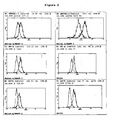
- MU tumor cells were cultured for 3 days in control medium or in 20ng/ml of OSM ( Fig. 1A and 1D ), or in supernatants from EW (contains OSM) ( Fig. 1B ) or A375 tumor cells (does not contain OSM) ( Fig. 1C ). Cells were stained for cytoplasmic expression of Melan-A/MART-1 protein ( Figs. 1A-1C ) or gp100 ( Fig. 1D ) and assayed by flow cytometry.
- MASA2 Melanoma Antigen Silencing Activity
- the loss of Melan-A/MART-1 is associated with a marked diminution in the ability of T cells to lyse tumor cells which have been treated with MASA-containing supernatants (Ramirez-Montagut, et al., supra).
- the loss of T cell-mediated lysis can be overcome by the addition of the Melan-A/MART-1-derived peptide, AAGIGILTV (SEQ ID NO:I), which restores cytolytic susceptibility.
- Loss of Melan-A/MART-1 is generally accompanied by diminished gp100 and tyrosinase, as well as other melanocyte lineage proteins, indicating that there is a "global" change in the tumor cells.
- Oncostatin M and other melanoma cell line derived factors can down modulate melanocyte lineage antigen expression in various melanoma cell lines (Kurnick, et al., supra). A number of cytokines for up and down-modulating activity of melanocyte lineage antigens were evaluated.
- interferon-beta had up-modulating activity on all melanoma cell lines, both low and high expressors of Melan-A/MART-1 ( Fig. 2 ). Furthermore, interferon-beta could reverse the down modulating effect of Oncostatin M on gp100 ( Fig. 3 --HMB 45 staining), and the effect of interferon-beta was augmented by treating the cells with a DNA methylase inhibitor such as 5 azadeoxycytidine ( Fig. 4 -gp100 (HMB) staining).
- a DNA methylase inhibitor such as 5 azadeoxycytidine
- interferon-beta can inhibit the antigen down-modulating effect of Oncostatin-M, a known cytokine capable of mediating antigen-silencing in the melanoma system, as well as down-modulation induced by an additional molecule or molecules produced by melanoma cells (MASA) that manifest antigen silencing.
- Interferon-beta can up-regulate Melan-A/MART-1 antigen expression on all melanoma cell lines studied to date regardless of the mechanism controlling antigen expression down-modulation.
- IFN- ⁇ also enhances expression of MHC class I antigens (HLA-A,B and C), and IFN- ⁇ enhances both class I and class II MHC antigens, thus increasing production of antigen-presenting molecules on tumor cells.
- HLA-A,B and C MHC class I antigens
- IFN- ⁇ enhances both class I and class II MHC antigens, thus increasing production of antigen-presenting molecules on tumor cells.
- Expression of new TAA and new HLA is therefore a doubly-effective treatment for enhancing T cell recognition of tumor cells, making it more likely that a cytotoxic T lymphocyte (CTL) will bind and kill tumor cells treated with IFN- ⁇ .
- CTL cytotoxic T lymphocyte
- This example describes down-regulation of melanocyte-associated antigens MITF, tyrosinase, TRP-1 and TRP-2. This example also describes data indicating that transfection of MITF-M up-regulated Melan-A/MART-1 antigen expression.
- Tumors with low or absent Melan-A/MART-1 are also relatively deficient in tyrosinase and gp100; 3 of 4 low-Melan-A/MART-1 melanomas have low MITF-M, including the MU-X line derived from Melan-A/MART-1+ MU cells.
- the sox10 regulator of MITF-M expression is deficient in 2 of 4 of the low-Melan-A/MART-1 melanomas, while another melanocyte-lineage transcription factor, tbx2, was deficient at the mRNA level only in the Melan-A/MART-1-low EW cell line (Table 1).
- OSM induces down-modulation of various melanocyte-related genes, including Melan-A/MART-1, tyrosinase, gp100, TRP-1 and TRP-2 ( Fig. 5 ). While OSM also down-modulates MITF-M expression, the MITF-A isoform is not detectably responsive to OSM. Expression of the microphthalmia gene variants is dependent on different promoters and with different N-termini in their respective translated proteins ( Udono, et al. (2000). Biochim Biophys Acta 1491:205 ). The differential action can provide clues to the promoter elements responsive to OSM; for example, only the MITF-M isoform promoter has a perfect CRE site.
- MITF-M coding sequence was amplified from MITF-M-positive cells and cloned in an SV40-promoter expression vector (pSV2link); translation of the MITF-M insert uses optimal Kozak initiation signals ( Kozak (1999). Gene 234:187 ). Constructs were transfected into low-Melan-A/MART-1 expressor melanoma (MU-X and A375). In all studies controls comprised empty vector, transfection reagents in the absence of added DNA, and corresponding untransfected cells. Data shown in Fig. 6 for A375 and MU-X tumor cells transfected with MITF-M for 24 hours in the presence (10 ⁇ M) or absence of U0126 before PCR amplification of Melan-A/MART-1.
- MUX and A375 cell lines exhibited up-regulation of endogenous Melan-A/MART-1 after transfection with the MITF-M expression construct ( Fig. 6 ).
- a MEK inhibitor (U0126) was then added to determine whether it could synergize with ectopically introduced MITF-M.
- plasmid-encoded MITF-M gene is not subject to the normal MITF-M transcriptional controls, since U0126 down-modulates native MITF-M message.
- This example describes data indicating that IFN- ⁇ up-regulation of melanocyte-associated antigen expression increases T cell killing of melanoma cells.
- A375 cells were treated with 100,000 units of IFN- ⁇ for three days. The cells were subsequently labeled with 51 Cr and tested as targets in a cytotoxicity assay using bulk anti-melanoma T lymphocytes as the effector cells (Example I).
- This example describes recombinant constructs used for screening compounds which effect tumor-antigen expression.
- recombinant DNA constructs which contain a sequence tag (e.g luciferase, or green fluorescent protein (GFP) or an enzyme activity) linked to a Melan-A/MART-1 regulatory element (e.g., promoter) can be constructed and inserted into Melan-A/MART-1 melanoma cells (e.g., a low expressor cell line).
- a sequence tag e.g luciferase, or green fluorescent protein (GFP) or an enzyme activity
- GFP green fluorescent protein
- a Melan-A/MART-1 regulatory element e.g., promoter
- Transfected cell lines can then used for screening of small organic compounds and larger compounds having biological activity, e.g., compounds that up-regulate expression of Melan-A/MART-1, and other antigens.
- a reporter that incorporates the promoter region from the Melan-A/MART-1 melanocyte lineage differentiation antigen and tag sequence was constructed.
- the exemplary construct including green fluorescent protein (GFP) is illustrated in Fig. 8 .
- GFP reporter systems have been previosuly described ( Haseloff, (1999). Methods Cell Biol 58:139 ; Tsien (1998). Annu Rev Biochem 67:509 ; Chiesa et al. (2001). Biochem J 355:1 ; Belmont (2001). Trends Cell Biol 11:250 ).
- a number of melanoma cells have been transfected with linearized constructs expressing GFP from an extended Melan-A/MART-1 promoter (1176 bp) and separately with a construct expressing GFP by means of the SV40 promoter (depicted in Figure 8 ).
- Stable transfectants were selected by co-transfection with a plasmid conferring resistance to Geneticin (G418). The expression results of such constructs are shown in Fig. 9 .
- GFP can be expressed from the Melan-A/MART-1 promoter (in cells with the right transcriptional apparatus; i.e. "high” Melan-A/MART-1 cells).
- An "extended” MART promoter (1176 bp) was derived from amplification of human genomic DNA with primers corresponding to the 5' and 3' ends of the sequence as shown.
- GFP sequence (“EGFP") is from a Clontech vector. Initiation codon is underlined; termination TAA codon at end of this segment.
- both high and low antigen expressing cells were transfected with the exemplary Melan-A/MART-1-GFP recombinant reporter construct ( Fig. 8 ). After cloning out cells containing the construct, the effect of Interferon- ⁇ was studied.
- the MM96L-Melan-A/MART-1-GFP reporter cells treated with IFN- ⁇ for 72 hours showed augmentation of GFP fluorescence (GFP emission is shown in Fig. 9 ), in common with its endogenous Melan-A/MART-1 gene.
- A375 reporter cells treated with IFN- ⁇ also showed augmentation of GFP fluorescence.
- SV40 promoter-driven GFP exhibited no such response. This data therefore demonstrated that the GFP reporter systems recapitulated the regulation of native Melan-A/MART-1 gene.
- a reporter driven by Melan-A/MART-1 regulatory region cellular system is therefore useful for screening and identifying compounds, agents and drugs that up-regulate antigen expression.
- tumor cells can be propagated subcutaneously in immunodeficient mice, and induced with IFN- ⁇ in vivo .
- the tumors can be injected directly with antigen-up-regulators (e.g., IFN- ⁇ , assuring that there is local drug available.
- Mice can also be treated with IFN- ⁇ subcutaneously following establishment of antigen negative tumor cells (such as MU-X and A375).
- IFN- ⁇ subcutaneously following establishment of antigen negative tumor cells
- tumor biopsies stained with antibody to human CD3 can demonstrate altered infiltrating of adoptively transferred human CTL following antigen-induction therapy.
- the studies using GFP-transfected tumor cells will parallel those for the un-transfected cells described below.
- This example describes in vivo applications of IFN- ⁇ and tumor associated antigens (TAAs). This example also describes exemplary assays for monitoring the effect of IFN- ⁇ alone and in combination with TAAs.
- TAAs tumor associated antigens
- IFN- ⁇ is safe and well-tolerated in ambulatory patients, thus providing an agent with relatively well-described in vivo toxicities and tolerances.
- IFN- ⁇ therapy with tumor-associated antigens, both enhanced immunity and enhanced tumor antigen expression leading to more effective tumor killing in vivo are expected.
- T cell immunity and tumor antigen expression during in vivo administration and correlating clinical responses with the induction of T cells specific for tumor antigens, as well as with antigen expression by the tumors, before, during and after therapy has been instituted will be analyzed.
- tumor xenografts in mice will enable evaluation of the in vivo induction of tumor (e.g., melanocyte) antigens.
- tumor e.g., melanocyte
- Both antigen-positive and antigen-negative tumor cells can co-exist in human tumors that have developed spontaneously over a period of months to years. Tumor heterogeneity is not readily demonstrable in tumor transplant models where the tumor-injected animals are inherently short-lived, and generally the tumors are clonally homogeneous during the course of the studies.
- tumors in animal models may not absolutely reflect tumors in humans, there are compelling reasons to develop animal models employing low antigen expressing xenografts. For example, prognosis for a melanoma patient with established metastatic disease is quite poor even with aggressive current therapies, and the use of immunotherapies alone have shown limited success even when rather innovative treatment regimes have been employed.
- Animal treatments include combining multi-epitope tumor (e.g., melanocyte) antigen with IFN- ⁇ therapy to induce enhanced host immunity against the tumors, or to maintain and increase tumor antigen expression to enhance recognition of tumor cells which might otherwise escape immune destruction.
- Clinical endpoints include assessment of both host immunity and expression of tumor antigens, achieving improved host immunity (systemic and intra-tumoral cellular and huimoral immunity; Melan-A, MAGE-10, and NY-ESO-1b specific CD8 + T cells - measured by tetramer method, Melan-A, MAGE-10, and NY-ESO-1b specific activated (interferon gamma releasing) CD8 + T cells - measured by ELISPOT; DTH to tyrosinase leader, Melan-A, MAGE-10, and NY-ESO-1b peptide; NY-ESO-1 reactive antibodies, etc.) or inhibition of tumor growth or tumor destruction (measurement of tumor size) in patients with tumors, such as melanoma;
- TAAs used are components of proteins recognized by the autologous immune system on tumors such as melanomas. One of more TAAs could be expressed in the tumor. Expression of tyrosinase, Melan-A, NY-ESO-1, LAGE, and MAGE-10 in tumor tissue can be tested by reverse transcription-polymerase chain reaction (RT-PCR) analysis or immunohistochemistry. As all study peptides are presented by HLA-A2, patients expressing HLA-A2 are treatment candidates.
- RT-PCR reverse transcription-polymerase chain reaction
- Montanide ISATM51 Enhanced immunity to the antigen Melan-A has been observed when Montanide ISATM51 is used as an adjuvant with Melan-A peptide.
- the addition of Montanide ISATM51 to TAAs given with or without IFN- ⁇ is likely to lead to enhanced immunological and clinically beneficial effects in melanoma patients.
- TAAs, formulations and routes of adminstration are as follows: Tyrosinase leader: HLA-A2 binding peptide encoded by tyrosinase gene; sequence MLLAVLYCL (SEQ ID NO:2); position 1-9 Formulation: 333 ⁇ g/mL tyrosinase leader in 100% DMSO Intended dose: 100 ⁇ g Vial size: 1-mL vial with 0.45 mL peptide solution Route of administration: intradermal Source: LICR
- MAGE-10.A HLA-A2 binding peptide encoded by MAGE gene; sequence GLYDGMEHL (SEQ ID NO:24); position 254-262
- Formulation lyophilized powder
- Intended dose 300 ⁇ g
- Vial size 1-mL vial with 400 ⁇ g peptide
- Route of administration intradermal Source: LICR
- NY-ESO-1b HLA-A2 binding peptide encoded by NY-ESO-1 gene; sequence SLLMWITQC (SEQ ID NO:25); position 157-165 Formulation: 2 mg/mL NY-ESO-1b in 100% DMSO Intended dose: 100 ⁇ g Vial size: 1-mL vial with 0.3 mL peptide solution Route of administration: intradermal Source: LICR
- Montanide ISA-51 Formulation montanide oleate (Montanide 80) in mineral oil solution
- Exemplary patient inclusion criteria include one or more of the following, for example, confirmation of metastatic melanoma; HLA-A2 positive; Relapsed Stage IV melanoma with lesions that are resectable or accessible to biopsy; at least 4 weeks since surgery before initiating protocol; at least 4 weeks since the last chemotherapy, biologic therapy, or immunotherapy; no concurrent biologic therapy or immunotherapy; performance status >70 (Kamofsky Scale); and life expectancy ⁇ 4 months.
- Exemplary laboratory values of candidate patients can be within the following limits: Hemoglobin ⁇ 9.0 g/dL ⁇ 10.0 g/dL (if ⁇ 50 kg) Neutrophil count ⁇ 1.5 x 10 9 /L Lymphocyte count ⁇ 0.5 x 10 9 /L Platelet count ⁇ 100 x 10 9 /L Serum creatinine ⁇ 1.8 mg/dL Serum bilirubin ⁇ 2mg/dL
- Optional exemplary patient exclusion criteria include one or more of the following, for example, clinically significant heart disease (NYHA Class III or IV); serious illnesses, eg, serious infections requiring antibiotics, bleeding disorders; prior bone marrow or stem cell transplant; history of immunodeficiency disease or autoimmune disease; metastatic disease to the central nervous system, unless treated and stable; HIV positive; chemotherapy, radiation therapy, or immunotherapy within 4 weeks before study entry (6 weeks for nitrosoureas); concomitant treatment with steroids, antihistaminic drugs, or nonsteroidal anti-inflammatory drugs (unless used in low doses for prevention of an acute cardiovascular event or for pain control)--topical or inhalational steroids are permitted; participation in another clinical trial within 4 weeks prior to enrollment; pregnancy or lactation; women of childbearing potential not using a medically acceptable means of contraception; unavailability of the patient for immunological and clinical follow-up assessment.
- clinically significant heart disease NYHA Class III or IV
- serious illnesses eg, serious infections requiring antibiotics, bleeding disorders
- an exemplary protocol employs one or more of four TAA peptides (melanoma peptide vaccine) comprising a tyrosinase leader, Melan-A ELA, MAGE-10.A2 and NY-ESO-1b.
- Peptide(s) will be administered by subcutaneous injection every 3 weeks for six vaccinations. Peptides will be mixed together with Montanide ISA-51 and given at separate injection sites.
- patients will be randomized to receive or not to receive IFN- ⁇ by subcutaneous injection, 3 times weekly (M, W F) (6 million units per injection of IFN- ⁇ ) for each of the three weeks between the vaccine boosts, beginning at week 7 (i.e. with the third vaccine injection).
- This protocol will allow for primary and early secondary immune responses to be initiated prior to introducing an agent that is unlikely to alter effector phase immune responses, but might alter the cytokine repertoire during initial vaccine induction of anti-tumor immunity. Waiting for an early immune response to develop minimizes the time for IFN-resistant tumors to be selected before the immune response has been sufficiently enhanced to destroy tumors having up-regulated antigen expression.
- Patients can be monitored for toxicity after each vaccine and IFN- ⁇ injection.
- Systemic immunity can be assayed using blood samples to be obtained at baseline and at specified time points, for the assessment of peptide-specific antibodies by ELISA, as well as peptide-specific CD8 + T cells by tetramer analysis and ELISPOT.
- Peptide-specific delayed-type hypersensitivity (DTH) skin reaction will be measured at baseline and after the third and sixth set of peptide injections. If DTH reactions occur at other time points, they will be measured.
- Tissue samples from one metastatic lesion will be obtained at baseline and at least one time after two cycles of interferon ⁇ treatment for evaluation of antigen expression.
- Histology and antigen expression on tumor cells Routine histology will be performed to evaluate tumor necrosis and the status of infiltrating lymphocytes. Frozen sections of tumor tissue will also be stained for expression of the antigens to determine both intensity and heterogeneity in antigen expression, particularly with respect to any regressing or progressing lesions. In addition to evaluation of tumor and host immune responses, image analysis of tumor antigen expression and micro-dissection specimens for amplification of mRNA for quantitative PCR analysis on tumors before and after therapy will be conducted.
- biopsies will be stained with antibodies to HLA Class I and II antigens, as there should be an increase in MHC expression if the tumor cells are responsive to IFN- ⁇ .
- the tissues will be stained with antibodies to the tumor-associated antigens (Melan-A, Tyrosinase, NY-ESO and MAGE-10). Both immunoperoxidase staining and FITC-fluorescent-tagged antibody staining will be performed to acquire quantitative data on the levels of antigen expression in the tissue as a whole, and tumor cells individually.
- selection of the panel genes is made on the basis of their relevance to the melanocytic lineage, known role in controlling melanocytic gene expression, relevance to the IFN- ⁇ response, and as control markers.
- MITF-M is strongly associated with the control of expression of a number of melanocytic antigens including tyrosinase and Melan-A/MART-1.
- SOX10 is one transcription factor in turn regulating MITF-M, and which is not expressed in some of the low antigen-expressing cell lines.
- Type I interferons (including IFN- ⁇ and IFN- ⁇ ) use a common receptor composed of two subunits. Examining expression of other antigen genes in addition to those included in the vaccine preparation will be performed as expression of melanocytic antigens is regulated coordinately. Up- or down-regulation of Melan-A/MART-1, for example, is often correlated with a corresponding change in TRP-1, TRP-2, and gp100 expression.
- TaqMan chemistry and appropriate instrumentation allows rigorous quantitative PCR analysis of mRNA levels of desired molecular targets, and has been applied towards single-cell analyses.
- an amplification step from each single-cell mRNA source will be performed, where it is critical that such a step faithfully preserves the relative abundance of each species within the mRNA transcriptome.
- T7 RNA polymerase-mediated amplification via the generation of complementary RNA transcripts (cRNAs) Eberwine. (1996). Biotechniques, 20: 584 ; Luo, et al., (1999).
- the plasmid template is digested with RNase-free DNAse, the RNA transcripts purified by three cycles of ammonium acetate precipitation, quantitated spectrophotometrically and gel tested for full-length integrity. If necessary, full-length species will be purified by excision of the correct gel band and extraction from agarose. A quantity equivalent to 100 copies of polyA+ luciferase RNA will be added to each cell lysate prior to initial reverse-transcription, second-strand cDNA synthesis and subsequent T7 polymerase amplification of cRNA. In consequence, detection of the internal introduced standard (with its own specific primer / probe TaqMan system) will have identical enzymatic requirements as for the cellular mRNAs themselves.
- intra-tumoral lymphocytes with tetramers will be stained to determine the frequency of peptide-specific CD8+ T cells present within the tumor tissue. Furthermore, by culturing small tumor fragments in the presence of Interleukin-2, large numbers of in vivo-activated tumor-infiltrating lymphocytes can be further studied for cytotoxic activity against tumor targets ( Hishii, et al., (1997). Proc. Natl. Acad Sci (USA), 94:1378 ; Ramirez-Montagut, et al., (2000). 119:11; Kradin, et al., (1989).
- both antigen positive and antigen-deficient tumor cells can show enhanced tumor antigen expression following treatment with IFN- ⁇ . Evaluating the ability of tumor to up-regulate both melanocyte lineage antigens and HLA antigens will reveal whether individual tumor deposits contain IFN-responsive tumor cells. In the event tumor cells show no antigen induction, the possibility of lost IFN-receptors, or lost IFN-response elements would be expected to limit the efficacy of antigen-up-regulation therapy.
- the combined therapy (e.g, IFN-beta and TAAs) will enhance clinical responses in tumor (e.g., melanoma) patients via enhanced antigen expression, improved cell-mediated immunity and destruction of tumor cells with antigen expression.
- tumor e.g., melanoma
- evaluation of tumor antigen expression and host immune response in situ will allow refinements in the treatment protocol. For example, if there is loss of TAA expression that is present in the vaccine, but retention of other TAAs on the tumor cells, a follow-up administration could be performed using different TAAs to which T cells can be targeted. Also, if TAAs not represented in the original vaccine are up-regulated with IFN- ⁇ , future administrations can include such TAAs responsive to up-regulation.
- Preserved paraffin-embedded materials can be used as sources of such material by means of laser-capture microdissection.
- Murine tumor models developed in an immunodeficient mouse, will provide a system to develop or evaluate assays for monitoring the human clinical trial as well as testing the efficacy of IFN- ⁇ to up-regulate antigen expression in vivo. This work will afford an opportunity for comparison of the responses in both human clinical trial and the in vivo mouse model.
- rag-2 -/- mice Human tumor cell lines will be propagated in culture and implanted into rag 2-deficient (rag-2 -/- ) mice.
- rag2 - / - mice When rag2 - / - mice are challenged with 1 x 10 6 melanoma cells, palpable tumors are apparent within 2 weeks and these tumors reach an approximate area of 200mm 2 within 4 weeks.
- rag - / - mice will be injected in the s.c space with 1 x 10 6 melanoma cells.
- tumors reach a size of 100 mm 2
- mice will be randomly assigned to groups of 5 for treatment. "Control" animals will be treated with an injection of compound diluent.
- mice will be treated with compounds using escalating doses reflective of previous reports ( Clemons, et al., (2002). Pancreas, 25:251 ) (serum levels of IFN- ⁇ will be monitored by ELISA). Treatments will be continued every other day for one week. Every other day for 7 days, mice will be sacraficed and tumors excised and evaluated. Each tumor will be dissociated using collagenase and dispase solutions. The resulting single cell suspension will be used for flow cytometric or PCR analysis of antigen expression as with in vitro cultured cells. Each set of studies will be repeated twice.
- High and low antigen expressing tumor cells, MU and MU-X, cultured in individual mice will be subjected to fine needle biopsies to provide cells for single cell PCR and immunohistochemical experimentation. Expression of mRNA for the genes listed in Table 2 will be evaluated by the same single-cell Q-PCR procedure as described above.
- Immunodeficient mouse models will be used to evaluate the ability of antigen-enhancing agents to up-regulate tumor antigen expression in vivo. Multiple antigen induction observed in human melanoma cells in vitro will be evaluated in vivo. Bioavailability of IFN- ⁇ in animal tumor models, using doses of antigen up-regulatory agents that will be sub-lethal to the mouse, will be determined. Both MU and MU-X tumor cells can be grown in immunodeficient mice in subcutaneous sites ( Fukumura, et al., (1995). Cancer Res, 55:4824 ). These studies will allow refinements to human clinical trial described above, as regards immunohistochemistry and single cell rtPCR evaluation of antigen expression.
- MU antigen positive
- MU-X antigen negative tumor cells
- tumors will be stained with antibodies to Melan-A/MART-1 (A103), gp100/pme117 (HMB45) and HLA Class I antigen (W6/32).
- RNA will be extracted for PCR assessment of induction of mRNA for these and other melanocyte lineage antigens.
Landscapes
- Health & Medical Sciences (AREA)
- Life Sciences & Earth Sciences (AREA)
- General Health & Medical Sciences (AREA)
- Veterinary Medicine (AREA)
- Public Health (AREA)
- Animal Behavior & Ethology (AREA)
- Epidemiology (AREA)
- Immunology (AREA)
- Chemical & Material Sciences (AREA)
- Medicinal Chemistry (AREA)
- Pharmacology & Pharmacy (AREA)
- Microbiology (AREA)
- Oncology (AREA)
- Mycology (AREA)
- Engineering & Computer Science (AREA)
- Biomedical Technology (AREA)
- Hematology (AREA)
- Organic Chemistry (AREA)
- Cell Biology (AREA)
- Molecular Biology (AREA)
- Zoology (AREA)
- Bioinformatics & Cheminformatics (AREA)
- Urology & Nephrology (AREA)
- Biochemistry (AREA)
- Biotechnology (AREA)
- Proteomics, Peptides & Aminoacids (AREA)
- Chemical Kinetics & Catalysis (AREA)
- Biophysics (AREA)
- Neurology (AREA)
- Gastroenterology & Hepatology (AREA)
- Tropical Medicine & Parasitology (AREA)
- Toxicology (AREA)
- Analytical Chemistry (AREA)
- General Physics & Mathematics (AREA)
- Food Science & Technology (AREA)
- Physics & Mathematics (AREA)
- Nuclear Medicine, Radiotherapy & Molecular Imaging (AREA)
- General Chemical & Material Sciences (AREA)
- Genetics & Genomics (AREA)
- Pathology (AREA)
Claims (33)
- Interferon-β (IFN-β)-Rezeptoragonist und ein tumorassoziiertes Antigen (TAA) zur Verwendung in der Behandlung eines Melanoms in einem Individuum, wobei der Interferon-β-Rezeptoragonist ein Polypeptid ist, und wobei das Polypeptid aus rekombinantem menschlichem Beta-Interferon-1a oder rekombinantem menschlichem Beta-Interferon-1b besteht.
- Interferon-β-Rezeptoragonist und TAA zur Verwendung nach Anspruch 1, wobei das Individuum nach Behandlung eine erhöhte Immunantwort gegen das Melanom erfährt, die zellvermittelt oder humoral ist.
- Interferon-β-Rezeptoragonist und TAA zur Verwendung nach Anspruch 1 oder 2, wobei das TAA ein Antigen umfasst, dessen Expression sich während der Entwicklung, der Differenzierung oder als Antwort auf einen Stimulus verändert.
- Interferon-β-Rezeptoragonist und TAA zur Verwendung nach einem der Ansprüche 1 bis 3, wobei das TAA vor, im Wesentlichen zeitgleich mit oder nach der Interferon-β-Rezeptoragonist-Gabe verabreicht werden soll.
- Interferon-β-Rezeptoragonist und TAA zur Verwendung nach Anspruch 4, wobei das TAA dem Individuum einzeln oder viele Male bis zu sechs Monate vor der Verabreichung des Interferon-β-Rezeptoragonisten verabreicht werden soll.
- Interferon-β-Rezeptoragonist und TAA zur Verwendung nach Anspruch 5, wobei das TAA dem Individuum 1-3 Stunden, 3-6 Stunden, 6-12 Stunden, 12-24 Stunden, 24-48 Stunden, 1-3 Tage, 3-5 Tage, 5-7 Tage, 7-10 Tage, 10-14 Tage, 14-30 Tage, oder 1-6 Monate vor der Verabreichung des Interferon-β-Rezeptoragonisten verabreicht werden soll.
- Interferon-β-Rezeptoragonist und TAA zur Verwendung nach einem der Ansprüche 1 bis 6, wobei das TAA ein Melanom-TAA umfasst.
- Interferon-β-Rezeptoragonist und TAA zur Verwendung nach einem der Ansprüche 1 bis 7, wobei der Interferon-β-Rezeptoragonist und das TAA in einer pharmazeutischen Zusammensetzung formuliert sind.
- Interferon-β-Rezeptoragonist und TAA zur Verwendung nach einem der Ansprüche 1 bis 8, ferner umfassend die Verwendung einer Antitumortherapie.
- Interferon-β-Rezeptoragonist und TAA zur Verwendung nach Anspruch 9, wobei die Antitumortherapie chirurgische Resektion, Radiotherapie oder Chemotherapie umfasst.
- Interferon-β-Rezeptoragonist und TAA zur Verwendung nach einem der Ansprüche 1 bis 10, wobei das TAA auf oder in einer Zelle vorhanden ist.
- Interferon-β-Rezeptoragonist und TAA zur Verwendung nach einem der Ansprüche 1 bis 11, wobei das Melanom ein Stadium I-, II-, III- oder IV-Melanom umfasst.
- Interferon-β-Rezeptoragonist und TAA zur Verwendung nach einem der Ansprüche 1 bis 12, ferner umfassend die Verwendung eines Antikörpers oder einer Zelle, die einen Antikörper produziert, der spezifisch an das TAA bindet.
- Interferon-β-Rezeptoragonist und TAA zur Verwendung nach einem der Ansprüche 1 bis 12, ferner umfassend die Verwendung einer Immunzelle, die mit einer Melanomzelle des Melanoms interagiert.
- Interferon-β-Rezeptoragonist und TAA zur Verwendung nach Anspruch 13, wobei die zu verabreichende Zelle, die einen spezifisch an das TAA bindenden Antikörper produziert, eine Plasmazelle, eine B-Zelle oder eine Säuger- oder Nicht-Säuger-Zelle umfasst, die mit einer Nukleinsäure, welche einen spezifisch an das TAA bindenden Antikörper kodiert, transfiziert ist.
- Interferon-β-Rezeptoragonist und TAA zur Verwendung nach Anspruch 14, wobei die Immunzelle eine T-Zelle, eine NK-Zelle, eine LAK-Zelle, einen Monozyten oder einen Makrophagen umfasst.
- Interferon-β-Rezeptoragonist und TAA zur Verwendung nach einem der Ansprüche 1 bis 16, ferner einen zu verabreichenden immunfördernden Wirkstoff umfassend.
- Interferon-β (IFN-β)-Rezeptoragonist und ein Antikörper oder eine Zelle, die einen Antikörper produziert, der spezifisch an ein tumorassoziiertes Antigen (TAA) bindet, zur Verwendung in der Behandlung eines Melanoms in einem Individuum, wobei der Interferon-β-Rezeptoragonist ein Polypeptid ist und wobei das Polypeptid aus rekombinantem menschlichem Beta-Interferon-1a oder rekombinantem menschlichem Beta-Interferon-1b besteht.
- Interferon-β (IFN-β)-Rezeptoragonist und Antikörper oder Zelle zur Verwendung nach Anspruch 18, wobei die Zelle, die einen spezifisch an ein TAA bindenden Antikörper produziert, eine Plasmazelle, eine B-Zelle oder eine Säuger- oder Nicht-Säuger-Zelle, die mit einer den Antikörper kodierenden Nukleinsäure transfiziert ist, umfasst.
- Interferon-β (IFN-β)-Rezeptoragonist und Antikörper oder Zelle zur Verwendung nach Anspruch 18 oder 19, wobei der Antikörper oder die Zelle vor, im Wesentlichen zeitgleich mit oder nach der Interferon-β-Rezeptoragonist-Gabe verabreicht werden soll.
- Interferon-β (IFN-β)-Rezeptoragonist und Antikörper oder Zelle zur Verwendung nach Anspruch 18 oder 19, wobei der Interferon-β-Rezeptoragonist und der Antikörper oder die Zelle in einer pharmazeutischen Zusammensetzung formuliert sind.
- Interferon-β (IFN-β)-Rezeptoragonist und eine Immunzelle zur Verwendung in der Behandlung eines Melanoms in einem Individuum, wobei der Interferon-β-Rezeptoragonist ein Polypeptid ist; wobei das Polypeptid aus rekombinantem menschlichem Beta-Interferon-1a oder rekombinantem menschlichem Beta-Interferon-1b besteht; und wobei die Immunzelle mit einer Melanomzelle des Melanoms interagiert.
- Interferon-β (IFN-β)-Rezeptoragonist und eine Immunzelle zur Verwendung nach Anspruch 22, wobei die Immunzelle eine T-Zelle, eine NK-Zelle, eine LAK-Zelle, einen Monozyten oder einen Makrophagen umfasst.
- Interferon-β (IFN-β)-Rezeptoragonist und eine Immunzelle zur Verwendung nach Anspruch 22 oder 23, wobei die Immunzelle vorher so ausgewählt wurde, dass sie an ein von dem Melanom exprimiertes Antigen bindet.
- Interferon-β (IFN-β)-Rezeptoragonist und eine Immunzelle zur Verwendung nach einem der Ansprüche 22 bis 24, wobei die Immunzelle vor, im Wesentlichen zeitgleich mit oder nach der Interferon-β-Rezeptoragonist-Gabe verabreicht werden soll.
- Interferon-β (IFN-β)-Rezeptoragonist und eine Immunzelle zur Verwendung nach einem der Ansprüche 22 bis 24, wobei der Interferon-β-Rezeptoragonist und die Immunzelle in einer pharmazeutischen Zusammensetzung formuliert sind.
- Interferon-β(IFN-β)-Rezeptoragonist und TAA zur Verwendung nach einem der Ansprüche 1 bis 17, oder Interferon-β-Rezeptoragonist und Antikörper oder Zelle zur Verwendung nach einem der Ansprüche 18 bis 21, wobei das TAA ausgewählt ist aus der Gruppe bestehend aus: Melan-A/MART-1, Tyrosinase, gp100/pmel 17, TRP-1, TRP-2, ein MITF, MITF-A, MITF-M, Melanom GP75, Annexinl, Annexinll, Adenosin-Desaminase-bindendes Protein (ADAbp), PGP 9,5, kolorektal assoziierte Antigen (CRC)--C017-1A/GA733, Ab2 BR3E4, C117-1A/GA733, Hsp70, Hsp90, Hsp96, Hsp105, Hsp110, HSPPC-96, Stressprotein gp96 (ein menschliches Antigen zur Abwehr von kolorektalen Tumoren), gp96-assoziiertes Zellpeptid, G250, Dipeptidyl-Peptidase IV (DPPIV), Mammaglobin, Thyroglobulin, STn, karzinoembryonales Antigen (CEA), karzinoembryonales Antigen (CEA)-Epitop CAP-1, karzinoembryonales Antigen (CEA)-Epitop CAP-2, etv6, am11, prostataspezifisches Antigen (PSA), PSA-Epitop PSA-1, PSA-Epitop PSA-2, PSA-Epitop PSA-3, Ad5-PSA, prostataspezifisches Membran-Antigen (PSMA), saure Prostataphosphatase (PAP), aus Prostata-Epithel stammender Transkriptionsfaktor Ets (PDEF), Nebenschilddrüsenhormon-ähnliches Protein (PTH-rP), EGFR, PLU1, onkofötales Antigen-unreifer Laminin-Rezeptor (OFA-iLR), MN/CA IX (CA9), HP59, Cytochromoxidase 1, sp100, msa, Ran GTPase-aktivierendes Protein, ein Rab-GAP (Rab GTPase-aktivierendes) Protein, PARIS-1, T-Zellrezeptor/CD3-zeta-Kette, cTAGE-1, SCP-1, Glycolipid-Antigen-GM2, GD2 oder GD3, GM3, FucosyIGM1, Glycoprotein (Mucin)-Antigene-Tn, Sialyl-Tn, TF und Mucin-1, CA125 (MUC-16), ein MAGE-Familien-Antigen, GAGE-1,2, BAGE, RAGE, LAGE-1, GnT-V, EP-CAM/KSA, CDK4, ein MUC-Familien-Antigen, HER2/neu, ErbB-2/neu, p21ras, RCAS1, α-Fetoprotein, E-Cadherin, α-Catenin, β-Catenin und γ-Catenin, NeuGcGM3, Fos-verwandtes Antigen, Cyclophilin B, RCAS1, S2, L10a, Telomerase rt-Peptid, cdc27, Fodrin, p120ctn, PRAME, GA733/EoCam, NY-BR-1, NY-BR-2, NY-BR-3, NY-BR-4, NY-BR-5, NY-BR-6, NY-BR-7, NY-ESO-1, L19H1, MAZ, PINCH, Prp1p/Zer1p, WT1, adenomatöses Polyposis coli-Protein (APC), PHF3, LAGE-1, SART3, SCP-1, SSX-1, SSX-2, SSX-4, TAG-72, TRAG-3, MBTAA, ein Smad-Tumorantigen, Imp-1, HPV-16 E7, c-erbB-2, EBV-kodiertes nukleäres Antigen (EBNA)-1, Herpes-simplex-Thymidinkinase (HSVtk), alternativ gespleißte Isoform von XAGE-1 (L552S), TGF beta RII-Frame-shift-Mutation, BAX-Frame-shift-Mutation, SOX-10, sowie ein antigenes Fragment davon.
- Interferon-β-Rezeptoragonist und TAA zur Verwendung nach einem der Ansprüche 1 bis 17 oder 27, Interferon-β-Rezeptoragonist und Antikörper oder Zelle zur Verwendung nach einem der Ansprüche 18 bis 21 oder 27 oder Interferon-β (IFN-β)-Rezeptoragonist und Immunzelle zur Verwendung nach einem der Ansprüche 22 bis 26, wobei das Melanom ein metastasierendes oder nicht-metastasierendes Melanom ist.
- Interferon-β-Rezeptoragonist und TAA zur Verwendung nach einem der Ansprüche 1 bis 17, 27 oder 28, Interferon-β-Rezeptoragonist und Antikörper oder Zelle zur Verwendung nach einem der Ansprüche 18 bis 21, 27 oder 28, oder Interferon-β (IFN-β)-Rezeptoragonist und Immunzelle zur Verwendung nach einem der Ansprüche 22 bis 26 oder 28, ferner die Verwendung einer Antitumortherapie umfassend.
- Interferon-β-Rezeptoragonist und TAA, Interferon-β-Rezeptoragonist und Antikörper oder Zelle, oder Interferon-β (IFN-β)-Rezeptoragonist und Immunzelle zur Verwendung nach Anspruch 29, wobei die Antitumortherapie chirurgische Resektion, Radiotherapie oder Chemotherapie umfasst.
- Interferon-β-Rezeptoragonist und TAA zur Verwendung nach einem der Ansprüche 1 bis 17 oder 27 bis 30, Interferon-β-Rezeptoragonist und Antikörper oder Zelle zur Verwendung nach einem der Ansprüche 18 bis 21 oder 27 bis 30, oder Interferon-β (IFN-β)-Rezeptoragonist und Immunzelle zur Verwendung nach einem der Ansprüche 22 bis 26 oder 28 bis 30, wobei das Polypeptid aus rekombinantem menschlichem Beta-Interferon-1a besteht.
- Interferon-β-Rezeptoragonist und TAA zur Verwendung nach einem der Ansprüche 1 bis 17 oder 27 bis 30, Interferon-β-Rezeptoragonist und Antikörper oder Zelle zur Verwendung nach einem der Ansprüche 18 bis 21 oder 27 bis 30, oder Interferon-β (IFN-β)-Rezeptoragonist und Immunzelle zur Verwendung nach einem der Ansprüche 22 bis 26 oder 28 bis 30, wobei das Polypeptid aus rekombinantem menschlichem Beta-Interferon-1b besteht.
- Interferon-β-Rezeptoragonist und TAA zur Verwendung nach einem der Ansprüche 1 bis 17 oder 27 bis 32, Interferon-β-Rezeptoragonist und Antikörper oder Zelle zur Verwendung nach einem der Ansprüche 18 bis 21 oder 27 bis 32, oder Interferon-β (IFN-β)-Rezeptoragonist und Immunzelle zur Verwendung nach einem der Ansprüche 22 bis 26 oder 28 bis 32, wobei das Individuum ein Mensch ist.
Applications Claiming Priority (3)
| Application Number | Priority Date | Filing Date | Title |
|---|---|---|---|
| US40749202P | 2002-08-29 | 2002-08-29 | |
| US407492P | 2002-08-29 | ||
| PCT/US2003/027125 WO2004019886A2 (en) | 2002-08-29 | 2003-08-29 | Methods for up-regulating antigen expression in tumors |
Publications (4)
| Publication Number | Publication Date |
|---|---|
| EP1542609A2 EP1542609A2 (de) | 2005-06-22 |
| EP1542609A4 EP1542609A4 (de) | 2010-08-11 |
| EP1542609B1 true EP1542609B1 (de) | 2012-11-14 |
| EP1542609B8 EP1542609B8 (de) | 2013-02-20 |
Family
ID=31978494
Family Applications (1)
| Application Number | Title | Priority Date | Filing Date |
|---|---|---|---|
| EP03749229A Expired - Lifetime EP1542609B8 (de) | 2002-08-29 | 2003-08-29 | Zusammensetzungen enthaltend Beta-Interferon zur Verwendung bei der Behandlung des Melanoms |
Country Status (6)
| Country | Link |
|---|---|
| US (2) | US8071321B2 (de) |
| EP (1) | EP1542609B8 (de) |
| AU (1) | AU2003268275C1 (de) |
| CA (1) | CA2497151A1 (de) |
| ES (1) | ES2399749T3 (de) |
| WO (1) | WO2004019886A2 (de) |
Families Citing this family (15)
| Publication number | Priority date | Publication date | Assignee | Title |
|---|---|---|---|---|
| US7318925B2 (en) | 2003-08-08 | 2008-01-15 | Amgen Fremont, Inc. | Methods of use for antibodies against parathyroid hormone |
| CN1838968A (zh) | 2003-08-08 | 2006-09-27 | 艾伯吉尼斯公司 | 针对甲状旁腺激素(pth)之抗体和其用途 |
| US20050208595A1 (en) * | 2004-03-19 | 2005-09-22 | Brown Arthur M | High throughput assay systems and methods for identifying agents that alter expression of cellular proteins |
| MX2007000291A (es) * | 2004-06-25 | 2007-08-07 | Johnson & Johnson | Metodos y reactivos para la deteccion de melanoma. |
| US20090221069A1 (en) * | 2005-04-18 | 2009-09-03 | Mia Levite | Method for augmenting the ability of t-cells and other cells for fighting disease and invade diseased organs, for elevating cd3 zeta and tnf-alpha expression in t-cells, and mixing t-cell boosting and kit particularly useful in such method |
| WO2009069668A1 (ja) * | 2007-11-28 | 2009-06-04 | National University Corporation Nagoya University | 悪性黒色腫抗原の発現上昇剤及びその用途 |
| US20120053112A1 (en) * | 2009-05-05 | 2012-03-01 | Children's Hospital Medical Center | Methods and compositions related to the regulation of goblet cell differentiation, mucus production and mucus secretion |
| CA2781248A1 (en) * | 2009-11-18 | 2011-05-26 | Mannkind Corporation | Monoclonal antibodies and diagnostic uses thereof |
| AU2012262520A1 (en) * | 2011-05-27 | 2014-01-23 | Cytocure Llc | Methods, compositions, and kits for the treatment of cancer |
| DK2971045T3 (da) | 2013-03-13 | 2019-09-16 | Health Research Inc | Sammensætninger og fremgangsmåder til anvendelse af rekombinante T-celle-receptorer til direkte genkendelse af tumorantigen |
| SG10201808746QA (en) * | 2014-04-03 | 2018-11-29 | Augusta University Research Institute Inc | Methods for enhancing the efficacy of a tumor-directed immune response |
| US20170176437A1 (en) * | 2015-12-16 | 2017-06-22 | Francis Eugene Wilkinson | Method of diagnosing and monitoring bladder cancer and melanoma |
| CN106511263A (zh) * | 2016-10-10 | 2017-03-22 | 东莞市麦亘生物科技有限公司 | 一种抗肝癌纳米核酸类口服液及其制备方法 |
| US20220226449A1 (en) * | 2019-05-31 | 2022-07-21 | Telethon Kids Institute | Immunogenic compositions |
| CN115813891B (zh) * | 2022-11-24 | 2025-05-30 | 华中科技大学同济医学院附属同济医院 | 棉酚在抑制hpv16感染中的应用 |
Family Cites Families (16)
| Publication number | Priority date | Publication date | Assignee | Title |
|---|---|---|---|---|
| US42551A (en) * | 1864-05-03 | Improvement in grain-sieves | ||
| US4737462A (en) | 1982-10-19 | 1988-04-12 | Cetus Corporation | Structural genes, plasmids and transformed cells for producing cysteine depleted muteins of interferon-β |
| GB8317880D0 (en) | 1983-07-01 | 1983-08-03 | Searle & Co | Structure and synthesis of interferons |
| DE3650790T2 (de) * | 1985-10-14 | 2008-01-24 | Yeda Research And Development Co., Ltd. | Menschlisches Interferon-Beta 2A zur Verwendung als Arzneimittel |
| GB8607679D0 (en) | 1986-03-27 | 1986-04-30 | Winter G P | Recombinant dna product |
| US5225539A (en) | 1986-03-27 | 1993-07-06 | Medical Research Council | Recombinant altered antibodies and methods of making altered antibodies |
| US5530101A (en) | 1988-12-28 | 1996-06-25 | Protein Design Labs, Inc. | Humanized immunoglobulins |
| GB8928874D0 (en) | 1989-12-21 | 1990-02-28 | Celltech Ltd | Humanised antibodies |
| DE69233482T2 (de) | 1991-05-17 | 2006-01-12 | Merck & Co., Inc. | Verfahren zur Verminderung der Immunogenität der variablen Antikörperdomänen |
| ES2136092T3 (es) | 1991-09-23 | 1999-11-16 | Medical Res Council | Procedimientos para la produccion de anticuerpos humanizados. |
| US5639641A (en) | 1992-09-09 | 1997-06-17 | Immunogen Inc. | Resurfacing of rodent antibodies |
| US6514729B1 (en) | 1999-05-12 | 2003-02-04 | Xencor, Inc. | Recombinant interferon-beta muteins |
| US6581607B2 (en) | 1999-07-06 | 2003-06-24 | The Rx Files Corporation | Method and system for use in treating a patient with a biological substance to optimize therapy and prevent an adverse response |
| US6710086B1 (en) | 2000-02-25 | 2004-03-23 | Medinox, Inc. | Protected forms of pharmacologically active agents and uses therefor |
| TW200408407A (en) * | 2001-11-30 | 2004-06-01 | Dana Farber Cancer Inst Inc | Methods and compositions for modulating the immune system and uses thereof |
| AU2003280000A1 (en) | 2002-10-22 | 2004-05-13 | Board Of Regents, The University Of Texas System | Active specific immunotherapy of cancer metastasis |
-
2003
- 2003-08-29 US US10/651,616 patent/US8071321B2/en not_active Expired - Fee Related
- 2003-08-29 WO PCT/US2003/027125 patent/WO2004019886A2/en not_active Ceased
- 2003-08-29 ES ES03749229T patent/ES2399749T3/es not_active Expired - Lifetime
- 2003-08-29 EP EP03749229A patent/EP1542609B8/de not_active Expired - Lifetime
- 2003-08-29 AU AU2003268275A patent/AU2003268275C1/en not_active Ceased
- 2003-08-29 CA CA002497151A patent/CA2497151A1/en not_active Abandoned
-
2011
- 2011-10-19 US US13/276,783 patent/US20120195855A1/en not_active Abandoned
Non-Patent Citations (2)
| Title |
|---|
| MASCI PAUL ET AL: "Malignant melanoma: treatments emerging, but early detection is still key.", CLEVELAND CLINIC JOURNAL OF MEDICINE JUL 2002 LNKD- PUBMED:12109636, vol. 69, no. 7, July 2002 (2002-07-01), pages 529 , 533 - 534 , 536, ISSN: 0891-1150 * |
| SMITS A: "Low-grade gliomas: clinical and pathobiological aspects.", HISTOLOGY AND HISTOPATHOLOGY JAN 2002 LNKD- PUBMED:11813876, vol. 17, no. 1, January 2002 (2002-01-01), pages 253 - 260, ISSN: 0213-3911 * |
Also Published As
| Publication number | Publication date |
|---|---|
| US20040253235A1 (en) | 2004-12-16 |
| AU2003268275B2 (en) | 2009-12-03 |
| EP1542609B8 (de) | 2013-02-20 |
| EP1542609A4 (de) | 2010-08-11 |
| ES2399749T3 (es) | 2013-04-03 |
| AU2003268275A1 (en) | 2004-03-19 |
| US8071321B2 (en) | 2011-12-06 |
| AU2003268275C1 (en) | 2010-04-01 |
| US20120195855A1 (en) | 2012-08-02 |
| WO2004019886A3 (en) | 2004-09-10 |
| EP1542609A2 (de) | 2005-06-22 |
| CA2497151A1 (en) | 2004-03-11 |
| WO2004019886A2 (en) | 2004-03-11 |
Similar Documents
| Publication | Publication Date | Title |
|---|---|---|
| US20120195855A1 (en) | Methods for up-regulating antigen expression in tumors | |
| EP3645568B1 (de) | Chimäre anti-b-zellreifungsantigenrezeptoren mit humanen domänen | |
| Buechner et al. | Regression of basal cell carcinoma by intralesional interferon-alpha treatment is mediated by CD95 (Apo-1/Fas)-CD95 ligand-induced suicide. | |
| Murray et al. | Toxicity, immunogenicity, and induction of E75-specific tumor-lytic CTLs by HER-2 peptide E75 (369–377) combined with granulocyte macrophage colony-stimulating factor in HLA-A2+ patients with metastatic breast and ovarian cancer | |
| KR102526538B1 (ko) | 암을 치료하기 위한 변형된 nk-92 세포 | |
| Rotte et al. | Immunotherapy of melanoma: present options and future promises | |
| US20040058445A1 (en) | Activation of tumor-reactive lymphocytes via antibodies or genes recognizing CD3 or 4-1BB | |
| EP1343822B1 (de) | Mittel zur diagnose und therapie von ctcl | |
| WO2007002905A1 (en) | Antibody-immune cell ligand fusion protein for cancer therapy | |
| AU2007319806A1 (en) | Therapeutic uses of TIM-3 modulators | |
| WO2019184886A1 (zh) | 促进免疫细胞增殖的方法 | |
| McCarty et al. | Targeting p53 for adoptive T-cell immunotherapy | |
| AU2024202791A1 (en) | Combination therapy to treat brain cancer | |
| CN115996746A (zh) | 经基因组修饰以表达正交受体的人免疫细胞 | |
| US20220370564A1 (en) | IL-10/fc Fusion Proteins Useful As Enhancers Of Immunotherapies | |
| Hisada et al. | Synergistic antitumor effect by coexpression of chemokine CCL21/SLC and costimulatory molecule LIGHT | |
| HUE035804T2 (en) | Immunity-inducing agent and method for detection of cancer | |
| KR101949186B1 (ko) | 면역 유도제 | |
| JP5393661B2 (ja) | プレプロカルシトニン抗原tエピトープ | |
| EP1656947A1 (de) | Prophylaxe und/oder heilung für einen hämatopoetischen tumor | |
| US20250249100A1 (en) | Compositions and methods for preventing t cell exhaustion | |
| US20220226449A1 (en) | Immunogenic compositions | |
| Robins | Basic tumour immunology | |
| CA2441225C (en) | A novel trp2 isoform containing hla-a2 restricted cytotoxic t lymphocyte epitopes | |
| WO2024102874A1 (en) | Fenofibrate improves t-cell therapies |
Legal Events
| Date | Code | Title | Description |
|---|---|---|---|
| PUAI | Public reference made under article 153(3) epc to a published international application that has entered the european phase |
Free format text: ORIGINAL CODE: 0009012 |
|
| 17P | Request for examination filed |
Effective date: 20050324 |
|
| AK | Designated contracting states |
Kind code of ref document: A2 Designated state(s): AT BE BG CH CY CZ DE DK EE ES FI FR GB GR HU IE IT LI LU MC NL PT RO SE SI SK TR |
|
| AX | Request for extension of the european patent |
Extension state: AL LT LV MK |
|
| DAX | Request for extension of the european patent (deleted) | ||
| RIC1 | Information provided on ipc code assigned before grant |
Ipc: A61K 35/00 20060101ALI20100624BHEP Ipc: A61P 35/00 20060101AFI20100624BHEP Ipc: G01N 33/50 20060101ALI20100624BHEP |
|
| A4 | Supplementary search report drawn up and despatched |
Effective date: 20100708 |
|
| 17Q | First examination report despatched |
Effective date: 20101124 |
|
| REG | Reference to a national code |
Ref country code: DE Ref legal event code: R079 Ref document number: 60342596 Country of ref document: DE Free format text: PREVIOUS MAIN CLASS: A61B0019000000 Ipc: A61K0038210000 |
|
| GRAP | Despatch of communication of intention to grant a patent |
Free format text: ORIGINAL CODE: EPIDOSNIGR1 |
|
| RIC1 | Information provided on ipc code assigned before grant |
Ipc: A61K 38/21 20060101AFI20120416BHEP Ipc: A61K 35/00 20060101ALI20120416BHEP Ipc: A61K 39/00 20060101ALI20120416BHEP Ipc: A61P 35/00 20060101ALI20120416BHEP |
|
| RTI1 | Title (correction) |
Free format text: PHARMACEUTICAL COMPOSITIONS COMPRISING INTERFERON BETA FOR USE IN TREATING MELANOMA |
|
| GRAS | Grant fee paid |
Free format text: ORIGINAL CODE: EPIDOSNIGR3 |
|
| GRAA | (expected) grant |
Free format text: ORIGINAL CODE: 0009210 |
|
| AK | Designated contracting states |
Kind code of ref document: B1 Designated state(s): AT BE BG CH CY CZ DE DK EE ES FI FR GB GR HU IE IT LI LU MC NL PT RO SE SI SK TR |
|
| REG | Reference to a national code |
Ref country code: GB Ref legal event code: FG4D |
|
| REG | Reference to a national code |
Ref country code: CH Ref legal event code: EP Ref country code: AT Ref legal event code: REF Ref document number: 583592 Country of ref document: AT Kind code of ref document: T Effective date: 20121115 |
|
| REG | Reference to a national code |
Ref country code: IE Ref legal event code: FG4D |
|
| REG | Reference to a national code |
Ref country code: DE Ref legal event code: R096 Ref document number: 60342596 Country of ref document: DE Effective date: 20130110 |
|
| RIN2 | Information on inventor provided after grant (corrected) |
Inventor name: DURDA, PAUL, J. Inventor name: KURNICK, JAMES, T. Inventor name: DUNN, IAN, S. |
|
| RAP2 | Party data changed (patent owner data changed or rights of a patent transferred) |
Owner name: CYTOCURE LLC |
|
| REG | Reference to a national code |
Ref country code: SE Ref legal event code: TRGR |
|
| REG | Reference to a national code |
Ref country code: NL Ref legal event code: T3 |
|
| REG | Reference to a national code |
Ref country code: ES Ref legal event code: FG2A Ref document number: 2399749 Country of ref document: ES Kind code of ref document: T3 Effective date: 20130403 |
|
| REG | Reference to a national code |
Ref country code: AT Ref legal event code: MK05 Ref document number: 583592 Country of ref document: AT Kind code of ref document: T Effective date: 20121114 |
|
| PG25 | Lapsed in a contracting state [announced via postgrant information from national office to epo] |
Ref country code: FI Free format text: LAPSE BECAUSE OF FAILURE TO SUBMIT A TRANSLATION OF THE DESCRIPTION OR TO PAY THE FEE WITHIN THE PRESCRIBED TIME-LIMIT Effective date: 20121114 |
|
| PG25 | Lapsed in a contracting state [announced via postgrant information from national office to epo] |
Ref country code: GR Free format text: LAPSE BECAUSE OF FAILURE TO SUBMIT A TRANSLATION OF THE DESCRIPTION OR TO PAY THE FEE WITHIN THE PRESCRIBED TIME-LIMIT Effective date: 20130215 Ref country code: CY Free format text: LAPSE BECAUSE OF FAILURE TO SUBMIT A TRANSLATION OF THE DESCRIPTION OR TO PAY THE FEE WITHIN THE PRESCRIBED TIME-LIMIT Effective date: 20121114 Ref country code: SI Free format text: LAPSE BECAUSE OF FAILURE TO SUBMIT A TRANSLATION OF THE DESCRIPTION OR TO PAY THE FEE WITHIN THE PRESCRIBED TIME-LIMIT Effective date: 20121114 Ref country code: BE Free format text: LAPSE BECAUSE OF FAILURE TO SUBMIT A TRANSLATION OF THE DESCRIPTION OR TO PAY THE FEE WITHIN THE PRESCRIBED TIME-LIMIT Effective date: 20121114 Ref country code: PT Free format text: LAPSE BECAUSE OF FAILURE TO SUBMIT A TRANSLATION OF THE DESCRIPTION OR TO PAY THE FEE WITHIN THE PRESCRIBED TIME-LIMIT Effective date: 20130314 |
|
| PG25 | Lapsed in a contracting state [announced via postgrant information from national office to epo] |
Ref country code: AT Free format text: LAPSE BECAUSE OF FAILURE TO SUBMIT A TRANSLATION OF THE DESCRIPTION OR TO PAY THE FEE WITHIN THE PRESCRIBED TIME-LIMIT Effective date: 20121114 |
|
| PG25 | Lapsed in a contracting state [announced via postgrant information from national office to epo] |
Ref country code: BG Free format text: LAPSE BECAUSE OF FAILURE TO SUBMIT A TRANSLATION OF THE DESCRIPTION OR TO PAY THE FEE WITHIN THE PRESCRIBED TIME-LIMIT Effective date: 20130214 Ref country code: DK Free format text: LAPSE BECAUSE OF FAILURE TO SUBMIT A TRANSLATION OF THE DESCRIPTION OR TO PAY THE FEE WITHIN THE PRESCRIBED TIME-LIMIT Effective date: 20121114 Ref country code: SK Free format text: LAPSE BECAUSE OF FAILURE TO SUBMIT A TRANSLATION OF THE DESCRIPTION OR TO PAY THE FEE WITHIN THE PRESCRIBED TIME-LIMIT Effective date: 20121114 Ref country code: EE Free format text: LAPSE BECAUSE OF FAILURE TO SUBMIT A TRANSLATION OF THE DESCRIPTION OR TO PAY THE FEE WITHIN THE PRESCRIBED TIME-LIMIT Effective date: 20121114 Ref country code: CZ Free format text: LAPSE BECAUSE OF FAILURE TO SUBMIT A TRANSLATION OF THE DESCRIPTION OR TO PAY THE FEE WITHIN THE PRESCRIBED TIME-LIMIT Effective date: 20121114 |
|
| PG25 | Lapsed in a contracting state [announced via postgrant information from national office to epo] |
Ref country code: RO Free format text: LAPSE BECAUSE OF FAILURE TO SUBMIT A TRANSLATION OF THE DESCRIPTION OR TO PAY THE FEE WITHIN THE PRESCRIBED TIME-LIMIT Effective date: 20121114 |
|
| PLBE | No opposition filed within time limit |
Free format text: ORIGINAL CODE: 0009261 |
|
| STAA | Information on the status of an ep patent application or granted ep patent |
Free format text: STATUS: NO OPPOSITION FILED WITHIN TIME LIMIT |
|
| 26N | No opposition filed |
Effective date: 20130815 |
|
| REG | Reference to a national code |
Ref country code: DE Ref legal event code: R097 Ref document number: 60342596 Country of ref document: DE Effective date: 20130815 |
|
| REG | Reference to a national code |
Ref country code: NL Ref legal event code: V1 Effective date: 20140301 |
|
| REG | Reference to a national code |
Ref country code: SE Ref legal event code: EUG |
|
| PG25 | Lapsed in a contracting state [announced via postgrant information from national office to epo] |
Ref country code: NL Free format text: LAPSE BECAUSE OF NON-PAYMENT OF DUE FEES Effective date: 20140301 Ref country code: SE Free format text: LAPSE BECAUSE OF NON-PAYMENT OF DUE FEES Effective date: 20130830 Ref country code: MC Free format text: LAPSE BECAUSE OF FAILURE TO SUBMIT A TRANSLATION OF THE DESCRIPTION OR TO PAY THE FEE WITHIN THE PRESCRIBED TIME-LIMIT Effective date: 20121114 |
|
| REG | Reference to a national code |
Ref country code: IE Ref legal event code: MM4A |
|
| PG25 | Lapsed in a contracting state [announced via postgrant information from national office to epo] |
Ref country code: IE Free format text: LAPSE BECAUSE OF NON-PAYMENT OF DUE FEES Effective date: 20130829 |
|
| REG | Reference to a national code |
Ref country code: ES Ref legal event code: FD2A Effective date: 20140908 |
|
| PG25 | Lapsed in a contracting state [announced via postgrant information from national office to epo] |
Ref country code: ES Free format text: LAPSE BECAUSE OF NON-PAYMENT OF DUE FEES Effective date: 20130830 |
|
| PG25 | Lapsed in a contracting state [announced via postgrant information from national office to epo] |
Ref country code: TR Free format text: LAPSE BECAUSE OF FAILURE TO SUBMIT A TRANSLATION OF THE DESCRIPTION OR TO PAY THE FEE WITHIN THE PRESCRIBED TIME-LIMIT Effective date: 20121114 |
|
| PG25 | Lapsed in a contracting state [announced via postgrant information from national office to epo] |
Ref country code: LU Free format text: LAPSE BECAUSE OF NON-PAYMENT OF DUE FEES Effective date: 20130829 Ref country code: HU Free format text: LAPSE BECAUSE OF FAILURE TO SUBMIT A TRANSLATION OF THE DESCRIPTION OR TO PAY THE FEE WITHIN THE PRESCRIBED TIME-LIMIT; INVALID AB INITIO Effective date: 20030829 |
|
| REG | Reference to a national code |
Ref country code: FR Ref legal event code: PLFP Year of fee payment: 13 |
|
| REG | Reference to a national code |
Ref country code: FR Ref legal event code: PLFP Year of fee payment: 14 |
|
| REG | Reference to a national code |
Ref country code: DE Ref legal event code: R409 Ref document number: 60342596 Country of ref document: DE Ref country code: DE Ref legal event code: R119 Ref document number: 60342596 Country of ref document: DE |
|
| PG25 | Lapsed in a contracting state [announced via postgrant information from national office to epo] |
Ref country code: DE Free format text: LAPSE BECAUSE OF NON-PAYMENT OF DUE FEES Effective date: 20170301 |
|
| REG | Reference to a national code |
Ref country code: FR Ref legal event code: PLFP Year of fee payment: 15 |
|
| REG | Reference to a national code |
Ref country code: DE Ref legal event code: R409 Ref document number: 60342596 Country of ref document: DE |
|
| PG25 | Lapsed in a contracting state [announced via postgrant information from national office to epo] |
Ref country code: DE Free format text: LAPSE BECAUSE OF NON-PAYMENT OF DUE FEES Effective date: 20170301 |
|
| PGFP | Annual fee paid to national office [announced via postgrant information from national office to epo] |
Ref country code: GB Payment date: 20180227 Year of fee payment: 15 Ref country code: CH Payment date: 20180227 Year of fee payment: 15 Ref country code: DE Payment date: 20180227 Year of fee payment: 15 |
|
| PGRI | Patent reinstated in contracting state [announced from national office to epo] |
Ref country code: DE Effective date: 20180305 |
|
| PGFP | Annual fee paid to national office [announced via postgrant information from national office to epo] |
Ref country code: IT Payment date: 20180227 Year of fee payment: 15 Ref country code: FR Payment date: 20180227 Year of fee payment: 15 |
|
| REG | Reference to a national code |
Ref country code: DE Ref legal event code: R119 Ref document number: 60342596 Country of ref document: DE |
|
| REG | Reference to a national code |
Ref country code: CH Ref legal event code: PL |
|
| GBPC | Gb: european patent ceased through non-payment of renewal fee |
Effective date: 20180829 |
|
| PG25 | Lapsed in a contracting state [announced via postgrant information from national office to epo] |
Ref country code: CH Free format text: LAPSE BECAUSE OF NON-PAYMENT OF DUE FEES Effective date: 20180831 Ref country code: LI Free format text: LAPSE BECAUSE OF NON-PAYMENT OF DUE FEES Effective date: 20180831 |
|
| PG25 | Lapsed in a contracting state [announced via postgrant information from national office to epo] |
Ref country code: IT Free format text: LAPSE BECAUSE OF NON-PAYMENT OF DUE FEES Effective date: 20180829 |
|
| PG25 | Lapsed in a contracting state [announced via postgrant information from national office to epo] |
Ref country code: FR Free format text: LAPSE BECAUSE OF NON-PAYMENT OF DUE FEES Effective date: 20180831 |
|
| PG25 | Lapsed in a contracting state [announced via postgrant information from national office to epo] |
Ref country code: GB Free format text: LAPSE BECAUSE OF NON-PAYMENT OF DUE FEES Effective date: 20180829 |
|
| PG25 | Lapsed in a contracting state [announced via postgrant information from national office to epo] |
Ref country code: DE Free format text: LAPSE BECAUSE OF NON-PAYMENT OF DUE FEES Effective date: 20190301 |