EP1542106A1 - Part ordering amount calculation device - Google Patents
Part ordering amount calculation device Download PDFInfo
- Publication number
- EP1542106A1 EP1542106A1 EP03748542A EP03748542A EP1542106A1 EP 1542106 A1 EP1542106 A1 EP 1542106A1 EP 03748542 A EP03748542 A EP 03748542A EP 03748542 A EP03748542 A EP 03748542A EP 1542106 A1 EP1542106 A1 EP 1542106A1
- Authority
- EP
- European Patent Office
- Prior art keywords
- parts
- inventory
- computing
- order quantity
- inputted
- Prior art date
- Legal status (The legal status is an assumption and is not a legal conclusion. Google has not performed a legal analysis and makes no representation as to the accuracy of the status listed.)
- Withdrawn
Links
Images


Classifications
-
- G—PHYSICS
- G05—CONTROLLING; REGULATING
- G05B—CONTROL OR REGULATING SYSTEMS IN GENERAL; FUNCTIONAL ELEMENTS OF SUCH SYSTEMS; MONITORING OR TESTING ARRANGEMENTS FOR SUCH SYSTEMS OR ELEMENTS
- G05B19/00—Program-control systems
- G05B19/02—Program-control systems electric
- G05B19/418—Total factory control, i.e. centrally controlling a plurality of machines, e.g. direct or distributed numerical control [DNC], flexible manufacturing systems [FMS], integrated manufacturing systems [IMS] or computer integrated manufacturing [CIM]
- G05B19/41865—Total factory control, i.e. centrally controlling a plurality of machines, e.g. direct or distributed numerical control [DNC], flexible manufacturing systems [FMS], integrated manufacturing systems [IMS] or computer integrated manufacturing [CIM] characterised by job scheduling, process planning, material flow
-
- G—PHYSICS
- G06—COMPUTING OR CALCULATING; COUNTING
- G06Q—INFORMATION AND COMMUNICATION TECHNOLOGY [ICT] SPECIALLY ADAPTED FOR ADMINISTRATIVE, COMMERCIAL, FINANCIAL, MANAGERIAL OR SUPERVISORY PURPOSES; SYSTEMS OR METHODS SPECIALLY ADAPTED FOR ADMINISTRATIVE, COMMERCIAL, FINANCIAL, MANAGERIAL OR SUPERVISORY PURPOSES, NOT OTHERWISE PROVIDED FOR
- G06Q10/00—Administration; Management
- G06Q10/06—Resources, workflows, human or project management; Enterprise or organisation planning; Enterprise or organisation modelling
-
- G—PHYSICS
- G06—COMPUTING OR CALCULATING; COUNTING
- G06Q—INFORMATION AND COMMUNICATION TECHNOLOGY [ICT] SPECIALLY ADAPTED FOR ADMINISTRATIVE, COMMERCIAL, FINANCIAL, MANAGERIAL OR SUPERVISORY PURPOSES; SYSTEMS OR METHODS SPECIALLY ADAPTED FOR ADMINISTRATIVE, COMMERCIAL, FINANCIAL, MANAGERIAL OR SUPERVISORY PURPOSES, NOT OTHERWISE PROVIDED FOR
- G06Q10/00—Administration; Management
- G06Q10/08—Logistics, e.g. warehousing, loading or distribution; Inventory or stock management
- G06Q10/087—Inventory or stock management, e.g. order filling, procurement or balancing against orders
-
- G—PHYSICS
- G06—COMPUTING OR CALCULATING; COUNTING
- G06Q—INFORMATION AND COMMUNICATION TECHNOLOGY [ICT] SPECIALLY ADAPTED FOR ADMINISTRATIVE, COMMERCIAL, FINANCIAL, MANAGERIAL OR SUPERVISORY PURPOSES; SYSTEMS OR METHODS SPECIALLY ADAPTED FOR ADMINISTRATIVE, COMMERCIAL, FINANCIAL, MANAGERIAL OR SUPERVISORY PURPOSES, NOT OTHERWISE PROVIDED FOR
- G06Q10/00—Administration; Management
- G06Q10/08—Logistics, e.g. warehousing, loading or distribution; Inventory or stock management
- G06Q10/087—Inventory or stock management, e.g. order filling, procurement or balancing against orders
- G06Q10/0875—Itemisation or classification of parts, supplies or services, e.g. bill of materials
-
- Y—GENERAL TAGGING OF NEW TECHNOLOGICAL DEVELOPMENTS; GENERAL TAGGING OF CROSS-SECTIONAL TECHNOLOGIES SPANNING OVER SEVERAL SECTIONS OF THE IPC; TECHNICAL SUBJECTS COVERED BY FORMER USPC CROSS-REFERENCE ART COLLECTIONS [XRACs] AND DIGESTS
- Y02—TECHNOLOGIES OR APPLICATIONS FOR MITIGATION OR ADAPTATION AGAINST CLIMATE CHANGE
- Y02P—CLIMATE CHANGE MITIGATION TECHNOLOGIES IN THE PRODUCTION OR PROCESSING OF GOODS
- Y02P90/00—Enabling technologies with a potential contribution to greenhouse gas [GHG] emissions mitigation
- Y02P90/02—Total factory control, e.g. smart factories, flexible manufacturing systems [FMS] or integrated manufacturing systems [IMS]
Definitions
- the present invention relates to a part order quantity computation system for computing the order quantity of parts or components based on a production schedule of a product.
- the first one is a so-called MRP technique, wherein the actual quantity of inventory is allocated for a required quantity (desired quantity) of parts needed in order to meet a production schedule, such that an order quantity for a relatively short period of time is computed. Therefore, the quantity of inventory can be kept to a minimum by this technique, enabling a steady supply of parts.
- MRP technique so-called MRP technique
- the other type of technique involves allocating a tentative or provisional quantity of inventory (a quantity of inventory computed based on past order quantities and production records of parts) from the required quantity of parts and computing the order quantity for a more long-term than that of the abovementioned MRP technique.
- a tentative or provisional quantity of inventory a quantity of inventory computed based on past order quantities and production records of parts
- computing the order quantity for a more long-term than that of the abovementioned MRP technique the quantity of inventory cannot be managed by this technique as appropriately as by the MRP technique, it is possible to make bulk orders and bundled shipments, and the benefits of mass production can therefore be obtained with respect to the unit price of parts, shipping cost, and other factors.
- the two part order quantity computation techniques described above thus have different advantages. It is therefore preferable to fully utilize the advantages of both techniques by appropriately changing these two part order quantity computation techniques depending on the parts.
- the configurations to carry out each of these two part order quantity computation techniques have conventionally been separate and independent, a complicated process was required to change the computation technique.
- An object of the present invention is therefore to solve the problem of the prior art and to provide a part order quantity computation system that can easily change the order quantity computation depending on the parts, thereby enabling to effectively utilize the advantages of the aforesaid different two part order quantity computation techniques.
- the present invention is configured to have a system for computing an order quantity of parts constituting a product based on a production schedule of the product, comprising: required part quantity computing means for computing a required quantity of the parts based on the production schedule; actual inventory quantity checking means for checking an actual quantity of inventory of the parts; first part order quantity computing means for computing a first part order quantity for a predetermined first period of time based on the computed required quantity of the parts and the checked actual quantity of inventory of the parts; tentative inventory quantity computing means for computing a tentative quantity of inventory of the parts based on a past order record of the parts and a production record of the product; second part order quantity computing means for computing a second part order quantity for a predetermined second period of time, longer than the predetermined first period of time, based on the computed required quantity of the parts and the computed tentative quantity of inventory of the parts; price inputting means for inputting a price of the parts; part price storing means for storing the inputted price of
- first part order quantity computing means that computes a relatively short-term part order quantity based on the actual quantity of the parts so as to decrease the quantity of inventory and to achieve a stable part supply
- second part order quantity computing means that computes a relatively long-term order quantity based on the tentative quantity of inventory of the parts (a quantity of inventory computed based on past order quantities and production records) so as to obtain mass production effects such that one of them is selected to be used based on the price of the parts.
- the present invention configured to have a system for computing an order quantity of parts constituting a product based on a production schedule of the product, comprising: required part quantity computing means for computing a required quantity of the parts based on the production schedule; actual inventory quantity checking means for checking an actual quantity of inventory of the parts; first part order quantity computing means for computing a first part order quantity for a predetermined first period of time based on the computed required quantity of the parts and the checked actual quantity of inventory of the parts; tentative inventory quantity computing means for computing a tentative quantity of inventory of the parts based on a past order record of the parts and a production record of the product; second part order quantity computing means for computing a second part order quantity for a predetermined second period of time, longer than the predetermined first period of time, based on the computed required quantity of the parts and the computed tentative quantity of inventory of the parts; size inputting means for inputting a size of the parts; part size storing means for storing the inputted size of the parts; prescribed size in
- first part order quantity computing means that computes a relatively short-term part order quantity based on the actual quantity of the parts so as to decrease the quantity of inventory and to achieve a stable part supply
- second part order quantity computing means that computes a relatively long-term order quantity based on the tentative quantity of inventory of the parts (a quantity of inventory computed based on past order quantities and production records) so as to obtain mass production effects such that one of them is selected to be used based on the size of the parts.
- the present invention configured to have a system for computing an order quantity of parts constituting a product based on a production schedule of the product, comprising: required part quantity computing means for computing a required quantity of the parts based on the production schedule; actual inventory quantity checking means for checking an actual quantity of inventory of the parts; first part order quantity computing means for computing a first part order quantity for a predetermined first period of time based on the computed required quantity of the parts and the checked actual quantity of inventory of the parts; tentative inventory quantity computing means for computing a tentative quantity of inventory of the parts based on a past order record of the parts and a production record of the product; second part order quantity computing means for computing a second part order quantity for a predetermined second period of time, longer than the predetermined first period of time, based on the computed required quantity of the parts and the computed tentative quantity of inventory of the parts; lead time inputting means for inputting a lead time of the parts; part lead time storing means for storing the inputted lead time of the parts
- first part order quantity computing means that computes a relatively short-term part order quantity based on the actual quantity of the parts so as to decrease the quantity of inventory and to achieve a stable part supply
- second part order quantity computing means that computes a relatively long-term order quantity based on the tentative quantity of inventory of the parts (a quantity of inventory computed based on past order quantities and production records) so as to obtain mass production effects such that one of them is selected to be used based on the lead time of the parts.
- FIG. 1 is an overall schematic view of the part order quantity computation system according to this embodiment.
- the reference numeral 10 in the figure generally indicates the part order quantity computation system.
- the part order quantity computation system 10 has a host computer 12 provided with various types of databases and arithmetic programs (described hereinafter), and a plurality of terminal computers disposed at the stages or processes of the part distribution route (the transport route of the parts from the part manufacturer(s) to the assembly plant) and connected to the host computer 12 via the internet or other communication network.
- a host computer 12 provided with various types of databases and arithmetic programs (described hereinafter), and a plurality of terminal computers disposed at the stages or processes of the part distribution route (the transport route of the parts from the part manufacturer(s) to the assembly plant) and connected to the host computer 12 via the internet or other communication network.
- a first part manufacturer 14 manufactures or produces parts (a group of parts) A in response to an order from an assembly plant (which orders the parts) 16.
- the first part manufacturer 14 is provided with a first part manufacturer computer 14C that sends the shipping quantity of parts A to the host computer 12, receives the order information of the parts A computed by the host computer 12 as described hereinafter, and displays the results on a display.
- the parts A manufactured by the first part manufacturer 14 are loaded onto a first transporter (freight truck) 18 and are shipped to a transit warehouse 20 located between the first part manufacturer 14 and the assembly plant 16.
- the parts A are unloaded when the first transporter 18 carrying the parts A arrives at a parking lot 22 of the transit warehouse 20.
- the parking lot (parking lot of the transit warehouse) 22 is provided with a parking lot computer (computer used at the parking lot of the transit warehouse) 22C, and the incoming (warehousing) quantity and outgoing (dispatching) quantity of the parts A (incoming quantity information and outgoing quantity information from the first part manufacturer 14) are inputted or entered therein.
- the parking lot computer 22C computes the quantity of inventory in the parking lot 22 from the difference between the incoming quantity and outgoing quantity of parts A thus inputted, and sends the result to the host computer 12.
- the parts A unloaded at the parking lot 22 are carried into a warehouse 24 after they are accepted by an orderer (those who that ordered the parts) and the type and quantity of the parts A have been checked. Acceptance is performed by inputting or entering the barcode information affixed to the box enclosing the parts A into a computer via a barcode reader. Computation of the incoming quantity of parts A is performed from this acceptance by the orderer, and ownership of the parts A for which acceptance is completed is transferred from the first part manufacturer 14 to the orderer. Specifically, the parts A carried into the warehouse 24 become the property of the orderer.
- the warehouse 24 is provided with a warehouse computer 24C, and the incoming inventory and outgoing inventory of parts A (incoming inventory information and outgoing inventory information of the orderer) are inputted or entered therein.
- the warehouse computer 24C computes the quantity of inventory (stored quantity) in the warehouse 24 from the difference between the incoming quantity and outgoing quantity of parts A thus inputted, and sends the result to the host computer 12.
- the temporary storage facility 26 is provided with a temporary storage facility computer (computer of the temporary storage facility for warehousing) 26C, and the incoming quantity and outgoing quantity of parts A (incoming quantity information and outgoing quantity information of the orderer) are inputted or entered therein.
- the temporary storage facility computer 26C computes the quantity of inventory (temporarily stored quantity) in the temporary storage facility 26 from the difference between the incoming quantity and outgoing quantity of parts A thus inputted, and sends the result to the host computer 12.
- the parts A temporarily stored in the temporary storage facility 26 are loaded onto a second transporter (freight truck) 28 and are transported to the assembly plant 16.
- the parts A are unloaded when the second transporter 28 carrying the parts A arrives at a parking lot 30 of the assembly plant 16.
- the parking lot (parking lot of the assembly plant) 30 is provided with a parking lot computer (computer used at the parking lot of the assembly plant) 30C, and the incoming quantity and outgoing quantity of parts A (incoming quantity information and outgoing quantity information of the orderer) are inputted or entered therein.
- the parking lot computer 30C computes the quantity of inventory in the parking lot 30 from the difference between the incoming quantity and outgoing quantity of parts A thus inputted, and sends the result to the host computer 12.
- the parts A unloaded at the parking lot 30 are stored in a temporary storage facility (temporary storage facility used by the assembly plant) 32.
- the temporary storage facility 32 has a temporary storage facility computer (computer of the temporary storage facility used by the assembly plant) 32C, and the incoming quantity and outgoing quantity of parts A (incoming quantity information and outgoing quantity information of the orderer) are inputted therein.
- the temporary storage facility computer 32C computes the quantity of inventory (temporarily stored quantity) in the temporary storage facility 32 from the difference between the incoming quantity and outgoing quantity of parts A thus inputted, and sends the result to the host computer 12.
- the parts A temporarily stored in the temporary storage facility 32 are then carried into a line side 34 at a scheduled time and are used in the manufacture of a product (an automobile, for example).
- the line side 34 is provided with a line side computer 34C, and the incoming quantity and outgoing quantity of parts A (incoming quantity information and outgoing quantity information of the orderer) are inputted or entered therein.
- the line side computer 34C computes the quantity of inventory in the line side 34 from the difference between the incoming quantity and outgoing quantity of parts A thus inputted (quantity used in manufacturing), and sends the result to the host computer 12.
- the line side computer 34C also sends the production record of the products to the host computer 12.
- One or several of the parts A that is found to be defective is treated as a defective part(s) in the line side 34, and is moved to a defective part storage facility 36.
- the defective part storage facility 36 is provided with a defective part storage facility computer 36C, the incoming quantity and outgoing quantity of the defective parts A are inputted or entered therein, and the quantity of inventory in the defective part storage facility 36 is sent to the host computer 12.
- a second part manufacturer 40 manufactures parts (a group of parts) B in response to an order from the assembly plant 16.
- the second part manufacturer 40 is provided with a second part manufacturer computer 40C that sends the shipment quantity of the parts B to the host computer 12, receives the order information of the parts B computed by the host computer 12, and displays the results on a display.
- the parts B manufactured by the second part manufacturer 40 are loaded onto a third transporter (freight truck) 42 and are shipped to the assembly plant 16.
- the parts B are unloaded when the third transporter 42 carrying the parts B arrives at the parking lot 30 of the assembly plant 16.
- the incoming quantity and the outgoing quantity of parts B (incoming quantity information and outgoing quantity information from the second part manufacturer 40) are inputted or entered to the parking lot computer 30C disposed at the parking lot 30, in the same manner as the case of parts A.
- the parking lot computer 30C computes the quantity of inventory in the parking lot 30 from the difference between the incoming quantity and outgoing quantity of parts B thus inputted, and sends the result to the host computer 12.
- the parts B unloaded at the parking lot 30 are carried into the temporary storage facility 32 after they are accepted by the orderer and the type and quantity of the parts B have been checked. Computation of the quantity of inventory of the parts B is performed from this acceptance by the orderer, and ownership of the parts B for which acceptance is completed is transferred from the second part manufacturer 40 to the orderer. Specifically, the parts B carried into the line side 34 become the property of the orderer of the parts.
- the incoming quantity and the outgoing quantity of parts B are inputted or entered to the temporary storage facility computer 32C disposed at the temporary storage facility 32, in the same manner as in the case of parts A.
- the temporary storage facility computer 32C computes the quantity of inventory (temporarily stored quantity) in the temporary storage facility 32 from the difference between the incoming quantity and outgoing quantity of parts B thus inputted, and sends the result to the host computer 12.
- the parts B temporarily stored in the temporary storage facility 32 are then carried into the line side 34.
- the incoming quantity and the outgoing quantity of parts B (incoming quantity information and outgoing quantity information of the orderer) are inputted or entered to the line side computer 34C disposed at the line side 34, in the same manner as in the case of parts A.
- the line side computer 34C computes the quantity of inventory in the line side 34 from the difference between the incoming quantity and outgoing quantity of parts B (quantity used in manufacturing) thus inputted, and sends the result to the host computer 12.
- the finished products are sold to users via a dealer(s) 44.
- the dealer(s) 44 is provided with a dealer computer 44C, which sends the information (type or quantity) of the products sold (or contracted) to the host computer 12.
- the terminal computers (except for the dealer computer 44C) disposed in the plurality of temporally sequential stages along the distribution route thus compute the quantity of inventory (including the temporarily stored quantity) from the difference between the incoming quantity and outgoing quantity of the parts in each stage, and send (transmit) the information to the host computer 12 via the internet or other communication network.
- the terminal computers also receive the inventory information (described hereinafter) of the stages that has been consolidated and centralized by the host computer 12, and display the information on their respective displays.
- this embodiment is configured such that, the incoming quantity information and outgoing quantity information of the parts from the part manufacturers are inputted or entered to the terminal computers, the quantities of inventory at any of the stages are computed based on the difference between the aforementioned information, the incoming quantity information and outgoing quantity information of the orderer are entered to the terminal computers, and the quantity of inventory in each of the remaining stages can be computed based on the difference between these quantities in the information. It is therefore possible to accurately keep track of the quantity of inventory.
- the host computer 12 prepares or creates various types of databases based on the information and the like inputted or entered in the manner as described above, and executes calculations according to a plurality of programs necessary for ordering parts based on the databases thus prepared.
- the host computer 12 prepares a sales information database (D/B) 50 based on the product sales information sent from the dealer computer 44C, and prepares a production record database 52 based on the production record information sent from the line side computer 34C.
- D/B sales information database
- the host computer 12 also prepares an inventory database 54 based on the information regarding the quantity of inventory of parts sent from the computers disposed in the stages along the part distribution route.
- a production schedule program 56 a production schedule for a certain period of time is prepared based on the sales information database 50 and production record database 52 thus prepared, and a production schedule database 58 is prepared.
- a part development program 60 the type and required quantity of the parts to be used in the product are computed and a required part quantity database 62 is prepared based on the production schedule database 58 thus created.
- first part order quantity computation program 64 the part order quantity is computed based on the actual inventory quantity stored in the inventory database 54 and on the required part quantity database 62, and a part order quantity database 66 is prepared.
- second part order quantity computation program 68 the part order quantity is computed in the same manner as in the first part order quantity computation program 64 on the basis of the production record database 52, the required part quantity database 62, and a part order history database (described hereinafter).
- a keyboard (inputting means) 12a is connected to the host computer 12, and the price, size, and lead time of the individual parts are inputted or entered via the keyboard 12a.
- the inputted price, size, and lead time of the parts are stored in a part information database 70.
- a prescribed price, a prescribed size, and a prescribed lead time to be compared with the aforementioned price, size, and lead time, respectively, of the parts are inputted to the host computer 12 via the keyboard 12a.
- the prescribed price, prescribed size, and prescribed lead time thus inputted are stored in a prescribed value database 72.
- one of the first part order quantity computation program 64 and second part order quantity computation program 68 is selected based on the various data stored in the part information database 70 and prescribed value database 72, and used.
- a part order program 76 the order of the parts to the part manufacturer(s) is implemented on the basis of the part order quantity database 66, and stores and updates the order details in the part order history database 78.
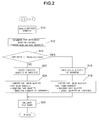
- FIG. 2 is a flowchart showing the operation of computation of the part order quantity implemented in the host computer 12.
- a production schedule as to how many of what product are to be produced within a scheduled period of time is made or planned (according to the production schedule program 56) based on the sales information (sales information database 50) and the past production record (production record database 52).
- part development is implemented, i.e., necessary kind (type) and quantity of the parts (required part quantity) are computed (according to the part development program 60).
- the price of the parts (a group of parts) stored in the part information database 70 exceeds the corresponding prescribed price stored in the prescribed value database 72 (according to the computation selection program 74).
- the price of the parts (a group of parts) referred to herein is a unit price per lot, for example, and the price may be a fixed price, or may be a variable price that varies depending on the number of lots ordered.
- the processing after S 14 is performed for each group of parts.
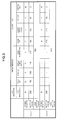
- FIG. 3 is a table showing the inventory information displayed on the display of each terminal computer based on the inventory database 54.
- the stages in part distribution from the part manufacturer's shipment to the arrival to the assembly plant line side mentioned above are divided in time-sequence and the information concerning the quantity of inventory of the parts sent from the computers disposed in the individual stages are each described.
- the quantity of inventory in each stage is tabulated and shown in a consolidated fashion, such that the operator assigned to each stage can manage (check) the quantity of inventory in a lump.
- the quantity of inventory in the distribution route can thereby be managed in a time-sequential fashion, whereby it is possible to more accurately keep track of the quantity of inventory.
- the symbols "N,” “Y,” and “-” in the inventory recognition column indicate whether or not the quantity of inventory in the stage concerned is recognized as the actual quantity of inventory.
- “N” indicates that the inventory is not recognized as the actual quantity of inventory
- "Y” indicates that the inventory is recognized as the actual quantity of inventory.
- "-" indicates that no stage exists for the parts concerned.
- the symbols “N,” “Y,” and “-” in the inventory recognition column can be entered via the keyboard 12a. Specifically, it is configured such that selections can be arbitrarily made for respective parts (a group of parts) by the operator.
- the inventory for which acceptance by the orderer is completed i.e., the quantity of inventory obtained from the difference between the incoming quantity information of the orderer and the outgoing quantity information thereof is designated as "Y", and the quantity of inventory obtained from the difference between the incoming quantity information from the part manufacturer and the outgoing quantity information thereof is designated as "N" (excluding defective parts).
- the parts A the total of 760 units existing in a location from the warehouse 24 of the transit warehouse 20 to the line side 34 of the assembly plant 16 are recognized as the actual quantity of inventory
- the parts B the total of 350 units existing between the temporary storage facility 32 and line side 34 of the assembly plant 16 are recognized as the actual quantity of inventory.
- the actual quantity of inventory is allocated to (subtracted from) the required quantity of parts, and a comparatively short-term (one day, for example) part order quantity is computed (according to the first part order quantity computation program 64).
- a comparatively short-term (one day, for example) part order quantity is computed (according to the first part order quantity computation program 64).
- an order is issued to the part manufacturer(s) on the basis of the order quantity computed in S 18 (according to the part order program 76).
- the part order quantity computation technique mentioned from S16 through S18 is thus a so-called MRP technique and with this, the quantity of inventory can be kept to the minimum number of units, and a stable supply of parts becomes possible.
- the quantity of inventory computed based on the incoming quantity information of the orderer is recognized as the actual quantity of inventory, in other words, the quantity is regarded as the (subject-to-subtraction) quantity of inventory to be subtracted from the required quantity of parts in the production schedule. Inventory can therefore be appropriately managed regardless of differences in the part distribution routes. Since the decision as to whether or not to recognize it as the actual quantity of inventory can simply be changed via the keyboard 12a, it becomes easy to cope with the change in the distribution route, etc.
- a tentative or provisional quantity of inventory is computed based on the production record and part order history (according to the second part order quantity computation program 68).
- the term "tentative or provisional quantity of inventory” indicates a quantity of inventory computed by subtracting the production record (i.e., the quantity of parts actually used) from the past part order quantity.
- the tentative quantity of inventory is allocated to the required quantity of parts, and the order quantity for a longer term (one week, for example) compared to that of the abovementioned MRP technique mentioned in S16 and S18, is computed (according to the second part order quantity computation program 68).
- the parts are ordered to the part manufacturer(s) on the basis of the order quantity computed in S24 (according to the part order program 76).
- the determination in S14 of the flowchart in FIG. 2 corresponds to determining which of cost minimization by bulk ordering (due to volume efficiency) or cost minimization by inventory reduction is effective based on the price of the parts.
- cost minimization by bulk ordering is possible with a relatively inexpensive rearview mirror assembly costing 3000 yen or less by setting the aforementioned prescribed price to 3000 yen, for example, whereas cost minimization by inventory reduction is possible for a relatively expensive rearview mirror assembly costing more than 3000 yen.
- the technique of computing the order quantity can be varied in response to the price, and the benefits of the individual computation techniques can be obtained.
- the part price and the prescribed price can be inputted (changed) via the keyboard 12a as previously described, it is possible to easily modify the technique of computing the order quantity in response to the past production record, part specification changes (manufacturing cost increase/decrease), exchange rate fluctuation in remittance, and the like.
- the first embodiment is thus configured to have a system (10) for computing an order quantity of parts (parts A, parts B) constituting a product based on a production schedule of the product, comprising: required part quantity computing means (host computer 12, part development program 60, S12) for computing a required quantity of the parts based on the production schedule; actual inventory quantity checking means (host computer 12, inventory database 54, S16) for checking an actual quantity of inventory of the parts; first part order quantity computing means (host computer 12, first part order quantity computation program 64, S18) for computing a first part order quantity for a predetermined first period of time based on the computed required quantity of the parts and the checked actual quantity of inventory of the parts; tentative inventory quantity computing means (host computer 12, second part order quantity computation program 68, S22) for computing a tentative quantity of inventory of the parts based on a past order record of the parts and a production record of the product; second part order quantity computing means (host computer 12, second part order quantity computation program 68, S24) for computing a second part order quantity for a predetermined
- the first embodiment it is configured such that, two different part order quantity computation techniques are selected to be used on the basis of the price of the parts, it becomes easier to modify the part order quantity computation technique in response to the price of the parts, thereby enabling to effectively obtain the advantages of two different part order quantity computation techniques.
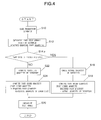
- FIG. 4 is a flowchart, similar to FIG. 2, but showing the operation of computation of the part order quantity implemented in the host computer 12 of the part order quantity computation system according to the second embodiment.
- the second embodiment is configured such that, it is determined in S14a whether the size of the parts stored in the part information database 70 is larger than the prescribed size stored in the prescribed value database 72. Since the storage space increases with increasing part size, when the result of S14a is YES and it is determined that the part size is larger than the prescribed size, the part order quantity is computed based on the actual quantity of inventory in S16, such that the quantity of inventory is reduced. On the other hand, when the result of S14a is NO, in S22 and below, the part order quantity is computed based on the tentative quantity of inventory, such that the effects of mass production are obtained.
- Size comparison may be performed based on the parameters of width, depth, and height of the parts, or based on the volume thereof.
- the part order quantity is computed based on the actual quantity of inventory for a rearview mirror assembly if at least one of the parameters of width, depth, and height exceeds the aforementioned prescribed values (for example, when the width is 230 mm, the depth is 80 mm, and the height is 150 mm), whereas the part order quantity is computed based on the tentative quantity of inventory for a rearview mirror assembly in which all of the numerical values are equal to or less than the prescribed values.
- the part order quantity may be computed based on the actual quantity of inventory for the rearview mirror assembly in which two or all three of the parameters that include width, depth, and height exceed the prescribed values, whereas the part order quantity may be computed based on the tentative quantity of inventory for the rearview mirror assembly whose dimensions are otherwise. Comparison may also be performed on the basis of the volume obtained by multiplying the width, depth, and height.
- the technique of computing the order quantity can be varied according to the sizes, and the benefits of each computation technique can be obtained even for same or similar parts. Since the size of the parts and the prescribed size that is the threshold value thereof can be inputted (modified) via the keyboard 12a as previously described, it becomes possible to easily change the technique of computing the order quantity in response to past production records, changes in storage location, or part specification changes (size changes).
- the second embodiment is thus configured to have a system (10) for computing an order quantity of parts (parts A, parts B) constituting a product based on a production schedule of the product, comprising: required part quantity computing means (host computer 12, part development program 60, S12) for computing a required quantity of the parts based on the production schedule; actual inventory quantity checking means (host computer 12, inventory database 54, S16) for checking an actual quantity of inventory of the parts; first part order quantity computing means (host computer 12, first part order quantity computation program 64, S18) for computing a first part order quantity for a predetermined first period of time based on the computed required quantity of the parts and the checked actual quantity of inventory of the parts; tentative inventory quantity computing means (host computer 12, second part order quantity computation program 68, S22) for computing a tentative quantity of inventory of the parts based on a past order record of the parts and a production record of the product; second part order quantity computing means (host computer 12, second part order quantity computation program 68, S24) for computing a second part order quantity for a predetermined
- the second embodiment is configured such that, two different part order quantity computation techniques are selected to be used on the basis of the size of the parts, it becomes possible to easily modify the part order quantity computation technique in response to the size of the parts, thereby enabling to obtain the advantages of two different part order quantity computation techniques effectively.
- FIG. 5 is a flowchart, similar to FIG. 2, but showing the operation of computation of the part order quantity implemented in the host computer 12 of the part order quantity computation system according to the third embodiment.
- the third embodiment is configured such that, it is determined in S 14b whether the lead time of the parts stored in the part information database 70 is longer than the prescribed lead time stored in the prescribed value database 72.
- lead time used herein refers to a period of time until the parts are actually delivered to be used in product manufacturing since ordering parts to the part manufacturer.
- the longer the lead time the more difficult it becomes to maintain the time period from the part order to the actual delivery constant. Since a long transportation distance is considered to be one of the factors that elongates the lead time, a single shipment of a bulk quantity instead of repeatedly shipping over a short span is sometimes preferred with regard to transportation costs or maintaining a steady supply. Accordingly, when the result of S14b is YES and it is determined that the lead time is longer than the prescribed lead time, the part order quantity is computed based on the tentative quantity of inventory in S22 and below.
- the part order quantity is computed based on the actual quantity of inventory in S16 and onward.
- the aforementioned first part manufacturer 14 produces the aforementioned rearview mirror assembly and exists in a country different from that of the assembly plant 16. It is also assumed that the aforementioned second part manufacturer 40 produces the rearview mirror assembly same as the first part manufacturer 14 and exists in the same country as the assembly plant 16.
- the lead time for the rearview mirror assembly produced by the first part manufacturer 14 is two weeks, and that for the rearview mirror assembly produced by the second part manufacturer 40 is three days, setting the prescribed lead time to one week would allow the order quantity of the rearview mirror assembly produced by the first part manufacturer 14 to be computed based on the tentative quantity of inventory and to transport the assembly in bulk, whereas the part order quantity for the rearview mirror assembly produced by the second part manufacturer 40 would be computed based on the actual quantity of inventory, such that the inventory would be reduced.
- the technique of computing the order quantity can be varied in response to the lead time (production location), and the benefits of each computation technique can be obtained even for the same or similar parts. Since the lead time of the parts and the prescribed lead time (the threshold value thereof) can be inputted (modified) via the keyboard 12a as previously described, it becomes possible to easily modify the technique of computing the order quantity in response to past production records, or change of production locations, or transporters.
- the third embodiment is thus configured to have a system (10) for computing an order quantity of parts (parts A, parts B) constituting a product based on a production schedule of the product, comprising: required part quantity computing means (host computer 12, part development program 60, S12) for computing a required quantity of the parts based on the production schedule; actual inventory quantity checking means (host computer 12, inventory database 54, S16) for checking an actual quantity of inventory of the parts; first part order quantity computing means (host computer 12, first part order quantity computation program 64, S18) for computing a first part order quantity for a predetermined first period of time based on the computed required quantity of the parts and the checked actual quantity of inventory of the parts; tentative inventory quantity computing means (host computer 12, second part order quantity computation program 68, S22) for computing a tentative quantity of inventory of the parts based on a past order record of the parts and a production record of the product; second part order quantity computing means (host computer 12, second part order quantity computation program 68, S24) for computing a second part order quantity for a predetermined
- the third embodiment is configured such that, two different part order quantity computation techniques are selected to be used on the basis of the lead time of the parts, it becomes easier to change the part order quantity computation technique in response to the lead time of the parts, thereby enabling to obtain the advantages of two different part order quantity computation techniques effectively.
- part order quantity computation techniques is performed based on one from among the price, size, or lead time of the parts, the selection may also be made in response to a combination of these factors.
- transporter may also be a cargo ship, freight train, cargo plane, or the like.
- the present invention is configured to have an order quantity computing technique that computes a relatively short-term part order quantity based on the actual quantity of the parts so as to decrease the quantity of inventory and to achieve a stable part supply, and an order quantity computing technique that computes a relatively long-term order quantity based on the tentative quantity of inventory of the parts (a quantity of inventory computed based on past order quantities and production records) so as to obtain mass production effects such that one of them is selected to be used based on one from among the price, size and lead time of the parts.
- an order quantity computing technique that computes a relatively short-term part order quantity based on the actual quantity of the parts so as to decrease the quantity of inventory and to achieve a stable part supply
- an order quantity computing technique that computes a relatively long-term order quantity based on the tentative quantity of inventory of the parts (a quantity of inventory computed based on past order quantities and production records) so as to obtain mass production effects such that one of them is selected to be used based on one from among the price, size and lead time of the parts.
Landscapes
- Business, Economics & Management (AREA)
- Engineering & Computer Science (AREA)
- Economics (AREA)
- Quality & Reliability (AREA)
- General Physics & Mathematics (AREA)
- Physics & Mathematics (AREA)
- Entrepreneurship & Innovation (AREA)
- Human Resources & Organizations (AREA)
- Strategic Management (AREA)
- Tourism & Hospitality (AREA)
- Theoretical Computer Science (AREA)
- Marketing (AREA)
- Development Economics (AREA)
- Operations Research (AREA)
- General Business, Economics & Management (AREA)
- Finance (AREA)
- Accounting & Taxation (AREA)
- Educational Administration (AREA)
- Game Theory and Decision Science (AREA)
- General Engineering & Computer Science (AREA)
- Manufacturing & Machinery (AREA)
- Automation & Control Theory (AREA)
- General Factory Administration (AREA)
- Management, Administration, Business Operations System, And Electronic Commerce (AREA)
Abstract
There are provided with an order quantity computing technique (S16, S18)
that computes a relatively short-term part order quantity based on the actual
quantity of the parts so as to decrease the quantity of inventory and to achieve a
stable part supply, and an order quantity computing technique (S22, S24) that
computes a relatively long-term order quantity based on the tentative quantity of
inventory of the parts (a quantity of inventory computed based on the past
production records) so as to obtain mass production effects such that one of them is
selected to be used by comparing the price of the parts with the prescribed price
(S14). With this, it becomes possible to easily change the part order quantity
computation technique in response to the lead time of the parts, thereby enabling to
effectively utilize the advantages of two different part order quantity computation
techniques.
Description
The present invention relates to a part order quantity computation system for
computing the order quantity of parts or components based on a production schedule
of a product.
Techniques of computing a part order quantity in a factory (assembling
plant) for producing automobiles or the like can generally be classified into the
following two broad categories. The first one is a so-called MRP technique, wherein
the actual quantity of inventory is allocated for a required quantity (desired quantity)
of parts needed in order to meet a production schedule, such that an order quantity
for a relatively short period of time is computed. Therefore, the quantity of
inventory can be kept to a minimum by this technique, enabling a steady supply of
parts. However, it is necessary to accurately keep track of the actual quantity of
inventory in order to prevent part shortages when this technique is employed, and
the order timing must be appropriately managed with consideration for the lead time
of parts.
The other type of technique involves allocating a tentative or provisional
quantity of inventory (a quantity of inventory computed based on past order
quantities and production records of parts) from the required quantity of parts and
computing the order quantity for a more long-term than that of the abovementioned
MRP technique. Although the quantity of inventory cannot be managed by this
technique as appropriately as by the MRP technique, it is possible to make bulk
orders and bundled shipments, and the benefits of mass production can therefore be
obtained with respect to the unit price of parts, shipping cost, and other factors.
The two part order quantity computation techniques described above thus
have different advantages. It is therefore preferable to fully utilize the advantages of
both techniques by appropriately changing these two part order quantity
computation techniques depending on the parts. However, since the configurations
to carry out each of these two part order quantity computation techniques have
conventionally been separate and independent, a complicated process was required
to change the computation technique.
An object of the present invention is therefore to solve the problem of the
prior art and to provide a part order quantity computation system that can easily
change the order quantity computation depending on the parts, thereby enabling to
effectively utilize the advantages of the aforesaid different two part order quantity
computation techniques.
In order to achieve the object, as recited in claim 1 described below, the
present invention is configured to have a system for computing an order quantity of
parts constituting a product based on a production schedule of the product,
comprising: required part quantity computing means for computing a required
quantity of the parts based on the production schedule; actual inventory quantity
checking means for checking an actual quantity of inventory of the parts; first part
order quantity computing means for computing a first part order quantity for a
predetermined first period of time based on the computed required quantity of the
parts and the checked actual quantity of inventory of the parts; tentative inventory
quantity computing means for computing a tentative quantity of inventory of the
parts based on a past order record of the parts and a production record of the
product; second part order quantity computing means for computing a second part
order quantity for a predetermined second period of time, longer than the
predetermined first period of time, based on the computed required quantity of the
parts and the computed tentative quantity of inventory of the parts; price inputting
means for inputting a price of the parts; part price storing means for storing the
inputted price of the parts; prescribed price inputting means for inputting a
prescribed price to be compared with the inputted price of the parts; prescribed price
storing means for storing the inputted prescribed price; selecting means for
comparing the inputted price with the stored prescribed price and for selecting the
first part order quantity computing means when the inputted price is greater than the
stored prescribed price, while for selecting the second part order quantity computing
means when the inputted price is equal to or less than the stored prescribed price;
and part ordering means for ordering the parts based on the part order quantity
computed by the selected part order quantity computing means.
Specifically, it is configured to have an order quantity computation technique
(first part order quantity computing means) that computes a relatively short-term
part order quantity based on the actual quantity of the parts so as to decrease the
quantity of inventory and to achieve a stable part supply, and an order quantity
computation technique (second part order quantity computing means) that computes
a relatively long-term order quantity based on the tentative quantity of inventory of
the parts (a quantity of inventory computed based on past order quantities and
production records) so as to obtain mass production effects such that one of them is
selected to be used based on the price of the parts. With this, it becomes possible to
easily change the part order quantity computation technique in response to the price
of the parts, thereby enabling to effectively utilize the advantages of two different
part order quantity computation techniques. The term "price of the parts" used herein
indicates a unit price per lot, for example, and may be a fixed price or a variable
price that varies in response to the number of lots ordered.
Further, as recited in claim 2 described below, the present invention
configured to have a system for computing an order quantity of parts constituting a
product based on a production schedule of the product, comprising: required part
quantity computing means for computing a required quantity of the parts based on
the production schedule; actual inventory quantity checking means for checking an
actual quantity of inventory of the parts; first part order quantity computing means
for computing a first part order quantity for a predetermined first period of time
based on the computed required quantity of the parts and the checked actual quantity
of inventory of the parts; tentative inventory quantity computing means for
computing a tentative quantity of inventory of the parts based on a past order record
of the parts and a production record of the product; second part order quantity
computing means for computing a second part order quantity for a predetermined
second period of time, longer than the predetermined first period of time, based on
the computed required quantity of the parts and the computed tentative quantity of
inventory of the parts; size inputting means for inputting a size of the parts; part size
storing means for storing the inputted size of the parts; prescribed size inputting
means for inputting a prescribed size to be compared with the inputted size of the
parts; prescribed size storing means for storing the inputted prescribed size;
selecting means for comparing the inputted size with the stored prescribed size and
for selecting the first part order quantity computing means when the inputted size is
greater than the stored prescribed size, while for selecting the second part order
quantity computing means when the inputted size is equal to or less than the stored
prescribed size; and part ordering means for ordering the parts based on the part
order quantity computed by the selected part order quantity computing means.
Specifically, it is configured to have an order quantity computation technique
(first part order quantity computing means) that computes a relatively short-term
part order quantity based on the actual quantity of the parts so as to decrease the
quantity of inventory and to achieve a stable part supply, and an order quantity
computation technique (second part order quantity computing means) that computes
a relatively long-term order quantity based on the tentative quantity of inventory of
the parts (a quantity of inventory computed based on past order quantities and
production records) so as to obtain mass production effects such that one of them is
selected to be used based on the size of the parts. With this, it becomes possible to
easily change the part order quantity computation technique in response to the size
of the parts, thereby enabling to effectively utilize the advantages of two different
part order quantity computation techniques. The term "size of the parts" used herein
indicates a parameter of width, depth, or height of the parts, or the volume thereof.
Further, as recited in claim 3 described below, the present invention
configured to have a system for computing an order quantity of parts constituting a
product based on a production schedule of the product, comprising: required part
quantity computing means for computing a required quantity of the parts based on
the production schedule; actual inventory quantity checking means for checking an
actual quantity of inventory of the parts; first part order quantity computing means
for computing a first part order quantity for a predetermined first period of time
based on the computed required quantity of the parts and the checked actual quantity
of inventory of the parts; tentative inventory quantity computing means for
computing a tentative quantity of inventory of the parts based on a past order record
of the parts and a production record of the product; second part order quantity
computing means for computing a second part order quantity for a predetermined
second period of time, longer than the predetermined first period of time, based on
the computed required quantity of the parts and the computed tentative quantity of
inventory of the parts; lead time inputting means for inputting a lead time of the
parts; part lead time storing means for storing the inputted lead time of the parts;
prescribed lead time inputting means for inputting a prescribed lead time to be
compared with the inputted lead time of the parts; prescribed lead time storing
means for storing the inputted prescribed lead time; selecting means for comparing
the inputted lead time with the stored prescribed lead time and for selecting the first
part order quantity computing means when the inputted lead time is greater than the
stored prescribed lead time, while for selecting the second part order quantity
computing means when the inputted lead time is equal to or less than the stored
prescribed; and part ordering means for ordering the parts based on the part order
quantity computed by the selected part order quantity computing means.
Specifically, it is configured to have an order quantity computation technique
(first part order quantity computing means) that computes a relatively short-term
part order quantity based on the actual quantity of the parts so as to decrease the
quantity of inventory and to achieve a stable part supply, and an order quantity
computation technique (second part order quantity computing means) that computes
a relatively long-term order quantity based on the tentative quantity of inventory of
the parts (a quantity of inventory computed based on past order quantities and
production records) so as to obtain mass production effects such that one of them is
selected to be used based on the lead time of the parts. With this, it becomes possible
to easily change the part order quantity computation technique in response to the
lead time of the parts, thereby enabling to effectively utilize the advantages of two
different part order quantity computation techniques. The term "lead time of the
parts" used herein indicates a period of time required for the actual delivery of the
parts to be used in product manufacturing since the part order to a part manufacturer.
The part order quantity computation system according to an embodiment of
the present invention will be described hereinafter with reference to the
accompanying drawings.
FIG. 1 is an overall schematic view of the part order quantity computation
system according to this embodiment. The reference numeral 10 in the figure
generally indicates the part order quantity computation system.
The part order quantity computation system 10 has a host computer 12
provided with various types of databases and arithmetic programs (described
hereinafter), and a plurality of terminal computers disposed at the stages or
processes of the part distribution route (the transport route of the parts from the part
manufacturer(s) to the assembly plant) and connected to the host computer 12 via
the internet or other communication network.
First explaining the part distribution route (indicated by the thick-lined
arrow) with reference to the figure, a first part manufacturer 14 manufactures or
produces parts (a group of parts) A in response to an order from an assembly plant
(which orders the parts) 16. The first part manufacturer 14 is provided with a first
part manufacturer computer 14C that sends the shipping quantity of parts A to the
host computer 12, receives the order information of the parts A computed by the
host computer 12 as described hereinafter, and displays the results on a display.
The parts A manufactured by the first part manufacturer 14 are loaded onto a
first transporter (freight truck) 18 and are shipped to a transit warehouse 20 located
between the first part manufacturer 14 and the assembly plant 16. The parts A are
unloaded when the first transporter 18 carrying the parts A arrives at a parking lot 22
of the transit warehouse 20. The parking lot (parking lot of the transit warehouse) 22
is provided with a parking lot computer (computer used at the parking lot of the
transit warehouse) 22C, and the incoming (warehousing) quantity and outgoing
(dispatching) quantity of the parts A (incoming quantity information and outgoing
quantity information from the first part manufacturer 14) are inputted or entered
therein. The parking lot computer 22C computes the quantity of inventory in the
parking lot 22 from the difference between the incoming quantity and outgoing
quantity of parts A thus inputted, and sends the result to the host computer 12.
The parts A unloaded at the parking lot 22 are carried into a warehouse 24
after they are accepted by an orderer (those who that ordered the parts) and the type
and quantity of the parts A have been checked. Acceptance is performed by
inputting or entering the barcode information affixed to the box enclosing the
parts A into a computer via a barcode reader. Computation of the incoming quantity
of parts A is performed from this acceptance by the orderer, and ownership of the
parts A for which acceptance is completed is transferred from the first part
manufacturer 14 to the orderer. Specifically, the parts A carried into the
warehouse 24 become the property of the orderer.
The warehouse 24 is provided with a warehouse computer 24C, and the
incoming inventory and outgoing inventory of parts A (incoming inventory
information and outgoing inventory information of the orderer) are inputted or
entered therein. The warehouse computer 24C computes the quantity of inventory
(stored quantity) in the warehouse 24 from the difference between the incoming
quantity and outgoing quantity of parts A thus inputted, and sends the result to the
host computer 12.
Some of parts A (stored in the warehouse 24) that are required at the
assembly plant 16 are partially moved to a temporary storage facility (temporary
storage facility for warehousing) 26. The temporary storage facility 26 is provided
with a temporary storage facility computer (computer of the temporary storage
facility for warehousing) 26C, and the incoming quantity and outgoing quantity of
parts A (incoming quantity information and outgoing quantity information of the
orderer) are inputted or entered therein. The temporary storage facility
computer 26C computes the quantity of inventory (temporarily stored quantity) in
the temporary storage facility 26 from the difference between the incoming quantity
and outgoing quantity of parts A thus inputted, and sends the result to the host
computer 12.
The parts A temporarily stored in the temporary storage facility 26 are
loaded onto a second transporter (freight truck) 28 and are transported to the
assembly plant 16. The parts A are unloaded when the second transporter 28
carrying the parts A arrives at a parking lot 30 of the assembly plant 16. The parking
lot (parking lot of the assembly plant) 30 is provided with a parking lot computer
(computer used at the parking lot of the assembly plant) 30C, and the incoming
quantity and outgoing quantity of parts A (incoming quantity information and
outgoing quantity information of the orderer) are inputted or entered therein. The
parking lot computer 30C computes the quantity of inventory in the parking lot 30
from the difference between the incoming quantity and outgoing quantity of parts A
thus inputted, and sends the result to the host computer 12.
The parts A unloaded at the parking lot 30 are stored in a temporary storage
facility (temporary storage facility used by the assembly plant) 32. The temporary
storage facility 32 has a temporary storage facility computer (computer of the
temporary storage facility used by the assembly plant) 32C, and the incoming
quantity and outgoing quantity of parts A (incoming quantity information and
outgoing quantity information of the orderer) are inputted therein. The temporary
storage facility computer 32C computes the quantity of inventory (temporarily
stored quantity) in the temporary storage facility 32 from the difference between the
incoming quantity and outgoing quantity of parts A thus inputted, and sends the
result to the host computer 12.
The parts A temporarily stored in the temporary storage facility 32 are then
carried into a line side 34 at a scheduled time and are used in the manufacture of a
product (an automobile, for example). The line side 34 is provided with a line side
computer 34C, and the incoming quantity and outgoing quantity of parts A
(incoming quantity information and outgoing quantity information of the orderer)
are inputted or entered therein. The line side computer 34C computes the quantity of
inventory in the line side 34 from the difference between the incoming quantity and
outgoing quantity of parts A thus inputted (quantity used in manufacturing), and
sends the result to the host computer 12. The line side computer 34C also sends the
production record of the products to the host computer 12.
One or several of the parts A that is found to be defective is treated as a
defective part(s) in the line side 34, and is moved to a defective part storage
facility 36. The defective part storage facility 36 is provided with a defective part
storage facility computer 36C, the incoming quantity and outgoing quantity of the
defective parts A are inputted or entered therein, and the quantity of inventory in the
defective part storage facility 36 is sent to the host computer 12.
A second part manufacturer 40 manufactures parts (a group of parts) B in
response to an order from the assembly plant 16. The second part manufacturer 40 is
provided with a second part manufacturer computer 40C that sends the shipment
quantity of the parts B to the host computer 12, receives the order information of the
parts B computed by the host computer 12, and displays the results on a display.
The parts B manufactured by the second part manufacturer 40 are loaded
onto a third transporter (freight truck) 42 and are shipped to the assembly plant 16.
The parts B are unloaded when the third transporter 42 carrying the parts B arrives at
the parking lot 30 of the assembly plant 16. The incoming quantity and the outgoing
quantity of parts B (incoming quantity information and outgoing quantity
information from the second part manufacturer 40) are inputted or entered to the
parking lot computer 30C disposed at the parking lot 30, in the same manner as the
case of parts A. The parking lot computer 30C computes the quantity of inventory in
the parking lot 30 from the difference between the incoming quantity and outgoing
quantity of parts B thus inputted, and sends the result to the host computer 12.
The parts B unloaded at the parking lot 30 are carried into the temporary
storage facility 32 after they are accepted by the orderer and the type and quantity of
the parts B have been checked. Computation of the quantity of inventory of the
parts B is performed from this acceptance by the orderer, and ownership of the
parts B for which acceptance is completed is transferred from the second part
manufacturer 40 to the orderer. Specifically, the parts B carried into the line side 34
become the property of the orderer of the parts.
The incoming quantity and the outgoing quantity of parts B (incoming
quantity information and outgoing quantity information of the orderer) are inputted
or entered to the temporary storage facility computer 32C disposed at the temporary
storage facility 32, in the same manner as in the case of parts A. The temporary
storage facility computer 32C computes the quantity of inventory (temporarily
stored quantity) in the temporary storage facility 32 from the difference between the
incoming quantity and outgoing quantity of parts B thus inputted, and sends the
result to the host computer 12.
The parts B temporarily stored in the temporary storage facility 32 are then
carried into the line side 34. The incoming quantity and the outgoing quantity of
parts B (incoming quantity information and outgoing quantity information of the
orderer) are inputted or entered to the line side computer 34C disposed at the line
side 34, in the same manner as in the case of parts A. The line side computer 34C
computes the quantity of inventory in the line side 34 from the difference between
the incoming quantity and outgoing quantity of parts B (quantity used in
manufacturing) thus inputted, and sends the result to the host computer 12.
The finished products are sold to users via a dealer(s) 44. The dealer(s) 44 is
provided with a dealer computer 44C, which sends the information (type or
quantity) of the products sold (or contracted) to the host computer 12.
The terminal computers (except for the dealer computer 44C) disposed in the
plurality of temporally sequential stages along the distribution route thus compute
the quantity of inventory (including the temporarily stored quantity) from the
difference between the incoming quantity and outgoing quantity of the parts in each
stage, and send (transmit) the information to the host computer 12 via the internet or
other communication network. The terminal computers also receive the inventory
information (described hereinafter) of the stages that has been consolidated and
centralized by the host computer 12, and display the information on their respective
displays.
Thus, this embodiment is configured such that, the incoming quantity
information and outgoing quantity information of the parts from the part
manufacturers are inputted or entered to the terminal computers, the quantities of
inventory at any of the stages are computed based on the difference between the
aforementioned information, the incoming quantity information and outgoing
quantity information of the orderer are entered to the terminal computers, and the
quantity of inventory in each of the remaining stages can be computed based on the
difference between these quantities in the information. It is therefore possible to
accurately keep track of the quantity of inventory.
Summarizing the operation of the host computer 12, the host computer 12
prepares or creates various types of databases based on the information and the like
inputted or entered in the manner as described above, and executes calculations
according to a plurality of programs necessary for ordering parts based on the
databases thus prepared.
Specifically, the host computer 12 prepares a sales information database
(D/B) 50 based on the product sales information sent from the dealer computer 44C,
and prepares a production record database 52 based on the production record
information sent from the line side computer 34C.
The host computer 12 also prepares an inventory database 54 based on the
information regarding the quantity of inventory of parts sent from the computers
disposed in the stages along the part distribution route.
According to a production schedule program 56, a production schedule for a
certain period of time is prepared based on the sales information database 50 and
production record database 52 thus prepared, and a production schedule database 58
is prepared. According to a part development program 60, the type and required
quantity of the parts to be used in the product are computed and a required part
quantity database 62 is prepared based on the production schedule database 58 thus
created.
In accordance with a first part order quantity computation program 64, the
part order quantity is computed based on the actual inventory quantity stored in the
inventory database 54 and on the required part quantity database 62, and a part order
quantity database 66 is prepared. In accordance with a second part order quantity
computation program 68, the part order quantity is computed in the same manner as
in the first part order quantity computation program 64 on the basis of the
production record database 52, the required part quantity database 62, and a part
order history database (described hereinafter).
A keyboard (inputting means) 12a is connected to the host computer 12, and
the price, size, and lead time of the individual parts are inputted or entered via the
keyboard 12a. The inputted price, size, and lead time of the parts are stored in a part
information database 70.
Furthermore, a prescribed price, a prescribed size, and a prescribed lead time
to be compared with the aforementioned price, size, and lead time, respectively, of
the parts are inputted to the host computer 12 via the keyboard 12a. The prescribed
price, prescribed size, and prescribed lead time thus inputted are stored in a
prescribed value database 72.
According to a computation selection program 74, one of the first part order
quantity computation program 64 and second part order quantity computation
program 68 is selected based on the various data stored in the part information
database 70 and prescribed value database 72, and used.
According to a part order program 76, the order of the parts to the part
manufacturer(s) is implemented on the basis of the part order quantity database 66,
and stores and updates the order details in the part order history database 78.
The operation of the abovementioned host computer 12 will be described in
detail with reference to FIG. 2. FIG. 2 is a flowchart showing the operation of
computation of the part order quantity implemented in the host computer 12.
Explaining this, first, in S10, a production schedule as to how many of what
product are to be produced within a scheduled period of time, is made or planned
(according to the production schedule program 56) based on the sales information
(sales information database 50) and the past production record (production record
database 52). Next in S12, based on the production schedule thus prepared, part
development is implemented, i.e., necessary kind (type) and quantity of the parts
(required part quantity) are computed (according to the part development
program 60).
Then in S14, it is determined whether the price of the parts (a group of parts)
stored in the part information database 70 exceeds the corresponding prescribed
price stored in the prescribed value database 72 (according to the computation
selection program 74). The price of the parts (a group of parts) referred to herein is a
unit price per lot, for example, and the price may be a fixed price, or may be a
variable price that varies depending on the number of lots ordered. The processing
after S 14 is performed for each group of parts.
When the result of S14 is YES, the actual quantity of inventory is confirmed
in S16.
The actual quantity of inventory will be explained with reference to FIG. 3.
FIG. 3 is a table showing the inventory information displayed on the display of each
terminal computer based on the inventory database 54.
As shown in the table, the stages in part distribution from the part
manufacturer's shipment to the arrival to the assembly plant line side mentioned
above are divided in time-sequence and the information concerning the quantity of
inventory of the parts sent from the computers disposed in the individual stages are
each described. Specifically, the quantity of inventory in each stage is tabulated and
shown in a consolidated fashion, such that the operator assigned to each stage can
manage (check) the quantity of inventory in a lump. The quantity of inventory in the
distribution route can thereby be managed in a time-sequential fashion, whereby it is
possible to more accurately keep track of the quantity of inventory.
In the figure, the symbols "N," "Y," and "-" in the inventory recognition
column indicate whether or not the quantity of inventory in the stage concerned is
recognized as the actual quantity of inventory. "N" indicates that the inventory is not
recognized as the actual quantity of inventory, and "Y" indicates that the inventory
is recognized as the actual quantity of inventory. "-" indicates that no stage exists
for the parts concerned. The symbols "N," "Y," and "-" in the inventory recognition
column can be entered via the keyboard 12a. Specifically, it is configured such that
selections can be arbitrarily made for respective parts (a group of parts) by the
operator.
In this embodiment, the inventory for which acceptance by the orderer is
completed; i.e., the quantity of inventory obtained from the difference between the
incoming quantity information of the orderer and the outgoing quantity information
thereof is designated as "Y", and the quantity of inventory obtained from the
difference between the incoming quantity information from the part manufacturer
and the outgoing quantity information thereof is designated as "N" (excluding
defective parts). Specifically, as regards the parts A, the total of 760 units existing in
a location from the warehouse 24 of the transit warehouse 20 to the line side 34 of
the assembly plant 16 are recognized as the actual quantity of inventory, and as
regards the parts B, the total of 350 units existing between the temporary storage
facility 32 and line side 34 of the assembly plant 16 are recognized as the actual
quantity of inventory.
Returning to the explanation of the flowchart in FIG. 2, in S18, the actual
quantity of inventory is allocated to (subtracted from) the required quantity of parts,
and a comparatively short-term (one day, for example) part order quantity is
computed (according to the first part order quantity computation program 64). In
S20, an order is issued to the part manufacturer(s) on the basis of the order quantity
computed in S 18 (according to the part order program 76).
The part order quantity computation technique mentioned from S16 through
S18 is thus a so-called MRP technique and with this, the quantity of inventory can
be kept to the minimum number of units, and a stable supply of parts becomes
possible.
Since it is configured such that, of among the inventories in the stages, the
quantity of inventory computed based on the incoming quantity information of the
orderer is recognized as the actual quantity of inventory, in other words, the quantity
is regarded as the (subject-to-subtraction) quantity of inventory to be subtracted
from the required quantity of parts in the production schedule. Inventory can
therefore be appropriately managed regardless of differences in the part distribution
routes. Since the decision as to whether or not to recognize it as the actual quantity
of inventory can simply be changed via the keyboard 12a, it becomes easy to cope
with the change in the distribution route, etc.
Continuing the explanation of the flowchart in FIG. 2, when the result of S14
is NO, in S22, a tentative or provisional quantity of inventory is computed based on
the production record and part order history (according to the second part order
quantity computation program 68). Specifically, the term "tentative or provisional
quantity of inventory" indicates a quantity of inventory computed by subtracting the
production record (i.e., the quantity of parts actually used) from the past part order
quantity.
Then, in S24, the tentative quantity of inventory is allocated to the required
quantity of parts, and the order quantity for a longer term (one week, for example)
compared to that of the abovementioned MRP technique mentioned in S16 and S18,
is computed (according to the second part order quantity computation program 68).
In S20, the parts are ordered to the part manufacturer(s) on the basis of the order
quantity computed in S24 (according to the part order program 76). Although the
quantity of inventory cannot be managed by the part order quantity computation
technique of S22 through S24 as appropriately as by the MRP technique of S16
through S18, it becomes possible to make bulk orders and bundled shipments of
parts, and the benefits of mass production can therefore be obtained with respect to
the unit price of parts, shipping cost, and other factors.
As described above, the determination in S14 of the flowchart in FIG. 2
corresponds to determining which of cost minimization by bulk ordering (due to
volume efficiency) or cost minimization by inventory reduction is effective based on
the price of the parts.
For example, assume that a rearview mirror assembly mounted in the vicinity
of an automobile windshield is available in a plurality of types in the price range of
2000 to 5000 yen according to the type of automobile, cost minimization by bulk
ordering is possible with a relatively inexpensive rearview mirror assembly costing
3000 yen or less by setting the aforementioned prescribed price to 3000 yen, for
example, whereas cost minimization by inventory reduction is possible for a
relatively expensive rearview mirror assembly costing more than 3000 yen. In other
words, even for the same parts, the technique of computing the order quantity can be
varied in response to the price, and the benefits of the individual computation
techniques can be obtained.
Since the part price and the prescribed price (the threshold value thereof) can
be inputted (changed) via the keyboard 12a as previously described, it is possible to
easily modify the technique of computing the order quantity in response to the past
production record, part specification changes (manufacturing cost increase/decrease),
exchange rate fluctuation in remittance, and the like.
The first embodiment is thus configured to have a system (10) for computing
an order quantity of parts (parts A, parts B) constituting a product based on a
production schedule of the product, comprising: required part quantity computing
means (host computer 12, part development program 60, S12) for computing a
required quantity of the parts based on the production schedule; actual inventory
quantity checking means (host computer 12, inventory database 54, S16) for
checking an actual quantity of inventory of the parts; first part order quantity
computing means (host computer 12, first part order quantity computation program
64, S18) for computing a first part order quantity for a predetermined first period of
time based on the computed required quantity of the parts and the checked actual
quantity of inventory of the parts; tentative inventory quantity computing means
(host computer 12, second part order quantity computation program 68, S22) for
computing a tentative quantity of inventory of the parts based on a past order record
of the parts and a production record of the product; second part order quantity
computing means (host computer 12, second part order quantity computation
program 68, S24) for computing a second part order quantity for a predetermined
second period of time, longer than the predetermined first period of time, based on
the computed required quantity of the parts and the computed tentative quantity of
inventory of the parts; price inputting means (keyboard 12a) for inputting a price of
the parts; part price storing means (host computer 12, part information database 70)
for storing the inputted price of the parts; prescribed price inputting means
(keyboard 12a) for inputting a prescribed price to be compared with the inputted
price of the parts; prescribed price storing means (host computer 12, prescribed
value database 72) for storing the inputted prescribed price; selecting means (host
computer 12, computation technique selection program 74, S14) for comparing the
inputted price with the stored prescribed price and for selecting the first part order
quantity computing means when the inputted price is greater than the stored
prescribed price, while for selecting the second part order quantity computing means
for selecting the second part order quantity computing means when the inputted
price is equal to or less than the stored prescribed price; and part ordering means
(host computer 12, part order program 76, S20) for ordering the parts based on the
part order quantity computed by the selected part order quantity computing means.
Thus, in the first embodiment, it is configured such that, two different part
order quantity computation techniques are selected to be used on the basis of the
price of the parts, it becomes easier to modify the part order quantity computation
technique in response to the price of the parts, thereby enabling to effectively obtain
the advantages of two different part order quantity computation techniques.
The part order quantity computation system according to a second
embodiment of the present invention will next be described with reference to FIG. 4.
FIG. 4 is a flowchart, similar to FIG. 2, but showing the operation of computation of
the part order quantity implemented in the host computer 12 of the part order
quantity computation system according to the second embodiment.
Explaining the second embodiment with focus on the differences from the
first embodiment, the second embodiment is configured such that, it is determined in
S14a whether the size of the parts stored in the part information database 70 is larger
than the prescribed size stored in the prescribed value database 72. Since the storage
space increases with increasing part size, when the result of S14a is YES and it is
determined that the part size is larger than the prescribed size, the part order quantity
is computed based on the actual quantity of inventory in S16, such that the quantity
of inventory is reduced. On the other hand, when the result of S14a is NO, in S22
and below, the part order quantity is computed based on the tentative quantity of
inventory, such that the effects of mass production are obtained.
Size comparison may be performed based on the parameters of width, depth,
and height of the parts, or based on the volume thereof.
For example, it may be configured such that, when the prescribed sizes of the
aforementioned rearview mirror assembly is set to a width of 250 mm, a depth of
100 mm, and a height of 130 mm, the part order quantity is computed based on the
actual quantity of inventory for a rearview mirror assembly if at least one of the
parameters of width, depth, and height exceeds the aforementioned prescribed
values (for example, when the width is 230 mm, the depth is 80 mm, and the height
is 150 mm), whereas the part order quantity is computed based on the tentative
quantity of inventory for a rearview mirror assembly in which all of the numerical
values are equal to or less than the prescribed values.
It should also be noted that the part order quantity may be computed based
on the actual quantity of inventory for the rearview mirror assembly in which two or
all three of the parameters that include width, depth, and height exceed the
prescribed values, whereas the part order quantity may be computed based on the
tentative quantity of inventory for the rearview mirror assembly whose dimensions
are otherwise. Comparison may also be performed on the basis of the volume
obtained by multiplying the width, depth, and height.
Having been configured in the foregoing manner, the technique of
computing the order quantity can be varied according to the sizes, and the benefits of
each computation technique can be obtained even for same or similar parts. Since
the size of the parts and the prescribed size that is the threshold value thereof can be
inputted (modified) via the keyboard 12a as previously described, it becomes
possible to easily change the technique of computing the order quantity in response
to past production records, changes in storage location, or part specification changes
(size changes).
The second embodiment is thus configured to have a system (10) for
computing an order quantity of parts (parts A, parts B) constituting a product based
on a production schedule of the product, comprising: required part quantity
computing means (host computer 12, part development program 60, S12) for
computing a required quantity of the parts based on the production schedule; actual
inventory quantity checking means (host computer 12, inventory database 54, S16)
for checking an actual quantity of inventory of the parts; first part order quantity
computing means (host computer 12, first part order quantity computation program
64, S18) for computing a first part order quantity for a predetermined first period of
time based on the computed required quantity of the parts and the checked actual
quantity of inventory of the parts; tentative inventory quantity computing means
(host computer 12, second part order quantity computation program 68, S22) for
computing a tentative quantity of inventory of the parts based on a past order record
of the parts and a production record of the product; second part order quantity
computing means (host computer 12, second part order quantity computation
program 68, S24) for computing a second part order quantity for a predetermined
second period of time, longer than the predetermined first period of time, based on
the computed required quantity of the parts and the computed tentative quantity of
inventory of the parts; size inputting means (keyboard 12a) for inputting a size of the
parts; part size storing means (host computer 12, part information database 70) for
storing the inputted size of the parts; prescribed size inputting means (keyboard 12a)
for inputting a prescribed size to be compared with the inputted size of the parts;
prescribed size storing means (host computer 12, prescribed value database 72) for
storing the inputted prescribed price; selecting means (host computer 12,
computation technique selection program 74, S14a) for comparing the inputted size
with the stored prescribed size and for selecting the first part order quantity
computing means when the inputted size is greater than the stored prescribed size,
while for selecting the second part order quantity computing means for selecting the
second part order quantity computing means when the inputted size is equal to or
less than the stored prescribed size; and part ordering means (host computer 12, part
order program 76, S20) for ordering the parts based on the part order quantity
computed by the selected part order quantity computing means.
Specifically, the second embodiment is configured such that, two different
part order quantity computation techniques are selected to be used on the basis of the
size of the parts, it becomes possible to easily modify the part order quantity
computation technique in response to the size of the parts, thereby enabling to obtain
the advantages of two different part order quantity computation techniques
effectively.
The part order quantity computation system according to a third embodiment
of the present invention will next be described with reference to FIG. 5. FIG. 5 is a
flowchart, similar to FIG. 2, but showing the operation of computation of the part
order quantity implemented in the host computer 12 of the part order quantity
computation system according to the third embodiment.
Explaining the third embodiment with focus on the differences from the first
and second embodiments, the third embodiment is configured such that, it is
determined in S 14b whether the lead time of the parts stored in the part information
database 70 is longer than the prescribed lead time stored in the prescribed value
database 72. The term "lead time" used herein refers to a period of time until the
parts are actually delivered to be used in product manufacturing since ordering parts
to the part manufacturer.
The longer the lead time, the more difficult it becomes to maintain the time
period from the part order to the actual delivery constant. Since a long transportation
distance is considered to be one of the factors that elongates the lead time, a single
shipment of a bulk quantity instead of repeatedly shipping over a short span is
sometimes preferred with regard to transportation costs or maintaining a steady
supply. Accordingly, when the result of S14b is YES and it is determined that the
lead time is longer than the prescribed lead time, the part order quantity is computed
based on the tentative quantity of inventory in S22 and below.
On the other hand, when the result of S14b is NO, the part order quantity is
computed based on the actual quantity of inventory in S16 and onward.
For example, it is assumed that the aforementioned first part manufacturer 14
produces the aforementioned rearview mirror assembly and exists in a country
different from that of the assembly plant 16. It is also assumed that the
aforementioned second part manufacturer 40 produces the rearview mirror assembly
same as the first part manufacturer 14 and exists in the same country as the assembly
plant 16.
Here, if, for example, the lead time for the rearview mirror assembly
produced by the first part manufacturer 14 is two weeks, and that for the rearview
mirror assembly produced by the second part manufacturer 40 is three days, setting
the prescribed lead time to one week would allow the order quantity of the rearview
mirror assembly produced by the first part manufacturer 14 to be computed based on
the tentative quantity of inventory and to transport the assembly in bulk, whereas the
part order quantity for the rearview mirror assembly produced by the second part
manufacturer 40 would be computed based on the actual quantity of inventory, such
that the inventory would be reduced.
With this, the technique of computing the order quantity can be varied in
response to the lead time (production location), and the benefits of each computation
technique can be obtained even for the same or similar parts. Since the lead time of
the parts and the prescribed lead time (the threshold value thereof) can be inputted
(modified) via the keyboard 12a as previously described, it becomes possible to
easily modify the technique of computing the order quantity in response to past
production records, or change of production locations, or transporters.
The third embodiment is thus configured to have a system (10) for
computing an order quantity of parts (parts A, parts B) constituting a product based
on a production schedule of the product, comprising: required part quantity
computing means (host computer 12, part development program 60, S12) for
computing a required quantity of the parts based on the production schedule; actual
inventory quantity checking means (host computer 12, inventory database 54, S16)
for checking an actual quantity of inventory of the parts; first part order quantity
computing means (host computer 12, first part order quantity computation program
64, S18) for computing a first part order quantity for a predetermined first period of
time based on the computed required quantity of the parts and the checked actual
quantity of inventory of the parts; tentative inventory quantity computing means
(host computer 12, second part order quantity computation program 68, S22) for
computing a tentative quantity of inventory of the parts based on a past order record
of the parts and a production record of the product; second part order quantity
computing means (host computer 12, second part order quantity computation
program 68, S24) for computing a second part order quantity for a predetermined
second period of time, longer than the predetermined first period of time, based on
the computed required quantity of the parts and the computed tentative quantity of
inventory of the parts; lead time inputting means (keyboard 12a) for inputting a lead
time of the parts; part lead time storing means (host computer 12, part information
database 70) for storing the inputted lead time of the parts; prescribed lead time
inputting means (keyboard 12a) for inputting a prescribed lead time to be compared
with the inputted lead time of the parts; prescribed lead time storing means (host
computer 12, prescribed value database 72) for storing the inputted prescribed lead
time; selecting means (host computer 12, computation technique selection program
74, S14b) for comparing the inputted lead time with the stored prescribed lead time
and for selecting the first part order quantity computing means when the inputted
lead time is greater than the stored prescribed lead time, while for selecting the
second part order quantity computing means for selecting the second part order
quantity computing means when the inputted lead time is equal to or less than the
stored prescribed lead time; and part ordering means (host computer 12, part order
program 76, S20) for ordering the parts based on the part order quantity computed
by the selected part order quantity computing means.
Specifically, the third embodiment is configured such that, two different part
order quantity computation techniques are selected to be used on the basis of the
lead time of the parts, it becomes easier to change the part order quantity
computation technique in response to the lead time of the parts, thereby enabling to
obtain the advantages of two different part order quantity computation techniques
effectively.
It should be noted in that, although selection of the part order quantity
computation techniques is performed based on one from among the price, size, or
lead time of the parts, the selection may also be made in response to a combination
of these factors.
It should also be noted that, although the two groups of parts A and B having
different distribution routes are used as examples of the parts, these are only
examples, and it is apparent that the types or kinds of the parts and distribution
routes thereof may be one, or three or more groups.
It should further be noted that, although a freight truck is used as an example
of the transporter, it is apparent that the transporter may also be a cargo ship, freight
train, cargo plane, or the like.
According to the present invention, it is configured to have an order quantity
computing technique that computes a relatively short-term part order quantity based
on the actual quantity of the parts so as to decrease the quantity of inventory and to
achieve a stable part supply, and an order quantity computing technique that
computes a relatively long-term order quantity based on the tentative quantity of
inventory of the parts (a quantity of inventory computed based on past order
quantities and production records) so as to obtain mass production effects such that
one of them is selected to be used based on one from among the price, size and lead
time of the parts. With this, it becomes possible to easily change the part order
quantity computation technique, thereby enabling to effectively utilize the
advantages of two different part order quantity computation techniques.
Claims (3)
- A system for computing an order quantity of parts constituting a product based on a production schedule of the product, comprising:a. required part quantity computing means for computing a required quantity of the parts based on the production schedule;b. actual inventory quantity checking means for checking an actual quantity of inventory of the parts;c. first part order quantity computing means for computing a first part order quantity for a predetermined first period of time based on the computed required quantity of the parts and the checked actual quantity of inventory of the parts;d. tentative inventory quantity computing means for computing a tentative quantity of inventory of the parts based on a past order record of the parts and a production record of the product;e. second part order quantity computing means for computing a second part order quantity for a predetermined second period of time, longer than the predetermined first period of time, based on the computed required quantity of the parts and the computed tentative quantity of inventory of the parts;f. price inputting means for inputting a price of the parts;g. part price storing means for storing the inputted price of the parts;h. prescribed price inputting means for inputting a prescribed price to be compared with the inputted price of the parts;i. prescribed price storing means for storing the inputted prescribed price;j. selecting means for comparing the inputted price with the stored prescribed price and for selecting the first part order quantity computing means when the inputted price is greater than the stored prescribed price, while for selecting the second part order quantity computing means when the inputted price is equal to or less than the stored prescribed price; andk. part ordering means for ordering the parts based on the part order quantity computed by the selected part order quantity computing means.
- A system for computing an order quantity of parts constituting a product based on a production schedule of the product, comprising:a. required part quantity computing means for computing a required quantity of the parts based on the production schedule;b. actual inventory quantity checking means for checking an actual quantity of inventory of the parts;c. first part order quantity computing means for computing a first part order quantity for a predetermined first period of time based on the computed required quantity of the parts and the checked actual quantity of inventory of the parts;d. tentative inventory quantity computing means for computing a tentative quantity of inventory of the parts based on a past order record of the parts and a production record of the product;e. second part order quantity computing means for computing a second part order quantity for a predetermined second period of time, longer than the predetermined first period of time, based on the computed required quantity of the parts and the computed tentative quantity of inventory of the parts;f. size inputting means for inputting a size of the parts;g. part size storing means for storing the inputted size of the parts;h. prescribed size inputting means for inputting a prescribed size to be compared with the inputted size of the parts;i. prescribed size storing means for storing the inputted prescribed size;j. selecting means for comparing the inputted size with the stored prescribed size and for selecting the first part order quantity computing means when the inputted size is greater than the stored prescribed size, while for selecting the second part order quantity computing means when the inputted size is equal to or less than the stored prescribed size; andk. part ordering means for ordering the parts based on the part order quantity computed by the selected part order quantity computing means.
- A system for computing an order quantity of parts constituting a product based on a production schedule of the product, comprising:a. required part quantity computing means for computing a required quantity of the parts based on the production schedule;b. actual inventory quantity checking means for checking an actual quantity of inventory of the parts;c. first part order quantity computing means for computing a first part order quantity for a predetermined first period of time based on the computed required quantity of the parts and the checked actual quantity of inventory of the parts;d. tentative inventory quantity computing means for computing a tentative quantity of inventory of the parts based on a past order record of the parts and a production record of the product;e. second part order quantity computing means for computing a second part order quantity for a predetermined second period of time, longer than the predetermined first period of time, based on the computed required quantity of the parts and the computed tentative quantity of inventory of the parts;f. lead time inputting means for inputting a lead time of the parts;g. part lead time storing means for storing the inputted lead time of the parts;h. prescribed lead time inputting means for inputting a prescribed lead time to be compared with the inputted lead time of the parts;i. prescribed lead time storing means for storing the inputted prescribed lead time;j. selecting means for comparing the inputted lead time with the stored prescribed lead time and for selecting the first part order quantity computing means when the inputted lead time is greater than the stored prescribed lead time, while for selecting the second part order quantity computing means when the inputted lead time is equal to or less than the stored prescribed; andk. part ordering means for ordering the parts based on the part order quantity computed by the selected part order quantity computing means.
Applications Claiming Priority (3)
| Application Number | Priority Date | Filing Date | Title |
|---|---|---|---|
| PCT/JP2002/009603 WO2004027665A1 (en) | 2002-09-19 | 2002-09-19 | Parts order quantity calculating device |
| WOPCT/JP02/09603 | 2002-09-19 | ||
| PCT/JP2003/011965 WO2004027532A1 (en) | 2002-09-19 | 2003-09-19 | Part ordering amount calculation device |
Publications (2)
| Publication Number | Publication Date |
|---|---|
| EP1542106A1 true EP1542106A1 (en) | 2005-06-15 |
| EP1542106A4 EP1542106A4 (en) | 2010-03-24 |
Family
ID=32012223
Family Applications (1)
| Application Number | Title | Priority Date | Filing Date |
|---|---|---|---|
| EP03748542A Withdrawn EP1542106A4 (en) | 2002-09-19 | 2003-09-19 | Part ordering amount calculation device |
Country Status (8)
| Country | Link |
|---|---|
| US (1) | US20050289022A1 (en) |
| EP (1) | EP1542106A4 (en) |
| JP (1) | JPWO2004027532A1 (en) |
| CN (1) | CN1682166A (en) |
| AU (2) | AU2002344048A1 (en) |
| BR (1) | BR0314576A (en) |
| CA (1) | CA2499695C (en) |
| WO (2) | WO2004027665A1 (en) |
Cited By (1)
| Publication number | Priority date | Publication date | Assignee | Title |
|---|---|---|---|---|
| EP3951527A1 (en) * | 2020-08-05 | 2022-02-09 | Yazaki Corporation | Component manufacturing system and component manufacturing method |
Families Citing this family (22)
| Publication number | Priority date | Publication date | Assignee | Title |
|---|---|---|---|---|
| US6666377B1 (en) | 2000-07-18 | 2003-12-23 | Scott C. Harris | Bar code data entry device |
| US8700497B2 (en) * | 2007-02-21 | 2014-04-15 | International Business Machines Corporation | Inventory mechanism that generates logical inventory from assemblies in inventory |
| JP5214905B2 (en) * | 2007-04-17 | 2013-06-19 | 株式会社中山製鋼所 | High strength hot rolled steel sheet and method for producing the same |
| US8417550B2 (en) * | 2007-08-02 | 2013-04-09 | Target Brands, Inc. | Inland freight management |
| CN102735309B (en) * | 2011-04-15 | 2017-04-12 | 金祺创(北京)技术有限公司 | Liquid Container Liquid Quantity Internet of Things Monitoring System |
| US20130325670A1 (en) * | 2012-05-30 | 2013-12-05 | Liberty Hardware Mfg. Corp. | Shower door assembly display and retail |
| JP6744191B2 (en) * | 2016-10-12 | 2020-08-19 | 株式会社日立製作所 | Parts ordering method selecting device, parts ordering method selecting method and program |
| US11847382B2 (en) * | 2016-11-30 | 2023-12-19 | Peak Innovations Inc. | Deck configuration system |
| US11900287B2 (en) | 2017-05-25 | 2024-02-13 | Johnson Controls Tyco IP Holdings LLP | Model predictive maintenance system with budgetary constraints |
| US11847617B2 (en) | 2017-02-07 | 2023-12-19 | Johnson Controls Tyco IP Holdings LLP | Model predictive maintenance system with financial analysis functionality |
| US12282324B2 (en) | 2017-05-25 | 2025-04-22 | Tyco Fire & Security Gmbh | Model predictive maintenance system with degradation impact model |
| US12242259B2 (en) | 2017-05-25 | 2025-03-04 | Tyco Fire & Security Gmbh | Model predictive maintenance system with event or condition based performance |
| US11416955B2 (en) | 2017-05-25 | 2022-08-16 | Johnson Controls Tyco IP Holdings LLP | Model predictive maintenance system with integrated measurement and verification functionality |
| US11636429B2 (en) * | 2017-05-25 | 2023-04-25 | Johnson Controls Tyco IP Holdings LLP | Model predictive maintenance systems and methods with automatic parts resupply |
| US11409274B2 (en) | 2017-05-25 | 2022-08-09 | Johnson Controls Tyco IP Holdings LLP | Model predictive maintenance system for performing maintenance as soon as economically viable |
| US11747800B2 (en) | 2017-05-25 | 2023-09-05 | Johnson Controls Tyco IP Holdings LLP | Model predictive maintenance system with automatic service work order generation |
| EP3631704A4 (en) | 2017-05-25 | 2021-07-21 | Johnson Controls Technology Company | MODEL PREDICTIVE MAINTENANCE SYSTEM FOR BUILDING EQUIPMENT |
| JP7038631B2 (en) * | 2018-09-04 | 2022-03-18 | 株式会社日立製作所 | Parts ordering device and parts ordering method |
| DE102019112869A1 (en) * | 2019-05-16 | 2020-11-19 | Homag Gmbh | Method for operating a machine and system |
| US11480360B2 (en) | 2019-08-06 | 2022-10-25 | Johnson Controls Tyco IP Holdings LLP | Building HVAC system with modular cascaded model |
| JP7208208B2 (en) * | 2020-08-05 | 2023-01-18 | 矢崎総業株式会社 | Parts manufacturing system, parts manufacturing method and parts manufacturing program |
| CN114386906B (en) * | 2022-01-11 | 2025-06-10 | 瀚云科技有限公司 | Data processing method and device, electronic equipment and storage medium |
Family Cites Families (16)
| Publication number | Priority date | Publication date | Assignee | Title |
|---|---|---|---|---|
| JPH05250392A (en) * | 1992-03-06 | 1993-09-28 | Dainippon Printing Co Ltd | Automatic order issuing system for repeat orders |
| JP3230628B2 (en) * | 1993-08-06 | 2001-11-19 | トヨタ自動車株式会社 | Order quantity calculation method and device for it |
| JPH0869494A (en) * | 1994-08-29 | 1996-03-12 | Toyota Motor Corp | Production instruction device |
| JPH08190586A (en) * | 1994-11-07 | 1996-07-23 | Toyota Motor Corp | Parts procurement system |
| JPH08235274A (en) * | 1995-02-27 | 1996-09-13 | Nec Corp | Inventory management system |
| JP3371706B2 (en) * | 1995-08-24 | 2003-01-27 | トヨタ自動車株式会社 | Product sales and production system |
| US5963919A (en) * | 1996-12-23 | 1999-10-05 | Northern Telecom Limited | Inventory management strategy evaluation system and method |
| JPH11114784A (en) * | 1997-10-08 | 1999-04-27 | Sekisui Chem Co Ltd | Production plan creation device |
| JP3547990B2 (en) * | 1998-04-10 | 2004-07-28 | 株式会社クラステクノロジー | Production management system, computer readable recording medium recording production management program |
| AU5318699A (en) * | 1998-07-22 | 2000-02-14 | Vibhu K. Kalyan | Computer-implemented value management tool for an asset intensive manufacturer |
| JP2001092521A (en) * | 1999-09-22 | 2001-04-06 | Nec Corp | Inventory inspection simulation system, and recording medium recording inventory inspection simulation program |
| JP2001350513A (en) * | 2000-04-06 | 2001-12-21 | Ns Solutions Corp | Production plan generation system and production plan generation method |
| GB2370132A (en) * | 2000-12-13 | 2002-06-19 | Itt Mfg Enterprises Inc | Procument system |
| US7058587B1 (en) * | 2001-01-29 | 2006-06-06 | Manugistics, Inc. | System and method for allocating the supply of critical material components and manufacturing capacity |
| CN1403974A (en) * | 2001-08-28 | 2003-03-19 | 英业达股份有限公司 | production precision method |
| US7363253B2 (en) * | 2002-06-19 | 2008-04-22 | Ford Motor Company | Computer-implemented method and system for retroactive pricing for use in order procurement |
-
2002
- 2002-09-19 AU AU2002344048A patent/AU2002344048A1/en not_active Abandoned
- 2002-09-19 WO PCT/JP2002/009603 patent/WO2004027665A1/en not_active Ceased
-
2003
- 2003-09-19 EP EP03748542A patent/EP1542106A4/en not_active Withdrawn
- 2003-09-19 WO PCT/JP2003/011965 patent/WO2004027532A1/en not_active Ceased
- 2003-09-19 CA CA002499695A patent/CA2499695C/en not_active Expired - Fee Related
- 2003-09-19 BR BR0314576-0A patent/BR0314576A/en not_active IP Right Cessation
- 2003-09-19 JP JP2004537993A patent/JPWO2004027532A1/en active Pending
- 2003-09-19 US US10/528,274 patent/US20050289022A1/en not_active Abandoned
- 2003-09-19 CN CNA038222280A patent/CN1682166A/en active Pending
- 2003-09-19 AU AU2003268649A patent/AU2003268649A1/en not_active Abandoned
Cited By (3)
| Publication number | Priority date | Publication date | Assignee | Title |
|---|---|---|---|---|
| EP3951527A1 (en) * | 2020-08-05 | 2022-02-09 | Yazaki Corporation | Component manufacturing system and component manufacturing method |
| US20220044176A1 (en) * | 2020-08-05 | 2022-02-10 | Yazaki Corporation | Component manufacturing system and component manufacturing method |
| US11972379B2 (en) * | 2020-08-05 | 2024-04-30 | Yazaki Corporation | Component manufacturing system and component manufacturing method |
Also Published As
| Publication number | Publication date |
|---|---|
| BR0314576A (en) | 2005-08-09 |
| CN1682166A (en) | 2005-10-12 |
| AU2002344048A1 (en) | 2004-04-08 |
| CA2499695C (en) | 2007-07-24 |
| WO2004027665A1 (en) | 2004-04-01 |
| CA2499695A1 (en) | 2004-04-01 |
| AU2003268649A1 (en) | 2004-04-08 |
| JPWO2004027532A1 (en) | 2006-01-19 |
| WO2004027532A1 (en) | 2004-04-01 |
| US20050289022A1 (en) | 2005-12-29 |
| EP1542106A4 (en) | 2010-03-24 |
Similar Documents
| Publication | Publication Date | Title |
|---|---|---|
| CA2499695C (en) | Part ordering amount calculation device | |
| CA2499700C (en) | Part inventory management system | |
| US6934594B2 (en) | System for determining carrier service using logistics considerations | |
| US7668761B2 (en) | System and method for ensuring order fulfillment | |
| JP2002140110A (en) | Production management system and production management method | |
| US20240320621A1 (en) | Inventory target-based product restock method and system | |
| US20050015288A1 (en) | Dynamic logistics routing system | |
| JP2002541564A (en) | System and method for scheduling manufacturing resources | |
| US20050015167A1 (en) | Synchronized production with dynamic logistics routing | |
| JP2001106310A (en) | Physical distribution system | |
| US7650297B1 (en) | System and method for managing returnable containers | |
| JP4361846B2 (en) | Shipment planning apparatus and method | |
| Azim | Just-in-Time (JIT)-pull system approach on a Malaysia Rubber Production Company | |
| WO2004051385A1 (en) | Part makeshift planning system and part makeshift planning method | |
| JP2011170737A (en) | Method for supporting promotion of efficiency of supply chain | |
| Blomqvist | A warehouse design framework for order processing and materials handling improvement: Case Etra Oy | |
| JP2004086358A (en) | Logistics optimization equipment | |
| Taghipour et al. | Integration of pricing and inventory decision in a supply chain under vendor-managed inventory with defective items and inspection errors: A game-theoretic approach | |
| JP2004021891A (en) | Production schedule creation system, parts delivery instruction system, production schedule creation method, and production schedule plan creation support method | |
| JP3932998B2 (en) | Parts delivery plan creation method and parts delivery plan creation device | |
| JP5260862B2 (en) | Knock-down parts shipping entry instruction system | |
| JP2009169826A (en) | Production management system and production management method | |
| Schleuter | Site Material Supply Chain Optimization | |
| JP3427661B2 (en) | Parts delivery instruction method | |
| JP2004199218A (en) | Parts delivery instruction device and parts delivery instruction method |
Legal Events
| Date | Code | Title | Description |
|---|---|---|---|
| PUAI | Public reference made under article 153(3) epc to a published international application that has entered the european phase |
Free format text: ORIGINAL CODE: 0009012 |
|
| 17P | Request for examination filed |
Effective date: 20050311 |
|
| AK | Designated contracting states |
Kind code of ref document: A1 Designated state(s): AT BE BG CH CY CZ DE DK EE ES FI FR GB GR HU IE IT LI LU MC NL PT RO SE SI SK TR |
|
| AX | Request for extension of the european patent |
Extension state: AL LT LV MK |
|
| DAX | Request for extension of the european patent (deleted) | ||
| A4 | Supplementary search report drawn up and despatched |
Effective date: 20100224 |
|
| STAA | Information on the status of an ep patent application or granted ep patent |
Free format text: STATUS: THE APPLICATION IS DEEMED TO BE WITHDRAWN |
|
| 18D | Application deemed to be withdrawn |
Effective date: 20100401 |