EP1540879B1 - System and method for generating encryption seed values - Google Patents
System and method for generating encryption seed values Download PDFInfo
- Publication number
- EP1540879B1 EP1540879B1 EP03765628A EP03765628A EP1540879B1 EP 1540879 B1 EP1540879 B1 EP 1540879B1 EP 03765628 A EP03765628 A EP 03765628A EP 03765628 A EP03765628 A EP 03765628A EP 1540879 B1 EP1540879 B1 EP 1540879B1
- Authority
- EP
- European Patent Office
- Prior art keywords
- value
- seed
- data set
- generating
- selecting
- Prior art date
- Legal status (The legal status is an assumption and is not a legal conclusion. Google has not performed a legal analysis and makes no representation as to the accuracy of the status listed.)
- Expired - Lifetime
Links
- 238000000034 method Methods 0.000 title claims description 45
- 238000004891 communication Methods 0.000 description 18
- 230000008569 process Effects 0.000 description 17
- 238000013459 approach Methods 0.000 description 15
- 238000010586 diagram Methods 0.000 description 11
- 230000007246 mechanism Effects 0.000 description 8
- 238000012545 processing Methods 0.000 description 7
- 230000003287 optical effect Effects 0.000 description 5
- 230000008859 change Effects 0.000 description 4
- 230000006870 function Effects 0.000 description 4
- 230000005540 biological transmission Effects 0.000 description 3
- 230000001174 ascending effect Effects 0.000 description 2
- 238000013478 data encryption standard Methods 0.000 description 2
- 230000003068 static effect Effects 0.000 description 2
- RYGMFSIKBFXOCR-UHFFFAOYSA-N Copper Chemical compound [Cu] RYGMFSIKBFXOCR-UHFFFAOYSA-N 0.000 description 1
- 241001632422 Radiola linoides Species 0.000 description 1
- 230000008878 coupling Effects 0.000 description 1
- 238000010168 coupling process Methods 0.000 description 1
- 238000005859 coupling reaction Methods 0.000 description 1
- 230000001419 dependent effect Effects 0.000 description 1
- 238000013461 design Methods 0.000 description 1
- 239000000835 fiber Substances 0.000 description 1
- 230000001788 irregular Effects 0.000 description 1
- 238000012804 iterative process Methods 0.000 description 1
- 238000012986 modification Methods 0.000 description 1
- 230000004048 modification Effects 0.000 description 1
- 230000004044 response Effects 0.000 description 1
- 230000001052 transient effect Effects 0.000 description 1
Images



Classifications
-
- H—ELECTRICITY
- H04—ELECTRIC COMMUNICATION TECHNIQUE
- H04L—TRANSMISSION OF DIGITAL INFORMATION, e.g. TELEGRAPHIC COMMUNICATION
- H04L9/00—Cryptographic mechanisms or cryptographic arrangements for secret or secure communications; Network security protocols
- H04L9/12—Transmitting and receiving encryption devices synchronised or initially set up in a particular manner
-
- H—ELECTRICITY
- H04—ELECTRIC COMMUNICATION TECHNIQUE
- H04L—TRANSMISSION OF DIGITAL INFORMATION, e.g. TELEGRAPHIC COMMUNICATION
- H04L9/00—Cryptographic mechanisms or cryptographic arrangements for secret or secure communications; Network security protocols
- H04L9/08—Key distribution or management, e.g. generation, sharing or updating, of cryptographic keys or passwords
- H04L9/0861—Generation of secret information including derivation or calculation of cryptographic keys or passwords
- H04L9/0872—Generation of secret information including derivation or calculation of cryptographic keys or passwords using geo-location information, e.g. location data, time, relative position or proximity to other entities
Definitions
- the present invention generally relates to computer-based cryptography.
- the invention relates more specifically to a system and method for generating encryption seed values.
- Computer-based cryptography techniques are widely used for encrypting and decrypting data communications.
- encryption approaches are classified as symmetric or asymmetric.
- symmetric cryptography the same key is used to encrypt and decrypt the data.
- asymmetric approaches different keys are used for encryption and decryption.
- symmetric cryptography approaches require a seed value as input for use in generating a unique key value for a particular data set.
- certain block ciphers such as Data Encryption Standard (DES) use keys that are generated from random seed values.
- DES Data Encryption Standard
- theoretically perfect security is achieved when the seed value is a truly random value; this is because a truly random value is not predictable and therefore extremely difficult to guess.
- the mechanism used to generate a truly random value is normally extremely difficult for a malicious party to reverse-engineer based only on possession of example seed values. In practice, however, generating truly random values is difficult, and therefore a variety of pseudo-random seed value generation approaches are also used.
- An example of a known approach for generating a random seed value involves counting the number of process threads that are instantiated by a computer operating system in a specified time. Historically, this and other techniques for generating truly random or pseudo-random seed values have been either extremely time-consuming in terms of computer processing time, or non-random. Both are undesirable.
- transaction processing may be perceptibly slower when a slow seed generation technique is used.
- Customers of these applications and the vendors who provide them would prefer an approach in which seed generation requires minimal time.
- having a non-random seed generator affects security.
- Several known approaches for generating seed values have bugs or other characteristics such that the seed values are not truly random. Indeed, nearly all seed generation approaches that profess to be truly random are, in fact, pseudo-random, as described in B. Schneier, "Applied Cryptography” (John Wiley & Sons, Inc., 2nd ed. 1996), at pp. 44-46 . If a pseudo-random seed value generator creates the same seed value twice, and a malicious party obtains two different ciphertexts that have been encrypted using a key based on the same seed value, in theory this provides the malicious party with valuable information that can be used to determine the key values and, ultimately, retrieve the original plaintext. This is undesirable.
- US 6,345,100 B1 discloses a robust watermark method and apparatus for digital signals.
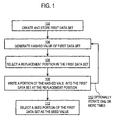
- FIG. 1 is a flow diagram that illustrates a high level overview of one embodiment of a method for generating a seed value
- FIG. 2A is a block diagram that illustrates a system for generating a seed value according to an embodiment
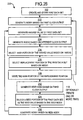
- FIG. 2B is a flow diagram that illustrates a high level overview of another embodiment of a method for generating a seed value
- FIG. 2C is a block diagram that illustrates changes in a large array of data and a hashed value used to generate a seed value, according to an embodiment
- FIG. 3 is a block diagram that illustrates a computer system upon which an embodiment may be implemented.
- a new random seed value is generated based on an array of data that changes its value continually.
- a value in the array of data is hashed.
- Time-based index values which are inherently variable, determine what portion of the hashed data is mixed with what portion of the array of data in an iterative process. As a result, the random seed value is generated.
- a relatively small pool of arbitrary data such as approximately 600 bytes, is created and stored in an array in memory.
- a portion of the data pool, selected based on time, is mixed with hashed data at each of one or more iterations. After several iterations, all of the data pool is mixed.
- the mixed data provides a source for generating a random seed for use in generating a symmetric encryption key.
- FIG. 1 is a flow diagram that illustrates a high level view of one embodiment of a method for generating encryption seed values.
- a first data set is created and stored in a data block or array in memory.
- the data set comprises a set of arbitrary or pseudo-randomly selected data values in a quantity sufficient to provide multiple locations for selecting a seed and small enough to permit rapid manipulation.
- an array having a size in the range of 100 to 1000 bytes is appropriate to generate seeds of about 10 to 500 bytes.
- N represent the number of bytes in the first data set.
- a hash function is applied to produce a hashed value of the first data set.
- a hash function produces a hashed value that falls within a given range.
- the hashed value has a second number of bytes, represented by the symbol H. H may equal N or be different. In an illustrated embodiment, described below, H includes many fewer bytes than N.
- a replacement position in the array is selected. The selected position is at a pseudo-randomly selected location.
- a hash portion of the hashed value is written into the first data set starting at the replacement position. The hash portion is pseudo-randomly selected in either size or location within the H bytes, or both.
- the steps 104-108 optionally are iterated one or more additional times. No additional iteration is required, however.
- a portion of the first data set is selected as the seed value.
- the selected seed value may be used to generate a key for use in a symmetric encryption approach, using any desired technique.
- the number of bytes in the seed value is dictated by the algorithm that generates the key based on the seed value.
- the portion of the first data selected as the seed value, but not the size of the seed value is pseudo-randomly selected based on time. In other embodiments, either or both position and size of the seed value may be selected pseudo-randomly.
- a second seed may be generated by returning to step 104 and repeating steps 104, 106, 108 for another set of one or more iterations and then returning to step 112.
- FIG. 2A is a block diagram that illustrates a system 200 for generating a seed value according to an embodiment.
- the system includes a memory location for an array 202 of a particular size that holds the first data set. For purposes of illustration, it is assumed that the array 202 has a size of 600 bytes.
- the system includes a clock 290 that provides current time, as is standard on many computing devices.
- the system also includes three fields that may be stored in memory or on disk.
- a hash field 204 holds the hashed value computed by applying a hash function to the data in the array 202.
- the hash field is large enough to hold the hashed value.
- a hash function is applied to the data set in array 202 to generate a hashed value with 20 bytes. Therefore, in the illustrated embodiment, the hash field is 20 bytes in size.
- An index 1 field holds a first index used to indicate a position in the array 202; therefore the index 1 field is large enough to hold a value that is less than or equal to the size of array 202. In the illustrated embodiment, the index field is large enough to hold an integer up to 600.
- 600 positions in array 202 are indicated by integers ranging from 0 to 599.
- An index2 field holds a second index used to indicate a position in the hash field 204; therefore the index2 field is large enough to hold a value that is less than or equal to the size of the hash field 204.
- the index2 field is large enough to hold an integer up to 20.
- 20 positions in array 202 are indicated by integers ranging from 0 to 19.
- the system 200 includes one or more processes that generate the seed value based on the contents of the array 202, the fields 204, 206, 208 and the output from clock 290.
- the seed value 280 is expressed in any manner known at the time the system is generated.
- the seed value is a location in memory, shared by one or more processes; and, in other embodiments, the seed value is data in a message sent to another process.
- the size of the seed value is 128 bytes. In other embodiments, larger, smaller, or pseudo-random sized seed values are generated.
- the size of the seed value is smaller than the size of the array 202 by a factor of two or more. In the illustrated embodiment, the size of the seed value (128 bytes) is smaller than the array size (600 bytes) by a factor greater than four.
- the process 220 reads the output from clock 290.
- the process 220 is authorized to write to array 202 and fields 204, 206, 208; thus, process 220 is able to change the values in the array 202 and in the fields 204, 206, 208.
- FIG. 2B is a flow diagram that illustrates a high-level overview process 220 for generating a seed value 280, according to an illustrated embodiment.
- steps in FIG. 2B are depicted in a particular order, in other embodiments, the steps can be performed in a different order or overlapping in time. For example, in some embodiments, steps 222 and 224 overlap step 104.
- an arbitrary set of data is created.
- array 202 is created having arbitrary contents.
- the size of the array 202 is not critical, and a wide range of sizes may be used. In the illustrated embodiment, an array of 600 bytes is used.
- the random data in array 202 is then used within a mixing mechanism, process 220, for random seed generation.
- the terms "created” and "stored” refer to temporary or transient storage of data values in volatile computer memory, such as RAM. Certain values may be stored in non-volatile memory or disk storage as a matter of design choice, but doing so is expected to reduce the security of the system by presenting opportunities for a malicious party to obtain the stored values. Thus, storage of all values in volatile memory is preferred.
- FIG. 2C is a block diagram that illustrates changes in data held in the large array 202 and a hashed value held in field 204 that are used to generate a seed value 280a, according to an embodiment.
- the array 202 holds an initial value 211 made up of 600 bytes as a result of step 102.
- the other elements in FIG. 2C are described below in the context of the steps taken during process 220 depicted in FIG. 2B .
- a value of index1 is generated based on a first output from clock 290. Any method to generate a value for index 1 between 1 and N, the size of the array 202, may be used.
- the number of milliseconds in the current time is input to a modulus operation with a modulus of 600.
- the output of the modulus operation with modulus 600 is a value between 0 and 599.
- the byte positions in the array 202 can be named, consecutively, "0" through “599” in either ascending or descending order.
- the value of index1 is stored in index1 field 206 depicted in FIG. 2A .
- the current time is taken from clock 290 at the time that step 104, described below in more detail, is started.
- a one-way hash mechanism is applied to the data in array 202 to generate hashed data stored in hash field 204.
- the one-way hash mechanism is selected to provide security and to provide a fixed-length hash output. Any hash mechanism may be used.
- the hashed value output by the hash mechanism changes substantially even with the change of a single bit in the input. However, it is possible for several different inputs, otherwise unrelated to each other, to produce the same hashed value.
- Example hash mechanisms that can be used include Secure Hash Algorithm (SHA-1) and Message Digest 5 (MD-5), among others known in the art at the time the system is implemented.
- hashed data stored in hash field 204 is a sequence of 20 bytes. For purposes of illustration, it is assumed that SHA-1 is used and that hash field 204 has a size of 20 bytes.
- FIG. 2C depicts the hashed value 212 stored in hash field 204 after step 104. An arrow pointing from initial value 211 to hashed value 212 in FIG. 2C indicates that the hashed value 212 is derived from the initial value 211 in array 202.
- a value of index2 is generated based on a second output from clock 290. Any method to generate a value for index1 between 1 and H, the size of the hash field 204, may be used.
- the number of milliseconds in the current time by definition between 0 and 999, is input to a modulus operation with a modulus of 10.
- the output of the modulus operation with modulus 10 by definition, is a value between 0 and 9.
- a value of "11" can be added to the output to change the value to the range between 11 and 20, so that index2 is no smaller than 11.
- the byte positions in the hash field 204 can be named, consecutively, "0" through “19” in either ascending or descending order, and a value of "10" can be added so that the value of index 2 is no smaller than 10.
- the value of index2 is stored in index2 field 208 depicted in FIG. 2A .
- the second time for index2 is taken from clock 290 at the time that step 104, described above, returns a hashed value. For purposes of illustration, it is assumed that index2 varies between 11 and 20, and has a current value of 13.
- step 226 the number of bytes indicated by the second index value, index2 in index2 field 208, is selected from the hashed value in hash field 204.
- a 13-byte hash portion 215 of hashed value 212 is selected.
- other methods to select the hash portion may be used.
- the value in index2 can be used to indicate the start of the hash portion.
- an ordinal byte position in the array 202 is defined by the first index value, index1 in index1 field 206. This position is called herein the "replacement position" because it is used to indicate where the data in array 202 is to be replaced by the hash portion.
- a replacement position 213 corresponds to index1.
- step 108 the hash portion is written into the array 202 starting at the replacement position.
- the hash portion 215 is written to the array 202 starting at replacement position 213.
- the portion of the initial value 211 replaced is indicated by portion 216 circumscribed by a dashed line.
- the arrow pointing from hash portion 215 to replaced portion 216 indicates the writing done during step 108. If this operation would require writing beyond the end of the array 202, then the ordinal byte position of the next byte written is reset to the first byte of the array 202 and writing continues at that point.
- the preceding process is repeated one or more times, as indicated by an arrow returning control to step 222 from step 108 in FIG. 2B .
- No specific number of iterations is required.
- the number of iterations theoretically increases the randomness of the seed value that is ultimately generated, and therefore increases the security of a symmetric encryption system that uses the seed value.
- the number of iterations can be changed depending on the desired level of security. Performance decrease with increasing iterations.
- a user can select an appropriate balance between performance and randomness by adjusting the number of iterations.
- the array 202 contains mixed data in place of some or all the bytes of the initial value 211.
- a value of a seed index is generated based on a third output from clock 290. Any method to generate a value for the seed index between 1 and N, the size of the array 202, may be used.
- the number of milliseconds in the third current time is input to a modulus operation with a modulus of 600, as described above for index1.
- seed bytes for seed value 280 are selected from the mixed data in array 202 at an ordinal position indicated by the seed index value.
- the number of seed bytes selected is application-specific and may vary depending on the type of symmetric encryption algorithm that is used. If the number of seed bytes exceeds the number of bytes from the index to the end of the array 202, then the ordinal is reset to one and bytes are read from the beginning of the array 202. In the illustrated embodiment depicted in FIG. 2C , 128 bytes are selected starting at position 218 that corresponds to the seed index.
- step 236 the seed index value is stored as the first index value, in index1 field 206, for use in subsequent generation of additional seed values as indicated by an arrow passing control to step 104 from step 236.
- a seed value useful in generating a symmetric encryption key value is produced efficiently and rapidly.
- the index values used in the process can be calculated from clock or time values that are taken at irregular intervals.
- the data in array 202 changes for each seed value, and rapidly becomes very random as processing progresses. In an implementation, processing performance is found to be good, and the theoretical security of the process is found to be high.
- the number of iterations can be changed depending on the level of security that is desired.
- the amount of processing time required by the system to generate a seed value may be tuned by changing the number of iterations. Thus, the number of iterations may be changed to balance the security and processing time of the method.
- the data in array 202 is difficult for a malicious party to obtain because it is stored in memory at all times during performance of the process.
- FIG. 3 is a block diagram that illustrates a computer system 300 upon which an embodiment of the invention may be implemented.
- Computer system 300 includes a bus 302 or other communication mechanism for communicating information, and a processor 304 coupled with bus 302 for processing information.
- Computer system 300 also includes a main memory 306, such as a random access memory (''RAM”) or other dynamic storage device, coupled to bus 302 for storing information and instructions to be executed by processor 304.
- Main memory 306 also may be used for storing temporary variables or other intermediate information during execution of instructions to be executed by processor 304.
- Computer system 300 further includes a read only memory (“ROM”) 308 or other static storage device coupled to bus 302 for storing static information and instructions for processor 304.
- ROM read only memory
- a storage device 310 such as a magnetic disk or optical disk, is provided and coupled to bus 302 for storing information and instructions.
- Computer system 300 may be coupled via bus 302 to a display 312, such as a cathode ray tube ("CRT"), for displaying information to a computer user.
- a display 312 such as a cathode ray tube ("CRT")
- cursor control 316 is Another type of user input device, such as a mouse, trackball, stylus, or cursor direction keys for communicating direction information and command selections to processor 304 and for controlling cursor movement on display 312.
- This input device typically has two degrees of freedom in two axes, a first axis (e.g., x) and a second axis (e.g., y), that allows the device to specify positions in a plane.
- the invention is related to the use of computer system 300 for generating a seed value for use in symmetric encryption.
- generating a seed value for use in symmetric encryption is provided by computer system 300 in response to processor 304 executing one or more sequences of one or more instructions contained in main memory 306.
- Such instructions may be read into main memory 306 from another computer-readable medium, such as storage device 310.
- Execution of the sequences of instructions contained in main memory 306 causes processor 304 to perform the process steps described herein.
- hard-wired circuitry may be used in place of or in combination with software instructions to implement the invention.
- embodiments of the invention are not limited to any specific combination of hardware circuitry and software.
- Non-volatile media includes, for example, optical or magnetic disks, such as storage device 310.
- Volatile media includes dynamic memory, such as main memory 306.
- Transmission media includes coaxial cables, copper wire and fiber optics, including the wires that comprise bus 302. Transmission media can also take the form of acoustic or light waves, such as those generated during radio wave and infrared data communications.
- Computer-readable media include, for example, a floppy disk, a flexible disk, hard disk, magnetic tape, or any other magnetic medium, a CD-ROM, any other optical medium, punchcards, papertape, any other physical medium with patterns of holes, a RAM, a PROM, and EPROM, a FLASH-EPROM, any other memory chip or cartridge, a carrier wave as described hereinafter, or any other medium from which a computer can read.
- Various forms of computer readable media may be involved in carrying one or more sequences of one or more instructions to processor 304 for execution.
- the instructions may initially be carried on a magnetic disk of a remote computer.
- the remote computer can load the instructions into its dynamic memory and send the instructions over a telephone line using a modem.
- a modem local to computer system 300 can receive the data on the telephone line and use an infrared transmitter to convert the data to an infrared signal.
- An infrared detector can receive the data carried in the infrared signal and appropriate circuitry can place the data on bus 302.
- Bus 302 carries the data to main memory 306, from which processor 304 retrieves and executes the instructions.
- the instructions received by main memory 306 may optionally be stored on storage device 310 either before or after execution by processor 304.
- Computer system 300 also includes a communication interface 318 coupled to bus 302.
- Communication interface 318 provides a two-way data communication coupling to a network link 320 that is connected to a local network 322.
- communication interface 318 may be an integrated services digital network ("ISDN") card or a modem to provide a data communication connection to a corresponding type of telephone line.
- ISDN integrated services digital network
- communication interface 318 may be a local area network (“LAN”) card to provide a data communication connection to a compatible LAN.
- LAN local area network
- Wireless links may also be implemented.
- communication interface 318 sends and receives electrical, electromagnetic or optical signals that carry digital data streams representing various types of information.
- Network link 320 typically provides data communication through one or more networks to other data devices.
- network link 320 may provide a connection through local network 322 to a host computer 324 or to data equipment operated by an Internet Service Provider ("ISP") 326.
- ISP 326 in turn provides data communication services through the worldwide packet data communication network now commonly referred to as the "Internet” 328.
- Internet 328 uses electrical, electromagnetic or optical signals that carry digital data streams.
- the signals through the various networks and the signals on network link 320 and through communication interface 318, which carry the digital data to and from computer system 300, are exemplary forms of carrier waves transporting the information.
- Computer system 300 can send messages and receive data, including program code, through the network(s), network link 320 and communication interface 318.
- a server 330 might transmit a requested code for an application program through Internet 328, ISP 236, local network 322 and communication interface 318.
- one such download application provides for generating a seed value for use in symmetric encryption as described herein.
- the received code may be executed by processor 304 as it is received, and/or stored in storage device 310, or other non-volatile storage for later execution. In this manner, computer system 300 may obtain application code in the form of a carrier wave.
Landscapes
- Engineering & Computer Science (AREA)
- Computer Security & Cryptography (AREA)
- Computer Networks & Wireless Communication (AREA)
- Signal Processing (AREA)
- Storage Device Security (AREA)
Description
- The present invention generally relates to computer-based cryptography. The invention relates more specifically to a system and method for generating encryption seed values.
- The approaches described in this section could be pursued, but are not necessarily approaches that have been previously conceived or pursued. Therefore, unless otherwise indicated herein, the approaches described in this section are not prior art to the claims in this application and are not admitted to be prior art by inclusion in this section.
- Computer-based cryptography techniques are widely used for encrypting and decrypting data communications. Generally, encryption approaches are classified as symmetric or asymmetric. In symmetric cryptography, the same key is used to encrypt and decrypt the data. In asymmetric approaches, different keys are used for encryption and decryption.
- Many symmetric cryptography approaches require a seed value as input for use in generating a unique key value for a particular data set. For example, certain block ciphers such as Data Encryption Standard (DES) use keys that are generated from random seed values. In some such approaches, theoretically perfect security is achieved when the seed value is a truly random value; this is because a truly random value is not predictable and therefore extremely difficult to guess. Further, the mechanism used to generate a truly random value is normally extremely difficult for a malicious party to reverse-engineer based only on possession of example seed values. In practice, however, generating truly random values is difficult, and therefore a variety of pseudo-random seed value generation approaches are also used.
- An example of a known approach for generating a random seed value involves counting the number of process threads that are instantiated by a computer operating system in a specified time. Historically, this and other techniques for generating truly random or pseudo-random seed values have been either extremely time-consuming in terms of computer processing time, or non-random. Both are undesirable.
- For example, in certain client-server business applications where all communications between the client and server are encrypted and decrypted, transaction processing may be perceptibly slower when a slow seed generation technique is used. Customers of these applications and the vendors who provide them would prefer an approach in which seed generation requires minimal time.
- Further, having a non-random seed generator affects security. Several known approaches for generating seed values have bugs or other characteristics such that the seed values are not truly random. Indeed, nearly all seed generation approaches that profess to be truly random are, in fact, pseudo-random, as described in B. Schneier, "Applied Cryptography" (John Wiley & Sons, Inc., 2nd ed. 1996), at pp. 44-46. If a pseudo-random seed value generator creates the same seed value twice, and a malicious party obtains two different ciphertexts that have been encrypted using a key based on the same seed value, in theory this provides the malicious party with valuable information that can be used to determine the key values and, ultimately, retrieve the original plaintext. This is undesirable.
-
US 6,345,100 B1 discloses a robust watermark method and apparatus for digital signals. - Based on the foregoing, there is a clear need for an improved approach for generating seed values for use in symmetric encryption.
- The present invention is illustrated by way of example, and not by way of limitation, in the figures of the accompanying drawings and in which like reference numerals refer to similar elements and in which:
-
FIG. 1 is a flow diagram that illustrates a high level overview of one embodiment of a method for generating a seed value; -
FIG. 2A is a block diagram that illustrates a system for generating a seed value according to an embodiment; -
FIG. 2B is a flow diagram that illustrates a high level overview of another embodiment of a method for generating a seed value; -
FIG. 2C is a block diagram that illustrates changes in a large array of data and a hashed value used to generate a seed value, according to an embodiment; and -
FIG. 3 is a block diagram that illustrates a computer system upon which an embodiment may be implemented. - A method and apparatus for generating a seed value is described. In the following description, for the purposes of explanation, numerous specific details are set forth in order to provide a thorough understanding of the present invention. It will be apparent, however, to one skilled in the art that the present invention may be practiced without these specific details. In other instances, well-known structures and devices are shown in block diagram form in order to avoid unnecessarily obscuring the present invention.
- Embodiments are described herein according to the following outline:
- 1.0 General Overview
- 2.0 Structural and Functional Overview
- 3.0 Structural Elements of Generating a Seed Value
- 4.0 Method of Generating a Seed Value
- 5.0 Implementation Mechanisms-Hardware Overview
- 6.0 Extensions and Alternatives
- The invention is defined in the independent claims. Particular embodiments are set out in the dependent "claims.
- In general, according to the approach herein, a new random seed value is generated based on an array of data that changes its value continually. A value in the array of data is hashed. Time-based index values, which are inherently variable, determine what portion of the hashed data is mixed with what portion of the array of data in an iterative process. As a result, the random seed value is generated. By varying the number of iterations, a balance can be struck between performance (fewer iterations) and security (more iterations).
- In one embodiment, a relatively small pool of arbitrary data, such as approximately 600 bytes, is created and stored in an array in memory. A portion of the data pool, selected based on time, is mixed with hashed data at each of one or more iterations. After several iterations, all of the data pool is mixed. The mixed data provides a source for generating a random seed for use in generating a symmetric encryption key.
-
FIG. 1 is a flow diagram that illustrates a high level view of one embodiment of a method for generating encryption seed values. - In
step 102, a first data set is created and stored in a data block or array in memory. The data set comprises a set of arbitrary or pseudo-randomly selected data values in a quantity sufficient to provide multiple locations for selecting a seed and small enough to permit rapid manipulation. For example, an array having a size in the range of 100 to 1000 bytes is appropriate to generate seeds of about 10 to 500 bytes. Let N represent the number of bytes in the first data set. - In
step 104, a hash function is applied to produce a hashed value of the first data set. A hash function produces a hashed value that falls within a given range. The hashed value has a second number of bytes, represented by the symbol H. H may equal N or be different. In an illustrated embodiment, described below, H includes many fewer bytes than N. Instep 106, a replacement position in the array is selected. The selected position is at a pseudo-randomly selected location. Instep 108, a hash portion of the hashed value is written into the first data set starting at the replacement position. The hash portion is pseudo-randomly selected in either size or location within the H bytes, or both. As indicated byarrow 110, the steps 104-108 optionally are iterated one or more additional times. No additional iteration is required, however. - In
step 112, a portion of the first data set is selected as the seed value. Thereafter, the selected seed value may be used to generate a key for use in a symmetric encryption approach, using any desired technique. Typically, the number of bytes in the seed value is dictated by the algorithm that generates the key based on the seed value. In embodiments illustrated below, the portion of the first data selected as the seed value, but not the size of the seed value, is pseudo-randomly selected based on time. In other embodiments, either or both position and size of the seed value may be selected pseudo-randomly. - A second seed may be generated by returning to step 104 and repeating
steps -
FIG. 2A is a block diagram that illustrates asystem 200 for generating a seed value according to an embodiment. The system includes a memory location for anarray 202 of a particular size that holds the first data set. For purposes of illustration, it is assumed that thearray 202 has a size of 600 bytes. The system includes aclock 290 that provides current time, as is standard on many computing devices. - The system also includes three fields that may be stored in memory or on disk. A
hash field 204 holds the hashed value computed by applying a hash function to the data in thearray 202. The hash field is large enough to hold the hashed value. In an illustrated embodiment, a hash function is applied to the data set inarray 202 to generate a hashed value with 20 bytes. Therefore, in the illustrated embodiment, the hash field is 20 bytes in size. An index 1 field holds a first index used to indicate a position in thearray 202; therefore the index 1 field is large enough to hold a value that is less than or equal to the size ofarray 202. In the illustrated embodiment, the index field is large enough to hold an integer up to 600. In some embodiments, 600 positions inarray 202 are indicated by integers ranging from 0 to 599. An index2 field holds a second index used to indicate a position in thehash field 204; therefore the index2 field is large enough to hold a value that is less than or equal to the size of thehash field 204. In the illustrated embodiment, the index2 field is large enough to hold an integer up to 20. In some embodiments, 20 positions inarray 202 are indicated by integers ranging from 0 to 19. - The
system 200 includes one or more processes that generate the seed value based on the contents of thearray 202, thefields clock 290. For purposes of illustration, it is assumed that oneprocess 220 is involved. Theseed value 280 is expressed in any manner known at the time the system is generated. For example, in some embodiments, the seed value is a location in memory, shared by one or more processes; and, in other embodiments, the seed value is data in a message sent to another process. For purposes of illustration, it is assumed that the size of the seed value is 128 bytes. In other embodiments, larger, smaller, or pseudo-random sized seed values are generated. In preferred embodiments, the size of the seed value is smaller than the size of thearray 202 by a factor of two or more. In the illustrated embodiment, the size of the seed value (128 bytes) is smaller than the array size (600 bytes) by a factor greater than four. - The
process 220 reads the output fromclock 290. Theprocess 220 is authorized to write toarray 202 andfields process 220 is able to change the values in thearray 202 and in thefields -
FIG. 2B is a flow diagram that illustrates a high-level overview process 220 for generating aseed value 280, according to an illustrated embodiment. Although steps inFIG. 2B are depicted in a particular order, in other embodiments, the steps can be performed in a different order or overlapping in time. For example, in some embodiments,steps 222 and 224overlap step 104. - Initially, in
step 102, as described above, an arbitrary set of data is created. For example,array 202 is created having arbitrary contents. The size of thearray 202 is not critical, and a wide range of sizes may be used. In the illustrated embodiment, an array of 600 bytes is used. The random data inarray 202 is then used within a mixing mechanism,process 220, for random seed generation. As used herein, the terms "created" and "stored" refer to temporary or transient storage of data values in volatile computer memory, such as RAM. Certain values may be stored in non-volatile memory or disk storage as a matter of design choice, but doing so is expected to reduce the security of the system by presenting opportunities for a malicious party to obtain the stored values. Thus, storage of all values in volatile memory is preferred. -
FIG. 2C is a block diagram that illustrates changes in data held in thelarge array 202 and a hashed value held infield 204 that are used to generate aseed value 280a, according to an embodiment. Thearray 202 holds aninitial value 211 made up of 600 bytes as a result ofstep 102. The other elements inFIG. 2C are described below in the context of the steps taken duringprocess 220 depicted inFIG. 2B . - In step 222, a value of index1 is generated based on a first output from
clock 290. Any method to generate a value for index 1 between 1 and N, the size of thearray 202, may be used. In the illustrated embodiment, the number of milliseconds in the current time, by definition between 0 and 999, is input to a modulus operation with a modulus of 600. The output of the modulus operation withmodulus 600, by definition, is a value between 0 and 599. One can be added to the output to change the value to the range between 1 and 600. Alternatively, the byte positions in thearray 202 can be named, consecutively, "0" through "599" in either ascending or descending order. The value of index1 is stored inindex1 field 206 depicted inFIG. 2A . In some embodiments, the current time is taken fromclock 290 at the time that step 104, described below in more detail, is started. - In
step 104, a one-way hash mechanism is applied to the data inarray 202 to generate hashed data stored inhash field 204. The one-way hash mechanism is selected to provide security and to provide a fixed-length hash output. Any hash mechanism may be used. The hashed value output by the hash mechanism changes substantially even with the change of a single bit in the input. However, it is possible for several different inputs, otherwise unrelated to each other, to produce the same hashed value. Example hash mechanisms that can be used include Secure Hash Algorithm (SHA-1) and Message Digest 5 (MD-5), among others known in the art at the time the system is implemented. If SHA-1 is used, then hashed data stored inhash field 204 is a sequence of 20 bytes. For purposes of illustration, it is assumed that SHA-1 is used and thathash field 204 has a size of 20 bytes.FIG. 2C depicts the hashedvalue 212 stored inhash field 204 afterstep 104. An arrow pointing frominitial value 211 to hashedvalue 212 inFIG. 2C indicates that the hashedvalue 212 is derived from theinitial value 211 inarray 202. - In
step 224, a value of index2 is generated based on a second output fromclock 290. Any method to generate a value for index1 between 1 and H, the size of thehash field 204, may be used. In the illustrated embodiment, the number of milliseconds in the current time, by definition between 0 and 999, is input to a modulus operation with a modulus of 10. The output of the modulus operation with modulus 10, by definition, is a value between 0 and 9. A value of "11" can be added to the output to change the value to the range between 11 and 20, so that index2 is no smaller than 11. Alternatively, the byte positions in thehash field 204 can be named, consecutively, "0" through "19" in either ascending or descending order, and a value of "10" can be added so that the value of index 2 is no smaller than 10. The value of index2 is stored inindex2 field 208 depicted inFIG. 2A . In some embodiments, the second time for index2 is taken fromclock 290 at the time that step 104, described above, returns a hashed value. For purposes of illustration, it is assumed that index2 varies between 11 and 20, and has a current value of 13. - In
step 226, the number of bytes indicated by the second index value, index2 inindex2 field 208, is selected from the hashed value inhash field 204. In the illustrated embodiment, as depicted inFIG. 2C , a 13-byte hash portion 215 of hashedvalue 212 is selected. In other embodiments, other methods to select the hash portion may be used. For example, the value in index2 can be used to indicate the start of the hash portion. - In
step 228 an ordinal byte position in thearray 202 is defined by the first index value, index1 inindex1 field 206. This position is called herein the "replacement position" because it is used to indicate where the data inarray 202 is to be replaced by the hash portion. In the illustrated embodiment depicted inFIG. 2C , areplacement position 213 corresponds to index1. - In
step 108, the hash portion is written into thearray 202 starting at the replacement position. In the illustrated embodiment depicted inFIG. 2C , thehash portion 215 is written to thearray 202 starting atreplacement position 213. The portion of theinitial value 211 replaced is indicated byportion 216 circumscribed by a dashed line. The arrow pointing fromhash portion 215 to replacedportion 216 indicates the writing done duringstep 108. If this operation would require writing beyond the end of thearray 202, then the ordinal byte position of the next byte written is reset to the first byte of thearray 202 and writing continues at that point. - The preceding process is repeated one or more times, as indicated by an arrow returning control to step 222 from
step 108 inFIG. 2B . No specific number of iterations is required. However, the number of iterations theoretically increases the randomness of the seed value that is ultimately generated, and therefore increases the security of a symmetric encryption system that uses the seed value. Thus, the number of iterations can be changed depending on the desired level of security. Performance decrease with increasing iterations. Thus a user can select an appropriate balance between performance and randomness by adjusting the number of iterations. - After a specified number of iterations of the preceding process, the
array 202 contains mixed data in place of some or all the bytes of theinitial value 211. Instep 232, a value of a seed index is generated based on a third output fromclock 290. Any method to generate a value for the seed index between 1 and N, the size of thearray 202, may be used. In the illustrated embodiment, the number of milliseconds in the third current time is input to a modulus operation with a modulus of 600, as described above for index1. - In
step 134, seed bytes forseed value 280 are selected from the mixed data inarray 202 at an ordinal position indicated by the seed index value. The number of seed bytes selected is application-specific and may vary depending on the type of symmetric encryption algorithm that is used. If the number of seed bytes exceeds the number of bytes from the index to the end of thearray 202, then the ordinal is reset to one and bytes are read from the beginning of thearray 202. In the illustrated embodiment depicted inFIG. 2C , 128 bytes are selected starting atposition 218 that corresponds to the seed index. - In
step 236, the seed index value is stored as the first index value, inindex1 field 206, for use in subsequent generation of additional seed values as indicated by an arrow passing control to step 104 fromstep 236. - Using the foregoing process, a seed value useful in generating a symmetric encryption key value is produced efficiently and rapidly. The index values used in the process can be calculated from clock or time values that are taken at irregular intervals. The data in
array 202 changes for each seed value, and rapidly becomes very random as processing progresses. In an implementation, processing performance is found to be good, and the theoretical security of the process is found to be high. - The number of iterations can be changed depending on the level of security that is desired. The amount of processing time required by the system to generate a seed value may be tuned by changing the number of iterations. Thus, the number of iterations may be changed to balance the security and processing time of the method. The data in
array 202 is difficult for a malicious party to obtain because it is stored in memory at all times during performance of the process. -
FIG. 3 is a block diagram that illustrates acomputer system 300 upon which an embodiment of the invention may be implemented.Computer system 300 includes abus 302 or other communication mechanism for communicating information, and aprocessor 304 coupled withbus 302 for processing information.Computer system 300 also includes amain memory 306, such as a random access memory (''RAM") or other dynamic storage device, coupled tobus 302 for storing information and instructions to be executed byprocessor 304.Main memory 306 also may be used for storing temporary variables or other intermediate information during execution of instructions to be executed byprocessor 304.Computer system 300 further includes a read only memory ("ROM") 308 or other static storage device coupled tobus 302 for storing static information and instructions forprocessor 304. Astorage device 310, such as a magnetic disk or optical disk, is provided and coupled tobus 302 for storing information and instructions. -
Computer system 300 may be coupled viabus 302 to adisplay 312, such as a cathode ray tube ("CRT"), for displaying information to a computer user. Aninput device 314, including alphanumeric and other keys, is coupled tobus 302 for communicating information and command selections toprocessor 304. Another type of user input device iscursor control 316, such as a mouse, trackball, stylus, or cursor direction keys for communicating direction information and command selections toprocessor 304 and for controlling cursor movement ondisplay 312. This input device typically has two degrees of freedom in two axes, a first axis (e.g., x) and a second axis (e.g., y), that allows the device to specify positions in a plane. - The invention is related to the use of
computer system 300 for generating a seed value for use in symmetric encryption. According to one embodiment of the invention, generating a seed value for use in symmetric encryption is provided bycomputer system 300 in response toprocessor 304 executing one or more sequences of one or more instructions contained inmain memory 306. Such instructions may be read intomain memory 306 from another computer-readable medium, such asstorage device 310. Execution of the sequences of instructions contained inmain memory 306 causesprocessor 304 to perform the process steps described herein. In alternative embodiments, hard-wired circuitry may be used in place of or in combination with software instructions to implement the invention. Thus, embodiments of the invention are not limited to any specific combination of hardware circuitry and software. - The term "computer-readable medium" as used herein refers to any medium that participates in providing instructions to
processor 304 for execution. Such a medium may take many forms, including but not limited to, non-volatile media, volatile media, and transmission media. Non-volatile media includes, for example, optical or magnetic disks, such asstorage device 310. Volatile media includes dynamic memory, such asmain memory 306. Transmission media includes coaxial cables, copper wire and fiber optics, including the wires that comprisebus 302. Transmission media can also take the form of acoustic or light waves, such as those generated during radio wave and infrared data communications. - Common forms of computer-readable media include, for example, a floppy disk, a flexible disk, hard disk, magnetic tape, or any other magnetic medium, a CD-ROM, any other optical medium, punchcards, papertape, any other physical medium with patterns of holes, a RAM, a PROM, and EPROM, a FLASH-EPROM, any other memory chip or cartridge, a carrier wave as described hereinafter, or any other medium from which a computer can read.
- Various forms of computer readable media may be involved in carrying one or more sequences of one or more instructions to
processor 304 for execution. For example, the instructions may initially be carried on a magnetic disk of a remote computer. The remote computer can load the instructions into its dynamic memory and send the instructions over a telephone line using a modem. A modem local tocomputer system 300 can receive the data on the telephone line and use an infrared transmitter to convert the data to an infrared signal. An infrared detector can receive the data carried in the infrared signal and appropriate circuitry can place the data onbus 302.Bus 302 carries the data tomain memory 306, from whichprocessor 304 retrieves and executes the instructions. The instructions received bymain memory 306 may optionally be stored onstorage device 310 either before or after execution byprocessor 304. -
Computer system 300 also includes acommunication interface 318 coupled tobus 302.Communication interface 318 provides a two-way data communication coupling to anetwork link 320 that is connected to alocal network 322. For example,communication interface 318 may be an integrated services digital network ("ISDN") card or a modem to provide a data communication connection to a corresponding type of telephone line. As another example,communication interface 318 may be a local area network ("LAN") card to provide a data communication connection to a compatible LAN. Wireless links may also be implemented. In any such implementation,communication interface 318 sends and receives electrical, electromagnetic or optical signals that carry digital data streams representing various types of information. - Network link 320 typically provides data communication through one or more networks to other data devices. For example,
network link 320 may provide a connection throughlocal network 322 to ahost computer 324 or to data equipment operated by an Internet Service Provider ("ISP") 326.ISP 326 in turn provides data communication services through the worldwide packet data communication network now commonly referred to as the "Internet" 328.Local network 322 andInternet 328 both use electrical, electromagnetic or optical signals that carry digital data streams. The signals through the various networks and the signals onnetwork link 320 and throughcommunication interface 318, which carry the digital data to and fromcomputer system 300, are exemplary forms of carrier waves transporting the information. -
Computer system 300 can send messages and receive data, including program code, through the network(s),network link 320 andcommunication interface 318. In the Internet example, aserver 330 might transmit a requested code for an application program throughInternet 328,ISP 236,local network 322 andcommunication interface 318. In accordance with the invention, one such download application provides for generating a seed value for use in symmetric encryption as described herein. - The received code may be executed by
processor 304 as it is received, and/or stored instorage device 310, or other non-volatile storage for later execution. In this manner,computer system 300 may obtain application code in the form of a carrier wave. - In the foregoing specification, the invention has been described with reference to specific embodiments thereof. It will, however, be evident that various modifications and changes may be made thereto without departing from the scope of the invention. The specification and drawings are, accordingly, to be regarded in an illustrative rather than a restrictive sense.
Claims (9)
- A method of generating a seed value for use in symmetric encryption, the method comprising the computer-implemented steps of:a) creating and storing a first data set (102);b) generating a hashed value based on the first data set (104);c) selecting a replacement position within the first data set (106);d) writing at least a portion of the hashed value (212) into the first data set by replacing a subset of the first data set at the replacement position (108); ande) selecting, as the seed value, a seed portion of the first data set (112); The method being further characterized by the step off) basing at least one of the following on a current system clock value:a size of the hashed value; anda starting position for the seed portion.
- A method as recited in Claim 1, said step of selecting the replacement position comprising deriving the replacement position from a first current system clock value.
- A method as recited in Claim 2, further comprising selecting the portion of the hashed value to have a size based on a second current system clock value at a different time (224).
- A method as recited in Claim 1, further comprising, after step d) and before step e), performing the step of repeating steps b) through d), inclusive, for a specified number of iterations.
- A method as recited in Claim 1, said step of selecting the replacement position further comprising selecting the replacement position based on a previously selected seed portion.
- A computer-readable medium carrying one or more sequences of instructions for generating a seed value for use in symmetric encryption, which instructions, when executed by one or more processors, cause the one or more processors to carry out the steps of:a) creating and storing a first data set;b) generating a hashed value based on the first data set;c) selecting a replacement position within the first data set;d) writing at least a portion of the hashed value into the first data set by replacing a subset of the first data set at the replacement position; ande) selecting, as the seed value, a seed portion of the first data set; and further characterized by carrying out the step off) basing at least one of the following on a current system clock value:a size of the hashed value; anda starting position for the seed portion.
- A computer-readable medium as recited in Claim 6, further causing the one or more processors to carry out the method steps of any of claims 2 to 5.
- An apparatus for generating a seed value for use in symmetric encryption comprising:means for creating and storing a first data set (102);means for generating a hashed value based on the first data set (104);means for selecting a replacement position within the first data set (106);means for writing at least a portion of the hashed value (212) into the first data set by replacing a subset of the first data set at the replacement position (108); andmeans for selecting, as the seed value, a seed portion of the first data set (112); and the apparatus further characterized by comprisingmeans for basing at least one of the following on a current system clock value:a size of the hashed value; anda starting position for the seed portion.
- An apparatus as recited in Claim 8, further comprising means for carrying out the method steps of any of claims 2 to 5.
Applications Claiming Priority (5)
| Application Number | Priority Date | Filing Date | Title |
|---|---|---|---|
| US39747402P | 2002-07-19 | 2002-07-19 | |
| US397474P | 2002-07-19 | ||
| US251243 | 2002-09-20 | ||
| US10/251,243 US7209561B1 (en) | 2002-07-19 | 2002-09-20 | System and method for generating encryption seed values |
| PCT/US2003/022261 WO2004010640A1 (en) | 2002-07-19 | 2003-07-15 | System and method for generating encryption seed values |
Publications (2)
| Publication Number | Publication Date |
|---|---|
| EP1540879A1 EP1540879A1 (en) | 2005-06-15 |
| EP1540879B1 true EP1540879B1 (en) | 2013-02-20 |
Family
ID=30772590
Family Applications (1)
| Application Number | Title | Priority Date | Filing Date |
|---|---|---|---|
| EP03765628A Expired - Lifetime EP1540879B1 (en) | 2002-07-19 | 2003-07-15 | System and method for generating encryption seed values |
Country Status (5)
| Country | Link |
|---|---|
| US (1) | US7209561B1 (en) |
| EP (1) | EP1540879B1 (en) |
| JP (1) | JP4619117B2 (en) |
| CA (1) | CA2491702C (en) |
| WO (1) | WO2004010640A1 (en) |
Families Citing this family (130)
| Publication number | Priority date | Publication date | Assignee | Title |
|---|---|---|---|---|
| US20090245516A1 (en) * | 2008-02-26 | 2009-10-01 | Pasupuleti Sureshbabu Ravikiran | Method and system for high entropy encryption using an unpredictable seed based on user regisration time |
| US20140019352A1 (en) | 2011-02-22 | 2014-01-16 | Visa International Service Association | Multi-purpose virtual card transaction apparatuses, methods and systems |
| US8762263B2 (en) | 2005-09-06 | 2014-06-24 | Visa U.S.A. Inc. | System and method for secured account numbers in proximity devices |
| ATE404914T1 (en) * | 2006-02-15 | 2008-08-15 | Jaycrypto Ltd | METHOD AND DEVICE FOR GENERATING INITIAL VALUES FOR A RANDOM NUMBER GENERATOR |
| US8769275B2 (en) * | 2006-10-17 | 2014-07-01 | Verifone, Inc. | Batch settlement transactions system and method |
| US7739169B2 (en) | 2007-06-25 | 2010-06-15 | Visa U.S.A. Inc. | Restricting access to compromised account information |
| US7937324B2 (en) | 2007-09-13 | 2011-05-03 | Visa U.S.A. Inc. | Account permanence |
| US8250127B2 (en) * | 2008-01-07 | 2012-08-21 | Aruba Networks, Inc. | Harvesting entropy from trusted cryptographic sources |
| US8219489B2 (en) | 2008-07-29 | 2012-07-10 | Visa U.S.A. Inc. | Transaction processing using a global unique identifier |
| US20100088268A1 (en) * | 2008-10-02 | 2010-04-08 | International Business Machines Corporation | Encryption of data fragments in a peer-to-peer data backup and archival network |
| US8130949B2 (en) * | 2009-03-20 | 2012-03-06 | Cisco Technology, Inc. | Partially reversible key obfuscation |
| US9715681B2 (en) | 2009-04-28 | 2017-07-25 | Visa International Service Association | Verification of portable consumer devices |
| US9038886B2 (en) | 2009-05-15 | 2015-05-26 | Visa International Service Association | Verification of portable consumer devices |
| US8534564B2 (en) | 2009-05-15 | 2013-09-17 | Ayman Hammad | Integration of verification tokens with mobile communication devices |
| US8893967B2 (en) | 2009-05-15 | 2014-11-25 | Visa International Service Association | Secure Communication of payment information to merchants using a verification token |
| US10846683B2 (en) | 2009-05-15 | 2020-11-24 | Visa International Service Association | Integration of verification tokens with mobile communication devices |
| US9105027B2 (en) | 2009-05-15 | 2015-08-11 | Visa International Service Association | Verification of portable consumer device for secure services |
| US10140598B2 (en) | 2009-05-20 | 2018-11-27 | Visa International Service Association | Device including encrypted data for expiration date and verification value creation |
| US10255591B2 (en) * | 2009-12-18 | 2019-04-09 | Visa International Service Association | Payment channel returning limited use proxy dynamic value |
| CA3045817A1 (en) | 2010-01-12 | 2011-07-21 | Visa International Service Association | Anytime validation for verification tokens |
| US9245267B2 (en) | 2010-03-03 | 2016-01-26 | Visa International Service Association | Portable account number for consumer payment account |
| US9342832B2 (en) | 2010-08-12 | 2016-05-17 | Visa International Service Association | Securing external systems with account token substitution |
| WO2012112822A2 (en) | 2011-02-16 | 2012-08-23 | Visa International Service Association | Snap mobile payment apparatuses, methods and systems |
| US10586227B2 (en) | 2011-02-16 | 2020-03-10 | Visa International Service Association | Snap mobile payment apparatuses, methods and systems |
| EP2678812A4 (en) | 2011-02-22 | 2015-05-20 | Visa Int Service Ass | Universal electronic payment apparatuses, methods and systems |
| EP2681701A4 (en) | 2011-03-04 | 2014-08-20 | Visa Int Service Ass | INTEGRATING PAYMENT FUNCTIONALITY IN SECURE COMPUTER ELEMENTS |
| US9280765B2 (en) | 2011-04-11 | 2016-03-08 | Visa International Service Association | Multiple tokenization for authentication |
| WO2012158621A1 (en) * | 2011-05-13 | 2012-11-22 | Indiana University Reaserch And Technology Coporation | Secure and scalable mapping of human sequencing reads on hybrid clouds |
| US9778912B2 (en) * | 2011-05-27 | 2017-10-03 | Cassy Holdings Llc | Stochastic processing of an information stream by a processing architecture generated by operation of non-deterministic data used to select data processing modules |
| WO2013006725A2 (en) | 2011-07-05 | 2013-01-10 | Visa International Service Association | Electronic wallet checkout platform apparatuses, methods and systems |
| US9355393B2 (en) | 2011-08-18 | 2016-05-31 | Visa International Service Association | Multi-directional wallet connector apparatuses, methods and systems |
| US9582598B2 (en) | 2011-07-05 | 2017-02-28 | Visa International Service Association | Hybrid applications utilizing distributed models and views apparatuses, methods and systems |
| WO2013019567A2 (en) | 2011-07-29 | 2013-02-07 | Visa International Service Association | Passing payment tokens through an hop/sop |
| US12462245B2 (en) | 2011-08-18 | 2025-11-04 | Visa International Service Association | Remote decoupled application persistent state apparatuses, methods and systems |
| US10242358B2 (en) | 2011-08-18 | 2019-03-26 | Visa International Service Association | Remote decoupled application persistent state apparatuses, methods and systems |
| US9710807B2 (en) | 2011-08-18 | 2017-07-18 | Visa International Service Association | Third-party value added wallet features and interfaces apparatuses, methods and systems |
| US10825001B2 (en) | 2011-08-18 | 2020-11-03 | Visa International Service Association | Multi-directional wallet connector apparatuses, methods and systems |
| US10223730B2 (en) | 2011-09-23 | 2019-03-05 | Visa International Service Association | E-wallet store injection search apparatuses, methods and systems |
| US11354723B2 (en) | 2011-09-23 | 2022-06-07 | Visa International Service Association | Smart shopping cart with E-wallet store injection search |
| US10223710B2 (en) | 2013-01-04 | 2019-03-05 | Visa International Service Association | Wearable intelligent vision device apparatuses, methods and systems |
| EP3770839A1 (en) | 2012-01-05 | 2021-01-27 | Visa International Service Association | Data protection with translation |
| WO2013113004A1 (en) | 2012-01-26 | 2013-08-01 | Visa International Service Association | System and method of providing tokenization as a service |
| AU2013214801B2 (en) | 2012-02-02 | 2018-06-21 | Visa International Service Association | Multi-source, multi-dimensional, cross-entity, multimedia database platform apparatuses, methods and systems |
| KR102036348B1 (en) * | 2012-02-27 | 2019-10-24 | 삼성전자 주식회사 | Memory controller and operation method thereof |
| US10282724B2 (en) | 2012-03-06 | 2019-05-07 | Visa International Service Association | Security system incorporating mobile device |
| WO2013166501A1 (en) | 2012-05-04 | 2013-11-07 | Visa International Service Association | System and method for local data conversion |
| US9524501B2 (en) | 2012-06-06 | 2016-12-20 | Visa International Service Association | Method and system for correlating diverse transaction data |
| WO2014008403A1 (en) | 2012-07-03 | 2014-01-09 | Visa International Service Association | Data protection hub |
| US9256871B2 (en) | 2012-07-26 | 2016-02-09 | Visa U.S.A. Inc. | Configurable payment tokens |
| US9665722B2 (en) | 2012-08-10 | 2017-05-30 | Visa International Service Association | Privacy firewall |
| WO2014043278A1 (en) | 2012-09-11 | 2014-03-20 | Visa International Service Association | Cloud-based virtual wallet nfc apparatuses, methods and systems |
| US10176478B2 (en) | 2012-10-23 | 2019-01-08 | Visa International Service Association | Transaction initiation determination system utilizing transaction data elements |
| US9911118B2 (en) | 2012-11-21 | 2018-03-06 | Visa International Service Association | Device pairing via trusted intermediary |
| US10304047B2 (en) | 2012-12-07 | 2019-05-28 | Visa International Service Association | Token generating component |
| US9741051B2 (en) | 2013-01-02 | 2017-08-22 | Visa International Service Association | Tokenization and third-party interaction |
| US10740731B2 (en) | 2013-01-02 | 2020-08-11 | Visa International Service Association | Third party settlement |
| US9201629B2 (en) | 2013-03-14 | 2015-12-01 | International Business Machines Corporation | Instruction for performing a pseudorandom number seed operation |
| US8873750B2 (en) | 2013-03-14 | 2014-10-28 | International Business Machines Corporation | Instruction for performing a pseudorandom number generate operation |
| US11055710B2 (en) | 2013-05-02 | 2021-07-06 | Visa International Service Association | Systems and methods for verifying and processing transactions using virtual currency |
| JP6203532B2 (en) * | 2013-05-13 | 2017-09-27 | 株式会社メガチップス | Semiconductor memory device and data processing system |
| SG10201709411RA (en) | 2013-05-15 | 2018-01-30 | Visa Int Service Ass | Mobile tokenization hub |
| US10878422B2 (en) | 2013-06-17 | 2020-12-29 | Visa International Service Association | System and method using merchant token |
| SG11201600427RA (en) | 2013-07-24 | 2016-02-26 | Visa Int Service Ass | Systems and methods for interoperable network token processing |
| CN115907763A (en) | 2013-07-26 | 2023-04-04 | 维萨国际服务协会 | Provide proof of payment to consumers |
| US10496986B2 (en) | 2013-08-08 | 2019-12-03 | Visa International Service Association | Multi-network tokenization processing |
| CA2920661C (en) | 2013-08-08 | 2019-05-21 | Visa International Service Association | Methods and systems for provisioning mobile devices with payment credentials |
| EP3078156A4 (en) | 2013-10-11 | 2017-07-12 | Visa International Service Association | Network token system |
| US9978094B2 (en) | 2013-10-11 | 2018-05-22 | Visa International Service Association | Tokenization revocation list |
| US10515358B2 (en) | 2013-10-18 | 2019-12-24 | Visa International Service Association | Contextual transaction token methods and systems |
| US10489779B2 (en) | 2013-10-21 | 2019-11-26 | Visa International Service Association | Multi-network token bin routing with defined verification parameters |
| US10366387B2 (en) | 2013-10-29 | 2019-07-30 | Visa International Service Association | Digital wallet system and method |
| US9922322B2 (en) | 2013-12-19 | 2018-03-20 | Visa International Service Association | Cloud-based transactions with magnetic secure transmission |
| BR112016014106A2 (en) | 2013-12-19 | 2017-08-08 | Visa Int Service Ass | METHOD FOR ENHANCED SECURITY OF A COMMUNICATION DEVICE, AND, COMMUNICATION DEVICE |
| US10433128B2 (en) | 2014-01-07 | 2019-10-01 | Visa International Service Association | Methods and systems for provisioning multiple devices |
| US9846878B2 (en) | 2014-01-14 | 2017-12-19 | Visa International Service Association | Payment account identifier system |
| US12469021B2 (en) | 2014-02-18 | 2025-11-11 | Visa International Service Association | Limited-use keys and cryptograms |
| US10026087B2 (en) | 2014-04-08 | 2018-07-17 | Visa International Service Association | Data passed in an interaction |
| US9942043B2 (en) | 2014-04-23 | 2018-04-10 | Visa International Service Association | Token security on a communication device |
| AU2015253182B2 (en) | 2014-05-01 | 2019-02-14 | Visa International Service Association | Data verification using access device |
| WO2015171625A1 (en) | 2014-05-05 | 2015-11-12 | Visa International Service Association | System and method for token domain control |
| EP3146747B1 (en) | 2014-05-21 | 2020-07-01 | Visa International Service Association | Offline authentication |
| US11023890B2 (en) | 2014-06-05 | 2021-06-01 | Visa International Service Association | Identification and verification for provisioning mobile application |
| US9780953B2 (en) | 2014-07-23 | 2017-10-03 | Visa International Service Association | Systems and methods for secure detokenization |
| US10484345B2 (en) | 2014-07-31 | 2019-11-19 | Visa International Service Association | System and method for identity verification across mobile applications |
| US9775029B2 (en) | 2014-08-22 | 2017-09-26 | Visa International Service Association | Embedding cloud-based functionalities in a communication device |
| US10140615B2 (en) | 2014-09-22 | 2018-11-27 | Visa International Service Association | Secure mobile device credential provisioning using risk decision non-overrides |
| AU2015319804B2 (en) | 2014-09-26 | 2019-03-14 | Visa International Service Association | Remote server encrypted data provisioning system and methods |
| US11257074B2 (en) | 2014-09-29 | 2022-02-22 | Visa International Service Association | Transaction risk based token |
| US10015147B2 (en) | 2014-10-22 | 2018-07-03 | Visa International Service Association | Token enrollment system and method |
| GB201419016D0 (en) | 2014-10-24 | 2014-12-10 | Visa Europe Ltd | Transaction Messaging |
| US11620643B2 (en) | 2014-11-26 | 2023-04-04 | Visa International Service Association | Tokenization request via access device |
| WO2016094122A1 (en) | 2014-12-12 | 2016-06-16 | Visa International Service Association | Provisioning platform for machine-to-machine devices |
| US10257185B2 (en) | 2014-12-12 | 2019-04-09 | Visa International Service Association | Automated access data provisioning |
| US10096009B2 (en) | 2015-01-20 | 2018-10-09 | Visa International Service Association | Secure payment processing using authorization request |
| US11250391B2 (en) | 2015-01-30 | 2022-02-15 | Visa International Service Association | Token check offline |
| US10164996B2 (en) | 2015-03-12 | 2018-12-25 | Visa International Service Association | Methods and systems for providing a low value token buffer |
| EP3281164B1 (en) | 2015-04-10 | 2019-06-05 | Visa International Service Association | Browser integration with cryptogram |
| US9998978B2 (en) | 2015-04-16 | 2018-06-12 | Visa International Service Association | Systems and methods for processing dormant virtual access devices |
| US10552834B2 (en) | 2015-04-30 | 2020-02-04 | Visa International Service Association | Tokenization capable authentication framework |
| CN114529300B (en) | 2015-10-15 | 2025-09-23 | 维萨国际服务协会 | Instant Token Issuance System |
| CN108370319B (en) | 2015-12-04 | 2021-08-17 | 维萨国际服务协会 | Method and computer for token verification |
| AU2017206119B2 (en) | 2016-01-07 | 2020-10-29 | Visa International Service Association | Systems and methods for device push provisioning |
| CN108604989B (en) | 2016-02-01 | 2022-07-22 | 维萨国际服务协会 | System and method for code display and use |
| US11501288B2 (en) | 2016-02-09 | 2022-11-15 | Visa International Service Association | Resource provider account token provisioning and processing |
| US10313321B2 (en) | 2016-04-07 | 2019-06-04 | Visa International Service Association | Tokenization of co-network accounts |
| AU2016403734B2 (en) | 2016-04-19 | 2022-11-17 | Visa International Service Association | Systems and methods for performing push transactions |
| US11250424B2 (en) | 2016-05-19 | 2022-02-15 | Visa International Service Association | Systems and methods for creating subtokens using primary tokens |
| EP3466017B1 (en) | 2016-06-03 | 2021-05-19 | Visa International Service Association | Subtoken management system for connected devices |
| US11068899B2 (en) | 2016-06-17 | 2021-07-20 | Visa International Service Association | Token aggregation for multi-party transactions |
| SG11201808737YA (en) | 2016-06-24 | 2018-11-29 | Visa Int Service Ass | Unique token authentication cryptogram |
| EP3482337B1 (en) | 2016-07-11 | 2021-09-29 | Visa International Service Association | Encryption key exchange process using access device |
| CA3026224A1 (en) | 2016-07-19 | 2018-01-25 | Visa International Service Association | Method of distributing tokens and managing token relationships |
| US10509779B2 (en) | 2016-09-14 | 2019-12-17 | Visa International Service Association | Self-cleaning token vault |
| CN117009946A (en) | 2016-11-28 | 2023-11-07 | 维萨国际服务协会 | Access identifier supplied to application program |
| US10915899B2 (en) | 2017-03-17 | 2021-02-09 | Visa International Service Association | Replacing token on a multi-token user device |
| US10902418B2 (en) | 2017-05-02 | 2021-01-26 | Visa International Service Association | System and method using interaction token |
| US11494765B2 (en) | 2017-05-11 | 2022-11-08 | Visa International Service Association | Secure remote transaction system using mobile devices |
| US10491389B2 (en) | 2017-07-14 | 2019-11-26 | Visa International Service Association | Token provisioning utilizing a secure authentication system |
| SG11202008451RA (en) | 2018-03-07 | 2020-09-29 | Visa Int Service Ass | Secure remote token release with online authentication |
| US11256789B2 (en) | 2018-06-18 | 2022-02-22 | Visa International Service Association | Recurring token transactions |
| EP3811318B1 (en) | 2018-06-22 | 2025-12-31 | Visa International Service Association | FRAME FOR SECURE REMOTE TRANSACTION USING A DYNAMIC SECURE CASH TICKET ELEMENT |
| EP3841498B1 (en) | 2018-08-22 | 2024-05-01 | Visa International Service Association | Method and system for token provisioning and processing |
| EP3864601B1 (en) | 2018-10-08 | 2024-10-02 | Visa International Service Association | Techniques for token proximity transactions |
| EP3881258B1 (en) | 2018-11-14 | 2024-09-04 | Visa International Service Association | Cloud token provisioning of multiple tokens |
| SG11202108626QA (en) | 2019-05-17 | 2021-09-29 | Visa Int Service Ass | Virtual access credential interaction system and method |
| US11451390B2 (en) * | 2019-12-27 | 2022-09-20 | Munro Design & Technologies, Llc | Methods for minimizing an error condition with separately generated secret keys based upon one or more shared characteristics and devices thereof |
| US12160509B2 (en) * | 2020-02-28 | 2024-12-03 | 7Tunnels Inc. | Cryptographic systems and methods for maintenance of pools of random numbers |
| US12141800B2 (en) | 2021-02-12 | 2024-11-12 | Visa International Service Association | Interaction account tokenization system and method |
| US12536122B2 (en) | 2022-05-11 | 2026-01-27 | Kidde Fire Protection, Llc | Securing network access using dynamically generated baud-rates |
| US12452044B2 (en) | 2022-05-17 | 2025-10-21 | Kidde Fire Protection, Llc | Securing network communications using dynamically and locally generated secret keys |
Family Cites Families (8)
| Publication number | Priority date | Publication date | Assignee | Title |
|---|---|---|---|---|
| US5201000A (en) | 1991-09-27 | 1993-04-06 | International Business Machines Corporation | Method for generating public and private key pairs without using a passphrase |
| US5381481A (en) * | 1993-08-04 | 1995-01-10 | Scientific-Atlanta, Inc. | Method and apparatus for uniquely encrypting a plurality of services at a transmission site |
| US5454039A (en) * | 1993-12-06 | 1995-09-26 | International Business Machines Corporation | Software-efficient pseudorandom function and the use thereof for encryption |
| US6345100B1 (en) * | 1998-10-14 | 2002-02-05 | Liquid Audio, Inc. | Robust watermark method and apparatus for digital signals |
| US6823455B1 (en) * | 1999-04-08 | 2004-11-23 | Intel Corporation | Method for robust watermarking of content |
| US6253223B1 (en) * | 1999-06-08 | 2001-06-26 | General Instrument Corporation | Robust random number generator |
| CA2293066A1 (en) * | 1999-12-20 | 2001-06-20 | Nortel Networks Corporation | Method and apparatus for cross-connecting data streams with efficient memory utilization and transparent protocol conversion |
| US6851055B1 (en) * | 2000-09-30 | 2005-02-01 | Keen Personal Technologies, Inc. | Digital video recorder for encrypting/decrypting video programs in segments to facilitate trick play features |
-
2002
- 2002-09-20 US US10/251,243 patent/US7209561B1/en not_active Expired - Lifetime
-
2003
- 2003-07-15 WO PCT/US2003/022261 patent/WO2004010640A1/en not_active Ceased
- 2003-07-15 CA CA2491702A patent/CA2491702C/en not_active Expired - Fee Related
- 2003-07-15 JP JP2004523472A patent/JP4619117B2/en not_active Expired - Fee Related
- 2003-07-15 EP EP03765628A patent/EP1540879B1/en not_active Expired - Lifetime
Also Published As
| Publication number | Publication date |
|---|---|
| WO2004010640A1 (en) | 2004-01-29 |
| CA2491702A1 (en) | 2004-01-29 |
| US7209561B1 (en) | 2007-04-24 |
| JP4619117B2 (en) | 2011-01-26 |
| EP1540879A1 (en) | 2005-06-15 |
| CA2491702C (en) | 2013-02-12 |
| JP2005534235A (en) | 2005-11-10 |
Similar Documents
| Publication | Publication Date | Title |
|---|---|---|
| EP1540879B1 (en) | System and method for generating encryption seed values | |
| US7945049B2 (en) | Stream cipher using multiplication over a finite field of even characteristic | |
| US8374351B2 (en) | Encryption device, program, and method | |
| US6185304B1 (en) | Method and apparatus for a symmetric block cipher using multiple stages | |
| US5675652A (en) | Computer readable device implementing a software-efficient pseudorandom function encryption | |
| US6078665A (en) | Electronic encryption device and method | |
| US5778069A (en) | Non-biased pseudo random number generator | |
| US6185679B1 (en) | Method and apparatus for a symmetric block cipher using multiple stages with type-1 and type-3 feistel networks | |
| KR100994841B1 (en) | Stream cipher generation method and recording medium using multiple keys | |
| US5696826A (en) | Method and apparatus for encrypting and decrypting information using a digital chaos signal | |
| US20020048364A1 (en) | Parallel block encryption method and modes for data confidentiality and integrity protection | |
| CN112422278A (en) | Byte-oriented random multi-table replacement encryption and decryption method | |
| US20040247116A1 (en) | Method of generating a stream cipher using multiple keys | |
| US7505586B2 (en) | Method for computer-based encryption and decryption of data | |
| EP1655883B1 (en) | Information-processing apparatus, information-processing method, and recording medium | |
| CN115459906B (en) | A method for parallelizing and resisting dynamic degradation of a key stream generator | |
| CN120639517B (en) | A data transmission method based on cloud native architecture | |
| Zhang et al. | A Novel High-Performance Random Number Generation Algorithm | |
| CN101394274B (en) | Dynamic stream ciphering and deciphering method based on broad sense information field | |
| WO2006085283A1 (en) | High speed encryption and decryption | |
| Weeks | Chaos, Cryptology, and the Coupled Map Lattice A Senior Research Project in Mathematics |
Legal Events
| Date | Code | Title | Description |
|---|---|---|---|
| PUAI | Public reference made under article 153(3) epc to a published international application that has entered the european phase |
Free format text: ORIGINAL CODE: 0009012 |
|
| 17P | Request for examination filed |
Effective date: 20050118 |
|
| AK | Designated contracting states |
Kind code of ref document: A1 Designated state(s): AT BE BG CH CY CZ DE DK EE ES FI FR GB GR HU IE IT LI LU MC NL PT RO SE SI SK TR |
|
| RBV | Designated contracting states (corrected) |
Designated state(s): CH DE FR GB LI NL |
|
| 17Q | First examination report despatched |
Effective date: 20080930 |
|
| GRAP | Despatch of communication of intention to grant a patent |
Free format text: ORIGINAL CODE: EPIDOSNIGR1 |
|
| GRAS | Grant fee paid |
Free format text: ORIGINAL CODE: EPIDOSNIGR3 |
|
| GRAA | (expected) grant |
Free format text: ORIGINAL CODE: 0009210 |
|
| AK | Designated contracting states |
Kind code of ref document: B1 Designated state(s): CH DE FR GB LI NL |
|
| REG | Reference to a national code |
Ref country code: GB Ref legal event code: FG4D |
|
| REG | Reference to a national code |
Ref country code: CH Ref legal event code: EP |
|
| REG | Reference to a national code |
Ref country code: DE Ref legal event code: R096 Ref document number: 60343321 Country of ref document: DE Effective date: 20130418 |
|
| REG | Reference to a national code |
Ref country code: NL Ref legal event code: VDEP Effective date: 20130220 |
|
| PG25 | Lapsed in a contracting state [announced via postgrant information from national office to epo] |
Ref country code: NL Free format text: LAPSE BECAUSE OF FAILURE TO SUBMIT A TRANSLATION OF THE DESCRIPTION OR TO PAY THE FEE WITHIN THE PRESCRIBED TIME-LIMIT Effective date: 20130220 |
|
| PGFP | Annual fee paid to national office [announced via postgrant information from national office to epo] |
Ref country code: DE Payment date: 20130729 Year of fee payment: 11 |
|
| PLBE | No opposition filed within time limit |
Free format text: ORIGINAL CODE: 0009261 |
|
| STAA | Information on the status of an ep patent application or granted ep patent |
Free format text: STATUS: NO OPPOSITION FILED WITHIN TIME LIMIT |
|
| 26N | No opposition filed |
Effective date: 20131121 |
|
| REG | Reference to a national code |
Ref country code: CH Ref legal event code: PL |
|
| REG | Reference to a national code |
Ref country code: DE Ref legal event code: R097 Ref document number: 60343321 Country of ref document: DE Effective date: 20131121 |
|
| PG25 | Lapsed in a contracting state [announced via postgrant information from national office to epo] |
Ref country code: LI Free format text: LAPSE BECAUSE OF NON-PAYMENT OF DUE FEES Effective date: 20130731 Ref country code: CH Free format text: LAPSE BECAUSE OF NON-PAYMENT OF DUE FEES Effective date: 20130731 |
|
| REG | Reference to a national code |
Ref country code: DE Ref legal event code: R119 Ref document number: 60343321 Country of ref document: DE |
|
| PG25 | Lapsed in a contracting state [announced via postgrant information from national office to epo] |
Ref country code: DE Free format text: LAPSE BECAUSE OF NON-PAYMENT OF DUE FEES Effective date: 20150203 |
|
| REG | Reference to a national code |
Ref country code: DE Ref legal event code: R119 Ref document number: 60343321 Country of ref document: DE Effective date: 20150203 |
|
| REG | Reference to a national code |
Ref country code: FR Ref legal event code: PLFP Year of fee payment: 14 |
|
| REG | Reference to a national code |
Ref country code: FR Ref legal event code: PLFP Year of fee payment: 15 |
|
| REG | Reference to a national code |
Ref country code: FR Ref legal event code: PLFP Year of fee payment: 16 |
|
| PGFP | Annual fee paid to national office [announced via postgrant information from national office to epo] |
Ref country code: FR Payment date: 20200623 Year of fee payment: 18 |
|
| PGFP | Annual fee paid to national office [announced via postgrant information from national office to epo] |
Ref country code: GB Payment date: 20200624 Year of fee payment: 18 |
|
| GBPC | Gb: european patent ceased through non-payment of renewal fee |
Effective date: 20210715 |
|
| PG25 | Lapsed in a contracting state [announced via postgrant information from national office to epo] |
Ref country code: GB Free format text: LAPSE BECAUSE OF NON-PAYMENT OF DUE FEES Effective date: 20210715 |
|
| PG25 | Lapsed in a contracting state [announced via postgrant information from national office to epo] |
Ref country code: FR Free format text: LAPSE BECAUSE OF NON-PAYMENT OF DUE FEES Effective date: 20210731 |