EP1540474B1 - Zugriffseinschränkung auf objekte für anwendungsserver in verteilten rechnersystemen - Google Patents
Zugriffseinschränkung auf objekte für anwendungsserver in verteilten rechnersystemen Download PDFInfo
- Publication number
- EP1540474B1 EP1540474B1 EP03750943A EP03750943A EP1540474B1 EP 1540474 B1 EP1540474 B1 EP 1540474B1 EP 03750943 A EP03750943 A EP 03750943A EP 03750943 A EP03750943 A EP 03750943A EP 1540474 B1 EP1540474 B1 EP 1540474B1
- Authority
- EP
- European Patent Office
- Prior art keywords
- security
- objects
- administrative
- application server
- user
- Prior art date
- Legal status (The legal status is an assumption and is not a legal conclusion. Google has not performed a legal analysis and makes no representation as to the accuracy of the status listed.)
- Expired - Lifetime
Links
Images
Classifications
-
- G—PHYSICS
- G06—COMPUTING OR CALCULATING; COUNTING
- G06F—ELECTRIC DIGITAL DATA PROCESSING
- G06F9/00—Arrangements for program control, e.g. control units
- G06F9/06—Arrangements for program control, e.g. control units using stored programs, i.e. using an internal store of processing equipment to receive or retain programs
- G06F9/46—Multiprogramming arrangements
-
- G—PHYSICS
- G06—COMPUTING OR CALCULATING; COUNTING
- G06F—ELECTRIC DIGITAL DATA PROCESSING
- G06F21/00—Security arrangements for protecting computers, components thereof, programs or data against unauthorised activity
- G06F21/30—Authentication, i.e. establishing the identity or authorisation of security principals
- G06F21/31—User authentication
Definitions
- This invention relates to the fields of application server security management systems and tools.
- Application servers are server programs executed by a computer or computing platform in a distributed network such as an intranet or the Internet, and which provide business logic for an application or service.
- Companies such as International Business Machines (IBM®), Microsoft® Corporation and Sun Microsystems provide software suites for developing, managing, deploying, and running application servers on a wide variety of hardware platforms including, but not limited to, personal computers, network servers, mainframes, and workstations, targeted for a wide variety of operating systems including, but not limited to, UNIX®, Linux, IBM's AIX®, OS/2®, and OS/390®, Microsoft's Windows®, and Sun's Solaris.
- IBM® International Business Machines
- Microsoft® Corporation Microsoft® Corporation
- Sun Microsystems provide software suites for developing, managing, deploying, and running application servers on a wide variety of hardware platforms including, but not limited to, personal computers, network servers, mainframes, and workstations, targeted for a wide variety of operating systems including, but not limited to, UNIX®, Linux, IBM's
- IBM provides a well-known and widely-used application server suite known as WebSphere® (IBM, AIX, OS/2 and OS/390 are registered trademarks of International Business Machines Corporation; Microsoft and Windows are trademarks of Microsoft Corporation in the United States, other countries, or both.; UNIX is a registered trademark of The Open Group in the United States and other countries.)
- Application servers may be developed in high level languages (“HLLs”) such as "C”, portable languages such as Sun Microsystem's Java TM , and combinations thereof. Portions of application logic may be embodied in Enterprise Java Beans (“EJB”), dynamic link libraries (“DLL”), program objects, applets, and servelets, depending upon the design methodology(ies) and language(s) used to develop the application server program. (Java and all Java-based trademarks and logos are trademarks of Sun Microsystems, Inc. in the United States, other countries, or both.)
- Application servers typically cooperate with client computers and processes, such as web browsers and remote terminals, to interface to a user in order to perform a needed function or service.
- client computers and processes include, but are not limited to, hyper text transfer protocol ("HTTP”), transmission control protocol/Internet protocol (“TCP/IP”), secure sockets layer (“SSL”), and file transfer protocol (“FTP”).
- HTTP hyper text transfer protocol
- TCP/IP transmission control protocol/Internet protocol
- SSL secure sockets layer
- FTP file transfer protocol
- Client processes for cooperation with an application server may include, but are not limited to, stand-alone (e.g. browser independent) client programs, hypertext markup language (“HTML”) resources, browser extensions and plug-ins, extensible markup language (“XML”) resources, graphics and multimedia objects (e.g. TIFF, GIF, JPEG, AVI, etc.), Java server pages (“JSP”), active server pages (“ASP), personal home pages (“PHP”), Java modules, and Java Beans.
- JSP hypertext markup language
- Application servers may interact with other system resources such as file systems and databases to read, store, create and copy data, as well.
- system resources may be directly managed by an application server, such as a local cache, or may be accessible through and manage by other servers.
- Application servers also often cooperate with security authorization and authentication servers to determine whether a user is who the user claims to be, and whether the user has permission or privileges to perform the actions requested, access the resources or data needed, etc.
- Protocols for communications between application servers and such authorization and authentication processes, as well as with other system resources may include any of the protocols previously listed for client communications, and often include other protocols defined by proprietary specifications as well as “open” standards such as Java Version 2 Enterprise Edition (“J2EE”) interface and communications models and Common Object Broker Request Architecture (“CORBA”).
- J2EE Java Version 2 Enterprise Edition
- CORBA Common Object Broker Request Architecture
- CORBA CORBA-based Object Request Broker
- IBM's SOM an DSOM architectures Netscape Corporation's Open Network Environment (“ONE"), Sun Microsystem's RMI, and Microsoft's COM and DCOM architectures.
- ONE Netscape Corporation's Open Network Environment
- Sun Microsystem's RMI Sun Microsystem's RMI
- Microsoft's COM and DCOM architectures allow client application program objects to "discover" the existence of other program objects which may be useful or needed for completion of a task or service.
- An Object Request Broker (“ORB”) is a component of such an architecture to which clients can send requests for particular functions. The ORB then forwards these requests to appropriate servers of which the ORB is aware and which can handle the function needed by the client. The client and server(s) then interact to determine appropriate interfaces to use so that the client may use the program objects provided by the server.
- IOR Interoperable Object References
- Application management includes control and monitoring of an application from its installation and configuration, through its useful lifecycle including collection of metrics and tuning to maximize efficiency and responsiveness.
- the model adopted by application management systems is often a manager-agent model.
- the application is responsible for providing certain information to the management system, responding to requests for information actions from an agent of the management system, and communicating with an management system agent.
- the management system agent typically executes on the same hardware platform as the application which is being managed.
- the management system communicates to one or more agents which are themselves in touch with the applications being managed.
- the management system may communicate with its agents using a proprietary protocol, or may use an "open" protocol such as Simple Network Management Protocol ("SNMP") or Java Management Extensions (“JMX").
- SNMP Simple Network Management Protocol
- JMX Java Management Extensions
- Some example management systems available on the market are Tivoli's Management Environment and IBM's WebSphere administration application.
- MBeans are objects which are accessible via the standard JMX interfaces, and which provide developers with abilities to expose application-specific management interfaces.
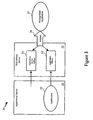
- the JMX MBeanServer (33) runs the Application Server MBean (34), which is responsible for exposing interfaces of the application server (31) to the management application (37).
- the JMX MBean Server (33) also runs the Application MBean (35), which exposes the application-specific management interfaces for the application (32) to the management application (37).
- the MBeanServer (33) also provides any adapters (36) necessary to bridge one or more management systems to the application so that the administration facilities of the application managers can be used in conjunction with the application.
- an administrative server is the central point of contact where all administrative requests are directed. Securing this administrative server only required configuring application servers as secure clients, but the applications servers did not have to be configured as secure servers. As no user objects are allowed on the administrative server, and no administrative objects were allowed on the application servers, this approach met the needs in the art for some time.
- object level security (instead of server level security) is needed but not supported by legacy architectures.
- all application processes include administrative resources which need to be protected, even though user resources may or may not need to be protected.
- administrative object security would be disabled if user object security is disabled. For user objects and resources which really do not need to be secure, this enforces a performance penalty unnecessarily and undesirably by requiring authentication and authorization processes to be applied to these user objects. If the system is configured to disable security which by default includes disabling administrative resource security, the system is unnecessarily and undesirably exposed to security breach via the administrative functions.
- IBM WebSphere v4.0 Advanced Edition Handbook (XP002278391) discloses an administrative model having and administrative server which is responsible for runtime management, security, transaction coordination, and workload management.
- OMG Object Management Group
- Leyman F "Web Services Flow Language (WSFL 1.0)" (XP002278393) discloses a flow language for describing Web Services compositions.
- Benoit Foucher "[OB-Users] Using IORInterceptor conditionally" (XP003378395) discloses how to implement a custom security mechanism using a portable IOR interceptor to add a tagged component to those IORs that require security.
- the invention provides a method in a distributed computing domain comprising: distributing administrative objects and user objects to one or more application servers; defining a global security flag for domain level security of administrative objects; associating one or more application server security flags with interfaces to said distributed user objects; and performing one or more security operations by an application server in cooperation with a client process in one of three modes, in which first mode user objects and administrative objects are protected if said global security flag and said associated application server security flags are enabled, in said second mode user objects are used without security operations but administrative objects are protected wherein said global security flag is enabled and said associated application server flag is disabled, and in said third mode user objects and administrative objects are used without security operations wherein said global security flag is disabled.
- a system and method are preferably provided which allow for object-level security configuration for application servers which contain user objects and administrative objects.
- Processes and mechanisms are preferably provided which allow security for administrative objects and naming objects to be separately and declaratively enabled and disabled apart from security enablement for user object security on an application server-by-server basis within a security domain. This preferably provides the ability to disable user security while maintaining administrative security in the same process, especially within an application environment based upon the IBM WebSphere Application Server product.
- Customers may preferably selectively disable user object security on some application servers within a security domain, while maintaining security of user objects on other applications servers, and while preferably having global administrative object security throughout the security domain. Administrative functions such as administrative security, internal system management, etc., can therefore preferably be managed separately from user security.
- the client process(es) are preferably unaware of whether an application object is a user object or an administrative object, but is preferably only aware of each object's requirement to perform security functions or not. Additionally, the present invention preferably allows for declarative definition of which objects are to be protected by class and package.
- a CORBA architecture is preferably adopted in which the ORB exports IOR's to the name server for shared objects.
- IOR's for objects which are to be secured such as administrative objects are preferably provided with tagged components which indicate security details for use of that service.
- IOR's for insecure objects such as user objects are preferably exported without tagged components.
- An IOR interceptor is preferably invoked when any given object is exported.
- the IOR interceptor preferably loads a descriptor file listing all of the administrative objects or administrative packages which need to be protected. This preferably allows specification of a single object, list of individual objects, or package of objects to be protected when global security is enabled within the security domain.
- IOR's are preferably exported having security tagged components. Later, when a client picks up a tagged IOR, the client is preferably made aware of the security requirements to invoke a request for that service. If no tags are provided in the IOR, then the service can preferably be requested without security measures. Preferably for these insecure objects, the client will not send any user security information to the application server, nor will it protect the transport to the application server, which results in a performance improvement for those user objects and avoids unnecessarily protecting user objects.
- flags are preferably utilized to configure object-level security in a domain: (a) a global (domain-wide administrative security) security flag, and (b) one or more application server security flags. While the former is preferably maintained at the domain level, the latter are preferably specific to each application sever.
- the global security flag preferably determines whether or not all administrative objects are secured throughout the domain. These administrative objects are preferably also listed in the aforementioned descriptor file.
- Each application server security flag preferably enables or disables security for user objects on the application server to which it pertains only, but does not affect security of the administrative objects on that server.
- security operations are performed by providing separate security operations for administrative objects and user objects.
- application server security flags with administrative object interfaces by selecting an action from the group of exporting a CORBA IOR with tagged components for user objects on application servers where application server user object security is enabled, and providing an object type in an UDDI registry for user objects on application servers where application server user object security is enabled.
- an application server eg a WebSphere application server
- a WebSphere application server e.g. a WebSphere application server
- a client process is provided as an Enterprise Java Bean.
- Preferably user objects are provided as Enterprise Java Beans.
- MBeans Preferably administrative objects are provided as MBeans.
- Preferably security operations selected from the list of authentication, authorization and transport protection are performed.
- a security protocol selected from the group of Simple Object Access Protocol and Inter-ORB Protocol is employed.
- a service description model selected from the group of IDL and Web Services Definition Language with Web Service Endpoint Language and Interface Definition Language is employed.
- the invention provides a computer program for use in a distributed computing domain, said computer program comprising program code means adapted to perform the following steps when the program is run on a computer: distributing administrative objects and user objects to one or more application servers; defining a global security flag for domain level security of administrative objects; associating one or more application server security flags with interfaces to said distributed administrative objects; and performing one or more security operations by an application server in cooperation with a client process in one of three modes, in which first mode user objects and administrative objects are protected if said global security flag and said associated application server security flags are enabled, in said second mode user objects are used without security operations but administrative objects are protected wherein said global security flag is enabled and said associated application server flag is disabled, and in said third mode user objects and administrative objects are used without security operations wherein said global security flag is disabled.
- an object-level security system in a distributed computing domain comprising: one or more administrative objects and one or more user objects distributed among one or more application servers; a global security flag defining security of said administrative objects within a networked computing domain level; one or more application server security flags associated with interfaces to said distributed administrative objects; and one or more security operations performable by an application server in cooperation with a client process in one of three modes, in which first mode user objects and administrative objects are protected if said global security flag and said associated application server security flags are enabled, in said second mode user objects are used without security operations but administrative objects are protected wherein said global security flag is enabled and said associated application server flag is disabled, and in said third mode user objects and administrative objects are used without security operations wherein said global security flag is disabled.
- the security operation comprises separate security operations for administrative objects and user objects.
- the application server security flags associated with administrative object interfaces comprises object type indicators selected from the group of a CORBA IOR with tagged components for user objects on application servers where application server user object security is enabled, and an object type in an UDDI registry for user objects on application servers where application server user object security is enabled.
- the invention is preferably realized as a feature, extension, or improvement of the enterprise server software already found present on well-known computing platforms such as personal computers, web servers, and web browsers.
- These common computing platforms can include personal computers, work stations, and mainframes, and conceivably suitably capable portable computing platforms, such as personal digital assistants (“PDA”), web-enabled wireless telephones, and other types of personal information management (“PIM”) devices.
- PDA personal digital assistants
- PIM personal information management
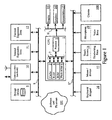
- FIG. 1 a generalized architecture is presented including a central processing unit (1) (“CPU”), which is typically comprised of a microprocessor (2) associated with random access memory (“RAM”) (4) and read-only memory (“ROM”) (5). Often, the CPU (1) is also provided with cache memory (3) and programmable FlashROM (6).
- the interface (7) between the microprocessor (2) and the various types of CPU memory is often referred to as a "local bus", but also may be a more generic or industry standard bus.
- HDD hard-disk drives
- floppy disk drives compact disc drives
- CD-R, CD-RW, DVD, DVD-R, etc. proprietary disk and tape drives
- proprietary disk and tape drives e.g., Iomega Zip and Jaz, Addonics SuperDisk, etc.
- a personal computer is often provided with a high speed serial port (RS-232, RS-422, etc.), an enhanced parallel port (“EPP”), and one or more universal serial bus (“USB”) ports.
- the computing platform may also be provided with a local area network (“LAN”) interface, such as an Ethernet card, and other high-speed interfaces such as the High Performance Serial Bus IEEE-1394.
- LAN local area network
- Computing platforms such as wireless telephones and wireless networked PDA's may also be provided with a radio frequency (“RF”) interface with antenna, as well.
- RF radio frequency
- the computing platform may be provided with an infrared data arrangement (IrDA) interface, too.
- IrDA infrared data arrangement
- Computing platforms are often equipped with one or more internal expansion slots (11), such as Industry Standard Architecture (ISA), Enhanced Industry Standard Architecture (EISA), Peripheral Component Interconnect (PCI), or proprietary interface slots for the addition of other hardware, such as sound cards, memory boards, and graphics accelerators.
- ISA Industry Standard Architecture
- EISA Enhanced Industry Standard Architecture
- PCI Peripheral Component Interconnect
- proprietary interface slots for the addition of other hardware, such as sound cards, memory boards, and graphics accelerators.
- many units such as laptop computers and PDA's, are provided with one or more external expansion slots (12) allowing the user the ability to easily install and remove hardware expansion devices, such as PCMCIA cards, SmartMedia cards, and various proprietary modules such as removable hard drives, CD drives, and floppy drives.
- hardware expansion devices such as PCMCIA cards, SmartMedia cards, and various proprietary modules such as removable hard drives, CD drives, and floppy drives.
- the storage drives (9), communication interfaces (10), internal expansion slots (11) and external expansion slots (12) are interconnected with the CPU (1) via a standard or industry open bus architecture (8), such as ISA, EISA, or PCI.
- bus (8) may be of a proprietary design.
- a computing platform is usually provided with one or more user input devices such as a keyboard or a keypad (16), and mouse or pointer device (17), and/or a touch-screen display (18).
- user input devices such as a keyboard or a keypad (16), and mouse or pointer device (17), and/or a touch-screen display (18).
- a full size keyboard is often provided along with a mouse or pointer device, such as a track ball or TrackPoint.
- a simple keypad may be provided with one or more function-specific keys.
- a touch-screen (18) is usually provided, often with handwriting recognition capabilities.
- a microphone such as the microphone of a web-enabled wireless telephone or the microphone of a personal computer, is supplied with the computing platform.
- This microphone may be used for simply reporting audio and voice signals, and it may also be used for entering user choices, such as voice navigation of web sites or auto-dialing telephone numbers, using voice recognition capabilities.
- Many computing platforms are also equipped with a camera device (100), such as a still digital camera or full motion video digital camera.
- a camera device such as a still digital camera or full motion video digital camera.
- the display (13) may take many forms, including a Cathode Ray Tube (“CRT”), a Thin Flat Transistor (“TFT”) array, or a simple set of light emitting diodes (“LED”) or liquid crystal display (“LCD”) indicators.
- CTR Cathode Ray Tube
- TFT Thin Flat Transistor
- LED simple set of light emitting diodes
- LCD liquid crystal display
- One or more speakers (14) and/or annunciators (15) are often associated with computing platforms, too.
- the speakers (14) may be used to reproduce audio and music, such as the speaker of a wireless telephone or the speakers of a personal computer.
- Annunciators (15) may take the form of simple beep emitters or buzzers, commonly found on certain devices such as PDAs and PIMs. These user input and output devices may be directly interconnected (8', 8") to the CPU (1) via a proprietary bus structure and/or interfaces, or they may be interconnected through one or more industry open buses such as ISA, EISA, PCI, etc.
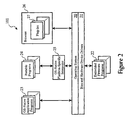
- the computing platform is also provided with one or more software and firmware (101) programs to implement the desired functionality of the computing platforms.
- OS operating system
- One.or more operating system (“OS”) native application programs (23) may be provided on the computing platform, such as word processors, spreadsheets, contact management utilities, address book, calendar, email client, presentation, financial and bookkeeping programs.
- one or more "portable" or device-independent programs (24) may be provided, which must be interpreted by an OS-native platform-specific interpreter (25), such as Java scripts and programs.
- computing platforms are also provided with a form of web browser or micro-browser (26), which may also include one or more extensions to the browser such as browser plug-ins (27).
- the computing device is often provided with an operating system (20), such as Microsoft Windows, UNIX, IBM OS/2, LINUX, MAC OS or other platform specific operating systems.
- an operating system such as Microsoft Windows, UNIX, IBM OS/2, LINUX, MAC OS or other platform specific operating systems.
- Smaller devices such as PDA's and wireless telephones may be equipped with other forms of operating systems such as real-time operating systems (“RTOS”) or Palm Computing's PalmOS.
- RTOS real-time operating systems
- Palm Computing's PalmOS Palm Computing's PalmOS.
- BIOS basic input and output functions
- hardware device drivers (21) are often provided to allow the operating system (20) and programs to interface to and control the specific hardware functions provided with the computing platform.
- one or more embedded firmware programs (22) are commonly provided with many computing platforms, which are executed by onboard or “embedded” microprocessors as part of the peripheral device, such as a micro controller or a hard drive, a communication processor, network interface card, or sound or graphics card.
- Figures 1 and 2 describe in a general sense the various hardware components, software and firmware programs of a wide variety of computing platforms, including but not limited to personal computers, PDAs, PIMs, web-enabled telephones, and other appliances such as WebTV [TM] units.
- the present invention is preferably implemented as software and firmware on such a computing platform. It will be readily recognized by those skilled in the art that the present invention may be alternatively realized as hardware functions.
- the invention is realized as a collection or set of Java Beans which access and modify certain system files and resources as described in more detail in the following paragraphs, but the invention may be integrated into existing software such as web server suites.
- a CORBA architecture is employed in which objects are defined with the OMG Interface Definition Language (“IDL”), objects are distributed among servers and clients, and an Object Request Broker (“ORB”) is used to coordinate discovery of and use of available objects and services.
- IDL compilers implement CORBA bindings, and generate client stubs and server skeletons which map each object's services from the server environment to the client.
- Communication protocols between clients and servers and between servers themselves is the General Inter-ORB Protocol (“GIOP"), and Inter-ORB Protocol (“IIOP”) which implements GIOP over the Transmission Control Protocol/Internet Protocol (“TCP/IP”).
- Interoperable Object references (“IOR") provide platform-independent and ORB-implementation-independent object references.
- a naming service is provided within the CORBA architecture which binds each CORBA object to a public name.
- an Enterprise Java Bean (“EJB”) programming model is employed in which object interfaces and server implementation conform to Java definitions, objects are distributed such that they can be remotely accessed, and Java communications protocols are used including Remote Method Invocation (“RMI").
- RMI Remote Method Invocation
- This exemplary embodiment is implemented using the IBM WebSphere Application Server product running under the AIX or Linux operating system on an IBM enterprise server.
- RMI-IIOP clients should preferably not use the RMI-JRMP format of Java RMI protocol. In other embodiments using other web application environments, this restriction may not be necessary.
- the Java Naming Service (“JNDI”) is employed for the naming service in this exemplary embodiment, as well.
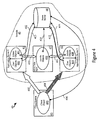
- FIG. 4 the interactions and relationships (40) of a client system (43) with multiple application servers (41, 42) according to a preferred embodiment of the present invention is shown, including an administration node agent (47) and a name server (46).
- the application servers (41, 42), administration node agent (47) and name server (46) are part of a domain (45) from which an application is provided to the client system (43).
- the information placed in these tagged components may contain parameters including such information as an indication of the secure sockets layer ("SSL") port to which the server is listening, what type of SSL connection must be made with the server by the client, what security mechanisms are supported by the server, what types of information are needed from the client (e.g. user name, password, certificate, etc.), and what the realm of the server is so that the client can prompt the user with the server realm for log in purposes, etc. If security is disabled, no tagged components are added to the IOR.
- SSL secure sockets layer
- an IOR interceptor When an IOR interceptor is loaded, the interceptor loads a file, such as a text file which contains class and package names of administrative objects which need to be secure even when other user objects are not secure on an application server. Administrative objects may be deemed by an administrator as needing to be secure always, regardless of whether user objects on an application server are secure or insecure.
- Application Server 1 (41) provides user objects (400) and administrative objects (401) which are all secure. So, secure IOR's are exported (412, 413) to the name server (46).
- Application Server 2 (42) provides user objects (403) which do not need to be secure, so insecure IOR's for these objects (403) are exported to the name server (46), while secure IORs are exported (416) for the secure administrative objects (404) on the same server (42).
- Global security e.g. entire domain security
- the IOR interceptor may load the list (e.g. text file) of classes and packages which are to be kept secure regardless of user object security status, and to determine if and what kind of tagged components are to be exported for each secured administrative object.
- User objects are not members of this list of packages or classes to maintain as secure, and thus a declarative method is provided to an administrator to modify which classes remain secure within the domain.
- a client object (405) requests use of object from a server where security is fully enabled such as Application Server 1 (41), all transactions (407) between the client (43) and the objects (400, 401) are conducted securely.
- the client object (405) receives the tags when it looks up (406) with the name server (46) the IOR's for the objects on application server, which indicate that all objects (400, 401) are secured and must be used (407) securely.
- a authentication and authorization process may be securely employed (410) to provide security services, as indicated by the tags, such as a WebSphere authentication engine and authorization engine, as provided by an administrative node (47) and one or more administrative objects (402).
- Application Server 2 successfully allows the user objects (403) to be used by the client without security and with inherent performance increases that implies (e.g. no authentication by the client required, no authorization by the server required, no credential creation and storing, etc.), while the administrative objects (404) are kept secure.
- box arrows (wide arrows) with cross hatching indicate insecure communications or interactions (e.g. 408), while box arrows without cross hatching indicate secure communications or interactions (e.g. 407, 410, 411).
- thin arrows e.g. 412, 413, 414, 415, 416) indicate operations exporting IORs for secure objects with tagged components, while the heavier line with arrowhead (e.g. 415) indicates a exporting of IORs for insecure objects without tagged components.
- the client object when there is an insecure, unauthenticated request from a client for a user object, the client object will look up the IOR, receive the IOR, and the ORB will call one or more request interceptors, including a security request interceptor. Since no tagged components are included with the IOR, it will make a TCP/IP request without authentication and without SSL. This allows the insecure user objects to be used without credentials, authentication or authorization. However, use of any administrative objects or secured user objects will trigger authentication and authorization processes, as well as use of secure communications (e.g. SSL), even though these secured objects are in the same domain as the insecure user objects.
- secure communications e.g. SSL
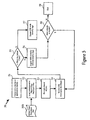
- Figure 5 graphically depicts the previously described process (50) of exporting IOR's for shared objects with tagged components in accordance with a preferred embodiment of the present invention.
- the administrative class descriptor file (500) is accessed or loaded (52), and for each shared object (53), an IOR interceptor is invoked (54). If the object is in the administrative class (55), either specified directly or as part of a specified package, then an IOR is exported (57) with security tags. If the object is not in the administrative class, then an IOR for that object is exported normally (56) without special security tags. This is repeated (58) for all objects which are shared and for which IOR's are to be exported.
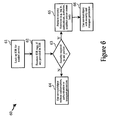
- Figure 6 graphically depicts the process (60) previously described for a client to request a shared object or service in accordance with a preferred embodiment of the present invention.
- the IOR is looked up (61) for the needed service, and the received IOR is examined (62) for security tags. If (63) security such as authentication, authorization, and/or transport protection is required to use request and use the service, then the required actions are performed (65) to authenticate, authorize and/or establish a secure communications link to the application server.
- the service/object is then used with security and transport protection (66). Otherwise (63), the service is requested and used normally without security measures (64).
- a separate authorization engine for administrative objects is provided from the authorization engine for user objects.
- the WebSphere administrative authorization engine provides a role-based authorization model or process.
- any J2EE may be used for the user object security.
- the system is enabled to separately define and manage the security of user objects and administrative objects with different authorization and authentication engines. This allows three security modes to be configured:
- the IOR has been used as a mechanism to carry object type information for an object instance, which may be realized in alternate object models and security protocols accordingly, such as providing object type information in a Web Services UDDI object registry.
Landscapes
- Engineering & Computer Science (AREA)
- Theoretical Computer Science (AREA)
- Computer Security & Cryptography (AREA)
- Software Systems (AREA)
- Physics & Mathematics (AREA)
- General Engineering & Computer Science (AREA)
- General Physics & Mathematics (AREA)
- Computer Hardware Design (AREA)
- Stored Programmes (AREA)
- Computer And Data Communications (AREA)
- Multi Processors (AREA)
- Storage Device Security (AREA)
Claims (10)
- Verfahren in einer verteilten Rechen-Domain, wobei das Verfahren Folgendes umfasst:Verteilen von einem oder mehreren administrativen Objekten (401, 402, 404) und einem oder mehreren Benutzerobjekten (400, 403) auf einen oder mehrere Anwendungsserver;Definieren eines globalen Sicherheitsmerkers für die Sicherheit auf Domain-Ebene von administrativen Objekten, wobei administrative Objekte durch eine Liste definiert sind und Objekte darstellen, die geschützt werden sollen;Zuordnen von einem oder mehreren Anwendungsserver-Sicherheitsmerkern zu Schnittstellen zu den verteilten Benutzerobjekten; undAusführen von einer oder mehreren Sicherheitsoperationen durch einen Anwendungsserver (41, 42) in Zusammenwirkung mit einem Client-Prozess in einer von drei Betriebsarten, wobei in der ersten Betriebsart Benutzerobjekte und administrative Objekte geschützt sind, wenn der globale Sicherheitsmerker und die zugeordneten Anwendungsserver-Sicherheitsmerker aktiviert sind, in der zweiten Betriebsart Benutzerobjekte ohne Sicherheitsoperationen verwendet werden, administrative Objekte jedoch geschützt sind, wobei der globale Sicherheitsmerker aktiviert ist und der zugeordnete Anwendungsservermerker deaktiviert ist, und in der dritten Betriebsart Benutzerobjekte und administrative Objekte ohne Sicherheitsoperationen verwendet werden, wobei der globale Sicherheitsmerker deaktiviert ist.
- Verfahren nach Anspruch 1, wobei der Schritt des Ausführens von Sicherheitsoperationen das Bereitstellen von separaten Sicherheitsoperationen für administrative Objekte (401, 402, 404) und Benutzerobjekte (400, 403) umfasst.
- Verfahren nach Anspruch 1 oder 2, wobei der Schritt des Zuordnens von Anwendungsserver-Sicherheitsmerkern zu Schnittstellen von administrativen Objekten eine Aktion umfasst, die aus der Gruppe ausgewählt ist, die aus dem Exportieren eines CORBA-IOR mit markierten Komponenten für Benutzerobjekte auf Anwendungsservern, wenn die Anwendungsserverbenutzerobjekt-Sicherheit aktiviert ist, und dem Bereitstellen eines Objekttyps in einer UDDI-Registratur für Benutzerobjekte auf Anwendungsservern, wenn die Anwendungsserverbenutzerobjekt-Sicherheit aktiviert ist, besteht.
- Verfahren nach Anspruch 3, das ferner das Zugreifen auf eine Erklärungsliste von administrativen Objekten (401, 402, 404) umfasst.
- Verfahren nach einem der vorgehenden Ansprüche, das das Bereitstellen von einem oder mehreren administrativen Objekten MBean umfasst.
- Verfahren nach einem der vorgehenden Ansprüche, das das Ausführen von Sicherheitsoperationen umfasst, die aus der Liste ausgewählt sind, die aus Identitätsüberprüfung, Berechtigungserteilung und Transportschutz besteht.
- Verfahren nach einem der vorgehenden Ansprüche, das das Verwenden eines Sicherheitsprotokolls umfasst, das aus der Gruppe ausgewählt ist, die aus dem Protokoll Simple Object Access und dem Protokoll Inter-ORB besteht.
- Verfahren nach einem der vorgehenden Ansprüche, das das Verwenden eines Dienstbeschreibungsmodells umfasst, das aus der Gruppe ausgewählt ist, die aus IDL und Webdienste-Definitionssprache mit Webdienst-Endpunktsprache und Schnittstellendefinitionssprache besteht.
- Computerprogramm zur Verwendung in einer verteilten Rechen-Domain, wobei das Computerprogramm ein Programmcodemittel umfasst, das so eingerichtet ist, dass es die folgenden Schritte ausführt, wenn das Programm auf einem Computer läuft:Verteilen von einem oder mehreren administrativen Objekten (401, 402, 404) und einem oder mehreren Benutzerobjekten (400, 403) auf einen oder mehrere Anwendungsserver (41, 42), wobei administrative Objekte durch eine Liste definiert sind und Objekte darstellen, die geschützt werden sollen;Definieren eines globalen Sicherheitsmerkers für die Sicherheit auf Domain-Ebene von administrativen Objekten; Zuordnen von einem oder mehreren Anwendungsserver-Sicherheitsmerkern zu Schnittstellen an den verteilten Benutzerobjekten; undAusführen von einer oder mehreren Sicherheitsoperationen durch einen Anwendungsserver (41, 42) in Zusammenwirkung mit einem Client-Prozess in einer von drei Betriebsarten, wobei in der ersten Betriebsart Benutzerobjekte und administrative Objekte geschützt sind, wenn der globale Sicherheitsmerker und die zugeordneten Anwendungsserver-Sicherheitsmerker aktiviert sind, in der zweiten Betriebsart Benutzerobjekte ohne Sicherheitsoperationen verwendet werden, administrative Objekte jedoch geschützt sind, wobei der globale Sicherheitsmerker aktiviert ist und der zugeordnete Anwendungsservermerker deaktiviert ist, und in der dritten Betriebsart Benutzerobjekte und administrative Objekte ohne Sicherheitsoperationen verwendet werden, wobei der globale Sicherheitsmerker deaktiviert ist.
- Sicherheitssystem auf Objektebene in einer verteilten Rechen-Domain, wobei das System Folgendes umfasst:ein oder mehrere administrative Objekte (401, 402, 404) und ein oder mehrere Benutzerobjekte (400, 403), die auf einen oder mehrere Anwendungsserver verteilt sind, wobei alle administrativen Objekte durch eine Liste definiert sind und Objekte darstellen, die geschützt werden sollen;einen globalen Sicherheitsmerker, der die Sicherheit der administrativen Objekte innerhalb der Ebene einer vernetzten Rechen-Domain definiert;einen oder mehrere Anwendungsserver-Sicherheitsmerker, die Schnittstellen zu den verteilten Benutzerobjekten zugeordnet sind; undeine oder mehrere Sicherheitsoperationen, die durch einen Anwendungsserver (41, 42) in Zusammenwirkung mit einem Client-Prozess in einer von drei Betriebsarten ausgeführt werden können, wobei in der ersten Betriebsart Benutzerobjekte und administrative Objekte geschützt sind, wenn der globale Sicherheitsmerker und die zugeordneten Anwendungsserver-Sicherheitsmerker aktiviert sind, in der zweiten Betriebsart Benutzerobjekte ohne Sicherheitsoperationen verwendet werden, administrative Objekte jedoch geschützt sind, wobei der globale Sicherheitsmerker aktiviert ist und der zugeordnete Anwendungsservermerker deaktiviert ist, und in der dritten Betriebsart Benutzerobjekte und administrative Objekte ohne Sicherheitsoperationen verwendet werden, wobei der globale Sicherheitsmerker deaktiviert ist.
Applications Claiming Priority (3)
| Application Number | Priority Date | Filing Date | Title |
|---|---|---|---|
| US246909 | 1994-05-20 | ||
| US10/246,909 US7448066B2 (en) | 2002-09-19 | 2002-09-19 | Application server object-level security for distributed computing domains |
| PCT/GB2003/004063 WO2004027612A2 (en) | 2002-09-19 | 2003-09-19 | Application server object-level security for distributed computing domains |
Publications (2)
| Publication Number | Publication Date |
|---|---|
| EP1540474A2 EP1540474A2 (de) | 2005-06-15 |
| EP1540474B1 true EP1540474B1 (de) | 2009-08-26 |
Family
ID=31992391
Family Applications (1)
| Application Number | Title | Priority Date | Filing Date |
|---|---|---|---|
| EP03750943A Expired - Lifetime EP1540474B1 (de) | 2002-09-19 | 2003-09-19 | Zugriffseinschränkung auf objekte für anwendungsserver in verteilten rechnersystemen |
Country Status (10)
| Country | Link |
|---|---|
| US (2) | US7448066B2 (de) |
| EP (1) | EP1540474B1 (de) |
| JP (1) | JP4636366B2 (de) |
| KR (1) | KR100834347B1 (de) |
| CN (1) | CN100336021C (de) |
| AT (1) | ATE441150T1 (de) |
| AU (1) | AU2003269163A1 (de) |
| DE (1) | DE60329002D1 (de) |
| TW (1) | TWI273811B (de) |
| WO (1) | WO2004027612A2 (de) |
Families Citing this family (28)
| Publication number | Priority date | Publication date | Assignee | Title |
|---|---|---|---|---|
| US7363487B2 (en) * | 2003-07-01 | 2008-04-22 | International Business Machines Corporation | Method and system for dynamic client authentication in support of JAAS programming model |
| US7676562B2 (en) * | 2004-01-20 | 2010-03-09 | Microsoft Corporation | Computer system for accessing instrumentation information |
| US7523195B2 (en) * | 2004-10-29 | 2009-04-21 | International Business Machines Corporation | Method and system for monitoring server events in a node configuration by using direct communication between servers |
| US20060106864A1 (en) * | 2004-11-12 | 2006-05-18 | International Business Machines Corporation | System, computer program product and method of narrowing an enterprise Java bean (EJB) object reference to a home implementation class name |
| US8250226B2 (en) * | 2005-07-21 | 2012-08-21 | Ca, Inc. | Generating one or more clients for generating one or more synthetic transactions with one or more web service operations |
| ATE409330T1 (de) * | 2006-07-24 | 2008-10-15 | Alcatel Lucent | Verfahren, server und client zur bereitstellung von diensten in einem computernetzwerk |
| US7912047B2 (en) * | 2006-12-22 | 2011-03-22 | International Business Machines Corporation | Method and program for classifying fragmented messages |
| KR100918114B1 (ko) * | 2007-10-17 | 2009-09-22 | 한국전자통신연구원 | 이동단말기의 프레임워크 장치 및 컴포넌트의 상호 운용성보장 방법 |
| JP5227605B2 (ja) * | 2008-02-15 | 2013-07-03 | アズビル株式会社 | ポータルサーバシステムおよびポータルサーバシステムにおけるサーバアクセス方法 |
| US20100111836A1 (en) * | 2008-10-31 | 2010-05-06 | Searete Llc, A Limited Liability Corporation Of The State Of Delaware | Compositions and methods for therapeutic delivery with frozen particles |
| US8893156B2 (en) * | 2009-03-24 | 2014-11-18 | Microsoft Corporation | Monitoring of distributed applications |
| US9804899B2 (en) * | 2009-07-31 | 2017-10-31 | Ixia | Communications using the common object request broker architecture (CORBA) |
| CN101655789B (zh) * | 2009-09-22 | 2012-10-24 | 用友软件股份有限公司 | 一种实现应用组件热插拔的方法和装置 |
| CN102043922A (zh) * | 2009-10-13 | 2011-05-04 | 中兴通讯股份有限公司 | 一种提高corba接口安全性的方法及装置 |
| WO2014062804A1 (en) * | 2012-10-16 | 2014-04-24 | Citrix Systems, Inc. | Application wrapping for application management framework |
| US9450820B2 (en) | 2014-02-26 | 2016-09-20 | International Business Machines Corporation | Dynamic extensible application server management |
| US9876822B2 (en) | 2014-11-28 | 2018-01-23 | International Business Machines Corporation | Administration of a context-based cloud security assurance system |
| US9762616B2 (en) | 2015-08-08 | 2017-09-12 | International Business Machines Corporation | Application-based security rights in cloud environments |
| US10348730B2 (en) | 2015-12-28 | 2019-07-09 | International Business Machines Corporation | Reducing complexities of authentication and authorization for enterprise web-based social applications |
| KR20180060807A (ko) | 2016-11-29 | 2018-06-07 | 충남대학교산학협력단 | 티어 기반 분산 저장 장치 및 방법 |
| US11089042B2 (en) | 2018-02-06 | 2021-08-10 | Bank Of America Corporation | Vulnerability consequence triggering system for application freeze and removal |
| US10862915B2 (en) | 2018-02-06 | 2020-12-08 | Bank Of America Corporation | Exception remediation logic routing and suppression platform |
| US10819731B2 (en) | 2018-02-06 | 2020-10-27 | Bank Of America Corporation | Exception remediation logic rolling platform |
| US10812502B2 (en) | 2018-02-06 | 2020-10-20 | Bank Of America Corporation | Network device owner identification and communication triggering system |
| US11265340B2 (en) | 2018-02-06 | 2022-03-01 | Bank Of America Corporation | Exception remediation acceptable use logic platform |
| CN110413327B (zh) * | 2019-07-16 | 2022-07-19 | 创新先进技术有限公司 | 一种基于硬件抽象层的硬件驱动方法和装置 |
| CN110471742B (zh) * | 2019-08-15 | 2022-03-29 | 中国银行股份有限公司 | 分布式环境下的Java对象监控管理系统及方法 |
| DE102023102009A1 (de) | 2023-01-27 | 2024-08-01 | Cariad Se | Verfahren zum Auslagern von Datenverarbeitungsaufgaben durch ein Kraftfahrzeug, Kraftfahrzeug, Einrichtung (Edge-Node) und System aus Edge-Nodes und Kraftfahrzeugen |
Family Cites Families (32)
| Publication number | Priority date | Publication date | Assignee | Title |
|---|---|---|---|---|
| US5802291A (en) * | 1995-03-30 | 1998-09-01 | Sun Microsystems, Inc. | System and method to control and administer distributed object servers using first class distributed objects |
| AU1690597A (en) * | 1996-01-11 | 1997-08-01 | Mitre Corporation, The | System for controlling access and distribution of digital property |
| US6226746B1 (en) * | 1998-03-20 | 2001-05-01 | Sun Microsystems, Inc. | Stack-based system and method to combine security requirements of methods |
| US5881230A (en) * | 1996-06-24 | 1999-03-09 | Microsoft Corporation | Method and system for remote automation of object oriented applications |
| US6044409A (en) * | 1996-06-26 | 2000-03-28 | Sun Microsystems, Inc. | Framework for marshaling and unmarshaling argument object references |
| DE59604238D1 (de) * | 1996-08-20 | 2000-02-24 | Alcatel Sa | Verfahren zur Verwaltung der Benennung von Objekten |
| DE59604239D1 (de) * | 1996-08-20 | 2000-02-24 | Alcatel Sa | Verfahren zur Unterstützung des Erzeugens eines Objektes |
| US5908469A (en) | 1997-02-14 | 1999-06-01 | International Business Machines Corporation | Generic user authentication for network computers |
| US6687761B1 (en) * | 1997-02-20 | 2004-02-03 | Invensys Systems, Inc. | Process control methods and apparatus with distributed object management |
| KR19990040321A (ko) * | 1997-11-17 | 1999-06-05 | 정선종 | 다수의 보안 영역을 갖는 분산 시스템 환경에서 사용자접근 제어 방법 및 이를 위한 서버의 구조 |
| GB9725742D0 (en) * | 1997-12-04 | 1998-02-04 | Hewlett Packard Co | Object gateway |
| US6438616B1 (en) * | 1997-12-18 | 2002-08-20 | Sun Microsystems, Inc. | Method and apparatus for fast, local corba object references |
| US6219787B1 (en) | 1997-12-22 | 2001-04-17 | Texas Instruments Incorporated | Method and apparatus for extending security model to native code |
| US6148402A (en) * | 1998-04-01 | 2000-11-14 | Hewlett-Packard Company | Apparatus and method for remotely executing commands using distributed computing environment remote procedure calls |
| US6321334B1 (en) * | 1998-07-15 | 2001-11-20 | Microsoft Corporation | Administering permissions associated with a security zone in a computer system security model |
| US6330677B1 (en) * | 1998-10-27 | 2001-12-11 | Sprint Communications Company, L. P. | Object-based security system |
| US6158010A (en) * | 1998-10-28 | 2000-12-05 | Crosslogix, Inc. | System and method for maintaining security in a distributed computer network |
| US6549908B1 (en) | 1998-11-18 | 2003-04-15 | Siebel Systems, Inc. | Methods and apparatus for interpreting user selections in the context of a relation distributed as a set of orthogonalized sub-relations |
| US6487665B1 (en) * | 1998-11-30 | 2002-11-26 | Microsoft Corporation | Object security boundaries |
| US6298478B1 (en) | 1998-12-31 | 2001-10-02 | International Business Machines Corporation | Technique for managing enterprise JavaBeans (™) which are the target of multiple concurrent and/or nested transactions |
| AU3352500A (en) * | 1999-01-29 | 2000-08-18 | Iona Technologies Inc. | Method and system for dynamic configuration of interceptors in a client-server environment |
| US6422460B1 (en) * | 1999-01-29 | 2002-07-23 | Verisign, Inc. | Authorization system using an authorizing device |
| US6453320B1 (en) * | 1999-02-01 | 2002-09-17 | Iona Technologies, Inc. | Method and system for providing object references in a distributed object environment supporting object migration |
| JP2001056810A (ja) * | 1999-06-07 | 2001-02-27 | Kawasaki Steel Systems R & D Corp | データベースアクセスシステム |
| GB2350971A (en) * | 1999-06-07 | 2000-12-13 | Nokia Mobile Phones Ltd | Security Architecture |
| US6922685B2 (en) * | 2000-05-22 | 2005-07-26 | Mci, Inc. | Method and system for managing partitioned data resources |
| KR100343069B1 (ko) | 2000-08-26 | 2002-07-05 | 박태규 | 다중 등급 보안 방식에 의한 강제적 객체접근 제어 방법및 이를 프로그램화하여 수록한 컴퓨터로 읽을 수 있는기록매체 |
| FR2813471B1 (fr) * | 2000-08-31 | 2002-12-20 | Schneider Automation | Systeme de communication d'un equipement d'automatisme base sur le protocole soap |
| US6442460B1 (en) * | 2000-09-05 | 2002-08-27 | Hunter Engineering Company | Method and apparatus for networked wheel alignment communications and services |
| US6873067B2 (en) * | 2000-09-29 | 2005-03-29 | Matsushita Electric Works, Ltd. | Linear oscillator |
| US6968553B1 (en) * | 2001-03-01 | 2005-11-22 | Alcatel | Element manager common gateway architecture system and method |
| US6795791B2 (en) * | 2001-06-22 | 2004-09-21 | Bea Systems, Inc. | System and method for testing time-varying signals |
-
2002
- 2002-09-19 US US10/246,909 patent/US7448066B2/en not_active Expired - Lifetime
-
2003
- 2003-07-21 TW TW092119802A patent/TWI273811B/zh not_active IP Right Cessation
- 2003-09-19 AU AU2003269163A patent/AU2003269163A1/en not_active Abandoned
- 2003-09-19 WO PCT/GB2003/004063 patent/WO2004027612A2/en not_active Ceased
- 2003-09-19 AT AT03750943T patent/ATE441150T1/de not_active IP Right Cessation
- 2003-09-19 KR KR1020057002717A patent/KR100834347B1/ko not_active Expired - Fee Related
- 2003-09-19 EP EP03750943A patent/EP1540474B1/de not_active Expired - Lifetime
- 2003-09-19 JP JP2004537309A patent/JP4636366B2/ja not_active Expired - Lifetime
- 2003-09-19 CN CNB038222574A patent/CN100336021C/zh not_active Expired - Lifetime
- 2003-09-19 DE DE60329002T patent/DE60329002D1/de not_active Expired - Lifetime
-
2008
- 2008-05-20 US US12/123,693 patent/US7810132B2/en not_active Expired - Fee Related
Also Published As
| Publication number | Publication date |
|---|---|
| JP2006517690A (ja) | 2006-07-27 |
| US20080222697A1 (en) | 2008-09-11 |
| EP1540474A2 (de) | 2005-06-15 |
| CN1820254A (zh) | 2006-08-16 |
| TW200405710A (en) | 2004-04-01 |
| US7448066B2 (en) | 2008-11-04 |
| WO2004027612A2 (en) | 2004-04-01 |
| KR100834347B1 (ko) | 2008-06-02 |
| KR20050060068A (ko) | 2005-06-21 |
| US20040059940A1 (en) | 2004-03-25 |
| DE60329002D1 (de) | 2009-10-08 |
| AU2003269163A1 (en) | 2004-04-08 |
| US7810132B2 (en) | 2010-10-05 |
| TWI273811B (en) | 2007-02-11 |
| CN100336021C (zh) | 2007-09-05 |
| ATE441150T1 (de) | 2009-09-15 |
| WO2004027612A3 (en) | 2004-07-29 |
| JP4636366B2 (ja) | 2011-02-23 |
Similar Documents
| Publication | Publication Date | Title |
|---|---|---|
| US7810132B2 (en) | Application server object-level security for distributed computing domains | |
| US7996687B2 (en) | Product for providing a scalable trusted platform module in a hypervisor environment | |
| US6446204B1 (en) | Method and apparatus for implementing an extensible authentication mechanism in a web application server | |
| US7761862B2 (en) | Externalized classloader information for application servers | |
| US20040143625A1 (en) | Component proxy with interception logic in remote component container | |
| US20050050184A1 (en) | Method, system, and storage medium for providing life-cycle management of grid services | |
| US20060026552A1 (en) | Systems and methods for exposing web services | |
| US7644184B2 (en) | Universal adapter | |
| US20050192965A1 (en) | Method and apparatus for discovering network based distributed applications | |
| US7748026B1 (en) | Transparent interceptors for privacy policy implementation | |
| Ferreira et al. | Globus toolkit 3.0 quick start | |
| US20050005090A1 (en) | Method and system for dynamic client authentication in support of JAAS programming model | |
| US8572223B2 (en) | System and method for utilizing event templates in an event manager to execute application services | |
| US20050216600A1 (en) | System and method for providing a service in a controlled run-time environment | |
| US7703144B2 (en) | Method, apparatus, and program to post process applications encrypting sensitive objects that are logged | |
| Novotny et al. | GridLab Portal Design | |
| Späth | Monitoring Jakarta EE Applications | |
| US20110099276A1 (en) | System and method for enabling software applications as a service in a non-intrusive manner | |
| Duett et al. | EZHPC: easy access to high performance computing | |
| Guide | Chat | |
| Kunnumpurath | Configuring Jetty | |
| Middleware et al. | Xinetica White Paper | |
| Lai | Introduction to Solaris System | |
| Middleware | The Grid Architectural Pattern: Leveraging Distributed Processing Capabilities | |
| Heaton | Bea WebLogic Server 8 for Dummies |
Legal Events
| Date | Code | Title | Description |
|---|---|---|---|
| PUAI | Public reference made under article 153(3) epc to a published international application that has entered the european phase |
Free format text: ORIGINAL CODE: 0009012 |
|
| 17P | Request for examination filed |
Effective date: 20050414 |
|
| AK | Designated contracting states |
Kind code of ref document: A2 Designated state(s): AT BE BG CH CY CZ DE DK EE ES FI FR GB GR HU IE IT LI LU MC NL PT RO SE SI SK TR |
|
| AX | Request for extension of the european patent |
Extension state: AL LT LV MK |
|
| DAX | Request for extension of the european patent (deleted) | ||
| 17Q | First examination report despatched |
Effective date: 20081201 |
|
| GRAP | Despatch of communication of intention to grant a patent |
Free format text: ORIGINAL CODE: EPIDOSNIGR1 |
|
| GRAS | Grant fee paid |
Free format text: ORIGINAL CODE: EPIDOSNIGR3 |
|
| GRAA | (expected) grant |
Free format text: ORIGINAL CODE: 0009210 |
|
| AK | Designated contracting states |
Kind code of ref document: B1 Designated state(s): AT BE BG CH CY CZ DE DK EE ES FI FR GB GR HU IE IT LI LU MC NL PT RO SE SI SK TR |
|
| REG | Reference to a national code |
Ref country code: GB Ref legal event code: FG4D |
|
| REG | Reference to a national code |
Ref country code: CH Ref legal event code: EP |
|
| REG | Reference to a national code |
Ref country code: IE Ref legal event code: FG4D |
|
| REF | Corresponds to: |
Ref document number: 60329002 Country of ref document: DE Date of ref document: 20091008 Kind code of ref document: P |
|
| REG | Reference to a national code |
Ref country code: SE Ref legal event code: TRGR |
|
| REG | Reference to a national code |
Ref country code: CH Ref legal event code: NV Representative=s name: IBM RESEARCH GMBH ZURICH RESEARCH LABORATORY INTEL |
|
| REG | Reference to a national code |
Ref country code: GB Ref legal event code: 746 Effective date: 20091009 |
|
| PG25 | Lapsed in a contracting state [announced via postgrant information from national office to epo] |
Ref country code: FI Free format text: LAPSE BECAUSE OF FAILURE TO SUBMIT A TRANSLATION OF THE DESCRIPTION OR TO PAY THE FEE WITHIN THE PRESCRIBED TIME-LIMIT Effective date: 20090826 Ref country code: AT Free format text: LAPSE BECAUSE OF FAILURE TO SUBMIT A TRANSLATION OF THE DESCRIPTION OR TO PAY THE FEE WITHIN THE PRESCRIBED TIME-LIMIT Effective date: 20090826 |
|
| PG25 | Lapsed in a contracting state [announced via postgrant information from national office to epo] |
Ref country code: SI Free format text: LAPSE BECAUSE OF FAILURE TO SUBMIT A TRANSLATION OF THE DESCRIPTION OR TO PAY THE FEE WITHIN THE PRESCRIBED TIME-LIMIT Effective date: 20090826 |
|
| PG25 | Lapsed in a contracting state [announced via postgrant information from national office to epo] |
Ref country code: CY Free format text: LAPSE BECAUSE OF FAILURE TO SUBMIT A TRANSLATION OF THE DESCRIPTION OR TO PAY THE FEE WITHIN THE PRESCRIBED TIME-LIMIT Effective date: 20090826 Ref country code: BG Free format text: LAPSE BECAUSE OF FAILURE TO SUBMIT A TRANSLATION OF THE DESCRIPTION OR TO PAY THE FEE WITHIN THE PRESCRIBED TIME-LIMIT Effective date: 20091126 Ref country code: PT Free format text: LAPSE BECAUSE OF FAILURE TO SUBMIT A TRANSLATION OF THE DESCRIPTION OR TO PAY THE FEE WITHIN THE PRESCRIBED TIME-LIMIT Effective date: 20091228 |
|
| PG25 | Lapsed in a contracting state [announced via postgrant information from national office to epo] |
Ref country code: RO Free format text: LAPSE BECAUSE OF FAILURE TO SUBMIT A TRANSLATION OF THE DESCRIPTION OR TO PAY THE FEE WITHIN THE PRESCRIBED TIME-LIMIT Effective date: 20090826 Ref country code: MC Free format text: LAPSE BECAUSE OF NON-PAYMENT OF DUE FEES Effective date: 20090930 Ref country code: ES Free format text: LAPSE BECAUSE OF FAILURE TO SUBMIT A TRANSLATION OF THE DESCRIPTION OR TO PAY THE FEE WITHIN THE PRESCRIBED TIME-LIMIT Effective date: 20091207 Ref country code: EE Free format text: LAPSE BECAUSE OF FAILURE TO SUBMIT A TRANSLATION OF THE DESCRIPTION OR TO PAY THE FEE WITHIN THE PRESCRIBED TIME-LIMIT Effective date: 20090826 Ref country code: DK Free format text: LAPSE BECAUSE OF FAILURE TO SUBMIT A TRANSLATION OF THE DESCRIPTION OR TO PAY THE FEE WITHIN THE PRESCRIBED TIME-LIMIT Effective date: 20090826 Ref country code: CZ Free format text: LAPSE BECAUSE OF FAILURE TO SUBMIT A TRANSLATION OF THE DESCRIPTION OR TO PAY THE FEE WITHIN THE PRESCRIBED TIME-LIMIT Effective date: 20090826 |
|
| PG25 | Lapsed in a contracting state [announced via postgrant information from national office to epo] |
Ref country code: SK Free format text: LAPSE BECAUSE OF FAILURE TO SUBMIT A TRANSLATION OF THE DESCRIPTION OR TO PAY THE FEE WITHIN THE PRESCRIBED TIME-LIMIT Effective date: 20090826 |
|
| PG25 | Lapsed in a contracting state [announced via postgrant information from national office to epo] |
Ref country code: BE Free format text: LAPSE BECAUSE OF FAILURE TO SUBMIT A TRANSLATION OF THE DESCRIPTION OR TO PAY THE FEE WITHIN THE PRESCRIBED TIME-LIMIT Effective date: 20090826 |
|
| PLBE | No opposition filed within time limit |
Free format text: ORIGINAL CODE: 0009261 |
|
| STAA | Information on the status of an ep patent application or granted ep patent |
Free format text: STATUS: NO OPPOSITION FILED WITHIN TIME LIMIT |
|
| PG25 | Lapsed in a contracting state [announced via postgrant information from national office to epo] |
Ref country code: IE Free format text: LAPSE BECAUSE OF NON-PAYMENT OF DUE FEES Effective date: 20090919 |
|
| 26N | No opposition filed |
Effective date: 20100527 |
|
| PG25 | Lapsed in a contracting state [announced via postgrant information from national office to epo] |
Ref country code: GR Free format text: LAPSE BECAUSE OF FAILURE TO SUBMIT A TRANSLATION OF THE DESCRIPTION OR TO PAY THE FEE WITHIN THE PRESCRIBED TIME-LIMIT Effective date: 20091127 |
|
| PG25 | Lapsed in a contracting state [announced via postgrant information from national office to epo] |
Ref country code: IT Free format text: LAPSE BECAUSE OF FAILURE TO SUBMIT A TRANSLATION OF THE DESCRIPTION OR TO PAY THE FEE WITHIN THE PRESCRIBED TIME-LIMIT Effective date: 20090826 |
|
| PG25 | Lapsed in a contracting state [announced via postgrant information from national office to epo] |
Ref country code: LU Free format text: LAPSE BECAUSE OF NON-PAYMENT OF DUE FEES Effective date: 20090919 |
|
| PG25 | Lapsed in a contracting state [announced via postgrant information from national office to epo] |
Ref country code: HU Free format text: LAPSE BECAUSE OF FAILURE TO SUBMIT A TRANSLATION OF THE DESCRIPTION OR TO PAY THE FEE WITHIN THE PRESCRIBED TIME-LIMIT Effective date: 20100227 |
|
| PG25 | Lapsed in a contracting state [announced via postgrant information from national office to epo] |
Ref country code: TR Free format text: LAPSE BECAUSE OF FAILURE TO SUBMIT A TRANSLATION OF THE DESCRIPTION OR TO PAY THE FEE WITHIN THE PRESCRIBED TIME-LIMIT Effective date: 20090826 |
|
| REG | Reference to a national code |
Ref country code: FR Ref legal event code: PLFP Year of fee payment: 14 |
|
| REG | Reference to a national code |
Ref country code: FR Ref legal event code: PLFP Year of fee payment: 15 |
|
| REG | Reference to a national code |
Ref country code: FR Ref legal event code: PLFP Year of fee payment: 16 |
|
| PGFP | Annual fee paid to national office [announced via postgrant information from national office to epo] |
Ref country code: NL Payment date: 20180920 Year of fee payment: 16 Ref country code: SE Payment date: 20180919 Year of fee payment: 16 |
|
| PG25 | Lapsed in a contracting state [announced via postgrant information from national office to epo] |
Ref country code: SE Free format text: LAPSE BECAUSE OF NON-PAYMENT OF DUE FEES Effective date: 20190920 |
|
| REG | Reference to a national code |
Ref country code: SE Ref legal event code: EUG |
|
| REG | Reference to a national code |
Ref country code: NL Ref legal event code: MM Effective date: 20191001 |
|
| REG | Reference to a national code |
Ref country code: CH Ref legal event code: PL |
|
| PG25 | Lapsed in a contracting state [announced via postgrant information from national office to epo] |
Ref country code: CH Free format text: LAPSE BECAUSE OF NON-PAYMENT OF DUE FEES Effective date: 20190930 Ref country code: LI Free format text: LAPSE BECAUSE OF NON-PAYMENT OF DUE FEES Effective date: 20190930 Ref country code: NL Free format text: LAPSE BECAUSE OF NON-PAYMENT OF DUE FEES Effective date: 20191001 |
|
| REG | Reference to a national code |
Ref country code: DE Ref legal event code: R082 Ref document number: 60329002 Country of ref document: DE Representative=s name: KUISMA, SIRPA, FI |
|
| PGFP | Annual fee paid to national office [announced via postgrant information from national office to epo] |
Ref country code: GB Payment date: 20220919 Year of fee payment: 20 Ref country code: DE Payment date: 20220831 Year of fee payment: 20 |
|
| PGFP | Annual fee paid to national office [announced via postgrant information from national office to epo] |
Ref country code: FR Payment date: 20220908 Year of fee payment: 20 |
|
| P01 | Opt-out of the competence of the unified patent court (upc) registered |
Effective date: 20230423 |
|
| REG | Reference to a national code |
Ref country code: DE Ref legal event code: R071 Ref document number: 60329002 Country of ref document: DE |
|
| REG | Reference to a national code |
Ref country code: GB Ref legal event code: PE20 Expiry date: 20230918 |
|
| PG25 | Lapsed in a contracting state [announced via postgrant information from national office to epo] |
Ref country code: GB Free format text: LAPSE BECAUSE OF EXPIRATION OF PROTECTION Effective date: 20230918 |