EP1539258B1 - Wound dressing compositions comprising chitosan and an oxidised cellulose - Google Patents
Wound dressing compositions comprising chitosan and an oxidised cellulose Download PDFInfo
- Publication number
- EP1539258B1 EP1539258B1 EP03797383.1A EP03797383A EP1539258B1 EP 1539258 B1 EP1539258 B1 EP 1539258B1 EP 03797383 A EP03797383 A EP 03797383A EP 1539258 B1 EP1539258 B1 EP 1539258B1
- Authority
- EP
- European Patent Office
- Prior art keywords
- wound
- chitosan
- wound dressing
- oxidized cellulose
- orc
- Prior art date
- Legal status (The legal status is an assumption and is not a legal conclusion. Google has not performed a legal analysis and makes no representation as to the accuracy of the status listed.)
- Expired - Lifetime
Links
- 229920001661 Chitosan Polymers 0.000 title claims description 60
- 239000000203 mixture Substances 0.000 title claims description 39
- 229920002678 cellulose Polymers 0.000 title description 7
- 239000001913 cellulose Substances 0.000 title description 7
- 206010052428 Wound Diseases 0.000 claims description 80
- 208000027418 Wounds and injury Diseases 0.000 claims description 80
- 239000000463 material Substances 0.000 claims description 60
- 229920002201 Oxidized cellulose Polymers 0.000 claims description 36
- 229940107304 oxidized cellulose Drugs 0.000 claims description 36
- 230000001684 chronic effect Effects 0.000 claims description 17
- 239000003102 growth factor Substances 0.000 claims description 17
- 239000000835 fiber Substances 0.000 claims description 16
- 238000000034 method Methods 0.000 claims description 16
- 239000000843 powder Substances 0.000 claims description 13
- 238000002360 preparation method Methods 0.000 claims description 12
- 230000010261 cell growth Effects 0.000 claims description 11
- 239000007787 solid Substances 0.000 claims description 8
- 230000029663 wound healing Effects 0.000 claims description 8
- 239000004627 regenerated cellulose Substances 0.000 claims description 7
- 206010056340 Diabetic ulcer Diseases 0.000 claims description 5
- 102000010780 Platelet-Derived Growth Factor Human genes 0.000 claims description 5
- 108010038512 Platelet-Derived Growth Factor Proteins 0.000 claims description 5
- 208000025865 Ulcer Diseases 0.000 claims description 5
- 208000000558 Varicose Ulcer Diseases 0.000 claims description 5
- 239000000126 substance Substances 0.000 claims description 5
- 230000001225 therapeutic effect Effects 0.000 claims description 5
- 231100000397 ulcer Toxicity 0.000 claims description 5
- 238000001035 drying Methods 0.000 claims description 4
- 230000000699 topical effect Effects 0.000 claims description 4
- 238000005406 washing Methods 0.000 claims description 3
- 239000002674 ointment Substances 0.000 claims description 2
- 239000010410 layer Substances 0.000 description 30
- XLYOFNOQVPJJNP-UHFFFAOYSA-N water Substances O XLYOFNOQVPJJNP-UHFFFAOYSA-N 0.000 description 25
- 102000008186 Collagen Human genes 0.000 description 24
- 108010035532 Collagen Proteins 0.000 description 24
- 229920001436 collagen Polymers 0.000 description 24
- 239000000243 solution Substances 0.000 description 20
- QTBSBXVTEAMEQO-UHFFFAOYSA-N Acetic acid Chemical compound CC(O)=O QTBSBXVTEAMEQO-UHFFFAOYSA-N 0.000 description 18
- 239000006185 dispersion Substances 0.000 description 17
- 230000000694 effects Effects 0.000 description 14
- 239000002250 absorbent Substances 0.000 description 10
- 230000002745 absorbent Effects 0.000 description 10
- 239000002904 solvent Substances 0.000 description 10
- 239000000758 substrate Substances 0.000 description 10
- PEDCQBHIVMGVHV-UHFFFAOYSA-N Glycerine Chemical compound OCC(O)CO PEDCQBHIVMGVHV-UHFFFAOYSA-N 0.000 description 9
- HEMHJVSKTPXQMS-UHFFFAOYSA-M Sodium hydroxide Chemical compound [OH-].[Na+] HEMHJVSKTPXQMS-UHFFFAOYSA-M 0.000 description 9
- FAPWRFPIFSIZLT-UHFFFAOYSA-M Sodium chloride Chemical compound [Na+].[Cl-] FAPWRFPIFSIZLT-UHFFFAOYSA-M 0.000 description 8
- 239000001814 pectin Substances 0.000 description 8
- 229920001277 pectin Polymers 0.000 description 8
- 235000010987 pectin Nutrition 0.000 description 8
- 229920000161 Locust bean gum Polymers 0.000 description 7
- 239000004744 fabric Substances 0.000 description 7
- 235000010420 locust bean gum Nutrition 0.000 description 7
- 239000000711 locust bean gum Substances 0.000 description 7
- 238000002156 mixing Methods 0.000 description 7
- OKKJLVBELUTLKV-UHFFFAOYSA-N Methanol Chemical compound OC OKKJLVBELUTLKV-UHFFFAOYSA-N 0.000 description 6
- 235000010443 alginic acid Nutrition 0.000 description 6
- 229920000615 alginic acid Polymers 0.000 description 6
- 239000012131 assay buffer Substances 0.000 description 6
- 239000012530 fluid Substances 0.000 description 6
- 239000000047 product Substances 0.000 description 6
- 239000002002 slurry Substances 0.000 description 6
- FHVDTGUDJYJELY-UHFFFAOYSA-N 6-{[2-carboxy-4,5-dihydroxy-6-(phosphanyloxy)oxan-3-yl]oxy}-4,5-dihydroxy-3-phosphanyloxane-2-carboxylic acid Chemical compound O1C(C(O)=O)C(P)C(O)C(O)C1OC1C(C(O)=O)OC(OP)C(O)C1O FHVDTGUDJYJELY-UHFFFAOYSA-N 0.000 description 5
- 229920002101 Chitin Polymers 0.000 description 5
- 102000004190 Enzymes Human genes 0.000 description 5
- 108090000790 Enzymes Proteins 0.000 description 5
- 229940072056 alginate Drugs 0.000 description 5
- 229940088598 enzyme Drugs 0.000 description 5
- 230000005764 inhibitory process Effects 0.000 description 5
- 230000003647 oxidation Effects 0.000 description 5
- 238000007254 oxidation reaction Methods 0.000 description 5
- 239000002245 particle Substances 0.000 description 5
- 239000013641 positive control Substances 0.000 description 5
- 230000008569 process Effects 0.000 description 5
- 235000018102 proteins Nutrition 0.000 description 5
- 102000004169 proteins and genes Human genes 0.000 description 5
- 108090000623 proteins and genes Proteins 0.000 description 5
- 235000010413 sodium alginate Nutrition 0.000 description 5
- FYGDTMLNYKFZSV-URKRLVJHSA-N (2s,3r,4s,5s,6r)-2-[(2r,4r,5r,6s)-4,5-dihydroxy-2-(hydroxymethyl)-6-[(2r,4r,5r,6s)-4,5,6-trihydroxy-2-(hydroxymethyl)oxan-3-yl]oxyoxan-3-yl]oxy-6-(hydroxymethyl)oxane-3,4,5-triol Chemical compound O[C@@H]1[C@@H](O)[C@H](O)[C@@H](CO)O[C@H]1OC1[C@@H](CO)O[C@@H](OC2[C@H](O[C@H](O)[C@H](O)[C@H]2O)CO)[C@H](O)[C@H]1O FYGDTMLNYKFZSV-URKRLVJHSA-N 0.000 description 4
- IXPNQXFRVYWDDI-UHFFFAOYSA-N 1-methyl-2,4-dioxo-1,3-diazinane-5-carboximidamide Chemical compound CN1CC(C(N)=N)C(=O)NC1=O IXPNQXFRVYWDDI-UHFFFAOYSA-N 0.000 description 4
- 229920002498 Beta-glucan Polymers 0.000 description 4
- 108010067372 Pancreatic elastase Proteins 0.000 description 4
- 102000016387 Pancreatic elastase Human genes 0.000 description 4
- -1 carragenan Polymers 0.000 description 4
- 230000015556 catabolic process Effects 0.000 description 4
- GLNDAGDHSLMOKX-UHFFFAOYSA-N coumarin 120 Chemical compound C1=C(N)C=CC2=C1OC(=O)C=C2C GLNDAGDHSLMOKX-UHFFFAOYSA-N 0.000 description 4
- LOKCTEFSRHRXRJ-UHFFFAOYSA-I dipotassium trisodium dihydrogen phosphate hydrogen phosphate dichloride Chemical compound P(=O)(O)(O)[O-].[K+].P(=O)(O)([O-])[O-].[Na+].[Na+].[Cl-].[K+].[Cl-].[Na+] LOKCTEFSRHRXRJ-UHFFFAOYSA-I 0.000 description 4
- 239000003814 drug Substances 0.000 description 4
- 239000012634 fragment Substances 0.000 description 4
- 238000004108 freeze drying Methods 0.000 description 4
- 239000000499 gel Substances 0.000 description 4
- 150000004676 glycans Chemical class 0.000 description 4
- 230000000025 haemostatic effect Effects 0.000 description 4
- 230000007062 hydrolysis Effects 0.000 description 4
- 238000006460 hydrolysis reaction Methods 0.000 description 4
- 239000013642 negative control Substances 0.000 description 4
- 239000002953 phosphate buffered saline Substances 0.000 description 4
- 229920001282 polysaccharide Polymers 0.000 description 4
- 239000005017 polysaccharide Substances 0.000 description 4
- 239000000661 sodium alginate Substances 0.000 description 4
- 229940005550 sodium alginate Drugs 0.000 description 4
- 239000011780 sodium chloride Substances 0.000 description 4
- 238000003756 stirring Methods 0.000 description 4
- WCDDVEOXEIYWFB-VXORFPGASA-N (2s,3s,4r,5r,6r)-3-[(2s,3r,5s,6r)-3-acetamido-5-hydroxy-6-(hydroxymethyl)oxan-2-yl]oxy-4,5,6-trihydroxyoxane-2-carboxylic acid Chemical compound CC(=O)N[C@@H]1C[C@H](O)[C@@H](CO)O[C@H]1O[C@@H]1[C@@H](C(O)=O)O[C@@H](O)[C@H](O)[C@H]1O WCDDVEOXEIYWFB-VXORFPGASA-N 0.000 description 3
- 241000283690 Bos taurus Species 0.000 description 3
- 108091003079 Bovine Serum Albumin Proteins 0.000 description 3
- 229920002134 Carboxymethyl cellulose Polymers 0.000 description 3
- 102000029816 Collagenase Human genes 0.000 description 3
- 108060005980 Collagenase Proteins 0.000 description 3
- 229920001503 Glucan Polymers 0.000 description 3
- 239000005057 Hexamethylene diisocyanate Substances 0.000 description 3
- VEXZGXHMUGYJMC-UHFFFAOYSA-N Hydrochloric acid Chemical compound Cl VEXZGXHMUGYJMC-UHFFFAOYSA-N 0.000 description 3
- 239000004820 Pressure-sensitive adhesive Substances 0.000 description 3
- 229920000297 Rayon Polymers 0.000 description 3
- 229920002385 Sodium hyaluronate Polymers 0.000 description 3
- 239000002253 acid Substances 0.000 description 3
- 239000000853 adhesive Substances 0.000 description 3
- 230000001070 adhesive effect Effects 0.000 description 3
- 239000003513 alkali Substances 0.000 description 3
- 229940030225 antihemorrhagics Drugs 0.000 description 3
- 229940098773 bovine serum albumin Drugs 0.000 description 3
- 229960002424 collagenase Drugs 0.000 description 3
- 238000004132 cross linking Methods 0.000 description 3
- 238000009826 distribution Methods 0.000 description 3
- RRAMGCGOFNQTLD-UHFFFAOYSA-N hexamethylene diisocyanate Chemical compound O=C=NCCCCCCN=C=O RRAMGCGOFNQTLD-UHFFFAOYSA-N 0.000 description 3
- 229940014041 hyaluronate Drugs 0.000 description 3
- 239000000017 hydrogel Substances 0.000 description 3
- 239000011159 matrix material Substances 0.000 description 3
- 239000004814 polyurethane Substances 0.000 description 3
- 229920002635 polyurethane Polymers 0.000 description 3
- 229940010747 sodium hyaluronate Drugs 0.000 description 3
- YWIVKILSMZOHHF-QJZPQSOGSA-N sodium;(2s,3s,4s,5r,6r)-6-[(2s,3r,4r,5s,6r)-3-acetamido-2-[(2s,3s,4r,5r,6r)-6-[(2r,3r,4r,5s,6r)-3-acetamido-2,5-dihydroxy-6-(hydroxymethyl)oxan-4-yl]oxy-2-carboxy-4,5-dihydroxyoxan-3-yl]oxy-5-hydroxy-6-(hydroxymethyl)oxan-4-yl]oxy-3,4,5-trihydroxyoxane-2- Chemical compound [Na+].CC(=O)N[C@H]1[C@H](O)O[C@H](CO)[C@@H](O)[C@@H]1O[C@H]1[C@H](O)[C@@H](O)[C@H](O[C@H]2[C@@H]([C@@H](O[C@H]3[C@@H]([C@@H](O)[C@H](O)[C@H](O3)C(O)=O)O)[C@H](O)[C@@H](CO)O2)NC(C)=O)[C@@H](C(O)=O)O1 YWIVKILSMZOHHF-QJZPQSOGSA-N 0.000 description 3
- 239000000725 suspension Substances 0.000 description 3
- KIUKXJAPPMFGSW-DNGZLQJQSA-N (2S,3S,4S,5R,6R)-6-[(2S,3R,4R,5S,6R)-3-Acetamido-2-[(2S,3S,4R,5R,6R)-6-[(2R,3R,4R,5S,6R)-3-acetamido-2,5-dihydroxy-6-(hydroxymethyl)oxan-4-yl]oxy-2-carboxy-4,5-dihydroxyoxan-3-yl]oxy-5-hydroxy-6-(hydroxymethyl)oxan-4-yl]oxy-3,4,5-trihydroxyoxane-2-carboxylic acid Chemical compound CC(=O)N[C@H]1[C@H](O)O[C@H](CO)[C@@H](O)[C@@H]1O[C@H]1[C@H](O)[C@@H](O)[C@H](O[C@H]2[C@@H]([C@@H](O[C@H]3[C@@H]([C@@H](O)[C@H](O)[C@H](O3)C(O)=O)O)[C@H](O)[C@@H](CO)O2)NC(C)=O)[C@@H](C(O)=O)O1 KIUKXJAPPMFGSW-DNGZLQJQSA-N 0.000 description 2
- RZVAJINKPMORJF-UHFFFAOYSA-N Acetaminophen Chemical compound CC(=O)NC1=CC=C(O)C=C1 RZVAJINKPMORJF-UHFFFAOYSA-N 0.000 description 2
- IJGRMHOSHXDMSA-UHFFFAOYSA-N Atomic nitrogen Chemical compound N#N IJGRMHOSHXDMSA-UHFFFAOYSA-N 0.000 description 2
- 241000238557 Decapoda Species 0.000 description 2
- RTZKZFJDLAIYFH-UHFFFAOYSA-N Diethyl ether Chemical compound CCOCC RTZKZFJDLAIYFH-UHFFFAOYSA-N 0.000 description 2
- BRLQWZUYTZBJKN-UHFFFAOYSA-N Epichlorohydrin Chemical compound ClCC1CO1 BRLQWZUYTZBJKN-UHFFFAOYSA-N 0.000 description 2
- ULGZDMOVFRHVEP-RWJQBGPGSA-N Erythromycin Chemical compound O([C@@H]1[C@@H](C)C(=O)O[C@@H]([C@@]([C@H](O)[C@@H](C)C(=O)[C@H](C)C[C@@](C)(O)[C@H](O[C@H]2[C@@H]([C@H](C[C@@H](C)O2)N(C)C)O)[C@H]1C)(C)O)CC)[C@H]1C[C@@](C)(OC)[C@@H](O)[C@H](C)O1 ULGZDMOVFRHVEP-RWJQBGPGSA-N 0.000 description 2
- MHAJPDPJQMAIIY-UHFFFAOYSA-N Hydrogen peroxide Chemical compound OO MHAJPDPJQMAIIY-UHFFFAOYSA-N 0.000 description 2
- 102000002274 Matrix Metalloproteinases Human genes 0.000 description 2
- 108010000684 Matrix Metalloproteinases Proteins 0.000 description 2
- 229920005830 Polyurethane Foam Polymers 0.000 description 2
- BQCADISMDOOEFD-UHFFFAOYSA-N Silver Chemical compound [Ag] BQCADISMDOOEFD-UHFFFAOYSA-N 0.000 description 2
- UIIMBOGNXHQVGW-UHFFFAOYSA-M Sodium bicarbonate Chemical compound [Na+].OC([O-])=O UIIMBOGNXHQVGW-UHFFFAOYSA-M 0.000 description 2
- XSQUKJJJFZCRTK-UHFFFAOYSA-N Urea Chemical compound NC(N)=O XSQUKJJJFZCRTK-UHFFFAOYSA-N 0.000 description 2
- 238000010521 absorption reaction Methods 0.000 description 2
- 230000001464 adherent effect Effects 0.000 description 2
- 239000012790 adhesive layer Substances 0.000 description 2
- 239000003242 anti bacterial agent Substances 0.000 description 2
- 230000002421 anti-septic effect Effects 0.000 description 2
- 230000000890 antigenic effect Effects 0.000 description 2
- 239000004599 antimicrobial Substances 0.000 description 2
- 238000003556 assay Methods 0.000 description 2
- 230000005540 biological transmission Effects 0.000 description 2
- 230000000740 bleeding effect Effects 0.000 description 2
- 235000010410 calcium alginate Nutrition 0.000 description 2
- 150000001718 carbodiimides Chemical class 0.000 description 2
- 150000001720 carbohydrates Chemical group 0.000 description 2
- 239000001768 carboxy methyl cellulose Substances 0.000 description 2
- 235000010948 carboxy methyl cellulose Nutrition 0.000 description 2
- 239000008112 carboxymethyl-cellulose Substances 0.000 description 2
- 230000008859 change Effects 0.000 description 2
- 238000003776 cleavage reaction Methods 0.000 description 2
- 239000011248 coating agent Substances 0.000 description 2
- 238000000576 coating method Methods 0.000 description 2
- 150000001875 compounds Chemical class 0.000 description 2
- 238000004925 denaturation Methods 0.000 description 2
- 230000036425 denaturation Effects 0.000 description 2
- WFPZPJSADLPSON-UHFFFAOYSA-N dinitrogen tetraoxide Chemical compound [O-][N+](=O)[N+]([O-])=O WFPZPJSADLPSON-UHFFFAOYSA-N 0.000 description 2
- 238000001704 evaporation Methods 0.000 description 2
- 230000008020 evaporation Effects 0.000 description 2
- 230000005284 excitation Effects 0.000 description 2
- 210000000416 exudates and transudate Anatomy 0.000 description 2
- 229920002313 fluoropolymer Polymers 0.000 description 2
- 239000004811 fluoropolymer Substances 0.000 description 2
- 229920002674 hyaluronan Polymers 0.000 description 2
- 229960003160 hyaluronic acid Drugs 0.000 description 2
- 238000001727 in vivo Methods 0.000 description 2
- 239000011872 intimate mixture Substances 0.000 description 2
- 239000007788 liquid Substances 0.000 description 2
- 238000004519 manufacturing process Methods 0.000 description 2
- 230000003278 mimic effect Effects 0.000 description 2
- 210000000440 neutrophil Anatomy 0.000 description 2
- 208000028169 periodontal disease Diseases 0.000 description 2
- 239000004014 plasticizer Substances 0.000 description 2
- 229920000642 polymer Polymers 0.000 description 2
- 239000011496 polyurethane foam Substances 0.000 description 2
- 239000011148 porous material Substances 0.000 description 2
- 125000002924 primary amino group Chemical group [H]N([H])* 0.000 description 2
- 108090000765 processed proteins & peptides Proteins 0.000 description 2
- 102000004196 processed proteins & peptides Human genes 0.000 description 2
- 230000001681 protective effect Effects 0.000 description 2
- 239000002964 rayon Substances 0.000 description 2
- 239000011541 reaction mixture Substances 0.000 description 2
- 125000006853 reporter group Chemical group 0.000 description 2
- 150000003839 salts Chemical class 0.000 description 2
- 230000007017 scission Effects 0.000 description 2
- 229940124597 therapeutic agent Drugs 0.000 description 2
- RBGBQMOBKHHECH-VKHMYHEASA-N (2s)-2-(methoxyamino)propanoic acid Chemical compound CON[C@@H](C)C(O)=O RBGBQMOBKHHECH-VKHMYHEASA-N 0.000 description 1
- MINDHVHHQZYEEK-UHFFFAOYSA-N (E)-(2S,3R,4R,5S)-5-[(2S,3S,4S,5S)-2,3-epoxy-5-hydroxy-4-methylhexyl]tetrahydro-3,4-dihydroxy-(beta)-methyl-2H-pyran-2-crotonic acid ester with 9-hydroxynonanoic acid Natural products CC(O)C(C)C1OC1CC1C(O)C(O)C(CC(C)=CC(=O)OCCCCCCCCC(O)=O)OC1 MINDHVHHQZYEEK-UHFFFAOYSA-N 0.000 description 1
- CPKVUHPKYQGHMW-UHFFFAOYSA-N 1-ethenylpyrrolidin-2-one;molecular iodine Chemical compound II.C=CN1CCCC1=O CPKVUHPKYQGHMW-UHFFFAOYSA-N 0.000 description 1
- JKMHFZQWWAIEOD-UHFFFAOYSA-N 2-[4-(2-hydroxyethyl)piperazin-1-yl]ethanesulfonic acid Chemical compound OCC[NH+]1CCN(CCS([O-])(=O)=O)CC1 JKMHFZQWWAIEOD-UHFFFAOYSA-N 0.000 description 1
- SQDAZGGFXASXDW-UHFFFAOYSA-N 5-bromo-2-(trifluoromethoxy)pyridine Chemical compound FC(F)(F)OC1=CC=C(Br)C=N1 SQDAZGGFXASXDW-UHFFFAOYSA-N 0.000 description 1
- 108010001478 Bacitracin Proteins 0.000 description 1
- OYPRJOBELJOOCE-UHFFFAOYSA-N Calcium Chemical compound [Ca] OYPRJOBELJOOCE-UHFFFAOYSA-N 0.000 description 1
- UXVMQQNJUSDDNG-UHFFFAOYSA-L Calcium chloride Chemical compound [Cl-].[Cl-].[Ca+2] UXVMQQNJUSDDNG-UHFFFAOYSA-L 0.000 description 1
- 229920003043 Cellulose fiber Polymers 0.000 description 1
- GHXZTYHSJHQHIJ-UHFFFAOYSA-N Chlorhexidine Chemical compound C=1C=C(Cl)C=CC=1NC(N)=NC(N)=NCCCCCCN=C(N)N=C(N)NC1=CC=C(Cl)C=C1 GHXZTYHSJHQHIJ-UHFFFAOYSA-N 0.000 description 1
- VEXZGXHMUGYJMC-UHFFFAOYSA-M Chloride anion Chemical compound [Cl-] VEXZGXHMUGYJMC-UHFFFAOYSA-M 0.000 description 1
- 229920002567 Chondroitin Polymers 0.000 description 1
- 229920001287 Chondroitin sulfate Polymers 0.000 description 1
- GUTLYIVDDKVIGB-OUBTZVSYSA-N Cobalt-60 Chemical compound [60Co] GUTLYIVDDKVIGB-OUBTZVSYSA-N 0.000 description 1
- FBPFZTCFMRRESA-FSIIMWSLSA-N D-Glucitol Natural products OC[C@H](O)[C@H](O)[C@@H](O)[C@H](O)CO FBPFZTCFMRRESA-FSIIMWSLSA-N 0.000 description 1
- FBPFZTCFMRRESA-JGWLITMVSA-N D-glucitol Chemical compound OC[C@H](O)[C@@H](O)[C@H](O)[C@H](O)CO FBPFZTCFMRRESA-JGWLITMVSA-N 0.000 description 1
- IAZDPXIOMUYVGZ-UHFFFAOYSA-N Dimethylsulphoxide Chemical compound CS(C)=O IAZDPXIOMUYVGZ-UHFFFAOYSA-N 0.000 description 1
- 238000002965 ELISA Methods 0.000 description 1
- 102000016942 Elastin Human genes 0.000 description 1
- 108010014258 Elastin Proteins 0.000 description 1
- 102000009123 Fibrin Human genes 0.000 description 1
- 108010073385 Fibrin Proteins 0.000 description 1
- BWGVNKXGVNDBDI-UHFFFAOYSA-N Fibrin monomer Chemical compound CNC(=O)CNC(=O)CN BWGVNKXGVNDBDI-UHFFFAOYSA-N 0.000 description 1
- 102000018233 Fibroblast Growth Factor Human genes 0.000 description 1
- 108050007372 Fibroblast Growth Factor Proteins 0.000 description 1
- 102000016359 Fibronectins Human genes 0.000 description 1
- 108010067306 Fibronectins Proteins 0.000 description 1
- SXRSQZLOMIGNAQ-UHFFFAOYSA-N Glutaraldehyde Chemical compound O=CCCCC=O SXRSQZLOMIGNAQ-UHFFFAOYSA-N 0.000 description 1
- 229920002683 Glycosaminoglycan Polymers 0.000 description 1
- 229920002971 Heparan sulfate Polymers 0.000 description 1
- 102000007547 Laminin Human genes 0.000 description 1
- 108010085895 Laminin Proteins 0.000 description 1
- 241000124008 Mammalia Species 0.000 description 1
- 229920000881 Modified starch Polymers 0.000 description 1
- OVRNDRQMDRJTHS-FMDGEEDCSA-N N-acetyl-beta-D-glucosamine Chemical group CC(=O)N[C@H]1[C@H](O)O[C@H](CO)[C@@H](O)[C@@H]1O OVRNDRQMDRJTHS-FMDGEEDCSA-N 0.000 description 1
- LOPTYBITJCPCRX-WURLWEPXSA-N N1[C@@H](CCC1)C(=O)O.NCC(=O)O.N[C@@H](CC(C)C)C(=O)O.N1[C@@H](CCC1)C(=O)O.C(CCC(=O)O)(=O)NCC(=O)O Chemical compound N1[C@@H](CCC1)C(=O)O.NCC(=O)O.N[C@@H](CC(C)C)C(=O)O.N1[C@@H](CCC1)C(=O)O.C(CCC(=O)O)(=O)NCC(=O)O LOPTYBITJCPCRX-WURLWEPXSA-N 0.000 description 1
- 229930193140 Neomycin Natural products 0.000 description 1
- 229920002230 Pectic acid Polymers 0.000 description 1
- 229930182555 Penicillin Natural products 0.000 description 1
- 229920000153 Povidone-iodine Polymers 0.000 description 1
- VMHLLURERBWHNL-UHFFFAOYSA-M Sodium acetate Chemical compound [Na+].CC([O-])=O VMHLLURERBWHNL-UHFFFAOYSA-M 0.000 description 1
- 239000005708 Sodium hypochlorite Substances 0.000 description 1
- 229920002472 Starch Polymers 0.000 description 1
- 101710172711 Structural protein Proteins 0.000 description 1
- 239000004098 Tetracycline Substances 0.000 description 1
- 108090000190 Thrombin Proteins 0.000 description 1
- 208000031737 Tissue Adhesions Diseases 0.000 description 1
- XEFQLINVKFYRCS-UHFFFAOYSA-N Triclosan Chemical compound OC1=CC(Cl)=CC=C1OC1=CC=C(Cl)C=C1Cl XEFQLINVKFYRCS-UHFFFAOYSA-N 0.000 description 1
- 239000007983 Tris buffer Substances 0.000 description 1
- KZSNJWFQEVHDMF-UHFFFAOYSA-N Valine Natural products CC(C)C(N)C(O)=O KZSNJWFQEVHDMF-UHFFFAOYSA-N 0.000 description 1
- 238000012084 abdominal surgery Methods 0.000 description 1
- 238000010306 acid treatment Methods 0.000 description 1
- 230000002378 acidificating effect Effects 0.000 description 1
- 150000007513 acids Chemical class 0.000 description 1
- 150000001447 alkali salts Chemical class 0.000 description 1
- 150000001408 amides Chemical class 0.000 description 1
- 125000003277 amino group Chemical group 0.000 description 1
- QGZKDVFQNNGYKY-UHFFFAOYSA-O ammonium group Chemical group [NH4+] QGZKDVFQNNGYKY-UHFFFAOYSA-O 0.000 description 1
- 238000004458 analytical method Methods 0.000 description 1
- 229920006318 anionic polymer Polymers 0.000 description 1
- 229940088710 antibiotic agent Drugs 0.000 description 1
- 229940064004 antiseptic throat preparations Drugs 0.000 description 1
- 229960003071 bacitracin Drugs 0.000 description 1
- 229930184125 bacitracin Natural products 0.000 description 1
- CLKOFPXJLQSYAH-ABRJDSQDSA-N bacitracin A Chemical compound C1SC([C@@H](N)[C@@H](C)CC)=N[C@@H]1C(=O)N[C@@H](CC(C)C)C(=O)N[C@H](CCC(O)=O)C(=O)N[C@@H]([C@@H](C)CC)C(=O)N[C@@H]1C(=O)N[C@H](CCCN)C(=O)N[C@@H]([C@@H](C)CC)C(=O)N[C@H](CC=2C=CC=CC=2)C(=O)N[C@@H](CC=2N=CNC=2)C(=O)N[C@H](CC(O)=O)C(=O)N[C@@H](CC(N)=O)C(=O)NCCCC1 CLKOFPXJLQSYAH-ABRJDSQDSA-N 0.000 description 1
- 230000003115 biocidal effect Effects 0.000 description 1
- 229920001222 biopolymer Polymers 0.000 description 1
- 230000015572 biosynthetic process Effects 0.000 description 1
- 210000004369 blood Anatomy 0.000 description 1
- 239000008280 blood Substances 0.000 description 1
- 239000000872 buffer Substances 0.000 description 1
- 239000011575 calcium Substances 0.000 description 1
- 229910052791 calcium Inorganic materials 0.000 description 1
- 239000000648 calcium alginate Substances 0.000 description 1
- 229960002681 calcium alginate Drugs 0.000 description 1
- 239000001110 calcium chloride Substances 0.000 description 1
- 229910001628 calcium chloride Inorganic materials 0.000 description 1
- AXCZMVOFGPJBDE-UHFFFAOYSA-L calcium dihydroxide Chemical compound [OH-].[OH-].[Ca+2] AXCZMVOFGPJBDE-UHFFFAOYSA-L 0.000 description 1
- 239000000920 calcium hydroxide Substances 0.000 description 1
- 229910001861 calcium hydroxide Inorganic materials 0.000 description 1
- OKHHGHGGPDJQHR-YMOPUZKJSA-L calcium;(2s,3s,4s,5s,6r)-6-[(2r,3s,4r,5s,6r)-2-carboxy-6-[(2r,3s,4r,5s,6r)-2-carboxylato-4,5,6-trihydroxyoxan-3-yl]oxy-4,5-dihydroxyoxan-3-yl]oxy-3,4,5-trihydroxyoxane-2-carboxylate Chemical compound [Ca+2].O[C@@H]1[C@H](O)[C@H](O)O[C@@H](C([O-])=O)[C@H]1O[C@H]1[C@@H](O)[C@@H](O)[C@H](O[C@H]2[C@H]([C@@H](O)[C@H](O)[C@H](O2)C([O-])=O)O)[C@H](C(O)=O)O1 OKHHGHGGPDJQHR-YMOPUZKJSA-L 0.000 description 1
- 239000004202 carbamide Substances 0.000 description 1
- 235000014633 carbohydrates Nutrition 0.000 description 1
- 150000007942 carboxylates Chemical group 0.000 description 1
- 125000002843 carboxylic acid group Chemical group 0.000 description 1
- 229960003260 chlorhexidine Drugs 0.000 description 1
- DLGJWSVWTWEWBJ-HGGSSLSASA-N chondroitin Chemical compound CC(O)=N[C@@H]1[C@H](O)O[C@H](CO)[C@H](O)[C@@H]1OC1[C@H](O)[C@H](O)C=C(C(O)=O)O1 DLGJWSVWTWEWBJ-HGGSSLSASA-N 0.000 description 1
- 229940059329 chondroitin sulfate Drugs 0.000 description 1
- 229960002227 clindamycin Drugs 0.000 description 1
- KDLRVYVGXIQJDK-AWPVFWJPSA-N clindamycin Chemical compound CN1C[C@H](CCC)C[C@H]1C(=O)N[C@H]([C@H](C)Cl)[C@@H]1[C@H](O)[C@H](O)[C@@H](O)[C@@H](SC)O1 KDLRVYVGXIQJDK-AWPVFWJPSA-N 0.000 description 1
- 239000000515 collagen sponge Substances 0.000 description 1
- 238000001246 colloidal dispersion Methods 0.000 description 1
- 238000010668 complexation reaction Methods 0.000 description 1
- 229920001577 copolymer Polymers 0.000 description 1
- 239000003431 cross linking reagent Substances 0.000 description 1
- 230000006196 deacetylation Effects 0.000 description 1
- 238000003381 deacetylation reaction Methods 0.000 description 1
- 238000000354 decomposition reaction Methods 0.000 description 1
- 238000007872 degassing Methods 0.000 description 1
- 238000006731 degradation reaction Methods 0.000 description 1
- 229960001760 dimethyl sulfoxide Drugs 0.000 description 1
- 230000003467 diminishing effect Effects 0.000 description 1
- BNIILDVGGAEEIG-UHFFFAOYSA-L disodium hydrogen phosphate Chemical compound [Na+].[Na+].OP([O-])([O-])=O BNIILDVGGAEEIG-UHFFFAOYSA-L 0.000 description 1
- 229910000397 disodium phosphate Inorganic materials 0.000 description 1
- 235000019800 disodium phosphate Nutrition 0.000 description 1
- 230000002901 elastaselike Effects 0.000 description 1
- 229920002549 elastin Polymers 0.000 description 1
- 229960003276 erythromycin Drugs 0.000 description 1
- 230000001747 exhibiting effect Effects 0.000 description 1
- 229950003499 fibrin Drugs 0.000 description 1
- 229940126864 fibroblast growth factor Drugs 0.000 description 1
- 239000012467 final product Substances 0.000 description 1
- 239000006260 foam Substances 0.000 description 1
- 239000012458 free base Substances 0.000 description 1
- 238000005227 gel permeation chromatography Methods 0.000 description 1
- 239000008187 granular material Substances 0.000 description 1
- 230000023597 hemostasis Effects 0.000 description 1
- 238000000265 homogenisation Methods 0.000 description 1
- 125000002887 hydroxy group Chemical group [H]O* 0.000 description 1
- 230000002163 immunogen Effects 0.000 description 1
- 239000007943 implant Substances 0.000 description 1
- 208000014674 injury Diseases 0.000 description 1
- 125000000468 ketone group Chemical group 0.000 description 1
- 150000002576 ketones Chemical group 0.000 description 1
- 150000002596 lactones Chemical class 0.000 description 1
- 229960005015 local anesthetics Drugs 0.000 description 1
- 239000012528 membrane Substances 0.000 description 1
- 150000002734 metacrylic acid derivatives Chemical class 0.000 description 1
- 230000000673 metalloproteinaselike Effects 0.000 description 1
- 229920000609 methyl cellulose Polymers 0.000 description 1
- 239000001923 methylcellulose Substances 0.000 description 1
- 235000010981 methylcellulose Nutrition 0.000 description 1
- 230000000813 microbial effect Effects 0.000 description 1
- 238000003801 milling Methods 0.000 description 1
- 239000011259 mixed solution Substances 0.000 description 1
- 230000004048 modification Effects 0.000 description 1
- 238000012986 modification Methods 0.000 description 1
- 235000019426 modified starch Nutrition 0.000 description 1
- 229960003128 mupirocin Drugs 0.000 description 1
- 229930187697 mupirocin Natural products 0.000 description 1
- DDHVILIIHBIMQU-YJGQQKNPSA-L mupirocin calcium hydrate Chemical compound O.O.[Ca+2].C[C@H](O)[C@H](C)[C@@H]1O[C@H]1C[C@@H]1[C@@H](O)[C@@H](O)[C@H](C\C(C)=C\C(=O)OCCCCCCCCC([O-])=O)OC1.C[C@H](O)[C@H](C)[C@@H]1O[C@H]1C[C@@H]1[C@@H](O)[C@@H](O)[C@H](C\C(C)=C\C(=O)OCCCCCCCCC([O-])=O)OC1 DDHVILIIHBIMQU-YJGQQKNPSA-L 0.000 description 1
- 229960004927 neomycin Drugs 0.000 description 1
- 229910052757 nitrogen Inorganic materials 0.000 description 1
- 229940021182 non-steroidal anti-inflammatory drug Drugs 0.000 description 1
- 239000004745 nonwoven fabric Substances 0.000 description 1
- 150000002482 oligosaccharides Polymers 0.000 description 1
- 150000007524 organic acids Chemical class 0.000 description 1
- 229960005489 paracetamol Drugs 0.000 description 1
- 150000002960 penicillins Chemical class 0.000 description 1
- 230000000704 physical effect Effects 0.000 description 1
- 230000004962 physiological condition Effects 0.000 description 1
- 239000002504 physiological saline solution Substances 0.000 description 1
- 229920003023 plastic Polymers 0.000 description 1
- 239000004033 plastic Substances 0.000 description 1
- 239000002985 plastic film Substances 0.000 description 1
- 229920006255 plastic film Polymers 0.000 description 1
- 229920000728 polyester Polymers 0.000 description 1
- WQVJHHACXVLGBL-GOVYWFKWSA-N polymyxin B1 Polymers N1C(=O)[C@H](CCN)NC(=O)[C@@H](NC(=O)[C@H](CCN)NC(=O)[C@H]([C@@H](C)O)NC(=O)[C@H](CCN)NC(=O)CCCC[C@H](C)CC)CCNC(=O)[C@H]([C@@H](C)O)NC(=O)[C@H](CCN)NC(=O)[C@H](CCN)NC(=O)[C@H](CC(C)C)NC(=O)[C@H]1CC1=CC=CC=C1 WQVJHHACXVLGBL-GOVYWFKWSA-N 0.000 description 1
- 229920000098 polyolefin Polymers 0.000 description 1
- 239000004810 polytetrafluoroethylene Substances 0.000 description 1
- 229920001343 polytetrafluoroethylene Polymers 0.000 description 1
- 229920006264 polyurethane film Polymers 0.000 description 1
- 229960001621 povidone-iodine Drugs 0.000 description 1
- 230000002265 prevention Effects 0.000 description 1
- 125000000075 primary alcohol group Chemical group 0.000 description 1
- 238000012545 processing Methods 0.000 description 1
- 150000003242 quaternary ammonium salts Chemical class 0.000 description 1
- 230000004044 response Effects 0.000 description 1
- 238000003385 ring cleavage reaction Methods 0.000 description 1
- 210000002966 serum Anatomy 0.000 description 1
- 238000007873 sieving Methods 0.000 description 1
- 229920005573 silicon-containing polymer Polymers 0.000 description 1
- 150000003378 silver Chemical class 0.000 description 1
- 239000004332 silver Substances 0.000 description 1
- 229910052709 silver Inorganic materials 0.000 description 1
- 229960003600 silver sulfadiazine Drugs 0.000 description 1
- UEJSSZHHYBHCEL-UHFFFAOYSA-N silver(1+) sulfadiazinate Chemical compound [Ag+].C1=CC(N)=CC=C1S(=O)(=O)[N-]C1=NC=CC=N1 UEJSSZHHYBHCEL-UHFFFAOYSA-N 0.000 description 1
- 239000001632 sodium acetate Substances 0.000 description 1
- 235000017281 sodium acetate Nutrition 0.000 description 1
- 235000017557 sodium bicarbonate Nutrition 0.000 description 1
- 229910000030 sodium bicarbonate Inorganic materials 0.000 description 1
- SUKJFIGYRHOWBL-UHFFFAOYSA-N sodium hypochlorite Chemical compound [Na+].Cl[O-] SUKJFIGYRHOWBL-UHFFFAOYSA-N 0.000 description 1
- 229920003109 sodium starch glycolate Polymers 0.000 description 1
- 239000008109 sodium starch glycolate Substances 0.000 description 1
- 229940079832 sodium starch glycolate Drugs 0.000 description 1
- 239000011343 solid material Substances 0.000 description 1
- 239000008247 solid mixture Substances 0.000 description 1
- 239000000600 sorbitol Substances 0.000 description 1
- 239000008107 starch Substances 0.000 description 1
- 229940032147 starch Drugs 0.000 description 1
- 235000019698 starch Nutrition 0.000 description 1
- 150000003431 steroids Chemical class 0.000 description 1
- 229960004291 sucralfate Drugs 0.000 description 1
- MNQYNQBOVCBZIQ-JQOFMKNESA-A sucralfate Chemical compound O[Al](O)OS(=O)(=O)O[C@@H]1[C@@H](OS(=O)(=O)O[Al](O)O)[C@H](OS(=O)(=O)O[Al](O)O)[C@@H](COS(=O)(=O)O[Al](O)O)O[C@H]1O[C@@]1(COS(=O)(=O)O[Al](O)O)[C@@H](OS(=O)(=O)O[Al](O)O)[C@H](OS(=O)(=O)O[Al](O)O)[C@@H](OS(=O)(=O)O[Al](O)O)O1 MNQYNQBOVCBZIQ-JQOFMKNESA-A 0.000 description 1
- 235000000346 sugar Nutrition 0.000 description 1
- 150000005846 sugar alcohols Polymers 0.000 description 1
- 239000006228 supernatant Substances 0.000 description 1
- 239000002344 surface layer Substances 0.000 description 1
- 238000013268 sustained release Methods 0.000 description 1
- 239000012730 sustained-release form Substances 0.000 description 1
- 238000012360 testing method Methods 0.000 description 1
- 229960002180 tetracycline Drugs 0.000 description 1
- 229930101283 tetracycline Natural products 0.000 description 1
- 235000019364 tetracycline Nutrition 0.000 description 1
- 150000003522 tetracyclines Chemical class 0.000 description 1
- 239000012815 thermoplastic material Substances 0.000 description 1
- 229960004072 thrombin Drugs 0.000 description 1
- 238000012546 transfer Methods 0.000 description 1
- 230000008733 trauma Effects 0.000 description 1
- 229960003500 triclosan Drugs 0.000 description 1
- LENZDBCJOHFCAS-UHFFFAOYSA-N tris Chemical compound OCC(N)(CO)CO LENZDBCJOHFCAS-UHFFFAOYSA-N 0.000 description 1
- 239000004474 valine Substances 0.000 description 1
- 229920002554 vinyl polymer Polymers 0.000 description 1
- 239000003357 wound healing promoting agent Substances 0.000 description 1
Images

Classifications
-
- A—HUMAN NECESSITIES
- A61—MEDICAL OR VETERINARY SCIENCE; HYGIENE
- A61L—METHODS OR APPARATUS FOR STERILISING MATERIALS OR OBJECTS IN GENERAL; DISINFECTION, STERILISATION OR DEODORISATION OF AIR; CHEMICAL ASPECTS OF BANDAGES, DRESSINGS, ABSORBENT PADS OR SURGICAL ARTICLES; MATERIALS FOR BANDAGES, DRESSINGS, ABSORBENT PADS OR SURGICAL ARTICLES
- A61L15/00—Chemical aspects of, or use of materials for, bandages, dressings or absorbent pads
- A61L15/16—Bandages, dressings or absorbent pads for physiological fluids such as urine or blood, e.g. sanitary towels, tampons
- A61L15/22—Bandages, dressings or absorbent pads for physiological fluids such as urine or blood, e.g. sanitary towels, tampons containing macromolecular materials
- A61L15/225—Mixtures of macromolecular compounds
-
- A—HUMAN NECESSITIES
- A61—MEDICAL OR VETERINARY SCIENCE; HYGIENE
- A61L—METHODS OR APPARATUS FOR STERILISING MATERIALS OR OBJECTS IN GENERAL; DISINFECTION, STERILISATION OR DEODORISATION OF AIR; CHEMICAL ASPECTS OF BANDAGES, DRESSINGS, ABSORBENT PADS OR SURGICAL ARTICLES; MATERIALS FOR BANDAGES, DRESSINGS, ABSORBENT PADS OR SURGICAL ARTICLES
- A61L15/00—Chemical aspects of, or use of materials for, bandages, dressings or absorbent pads
- A61L15/16—Bandages, dressings or absorbent pads for physiological fluids such as urine or blood, e.g. sanitary towels, tampons
- A61L15/42—Use of materials characterised by their function or physical properties
- A61L15/44—Medicaments
-
- C—CHEMISTRY; METALLURGY
- C08—ORGANIC MACROMOLECULAR COMPOUNDS; THEIR PREPARATION OR CHEMICAL WORKING-UP; COMPOSITIONS BASED THEREON
- C08L—COMPOSITIONS OF MACROMOLECULAR COMPOUNDS
- C08L5/00—Compositions of polysaccharides or of their derivatives not provided for in groups C08L1/00 or C08L3/00
- C08L5/08—Chitin; Chondroitin sulfate; Hyaluronic acid; Derivatives thereof
Definitions
- the present invention relates to compositions comprising an oxidized cellulose and a chitosan, and the uses thereof for wound healing.
- Oxidized cellulose is produced by the oxidation of cellulose, for example with dinitrogen tetroxide. This process converts primary alcohol groups on the saccharide residues to carboxylic acid group, forming uronic acid residues within the cellulose chain. The oxidation does not proceed with complete selectivity, and as a result hydroxyl groups on carbons 2 and 3 are occasionally converted to the keto form. These ketone units introduce an alkali labile link, which at pH 7 or higher initiates the decomposition of the polymer via formation of a lactone and sugar ring cleavage. As a result, oxidized cellulose is biodegradable and bioabsorbable under physiological conditions.
- ORC oxidized regenerated cellulose
- SURGICEL Registered Trade Mark of Johnson & Johnson Medical, Inc.
- EP-A-0437095 describes a neutralised ORC material prepared by contacting an as-synthesised acidic ORC material with a solution of a basic salt of a weak organic acid, such as sodium acetate. The resulting neutralised product is indicated for haemostasis and adhesion prevention.
- EP-A-0562862 describes bioabsorbable sponge materials for use as wound implants.
- the materials comprise a collagen sponge matrix having an oriented substructure therein.
- the matrix and/or substructures may comprise oxidised regenerated cellulose. There is no disclosure of the use of such materials for the treatment of chronic wounds.
- WO98/00180 describes the use of freeze-dried sponges of collagen admixed with oxidized regenerated cellulose (ORC) for the treatment of chronic wounds.
- ORC oxidized regenerated cellulose
- EP-A-0393825 describes absorbent bodies based on mixtures of cellulose fibers and chitosan.
- WO00/01166 describes non-fibrous porous materials made by freeze drying aqueous mixtures of at least two polysaccharides, which may be selected from chitin/chitosan or their derivatives, calcium/sodium alginates, pectin/pectates, carragenan, CMC, other derivatives of cellulose, hyaluronic acid, derivatives of starch and/or chondroitin.
- the above-described wound dressing materials provide important advantages.
- the materials are of natural, biological origin (albeit chemically modified), and consequently tend to have low antigenicity.
- the materials are generally bioabsorbable, which reduces the trauma associated with removal of conventional wound dressing materials from the surface of the wound. Furthermore, some of these materials can have positive therapeutic effects on wound healing.
- collagen as a component of wound dressings is prone to denaturation when it is sterilized by gamma-irradiation.
- Collagen is extracted from natural sources and can be antigenic to certain patients unless stringent measures are taken to purify the collagen, which add to its cost.
- chronic wounds such as venous ulcers, decubitis ulcers and diabetic ulcers.
- Such chronic wounds generally exhibit little or no bleeding or adhesion to other body tissues.
- the present invention provides a wound dressing composition in accordance with claim 1.
- the oxidized cellulose comprises oxidized regenerated cellulose (ORC).
- ORC oxidized regenerated cellulose
- ORC can be obtained by the process described in US Patent No. 3122479 .
- ORC is available with varying degrees of oxidation and hence rates of degradation.
- the ORC may be used in the form of insoluble fibers, including woven, non-woven and knitted fabrics.
- the ORC is in the form of water-soluble low molecular weight fragments obtained by alkali hydrolysis of ORC.
- the oxidized cellulose is in the form of particles, such as fiber particles or powder particles, preferably dispersed in a suitable solid or semisolid topical medicament vehicle.
- the materials preferably contain ORC fibers, wherein a volume fraction of at least 80% of the fibers have lengths in the range of 20 ⁇ m to 1000 ⁇ m.
- Such a size distribution can be achieved, for example, by milling an ORC cloth, followed by sieving the milled powder to remove fibers outside the range.
- the average (mean by volume) length of the ORC fibers is in the range 250 ⁇ m to 450 ⁇ m. The selection of ORC fiber lengths in this range results in easy mixing of the ORC and chitosan and highly homogeneous products. The ORC is more thoroughly complexed with the chitosan, which results in enhanced therapeutic properties of the sponge.
- the oxidised cellulose has an average molecular weight greater than 50,000.
- Such oxidised cellulose is substantially insoluble in wound fluids, but will undergo very gradual breakdown into bioresorbable fragments at physiological pH.
- the oxidized cellulose is not neutralized.
- the present invention encompasses the use of partially or completely neutralised materials as described in EP-A-0437095 for the preparation of medicaments for the treatment of chronic wounds as hereinbefore defined.
- Chitin is a natural biopolymer composed of N-acetyl-D-glucosamine units. Chitin may be extracted from the outer shell of shrimps and crabs in known fashion. The chitin is then partially deacetylated, for example by treatment with 5M-15M NaOH, to produce chitosan. Complete deacetylation of the chitin is not a practical possibility, but preferably the chitosan is at least 50% deacetylated, more preferably at least 75% deacetylated. Chitosan has been employed for wound treatment in various physical forms, e.g. as a solution/gel; film/membrane; sponge; powder or fiber.
- Chitosan in the free base form is swellable but not substantially soluble in water at near-neutral pH, but soluble in acids due to the presence of ammonium groups on the chitosan chain.
- the solubility of the chitosan may be reduced by cross-linking, for example with epichlorhydrin.
- the average molecular weight of the chitosan as determined by gel permeation chromatography is from about 10 5 to about 10 6 .
- compositions according to the present invention comprise an intimate mixture of the chitosan and the oxidized cellulose.
- the intimate mixture comprises a mixed solution or dispersion of the chitosan and the oxidized cellulose in a suitable vehicle, such as a solvent, or a solid composition produced by removing solvent from such a solution or dispersion.
- a suitable vehicle such as a solvent
- solid composition produced by removing solvent from such a solution or dispersion.
- Bo dispersion is meant a distribution of discrete solid particles in the vehicle, e,g a colloidal dispersion or dispersion formed by shear mixing).
- Such intimate mixing results in maximum chemical complexation between the amine groups of the chitosan and the carboxylate groups on the oxidized cellulose.
- the chitosan makes up at least 5%, more preferably at least 10%, 20% or 30% of the composition.
- the Oxidized cellulose also makes up at least 5%, more preferably at least 10%, 20% or 30% of the composition.
- the chitosan and oxidized cellulose together make up at least 25% by weight, more preferably 50% or 75% by weight of the wound dressing material, and in some embodiments at least 90% by weight of the material.
- the material consists essentially of the chitosan and oxidized cellulose.
- Other components of the material according to the invention may include 0-25% by weight, for example from about 1 to about 20% by weight, of one or more other biocompatible polysaccharides, for example alginates such as sodium alginate or calcium alginate, starch derivatives such as sodium starch glycolate, cellulose derivatives such as methyl cellulose or carboxymethyl cellulose, or glycosaminoglycans such as hyaluronic acid or its salts, chondroitin sulfate or heparan sulfate.
- alginates such as sodium alginate or calcium alginate
- starch derivatives such as sodium starch glycolate
- cellulose derivatives such as methyl cellulose or carboxymethyl cellulose
- glycosaminoglycans such as hyaluronic acid or its salts
- chondroitin sulfate or heparan sulfate such as chondroitin sulfate or heparan sulfate.
- the materials according to the present invention may also comprise up to about 25% by weight, for example from about 1 to about 20% by weight, of one or more structural proteins selected from the group consisting of fibronectin, fibrin, laminin, elastin, collagen and mixtures thereof.
- the protein comprises collagen, and more preferably it consists essentially of collagen.
- the materials according to the present invention may also comprise up to about 20% by weight, preferably from about 2% to about 10% by weight of water.
- the material according to the present invention may also contain 0-40% by weight, for example from about 5 to about 25% by weight, of a plasticiser, preferably a polyhydric alcohol such as glycerol or sorbitol.
- the materials according to the present invention may also comprise up to about 10% by weight, for example from about 0.01 to about 5% by weight, typically from about 0.1 to about 2% by weight of one or more therapeutic wound healing agents, such as non-steroidal anti-inflammatory drugs (e.g. acetaminophen), steroids, local anaesthetics, antimicrobial agents, or growth factors (e.g. fibroblast growth factor or platelet derived growth factor).
- therapeutic wound healing agents such as non-steroidal anti-inflammatory drugs (e.g. acetaminophen), steroids, local anaesthetics, antimicrobial agents, or growth factors (e.g. fibroblast growth factor or platelet derived growth factor).
- the antimicrobial agent may, for example, comprise an antiseptic, an antibiotic, or mixtures thereof.
- Preferred antibiotics include tetracycline, penicillins, terramycins, erythromycin, bacitracin, neomycin, polymycin B, mupirocin, clindamycin and mixtures thereof.
- Preferred antiseptics include silver, including colloidal silver, silver salts including salts of one or more of the anionic polymers making up the material, silver sulfadiazine, chlorhexidine, povidone iodine, triclosan, sucralfate, quaternary ammonium salts and mixtures thereof.
- the weight ratio of chitosan to oxidized cellulose is from about 1:99 to about 99:1. More preferably, the weight ratio is in the range about 1:9 to about 9:1, more preferably it is in the range about 4:1 to about 1:4, still more preferably in the range about 2:1 to about 1:2, and most preferably in the ratio chitosan:oxidized cellulose of from about 60:40 to about 50:50. In certain embodiments the material consists essentially of about 55wt% chitosan and about 45wt% oxidized cellulose, on a dry weight basis.
- composition according to the present invention is in the form of a powder, a semisolid or gel ointment for topical application, or a freeze-dried or solvent-dried bioabsorbable sponge for application to a chronic wound.
- the average pore size of the sponge is in the region of 10-500 ⁇ m, more preferably about 100-300 ⁇ m.
- a suitable sponge has been made by freeze-drying or solvent drying an aqueous dispersion consisting essentially of chitosan particles or fibers and ORC fibers, together with suitable therapeutic agents.
- the composition according to the present invention is in the form of a flexible film, which may be continuous or interrupted (e.g. perforated).
- the flexible film preferably comprises a plasticiser to render it flexible, such as glycerol.
- the present invention provides a wound dressing comprising a wound dressing composition according to the first aspect of the invention.
- the wound dressing is preferably in sheet form and comprises an active layer of the composition according to the invention.
- the active layer would normally be the wound contacting layer in use, but in some embodiments it could be separated from the wound by a liquid-permeable top sheet.
- the area of the active layer is from about 1cm 2 to about 400 cm 2 , more preferably from about 4cm 2 to about 100cm 2 .
- the article further comprises a backing sheet extending over the active layer opposite to the wound facing side of the active layer.
- the backing sheet is larger than the active layer such that a marginal region of width 1mm to 50 mm, preferably 5mm to 20mm extends around the active layer to form a so-called island dressing.
- the backing sheet is preferably coated with a pressure sensitive medical grade adhesive in at least its marginal region.
- the backing sheet is substantially liquid-impermeable.
- the backing sheet is preferably semipermeable. That is to say, the backing sheet is preferably permeable to water vapour, but not permeable to liquid water or wound exudate.
- the backing sheet is also microorganism-impermeable.
- Suitable continuous conformable backing sheets will preferably have a moisture vapor transmission rate (MVTR) of the backing sheet alone of 300 to 5000 g/m 2 /24hrs, preferably 500 to 2000 g/m 2 /24hrs at 37.5 °C at 100% to 10% relative humidity difference.
- the backing sheet thickness is preferably in the range of 10 to 1000 micrometers, more preferably 100 to 500 micrometers.
- the MVTR of the dressing according to the present invention as a whole is lower than that of the backing sheet alone, because the apertured sheet partially obstructs moisture transfer through the dressing.
- the MVTR of the dressing (measured across the island portion of the dressing) is from 20% to 80% of the MVTR of the backing sheet alone, more preferably from 20% to 60% thereof, and most preferably about 40% thereof. It has been found that such moisture vapor transmission rates allow the wound under the dressing to heal under moist conditions without causing the skin surrounding the wound to macerate.
- Suitable polymers for forming the backing sheet include polyurethanes and poly alkoxyalkyl acrylates and methacrylates such as those disclosed in GB-A-1280631 .
- the backing sheet comprises a continuous layer of a high density blocked polyurethane foam that is predominantly closed-cell.
- a suitable backing sheet material is the polyurethane film available under the Registered Trade Mark ESTANE 5714F.
- the adhesive (where present) layer should be moisture vapor transmitting and/or patterned to allow passage of water vapor therethrough.
- the adhesive layer is preferably a continuous moisture vapor transmitting, pressure-sensitive adhesive layer of the type conventionally used for island-type wound dressings, for example, a pressure sensitive adhesive based on acrylate ester copolymers, polyvinyl ethyl ether and polyurethane as described for example in GB-A-1280631 .
- the basis weight of the adhesive layer is preferably 20 to 250 g/m 2 , and more preferably 50 to 150 g/m 2 . Polyurethane-based pressure sensitive adhesives are preferred.
- Further layers of a multilayer absorbent article may be built up between the active layer and the protective sheet. For example, these layers may comprise an apertured plastic film to provide support for the active layer in use, in which case the apertures in the film are preferably aligned in register with the apertures in the hydrogel layer.
- the dressing may further comprise an absorbent layer between the active layer and the protective sheet, especially if the dressing is for use on exuding wounds.
- the optional absorbent layer may be any of the layers conventionally used for absorbing wound fluids, serum or blood in the wound healing art, including gauzes, nonwoven fabrics, superabsorbents, hydrogels and mixtures thereof.
- the absorbent layer comprises a layer of absorbent foam, such as an open celled hydrophilic polyurethane foam prepared in accordance with EP-A-0541391 .
- the absorbent layer may be a nonwoven fibrous web, for example a carded web of viscose staple fibers.
- the basis weight of the absorbent layer may be in the range of 50-500g/m 2 , such as 100-400g/m 2 .
- the uncompressed thickness of the absorbent layer may be in the range of from 0.5mm to 10mm, such as 1mm to 4mm.
- the free (uncompressed) liquid absorbency measured for physiological saline may be in the range of 5 to 30 g/g at 25°.
- the absorbent layer or layers are substantially coextensive with the chitosan/ORC layer.
- the wound facing surface of the dressing is preferably protected by a removably cover sheet.
- the cover sheet is normally formed from flexible thermoplastic material. Suitable materials include polyesters and polyolefins.
- the adhesive- facing surface of the cover sheet is a release surface. That is to say, a surface that is only weakly adherent to the active layer and the adhesive on the backing sheet to assist peeling of the hydrogel layer from the cover sheet.
- the cover sheet may be formed from a non-adherent plastic such as a fluoropolymer, or it may be provided with a release coating such as a silicone or fluoropolymer release coating.
- the wound dressing is sterile and packaged in a microorganism-impermeable container.
- the present invention provides the use of a wound dressing composition according to the first aspect of the invention for the preparation of a dressing for the treatment of a wound.
- the wound is a chronic wound, for example a wound selected from the group consisting of venous ulcers, decubitis ulcers and diabetic ulcers.
- the chitosan/oxidized cellulose compositions according to the first aspect of the present invention have an excellent ability to bind to growth factors, in particular, platelet derived growth factor. Accordingly, the present invention also provides the use of compositions according to the first aspect of the invention to bind one or more cell growth factors.
- the cell growth factor is platelet derived cell growth factor (PDGF).
- the present invention further provides a method of preparing an active wound dressing material comprising the step of:
- the present invention provides a method of treatment of a chronic wound in a mammal, such as a decubitis ulcer, a venous ulcer or a diabetic ulcer.
- the method comprises applying a dressing according to the second aspect of the invention to the wound.
- the dressing is applied to the chronic wound for a period of at least 1 hour, more preferably at least 6 hours, and most preferably at least 12 hours.
- the treatment may be extended for several days or weeks, with dressing changes as appropriate, if necessary for chronic wounds. This contrasts with haemostatic applications of ORC, which typically last only a few seconds or minutes.
- the chitosan/oxidized cellulose compositions promote chronic wound healing in at least some of the following ways. Firstly, the complex binds to growth factors such as PDGF, EGF and FGF to retain these growth factors at the wound site. otherwise, such growth factors tend to be carried away from the wound site along with the wound exudate. The gradual breakdown of chitosan/oxidized cellulose at physiological pH results in gradual release of the growth factors back into the wound. A second reason is that the material is fully bioresorbable and physiologically acceptable. A third reason may be that the oligosaccharide fragments produced by the breakdown of oxidized cellulose and chitosan in vivo themselves promote chronic wound healing.
- growth factors such as PDGF, EGF and FGF
- the chronic wound is selected from the group consisting of venous ulcers, decubitis ulcers and diabetic ulcers.
- the chronic wound is substantially or completely non-bleeding.
- the term "chronic wound” preferably does not encompass a periodontal disorder or disease.
- the chitosan/oxidized cellulose complexes used in the present invention can be made by a process comprising the steps of: providing an dispersion of a chitosan in a suitable solvent, preferably an aqueous dispersion; immersing or dispersing oxidized cellulose in the solvent; followed by removing solvent from the dispersion to leave a solid material comprising chitosan complexed with oxidized cellulose.
- the oxidized cellulose may be added to the aqueous dispersion of chitosan in the form of a suspension or solution of the oxidized cellulose, preferably at a comparable pH to the chitosan suspension, following by mixing by stirring or homogenisation.
- dry fibers or fabric of oxidized cellulose may be dispersed or immersed in the aqueous dispersion of chitosan.
- the optional, additional components in the materials according to the present invention are preferably included in the dispersion prior to removal of solvent from the dispersion.
- the pH of the dispersion is preferably adjusted to pH in the range of about 1 to about 10, preferably pH about 2 to about 8.
- Chitosan is soluble at low pH, which can be desirable for forming certain products such as films. Oxidized cellulose undergoes hydrolysis to soluble fragments at high pH.
- the solvent can be removed from the dispersion by evaporation, for example by evaporation from the dispersion in a tray to leave a film of material.
- the solvent preferably water
- the solvent dispersion contains 5-30mg/ml of chitosan.
- the method of lyophilisation is similar to that described for a collagen-based sponge in US-A-2157224 .
- the process may further comprise treating the chitosan and/or the oxidized cellulose in the dispersion, or in the dried material, with a cross-linking agent such as epichlorhydrin, carbodiimide, hexamethylene diisocyanate (HMDI) or glutaraldehyde.
- a cross-linking agent such as epichlorhydrin, carbodiimide, hexamethylene diisocyanate (HMDI) or glutaraldehyde.
- cross-linking may be carried out dehydrothermally.
- the method of cross-linking can markedly affect the final product. For example, HMDI cross-links the primary amino groups on the chitosan within the complex, whereas carbodiimide cross-links carbohydrate on the ORC to primary amino groups on the chitosan.
- a freeze-dried collagen/ORC sponge is prepared as follows.
- the collagen component is prepared from bovine corium as follows. Bovine corium is split from cow hide, scraped and soaked in sodium hypochlorite solution (0.03% w/v) to inhibit microbial activity pending further processing. The corium is then washed with water and treated with a solution containing sodium hydroxide (0.2% w/v) and hydrogen peroxide (0.02% w/v) to swell and sterilize the corium at ambient temperature.
- the corium splits then undergo an alkali treatment step in a solution containing sodium hydroxide, calcium hydroxide and sodium bicarbonate (0.4% w/v, 0.6% w/v and 0.05% w.v, respectively) at pH greater than 12.2, ambient temperature, and for a time of 10-14 days, with tumbling, until an amide nitrogen level less than 0.24mmol/g is reached.
- the corium splits then undergo an acid treatment step with 1% hydrochloric acid at ambient temperature and pH 0.8-1.2. The treatment is continued with tumbling until the corium splits have absorbed sufficient acid to reach a pH less than 2.5.
- the splits are then washed with water until the pH value of corium splits reaches 3.0-3.4.
- the corium splits are then comminuted with ice in a bowl chopper first with a coarse comminution and then with a fine comminution setting.
- the resulting paste which is made up in a ratio of 650g of the corium splits to 100g of water, as ice, is frozen and stored before use in the next stage of the process.
- the collagen is not freeze-dried before admixture with the ORC in the next stage.
- the ORC component of the freeze-dried pad is prepared as follows.
- a SURGICEL cloth Johnson & Johnson Medical, Arlington
- a rotary knife cutter through a screen-plate, maintaining the temperature below 60°C.
- the milled ORC powder and the required weight (according to solids content) of frozen collagen paste are then added to a sufficient amount of water acidified with acetic acid to obtain a pH value of 3.0 and a total solids content of 1.0%.
- the mixture is homogenized through a Fryma MZ130D homogenizer, progressively diminishing the settings to form a homogeneous slurry.
- the pH of the slurry is maintained at 2.9-3.1.
- the slurry temperature is maintained below 20°C, and the solids content is maintained at 1% ⁇ 0.07.
- the resulting slurry is pumped to a degassing vessel. Vacuum is initiated for a minimum of 30 minutes, with intermittent stirring, to degas the slurry. The slurry is then pumped into freeze-drier trays to a depth of 25mm. The trays are placed onto freezer shelves where the temperature has been preset to -40°C. The freeze-drier programme is then initiated to dry and dehydrothermally cross-link the collagen and ORC to form thick sponge pads. On completion of the cycle, the vacuum is released, the freeze-dried blocks are removed, and are then split to remove the top and bottom surface layers, and to divide the remainder of the blocks into 3mm-thick pads.
- the step of splitting the freeze-dried blocks into pads is carried out with a Fecken Kirfel K1 slitter. Finally, the pads are die-cut to the desired size and shape on a die-cutter, packaged, and sterilized with 18-29 KGy of cobalt 60 gamma-irradiation. Surprisingly, this irradiation does not cause significant denaturation of the collagen, which appears to be stabilized by the presence of ORC.
- Sodium alginate was obtained from Pronova Biomedical in a powdered form. The powder was dissolved in ice cold water at a concentration of 2% w/v by mixing with a paddle stirrer. The solution was then diluted to 1% solids by the addition of an equal volume of 0.1M acetic acid. A known weight of the sodium alginate solution was then added to the ORC to give a final ratio of 45%ORC/55% sodium alginate in the final material. The sponges were then prepared as in example 1.
- a hyaluronate/fibrous ORC sponge was prepared as described in Reference Example 1, but with replacement of the collagen by an equal weight fraction of alginate
- a pectin/fibrous ORC sponge was prepared as described in Reference Example 1, but with replacement of the collagen by an equal weight fraction of pectin
- Apple derived pectin was obtained from the Sigma Chemical Co. The powder was dissolved in ice cold water at 2% w/v with stirring overnight. A known weight of the pectin solution was then added to the ORC to give a final ratio of 45%ORC/55% pectin in the final material. The sponges were then prepared as in example 1.
- a beta-glucan/fibrous ORC sponge was prepared as described in Reference Example 1, but with replacement of the collagen by an equal weight fraction of a beta-glucan
- B-Glucan was obtained in a powdered form from Sigma Chemical Company, and was dissolved in ice cold water at 2%w/v by stirring overnight. The final solution was diluted with an equal volume of 0.1M Acetic acid to give a solution with a final concentration of 1% w/v in 0.05M acetic acid. A known weight of the b-glucan solution was then added to the ORC to give a final ratio of 45%ORC/55% b-glucan in the final material. The sponges were then prepared as in example 1.
- a locust bean gum/fibrous ORC sponge was prepared as described in Reference Example 1, but with replacement of the collagen by an equal weight fraction of locust bean gum
- Locust Bean Gum was obtained in a granular form from the Sigma Chemical Company. The granules were suspended in ice cold water at 2% w/v. The suspension was then slowly heated to 95 oC to solubilise the gum. The resulting solution was centrifucged at 5000g to clarify the solution and remove the insoluble fragments of seed coat. The supernatant was then removed and and solids content calculated, the solution was then diluted to a final concentration of 1% w/v by the addition of 0.05M acetic acid. A known weight of the locust bean gum solution was then added to the ORC to give a final ratio of 45%ORC/55% locust bean gum in the final material. The sponges were then prepared as in example 1.
- a chitosan/fibrous ORC sponge was prepared as described in Reference Example 1, but with replacement of the collagen by an equal weight fraction of a chitosan
- Chitosan practical grade powder was obtained from the Sigma Chemical Company. The powder was dissolved in ice cold water at a 2 % w/v concentration. The solution was then diluted to 1% w/v chitosan by the addition of an equal volume of 0.1 M acetic acid. A known weight of the chitosan solution was then added to the ORC to give a final ratio of 45%ORC/55% chitosan in the final material. The sponges were then prepared as in example 1.
- a chitosan/ORC film for application to a wound is made as follows.
- a wound treatment gel for topical application to a wound was prepared as follows.
- ORC fibers were prepared as described in Example 1 and the resulting fibers are dispersed at 2% w/w concentration in a 3% w/w carboxymethyl cellulose (CMC) aqueous gel containing 2wt.% of dissolved chitosan chloride.
- CMC carboxymethyl cellulose
- test material approximately 1cm 2 squares of INTERCEED (RTM) ORC fabric, and approximately 1cm x 0.5cm x 0.4cm sections of the freeze-dried sponges
- RTM INTERCEED
- 100mM sodium phosphate dibasic buffer containing 150mM sodium chloride total volume 1ml
- Samples were then incubated with 2% bovine serum albumin (BSA) in phosphate buffered saline (PBS) for 2 hours at room temperature.
- BSA bovine serum albumin
- the chitosan/ORC materials bind PDGF well, and release the bound PDGF with relatively little loss of activity. This is useful for wound healing, since it enables the materials to act as PDGF reservoirs at the wound site, by binding PDGF and then releasing it back into the wound as the material biodegrades in vivo. None of the other ORC/polysaccharide complexes studied has this characteristic.
- the levels of neutrophil-derived elastase present in the wound fluid samples were measured spectrofluorimetrically using substrate activity assays.
- the substrates comprise short peptides synthesised to mimic the appropriate enzyme cleavage site and contain a fluorescent reporter group which is released upon hydrolysis. Enzyme activity was determined by measuring the rate of production of the fluorimetric compound, 7-amino 4-methyl coumarin. Activity was expressed either as relative fluorescence units per minute (RFU/min) or change in fluorescence when corrected for total protein (RFU/min/mg protein). Each sample was tested times 6 and the average value calculated.
- the substrate was prepared at a 10mM-stock concentration, and diluted to a working concentration of 0.5mM in the appropriate assay buffer.
- the reaction mixture combined in a microtiter well (black, flat bottomed) comprised 5 ⁇ l wound fluid, 175 ⁇ l assay buffer and 20 ⁇ l substrate (final concentration 50 ⁇ M).
- the microtiter plate was read immediately at 455nm (excitation 383nm) and at timed intervals over the next hour; between readings the plate was covered and incubated at 37°C.
- Neutrophil-derived elastase-like activity was estimated using the fluorimetric substrate Methoxy - Alanine - Alanine - Proline - Valine 7-amino 4-methyl coumarin (Bachem UK, Ltd.) solubilised in methanol.
- the assay buffer required for optimal activity of this enzyme was 0.1M Hepes, pH 7.5 containing 0.5M NaCl and 10% dimethyl sulphoxide.
- a sample of the collagen/ORC sponge prepared as described in Reference Example 1 was used as a positive control.
- a sample of SOF-WICK (Registered Trade Mark) gauze was used as a negative control.
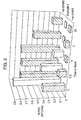
- Fig. 1 The results are shown in Fig. 1 . It can be seen that the complex according to the present invention provides a significant inhibition of elastase activity after 2 and 24 hours.
- the levels of matrix metalloproteinases present in the wound fluid samples were measured spectrofluorimetrically using substrate activity assays.
- the substrates comprise short peptides synthesised to mimic the appropriate enzyme cleavage site and contain a fluorescent reporter group which is released upon hydrolysis.
- Enzyme activity was determined by measuring the rate of production of the fluorimetric compound, 7-amino 4-methyl coumarin. Activity was expressed either as relative fluorescence units per minute (RFU/min) or change in fluorescence when corrected for total protein (RFU/min/mg protein). Each sample was tested times 6 and the average value calculated.
- the substrate was prepared at a 10mM-stock concentration, and diluted to a working concentration of 0.5mM in the appropriate assay buffer.
- the reaction mixture combined in a microtiter well (black, flat bottomed) comprised 5 ⁇ l wound fluid, 175 ⁇ l assay buffer and 20 ⁇ l substrate (final concentration 50 ⁇ M).
- the microtiter plate was read immediately at 455nm (excitation 383nm) and at timed intervals over the next hour; between readings the plate was covered and incubated at 37°C.
- Matrix metalloproteinase-like activity was estimated utilising the substrate Succinyl - Glycine - Proline - Leucine - Glycine - Proline 7-amino 4-methyl coumarin (Bachem, UK, Ltd.) solubilised in methanol.
- the assay buffer necessary for maximal MMP activity was 40mM Tris/HCl, pH 7.4 containing 200mM NaCl and 10mM CaCl 2 .
- a sample of the collagen/ORC sponge prepared as described in Reference Example 1 was used as a positive control.
- a sample of SOF-WICK (Registered Trade Mark) gauze was used as a negative control.
- Fig. 2 The results are shown in Fig. 2 . It can be seen that the complex according to the present invention provides rapid inhibition of collagenase activity, and almost complete inhibition after after 2 and 24 hours.
Landscapes
- Health & Medical Sciences (AREA)
- Chemical & Material Sciences (AREA)
- General Health & Medical Sciences (AREA)
- Engineering & Computer Science (AREA)
- Materials Engineering (AREA)
- Epidemiology (AREA)
- Life Sciences & Earth Sciences (AREA)
- Animal Behavior & Ethology (AREA)
- Hematology (AREA)
- Public Health (AREA)
- Veterinary Medicine (AREA)
- Chemical Kinetics & Catalysis (AREA)
- Medicinal Chemistry (AREA)
- Polymers & Plastics (AREA)
- Organic Chemistry (AREA)
- Materials For Medical Uses (AREA)
- Pharmaceuticals Containing Other Organic And Inorganic Compounds (AREA)
- Medicines That Contain Protein Lipid Enzymes And Other Medicines (AREA)
- Medicinal Preparation (AREA)
Description
- The present invention relates to compositions comprising an oxidized cellulose and a chitosan, and the uses thereof for wound healing.
- Oxidized cellulose is produced by the oxidation of cellulose, for example with dinitrogen tetroxide. This process converts primary alcohol groups on the saccharide residues to carboxylic acid group, forming uronic acid residues within the cellulose chain. The oxidation does not proceed with complete selectivity, and as a result hydroxyl groups on
carbons 2 and 3 are occasionally converted to the keto form. These ketone units introduce an alkali labile link, which at pH 7 or higher initiates the decomposition of the polymer via formation of a lactone and sugar ring cleavage. As a result, oxidized cellulose is biodegradable and bioabsorbable under physiological conditions. - The preferred oxidized cellulose for practical applications is oxidized regenerated cellulose (ORC) prepared by oxidation of a regenerated cellulose, such as rayon. It has been known for some time that ORC has haemostatic properties. ORC has been available as a haemostatic product called SURGICEL (Registered Trade Mark of Johnson & Johnson Medical, Inc.) since 1950. This product is produced by the oxidation of a knitted rayon material.
- A modification of porosity, density and knit pattern led to the launch of a second ORC fabric product, INTERCEED (Registered Trade Mark - Johnson & Johnson Medical, Inc.) which was shown to reduce the extend of post-surgical adhesions in abdominal surgery.
-
US-A-2517772 (Doub et al. ) describes improved haemostatic materials obtained by impregnating ORC fabric with thrombin. -
EP-A-0437095 describes a neutralised ORC material prepared by contacting an as-synthesised acidic ORC material with a solution of a basic salt of a weak organic acid, such as sodium acetate. The resulting neutralised product is indicated for haemostasis and adhesion prevention. -
EP-A-0562862 describes bioabsorbable sponge materials for use as wound implants. The materials comprise a collagen sponge matrix having an oriented substructure therein. The matrix and/or substructures may comprise oxidised regenerated cellulose. There is no disclosure of the use of such materials for the treatment of chronic wounds. -
WO98/00180 -
EP-A-0393825 describes absorbent bodies based on mixtures of cellulose fibers and chitosan.WO00/01166 - The above-described wound dressing materials provide important advantages. The materials are of natural, biological origin (albeit chemically modified), and consequently tend to have low antigenicity. The materials are generally bioabsorbable, which reduces the trauma associated with removal of conventional wound dressing materials from the surface of the wound. Furthermore, some of these materials can have positive therapeutic effects on wound healing.
- However, certain difficulties remain. For example, collagen as a component of wound dressings is prone to denaturation when it is sterilized by gamma-irradiation. Collagen is extracted from natural sources and can be antigenic to certain patients unless stringent measures are taken to purify the collagen, which add to its cost.
- Therefore, there remains a need for improved wound dressing materials of this general type exhibiting control of physical properties and biological absorption rates, therapeutic effects on wound healing, reduced cost, and reduced antigenic response.
- It is an object of the present invention to provide improved wound dressing materials for mammalian wounds, and especially for human, chronic wounds, such as venous ulcers, decubitis ulcers and diabetic ulcers. Such chronic wounds generally exhibit little or no bleeding or adhesion to other body tissues.
- Accordingly, in a first aspect the present invention provides a wound dressing composition in accordance with
claim 1. - Preferably, the oxidized cellulose comprises oxidized regenerated cellulose (ORC). The oxidized regenerated cellulose (ORC) can be obtained by the process described in
US Patent No. 3122479 . - This material offers numerous advantages including the features that it is biocompatible, biodegradable, non-immunogenic and readily commercially available. ORC is available with varying degrees of oxidation and hence rates of degradation. The ORC may be used in the form of insoluble fibers, including woven, non-woven and knitted fabrics. In other embodiments, the ORC is in the form of water-soluble low molecular weight fragments obtained by alkali hydrolysis of ORC.
- In preferred embodiments, the oxidized cellulose is in the form of particles, such as fiber particles or powder particles, preferably dispersed in a suitable solid or semisolid topical medicament vehicle. In particular, the materials preferably contain ORC fibers, wherein a volume fraction of at least 80% of the fibers have lengths in the range of 20µm to 1000µm. Such a size distribution can be achieved, for example, by milling an ORC cloth, followed by sieving the milled powder to remove fibers outside the range. Preferably, the average (mean by volume) length of the ORC fibers is in the range 250µm to 450µm. The selection of ORC fiber lengths in this range results in easy mixing of the ORC and chitosan and highly homogeneous products. The ORC is more thoroughly complexed with the chitosan, which results in enhanced therapeutic properties of the sponge.
- Preferably, the oxidised cellulose has an average molecular weight greater than 50,000. Such oxidised cellulose is substantially insoluble in wound fluids, but will undergo very gradual breakdown into bioresorbable fragments at physiological pH. Preferably, the oxidized cellulose is not neutralized. However, the present invention encompasses the use of partially or completely neutralised materials as described in
EP-A-0437095 for the preparation of medicaments for the treatment of chronic wounds as hereinbefore defined. - Chitin is a natural biopolymer composed of N-acetyl-D-glucosamine units. Chitin may be extracted from the outer shell of shrimps and crabs in known fashion. The chitin is then partially deacetylated, for example by treatment with 5M-15M NaOH, to produce chitosan. Complete deacetylation of the chitin is not a practical possibility, but preferably the chitosan is at least 50% deacetylated, more preferably at least 75% deacetylated. Chitosan has been employed for wound treatment in various physical forms, e.g. as a solution/gel; film/membrane; sponge; powder or fiber. Chitosan in the free base form is swellable but not substantially soluble in water at near-neutral pH, but soluble in acids due to the presence of ammonium groups on the chitosan chain. The solubility of the chitosan may be reduced by cross-linking, for example with epichlorhydrin. Typically, the average molecular weight of the chitosan as determined by gel permeation chromatography is from about 105 to about 106.
- The compositions according to the present invention comprise an intimate mixture of the chitosan and the oxidized cellulose. Preferably, the intimate mixture comprises a mixed solution or dispersion of the chitosan and the oxidized cellulose in a suitable vehicle, such as a solvent, or a solid composition produced by removing solvent from such a solution or dispersion. (By dispersion is meant a distribution of discrete solid particles in the vehicle, e,g a colloidal dispersion or dispersion formed by shear mixing). Such intimate mixing results in maximum chemical complexation between the amine groups of the chitosan and the carboxylate groups on the oxidized cellulose.
- Preferably, the chitosan makes up at least 5%, more preferably at least 10%, 20% or 30% of the composition. Preferably, the Oxidized cellulose also makes up at least 5%, more preferably at least 10%, 20% or 30% of the composition. Preferably, the chitosan and oxidized cellulose together make up at least 25% by weight, more preferably 50% or 75% by weight of the wound dressing material, and in some embodiments at least 90% by weight of the material. In certain preferred embodiments, the material consists essentially of the chitosan and oxidized cellulose.
- Other components of the material according to the invention may include 0-25% by weight, for example from about 1 to about 20% by weight, of one or more other biocompatible polysaccharides, for example alginates such as sodium alginate or calcium alginate, starch derivatives such as sodium starch glycolate, cellulose derivatives such as methyl cellulose or carboxymethyl cellulose, or glycosaminoglycans such as hyaluronic acid or its salts, chondroitin sulfate or heparan sulfate. The materials according to the present invention may also comprise up to about 25% by weight, for example from about 1 to about 20% by weight, of one or more structural proteins selected from the group consisting of fibronectin, fibrin, laminin, elastin, collagen and mixtures thereof. Preferably the protein comprises collagen, and more preferably it consists essentially of collagen. The materials according to the present invention may also comprise up to about 20% by weight, preferably from about 2% to about 10% by weight of water. The material according to the present invention may also contain 0-40% by weight, for example from about 5 to about 25% by weight, of a plasticiser, preferably a polyhydric alcohol such as glycerol or sorbitol.
- In certain embodiments, the materials according to the present invention may also comprise up to about 10% by weight, for example from about 0.01 to about 5% by weight, typically from about 0.1 to about 2% by weight of one or more therapeutic wound healing agents, such as non-steroidal anti-inflammatory drugs (e.g. acetaminophen), steroids, local anaesthetics, antimicrobial agents, or growth factors (e.g. fibroblast growth factor or platelet derived growth factor). The antimicrobial agent may, for example, comprise an antiseptic, an antibiotic, or mixtures thereof. Preferred antibiotics include tetracycline, penicillins, terramycins, erythromycin, bacitracin, neomycin, polymycin B, mupirocin, clindamycin and mixtures thereof. Preferred antiseptics include silver, including colloidal silver, silver salts including salts of one or more of the anionic polymers making up the material, silver sulfadiazine, chlorhexidine, povidone iodine, triclosan, sucralfate, quaternary ammonium salts and mixtures thereof. These medicated wound dressing materials according to the invention provide sustained release of the therapeutic agents as the wound dressing material breaks down in use.
- All of the above percentages are on a dry weight basis.
- Preferably, the weight ratio of chitosan to oxidized cellulose is from about 1:99 to about 99:1. More preferably, the weight ratio is in the range about 1:9 to about 9:1, more preferably it is in the range about 4:1 to about 1:4, still more preferably in the range about 2:1 to about 1:2, and most preferably in the ratio chitosan:oxidized cellulose of from about 60:40 to about 50:50. In certain embodiments the material consists essentially of about 55wt% chitosan and about 45wt% oxidized cellulose, on a dry weight basis.
- The composition according to the present invention is in the form of a powder, a semisolid or gel ointment for topical application, or a freeze-dried or solvent-dried bioabsorbable sponge for application to a chronic wound. Preferably, the average pore size of the sponge is in the region of 10-500µm, more preferably about 100-300µm. A suitable sponge has been made by freeze-drying or solvent drying an aqueous dispersion consisting essentially of chitosan particles or fibers and ORC fibers, together with suitable therapeutic agents.
- In embodiments, the composition according to the present invention is in the form of a flexible film, which may be continuous or interrupted (e.g. perforated). The flexible film preferably comprises a plasticiser to render it flexible, such as glycerol.
- The ready availability of both chitosan and ORC having a range of controllable properties means that the properties of the compositions the present invention can be controlled to an exceptional degree. In particular, the rate of biological absorption, porosity and density of the materials can be controlled.
- In a second aspect the present invention provides a wound dressing comprising a wound dressing composition according to the first aspect of the invention.
- The wound dressing is preferably in sheet form and comprises an active layer of the composition according to the invention. The active layer would normally be the wound contacting layer in use, but in some embodiments it could be separated from the wound by a liquid-permeable top sheet. Preferably, the area of the active layer is from about 1cm2 to about 400 cm2, more preferably from about 4cm2 to about 100cm2.
- Preferably, the article further comprises a backing sheet extending over the active layer opposite to the wound facing side of the active layer. Preferably, the backing sheet is larger than the active layer such that a marginal region of width 1mm to 50 mm, preferably 5mm to 20mm extends around the active layer to form a so-called island dressing. In such cases, the backing sheet is preferably coated with a pressure sensitive medical grade adhesive in at least its marginal region.
- Preferably, the backing sheet is substantially liquid-impermeable. The backing sheet is preferably semipermeable. That is to say, the backing sheet is preferably permeable to water vapour, but not permeable to liquid water or wound exudate.
- Preferably, the backing sheet is also microorganism-impermeable. Suitable continuous conformable backing sheets will preferably have a moisture vapor transmission rate (MVTR) of the backing sheet alone of 300 to 5000 g/m2/24hrs, preferably 500 to 2000 g/m2/24hrs at 37.5 °C at 100% to 10% relative humidity difference. The backing sheet thickness is preferably in the range of 10 to 1000 micrometers, more preferably 100 to 500 micrometers.
- The MVTR of the dressing according to the present invention as a whole is lower than that of the backing sheet alone, because the apertured sheet partially obstructs moisture transfer through the dressing. Preferably, the MVTR of the dressing (measured across the island portion of the dressing) is from 20% to 80% of the MVTR of the backing sheet alone, more preferably from 20% to 60% thereof, and most preferably about 40% thereof. It has been found that such moisture vapor transmission rates allow the wound under the dressing to heal under moist conditions without causing the skin surrounding the wound to macerate.
- Suitable polymers for forming the backing sheet include polyurethanes and poly alkoxyalkyl acrylates and methacrylates such as those disclosed in
GB-A-1280631 - The adhesive (where present) layer should be moisture vapor transmitting and/or patterned to allow passage of water vapor therethrough. The adhesive layer is preferably a continuous moisture vapor transmitting, pressure-sensitive adhesive layer of the type conventionally used for island-type wound dressings, for example, a pressure sensitive adhesive based on acrylate ester copolymers, polyvinyl ethyl ether and polyurethane as described for example in
GB-A-1280631 - The dressing may further comprise an absorbent layer between the active layer and the protective sheet, especially if the dressing is for use on exuding wounds. The optional absorbent layer may be any of the layers conventionally used for absorbing wound fluids, serum or blood in the wound healing art, including gauzes, nonwoven fabrics, superabsorbents, hydrogels and mixtures thereof. Preferably, the absorbent layer comprises a layer of absorbent foam, such as an open celled hydrophilic polyurethane foam prepared in accordance with
EP-A-0541391 . In other embodiments, the absorbent layer may be a nonwoven fibrous web, for example a carded web of viscose staple fibers. The basis weight of the absorbent layer may be in the range of 50-500g/m2, such as 100-400g/m2. The uncompressed thickness of the absorbent layer may be in the range of from 0.5mm to 10mm, such as 1mm to 4mm. The free (uncompressed) liquid absorbency measured for physiological saline may be in the range of 5 to 30 g/g at 25°. Preferably, the absorbent layer or layers are substantially coextensive with the chitosan/ORC layer. - The wound facing surface of the dressing is preferably protected by a removably cover sheet. The cover sheet is normally formed from flexible thermoplastic material. Suitable materials include polyesters and polyolefins. Preferably, the adhesive- facing surface of the cover sheet is a release surface. That is to say, a surface that is only weakly adherent to the active layer and the adhesive on the backing sheet to assist peeling of the hydrogel layer from the cover sheet. For example, the cover sheet may be formed from a non-adherent plastic such as a fluoropolymer, or it may be provided with a release coating such as a silicone or fluoropolymer release coating.
- Preferably, the wound dressing is sterile and packaged in a microorganism-impermeable container.
- In a third aspect, the present invention provides the use of a wound dressing composition according to the first aspect of the invention for the preparation of a dressing for the treatment of a wound. Preferably, the wound is a chronic wound, for example a wound selected from the group consisting of venous ulcers, decubitis ulcers and diabetic ulcers.
- It has been found that the chitosan/oxidized cellulose compositions according to the first aspect of the present invention have an excellent ability to bind to growth factors, in particular, platelet derived growth factor. Accordingly, the present invention also provides the use of compositions according to the first aspect of the invention to bind one or more cell growth factors. Preferably, the cell growth factor is platelet derived cell growth factor (PDGF).
- The present invention further provides a method of preparing an active wound dressing material comprising the step of:
- (i) contacting a material comprising a compositions according to the first aspect of the invention with a biological medium containing cell growth factors to bind the cell growth factors to the material;
- (ii) washing and drying the material having the cell growth factors bound thereto to form said active wound dressing material. Preferably, the cell growth factors comprise platelet derived growth factor.
- In another aspect, the present invention provides a method of treatment of a chronic wound in a mammal, such as a decubitis ulcer, a venous ulcer or a diabetic ulcer. The method comprises applying a dressing according to the second aspect of the invention to the wound.
- Preferably, the dressing is applied to the chronic wound for a period of at least 1 hour, more preferably at least 6 hours, and most preferably at least 12 hours. The treatment may be extended for several days or weeks, with dressing changes as appropriate, if necessary for chronic wounds. This contrasts with haemostatic applications of ORC, which typically last only a few seconds or minutes.
- It is thought that the chitosan/oxidized cellulose compositions promote chronic wound healing in at least some of the following ways. Firstly, the complex binds to growth factors such as PDGF, EGF and FGF to retain these growth factors at the wound site. otherwise, such growth factors tend to be carried away from the wound site along with the wound exudate. The gradual breakdown of chitosan/oxidized cellulose at physiological pH results in gradual release of the growth factors back into the wound. A second reason is that the material is fully bioresorbable and physiologically acceptable. A third reason may be that the oligosaccharide fragments produced by the breakdown of oxidized cellulose and chitosan in vivo themselves promote chronic wound healing.
- Preferably, the chronic wound is selected from the group consisting of venous ulcers, decubitis ulcers and diabetic ulcers. Preferably, the chronic wound is substantially or completely non-bleeding. The term "chronic wound" preferably does not encompass a periodontal disorder or disease.
- The chitosan/oxidized cellulose complexes used in the present invention can be made by a process comprising the steps of: providing an dispersion of a chitosan in a suitable solvent, preferably an aqueous dispersion; immersing or dispersing oxidized cellulose in the solvent; followed by removing solvent from the dispersion to leave a solid material comprising chitosan complexed with oxidized cellulose. The oxidized cellulose may be added to the aqueous dispersion of chitosan in the form of a suspension or solution of the oxidized cellulose, preferably at a comparable pH to the chitosan suspension, following by mixing by stirring or homogenisation. Alternatively, dry fibers or fabric of oxidized cellulose may be dispersed or immersed in the aqueous dispersion of chitosan.
- The optional, additional components in the materials according to the present invention are preferably included in the dispersion prior to removal of solvent from the dispersion.
- Preferably, the pH of the dispersion is preferably adjusted to pH in the range of about 1 to about 10, preferably pH about 2 to about 8. Chitosan is soluble at low pH, which can be desirable for forming certain products such as films. Oxidized cellulose undergoes hydrolysis to soluble fragments at high pH.
- The solvent can be removed from the dispersion by evaporation, for example by evaporation from the dispersion in a tray to leave a film of material. In other embodiments the solvent, preferably water, is removed by freeze-drying (lyophilizing) or solvent-drying to produce the material in the form of a sponge. Preferably, the solvent dispersion contains 5-30mg/ml of chitosan. Preferably, the method of lyophilisation is similar to that described for a collagen-based sponge in
US-A-2157224 . - In certain embodiments the process may further comprise treating the chitosan and/or the oxidized cellulose in the dispersion, or in the dried material, with a cross-linking agent such as epichlorhydrin, carbodiimide, hexamethylene diisocyanate (HMDI) or glutaraldehyde.
- Alternatively, cross-linking may be carried out dehydrothermally. The method of cross-linking can markedly affect the final product. For example, HMDI cross-links the primary amino groups on the chitosan within the complex, whereas carbodiimide cross-links carbohydrate on the ORC to primary amino groups on the chitosan.
- Specific embodiments of the present invention will now be described further, by way of example, with reference to the accompanying drawings, in which:
-
Figure 1 shows a graph of elastase activity against time for a wound dressing material according to the present invention as compared with positive and negative controls; and -
Figure 2 shows a graph of collagenase activity against time for a wound dressing material according to the present invention as compared with the same positive and negative controls. - A freeze-dried collagen/ORC sponge is prepared as follows.
- First, the collagen component is prepared from bovine corium as follows. Bovine corium is split from cow hide, scraped and soaked in sodium hypochlorite solution (0.03% w/v) to inhibit microbial activity pending further processing. The corium is then washed with water and treated with a solution containing sodium hydroxide (0.2% w/v) and hydrogen peroxide (0.02% w/v) to swell and sterilize the corium at ambient temperature. The corium splits then undergo an alkali treatment step in a solution containing sodium hydroxide, calcium hydroxide and sodium bicarbonate (0.4% w/v, 0.6% w/v and 0.05% w.v, respectively) at pH greater than 12.2, ambient temperature, and for a time of 10-14 days, with tumbling, until an amide nitrogen level less than 0.24mmol/g is reached. The corium splits then undergo an acid treatment step with 1% hydrochloric acid at ambient temperature and pH 0.8-1.2. The treatment is continued with tumbling until the corium splits have absorbed sufficient acid to reach a pH less than 2.5. The splits are then washed with water until the pH value of corium splits reaches 3.0-3.4. The corium splits are then comminuted with ice in a bowl chopper first with a coarse comminution and then with a fine comminution setting. The resulting paste, which is made up in a ratio of 650g of the corium splits to 100g of water, as ice, is frozen and stored before use in the next stage of the process. However, the collagen is not freeze-dried before admixture with the ORC in the next stage.
- The ORC component of the freeze-dried pad is prepared as follows. A SURGICEL cloth (Johnson & Johnson Medical, Arlington) is milled using a rotary knife cutter through a screen-plate, maintaining the temperature below 60°C.
- The milled ORC powder and the required weight (according to solids content) of frozen collagen paste are then added to a sufficient amount of water acidified with acetic acid to obtain a pH value of 3.0 and a total solids content of 1.0%. The mixture is homogenized through a Fryma MZ130D homogenizer, progressively diminishing the settings to form a homogeneous slurry. The pH of the slurry is maintained at 2.9-3.1. The slurry temperature is maintained below 20°C, and the solids content is maintained at 1% ± 0.07.
- The resulting slurry is pumped to a degassing vessel. Vacuum is initiated for a minimum of 30 minutes, with intermittent stirring, to degas the slurry. The slurry is then pumped into freeze-drier trays to a depth of 25mm. The trays are placed onto freezer shelves where the temperature has been preset to -40°C. The freeze-drier programme is then initiated to dry and dehydrothermally cross-link the collagen and ORC to form thick sponge pads. On completion of the cycle, the vacuum is released, the freeze-dried blocks are removed, and are then split to remove the top and bottom surface layers, and to divide the remainder of the blocks into 3mm-thick pads. The step of splitting the freeze-dried blocks into pads is carried out with a Fecken Kirfel K1 slitter. Finally, the pads are die-cut to the desired size and shape on a die-cutter, packaged, and sterilized with 18-29 KGy of cobalt 60 gamma-irradiation. Surprisingly, this irradiation does not cause significant denaturation of the collagen, which appears to be stabilized by the presence of ORC. The resulting freeze-dried collagen ORC pads have a uniform, white, velvety appearance. The thickness of the pads is 3.2 ± 0.17mm (N = 8 batches). These pads are used as the positive control in the Procedures described below.
- An alginate/fibrous ORC sponge was prepared as described in Reference Example 1, but with replacement of the collagen by an equal weight fraction of alginate
- Sodium alginate was obtained from Pronova Biomedical in a powdered form. The powder was dissolved in ice cold water at a concentration of 2% w/v by mixing with a paddle stirrer. The solution was then diluted to 1% solids by the addition of an equal volume of 0.1M acetic acid. A known weight of the sodium alginate solution was then added to the ORC to give a final ratio of 45%ORC/55% sodium alginate in the final material. The sponges were then prepared as in example 1.
- A hyaluronate/fibrous ORC sponge was prepared as described in Reference Example 1, but with replacement of the collagen by an equal weight fraction of alginate
- Sodium Hyaluronate with an average molecular weight distribution of 500, 000 daltons was obtained from Lifecore Biomedical Inc in a powdered form. The powder was dissolved in ice cold water at a 2% w/v concentration with mixing overnight. A known weight of the sodium hyaluronate solution was then added to the ORC to give a final ratio of 45%ORC/55% sodium hyaluronate in the final material. The sponges were then prepared as in example 1.
- A pectin/fibrous ORC sponge was prepared as described in Reference Example 1, but with replacement of the collagen by an equal weight fraction of pectin
- Apple derived pectin was obtained from the Sigma Chemical Co. The powder was dissolved in ice cold water at 2% w/v with stirring overnight. A known weight of the pectin solution was then added to the ORC to give a final ratio of 45%ORC/55% pectin in the final material. The sponges were then prepared as in example 1.
- A beta-glucan/fibrous ORC sponge was prepared as described in Reference Example 1, but with replacement of the collagen by an equal weight fraction of a beta-glucan
- B-Glucan was obtained in a powdered form from Sigma Chemical Company, and was dissolved in ice cold water at 2%w/v by stirring overnight. The final solution was diluted with an equal volume of 0.1M Acetic acid to give a solution with a final concentration of 1% w/v in 0.05M acetic acid. A known weight of the b-glucan solution was then added to the ORC to give a final ratio of 45%ORC/55% b-glucan in the final material. The sponges were then prepared as in example 1.
- A locust bean gum/fibrous ORC sponge was prepared as described in Reference Example 1, but with replacement of the collagen by an equal weight fraction of locust bean gum
- Locust Bean Gum was obtained in a granular form from the Sigma Chemical Company. The granules were suspended in ice cold water at 2% w/v. The suspension was then slowly heated to 95 oC to solubilise the gum. The resulting solution was centrifucged at 5000g to clarify the solution and remove the insoluble fragments of seed coat. The supernatant was then removed and and solids content calculated, the solution was then diluted to a final concentration of 1% w/v by the addition of 0.05M acetic acid. A known weight of the locust bean gum solution was then added to the ORC to give a final ratio of 45%ORC/55% locust bean gum in the final material. The sponges were then prepared as in example 1.
- A chitosan/fibrous ORC sponge was prepared as described in Reference Example 1, but with replacement of the collagen by an equal weight fraction of a chitosan
- Chitosan practical grade powder was obtained from the Sigma Chemical Company. The powder was dissolved in ice cold water at a 2 % w/v concentration. The solution was then diluted to 1% w/v chitosan by the addition of an equal volume of 0.1 M acetic acid. A known weight of the chitosan solution was then added to the ORC to give a final ratio of 45%ORC/55% chitosan in the final material. The sponges were then prepared as in example 1.
- A chitosan/ORC film for application to a wound is made as follows.
- 15 grams of chitosan powder was mixed in 1.5 liters of water until blended. 2 grams of glycerol were blended into the mixture. 15 grams of ORC fibers prepared as described in Example 1 were then added with high shear mixing. The resulting mixture was then poured into the bottom of a PTFE tray to a thickness of about 5mm and air-dried to form films of the ORC/chitosan complex.
- A wound treatment gel for topical application to a wound was prepared as follows. ORC fibers were prepared as described in Example 1 and the resulting fibers are dispersed at 2% w/w concentration in a 3% w/w carboxymethyl cellulose (CMC) aqueous gel containing 2wt.% of dissolved chitosan chloride.
- PDGF binding studies were carried out as follows:
Small sections of test material (approximately 1cm2 squares of INTERCEED (RTM) ORC fabric, and approximately 1cm x 0.5cm x 0.4cm sections of the freeze-dried sponges) were weighed and soaked in 100mM sodium phosphate dibasic buffer containing 150mM sodium chloride (total volume 1ml) for at least one hour at room temperature. Samples were then incubated with 2% bovine serum albumin (BSA) in phosphate buffered saline (PBS) for 2 hours at room temperature. 22ng of PDGF was then added to each sample in 250µl of PBS containing 2% BSA, and samples were then incubated for a further hour at 37°C. Each sample was then washed three times with 250µl PBS, followed by increasing concentrations of sodium chloride. Finally, each sample was washed with 4.0M urea. PDGF ELISA analyses of the original PDGF preparation and the various washings were carried out. The results were as follows:Polysaccharide + ORC Protection of PDGF Release of PDGF Comments Chitosan yes yes 50% released & retains activity over 96hr Alginate ? no Since no GF released could not tell if it was protected Hyaluronate no yes 80% released over 96hr but not active - not protected Pectin no yes 40% released over 96hr but not active - not protected Beta-glucan ? no Since no GF released could not determine if protected Locust bean gum ? no Since no GF released could not determine if protected - It can be seen that the chitosan/ORC materials bind PDGF well, and release the bound PDGF with relatively little loss of activity. This is useful for wound healing, since it enables the materials to act as PDGF reservoirs at the wound site, by binding PDGF and then releasing it back into the wound as the material biodegrades in vivo. None of the other ORC/polysaccharide complexes studied has this characteristic.
- The levels of neutrophil-derived elastase present in the wound fluid samples were measured spectrofluorimetrically using substrate activity assays. The substrates comprise short peptides synthesised to mimic the appropriate enzyme cleavage site and contain a fluorescent reporter group which is released upon hydrolysis. Enzyme activity was determined by measuring the rate of production of the fluorimetric compound, 7-amino 4-methyl coumarin. Activity was expressed either as relative fluorescence units per minute (RFU/min) or change in fluorescence when corrected for total protein (RFU/min/mg protein). Each sample was tested times 6 and the average value calculated. The substrate was prepared at a 10mM-stock concentration, and diluted to a working concentration of 0.5mM in the appropriate assay buffer. The reaction mixture, combined in a microtiter well (black, flat bottomed) comprised 5µl wound fluid, 175µl assay buffer and 20µl substrate (
final concentration 50□µM). The microtiter plate was read immediately at 455nm (excitation 383nm) and at timed intervals over the next hour; between readings the plate was covered and incubated at 37°C. Neutrophil-derived elastase-like activity was estimated using the fluorimetric substrate Methoxy - Alanine - Alanine - Proline - Valine 7-amino 4-methyl coumarin (Bachem UK, Ltd.) solubilised in methanol. The assay buffer required for optimal activity of this enzyme was 0.1M Hepes, pH 7.5 containing 0.5M NaCl and 10% dimethyl sulphoxide. - A sample of the collagen/ORC sponge prepared as described in Reference Example 1 was used as a positive control. A sample of SOF-WICK (Registered Trade Mark) gauze was used as a negative control.
- The results are shown in
Fig. 1 . It can be seen that the complex according to the present invention provides a significant inhibition of elastase activity after 2 and 24 hours. - The levels of matrix metalloproteinases present in the wound fluid samples were measured spectrofluorimetrically using substrate activity assays. The substrates comprise short peptides synthesised to mimic the appropriate enzyme cleavage site and contain a fluorescent reporter group which is released upon hydrolysis. Enzyme activity was determined by measuring the rate of production of the fluorimetric compound, 7-amino 4-methyl coumarin. Activity was expressed either as relative fluorescence units per minute (RFU/min) or change in fluorescence when corrected for total protein (RFU/min/mg protein). Each sample was tested times 6 and the average value calculated. The substrate was prepared at a 10mM-stock concentration, and diluted to a working concentration of 0.5mM in the appropriate assay buffer. The reaction mixture, combined in a microtiter well (black, flat bottomed) comprised 5µl wound fluid, 175µl assay buffer and 20µl substrate (final concentration 50µM). The microtiter plate was read immediately at 455nm (excitation 383nm) and at timed intervals over the next hour; between readings the plate was covered and incubated at 37°C. Matrix metalloproteinase-like activity was estimated utilising the substrate Succinyl - Glycine - Proline - Leucine - Glycine - Proline 7-amino 4-methyl coumarin (Bachem, UK, Ltd.) solubilised in methanol. The assay buffer necessary for maximal MMP activity was 40mM Tris/HCl, pH 7.4 containing 200mM NaCl and 10mM CaCl2.
- A sample of the collagen/ORC sponge prepared as described in Reference Example 1 was used as a positive control. A sample of SOF-WICK (Registered Trade Mark) gauze was used as a negative control.
- The results are shown in
Fig. 2 . It can be seen that the complex according to the present invention provides rapid inhibition of collagenase activity, and almost complete inhibition after after 2 and 24 hours.
Claims (14)
- A wound dressing composition comprising a chitosan and an oxidized cellulose, wherein the chitosan and the oxidized cellulose are intimately mixed in the composition, wherein said oxidized cellulose is in the form of dispersed fibers or powder, wherein the composition is in the form of a powder, a freeze-dried or solvent-dried bioabsorbable sponge, a semi-solid or gel ointment for topical application, or a flexible film.
- A wound dressing composition according to any preceding claim, wherein the oxidized cellulose comprises oxidized regenerated cellulose (ORC).
- A wound dressing composition according to any preceding claim, wherein the oxidized cellulose and the chitosan together make up at least 25% by weight of the material on a dry weight basis.
- A wound dressing composition according to claim 3, wherein the oxidized cellulose and the chitosan together make up at least 50% by weight of the material on a dry weight basis.
- A wound dressing composition according to any preceding claim, wherein the composition further comprises from about 0.01 to about 5% by weight on a dry weight basis of one or more wound healing therapeutic substances.
- A wound composition according to any preceding claim, wherein the weight ratio of chitosan to oxidized cellulose is from 1:10 to 10:1.
- A wound dressing composition according to claim 6, wherein the weight ratio of chitosan to oxidized cellulose is in the range of 1:4 to 4:1.
- A wound dressing comprising a wound dressing composition according to any of claims 1 to 7.
- A wound dressing according to claim 8 which is sterile and packaged in a microorganism-impermeable container.
- Use of a wound dressing composition according to any of claims 1 to 7 for the preparation of a dressing for the treatment of a wound.
- Use according to claim 10, wherein the wound is a chronic wound.
- Use according to claim 11 wherein said chronic wound is selected from the group consisting of venous ulcers, decubitis ulcers and diabetic ulcers.
- A method of preparing an active wound dressing material comprising the steps of:(i) contacting a composition according to any of claims 1 to 7 with a biological medium containing cell growth factors to bind the cell growth factors to the material; and(ii) washing and drying the material having the cell growth factors bound thereto to form said active wound dressing material.
- A method according to claim 13, wherein the cell growth factors comprise platelet derived growth factor.
Priority Applications (1)
| Application Number | Priority Date | Filing Date | Title |
|---|---|---|---|
| EP16185572.1A EP3115068B1 (en) | 2002-09-18 | 2003-09-17 | Wound dressing compositions comprising chitosan and an oxidised cellulose |
Applications Claiming Priority (3)
| Application Number | Priority Date | Filing Date | Title |
|---|---|---|---|
| GB0221688A GB2393120A (en) | 2002-09-18 | 2002-09-18 | Compositions for wound treatment |
| GB0221688 | 2002-09-18 | ||
| PCT/GB2003/004019 WO2004026200A2 (en) | 2002-09-18 | 2003-09-17 | Wound dressing compositions comprising chitosan and an oxidised cellulose |
Related Child Applications (2)
| Application Number | Title | Priority Date | Filing Date |
|---|---|---|---|
| EP16185572.1A Division EP3115068B1 (en) | 2002-09-18 | 2003-09-17 | Wound dressing compositions comprising chitosan and an oxidised cellulose |
| EP16185572.1A Division-Into EP3115068B1 (en) | 2002-09-18 | 2003-09-17 | Wound dressing compositions comprising chitosan and an oxidised cellulose |
Publications (2)
| Publication Number | Publication Date |
|---|---|
| EP1539258A2 EP1539258A2 (en) | 2005-06-15 |
| EP1539258B1 true EP1539258B1 (en) | 2016-10-26 |
Family
ID=9944331
Family Applications (2)
| Application Number | Title | Priority Date | Filing Date |
|---|---|---|---|
| EP16185572.1A Expired - Lifetime EP3115068B1 (en) | 2002-09-18 | 2003-09-17 | Wound dressing compositions comprising chitosan and an oxidised cellulose |
| EP03797383.1A Expired - Lifetime EP1539258B1 (en) | 2002-09-18 | 2003-09-17 | Wound dressing compositions comprising chitosan and an oxidised cellulose |
Family Applications Before (1)
| Application Number | Title | Priority Date | Filing Date |
|---|---|---|---|
| EP16185572.1A Expired - Lifetime EP3115068B1 (en) | 2002-09-18 | 2003-09-17 | Wound dressing compositions comprising chitosan and an oxidised cellulose |
Country Status (8)
| Country | Link |
|---|---|
| US (3) | US20060172000A1 (en) |
| EP (2) | EP3115068B1 (en) |
| JP (1) | JP4593277B2 (en) |
| AU (1) | AU2003264890B8 (en) |
| CA (1) | CA2499498C (en) |
| ES (1) | ES2817478T3 (en) |
| GB (1) | GB2393120A (en) |
| WO (1) | WO2004026200A2 (en) |
Families Citing this family (117)
| Publication number | Priority date | Publication date | Assignee | Title |
|---|---|---|---|---|
| US7923431B2 (en) | 2001-12-21 | 2011-04-12 | Ferrosan Medical Devices A/S | Haemostatic kit, a method of preparing a haemostatic agent and a method of promoting haemostatis |
| GB0224986D0 (en) | 2002-10-28 | 2002-12-04 | Smith & Nephew | Apparatus |
| BR0317237A (en) | 2002-12-11 | 2005-11-01 | Ferrosan As | Sampling or collecting device, kit, uses of a device and a kit, and methods for decreasing the amount of a marker in a sample area, for qualitatively or quantitatively sampling an area for the content of a marker and for grow microorganisms or mammalian cells collected |
| WO2004080500A1 (en) * | 2003-03-10 | 2004-09-23 | Johnson & Johnson Medical Limited | Hydrocolloid materials for use in wound healing |
| GB2399289B (en) * | 2003-03-10 | 2006-03-08 | Johnson & Johnson Medical Ltd | Hydrocolloid materials for use in wound healing |
| GB2408206B (en) | 2003-11-18 | 2007-11-28 | Johnson & Johnson Medical Ltd | Antioxidant and antimicrobial wound dressing materials |
| WO2005027808A1 (en) | 2003-09-12 | 2005-03-31 | Z-Medica Corporation | Calcium zeolite hemostatic agent |
| ATE489062T1 (en) | 2003-09-12 | 2010-12-15 | Z Medica Corp | PARTIALLY HYDROGENATED HEMOSTATIC AGENT |
| GB0325129D0 (en) | 2003-10-28 | 2003-12-03 | Smith & Nephew | Apparatus in situ |
| US11298453B2 (en) | 2003-10-28 | 2022-04-12 | Smith & Nephew Plc | Apparatus and method for wound cleansing with actives |
| GB0325126D0 (en) | 2003-10-28 | 2003-12-03 | Smith & Nephew | Apparatus with heat |
| ATE475434T1 (en) | 2004-01-30 | 2010-08-15 | Ferrosan As | HEMOSTATIC SPRAYS AND COMPOSITIONS |
| GB0409446D0 (en) | 2004-04-28 | 2004-06-02 | Smith & Nephew | Apparatus |
| US10413644B2 (en) | 2004-04-27 | 2019-09-17 | Smith & Nephew Plc | Wound treatment apparatus and method |
| US7753894B2 (en) | 2004-04-27 | 2010-07-13 | Smith & Nephew Plc | Wound cleansing apparatus with stress |
| US8529548B2 (en) | 2004-04-27 | 2013-09-10 | Smith & Nephew Plc | Wound treatment apparatus and method |
| US8129359B2 (en) | 2004-06-04 | 2012-03-06 | Ethicon, Inc. | Composition and method for treating post-surgical pain |
| US8377906B2 (en) | 2004-06-04 | 2013-02-19 | Ethicon, Inc. | Compositions and methods for preventing or reducing postoperative ileus and gastric stasis |
| RU2369408C2 (en) * | 2004-07-09 | 2009-10-10 | Ферросан А/С | Hemostatic composition comprising hyaluronic acid |
| GB2418145A (en) * | 2004-09-17 | 2006-03-22 | Ethicon Inc | Wound treatment system |
| US20060178609A1 (en) | 2005-02-09 | 2006-08-10 | Z-Medica, Llc | Devices and methods for the delivery of molecular sieve materials for the formation of blood clots |
| JP2008531498A (en) | 2005-02-15 | 2008-08-14 | バージニア コモンウェルス ユニバーシティ | Mineral technology (MT) for emergency hemostasis and treatment of acute wounds and chronic ulcers |
| DE102005063438A1 (en) * | 2005-02-24 | 2007-12-27 | Lohmann & Rauscher Gmbh & Co. Kg | Process for the preparation of porous sponges from purified marine collagen |
| US9326995B2 (en) | 2005-04-04 | 2016-05-03 | The Regents Of The University Of California | Oxides for wound healing and body repair |
| US20060282046A1 (en) * | 2005-04-13 | 2006-12-14 | Horn Jeffrey L | Device and method for subcutaneous delivery of blood clotting agent |
| GB0526503D0 (en) * | 2005-12-29 | 2006-02-08 | Medtrade Products Ltd | Hemostatic material |
| US8938898B2 (en) | 2006-04-27 | 2015-01-27 | Z-Medica, Llc | Devices for the identification of medical products |
| US20070276308A1 (en) * | 2006-05-26 | 2007-11-29 | Huey Raymond J | Hemostatic agents and devices for the delivery thereof |
| US7604819B2 (en) | 2006-05-26 | 2009-10-20 | Z-Medica Corporation | Clay-based hemostatic agents and devices for the delivery thereof |
| US7968114B2 (en) * | 2006-05-26 | 2011-06-28 | Z-Medica Corporation | Clay-based hemostatic agents and devices for the delivery thereof |
| US8202532B2 (en) | 2006-05-26 | 2012-06-19 | Z-Medica Corporation | Clay-based hemostatic agents and devices for the delivery thereof |
| JP5518288B2 (en) * | 2006-11-30 | 2014-06-11 | 有限会社ナイセム | Anti-adhesion medical material |
| GB2444232A (en) | 2006-11-30 | 2008-06-04 | Ethicon Inc | Wound dressing compositions comprising cell lysates |
| ES2552842T3 (en) | 2007-02-19 | 2015-12-02 | Marine Polymer Technologies, Inc. | Hemostatic compositions and therapeutic regimens |
| AU2013202662B2 (en) * | 2007-02-19 | 2015-09-03 | Marine Polymer Technologies, Inc. | Hemostatic compositions and therapeutic regimens |
| CN104874007A (en) | 2007-08-28 | 2015-09-02 | 奥塔哥创新有限公司 | surgical hydrogel |
| US8299316B2 (en) * | 2007-12-18 | 2012-10-30 | Ethicon, Inc. | Hemostatic device |
| US8071663B2 (en) * | 2008-02-29 | 2011-12-06 | Ethicon, Inc. | Medically acceptable formulation of a diisocyanate terminated macromer for use as an internal adhesive or sealant |
| WO2009109194A2 (en) | 2008-02-29 | 2009-09-11 | Ferrosan A/S | Device for promotion of hemostasis and/or wound healing |
| US8324292B2 (en) * | 2008-02-29 | 2012-12-04 | Ethicon, Inc. | Medically acceptable formulation of a diisocyanate terminated macromer for use as an internal adhesive or sealant |
| US9061087B2 (en) * | 2008-03-04 | 2015-06-23 | Hemostasis, Llc | Method of making a hemostatic sponge wound dressing comprising subjecting the sponge to water vapor |
| EP2288389B1 (en) * | 2008-04-24 | 2014-06-11 | Medtronic, Inc | Cold ionizing radiation sterilization |
| EP2296637B1 (en) * | 2008-04-24 | 2014-04-02 | Medtronic, Inc | Chitosan-containing protective composition |
| US20090269417A1 (en) * | 2008-04-24 | 2009-10-29 | Medtronic, Inc. | Thiolated chitosan gel |
| US9198997B2 (en) * | 2008-04-24 | 2015-12-01 | Medtronic, Inc. | Rehydratable thiolated polysaccharide particles and sponge |
| EP2310002B1 (en) * | 2008-04-24 | 2016-11-02 | Medtronic, Inc | Protective gel based on chitosan and oxidized polysaccharide |
| GB2461019B (en) * | 2008-04-25 | 2013-06-05 | Medtrade Products Ltd | Haemostatic material |
| GB0808376D0 (en) | 2008-05-08 | 2008-06-18 | Bristol Myers Squibb Co | Wound dressing |
| IT1391669B1 (en) * | 2008-07-23 | 2012-01-17 | Universita' Degli Studi Di Trieste | NANOCOMPOSITE MATERIALS FORMED FROM A POLYSACCHARIDIC MATRIX AND METALLIC NANOPARTICLES, THEIR PREPARATION AND USE |
| GB2463523B (en) * | 2008-09-17 | 2013-05-01 | Medtrade Products Ltd | Wound care device |
| GB0817796D0 (en) | 2008-09-29 | 2008-11-05 | Convatec Inc | wound dressing |
| WO2010065908A2 (en) * | 2008-12-05 | 2010-06-10 | Catchmark Jeffrey M | Degradable biomolecule compositions |
| US8623336B2 (en) | 2008-12-15 | 2014-01-07 | Council Of Scientific & Industrial Research | Transparent xyloglucan/chitosan gel and a process for the preparation thereof |
| US8703101B2 (en) | 2009-08-04 | 2014-04-22 | 3M Innovative Properties Company | Methods of determining NOx in a wound sample |
| ES2773017T3 (en) | 2010-04-06 | 2020-07-09 | Synedgen Inc | Chitosan derivatives for the treatment of mucositis or ulceration |
| AU2011239466B2 (en) | 2010-04-15 | 2015-01-22 | Marine Polymer Technologies, Inc. | Anti-bacterial applications of poly -N-acetylglucosamine nanofibers |
| US8858969B2 (en) | 2010-09-22 | 2014-10-14 | Z-Medica, Llc | Hemostatic compositions, devices, and methods |
| JP5937094B2 (en) * | 2010-10-27 | 2016-06-22 | メドトロニック,インコーポレイテッド | Population scab used for airway |
| GB201020236D0 (en) | 2010-11-30 | 2011-01-12 | Convatec Technologies Inc | A composition for detecting biofilms on viable tissues |
| WO2012078724A1 (en) | 2010-12-08 | 2012-06-14 | Convatec Technologies Inc. | Apparatus and method for applying pressure to a wound site |
| CA2819475C (en) | 2010-12-08 | 2019-02-12 | Convatec Technologies Inc. | Integrated system for assessing wound exudates |
| US9526816B2 (en) | 2010-12-08 | 2016-12-27 | Convatec Technologies Inc. | Wound exudate monitor accessory |
| GB201116523D0 (en) | 2011-09-23 | 2011-11-09 | Systagenix Wound Man Ip Co Bv | Wound prognosis |
| GB2487729A (en) * | 2011-01-31 | 2012-08-08 | Systagenix Wound Man Ip Co Bv | Measurement of matrix metalloproteinase (MMP) and elastase in wound fluid |
| EP2896963B1 (en) * | 2011-01-31 | 2019-01-30 | Woundchek Laboratories B.V. | Wound prognosis |
| MX356877B (en) | 2011-04-15 | 2018-06-19 | Marine Polymer Tech Inc | Treatment of disease with poly-n-acety glucosamine nanofibers. |
| CN102205142B (en) * | 2011-05-18 | 2014-01-22 | 威高集团有限公司 | Water-soluble hemostatic material and preparation method thereof |
| CN102198288A (en) * | 2011-05-20 | 2011-09-28 | 威高集团有限公司 | Water-soluble hemostatic material and preparation method thereof |
| GB201115182D0 (en) | 2011-09-02 | 2011-10-19 | Trio Healthcare Ltd | Skin contact material |
| GB2497406A (en) | 2011-11-29 | 2013-06-12 | Webtec Converting Llc | Dressing with a perforated binder layer |
| GB201120693D0 (en) | 2011-12-01 | 2012-01-11 | Convatec Technologies Inc | Wound dressing for use in vacuum therapy |
| US9028851B2 (en) * | 2011-12-21 | 2015-05-12 | Ethicon, Inc. | Hemostatic materials and devices with galvanic particulates |
| JP6241624B2 (en) | 2012-03-06 | 2017-12-06 | フェロサン メディカル デバイシーズ エイ/エス | Pressurized container containing hemostatic paste |
| US8815832B2 (en) | 2012-05-25 | 2014-08-26 | Ethicon, Inc. | Oxidized regenerated cellulose hemostatic powders and methods of making |
| CN104349797B (en) | 2012-06-12 | 2017-10-27 | 弗罗桑医疗设备公司 | Dry hemostatic composition |
| WO2013191836A1 (en) | 2012-06-22 | 2013-12-27 | Z-Medica, Llc | Hemostatic devices |
| CA2883704C (en) | 2012-09-20 | 2021-09-28 | Synedgen, Inc. | Methods for treatment or prevention of damage resulting from radiation, trauma or shock |
| FR2995788B1 (en) * | 2012-09-25 | 2014-09-26 | Sofradim Production | HEMOSTATIC PATCH AND PREPARATION METHOD |
| CA2890757C (en) | 2012-11-14 | 2021-10-26 | Smith & Nephew, Inc. | Stable thermolysin hydrogel |
| EP2935688A2 (en) | 2012-12-20 | 2015-10-28 | ConvaTec Technologies Inc. | Processing of chemically modified cellulosic fibres |
| RU2015137174A (en) | 2013-03-15 | 2017-04-24 | Смит энд Невью, Инк. | SOLUBLE FORMING FILM GEL AND WAY CLEANING METHOD |
| CN105188795B (en) | 2013-05-10 | 2018-07-31 | 史密夫及内修公开有限公司 | For rinsing and the fluid connection of suction wound |
| EP3010419B1 (en) | 2013-06-21 | 2020-05-20 | Ferrosan Medical Devices A/S | Vacuum expanded dry composition and syringe for retaining same |
| EP3024887B1 (en) | 2013-07-26 | 2023-11-22 | The Penn State Research Foundation | Method for preparation of polymer compositions and coatings |
| US9192574B2 (en) | 2013-10-24 | 2015-11-24 | Medtronic Xomed, Inc. | Chitosan paste wound dressing |
| US9192692B2 (en) | 2013-10-24 | 2015-11-24 | Medtronic Xomed, Inc. | Chitosan stenting paste |
| IL229645A0 (en) * | 2013-11-26 | 2014-03-31 | Omrix Biopharmaceuticals Ltd | Dry pad comprising thrombin and pectin |
| EP3079731B1 (en) | 2013-12-11 | 2018-08-08 | Ferrosan Medical Devices A/S | Dry composition comprising an extrusion enhancer |
| JP6726852B2 (en) | 2014-10-13 | 2020-07-22 | フェッローサン メディカル ディバイス エー/エス | Dry composition for use in hemostasis and wound healing |
| RU2705905C2 (en) | 2014-12-24 | 2019-11-12 | Ферросан Медикал Дивайсиз А/С | Syringe for holding and mixing first and second substances |
| CN107921172A (en) * | 2015-04-27 | 2018-04-17 | 马克西姆·卡尔波夫 | Hemostatic compositions and devices |
| AU2016290433B2 (en) | 2015-07-03 | 2018-05-24 | Ferrosan Medical Devices A/S | Syringe for mixing two components and for retaining a vacuum in a storage condition |
| GB2543544A (en) | 2015-10-21 | 2017-04-26 | Brightwake Ltd | Wound dressing |
| EP3373983A4 (en) * | 2015-11-10 | 2019-06-12 | Materials Modification Inc. | Multifunctional transdermal dressing for wounds |
| CN109310528B (en) | 2016-03-30 | 2021-07-20 | 康沃特克科技公司 | Detection of microbial infections in wounds |
| AU2017243601A1 (en) | 2016-03-30 | 2018-11-22 | Acib Gmbh | Detecting microbial infection in wounds |
| GB201608099D0 (en) | 2016-05-09 | 2016-06-22 | Convatec Technologies Inc | Negative pressure wound dressing |
| EP3481360B1 (en) | 2016-07-08 | 2022-03-09 | ConvaTec Technologies Inc. | Fluid flow sensing |
| MX2019000234A (en) | 2016-07-08 | 2019-09-06 | Convatec Technologies Inc | Fluid collection apparatus. |
| TW201805034A (en) | 2016-07-08 | 2018-02-16 | 美商康瓦鐵克科技股份有限公司 | Flexible negative pressure system |
| US11752235B2 (en) | 2016-08-16 | 2023-09-12 | Kci Licensing, Inc. | Collagen/ORC dressing encapsulated within a bioresorbable envelope |
| US10517989B1 (en) | 2016-11-23 | 2019-12-31 | Jonathan F. Arnold | Enhanced medical dressing apparatus, system, and method |
| EP3338813B2 (en) | 2016-12-20 | 2026-04-15 | BSN Medical GmbH | Multi-layer wound care product with perforated release layer |
| KR101945938B1 (en) * | 2017-07-12 | 2019-02-12 | 순천향대학교 산학협력단 | A preparation method of injectable thermosensitive chitosan/tempo based-oxidized cellulose hydrogel |
| CA3079695A1 (en) | 2017-11-08 | 2019-05-16 | Pasquale DEL GAUDIO | In situ gelifying powder |
| US12161792B2 (en) | 2017-11-16 | 2024-12-10 | Convatec Limited | Fluid collection apparatus |
| IL256325A (en) * | 2017-12-14 | 2018-01-31 | Omrix Biopharmaceuticals Ltd | Antimicrobial compositions comprising minocycline and degradation products of oxidized cellulose |
| IL256312A (en) * | 2017-12-14 | 2018-01-31 | Omrix Biopharmaceuticals Ltd | Antimicrobial compositions comprising minocycline and oxidized cellulose |
| JP6869518B2 (en) * | 2018-03-23 | 2021-05-12 | 国立研究開発法人物質・材料研究機構 | Hydrogel containing sulfonated cellulose nanofibers |
| CN112368028A (en) | 2018-05-09 | 2021-02-12 | 弗罗桑医疗设备公司 | Method for preparing a hemostatic composition |
| KR102289206B1 (en) * | 2018-07-12 | 2021-08-13 | 순천향대학교 산학협력단 | A chitosan/TEMPO oxidized cellulose nanofiber hydrogel comprising fk506 for bone therapy and a method for manufacturing the same |
| CN109224115A (en) * | 2018-11-27 | 2019-01-18 | 大连大学 | A kind of preparation method of chitosan-oxidation microcrystalline cellulose multilayer high porosity medical biologic film |
| SG11202112292QA (en) | 2019-06-03 | 2021-12-30 | Convatec Ltd | Methods and devices to disrupt and contain pathogens |
| CN110947022A (en) * | 2019-08-01 | 2020-04-03 | 安徽省小山卫生材料有限公司 | Preparation method of chitosan-based composite antibacterial dressing |
| US11771819B2 (en) | 2019-12-27 | 2023-10-03 | Convatec Limited | Low profile filter devices suitable for use in negative pressure wound therapy systems |
| US11331221B2 (en) | 2019-12-27 | 2022-05-17 | Convatec Limited | Negative pressure wound dressing |
| CN113941026A (en) * | 2021-10-25 | 2022-01-18 | 浙江中医药大学 | Bioactive glass-coated chitosan cellulose derivative-based injectable hydrogel dressing and preparation method thereof |
Family Cites Families (29)
| Publication number | Priority date | Publication date | Assignee | Title |
|---|---|---|---|---|
| US2157224A (en) * | 1933-04-21 | 1939-05-09 | Pure Oil Co | Method for producting motor fuels |
| US2517772A (en) | 1945-05-11 | 1950-08-08 | Parke Davis & Co | Neutralized oxidized cellulose products |
| US3122479A (en) * | 1957-11-14 | 1964-02-25 | David F Smith | Hemostatic surgical dressings |
| US3157524A (en) * | 1960-10-25 | 1964-11-17 | Ethicon Inc | Preparation of collagen sponge |
| GB1280631A (en) | 1968-07-09 | 1972-07-05 | Smith & Nephew | Adhesive materials |
| JPH0686548B2 (en) * | 1989-04-21 | 1994-11-02 | 工業技術院長 | Novel water absorbent composite material and method for producing the same |
| CA2033046C (en) | 1990-01-12 | 1999-08-03 | Lowell Saferstein | Process for preparing a neutralized oxidized cellulose product and its method of use |
| AU3062392A (en) * | 1991-11-04 | 1993-06-07 | Novo Nordisk A/S | Pdgf gel formulation |
| GB9123708D0 (en) | 1991-11-07 | 1992-01-02 | Johnson & Johnson Medical Ltd | Method of making polyurethane foam |
| GB9206504D0 (en) | 1992-03-25 | 1992-05-06 | Jevco Ltd | Heteromorphic sponges as wound implants |
| JP2794246B2 (en) * | 1992-05-02 | 1998-09-03 | 西川ゴム工業株式会社 | Medical coating protective material |
| JPH0780020A (en) * | 1993-09-17 | 1995-03-28 | Nippon Zeon Co Ltd | Wound dressing |
| FR2736835B1 (en) | 1995-07-17 | 1997-10-10 | Aber Technologies | DRESSING FOR CHRONIC WOUNDS, ESPECIALLY pressure sores, IN CHINESE GEL |
| US6309661B1 (en) * | 1996-02-28 | 2001-10-30 | Carla A. Haynes | Solid polysaccharide materials for use as wound dressings |
| JP2822174B2 (en) * | 1996-03-01 | 1998-11-11 | オーミケンシ株式会社 | Method for producing chitin chitosan fiber and structure |
| GB2314842B (en) * | 1996-06-28 | 2001-01-17 | Johnson & Johnson Medical | Collagen-oxidized regenerated cellulose complexes |
| GB2314840B (en) * | 1996-06-28 | 2000-09-06 | Johnson & Johnson Medical | Oxidized oligosaccharides and pharmaceutical compositions |
| GB9613714D0 (en) | 1996-06-29 | 1996-08-28 | Keatch Richard W | Removal of scale from surfaces |
| GB9613957D0 (en) * | 1996-07-03 | 1996-09-04 | British Textile Tech | Cellulose product |
| EP0928206B1 (en) * | 1996-07-11 | 2004-04-14 | Coloplast A/S | A hydrocolloid wound gel |
| US5836970A (en) * | 1996-08-02 | 1998-11-17 | The Kendall Company | Hemostatic wound dressing |
| JPH10151184A (en) * | 1996-11-25 | 1998-06-09 | Omikenshi Co Ltd | Functional wound dressing |
| WO1999001166A1 (en) * | 1997-07-02 | 1999-01-14 | Coloplast A/S | A method for preparing a non-fibrous porous material |
| US6115476A (en) | 1998-06-30 | 2000-09-05 | Intel Corporation | Active digital audio/video signal modification to correct for playback system deficiencies |
| GB2344519B (en) * | 1998-12-07 | 2004-05-19 | Johnson & Johnson Medical Ltd | Sterile therapeutic compositions |
| US6399092B1 (en) * | 2000-12-27 | 2002-06-04 | Healthpoint, Ltd. | Anhydrous, hydrophilic absorbent wound dressing (tube) with antimicrobials or other pharmaceutically active agents |
| JP4310967B2 (en) * | 2002-03-26 | 2009-08-12 | 凸版印刷株式会社 | Method for producing polysaccharide complex |
| US7252837B2 (en) * | 2002-06-28 | 2007-08-07 | Ethicon, Inc. | Hemostatic wound dressing and method of making same |
| JP4356289B2 (en) * | 2002-07-25 | 2009-11-04 | 凸版印刷株式会社 | Polysaccharide complex and method for producing the same |
-
2002
- 2002-09-18 GB GB0221688A patent/GB2393120A/en not_active Withdrawn
-
2003
- 2003-09-17 EP EP16185572.1A patent/EP3115068B1/en not_active Expired - Lifetime
- 2003-09-17 EP EP03797383.1A patent/EP1539258B1/en not_active Expired - Lifetime
- 2003-09-17 US US10/528,262 patent/US20060172000A1/en active Granted
- 2003-09-17 US US10/528,262 patent/US9675728B2/en not_active Expired - Fee Related
- 2003-09-17 AU AU2003264890A patent/AU2003264890B8/en not_active Ceased
- 2003-09-17 ES ES16185572T patent/ES2817478T3/en not_active Expired - Lifetime
- 2003-09-17 CA CA2499498A patent/CA2499498C/en not_active Expired - Lifetime
- 2003-09-17 WO PCT/GB2003/004019 patent/WO2004026200A2/en not_active Ceased
- 2003-09-17 JP JP2004537288A patent/JP4593277B2/en not_active Expired - Lifetime
-
2017
- 2017-05-18 US US15/599,399 patent/US20170319736A1/en not_active Abandoned
Non-Patent Citations (1)
| Title |
|---|
| None * |
Also Published As
| Publication number | Publication date |
|---|---|
| CA2499498A1 (en) | 2004-04-01 |
| WO2004026200A2 (en) | 2004-04-01 |
| EP3115068A1 (en) | 2017-01-11 |
| US9675728B2 (en) | 2017-06-13 |
| EP1539258A2 (en) | 2005-06-15 |
| AU2003264890A1 (en) | 2004-04-08 |
| GB0221688D0 (en) | 2002-10-30 |
| US20060172000A1 (en) | 2006-08-03 |
| US20170319736A1 (en) | 2017-11-09 |
| WO2004026200A3 (en) | 2004-09-02 |
| AU2003264890B2 (en) | 2009-08-20 |
| ES2817478T3 (en) | 2021-04-07 |
| JP4593277B2 (en) | 2010-12-08 |
| AU2003264890B8 (en) | 2009-10-15 |
| GB2393120A (en) | 2004-03-24 |
| EP3115068B1 (en) | 2020-07-22 |
| JP2006514843A (en) | 2006-05-18 |
| CA2499498C (en) | 2012-05-01 |
Similar Documents
| Publication | Publication Date | Title |
|---|---|---|
| EP3115068B1 (en) | Wound dressing compositions comprising chitosan and an oxidised cellulose | |
| EP1795210B1 (en) | Wound dressings comprising oxidized cellulose and human recombinant collagen | |
| EP1536845B1 (en) | Wound dressing materials comprising complexes of anionic polysaccharides with silver | |
| JP4401438B2 (en) | Use of oxidized cellulose and its complexes for chronic wound healing | |
| EP1684813B1 (en) | Antioxidant and antimicrobial wound dressing materials | |
| US20190151495A1 (en) | Composite biomaterials with controlled release of active ingredient, preparation process and uses | |
| US20140010887A1 (en) | Modified starch material of biocompatible hemostasis | |
| AU2004248971A1 (en) | Antioxidant wound dressing materials | |
| GB2402882A (en) | Bioabsorbable wound dressing containing an antioxidant dye | |
| WO2008155512A2 (en) | Stabilized wound dressing | |
| WO2025144087A1 (en) | Haemostatic agent |
Legal Events
| Date | Code | Title | Description |
|---|---|---|---|
| PUAI | Public reference made under article 153(3) epc to a published international application that has entered the european phase |
Free format text: ORIGINAL CODE: 0009012 |
|
| 17P | Request for examination filed |
Effective date: 20050113 |
|
| AK | Designated contracting states |
Kind code of ref document: A2 Designated state(s): AT BE BG CH CY CZ DE DK EE ES FI FR GB GR HU IE IT LI LU MC NL PT RO SE SI SK TR |
|
| AX | Request for extension of the european patent |
Extension state: AL LT LV MK |
|
| DAX | Request for extension of the european patent (deleted) | ||
| RAP1 | Party data changed (applicant data changed or rights of an application transferred) |
Owner name: SYSTAGENIX WOUND MANAGEMENT IP CO. BV. |
|
| RAP1 | Party data changed (applicant data changed or rights of an application transferred) |
Owner name: SYSTAGENIX WOUND MANAGEMENT IP CO. BV. |
|
| GRAP | Despatch of communication of intention to grant a patent |
Free format text: ORIGINAL CODE: EPIDOSNIGR1 |
|
| INTG | Intention to grant announced |
Effective date: 20160406 |
|
| GRAJ | Information related to disapproval of communication of intention to grant by the applicant or resumption of examination proceedings by the epo deleted |
Free format text: ORIGINAL CODE: EPIDOSDIGR1 |
|
| GRAR | Information related to intention to grant a patent recorded |
Free format text: ORIGINAL CODE: EPIDOSNIGR71 |
|
| GRAS | Grant fee paid |
Free format text: ORIGINAL CODE: EPIDOSNIGR3 |
|
| INTC | Intention to grant announced (deleted) | ||
| GRAA | (expected) grant |
Free format text: ORIGINAL CODE: 0009210 |
|
| INTG | Intention to grant announced |
Effective date: 20160830 |
|
| AK | Designated contracting states |
Kind code of ref document: B1 Designated state(s): AT BE BG CH CY CZ DE DK EE ES FI FR GB GR HU IE IT LI LU MC NL PT RO SE SI SK TR |
|
| REG | Reference to a national code |
Ref country code: GB Ref legal event code: FG4D Ref country code: DE Ref legal event code: R081 Ref document number: 60349543 Country of ref document: DE Owner name: SYSTAGENIX WOUND MANAGEMENT, LTD., GATWICK AIR, GB Free format text: FORMER OWNER: JOHNSON & JOHNSON MEDICAL LTD., EDINBURGH, GB |
|
| REG | Reference to a national code |
Ref country code: CH Ref legal event code: EP |
|
| REG | Reference to a national code |
Ref country code: AT Ref legal event code: REF Ref document number: 839559 Country of ref document: AT Kind code of ref document: T Effective date: 20161115 |
|
| REG | Reference to a national code |
Ref country code: IE Ref legal event code: FG4D |
|
| REG | Reference to a national code |
Ref country code: DE Ref legal event code: R096 Ref document number: 60349543 Country of ref document: DE |
|
| REG | Reference to a national code |
Ref country code: NL Ref legal event code: MP Effective date: 20161026 |
|
| REG | Reference to a national code |
Ref country code: AT Ref legal event code: MK05 Ref document number: 839559 Country of ref document: AT Kind code of ref document: T Effective date: 20161026 |
|
| PG25 | Lapsed in a contracting state [announced via postgrant information from national office to epo] |
Ref country code: SE Free format text: LAPSE BECAUSE OF FAILURE TO SUBMIT A TRANSLATION OF THE DESCRIPTION OR TO PAY THE FEE WITHIN THE PRESCRIBED TIME-LIMIT Effective date: 20161026 Ref country code: GR Free format text: LAPSE BECAUSE OF FAILURE TO SUBMIT A TRANSLATION OF THE DESCRIPTION OR TO PAY THE FEE WITHIN THE PRESCRIBED TIME-LIMIT Effective date: 20170127 |
|
| PG25 | Lapsed in a contracting state [announced via postgrant information from national office to epo] |
Ref country code: ES Free format text: LAPSE BECAUSE OF FAILURE TO SUBMIT A TRANSLATION OF THE DESCRIPTION OR TO PAY THE FEE WITHIN THE PRESCRIBED TIME-LIMIT Effective date: 20161026 Ref country code: BE Free format text: LAPSE BECAUSE OF FAILURE TO SUBMIT A TRANSLATION OF THE DESCRIPTION OR TO PAY THE FEE WITHIN THE PRESCRIBED TIME-LIMIT Effective date: 20161026 Ref country code: NL Free format text: LAPSE BECAUSE OF FAILURE TO SUBMIT A TRANSLATION OF THE DESCRIPTION OR TO PAY THE FEE WITHIN THE PRESCRIBED TIME-LIMIT Effective date: 20161026 Ref country code: PT Free format text: LAPSE BECAUSE OF FAILURE TO SUBMIT A TRANSLATION OF THE DESCRIPTION OR TO PAY THE FEE WITHIN THE PRESCRIBED TIME-LIMIT Effective date: 20170227 Ref country code: AT Free format text: LAPSE BECAUSE OF FAILURE TO SUBMIT A TRANSLATION OF THE DESCRIPTION OR TO PAY THE FEE WITHIN THE PRESCRIBED TIME-LIMIT Effective date: 20161026 Ref country code: FI Free format text: LAPSE BECAUSE OF FAILURE TO SUBMIT A TRANSLATION OF THE DESCRIPTION OR TO PAY THE FEE WITHIN THE PRESCRIBED TIME-LIMIT Effective date: 20161026 |
|
| REG | Reference to a national code |
Ref country code: DE Ref legal event code: R097 Ref document number: 60349543 Country of ref document: DE |
|
| PG25 | Lapsed in a contracting state [announced via postgrant information from national office to epo] |
Ref country code: SK Free format text: LAPSE BECAUSE OF FAILURE TO SUBMIT A TRANSLATION OF THE DESCRIPTION OR TO PAY THE FEE WITHIN THE PRESCRIBED TIME-LIMIT Effective date: 20161026 Ref country code: CZ Free format text: LAPSE BECAUSE OF FAILURE TO SUBMIT A TRANSLATION OF THE DESCRIPTION OR TO PAY THE FEE WITHIN THE PRESCRIBED TIME-LIMIT Effective date: 20161026 Ref country code: RO Free format text: LAPSE BECAUSE OF FAILURE TO SUBMIT A TRANSLATION OF THE DESCRIPTION OR TO PAY THE FEE WITHIN THE PRESCRIBED TIME-LIMIT Effective date: 20161026 Ref country code: EE Free format text: LAPSE BECAUSE OF FAILURE TO SUBMIT A TRANSLATION OF THE DESCRIPTION OR TO PAY THE FEE WITHIN THE PRESCRIBED TIME-LIMIT Effective date: 20161026 Ref country code: DK Free format text: LAPSE BECAUSE OF FAILURE TO SUBMIT A TRANSLATION OF THE DESCRIPTION OR TO PAY THE FEE WITHIN THE PRESCRIBED TIME-LIMIT Effective date: 20161026 |
|
| RAP2 | Party data changed (patent owner data changed or rights of a patent transferred) |
Owner name: SYSTAGENIX WOUND MANAGEMENT IP CO. B.V. |
|
| PG25 | Lapsed in a contracting state [announced via postgrant information from national office to epo] |
Ref country code: BG Free format text: LAPSE BECAUSE OF FAILURE TO SUBMIT A TRANSLATION OF THE DESCRIPTION OR TO PAY THE FEE WITHIN THE PRESCRIBED TIME-LIMIT Effective date: 20170126 |
|
| PLBE | No opposition filed within time limit |
Free format text: ORIGINAL CODE: 0009261 |
|
| STAA | Information on the status of an ep patent application or granted ep patent |
Free format text: STATUS: NO OPPOSITION FILED WITHIN TIME LIMIT |
|
| 26N | No opposition filed |
Effective date: 20170727 |
|
| PG25 | Lapsed in a contracting state [announced via postgrant information from national office to epo] |
Ref country code: SI Free format text: LAPSE BECAUSE OF FAILURE TO SUBMIT A TRANSLATION OF THE DESCRIPTION OR TO PAY THE FEE WITHIN THE PRESCRIBED TIME-LIMIT Effective date: 20161026 |
|
| REG | Reference to a national code |
Ref country code: FR Ref legal event code: PLFP Year of fee payment: 15 |
|
| REG | Reference to a national code |
Ref country code: DE Ref legal event code: R082 Ref document number: 60349543 Country of ref document: DE Representative=s name: OLSWANG GERMANY LLP, DE Ref country code: DE Ref legal event code: R081 Ref document number: 60349543 Country of ref document: DE Owner name: SYSTAGENIX WOUND MANAGEMENT, LTD., GATWICK AIR, GB Free format text: FORMER OWNER: SYSTAGENIX WOUND MANAGEMENT IP CO. BV., AMSTERDAM, NL Ref country code: DE Ref legal event code: R082 Ref document number: 60349543 Country of ref document: DE Representative=s name: SIMMONS & SIMMONS LLP, DE |
|
| REG | Reference to a national code |
Ref country code: GB Ref legal event code: 732E Free format text: REGISTERED BETWEEN 20180215 AND 20180221 |
|
| REG | Reference to a national code |
Ref country code: CH Ref legal event code: PL |
|
| PG25 | Lapsed in a contracting state [announced via postgrant information from national office to epo] |
Ref country code: MC Free format text: LAPSE BECAUSE OF FAILURE TO SUBMIT A TRANSLATION OF THE DESCRIPTION OR TO PAY THE FEE WITHIN THE PRESCRIBED TIME-LIMIT Effective date: 20161026 |
|
| REG | Reference to a national code |
Ref country code: IE Ref legal event code: MM4A |
|
| PG25 | Lapsed in a contracting state [announced via postgrant information from national office to epo] |
Ref country code: LU Free format text: LAPSE BECAUSE OF NON-PAYMENT OF DUE FEES Effective date: 20170917 |
|
| REG | Reference to a national code |
Ref country code: DE Ref legal event code: R082 Ref document number: 60349543 Country of ref document: DE Representative=s name: SIMMONS & SIMMONS LLP, DE |
|
| PG25 | Lapsed in a contracting state [announced via postgrant information from national office to epo] |
Ref country code: CH Free format text: LAPSE BECAUSE OF NON-PAYMENT OF DUE FEES Effective date: 20170930 Ref country code: LI Free format text: LAPSE BECAUSE OF NON-PAYMENT OF DUE FEES Effective date: 20170930 Ref country code: IE Free format text: LAPSE BECAUSE OF NON-PAYMENT OF DUE FEES Effective date: 20170917 |
|
| REG | Reference to a national code |
Ref country code: FR Ref legal event code: PLFP Year of fee payment: 16 |
|
| PG25 | Lapsed in a contracting state [announced via postgrant information from national office to epo] |
Ref country code: HU Free format text: LAPSE BECAUSE OF FAILURE TO SUBMIT A TRANSLATION OF THE DESCRIPTION OR TO PAY THE FEE WITHIN THE PRESCRIBED TIME-LIMIT; INVALID AB INITIO Effective date: 20030917 |
|
| PG25 | Lapsed in a contracting state [announced via postgrant information from national office to epo] |
Ref country code: CY Free format text: LAPSE BECAUSE OF NON-PAYMENT OF DUE FEES Effective date: 20161026 |
|
| PG25 | Lapsed in a contracting state [announced via postgrant information from national office to epo] |
Ref country code: TR Free format text: LAPSE BECAUSE OF FAILURE TO SUBMIT A TRANSLATION OF THE DESCRIPTION OR TO PAY THE FEE WITHIN THE PRESCRIBED TIME-LIMIT Effective date: 20161026 |
|
| PGFP | Annual fee paid to national office [announced via postgrant information from national office to epo] |
Ref country code: IT Payment date: 20220825 Year of fee payment: 20 Ref country code: GB Payment date: 20220818 Year of fee payment: 20 Ref country code: DE Payment date: 20220616 Year of fee payment: 20 |
|
| PGFP | Annual fee paid to national office [announced via postgrant information from national office to epo] |
Ref country code: FR Payment date: 20220819 Year of fee payment: 20 |
|
| REG | Reference to a national code |
Ref country code: DE Ref legal event code: R071 Ref document number: 60349543 Country of ref document: DE |
|
| REG | Reference to a national code |
Ref country code: GB Ref legal event code: PE20 Expiry date: 20230916 |
|
| PG25 | Lapsed in a contracting state [announced via postgrant information from national office to epo] |
Ref country code: GB Free format text: LAPSE BECAUSE OF EXPIRATION OF PROTECTION Effective date: 20230916 |