EP1538780B1 - Automatische Erkennung des drahtlosen Netzwerktyps - Google Patents
Automatische Erkennung des drahtlosen Netzwerktyps Download PDFInfo
- Publication number
- EP1538780B1 EP1538780B1 EP04025545A EP04025545A EP1538780B1 EP 1538780 B1 EP1538780 B1 EP 1538780B1 EP 04025545 A EP04025545 A EP 04025545A EP 04025545 A EP04025545 A EP 04025545A EP 1538780 B1 EP1538780 B1 EP 1538780B1
- Authority
- EP
- European Patent Office
- Prior art keywords
- network
- wireless
- wireless network
- authentication sequence
- provisioning services
- Prior art date
- Legal status (The legal status is an assumption and is not a legal conclusion. Google has not performed a legal analysis and makes no representation as to the accuracy of the status listed.)
- Expired - Lifetime
Links
- 238000001514 detection method Methods 0.000 title claims description 51
- 238000000034 method Methods 0.000 claims description 29
- 238000012545 processing Methods 0.000 description 14
- 238000004891 communication Methods 0.000 description 7
- 238000010586 diagram Methods 0.000 description 4
- 230000008569 process Effects 0.000 description 4
- 230000001360 synchronised effect Effects 0.000 description 4
- 238000005516 engineering process Methods 0.000 description 3
- 230000008901 benefit Effects 0.000 description 2
- 230000005540 biological transmission Effects 0.000 description 2
- 230000002093 peripheral effect Effects 0.000 description 2
- 239000000523 sample Substances 0.000 description 2
- RYGMFSIKBFXOCR-UHFFFAOYSA-N Copper Chemical compound [Cu] RYGMFSIKBFXOCR-UHFFFAOYSA-N 0.000 description 1
- 230000004075 alteration Effects 0.000 description 1
- 230000001413 cellular effect Effects 0.000 description 1
- 230000008859 change Effects 0.000 description 1
- 238000012790 confirmation Methods 0.000 description 1
- 229910052802 copper Inorganic materials 0.000 description 1
- 239000010949 copper Substances 0.000 description 1
- 230000007812 deficiency Effects 0.000 description 1
- 230000001419 dependent effect Effects 0.000 description 1
- 230000009977 dual effect Effects 0.000 description 1
- 239000000835 fiber Substances 0.000 description 1
- 230000006870 function Effects 0.000 description 1
- 230000007246 mechanism Effects 0.000 description 1
- 230000005055 memory storage Effects 0.000 description 1
- 238000012986 modification Methods 0.000 description 1
- 230000004048 modification Effects 0.000 description 1
- 230000003287 optical effect Effects 0.000 description 1
- 230000002123 temporal effect Effects 0.000 description 1
- 238000012546 transfer Methods 0.000 description 1
- 238000012795 verification Methods 0.000 description 1
Images


Classifications
-
- H—ELECTRICITY
- H04—ELECTRIC COMMUNICATION TECHNIQUE
- H04L—TRANSMISSION OF DIGITAL INFORMATION, e.g. TELEGRAPHIC COMMUNICATION
- H04L63/00—Network architectures or network communication protocols for network security
- H04L63/04—Network architectures or network communication protocols for network security for providing a confidential data exchange among entities communicating through data packet networks
- H04L63/0428—Network architectures or network communication protocols for network security for providing a confidential data exchange among entities communicating through data packet networks wherein the data content is protected, e.g. by encrypting or encapsulating the payload
-
- H—ELECTRICITY
- H04—ELECTRIC COMMUNICATION TECHNIQUE
- H04L—TRANSMISSION OF DIGITAL INFORMATION, e.g. TELEGRAPHIC COMMUNICATION
- H04L63/00—Network architectures or network communication protocols for network security
- H04L63/06—Network architectures or network communication protocols for network security for supporting key management in a packet data network
-
- H—ELECTRICITY
- H04—ELECTRIC COMMUNICATION TECHNIQUE
- H04L—TRANSMISSION OF DIGITAL INFORMATION, e.g. TELEGRAPHIC COMMUNICATION
- H04L63/00—Network architectures or network communication protocols for network security
- H04L63/20—Network architectures or network communication protocols for network security for managing network security; network security policies in general
-
- H—ELECTRICITY
- H04—ELECTRIC COMMUNICATION TECHNIQUE
- H04L—TRANSMISSION OF DIGITAL INFORMATION, e.g. TELEGRAPHIC COMMUNICATION
- H04L63/00—Network architectures or network communication protocols for network security
- H04L63/20—Network architectures or network communication protocols for network security for managing network security; network security policies in general
- H04L63/205—Network architectures or network communication protocols for network security for managing network security; network security policies in general involving negotiation or determination of the one or more network security mechanisms to be used, e.g. by negotiation between the client and the server or between peers or by selection according to the capabilities of the entities involved
-
- H—ELECTRICITY
- H04—ELECTRIC COMMUNICATION TECHNIQUE
- H04W—WIRELESS COMMUNICATION NETWORKS
- H04W12/00—Security arrangements; Authentication; Protecting privacy or anonymity
- H04W12/04—Key management, e.g. using generic bootstrapping architecture [GBA]
- H04W12/043—Key management, e.g. using generic bootstrapping architecture [GBA] using a trusted network node as an anchor
- H04W12/0433—Key management protocols
-
- H—ELECTRICITY
- H04—ELECTRIC COMMUNICATION TECHNIQUE
- H04W—WIRELESS COMMUNICATION NETWORKS
- H04W12/00—Security arrangements; Authentication; Protecting privacy or anonymity
- H04W12/06—Authentication
- H04W12/069—Authentication using certificates or pre-shared keys
-
- H—ELECTRICITY
- H04—ELECTRIC COMMUNICATION TECHNIQUE
- H04W—WIRELESS COMMUNICATION NETWORKS
- H04W48/00—Access restriction; Network selection; Access point selection
- H04W48/16—Discovering, processing access restriction or access information
-
- H—ELECTRICITY
- H04—ELECTRIC COMMUNICATION TECHNIQUE
- H04W—WIRELESS COMMUNICATION NETWORKS
- H04W84/00—Network topologies
- H04W84/02—Hierarchically pre-organised networks, e.g. paging networks, cellular networks, WLAN [Wireless Local Area Network] or WLL [Wireless Local Loop]
- H04W84/10—Small scale networks; Flat hierarchical networks
- H04W84/12—WLAN [Wireless Local Area Networks]
Definitions
- the present invention relates generally to wireless network communication, and, more particularly, to a system and method facilitating automatic detection of a wireless network type.
- Computer device(s) performing network communications over wireless links are becoming increasingly popular.
- the client device e.g., computer system
- the client device is able to discern two pieces of information about that network, without connecting to it (e.g., from the wireless network beacon): (1) the service set identifier (SSID) of the network (e.g., essentially its name); and, (2) whether or not the network encrypts data.
- SSID service set identifier
- an encryption key is required.
- the encryption key can be manually entered by the user and/or sent in accordance with the 802.1x protocol.
- the client device can generally determine whether the network is of type unencrypted, encrypted or, with the addition of a Wi-Fi Protected Access (WPA) information element, encrypted using WPA-pre-shared key or encrypted using WPA. If it is unencrypted , then a user needs only to acknowledge that the network is insecure, and that they wish to use it in spite of that information. However, if it is encrypted and does not use WPA, then it either requires the user to enter a WEP key or it is an 802.1x-enabled network which distributes the WEP key automatically (requiring the client computer to enable 802.1x authentication to complete the connection).
- WPA Wi-Fi Protected Access
- the client computer Since the client computer cannot tell whether the non-WPA encrypted network requires the user to enter a WEP key or is an 802.1x-enabled network which does not support WPA, it typically requests input from the user. In the vast majority of cases, the user is in no position, from a technical knowledge perspective, to answer such a request.
- US 2003 / 163558 A1 describes a technique for an operator to monitor access network services available to an end device, where the end device communicated in a heterogeneous network environment. It is described that different access networks are available to the end device based on a location of the end device and the time that the network is being accessed. A user of the end device may desire access to a particular network depending on the available access networks. To determine which access networks are available, an operator instructs the end device to determine available access networks located within the heterogeneous network environment. The access network information is collected from at least one node within the heterogeneous network, and made available to the operator. Thereafter, the access network can be provided to the end device in accordance with collected information.
- the determination can be used to select an available access network for the subscriber based on, for example, the subscribers contract policy.
- the results can also be used to perform hyper hand over's i.e. substantially seamless hand off between two types of access networks, such as from a cellular network to a wireless LAN.
- US 2003 / 204748 describes a technique for identifying the particular security protocol to access each network that a user of a portable device encounters. If a security protocol is required for a network, and the user has the appropriate security key, the system is further configured to identify that key. The system is configured to determine whether a network within range of the device required encryption, and if so, at what level.
- the systems access a network profile to determine whether the user possesses a key for use in the particular network. It is described that a receiver receives transmissions from transmitters in the vicinity of the receiver.
- a network detector is configured to detect transmissions from newly encountered networks, for example by detecting new pilot signals from a network. The detector is further described to be configured to provide an identifier, nominally the SSID, of the network to a controller. Further, the detector is described as also being configured to provide an indication of whether the network is secure. In the paradigm of an 802.11b network, the indication of security is provided by the Wire Equivalent Privacy (WEP) flag. Therefore, it is the object of the present invention to provide improved methods and systems for the handling of wireless network communication. This objective problem is solved by the subject matter of the independent claims. Preferred embodiments are the subject of the dependent claims.
- WEP Wire Equivalent Privacy
- wireless network client(s) can automatically detect the ''type'' of a network without requiring input from the user.
- the "type" in this context refers to the method of authentication and encryption that the network requires (e.g. , unencrypted networks requiring no authentication, encrypted networks requiring the user to enter a WEP key, encrypted networks supporting 802.1x authentication, Wi-Fi Protected Access (WPA) networks requiring the user to enter a WPA pre-shared key, 802.1x enabled network which do support WPA, and/or wireless provisioning services supporting networks).
- the system employs a technique for efficiently and safely determining which of the network types the user is attempting to connect to, thereby allowing the operating system to present the user with an appropriate user interface.
- the system can provide a way to distinguish whether (1) a manually-entered WEP key or (2) 802.1x authentication is required by the wireless network.
- a wireless network detection system having a connection component and a detection component.
- the connection component facilitates connection of a client system to at least one of a plurality of wireless networks.
- the detection component identifies a type of an available wireless network.
- identification by the detection component can be based, at least in part, upon receipt of a specific information element from a wireless network beacon.
- the detection component iteratively probes the wireless network beacon in connection with identifying a type of the wireless network.
- the detection component can first attempt to connect to the wireless network as if it were a wireless provisioning services (WPS) supporting network. By waiting for certain kinds of failure(s) in the authentication sequence, the detection component can determine if the network requires the user to enter a WEP key.
- WPS wireless provisioning services
- the detection component can wait a longer period of time (e.g., up to thirty seconds) for a particular piece of the authentication sequence (e.g., Protected extensible authentication protocol - type length value (PEAP-TLV)) that identifies a WPS network.
- a particular piece of the authentication sequence e.g., Protected extensible authentication protocol - type length value (PEAP-TLV)
- PAP-TLV Protected extensible authentication protocol - type length value
- the user is not asked to determine the network type. This can lead, for example, to user(s) who are more successful in their use of wireless networks and further reduce user frustration with wireless network(s).
- a component may be, but is not limited to being, a process running on a processor, a processor, an object, an executable, a thread of execution, a program, and/or a computer.
- an application running on a server and the server can be a component.
- One or more components may reside within a process and/or thread of execution and a component may be localized on one computer and/or distributed between two or more computers. Also, these components can execute from various computer readable media having various data structures stored thereon.
- the components may communicate via local and/or remote processes such as in accordance with a signal having one or more data packets (e.g. , data from one component interacting with another component in a local system, distributed system, and/or across a network such as the Internet with other systems via the signal).
- Computer components can be stored, for example, on computer readable media including, but not limited to, an ASIC (application specific integrated circuit), CD (compact disc), DVD (digital video disk), ROM (read only memory), floppy disk, hard disk, EEPROM (electrically erasable programmable read only memory) and memory stick in accordance with the present invention.
- the system 100 can facilitate automatic detection of a type of wireless network by a client (e.g., without requiring input from a user).
- Type of wireless network refers generally to the kind of authentication and encryption that the network requires.
- wireless networks can be divided into six types:
- the IEEE 802.11 set of standards defines two network types: encrypted networks (e.g. , WEP networks) and unencrypted networks.
- WEP networks Owing to the well-known weaknesses of the WEP protocol, the wireless industry implemented support for the IEEE 802.1x standard as a mechanism for addressing the key deficiencies in the WEP protocol, those being user authentication, encryption key management and encryption key distribution.
- WEP-encrypted networks the user needs to provide an encryption key and for 802.1x enabled networks the key is provided automatically if the user has a valid credential (e.g. , such as a digital certificate or username and password).
- a valid credential e.g. , such as a digital certificate or username and password
- WPA Wi-Fi Protected Access
- WPA also addresses some of the usability issues of the original 802.11 standard by specifying an information element which WPA-capable access points include in their beacon frame. This information element describes inter alia whether the network requires the user to enter the encryption key called WPA pre-shared key mode (WPA-PSK) or whether the key is provided automatically by virtue of the user's credential, referred to as "WPA mode".
- WPA-PSK WPA pre-shared key mode
- WPA mode WPA mode
- WEP is defined by the IEEE 802.11 standard and is intended to provide a level of data confidentiality that is equivalent to a wired network. Due to the nature of wireless LAN networks, implementing a security infrastructure that monitors physical access to the network can be difficult. Unlike a wired network where a physical connection is required, anyone within range of a wireless access point (AP) can conceivably send and receive frames as well as listen for other frames being sent. This makes eavesdropping and remote sniffing of wireless LAN frames very easy.
- AP wireless access point
- WEP provides data confidentiality services by encrypting the data sent between wireless nodes.
- WEP encryption for an 802.11 frame is indicated by setting a WEP flag in the MAC header of the 802.11 frame.
- WEP provides data integrity for random errors by including an integrity check value (ICV) in the encrypted portion of the wireless frame.
- IOV integrity check value
- WEP defines: TABLE 1 Key type Description Multicast/global key Encryption key that helps to protect multicast and broadcast traffic from a wireless AP to all of its connected wireless clients.
- Unicast session key Encryption key that helps to protect unicast traffic between a wireless client and a wireless AP and multicast and broadcast traffic sent by a wireless client to the wireless AP.
- WEP encryption employs the RC4 symmetric stream cipher with 40-bit and 104-bit encryption keys.
- WPA is a Wi-Fi standard designed to improved upon the security features of WEP. Unlike WEP, 802.1x authentication is required in WPA. With WPA, rekeying of both unicast and global encryption keys is required. For the unicast encryption key, the Temporal Key Integrity Protocol (TKIP) changes the key for every frame, and the change is synchronized between the wireless client and the wireless access point (AP). For the global encryption key, WPA includes a facility for the wireless AP to advertise the changed key to the connected wireless clients.
- TKIP Temporal Key Integrity Protocol
- TKIP replaces WEP with an encryption algorithm that is stronger than the WEP algorithm.
- TKIP also provides for verification of the security configuration after the encryption keys are determined; synchronized changing of the unicast encryption key for each frame; and, determination of a unique starting unicast encryption key for each pre-shared key authentication.
- WPA further employs a method know as "Michael” that specifies an algorithm that calculates an 8-byte message integrity code (MIC).
- MIC 8-byte message integrity code
- the MIC is placed between the data portion of the IEEE 802.11 frame and the 4-byte integrity check value (ICV).
- ICV 4-byte integrity check value
- the MIC field is encrypted together with the frame data and the ICV.
- WPA is an interim standard that will be replaced with the IEEE's 802.11i standard upon its completion.
- WPS Wireless Provisioning Services
- WPS allows Wi-Fi network providers and/or enterprises to send provisioning and configuration information to a mobile client as it connects to the Internet or a corporate network, providing seamless and automatic provisioning and configuration of the client with uniform sign-up experience.
- the network recognizes the user, automatically sets up the session, and bills the user's account.
- a network can request substantially any type of information from the user, for example, a user name, a coupon code, and/or demographic information.
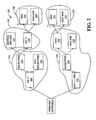
- FIG. 2 a diagram 200 exemplary wireless network types in accordance with an aspect of the present invention is illustrated.
- Wireless networks encompassed by the original 802.11 specification 210 include encrypted 214 and not encrypted 216.
- the 802.1x specification further facilitated automatic distribution of the WEP encryption key 222 and 802.1x authentication 224.
- the introduction of WPS further provides for 802.1x authentication 224 to be sub-divided into network(s) that support WPS 242 and network(s) that do not support WPS 244.
- WPA wireless network supporting the 802.11 specification and further encompassing the WPA specification 230.
- These network(s) are encrypted 234 and can be sub-divided into WPA 236 (e.g., 802.1x-enabled networks that support WPA) and WPA PSK 238.
- WPA Wired Equivalent Privacy
- WPA node 236 can be further sub-divided into network(s) that support WPS 252 and network(s) that do not support WPS 254.
- the wireless network detection system 100 includes the wireless network detection system 100
- the wireless network detection system 100 includes a connection component 110 and a detection component 120.
- the connection component 110 facilitates connection of a client system 130 to at least one of a plurality of type of wireless networks.
- the detection component 120 can iteratively probe an available wireless network beacon 140 in connection with identifying a type of the wireless network.
- the system 100 can employ a probing technique to determine the network type of a "new" network the first time the user tries to connect to it.
- the system 100 can employ an information element from the wireless network beacon 140 to facilitate determination of the network type.
- the client computer when a user comes within range of a wireless network, the client computer is able to discern two pieces of information about that network, without connecting to it (e.g. , from the wireless network beacon): (1) the SSID of the network (e.g. , essentially its name); and, (2) whether or not the network encrypts data. If the network employs encryption, an encryption key is required. The encryption key can be manually entered by the user and/or via the 801.1x protocol. Thus, for each of the network types, the information the client computer requires from the user can be different.
- the computer can only determine whether the network is (a) unencrypted (type #1) or (b) encrypted (type #2 or #4) or, with the addition of the WPA information element, encrypted using WPA-PSK (type #3) or encrypted using WPA (type #5)
- the user can acknowledge that the network is insecure, and that they wish to use it in spite of that information. However, if it is encrypted and does not use WPA, then it is either of type #2 or #4. If it is type #2, the user would need to enter a WEP key, and if it is type #4, the user not need to enter a WEP key, but the client computer needs to enable 802.1x authentication to complete the connection. Since the client computer cannot tell whether the network is #2 or #4, it essentially has to ask the user. In the vast majority of cases, the user is in no position (from a technical knowledge perspective) to answer such a question. The introduction of WPS network(s) has made the situation even more complicated (e.g. , three different types of encrypted networks).
- the wireless network detection system 100 efficiently and safely determines which of a plurality of network types the user is attempting to connect to, in order to present the user with appropriate user interface (UI). As noted previously, for each of the network types, the information the client computer needs from the user can be different. Thus, the system 100 can provide a way to distinguish whether (1) a manually-entered WEP key or (2) 802.1x authentication is required by the wireless network without significant user input.
- the system 100 employs an information element (IE) from the wireless network beacon 140 to facilitate determination of the network type.
- IE information element
- the general concept of an IE is part of the 802.11 standard.
- a specific IE for example, two bits, can be used to provide information to distinguish between the types of network (e.g. , three).
- the wireless network beacon 140 provides the IE to the detection component 120. Based, at least in part, upon the IE, the detection component 120 identifies the type of wireless network.
- the system 100 employs a probing technique to determine the encryption type of a network, for example, performed the first time the user tries to connect to it.
- the detection component 120 can first attempt to connect to the wireless network as if it were a WPS network.
- WPS networks are a subset of 802.1 x networks ( e.g. , type #4 or type #5) and may or may not support WPA.
- the detection component 120 can determine if the network is of type #2 (e.g. , manually entered WEP key).
- the probing can mitigate impact upon the user by recognizing a common type of network (e.g. , manually entered WEP key).
- the detection component 120 can wait a longer period of time (e.g. , up to thirty seconds) for a particular piece of the authentication sequence (e.g. , Protected extensible authentication protocol - type length value (PEAP-TLV)) that identifies a WPS network. In the absence of this piece of the sequence, the detection component 120 can identify the wireless network as type #4 or type #5 to the connection component 110. If the particular piece of the authentication sequence is detected by the detection component 120, then the detection component 120 can identify the network as a WPS supporting network to the connection component 110.
- a particular piece of the authentication sequence e.g. , Protected extensible authentication protocol - type length value (PEAP-TLV)
- PAP-TLV Protected extensible authentication protocol - type length value
- the user is not asked to determine the network type. This can lead, for example, to user(s) who are more successful in their use of wireless networks and further reduce user frustration with wireless network(s).
- wireless network detection system 100 the connection component 110, the detection component 120, the client system 130 and/or the wireless network beacon 140 can be computer components as that term is defined herein.
- FIGs. 3-5 methodologies that may be implemented in accordance with the present invention are illustrated. While, for purposes of simplicity of explanation, the methodologies are shown and described as a series of blocks, it is to be understood and appreciated that the present invention is not limited by the order of the blocks, as some blocks may, in accordance with the present invention, occur in different orders and/or concurrently with other blocks from that shown and described herein. Moreover, not all illustrated blocks may be required to implement the methodologies in accordance with the present invention.
- program modules include routines, programs, objects, data structures, etc. that perform particular tasks or implement particular abstract data types.
- functionality of the program modules may be combined or distributed as desired in various embodiments.
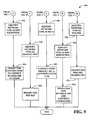
- a method facilitating wireless network detection 300 in accordance with an aspect of the present invention is illustrated.
- connection to a wireless network as a WPS network is attempted.
- a threshold period of time e.g. 30 seconds
- a threshold period of time e.g. 30 seconds
- a determination is made as to whether the particular piece of authentication information has been received. If the determination at 350 is NO, at 360, the network is identified as type #4 or type #5, and, no further processing occurs. If the determination at 350 is YES, at 370, the network is identified as WPS-supporting, and, no further processing occurs.
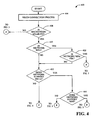
- a method facilitating wireless network detection 400 in accordance with an aspect of the present invention is illustrated.
- the connection process is begun.
- a determination is made as to whether the wireless network is encrypted (e.g., based, at least in part, upon information received from the wireless network beacon). If the determination at 408 is NO, at 412, the network is identified as not encrypted.
- a user can be prompted for confirmation to connect to an insecure network, and, no further processing occurs.
- the network is identified as an 802.1x network.
- connection to the wireless network can be continued using a default 802.1x authentication type, and, no further processing occurs.
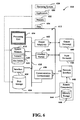
- Fig. 6 and the following discussion are intended to provide a brief, general description of a suitable operating environment 610 in which various aspects of the present invention may be implemented. While the invention is described in the general context of computer-executable instructions, such as program modules, executed by one or more computers or other devices, those skilled in the art will recognize that the invention can also be implemented in combination with other program modules and/or as a combination of hardware and software. Generally, however, program modules include routines, programs, objects, components, data structures, etc . that perform particular tasks or implement particular data types.
- the operating environment 610 is only one example of a suitable operating environment and is not intended to suggest any limitation as to the scope of use or functionality of the invention.
- an exemplary environment 610 for implementing various aspects of the invention includes a computer 612.
- the computer 612 includes a processing unit 614, a system memory 616, and a system bus 618.
- the system bus 618 couples system components including, but not limited to, the system memory 616 to the processing unit 614.
- the processing unit 614 can be any of various available processors. Dual microprocessors and other multiprocessor architectures also can be employed as the processing unit 614.
- the system bus 618 can be any of several types of bus structure(s) including the memory bus or memory controller, a peripheral bus or external bus, and/or a local bus using any variety of available bus architectures including, but not limited to, an 8-bit bus, Industrial Standard Architecture (ISA), Micro-Channel Architecture (MSA), Extended ISA (EISA), Intelligent Drive Electronics (IDE), VESA Local Bus (VLB), Peripheral Component Interconnect (PCI), Universal Serial Bus (USB), Advanced Graphics Port (AGP), Personal Computer Memory Card International Association bus (PCMCIA), and Small Computer Systems Interface (SCSI).
- ISA Industrial Standard Architecture
- MSA Micro-Channel Architecture
- EISA Extended ISA
- IDE Intelligent Drive Electronics
- VLB VESA Local Bus
- PCI Peripheral Component Interconnect
- USB Universal Serial Bus
- AGP Advanced Graphics Port
- PCMCIA Personal Computer Memory Card International Association bus
- SCSI Small Computer Systems Interface
- the system memory 616 includes volatile memory 620 and nonvolatile memory 622.
- the basic input/output system (BIOS) containing the basic routines to transfer information between elements within the computer 612, such as during start-up, is stored in nonvolatile memory 622.
- nonvolatile memory 622 can include read only memory (ROM), programmable ROM (PROM), electrically programmable ROM (EPROM), electrically erasable ROM (EEPROM), or flash memory.
- Volatile memory 620 includes random access memory (RAM), which acts as external cache memory.
- RAM is available in many forms such as synchronous RAM (SRAM), dynamic RAM (DRAM), synchronous DRAM (SDRAM), double data rate SDRAM (DDR SDRAM), enhanced SDRAM (ESDRAM), Synchlink DRAM (SLDRAM), and direct Rambus RAM (DRRAM).
- SRAM synchronous RAM
- DRAM dynamic RAM
- SDRAM synchronous DRAM
- DDR SDRAM double data rate SDRAM
- ESDRAM enhanced SDRAM
- SLDRAM Synchlink DRAM
- DRRAM direct Rambus RAM
- Disk storage 624 includes, but is not limited to, devices like a magnetic disk drive, floppy disk drive, tape drive, Jaz drive, Zip drive, LS-100 drive, flash memory card, or memory stick.
- disk storage 624 can include storage media separately or in combination with other storage media including, but not limited to, an optical disk drive such as a compact disk ROM device (CD-ROM), CD recordable drive (CD-R Drive), CD rewritable drive (CD-RW Drive) or a digital versatile disk ROM drive (DVD-ROM).
- an optical disk drive such as a compact disk ROM device (CD-ROM), CD recordable drive (CD-R Drive), CD rewritable drive (CD-RW Drive) or a digital versatile disk ROM drive (DVD-ROM).
- a removable or non-removable interface is typically used such as interface 626.
- Fig 6 describes software that acts as an intermediary between users and the basic computer resources described in suitable operating environment 610.
- Such software includes an operating system 628.
- Operating system 628 which can be stored on disk storage 624, acts to control and allocate resources of the computer system 612.
- System applications 630 take advantage of the management of resources by operating system 628 through program modules 632 and program data 634 stored either in system memory 616 or on disk storage 624. It is to be appreciated that the present invention can be implemented with various operating systems or combinations of operating systems.
- a user enters commands or information into the computer 612 through input device(s) 636.
- Input devices 636 include, but are not limited to, a pointing device such as a mouse, trackball, stylus, touch pad, keyboard, microphone, joystick, game pad, satellite dish, scanner, TV tuner card, digital camera, digital video camera, web camera, and the like. These and other input devices connect to the processing unit 614 through the system bus 618 via interface port(s) 638.
- Interface port(s) 638 include, for example, a serial port, a parallel port, a game port, and a universal serial bus (USB).
- Output device(s) 640 use some of the same type of ports as input device(s) 636.
- a USB port may be used to provide input to computer 612, and to output information from computer 612 to an output device 640.
- Output adapter 642 is provided to illustrate that there are some output devices 640 like monitors, speakers, and printers among other output devices 640 that require special adapters.
- the output adapters 642 include, by way of illustration and not limitation, video and sound cards that provide a means of connection between the output device 640 and the system bus 618. It should be noted that other devices and/or systems of devices provide both input and output capabilities such as remote computer(s) 644.
- Computer 612 can operate in a networked environment using logical connections to one or more remote computers, such as remote computer(s) 644.
- the remote computer(s) 644 can be a personal computer, a server, a router, a network PC, a workstation, a microprocessor based appliance, a peer device or other common network node and the like, and typically includes many or all of the elements described relative to computer 612. For purposes of brevity, only a memory storage device 646 is illustrated with remote computer(s) 644.
- Remote computer(s) 644 is logically connected to computer 612 through a network interface 648 and then physically connected via communication connection 650.
- Network interface 648 encompasses communication networks such as local-area networks (LAN) and wide-area networks (WAN).
- LAN technologies include Fiber Distributed Data Interface (FDDI), Copper Distributed Data Interface (CDDI), Ethernet/IEEE 802.3, Token Ring/IEEE 802.5 and the like.
- WAN technologies include, but are not limited to, point-to-point links, circuit switching networks like Integrated Services Digital Networks (ISDN) and variations thereon, packet switching networks, and Digital Subscriber Lines (DSL).
- ISDN Integrated Services Digital Networks
- DSL Digital Subscriber Lines
- Communication connection(s) 650 refers to the hardware/software employed to connect the network interface 648 to the bus 618. While communication connection 650 is shown for illustrative clarity inside computer 612, it can also be external to computer 612.
- the hardware/software necessary for connection to the network interface 648 includes, for exemplary purposes only, internal and external technologies such as, modems including regular telephone grade modems, cable modems and DSL modems, ISDN adapters, and Ethernet cards.
Landscapes
- Engineering & Computer Science (AREA)
- Computer Security & Cryptography (AREA)
- Computer Networks & Wireless Communication (AREA)
- Signal Processing (AREA)
- Computer Hardware Design (AREA)
- Computing Systems (AREA)
- General Engineering & Computer Science (AREA)
- Mobile Radio Communication Systems (AREA)
- Small-Scale Networks (AREA)
- Communication Control (AREA)
Claims (12)
- Computerimplementiertes System, das die automatische Erfassung eines Typs eines Drahtlosnetzwerks ermöglicht, ohne dass eine Eingabe von dem Benutzer erforderlich ist, wobei sich der Typ auf das Verfahren der Authentifizierung und Verschlüsselung bezieht, die das Netzwerk erfordert und das System umfasst:eine Verbindungskomponente (110), die eine Vorrichtung mit einer Vielzahl von Drahtlosnetzwerken (210-250) verbinden kann; undeine Erfassungskomponente (120), die einen Verschlüsselungstyp eines verfügbaren Drahtlosnetzwerkes (140) automatisch identifiziert, wobei die Identifikation des Verschlüsselungstyps auf der Erfassung eines Fehlers eines Abschnittes einer Authentifizierungssequenz des verfügbaren Drahtlosnetzwerkes oder auf dem Überschreiten eines Zeitschwellenwertes, ohne dass ein erwarteter Abschnitt der Authentifizierungssequenz des verfügbaren Drahtlosnetzwerkes erfasst wurde, basiert und das Identifizieren des Verschlüsselungstyps umfasst, dass:die Erfassungskomponente eine 802.1x-Authentifizierungssequenz zu dem Drahtlosnetzwerk erprobt (310) und bestimmt (330), dass das Drahtlosnetzwerk als ein drahtgebundenes äquivalentes Vertraulichkeitsnetzwerk (222) einen drahtgebundenen äquivalenten Vertraulichkeitsschlüssel benötigt, wenn ein Fehler eines Abschnittes der 802.1x-Authentifizierungssequenz oder ein Überschreiten eines Zeitschwellenwertes, ohne dass ein erwarteter Abschnitt der 802.1x-Authentifizierungssequenz erfasst wurde, auftritt;die Erfassungskomponente in Reaktion auf die Erprobung einer 802.1x-Authentifizierungssequenz das Drahtlosnetzwerk als 802.1 x (224) identifiziert (432), wenn der Fehler eines Abschnittes der 802.1 x-Authentifizierungssequenz und das Überschreiten eines Zeitschwellenwertes, ohne dass der erwartete Abschnitt der 802.1 x-Authentifizierungssequenz erfasst wurde, nicht auftritt;die Erfassungskomponente in Erwiderung auf die Identifizierung des Drahtlosnetzwerkes als 802.1x eine Drahtlosbereitstellungsdienste-Sequenz erprobt und bestimmt (444), dass das Drahtlosnetzwerk keine Drahtlosbereitstellungsdienste (244) unterstützt, wenn ein Fehler eines Abschnittes der Drahtlosbereitstellungsdienste-Authentifizierungssequenz oder ein Überschreiten eines Zeitschwellenwertes, ohne dass ein erwarteter Abschnitt der Drahtlosbereitstellungsdienste-Authentifizierungssequenz erfasst wurde, auftritt; unddie Erfassungskomponente in Erwiderung auf die Erprobung einer Drahtlosbereitstellungsdienste-Sequenz das Drahtlosnetzwerk als 802.1x identifiziert (370), das ein Drahtlosbereitstellungsdienste-Netzwerk (242) unterstützt, wenn der Fehler eines Abschnittes der Drahtlosbereitstellungsdienste-Authentifizierungssequenz und das Überschreiten eines Zeitschwellenwertes, ohne dass ein erwarteter Abschnitt der Drahtlosbereitstellungsdienste-Authentifizierungssequenz erfasst wurde, nicht auftritt.
- System nach Anspruch 1, bei dem die Identifikation durch die Erfassungskomponente wenigstens teilweise auf dem Empfang eines Informationselementes von einem Drahtlosnetzwerk-Beacon (140) basiert.
- System nach Anspruch 1, bei dem das Drahtlosnetzwerk wenigstens eines eines unverschlüsselten Netzwerks, eines Wired-Equivalent-Privacy- (WEP-) Netzwerks, das einen WEP-Schlüssel (222) erfordert, eines verschlüsselten Wi-Fi-Netzwerks mit geschütztem Zugriff (WPA), das einen vorher vereinbarten WPA-Schlüssel (238) erfordert, eines 802.1x-befähigten Netzwerks, das WPA (224) nicht unterstützt, eines 802.1x-befähigten Netzwerks, das WPA (232) unterstützt, und eines Netzwerks (252) umfasst, das befähigt ist, Drahtlosbereitstellungsdienste (WPS) zu unterstützen.
- System nach Anspruch 1, bei dem die Identifikation durch die Erfassungskomponente (120) wenigstens teilweise auf einer iterativen Erprobung des verfügbaren Netzwerkes (140) basiert.
- System nach Anspruch 4, bei dem die Erfassungskomponente (120) eine Verbindung zu dem Drahtlosnetzwerk (120) als ein Netzwerk (252), das Drahtlosbereitstellungsdienste unterstützt, erprobt, wobei die Erfassungskomponente bestimmt, dass das Netzwerk ein Netzwerk mit vorher vereinbartem Schlüssel ist, sofern ein Fehler in einer Authentifizierungssequenz von einem Drahtlosnetzwerk-Beacon (140) bestimmt wird.
- System nach Anspruch 5, bei dem die Erfassungskomponente (120) bestimmt, dass das Netzwerk (140) ein Wi-Fi-Netzwerk (236) mit geschützten Zugriff ist, sofern ein Fehler in einem speziellen Stück der Authentifizierungssequenz bestimmt wird, die ein Netzwerk (252) identifiziert, das Drahtlosbereitstellungsdienste unterstützt.
- System nach Anspruch 6, bei dem das spezielle Stück der Authentifizierungssequenz eine Typlängenwert-Sequenz enthält.
- System nach Anspruch 6, bei dem die Erfassungskomponente (120) bestimmt, dass das Netzwerk ein Netzwerk (252) ist, das Drahtlosbereitstellungsdienste unterstützt, sofern das spezielle Stück der Authentifizierungssequenz, die das Netzwerk identifiziert, das die Drahtlosbereitstellungsdienste unterstützt, von dem Drahtlosnetzwerk-Beacon (140) empfangen wird.
- System nach Anspruch 1, bei dem die Erfassungskomponente (120) wenigstens eine einer Verbindungsnachricht, einer 802.1 x-EAPOL-Startnachricht und einer 802.1 x-Identitätsnachricht sendet.
- System nach Anspruch 1, bei dem die Erfassungskomponente (120) wenigstens eine einer zugeordneten Nachricht, einer 802.1x-Identitäts-Anforderungsnachricht, einer Authentifizierungsnachricht und einer Bereitstellungsnachricht von einem Drahtlosnetzwerk-Beacon (140) empfängt.
- Computerimplementiertes Verfahren zum automatischen Erfassen eines Typs eines Drahtlosnetzwerks, ohne dass eine Eingabe von dem Benutzer erforderlich ist, wobei sich der Typ auf das Verfahren der Authentifizierung und Verschlüsselung bezieht, die das Netzwerk erfordert, und das Ermöglichen der Erfassung des Drahtlosnetzwerkes umfasst:automatisches Identifizieren eines Verschlüsselungstyps eines verfügbaren Drahtlosnetzwerkes (140), wobei die Identifikation des Verschlüsselungstyps auf der Erfassung eines Fehlers eines Abschnittes einer Authentifizierungssequenz des verfügbaren Drahtlosnetzwerkes oder auf dem Überschreiten eines Zeitschwellenwertes, ohne dass ein erwarteter Abschnitt der Authentifizierungssequenz des verfügbaren Drahtlosnetzwerkes erfasst wurde, basiert und das Identifizieren umfasst:Erproben (310) einer 802.1x-Authentifizierungssequenz zu dem Drahtlosnetzwerk und Bestimmen (330), dass das Drahtlosnetzwerk als ein drahtgebundenes äquivalentes Vertraulichkeitsnetzwerk (222) einen drahtgebundenen äquivalenten Vertraulichkeitsschlüssel benötigt, wenn ein Fehler eines Abschnittes der 802.1x-Authentifizierungssequenz oder ein Überschreiten eines Zeitschwellenwertes, ohne dass ein erwarteter Abschnitt der 802.1x-Authentifizierungssequenz erfasst wurde, auftritt;Identifizieren (432) in Reaktion auf die Erprobung einer 802.1x-Authentifizierungssequenz des Drahtlosnetzwerkes als 802.1x (224), wenn der Fehler eines Abschnittes der 802.1x-Authentifizierungssequenz und das Überschreiten eines Zeitschwellenwertes, ohne dass der erwartete Abschnitt der 802.1x-Authentifizierungssequenz erfasst wurde, nicht auftritt;Erproben in Erwiderung auf die Identifizierung des Drahtlosnetzwerkes als 802.1 x einer Drahtlosbereitstellungsdienste-Sequenz und Bestimmen (444), dass das Drahtlosnetzwerk keine Drahtlosbereitstellungs-Dienste (244) unterstützt, wenn ein Fehler eines Abschnittes der Drahtlosbereitstellungsdienste-Authentifizierungssequenz oder ein Überschreiten eines Zeitschwellenwertes, ohne dass ein erwarteter Abschnitt der Drahtlosbereitstellungsdienste-Authentifizierungssequenz erfasst wurde, auftritt; undIdentifizieren (370) in Erwiderung auf die Erprobung einer Drahtlosbereitstellungsdienste-Sequenz des Drahtlosnetzwerkes als 802.1 x, das ein Drahtlosbereitstellungsdienste-Netzwerk (242) unterstützt, wenn der Fehler eines Abschnittes der Drahtlosbereitstellungsdienste-Authentifizierungssequenz und das Überschreiten eines Zeitschwellenwertes, ohne dass ein erwarteter Abschnitt der Drahtlosbereitstellungsdienste-Authentifizierungssequenz erfasst wurde, nicht auftritt.
- Computerlesbares Medium, auf dem von einem Computer ausführbare Befehle gespeichert sind, die, wenn sie auf einem Computer ausgeführt werden, dazu eingerichtet sind, die Schritte des Verfahrens nach Anspruch 11 auszuführen.
Priority Applications (1)
| Application Number | Priority Date | Filing Date | Title |
|---|---|---|---|
| PL04025545T PL1538780T3 (pl) | 2003-12-05 | 2004-10-27 | Automatyczne wykrywanie typu sieci bezprzewodowej |
Applications Claiming Priority (2)
| Application Number | Priority Date | Filing Date | Title |
|---|---|---|---|
| US729209 | 1985-05-01 | ||
| US10/729,209 US7505596B2 (en) | 2003-12-05 | 2003-12-05 | Automatic detection of wireless network type |
Publications (3)
| Publication Number | Publication Date |
|---|---|
| EP1538780A2 EP1538780A2 (de) | 2005-06-08 |
| EP1538780A3 EP1538780A3 (de) | 2010-10-20 |
| EP1538780B1 true EP1538780B1 (de) | 2012-07-04 |
Family
ID=34465787
Family Applications (1)
| Application Number | Title | Priority Date | Filing Date |
|---|---|---|---|
| EP04025545A Expired - Lifetime EP1538780B1 (de) | 2003-12-05 | 2004-10-27 | Automatische Erkennung des drahtlosen Netzwerktyps |
Country Status (7)
| Country | Link |
|---|---|
| US (3) | US7505596B2 (de) |
| EP (1) | EP1538780B1 (de) |
| JP (1) | JP5072176B2 (de) |
| KR (1) | KR101120819B1 (de) |
| CN (1) | CN1625132A (de) |
| ES (1) | ES2389651T3 (de) |
| PL (1) | PL1538780T3 (de) |
Cited By (1)
| Publication number | Priority date | Publication date | Assignee | Title |
|---|---|---|---|---|
| US9106308B2 (en) | 2010-04-28 | 2015-08-11 | Brother Kogyo Kabushiki Kaisha | Wireless communication device |
Families Citing this family (60)
| Publication number | Priority date | Publication date | Assignee | Title |
|---|---|---|---|---|
| US7505596B2 (en) * | 2003-12-05 | 2009-03-17 | Microsoft Corporation | Automatic detection of wireless network type |
| GB0400694D0 (en) * | 2004-01-13 | 2004-02-18 | Nokia Corp | A method of connection |
| US20050160287A1 (en) * | 2004-01-16 | 2005-07-21 | Dell Products L.P. | Method to deploy wireless network security with a wireless router |
| US7512970B2 (en) * | 2004-07-15 | 2009-03-31 | Cisco Technology, Inc. | Host credentials authorization protocol |
| US7310669B2 (en) | 2005-01-19 | 2007-12-18 | Lockdown Networks, Inc. | Network appliance for vulnerability assessment auditing over multiple networks |
| US20060164199A1 (en) * | 2005-01-26 | 2006-07-27 | Lockdown Networks, Inc. | Network appliance for securely quarantining a node on a network |
| US7810138B2 (en) * | 2005-01-26 | 2010-10-05 | Mcafee, Inc. | Enabling dynamic authentication with different protocols on the same port for a switch |
| US8520512B2 (en) | 2005-01-26 | 2013-08-27 | Mcafee, Inc. | Network appliance for customizable quarantining of a node on a network |
| US8280046B2 (en) | 2005-09-12 | 2012-10-02 | Interdigital Technology Corporation | Method and system for deriving an encryption key using joint randomness not shared by others |
| CN101288260A (zh) | 2005-01-27 | 2008-10-15 | 美商内数位科技公司 | 使用未由他人分享联合随机衍生秘钥方法及系统 |
| CA2596067C (en) * | 2005-01-27 | 2013-09-17 | Interdigital Technology Corporation | Method and system for deriving an encryption key using joint randomness not shared by others |
| KR100666947B1 (ko) * | 2005-02-01 | 2007-01-10 | 삼성전자주식회사 | 근거리 무선통신단말의 네트워크 접근방법 및 그네트워크시스템 |
| US8260257B2 (en) * | 2005-02-07 | 2012-09-04 | Cisco Technology, Inc. | Key distribution for wireless devices |
| JP4107303B2 (ja) * | 2005-03-31 | 2008-06-25 | ブラザー工業株式会社 | 無線接続設定プログラム、記録媒体、コンピュータ、及び無線ネットワーク |
| US8687543B2 (en) * | 2005-04-05 | 2014-04-01 | Cisco Technology, Inc. | Wireless connection selection and setup |
| US7647508B2 (en) * | 2005-06-16 | 2010-01-12 | Intel Corporation | Methods and apparatus for providing integrity protection for management and control traffic of wireless communication networks |
| US7657255B2 (en) * | 2005-06-23 | 2010-02-02 | Microsoft Corporation | Provisioning of wireless connectivity for devices using NFC |
| CN101341710B (zh) * | 2005-12-16 | 2013-06-05 | 诺基亚公司 | 对于集成wlan热点客户端的支持 |
| CN100518374C (zh) * | 2006-02-17 | 2009-07-22 | 鸿富锦精密工业(深圳)有限公司 | 接入点及其确定预共享密钥的方法 |
| KR100819942B1 (ko) * | 2006-04-17 | 2008-04-10 | 주식회사 에어큐브 | 유무선 네트워크의 검역 및 정책기반 접속제어 방법 |
| US7926092B2 (en) * | 2006-04-28 | 2011-04-12 | Canon Kabushiki Kaisha | Facilitating the delivery of security credentials to a network device |
| US20070254614A1 (en) * | 2006-05-01 | 2007-11-01 | Infosys Technologies Ltd. | Secure wireless connections using ssid fields |
| US20070286419A1 (en) * | 2006-06-07 | 2007-12-13 | Dmitri Varsanofiev | Efficient Video Delivery in Legacy 802.11 Infrastructure Enviroments |
| US9408077B1 (en) * | 2006-06-16 | 2016-08-02 | Nokia Corporation | Communication action bar in a multimodal communication device |
| KR20080013581A (ko) * | 2006-08-09 | 2008-02-13 | 삼성전자주식회사 | 보안을 위한 정보 수집이 가능한 스테이션 및 그의 보안을위한 정보 수집 방법 |
| CN101141444B (zh) * | 2006-09-05 | 2010-04-21 | 智邦科技股份有限公司 | 早期四向交握执行无线网络装置连接新存取点的方法 |
| US8024806B2 (en) * | 2006-10-17 | 2011-09-20 | Intel Corporation | Method, apparatus and system for enabling a secure location-aware platform |
| US20080120555A1 (en) * | 2006-11-21 | 2008-05-22 | Intermec Ip Corp. | Wireless device grouping via common attribute |
| US20080173561A1 (en) * | 2007-01-19 | 2008-07-24 | Jackson W Shaun | Portable electronic devices and carrying cases with built-in network detectors |
| JPWO2009034624A1 (ja) * | 2007-09-12 | 2010-12-16 | パナソニック株式会社 | 無線端末装置、無線接続方法及びプログラム |
| US20090093248A1 (en) * | 2007-10-03 | 2009-04-09 | Microsoft Corporation | WWAN device provisioning using signaling channel |
| US20090093247A1 (en) * | 2007-10-03 | 2009-04-09 | Microsoft Corporation | WWAN device provisioning using signaling channel |
| US8199699B2 (en) * | 2007-10-26 | 2012-06-12 | Ricoh Company, Ltd. | Legacy support for Wi-Fi protected setup |
| US8949434B2 (en) * | 2007-12-17 | 2015-02-03 | Microsoft Corporation | Automatically provisioning a WWAN device |
| US7730219B2 (en) * | 2008-01-07 | 2010-06-01 | Lenovo (Singapore) Pte. Ltd. | System and method for detecting free and open wireless networks |
| JP4748196B2 (ja) * | 2008-09-17 | 2011-08-17 | ブラザー工業株式会社 | 無線通信装置、識別子出力方法及びプログラム |
| JP4844611B2 (ja) * | 2008-09-30 | 2011-12-28 | ブラザー工業株式会社 | 無線通信装置、接続方法及びプログラム |
| JP4844612B2 (ja) * | 2008-09-30 | 2011-12-28 | ブラザー工業株式会社 | 無線通信装置、接続方法及びプログラム |
| US9008314B2 (en) * | 2008-11-18 | 2015-04-14 | Verizon Patent And Licensing Inc. | Secure wireless communications |
| JP5193850B2 (ja) * | 2008-12-26 | 2013-05-08 | 株式会社東芝 | 無線通信方法 |
| US8024482B2 (en) * | 2009-02-16 | 2011-09-20 | Microsoft Corporation | Dynamic firewall configuration |
| JP2011139238A (ja) * | 2009-12-28 | 2011-07-14 | Seiko Epson Corp | 無線通信装置、無線通信方法、及び無線通信プログラム |
| JP2011199458A (ja) * | 2010-03-18 | 2011-10-06 | Brother Industries Ltd | 無線通信システム |
| JP5182316B2 (ja) | 2010-03-30 | 2013-04-17 | ブラザー工業株式会社 | 無線通信装置 |
| CN102215483A (zh) * | 2010-04-08 | 2011-10-12 | 华为终端有限公司 | 依照wps协议进行协商的方法和装置 |
| JP5709497B2 (ja) * | 2010-12-07 | 2015-04-30 | キヤノン株式会社 | 通信装置、通信装置の制御方法およびプログラム |
| KR101915314B1 (ko) | 2011-10-25 | 2018-11-07 | 삼성전자주식회사 | 휴대단말기에서 WPS(Wi-Fi Protecte d Setup)을 이용한 와이파이 연결 방법 및 장치 |
| US20130166910A1 (en) * | 2011-12-22 | 2013-06-27 | Broadcom Corporation | Revocable Security System and Method for Wireless Access Points |
| CN103188676B (zh) * | 2011-12-29 | 2017-12-26 | 中兴通讯股份有限公司 | 可扩展认证协议认证接入方法及装置 |
| US8693403B1 (en) | 2012-07-13 | 2014-04-08 | Joingo, Llc | Method and system for detection and correction of a WiFi login failure |
| US9204472B1 (en) | 2012-07-13 | 2015-12-01 | Joingo, Llc | Method and system for detection and correction of a WiFi login failure |
| US20150026779A1 (en) * | 2013-07-16 | 2015-01-22 | Qualcomm Connected Experiences, Inc. | Performing remote wi-fi network configuration when a network security protocol is unknown |
| WO2015121988A1 (ja) * | 2014-02-14 | 2015-08-20 | 株式会社東芝 | 通信装置、通信方法およびプログラム |
| US10492069B2 (en) | 2014-09-30 | 2019-11-26 | Hewlett Packard Enterprise Development Lp | Advertising multiple service set identifiers |
| US9730073B1 (en) * | 2015-06-18 | 2017-08-08 | Amazon Technologies, Inc. | Network credential provisioning using audible commands |
| US10334445B2 (en) * | 2015-10-14 | 2019-06-25 | Cisco Technology, Inc. | Accurate detection of rogue wireless access points |
| CN108377500B (zh) * | 2016-11-09 | 2021-05-14 | 阿里巴巴集团控股有限公司 | 一种wifi网络连接方法、装置和设备 |
| CN110677851B (zh) * | 2019-08-29 | 2022-12-27 | 努比亚技术有限公司 | 一种终端网络接入方法及网络接入设备的接入方法 |
| KR102143569B1 (ko) * | 2020-04-14 | 2020-08-12 | 주식회사 케이디 | 이종 통신 환경에 대응하는 원격 수도 검침 시스템 |
| US11764969B2 (en) * | 2020-12-01 | 2023-09-19 | Schweitzer Engineering Laboratories, Inc. | Media access control security (MACsec) sandboxing for suspect devices |
Family Cites Families (18)
| Publication number | Priority date | Publication date | Assignee | Title |
|---|---|---|---|---|
| US6088451A (en) * | 1996-06-28 | 2000-07-11 | Mci Communications Corporation | Security system and method for network element access |
| US6629151B1 (en) | 1999-03-18 | 2003-09-30 | Microsoft Corporation | Method and system for querying the dynamic aspects of wireless connection |
| US6526034B1 (en) * | 1999-09-21 | 2003-02-25 | Tantivy Communications, Inc. | Dual mode subscriber unit for short range, high rate and long range, lower rate data communications |
| FI120478B (fi) * | 2000-02-24 | 2009-10-30 | Nokia Corp | Menetelmä ja laitteisto tietoliikenneverkkoon liittymiseksi |
| US7120129B2 (en) * | 2001-03-13 | 2006-10-10 | Microsoft Corporation | System and method for achieving zero-configuration wireless computing and computing device incorporating same |
| US7194263B2 (en) | 2001-09-17 | 2007-03-20 | Microsoft Corporation | System and method for concurrent operation of a wireless device in two disjoint wireless networks |
| US6674738B1 (en) * | 2001-09-17 | 2004-01-06 | Networks Associates Technology, Inc. | Decoding and detailed analysis of captured frames in an IEEE 802.11 wireless LAN |
| US7159120B2 (en) * | 2001-11-19 | 2007-01-02 | Good Technology, Inc. | Method and system for protecting data within portable electronic devices |
| US7269260B2 (en) * | 2001-12-26 | 2007-09-11 | Kabushiki Kaisha Toshiba | Communication system, wireless communication apparatus, and communication method |
| US20030163558A1 (en) * | 2002-02-25 | 2003-08-28 | Docomo Communications Laboratories Usa, Inc. | System and method for Hyper Operator controlled network probing across overlaid heterogeneous access networks |
| US20030204748A1 (en) * | 2002-04-30 | 2003-10-30 | Tom Chiu | Auto-detection of wireless network accessibility |
| US7607015B2 (en) * | 2002-10-08 | 2009-10-20 | Koolspan, Inc. | Shared network access using different access keys |
| US7448068B2 (en) * | 2002-10-21 | 2008-11-04 | Microsoft Corporation | Automatic client authentication for a wireless network protected by PEAP, EAP-TLS, or other extensible authentication protocols |
| US7350077B2 (en) * | 2002-11-26 | 2008-03-25 | Cisco Technology, Inc. | 802.11 using a compressed reassociation exchange to facilitate fast handoff |
| US7284062B2 (en) * | 2002-12-06 | 2007-10-16 | Microsoft Corporation | Increasing the level of automation when provisioning a computer system to access a network |
| US7099627B2 (en) * | 2003-06-11 | 2006-08-29 | Acco Brands Usa Llc | Systems and methods for a wireless network connection point locator |
| US7181220B2 (en) * | 2003-09-24 | 2007-02-20 | Intel Corporation | Seamless roaming apparatus, systems, and methods |
| US7505596B2 (en) * | 2003-12-05 | 2009-03-17 | Microsoft Corporation | Automatic detection of wireless network type |
-
2003
- 2003-12-05 US US10/729,209 patent/US7505596B2/en not_active Expired - Fee Related
-
2004
- 2004-10-27 ES ES04025545T patent/ES2389651T3/es not_active Expired - Lifetime
- 2004-10-27 PL PL04025545T patent/PL1538780T3/pl unknown
- 2004-10-27 EP EP04025545A patent/EP1538780B1/de not_active Expired - Lifetime
- 2004-11-02 KR KR1020040088357A patent/KR101120819B1/ko not_active Expired - Fee Related
- 2004-11-04 JP JP2004320999A patent/JP5072176B2/ja not_active Expired - Fee Related
- 2004-11-04 CN CNA2004100858771A patent/CN1625132A/zh active Pending
-
2009
- 2009-03-13 US US12/403,851 patent/US8477943B2/en not_active Expired - Fee Related
-
2013
- 2013-06-28 US US13/930,541 patent/US20130298204A1/en not_active Abandoned
Cited By (1)
| Publication number | Priority date | Publication date | Assignee | Title |
|---|---|---|---|---|
| US9106308B2 (en) | 2010-04-28 | 2015-08-11 | Brother Kogyo Kabushiki Kaisha | Wireless communication device |
Also Published As
| Publication number | Publication date |
|---|---|
| JP5072176B2 (ja) | 2012-11-14 |
| US8477943B2 (en) | 2013-07-02 |
| KR20050054817A (ko) | 2005-06-10 |
| PL1538780T3 (pl) | 2012-11-30 |
| US20050125693A1 (en) | 2005-06-09 |
| JP2005176320A (ja) | 2005-06-30 |
| KR101120819B1 (ko) | 2012-03-23 |
| US7505596B2 (en) | 2009-03-17 |
| ES2389651T3 (es) | 2012-10-30 |
| CN1625132A (zh) | 2005-06-08 |
| US20100329461A1 (en) | 2010-12-30 |
| US20130298204A1 (en) | 2013-11-07 |
| EP1538780A2 (de) | 2005-06-08 |
| EP1538780A3 (de) | 2010-10-20 |
Similar Documents
| Publication | Publication Date | Title |
|---|---|---|
| US7505596B2 (en) | Automatic detection of wireless network type | |
| US7809354B2 (en) | Detecting address spoofing in wireless network environments | |
| TWI388180B (zh) | 通信系統中之金鑰產生 | |
| KR101629118B1 (ko) | 융합된 무선 네트워크에서의 인증을 위한 방법 및 장치 | |
| US20230344626A1 (en) | Network connection management method and apparatus, readable medium, program product, and electronic device | |
| US20220053334A1 (en) | Using a network requirements field to provide a station access to a network | |
| WO2006135872A2 (en) | Establishing wireless universal serial bus (wusb) connection via a trusted medium | |
| US20130322295A1 (en) | Systems and methods for implementing ad hoc wireless networking | |
| US12081967B2 (en) | Methods, access point device and station device for closed Wi-Fi hotspot network | |
| US11706823B2 (en) | Communication management and wireless roaming support | |
| CN111182546B (zh) | 接入无线网络的方法、设备及系统 | |
| Dorobantu et al. | Security threats in IoT | |
| US20160134610A1 (en) | Privacy during re-authentication of a wireless station with an authentication server | |
| US20240406726A1 (en) | Wireless access method | |
| US20250220427A1 (en) | System and method for authenticating user access to a wireless network | |
| CN113747430A (zh) | 一种接入网络的方法、终端设备和ap | |
| TW201301928A (zh) | 無線區域網路中的網路連線方法、程式產品、及系統 | |
| US12328583B2 (en) | Method and system for securely handling re-connection of client devices to a wireless network | |
| JP4856700B2 (ja) | トラステッド媒体を介した無線ユニバーサルシリアルバス(wusb)接続の確立 | |
| KR20060079107A (ko) | 신뢰 매체를 경유하는 비신뢰 매체 장치들 사이의 연관관리 시스템 및 방법 | |
| CN117561749A (zh) | 预配无头wifi设备以及相关系统、方法和设备 | |
| CN108990052B (zh) | Wpa2协议脆弱性的检测方法 | |
| CN120614674A (zh) | 实现网络快速连接的方法、客户端设备、ap设备及系统 | |
| WO2023076072A1 (en) | Using a network requirements field to provide a station access to a network |
Legal Events
| Date | Code | Title | Description |
|---|---|---|---|
| PUAI | Public reference made under article 153(3) epc to a published international application that has entered the european phase |
Free format text: ORIGINAL CODE: 0009012 |
|
| AK | Designated contracting states |
Kind code of ref document: A2 Designated state(s): AT BE BG CH CY CZ DE DK EE ES FI FR GB GR HU IE IT LI LU MC NL PL PT RO SE SI SK TR |
|
| AX | Request for extension of the european patent |
Extension state: AL HR LT LV MK |
|
| RIC1 | Information provided on ipc code assigned before grant |
Ipc: H04L 29/06 20060101ALI20100519BHEP Ipc: H04L 12/28 20060101AFI20050216BHEP |
|
| PUAL | Search report despatched |
Free format text: ORIGINAL CODE: 0009013 |
|
| AK | Designated contracting states |
Kind code of ref document: A3 Designated state(s): AT BE BG CH CY CZ DE DK EE ES FI FR GB GR HU IE IT LI LU MC NL PL PT RO SE SI SK TR |
|
| AX | Request for extension of the european patent |
Extension state: AL HR LT LV MK |
|
| 17P | Request for examination filed |
Effective date: 20110318 |
|
| 17Q | First examination report despatched |
Effective date: 20110518 |
|
| AKX | Designation fees paid |
Designated state(s): AT BE BG CH CY CZ DE DK EE ES FI FR GB GR HU IE IT LI LU MC NL PL PT RO SE SI SK TR |
|
| REG | Reference to a national code |
Ref country code: DE Ref legal event code: R079 Ref document number: 602004038417 Country of ref document: DE Free format text: PREVIOUS MAIN CLASS: H04L0012280000 Ipc: H04W0048160000 |
|
| RIC1 | Information provided on ipc code assigned before grant |
Ipc: H04W 12/06 20090101ALN20111213BHEP Ipc: H04L 12/28 20060101ALI20111213BHEP Ipc: H04L 29/06 20060101ALI20111213BHEP Ipc: H04W 48/16 20090101AFI20111213BHEP |
|
| GRAP | Despatch of communication of intention to grant a patent |
Free format text: ORIGINAL CODE: EPIDOSNIGR1 |
|
| GRAS | Grant fee paid |
Free format text: ORIGINAL CODE: EPIDOSNIGR3 |
|
| GRAA | (expected) grant |
Free format text: ORIGINAL CODE: 0009210 |
|
| AK | Designated contracting states |
Kind code of ref document: B1 Designated state(s): AT BE BG CH CY CZ DE DK EE ES FI FR GB GR HU IE IT LI LU MC NL PL PT RO SE SI SK TR |
|
| REG | Reference to a national code |
Ref country code: GB Ref legal event code: FG4D |
|
| REG | Reference to a national code |
Ref country code: CH Ref legal event code: EP |
|
| REG | Reference to a national code |
Ref country code: AT Ref legal event code: REF Ref document number: 565552 Country of ref document: AT Kind code of ref document: T Effective date: 20120715 |
|
| REG | Reference to a national code |
Ref country code: IE Ref legal event code: FG4D |
|
| REG | Reference to a national code |
Ref country code: DE Ref legal event code: R096 Ref document number: 602004038417 Country of ref document: DE Effective date: 20120830 |
|
| REG | Reference to a national code |
Ref country code: SE Ref legal event code: TRGR |
|
| REG | Reference to a national code |
Ref country code: NL Ref legal event code: T3 |
|
| REG | Reference to a national code |
Ref country code: ES Ref legal event code: FG2A Ref document number: 2389651 Country of ref document: ES Kind code of ref document: T3 Effective date: 20121030 |
|
| REG | Reference to a national code |
Ref country code: AT Ref legal event code: MK05 Ref document number: 565552 Country of ref document: AT Kind code of ref document: T Effective date: 20120704 |
|
| PG25 | Lapsed in a contracting state [announced via postgrant information from national office to epo] |
Ref country code: SI Free format text: LAPSE BECAUSE OF FAILURE TO SUBMIT A TRANSLATION OF THE DESCRIPTION OR TO PAY THE FEE WITHIN THE PRESCRIBED TIME-LIMIT Effective date: 20120704 |
|
| REG | Reference to a national code |
Ref country code: PL Ref legal event code: T3 |
|
| PG25 | Lapsed in a contracting state [announced via postgrant information from national office to epo] |
Ref country code: AT Free format text: LAPSE BECAUSE OF FAILURE TO SUBMIT A TRANSLATION OF THE DESCRIPTION OR TO PAY THE FEE WITHIN THE PRESCRIBED TIME-LIMIT Effective date: 20120704 Ref country code: BE Free format text: LAPSE BECAUSE OF FAILURE TO SUBMIT A TRANSLATION OF THE DESCRIPTION OR TO PAY THE FEE WITHIN THE PRESCRIBED TIME-LIMIT Effective date: 20120704 Ref country code: FI Free format text: LAPSE BECAUSE OF FAILURE TO SUBMIT A TRANSLATION OF THE DESCRIPTION OR TO PAY THE FEE WITHIN THE PRESCRIBED TIME-LIMIT Effective date: 20120704 Ref country code: CY Free format text: LAPSE BECAUSE OF FAILURE TO SUBMIT A TRANSLATION OF THE DESCRIPTION OR TO PAY THE FEE WITHIN THE PRESCRIBED TIME-LIMIT Effective date: 20120704 |
|
| PG25 | Lapsed in a contracting state [announced via postgrant information from national office to epo] |
Ref country code: GR Free format text: LAPSE BECAUSE OF FAILURE TO SUBMIT A TRANSLATION OF THE DESCRIPTION OR TO PAY THE FEE WITHIN THE PRESCRIBED TIME-LIMIT Effective date: 20121005 Ref country code: PT Free format text: LAPSE BECAUSE OF FAILURE TO SUBMIT A TRANSLATION OF THE DESCRIPTION OR TO PAY THE FEE WITHIN THE PRESCRIBED TIME-LIMIT Effective date: 20121105 |
|
| PG25 | Lapsed in a contracting state [announced via postgrant information from national office to epo] |
Ref country code: CZ Free format text: LAPSE BECAUSE OF FAILURE TO SUBMIT A TRANSLATION OF THE DESCRIPTION OR TO PAY THE FEE WITHIN THE PRESCRIBED TIME-LIMIT Effective date: 20120704 Ref country code: RO Free format text: LAPSE BECAUSE OF FAILURE TO SUBMIT A TRANSLATION OF THE DESCRIPTION OR TO PAY THE FEE WITHIN THE PRESCRIBED TIME-LIMIT Effective date: 20120704 Ref country code: DK Free format text: LAPSE BECAUSE OF FAILURE TO SUBMIT A TRANSLATION OF THE DESCRIPTION OR TO PAY THE FEE WITHIN THE PRESCRIBED TIME-LIMIT Effective date: 20120704 Ref country code: EE Free format text: LAPSE BECAUSE OF FAILURE TO SUBMIT A TRANSLATION OF THE DESCRIPTION OR TO PAY THE FEE WITHIN THE PRESCRIBED TIME-LIMIT Effective date: 20120704 |
|
| PLBE | No opposition filed within time limit |
Free format text: ORIGINAL CODE: 0009261 |
|
| STAA | Information on the status of an ep patent application or granted ep patent |
Free format text: STATUS: NO OPPOSITION FILED WITHIN TIME LIMIT |
|
| PG25 | Lapsed in a contracting state [announced via postgrant information from national office to epo] |
Ref country code: SK Free format text: LAPSE BECAUSE OF FAILURE TO SUBMIT A TRANSLATION OF THE DESCRIPTION OR TO PAY THE FEE WITHIN THE PRESCRIBED TIME-LIMIT Effective date: 20120704 Ref country code: MC Free format text: LAPSE BECAUSE OF NON-PAYMENT OF DUE FEES Effective date: 20121031 |
|
| REG | Reference to a national code |
Ref country code: CH Ref legal event code: PL |
|
| 26N | No opposition filed |
Effective date: 20130405 |
|
| PG25 | Lapsed in a contracting state [announced via postgrant information from national office to epo] |
Ref country code: LI Free format text: LAPSE BECAUSE OF NON-PAYMENT OF DUE FEES Effective date: 20121031 Ref country code: BG Free format text: LAPSE BECAUSE OF FAILURE TO SUBMIT A TRANSLATION OF THE DESCRIPTION OR TO PAY THE FEE WITHIN THE PRESCRIBED TIME-LIMIT Effective date: 20121004 Ref country code: CH Free format text: LAPSE BECAUSE OF NON-PAYMENT OF DUE FEES Effective date: 20121031 |
|
| REG | Reference to a national code |
Ref country code: IE Ref legal event code: MM4A |
|
| REG | Reference to a national code |
Ref country code: DE Ref legal event code: R097 Ref document number: 602004038417 Country of ref document: DE Effective date: 20130405 |
|
| PG25 | Lapsed in a contracting state [announced via postgrant information from national office to epo] |
Ref country code: IE Free format text: LAPSE BECAUSE OF NON-PAYMENT OF DUE FEES Effective date: 20121027 |
|
| PG25 | Lapsed in a contracting state [announced via postgrant information from national office to epo] |
Ref country code: TR Free format text: LAPSE BECAUSE OF FAILURE TO SUBMIT A TRANSLATION OF THE DESCRIPTION OR TO PAY THE FEE WITHIN THE PRESCRIBED TIME-LIMIT Effective date: 20120704 |
|
| PG25 | Lapsed in a contracting state [announced via postgrant information from national office to epo] |
Ref country code: LU Free format text: LAPSE BECAUSE OF NON-PAYMENT OF DUE FEES Effective date: 20121027 |
|
| PG25 | Lapsed in a contracting state [announced via postgrant information from national office to epo] |
Ref country code: HU Free format text: LAPSE BECAUSE OF FAILURE TO SUBMIT A TRANSLATION OF THE DESCRIPTION OR TO PAY THE FEE WITHIN THE PRESCRIBED TIME-LIMIT Effective date: 20041027 |
|
| REG | Reference to a national code |
Ref country code: DE Ref legal event code: R082 Ref document number: 602004038417 Country of ref document: DE Representative=s name: GRUENECKER, KINKELDEY, STOCKMAIR & SCHWANHAEUS, DE |
|
| REG | Reference to a national code |
Ref country code: GB Ref legal event code: 732E Free format text: REGISTERED BETWEEN 20150115 AND 20150121 |
|
| REG | Reference to a national code |
Ref country code: DE Ref legal event code: R081 Ref document number: 602004038417 Country of ref document: DE Owner name: MICROSOFT TECHNOLOGY LICENSING, LLC, REDMOND, US Free format text: FORMER OWNER: MICROSOFT CORP., REDMOND, WASH., US Effective date: 20150126 Ref country code: DE Ref legal event code: R082 Ref document number: 602004038417 Country of ref document: DE Representative=s name: GRUENECKER PATENT- UND RECHTSANWAELTE PARTG MB, DE Effective date: 20150126 Ref country code: DE Ref legal event code: R081 Ref document number: 602004038417 Country of ref document: DE Owner name: MICROSOFT TECHNOLOGY LICENSING, LLC, REDMOND, US Free format text: FORMER OWNER: MICROSOFT CORP., REDMOND, WASH., US Effective date: 20120705 |
|
| REG | Reference to a national code |
Ref country code: ES Ref legal event code: PC2A Owner name: MICROSOFT TECHNOLOGY LICENSING, LLC. Effective date: 20150709 Ref country code: NL Ref legal event code: SD Effective date: 20150706 |
|
| REG | Reference to a national code |
Ref country code: FR Ref legal event code: TP Owner name: MICROSOFT TECHNOLOGY LICENSING, LLC, US Effective date: 20150724 |
|
| PGFP | Annual fee paid to national office [announced via postgrant information from national office to epo] |
Ref country code: PL Payment date: 20150922 Year of fee payment: 12 |
|
| REG | Reference to a national code |
Ref country code: FR Ref legal event code: PLFP Year of fee payment: 13 |
|
| REG | Reference to a national code |
Ref country code: FR Ref legal event code: PLFP Year of fee payment: 14 |
|
| PG25 | Lapsed in a contracting state [announced via postgrant information from national office to epo] |
Ref country code: PL Free format text: LAPSE BECAUSE OF NON-PAYMENT OF DUE FEES Effective date: 20161027 |
|
| REG | Reference to a national code |
Ref country code: FR Ref legal event code: PLFP Year of fee payment: 15 |
|
| PGFP | Annual fee paid to national office [announced via postgrant information from national office to epo] |
Ref country code: FR Payment date: 20180913 Year of fee payment: 15 |
|
| PGFP | Annual fee paid to national office [announced via postgrant information from national office to epo] |
Ref country code: NL Payment date: 20181017 Year of fee payment: 15 |
|
| PGFP | Annual fee paid to national office [announced via postgrant information from national office to epo] |
Ref country code: SE Payment date: 20181011 Year of fee payment: 15 Ref country code: DE Payment date: 20181016 Year of fee payment: 15 |
|
| PGFP | Annual fee paid to national office [announced via postgrant information from national office to epo] |
Ref country code: IT Payment date: 20181018 Year of fee payment: 15 Ref country code: ES Payment date: 20181102 Year of fee payment: 15 Ref country code: GB Payment date: 20181024 Year of fee payment: 15 |
|
| REG | Reference to a national code |
Ref country code: DE Ref legal event code: R119 Ref document number: 602004038417 Country of ref document: DE |
|
| REG | Reference to a national code |
Ref country code: NL Ref legal event code: MM Effective date: 20191101 |
|
| PG25 | Lapsed in a contracting state [announced via postgrant information from national office to epo] |
Ref country code: DE Free format text: LAPSE BECAUSE OF NON-PAYMENT OF DUE FEES Effective date: 20200501 |
|
| PG25 | Lapsed in a contracting state [announced via postgrant information from national office to epo] |
Ref country code: NL Free format text: LAPSE BECAUSE OF NON-PAYMENT OF DUE FEES Effective date: 20191101 Ref country code: SE Free format text: LAPSE BECAUSE OF NON-PAYMENT OF DUE FEES Effective date: 20191028 |
|
| GBPC | Gb: european patent ceased through non-payment of renewal fee |
Effective date: 20191027 |
|
| PG25 | Lapsed in a contracting state [announced via postgrant information from national office to epo] |
Ref country code: FR Free format text: LAPSE BECAUSE OF NON-PAYMENT OF DUE FEES Effective date: 20191031 Ref country code: GB Free format text: LAPSE BECAUSE OF NON-PAYMENT OF DUE FEES Effective date: 20191027 Ref country code: IT Free format text: LAPSE BECAUSE OF NON-PAYMENT OF DUE FEES Effective date: 20191027 |
|
| REG | Reference to a national code |
Ref country code: ES Ref legal event code: FD2A Effective date: 20210302 |
|
| PG25 | Lapsed in a contracting state [announced via postgrant information from national office to epo] |
Ref country code: ES Free format text: LAPSE BECAUSE OF NON-PAYMENT OF DUE FEES Effective date: 20191028 |