EP1537485B1 - Invertiertes verzeichnis um zugang zu einer niedrigen cachestufe zu erleichtern - Google Patents
Invertiertes verzeichnis um zugang zu einer niedrigen cachestufe zu erleichtern Download PDFInfo
- Publication number
- EP1537485B1 EP1537485B1 EP02719498A EP02719498A EP1537485B1 EP 1537485 B1 EP1537485 B1 EP 1537485B1 EP 02719498 A EP02719498 A EP 02719498A EP 02719498 A EP02719498 A EP 02719498A EP 1537485 B1 EP1537485 B1 EP 1537485B1
- Authority
- EP
- European Patent Office
- Prior art keywords
- level cache
- cache
- level
- entry
- caches
- Prior art date
- Legal status (The legal status is an assumption and is not a legal conclusion. Google has not performed a legal analysis and makes no representation as to the accuracy of the status listed.)
- Expired - Lifetime
Links
Images



Classifications
-
- G—PHYSICS
- G06—COMPUTING OR CALCULATING; COUNTING
- G06F—ELECTRIC DIGITAL DATA PROCESSING
- G06F15/00—Digital computers in general; Data processing equipment in general
- G06F15/16—Combinations of two or more digital computers each having at least an arithmetic unit, a program unit and a register, e.g. for a simultaneous processing of several programs
-
- G—PHYSICS
- G06—COMPUTING OR CALCULATING; COUNTING
- G06F—ELECTRIC DIGITAL DATA PROCESSING
- G06F12/00—Accessing, addressing or allocating within memory systems or architectures
- G06F12/02—Addressing or allocation; Relocation
- G06F12/08—Addressing or allocation; Relocation in hierarchically structured memory systems, e.g. virtual memory systems
- G06F12/0802—Addressing of a memory level in which the access to the desired data or data block requires associative addressing means, e.g. caches
- G06F12/0806—Multiuser, multiprocessor or multiprocessing cache systems
- G06F12/0815—Cache consistency protocols
- G06F12/0817—Cache consistency protocols using directory methods
- G06F12/082—Associative directories
-
- G—PHYSICS
- G06—COMPUTING OR CALCULATING; COUNTING
- G06F—ELECTRIC DIGITAL DATA PROCESSING
- G06F12/00—Accessing, addressing or allocating within memory systems or architectures
-
- G—PHYSICS
- G06—COMPUTING OR CALCULATING; COUNTING
- G06F—ELECTRIC DIGITAL DATA PROCESSING
- G06F12/00—Accessing, addressing or allocating within memory systems or architectures
- G06F12/02—Addressing or allocation; Relocation
- G06F12/08—Addressing or allocation; Relocation in hierarchically structured memory systems, e.g. virtual memory systems
- G06F12/0802—Addressing of a memory level in which the access to the desired data or data block requires associative addressing means, e.g. caches
- G06F12/0806—Multiuser, multiprocessor or multiprocessing cache systems
- G06F12/0811—Multiuser, multiprocessor or multiprocessing cache systems with multilevel cache hierarchies
-
- G—PHYSICS
- G06—COMPUTING OR CALCULATING; COUNTING
- G06F—ELECTRIC DIGITAL DATA PROCESSING
- G06F12/00—Accessing, addressing or allocating within memory systems or architectures
- G06F12/02—Addressing or allocation; Relocation
- G06F12/08—Addressing or allocation; Relocation in hierarchically structured memory systems, e.g. virtual memory systems
- G06F12/0802—Addressing of a memory level in which the access to the desired data or data block requires associative addressing means, e.g. caches
- G06F12/0864—Addressing of a memory level in which the access to the desired data or data block requires associative addressing means, e.g. caches using pseudo-associative means, e.g. set-associative or hashing
Definitions
- the present invention relates the design of multiprocessor systems. More specifically, the present invention relates to a method and an apparatus for using a reverse directory located at a lower-level cache to facilitate operations involving higher-level caches that perform accesses through the lower-level cache.
- One common multiprocessor design includes a number of processors 151-154 coupled to level one (L1) caches 161-164 that share a single level two (L2) cache 180 and a memory 183 (see FIG. 1 ).
- L1 caches 161-164 that share a single level two (L2) cache 180 and a memory 183 (see FIG. 1 ).
- L2 cache 180 the system attempts to retrieve the data item from L2 cache 180. If the data item is not present in L2 cache 180, the system first retrieves the data item from memory 183 into L2 cache 180, and then from L2 cache 180 into L1 cache 161.
- a coherency protocol typically ensures that if one copy of a data item is modified in L1 cache 161, other copies of the same data item in L1 caches 162-164, in L2 cache 180 and in memory 183 are updated or invalidated to reflect the modification.
- Coherence protocols typically perform invalidations by broadcasting invalidation messages across bus 170. If such invalidations occur frequently, these invalidation messages can potentially tie up bus 170, and can thereby degrade overall system performance.
- L2 cache 180 In order to remedy this problem, some designers have begun to explore the possibility of maintaining directory information within L2 cache 180.
- This directory information specifies which L1 caches contain copies of specific data items. This allows the system to send invalidation information to only the L1 caches that contain the data item instead of sending a broadcast message to all L1 caches. (This type of system presumes that there exist separate communication pathways for invalidation messages to each of the L1 caches 161-164, unlike the example illustrated in FIG. 1 , which uses a single shared bus 170 to communicate with L1 caches 161-164.)
- L2 cache 180 typically has many more entries than L1 caches 161-164. This means that most of the entries for directory information in L2 cache 180 will be empty.
- L1 caches 161-164 are typically set-associative. Hence, when an invalidation message is received by L1 cache 161, a lookup and comparison must be performed in L1 cache 161 to determine the way location of the data item. For example, in a four-way set-associative L1 cache, a data item that belongs to a specific set (that is specified by a portion of the address) can be stored in one of four possible "ways". Consequently, tags from each of the four possible ways must be retrieved and compared to determine the way location of the data item. This lookup is time-consuming and can degrade system performance.
- Intra-chip coherence avoids the use of snooping at L1 caches, with the duplicate copy of the L1 tags and state at the L2 controllers.
- the L2 controller is responsible for enforcing coherence within a chip and has complete and exact information about the on-chip cached copies for the subset of lines that map to it.
- the duplicate L1 tag/state and the tag/state of the L2 itself are checked in parallel. Therefore, intra-chip coherence has similarities to a full-map centralized directory-based protocol.
- the controller implements a write invalidate protocol, sending invalidations over an invalidation bus shared by the processors to those L1 caches which have a copy of an L2 cache line, following a L1/L2 write or L2 replacement.
- the shared controller uses a reverse directory at the L2 cache, in the form of full bit vector directory at each secondary cache line, which keeps track of processor primary cache lines that have a copy of the line. This is meant in the context of direct-mapped L1 and L2 caches.
- L2 is a multiple banks WB N-way set associative cache whereas L1 is a WT N-way set associative cache.
- L1 miss are serviced by L2 and there is no cache to cache transfers among the L1 caches within a cluster.
- D3 does not suggest the storage of a L1 way in said directory.
- Simoni R et al "An evaluation of directory schemes for cache coherence", Proceedings of the Annual Int. Symposium on Computer Architecture-(ISCA), Honolulu, May 30-June 2,1988, Washington, IEEE Comp. Soc. Press, US, vol. Symp. 15,1 May 1988, pages 280-289, XP000611770 , discloses a range of directory schemes.
- the directory entry for a block consists of a pointer to the cache that contains the block,
- the directory reflects only the status but not the location of a block, so that broadcast operations must be used if necessary.
- One embodiment of the present invention provides a multiprocessor system that includes a number of processors with higher-level caches that perform memory accesses through a lower-level cache.
- This multiprocessor system also includes a reverse directory coupled to the lower-level cache, which includes entries corresponding to lines in the higher-level caches, wherein each entry identifies an associated entry in the lower-level cache.
- the higher-level cache is an N-way set-associative cache, and storing the information in the reverse directory involves storing way information identifying a way location in the higher-level cache in which the line is to be stored.
- the multiprocessor system is additionally configured to use this way information during a subsequent invalidation operation to invalidate the line in the higher-level cache without having to perform a lookup in the higher-level cache to determine the way location of the line in the bigher-level cache.
- the lower-level cache is configured to receive a request from a higher-level cache to retrieve a line from the lower-level cache. If the line is present within the lower-level cache, the system sends the line to the higher-level cache so that the line can be stored in the higher-level cache. The system also stores information in the reverse directory to indicate that the line is stored in the higher-level cache.
- the lower-level cache is additionally configured to generate a miss to pull the line into the lower-level cache, if the line is not present within the lower-level cache.
- this update request can include, a load miss, a store miss, and a store hit on the target entry. If the update request is a store hit, the lookup in the reverse directory involves looking up the target entry in all higher-level caches, except for a higher-level cache that caused the store hit.
- the reverse directory includes a fixed entry corresponding to each entry in each of the higher-level caches.
- each entry in the reverse directory includes information specifying a location of a corresponding entry in the lower-level cache.
- the lower-level cache is organized as an M-way set associative cache.
- each entry in the reverse directory includes: a way identifier that identifies a way location of a corresponding entry within the lower-level cache; a set identifier that identifies a set location of the corresponding entry within the lower-level cache, wherein the set identifier does not include set information that can be inferred from a location of the entry within the reverse directory, and a valid flag indicating whether the entry in the reverse directory is valid.
- the multiprocessor system is located on a single semiconductor chip.
- the lower-level cache is an L2 cache
- each of the higher-level caches is an L1 cache
- the higher-level caches are organized as write-through caches, so that updates to the higher-level caches are immediately written through to the lower-level cache.
- the lower-level cache includes multiple banks that can be accessed in parallel.
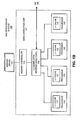
- FIG. 1B illustrates a multiprocessor system 100 with a reverse directory in accordance with an embodiment of the present invention.
- semiconductor chip 101 includes a number of processors 110, 120, 130 and 140, which contain level one (L1) caches 112, 122, 132 and 142, respectively.
- L1 caches 112, 122, 132 and 142 may be separate instruction and data caches, or alternatively, unified instruction/data caches.
- L1 caches 112,122, 132 and 142 are coupled to level two (L2) cache 106, which includes a reverse directory 302, which is described in more detail with reference to FIGs. 3-6 below.
- L2 cache 106 is coupled to off-chip memory 102 through memory controller 104.
- L1 caches 112,122,132 and 142 are write-through caches, which means that all updates to L1 cachets 112, 122, 132 and 142 are automatically propagated to L2 cache 106.
- L2 cache 106 is an "inclusive cache", which means that all items in L1 caches 112,122,132 and 142 are included in L2 cache 106.
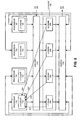
- FIG. 2 illustrates an L2 cache 106 with multiple banks in accordance with an embodiment of the present invention.
- L2 cache 106 is implemented with four banks 202-205, which can be accessed in parallel by processors 110,120,130 and 140 through switch 215. Note that only two bits of the address are required to determine which of the four banks 202-205 a memory request is directed to.
- Switch 215 additionally includes an I/O port 150 for communicating with I/0 devices.
- each of these banks 202-205 includes a reverse directory.
- each of the banks 202-205 has its own memory controller, which is coupled to an associated bank of off-chip memory.
- FIG. 3 illustrates L2 bank 202 along with an associated reverse directory 302 in accordance with an embodiment of the present invention
- L2 bank 202 contains an eight way set associative cache 304 for storing instructions and data A portion of the address is used to determine a set within cache 304, which is represented by a row of cache 304. Within a given set, eight different entries can be stored in each of eight different way locations," which are represented by the eight columns in cache 304.
- Reverse directory 302 includes a separate block for each L1 cache. More specifically, block 312 is associated with L1 cache 112, block 322 is associated with L1 cache 122, block 332 is associated with L1 cache 132, and block 342 is associated with L1 cache 142.
- each of these blocks 312, 322, 332 and 342 includes an entry for each line in the associated L1 caches 112, 122,132 and 142.
- L1 cache 112 is organized as a four-way set associative cache, the associated block 312 within reverse directory 302 is also organized in the same fashion.
- entries within L1 cache 112 contain data and instructions, whereas entries within the associated block 312 contain indexing information specifying a location of the line within cache 304.
- FIG. 4 illustrates how a reverse directory entry 430 is created in accordance with an embodiment of the present invention.
- FIG. 4 illustrates an address 400 of a data item (or instruction) within memory 102.
- L1 cache 112 divides this address into L1 tag 412, L1 set number 414, and L1 line offset 418.
- L1 set number 414 is used to look up a specific set of the four-way set-associative L1 cache 112.
- L1 tag 412 is stored in L1 cache 112, and is used to perform comparisons for purposes of implementing the four-way set-associative memory for each set.
- L1 line offset 418 determines a location of a specific data item within the line in L1 cache 112.
- L2 cache 106 divides address 400 into L2 tag 402, L2 set number 404, L2 bank number 406 and L2 line offset 408.
- L2 bank number 406 determines a specific bank from the four banks 202-205 of L2 cache 106.
- L2 set number 404 is used to look up a specific set of the eight-way set-associative bank of L2 cache 106.
- L2 tag 402 is stored in a specific bank of L2 cache 106, and is used to perform comparisons for purposes of implementing the eight-way set-associative memory for each set.
- L2 line offset 408 determines a location of a specific data item within the line in L2 cache 106.
- the associated entry 430 for address 400 within reverse directory 302 contains truncated L2 set number 424, L2 way number 429 and valid bit 427.
- Truncated L2 set number 424 includes the portion of L2 set number 404 which cannot be determined from the location of the entry within L1 cache 112. In other words, it contains the portion of L2 set number 404, which does not overlap with L1 set number 414.
- L2 way number 429 contains a three-bit index which specifies a column location of the line, out of the eight possible way locations for the line, in cache 304.
- valid bit 427 indicates whether entry 430 is valid.
- the illustrated embodiment stores an entry for each L1 cache location, and each of these entries specifies an L2 cache location that is associated with the L1 location.
- directory 302 a "reverse directory” because instead of keeping a pointer to an L1 entry from each L2 entry, it keeps a pointer in the reverse direction from each L1 entry to a corresponding L2 entry. This saves memory because there are typically many fewer L1 entries than L2 entries.
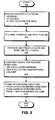
- FIG. 5 is a flow chart illustrating the process of creating or updating a reverse directory entry in accordance with an embodiment of the present invention.
- the process starts when a request to retrieve a line is received at L2 cache 106 from L1 cache 112 (step 502).
- This request includes address 400, an L1 cache number that identifies L1 cache 112, and a way location in L1 cache 112 into which the line will be stored after it is retrieved.
- the system retrieves the line into L2 cache 106 from memory 102 (step 504). If this retrieval causes and existing entry in L2 cache 106 to be invalidated, then the corresponding entries in reverse directory 302 may have to be invalidated.
- the system then retrieves the line from L2 cache 106 and sends to line to L1 cache 112 (step 506).
- the system also constructs an entry 430 for reverse directory 302 (step 508).
- This entry includes truncated L2 set number 424, L2 way number 429 and valid bit 427 as is descried above with reference to FIG. 4 .
- the system then stores the entry into a location in reverse directory 302 (step 510).
- the location is determined by a number of items. From L2 bank number 406, the system knows to look into L2 bank 202. From the L1 cache number, the system knows to look at block 312, which is associated with L1 cache 112. From address 400, the system determines a row that is associated with a specific L1 set From the L1 way location received with the request, the system determines a column within the row.
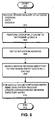
- FIG. 6 is a flow chart illustrating the process of using reverse directory entries to perform invalidations in accordance with an embodiment of the present invention.
- the system starts by receiving a request that causes an update of L2 cache 106 (step 602).
- This request can include; a store hit on the target entry by another processor, a load miss, or a store miss.
- the system reconstructs the entry for the request in reverse directory 302. This is accomplished by performing a lookup in L2 cache 106 to determine the L2 way number 429 in which the target entry is located (step 604), and retrieving the L2 set number 404 from address 400 as is illustrated in FIG. 4 (step 606). These values are combined to construct the reverse directory entry 430.
- the system uses this entry to search reverse directory 302 in order to determine which L1 caches contain the entry (step 608).
- the system only has to search the reverse directory that is associated with a bank of L2 cache 206 that is specified by L2 bank number 406.
- the set number within the reverse directory can be determined from the address, which means that the search only has to consider entries in the four possible "ways" for each set. Also note that if the request is a store hit by another processor, the system does not have to search the bank for the processor that caused the store hit.
- the system For each L1 cache that contains the entry, the system sends an invalidation message to the L1 cache.
- This invalidation message includes the L1 way number, so that an associative lookup in the L1 cache can be avoided.
- the system also updates the corresponding reverse directory entry to indicate that it has been invalidated (step 610).
Landscapes
- Engineering & Computer Science (AREA)
- Theoretical Computer Science (AREA)
- Physics & Mathematics (AREA)
- General Engineering & Computer Science (AREA)
- General Physics & Mathematics (AREA)
- Computer Hardware Design (AREA)
- Software Systems (AREA)
- Memory System Of A Hierarchy Structure (AREA)
Claims (27)
- Multiprozessorsystem (100), welches umfaßt:eine Mehrzahl von Prozessoren (110, 120, 130, 140),einen Cache niedrigerer Ebene (106),eine Mehrzahl von Caches höherer Ebene (112, 122, 132, 142), die mit der Mehrzahl von Prozessoren gekoppelt sind,wobei jeder aus der Mehrzahl von Caches höherer Ebene so konfiguriert ist, daß er Speicherzugriffe über den Cache niedrigerer Ebene ausführt,ein Umkehrverzeichnis (302), das mit dem Cache niedrigerer Ebene gekoppelt ist,wobei das Umkehrverzeichnis Einträge (430) für Zeilen in der Mehrzahl von Caches höherer Ebene beinhaltet und jeder Eintrag einen damit verknüpften Eintrag in dem Cache niedrigerer Ebene identifiziert,wobei der Cache höherer Ebene ein N-Wege bzw. N-fach satzassoziativer Cache ist, undwobei das Speichern der Informationen in dem Umkehrverzeichnis das Speichern von Wegeinformationen umfaßt, die eine Wegeposition in dem Cache höherer Ebene, in dem die Zeile gespeichert werden soll, identifiziert.
- Multiprozessorsystem nach Anspruch 1, wobei der Cache niedrigerer Ebene so konfiguriert ist, daß er:eine Anforderung von einem Cache höherer Ebene nach dem Abrufen einer Zeile aus dem Cache niedrigerer Ebene empfängt und,wenn die Zeile innerhalb des Caches niedrigerer Ebene vorliegt, der Cache niedrigerer Ebene so konfiguriert ist, daß er:die Zeile an den Cache höherer Ebene sendet, so daß die Zeile in dem Cache höherer Ebene gespeichert werden kann, und daß erInformationen in dem Umkehrverzeichnis speichert, um anzuzeigen, daß die Zeile in dem Cache höherer Ebene gespeichert ist.
- Multiprozessorsystem nach Anspruch 2, wobei der Cache niedrigerer Ebene zusätzlich so konfiguriert ist, daß er einen Miss bzw. Fehlschlag beim Ziehen der Zeile in den Cache niedrigerer Ebene erzeugt, wenn die Zeile nicht in dem Cache niedrigerer Ebene vorhanden ist.
- Multiprozessorsystem nach Anspruch 1, wobei das Multiprozessorsystem zusätzlich so konfiguriert ist, daß es die Wegeinformationen während einer anschließenden Invalidierungsoperation verwendet, um die Zeile in dem Cache höherer Ebene ungültig zu machen, ohne ein Nachschlagen in dem Cache höherer Ebene durchführen zu müssen, um die Wegeposition der Zeile in dem Cache höherer Ebene zu bestimmen.
- Multiprozessorsystem nach Anspruch 1, wobei der Cache niedrigerer Ebene zusätzlich so konfiguriert ist, daß er:eine Aktualisierungsanforderung empfängt, die bewirkt, daß ein Zieleintrag in dem Cache niedrigerer Ebene aktualisiert wird,ein Nachschlagen in dem Umkehrverzeichnis ausführt, um festzustellen, ob der Zieleintrag in einem oder mehreren Caches höherer Ebene enthalten ist, undfür jeden Cache höherer Ebene, der den Zieleintrag enthält,eine Invalidierungsanforderung an den Cache höherer Ebene sendet, um den Zieleintrag ungültig zu machen, undeinen korrespondierenden Eintrag in dem Umkehrverzeichnis aktualisiert, um anzuzeigen, daß der Zieleintrag in dem Cache höherer Ebene ungültig gemacht wurde.
- Multiprozessorsystem nach Anspruch 5, wobei die Aktualisierungsanforderung eines der folgenden enthält:einen Load-Miss bzw. Ladefehlschlag,einen Store-Miss bzw. Speicherfehlschlag undeinen Store-Hit bzw. Speichertreffer bei dem Zieleintrag.
- Multiprozessorsystem nach Anspruch 6, wobei, wenn die Aktualisierungsanforderung ein Store-Hit ist, das Nachschlagen in dem Umkehrverzeichnis das Nachschlagen des Zieleintrags in der Mehrzahl von Caches höherer Ebene umfaßt, mit Ausnahme eines Caches höherer Ebene, der den Store-Hit verursacht hat.
- Multiprozessorsystem nach einem der vorangegangenen Ansprüche, wobei das Umkehrverzeichnis einen festen Eintrag enthält, der jedem Eintrag in jedem aus der Mehrzahl von Caches höherer Ebene entspricht.
- Multiprozessorsystem nach Anspruch 8, wobei jeder Eintrag in dem Umkehrverzeichnis Informationen enthält, die eine Position eines korrespondierenden Eintrags in dem Cache niedrigerer Ebene spezifizieren.
- Multiprozessorsystem nach Anspruch 8,
wobei der Cache niedrigerer Ebene als ein M-Wege bzw. M-fach satzassoziativer Cache organisiert ist, und
wobei jeder Eintrag in dem Umkehrverzeichnis beinhaltet:eine Wegekennung (429), die eine Wegeposition eines korrespondierenden Eintrags in dem Cache niedrigerer Ebene identifiziert,eine Satzkennung (424), die eine Satzposition des korrespondierenden Eintrags innerhalb des Caches niedrigerer Ebene identifiziert, wobei die Satzkennung keine Satzinformationen beinhaltet, die aus einer Position des Eintrags innerhalb des Umkehrregisters abgeleitet werden können, undein gültiges Flag (427), das anzeigt, ob der Eintrag in dem Umkehrregister gültig ist. - Multiprozessorsystem nach einem der vorangegangenen Ansprüche, wobei das Multiprozessorsystem sich auf einem einzigen Halbleiterchip (101) befindet.
- Multiprozessorsystem nach einem der vorangegangenen Ansprüche,
wobei der Cache niedrigerer Ebene ein L2-Cache ist, und
wobei jeder aus der Mehrzahl von Caches höherer Ebene ein L1-Cache ist. - Multiprozessorsystem nach einem der vorangegangenen Ansprüche, wobei die Mehrzahl von Caches höherer Ebene als Durchschreibe-Caches aufgebaut bzw. organisiert sind, so daß Aktualisierungen der Mehrzahl von Caches höherer Ebene unmittelbar zu dem Cache niedrigerer Ebene durchgeschrieben werden.
- Multiprozessorsystem nach einem der vorangegangenen Ansprüche, wobei der Cache niedrigerer Ebene mehrere Bänke (202, 203, 204, 205) beinhaltet, auf die parallel zugegriffen werden kann.
- Verfahren, das in einem Computersystem (100) läuft, welches eine Mehrzahl von Prozessoren (110, 120, 130, 140),
eine Mehrzahl von Caches höherer Ebene (112, 122, 132, 142), die mit der Mehrzahl von Prozessoren gekoppelt sind, beinhaltet,
wobei jeder aus der Mehrzahl von Caches höherer Ebene so konfiguriert ist, daß er Speicherzugriffe über einen Cache niedrigerer Ebene (106) ausführt, wobei das Verfahren umfaßt:
Empfangen einer Anforderung von einem Cache höherer Ebene nach dem Abrufen einer Zeile aus dem Cache niedrigerer Ebene und,
wenn die Zeile innerhalb des Caches niedrigerer Ebene vorhanden ist,
Senden der Zeile an den Cache höherer Ebene, so daß die Zeile in dem Cache höherer Ebene gespeichert werden kann, und
Speichern von Informationen in einem Umkehrverzeichnis (302), das auf dem Cache niedrigerer Ebene liegt, um anzuzeigen, daß die Zeile in dem Cache höherer Ebene gespeichert ist,
wobei das Umkehrverzeichnis Einträge (430) für Zeilen in der Mehrzahl von Caches höherer Ebene beinhaltet, wobei jeder Eintrag einen damit verknüpften Eintrag in dem Cache niedrigerer Ebene identifiziert,
wobei der Cache höherer Ebene ein N-fach satzassoziativer Cache ist, und
wobei das Speichern der Informationen in dem Umkehrverzeichnis das Speichern von Wegeinformationen umfaßt, die eine Wegeposition in dem Cache höherer Ebene, in dem die Zeile gespeichert werden soll, identifiziert. - Verfahren nach Anspruch 15, wobei das Verfahren weiterhin das Verwenden der Wegeinformation während einer anschließenden Invalidierungsoperation umfaßt, um die Zeile in dem Cache höherer Ebene ungültig zu machen, ohne ein Nachschlagen in dem Cache höherer Ebene durchführen zu müssen, um die Wegeposition der Zeile in dem Cache höherer Ordnung zu bestimmen.
- Verfahren nach Anspruch 15, wobei das Verfahren weiterhin umfaßt:Empfangen einer Aktualisierungsanforderung, die bewirkt, daß ein Zieleintrag in dem Cache niedrigerer Ebene aktualisiert wird, undDurchführen eines Nachschlagens in dem Umkehrverzeichnis, um zu bestimmen, ob der Zieleintrag in einem oder mehreren Caches höherer Ebene enthalten ist, und für jeden Cache höherer Ebene, der den Zieleintrag enthält,Senden einer Invalidierungsanforderung an den Cache höherer Ebene, um den Zieleintrag ungültig zu machen, undAktualisieren eines korrespondierenden Eintrags in dem Umkehrverzeichnis, um anzuzeigen, daß der Zieleintrag in dem Cache höherer Ebene ungültig gemacht wurde.
- Verfahren nach Anspruch 17, wobei die Aktualisierungsanforderung eines der folgenden beinhaltet:einen Load-Miss,einen Store-Miss undeinen Store-Hit bei dem Zieleintrag.
- Verfahren nach Anspruch 18, wobei, wenn die Aktualisierungsanforderung ein Store-Hit ist, das Nachschlagen in dem Umkehrverzeichnis das Nachschlagen des Zieleintrags in der Mehrzahl von Caches höherer Ebene umfaßt, mit Ausnahme eines Caches höherer Ebene, der den Store-Hit verursacht hat.
- Verfahren nach einem der Ansprüche 15 bis 19, wobei das Umkehrverzeichnis einen festen Eintrag enthält, der jedem Eintrag in jedem aus der Mehrzahl von Caches höherer Ebene entspricht.
- Verfahren nach Anspruch 20, wobei jeder feste Eintrag in dem Umkehrverzeichnis Informationen enthält, die eine Position eines korrespondierenden Eintrags in dem Cache niedrigerer Ebene spezifizieren.
- Verfahren nach Anspruch 20,
wobei der Cache niedrigerer Ebene als ein M-Wege satzassoziativer Cache organisiert ist, und
wobei jeder Eintrag in dem Umkehrverzeichnis beinhaltet:eine Wegekennung (429), die eine Wegeposition eines korrespondierenden Eintrags innerhalb des Caches niedrigerer Ebene identifiziert,eine Satzkennung (424), die eine Satzposition des korrespondierenden Eintrags innerhalb des Caches niedrigerer Ebene identifiziert, wobei die Satzkennung keine Satzinformationen beinhaltet, die von einer Position des Eintrags innerhalb des Umkehrverzeichnisses abgeleitet werden können, undein gültiges Flag (427), das anzeigt, ob der Eintrag in dem Umkehrverzeichnis gültig ist. - Verfahren nach einem der Ansprüche 15 bis 22, wobei das Verfahren weiterhin das Erzeugen eines Miss bzw. Fehlschlags in dem Cache niedrigerer Ebene beim Ziehen der Zeile in den Cache niedrigerer Ebene umfaßt, wenn die Zeile nicht innerhalb des Caches niedrigerer Ebene vorhanden ist.
- Verfahren nach einem der Ansprüche 15 bis 23,
wobei die Mehrzahl von Caches höherer Ebene und der Cache niedrigerer Ebene auf einem einzigen Halbleiterchip (101) liegen, und
wobei jeder aus der Mehrzahl von Caches höherer Ebene mit einem damit verknüpften Prozessor (110, 120, 130, 140) gekoppelt ist, der sich auf dem einzigen Halbleiterchip befindet. - Verfahren nach einem der Ansprüche 15 bis 24,
wobei der Cache niedrigerer Ebene ein L2-Cache ist, und
wobei jeder aus der Mehrzahl von Caches höherer Ebene ein L1-Cache ist. - Verfahren nach einem der Ansprüche 15 bis 25, wobei die Mehrzahl von Caches höherer Ebene als Durchschreibe-Caches organisiert sind, so daß Aktualisierungen der Mehrzahl von Caches höherer Ebene unmittelbar zu dem Cache niedrigerer Ebene durchgeschrieben werden.
- Verfahren nach einem der Ansprüche 15 bis 26, wobei der Cache niedrigerer Ebene mehrere Bänke (202, 203, 204, 205) beinhaltet, auf die parallel zugegriffen werden kann.
Applications Claiming Priority (5)
| Application Number | Priority Date | Filing Date | Title |
|---|---|---|---|
| US28325401P | 2001-04-11 | 2001-04-11 | |
| US283254P | 2001-04-11 | ||
| US10/061,502 US6684297B2 (en) | 2001-04-11 | 2002-01-31 | Reverse directory for facilitating accesses involving a lower-level cache |
| US61502 | 2002-01-31 | ||
| PCT/US2002/011560 WO2002084492A2 (en) | 2001-04-11 | 2002-04-11 | Reverse directory for facilitating accesses involving a lower-level cache |
Publications (2)
| Publication Number | Publication Date |
|---|---|
| EP1537485A2 EP1537485A2 (de) | 2005-06-08 |
| EP1537485B1 true EP1537485B1 (de) | 2009-06-03 |
Family
ID=26741138
Family Applications (1)
| Application Number | Title | Priority Date | Filing Date |
|---|---|---|---|
| EP02719498A Expired - Lifetime EP1537485B1 (de) | 2001-04-11 | 2002-04-11 | Invertiertes verzeichnis um zugang zu einer niedrigen cachestufe zu erleichtern |
Country Status (8)
| Country | Link |
|---|---|
| US (1) | US6684297B2 (de) |
| EP (1) | EP1537485B1 (de) |
| JP (1) | JP4162493B2 (de) |
| KR (1) | KR100851738B1 (de) |
| AU (1) | AU2002250576A1 (de) |
| DE (1) | DE60232552D1 (de) |
| TW (1) | TW567415B (de) |
| WO (1) | WO2002084492A2 (de) |
Families Citing this family (16)
| Publication number | Priority date | Publication date | Assignee | Title |
|---|---|---|---|---|
| US8185602B2 (en) | 2002-11-05 | 2012-05-22 | Newisys, Inc. | Transaction processing using multiple protocol engines in systems having multiple multi-processor clusters |
| US7139881B2 (en) * | 2003-09-25 | 2006-11-21 | International Business Machines Corporation | Semiconductor device comprising a plurality of memory structures |
| WO2006128062A2 (en) * | 2005-05-25 | 2006-11-30 | Terracotta, Inc. | Database caching of queries and stored procedures using database provided facilities for dependency analysis and detected database updates for invalidation |
| JP4920378B2 (ja) * | 2006-11-17 | 2012-04-18 | 株式会社東芝 | 情報処理装置およびデータ検索方法 |
| US8028131B2 (en) | 2006-11-29 | 2011-09-27 | Intel Corporation | System and method for aggregating core-cache clusters in order to produce multi-core processors |
| US8151059B2 (en) * | 2006-11-29 | 2012-04-03 | Intel Corporation | Conflict detection and resolution in a multi core-cache domain for a chip multi-processor employing scalability agent architecture |
| US20090210629A1 (en) * | 2008-02-15 | 2009-08-20 | International Business Machines Corporation | Method, system and computer program product for selectively purging cache entries |
| US8095736B2 (en) * | 2008-02-25 | 2012-01-10 | Telefonaktiebolaget Lm Ericsson (Publ) | Methods and systems for dynamic cache partitioning for distributed applications operating on multiprocessor architectures |
| JP4821887B2 (ja) | 2009-06-08 | 2011-11-24 | 日本電気株式会社 | コヒーレンシ制御システム、コヒーレンシ制御装置及びコヒーレンシ制御方法 |
| US8639885B2 (en) * | 2009-12-21 | 2014-01-28 | Oracle America, Inc. | Reducing implementation costs of communicating cache invalidation information in a multicore processor |
| US8521960B2 (en) | 2010-06-23 | 2013-08-27 | International Business Machines Corporation | Mitigating busy time in a high performance cache |
| CN102117262B (zh) * | 2010-12-21 | 2012-09-05 | 清华大学 | 用于多核处理器的Cache的主动复制方法及系统 |
| KR102366808B1 (ko) | 2014-10-22 | 2022-02-23 | 삼성전자주식회사 | 캐시 메모리 시스템 및 그 동작방법 |
| US9720834B2 (en) * | 2015-12-11 | 2017-08-01 | Oracle International Corporation | Power saving for reverse directory |
| US10956339B2 (en) | 2016-07-14 | 2021-03-23 | Advanced Micro Devices, Inc. | System and method for storing cache location information for cache entry transfer |
| KR102570030B1 (ko) | 2023-04-19 | 2023-08-28 | 메티스엑스 주식회사 | 멀티프로세서 시스템 및 이의 데이터 관리 방법 |
Family Cites Families (10)
| Publication number | Priority date | Publication date | Assignee | Title |
|---|---|---|---|---|
| JPH0512117A (ja) * | 1991-07-04 | 1993-01-22 | Toshiba Corp | キヤツシユ一致化方式 |
| US5553263A (en) * | 1993-07-16 | 1996-09-03 | Unisys Corporation | Cache memory system with fault tolerance having concurrently operational cache controllers processing disjoint groups of memory |
| US5530832A (en) * | 1993-10-14 | 1996-06-25 | International Business Machines Corporation | System and method for practicing essential inclusion in a multiprocessor and cache hierarchy |
| JP3872118B2 (ja) * | 1995-03-20 | 2007-01-24 | 富士通株式会社 | キャッシュコヒーレンス装置 |
| KR0159699B1 (ko) * | 1996-06-12 | 1999-01-15 | 김광호 | 냉장고 |
| US6122709A (en) * | 1997-12-19 | 2000-09-19 | Sun Microsystems, Inc. | Cache with reduced tag information storage |
| US6151655A (en) * | 1998-04-30 | 2000-11-21 | International Business Machines Corporation | Computer system deadlock request resolution using timed pulses |
| US6349363B2 (en) * | 1998-12-08 | 2002-02-19 | Intel Corporation | Multi-section cache with different attributes for each section |
| US6338119B1 (en) * | 1999-03-31 | 2002-01-08 | International Business Machines Corporation | Method and apparatus with page buffer and I/O page kill definition for improved DMA and L1/L2 cache performance |
| US6725334B2 (en) * | 2000-06-09 | 2004-04-20 | Hewlett-Packard Development Company, L.P. | Method and system for exclusive two-level caching in a chip-multiprocessor |
-
2002
- 2002-01-31 US US10/061,502 patent/US6684297B2/en not_active Expired - Lifetime
- 2002-03-28 TW TW091106193A patent/TW567415B/zh not_active IP Right Cessation
- 2002-04-11 DE DE60232552T patent/DE60232552D1/de not_active Expired - Lifetime
- 2002-04-11 KR KR1020037013186A patent/KR100851738B1/ko not_active Expired - Lifetime
- 2002-04-11 EP EP02719498A patent/EP1537485B1/de not_active Expired - Lifetime
- 2002-04-11 JP JP2002582365A patent/JP4162493B2/ja not_active Expired - Lifetime
- 2002-04-11 AU AU2002250576A patent/AU2002250576A1/en not_active Abandoned
- 2002-04-11 WO PCT/US2002/011560 patent/WO2002084492A2/en not_active Ceased
Also Published As
| Publication number | Publication date |
|---|---|
| US6684297B2 (en) | 2004-01-27 |
| TW567415B (en) | 2003-12-21 |
| JP2005509204A (ja) | 2005-04-07 |
| DE60232552D1 (de) | 2009-07-16 |
| KR20040063793A (ko) | 2004-07-14 |
| WO2002084492A2 (en) | 2002-10-24 |
| JP4162493B2 (ja) | 2008-10-08 |
| US20020178329A1 (en) | 2002-11-28 |
| WO2002084492A3 (en) | 2005-04-14 |
| EP1537485A2 (de) | 2005-06-08 |
| KR100851738B1 (ko) | 2008-08-11 |
| AU2002250576A1 (en) | 2002-10-28 |
Similar Documents
| Publication | Publication Date | Title |
|---|---|---|
| US6408362B1 (en) | Data processing system, cache, and method that select a castout victim in response to the latencies of memory copies of cached data | |
| EP1537485B1 (de) | Invertiertes verzeichnis um zugang zu einer niedrigen cachestufe zu erleichtern | |
| KR100348200B1 (ko) | Ccr 디렉토리 | |
| US6801984B2 (en) | Imprecise snooping based invalidation mechanism | |
| CN105550155B (zh) | 用于多处理器系统的探听过滤器以及相关探听过滤方法 | |
| JPH04227552A (ja) | ストアスルーキャッシュ管理システム | |
| US20110185128A1 (en) | Memory access method and information processing apparatus | |
| JPH08235052A (ja) | ディレクトリ内にアドレス・タグを記憶するためのシステムおよび方法 | |
| US6973547B2 (en) | Coherence message prediction mechanism and multiprocessing computer system employing the same | |
| US7376799B2 (en) | System for reducing the latency of exclusive read requests in a symmetric multi-processing system | |
| US6701417B2 (en) | Method and apparatus for supporting multiple cache line invalidations per cycle | |
| US6950906B2 (en) | System for and method of operating a cache | |
| US5737575A (en) | Interleaved key memory with multi-page key cache | |
| US20130132678A1 (en) | Information processing system | |
| US6442653B1 (en) | Data processing system, cache, and method that utilize a coherency state to indicate the latency of cached data | |
| US6813694B2 (en) | Local invalidation buses for a highly scalable shared cache memory hierarchy | |
| EP1789883A1 (de) | Virtueller adressen-cache und verfahren zum gemeinsamen benutzen von daten unter verwendung einer eindeutigen task-kennung | |
| US20060015689A1 (en) | Implementation and management of moveable buffers in cache system | |
| US6826655B2 (en) | Apparatus for imprecisely tracking cache line inclusivity of a higher level cache | |
| JPH06195263A (ja) | キャッシュ・メモリ・システム |
Legal Events
| Date | Code | Title | Description |
|---|---|---|---|
| PUAI | Public reference made under article 153(3) epc to a published international application that has entered the european phase |
Free format text: ORIGINAL CODE: 0009012 |
|
| 17P | Request for examination filed |
Effective date: 20031020 |
|
| AK | Designated contracting states |
Kind code of ref document: A2 Designated state(s): DE FR GB |
|
| GRAP | Despatch of communication of intention to grant a patent |
Free format text: ORIGINAL CODE: EPIDOSNIGR1 |
|
| GRAS | Grant fee paid |
Free format text: ORIGINAL CODE: EPIDOSNIGR3 |
|
| GRAA | (expected) grant |
Free format text: ORIGINAL CODE: 0009210 |
|
| AK | Designated contracting states |
Kind code of ref document: B1 Designated state(s): DE FR GB |
|
| REG | Reference to a national code |
Ref country code: GB Ref legal event code: FG4D |
|
| REF | Corresponds to: |
Ref document number: 60232552 Country of ref document: DE Date of ref document: 20090716 Kind code of ref document: P |
|
| PLBE | No opposition filed within time limit |
Free format text: ORIGINAL CODE: 0009261 |
|
| STAA | Information on the status of an ep patent application or granted ep patent |
Free format text: STATUS: NO OPPOSITION FILED WITHIN TIME LIMIT |
|
| 26N | No opposition filed |
Effective date: 20100304 |
|
| REG | Reference to a national code |
Ref country code: FR Ref legal event code: ST Effective date: 20101230 |
|
| PG25 | Lapsed in a contracting state [announced via postgrant information from national office to epo] |
Ref country code: FR Free format text: LAPSE BECAUSE OF NON-PAYMENT OF DUE FEES Effective date: 20100430 |
|
| PGFP | Annual fee paid to national office [announced via postgrant information from national office to epo] |
Ref country code: GB Payment date: 20210318 Year of fee payment: 20 |
|
| PGFP | Annual fee paid to national office [announced via postgrant information from national office to epo] |
Ref country code: DE Payment date: 20210316 Year of fee payment: 20 |
|
| REG | Reference to a national code |
Ref country code: DE Ref legal event code: R071 Ref document number: 60232552 Country of ref document: DE |
|
| REG | Reference to a national code |
Ref country code: GB Ref legal event code: PE20 Expiry date: 20220410 |
|
| PG25 | Lapsed in a contracting state [announced via postgrant information from national office to epo] |
Ref country code: GB Free format text: LAPSE BECAUSE OF EXPIRATION OF PROTECTION Effective date: 20220410 |