EP1535453B1 - System und prozess zum entwickeln einer sprachanwendung - Google Patents
System und prozess zum entwickeln einer sprachanwendung Download PDFInfo
- Publication number
- EP1535453B1 EP1535453B1 EP03737751.2A EP03737751A EP1535453B1 EP 1535453 B1 EP1535453 B1 EP 1535453B1 EP 03737751 A EP03737751 A EP 03737751A EP 1535453 B1 EP1535453 B1 EP 1535453B1
- Authority
- EP
- European Patent Office
- Prior art keywords
- name
- payment
- application
- dialog
- prompt
- Prior art date
- Legal status (The legal status is an assumption and is not a legal conclusion. Google has not performed a legal analysis and makes no representation as to the accuracy of the status listed.)
- Expired - Lifetime
Links
- 238000000034 method Methods 0.000 title claims description 37
- 230000008569 process Effects 0.000 title claims description 31
- 238000012545 processing Methods 0.000 claims description 17
- 230000003993 interaction Effects 0.000 claims description 6
- 230000000007 visual effect Effects 0.000 claims description 2
- 230000006870 function Effects 0.000 description 35
- 238000011161 development Methods 0.000 description 29
- 230000014509 gene expression Effects 0.000 description 20
- 238000012790 confirmation Methods 0.000 description 18
- 230000004044 response Effects 0.000 description 15
- 230000002452 interceptive effect Effects 0.000 description 11
- 238000012360 testing method Methods 0.000 description 11
- 238000012546 transfer Methods 0.000 description 9
- 239000003607 modifier Substances 0.000 description 7
- 239000012634 fragment Substances 0.000 description 6
- 238000010586 diagram Methods 0.000 description 4
- 230000009471 action Effects 0.000 description 3
- 238000004891 communication Methods 0.000 description 3
- 238000012163 sequencing technique Methods 0.000 description 3
- 238000013461 design Methods 0.000 description 2
- 230000009191 jumping Effects 0.000 description 2
- 230000009466 transformation Effects 0.000 description 2
- 230000007704 transition Effects 0.000 description 2
- 238000013519 translation Methods 0.000 description 2
- 241000282326 Felis catus Species 0.000 description 1
- 230000006399 behavior Effects 0.000 description 1
- 230000006872 improvement Effects 0.000 description 1
- 238000010801 machine learning Methods 0.000 description 1
- 238000013507 mapping Methods 0.000 description 1
- 239000000463 material Substances 0.000 description 1
- 238000012986 modification Methods 0.000 description 1
- 230000004048 modification Effects 0.000 description 1
- 238000007670 refining Methods 0.000 description 1
- 238000004088 simulation Methods 0.000 description 1
- QYPNKSZPJQQLRK-UHFFFAOYSA-N tebufenozide Chemical compound C1=CC(CC)=CC=C1C(=O)NN(C(C)(C)C)C(=O)C1=CC(C)=CC(C)=C1 QYPNKSZPJQQLRK-UHFFFAOYSA-N 0.000 description 1
- 238000012549 training Methods 0.000 description 1
Images


Classifications
-
- H—ELECTRICITY
- H04—ELECTRIC COMMUNICATION TECHNIQUE
- H04M—TELEPHONIC COMMUNICATION
- H04M3/00—Automatic or semi-automatic exchanges
- H04M3/42—Systems providing special services or facilities to subscribers
- H04M3/487—Arrangements for providing information services, e.g. recorded voice services or time announcements
- H04M3/493—Interactive information services, e.g. directory enquiries ; Arrangements therefor, e.g. interactive voice response [IVR] systems or voice portals
- H04M3/4936—Speech interaction details
-
- G—PHYSICS
- G10—MUSICAL INSTRUMENTS; ACOUSTICS
- G10L—SPEECH ANALYSIS TECHNIQUES OR SPEECH SYNTHESIS; SPEECH RECOGNITION; SPEECH OR VOICE PROCESSING TECHNIQUES; SPEECH OR AUDIO CODING OR DECODING
- G10L15/00—Speech recognition
- G10L15/28—Constructional details of speech recognition systems
-
- H—ELECTRICITY
- H04—ELECTRIC COMMUNICATION TECHNIQUE
- H04M—TELEPHONIC COMMUNICATION
- H04M3/00—Automatic or semi-automatic exchanges
- H04M3/42—Systems providing special services or facilities to subscribers
- H04M3/487—Arrangements for providing information services, e.g. recorded voice services or time announcements
- H04M3/493—Interactive information services, e.g. directory enquiries ; Arrangements therefor, e.g. interactive voice response [IVR] systems or voice portals
-
- H—ELECTRICITY
- H04—ELECTRIC COMMUNICATION TECHNIQUE
- H04M—TELEPHONIC COMMUNICATION
- H04M2201/00—Electronic components, circuits, software, systems or apparatus used in telephone systems
- H04M2201/42—Graphical user interfaces
-
- H—ELECTRICITY
- H04—ELECTRIC COMMUNICATION TECHNIQUE
- H04M—TELEPHONIC COMMUNICATION
- H04M2203/00—Aspects of automatic or semi-automatic exchanges
- H04M2203/35—Aspects of automatic or semi-automatic exchanges related to information services provided via a voice call
- H04M2203/355—Interactive dialogue design tools, features or methods
Definitions
- the present invention relates to a system and process for generating a voice application.
- a voice application is a software application that provides an interactive audio interface, particularly a speech interface, on a machine, such as an Interactive Voice Response (IVR) system.
- IVRs such as Intel's DialogicTM IVR, are used in communications networks to receive voice calls from parties. The IVR is able to generate and send voice prompts to a party and receive and interpret the party's responses made in reply.
- Voice extensible markup language is a markup language for voice or speech-driven applications.
- VoiceXML is used for developing speech-based telephony applications, and also enables web-based content to be accessed via voice using a telephone.
- VoiceXML is being developed by the VoiceXML Forum, and is described at http://www.voicexml.org . Due to the verbose nature of VoiceXML, it can be cumbersome to develop VoiceXML-based applications manually using a text or XML editor. Consequently, voice application development systems are available that allow voice applications to be developed by manipulating graphical elements via a graphical user interface rather than coding VoiceXML directly. However, these systems are limited in their ability to assist a developer.
- WO 98/50907 discloses a plurality of dialogue modules in a speech processing system, wherein each dialogue module includes computer readable instructions for accomplishing a predefined interactive dialogue task in an interactive speech application.
- each dialogue module includes computer readable instructions for accomplishing a predefined interactive dialogue task in an interactive speech application.
- a subset of the plurality of dialogue modules ( Figure 7, 710, 720, 730) are selected to accomplish their respective interactive dialogue tasks and are interconnected in an order defining the call flow of the application ( Figure 1 , 110-180).
- a graphical user interface representing the stored plurality of dialogue modules as icons in a graphical display ( Figure 7) in which icons are selected in the graphical display in response to user input, the icons for the subset of dialogue modules are graphically interconnected and the interactive speech application is generated based upon the graphical representation.
- EP-A-0 685 955 (AT&T Corp) describes a service development system that allows selecting and arranging instantiations of predetermined "pictures”, e.g., icons, into a multilevel outline which generally specifies the service logic of a desired service.
- Each picture represents a "service building block”, e.g., a high level process part and its customizable attributes, and for each instantiation of a picture in the multilevel outline there exists a corresponding instantiation of a service building block.
- the operation of the instantiations of the service building blocks are customizable in response to attributes supplied by the service creator.
- Voxeo Designer 2.0 web page available at http:Hweb.archive.org/web/20020205091431/community.voxeo.com./vd2.isp , discloses an application development tool for voice applications.
- a graphical representation of the logic in a voice application is displayed and can be manipulated in a workspace.
- VoiceXML or CallXML elements may be added to the workspace by clicking on an icon corresponding to that element in the toolbar. Properties for each element can be viewed and/or modified using a separate window.
- Telera AppBuilder data sheet retrieved from http://www.telera.com/stageone/files/Telera/collateral/app builder 3-20 hi-pdf , discloses a visual-based application development tool for VoiceXML applications.
- the tool provides palettes having blocks that represent predetermined call flow functionality. Blocks may be added by a drag-and-drop action to build a call flow for a voice application.
- Nuance V-Builder web page retrieved from http://web.archive.org/web/20020201161856/www.nuance.com/products/vbuilder.html discloses an application development tool for creating voice-enabled sites or applications based on VoiceXML.
- the tool provides a drag-and-drop graphical user interface.
- the tool uses VoiceXML components and Nuance SpeechObjects (i.e. reusable speech components).
- the tool also provides a single environment for creating, editing and debugging prompts, VoiceXML and grammars.
- WO 02/063460 A2 discloses a system for creating voice XML files automatically, comprising: a graphic user interface for defining a plurality of icons, wherein each of said icons corresponds to one or more attributes of voice XML; voice XML tag generator for interpreting said action stream based on a library of voice XML tags, generating the corresponding voice XML tags; and, voice XML file generator for combing the contents to be played with the tags generated by the voice XML tag generator according voice XML syntax, for creating the voice XML file.
- This system can create the voice XML file for the TTS voice XML file or the real-time-recorded voice XML file.
- WO 02/37268 A2 describes a computer software product (200) that is used to create applications for enabling a dialogue between a human and a computer.
- the software product provides a programming tool (210) that insulates software developers from time-consuming, technically-challenging programming tasks by enabling the developer to specify generalized instructions to a Dialogue Flow Interpreter (232), which invokes functions to implement a speech application, automatically populating a library (540) with dialogue objects that are available to other applications.
- the speech applications created through the DFI may be implemented as COM (component object model) objects, and so the applications can be easily integrated into a variety of different platforms.
- 'translator' object classes are provided to handle specific types of data, such as currency, numeric data, dates, times, string variables, etc. These translator object classes have utility either as part of the DFI library or as a sub-library separate from dialogue implementation.
- a process for developing a voice application including:
- the present invention also provides a system for use in developing a voice application, including:
- a voice application development system 100 can be connected to a VoiceXML-enabled interactive voice response system (IVR) 102 via a communications network 104.
- the system 100 executes a voice application development process which allows an application developer to develop a speech based application using a graphical user interface of the system 100.
- the application can then be transferred to the IVR 102 via the network 104.
- a standard telephone 106 can be used to access the IVR 102 via the public switched telephone network (PSTN) 108, allowing a user of the telephone 106 to interact with the speech based application simply by speaking into the telephone 106 to provide speech input to the application in response to voice prompts provided by the IVR 102 from the application.
- PSTN public switched telephone network
- the voice application development system 100 is a standard computer system, such as an IntelTM-based personal computer running a Microsoft WindowsTM operating system, and the voice application development process is implemented by software modules stored on hard disk storage of the voice application development system 100.
- ASICs application-specific integrated circuits
- the voice application runs on the IVR 102, which may be an Intel DialogicTM IVR with Nuance's Voice Web ServerTM software.
- the network 104 may be any secure communications network that enables voice applications to be loaded onto the IVR 102, such as an Ethernet LAN or TCP/IP network.
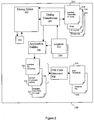
- the voice application development system 100 includes a dialog editor module 202, a dialog transformer module 204, an application builder module 206, an IVR code generator 208, other application development modules 210, VoiceXML templates 212, and EMCAscript templates 230.
- the voice application development system 100 constitutes an integrated development environment (IDE) for the development of speech based applications.
- IDE integrated development environment
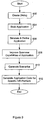
- the system 100 executes an application development process, as shown in Figure 3 , that allows a user of the system 100 to develop a voice application for a particular IVR platform.
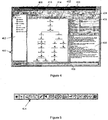
- the system 100 When the process begins, the system 100 generates a graphical user interface, as shown in Figure 4 .
- the interface is in the form of a window 400 with a project pane 402, a tools pane 404, and a messages pane 406.
- the window 400 also includes a main menubar 408 and a main toolbar 410.
- the main menubar 408 includes a Tools menu that provides access to a number of modules of the system 100 that are used to develop voice applications, as described below, and the tools pane 404 provides an interface to each tool when that tool is executed.
- a user of the system 100 can create a new project or open a saved project by selecting a corresponding menu item from the "Files" menu of the main menubar 408.
- the dialog editor 202 is then executed, and a tabbed dialog panel 411 is added to the tools pane 404, providing an interface to the dialog editor 202, and allowing the user to define an execution flow, referred to as a dialog, for the application.
- the dialog panel 411 includes a dialog pane 412, a dialog element toolbar 414 referred to as the dialog palette, a dialog element properties pane 416, and a dialog element help pane 418.
- An application can be built from a set of seventeen dialog elements represented by icons in the dialog palette 414, as shown in Figures 4 and 5 .
- Each element represents a complete or partial component of the voice application, such as a menu, a menu choice, a form, an execution loop, a speech prompt, and so on.
- the full set of dialog components is given in Appendix A.
- a dialog element is added to the dialog by selecting the element from the dialog palette 414 using a pointing device of the system 100 such as a mouse or tablet, and placing the selected dialog element on the dialog editor pane 412 using a drag-and-drop action.
- Each dialog element has a number of properties that can be set by the user.
- an instance of the selected dialog element is added to the dialog and its properties can be set.
- a dialog element instance in the dialog editor pane 412 is selected, its property names and associated values are displayed in the properties pane 416.
- the properties pane displays the name of each property, and includes controls such as check boxes and buttons to allow the user to modify the values of existing properties, and to add or delete new properties.
- the dialog element help pane 418 displays help information for the selected element, facilitating the rapid development of the application.
- the execution flow of the application is defined by adding dialog elements to the dialog editor pane 412, setting the properties of the dialog elements, and defining the execution order of the dialog elements. The latter is achieved by dragging a dialog element and dropping it on top of an existing dialog element in the dialog editor pane 412. The dropped element becomes the next element to be executed after the element that it was dropped onto.
- the sequence and properties of dialog elements on the dialog editor pane 412 defines a dialog.
- a dialog represents the execution flow of a voice application as a sequence of dialog elements. This sequence represents the main flow of the application and provides a higher-level logical view of the application that is not readily evident from the application's VoiceXML code.
- the dialog provides a clear and logical view of the execution of the application.
- non-sequential execution branches can be created by using a Jump dialog element.
- non-sequential execution is not represented in a dialog.
- a subroutine is represented by an icon in the project pane 402 and appears as an icon in the dialog editor pane 412 when the main dialog is displayed.
- the execution flow of a subroutine can be displayed by selecting its icon in the project pane 402.
- a dialog generated by the system 100 has a tree structure, with each path through the tree representing a possible path of dialog execution. This allows the dialog flow to be readily determined and displayed using high level graphical dialog elements, which would be much more difficult with arbitrary VoiceXML.
- An application can be saved at any time by selecting a "Save" menu item of the "File” menu of the menubar 410.
- the application dialog is translated into an extended VoiceXML format by the dialog transformer 204.
- Each dialog element in the dialog flow is first translated into corresponding VoiceXML code.
- Each of the seventeen dialog elements corresponds to one of the seventeen VoiceXML templates 212 that performs the functionality of that element.
- a VoiceXML template is a sequence of VoiceXML elements that produces the behaviour that the dialog element represents. It is a template because it needs to be configured by the element properties (e.g., name, test condition) which are set by the user, as described above.
- dialog elements correspond to similar VoiceXML elements (e.g., a Menu dialog element corresponds to a VoiceXML ⁇ menu> element), while others map onto a complex sequence of VoiceXML elements (e.g., a Loop dialog element corresponds to multiple VoiceXML ⁇ form> elements, each form specifying the next form to execute in an iterative loop).
- a Menu dialog element allows prompts to be set by the user, and the Menu dialog element actually maps onto a block of VoiceXML code that contains a ⁇ menu> element with embedded ⁇ prompt>, ⁇ audio>, and other XML elements.
- Each dialog element's VoiceXML template is separate from the next and can be sequenced to produce the dialog flow.
- the sequencing is achieved by a reference at the bottom of each element's template to the next element's template, which causes the templates to be executed in the desired order.
- the translation from high-level dialog elements into VoiceXML proceeds as follows.
- the dialog elements are stored in a tree structure, each branch of the tree corresponding to a path in the dialog flow.
- the tree is traversed in pre-order traversal to convert each element visited into VoiceXML.
- VoiceXML code is generated from its corresponding VoiceXML template by filling in the missing or configurable parts of the template using the element properties set by the user, and adding a link to the next element's VoiceXML code at the bottom of the current element's generated VoiceXML code.
- the dialog transformer 204 modifies the VoiceXML code by inserting additional attributes into various element tags, providing dialog element information that cannot be stored using the available VoiceXML tags.
- the resulting file 214 is effectively in an extended VoiceXML format.
- the additional attributes are stored in a separate, qualified XML namespace so that they do not interfere with the standard VoiceXML elements and attributes, as described in the World Wide Web Consortium's (W3C) Namespaces in XML recommendation, available at http://www.w3.org/TR/1999/REC-xml-names-19990114/ . This facilitates the parsing of extended VoiceXML files.
- an extended VoiceXML file can include the following namespace declaration:
- the dialog transformer 204 When the application is saved, the dialog transformer 204 also generates a number of other files, including a project file 216, package description files 218, and type description files 220.
- the project file is given a filename extension of ".1qx", and contains information about the packages (i.e ., self-contained groups of files) and other data files making up a project of the voice application development system 100.
- An example project file is listed below.
- the project is defined by a "project” XML element that defines the project name as "mas”.
- Within the "project” element are four sequential "folder” elements that define subdirectories or folders of the directory containing the project file, respectively named Packages, Transcripts, Scenarios, and Generated Code. These folders contain respectively the project's packages, transcripts of text, scenarios of interaction between the corresponding application and a user, and VoiceXML code and grammar generated for one or more specific IVR platforms.
- Within the "Packages” folder element is a "package” element giving the location and name of any packages used by the project.
- the "folder” elements can contain one or more "file” elements, each defining the type and name of a file within the encapsulating folder. The “folder” elements can be nested.
- a package description file is given a filename extension of ".pkg.xml", and contains information about data files belonging to an individual Package of a project.
- An example of a package description file for the package named "mas” is given below.
- the file defines the project's dialog file as "mas.vxml”, four grammar files, four prompt files, and three type definition files, containing definitions of user-defined variable types. These files are described in more detail below.
- a Type description file is given a filename extension of ".type.xml", and contains information about a user-defined Type used in a Package of a project.
- An example of the file is given below.
- the file defines an enumerated type named "fare_class” with three possible values: “first”, "business”, and "economy”.
- the application dialog is translated into VoiceXML by the application builder 206 at step 604.
- voice applications require grammar and prompts.
- the application builder 206 generates grammar files 222 and prompts files 224 automatically, using information specified by the user and stored in the dialog, such as prompt wordings and Form input types. This information is supplied by the user entering typical phrases for 'mixed initiative' recognition (i.e., input containing multiple pieces of information).
- a combinator module of the application development modules 210 generates a starting grammar set capable of handling a large number of input phrases.
- the application builder 206 also invokes the dialog transformer 204 to create the extended VoiceXML file 214.
- the grammar 222 and prompts 224 files are used by the IVR code generator 208 to generate VoiceXML 226 for the IVR 102.
- a generated grammar file is given a filename extension of ".rulelist”.
- An example of a generated grammar file for a flight booking system is:
- the first line or rule of this grammar can be used as an example:
- This grammar rule might be invoked when a flight booking application prompts a customer to provide the destination of a flight.
- the first field, .Ask_flight_details_destination provides the name of the grammar rule.
- the second field, cities :X indicates that the customer's response x is of type Cities. This type is defined by its own grammar that includes a list of available city names. The following two fields, 2 0, are used for grammar learning, as described in International Patent Publication No. WO 00/78022 , A Method of Developing an Interactive System.
- the first field indicates the number of training examples that use the grammar rule.
- the second field indicates the number of other rules that refer to the rule.
- a more complex example is provided by the last rule :
- the grammar rule invokes three other grammars: GF_IwantTo, Fare_class, and cities and assigns the results to parameters named X750, X753, and X757, respectively.
- This rule defines the application parameters ticket_class and destination.
- a prompts file is given a filename extension of ".prompts.rulelist", and each line of the file defines the speech prompt that is to be provided to a user of the application when the corresponding element of the dialog is executed.
- An example of a generated prompts file is:
- the format of the prompts file is the same as the grammar file. This allows the prompts to be improved through machine learning as though they were a grammar, using a grammar learning method such as that described in International Patent Publication No. WO 00/78022 , A Method of Developing an Interactive System.
- the generated prompts include dynamically prompts.
- An example of a dynamic prompt is: "You have selected to buy Telstra shares. How many of the Telstra shares would you like to buy?". The word, "Telstra” is dynamically inserted into the application's prompt to the user.
- the voice application development system 100 generates text-to-speech (TTS) prompts within the VoiceXML code that are evaluated on the fly.
- TTS text-to-speech
- VoiceXML syntax allows an expression to be evaluated and played as a TTS prompt
- the system 100 extends this by allowing an ECMAscript or JavaScript function to be called to evaluate each variable used in a prompt.
- complex test conditions can be used to determine the most suitable prompt given the available information in the variables. This might result in a prompt, for example, of "six dollars” rather than "six dollars and zero cents”.
- the system 100 In addition to automatically generating and incorporate JavaScript function calls in VoiceXML, the system 100 also generates the corresponding JavaScript functions by incorporating user-supplied prompt text and variables into the JavaScript templates 230. This allows the user to develop a voice application with dynamically generated prompts without having to manually code any JavaScript.
- PromptConfirm_payment_details For example, an automatically generated function call for a prompt named PromptConfirm_payment_details is:
- the corresponding JavaScript prompt function generated by the system 100 is:
- the system 100 represents prompts using a language model that describes all of the prompts that can be played, along with their meanings.
- This model contains the same type of information as a speech recognition grammar, and therefore the prompts to be played can be represented using a grammar.
- Prompts to be generated by the application are first represented as a grammar to enable that grammar to be improved using techniques such as grammar learning, as described in International Patent Publication No. WO 00/78022 , A Method of Developing an Interactive System.
- the grammar is subsequently converted into JavaScript and referenced by the application's VoiceXML tags, as described above.
- the application can be tested and further developed at steps 606 to 610.
- Steps 606, 608, 610 and 612 can be executed in any order.
- the application can be simulated and refined. This involves simulating the execution of the application and refining its accuracy by allowing the user to tag phrases that do not match the existing grammar.
- a dialog box is displayed, allowing the user to tag the phrase and supply the correct 'slot' or slots corresponding to that input.
- a grammar learner module of the application development modules 210 uses a transcript of the simulation to update the application grammar 222. New phrases learnt from this grammar are then displayed to the user, who can manually tag individual phrases as being incorrect.
- the grammar capabilities of the application can be further improved by a Train Grammar tool of the application development modules 210. This is similar to the simulate and refine module, but allows the user to enter a list of typical user responses for each application prompt.
- a Generate Scenarios module of the application development modules 210 generates scenarios of possible interactions between the application and a human. Based on these scenarios, the user can determine whether and application prompts need improvement.
- the IVR code generator 208 executes a code generation process at step 612 to generate pure VoiceXML suitable for a particular speech-enabled IVR such as the IVR 102 of Figure 1 .
- the code generation process begins at step 702 by removing the extended attributes from the extended VoiceXML file 214 to generate pure VoiceXML.
- prompts (including dynamic prompts) in the prompt file 224 are converted into JavaScript functions.
- these JavaScript functions are incorporated into the pure VoiceXML by adding references to the functions in VoiceXML tags, and adding the functions themselves to the pure VoiceXML.
- the IVR grammar file 228 is generated by translating the application grammar file 222 into a grammar format supported by the desired IVR platform, such as NuanceTM GSL or generic VoiceXML 1.0 JSGF grammar format, as selected by the user. Other grammar formats can be supported in the same way.
- references to the IVR grammar file 228 are incorporated into the pure VoiceXML. The result is the pure VoiceXML file 226.
- the VoiceXML file 226 and the IVR grammar file 228 are sufficient to deploy the voice application on the IVR 102.
- Appendix C provides a partial listing of a pure VoiceXML file corresponding to the first extended VoiceXML file listed in Appendix B.
- the listing in Appendix C includes the VoiceXML with the merged JavaScript for supporting Prompts.
- the JavaScript code is at the end of the listing.
- Menu DESCRIPTION Prompts the user to select from a series of menu choices Notes: Each Menu element is followed by one or more Menu-Choice. Prompts for the menu can include: (1) Auto generated prompts (by default); (2) User specified prompts; (3) Audio file for playing prompts. In addition, tapered prompts are supported. Parameters: Menu Name: name for this Menu element. Prompts Tapered prompts: the tapered prompts played to ask for a menu choice. The system can generate a default text prompt based on the menu choices and a default audio file name for recording the corresponding audio prompt, or you may enter in your own values.
- Menu choice Description Defines a specific menu choice Notes: Can only be added after a Menu element. This is the only Element whose name can have a space. Parameters: Choice Choice: a word or phrase for this menu choice. Form Description: Collects user inputs to fill in a 'form'. Defines a type and prompts for each input.
- Input Field Prompts Tapered prompts: the tapered prompts played to collect input for this field. The system can generate a default text prompt based on the field name and a default audio file name for recording the corresponding audio prompt, or you may enter in your own values. If an audio prompt is not required, the "Generate default audio file name" checkbox should be unchecked and the "Audio file” text box should be left empty. Help prompt: the prompt played when the user requests help.
- the system can generate a default text prompt and audio file name, or you may enter in your own.
- Record Description Captures a voice recording from the user Notes: Note that the Record duration is in seconds. Setting it to too high will result in excessivee memory usage & possible harddisk limit problems.
- PARAMETERS Record Name: a name for this Record element.
- MIME-type MIME-type storage format for the recording. This field may be left blank if the IVR does not allow a MIME-type specification. Please consult your IVR documentation for supported MIME-types.
- Beep enable a beep to be sounded before recording starts.
- DTMF Terminate enable a DTMF key press to terminate the recording. Duration: maximum recording time in seconds.
- Prompt the prompt played to ask for a recording.
- the system can generate a default text prompt and a default audio file name for recording the corresponding audio prompt, or you may enter in your own values. If an audio prompt is not required, the "Generate default audio file name" checkbox should be unchecked and the "Audio file” text box should be left empty.
- Speaker Description Plays TTS & audio to the caller. Notes: Can say variables of predefined types, such as Date, Money, etc. The variables need to be declared as a valid object (unless it is created via a Form Field). Eg.
- PromptMoney(price) in a Speaker expression fragment.
- Speaker Name a name for this Speaker element.
- Fragment Type type of prompt fragment.
- Text a fixed text fragment.
- the text specifies text-to-speech (TTS) that should be played.
- the audio file URL specifies a recording that should be played, in precedence to the text-to-speech, eg. greeting.wav, http: // server / welcome.wav.
- Either of the audio file or the text may be left empty to request that only TTS or audio with no alternate text should be played.
- Expression an evaluated prompt fragment.
- the ECMAScript expression is evaluated and played as text-to-speech (TTS), eg. recordedMessage, counter + 1.
- PromptType(x) where Type is the name of that type, and x is the name of the variable, eg. PromptMoney(BuyForm.price).
- the audio expression is evaluated and retrieved as an audio file URL for playing, eg. company +'.wav'.
- the expressions may reference any variable defined in the package, such as in a Variables element or a Form object. Either of the audio expression or the TTS expression may be left empty to request that only TTS or audio with no alternate text should be played.
- Local Processing Description Local computation. Notes: This can be any ECMAScript code, eg. functions, statements, function calls.
- Any variable declared in the dialog may be accessed, eg. declared Variables, Form fields, SubroutineCall outputs, RemoteProcessing outputs.
- Parameters Local Processing Name: a name for this Local Processing element.
- Remote Processing Description Call a server-side script (via a HTTP URL) to perform some processing. The script should return a VoiceXML document with the results of the processing.
- NOTES Need PHP/CGI running on remote Web server to handle this.
- Name of the input and output parameters needn't be declared in the Variables element.
- the names of the input and output parameters should match what is required at the remote server end.
- Other Dialog Elements can refer to the output of the Remote Processing element using: "RemoteProcName.outputName".
- Parameters Remote Processing Name: a name for this Remote Processing element. An object with this name will be created to store the returned outputs. Each output can then be accessed as $remoteProcessingName.$output, eg. ValidalePin.validity Source URL: the URL of the remote script to execute, eg. http: // server / cgi-bin / scriptl.
- Input Name name of the input parameter to be submitted, eg. price.
- Value value of the input parameter to be submitted, eg. BuyForm.price, 1. AUD', true, x + l .
- This may be any valid ECMAScript expression. the expression may reference any variable defined in the package, such as in a Variables element or a Form object. If the value is an ECMAScript object with fields f1, f2, ..., then the object is serialised and submitted using the names o.f1, o.f2, ..., assuming o is the declared input name.
- Output Name name of each parameter returned by the remote script, eg. outField1.
- Loop Call Description Calls a Loop to execute a part of a dialog that should be iterated several times. Notes: A corresponding Loop element is required. Parameters: Loop Call Name: a name for this Loop Call element. Source: the loop to call. The loop must be defined in this package. Subroutine Call Description: Start a subroutine. Used for breaking bigger programs into smaller components, for ease of readability, reuse of code, and support of pre-packaped code. Notes: A corresponding Subroutine element is required. Input parameter names needn't be declared. Ouput parameter names are set by the Subroutine element.
- Dialog Elements can refer to the output parameters by calling: "SubroutineCaIlName.OutputParamName".
- Parameters Subroutine Call Name: a name for this Subroutine Call element. An object with this name will be created to store the returned outputs. Each output can then be accessed as $subName.$output, eg. ValidatePin.validity.
- Source the subroutine to call (qualified with the package name). If the declared subroutine inputs and outputs have changed, you may need to reselect the subroutine from the Source list box to refresh the displayed inputs and outputs. Inputs This is a list of the inputs that the called subroutine expects.
- Parameters Jump Destination: the destination element to jump to. You can only jump within a main dialog or within a subroutine. You cannot jump to an element in a loop or in another package. The available elements to jump to are presented in the drop-down list box. End Description: Terminate the call. End of dialog Notes: Parameters: Causes execution to terminate immediately Transfer Description: Transfer the call to another number. Notes: Parameters: Transfer Name: a name for this Transfer element. Destination: a number to dial or an ECMAScript expression that evaluates to such a number. A valid number is a string of digits with optional spaces, eg. 1234567, 03 1234567. The number may optionally contain a protocol specifier.
- Loop Break Description Used within a Loop to break out of the loop. Notes: Only valid within a Loop Parameters: Causes execution to break out of the loop immediately. The loop exit message, if any, is not played Loop Next Description: Used within a Loop to indicate the end of one iteration. Notes: Only valid within a Loop Parameters: Causes execution of the next iteration of the loop, if the loop test condition evaluates to true. The loop step is executed before the condition is evaluated. Subroutine Return Description: Return from subroutine Notes: Only valid within a Subroutine Parameters: Return from a subroutine call.
- Variables Description Declare "global" variables that can be accessed from anywhere within this Package, eg. inside a Loop, LocalProcessing, Speaker element. Notes: Form Fields, Subroutine Call outputs and Remote Processing outputs do not need to be declared. They are automatically created. Parameters: Variables Name: a name for the variable. The name should be unique within this package. Value: an ECMAScript expression, usually a constant, that sets the initial value for the variable, eg. 0, 'cat', true. Note that strings should be quoted with single quotes. The value may be left empty to create an ECMAScript undefined value. Hotwords Description: Create “hot words" that transition the user to a specified point in the dialog when they are uttered by the user.
- Hotwords can only be created in the Main Package, not in Subroutine Packages. Parameters: Hotwords Hotword: a word or phrase that will trigger a jump. Destination: the destination element to jump to. Start Dialog Description: The entry point for the application. Notes: This is automatically created when you create a new project. Only the first package has a Start Dialog element. Each project must have one and only one Start Dialog element. You cannot add more Start Dialogs, nor delete any. Parameters: Start Dialog This is the entry point for the application. Name: a name for this Start Dialog element. Quit Prompt: the prompt played when the user has requested to quit, after which the dialog will terminate.
- the system can generate a default text prompt and a default audio file name for recording the corresponding audio prompt, or you may enter in your own values. If an audio prompt is not required, the "Generate default audio file name" checkbox should be unchecked and the "Audio file” text box should be left empty.
- No Input Prompt the prompt played when no input is detected while the user is being asked for a response. The user is then reprompted for a response. As with the Quit prompt, the system can generate a default text prompt and a default audio file name, or you may enter in your own values.
- No Match Prompt the prompt played when the detected user response cannot be recognised by the system. The user is then reprompted for another response.
- Subroutine Description This is the entry point for a subroutine. Notes: Subroutine elements cannot be added to the Main Package. They can only be added to non-Main Packages. More than one Subroutine can be added to a non-Main Package. However, all Subroutine inputs and outputs must be unique within the Package, ie. no two Subroutines can declare the same input name or output name. Furthermore, no input name can be the same as an output name.
- the Subroutine element is created by (1) right-clicking on the "Project" icon on the Dialogs/Project Files window (LHS) to add a new Package; and (2) right-clicking on a Package icon on the Dialogs window (LHS) to add a new Subroutine.
- Each path in the Subroutine should end with a Return element, otherwise the Subroutine will not return to the calling dialog.
- Parameters Subroutine Name: a name for this Subroutine element.
- Input Name name of each input parameter expected, eg. pin. The input will be declared as a document variable that you can access from anywhere within the package. You do not need to (re)declare it under the Variables element.
- Output Name name of each return parameter, eg. validity.
- Loop Description A portion of the dialog that should be executed several times. Notes: The Loop element is created by right-clicking on the Package icon on the Dialogs window (LHS). Variables are freely shared between the Loop body and the main dialog (of the same Package) as they are in one VoiceXML document. Parameters: Loop Name: a name for this Loop element. Loop Test: an ECMAScript expression that if evaluated to true will cause execution of the next iteration of the loop, eg. counter ⁇ 5.
- Test at start If enabled, the test condition is evaluated at the start of the loop and the loop is equivalent to a while / for loop. If disabled, the loop body is executed before the test condition is evaluated and the loop is equivalent to a do-while loop.
- Exit message a message to be played when the loop exits normally, eg. there are no more items. The system can generate a default text prompt and a default audio file name for recording the corresponding audio prompt, or you may enter in your own values. If a message is not required, the "Generate default" checkboxes should be unchecked and the "Audio file" and "TTS" text boxes should be left empty. Loop Init Variables to be initialised at the start of the loop.
- APPENDIX B TWO EXTENDED VoiceXML files OF AN APPLICATION
- APPENDIX C PORTION OF A SYSTEM GENERATED VoiceXML FILE
Landscapes
- Engineering & Computer Science (AREA)
- Human Computer Interaction (AREA)
- Signal Processing (AREA)
- Computational Linguistics (AREA)
- Health & Medical Sciences (AREA)
- Audiology, Speech & Language Pathology (AREA)
- Physics & Mathematics (AREA)
- Acoustics & Sound (AREA)
- Multimedia (AREA)
- Stored Programmes (AREA)
Claims (23)
- Verfahren zur Entwicklung einer Sprachanwendung, das Folgendes umfasst:Erzeugen von Komponenten einer grafischen Benutzeroberfläche zum Auswählen und Verbinden von grafischen Symbolen, die Dialogelemente für Sprachanwendungen darstellen, wobei die Dialogelemente funktionelle Komponenten von Sprachanwendungen darstellen, die benutzerkonfigurierbare Eigenschaften aufweisen und entsprechenden jeweiligen vorbestimmten Abfolgen von VoiceXML-Elementen entsprechen;Empfangen von Benutzereingaben, die durch eine Benutzer-Interaktion mit den Komponenten der graphischen Benutzerschnittstelle erzeugt werden, wobei die Benutzereingaben Folgendes darstellen: Auswahl, Anordnung und Verbindungen von einem oder mehreren der graphischen Symbole und Konfiguration von Dialogelementen, die einem oder mehreren der ausgewählten grafischen Symbole entsprechen;Verarbeiten der Benutzereingaben, um eine Sprachanwendung zu definieren durch Auswählen von Dialogelementen, die den ausgewählten Symbolen entsprechen, Konfigurieren von Eigenschaften eines oder mehrerer der ausgewählten Dialogelemente und Definieren von Ausführungsabläufen der Sprachanwendung ausgehend von den Verbindungen der ausgewählten Symbole; undErzeugen von Anwendungscode, um die Sprachanwendung bereitzustellen;dadurch gekennzeichnet, dass:die Verbindungen der ausgewählten Symbole eine Baumstruktur der Ausführungsabläufe für die Sprachanwendung definieren, wobei jeder Pfad durch die Baumstruktur einen entsprechenden der Ausführungsabläufe darstellt; undder Anwendungscode jedes Dialogelement der Anwendung als verknüpfte Abfolge von VoiceXML-Elementen darstellt, die erweiterte Attribute umfassen, die zusätzliche Dialoginformationen bezüglich der Baumstruktur speichern, wobei die verknüpfte Abfolge von VoiceXML-Elementen ermöglicht, dass die ausgewählten Dialogelemente, die konfigurierten Eigenschaften und die Baumstruktur der Ausführungsabläufe von dem Anwendungscode effizienter bestimmt werden können.
- Prozess nach Anspruch 1, wobei die erweiterten Attribute ermöglichen, dass die ausgewählten Dialogelemente und die konfigurierten Eigenschaften von dem Anwendungscode bestimmt werden.
- Prozess nach Anspruch 1 oder 2, wobei die erweiterten Attribute qualifizierte Namen eines qualifizierten XML-Namensraums sind.
- Prozess nach einem der Ansprüche 1 bis 3, wobei jedes Dialogelement des Anwendungscodes eine Referenz auf das nächste der Dialogelemente in einem Ausführungsablauf der Anwendung umfasst.
- Prozess nach einem der Ansprüche 1 bis 4, der die Verarbeitung des Anwendungscodes umfasst, um eine visuelle Darstellung der Dialogelemente und der Ausführungsabläufe zu erzeugen.
- Prozess nach einem der Ansprüche 1 bis 5, wobei der Schritt des Erzeugens des Anwendungscodes das Erzeugen von erweitertem VoiceXML-Code, Eingabeaufforderungsdaten und Grammatikdaten für die Anwendung umfasst.
- Prozess nach Anspruch 6, wobei die Eingabeaufforderungsdaten als Grammatik dargestellt werden und das Verfahren die Optimierung der Grammatik umfasst.
- Prozess nach Anspruch 6 oder 7, der das Erzeugen von mindestens einem Skript zur Erzeugung einer Eingabeaufforderung für die Anwendung auf der Grundlage von einem oder mehreren Parametern, die dem Skript bereitgestellt werden, umfasst.
- Prozess nach Anspruch 8, wobei das mindestens eine Skript auf der Grundlage von mindestens einer Skriptvorlage und von Eingabeaufforderungsdaten erzeugt wird, die für die Eingabeaufforderung von einem Benutzer definiert werden.
- Prozess nach Anspruch 8 oder 9, wobei das mindestens eine Skript ECMASkript umfasst.
- Prozess nach einem der Ansprüche 6 bis 10, der das Erzeugen von VoiceXML-Code und IVR-Grammatikdaten zur Ausführung der Anwendung auf einem IVR-System auf der Grundlage des erweiterten VoiceXML-Codes, der Aufforderungsdaten und der Grammatikdaten umfasst.
- System, das Komponenten zur Ausführung eines Prozesses nach einem der Ansprüche 1 bis 11 aufweist.
- Sprachanwendung, die durch Ausführen eines Prozesses nach einem der Ansprüche 1 bis 11 erzeugt wird.
- Computerlesbares Speichermedium, auf dem Programmcode zum Ausführen eines Prozesses nach einem der Ansprüche 1 bis 11 gespeichert ist.
- System (100) zur Verwendung bei der Entwicklung einer Sprachanwendung, das Folgendes umfasst:einen Dialogelementselektor zur Definition des Ausführungsablaufs einer Sprachanwendung durch Auswählen und Verbinden von grafischen Symbolen, die Dialogelemente für die Sprachanwendung darstellen, wobei die Dialogelemente funktionelle Komponenten der Sprachanwendung darstellen, die benutzerkonfigurierbare Eigenschaften aufweisen und entsprechenden jeweiligen vorbestimmten Abfolgen von VoiceXML-Elementen entsprechen;Mittel (400) zum Empfangen von Benutzereingaben, die durch Benutzerinteraktion mit dem Dialogelementselektor erzeugt werden, wobei die Benutzereingaben Folgendes darstellen: Auswahl, Anordnung und Verbindungen von einem oder mehreren der graphischen Symbole und Konfiguration von Dialogelementen, die einem oder mehreren der ausgewählten grafischen Symbole entsprechen;ein Mittel zum Verarbeiten der Benutzereingaben, um eine Sprachanwendung zu definieren durch Auswählen von Dialogelementen, die den ausgewählten Symbolen entsprechen, Konfigurieren von Eigenschaften eines oder mehrerer der ausgewählten Dialogelemente und Definieren von Ausführungsabläufen der Sprachanwendung ausgehend von den Verbindungen der Symbole; undeinen Codegenerator (208) zum Erzeugen von Anwendungscode, um die Sprachanwendung bereitzustellen;dadurch gekennzeichnet, dass:die Verbindungen der ausgewählten Symbole eine Baumstruktur der Ausführungsabläufe für die Sprachanwendung definieren, wobei jeder Pfad durch die Baumstruktur einen der Ausführungsabläufe darstellt; undder Anwendungscode jedes Dialogelement der Anwendung als verknüpfte Abfolge von VoiceXML-Elementen darstellt, die ein oder mehrere erweiterte Attribute umfassen, die zusätzliche Dialoginformationen bezüglich der Baumstruktur speichern, wobei die verknüpfte Abfolge ermöglicht, dass die ausgewählten Dialogelemente, die konfigurierten Eigenschaften und die Baumstruktur der Ausführungsabläufe von dem Anwendungscode effizienter bestimmt werden können.
- System nach Anspruch 15, wobei die erweiterten Attribute ermöglichen, dass die ausgewählten Dialogelemente und die konfigurierten Eigenschaften von dem Anwendungscode bestimmt werden.
- System nach Anspruch 15 oder 16, wobei der Selektor dafür ausgelegt ist, den Anwendungscode zu verarbeiten, um eine grafische Darstellung der Dialogelemente und der Ausführungsabläufe der Sprachanwendung zu erzeugen.
- System nach einem der Ansprüche 15 bis 17, wobei der Codegenerator dafür ausgelegt ist, erweiterten VoiceXML-Code, Eingabeaufforderungsdaten und Grammatikdaten für die Anwendung zu erzeugen.
- System nach Anspruch 18, wobei die Eingabeaufforderungsdaten als Grammatik dargestellt werden und das System ein oder mehrere Module zur Optimierung der Grammatik umfasst.
- System nach Anspruch 18 oder 19, das einen Skriptgenerator zum Erzeugen von mindestens einem Skript zur Erzeugung einer Eingabeaufforderung für die Anwendung auf der Grundlage von einem oder mehreren Parametern, die dem Skript bereitgestellt werden, umfasst.
- System nach Anspruch 20, wobei der Skriptgenerator dafür ausgelegt ist, das mindestens eine Skript auf der Grundlage von mindestens einer Skriptvorlage und von Aufforderungsdaten zu erzeugen, die für die Eingabeaufforderung durch einen Benutzer definiert werden.
- System nach einem der Ansprüche 18 bis 21, wobei der Codegenerator dafür ausgelegt ist, VoiceXML-Code und IVR-Grammatikdaten zur Ausführung der Anwendung auf einem IVR-System auf der Grundlage des erweiterten VoiceXML-Codes, der Aufforderungsdaten und der Grammatikdaten zu erzeugen.
- Erweiterte VoiceXML-Datei, die von einem System nach einem der Ansprüche 15 bis 22 erzeugt wird.
Applications Claiming Priority (3)
| Application Number | Priority Date | Filing Date | Title |
|---|---|---|---|
| AU2002950336 | 2002-07-24 | ||
| AU2002950336A AU2002950336A0 (en) | 2002-07-24 | 2002-07-24 | System and process for developing a voice application |
| PCT/AU2003/000939 WO2004010678A1 (en) | 2002-07-24 | 2003-07-24 | System and process for developing a voice application |
Publications (3)
| Publication Number | Publication Date |
|---|---|
| EP1535453A1 EP1535453A1 (de) | 2005-06-01 |
| EP1535453A4 EP1535453A4 (de) | 2006-05-10 |
| EP1535453B1 true EP1535453B1 (de) | 2016-08-17 |
Family
ID=27809437
Family Applications (1)
| Application Number | Title | Priority Date | Filing Date |
|---|---|---|---|
| EP03737751.2A Expired - Lifetime EP1535453B1 (de) | 2002-07-24 | 2003-07-24 | System und prozess zum entwickeln einer sprachanwendung |
Country Status (6)
| Country | Link |
|---|---|
| US (1) | US7712031B2 (de) |
| EP (1) | EP1535453B1 (de) |
| AU (1) | AU2002950336A0 (de) |
| CA (1) | CA2493533C (de) |
| NZ (1) | NZ537728A (de) |
| WO (1) | WO2004010678A1 (de) |
Families Citing this family (54)
| Publication number | Priority date | Publication date | Assignee | Title |
|---|---|---|---|---|
| DE60040536D1 (de) | 1999-06-11 | 2008-11-27 | Telstra Corp Ltd | Verfahren zur entwicklung eines interaktiven systems |
| AU2002950336A0 (en) | 2002-07-24 | 2002-09-12 | Telstra New Wave Pty Ltd | System and process for developing a voice application |
| AU2002951244A0 (en) | 2002-09-06 | 2002-09-19 | Telstra New Wave Pty Ltd | A development system for a dialog system |
| AU2003900584A0 (en) * | 2003-02-11 | 2003-02-27 | Telstra New Wave Pty Ltd | System for predicting speech recognition accuracy and development for a dialog system |
| AU2003902020A0 (en) | 2003-04-29 | 2003-05-15 | Telstra New Wave Pty Ltd | A process for grammatical inference |
| US8799001B2 (en) * | 2003-11-17 | 2014-08-05 | Nuance Communications, Inc. | Method and system for defining standard catch styles for speech application code generation |
| US20050144015A1 (en) * | 2003-12-08 | 2005-06-30 | International Business Machines Corporation | Automatic identification of optimal audio segments for speech applications |
| US20050125236A1 (en) * | 2003-12-08 | 2005-06-09 | International Business Machines Corporation | Automatic capture of intonation cues in audio segments for speech applications |
| US20050171797A1 (en) * | 2004-02-04 | 2005-08-04 | Alcatel | Intelligent access control and warning system for operations management personnel |
| EP1733383B1 (de) * | 2004-03-29 | 2009-04-15 | Philips Intellectual Property & Standards GmbH | Verfahren zur ansteuerng mehrerer anwendungen und dialogverwaltungssystem |
| US20050228668A1 (en) * | 2004-03-31 | 2005-10-13 | Wilson James M | System and method for automatic generation of dialog run time systems |
| US8683437B1 (en) * | 2004-04-16 | 2014-03-25 | At&T Intellectual Property Ii, L.P. | System and method for the automatic validation of dialog run time systems |
| US7945903B1 (en) | 2004-04-16 | 2011-05-17 | At&T Intellectual Property Ii, L.P. | System and method for converting graphical call flows into finite state machines |
| US20050234725A1 (en) * | 2004-04-20 | 2005-10-20 | International Business Machines Corporation | Method and system for flexible usage of a graphical call flow builder |
| US7228278B2 (en) * | 2004-07-06 | 2007-06-05 | Voxify, Inc. | Multi-slot dialog systems and methods |
| US9083798B2 (en) * | 2004-12-22 | 2015-07-14 | Nuance Communications, Inc. | Enabling voice selection of user preferences |
| US8478589B2 (en) | 2005-01-05 | 2013-07-02 | At&T Intellectual Property Ii, L.P. | Library of existing spoken dialog data for use in generating new natural language spoken dialog systems |
| US8185399B2 (en) | 2005-01-05 | 2012-05-22 | At&T Intellectual Property Ii, L.P. | System and method of providing an automated data-collection in spoken dialog systems |
| US20060149553A1 (en) * | 2005-01-05 | 2006-07-06 | At&T Corp. | System and method for using a library to interactively design natural language spoken dialog systems |
| EP1679867A1 (de) * | 2005-01-06 | 2006-07-12 | Orange SA | Anpassung von VoiceXML Anwendungen |
| US7634722B2 (en) | 2005-03-08 | 2009-12-15 | Aspect Software, Inc. | Reversible logic for widget and markup language generation |
| FR2884380A1 (fr) * | 2005-04-11 | 2006-10-13 | France Telecom | Procede et systeme de generation automatique de composants pour la conception de services vocaux. |
| US8260617B2 (en) * | 2005-04-18 | 2012-09-04 | Nuance Communications, Inc. | Automating input when testing voice-enabled applications |
| US20060287863A1 (en) * | 2005-06-16 | 2006-12-21 | International Business Machines Corporation | Speaker identification and voice verification for voice applications |
| US8126716B2 (en) * | 2005-08-19 | 2012-02-28 | Nuance Communications, Inc. | Method and system for collecting audio prompts in a dynamically generated voice application |
| US8620667B2 (en) * | 2005-10-17 | 2013-12-31 | Microsoft Corporation | Flexible speech-activated command and control |
| US8229745B2 (en) * | 2005-10-21 | 2012-07-24 | Nuance Communications, Inc. | Creating a mixed-initiative grammar from directed dialog grammars |
| GB2434664A (en) * | 2006-01-25 | 2007-08-01 | Voxsurf Ltd | Configuration and analysis of an interactive voice system |
| US8032375B2 (en) * | 2006-03-17 | 2011-10-04 | Microsoft Corporation | Using generic predictive models for slot values in language modeling |
| US20070233495A1 (en) * | 2006-03-29 | 2007-10-04 | International Business Machines Corporation | Partially automated technology for converting a graphical interface to a speech-enabled interface |
| US20070239453A1 (en) * | 2006-04-06 | 2007-10-11 | Microsoft Corporation | Augmenting context-free grammars with back-off grammars for processing out-of-grammar utterances |
| US7937687B2 (en) * | 2006-09-01 | 2011-05-03 | Verizon Patent And Licensing Inc. | Generating voice extensible markup language (VXML) documents |
| US8073697B2 (en) | 2006-09-12 | 2011-12-06 | International Business Machines Corporation | Establishing a multimodal personality for a multimodal application |
| US8086463B2 (en) * | 2006-09-12 | 2011-12-27 | Nuance Communications, Inc. | Dynamically generating a vocal help prompt in a multimodal application |
| US9396185B2 (en) * | 2006-10-31 | 2016-07-19 | Scenera Mobile Technologies, Llc | Method and apparatus for providing a contextual description of an object |
| US20080154590A1 (en) * | 2006-12-22 | 2008-06-26 | Sap Ag | Automated speech recognition application testing |
| EP1959430A3 (de) * | 2007-02-19 | 2010-08-04 | Deutsche Telekom AG | Verfahren zur automatischen Generierung von VoiceXML-sprachapplicationen aus Sprachdialogmodellen |
| US8150698B2 (en) | 2007-02-26 | 2012-04-03 | Nuance Communications, Inc. | Invoking tapered prompts in a multimodal application |
| US8503665B1 (en) * | 2007-04-18 | 2013-08-06 | William S. Meisel | System and method of writing and using scripts in automated, speech-based caller interactions |
| US8682706B2 (en) * | 2007-07-31 | 2014-03-25 | Apple Inc. | Techniques for temporarily holding project stages |
| US8219407B1 (en) | 2007-12-27 | 2012-07-10 | Great Northern Research, LLC | Method for processing the output of a speech recognizer |
| US20100036661A1 (en) * | 2008-07-15 | 2010-02-11 | Nu Echo Inc. | Methods and Systems for Providing Grammar Services |
| US8346560B2 (en) * | 2009-05-01 | 2013-01-01 | Alpine Electronics, Inc | Dialog design apparatus and method |
| US8914293B2 (en) * | 2010-08-25 | 2014-12-16 | Unwired Planet, Llc | Web browser implementation of interactive voice response instructions |
| US9536528B2 (en) | 2012-07-03 | 2017-01-03 | Google Inc. | Determining hotword suitability |
| US8700396B1 (en) * | 2012-09-11 | 2014-04-15 | Google Inc. | Generating speech data collection prompts |
| US9495965B2 (en) * | 2013-09-20 | 2016-11-15 | American Institutes For Research | Synthesis and display of speech commands method and system |
| US9263042B1 (en) | 2014-07-25 | 2016-02-16 | Google Inc. | Providing pre-computed hotword models |
| CN107112013B (zh) * | 2014-09-14 | 2020-10-23 | 谷歌有限责任公司 | 用于创建可定制对话系统引擎的平台 |
| EP3230919B1 (de) * | 2016-02-11 | 2023-04-12 | Morphisec Information Security 2014 Ltd | Automatische klassifizierung von exploits auf der basis von laufzeit-umgebungsmerkmalen |
| US10268825B2 (en) * | 2016-12-01 | 2019-04-23 | International Business Machines Corporation | Amalgamating code vulnerabilities across projects |
| US10621984B2 (en) | 2017-10-04 | 2020-04-14 | Google Llc | User-configured and customized interactive dialog application |
| CN112204654B (zh) * | 2018-02-15 | 2024-07-23 | 暗物智能科技(广州)有限公司 | 用于基于预测的先发式对话内容生成的系统和方法 |
| CN112685115A (zh) * | 2020-12-29 | 2021-04-20 | 平安普惠企业管理有限公司 | 国际提示语生成方法、系统、计算机设备及存储介质 |
Family Cites Families (43)
| Publication number | Priority date | Publication date | Assignee | Title |
|---|---|---|---|---|
| JPH01102599A (ja) | 1987-10-12 | 1989-04-20 | Internatl Business Mach Corp <Ibm> | 音声認識方法 |
| US5241619A (en) | 1991-06-25 | 1993-08-31 | Bolt Beranek And Newman Inc. | Word dependent N-best search method |
| US5452397A (en) | 1992-12-11 | 1995-09-19 | Texas Instruments Incorporated | Method and system for preventing entry of confusingly similar phases in a voice recognition system vocabulary list |
| US5642519A (en) | 1994-04-29 | 1997-06-24 | Sun Microsystems, Inc. | Speech interpreter with a unified grammer compiler |
| CA2146890C (en) * | 1994-06-03 | 2000-10-24 | At&T Corp. | Outline programming for developing communication services |
| US5737723A (en) | 1994-08-29 | 1998-04-07 | Lucent Technologies Inc. | Confusable word detection in speech recognition |
| US6173261B1 (en) | 1998-09-30 | 2001-01-09 | At&T Corp | Grammar fragment acquisition using syntactic and semantic clustering |
| US6173266B1 (en) * | 1997-05-06 | 2001-01-09 | Speechworks International, Inc. | System and method for developing interactive speech applications |
| US5860063A (en) | 1997-07-11 | 1999-01-12 | At&T Corp | Automated meaningful phrase clustering |
| US6044347A (en) | 1997-08-05 | 2000-03-28 | Lucent Technologies Inc. | Methods and apparatus object-oriented rule-based dialogue management |
| US5937385A (en) | 1997-10-20 | 1999-08-10 | International Business Machines Corporation | Method and apparatus for creating speech recognition grammars constrained by counter examples |
| US6016470A (en) | 1997-11-12 | 2000-01-18 | Gte Internetworking Incorporated | Rejection grammar using selected phonemes for speech recognition system |
| US6154722A (en) | 1997-12-18 | 2000-11-28 | Apple Computer, Inc. | Method and apparatus for a speech recognition system language model that integrates a finite state grammar probability and an N-gram probability |
| US6144938A (en) | 1998-05-01 | 2000-11-07 | Sun Microsystems, Inc. | Voice user interface with personality |
| US6411952B1 (en) | 1998-06-24 | 2002-06-25 | Compaq Information Technologies Group, Lp | Method for learning character patterns to interactively control the scope of a web crawler |
| US6269336B1 (en) | 1998-07-24 | 2001-07-31 | Motorola, Inc. | Voice browser for interactive services and methods thereof |
| US6587822B2 (en) | 1998-10-06 | 2003-07-01 | Lucent Technologies Inc. | Web-based platform for interactive voice response (IVR) |
| US6321198B1 (en) | 1999-02-23 | 2001-11-20 | Unisys Corporation | Apparatus for design and simulation of dialogue |
| US20050091057A1 (en) | 1999-04-12 | 2005-04-28 | General Magic, Inc. | Voice application development methodology |
| US6523016B1 (en) | 1999-04-12 | 2003-02-18 | George Mason University | Learnable non-darwinian evolution |
| US6314402B1 (en) | 1999-04-23 | 2001-11-06 | Nuance Communications | Method and apparatus for creating modifiable and combinable speech objects for acquiring information from a speaker in an interactive voice response system |
| US6618697B1 (en) | 1999-05-14 | 2003-09-09 | Justsystem Corporation | Method for rule-based correction of spelling and grammar errors |
| US6604075B1 (en) | 1999-05-20 | 2003-08-05 | Lucent Technologies Inc. | Web-based voice dialog interface |
| DE60040536D1 (de) | 1999-06-11 | 2008-11-27 | Telstra Corp Ltd | Verfahren zur entwicklung eines interaktiven systems |
| US6434521B1 (en) | 1999-06-24 | 2002-08-13 | Speechworks International, Inc. | Automatically determining words for updating in a pronunciation dictionary in a speech recognition system |
| US6510411B1 (en) | 1999-10-29 | 2003-01-21 | Unisys Corporation | Task oriented dialog model and manager |
| US6684183B1 (en) | 1999-12-06 | 2004-01-27 | Comverse Ltd. | Generic natural language service creation environment |
| US6847734B2 (en) | 2000-01-28 | 2005-01-25 | Kabushiki Kaisha Toshiba | Word recognition method and storage medium that stores word recognition program |
| EP1352317B1 (de) | 2000-10-31 | 2004-08-18 | Unisys Corporation | Entwicklungswerkzeug für einen dialogflussinterpreter |
| GB0028277D0 (en) | 2000-11-20 | 2001-01-03 | Canon Kk | Speech processing system |
| US20020087325A1 (en) | 2000-12-29 | 2002-07-04 | Lee Victor Wai Leung | Dialogue application computer platform |
| CN1156751C (zh) | 2001-02-02 | 2004-07-07 | 国际商业机器公司 | 用于自动生成语音xml文件的方法和系统 |
| US6792408B2 (en) | 2001-06-12 | 2004-09-14 | Dell Products L.P. | Interactive command recognition enhancement system and method |
| AUPR579301A0 (en) | 2001-06-19 | 2001-07-12 | Syrinx Speech Systems Pty Limited | Neural network post-processor |
| US20030007609A1 (en) | 2001-07-03 | 2003-01-09 | Yuen Michael S. | Method and apparatus for development, deployment, and maintenance of a voice software application for distribution to one or more consumers |
| US20030055651A1 (en) * | 2001-08-24 | 2003-03-20 | Pfeiffer Ralf I. | System, method and computer program product for extended element types to enhance operational characteristics in a voice portal |
| US7013276B2 (en) | 2001-10-05 | 2006-03-14 | Comverse, Inc. | Method of assessing degree of acoustic confusability, and system therefor |
| US7181392B2 (en) | 2002-07-16 | 2007-02-20 | International Business Machines Corporation | Determining speech recognition accuracy |
| AU2002950336A0 (en) | 2002-07-24 | 2002-09-12 | Telstra New Wave Pty Ltd | System and process for developing a voice application |
| AU2002951244A0 (en) | 2002-09-06 | 2002-09-19 | Telstra New Wave Pty Ltd | A development system for a dialog system |
| US8321427B2 (en) | 2002-10-31 | 2012-11-27 | Promptu Systems Corporation | Method and apparatus for generation and augmentation of search terms from external and internal sources |
| AU2003900584A0 (en) | 2003-02-11 | 2003-02-27 | Telstra New Wave Pty Ltd | System for predicting speech recognition accuracy and development for a dialog system |
| WO2009000103A1 (en) | 2007-06-25 | 2008-12-31 | Google Inc. | Word probability determination |
-
2002
- 2002-07-24 AU AU2002950336A patent/AU2002950336A0/en not_active Abandoned
-
2003
- 2003-07-24 US US10/523,128 patent/US7712031B2/en not_active Expired - Fee Related
- 2003-07-24 WO PCT/AU2003/000939 patent/WO2004010678A1/en not_active Ceased
- 2003-07-24 EP EP03737751.2A patent/EP1535453B1/de not_active Expired - Lifetime
- 2003-07-24 CA CA2493533A patent/CA2493533C/en not_active Expired - Fee Related
- 2003-07-24 NZ NZ537728A patent/NZ537728A/en not_active IP Right Cessation
Also Published As
| Publication number | Publication date |
|---|---|
| US20060025997A1 (en) | 2006-02-02 |
| EP1535453A1 (de) | 2005-06-01 |
| AU2002950336A0 (en) | 2002-09-12 |
| CA2493533A1 (en) | 2004-01-29 |
| NZ537728A (en) | 2007-12-21 |
| WO2004010678A1 (en) | 2004-01-29 |
| CA2493533C (en) | 2012-06-12 |
| EP1535453A4 (de) | 2006-05-10 |
| US7712031B2 (en) | 2010-05-04 |
Similar Documents
| Publication | Publication Date | Title |
|---|---|---|
| EP1535453B1 (de) | System und prozess zum entwickeln einer sprachanwendung | |
| US8046227B2 (en) | Development system for a dialog system | |
| US7286985B2 (en) | Method and apparatus for preprocessing text-to-speech files in a voice XML application distribution system using industry specific, social and regional expression rules | |
| US20060230410A1 (en) | Methods and systems for developing and testing speech applications | |
| US20050028085A1 (en) | Dynamic generation of voice application information from a web server | |
| US20050080628A1 (en) | System, method, and programming language for developing and running dialogs between a user and a virtual agent | |
| JP2002543445A (ja) | 対話の設計およびシミュレーションのための装置 | |
| US20060206299A1 (en) | Dialogue flow interpreter development tool | |
| US20040042593A1 (en) | Web-based telephony services creation, deployment and maintenance method and system | |
| CA2427512C (en) | Dialogue flow interpreter development tool | |
| US8478588B2 (en) | Run-time simulation environment for voiceXML applications that simulates and automates user interaction | |
| US20050228668A1 (en) | System and method for automatic generation of dialog run time systems | |
| EP1814293A1 (de) | Interaktives Sprachsystem | |
| US7797676B2 (en) | Method and system for switching between prototype and real code production in a graphical call flow builder | |
| AU2003245122B2 (en) | System and process for developing a voice application | |
| Angele et al. | DeRool: A rule-based dialog engine. | |
| Miller | VoiceXML: 10 projects to voice enable your Web site | |
| Hanrieder | Integration of a mixed-initiative dialogue manager into commercial IVR platforms | |
| US20060212408A1 (en) | Framework and language for development of multimodal applications | |
| Schwanzara-Bennoit et al. | State-and object oriented specification of interactive VoiceXML information services | |
| AU2010238568B2 (en) | A development system for a dialog system | |
| d’Haro et al. | Design and evaluation of acceleration strategies for speeding up the development of dialog applications | |
| McTear | Developing a Directed Dialogue System Using VoiceXML | |
| Fiedler et al. | State-, HTML-, and Object-Based Dialog Design for Voice-Web Applications. | |
| AU2003257266A1 (en) | A development system for a dialog system |
Legal Events
| Date | Code | Title | Description |
|---|---|---|---|
| PUAI | Public reference made under article 153(3) epc to a published international application that has entered the european phase |
Free format text: ORIGINAL CODE: 0009012 |
|
| 17P | Request for examination filed |
Effective date: 20050211 |
|
| AK | Designated contracting states |
Kind code of ref document: A1 Designated state(s): AT BE BG CH CY CZ DE DK EE ES FI FR GB GR HU IE IT LI LU MC NL PT RO SE SI SK TR |
|
| AX | Request for extension of the european patent |
Extension state: AL LT LV MK |
|
| DAX | Request for extension of the european patent (deleted) | ||
| REG | Reference to a national code |
Ref country code: HK Ref legal event code: DE Ref document number: 1075154 Country of ref document: HK |
|
| A4 | Supplementary search report drawn up and despatched |
Effective date: 20060328 |
|
| 17Q | First examination report despatched |
Effective date: 20071227 |
|
| GRAP | Despatch of communication of intention to grant a patent |
Free format text: ORIGINAL CODE: EPIDOSNIGR1 |
|
| INTG | Intention to grant announced |
Effective date: 20160401 |
|
| GRAS | Grant fee paid |
Free format text: ORIGINAL CODE: EPIDOSNIGR3 |
|
| GRAA | (expected) grant |
Free format text: ORIGINAL CODE: 0009210 |
|
| AK | Designated contracting states |
Kind code of ref document: B1 Designated state(s): AT BE BG CH CY CZ DE DK EE ES FI FR GB GR HU IE IT LI LU MC NL PT RO SE SI SK TR |
|
| REG | Reference to a national code |
Ref country code: GB Ref legal event code: FG4D |
|
| REG | Reference to a national code |
Ref country code: CH Ref legal event code: EP |
|
| REG | Reference to a national code |
Ref country code: IE Ref legal event code: FG4D |
|
| REG | Reference to a national code |
Ref country code: AT Ref legal event code: REF Ref document number: 822035 Country of ref document: AT Kind code of ref document: T Effective date: 20160915 |
|
| REG | Reference to a national code |
Ref country code: DE Ref legal event code: R096 Ref document number: 60349284 Country of ref document: DE |
|
| REG | Reference to a national code |
Ref country code: NL Ref legal event code: MP Effective date: 20160817 |
|
| REG | Reference to a national code |
Ref country code: AT Ref legal event code: MK05 Ref document number: 822035 Country of ref document: AT Kind code of ref document: T Effective date: 20160817 |
|
| PG25 | Lapsed in a contracting state [announced via postgrant information from national office to epo] |
Ref country code: NL Free format text: LAPSE BECAUSE OF FAILURE TO SUBMIT A TRANSLATION OF THE DESCRIPTION OR TO PAY THE FEE WITHIN THE PRESCRIBED TIME-LIMIT Effective date: 20160817 Ref country code: IT Free format text: LAPSE BECAUSE OF FAILURE TO SUBMIT A TRANSLATION OF THE DESCRIPTION OR TO PAY THE FEE WITHIN THE PRESCRIBED TIME-LIMIT Effective date: 20160817 Ref country code: FI Free format text: LAPSE BECAUSE OF FAILURE TO SUBMIT A TRANSLATION OF THE DESCRIPTION OR TO PAY THE FEE WITHIN THE PRESCRIBED TIME-LIMIT Effective date: 20160817 |
|
| PG25 | Lapsed in a contracting state [announced via postgrant information from national office to epo] |
Ref country code: ES Free format text: LAPSE BECAUSE OF FAILURE TO SUBMIT A TRANSLATION OF THE DESCRIPTION OR TO PAY THE FEE WITHIN THE PRESCRIBED TIME-LIMIT Effective date: 20160817 Ref country code: SE Free format text: LAPSE BECAUSE OF FAILURE TO SUBMIT A TRANSLATION OF THE DESCRIPTION OR TO PAY THE FEE WITHIN THE PRESCRIBED TIME-LIMIT Effective date: 20160817 Ref country code: AT Free format text: LAPSE BECAUSE OF FAILURE TO SUBMIT A TRANSLATION OF THE DESCRIPTION OR TO PAY THE FEE WITHIN THE PRESCRIBED TIME-LIMIT Effective date: 20160817 Ref country code: GR Free format text: LAPSE BECAUSE OF FAILURE TO SUBMIT A TRANSLATION OF THE DESCRIPTION OR TO PAY THE FEE WITHIN THE PRESCRIBED TIME-LIMIT Effective date: 20161118 Ref country code: PT Free format text: LAPSE BECAUSE OF FAILURE TO SUBMIT A TRANSLATION OF THE DESCRIPTION OR TO PAY THE FEE WITHIN THE PRESCRIBED TIME-LIMIT Effective date: 20161219 |
|
| PG25 | Lapsed in a contracting state [announced via postgrant information from national office to epo] |
Ref country code: RO Free format text: LAPSE BECAUSE OF FAILURE TO SUBMIT A TRANSLATION OF THE DESCRIPTION OR TO PAY THE FEE WITHIN THE PRESCRIBED TIME-LIMIT Effective date: 20160817 Ref country code: EE Free format text: LAPSE BECAUSE OF FAILURE TO SUBMIT A TRANSLATION OF THE DESCRIPTION OR TO PAY THE FEE WITHIN THE PRESCRIBED TIME-LIMIT Effective date: 20160817 |
|
| REG | Reference to a national code |
Ref country code: DE Ref legal event code: R097 Ref document number: 60349284 Country of ref document: DE |
|
| PG25 | Lapsed in a contracting state [announced via postgrant information from national office to epo] |
Ref country code: CZ Free format text: LAPSE BECAUSE OF FAILURE TO SUBMIT A TRANSLATION OF THE DESCRIPTION OR TO PAY THE FEE WITHIN THE PRESCRIBED TIME-LIMIT Effective date: 20160817 Ref country code: SK Free format text: LAPSE BECAUSE OF FAILURE TO SUBMIT A TRANSLATION OF THE DESCRIPTION OR TO PAY THE FEE WITHIN THE PRESCRIBED TIME-LIMIT Effective date: 20160817 Ref country code: BE Free format text: LAPSE BECAUSE OF FAILURE TO SUBMIT A TRANSLATION OF THE DESCRIPTION OR TO PAY THE FEE WITHIN THE PRESCRIBED TIME-LIMIT Effective date: 20160817 Ref country code: BG Free format text: LAPSE BECAUSE OF FAILURE TO SUBMIT A TRANSLATION OF THE DESCRIPTION OR TO PAY THE FEE WITHIN THE PRESCRIBED TIME-LIMIT Effective date: 20161117 Ref country code: DK Free format text: LAPSE BECAUSE OF FAILURE TO SUBMIT A TRANSLATION OF THE DESCRIPTION OR TO PAY THE FEE WITHIN THE PRESCRIBED TIME-LIMIT Effective date: 20160817 |
|
| PLBE | No opposition filed within time limit |
Free format text: ORIGINAL CODE: 0009261 |
|
| STAA | Information on the status of an ep patent application or granted ep patent |
Free format text: STATUS: NO OPPOSITION FILED WITHIN TIME LIMIT |
|
| 26N | No opposition filed |
Effective date: 20170518 |
|
| PG25 | Lapsed in a contracting state [announced via postgrant information from national office to epo] |
Ref country code: SI Free format text: LAPSE BECAUSE OF FAILURE TO SUBMIT A TRANSLATION OF THE DESCRIPTION OR TO PAY THE FEE WITHIN THE PRESCRIBED TIME-LIMIT Effective date: 20160817 |
|
| REG | Reference to a national code |
Ref country code: DE Ref legal event code: R119 Ref document number: 60349284 Country of ref document: DE |
|
| REG | Reference to a national code |
Ref country code: HK Ref legal event code: WD Ref document number: 1075154 Country of ref document: HK |
|
| REG | Reference to a national code |
Ref country code: CH Ref legal event code: PL |
|
| GBPC | Gb: european patent ceased through non-payment of renewal fee |
Effective date: 20170724 |
|
| REG | Reference to a national code |
Ref country code: IE Ref legal event code: MM4A |
|
| REG | Reference to a national code |
Ref country code: FR Ref legal event code: ST Effective date: 20180330 |
|
| PG25 | Lapsed in a contracting state [announced via postgrant information from national office to epo] |
Ref country code: DE Free format text: LAPSE BECAUSE OF NON-PAYMENT OF DUE FEES Effective date: 20180201 Ref country code: IE Free format text: LAPSE BECAUSE OF NON-PAYMENT OF DUE FEES Effective date: 20170724 Ref country code: CH Free format text: LAPSE BECAUSE OF NON-PAYMENT OF DUE FEES Effective date: 20170731 Ref country code: LI Free format text: LAPSE BECAUSE OF NON-PAYMENT OF DUE FEES Effective date: 20170731 Ref country code: GB Free format text: LAPSE BECAUSE OF NON-PAYMENT OF DUE FEES Effective date: 20170724 |
|
| PG25 | Lapsed in a contracting state [announced via postgrant information from national office to epo] |
Ref country code: FR Free format text: LAPSE BECAUSE OF NON-PAYMENT OF DUE FEES Effective date: 20170731 |
|
| PG25 | Lapsed in a contracting state [announced via postgrant information from national office to epo] |
Ref country code: LU Free format text: LAPSE BECAUSE OF NON-PAYMENT OF DUE FEES Effective date: 20170724 |
|
| PG25 | Lapsed in a contracting state [announced via postgrant information from national office to epo] |
Ref country code: MC Free format text: LAPSE BECAUSE OF FAILURE TO SUBMIT A TRANSLATION OF THE DESCRIPTION OR TO PAY THE FEE WITHIN THE PRESCRIBED TIME-LIMIT Effective date: 20160817 Ref country code: HU Free format text: LAPSE BECAUSE OF FAILURE TO SUBMIT A TRANSLATION OF THE DESCRIPTION OR TO PAY THE FEE WITHIN THE PRESCRIBED TIME-LIMIT; INVALID AB INITIO Effective date: 20030724 |
|
| PG25 | Lapsed in a contracting state [announced via postgrant information from national office to epo] |
Ref country code: CY Free format text: LAPSE BECAUSE OF NON-PAYMENT OF DUE FEES Effective date: 20160817 |
|
| PG25 | Lapsed in a contracting state [announced via postgrant information from national office to epo] |
Ref country code: TR Free format text: LAPSE BECAUSE OF FAILURE TO SUBMIT A TRANSLATION OF THE DESCRIPTION OR TO PAY THE FEE WITHIN THE PRESCRIBED TIME-LIMIT Effective date: 20160817 |