EP1535156B1 - Procede et dispositif pour identifier des erreurs dans un systeme informatique temps reel reparti - Google Patents
Procede et dispositif pour identifier des erreurs dans un systeme informatique temps reel reparti Download PDFInfo
- Publication number
- EP1535156B1 EP1535156B1 EP03793461A EP03793461A EP1535156B1 EP 1535156 B1 EP1535156 B1 EP 1535156B1 EP 03793461 A EP03793461 A EP 03793461A EP 03793461 A EP03793461 A EP 03793461A EP 1535156 B1 EP1535156 B1 EP 1535156B1
- Authority
- EP
- European Patent Office
- Prior art keywords
- function group
- remote communication
- message
- computer
- group member
- Prior art date
- Legal status (The legal status is an assumption and is not a legal conclusion. Google has not performed a legal analysis and makes no representation as to the accuracy of the status listed.)
- Expired - Lifetime
Links
Images


Classifications
-
- G—PHYSICS
- G06—COMPUTING OR CALCULATING; COUNTING
- G06F—ELECTRIC DIGITAL DATA PROCESSING
- G06F11/00—Error detection; Error correction; Monitoring
- G06F11/07—Responding to the occurrence of a fault, e.g. fault tolerance
- G06F11/0703—Error or fault processing not based on redundancy, i.e. by taking additional measures to deal with the error or fault not making use of redundancy in operation, in hardware, or in data representation
- G06F11/0751—Error or fault detection not based on redundancy
- G06F11/0763—Error or fault detection not based on redundancy by bit configuration check, e.g. of formats or tags
Definitions
- the invention relates to a method for consistently detecting errors in a distributed real-time computer system, comprising a plurality of node computers, e.g. the five node computers, each having at least one communication controller and one host computer each, exchanging messages via a turn-based real-time communication system consisting of one or more communication channels, carrying one or more redundant physical messages for each logical message, and where all node computers have access to a globally synchronized time.
- node computers e.g. the five node computers, each having at least one communication controller and one host computer each, exchanging messages via a turn-based real-time communication system consisting of one or more communication channels, carrying one or more redundant physical messages for each logical message, and where all node computers have access to a globally synchronized time.
- the invention relates to a communication controller of a computer node of a distributed computer system.
- a distributed real-time computer system consists of a number of node computers, which exchange messages via a real-time communication system and which observe and influence a technical process via local interfaces.
- Such distributed real-time computer systems are increasingly being used to control safety-critical applications. Examples of such applications are the control of the brakes in a motor vehicle or a flight control system in an aircraft. In these applications, it is of great importance that a occurring error, which can lead to the loss of data consistency in the distributed system, is quickly detected. Examples of such errors are the loss of messages, the failure of a node computer, or an error in the process peripheral assigned to the node computer.
- a distributed computer system is known, for example, from US Pat. No. 5,799,146.
- a particularly common and important error class in distributed real-time systems is the class of crash / emissions (CO) errors.
- the error code of the CO errors includes the loss of messages or the total failure of node computers.
- Many of the known communication protocols contain mechanisms to detect CO errors [6].
- a method that can detect CO errors in a distributed real-time system has been disclosed in patents [1-4]. This method assumes that all computers of a subsystem (cluster) are involved in all functions of the system and the inconsistency caused by a CO error of a node computer is resolved by the fact that the affected node computer sends no further messages until it reintegrated successfully again.
- This type of error detection and error handling is considered to be too restrictive in some applications, as well as the failure of a single function of a node computer, which is involved in several functions, leads to the failure of the entire node computer.
- a node computer can be a member of several functional groups, and where each functional group is assigned a dedicated functional group member field Bit length at least equal to the number of node computers in this function group, and where each node participating in a function group a specific bit of the function group member field is uniquely assigned, and where each node computer manages a local version of the function group member field of each function group in which he participates, and where before sending a message, the sending node sets its assigned bit in its local functional group member field to TRUE if the sending node is functional in that function nsgroup is considered given, and where, prior to sending a message, the sending node sets the bit associated with it in its local function group member field to FALSE if the sending node considers its functionality in that function group to be non-existent and where the sending node all of its local function group member fields copied into a message to be
- the fault detection is performed functionally, wherein a hub computer may be involved in a plurality of functions.
- Data consistency is ensured within function groups.
- the four node computers that control the brakes on the four wheels may form such a functional group.
- a Radknotenrechner can also be involved in another function that has nothing to do with the immediate braking function. An error in this "other" function should not lead to an error of the brake function. From the point of view of the application, it is important that a consistency loss is recognized quickly within a function group, but that the operation of the other independent function groups, in which a node computer is still involved, is not impaired.
- the receiver of a message determines the bit associated with a sending node in each of its local function group member fields immediately after the expected time of receiving a message as follows: (1) If none of the sending node's redundant messages has arrived syntactically correct, then the receiver sets the appropriate values (2) If the bit of a function group member field relating to the message sender in the received message is FALSE, then the receiver also sets the corresponding bit in its corresponding local function group member field to FALSE; (3) If the sum of the transmission time of the message and the known transport latency deviates significantly from the reception time observed by the receiver, then the receiver sets the bits associated with the transmitter in all of its ent speaking local function group member fields to FALSE. In all other cases, the receiver sets TRUE to the bits corresponding to the sender in all its local function group member fields.
- each member of a function group manages a function group-related consistency variable which is set to TRUE immediately after transmission and which is set to the value FALSE as soon as the function group member field contained in a received message of a successor of the transmitting node Content of the corresponding local function group member field.
- each member of a function group manages a function group-related acknowledgment variable which is set to the value FALSE immediately after transmission and which is set to the value TRUE as soon as the bit of the function group member field contained in a received message relating to the originating node has a received message of a successor of the original sending node is set to TRUE.
- node computers participating in a function group are informed via one or more configuration messages, which node computers form a function group, and when which messages are to be expected from which node computers.
- the configuration messages are encrypted.
- the periodicity of the transmission within a function group is specified by the specification of a periodicity bit in the time format presented in FIG. 4 and the beginning of the period respectively takes place at the time at which all bits of the time value to the right of the periodicity bit are not set.
- the periodic transmission time of a message is determined by the specification of the offset at the beginning of the period.
- the communication controller of the sending node of a message sets its associated bit in all local function group member fields of the sending node immediately before sending to FALSE, if within the last communication round the bit of the sending node associated Function Group Member Field was not described by the host computer.
- the object of the invention is further achieved with a communication controller of a computer node of a distributed computer system mentioned in the introduction, in whose hardware the method described above is implemented according to the invention.
- the MathurükationsController signals to the host computer via an interrupt line when a bit of a local function group member field changes to the state FALSE.
- the communication controller signals to the host computer via an interrupt line immediately before sending a message that the acknowledgment variable has the value FALSE according to claim 4.
- the communication controller signals the host computer via an interrupt line immediately before sending a message that the consistency variable has the value FALSE according to claim 3.
- the invention disclosed herein provides the following advantages over the prior art distributed error detection technique, e.g. implemented in the TTP / C protocol [1-4]:
- a differentiated membership is introduced that allows nodes to continue to operate that are inconsistent in subfunctions.
- the membership algorithm is resolved from the transmission protocol.
- the reliability of a given function is increased by the fact that the failure of another independent function in a node computer has no influence on the given function.
- the separation of the error detection function from the immediate protocol function allows the construction of fault tolerant systems with standard protocols, such as ETHERNET, as the fault detection protocol can be implemented in a protocol layer over the standard data communication protocol.
- FIG. 1 shows the structure of a distributed computer system
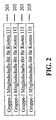
- 2 shows the structure of a function group member field
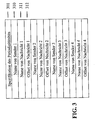
- 3 shows the structure of a configuration message
- 4 shows the structure of the time field.
- a real-time communication system 109 is a communication system that transmits messages within a known real-time interval, the transport latency.
- the communication system may apply resource redundancy or time redundancy, ie, for each logical message provided by the communication controller 121, multiple redundant instances of the logical message, ie, multiple physical ones, may be concurrently on multiple parallel communication channels or consecutively on a communication channel Messages to be sent. It is assumed that the recipient has been informed a priori of the transmission time of a message. This announcement of the transmission times can be done dynamically immediately before sending.
- the receiver may be from the time of transmission and the known transport latency of the communication system, when the last correct instance of a message has to arrive at the latest at the receiver. If no message has arrived from the sender until then, then an error has occurred from the recipient's point of view (message loss).
- the five node computers 111, 112, 113, 114 and 115 can perform several functions and therefore belong to different functional groups.
- the four node computers 111, 112, 113 and 115 can form the function group-1
- the four node computers 111, 112, 113 and 114 form the function group-2.
- the function of distributed clock synchronization [6] and function group-2 realize the function of a four-brake distributed braking system in a motor vehicle controlled by the node computers 111, 112, 113, and 114. If an error occurs in a brake, the clock synchronization function running in parallel in the computer node is not directly affected by this error.
- each of these functional groups is assigned its own functional group member field (FIG. 2) whose bit length corresponds at least to the number of node computers in the function group, and where each node computer involved in a function group has a particular bit, e.g. 201, 202, 203, 205, the function group member field is uniquely assigned.
- the function group member field is uniquely assigned.
- the value TRUE of the bit 201 that the function-1 in the node computer 111 is executed correctly and the value FALSE that the function-1 in the node computer 101 is not executed correctly.
- Each node computer 111 manages a local version of the function group member field of each function group in which it participates.
- the round period (field 301 in FIG. 3) can be derived directly from the time available globally.
- Fig. 4 shows a time representation [5] standardized by the Object Management Group (OMG) consisting of 8 bytes.
- This time representation 401 uses the binary format, with the full physical second 402 representing the central reference. With this time format 401, any time within the next ten thousand years can be represented with an accuracy of approximately 60 nanoseconds.
- Each bit of this time format can be assigned a periodicity, which results from the position of the bit in the time format.
- the periodicity bit 403 is the 6th bit to the right of the full seconds bit 402.
- the periodicity bit 403 thus determines a rounding frequency of 1/26 seconds, which corresponds to 64 Hz.
- the beginning of the period is defined as the time at which all Bits to the right of periodicity bit 403 are not set in time format 401.
- the transmission time of a node computer can be precisely specified by the specification of the offset 410 from the start of the period. If the periodicity of each round equals a power of two of the smallest round, then it is possible to easily build large synchronous systems that have a multiplicity of clusters. Different communication protocols can also be used in the different clusters.
- the sending account calculator (sender) 111 sets the bit associated with it in its local function group member field 201 to TRUE if the sender considers that it is functional in that function group.
- the sender 111 sets the bit assigned to it in its local function group member field 201 to FALSE if the sender considers its functionality in this function group to be non-existent.
- the transmitter will set its bit in function group member field-1, the clock synchronization to TRUE, and its bit in function group member field-2, the brake system, to FALSE if the local brake is faulty.
- the sender Immediately before sending a message, the sender must copy all of its local feature group member fields into the message to be sent and send it to the recipients with the message.
- Each member of a function group can maintain a function group-related consistency variable that is set to TRUE immediately after transmission and is set to FALSE as soon as the function group member field of a successor of the sender contained in a received message is different from the content of the corresponding local function group member field. This rule detects an inconsistency in the system that could be observed within the last round.
- Each member of a functional group may manage a functional group-related acknowledgment variable which is FALSE immediately after transmission and which is set to the value TRUE as soon as the transmitter-related bit of the function group member field contained in a received message is included in a received message from a successor of the Transmitter is set to TRUE. This rule checks if any recipient has received the sender's message.
- the communication controller 121 of the sender of a message sets the bit associated with the sender in all the sender's local function group member fields to FALSE immediately before transmission, in case the sender-assigned bit of the function group member field was not described by the host computer 131 within the last communication round, then For example, in each round in each functional group member field, the host computer 131 is forced to set the bit associated with the transmitter to TRUE again, as long as that function is still met. This rule prevents a fail-silent failure of a function of the host computer 131 from being observed by the communication partners within a function group.
- two different function groups with corresponding function group member fields may be introduced.
- One function group monitors the function of the communication, while the other function group monitors the function of the application in the host.
- the disclosed method for consistent error detection in a distributed computer system can also be implemented in the hardware of the communication controller 121.
- the communication controller 121 may also signal the host processor 131 via an interrupt line 151 if, in the previous round, none of the correct recipients have acknowledged the last message sent by this node computer or if an inconsistency has been observed in the last round.
Landscapes
- Engineering & Computer Science (AREA)
- Theoretical Computer Science (AREA)
- Quality & Reliability (AREA)
- Physics & Mathematics (AREA)
- General Engineering & Computer Science (AREA)
- General Physics & Mathematics (AREA)
- Computer And Data Communications (AREA)
- Debugging And Monitoring (AREA)
- Multi Processors (AREA)
- Hardware Redundancy (AREA)
Claims (12)
- Procédé pour la détection consistante d'erreurs dans un système d'ordinateurs partagé en temps réel, avec une pluralité d'ordinateurs nodaux (111, 112, 113, 114, 115) disposant au moins d'un contrôleur de communication (121, 122, 123, 124, 125) chacun et d'un ordinateur-hôte (131, 132, 133, 134, 135) chacun, et échangeant des messages au moyen d'un système de communication en temps réel (109) basé circuit composé d'un ou de plusieurs canaux de communication, un ou plusieurs messages physiques redondants étant transportés pour chaque information logique, et où tous les ordinateurs nodaux disposent d'un accès à un temps globalement synchronisé, caractérisé en ce que les ordinateurs nodaux forment des groupes fonctionnels, un ordinateur nodal pouvant être membre de plusieurs groupes fonctionnels, un champ dédié de membre de groupe fonctionnel étant attribué à chaque groupe fonctionnel, dont la longueur binaire correspond au moins au nombre des ordinateurs nodaux dans ledit groupe fonctionnel, un bit spécifique (201) du champ de membre de groupe fonctionnel étant clairement attribué à chaque ordinateur nodal (111) participant à un groupe fonctionnel, chaque ordinateur nodal administrant une version locale du champ de membre de groupe fonctionnel de chaque groupe fonctionnel auquel il participe, le noeud émetteur fixant sur VRAI le bit qui lui est attribué dans son champ local de membre de groupe fonctionnel avant l'émission d'un message si le noeud émetteur considère sa capacité fonctionnelle comme donnée dans ledit groupe fonctionnel, le noeud émetteur fixant sur FAUX le bit qui lui est attribué dans son champ local de membre de groupe fonctionnel avant l'émission d'un message si le noeud émetteur considère sa capacité fonctionnelle comme non donnée dans ledit groupe fonctionnel, le noeud émetteur copiant tous ses champs locaux de membre de groupe fonctionnel dans un message à émettre pour transmettre ceux-ci aux destinataires, le destinataire d'un message définissant en outre comme suit le bit attribué à un noeud émetteur dans chacun de ses champs locaux de membre de groupe fonctionnel, immédiatement après le moment de réception escompté d'un message : (1) si aucun des messages redondants du noeud émetteur n'est arrivé avec une syntaxe correcte, le récepteur fixera sur FAUX les valeurs correspondantes des bits attribués au noeud émetteur dans tous ses champs locaux de membre de groupe fonctionnel ; (2) si le bit d'un champ de membre de groupe fonctionnel concernant l'émetteur du message dans le message reçu est fixé sur FAUX, le récepteur fixera également sur FAUX le bit correspondant dans son champ local de membre de groupe fonctionnel correspondant ; (3) si le total du moment d'émission du message et de la latence de transport connue s'écarte sensiblement du moment de réception observé par le récepteur, le récepteur fixera sur FAUX les bits attribués à l'émetteur dans tous ses champs locaux de membre de groupe fonctionnel correspondants et, dans tous les autres cas, le récepteur fixera sur VRAI les bits correspondant à l'émetteur dans tous ses champs locaux de membre de groupe fonctionnel.
- Procédé selon la revendication 1, caractérisé en ce que chaque membre d'un groupe fonctionnel administre une variable de consistance relative au groupe fonctionnel, laquelle est fixée sur VRAI immédiatement après émission, et est fixée sur la valeur FAUX dès qu'un champ de membre de groupe fonctionnel contenu dans un message reçu d'un successeur du noeud émetteur s'écarte du contenu du champ local de membre de groupe fonctionnel correspondant.
- Procédé selon la revendication 1 ou 2, caractérisé en ce que chaque membre d'un groupe fonctionnel administre une variable d'acquittement relative au groupe fonctionnel, laquelle est fixée sur la valeur FAUX immédiatement après émission, et est fixée sur la valeur VRAI dès que le bit du champ de membre de groupe fonctionnel relatif au noeud émetteur initial et contenu dans un message reçu est fixé sur VRAI dans un message reçu d'un successeur du noeud émetteur initial.
- Procédé selon l'une des revendications 1 à 3, caractérisé en ce qu'il est donné à connaître aux ordinateurs nodaux participant à un groupe fonctionnel, au moyen d'un ou de plusieurs messages de configuration, quels ordinateurs forment un groupe fonctionnel, et quand quels messages sont à attendre de quels ordinateurs nodaux.
- Procédé selon l'une des revendications 1 à 4, caractérisé en ce que les messages de configuration sont codés.
- Procédé selon l'une des revendications 1 à 5, caractérisé en ce que la périodicité de transmission à l'intérieur d'un groupe fonctionnel est spécifiée par l'indication d'un bit de périodicité (403) dans le format de temps présenté en (401), et en ce que le début de période est déterminé par le moment où tous les bits de la valeur de temps ne sont pas fixés à la droite du bit de périodicité (403).
- Procédé selon l'une des revendications 1 à 6, caractérisé en ce que le moment d'émission périodique d'un message est déterminé par indication de décalage (410) au début de période.
- Procédé selon l'une ou plusieurs des revendications 1 à 7, caractérisé en ce que le contrôleur de communication (121) du noeud émetteur d'un message fixe sur FAUX le bit qui lui est attribué dans tous les champs locaux de membre de groupe fonctionnel du noeud émetteur, immédiatement avant l'émission, si à l'intérieur du dernier circuit de communication le bit du champ de membre de groupe fonctionnel attribué au noeud émetteur n'a pas été décrit par l'ordinateur-hôte.
- Contrôleur de communication d'un noeud d'ordinateur d'un système d'ordinateurs partagé, caractérisé en ce que les étapes de procédé d'une ou de plusieurs des revendications 1 à 8 sont implémentées dans le matériel du contrôleur de communication (121).
- Contrôleur de communication d'un noeud d'ordinateur d'un système d'ordinateurs partagé selon la revendication 9, caractérisé en ce que le contrôleur de communication (121) signale à l'ordinateur hôte (131) via une ligne d'interruption (151) si un bit d'un champ local de membre de groupe fonctionnel est commuté vers l'état FAUX.
- Contrôleur de communication d'un noeud d'ordinateur d'un système d'ordinateurs partagé selon la revendication 9, caractérisé en ce que le contrôleur de communication (121) signale à l'ordinateur hôte (131) immédiatement avant l'émission d'un message, via une ligne d'interruption (151), que la variable d'acquittement selon la revendication 4 a la valeur FAUX.
- Contrôleur de communication d'un noeud d'ordinateur d'un système d'ordinateurs partagé selon la revendication 9, caractérisé en ce que le contrôleur de communication (121) signale à l'ordinateur hôte (131) immédiatement avant l'émission d'un message, via une ligne d'interruption (151), que la variable de consistance selon la revendication 3 a la valeur FAUX.
Priority Applications (1)
| Application Number | Priority Date | Filing Date | Title |
|---|---|---|---|
| AT03793461T ATE325382T1 (de) | 2002-09-05 | 2003-09-03 | Verfahren und apparat zur fehlererkennung in einem verteilten echtzeitcomputersystem |
Applications Claiming Priority (3)
| Application Number | Priority Date | Filing Date | Title |
|---|---|---|---|
| AT0133202A AT500050A2 (de) | 2002-09-05 | 2002-09-05 | Verfahren und apparat zur fehlererkennung in einem verteilten echtzeitcomputersystem |
| AT13322002 | 2002-09-05 | ||
| PCT/AT2003/000256 WO2004023302A2 (fr) | 2002-09-05 | 2003-09-03 | Procede et dispositif pour identifier des erreurs dans un systeme informatique temps reel reparti |
Publications (2)
| Publication Number | Publication Date |
|---|---|
| EP1535156A2 EP1535156A2 (fr) | 2005-06-01 |
| EP1535156B1 true EP1535156B1 (fr) | 2006-05-03 |
Family
ID=31953362
Family Applications (1)
| Application Number | Title | Priority Date | Filing Date |
|---|---|---|---|
| EP03793461A Expired - Lifetime EP1535156B1 (fr) | 2002-09-05 | 2003-09-03 | Procede et dispositif pour identifier des erreurs dans un systeme informatique temps reel reparti |
Country Status (5)
| Country | Link |
|---|---|
| EP (1) | EP1535156B1 (fr) |
| AT (2) | AT500050A2 (fr) |
| AU (1) | AU2003264154A1 (fr) |
| DE (1) | DE50303229D1 (fr) |
| WO (1) | WO2004023302A2 (fr) |
Families Citing this family (2)
| Publication number | Priority date | Publication date | Assignee | Title |
|---|---|---|---|---|
| AT501480B8 (de) | 2004-09-15 | 2007-02-15 | Tttech Computertechnik Ag | Verfahren zum erstellen von kommunikationsplänen für ein verteiltes echtzeit-computersystem |
| EP2421221B1 (fr) | 2007-06-11 | 2013-10-23 | FTS Computertechnik GmbH | Procédé et architecture de sécurisation de données en temps réel |
Family Cites Families (3)
| Publication number | Priority date | Publication date | Assignee | Title |
|---|---|---|---|---|
| KR100279207B1 (ko) * | 1992-09-04 | 2001-01-15 | 폴트톨러런트시스템스에프티에스-콤퓨터테크닉게스엠베하 | 통신제어유닛및메세지전송방법 |
| US5694542A (en) * | 1995-11-24 | 1997-12-02 | Fault Tolerant Systems Fts-Computertechnik Ges.M.B. | Time-triggered communication control unit and communication method |
| US5799146A (en) * | 1996-04-30 | 1998-08-25 | International Business Machines Corporation | Communications system involving groups of processors of a distributed computing environment |
-
2002
- 2002-09-05 AT AT0133202A patent/AT500050A2/de not_active Application Discontinuation
-
2003
- 2003-09-03 DE DE50303229T patent/DE50303229D1/de not_active Expired - Lifetime
- 2003-09-03 EP EP03793461A patent/EP1535156B1/fr not_active Expired - Lifetime
- 2003-09-03 AT AT03793461T patent/ATE325382T1/de not_active IP Right Cessation
- 2003-09-03 WO PCT/AT2003/000256 patent/WO2004023302A2/fr not_active Ceased
- 2003-09-03 AU AU2003264154A patent/AU2003264154A1/en not_active Abandoned
Also Published As
| Publication number | Publication date |
|---|---|
| EP1535156A2 (fr) | 2005-06-01 |
| AU2003264154A1 (en) | 2004-03-29 |
| DE50303229D1 (de) | 2006-06-08 |
| AT500050A2 (de) | 2005-10-15 |
| WO2004023302A2 (fr) | 2004-03-18 |
| WO2004023302A3 (fr) | 2004-10-28 |
| ATE325382T1 (de) | 2006-06-15 |
Similar Documents
| Publication | Publication Date | Title |
|---|---|---|
| EP0732654B1 (fr) | Procédé pour la communication tolérante des fautes sous conditions en temps réel | |
| DE3486148T2 (de) | Fehlertolerantes Übertragungssteuersystem. | |
| EP2556633B1 (fr) | Procédé et appareil pour la communication en temps réel tolérante aux erreurs et régulée dans le temps | |
| WO2001013230A1 (fr) | Procede imposant la propriete de silence sur defaillance dans un systeme d'ordinateurs reparti et unite de repartition d'un tel systeme | |
| DE69921882T2 (de) | Verfahren zur Entdeckung und Lösung von Datenkorruption in einem UART-basierten Kommunikationsnetzwerk | |
| AT410490B (de) | Verfahren zur tolerierung von ''slightly-off- specification'' fehlern in einem verteilten fehlertoleranten echtzeitcomputersystem | |
| WO2007121984A1 (fr) | Unité d'interface et système de communication à structure maître-esclave | |
| EP2145430B1 (fr) | Procédé et système de transmission cyclique fiable de données de processus | |
| EP1509005B1 (fr) | Méthode et appareil pour la transmission de données par diffusion dans un réseau bus | |
| DE69625953T2 (de) | Methode und Vorrichtung zum Erreichen hoher Unversehrtheit und Verfügbarkeit in einem mehrkanaligen System | |
| EP1789857B1 (fr) | Procédé de transmission de données et système d'automatisation destiné à la mise en oeuvre d'un tel procédé de transmission de données | |
| EP3110061A1 (fr) | Système informatique en temps réel distribué et procédé de forçage de défaillance | |
| EP0720337B1 (fr) | Méthode de communication de messages consistente et à haute fiabilité | |
| EP1535156B1 (fr) | Procede et dispositif pour identifier des erreurs dans un systeme informatique temps reel reparti | |
| EP1064590B1 (fr) | Telegramme de donnees abrege d'un systeme d'automatisation | |
| EP1686732B1 (fr) | Procédé et système de transmission d'unités de données de protocole | |
| EP1399818B1 (fr) | Procede et dispositif de communication dans un systeme informatique reparti tolerant aux erreurs | |
| DE10161295A1 (de) | Verfahren zum Vermeiden eines Totalausfalls einer Verarbeitungseinheit für Protokollinformationen | |
| DE19827337A1 (de) | Anordnung und Verfahren zum Übertragen von Adreß-, Befehls- und/oder Datentelegrammen | |
| EP1121785A2 (fr) | Reseau et appareil de couplage pour la connexion de deux segments dans un tel reseau | |
| EP4335127B1 (fr) | Procédé mis en oeuvre par ordinateur destiné au fonctionnement d'un terminal à haute disponibilité dans un réseau | |
| EP2741453B1 (fr) | Procédé de fonctionnement d'un appareil bus d'un dispositif d'automatisation du bâtiment, et appareil de configuration et produit programme d'ordinateur correspondants | |
| DE102017215100B4 (de) | Komponente für eine Maschine oder industrielle Anlage und Verfahren zur Steuerung einer Komponente in einer Maschine oder industriellen Anlage | |
| DE19753288A1 (de) | Effizientes Quittungsverfahren in einem verteilten zeitgesteuerten Echtzeitsystem | |
| DE3427350C2 (fr) |
Legal Events
| Date | Code | Title | Description |
|---|---|---|---|
| PUAI | Public reference made under article 153(3) epc to a published international application that has entered the european phase |
Free format text: ORIGINAL CODE: 0009012 |
|
| 17P | Request for examination filed |
Effective date: 20050329 |
|
| AK | Designated contracting states |
Kind code of ref document: A2 Designated state(s): AT BE BG CH CY CZ DE DK EE ES FI FR GB GR HU IE IT LI LU MC NL PT RO SE SI SK TR |
|
| AX | Request for extension of the european patent |
Extension state: AL LT LV MK |
|
| GRAP | Despatch of communication of intention to grant a patent |
Free format text: ORIGINAL CODE: EPIDOSNIGR1 |
|
| DAX | Request for extension of the european patent (deleted) | ||
| GRAS | Grant fee paid |
Free format text: ORIGINAL CODE: EPIDOSNIGR3 |
|
| GRAA | (expected) grant |
Free format text: ORIGINAL CODE: 0009210 |
|
| AK | Designated contracting states |
Kind code of ref document: B1 Designated state(s): AT BE BG CH CY CZ DE DK EE ES FI FR GB GR HU IE IT LI LU MC NL PT RO SE SI SK TR |
|
| PG25 | Lapsed in a contracting state [announced via postgrant information from national office to epo] |
Ref country code: GB Free format text: LAPSE BECAUSE OF FAILURE TO SUBMIT A TRANSLATION OF THE DESCRIPTION OR TO PAY THE FEE WITHIN THE PRESCRIBED TIME-LIMIT Effective date: 20060503 Ref country code: FI Free format text: LAPSE BECAUSE OF FAILURE TO SUBMIT A TRANSLATION OF THE DESCRIPTION OR TO PAY THE FEE WITHIN THE PRESCRIBED TIME-LIMIT Effective date: 20060503 Ref country code: IE Free format text: LAPSE BECAUSE OF FAILURE TO SUBMIT A TRANSLATION OF THE DESCRIPTION OR TO PAY THE FEE WITHIN THE PRESCRIBED TIME-LIMIT Effective date: 20060503 Ref country code: SK Free format text: LAPSE BECAUSE OF FAILURE TO SUBMIT A TRANSLATION OF THE DESCRIPTION OR TO PAY THE FEE WITHIN THE PRESCRIBED TIME-LIMIT Effective date: 20060503 Ref country code: NL Free format text: LAPSE BECAUSE OF FAILURE TO SUBMIT A TRANSLATION OF THE DESCRIPTION OR TO PAY THE FEE WITHIN THE PRESCRIBED TIME-LIMIT Effective date: 20060503 Ref country code: CZ Free format text: LAPSE BECAUSE OF FAILURE TO SUBMIT A TRANSLATION OF THE DESCRIPTION OR TO PAY THE FEE WITHIN THE PRESCRIBED TIME-LIMIT Effective date: 20060503 Ref country code: SI Free format text: LAPSE BECAUSE OF FAILURE TO SUBMIT A TRANSLATION OF THE DESCRIPTION OR TO PAY THE FEE WITHIN THE PRESCRIBED TIME-LIMIT Effective date: 20060503 Ref country code: RO Free format text: LAPSE BECAUSE OF FAILURE TO SUBMIT A TRANSLATION OF THE DESCRIPTION OR TO PAY THE FEE WITHIN THE PRESCRIBED TIME-LIMIT Effective date: 20060503 Ref country code: IT Free format text: LAPSE BECAUSE OF FAILURE TO SUBMIT A TRANSLATION OF THE DESCRIPTION OR TO PAY THE FEE WITHIN THE PRESCRIBED TIME-LIMIT;WARNING: LAPSES OF ITALIAN PATENTS WITH EFFECTIVE DATE BEFORE 2007 MAY HAVE OCCURRED AT ANY TIME BEFORE 2007. THE CORRECT EFFECTIVE DATE MAY BE DIFFERENT FROM THE ONE RECORDED. Effective date: 20060503 |
|
| REG | Reference to a national code |
Ref country code: GB Ref legal event code: FG4D Free format text: NOT ENGLISH |
|
| REG | Reference to a national code |
Ref country code: CH Ref legal event code: EP |
|
| REF | Corresponds to: |
Ref document number: 50303229 Country of ref document: DE Date of ref document: 20060608 Kind code of ref document: P |
|
| REG | Reference to a national code |
Ref country code: IE Ref legal event code: FG4D Free format text: LANGUAGE OF EP DOCUMENT: GERMAN |
|
| PG25 | Lapsed in a contracting state [announced via postgrant information from national office to epo] |
Ref country code: SE Free format text: LAPSE BECAUSE OF FAILURE TO SUBMIT A TRANSLATION OF THE DESCRIPTION OR TO PAY THE FEE WITHIN THE PRESCRIBED TIME-LIMIT Effective date: 20060803 Ref country code: DK Free format text: LAPSE BECAUSE OF FAILURE TO SUBMIT A TRANSLATION OF THE DESCRIPTION OR TO PAY THE FEE WITHIN THE PRESCRIBED TIME-LIMIT Effective date: 20060803 |
|
| PG25 | Lapsed in a contracting state [announced via postgrant information from national office to epo] |
Ref country code: ES Free format text: LAPSE BECAUSE OF FAILURE TO SUBMIT A TRANSLATION OF THE DESCRIPTION OR TO PAY THE FEE WITHIN THE PRESCRIBED TIME-LIMIT Effective date: 20060814 |
|
| PG25 | Lapsed in a contracting state [announced via postgrant information from national office to epo] |
Ref country code: MC Free format text: LAPSE BECAUSE OF NON-PAYMENT OF DUE FEES Effective date: 20060930 Ref country code: BE Free format text: LAPSE BECAUSE OF NON-PAYMENT OF DUE FEES Effective date: 20060930 |
|
| PG25 | Lapsed in a contracting state [announced via postgrant information from national office to epo] |
Ref country code: PT Free format text: LAPSE BECAUSE OF FAILURE TO SUBMIT A TRANSLATION OF THE DESCRIPTION OR TO PAY THE FEE WITHIN THE PRESCRIBED TIME-LIMIT Effective date: 20061003 |
|
| NLV1 | Nl: lapsed or annulled due to failure to fulfill the requirements of art. 29p and 29m of the patents act | ||
| GBV | Gb: ep patent (uk) treated as always having been void in accordance with gb section 77(7)/1977 [no translation filed] |
Effective date: 20060503 |
|
| REG | Reference to a national code |
Ref country code: IE Ref legal event code: FD4D |
|
| ET | Fr: translation filed | ||
| PLBE | No opposition filed within time limit |
Free format text: ORIGINAL CODE: 0009261 |
|
| STAA | Information on the status of an ep patent application or granted ep patent |
Free format text: STATUS: NO OPPOSITION FILED WITHIN TIME LIMIT |
|
| 26N | No opposition filed |
Effective date: 20070206 |
|
| PG25 | Lapsed in a contracting state [announced via postgrant information from national office to epo] |
Ref country code: AT Free format text: LAPSE BECAUSE OF NON-PAYMENT OF DUE FEES Effective date: 20060903 |
|
| BERE | Be: lapsed |
Owner name: FTS COMPUTERTECHNIK GES.MBH Effective date: 20060930 |
|
| PG25 | Lapsed in a contracting state [announced via postgrant information from national office to epo] |
Ref country code: GR Free format text: LAPSE BECAUSE OF FAILURE TO SUBMIT A TRANSLATION OF THE DESCRIPTION OR TO PAY THE FEE WITHIN THE PRESCRIBED TIME-LIMIT Effective date: 20060804 |
|
| REG | Reference to a national code |
Ref country code: CH Ref legal event code: PL |
|
| PG25 | Lapsed in a contracting state [announced via postgrant information from national office to epo] |
Ref country code: BG Free format text: LAPSE BECAUSE OF FAILURE TO SUBMIT A TRANSLATION OF THE DESCRIPTION OR TO PAY THE FEE WITHIN THE PRESCRIBED TIME-LIMIT Effective date: 20060803 Ref country code: EE Free format text: LAPSE BECAUSE OF FAILURE TO SUBMIT A TRANSLATION OF THE DESCRIPTION OR TO PAY THE FEE WITHIN THE PRESCRIBED TIME-LIMIT Effective date: 20060503 |
|
| PG25 | Lapsed in a contracting state [announced via postgrant information from national office to epo] |
Ref country code: TR Free format text: LAPSE BECAUSE OF FAILURE TO SUBMIT A TRANSLATION OF THE DESCRIPTION OR TO PAY THE FEE WITHIN THE PRESCRIBED TIME-LIMIT Effective date: 20060503 Ref country code: CH Free format text: LAPSE BECAUSE OF NON-PAYMENT OF DUE FEES Effective date: 20070930 Ref country code: LU Free format text: LAPSE BECAUSE OF NON-PAYMENT OF DUE FEES Effective date: 20060903 Ref country code: LI Free format text: LAPSE BECAUSE OF NON-PAYMENT OF DUE FEES Effective date: 20070930 Ref country code: HU Free format text: LAPSE BECAUSE OF FAILURE TO SUBMIT A TRANSLATION OF THE DESCRIPTION OR TO PAY THE FEE WITHIN THE PRESCRIBED TIME-LIMIT Effective date: 20061104 |
|
| PG25 | Lapsed in a contracting state [announced via postgrant information from national office to epo] |
Ref country code: CY Free format text: LAPSE BECAUSE OF FAILURE TO SUBMIT A TRANSLATION OF THE DESCRIPTION OR TO PAY THE FEE WITHIN THE PRESCRIBED TIME-LIMIT Effective date: 20060503 |
|
| REG | Reference to a national code |
Ref country code: FR Ref legal event code: PLFP Year of fee payment: 13 |
|
| REG | Reference to a national code |
Ref country code: FR Ref legal event code: PLFP Year of fee payment: 14 |
|
| REG | Reference to a national code |
Ref country code: FR Ref legal event code: PLFP Year of fee payment: 15 |
|
| REG | Reference to a national code |
Ref country code: FR Ref legal event code: PLFP Year of fee payment: 16 |
|
| REG | Reference to a national code |
Ref country code: DE Ref legal event code: R082 Ref document number: 50303229 Country of ref document: DE Representative=s name: FRITZ PATENT- UND RECHTSANWAELTE PARTNERSCHAFT, DE Ref country code: DE Ref legal event code: R081 Ref document number: 50303229 Country of ref document: DE Owner name: TTTECH COMPUTERTECHNIK AG, AT Free format text: FORMER OWNER: FTS COMPUTERTECHNIK GES.M.B.H., BADEN-SIEGENFELD, AT |
|
| PGFP | Annual fee paid to national office [announced via postgrant information from national office to epo] |
Ref country code: DE Payment date: 20220920 Year of fee payment: 20 |
|
| PGFP | Annual fee paid to national office [announced via postgrant information from national office to epo] |
Ref country code: FR Payment date: 20220922 Year of fee payment: 20 |
|
| REG | Reference to a national code |
Ref country code: DE Ref legal event code: R071 Ref document number: 50303229 Country of ref document: DE |