EP1532080B1 - A method for providing very fast setting cementitious compositions - Google Patents
A method for providing very fast setting cementitious compositions Download PDFInfo
- Publication number
- EP1532080B1 EP1532080B1 EP03791571.7A EP03791571A EP1532080B1 EP 1532080 B1 EP1532080 B1 EP 1532080B1 EP 03791571 A EP03791571 A EP 03791571A EP 1532080 B1 EP1532080 B1 EP 1532080B1
- Authority
- EP
- European Patent Office
- Prior art keywords
- mix
- reactive powder
- cement
- powder blend
- portland cement
- Prior art date
- Legal status (The legal status is an assumption and is not a legal conclusion. Google has not performed a legal analysis and makes no representation as to the accuracy of the status listed.)
- Expired - Lifetime
Links
Images




Classifications
-
- C—CHEMISTRY; METALLURGY
- C04—CEMENTS; CONCRETE; ARTIFICIAL STONE; CERAMICS; REFRACTORIES
- C04B—LIME, MAGNESIA; SLAG; CEMENTS; COMPOSITIONS THEREOF, e.g. MORTARS, CONCRETE OR LIKE BUILDING MATERIALS; ARTIFICIAL STONE; CERAMICS; REFRACTORIES; TREATMENT OF NATURAL STONE
- C04B28/00—Compositions of mortars, concrete or artificial stone, containing inorganic binders or the reaction product of an inorganic and an organic binder, e.g. polycarboxylate cements
- C04B28/02—Compositions of mortars, concrete or artificial stone, containing inorganic binders or the reaction product of an inorganic and an organic binder, e.g. polycarboxylate cements containing hydraulic cements other than calcium sulfates
- C04B28/04—Portland cements
-
- C—CHEMISTRY; METALLURGY
- C04—CEMENTS; CONCRETE; ARTIFICIAL STONE; CERAMICS; REFRACTORIES
- C04B—LIME, MAGNESIA; SLAG; CEMENTS; COMPOSITIONS THEREOF, e.g. MORTARS, CONCRETE OR LIKE BUILDING MATERIALS; ARTIFICIAL STONE; CERAMICS; REFRACTORIES; TREATMENT OF NATURAL STONE
- C04B28/00—Compositions of mortars, concrete or artificial stone, containing inorganic binders or the reaction product of an inorganic and an organic binder, e.g. polycarboxylate cements
- C04B28/02—Compositions of mortars, concrete or artificial stone, containing inorganic binders or the reaction product of an inorganic and an organic binder, e.g. polycarboxylate cements containing hydraulic cements other than calcium sulfates
- C04B28/06—Aluminous cements
-
- C—CHEMISTRY; METALLURGY
- C04—CEMENTS; CONCRETE; ARTIFICIAL STONE; CERAMICS; REFRACTORIES
- C04B—LIME, MAGNESIA; SLAG; CEMENTS; COMPOSITIONS THEREOF, e.g. MORTARS, CONCRETE OR LIKE BUILDING MATERIALS; ARTIFICIAL STONE; CERAMICS; REFRACTORIES; TREATMENT OF NATURAL STONE
- C04B2103/00—Function or property of ingredients for mortars, concrete or artificial stone
- C04B2103/10—Accelerators; Activators
- C04B2103/12—Set accelerators
-
- Y—GENERAL TAGGING OF NEW TECHNOLOGICAL DEVELOPMENTS; GENERAL TAGGING OF CROSS-SECTIONAL TECHNOLOGIES SPANNING OVER SEVERAL SECTIONS OF THE IPC; TECHNICAL SUBJECTS COVERED BY FORMER USPC CROSS-REFERENCE ART COLLECTIONS [XRACs] AND DIGESTS
- Y02—TECHNOLOGIES OR APPLICATIONS FOR MITIGATION OR ADAPTATION AGAINST CLIMATE CHANGE
- Y02W—CLIMATE CHANGE MITIGATION TECHNOLOGIES RELATED TO WASTEWATER TREATMENT OR WASTE MANAGEMENT
- Y02W30/00—Technologies for solid waste management
- Y02W30/50—Reuse, recycling or recovery technologies
- Y02W30/91—Use of waste materials as fillers for mortars or concrete
Definitions
- This invention relates generally to very fast setting cementitious compositions that can be used for a variety of applications in which rapid hardening and attainment of early strength is desirable.
- the invention relates to those cementitious compositions that can be used to make boards with excellent moisture durability for use in wet and dry locations in buildings.
- Precast concrete products such as cement boards are made under conditions which provide a rapid setting of the cementitious mixture so that the boards can be handled soon after the cementitious mixture is poured into a stationary or moving form or over a continuously moving belt. Ideally, this will be occur as soon as 10 minutes, but more practically, setting of the cement mixture may be achieved up to about 20 minutes after being mixed with a suitable amount of water.
- Galer et al discuss cementitious compositions capable of such rapid setting. Their compositions permit high speed production of carbon dioxide resistant cement boards by forming essentially all of the potential ettringite within about 20 minutes after the composition is mixed with water.
- the essential components of their cementitious composition are portland cement, high alumina cement, calcium sulfate and lime.
- Pozzolans such as fly ash, montmorillonite clay, diatomaceous earth and pumicite may be added up to about 25%.
- the cement composition includes about 14 to 21 wt% high alumina cement, which in combination with the other components makes possible the early formation of ettringite and other calcium aluminate hydrates, which are responsible for the early setting of the cementitious mixture.
- Galer's rapid setting formulation suffers from several major limitations. These limitations, as highlighted below, are even more of a concern for the production of cementitious products such as cement boards:
- Ettringite is a compound of calcium aluminum sulfate compound having the formula: Ca 6 Al 2 (SO 4 ) 3 • 32 H 2 O or alternatively: 3 CaO•Al 2 O 3 •3 CaSO 4 •32 H 2 O
- Ettringite forms as long needle-like crystals and provides rapid early strength to cement boards, so that they can be handled soon after being poured into a mold or over a continuous casting and forming belt.
- alumina required for the formation of ettringite is supplied by high alumina cement (HAC) that typically contains 36-42 wt% Al 2 O 3 .
- Sulfate ions necessary for the formation of ettringite are provided by the gypsum present in Portland cement plus added gypsum, which is normally soluble in water.
- the lime needed for the formation of ettringite is provided by the portland cement and the added lime.
- the HAC is less soluble and is typically present in excess of that needed for ettringite formation.
- the gypsum and added lime are substantially consumed in the formation of ettringite.
- the availability and consumption of the HAC is usually increased by using a finely ground material. Since an excess of HAC is present in the cement board, it would be desirable to reduce its concentration as HAC is one of the more expensive components in the mixture.
- High alumina cement has an advantage over portland cement since HAC develops its maximum strength much earlier. However, it does not retain that strength over time as secondary reactions occur. HAC does not set very rapidly by itself, but its contribution to the formation of ettringite and other calcium aluminate hydrates in the presence of other reactive powder blend components makes HAC valuable in production of cement boards. However, the amount of HAC used in the cement boards should be limited to what is necessary for forming ettringite in quantities sufficient to allow handling of the cement boards. Since HAC is more expensive than portland cement, the cost of making the cement boards can be reduced substantially if HAC is limited to smaller amounts, or more preferably even eliminated.
- Galer et al composition about 72 to 80 wt% is portland cement, about 14 to 21 wt% is HAC, about 3.5 to 10 wt% is calcium sulfate, and about 0.4 to 0.7 wt% is hydrated lime.
- Other materials such as pozzolanic materials, e.g. fly ash, superplastizers, and other cement additives may be included.
- US5,286,425 discloses a method of installing a cementitious composition which includes providing a dry fast setting cementitious composition having a set time and in the form of finely divided particles of at least one cement binder, pouring an amount of the dry cementitious composition into a volume of water located in a hole without any type of physical mixing of the cementitious composition and water other than the mixing which occurs merely by applying the cementitious composition into the water.
- US5,871,577 discloses set retarding additives, set retarded hydraulic cement compositions and methods of using the set retarded cement compositions for cementing subterranean zones in wells.
- a preferred set retarding additive comprises an alkanolamine salt produced by the reaction of a hydroxy carboxy acid, such as tartaric acid, gluconic acid or glucoheptonic acid, with an alkanolamine, such as monoethanolamine, diethanolamine or triethanolamine.
- EP0233691 discloses admixtures for hydraulic cement compositions, and particularly Portland cement concrete compositions which contain pozzolans such as fly ash, and which are mixtures containing at least two chemical ingredients, namely, alkali metal or alkaline earth metal salts of bromine and alkali metal or alkaline earth metal nitrite salts. These admixtures optionally further include triethanolamine as a third ingredient.
- Extremely fast setting of cementitious compositions to form cementitious products, such as cement boards, is made possible by adding preferably about 0.03 to 4.0 wt%, more preferably about 0.05 to 2.0%, and most preferably about 0.05 to 1.0 wt% of triethanolamine based on the weight of the reactive components, which will include at least a hydraulic cement, preferably Portland cement, and also may include high alumina cement, calcium sulfate, and a mineral additive, preferably fly ash, to form a slurry with water under conditions that provide an initial slurry temperature of at least 90° to 135°F (32.2 to 57.2°C), preferably at least 90°F up to about 13°F (32.2°C to 54.4°C) preferably at least 100°F (37.8°C), most preferably about 110-120°F (43.3° - 48.9°C).
- high alumina cement and calcium sulphate are omitted from the reactive powder blend of the invention.
- Mineral additives possessing substantial, little, or no cementing properties may be included in the rapid setting composite of the invention.
- Mineral additives possessing pozzolanic properties, such as fly ash, are particularly preferred in the reactive powder blend of the invention.
- Aggregates and fillers may be added depending on the application of the rapid setting cementitious composition of the invention.
- additives including sand, aggregate, lightweight fillers, water reducing agents such as superplasticizers, accelerating agents, retarding agents, air-entraining agents, foaming agents, shrinkage control agents, slurry viscosity modifying agents (thickeners), coloring agents and internal curing agents, may be Included as desired depending upon the processability and application of the cementitious composition of the invention.
- One preferred composition excludes high alumina cement and calcium sulfate and includes as reactive powder components only portland cement and optionally a mineral additive, preferably fly ash and an triethanolamine, plus additives.
- Rapid set is achieved by preparing the slurry at above ambient temperatures, preferably greater than 32.2°C (90°F), more preferably at least 37.8°C (100°F), most preferably about 43.3 - 48.9°C (110-120°F).
- Using triethanolamine to accelerate setting of the cementitious composition when the slurry is formed at these elevated temperatures makes possible increased rate of production of cementitious products such as cement boards or alternatively, permits reduction or complete elimination of the high alumina cement often used in such cementitious compositions.
- the principal ingredient of the reactive powder blend of the cementitious composition of the invention is a hydraulic cement, preferably portland cement.
- Other ingredients may include high alumina cement, calcium sulfate, and a mineral additive, preferably a pozzolan such as fly ash.
- high alumina cement and calcium sulfate are used in small amounts and most preferably excluded, leaving only the hydraulic cement, the mineral additive, and triethanolamine as an accelerator.
- the reactive powder will contain 40-80 wt% portland cement and 20-60 wt% fly ash, based on the sum of these components.
- the reactive powder of the invention may contain 40-80 wt% portland cement, greater than zero up to 20 wt% high alumina cement, greater than zero up to 7 wt% calcium sulfate, and greater than zero up to 55 wt% fly ash based on the sum of these components.
- the reactive powder blend of the invention In combination with triethanolamine when mixed with water to provide an initial slurry temperature of at least 32.2°C (90°F), yields a rapid set of less than 60 minutes, more preferably less than 20 minutes, and most preferably in less than 10 minutes.
- Such rapid sets are made possible by providing the preferred amounts of the portland cement, high alumina cement, calcium sulfate, and the mineral additive in the composition (40-80 wt%, >0-20 wt%, >0-7wt%, and >0-55 wt% respectively) and forming the initial slurry with water at elevated temperatures above 32.2°C (90°F) so that formation of ettringite and other hydrates of calcium aluminate compounds can take place as a result of the hydration of this reactive powder blend.
- Ettringite and other hydrates of calcium aluminate compounds form very rapidly in the hydration process thus Imparting rapid set and rigidity to the mixtures made with the reactive powder blend of the cementitious composition of the invention.
- setting of the composition is characterized by initial and final set times, as measured using Gillmore needles specified in the ASTM C266 test procedure.
- the final set time also corresponds to the time when a cement-based product e.g. a cement board, has sufficiently hardened so that it can be handled. It will understood by those skilled in the art that curing reactions continue for extended periods after the final setting time has been reached.
- Hydraulic cements such as Portland cement, make up a substantial amount of the compositions of the invention. It is to be understood that, as used here, "hydraulic cement” does not include gypsum, which does not gain strength under water, although typically some gypsum is included in portland cement.
- ASTM C 150 standard specification for portland cement defines portland cement as a hydraulic cement produced by pulverizing clinker consisting essentially of hydraulic calcium silicates, usually containing one or more of the forms of calcium sulfate as an inter-ground addition. More generally, other hydraulic cements may be substituted for portland cement, for example calcium sulfo-aluminate based cements.
- portland cement To manufacture portland cement, an intimate mixture of limestone and clay is ignited in a kiln to form portland cement clinker.
- the following four main phases of portland cement are present in the clinker - tricalcium silicate (3CaO•SiO 2 , also referred to as C 3 S), dicalcium silicate (2CaO•SiO 2 , called C 2 S), tricalcium aluminate (3CaO•Al 2 O 3 or C 3 A), and tetracalcium aluminoferrite (4CaO•Al 2 O 3 •Fe 2 O 3 or C 4 AF).
- the resulting clinker containing the above compounds is inter-ground with calcium sulfates to desired fineness to produce the portland cement.
- portland cement The other compounds present in minor amounts in portland cement include double salts of alkaline sulfates, calcium oxide, and magnesium oxide.
- the portland cement will typically be in the form of very fine particles such that the particle surface area is greater than 4,000 cm 2 /gram and typically between 5,000 to 6,000 cm 2 /gram as measured by the Blaine surface area method (ASTM C 204).
- ASTM Type III portland cement is most preferred in the reactive powder blend of the cementitious compositions of the invention. This is due to its relatively faster reactivity and high early strength development.
- Type III portland cement In the present invention, the need for the use of Type III portland cement is minimized and relatively fast early age strength development can be obtained using a Type I instead of Type III portland cement.
- the other recognized types of hydraulic cements including white cement, slag cements such as blast-furnace slag cement, pozzolan blended cements, expansive cements, sulfo-aluminate cements, and oil-well cements may be used to replace or supplement portland cement in the composition of the invention.
- Mineral additives possessing substantial, little, or no cementing properties may be included in the rapid setting composition of the invention.
- Mineral additives having pozzolanic properties such as fly ash are particularly preferred in the reactive powder of the invention.
- a distinctive feature of the present invention is that the hydraulic cement may be partially substituted by mineral additives possessing substantial, little, or no cementing properties, particularly pozzolanic materials, for example fly ash in substantial quantities.
- ASTM C618-97 defines pozzolanic materials as "siliceous or siliceous and aluminous materials which in themselves possess little or no cementitious value, but will, in finely divided form and in the presence of moisture, chemically react with calcium hydroxide at ordinary temperatures to form compounds possessing cementitious properties.”
- pozzolanic materials possessing pozzolanic properties include pumice, perlite, diatomaceous earth, silica fume, tuff, trass, rice husk, metakaolin, ground granulated blast furnace slag, and fly ash.
- fly ash is the preferred pozzolan in the reactive powder blend of the invention. Fly ashes containing high calcium oxide and calcium aluminate content (such as Class C fly ashes of ASTM C618 standard) are preferred. Other mineral additives such as calcium carbonate, vermiculite, clays, and crushed mica may also be included as mineral additives.
- Fly ash is a fine powder byproduct formed from the combustion of coal. Electric power plant utility boilers burning pulverized coal produce most commercially available fly ashes. These fly ashes consist mainly of glassy spherical particles as well as residues of hematite and magnetite, char, and some crystalline phases formed during cooling. The structure, composition and properties of fly ash particles depend upon the structure and composition of the coal and the combustion processes by which fly ash is formed. ASTM C618 standard recognizes two major classes of fly ashes for use in concrete - Class C and Class F. These two classes of fly ashes are derived from different kinds of coals that are a result of differences in the coal formation processes occurring over geological time periods.
- Class F fly ash is normally produced from burning anthracite or bituminous coal
- Class C fly ash is normally produced from lignite or sub-bituminous coal.
- the ASTM C618 standard differentiates Class F and Class C fly ashes primarily according to their pozzolanic properties. Accordingly, in the ASTM C618 standard, the major specification difference between the Class F fly ash and Class C fly ash is the minimum limit of SiO 2 + Al 2 O 3 + Fe 2 O 3 in the composition. The minimum limit of SiO 2 + Al 2 O 3 + Fe 2 O 3 for Class F fly ash is 70% and for Class C fly ash is 50%. Thus, Class F fly ashes are more pouolanic than the Class C fly ashes.
- Class C fly ashes typically contain high calcium oxide content. Presence of high calcium oxide content makes Class C fly ashes possess cementitious properties leading to the formation of calcium silicate and calcium aluminate hydrates when mixed with water. As will be seen in the examples below, Class C fly ash has been found to provide superior results, particularly in the preferred formulations in which high alumina cement and gypsum are not used.
- the weight ratio of the pozzolanic material to the portland cement in the reactive powder blend used in the cementitious composition of the invention may be about 0/100 to 150/100, preferably 75/100 to 125/100. In some reactive powder blends the portland cement is about 40 to 80 wt% and fly ash 20 to 60 wt%.
- High alumina cement is another type of hydraulic cement that forms a component of the reactive powder blend of some of the embodiments of the invention.
- High alumina cement is also commonly referred to as aluminous cement or calcium aluminate cement.
- high alumina cements have a high alumina content, about 36-42 wt% is typical.
- Higher purity high alumina cements are also commercially available in which the alumina content can range as high as 80 wt%. These higher purity high alumina cements tend to be very expensive relative to other cements.
- the high alumina cements used in the compositions of the invention are finely ground to facilitate entry of the aluminates into the aqueous phase so that rapid formation of ettringite and other calcium aluminate hydrates can take place.
- the surface area of the high alumina cement used in the composition of the invention will be greater than 3,000 cm 2 /gram and typically about 4,000 to 6,000 cm 2 /gram as measured by the Blaine surface area method (ASTM C 204).
- the main raw materials used in the manufacturing high alumina cement are bauxite and limestone.
- One manufacturing method that has been used in the US for producing high alumina cement is described as follows. The bauxite ore is first crushed and dried, then ground along with limestone. The dry powder comprising of bauxite and limestone is then fed into a rotary kiln. A pulverized low-ash coal is used as fuel in the kiln. Reaction between bauxite and limestone takes place in the kiln and the molten product collects in the lower end of the kiln and pours into a trough set at the bottom.
- the molten clinker is quenched with water to form granulates of the clinker, which is then conveyed to a stockpile. This granulate is then ground to the desired fineness to produce the final cement.
- Several calcium aluminate compounds are formed during the manufacturing process of high alumina cement. The predominant compound formed is monocalcium aluminate (CA).
- the other calcium aluminate and calcium silicate compounds that are formed include C 12 A 7 , CA 2 , C 2 S, C 2 AS.
- Several other compounds containing relatively high proportion of iron oxides are also formed. These include calcium ferrites such as CF and C 2 F, and calcium alumino-ferrites such as C 4 AF, C 6 AF 2 and C 6 A 2 F.
- calcium sulfate as shown below may be used in the invention to provide sulfate ions needed for forming ettringite and other calcium sulfo-aluminate hydrate compounds:
- Land plaster is a relatively low purity gypsum and is preferred due to economic considerations, although higher purity grades of gypsum could be used.
- Land plaster is made from quarried gypsum and ground to relatively small particles such that the specific surface area is greater than 2,000 cm 2 /gram and typically about 4,000 to 6,000 cm 2 /gram as measured by the Blaine surface area method (ASTM C 204). The fine particles are readily dissolved and supply the gypsum needed to form ettringite.
- Synthetic gypsum obtained as a by-product from various manufacturing industries can also be used as a preferred calcium sulfate in the present invention.
- the other two forms of calcium sulfate, namely, hemihydrate and anhydrite may also be used in the present invention instead of gypsum, i.e., the dihydrate form of calcium sulfate.
- the inventors have discovered that addition of alkanolamines has a significant influence on the rapid setting characteristics of the cementitious compositions of the invention when initiated at elevated temperatures. It has been found that addition of alkanolamines under conditions that yield an initial slurry temperature greater than 90°F allows a significant reduction in HAC from the reactive powder blend of the cementitious compositions of the invention. It is noteworthy that the degree of rapid set obtained with the addition of an appropriate dosage of alkanolamine in combination with appropriate initiation conditions can be such that the use of HAC as a necessary component in the cementitious mixture can be completely avoided.
- Triethanolamine [N(CH 2 -CH 2 OH) 3 ] is used in accord with the present invention.
- Alkanolamines are amino alcohols that are strongly alkaline and cation active. The present inventors believe that alkanolamines act as catalysts to accelerate the reactions of calcium aluminates and calcium silicates phases present in cementitious composition of the invention.
- Triethanolamine is used at a dosage of about 0.03 to 4.0 wt%, preferably 0.05 to 2.0 wt%, most preferably 0.05 to 1.0 wt% based on the reactive cementitious components of the invention.
- set retarders as a component in the compositions of the invention is particularly critical In situations where the initial slurry temperatures used to form the cement-based products are particularly high, typically greater than 40.56°C (105°F). At relatively high initial slurry temperatures, typically greater than 40.56°C (105°F), retarders such as sodium citrate promote synergistic physical interaction and chemical reaction between different reactive components in the compositions resulting in favorable slurry temperature rise response and rapid setting behavior. Without the addition of retarders, stiffening of the reactive powder blend of the invention may occur very rapidly, soon after water is added to the mixture.
- retarders such as sodium citrate promote synergistic physical interaction and chemical reaction between different reactive components in the compositions resulting in favorable slurry temperature rise response and rapid setting behavior. Without the addition of retarders, stiffening of the reactive powder blend of the invention may occur very rapidly, soon after water is added to the mixture.
- Rapid stiffening of the mixture also referred to here as "false setting" is undesirable, since it interferes with the proper and complete formation of ettringite, hinders with the normal formation of calcium silicate hydrates at later stages, and leads to development of extremely poor and weak microstructure of the hardened cementitious mortar.
- the primary function of a retarder in the composition is to keep the slurry mixture from stiffening too rapidly thereby promoting synergistic physical interaction and chemical reaction between the different reactive components.
- Other secondary benefits derived from the addition of retarder in the composition include reduction in the amount of superplasticizer and/or water required to achieve a slurry mixture of workable consistency. All of the aforementioned benefits are achieved due to suppression of false setting.
- set retarders examples include sodium citrate, citric acid, potassium tartrate, sodium tartrate, and the like.
- sodium citrate is the preferred set retarder. Examples presented below will clearly demonstrate the synergistic roles of set retarder (sodium citrate), alkanolamines (triethanolamine) and slurry temperature. Furthermore, since set retarders prevent the slurry mixture from stiffening too rapidly, their addition plays an important role and is instrumental in the formation of good edges during the cement board manufacturing process.
- the weight ratio of the set retarder to the reactive powder blend generally is less than 1.0 wt%, preferably about 0.04-1.0 wt%.
- alkanolamines are primarily responsible for imparting extremely fast rapid setting characteristics to the cementitious mixtures.
- inorganic accelerators may also be added as secondary accelerators in the cementitious composition of the invention. Addition of these secondary accelerators is expected to impart only a small reduction in setting time in comparison to the reduction achieved due to the addition of alkanolamines alone.
- set accelerators include a sodium carbonate, potassium carbonate, calcium nitrate, calcium nitrite, calcium formate, calcium acetate, calcium chloride, lithium carbonate, lithium nitrate, lithium nitrite, aluminum sulfate and the like.
- the use of calcium chloride should be avoided when corrosion of cement board fasteners is of concern.
- the weight ratio of the inorganic accelerator to the reactive powder blend typically will be less than 2 wt%, preferably about 0.1 to 1.0 wt%. These accelerators can be used alone or in combination.
- Chemical additives such as water reducing agents (superplasticizers), may be included in the compositions of the invention. They may be added in the dry form or in the form of a solution. Superplasticizers help to reduce the water demand of the mixture. Examples of superplasticizers include polynapthalene sulfonates, polyacrylates, polycarboxylates, lignosulfonates, melamine sulfonates, and the like. Depending upon the type of superplasticizer used, the weight ratio of the superplasticizer (on dry powder basis) to the reactive powder blend typically will be about 2 wt% or less, preferably about 0.1 to 1.0 wt%.
- air-entraining agents may be added in the composition to lighten the product.
- externally produced foam formed using foaming agents may be introduced in to the mixtures of the compositions of the invention during the mixing operation with an objective of reducing the density of the product.
- Other chemical admixtures such as shrinkage control agents, coloring agents, viscosity modifying agents (thickeners) and internal curing agents may also be added in the compositions of the invention if desired.
- Discrete reinforcing fibers of different types may also be included in the cementitious compositions of the invention. Scrims made of materials such as polymer-coated glass fibers and polymeric materials such as polypropylene, polyethylene and nylon may be used to reinforce the cement-based product depending upon its function and application. Cement boards produced according the present invention are typically reinforced with scrims made of polymer-coated glass fibers.
- the cementitious composition of the invention will be combined with a suitable amount of water to hydrate the reactive powder blend and to rapidly form ettringite and other hydrates of calcium aluminate compounds.
- the amount of water added will be greater than that is theoretically required for the hydration of the reactive powder blend. This increased water demand is allowed to facilitate the workability of the cementitious slurry.
- the weight ratio of the water to reactive powder blend is about 0.20/1 to 0.80/1, preferably about 0.30/1 to 0.60/1.
- the amount of water required will depend on the needs of the individual materials present in the cementitious composition.
- the disclosed reactive powder blend defines the rapid setting component of the cementitious composition of the invention
- other materials may be included in the composition depending on its intended use and application.
- lightweight aggregates and fillers include blast furnace slag, volcanic tuff, pumice, expanded forms of clay, shale, and perlite, hollow ceramic spheres, hollow plastic spheres, expanded plastic beads, and the like.
- expanded clay and shale aggregates are particularly useful.
- the weight ratio of the lightweight aggregate or filler to the reactive powder blend may be about 1/100 to 200/100, preferably about 2/100 to 125/100.
- the weight ratio of the lightweight aggregate or filler to the reactive powder blend preferably will be about 2/100 to 125/100.
- river sand and coarse aggregate as normally used in concrete construction may be utilized as part of the composition of the invention.
- forming the slurry under conditions which provide an initially high slurry temperature was found to be important to achieve rapid setting and hardening of cementitious formulations.
- the initial slurry temperature should be at least about 32.2°C (90°F). Slurry temperatures in the range of 32.2°C to 57.2°C (90°F to 135°F) produce very short setting times.
- an initial slurry temperature of 35°C (95°F) is preferred over an initial slurry temperature of 32.2°C (90°F)
- a temperature of 37.8°C (100°F) is preferred over 35°C (95°F)
- a temperature of 40.6°C (105°F) is preferred over 37.8°C (104°F)
- a temperature of 43.3°C (110°F) is preferred over 40.6°C (105°F) and so on. It is believed that the benefits of increasing the initial slurry temperature are decreased as the upper end of the broad temperature range is approached.
- an initial slurry temperature may be accomplished by more than one method. Perhaps the most convenient method is to heat one or more of the components of the slurry. In the examples, the present Inventors supplied water heated to a temperature such that, when added to the dry reactive powders and unreactive solids, the resulting slurry is at the desired temperature. Alternatively, the solids could be provided at above ambient temperatures if desired. Using steam to provide heat to the slurry is another possible method that could be adopted. Although not preferred, a slurry could be prepared at ambient temperatures and promptly heated to raise the temperature to about 32.2°C (90°F) or higher, where the benefits of the invention can be achieved. The optimum initial slurry temperature is believed to be in the range of about 43.3 to 48,9°C (110°F to 120°F).
- Precast concrete products such as cement boards are manufactured most efficiently in a continuous process in which the reactive powder blend is blended with aggregates, fillers and other necessary ingredients, followed by addition of water and other chemical additives just prior to placing the mixture in a mold or over a continuous casting and forming belt. Due to the rapid setting characteristics of the cementitious mixture it should be appreciated that the mixing of dry components of the cementitious blend with water usually will be done Just prior to the casting operation. As a consequence of the formation of hydrates of calcium aluminate compounds and the associated water consumption in substantial quantities the cement-based product becomes rigid, ready to be cut, handled and stacked for further curing.
- the dry reactive powder ingredients and any aggregate used were mixed with water under conditions which provided an initial slurry temperature above ambient.
- TEA was added as received or in an aqueous solution.
- hot water was used having a temperature which produced a slurry having an initial temperature within the range of 90°-135°F (32.2-57.2°C).
- Examples 14-17 report the effect of changes in the initial slurry temperature.
- This example shows the influence of alkanolamine addition on the slurry temperature rise behavior and setting characteristics of the cementitious compositions of the invention containing expanded shale aggregate in moist condition.
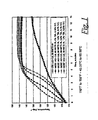
- Table 1 shows the cementitious mixture compositions investigated in this example. The slurry temperature rise behavior for the various mixes investigated in this example are shown in Figure 1 .
- Table 1 Mixture compositions evaluated in Example 1 1 Mix Id.
- Reactive Powder Blend (parts/100 parts of Portland Cement) TEA Aggregate 2 Portland Cement Fly Ash-Class C High Alumina Cement Gypsum wt% of reactive powder blend Condition wt% of reactive powder blend (PC) (FA) (HAC) (G) Mix 1-Conventional #1 100 90 16 5.3 0.0 Dry 90 Mix 2-Conventional #2 100 90 16 5.3 0.0 Moist 3 90 Mix 3 - Invention #1 100 90 16 5.3 1.0 Moist 3 90 Mix 4 - Invention #2 100 90 16 5.3 2.0 Moist 3 90 Mix 5 - Invention #3 100 90 16 5.3 1.0 Moist 3 90 (1) Sodium citrate 0.04 wt% of reactive powder blend Superplasticizer 0.40 wt% of reactive powder blend Sodium carbonate 0.10% of reactive powder blend for Mix 1 to 4 and 0.05% of reactive powder blend for Mix 2 Water/reactive powder weight ratio - 0.35 (2) Expanded shale aggregate (3) Moisture content of aggregate - 5%
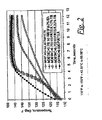
- Example 2 the slurry temperature rise behavior was investigated for mixture compositions containing more fly ash and less aggregate relative to the mixture compositions investigated In Example 1.
- Table 2 shows the mixture compositions investigated in this example.
- Table 2 Mixture compositions evaluated in Example 2 1
- Mix Id. Reactive Powder Blend (parts/100 parts of Portland Cement) TEA Aggregate 2 Portland Cement Fly Ash-Class C High Alumina Cement Gypsum wt% of reactive powder blend Condition wt% of reactive powder blend (PC) (FA) (HAC) (G)
- PC reactive powder blend
- F reactive powder blend
- Example 3 the slurry temperature rise behavior was investigated for mixture compositions containing aggregate with 18% moisture content rather than 5% as in Example 2.
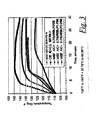
- Table 3 shows the cementitious mixture compositions investigated in this example. As can be seen in Figure 3 , the beneficial effects of the addition of triethanolamine (TEA) were similar to those observed in Example 2, except that the higher moisture content of the aggregate appeared to have reduced the maximum temperature rise by a small amount.
- Table 3 Mixture compositions evaluated in Example 3 1 Mix Id.
- Reactive Powder Blend (parts/100 parts of Portland Cement) TEA Aggregate 2 Portland Cement Fly Ash - Class C High Alumina Cement Gypsum wt% of reactive powder blend Condition wt% of reactive powder blend (PC) (FA) (HAC) (G)
- PC reactive powder blend
- FA reactive powder blend
- HAC reactive powder blend
- G Mix 1 - Conventional #1 100 90 16 5.3 0.0 Dry 90 Mix 2 - Conventional #2 100 90 16 5.3 0.0 Moist 3 90 Mix 3 - Conventional #3 100 110 16 5.3 0.0 Moist 3 75
- Mix4- Invention #1 100 110 16 5.3 1.0 Moist 3 75
- Superplasticizer 0.40 wt% of reactive powder blend Sodium carbonate 0.20% of reactive powder blend Water/reactive powder weight ratio - 0.40
- Expanded shale aggregate Moisture content of aggregate - 18%
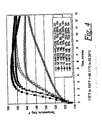
- Example 4 influence of triethanolamine (TEA) addition at varying dosages of HAC on slurry temperature rise behavior was investigated.
- Table 4 shows the cementitious mixture compositions investigated in this example.
- Table 4 Mixture compositions evaluated in Example 4 1
- Reactive Powder parts/100 parts of Portland Cement
- TEA Aggregate 2 Portland Cement Fly Ash-Class C High Alumina Cement Gypsum wt% of reactive powder blend
- PC reactive powder blend
- FAC reactive powder blend
- G Mix 1-Conventional #1 100 90 16 5.3 0.0 Dry 90 Mix 2-Conventional #2 100 90 10 3.3 0.0 Dry 90 Mix 3-Conventional #3 100 90 8 2.7 0.0 Dry 90 Mix
- 4-Invention #1 100 90 16 5.3 0.5 Dry 90 Mix 5-Invention #2 100 90 10 3.3 1.0 Dry 90 Mix 6-Invention #3 100 90 8 2.7 1.5 Dry 90
- Sodium citrate 0.07 wt% of reactive powder blend Superplasticizer 0.40 wt% of reactive powder blend Sodium carbonate 0.25% of reactive powder blend Water
- Example 5 relative affects of TEA and sodium carbonate (SA) were determined. Table 5 shows the cementitious mixture compositions investigated in this example. Note that sodium carbonate is also considered an accelerator for setting of the cementitious compositions. Table 5: Mixture compositions evaluated in Example 5 1 Mix Id.
- Reactive Powder Blend (parts/100 parts of Portland Cement) TEA Sodium Carbona te Aggregate 2 Portland Cement Fly Ash-Class C High Alumina Cement Gypsum wt% of reactive powder blend wt% of reactive powder blend Condition wt% of reactive powder blend (PC) (FA) (HAC) (G)
- PC reactive powder blend
- FA reactive powder blend
- HAC reactive powder blend
- G Mix 1-Conventional #1 100 90 8 5.3 0.0 0.25 Dry 90 Mix 2-Invention #1 100 90 8 5.3 1.5 0.25 Dry 90 Mix 3 - Invention #2 100 90 8 5.3 2.0 0.25 Dry 90 Mix 4-Invention #3 100 90 8 5.3 1.5 0.50 Dry 90 Mix 5-Invention #4 100 90 5 1.7 1.5 0.25 Dry 90 Mix 6-Invention #5 100 90 5 1.7 1.0 1.00 Dry 90 (1) Sodium citrate 0.04 wt% of reactive powder blend Superplasticizer 0.40 wt% of reactive powder blend Water/reactive powder weight ratio - 0.40 (2) Expanded shale aggregate
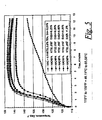
- Figure 5 clearly demonstrates that the mixture composition with 8 parts of HAC relative to 100 parts of Portland Cement, produces a very shallow slurry temperature rise curve, indicative of a very long setting time for the composition.
- TEA is added to the mixture compositions, both the rate of slurry temperature rise and maximum slurry temperature attained are is markedly increased.
- Increasing the sodium carbonate content shows an insignificant change in slurry temperature rise behavior.
- HAC content is decreased to 5 parts, the results are similar and no significant change appears to have resulted from increasing the sodium carbonate content.
- Example 5 The tests reported in Example 5 were further extended to determine the relative effects of TEA and sodium carbonate at a relatively low concentration of HAC.
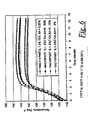
- TEA content fixed at 1.5 wt% of the reactive powder blend and sodium carbonate dosage varied from 0.25 to 1.0 wt% of the reactive powder blend.
- the slurry temperature rise response for the mixture compositions investigated are shown in Figure 6 . It can be seen that increasing the amount of sodium carbonate reduces the maximum slurry temperature achieved, although little effect is seen on the rate of slurry temperature rise.
- Example 7 relative effects of sodium carbonate on compressive strength were determined.
- Table 6 shows the cementitious mixture compositions investigated in this example. Table 6: Mixture compositions evaluated In Example 7 1 Mix Id. Reactive Powder Blend (parts/100 parts of Portland Cement) TEA Sodium Carbonate Aggregate 2 Portland Cement Fly Ash-Class C High Alumina Cement Gypsum wt% of reactive powder blend wt% of reactive powder blend Condition wt% of reactive powder blend (PC) (FA) (HAC) (G) Mix 1-Invention #1 100 90 0 0 0.50 0.0 Dry 90 Mix 2-Invention #2 100 90 0 0 0.50 0.20 Dry 90 Mix 3-Invention #3 100 90 0 0 0.50 0.40 Dry 90 Mix4-Invention #4 100 90 0 0 0.50 0.60 Dry 90 Mix 5-Invention #6 100 90 0 0 0.50 0.80 Dry 90 (1) Sodium citrate 0.08 wt% of reactive powder blend Superplasticizer 0.50 wt% of reactive powder blend Water/reactive powder weight ratio - 0.40
- the cube compressive strengths (CCS) for the mixture compositions investigated in this example are shown In Table 7.
- Three cube specimens of size 50.8 mm x 50.8 mm x 50.8 mm (2" x 2" x2") were cast after mixing at 46.1°C(115°F) and then pouring into forms. The forms were held at room temperature about 23.9°C (75°F) and de-molded after 19 hours. After demolding, the specimens were placed in plastic bags and cured at 68.3°C (155°F) additional 48 hours. Note that the specimens were prepared without adding air-entraining agents yield an average mortar density of about 1701kg/m 3 (106 pcf).
- Table 7 The data presented in Table 7 shows that adding sodium carbonate in the range of 0.2 to 0.8% increases the mortar compressive strength significantly compared to the mixes without sodium carbonate. It appears that an optimum concentration of sodium carbonate was within the range of concentration studied.
- Table 7 Cube Compressive Strength (CCS) for compositions evaluated in Example 7 1 Mix Id.
- Example 8 shows the influence of triethanolamine addition on the slurry temperature rise behavior for the mixture compositions in which the HAC dosage was reduced to 0 parts.
- Table 8 shows the cementitious mixture compositions investigated in this example.
- Table 8 Mixture compositions evaluated in Example 7 1 Mix Id.
- Reactive Powder Blend (parts/100 parts of Portland Cement) TEA Aggregate 2 Portland Cement Fly Ash - Class C High Alumina Cement Gypsum wt% of reactive powder blend Condition wt% of reactive powder blend (PC) (FA) (HAC) (G)
- PC reactive powder blend
- FA reactive powder blend
- HAC reactive powder blend
- G Mix 1-Conventional #1 100 90 17.5 5.9 0.0 Dry 90 Mix 2-Conventional #2 100 90 0 0.0 0.0 Dry 90 Mix 3 - Invention #1 100 90 0 0.0 0.5 Dry 90 Mix 4 - Invention #2 100 90 0 0.0 1.0 Dry 90 Mix 5 - Invention #3 100 90 0 0.0 2.0 Dry 90 (1) Sodium citrate 0.07 wt% of reactive powder blend Superplasticizer 0.50 wt% of reactive powder blend Sodium carbonate 0.20% of reactive powder blend Water/reactive powder weight ratio - 0.40 (2) Expanded shale aggregate
- Reactive Powder Blend (parts/100 parts of Portland Cement) TEA Setting Times Portland Cement Fly Ash-Class C High Alumina Cement Gypsum wt% of reactive powder blend
- Initial Setting Time (min:sec)
- Initial Setting Time (min:sec)
- PC (FA)
- HAC HAC
- G Mix 1 - Conventiona I#1 100 90 17.5 5.9 0.0 5:00 6:46 Mix 2-Conventiona I#2 100 90 0 0.0 0.0 32:00 40:46 Mix 3-Invention #1 100 90 0 0.0 0.5 6:00 8:40 Mix 4 - Invention #2 100 90 0 0.0 1.0 5:00 7:00 Mix 5 - Invention #3 100 90 0 0.0 2.0 5:00 7:00
- Example 8 The compositions of Example 8 were tested again, except that the aggregate used was moist with a moisture content of 5% instead of using dry aggregate as in Example 8.
- Table 10 shows the mixture compositions investigated in this example.
- Table 10 Mixture compositions evaluated in Example 8 1
- Mix Id. Reactive Powder Blend (parts/100 parts of Portland Cement) TEA Aggregate 2 Portland Cement Fly Ash-Class C High Alumina Cement Gypsum wt% of reactive powder blend Condition wt% of reactive powder blend (PC) (FA) (HAC) (G)
- PC reactive powder blend
- FA reactive powder blend
- HAC reactive powder blend
- G Mix 1 - Conventional #1 100 90 17.5 5.9 0.0 Moist 3 90 Mix 2 - Conventional #2 100 90 0 0.0 0.0 Moist 3 90 Mix 3-Invention #1 100 90 0 0.0 0.5 Moist 3 90 Mix 4-Invention #2 100 90 0 0.0 1.0 Moist 3 90 Mix 5-Invention #3 100 90 0 0.0 1.5 Moist 3 90 Mix 6-Invention #4 100
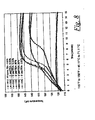
- the slurry temperature rise behavior for the mixture compositions investigated in this example are shown in Figure 8 and their corresponding initial and final setting times are shown in Table 11. From Figure 8 it can be clearly observed that despite the use of a very high amount of high alumina cement and gypsum in the mixture composition, the slurry temperature rise behavior is very inferior when moist aggregate are used (Mix 1). Also, the final setting time for this mixture is also very long compared to the similar mixture composition containing dry aggregate (i.e., Mix 1 of Example 8). When high alumina cement and gypsum are taken out from the mixture composition containing moist aggregate (Mix 2), the slurry temperature rise response degrades even further and the final setting time is increased tremendously.
- Reactive Powder Blend (parts/100 parts of Portland Cement) TEA Setting Times Portland Cement Fly Ash-Class C High Alumina Cement Gypsum wt% of reactive powder blend
- Initial Setting Time (min:sec)
- Final Setting Time (min:sec)
- PC (FA)
- HAC HAC
- G Mix 1-Conventional #1 100 90 17.5 5.9 0.0 7:30 20:30
- 2-Conventional #2 100 90 0 0.0 0.0 - > 60:00 Mix
- 3-Invention #1 100 90 0 0.0 0.5 12:00 23:00
- Mix 4 - Invention #2 100 90 0 0.0 1.0 9:30 19:00
- Mix 5 - Invention #3 100 90 0 0.0 1.5 9:00 17:00 Mix 6 - Invention #4 100 90 0 0.0 2.0 8:00 12:00
- Reactive Powder Blend (parts/100 parts of Portland Cement) TEA Aggregate 2 Portland Cement Slag 3 High Alumina Cement Gypsum wt% of reactive powder blend Condition wt% of reactive powder blend (PC) (GGBFS) (HAC) (G) Mix 1-Invention #1 100 0 0 0.0 1.0 Dry 90 Mix 2 - Invention #2 100 30 0 0.0 1.0 Dry 90 Mix 3 - Invention #3 100 60 0 0.0 1.0 Dry 90 Mix 4-Invention #4 100 90 0 0.0 1.0 Dry 90 (1) Sodium citrate 0.07 wt% of reactive powder blend Superplasticizer 0.25 wt% of reactive powder blend Sodium carbonate 0.40% of reactive powder Water/reactive powder weight ratio - 0.42 (2) Expanded shale aggregate (3) GGBFS - Ground granulated blast furnace slag
- Example 13 shows the influence of type of mineral additive on the slurry temperature rise behavior and setting characteristics of the compositions of the invention.
- Three different types of mineral additives possessing pozzolanic properties were investigated - Class C Fly Ash, Class F Fly Ash and Ground Granulated Blast Furnace Slag (GGBFS).
- GGBFS Ground Granulated Blast Furnace Slag
- Mixtures of portland cement, a pozzolanic material and TEA were prepared to illustrate the relative influence of these pozzolanic materials on the rapid setting characteristics of the compositions of invention.
- the mixture compositions investigated in this example are shown in Table 18.
- Table 18 Final setting times for mixtures of Example 13 Mix Id.
- Figure 12 shows that Class C fly ash provides superior performance, compared to Class F fly ash or ground granulated blast furnace slag.
- the rate of temperatures rise was more rapid for Class C fly ash mixture compared to Class F fly ash mixture, and the maximum temperature achieved was greater than those for blast furnace slag or Class F fly ash mixtures.
- This rapid temperature rise and maximum temperature resulted In the shortest final set time for the Class C fly ash mixture. This is believed to be due to the higher lime and tricalcium aluminate content of Class C fly ash.
- This example demonstrates the Influence of Initial slurry temperature on the setting characteristics of the cementitious compositions of the invention containing dry aggregate with Type III Portland cement comprising 100% of the reactive powder.
- Table 19 shows the mixture compositions investigated In this example. Table 19: Mixture compositions equated in Example 14 1 Mix Id. Initial Slurry Temp.
- Reactive Powder Blend (parts/100 parts of Portland Cement) TEA Aggregate 2 Portland Cement Fly Ash High Alumina Cement Gypsum wt% of reactive powder blend Condition 3 wt% of reactive powder blend (°C) (°F) (PC) (FA) (HAC) (G) Mix 1-Conventional #1 23.89 (75) 100 0 0 0 1.0 Dry 90 Mix 2 - Invention #1 46.11 (115) 100 0 0 0 1.0 Dry 90 (1) Sodium citrate 0.04 wt% of reactive powder blend Superplasticizer 0.10 wt% of reactive powder blend Sodium carbonate 0.20% of reactive powder blend Water/reactive powder weight ratio - 0.40 (2) Expanded shale aggregate
- Table 18 shows the final setting times of the mixture compositions investigated in this example. It can be observed that when the initial slurry temperature is 23.89°C (75°F), the final setting time is extremely long of the order of 97 minutes. On the other hand, when the initial slurry temperature is 46.11°C (115°F), the final setting time is attained very fast in 5.5 minutes. Table 20: Final setting times of mixture compositions of Example 14 Mix Id. Initial Slurry Temp.
- Reactive Powder Blend (parts/100 parts of Portland Cement) TEA Final Setting Time Portland Cement Fly Ash High Alumina Cement Gypsum wt% of reactive powder blend (°F) (PC) (FA) (HAC) (G) (min:sec) Mix 1-Conventional #1 75 100 0 0 0 1.0 97:00 Mix 2-Invention #1 115 100 0 0 0 1.0 5:30
- Table 21 shows the mixture compositions investigated in this example. Table 21: Mixture compositions evaluated in Example 15 1 Mix Id. Initial Slurry Temp.
- Reactive Powder Blend (parts/100 parts of Portland Cement) TEA Aggregate 2 Portland Cement Mineral Additive High Alumina Cement Gypsum wt% of reactive powder blend Condition 3 wt% of reactive powder blend (°C) (°F) (PC) (3) (HAC) (G) Mix 1-Invention #1 35 (95) 100 90 0 0 0.5 Dry 90 Mix 2-Invention #2 35 (95) 100 90 0 0 1.0 Dry 90 Mix 3-Invention #3 35 (95) 100 90 0 0 2.0 Dry 90 Mix 4 - Invention #4 40.55 (105) 100 90 0 0 0.5 Dry 90 Mix 5-Invention #5 40.55 (105) 100 90 0 0 1.0 Dry 90 Mix 6-Invention #6 40.55 (105) 100 90 0 0 2.0 Dry 90 Mix 7-Invention #7 47.22 (117) 100 90 0 0 0.10 Dry 90 Mix 9-Invention #8 47.22 (117) 100 90 0 0 0.30 Dry 90 Mlx 9-Invention #9 47.22 (117)
- Table 22 shows the final setting times of the mixture compositions investigated in this example. It can be observed that when the initial slurry temperature is 35.56°C (96°F) mixtures required a TEA dosage of 2.0% to achieve a final set of 12.5 minutes. On the other hand, when the initial slurry temperature is 47.22°C (117°F), the final setting time is attained very fast in about 5.5 minutes with a TEA dosage of only 0,4%. It should be noticed that mixes with slurry temperature of 52.78°C (127°F) attained slightly longer final setting times when compared to mixes made at a slurry temperatures of 47.22°C (117°F). Table 22: Final setting times of mixture compositions of Example 15 Mix Id. Initial Slurry Temp.
- Reactive Powder Blend (parts/100 parts of Portland Cement) TEA wt% of reactive powder blend Final Setting Time Portland Cement Fly Ash High Alumina Cement Gypsum (°C) (min:sec) (°F) (PC) (FA) (HAC) (G)
- Mix 2-Invention #1 35.55 100 90 0 0 0.50 55;00
- Mix 3-Invention #2 35.55 (96) 100 90 0 0 1.0 25:00 Mix 4-invention #3 35.55 100 90 0 0 2.0 12:30 Mix 5-Invention #4 40.55 (105) 100 90 0 0 0.50 36:42 Mix 6-Invention #5 40.55 (105) 100 90 0 0 1.0 20:00 Mix 7-Invention #6 40.55 (105) 100 90 0 0 2.0 10:24 Mix 8-Invention #7 47.22 (117) 100 90 0 0 0.10 13:00 Mix 9-Invention #6 47.22 (117) 100 90 0 0 0.30 8:30 Mix 10-Invention #9 47.22 (117) 100 90
- Table 23 shows the mixture compositions investigated in this example. Table 23: Mixture compositions evaluated in Example 16 1 Mix Id. Initial Slurry Temp.
- Reactive Powder Blend (parts/100 parts of Portland Cement) TEA Aggregate 2 Portland Cement Fly Ash High Alumina Cement Gypsum wt% of reactive powder blend Condition 3 wt% of reactive powder blend (°C) (°F) (PC) (FA) (HAC) (G) Mix 1-Conventional #1 23.89 (75) 100 0 0 0 1.0 Moist 90 Mix 2-Invention #1 46.11 (115) 100 0 0 0 1.0 Moist 90 (1) Sodium citrate 0.04 wt% of reactive powder blend Superplasticizer 0.10 wt% of reactive powder blend Sodium carbonate 0.20% of reactive powder blend Water/reactive powder weight ratio - 0.40 (2) Expanded shale aggregate (3) Aggregate moisture content - 5%
- Table 24 shows the final setting times of the mixture compositions investigated in this example. It can be observed that when the initial slurry temperature is 23.89°C (75°F), the final setting time is extremely long being greater than 180 minutes. On the other hand, when the initial slurry temperature is 46.11°C (115°F), the final setting time is attained very quickly In less than 8 minutes. Table 24: Final setting times of mixture compositions of Example 16 Mix Id. Initial Slurry Temp.
- Reactive Powder Blend (parts/100 parts of Portland Cement) TEA Final Setting Time Portland Cement Fly Ash High Alumina Cement Gypsum wt% of reactive powder blend (°C) (°F) (PC) (FA) (HAC) (G) (min:sec) Mix 1-Conventional #1 23.89 (75) 100 0 0 0 1.0 >180:00 Mix 2-Invention #1 46.11 (115) 100 0 0 0 1.0 7:55
- Table 25 shows the mixture compositions investigated In this example. Table 25: Mixture compositions evaluated in Example 17 1 Mix Id. Initial Slurry Temp.
- Reactive Powder Bland (parts/100 parts of Portland Cement) Sodium Citrate wt% of reactive powder blend Aggregate 2 Portland Cement Fly Ash High Alumina Cement Gypsum wt% of reactive powder blend (°C) Condition 3 (°F) (PC) (FA) (HAC) (G)
- Mix 1-Invention #1 40.55 (105) 100 90 0 0 0.00 Dry 90 Mix 2 - Invention #2 40.55 (105) 100 90 0 0 0.04 Dry 90 Mix 3-Invention #3 40.55 (105) 100 90 0 0 0.08 Dry 90 Mix 4-Invention #4 52.78 (127) 100 90 0 0 0.00 Dry 90 Mix 6-Invention #5 52.78 (127) 100 90 0 0 0.04 Dry 90 Mix 6-Invention #6 52.78 (127) 100 90 0 0 0.08 Dry 90 (1) TEA 0.50 wt%, superplasticizer 0.40 wt% and sodium carbonate 0.20% of reactive powder blend, Water/reactive powder weight ratio - 0.40. (2) Expanded shale
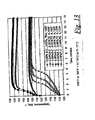
- Figure 13 shows the temperature development of the mixture compositions investigated in this example. The following observations can be made:
- Table 26 shows the modulus of rupture (MOR) for cement boards composed of the cementitious composition of the invention and surface reinforced with fiberglass mesh. Each set of data includes the MOR for board specimens in the cross machine direction (XMD) and machine direction (MD). Table 26 indicates that the panels made with compositions of the invention meet the MOR required by the American National Standard for Test Methods and Specifications for Cementitious Backer Units ANSI A-118.9, American National Standard Institute, NY, NY, The values Indicated are similar for compositions In Mix 1 and Mix 2 and are within standard error for these tests. Table 26: Mechanical performance for mixtures in Example 18 1 Mix Id.
- Reactive Powder Blend (parts/100 parts of Portland Cement) TEA MOR psi Portland Cement Fly Ash-Class C High Alumina Cement Gypsum wt% of reactive powder blend XMD MD (PC) (FA) (HAC) (G) Mix 1-Invention #1 100 95 9 3.3 0.09 1081 812 Mix 2-Invention #2 100 95 0 0.0 0.4 993 983 (1) Superplasticizer 0.2 wt%, sodium citrate 0.09 wt% and sodium carbonate 0.4% of reactive powder blend, Water/reactive powder weight ratio - 0.40 (2) Expanded shale aggregate ratio - 0.86
Landscapes
- Chemical & Material Sciences (AREA)
- Engineering & Computer Science (AREA)
- Ceramic Engineering (AREA)
- Chemical Kinetics & Catalysis (AREA)
- Inorganic Chemistry (AREA)
- Materials Engineering (AREA)
- Structural Engineering (AREA)
- Organic Chemistry (AREA)
- Curing Cements, Concrete, And Artificial Stone (AREA)
Description
- This invention relates generally to very fast setting cementitious compositions that can be used for a variety of applications in which rapid hardening and attainment of early strength is desirable. In particular, the invention relates to those cementitious compositions that can be used to make boards with excellent moisture durability for use in wet and dry locations in buildings. Precast concrete products such as cement boards are made under conditions which provide a rapid setting of the cementitious mixture so that the boards can be handled soon after the cementitious mixture is poured into a stationary or moving form or over a continuously moving belt. Ideally, this will be occur as soon as 10 minutes, but more practically, setting of the cement mixture may be achieved up to about 20 minutes after being mixed with a suitable amount of water.
- In
U.S. Patent 4,488,909, Galer et al discuss cementitious compositions capable of such rapid setting. Their compositions permit high speed production of carbon dioxide resistant cement boards by forming essentially all of the potential ettringite within about 20 minutes after the composition is mixed with water. The essential components of their cementitious composition are portland cement, high alumina cement, calcium sulfate and lime. Pozzolans such as fly ash, montmorillonite clay, diatomaceous earth and pumicite may be added up to about 25%. The cement composition includes about 14 to 21 wt% high alumina cement, which in combination with the other components makes possible the early formation of ettringite and other calcium aluminate hydrates, which are responsible for the early setting of the cementitious mixture. - In general, Galer's rapid setting formulation suffers from several major limitations. These limitations, as highlighted below, are even more of a concern for the production of cementitious products such as cement boards:
- The final setting times of the cementitious mixtures are typically greater than 9 minutes. The final setting time is defined further in the examples below, but more generally, the cementitious mixtures have set to the extent that the cement-based products made thereof can be handled and stacked, although chemical reactions may continue for extended periods.
- The amount of high alumina cement in the reactive powder blend is very high. Typically, the high alumina cement is greater than 14 wt% of the reactive powder blend.
- The amount of pozzolanic materials is limited to 25 wt% of the reactive powder blend.
- Lime is required as an additional ingredient to obtain rapid set. Presence of excess lime in cement boards is detrimental to their long-term durability performance. Cement boards often are reinforced with polymer coated glass fiber mesh that degrades, losing strength and ductility in a high alkaline environment. Presence of excess lime increases the alkalinity of the cementitious matrix and thereby negatively impacts the long-term durability performance of the polymer coated glass fiber mesh and the resulting cement boards. In addition, presence of excess lime also makes the concrete susceptible to sulfate attack thus influencing its durability.
- Ettringite is a compound of calcium aluminum sulfate compound having the formula:
Ca6Al2(SO4)3 • 32 H2O
or alternatively:
3 CaO•Al2O3•3 CaSO4•32 H2O
- Ettringite forms as long needle-like crystals and provides rapid early strength to cement boards, so that they can be handled soon after being poured into a mold or over a continuous casting and forming belt. In the Galer et al compositions, alumina required for the formation of ettringite is supplied by high alumina cement (HAC) that typically contains 36-42 wt% Al2O3. Sulfate ions necessary for the formation of ettringite are provided by the gypsum present in Portland cement plus added gypsum, which is normally soluble in water. The lime needed for the formation of ettringite is provided by the portland cement and the added lime. The HAC is less soluble and is typically present in excess of that needed for ettringite formation. Thus, the gypsum and added lime are substantially consumed in the formation of ettringite. The availability and consumption of the HAC is usually increased by using a finely ground material. Since an excess of HAC is present in the cement board, it would be desirable to reduce its concentration as HAC is one of the more expensive components in the mixture.
- High alumina cement has an advantage over portland cement since HAC develops its maximum strength much earlier. However, it does not retain that strength over time as secondary reactions occur. HAC does not set very rapidly by itself, but its contribution to the formation of ettringite and other calcium aluminate hydrates in the presence of other reactive powder blend components makes HAC valuable in production of cement boards. However, the amount of HAC used in the cement boards should be limited to what is necessary for forming ettringite in quantities sufficient to allow handling of the cement boards. Since HAC is more expensive than portland cement, the cost of making the cement boards can be reduced substantially if HAC is limited to smaller amounts, or more preferably even eliminated.
- In the Galer et al composition, about 72 to 80 wt% is portland cement, about 14 to 21 wt% is HAC, about 3.5 to 10 wt% is calcium sulfate, and about 0.4 to 0.7 wt% is hydrated lime. Other materials, such as pozzolanic materials, e.g. fly ash, superplastizers, and other cement additives may be included.
- Alkanolamines have been proposed for reducing the set time of cements, for example see
U.S. Patents, 2,437,842 ;3,553,077 ;4,257,814 and4,741,782 . The effect of triethanolamine on the hydration of cement has been reported in technical papers, including Cement and Concrete Research, vol. 6, pp. 623-632, 1976, Pergamon Press, Inc. Such published information was more generally concerned with hydration of cement, rather than the preparation of cement boards and other precast concrete products, such as those of Galer et al., in which very rapid setting is needed. In their invention, Galer et al., provided the aluminates using high alumina cement (HAS) and sulfate ions using gypsum needed to form ettringite and achieve rapid setting of their cementitious mixture. - To achieve rapid set and final setting times of the order described in the Galer et al compositions, the current state-of-the-art inherently assumes that calcium aluminate cements such as HAC are required as a necessary and fundamental component in cementitious mixtures exhibiting rapid setting characteristics.
- Thus, it was an objective of the present inventors to develop a cementitious composition that is capable of developing an extremely rapid set while simultaneously satisfying the following conditions:
- The reactive powder blend of the cementitious composition should contain low concentrations of high alumina cement. Preferably, high alumina cement should be completely eliminated as a component of the reactive powder blend. Reducing alumina cement content helps to lower the cost of the product since high alumina cement is the most expensive component of a cementitious composition.
- The reactive powder blend of the cementitious composition should contain very high concentrations of mineral additives, such as pozzolanic materials, up to 55 wt% of the reactive powder blend. Increasing the content of mineral additives, e.g. fly ash, would help to substantially lower the cost of the product. Moreover, use of pozzolanic materials in the composition would also help to enhance the long-term durability of the product as a consequence of the pozzolanic reactions.
- The reactive powder blend of the cementitious composition should be free of externally added lime. Reduced lime content would help to lower the alkalinity of the cementitious matrix and thereby increase the long-term durability of the product.
- The final setting time as measured according to the Gilmore needle (i.e., the time after which cement boards can be handled) of the cementitious composition preferably should be less than 60 minutes, more preferably less than 20 minutes and most preferably less than 10 minutes. A shorter setting time would help to increase the production output and lower the product manufacturing cost.
-
US5,286,425 discloses a method of installing a cementitious composition which includes providing a dry fast setting cementitious composition having a set time and in the form of finely divided particles of at least one cement binder, pouring an amount of the dry cementitious composition into a volume of water located in a hole without any type of physical mixing of the cementitious composition and water other than the mixing which occurs merely by applying the cementitious composition into the water. -
US5,871,577 discloses set retarding additives, set retarded hydraulic cement compositions and methods of using the set retarded cement compositions for cementing subterranean zones in wells. A preferred set retarding additive comprises an alkanolamine salt produced by the reaction of a hydroxy carboxy acid, such as tartaric acid, gluconic acid or glucoheptonic acid, with an alkanolamine, such as monoethanolamine, diethanolamine or triethanolamine. -
EP0233691 discloses admixtures for hydraulic cement compositions, and particularly Portland cement concrete compositions which contain pozzolans such as fly ash, and which are mixtures containing at least two chemical ingredients, namely, alkali metal or alkaline earth metal salts of bromine and alkali metal or alkaline earth metal nitrite salts. These admixtures optionally further include triethanolamine as a third ingredient. - Extremely fast setting of cementitious compositions to form cementitious products, such as cement boards, is made possible by adding preferably about 0.03 to 4.0 wt%, more preferably about 0.05 to 2.0%, and most preferably about 0.05 to 1.0 wt% of triethanolamine based on the weight of the reactive components, which will include at least a hydraulic cement, preferably Portland cement, and also may include high alumina cement, calcium sulfate, and a mineral additive, preferably fly ash, to form a slurry with water under conditions that provide an initial slurry temperature of at least 90° to 135°F (32.2 to 57.2°C), preferably at least 90°F up to about 13°F (32.2°C to 54.4°C) preferably at least 100°F (37.8°C), most preferably about 110-120°F (43.3° - 48.9°C).
- In one embodiment, high alumina cement and calcium sulphate are omitted from the reactive powder blend of the invention.
- Mineral additives possessing substantial, little, or no cementing properties may be included in the rapid setting composite of the invention. Mineral additives possessing pozzolanic properties, such as fly ash, are particularly preferred in the reactive powder blend of the invention. Aggregates and fillers may be added depending on the application of the rapid setting cementitious composition of the invention.
- Other additives including sand, aggregate, lightweight fillers, water reducing agents such as superplasticizers, accelerating agents, retarding agents, air-entraining agents, foaming agents, shrinkage control agents, slurry viscosity modifying agents (thickeners), coloring agents and internal curing agents, may be Included as desired depending upon the processability and application of the cementitious composition of the invention. One preferred composition excludes high alumina cement and calcium sulfate and includes as reactive powder components only portland cement and optionally a mineral additive, preferably fly ash and an triethanolamine, plus additives.
- Rapid set is achieved by preparing the slurry at above ambient temperatures, preferably greater than 32.2°C (90°F), more preferably at least 37.8°C (100°F), most preferably about 43.3 - 48.9°C (110-120°F). Using triethanolamine to accelerate setting of the cementitious composition when the slurry is formed at these elevated temperatures makes possible increased rate of production of cementitious products such as cement boards or alternatively, permits reduction or complete elimination of the high alumina cement often used in such cementitious compositions.
-
-
Figure 1 is a graph of the results of Example 1. -
Figure 2 is a graph of the results of Example 2. -
Figure 3 is a graph of the results of Example 3. -
Figure 4 is a graph of the results of Example 4. -
Figure 5 is a graph of the results of Example 5. -
Figure 6 is a graph of the results of Example 6. -
Figure 7 is a graph of the results of Example 8 -
Figure 8 is a graph of the results of Example 9 -
Figure 9 is a graph of the results of Example 10 -
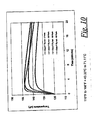
Figure 10 is a graph of the results of Example 11 -
Figure 11 is a graph of the results of Example 12 -
Figure 12 is a graph of the results of Example 13. -
Figure 13 is a graph of the results of Example 17. - The principal ingredient of the reactive powder blend of the cementitious composition of the invention is a hydraulic cement, preferably portland cement. Other ingredients may include high alumina cement, calcium sulfate, and a mineral additive, preferably a pozzolan such as fly ash. Preferably, high alumina cement and calcium sulfate are used in small amounts and most preferably excluded, leaving only the hydraulic cement, the mineral additive, and triethanolamine as an accelerator. When the composition includes only portland cement and fly ash, the reactive powder will contain 40-80 wt% portland cement and 20-60 wt% fly ash, based on the sum of these components. When the other ingredients are present, the reactive powder of the invention may contain 40-80 wt% portland cement, greater than zero up to 20 wt% high alumina cement, greater than zero up to 7 wt% calcium sulfate, and greater than zero up to 55 wt% fly ash based on the sum of these components. The reactive powder blend of the invention In combination with triethanolamine when mixed with water to provide an initial slurry temperature of at least 32.2°C (90°F), yields a rapid set of less than 60 minutes, more preferably less than 20 minutes, and most preferably in less than 10 minutes. Such rapid sets are made possible by providing the preferred amounts of the portland cement, high alumina cement, calcium sulfate, and the mineral additive in the composition (40-80 wt%, >0-20 wt%, >0-7wt%, and >0-55 wt% respectively) and forming the initial slurry with water at elevated temperatures above 32.2°C (90°F) so that formation of ettringite and other hydrates of calcium aluminate compounds can take place as a result of the hydration of this reactive powder blend. Ettringite and other hydrates of calcium aluminate compounds form very rapidly in the hydration process thus Imparting rapid set and rigidity to the mixtures made with the reactive powder blend of the cementitious composition of the invention. In manufacturing of cement-based products such as cement boards, it is primarily the formation of ettringite and other calcium aluminate hydrates that makes possible handling of cement boards within a few minutes after the cementitious composition of the invention is mixed with a suitable amount of water. As reported in the examples, setting of the composition is characterized by initial and final set times, as measured using Gillmore needles specified in the ASTM C266 test procedure. The final set time also corresponds to the time when a cement-based product e.g. a cement board, has sufficiently hardened so that it can be handled. It will understood by those skilled in the art that curing reactions continue for extended periods after the final setting time has been reached.
- Hydraulic cements, such as Portland cement, make up a substantial amount of the compositions of the invention. It is to be understood that, as used here, "hydraulic cement" does not include gypsum, which does not gain strength under water, although typically some gypsum is included in portland cement.
ASTM C 150 standard specification for portland cement defines portland cement as a hydraulic cement produced by pulverizing clinker consisting essentially of hydraulic calcium silicates, usually containing one or more of the forms of calcium sulfate as an inter-ground addition. More generally, other hydraulic cements may be substituted for portland cement, for example calcium sulfo-aluminate based cements. To manufacture portland cement, an intimate mixture of limestone and clay is ignited in a kiln to form portland cement clinker. The following four main phases of portland cement are present in the clinker - tricalcium silicate (3CaO•SiO2, also referred to as C3S), dicalcium silicate (2CaO•SiO2, called C2S), tricalcium aluminate (3CaO•Al2O3 or C3A), and tetracalcium aluminoferrite (4CaO•Al2O3•Fe2O3 or C4AF). The resulting clinker containing the above compounds is inter-ground with calcium sulfates to desired fineness to produce the portland cement. The other compounds present in minor amounts in portland cement include double salts of alkaline sulfates, calcium oxide, and magnesium oxide. When cement boards are to be made, the portland cement will typically be in the form of very fine particles such that the particle surface area is greater than 4,000 cm2/gram and typically between 5,000 to 6,000 cm2/gram as measured by the Blaine surface area method (ASTM C 204). Of the various recognized classes of portland cement, ASTM Type III portland cement is most preferred in the reactive powder blend of the cementitious compositions of the invention. This is due to its relatively faster reactivity and high early strength development. In the present invention, the need for the use of Type III portland cement is minimized and relatively fast early age strength development can be obtained using a Type I instead of Type III portland cement. The other recognized types of hydraulic cements including white cement, slag cements such as blast-furnace slag cement, pozzolan blended cements, expansive cements, sulfo-aluminate cements, and oil-well cements may be used to replace or supplement portland cement in the composition of the invention. - Mineral additives possessing substantial, little, or no cementing properties may be included in the rapid setting composition of the invention. Mineral additives having pozzolanic properties such as fly ash are particularly preferred in the reactive powder of the invention. A distinctive feature of the present invention is that the hydraulic cement may be partially substituted by mineral additives possessing substantial, little, or no cementing properties, particularly pozzolanic materials, for example fly ash in substantial quantities.
- ASTM C618-97 defines pozzolanic materials as "siliceous or siliceous and aluminous materials which in themselves possess little or no cementitious value, but will, in finely divided form and in the presence of moisture, chemically react with calcium hydroxide at ordinary temperatures to form compounds possessing cementitious properties." Various natural and man-made materials have been referred to as pozzolanic materials possessing pozzolanic properties. Some examples of pozzolanic materials include pumice, perlite, diatomaceous earth, silica fume, tuff, trass, rice husk, metakaolin, ground granulated blast furnace slag, and fly ash. All of these pozzolanic materials can be used either singly or in combined form as part of the reactive powder blend of the invention. Fly ash is the preferred pozzolan in the reactive powder blend of the invention. Fly ashes containing high calcium oxide and calcium aluminate content (such as Class C fly ashes of ASTM C618 standard) are preferred. Other mineral additives such as calcium carbonate, vermiculite, clays, and crushed mica may also be included as mineral additives.
- Fly ash is a fine powder byproduct formed from the combustion of coal. Electric power plant utility boilers burning pulverized coal produce most commercially available fly ashes. These fly ashes consist mainly of glassy spherical particles as well as residues of hematite and magnetite, char, and some crystalline phases formed during cooling. The structure, composition and properties of fly ash particles depend upon the structure and composition of the coal and the combustion processes by which fly ash is formed. ASTM C618 standard recognizes two major classes of fly ashes for use in concrete - Class C and Class F. These two classes of fly ashes are derived from different kinds of coals that are a result of differences in the coal formation processes occurring over geological time periods. Class F fly ash is normally produced from burning anthracite or bituminous coal, whereas Class C fly ash is normally produced from lignite or sub-bituminous coal. The ASTM C618 standard differentiates Class F and Class C fly ashes primarily according to their pozzolanic properties. Accordingly, in the ASTM C618 standard, the major specification difference between the Class F fly ash and Class C fly ash is the minimum limit of SiO2 + Al2O3 + Fe2O3 in the composition. The minimum limit of SiO2 + Al2O3 + Fe2O3 for Class F fly ash is 70% and for Class C fly ash is 50%. Thus, Class F fly ashes are more pouolanic than the Class C fly ashes. Although not explicitly recognized in the ASTM C618 standard, Class C fly ashes typically contain high calcium oxide content. Presence of high calcium oxide content makes Class C fly ashes possess cementitious properties leading to the formation of calcium silicate and calcium aluminate hydrates when mixed with water. As will be seen in the examples below, Class C fly ash has been found to provide superior results, particularly in the preferred formulations in which high alumina cement and gypsum are not used. The weight ratio of the pozzolanic material to the portland cement in the reactive powder blend used in the cementitious composition of the invention may be about 0/100 to 150/100, preferably 75/100 to 125/100. In some reactive powder blends the portland cement is about 40 to 80 wt% and
fly ash 20 to 60 wt%. - High alumina cement (HAC) is another type of hydraulic cement that forms a component of the reactive powder blend of some of the embodiments of the invention. High alumina cement is also commonly referred to as aluminous cement or calcium aluminate cement. As the name implies, high alumina cements have a high alumina content, about 36-42 wt% is typical. Higher purity high alumina cements are also commercially available in which the alumina content can range as high as 80 wt%. These higher purity high alumina cements tend to be very expensive relative to other cements. The high alumina cements used in the compositions of the invention are finely ground to facilitate entry of the aluminates into the aqueous phase so that rapid formation of ettringite and other calcium aluminate hydrates can take place. The surface area of the high alumina cement used in the composition of the invention will be greater than 3,000 cm2/gram and typically about 4,000 to 6,000 cm2/gram as measured by the Blaine surface area method (ASTM C 204).
- Several manufacturing methods have emerged to produce high alumina cement worldwide. Typically, the main raw materials used in the manufacturing high alumina cement are bauxite and limestone. One manufacturing method that has been used in the US for producing high alumina cement is described as follows. The bauxite ore is first crushed and dried, then ground along with limestone. The dry powder comprising of bauxite and limestone is then fed into a rotary kiln. A pulverized low-ash coal is used as fuel in the kiln. Reaction between bauxite and limestone takes place in the kiln and the molten product collects in the lower end of the kiln and pours into a trough set at the bottom. The molten clinker is quenched with water to form granulates of the clinker, which is then conveyed to a stockpile. This granulate is then ground to the desired fineness to produce the final cement. Several calcium aluminate compounds are formed during the manufacturing process of high alumina cement. The predominant compound formed is monocalcium aluminate (CA). The other calcium aluminate and calcium silicate compounds that are formed include C12A7, CA2, C2S, C2AS. Several other compounds containing relatively high proportion of iron oxides are also formed. These include calcium ferrites such as CF and C2F, and calcium alumino-ferrites such as C4AF, C6AF2 and C6A2F. Other minor constituents present in the high alumina cement include magnesia (MgO), titania (TiO2), sulfates and alkalis. It should be noted that tricalcium aluminate (C3A) seen in ordinary portland cement is not found in high alumina cements.
- Various forms of calcium sulfate as shown below may be used in the invention to provide sulfate ions needed for forming ettringite and other calcium sulfo-aluminate hydrate compounds:
- ■ Dihydrate - CaSO4 . 2H2O (commonly known as gypsum)
- ■ Hemihydrate - CaSO4 . ½ H2O (commonly known as stucco)
- ■ Anhydrite - CaSO4 (also referred to as anhydrous calcium sulfate)
- Land plaster is a relatively low purity gypsum and is preferred due to economic considerations, although higher purity grades of gypsum could be used. Land plaster is made from quarried gypsum and ground to relatively small particles such that the specific surface area is greater than 2,000 cm2/gram and typically about 4,000 to 6,000 cm2/gram as measured by the Blaine surface area method (ASTM C 204). The fine particles are readily dissolved and supply the gypsum needed to form ettringite. Synthetic gypsum obtained as a by-product from various manufacturing industries can also be used as a preferred calcium sulfate in the present invention. The other two forms of calcium sulfate, namely, hemihydrate and anhydrite may also be used in the present invention instead of gypsum, i.e., the dihydrate form of calcium sulfate.
- The inventors have discovered that addition of alkanolamines has a significant influence on the rapid setting characteristics of the cementitious compositions of the invention when initiated at elevated temperatures. It has been found that addition of alkanolamines under conditions that yield an initial slurry temperature greater than 90°F allows a significant reduction in HAC from the reactive powder blend of the cementitious compositions of the invention. It is noteworthy that the degree of rapid set obtained with the addition of an appropriate dosage of alkanolamine in combination with appropriate initiation conditions can be such that the use of HAC as a necessary component in the cementitious mixture can be completely avoided. This is a major development in the field of fast setting cement chemistry since the current state-of-the-art inherently assumes that the HAC is a necessary and fundamental component of the rapid setting cementitious mixtures for achieving rapid setting characteristics of the order described by Galer et al. Triethanolamine [N(CH2-CH2OH)3] is used in accord with the present invention. Alkanolamines are amino alcohols that are strongly alkaline and cation active. The present inventors believe that alkanolamines act as catalysts to accelerate the reactions of calcium aluminates and calcium silicates phases present in cementitious composition of the invention. Since high alumina cements may be completely excluded from the composition, it is believed that the alkanolamines interact with Portland cement to provide the aluminates and sulfate ions needed for the formation of ettringite and other hydrates based on calcium aluminate compounds. Triethanolamine is used at a dosage of about 0.03 to 4.0 wt%, preferably 0.05 to 2.0 wt%, most preferably 0.05 to 1.0 wt% based on the reactive cementitious components of the invention.
- Use of set retarders as a component in the compositions of the invention is particularly critical In situations where the initial slurry temperatures used to form the cement-based products are particularly high, typically greater than 40.56°C (105°F). At relatively high initial slurry temperatures, typically greater than 40.56°C (105°F), retarders such as sodium citrate promote synergistic physical interaction and chemical reaction between different reactive components in the compositions resulting in favorable slurry temperature rise response and rapid setting behavior. Without the addition of retarders, stiffening of the reactive powder blend of the invention may occur very rapidly, soon after water is added to the mixture. Rapid stiffening of the mixture, also referred to here as "false setting" is undesirable, since it interferes with the proper and complete formation of ettringite, hinders with the normal formation of calcium silicate hydrates at later stages, and leads to development of extremely poor and weak microstructure of the hardened cementitious mortar. The primary function of a retarder in the composition is to keep the slurry mixture from stiffening too rapidly thereby promoting synergistic physical interaction and chemical reaction between the different reactive components. Other secondary benefits derived from the addition of retarder in the composition include reduction in the amount of superplasticizer and/or water required to achieve a slurry mixture of workable consistency. All of the aforementioned benefits are achieved due to suppression of false setting. Examples of some useful set retarders include sodium citrate, citric acid, potassium tartrate, sodium tartrate, and the like. In the compositions of the invention, sodium citrate is the preferred set retarder. Examples presented below will clearly demonstrate the synergistic roles of set retarder (sodium citrate), alkanolamines (triethanolamine) and slurry temperature. Furthermore, since set retarders prevent the slurry mixture from stiffening too rapidly, their addition plays an important role and is instrumental in the formation of good edges during the cement board manufacturing process. The weight ratio of the set retarder to the reactive powder blend generally is less than 1.0 wt%, preferably about 0.04-1.0 wt%.
- As discussed previously, alkanolamines are primarily responsible for imparting extremely fast rapid setting characteristics to the cementitious mixtures. In combination with alkanolamines, inorganic accelerators may also be added as secondary accelerators in the cementitious composition of the invention. Addition of these secondary accelerators is expected to impart only a small reduction in setting time in comparison to the reduction achieved due to the addition of alkanolamines alone. Examples of such set accelerators include a sodium carbonate, potassium carbonate, calcium nitrate, calcium nitrite, calcium formate, calcium acetate, calcium chloride, lithium carbonate, lithium nitrate, lithium nitrite, aluminum sulfate and the like. The use of calcium chloride should be avoided when corrosion of cement board fasteners is of concern. The weight ratio of the inorganic accelerator to the reactive powder blend typically will be less than 2 wt%, preferably about 0.1 to 1.0 wt%. These accelerators can be used alone or in combination.
- Chemical additives such as water reducing agents (superplasticizers), may be included in the compositions of the invention. They may be added in the dry form or in the form of a solution. Superplasticizers help to reduce the water demand of the mixture. Examples of superplasticizers include polynapthalene sulfonates, polyacrylates, polycarboxylates, lignosulfonates, melamine sulfonates, and the like. Depending upon the type of superplasticizer used, the weight ratio of the superplasticizer (on dry powder basis) to the reactive powder blend typically will be about 2 wt% or less, preferably about 0.1 to 1.0 wt%.
- When it is desired to produce lightweight products such as lightweight cement boards, air-entraining agents may be added in the composition to lighten the product. Alternatively, externally produced foam formed using foaming agents may be introduced in to the mixtures of the compositions of the invention during the mixing operation with an objective of reducing the density of the product. Other chemical admixtures such as shrinkage control agents, coloring agents, viscosity modifying agents (thickeners) and internal curing agents may also be added in the compositions of the invention if desired.
- Discrete reinforcing fibers of different types may also be included in the cementitious compositions of the invention. Scrims made of materials such as polymer-coated glass fibers and polymeric materials such as polypropylene, polyethylene and nylon may be used to reinforce the cement-based product depending upon its function and application. Cement boards produced according the present invention are typically reinforced with scrims made of polymer-coated glass fibers.
- The cementitious composition of the invention will be combined with a suitable amount of water to hydrate the reactive powder blend and to rapidly form ettringite and other hydrates of calcium aluminate compounds. Generally, the amount of water added will be greater than that is theoretically required for the hydration of the reactive powder blend. This increased water demand is allowed to facilitate the workability of the cementitious slurry. Typically, the weight ratio of the water to reactive powder blend is about 0.20/1 to 0.80/1, preferably about 0.30/1 to 0.60/1. The amount of water required will depend on the needs of the individual materials present in the cementitious composition.
- While the disclosed reactive powder blend defines the rapid setting component of the cementitious composition of the invention, it will be understood by those skilled in the art that other materials may be included in the composition depending on its intended use and application. For instance, for cement board applications, it is desirable to produce lightweight boards without unduly comprising the essential mechanical properties of the product. This objective is achieved by adding lightweight aggregates and fillers. Examples of useful lightweight aggregates and fillers include blast furnace slag, volcanic tuff, pumice, expanded forms of clay, shale, and perlite, hollow ceramic spheres, hollow plastic spheres, expanded plastic beads, and the like. For producing cement boards, expanded clay and shale aggregates are particularly useful. Expanded plastic beads and hollow plastic spheres when used in the composition are required in very small quantity on weight basis owing to their extremely low bulk density. Depending on the choice of lightweight aggregate or filler selected, the weight ratio of the lightweight aggregate or filler to the reactive powder blend may be about 1/100 to 200/100, preferably about 2/100 to 125/100. For example, for making lightweight cement boards, the weight ratio of the lightweight aggregate or filler to the reactive powder blend preferably will be about 2/100 to 125/100. In applications where the lightweight product feature is not a critical criterion, river sand and coarse aggregate as normally used in concrete construction may be utilized as part of the composition of the invention.
- In the examples below it will be seen that the moisture content of aggregates adversely affects the setting time of the cementitious mixtures, thus aggregates and fillers having a low water content are preferred in the present invention.
- The cement literature (Ramachandran, Cem. Concr. Res. 6 (pp. 623-631) teaches away from preparing concrete mortars with relatively high initial temperatures because it leads to false set and poor strength development. In fact, hot leather concreting specifications require that the concrete when placed should have a temperature of less than 29.44°C or 32.22°C (85°F or 90°F) ( Design and Control of Concrete Mixtures, 2PCA, Thirteenth Edition P. 130).
- In the present invention, forming the slurry under conditions which provide an initially high slurry temperature was found to be important to achieve rapid setting and hardening of cementitious formulations. The initial slurry temperature should be at least about 32.2°C (90°F). Slurry temperatures in the range of 32.2°C to 57.2°C (90°F to 135°F) produce very short setting times.
- In general, within this range increasing the Initial temperature of the slurry increases the rate of temperature rise as the reactions proceed and reduces the setting time. Thus, an initial slurry temperature of 35°C (95°F) is preferred over an initial slurry temperature of 32.2°C (90°F), a temperature of 37.8°C (100°F) is preferred over 35°C (95°F), a temperature of 40.6°C (105°F) is preferred over 37.8°C (104°F), a temperature of 43.3°C (110°F) is preferred over 40.6°C (105°F) and so on. It is believed that the benefits of increasing the initial slurry temperature are decreased as the upper end of the broad temperature range is approached.
- As will be understood by those skilled in the art, achieving an initial slurry temperature may be accomplished by more than one method. Perhaps the most convenient method is to heat one or more of the components of the slurry. In the examples, the present Inventors supplied water heated to a temperature such that, when added to the dry reactive powders and unreactive solids, the resulting slurry is at the desired temperature. Alternatively, the solids could be provided at above ambient temperatures if desired. Using steam to provide heat to the slurry is another possible method that could be adopted. Although not preferred, a slurry could be prepared at ambient temperatures and promptly heated to raise the temperature to about 32.2°C (90°F) or higher, where the benefits of the invention can be achieved. The optimum initial slurry temperature is believed to be in the range of about 43.3 to 48,9°C (110°F to 120°F).
- Precast concrete products such as cement boards are manufactured most efficiently in a continuous process in which the reactive powder blend is blended with aggregates, fillers and other necessary ingredients, followed by addition of water and other chemical additives just prior to placing the mixture in a mold or over a continuous casting and forming belt. Due to the rapid setting characteristics of the cementitious mixture it should be appreciated that the mixing of dry components of the cementitious blend with water usually will be done Just prior to the casting operation. As a consequence of the formation of hydrates of calcium aluminate compounds and the associated water consumption in substantial quantities the cement-based product becomes rigid, ready to be cut, handled and stacked for further curing.
- In the following examples, experimental studies were conducted to investigate the influence of alkanolamine addition on the slurry temperature rise behavior and setting characteristics of the cementitious mixture compositions of the invention. The raw materials and ingredients used in these investigations were as follows:
- Portland Cement Type III supplied by Capitol Cement of San Antonio, Texas
- Block Portland Cement supplied by California Portland Cement Company
- Portland Cement Type III supplied by Mitsubishi Cement Company, California
- Gypsum (Land Plaster) supplied by USG Company, Illinois
- High Alumina Cement (HAC) supplied by Lafarge Calcium Aluminates
- Fly Ash Class C supplied by Bayshore Station, Cleveland, OH and
- Fly Ash Class F supplied by Boral Material Technologies, Texas
- Ground Granulated Blast Furnace Slag (NewCem) supplied by Lafarge Corporation, Virginia
- Haydite expanded shale aggregate supplied by Hydraulic Brick Press, Brooklyn, IN
- Ridgelite expanded clay aggregate supplied by TXI Aggregate, Texas
- Triethanolamine (TEA) supplied by Union Carbide Corp., Danbury, CT
- Sodium Carbonate (SA) supplied by FMC Wyoming Corp., Philadelphia, PA
- Sodium Citrate supplied by FMC Wyoming Corp., Philadelphia, PA
- Superplasticizer Sulfonated Naphtalene Condensate supplied by Geo Specialty Chemicals, Inc., Cedartown, GA
- In the examples below, the dry reactive powder ingredients and any aggregate used were mixed with water under conditions which provided an initial slurry temperature above ambient. TEA was added as received or in an aqueous solution. Typically hot water was used having a temperature which produced a slurry having an initial temperature within the range of 90°-135°F (32.2-57.2°C). Examples 14-17 report the effect of changes in the initial slurry temperature.
- This example shows the influence of alkanolamine addition on the slurry temperature rise behavior and setting characteristics of the cementitious compositions of the invention containing expanded shale aggregate in moist condition. Table 1 shows the cementitious mixture compositions investigated in this example. The slurry temperature rise behavior for the various mixes investigated in this example are shown in
Figure 1 .Table 1: Mixture compositions evaluated in Example 11 Mix Id. Reactive Powder Blend
(parts/100 parts of Portland Cement)TEA Aggregate2 Portland Cement Fly Ash-Class C High Alumina Cement Gypsum wt% of reactive powder blend Condition wt% of reactive powder blend (PC) (FA) (HAC) (G) Mix 1- Conventional # 1100 90 16 5.3 0.0 Dry 90 Mix 2- Conventional # 2100 90 16 5.3 0.0 Moist3 90 Mix 3 - Invention # 1100 90 16 5.3 1.0 Moist3 90 Mix 4 - Invention # 2100 90 16 5.3 2.0 Moist3 90 Mix 5 - Invention # 3100 90 16 5.3 1.0 Moist3 90 (1) Sodium citrate 0.04 wt% of reactive powder blend
Superplasticizer 0.40 wt% of reactive powder blend
Sodium carbonate 0.10% of reactive powder blend forMix 1 to 4 and 0.05% of reactive powder blend forMix 2
Water/reactive powder weight ratio - 0.35
(2) Expanded shale aggregate
(3) Moisture content of aggregate - 5% - From
Figure 1 it can be clearly seen that the mixture with dry aggregate (Mix 1) provides a very rapid slurry temperature rise behavior. However, when aggregate with 5% moisture content were used (Mix 2), the rate of slurry temperature rise was much slower and the maximum temperature was about 2.7°C (10°F) lower in comparison to Mix 1 utilizing dry aggregate. Thus, It can be observed that use of moist aggregate in the mixture composition negatively Impacts the overall slurry temperature rise behavior and the corresponding setting characteristics of the cementitious composition. However, when triethanolamine (TEA) was added in the mixtures containing moist aggregate (Mixes 3 to 5), the rate of slurry temperature rise increased significantly, and the maximum temperature achieved was similar to that found for the mixture with dry aggregate (Mix 1). It should be noted that a faster rate of slurry temperature rise and a higher maximum slurry temperature attained are indicative of a more rapid setting behavior of the cementitious slurry. - In Example 2, the slurry temperature rise behavior was investigated for mixture compositions containing more fly ash and less aggregate relative to the mixture compositions investigated In Example 1. Table 2 shows the mixture compositions investigated in this example.
Table 2: Mixture compositions evaluated in Example 21 Mix Id. Reactive Powder Blend
(parts/100 parts of Portland Cement)TEA Aggregate2 Portland Cement Fly Ash-Class C High Alumina Cement Gypsum wt% of reactive powder blend Condition wt% of reactive powder blend (PC) (FA) (HAC) (G) Mix 1- Conventional # 1100 90 16 5.3 0.0 Dry 90 Mix2- Conventional # 2100 90 16 5.3 0.0 Moist3 90 Mix 3- Conventional # 3100 110 16 5.3 0.0 Moist3 75 Mix 4 - Invention # 1100 110 16 5.3 1.0 Moist3 75 Mix 5 - Invention # 2100 110 16 5.3 2.0 Moist3 75 (1) Sodium citrate 0.07 wt% of reactive powder blend
Superplasticizer 0.40 wt% of reactive powder blend
Sodium carbonate 0.20% of reactive powder blend
Water/reactive powder weight ratio - 0.40
(2) Expanded shale aggregate
(3) Moisture content of aggregate - 5% - From
Figure 2 it can be seen that use of moist aggregate has a negative influence on the overall slurry temperature rise behavior (Mixes 2 and 3). Not only is the rate of slurry temperature rise much slower but the maximum slurry temperature attained is much lower in comparison to the mixture containing dry aggregate. From the figure, it can be noted that addition of triethanolamine (TEA) to the mixture compositions containing moist aggregate (Mixes 4 and 5) had a significant influence on the rate of slurry temperature rise and the maximum slurry temperature attained. As a consequence of the addition of TEA, the rate of slurry temperature rise increased significantly and also the maximum slurry temperature attained was much higher than the mixture containing no TEA. It should be noted that a faster rate of slurry temperature rise and a higher maximum slurry temperature are indicative of a more rapid setting behavior of the cementitious slurry. - In Example 3, the slurry temperature rise behavior was investigated for mixture compositions containing aggregate with 18% moisture content rather than 5% as in Example 2. Table 3 shows the cementitious mixture compositions investigated in this example. As can be seen in
Figure 3 , the beneficial effects of the addition of triethanolamine (TEA) were similar to those observed in Example 2, except that the higher moisture content of the aggregate appeared to have reduced the maximum temperature rise by a small amount.Table 3: Mixture compositions evaluated in Example 31 Mix Id. Reactive Powder Blend
(parts/100 parts of Portland Cement)TEA Aggregate2 Portland Cement Fly Ash - Class C High Alumina Cement Gypsum wt% of reactive powder blend Condition wt% of reactive powder blend (PC) (FA) (HAC) (G) Mix 1 - Conventional # 1100 90 16 5.3 0.0 Dry 90 Mix 2 - Conventional # 2100 90 16 5.3 0.0 Moist3 90 Mix 3 - Conventional # 3100 110 16 5.3 0.0 Moist3 75 Mix4- Invention # 1100 110 16 5.3 1.0 Moist3 75 Mix 5- Invention # 2100 110 16 5.3 2.0 Moist3 75 (1) Sodium citrate 0.07 wt% of reactive powder blend
Superplasticizer 0.40 wt% of reactive powder blend
Sodium carbonate 0.20% of reactive powder blend
Water/reactive powder weight ratio - 0.40
(2) Expanded shale aggregate
(3) Moisture content of aggregate - 18% - In Example 4, influence of triethanolamine (TEA) addition at varying dosages of HAC on slurry temperature rise behavior was investigated. Table 4 shows the cementitious mixture compositions investigated in this example.
Table 4: Mixture compositions evaluated in Example 41 Mix Id. Reactive Powder
(parts/100 parts of Portland Cement)TEA Aggregate2 Portland Cement Fly Ash-Class C High Alumina Cement Gypsum wt% of reactive powder blend Condition wt% of reactive powder blend (PC) (FA) (HAC) (G) Mix 1- Conventional # 1100 90 16 5.3 0.0 Dry 90 Mix 2- Conventional # 2100 90 10 3.3 0.0 Dry 90 Mix 3- Conventional # 3100 90 8 2.7 0.0 Dry 90 Mix 4- Invention # 1100 90 16 5.3 0.5 Dry 90 Mix 5- Invention # 2100 90 10 3.3 1.0 Dry 90 Mix 6- Invention # 3100 90 8 2.7 1.5 Dry 90 (1) Sodium citrate 0.07 wt% of reactive powder blend
Superplasticizer 0.40 wt% of reactive powder blend
Sodium carbonate 0.25% of reactive powder blend
Water/reactive powder weight ratio - 0.40
(2) Expanded shale aggregate - From
Figure 4 , beneficial effects of adding TEA can be clearly observed. At the same dosage of HAC, the mixture compositions containing TEA yield slurry temperature rise behavior significantly steeper than the mixture compositions containing no TEA. Moreover, the maximum temperature rise attained in the case of mixture compositions containing TEA is also significantly greater than the mixture compositions with no TEA. Note that adding only 0.5 wt% TEA to the composition containing 16 parts by weight of HAC increased the rate of slurry temperature rise markedly. Reducing the amount of HAC would be expected to reduce the maximum rise in slurry temperature, but adding TEA to the mixture compositions resulted in practically no change in slurry temperature rise behavior. - In Example 5, relative affects of TEA and sodium carbonate (SA) were determined. Table 5 shows the cementitious mixture compositions investigated in this example. Note that sodium carbonate is also considered an accelerator for setting of the cementitious compositions.
Table 5: Mixture compositions evaluated in Example 51 Mix Id. Reactive Powder Blend
(parts/100 parts of Portland Cement)TEA Sodium Carbona te Aggregate2 Portland Cement Fly Ash-Class C High Alumina Cement Gypsum wt% of reactive powder blend wt% of reactive powder blend Condition wt% of reactive powder blend (PC) (FA) (HAC) (G) Mix 1- Conventional # 1100 90 8 5.3 0.0 0.25 Dry 90 Mix 2- Invention # 1100 90 8 5.3 1.5 0.25 Dry 90 Mix 3 - Invention # 2100 90 8 5.3 2.0 0.25 Dry 90 Mix 4- Invention # 3100 90 8 5.3 1.5 0.50 Dry 90 Mix 5- Invention # 4100 90 5 1.7 1.5 0.25 Dry 90 Mix 6- Invention # 5100 90 5 1.7 1.0 1.00 Dry 90 (1) Sodium citrate 0.04 wt% of reactive powder blend
Superplasticizer 0.40 wt% of reactive powder blend
Water/reactive powder weight ratio - 0.40
(2) Expanded shale aggregate -
Figure 5 clearly demonstrates that the mixture composition with 8 parts of HAC relative to 100 parts of Portland Cement, produces a very shallow slurry temperature rise curve, indicative of a very long setting time for the composition. When TEA is added to the mixture compositions, both the rate of slurry temperature rise and maximum slurry temperature attained are is markedly increased. Increasing the sodium carbonate content shows an insignificant change in slurry temperature rise behavior. Note that when the HAC content is decreased to 5 parts, the results are similar and no significant change appears to have resulted from increasing the sodium carbonate content. - The tests reported in Example 5 were further extended to determine the relative effects of TEA and sodium carbonate at a relatively low concentration of HAC. In total four mixture compositions were investigated with TEA content fixed at 1.5 wt% of the reactive powder blend and sodium carbonate dosage varied from 0.25 to 1.0 wt% of the reactive powder blend. The slurry temperature rise response for the mixture compositions investigated are shown in
Figure 6 . It can be seen that increasing the amount of sodium carbonate reduces the maximum slurry temperature achieved, although little effect is seen on the rate of slurry temperature rise. - In Example 7, relative effects of sodium carbonate on compressive strength were determined. Table 6 shows the cementitious mixture compositions investigated in this example.
Table 6: Mixture compositions evaluated In Example 71 Mix Id. Reactive Powder Blend
(parts/100 parts of Portland Cement)TEA Sodium Carbonate Aggregate2 Portland Cement Fly Ash-Class C High Alumina Cement Gypsum wt% of reactive powder blend wt% of reactive powder blend Condition wt% of reactive powder blend (PC) (FA) (HAC) (G) Mix 1- Invention # 1100 90 0 0 0.50 0.0 Dry 90 Mix 2- Invention # 2100 90 0 0 0.50 0.20 Dry 90 Mix 3- Invention # 3100 90 0 0 0.50 0.40 Dry 90 Mix4- Invention # 4100 90 0 0 0.50 0.60 Dry 90 Mix 5- Invention # 6100 90 0 0 0.50 0.80 Dry 90 (1) Sodium citrate 0.08 wt% of reactive powder blend
Superplasticizer 0.50 wt% of reactive powder blend
Water/reactive powder weight ratio - 0.40
(2) Expanded shale aggregate - The cube compressive strengths (CCS) for the mixture compositions investigated in this example are shown In Table 7. Three cube specimens of size 50.8 mm x 50.8 mm x 50.8 mm (2" x 2" x2") were cast after mixing at 46.1°C(115°F) and then pouring into forms. The forms were held at room temperature about 23.9°C (75°F) and de-molded after 19 hours. After demolding, the specimens were placed in plastic bags and cured at 68.3°C (155°F) additional 48 hours. Note that the specimens were prepared without adding air-entraining agents yield an average mortar density of about 1701kg/m3 (106 pcf). The data presented in Table 7 shows that adding sodium carbonate in the range of 0.2 to 0.8% increases the mortar compressive strength significantly compared to the mixes without sodium carbonate. It appears that an optimum concentration of sodium carbonate was within the range of concentration studied.
Table 7: Cube Compressive Strength (CCS) for compositions evaluated in Example 71 Mix Id. Reactive Powder Blend
(parts/100 parts of Portland Cement)TEA Sodium Carbonate Density CCS1 Portland Cement Fly Ash-Class C High Alumina Cement Gypsum wt% of reactive powder blend wt% of reactive powder blend pcf psi (PC) (FA) (HAC) (G) Mix 1- Invention # 1100 90 0 0 0.50 0.0 107.2 5069 Mix 2- Invention # 2100 90 0 0 0.50 0.20 106.1 5285 Mix 3- Invention # 3100 90 0 0 0.50 0.40 105.6 5902 Mix 4- Invention # 4100 90 0 0 0.50 0.60 106.4 5210 Mix 5 - Invention # 5100 90 0 0 0.50 0.80 105.9 5304 (1) Non-aerated mortars - Example 8 shows the influence of triethanolamine addition on the slurry temperature rise behavior for the mixture compositions in which the HAC dosage was reduced to 0 parts. Table 8 shows the cementitious mixture compositions investigated in this example.
Table 8: Mixture compositions evaluated in Example 71 Mix Id. Reactive Powder Blend
(parts/100 parts of Portland Cement)TEA Aggregate2 Portland Cement Fly Ash - Class C High Alumina Cement Gypsum wt% of reactive powder blend Condition wt% of reactive powder blend (PC) (FA) (HAC) (G) Mix 1- Conventional # 1100 90 17.5 5.9 0.0 Dry 90 Mix 2- Conventional # 2100 90 0 0.0 0.0 Dry 90 Mix 3 - Invention # 1100 90 0 0.0 0.5 Dry 90 Mix 4 - Invention # 2100 90 0 0.0 1.0 Dry 90 Mix 5 - Invention # 3100 90 0 0.0 2.0 Dry 90 (1) Sodium citrate 0.07 wt% of reactive powder blend
Superplasticizer 0.50 wt% of reactive powder blend
Sodium carbonate 0.20% of reactive powder blend
Water/reactive powder weight ratio - 0.40
(2) Expanded shale aggregate - The slurry temperature rise behavior for the mixture compositions investigated in this example are shown in
Figure 7 and their corresponding initial and final setting times are shown in Table 7. It can be observed that the mixture containing 17.5 parts of high alumina cement and 5.9 parts of gypsum (Mix 1) demonstrated a rapid temperature rise and reached a maximum temperature within 4-5 minutes. It is noteworthy that when both high alumina cement and gypsum were deleted (Mix 2), the rate of slurry temperature rise was much slower and the maximum temperature attained was also much lower in comparison toMix 1. From Table 7 it can also be observed that the final setting time for this mixture was substantially longer than that forMix 1. When triethanolamine was introduced in the mixture compositions containing no TEA (Mixes 3 to 5), the slurry temperature behavior improved significantly and approximated closely to the present state-of-the-art conventional mixture containing high alumina cement and gypsum (i.e., Mix 1). Moreover, the initial and final setting times for these mixture compositions (i.e., Mixes 3 to 5) were also very similar to the present state-of-the-art conventional mixture containing high alumina cement and gypsum (i.e., Mix 1).Table 9: Initial and final setting times of mixture compositions of Example 7 Mix Id. Reactive Powder Blend
(parts/100 parts of Portland Cement)TEA Setting Times Portland Cement Fly Ash-Class C High Alumina Cement Gypsum wt% of reactive powder blend Initial Setting Time (min:sec) Initial Setting Time (min:sec) (PC) (FA) (HAC) (G) Mix 1 - Conventiona I# 1100 90 17.5 5.9 0.0 5:00 6:46 Mix 2- Conventiona I# 2100 90 0 0.0 0.0 32:00 40:46 Mix 3- Invention # 1100 90 0 0.0 0.5 6:00 8:40 Mix 4 - Invention # 2100 90 0 0.0 1.0 5:00 7:00 Mix 5 - Invention # 3100 90 0 0.0 2.0 5:00 7:00 - From Table 9 it is clear that use of triethanolamine provides a rapid set of the slurry comparable to that of the present state-of-the-art conventional mixture composition containing high alumina cement and gypsum. From the examples it can also be seen that removing high alumina cement and gypsum from the mixture composition without including triethanolamine provides an unacceptably long setting time (Mix 2).
- The compositions of Example 8 were tested again, except that the aggregate used was moist with a moisture content of 5% instead of using dry aggregate as in Example 8. Table 10 shows the mixture compositions investigated in this example.
Table 10: Mixture compositions evaluated in Example 81 Mix Id. Reactive Powder Blend
(parts/100 parts of Portland Cement)TEA Aggregate2 Portland Cement Fly Ash-Class C High Alumina Cement Gypsum wt% of reactive powder blend Condition wt% of reactive powder blend (PC) (FA) (HAC) (G) Mix 1 - Conventional # 1100 90 17.5 5.9 0.0 Moist3 90 Mix 2 - Conventional # 2100 90 0 0.0 0.0 Moist3 90 Mix 3- Invention # 1100 90 0 0.0 0.5 Moist3 90 Mix 4- Invention # 2100 90 0 0.0 1.0 Moist3 90 Mix 5- Invention # 3100 90 0 0.0 1.5 Moist3 90 Mix 6- Invention # 4100 90 0 0.0 2.0 Moist3 90 (1) Sodium citrate 0.07 wt% of reactive powder blend
Superplasticizer 0.50 wt% of reactive powder blend
Sodium carbonate 0.20% of reactive powder blend
Water/reactive powder weight ratio - 0.40 (includes aggregate moisture)
(2) Expanded shale aggregate
(3)Aggregate moisture content - 5% - The slurry temperature rise behavior for the mixture compositions investigated in this example are shown in
Figure 8 and their corresponding initial and final setting times are shown in Table 11. FromFigure 8 it can be clearly observed that despite the use of a very high amount of high alumina cement and gypsum in the mixture composition, the slurry temperature rise behavior is very inferior when moist aggregate are used (Mix 1). Also, the final setting time for this mixture is also very long compared to the similar mixture composition containing dry aggregate (i.e.,Mix 1 of Example 8). When high alumina cement and gypsum are taken out from the mixture composition containing moist aggregate (Mix 2), the slurry temperature rise response degrades even further and the final setting time is increased tremendously. It is noteworthy that when triethanolamine is used in the mixture compositions containing moist aggregate and no high alumina cement and gypsum (Mixes 3 to 6), there is marked improvement in the slurry temperature rise behavior and the corresponding final setting times.Table 11: Initial and final setting times of mixture compositions of Example 8 Mix Id. Reactive Powder Blend
(parts/100 parts of Portland Cement)TEA Setting Times Portland Cement Fly Ash-Class C High Alumina Cement Gypsum wt% of reactive powder blend Initial Setting Time (min:sec) Final Setting Time (min:sec) (PC) (FA) (HAC) (G) Mix 1- Conventional # 1100 90 17.5 5.9 0.0 7:30 20:30 Mix 2- Conventional # 2100 90 0 0.0 0.0 - > 60:00 Mix 3- Invention # 1100 90 0 0.0 0.5 12:00 23:00 Mix 4 - Invention # 2100 90 0 0.0 1.0 9:30 19:00 Mix 5 - Invention # 3100 90 0 0.0 1.5 9:00 17:00 Mix 6 - Invention # 4100 90 0 0.0 2.0 8:00 12:00 - This example demonstrates effectiveness of the mixture compositions of the invention when the aggregate moisture content is as high as 10%. Table 12 shows the mixture compositions investigated in this example.
Table 12: Mixture compositions evaluated in Example 101 Mix Id. Reactive Powder Blend
(parts/100 parts of Portland Cement)TEA Aggregate2 Portland Cement Fly Ash-Class C High Alumina Cement Gypsum wt% of reactive powder blend Condition wt% of reactive powder blend (PC) (FA) (HAC) (G) Mix 1 - Conventional # 1100 90 18 6.0 0.0 Moist3 90 Mix 2- Invention # 1100 90 0 0.0 0.2 Moist3 90 Mix 3 - Invention # 2100 90 0 0.0 0.4 Moist3 90 Mix 4- Invention # 3100 90 0 0.0 0.4 Moist3 90 Mix 5 - Invention # 4100 90 0 0.0 1.0 Moist3 90 Mix 6- Invention # 5100 90 0 0.0 1.5 Moist3 90 Mix 7- Invention # 6100 90 0 0.0 2.0 Moist3 90 (1) Sodium citrate 0.04 wt% of reactive powder blend
Superplasticizer 0.28 wt% of reactive powder blend
Sodium carbonate 0.40% of reactive powder blend
Water/reactive powder weight ratio - 0.40 (includes aggregate moisture)
(2) Expanded clay aggregate
(3) Aggregate moisture content -10% - The slurry temperature rise behavior for the mixture compositions investigated in this example are shown in
Figure 9 and their corresponding initial and final setting times are reported in Table 12. FromFigure 9 it can be observed that the mixture compositions of the invention (Mixes 2 to 7) containing triethanolamine and no high alumina cement and gypsum yield slurry temperature rise behavior similar to that produced by the present state-of-the-art mixture composition containing high alumina cement and gypsum (Mix 1). It is particularly noteworthy that the mixture compositions of the invention (Mixes 3 to 7) as described above have finial setting time that are significantly superior than the present state-of-the-art mixture composition (i.e., Mix 1). It can also be observed that the final setting time shortens significantly with increase in the dosage of triethanolamine.Table 13: Initial and final setting times of mixture compositions of Example 10 Mix Id. Reactive Powder Blend
(parts/100 parts of Portland Cement)TEA Setting Times Portland Cement Fly Ash-Class C High Alumina Cement Gypsum wt% of reactive powder blend Initial Setting Time Final Setting Time (PC) (FA) (HAC) (G) (min:sec) (min:sec) Mix 1 - Conventional # 1100 90 18 6.0 0.0 7:30 18:40 Mix 2- Invention # 1100 90 0 0.0 0.2 7:56 19:04 Mix 3- Invention # 2100 90 0 0.0 0.4 7:25 15:15 Mix 4- Invention # 3100 90 0 0.0 0.8 7:25 12:30 Mix 5 - Invention # 4100 90 0 0.0 1.0 6:00 11:00 Mix 6- Invention # 5100 90 0 0.0 1.5 7:38 12:04 Mix 7- Invention # 6100 90 0 0.0 2.0 7:13 12:20 - This example demonstrates effectiveness of the mixture compositions of the invention containing Class F Fly Ash. Table 14 shows the mixture compositions investigated in this example.
Table 14: Mixture compositions evaluated in Example 11 1 Mix Id. Reactive Powder Blend
(parts/100 parts of Portland Cement)TEA Aggregate2 Portland Cement Fly Ash-Class F High Alumina Cement Gypsum wt% of reactive powder blend Condition wt% of reactive powder blend (PC) (FA) (HAC) (G) Mix 1- Invention # 1100 0 0 0.0 1.0 Dry 90 Mix 2- Invention # 2100 30 0 0.0 1.0 Dry 90 Mix 3- Invention # 3100 60 0 0.0 1.0 Dry 90 Mix 4- Invention # 4100 90 0 0.0 1.0 Dry 90 (1) Sodium citrate 0.07 wt% of reactive powder blend
Superplasticizer 0.25 wt% of reactive powder blend
Sodium carbonate 0.40% of reactive powder
Water/reactive powder weight ratio - 0.42
(2) Expanded shale aggregate - The slurry temperature rise behavior for the mixture compositions investigated in this example are shown in
Figure 10 and their corresponding initial and final setting times are reported in Table 14. These results clearly demonstrate that significant improved slurry temperature rise behavior and setting time result even when Class F fly ash is used as pozzolan in the mixture compositions of the invention. Form these results it can also be noticed that both the slurry temperature rise behavior and setting times improve substantially with decrease in the fly ash dosage in the composition.Table 15: Initial and final setting times of mixture compositions of Example 11 Mix Id. Reactive Powder Blend
(parts/100 parts of Portland Cement)TEA Setting Times Portland Cement Fly Ash-Class F High Alumina Cement Gypsum wt% of reactive powder blend Initial Setting Time Final Setting Time (PC) (FA) (HAC) (G) (min:sec) (min:sec) Mix 1- Invention # 1100 0 0 0.0 1.0 3:00 5:00 Mix 2- Invention # 2100 30 0 0.0 1.0 4:10 9:30 Mix 3- Invention # 3100 60 0 0.0 1.0 7:15 12:30 Mix 4- Invention # 4100 90 0 0.0 1.0 7:40 21:00 - This example demonstrates effectiveness of the mixture compositions of the invention containing ground granulated blast furnace slag as a pozzolan rather than fly ash. Table 16 shows the mixture compositions investigated in this example.
Table 16: Mixture compositions evaluated in Example 121 Mix Id. Reactive Powder Blend
(parts/100 parts of Portland Cement)TEA Aggregate2 Portland Cement Slag3 High Alumina Cement Gypsum wt% of reactive powder blend Condition wt% of reactive powder blend (PC) (GGBFS) (HAC) (G) Mix 1- Invention # 1100 0 0 0.0 1.0 Dry 90 Mix 2 - Invention # 2100 30 0 0.0 1.0 Dry 90 Mix 3 - Invention # 3100 60 0 0.0 1.0 Dry 90 Mix 4- Invention # 4100 90 0 0.0 1.0 Dry 90 (1) Sodium citrate 0.07 wt% of reactive powder blend
Superplasticizer 0.25 wt% of reactive powder blend
Sodium carbonate 0.40% of reactive powder
Water/reactive powder weight ratio - 0.42
(2) Expanded shale aggregate
(3) GGBFS - Ground granulated blast furnace slag - The slurry temperature rise behavior for the mixture compositions investigated in this example are shown in
Figure 11 and their corresponding initial and final setting times are reported in Table 17. These results clearly demonstrate that significant improved slurry temperature rise behavior and setting time result even when ground granulated blast furnace slag is used as pozzolan in the mixture compositions of the invention. It can also be noticed from the results that both the slurry temperature rise behavior and setting times improve substantially with decrease in the dosage of ground granulated blast furnace slag in the composition.Table 17: Initial and final setting times of mixture compositions of Example 11 Mix Id. Reactive Powder Blend
(parts/100 parts of Portland Cement)TEA Setting Times Portland Cement Slag High Alumina Cement Gypsum wt% of reactive powder blend Initial Setting Time Final Time (PC) (GGBFS) (HAC) (G) (min:sec) (min:sec) Mix 1- Invention # 1100 0 0 0.0 1.0 3:30 5:30 Mix 2- Invention # 2100 30 0 0.0 1.0 5:00 13:00 Mix 3- Invention # 3100 60 0 0.0 1.0 6:20 15:30 Mix 4- Invention # 4100 90 0 0.0 1.0 10:00 20:00 - Example 13 shows the influence of type of mineral additive on the slurry temperature rise behavior and setting characteristics of the compositions of the invention. Three different types of mineral additives possessing pozzolanic properties were investigated - Class C Fly Ash, Class F Fly Ash and Ground Granulated Blast Furnace Slag (GGBFS). Mixtures of portland cement, a pozzolanic material and TEA were prepared to illustrate the relative influence of these pozzolanic materials on the rapid setting characteristics of the compositions of invention. The mixture compositions investigated in this example are shown in Table 18.
Table 18: Final setting times for mixtures of Example 13 Mix Id. Mineral Additive Reactive Powder Blend
(parts/100 parts of Portland Cement)TEA Final Setting Times (min:sec) Aggregate Portland Cement Mineral Additive High Alumina Cement (HAC) Gypsum (G) Wt% Condition wt% of reactive powder blend Mix 1 Class C Fly Ash 100 90 0 0 0.4 5.5 Dry 90 Mix 2Class F Fly Ash 100 90 0 0 0.4 8.5 Dry 90 Mix 3GGBFS 100 90 0 0 0.4 10.0 Dry 90 (1) Sodium carbonate 0.2 wt% of reactive powder blend
sodium citrate 0.04 wt% of reactive powder blend
Superplasticizer 0.4 wt% of reactive powder blend
water/reactive powder weight ratio - 0.40
(2) Expanded shale aggregate -
Figure 12 shows that Class C fly ash provides superior performance, compared to Class F fly ash or ground granulated blast furnace slag. The rate of temperatures rise was more rapid for Class C fly ash mixture compared to Class F fly ash mixture, and the maximum temperature achieved was greater than those for blast furnace slag or Class F fly ash mixtures. This rapid temperature rise and maximum temperature resulted In the shortest final set time for the Class C fly ash mixture. This is believed to be due to the higher lime and tricalcium aluminate content of Class C fly ash. - This example demonstrates the Influence of Initial slurry temperature on the setting characteristics of the cementitious compositions of the invention containing dry aggregate with Type III Portland cement comprising 100% of the reactive powder. Table 19 shows the mixture compositions investigated In this example.
Table 19: Mixture compositions equated in Example 141 Mix Id. Initial Slurry Temp. Reactive Powder Blend
(parts/100 parts of Portland Cement)TEA Aggregate2 Portland Cement Fly Ash High Alumina Cement Gypsum wt% of reactive powder blend Condition3 wt% of reactive powder blend (°C) (°F) (PC) (FA) (HAC) (G) Mix 1- Conventional # 123.89 (75) 100 0 0 0 1.0 Dry 90 Mix 2 - Invention # 146.11 (115) 100 0 0 0 1.0 Dry 90 (1) Sodium citrate 0.04 wt% of reactive powder blend
Superplasticizer 0.10 wt% of reactive powder blend
Sodium carbonate 0.20% of reactive powder blend
Water/reactive powder weight ratio - 0.40
(2) Expanded shale aggregate - Table 18 shows the final setting times of the mixture compositions investigated in this example. It can be observed that when the initial slurry temperature is 23.89°C (75°F), the final setting time is extremely long of the order of 97 minutes. On the other hand, when the initial slurry temperature is 46.11°C (115°F), the final setting time is attained very fast in 5.5 minutes.
Table 20: Final setting times of mixture compositions of Example 14 Mix Id. Initial Slurry Temp. Reactive Powder Blend
(parts/100 parts of Portland Cement)TEA Final Setting Time Portland Cement Fly Ash High Alumina Cement Gypsum wt% of reactive powder blend (°F) (PC) (FA) (HAC) (G) (min:sec) Mix 1- Conventional # 175 100 0 0 0 1.0 97:00 Mix 2- Invention # 1115 100 0 0 0 1.0 5:30 - This example demonstrates the influence of initial slurry temperature and triethanolamine content on the setting characteristics of the cementitious compositions of the invention. Table 21 shows the mixture compositions investigated in this example.
Table 21: Mixture compositions evaluated in Example 151 Mix Id. Initial Slurry Temp. Reactive Powder Blend
(parts/100 parts of Portland Cement)TEA Aggregate2 Portland Cement Mineral Additive High Alumina Cement Gypsum wt% of reactive powder blend Condition3 wt% of reactive powder blend (°C) (°F) (PC) (3) (HAC) (G) Mix 1-Invention #1 35 (95) 100 90 0 0 0.5 Dry 90 Mix 2-Invention #2 35 (95) 100 90 0 0 1.0 Dry 90 Mix 3-Invention #3 35 (95) 100 90 0 0 2.0 Dry 90 Mix 4 - Invention #4 40.55 (105) 100 90 0 0 0.5 Dry 90 Mix 5-Invention #5 40.55 (105) 100 90 0 0 1.0 Dry 90 Mix 6-Invention #6 40.55 (105) 100 90 0 0 2.0 Dry 90 Mix 7-Invention #7 47.22 (117) 100 90 0 0 0.10 Dry 90 Mix 9-Invention #8 47.22 (117) 100 90 0 0 0.30 Dry 90 Mlx 9-Invention #9 47.22 (117) 100 90 0 0 0.40 Dry 90 Mix 10-Invention #10 47.22 (117) 100 90 0 0 0.50 Dry 90 Mix 11-Invention #11 52.78 (127) 100 90 0 0 0.05 Dry 90 Mix 12-Invention #12 52.78 (127) 100 90 0 0 0.50 Dry 90 Mix 13-Invention #13 52.78 (127) 100 90 0 0 1.0 Dry 90 (1) Sodium citrate 0.04 wt%, superplasticizer 0.40 wt% and sodium carbonate 0.20% of reactive powder blend, Water/reactive powder weight ratio - 0.40.
(2) Expanded shale aggregate
(3) Class C Fly Ash except forMix 2 GGBFS andMix 3 Class F Fly Ash - Table 22 shows the final setting times of the mixture compositions investigated in this example. It can be observed that when the initial slurry temperature is 35.56°C (96°F) mixtures required a TEA dosage of 2.0% to achieve a final set of 12.5 minutes. On the other hand, when the initial slurry temperature is 47.22°C (117°F), the final setting time is attained very fast in about 5.5 minutes with a TEA dosage of only 0,4%. It should be noticed that mixes with slurry temperature of 52.78°C (127°F) attained slightly longer final setting times when compared to mixes made at a slurry temperatures of 47.22°C (117°F).
Table 22: Final setting times of mixture compositions of Example 15 Mix Id. Initial Slurry Temp. Reactive Powder Blend
(parts/100 parts of Portland Cement)TEA wt% of reactive powder blend Final Setting Time Portland Cement Fly Ash High Alumina Cement Gypsum (°C) (min:sec) (°F) (PC) (FA) (HAC) (G) Mix 2-Invention #1 35.55 100 90 0 0 0.50 55;00 Mix 3-Invention #2 35.55 (96) 100 90 0 0 1.0 25:00 Mix 4-invention #3 35.55 100 90 0 0 2.0 12:30 Mix 5-Invention #4 40.55 (105) 100 90 0 0 0.50 36:42 Mix 6-Invention #5 40.55 (105) 100 90 0 0 1.0 20:00 Mix 7-Invention #6 40.55 (105) 100 90 0 0 2.0 10:24 Mix 8-Invention #7 47.22 (117) 100 90 0 0 0.10 13:00 Mix 9-Invention #6 47.22 (117) 100 90 0 0 0.30 8:30 Mix 10-Invention #9 47.22 (117) 100 90 0 0 0.40 5:45 Mix 11 - Invention #10 47.22 (117) 100 90 0 0 0.50 3:50 Mix 12-Invention #11 52.78 (127) 100 90 0 0 0.05 17:00 Mix 13-Invention #12 52.78 (127) 100 90 0 0 0.50 7:00 Mix 14-Invention #13 52.78 (127) 100 90 0 0 1.0 6:30 - This example demonstrates the influence of initial slurry temperature on the setting characteristics of the cementitious compositions of the invention containing moist aggregate. Table 23 shows the mixture compositions investigated in this example.
Table 23: Mixture compositions evaluated in Example 161 Mix Id. Initial Slurry Temp. Reactive Powder Blend
(parts/100 parts of Portland Cement)TEA Aggregate2 Portland Cement Fly Ash High Alumina Cement Gypsum wt% of reactive powder blend Condition3 wt% of reactive powder blend (°C) (°F) (PC) (FA) (HAC) (G) Mix 1- Conventional # 123.89 (75) 100 0 0 0 1.0 Moist 90 Mix 2- Invention # 146.11 (115) 100 0 0 0 1.0 Moist 90 (1) Sodium citrate 0.04 wt% of reactive powder blend
Superplasticizer 0.10 wt% of reactive powder blend
Sodium carbonate 0.20% of reactive powder blend
Water/reactive powder weight ratio - 0.40
(2) Expanded shale aggregate
(3) Aggregate moisture content - 5% - Table 24 shows the final setting times of the mixture compositions investigated in this example. It can be observed that when the initial slurry temperature is 23.89°C (75°F), the final setting time is extremely long being greater than 180 minutes. On the other hand, when the initial slurry temperature is 46.11°C (115°F), the final setting time is attained very quickly In less than 8 minutes.
Table 24: Final setting times of mixture compositions of Example 16 Mix Id. Initial Slurry Temp. Reactive Powder Blend
(parts/100 parts of Portland Cement)TEA Final Setting Time Portland Cement Fly Ash High Alumina Cement Gypsum wt% of reactive powder blend (°C) (°F) (PC) (FA) (HAC) (G) (min:sec) Mix 1- Conventional # 123.89 (75) 100 0 0 0 1.0 >180:00 Mix 2- Invention # 146.11 (115) 100 0 0 0 1.0 7:55 - This example demonstrates the influence of initial slurry temperature and sodium citrate dosage on the slurry temperature rise characteristics of the cementitious compositions of the invention. Table 25 shows the mixture compositions investigated In this example.
Table 25: Mixture compositions evaluated in Example 171 Mix Id. Initial Slurry Temp. Reactive Powder Bland
(parts/100 parts of Portland Cement)Sodium Citrate wt% of reactive powder blend Aggregate2 Portland Cement Fly Ash High Alumina Cement Gypsum wt% of reactive powder blend (°C) Condition3 (°F) (PC) (FA) (HAC) (G) Mix 1- Invention # 140.55 (105) 100 90 0 0 0.00 Dry 90 Mix 2 - Invention # 240.55 (105) 100 90 0 0 0.04 Dry 90 Mix 3- Invention # 340.55 (105) 100 90 0 0 0.08 Dry 90 Mix 4- Invention # 452.78 (127) 100 90 0 0 0.00 Dry 90 Mix 6- Invention # 552.78 (127) 100 90 0 0 0.04 Dry 90 Mix 6- Invention # 652.78 (127) 100 90 0 0 0.08 Dry 90 (1) TEA 0.50 wt%, superplasticizer 0.40 wt% and sodium carbonate 0.20% of reactive powder blend, Water/reactive powder weight ratio - 0.40.
(2) Expanded shale aggregate -
Figure 13 shows the temperature development of the mixture compositions investigated in this example. The following observations can be made: - At initial slurry temperature of 40.55°C (105°F), sodium citrate dosage of 0% produces best results. Accordingly, at slurry temperatures lower than 40.55°C (105°F), presence of sodium citrate In the mixture compositions of Invention is not essential.
- On the other hand, at a relatively high initial slurry temperature of 52.78°C (127°F), the presence of sodium citrate in the compositions of invention produces best results, Notice that the sodium citrate dosage of at least 0.04% is necessary to achieve the desired slurry temperature rise behavior.
- From the above results, it becomes obvious that the use of sodium citrate in the mixture compositions of the invention is desirable at relatively high initial slurry temperatures (greater than 40.56°C (105°F)).
- This example demonstrates the mechanical performance of cement-based composites made using the cementitious compositions of the invention. Table 26 shows the modulus of rupture (MOR) for cement boards composed of the cementitious composition of the invention and surface reinforced with fiberglass mesh. Each set of data includes the MOR for board specimens in the cross machine direction (XMD) and machine direction (MD). Table 26 indicates that the panels made with compositions of the invention meet the MOR required by the American National Standard for Test Methods and Specifications for Cementitious Backer Units ANSI A-118.9, American National Standard Institute, NY, NY, The values Indicated are similar for compositions In
Mix 1 andMix 2 and are within standard error for these tests.Table 26: Mechanical performance for mixtures in Example 181 Mix Id. Reactive Powder Blend
(parts/100 parts of Portland Cement)TEA MOR psi Portland Cement Fly Ash-Class C High Alumina Cement Gypsum wt% of reactive powder blend XMD MD (PC) (FA) (HAC) (G) Mix 1- Invention # 1100 95 9 3.3 0.09 1081 812 Mix 2- Invention # 2100 95 0 0.0 0.4 993 983 (1) Superplasticizer 0.2 wt%, sodium citrate 0.09 wt% and sodium carbonate 0.4% of reactive powder blend, Water/reactive powder weight ratio - 0.40
(2) Expanded shale aggregate ratio - 0.86
Claims (14)
- A method of providing a slurry with a final setting time of less than or equal to 20 minutes comprising mixing 0.03 to 4,0 wt % triethanolamine based on weight of the cementitious reactive components as an accelerator with hydraulic cement and water and heating at least one of the slurry components to obtain an initial slurry temperature of at least 32.2-57.2° C (90° to 135°F).
- The method of Claim 1 wherein said slurry has an initial temperature ranging from 32.2°C to 54.4°C (90° to 130°F).
- The method of Claim 1 wherein said amount of triethanolamine is based on the weight of hydraulic cement.
- The method of Claim 1 wherein said hydraulic cement Is Portland cement.
- The method of Claim 4 wherein said slurry further comprises a mineral additive pozzolanic material.
- The method of Claim 5 wherein said mineral additive pozzolanic material Is Class C fly ash.
- The method of Claim 5 wherein said mineral additive pozzolanic material is ground granulated blast furnace stag.
- The method of Claim 5 wherein said slurry further comprises high alumina cement and calcium sulfate.
- The method of either Claim 5 or claim 8 wherein said slurry further comprises an aggregate.
- The method of Claim 1 wherein said slurry further comprises a set retarder comprising sodium citrate.
- The method of Claim 6 wherein said Portland cement is about 40 to 80 wt % and said fly ash is 20 to 60 wt % based on the sum of said Portland cement and fly ash.
- The method of Claim 11 wherein said triethanolamine is in an amount of about 0.05 to 1.0 wt % based on the sum of Portland cement and fly ash.
- The method of Claim 1 wherein said slurry further comprises an inorganic set accelerator selected from sodium carbonate.
- The method of Claim 1 wherein said slurry further comprises a superplasticizer.
Applications Claiming Priority (5)
| Application Number | Priority Date | Filing Date | Title |
|---|---|---|---|
| US40720302P | 2002-08-29 | 2002-08-29 | |
| US407203P | 2002-08-29 | ||
| US10/414,686 US6869474B2 (en) | 2002-08-29 | 2003-04-16 | Very fast setting cementitious composition |
| US414686 | 2003-04-16 | ||
| PCT/US2003/021565 WO2004020359A1 (en) | 2002-08-29 | 2003-07-10 | Very fast setting cementitious composition |
Publications (3)
| Publication Number | Publication Date |
|---|---|
| EP1532080A1 EP1532080A1 (en) | 2005-05-25 |
| EP1532080A4 EP1532080A4 (en) | 2010-10-27 |
| EP1532080B1 true EP1532080B1 (en) | 2014-03-05 |
Family
ID=31981485
Family Applications (1)
| Application Number | Title | Priority Date | Filing Date |
|---|---|---|---|
| EP03791571.7A Expired - Lifetime EP1532080B1 (en) | 2002-08-29 | 2003-07-10 | A method for providing very fast setting cementitious compositions |
Country Status (5)
| Country | Link |
|---|---|
| US (1) | US6869474B2 (en) |
| EP (1) | EP1532080B1 (en) |
| JP (1) | JP2005537208A (en) |
| AU (1) | AU2003248928A1 (en) |
| WO (1) | WO2004020359A1 (en) |
Cited By (7)
| Publication number | Priority date | Publication date | Assignee | Title |
|---|---|---|---|---|
| CN103613350A (en) * | 2013-11-22 | 2014-03-05 | 济南大学 | Anti-freezing composite heat-insulation board |
| US9802863B1 (en) | 2016-03-09 | 2017-10-31 | Flashfill Services, Llc | Accelerating set times of flowable fill compositions with dry calcium chloride, and methods of utilizing and producing the same |
| RU2658416C1 (en) * | 2017-07-07 | 2018-06-21 | Федеральное государственное автономное образовательное учреждение высшего образования "Дальневосточный федеральный университет" (ДВФУ) | Composite bonding |
| US10322971B1 (en) | 2016-04-21 | 2019-06-18 | MK1 Construction Services | Fast-setting flowable fill compositions, and methods of utilizing and producing the same |
| US10851016B1 (en) | 2017-02-28 | 2020-12-01 | J&P Invesco Llc | Trona accelerated compositions, and methods of utilizing and producing the same |
| US10919807B1 (en) | 2018-04-25 | 2021-02-16 | J&P Invesco Llc | High-strength flowable fill compositions |
| US11434169B1 (en) | 2018-04-25 | 2022-09-06 | J&P Invesco Llc | High-strength flowable fill compositions |
Families Citing this family (78)
| Publication number | Priority date | Publication date | Assignee | Title |
|---|---|---|---|---|
| US7945673B2 (en) * | 2002-12-06 | 2011-05-17 | Hewlett-Packard Development Company, L.P. | Reduced wireless internet connect time |
| WO2004080911A1 (en) * | 2003-03-10 | 2004-09-23 | Flowable Fill, Ltd. | Controlled low strength flowable fill composition with iron chelating compounds |
| US6858075B1 (en) * | 2004-02-10 | 2005-02-22 | The United States Of America As Represented By The Department Of The Interior, Bureau Of Reclamation | Thin concrete repair composition for alkali-aggregate reaction affected concrete |
| AU2005227315A1 (en) * | 2004-03-19 | 2005-10-06 | James Hardie International Finance B.V. | Multiple mode accelerating agent for cementitious materials |
| US7059408B2 (en) * | 2004-07-08 | 2006-06-13 | Halliburton Energy Services, Inc. | Methods of reducing the impact of a formate-based drilling fluid comprising an alkaline buffering agent on a cement slurry |
| USRE44070E1 (en) | 2005-06-09 | 2013-03-12 | United States Gypsum Company | Composite light weight gypsum wallboard |
| US20110195241A1 (en) * | 2005-06-09 | 2011-08-11 | United States Gypsum Company | Low Weight and Density Fire-Resistant Gypsum Panel |
| EP1731491A1 (en) * | 2005-06-10 | 2006-12-13 | Lafarge | Fast binder compositions for concrete bodies and parts, containing a calcium salt |
| US8281859B2 (en) | 2005-09-09 | 2012-10-09 | Halliburton Energy Services Inc. | Methods and compositions comprising cement kiln dust having an altered particle size |
| US9676989B2 (en) | 2005-09-09 | 2017-06-13 | Halliburton Energy Services, Inc. | Sealant compositions comprising cement kiln dust and tire-rubber particles and method of use |
| US9023150B2 (en) | 2005-09-09 | 2015-05-05 | Halliburton Energy Services, Inc. | Acid-soluble cement compositions comprising cement kiln dust and/or a natural pozzolan and methods of use |
| US9809737B2 (en) | 2005-09-09 | 2017-11-07 | Halliburton Energy Services, Inc. | Compositions containing kiln dust and/or biowaste ash and methods of use |
| US8672028B2 (en) | 2010-12-21 | 2014-03-18 | Halliburton Energy Services, Inc. | Settable compositions comprising interground perlite and hydraulic cement |
| US9150773B2 (en) | 2005-09-09 | 2015-10-06 | Halliburton Energy Services, Inc. | Compositions comprising kiln dust and wollastonite and methods of use in subterranean formations |
| US8609595B2 (en) | 2005-09-09 | 2013-12-17 | Halliburton Energy Services, Inc. | Methods for determining reactive index for cement kiln dust, associated compositions, and methods of use |
| US8522873B2 (en) | 2005-09-09 | 2013-09-03 | Halliburton Energy Services, Inc. | Spacer fluids containing cement kiln dust and methods of use |
| US9051505B2 (en) | 2005-09-09 | 2015-06-09 | Halliburton Energy Services, Inc. | Placing a fluid comprising kiln dust in a wellbore through a bottom hole assembly |
| US20120328377A1 (en) * | 2005-09-09 | 2012-12-27 | Halliburton Energy Services, Inc. | Resin-Based Sealant Compositions Comprising Cement Kiln Dust and Methods of Use |
| US9006155B2 (en) | 2005-09-09 | 2015-04-14 | Halliburton Energy Services, Inc. | Placing a fluid comprising kiln dust in a wellbore through a bottom hole assembly |
| US8950486B2 (en) | 2005-09-09 | 2015-02-10 | Halliburton Energy Services, Inc. | Acid-soluble cement compositions comprising cement kiln dust and methods of use |
| US8505630B2 (en) | 2005-09-09 | 2013-08-13 | Halliburton Energy Services, Inc. | Consolidating spacer fluids and methods of use |
| US7320729B2 (en) * | 2005-09-26 | 2008-01-22 | Amil Fornatora | Water resistant stucco product |
| FR2892115B1 (en) * | 2005-10-17 | 2008-06-20 | Vicat Sa | HYDRAULIC BINDER WITH LOW CO2 EMISSION |
| US20080099122A1 (en) * | 2006-11-01 | 2008-05-01 | E. Khashoggi Industries Llc | Cementitious composites having wood-like properties and methods of manufacture |
| US20100136269A1 (en) * | 2005-11-01 | 2010-06-03 | E. Khashoggi Industries, Llc | Extruded fiber reinforced cementitious products having wood-like properties and ultrahigh strength and methods for making the same |
| US7776150B2 (en) * | 2006-03-16 | 2010-08-17 | Koppern Eqipment, Inc. | Process and apparatus for handling synthetic gypsum |
| US8070895B2 (en) | 2007-02-12 | 2011-12-06 | United States Gypsum Company | Water resistant cementitious article and method for preparing same |
| US7670427B2 (en) * | 2007-06-06 | 2010-03-02 | United States Gypsum Company | Very fast setting cementitious composition with high early-age compressive strength |
| US8070878B2 (en) * | 2007-07-05 | 2011-12-06 | United States Gypsum Company | Lightweight cementitious compositions and building products and methods for making same |
| US7861955B2 (en) | 2007-11-15 | 2011-01-04 | United States Gypsum Company | Wet-grinding gypsum with polycarboxylates |
| EP2083059A1 (en) * | 2007-12-28 | 2009-07-29 | Services Pétroliers Schlumberger | Cement compositions containing inorganic and organic fibres |
| US8795429B2 (en) | 2010-12-30 | 2014-08-05 | United States Gypsum Company | Method for in-situ manufacture of a lightweight fly ash based aggregate |
| CL2009000370A1 (en) * | 2008-03-03 | 2009-10-30 | United States Gypsum Co | Panel system, comprising a framework and a cementitious panel, containing a cementitious core of a cured phase consisting of inorganic cement, inorganic mineral, pozzolanic filler, polycarboxylate and water, and a coating layer bonded to a surface of the cured phase . |
| CL2009000373A1 (en) * | 2008-03-03 | 2009-10-30 | United States Gypsum Co | Method to make an explosive resistant panel, with the steps of preparing an aqueous cementitious mixture of cement, inorganic fillers and pozzolanic, polycarboxylate self-leveling agent, and forming the mixture into a panel with fiber reinforcement, then curing, polishing, cutting and cure the panel. |
| CL2009000372A1 (en) * | 2008-03-03 | 2009-11-13 | United States Gypsum Co | Fiber-reinforced armored cementitious panel, comprising a cured phase cementitious core made up of inorganic cement, inorganic mineral, pozzolanic filler, polycarboxylate and water, and a coating layer bonded to a surface of the cured phase. |
| CL2009000371A1 (en) * | 2008-03-03 | 2009-10-30 | United States Gypsum Co | Cementitious composition, containing a continuous phase that results from the curing of a cementitious mixture, in the absence of silica flour, and comprising inorganic cement, inorganic mineral, pozzolanic filler, polycarboxylate and water; and use of the composition in a cementitious panel and barrier. |
| US7651564B2 (en) * | 2008-04-10 | 2010-01-26 | Georgia-Pacific Gypsum Llc | Gypsum-based floor underlayment |
| US8366823B2 (en) * | 2008-09-25 | 2013-02-05 | United States Gypsum Company | Fly ash based lightweight cementitious composition with high compressive strength and fast set |
| FR2942223B1 (en) * | 2009-02-17 | 2011-04-22 | Lafarge Sa | RAPID HYDRAULIC BINDER FOR CONCRETE PARTS AND WORKS CONTAINING CALCIUM SALT |
| US8329308B2 (en) | 2009-03-31 | 2012-12-11 | United States Gypsum Company | Cementitious article and method for preparing the same |
| US20100286312A1 (en) | 2009-05-06 | 2010-11-11 | Boral Material Technologies Inc. | Amine Sacrificial Agents and Methods and Products Using Same |
| FR2955104B1 (en) * | 2010-01-13 | 2014-08-08 | Kerneos | MATERIAL FOR THERMAL INSULATION AND METHOD FOR MANUFACTURING THE SAME |
| US8519016B2 (en) | 2010-12-30 | 2013-08-27 | United States Gypsum Company | Lightweight foamed fly ash based binders and method |
| US8323785B2 (en) | 2011-02-25 | 2012-12-04 | United States Gypsum Company | Lightweight, reduced density fire rated gypsum panels |
| US8349073B2 (en) | 2011-03-25 | 2013-01-08 | Texas Industries, Inc. | Fast setting stucco and method of use |
| CA2851349C (en) | 2011-10-07 | 2020-01-21 | Russell L. Hill | Inorganic polymer/organic polymer composites and methods of making same |
| US9867996B2 (en) | 2011-11-16 | 2018-01-16 | Btl Holdings Limited | Methods and systems for skin treatment |
| US8864901B2 (en) | 2011-11-30 | 2014-10-21 | Boral Ip Holdings (Australia) Pty Limited | Calcium sulfoaluminate cement-containing inorganic polymer compositions and methods of making same |
| US9115024B2 (en) | 2012-02-29 | 2015-08-25 | Macael, Inc. | Radial coal ash based micro-architectures and method of synthesis |
| US9890082B2 (en) | 2012-04-27 | 2018-02-13 | United States Gypsum Company | Dimensionally stable geopolymer composition and method |
| US9321681B2 (en) | 2012-04-27 | 2016-04-26 | United States Gypsum Company | Dimensionally stable geopolymer compositions and method |
| US9676668B2 (en) * | 2012-06-28 | 2017-06-13 | Redi-Mix, Llc | Dry mix for composite cement |
| US20140144633A1 (en) * | 2012-11-28 | 2014-05-29 | Halliburton Energy Services, Inc. | Methods of Enhancing Fracture Conductivity of Subterranean Formations Propped with Cement Packs |
| US10336036B2 (en) | 2013-03-15 | 2019-07-02 | United States Gypsum Company | Cementitious article comprising hydrophobic finish |
| US9994484B2 (en) | 2013-07-30 | 2018-06-12 | United States Gypsym Company | Fast setting portland cement compositions with alkali metal citrates and phosphates with high early-age compressive strength and reduced shrinkage |
| AR099799A1 (en) * | 2014-03-21 | 2016-08-17 | Halliburton Energy Services Inc | CEMENT COMPOSITIONS WITH DELAYED FRAGUADO THAT INCLUDE PÓMEZ STONE AND ASSOCIATED METHODS |
| US9975808B2 (en) | 2014-05-02 | 2018-05-22 | United States Gypsum Company | Ultra-light cementitious compositions and related methods |
| NZ728897A (en) * | 2014-09-16 | 2017-09-29 | Halliburton Energy Services Inc | Lithium-containing calcium aluminate phosphate cement admixtures |
| CA2960010C (en) * | 2014-11-07 | 2018-04-03 | Halliburton Energy Services, Inc. | Liquid anti-shrinkage agent for cement |
| US9962553B2 (en) | 2015-03-04 | 2018-05-08 | Btl Holdings Limited | Device and method for contactless skin treatment |
| CN104863395A (en) * | 2015-06-01 | 2015-08-26 | 江苏城工建设科技有限公司 | Glass fiber reinforced concrete stone-like bench and production method thereof |
| WO2017058316A1 (en) | 2015-10-01 | 2017-04-06 | United States Gypsum Company | Foam modifiers for cementitious slurries, methods, and products |
| US9624131B1 (en) | 2015-10-22 | 2017-04-18 | United States Gypsum Company | Freeze-thaw durable geopolymer compositions and methods for making same |
| CA2913306A1 (en) * | 2015-11-26 | 2017-05-26 | Eko Tech4Trans Pvt Ltd. | Chemically activated cement using industrial waste |
| CN105565747B (en) * | 2015-12-30 | 2018-01-30 | 卓达新材料科技集团有限公司 | Waterproof decorative plate and preparation method thereof |
| CN109328183A (en) | 2016-06-17 | 2019-02-12 | 美国石膏公司 | Method and system for in-line blending of blowing agents and foam modifiers for addition to cementitious slurries |
| US10040725B2 (en) | 2016-07-19 | 2018-08-07 | United States Gypsum Company | Lightweight foamed cement, cement board, and methods for making same |
| CN106477934A (en) * | 2016-09-12 | 2017-03-08 | 广西大学 | A kind of accelerator for cement slurry and preparation method thereof |
| CN107311577B (en) * | 2017-06-14 | 2019-10-11 | 济南大学 | A preparation method of high-strength cement-based substrate with low water-cement ratio |
| IT201700107064A1 (en) * | 2017-09-25 | 2019-03-25 | Mapei Spa | ACCELERATING ADDITIVE FOR HYDRAULIC COMPOSITIONS |
| US10450494B2 (en) | 2018-01-17 | 2019-10-22 | Bj Services, Llc | Cement slurries for well bores |
| US11180412B2 (en) | 2019-04-17 | 2021-11-23 | United States Gypsum Company | Aluminate-enhanced type I Portland cements with short setting times and cement boards produced therefrom |
| US12043585B1 (en) | 2019-07-29 | 2024-07-23 | Flashset, Llc | Rapid-setting cellular backfill with calcium sulfoaluminate cement and other powder-sized filler materials |
| CN110386805B (en) * | 2019-08-22 | 2022-04-01 | 大连海事大学 | Novel sulphoaluminate-based sludge/soft soil curing agent and use method thereof |
| US20230002278A1 (en) | 2021-06-23 | 2023-01-05 | Knauf Gips Kg | Gypsum wallboard having multiple blended surfactants |
| JP2023142684A (en) * | 2022-03-25 | 2023-10-05 | ケイミュー株式会社 | Method for manufacturing crystalline tobermorite-containing cured product |
| CN115650676A (en) * | 2022-11-04 | 2023-01-31 | 西京学院 | Lightweight high-strength ceramsite concrete mixture and preparation method thereof |
| WO2025014799A1 (en) | 2023-07-13 | 2025-01-16 | United States Gypsum Company | Rapid setting, water durable binder composition |
Citations (2)
| Publication number | Priority date | Publication date | Assignee | Title |
|---|---|---|---|---|
| EP0233691A1 (en) * | 1986-01-17 | 1987-08-26 | W.R. Grace & Co.-Conn. | Additives for concrete |
| US5871577A (en) * | 1996-08-07 | 1999-02-16 | Halliburton Company | Methods of retarding cementitious compositions |
Family Cites Families (25)
| Publication number | Priority date | Publication date | Assignee | Title |
|---|---|---|---|---|
| US2437842A (en) * | 1946-03-25 | 1948-03-16 | Frank G Uhler | Mortar and cement compositions |
| US3553077A (en) | 1967-03-31 | 1971-01-05 | Johns Manville | Asbestos-portland cement pipes with monoethanolamines, diethanolamines,and triethanolamines as quick-setting agents |
| US4116706A (en) * | 1977-07-01 | 1978-09-26 | W. R. Grace & Co. | Additive composition for hydraulic cement compositions |
| DE2820067A1 (en) * | 1977-05-10 | 1978-11-23 | Coal Industry Patents Ltd | ACCELERATING EQUIPMENT TO ACCELERATE THE CURING OF CEMENT AND METHODS AND MATERIALS FOR FILLING CAVITY IN UNDERGROUND CONSTRUCTION |
| US4212681A (en) * | 1978-12-14 | 1980-07-15 | Centralna Laboratoria Po Physiko-Chimicheska Mechanika Pri Ban | Method of accelerating the hardening and increasing the strength of Portland cement |
| JPS5590458A (en) | 1978-12-26 | 1980-07-09 | Matsushita Electric Works Ltd | Manufacture of inorganic hardened body |
| US4318744A (en) * | 1980-06-06 | 1982-03-09 | W. R. Grace & Co. | Strength enhancing admixture for concrete compositions |
| US4337094A (en) * | 1981-05-11 | 1982-06-29 | The Euclid Chemical Company | Additive composition for Portland cement materials |
| US4350533A (en) | 1981-08-03 | 1982-09-21 | United States Gypsum Company | High early strength cement |
| US4373956A (en) * | 1981-09-14 | 1983-02-15 | Martin Marietta Corporation | Additive for hydraulic cement mixes |
| US4473405A (en) * | 1983-04-11 | 1984-09-25 | Martin Marietta Corporation | Admixture for hydraulic cement |
| US4488909A (en) | 1983-11-25 | 1984-12-18 | United States Gypsum Company | Non-expansive, rapid setting cement |
| US4741782A (en) | 1984-11-07 | 1988-05-03 | Resource Technology, Inc. | Process for forming a light-weight aggregate |
| GB2182323B (en) * | 1985-11-01 | 1989-10-25 | Coal Ind | Settable compositions and methods of use thereof |
| US5288439A (en) * | 1986-03-24 | 1994-02-22 | Nomix Corporation | Method of installing a post |
| US5112405A (en) * | 1989-01-24 | 1992-05-12 | Sanchez Michael A | Lightweight concrete building product |
| JP2548379B2 (en) * | 1989-06-08 | 1996-10-30 | 電気化学工業株式会社 | Super quick hardening cement composition |
| US5017234A (en) * | 1989-10-06 | 1991-05-21 | W. R. Grace & Co.-Conn. | Processing additives for blended cements |
| US5348583A (en) * | 1992-01-28 | 1994-09-20 | W. R. Grace & Co.-Conn. | Hydraulic cement set-accelerating admixtures incorporating glycols |
| US5306344A (en) * | 1992-12-02 | 1994-04-26 | Edward C. Levy Company | Mixture of portland cement concrete materials for freeze/thaw resistance |
| GB9416114D0 (en) * | 1994-08-10 | 1994-09-28 | Sandoz Ltd | Improvements in or relating to organic compounds |
| GB9513116D0 (en) * | 1995-06-28 | 1995-08-30 | Sandoz Ltd | Improvements in or relating to organic compounds |
| US5641352A (en) * | 1995-10-25 | 1997-06-24 | W.R. Grace & Co.-Conn. | Nitrogenous strength enhancers for portland cement |
| JP3339619B2 (en) * | 1997-03-28 | 2002-10-28 | 太平洋セメント株式会社 | Additives for cement-based materials and cement-based materials |
| JP2000233959A (en) * | 1999-02-10 | 2000-08-29 | Taiheiyo Cement Corp | Clinker pulverized material, and high-strength cement composition containing the same, concrete and concrete products |
-
2003
- 2003-04-16 US US10/414,686 patent/US6869474B2/en not_active Expired - Lifetime
- 2003-07-10 WO PCT/US2003/021565 patent/WO2004020359A1/en not_active Ceased
- 2003-07-10 AU AU2003248928A patent/AU2003248928A1/en not_active Abandoned
- 2003-07-10 EP EP03791571.7A patent/EP1532080B1/en not_active Expired - Lifetime
- 2003-07-10 JP JP2004532594A patent/JP2005537208A/en active Pending
Patent Citations (2)
| Publication number | Priority date | Publication date | Assignee | Title |
|---|---|---|---|---|
| EP0233691A1 (en) * | 1986-01-17 | 1987-08-26 | W.R. Grace & Co.-Conn. | Additives for concrete |
| US5871577A (en) * | 1996-08-07 | 1999-02-16 | Halliburton Company | Methods of retarding cementitious compositions |
Cited By (14)
| Publication number | Priority date | Publication date | Assignee | Title |
|---|---|---|---|---|
| CN103613350A (en) * | 2013-11-22 | 2014-03-05 | 济南大学 | Anti-freezing composite heat-insulation board |
| US9802863B1 (en) | 2016-03-09 | 2017-10-31 | Flashfill Services, Llc | Accelerating set times of flowable fill compositions with dry calcium chloride, and methods of utilizing and producing the same |
| US11247942B1 (en) | 2016-04-21 | 2022-02-15 | J&P Invesco Llc | Fast-setting flowable fill compositions, and methods of utilizing and producing the same |
| US12398074B1 (en) | 2016-04-21 | 2025-08-26 | J&P Invesco Llc | Fast-setting flowable fill compositions, and methods of utilizing and producing the same |
| US10322971B1 (en) | 2016-04-21 | 2019-06-18 | MK1 Construction Services | Fast-setting flowable fill compositions, and methods of utilizing and producing the same |
| US10843968B1 (en) | 2016-04-21 | 2020-11-24 | J&P Invesco Llc | Fast-setting flowable fill compositions, and methods of utilizing and producing the same |
| US11926568B1 (en) | 2016-04-21 | 2024-03-12 | J&P Invesco Llc | Fast-setting flowable fill compositions, and methods of utilizing and producing the same |
| US11440841B1 (en) | 2017-02-28 | 2022-09-13 | J&P Invesco Llc | Trona accelerated compositions, and methods of utilizing and producing the same |
| US10851016B1 (en) | 2017-02-28 | 2020-12-01 | J&P Invesco Llc | Trona accelerated compositions, and methods of utilizing and producing the same |
| US11987534B1 (en) | 2017-02-28 | 2024-05-21 | J&P Invesco Llc | Trona accelerated compositions, and methods of utilizing and producing the same |
| RU2658416C1 (en) * | 2017-07-07 | 2018-06-21 | Федеральное государственное автономное образовательное учреждение высшего образования "Дальневосточный федеральный университет" (ДВФУ) | Composite bonding |
| US11434169B1 (en) | 2018-04-25 | 2022-09-06 | J&P Invesco Llc | High-strength flowable fill compositions |
| US10919807B1 (en) | 2018-04-25 | 2021-02-16 | J&P Invesco Llc | High-strength flowable fill compositions |
| US12043578B1 (en) | 2018-04-25 | 2024-07-23 | J&P Invesco Llc | High-strength flowable fill compositions |
Also Published As
| Publication number | Publication date |
|---|---|
| EP1532080A4 (en) | 2010-10-27 |
| US6869474B2 (en) | 2005-03-22 |
| EP1532080A1 (en) | 2005-05-25 |
| JP2005537208A (en) | 2005-12-08 |
| WO2004020359A1 (en) | 2004-03-11 |
| US20040040474A1 (en) | 2004-03-04 |
| AU2003248928A1 (en) | 2004-03-19 |
Similar Documents
| Publication | Publication Date | Title |
|---|---|---|
| EP1532080B1 (en) | A method for providing very fast setting cementitious compositions | |
| EP2152645B1 (en) | Very fast setting cementitious composition with high early-age compressive strength | |
| US8366823B2 (en) | Fly ash based lightweight cementitious composition with high compressive strength and fast set | |
| US6641658B1 (en) | Rapid setting cementitious composition | |
| EP2167442B1 (en) | Lightweight cementitious compositions and building products and methods for making same | |
| EP2658823B1 (en) | Lightweight fly ash based composition | |
| HK1156015A (en) | Fly ash based lightweight cementitious composition with high compressive strength and fast set | |
| HK1136546A (en) | Lightweight cementitious compositions and building products and methods for making same |
Legal Events
| Date | Code | Title | Description |
|---|---|---|---|
| PUAI | Public reference made under article 153(3) epc to a published international application that has entered the european phase |
Free format text: ORIGINAL CODE: 0009012 |
|
| 17P | Request for examination filed |
Effective date: 20040426 |
|
| AK | Designated contracting states |
Kind code of ref document: A1 Designated state(s): AT BE BG CH CY CZ DE DK EE ES FI FR GB GR HU IE IT LI LU MC NL PT RO SE SI SK TR |
|
| AX | Request for extension of the european patent |
Extension state: AL LT LV MK |
|
| REG | Reference to a national code |
Ref country code: HK Ref legal event code: DE Ref document number: 1075447 Country of ref document: HK |
|
| DAX | Request for extension of the european patent (deleted) | ||
| RBV | Designated contracting states (corrected) |
Designated state(s): DE FR GB |
|
| RIN1 | Information on inventor provided before grant (corrected) |
Inventor name: PEREZ-PENA, MARIANELA Inventor name: DUBEY, ASHISH |
|
| A4 | Supplementary search report drawn up and despatched |
Effective date: 20100928 |
|
| 17Q | First examination report despatched |
Effective date: 20110131 |
|
| REG | Reference to a national code |
Ref country code: DE Ref legal event code: R079 Ref document number: 60345811 Country of ref document: DE Free format text: PREVIOUS MAIN CLASS: C04B0024120000 Ipc: C04B0028020000 |
|
| GRAP | Despatch of communication of intention to grant a patent |
Free format text: ORIGINAL CODE: EPIDOSNIGR1 |
|
| RIC1 | Information provided on ipc code assigned before grant |
Ipc: C04B 28/02 20060101AFI20131030BHEP Ipc: C04B 103/12 20060101ALN20131030BHEP Ipc: C04B 24/12 20060101ALI20131030BHEP |
|
| INTG | Intention to grant announced |
Effective date: 20131114 |
|
| GRAS | Grant fee paid |
Free format text: ORIGINAL CODE: EPIDOSNIGR3 |
|
| GRAA | (expected) grant |
Free format text: ORIGINAL CODE: 0009210 |
|
| REG | Reference to a national code |
Ref country code: HK Ref legal event code: WD Ref document number: 1075447 Country of ref document: HK |
|
| AK | Designated contracting states |
Kind code of ref document: B1 Designated state(s): DE FR GB |
|
| REG | Reference to a national code |
Ref country code: GB Ref legal event code: FG4D |
|
| REG | Reference to a national code |
Ref country code: DE Ref legal event code: R096 Ref document number: 60345811 Country of ref document: DE Effective date: 20140410 |
|
| REG | Reference to a national code |
Ref country code: DE Ref legal event code: R097 Ref document number: 60345811 Country of ref document: DE |
|
| PLBE | No opposition filed within time limit |
Free format text: ORIGINAL CODE: 0009261 |
|
| STAA | Information on the status of an ep patent application or granted ep patent |
Free format text: STATUS: NO OPPOSITION FILED WITHIN TIME LIMIT |
|
| 26N | No opposition filed |
Effective date: 20141208 |
|
| REG | Reference to a national code |
Ref country code: DE Ref legal event code: R097 Ref document number: 60345811 Country of ref document: DE Effective date: 20141208 |
|
| REG | Reference to a national code |
Ref country code: FR Ref legal event code: PLFP Year of fee payment: 14 |
|
| REG | Reference to a national code |
Ref country code: FR Ref legal event code: PLFP Year of fee payment: 15 |
|
| REG | Reference to a national code |
Ref country code: FR Ref legal event code: PLFP Year of fee payment: 16 |
|
| PGFP | Annual fee paid to national office [announced via postgrant information from national office to epo] |
Ref country code: FR Payment date: 20210726 Year of fee payment: 19 |
|
| PGFP | Annual fee paid to national office [announced via postgrant information from national office to epo] |
Ref country code: DE Payment date: 20210728 Year of fee payment: 19 Ref country code: GB Payment date: 20210727 Year of fee payment: 19 |
|
| REG | Reference to a national code |
Ref country code: DE Ref legal event code: R119 Ref document number: 60345811 Country of ref document: DE |
|
| GBPC | Gb: european patent ceased through non-payment of renewal fee |
Effective date: 20220710 |
|
| PG25 | Lapsed in a contracting state [announced via postgrant information from national office to epo] |
Ref country code: FR Free format text: LAPSE BECAUSE OF NON-PAYMENT OF DUE FEES Effective date: 20220731 |
|
| PG25 | Lapsed in a contracting state [announced via postgrant information from national office to epo] |
Ref country code: GB Free format text: LAPSE BECAUSE OF NON-PAYMENT OF DUE FEES Effective date: 20220710 Ref country code: DE Free format text: LAPSE BECAUSE OF NON-PAYMENT OF DUE FEES Effective date: 20230201 |