EP1530149B1 - Vorrichtung zur Detektion eines dynamischen Modells - Google Patents
Vorrichtung zur Detektion eines dynamischen Modells Download PDFInfo
- Publication number
- EP1530149B1 EP1530149B1 EP04026202A EP04026202A EP1530149B1 EP 1530149 B1 EP1530149 B1 EP 1530149B1 EP 04026202 A EP04026202 A EP 04026202A EP 04026202 A EP04026202 A EP 04026202A EP 1530149 B1 EP1530149 B1 EP 1530149B1
- Authority
- EP
- European Patent Office
- Prior art keywords
- model
- series
- models
- memory
- probability
- Prior art date
- Legal status (The legal status is an assumption and is not a legal conclusion. Google has not performed a legal analysis and makes no representation as to the accuracy of the status listed.)
- Expired - Lifetime
Links
Images



Classifications
-
- G—PHYSICS
- G06—COMPUTING OR CALCULATING; COUNTING
- G06F—ELECTRIC DIGITAL DATA PROCESSING
- G06F18/00—Pattern recognition
- G06F18/20—Analysing
- G06F18/29—Graphical models, e.g. Bayesian networks
- G06F18/295—Markov models or related models, e.g. semi-Markov models; Markov random fields; Networks embedding Markov models
Definitions
- the present invention relates to apparatus for statistical model detection and more specifically to an apparatus for dynamically detecting a model from a series of input data.
- the dynamic model detection system essentially comprises an input device 1, an output device 2 and a model detection apparatus 3 connected between the input and output devices.
- Input device 1 is used to enter time serial data and the output device 2 is used to deliver a processing result of the calculator 3.
- Model detection apparatus 3 is comprised of a plurality of distribution estimators 31-1 through 31-K and a plurality of distribution estimate memories 32-1 through 32-K connected respectively to the distribution estimators 31. All the distribution estimators 31 are connected to the input device 1 to receive the entered time serial data and update the corresponding memories 32 with distribution estimate parameters in a manner to be described below.
- the outputs of all distribution estimate memories 32 are connected to a model series estimator 33 to which the output of input device 1 is also applied.
- a model series memory 34 is connected to the model series estimator 33 to store its output as a candidate for an optimal model series.
- An optimal model series calculator 35 is connected to the model series memory 34 to determine an optimal model series from a plurality of candidate model series stored in the memory 34.
- the model series estimator 33 uses the distribution estimate parameters stored in the memories 32 to determine the confidence of data "x”, and uses the determined confidence to estimate a most recent candidate model and updates the memory 34 with the estimated candidate model.
- Each of the distribution estimators 31 calculates the probability of occurrence of data x t by using the distribution estimate parameter ⁇ ⁇ k t t - 1 stored in the corresponding distribution estimate memory 32, and updates the corresponding memory 32 with the result of Equation (1) that represents distribution estimate parameters ⁇ .
- the logarithm of Equation (1) i.e., -log 2 P(x n )
- k t - 1 , x t - 1 + ⁇ t 1 n - log ⁇ P t ⁇ x t
- Equation (3) can be defined as a criterion for dynamically detecting a probability model.
- k t - 1 , x t - 1 + ⁇ t 1 n - log ⁇ P t ⁇ x t
- Model series estimator 33 receives the distribution estimate parameters from the distribution estimate memories 32 and the time serial data from the input device 1 and successively calculates a model series k n that minimizes Equation (3) and stores it in the model series memory 34 as a candidate model series. As a result, a plurality of such candidate model series and their calculated values of Equation (3) are stored in the model series memory 34. From the memory 34, the model series estimator 33 retrieves a number of model series that are necessary for determining an optimal model series and their calculated values of Equation (3), and updates them by re-calculating Equation (3) for each of the retrieved model series.
- the model series estimator 33 can advantageously use the Viterbi algorithm (described in " Error Bounds for Convolutional Codes and an Asymptotically Optimum Decoding Algorithm", IEEE Transactions on Information Theory, 13, pages 260-267, 1967 ) to effectively compute the optimal model series k n with an amount of computations O(K 2 n), while storing K model series into the memory 34 at each instant of time "t".
- S k t min k t S ⁇ k t , t - 1 - logP ⁇ x t
- Equation (3) exactly fits the theory of stochastic complexity (described in " Universal Coding, Information, Prediction and Estimation, IEEE Transactions on Information Theory, Vol. 30, pages 629-636, 1984 ).
- P k 1 1 K
- k t - 1 1 , t ⁇ 2
- Equation (6) is useful for examining the whole structure of data.
- P k 1 1 K
- k t - 1 1 - ⁇
- k t k t - 1 and k t - 1 ⁇ 1 , K 1 - ⁇ / 2
- k t - 1 k t - 1 ⁇ 1
- ⁇ represents a parameter of constant value representing the probability of model transition.
- Optimal model series calculator 35 retrieves K model series and their re-calculated values of S(k, t) from the model series memory 34 and selects a minimum of the retrieved calculated values as an optimal model series.
- the first embodiment of the present invention detects models with a high degree of precision while keeping track of changes that can occur in the information source.
- the input command sequence is a discrete random vector and its probability distribution is a mixed Markov model. Each command sequence may assume a different length than other sequences of user commands.
- the Markov model of each mixed distribution is a set of similar command sequences and represents a behavioral pattern of a number of users.
- Model series estimator 33 operates with the model series memory 34 by iteratively estimating an optimal model from a series of candidate models stored in the memory 34 and updating the stored candidate models with the estimated model.
- the optimal model series calculator 35 determines an optimal model series from the candidate models stored in the memory 34. If the optimal model series calculator 35 produces a model series 1, 1, 1, 2, 2, ..., it implies that the number of users' behavioral patterns is increased from one to two. This embodiment is useful for input data whose variation has a determinable periodicity, i.e., the model's transition probability.
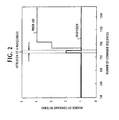
- Fig. 2 is a graphic representation of experimental results for comparison between the present invention and the prior art disclosed in the aforesaid Japanese-language technical paper "An Information-theoretic Approach to Detecting Anomalous Behaviors".
- the command data is mixed with the command data of an anomalous behavior by a masquerade, which has intruded at the midst of the time scale.
- the thick solid line which indicates the present invention, shows a rapid change in the number of command patterns that exactly occurs when the intrusion of the masquerade is just taking place.
- the prior art shows no rapid responses at all when the anomalous behavior is occurring. Rather, the prior art shows delayed responses after the anomalous behavior has occurred.
- Fig. 3 is a block diagram of the second embodiment that differs from Fig. 1 by the inclusion of a model transition probability estimator 41 connected in a feedback circuit between the model series memory 34 and the model series estimator 33.
- Transition probability estimator 41 reads the initial parameters from the memory 42 to perform calculations on each of the candidate model series stored in the model series memory 34.
- Model transition probability estimator 41 estimates this conditional probability in a manner described below.
- Equation (7) a model series k n that minimizes Equation (7) can be determined as an optimal model series.
- k t - 1 , x t - 1 + ⁇ t 1 n - log ⁇ P t ⁇ x t
- Model series estimator 33 and the associated memory 34 jointly operate by successively re-calculating an optimal model series k n that minimizes Equation (7) using the plurality of candidate model series stored in the memory 34 and the current data series from the input device 1, and storing a plurality of re-calculated values of Equation (7) corresponding to a plurality of candidate model series in the memory 34 sufficient in number to determine an optimal model series.
- the model transition probability estimator 41 calculates Equations (8) and (9) given below by using distribution estimate parameters stored in the model series memory 34 and supplies its output to the model series estimator 33: P k
- x t P ⁇ t k ⁇ P t ⁇ x t
- ⁇ ⁇ k t - 1 P k 1 - r ⁇ P ⁇ t k + r ⁇ P t k
- x t where, "r" is the discounting parameter of past data which is in the range between 0 and 1.
- This parameter represents the speed at which the past data is valued less and less in a weighting process.
- the model series estimator 33 receives P(k
- S ⁇ k , t + 1 - log ⁇ P ⁇ t + 1 k - log P ⁇ x t + 1
- k t-1 , x t-1 ) from the following Equations (11) and (12): ⁇ N k , t N k , t + 1 2 t where N k,t is the number of times a model has repeatedly undergone transition until it becomes equal to "k” at time "t".
- Model transition estimator 41 performs its estimating process on the value ⁇ (N k,t ) based on the theory proposed by Krichevsky and Trofimov (The Performance of Universal Encoding, IEEE Transactions on Information Theory, Vol. 27, pages 199-207, 1981 ).
- Equation (12) is equal to Equation (6) whose value ⁇ is substituted for by the value ⁇ (N k,t ) of Equation (11).
- the model series estimator 33 makes a comparison on 3(t - 1) paths (i.e, including two adjacent models and a model between them) and the model series memory 34 stores only (K x t) model series.
- Equation (7) coincides with the theoretical upper limit of the following Equation (13).
- "m" represents the number of transitions
- the model transition probability estimator 41 performs a window-type estimation of the Krichevsky/ Trofimov theory.
- Transition probability estimator 41 uses Equation (14) to estimate the value ⁇ by using the number of transitions through which the model has undergone from the instant prior to the time B to the current.
- the third term of Equation (15) is equal to Equation (6) whose value ⁇ is substituted for by the estimated value ⁇ (N k,t ) of Equation (14).
- the model series memory 34 stores only KB model series and the model series estimator 33 performs comparisons of 3KB paths.
- the second embodiment of the present invention detects models with a high degree of precision while keeping track of changes that can occur in the information source.
- Fig. 4 illustrates a third embodiment of the present invention.
- a plurality of confidence calculators 51-1 ⁇ 51-K are connected to the output of distribution estimate memories 32-1 ⁇ 32-K, respectively.
- the input device 1 supplies the same data series as one that is supplied to each of the distribution estimators 31.
- each of the confidence calculators 51-1 ⁇ 51-K determines the level of certainty, or confidence of the distribution estimate stored in the corresponding memory 32 and saves the calculated confidence value in a corresponding one of a plurality of confidence memories 52-1 ⁇ 52-K.
- the outputs of confidence memories 52 are connected to a model transition probability estimator 53 and further to an optimal model series calculator 55.
- Model transition probability estimator 53 reads the initial parameters from the memory 56 to perform its operation and stores its output in a transition probability memory 54 and successively updates the stored value of transition probability.
- the model transition probability estimator 53 performs a window-type transition probability estimation. Specifically, the estimator 53 estimates the model transition probability based on the Baum-Welch algorithm by using the confidence values stored in the confidence memories 52 from the instant B up to the current instant. Although a longer time will be needed to perform computation than is required in the second embodiment, models detected in this manner are more precise than those of the second embodiment.
- the third embodiment of the present invention is able to detect models with a higher degree of precision compared to the second embodiment, while following changes, which can occur in the information source.
- Optimal model series calculator 55 uses the transition probability stored in the memory 54 to determine an optimal series of models that minimizes Equation (7) from data stored in the confidence memories 52-1 ⁇ 52-K.
- Fig. 5 is a block diagram of a modified embodiment of the present invention in which a feature pattern detector 4 is connected to the output of the model detection apparatus 3 to detect a particular feature pattern in at least one series of models and gives a warning signal through the output device 2 when the intended pattern is detected.
- model series In the previous embodiments, mention has been made of detecting model series.
- the most recent model is a model detected on a real-time basis.
- a plurality of models detected on a real-time basis constitute another series of models and the precision of such real-time model series is lower than the precision of the model series detected in the previous embodiments.
- the model series detected by the methods described above meet the precision requirements of many applications, there are applications that impose less severe precision requirements. Therefore, a series of real-time models can be advantageously used in such applications for which the following embodiments are useful.
- FIG. 6 One of such modifications is shown in Fig. 6 in which the output of the model detection apparatus 3 of any of the previous embodiments is supplied to a real-time model selector 5, which selects a most recently detected model from the model series detected by the apparatus 3.
- a structural variation detector 6 is connected to the output of the real-time model selector 5.
- Variation detector 6 monitors the output of the selector 5 for detecting a structural variation which may occur between successively detected most recent models.
- the output of the structural variation detector 6 is supplied to the output device 2.
- a warning signal is generated at the instant a structural variation is detected by the detector 6.
- Fig. 6 is modified as shown in Fig. 7 by the provision of a feature pattern detector 7, instead of the structural variation detector 6, for detecting a particular feature pattern in a series of real-time models detected by the real-time model selector 5.
- a warning signal is generated at the instant the particular feature pattern is detected by the detector 7.
Landscapes
- Engineering & Computer Science (AREA)
- Data Mining & Analysis (AREA)
- Theoretical Computer Science (AREA)
- Bioinformatics & Cheminformatics (AREA)
- Artificial Intelligence (AREA)
- Bioinformatics & Computational Biology (AREA)
- Computer Vision & Pattern Recognition (AREA)
- Evolutionary Biology (AREA)
- Evolutionary Computation (AREA)
- Physics & Mathematics (AREA)
- General Engineering & Computer Science (AREA)
- General Physics & Mathematics (AREA)
- Life Sciences & Earth Sciences (AREA)
- Complex Calculations (AREA)
- Management, Administration, Business Operations System, And Electronic Commerce (AREA)
- Testing Or Calibration Of Command Recording Devices (AREA)
Claims (5)
- Modelldetektionsvorrichtung zur Detektion eines Modells aus einer Reihe von Eingangsdaten, mit:mehreren Schätzwertparameterspeichern (32-1 ∼ 32-K) zum jeweiligen Speichern von gegenseitig verschiedenen Verteilungsschätzwertparametern entsprechend einer Reihe von Wahrscheinlichkeitsmodellen und zum Darstellen von Ereignissen der Eingangsdaten, wobei Wechsel zwischen Wahrscheinlichkeitsmodellen nur zu benachbarten Modellen mit gleicher Wahrscheinlichkeit erlaubt sind;mehreren Verteilungsschätzern (31-1 ∼ 31-K), die jeweils den Schätzwertparameterspeichern zugeordnet sind, zum Erzeugen von mehreren Verteilungsschätzwertparametern aus Daten, die in den zugeordneten Schätzwertparameterspeichern gespeichert sind, und aus der Reihe von Eingangsdaten durch Verwenden einer statistischen Schätzmethode, und Aktualisieren der zugeordneten Schätzwertparameterspeicher mit den erzeugten Verteilungsschätzwertparametern;einem Modellreihenspeicher (34) zum Speichern von mehreren Kandidatenmodellreihen und zugeordneter Wechselwahrscheinlichkeiten, deren Anzahl mit der Anzahl der Schätzwertparameterspeicher übereinstimmt;einem Modellreihenschätzer (33) zum Erzeugen mehrerer Kandidatenmodellreihen zu jeder Zeit durch die Verwendung des Viterbi-Algorithmus aus den Reihen von Eingangsdaten, den Verteilungsschätzwertparametern, die in den Schätzwertparameterspeichern (32-1 ∼ 32-K) gespeichert sind, und den Kandidatenmodellreihen und den zugehörigen Wechselwahrscheinlichkeiten, die in dem Modellreihenspeicher (34) gespeichert sind, und Aktualisieren des Modellreihenspeichers (34) mit den erzeugten Kandidatenmodellreihen;einem Modellwechselwahrscheinlichkeitsschätzer (41) zum Abschätzen der Wechselwahrscheinlichkeit von jedem der Kandidatenmodellreihen zu jeder Zeit, die in dem Modellreihenspeicher (34) gespeichert sind, anhand der Anzahl der Wechsel in den Kandidatenmodellreihen und Versorgen des Modellreihenspeichers (34) mit der abgeschätzten Wechselwahrscheinlichkeit; undeinem optimalen Modellreihenrechner (35) zum Berechnen einer optimalen Reihe von Modellen anhand der mehreren Kandidatenmodellreihen, die in dem Modellreihenspeicher (34) gespeichert sind.
- Modelldetektionsvorrichtung nach Anspruch 1, wobei der Wechselwahrscheinlichkeitsschätzer (41; 53) zum Ausführen einer fensterartigen Wechselwahrscheinlichkeitsschätzung vorgesehen ist.
- Modelldetektionsvorrichtung nach Anspruch 1 oder 2, ferner mit einem Merkmalmusterdetektor (4) zum Detektieren eines vorbestimmten Merkmals in der berechneten optimalen Reihe von Modellen.
- Modelldetektionsvorrichtung nach Anspruch 1 oder 2, ferner mit:einem Modellwähler (5) zum Auswählen eines zuletzt erzeugten Modells auf Echtzeitbasis aus der berechneten optimalen Reihe von Modellen; undeinem Detektor (6) für strukturelle Veränderungen zum sukzessiven Empfangen des ausgewählten zuletzt erzeugten Modells von dem Modellwähler (5) und Detektieren einer vorbestimmten strukturellen Veränderung in einer Reihe von Modellen, die sukzessiv von dem Modellwähler empfangen wurden.
- Modelldetektionsvorrichtung nach Anspruch 1 oder 2, ferner mit:einem Modellwähler (5) zum Auswählen eines zuletzt erzeugten Modells auf Echtzeitbasis aus der berechneten optimalen Reihe von Modellen; undeinem Merkmalmusterdetektor (7) zum sukzessiven Empfangen des ausgewählten zuletzt erzeugten Modells von dem Modellwähler (5) und Detektieren eines vorbestimmten Merkmalmusters in einer Reihe von Modellen, die sukzessiv von dem Modellwähler empfangen wurden.
Applications Claiming Priority (2)
| Application Number | Priority Date | Filing Date | Title |
|---|---|---|---|
| JP2003379273A JP2005141601A (ja) | 2003-11-10 | 2003-11-10 | モデル選択計算装置,動的モデル選択装置,動的モデル選択方法およびプログラム |
| JP2003379273 | 2003-11-10 |
Publications (3)
| Publication Number | Publication Date |
|---|---|
| EP1530149A2 EP1530149A2 (de) | 2005-05-11 |
| EP1530149A3 EP1530149A3 (de) | 2006-11-15 |
| EP1530149B1 true EP1530149B1 (de) | 2009-09-16 |
Family
ID=34431376
Family Applications (1)
| Application Number | Title | Priority Date | Filing Date |
|---|---|---|---|
| EP04026202A Expired - Lifetime EP1530149B1 (de) | 2003-11-10 | 2004-11-04 | Vorrichtung zur Detektion eines dynamischen Modells |
Country Status (4)
| Country | Link |
|---|---|
| US (1) | US7660707B2 (de) |
| EP (1) | EP1530149B1 (de) |
| JP (1) | JP2005141601A (de) |
| DE (1) | DE602004023170D1 (de) |
Families Citing this family (28)
| Publication number | Priority date | Publication date | Assignee | Title |
|---|---|---|---|---|
| JP4265296B2 (ja) * | 2003-06-13 | 2009-05-20 | 日本電気株式会社 | 変化点検出装置,変化点検出方法および変化点検出用プログラム |
| US20050283337A1 (en) * | 2004-06-22 | 2005-12-22 | Mehmet Sayal | System and method for correlation of time-series data |
| US8782201B2 (en) * | 2005-10-28 | 2014-07-15 | Bank Of America Corporation | System and method for managing the configuration of resources in an enterprise |
| JP4413915B2 (ja) | 2006-12-13 | 2010-02-10 | 株式会社東芝 | 異常兆候検出装置および方法 |
| US20110107155A1 (en) * | 2008-01-15 | 2011-05-05 | Shunsuke Hirose | Network fault detection apparatus and method |
| WO2009107313A1 (ja) * | 2008-02-28 | 2009-09-03 | 日本電気株式会社 | 確率モデル選択装置、確率モデル選択方法、およびプログラム |
| US8484514B2 (en) | 2009-05-15 | 2013-07-09 | Nec Corporation | Fault cause estimating system, fault cause estimating method, and fault cause estimating program |
| WO2011119137A1 (en) | 2010-03-22 | 2011-09-29 | Lrdc Systems, Llc | A method of identifying and protecting the integrity of a set of source data |
| US9607067B2 (en) | 2013-01-25 | 2017-03-28 | International Business Machines Corporation | Synchronization of time between different simulation models |
| US9805143B2 (en) | 2013-01-25 | 2017-10-31 | International Business Machines Corporation | Composite simulation modeling and analysis |
| US9201989B2 (en) | 2013-01-25 | 2015-12-01 | Globalfoundries Inc. | Interpolation techniques used for time alignment of multiple simulation models |
| KR101590896B1 (ko) | 2014-11-26 | 2016-02-02 | 경북대학교 산학협력단 | 일반화 성능을 갖는 심화학습 장치 및 방법, 그 방법을 수행하기 위한 기록 매체 및 장치 |
| WO2016151637A1 (ja) * | 2015-03-26 | 2016-09-29 | 日本電気株式会社 | 学習モデル生成システム、方法およびプログラム |
| US10067984B2 (en) | 2016-02-24 | 2018-09-04 | Bank Of America Corporation | Computerized system for evaluating technology stability |
| US10366338B2 (en) | 2016-02-24 | 2019-07-30 | Bank Of America Corporation | Computerized system for evaluating the impact of technology change incidents |
| US10387230B2 (en) | 2016-02-24 | 2019-08-20 | Bank Of America Corporation | Technical language processor administration |
| US10275183B2 (en) | 2016-02-24 | 2019-04-30 | Bank Of America Corporation | System for categorical data dynamic decoding |
| US10430743B2 (en) | 2016-02-24 | 2019-10-01 | Bank Of America Corporation | Computerized system for simulating the likelihood of technology change incidents |
| US10366367B2 (en) | 2016-02-24 | 2019-07-30 | Bank Of America Corporation | Computerized system for evaluating and modifying technology change events |
| US10216798B2 (en) | 2016-02-24 | 2019-02-26 | Bank Of America Corporation | Technical language processor |
| US10366337B2 (en) | 2016-02-24 | 2019-07-30 | Bank Of America Corporation | Computerized system for evaluating the likelihood of technology change incidents |
| US10275182B2 (en) | 2016-02-24 | 2019-04-30 | Bank Of America Corporation | System for categorical data encoding |
| US10223425B2 (en) | 2016-02-24 | 2019-03-05 | Bank Of America Corporation | Operational data processor |
| US10019486B2 (en) | 2016-02-24 | 2018-07-10 | Bank Of America Corporation | Computerized system for analyzing operational event data |
| JP7256364B2 (ja) * | 2018-12-28 | 2023-04-12 | キヤノンマーケティングジャパン株式会社 | 情報処理装置、その制御方法とプログラム |
| US11238105B2 (en) * | 2019-03-29 | 2022-02-01 | Salesforce.Com, Inc. | Correlating user device attribute groups |
| US11595434B2 (en) | 2019-05-30 | 2023-02-28 | Morgan State University | Method and system for intrusion detection |
| JP7835334B1 (ja) * | 2025-06-19 | 2026-03-25 | 富士電機株式会社 | 予測システム、予測方法およびプログラム |
Family Cites Families (37)
| Publication number | Priority date | Publication date | Assignee | Title |
|---|---|---|---|---|
| JP3003276B2 (ja) * | 1991-06-19 | 2000-01-24 | 松下電器産業株式会社 | 信号解析装置 |
| US5465321A (en) * | 1993-04-07 | 1995-11-07 | The United States Of America As Represented By The Administrator Of The National Aeronautics And Space Administration | Hidden markov models for fault detection in dynamic systems |
| JP2871561B2 (ja) * | 1995-11-30 | 1999-03-17 | 株式会社エイ・ティ・アール音声翻訳通信研究所 | 不特定話者モデル生成装置及び音声認識装置 |
| US6725208B1 (en) * | 1998-10-06 | 2004-04-20 | Pavilion Technologies, Inc. | Bayesian neural networks for optimization and control |
| US6681331B1 (en) * | 1999-05-11 | 2004-01-20 | Cylant, Inc. | Dynamic software system intrusion detection |
| US6366885B1 (en) * | 1999-08-27 | 2002-04-02 | International Business Machines Corporation | Speech driven lip synthesis using viseme based hidden markov models |
| US7181768B1 (en) * | 1999-10-28 | 2007-02-20 | Cigital | Computer intrusion detection system and method based on application monitoring |
| US6499012B1 (en) * | 1999-12-23 | 2002-12-24 | Nortel Networks Limited | Method and apparatus for hierarchical training of speech models for use in speaker verification |
| US7219056B2 (en) * | 2000-04-20 | 2007-05-15 | International Business Machines Corporation | Determining and using acoustic confusability, acoustic perplexity and synthetic acoustic word error rate |
| US6993452B2 (en) * | 2000-05-04 | 2006-01-31 | At&T Corp. | Distance measure for probability distribution function of mixture type |
| US6742124B1 (en) * | 2000-05-08 | 2004-05-25 | Networks Associates Technology, Inc. | Sequence-based anomaly detection using a distance matrix |
| KR100400500B1 (ko) * | 2000-08-21 | 2003-10-08 | 삼성전자주식회사 | 특징 벡터 데이터 공간의 인덱싱 방법 |
| US7475405B2 (en) * | 2000-09-06 | 2009-01-06 | International Business Machines Corporation | Method and system for detecting unusual events and application thereof in computer intrusion detection |
| US7016825B1 (en) * | 2000-10-26 | 2006-03-21 | Vextec Corporation | Method and apparatus for predicting the failure of a component |
| US6983380B2 (en) * | 2001-02-06 | 2006-01-03 | Networks Associates Technology, Inc. | Automatically generating valid behavior specifications for intrusion detection |
| US20030055640A1 (en) * | 2001-05-01 | 2003-03-20 | Ramot University Authority For Applied Research & Industrial Development Ltd. | System and method for parameter estimation for pattern recognition |
| US7487544B2 (en) * | 2001-07-30 | 2009-02-03 | The Trustees Of Columbia University In The City Of New York | System and methods for detection of new malicious executables |
| US7162741B2 (en) * | 2001-07-30 | 2007-01-09 | The Trustees Of Columbia University In The City Of New York | System and methods for intrusion detection with dynamic window sizes |
| US7424619B1 (en) * | 2001-10-11 | 2008-09-09 | The Trustees Of Columbia University In The City Of New York | System and methods for anomaly detection and adaptive learning |
| US20030101260A1 (en) * | 2001-11-29 | 2003-05-29 | International Business Machines Corporation | Method, computer program element and system for processing alarms triggered by a monitoring system |
| US7448084B1 (en) * | 2002-01-25 | 2008-11-04 | The Trustees Of Columbia University In The City Of New York | System and methods for detecting intrusions in a computer system by monitoring operating system registry accesses |
| US7225343B1 (en) * | 2002-01-25 | 2007-05-29 | The Trustees Of Columbia University In The City Of New York | System and methods for adaptive model generation for detecting intrusions in computer systems |
| KR100472904B1 (ko) * | 2002-02-20 | 2005-03-08 | 안호성 | 음악 부분을 자동으로 선별해 저장하는 디지털 음악 재생장치 및 그 방법 |
| US6892163B1 (en) * | 2002-03-08 | 2005-05-10 | Intellectual Assets Llc | Surveillance system and method having an adaptive sequential probability fault detection test |
| GB2387008A (en) * | 2002-03-28 | 2003-10-01 | Qinetiq Ltd | Signal Processing System |
| JP3649328B2 (ja) * | 2002-04-10 | 2005-05-18 | 日本電気株式会社 | 画像領域抽出方法および装置 |
| US7007001B2 (en) * | 2002-06-26 | 2006-02-28 | Microsoft Corporation | Maximizing mutual information between observations and hidden states to minimize classification errors |
| US7363515B2 (en) * | 2002-08-09 | 2008-04-22 | Bae Systems Advanced Information Technologies Inc. | Control systems and methods using a partially-observable markov decision process (PO-MDP) |
| US7293290B2 (en) * | 2003-02-06 | 2007-11-06 | Symantec Corporation | Dynamic detection of computer worms |
| JP2004309998A (ja) * | 2003-02-18 | 2004-11-04 | Nec Corp | 確率分布推定装置および異常行動検出装置,ならびにその確率分布推定方法および異常行動検出方法 |
| US20050071432A1 (en) * | 2003-09-29 | 2005-03-31 | Royston Clifton W. | Probabilistic email intrusion identification methods and systems |
| US8185348B2 (en) * | 2003-10-31 | 2012-05-22 | Hewlett-Packard Development Company, L.P. | Techniques for monitoring a data stream |
| US7487542B2 (en) * | 2004-01-14 | 2009-02-03 | International Business Machines Corporation | Intrusion detection using a network processor and a parallel pattern detection engine |
| US7426301B2 (en) * | 2004-06-28 | 2008-09-16 | Mitsubishi Electric Research Laboratories, Inc. | Usual event detection in a video using object and frame features |
| US7464068B2 (en) * | 2004-06-30 | 2008-12-09 | International Business Machines Corporation | System and method for continuous diagnosis of data streams |
| US20070028219A1 (en) * | 2004-10-15 | 2007-02-01 | Miller William L | Method and system for anomaly detection |
| US7716011B2 (en) * | 2007-02-28 | 2010-05-11 | Microsoft Corporation | Strategies for identifying anomalies in time-series data |
-
2003
- 2003-11-10 JP JP2003379273A patent/JP2005141601A/ja active Pending
-
2004
- 2004-11-01 US US10/976,787 patent/US7660707B2/en not_active Expired - Fee Related
- 2004-11-04 EP EP04026202A patent/EP1530149B1/de not_active Expired - Lifetime
- 2004-11-04 DE DE602004023170T patent/DE602004023170D1/de not_active Expired - Lifetime
Also Published As
| Publication number | Publication date |
|---|---|
| US7660707B2 (en) | 2010-02-09 |
| EP1530149A2 (de) | 2005-05-11 |
| DE602004023170D1 (de) | 2009-10-29 |
| JP2005141601A (ja) | 2005-06-02 |
| EP1530149A3 (de) | 2006-11-15 |
| US20050102122A1 (en) | 2005-05-12 |
Similar Documents
| Publication | Publication Date | Title |
|---|---|---|
| US7660707B2 (en) | Dynamic model detecting apparatus | |
| US20200184312A1 (en) | Apparatus and method for generating sampling model for uncertainty prediction, and apparatus for predicting uncertainty | |
| US7555399B1 (en) | Method and system for detecting changes in sensor sample streams | |
| JP2004309998A (ja) | 確率分布推定装置および異常行動検出装置,ならびにその確率分布推定方法および異常行動検出方法 | |
| Yilmaz | Online nonparametric anomaly detection based on geometric entropy minimization | |
| US20040254760A1 (en) | Change-point detection apparatus, method and program therefor | |
| Duran-Martin et al. | A unifying framework for generalised Bayesian online learning in non-stationary environments | |
| Shlien | Nonparametric classification using matched binary decision trees | |
| Wallet et al. | A genetic algorithm for best subset selection in linear regression | |
| Boudaren et al. | Phasic triplet Markov chains | |
| Hong et al. | Non-stationary off-policy optimization | |
| Ramasso et al. | Forward-Backward-Viterbi procedures in the Transferable Belief Model for state sequence analysis using belief functions | |
| Bowden et al. | Building Temporal Models for Gesture Recognition. | |
| Sarker et al. | An optimal clustering for fuzzy categorization of cursive handwritten text with weight learning in textual attributes | |
| CN114002657B (zh) | 海面慢速目标检测方法及设备、存储介质和程序产品 | |
| Moravej Khorasani et al. | Maximum average randomly sampled: a scale free and non-parametric algorithm for stochastic bandits | |
| KR100719942B1 (ko) | 패턴 인식 | |
| Kimura et al. | A man-machine cooperating system based on the generalized reject model | |
| JP2001147264A (ja) | レーダパルス分類装置及びレーダパルス分類方法 | |
| Castellano et al. | On the use of m-probability-estimation and imprecise probabilities in the naive Bayes classifier | |
| Zribi et al. | Parametric estimation of Dempster-Shafer belief functions | |
| Huang et al. | Statistical SVMs for robust detection, supervised learning, and universal classification | |
| Kujala et al. | Improved algorithms for univariate discretization of continuous features | |
| Singer et al. | A new parameter estimation method for Gaussian mixtures | |
| Lekomtsev | Prediction of residual life of complex electromechanical systems based on small training samples |
Legal Events
| Date | Code | Title | Description |
|---|---|---|---|
| PUAI | Public reference made under article 153(3) epc to a published international application that has entered the european phase |
Free format text: ORIGINAL CODE: 0009012 |
|
| AK | Designated contracting states |
Kind code of ref document: A2 Designated state(s): AT BE BG CH CY CZ DE DK EE ES FI FR GB GR HU IE IS IT LI LU MC NL PL PT RO SE SI SK TR |
|
| AX | Request for extension of the european patent |
Extension state: AL HR LT LV MK YU |
|
| PUAL | Search report despatched |
Free format text: ORIGINAL CODE: 0009013 |
|
| AK | Designated contracting states |
Kind code of ref document: A3 Designated state(s): AT BE BG CH CY CZ DE DK EE ES FI FR GB GR HU IE IS IT LI LU MC NL PL PT RO SE SI SK TR |
|
| AX | Request for extension of the european patent |
Extension state: AL HR LT LV MK YU |
|
| 17P | Request for examination filed |
Effective date: 20061016 |
|
| 17Q | First examination report despatched |
Effective date: 20070314 |
|
| AKX | Designation fees paid |
Designated state(s): DE FI FR GB |
|
| GRAP | Despatch of communication of intention to grant a patent |
Free format text: ORIGINAL CODE: EPIDOSNIGR1 |
|
| GRAS | Grant fee paid |
Free format text: ORIGINAL CODE: EPIDOSNIGR3 |
|
| GRAA | (expected) grant |
Free format text: ORIGINAL CODE: 0009210 |
|
| AK | Designated contracting states |
Kind code of ref document: B1 Designated state(s): DE FI FR GB |
|
| REG | Reference to a national code |
Ref country code: GB Ref legal event code: FG4D |
|
| REF | Corresponds to: |
Ref document number: 602004023170 Country of ref document: DE Date of ref document: 20091029 Kind code of ref document: P |
|
| PGFP | Annual fee paid to national office [announced via postgrant information from national office to epo] |
Ref country code: FI Payment date: 20091030 Year of fee payment: 6 |
|
| PGFP | Annual fee paid to national office [announced via postgrant information from national office to epo] |
Ref country code: GB Payment date: 20091104 Year of fee payment: 6 |
|
| PGFP | Annual fee paid to national office [announced via postgrant information from national office to epo] |
Ref country code: DE Payment date: 20091229 Year of fee payment: 6 |
|
| PLBE | No opposition filed within time limit |
Free format text: ORIGINAL CODE: 0009261 |
|
| STAA | Information on the status of an ep patent application or granted ep patent |
Free format text: STATUS: NO OPPOSITION FILED WITHIN TIME LIMIT |
|
| 26N | No opposition filed |
Effective date: 20100617 |
|
| PGFP | Annual fee paid to national office [announced via postgrant information from national office to epo] |
Ref country code: FR Payment date: 20101130 Year of fee payment: 7 |
|
| GBPC | Gb: european patent ceased through non-payment of renewal fee |
Effective date: 20101104 |
|
| PG25 | Lapsed in a contracting state [announced via postgrant information from national office to epo] |
Ref country code: FI Free format text: LAPSE BECAUSE OF NON-PAYMENT OF DUE FEES Effective date: 20101104 |
|
| REG | Reference to a national code |
Ref country code: DE Ref legal event code: R119 Ref document number: 602004023170 Country of ref document: DE Effective date: 20110601 Ref country code: DE Ref legal event code: R119 Ref document number: 602004023170 Country of ref document: DE Effective date: 20110531 |
|
| PG25 | Lapsed in a contracting state [announced via postgrant information from national office to epo] |
Ref country code: GB Free format text: LAPSE BECAUSE OF NON-PAYMENT OF DUE FEES Effective date: 20101104 |
|
| REG | Reference to a national code |
Ref country code: FR Ref legal event code: ST Effective date: 20120731 |
|
| PG25 | Lapsed in a contracting state [announced via postgrant information from national office to epo] |
Ref country code: FR Free format text: LAPSE BECAUSE OF NON-PAYMENT OF DUE FEES Effective date: 20111130 |
|
| PG25 | Lapsed in a contracting state [announced via postgrant information from national office to epo] |
Ref country code: DE Free format text: LAPSE BECAUSE OF NON-PAYMENT OF DUE FEES Effective date: 20110531 |