EP1529072B1 - Verfahren zur extrahierung von polymer - Google Patents
Verfahren zur extrahierung von polymer Download PDFInfo
- Publication number
- EP1529072B1 EP1529072B1 EP03766892A EP03766892A EP1529072B1 EP 1529072 B1 EP1529072 B1 EP 1529072B1 EP 03766892 A EP03766892 A EP 03766892A EP 03766892 A EP03766892 A EP 03766892A EP 1529072 B1 EP1529072 B1 EP 1529072B1
- Authority
- EP
- European Patent Office
- Prior art keywords
- polymer
- solvent
- pha
- precipitant
- biomass
- Prior art date
- Legal status (The legal status is an assumption and is not a legal conclusion. Google has not performed a legal analysis and makes no representation as to the accuracy of the status listed.)
- Expired - Lifetime
Links
- 229920000642 polymer Polymers 0.000 title claims description 184
- 238000000605 extraction Methods 0.000 title description 12
- 239000002904 solvent Substances 0.000 claims description 240
- 239000002028 Biomass Substances 0.000 claims description 170
- 238000000034 method Methods 0.000 claims description 153
- 239000002002 slurry Substances 0.000 claims description 51
- 239000000203 mixture Substances 0.000 claims description 44
- 238000005119 centrifugation Methods 0.000 claims description 35
- XEKOWRVHYACXOJ-UHFFFAOYSA-N Ethyl acetate Chemical compound CCOC(C)=O XEKOWRVHYACXOJ-UHFFFAOYSA-N 0.000 claims description 30
- XLYOFNOQVPJJNP-UHFFFAOYSA-N water Substances O XLYOFNOQVPJJNP-UHFFFAOYSA-N 0.000 claims description 28
- NTIZESTWPVYFNL-UHFFFAOYSA-N Methyl isobutyl ketone Chemical group CC(C)CC(C)=O NTIZESTWPVYFNL-UHFFFAOYSA-N 0.000 claims description 24
- 229920000903 polyhydroxyalkanoate Polymers 0.000 claims description 24
- JHIVVAPYMSGYDF-UHFFFAOYSA-N cyclohexanone Chemical compound O=C1CCCCC1 JHIVVAPYMSGYDF-UHFFFAOYSA-N 0.000 claims description 22
- 239000005014 poly(hydroxyalkanoate) Substances 0.000 claims description 20
- 238000000926 separation method Methods 0.000 claims description 14
- QQZOPKMRPOGIEB-UHFFFAOYSA-N 2-Oxohexane Chemical compound CCCCC(C)=O QQZOPKMRPOGIEB-UHFFFAOYSA-N 0.000 claims description 13
- DKPFZGUDAPQIHT-UHFFFAOYSA-N Butyl acetate Natural products CCCCOC(C)=O DKPFZGUDAPQIHT-UHFFFAOYSA-N 0.000 claims description 13
- UIHCLUNTQKBZGK-UHFFFAOYSA-N Methyl isobutyl ketone Natural products CCC(C)C(C)=O UIHCLUNTQKBZGK-UHFFFAOYSA-N 0.000 claims description 13
- FUZZWVXGSFPDMH-UHFFFAOYSA-N hexanoic acid Chemical compound CCCCCC(O)=O FUZZWVXGSFPDMH-UHFFFAOYSA-N 0.000 claims description 13
- XNLICIUVMPYHGG-UHFFFAOYSA-N pentan-2-one Chemical compound CCCC(C)=O XNLICIUVMPYHGG-UHFFFAOYSA-N 0.000 claims description 12
- FDPIMTJIUBPUKL-UHFFFAOYSA-N pentan-3-one Chemical compound CCC(=O)CC FDPIMTJIUBPUKL-UHFFFAOYSA-N 0.000 claims description 12
- FFWSICBKRCICMR-UHFFFAOYSA-N 5-methyl-2-hexanone Chemical compound CC(C)CCC(C)=O FFWSICBKRCICMR-UHFFFAOYSA-N 0.000 claims description 10
- NGAZZOYFWWSOGK-UHFFFAOYSA-N heptan-3-one Chemical compound CCCCC(=O)CC NGAZZOYFWWSOGK-UHFFFAOYSA-N 0.000 claims description 10
- ZPVFWPFBNIEHGJ-UHFFFAOYSA-N 2-octanone Chemical compound CCCCCCC(C)=O ZPVFWPFBNIEHGJ-UHFFFAOYSA-N 0.000 claims description 9
- 238000001035 drying Methods 0.000 claims description 9
- 150000001335 aliphatic alkanes Chemical class 0.000 claims description 8
- 238000001914 filtration Methods 0.000 claims description 8
- 230000000813 microbial effect Effects 0.000 claims description 7
- 238000005406 washing Methods 0.000 claims description 7
- MSXVEPNJUHWQHW-UHFFFAOYSA-N 2-methylbutan-2-ol Chemical compound CCC(C)(C)O MSXVEPNJUHWQHW-UHFFFAOYSA-N 0.000 claims description 6
- JYVLIDXNZAXMDK-UHFFFAOYSA-N methyl propyl carbinol Natural products CCCC(C)O JYVLIDXNZAXMDK-UHFFFAOYSA-N 0.000 claims description 6
- 230000002829 reductive effect Effects 0.000 claims description 6
- XYYMFUCZDNNGFS-UHFFFAOYSA-N 2-methylheptan-3-one Chemical compound CCCCC(=O)C(C)C XYYMFUCZDNNGFS-UHFFFAOYSA-N 0.000 claims description 5
- SYBYTAAJFKOIEJ-UHFFFAOYSA-N 3-Methylbutan-2-one Chemical compound CC(C)C(C)=O SYBYTAAJFKOIEJ-UHFFFAOYSA-N 0.000 claims description 5
- AMQJEAYHLZJPGS-UHFFFAOYSA-N N-Pentanol Chemical compound CCCCCO AMQJEAYHLZJPGS-UHFFFAOYSA-N 0.000 claims description 5
- 150000001298 alcohols Chemical class 0.000 claims description 5
- CATSNJVOTSVZJV-UHFFFAOYSA-N heptan-2-one Chemical compound CCCCCC(C)=O CATSNJVOTSVZJV-UHFFFAOYSA-N 0.000 claims description 5
- BBMCTIGTTCKYKF-UHFFFAOYSA-N 1-heptanol Chemical compound CCCCCCCO BBMCTIGTTCKYKF-UHFFFAOYSA-N 0.000 claims description 4
- PFNHSEQQEPMLNI-UHFFFAOYSA-N 2-methyl-1-pentanol Chemical compound CCCC(C)CO PFNHSEQQEPMLNI-UHFFFAOYSA-N 0.000 claims description 4
- YEJRWHAVMIAJKC-UHFFFAOYSA-N 4-Butyrolactone Chemical compound O=C1CCCO1 YEJRWHAVMIAJKC-UHFFFAOYSA-N 0.000 claims description 4
- PSBKJPTZCVYXSD-UHFFFAOYSA-N 5-methylheptan-3-one Chemical compound CCC(C)CC(=O)CC PSBKJPTZCVYXSD-UHFFFAOYSA-N 0.000 claims description 4
- UUIQMZJEGPQKFD-UHFFFAOYSA-N Methyl butyrate Chemical compound CCCC(=O)OC UUIQMZJEGPQKFD-UHFFFAOYSA-N 0.000 claims description 4
- LRHPLDYGYMQRHN-UHFFFAOYSA-N N-Butanol Chemical compound CCCCO LRHPLDYGYMQRHN-UHFFFAOYSA-N 0.000 claims description 4
- XUPYJHCZDLZNFP-UHFFFAOYSA-N butyl butanoate Chemical compound CCCCOC(=O)CCC XUPYJHCZDLZNFP-UHFFFAOYSA-N 0.000 claims description 4
- JSLCOZYBKYHZNL-UHFFFAOYSA-N butylisobutyrate Chemical compound CCCCOC(=O)C(C)C JSLCOZYBKYHZNL-UHFFFAOYSA-N 0.000 claims description 4
- BGTOWKSIORTVQH-UHFFFAOYSA-N cyclopentanone Chemical compound O=C1CCCC1 BGTOWKSIORTVQH-UHFFFAOYSA-N 0.000 claims description 4
- 150000002148 esters Chemical class 0.000 claims description 4
- GAEKPEKOJKCEMS-UHFFFAOYSA-N gamma-valerolactone Chemical compound CC1CCC(=O)O1 GAEKPEKOJKCEMS-UHFFFAOYSA-N 0.000 claims description 4
- ZSIAUFGUXNUGDI-UHFFFAOYSA-N hexan-1-ol Chemical compound CCCCCCO ZSIAUFGUXNUGDI-UHFFFAOYSA-N 0.000 claims description 4
- ZOCHHNOQQHDWHG-UHFFFAOYSA-N hexan-3-ol Chemical compound CCCC(O)CC ZOCHHNOQQHDWHG-UHFFFAOYSA-N 0.000 claims description 4
- PHTQWCKDNZKARW-UHFFFAOYSA-N isoamylol Chemical compound CC(C)CCO PHTQWCKDNZKARW-UHFFFAOYSA-N 0.000 claims description 4
- 150000002576 ketones Chemical group 0.000 claims description 4
- NUKZAGXMHTUAFE-UHFFFAOYSA-N methyl hexanoate Chemical compound CCCCCC(=O)OC NUKZAGXMHTUAFE-UHFFFAOYSA-N 0.000 claims description 4
- PTTPXKJBFFKCEK-UHFFFAOYSA-N 2-Methyl-4-heptanone Chemical compound CC(C)CC(=O)CC(C)C PTTPXKJBFFKCEK-UHFFFAOYSA-N 0.000 claims description 3
- WVYWICLMDOOCFB-UHFFFAOYSA-N 4-methyl-2-pentanol Chemical compound CC(C)CC(C)O WVYWICLMDOOCFB-UHFFFAOYSA-N 0.000 claims description 3
- 238000009835 boiling Methods 0.000 claims description 3
- 238000001704 evaporation Methods 0.000 claims description 3
- HNAGHMKIPMKKBB-UHFFFAOYSA-N 1-benzylpyrrolidine-3-carboxamide Chemical compound C1C(C(=O)N)CCN1CC1=CC=CC=C1 HNAGHMKIPMKKBB-UHFFFAOYSA-N 0.000 claims description 2
- HFZLSTDPRQSZCQ-UHFFFAOYSA-N 1-pyrrolidin-3-ylpyrrolidine Chemical compound C1CCCN1C1CNCC1 HFZLSTDPRQSZCQ-UHFFFAOYSA-N 0.000 claims description 2
- ZSDQQJHSRVEGTJ-UHFFFAOYSA-N 2-(6-amino-1h-indol-3-yl)acetonitrile Chemical compound NC1=CC=C2C(CC#N)=CNC2=C1 ZSDQQJHSRVEGTJ-UHFFFAOYSA-N 0.000 claims description 2
- ZXNBBWHRUSXUFZ-UHFFFAOYSA-N 3-methyl-2-pentanol Chemical compound CCC(C)C(C)O ZXNBBWHRUSXUFZ-UHFFFAOYSA-N 0.000 claims description 2
- MQWCXKGKQLNYQG-UHFFFAOYSA-N 4-methylcyclohexan-1-ol Chemical compound CC1CCC(O)CC1 MQWCXKGKQLNYQG-UHFFFAOYSA-N 0.000 claims description 2
- ICMAFTSLXCXHRK-UHFFFAOYSA-N Ethyl pentanoate Chemical compound CCCCC(=O)OCC ICMAFTSLXCXHRK-UHFFFAOYSA-N 0.000 claims description 2
- 229940072049 amyl acetate Drugs 0.000 claims description 2
- PGMYKACGEOXYJE-UHFFFAOYSA-N anhydrous amyl acetate Natural products CCCCCOC(C)=O PGMYKACGEOXYJE-UHFFFAOYSA-N 0.000 claims description 2
- OBNCKNCVKJNDBV-UHFFFAOYSA-N butanoic acid ethyl ester Natural products CCCC(=O)OCC OBNCKNCVKJNDBV-UHFFFAOYSA-N 0.000 claims description 2
- 229940043232 butyl acetate Drugs 0.000 claims description 2
- HPXRVTGHNJAIIH-UHFFFAOYSA-N cyclohexanol Chemical compound OC1CCCCC1 HPXRVTGHNJAIIH-UHFFFAOYSA-N 0.000 claims description 2
- 229940093499 ethyl acetate Drugs 0.000 claims description 2
- 239000001760 fusel oil Substances 0.000 claims description 2
- MNWFXJYAOYHMED-UHFFFAOYSA-M heptanoate Chemical compound CCCCCCC([O-])=O MNWFXJYAOYHMED-UHFFFAOYSA-M 0.000 claims description 2
- YKYONYBAUNKHLG-UHFFFAOYSA-N n-Propyl acetate Natural products CCCOC(C)=O YKYONYBAUNKHLG-UHFFFAOYSA-N 0.000 claims description 2
- HNBDRPTVWVGKBR-UHFFFAOYSA-N n-pentanoic acid methyl ester Natural products CCCCC(=O)OC HNBDRPTVWVGKBR-UHFFFAOYSA-N 0.000 claims description 2
- 229940090181 propyl acetate Drugs 0.000 claims description 2
- RGFNRWTWDWVHDD-UHFFFAOYSA-N sec-butyl ester of butyric acid Natural products CCCC(=O)OCC(C)C RGFNRWTWDWVHDD-UHFFFAOYSA-N 0.000 claims description 2
- NQPDZGIKBAWPEJ-UHFFFAOYSA-N valeric acid Chemical compound CCCCC(O)=O NQPDZGIKBAWPEJ-UHFFFAOYSA-N 0.000 claims description 2
- 229940043265 methyl isobutyl ketone Drugs 0.000 claims 1
- 239000000243 solution Substances 0.000 description 55
- 230000008569 process Effects 0.000 description 46
- VLKZOEOYAKHREP-UHFFFAOYSA-N n-Hexane Chemical compound CCCCCC VLKZOEOYAKHREP-UHFFFAOYSA-N 0.000 description 42
- 210000004027 cell Anatomy 0.000 description 21
- 239000007787 solid Substances 0.000 description 19
- 239000012535 impurity Substances 0.000 description 18
- SJZRECIVHVDYJC-UHFFFAOYSA-M 4-hydroxybutyrate Chemical compound OCCCC([O-])=O SJZRECIVHVDYJC-UHFFFAOYSA-M 0.000 description 16
- 239000006228 supernatant Substances 0.000 description 13
- 150000003254 radicals Chemical class 0.000 description 12
- 239000000126 substance Substances 0.000 description 12
- -1 3-hydroxynonaoate Chemical compound 0.000 description 11
- 241000588724 Escherichia coli Species 0.000 description 11
- IMNFDUFMRHMDMM-UHFFFAOYSA-N N-Heptane Chemical compound CCCCCCC IMNFDUFMRHMDMM-UHFFFAOYSA-N 0.000 description 10
- 238000004090 dissolution Methods 0.000 description 10
- HEMHJVSKTPXQMS-UHFFFAOYSA-M Sodium hydroxide Chemical compound [OH-].[Na+] HEMHJVSKTPXQMS-UHFFFAOYSA-M 0.000 description 9
- 238000000855 fermentation Methods 0.000 description 9
- 230000004151 fermentation Effects 0.000 description 9
- 229920000070 poly-3-hydroxybutyrate Polymers 0.000 description 9
- 239000007788 liquid Substances 0.000 description 8
- 239000008188 pellet Substances 0.000 description 8
- 238000011084 recovery Methods 0.000 description 8
- LFQSCWFLJHTTHZ-UHFFFAOYSA-N Ethanol Chemical compound CCO LFQSCWFLJHTTHZ-UHFFFAOYSA-N 0.000 description 7
- WHBMMWSBFZVSSR-UHFFFAOYSA-N R3HBA Natural products CC(O)CC(O)=O WHBMMWSBFZVSSR-UHFFFAOYSA-N 0.000 description 7
- 239000000178 monomer Substances 0.000 description 7
- 239000000047 product Substances 0.000 description 7
- 239000013557 residual solvent Substances 0.000 description 7
- 239000004215 Carbon black (E152) Substances 0.000 description 6
- 229930195733 hydrocarbon Natural products 0.000 description 6
- 238000002156 mixing Methods 0.000 description 6
- 238000003756 stirring Methods 0.000 description 6
- WHBMMWSBFZVSSR-UHFFFAOYSA-M 3-hydroxybutyrate Chemical compound CC(O)CC([O-])=O WHBMMWSBFZVSSR-UHFFFAOYSA-M 0.000 description 5
- NDPLAKGOSZHTPH-UHFFFAOYSA-N 3-hydroxyoctanoic acid Chemical compound CCCCCC(O)CC(O)=O NDPLAKGOSZHTPH-UHFFFAOYSA-N 0.000 description 5
- 241000252867 Cupriavidus metallidurans Species 0.000 description 5
- 208000037534 Progressive hemifacial atrophy Diseases 0.000 description 5
- 125000002015 acyclic group Chemical group 0.000 description 5
- 230000015572 biosynthetic process Effects 0.000 description 5
- 125000004122 cyclic group Chemical group 0.000 description 5
- 239000000463 material Substances 0.000 description 5
- 238000012017 passive hemagglutination assay Methods 0.000 description 5
- FYSSBMZUBSBFJL-VIFPVBQESA-N (S)-3-hydroxydecanoic acid Chemical compound CCCCCCC[C@H](O)CC(O)=O FYSSBMZUBSBFJL-VIFPVBQESA-N 0.000 description 4
- 238000013019 agitation Methods 0.000 description 4
- 125000004432 carbon atom Chemical group C* 0.000 description 4
- 238000010586 diagram Methods 0.000 description 4
- 238000010790 dilution Methods 0.000 description 4
- 239000012895 dilution Substances 0.000 description 4
- 239000012530 fluid Substances 0.000 description 4
- 150000002632 lipids Chemical class 0.000 description 4
- 235000019645 odor Nutrition 0.000 description 4
- 238000011282 treatment Methods 0.000 description 4
- MUCMKTPAZLSKTL-NSHDSACASA-N (S)-3-hydroxylauric acid Chemical compound CCCCCCCCC[C@H](O)CC(O)=O MUCMKTPAZLSKTL-NSHDSACASA-N 0.000 description 3
- WLLZBMQLFSRUQR-UHFFFAOYSA-N 3-hydroxydodec-2-enoic acid Chemical compound CCCCCCCCCC(O)=CC(O)=O WLLZBMQLFSRUQR-UHFFFAOYSA-N 0.000 description 3
- 102000004190 Enzymes Human genes 0.000 description 3
- 108090000790 Enzymes Proteins 0.000 description 3
- 102000004895 Lipoproteins Human genes 0.000 description 3
- 108090001030 Lipoproteins Proteins 0.000 description 3
- OKKJLVBELUTLKV-UHFFFAOYSA-N Methanol Chemical compound OC OKKJLVBELUTLKV-UHFFFAOYSA-N 0.000 description 3
- KWYUFKZDYYNOTN-UHFFFAOYSA-M Potassium hydroxide Chemical compound [OH-].[K+] KWYUFKZDYYNOTN-UHFFFAOYSA-M 0.000 description 3
- 238000013459 approach Methods 0.000 description 3
- 239000006227 byproduct Substances 0.000 description 3
- 239000003518 caustics Substances 0.000 description 3
- 238000010908 decantation Methods 0.000 description 3
- 239000003517 fume Substances 0.000 description 3
- 238000004817 gas chromatography Methods 0.000 description 3
- 238000010438 heat treatment Methods 0.000 description 3
- BKIMMITUMNQMOS-UHFFFAOYSA-N nonane Chemical compound CCCCCCCCC BKIMMITUMNQMOS-UHFFFAOYSA-N 0.000 description 3
- 150000003904 phospholipids Chemical class 0.000 description 3
- 238000001556 precipitation Methods 0.000 description 3
- 239000011877 solvent mixture Substances 0.000 description 3
- 238000012360 testing method Methods 0.000 description 3
- HPMGFDVTYHWBAG-UHFFFAOYSA-N 3-hydroxyhexanoic acid Chemical compound CCCC(O)CC(O)=O HPMGFDVTYHWBAG-UHFFFAOYSA-N 0.000 description 2
- REKYPYSUBKSCAT-UHFFFAOYSA-N 3-hydroxypentanoic acid Chemical compound CCC(O)CC(O)=O REKYPYSUBKSCAT-UHFFFAOYSA-N 0.000 description 2
- ALRHLSYJTWAHJZ-UHFFFAOYSA-M 3-hydroxypropionate Chemical compound OCCC([O-])=O ALRHLSYJTWAHJZ-UHFFFAOYSA-M 0.000 description 2
- OKTJSMMVPCPJKN-UHFFFAOYSA-N Carbon Chemical compound [C] OKTJSMMVPCPJKN-UHFFFAOYSA-N 0.000 description 2
- 241000196324 Embryophyta Species 0.000 description 2
- WQZGKKKJIJFFOK-GASJEMHNSA-N Glucose Natural products OC[C@H]1OC(O)[C@H](O)[C@@H](O)[C@@H]1O WQZGKKKJIJFFOK-GASJEMHNSA-N 0.000 description 2
- NBIIXXVUZAFLBC-UHFFFAOYSA-N Phosphoric acid Chemical compound OP(O)(O)=O NBIIXXVUZAFLBC-UHFFFAOYSA-N 0.000 description 2
- 229920000331 Polyhydroxybutyrate Polymers 0.000 description 2
- 241000232299 Ralstonia Species 0.000 description 2
- 230000002378 acidificating effect Effects 0.000 description 2
- XAGFODPZIPBFFR-UHFFFAOYSA-N aluminium Chemical compound [Al] XAGFODPZIPBFFR-UHFFFAOYSA-N 0.000 description 2
- 229910052782 aluminium Inorganic materials 0.000 description 2
- 230000001580 bacterial effect Effects 0.000 description 2
- 125000000484 butyl group Chemical group [H]C([*])([H])C([H])([H])C([H])([H])C([H])([H])[H] 0.000 description 2
- 229910052799 carbon Inorganic materials 0.000 description 2
- 229920001577 copolymer Polymers 0.000 description 2
- 238000005260 corrosion Methods 0.000 description 2
- 230000007797 corrosion Effects 0.000 description 2
- 239000003599 detergent Substances 0.000 description 2
- 238000002845 discoloration Methods 0.000 description 2
- SNRUBQQJIBEYMU-UHFFFAOYSA-N dodecane Chemical compound CCCCCCCCCCCC SNRUBQQJIBEYMU-UHFFFAOYSA-N 0.000 description 2
- POULHZVOKOAJMA-UHFFFAOYSA-N dodecanoic acid Chemical compound CCCCCCCCCCCC(O)=O POULHZVOKOAJMA-UHFFFAOYSA-N 0.000 description 2
- 230000007613 environmental effect Effects 0.000 description 2
- 230000008020 evaporation Effects 0.000 description 2
- 238000001125 extrusion Methods 0.000 description 2
- 239000008103 glucose Substances 0.000 description 2
- IPCSVZSSVZVIGE-UHFFFAOYSA-N hexadecanoic acid Chemical compound CCCCCCCCCCCCCCCC(O)=O IPCSVZSSVZVIGE-UHFFFAOYSA-N 0.000 description 2
- 229920001519 homopolymer Polymers 0.000 description 2
- 230000003993 interaction Effects 0.000 description 2
- 235000015097 nutrients Nutrition 0.000 description 2
- 150000007524 organic acids Chemical class 0.000 description 2
- 235000005985 organic acids Nutrition 0.000 description 2
- 239000005015 poly(hydroxybutyrate) Substances 0.000 description 2
- 239000000843 powder Substances 0.000 description 2
- 238000003825 pressing Methods 0.000 description 2
- 230000009257 reactivity Effects 0.000 description 2
- 230000002441 reversible effect Effects 0.000 description 2
- 229930195734 saturated hydrocarbon Natural products 0.000 description 2
- 238000007614 solvation Methods 0.000 description 2
- 239000007921 spray Substances 0.000 description 2
- 239000004094 surface-active agent Substances 0.000 description 2
- 230000008685 targeting Effects 0.000 description 2
- 229930195735 unsaturated hydrocarbon Natural products 0.000 description 2
- WRIDQFICGBMAFQ-UHFFFAOYSA-N (E)-8-Octadecenoic acid Natural products CCCCCCCCCC=CCCCCCCC(O)=O WRIDQFICGBMAFQ-UHFFFAOYSA-N 0.000 description 1
- JVSWJIKNEAIKJW-UHFFFAOYSA-N 2-Methylheptane Chemical compound CCCCCC(C)C JVSWJIKNEAIKJW-UHFFFAOYSA-N 0.000 description 1
- NYHNVHGFPZAZGA-UHFFFAOYSA-N 2-hydroxyhexanoic acid Chemical compound CCCCC(O)C(O)=O NYHNVHGFPZAZGA-UHFFFAOYSA-N 0.000 description 1
- LQJBNNIYVWPHFW-UHFFFAOYSA-N 20:1omega9c fatty acid Natural products CCCCCCCCCCC=CCCCCCCCC(O)=O LQJBNNIYVWPHFW-UHFFFAOYSA-N 0.000 description 1
- OXSSIXNFGTZQMZ-UHFFFAOYSA-N 3-hydroxyheptanoic acid Chemical compound CCCCC(O)CC(O)=O OXSSIXNFGTZQMZ-UHFFFAOYSA-N 0.000 description 1
- POMQYTSPMKEQNB-UHFFFAOYSA-N 3-hydroxyoctadecanoic acid Chemical compound CCCCCCCCCCCCCCCC(O)CC(O)=O POMQYTSPMKEQNB-UHFFFAOYSA-N 0.000 description 1
- CBWALJHXHCJYTE-UHFFFAOYSA-N 3-hydroxypalmitic acid Chemical compound CCCCCCCCCCCCCC(O)CC(O)=O CBWALJHXHCJYTE-UHFFFAOYSA-N 0.000 description 1
- ATRNZOYKSNPPBF-UHFFFAOYSA-N 3-hydroxytetradecanoic acid Chemical compound CCCCCCCCCCCC(O)CC(O)=O ATRNZOYKSNPPBF-UHFFFAOYSA-N 0.000 description 1
- RHLVCLIPMVJYKS-UHFFFAOYSA-N 3-octanone Chemical compound CCCCCC(=O)CC RHLVCLIPMVJYKS-UHFFFAOYSA-N 0.000 description 1
- FMHKPLXYWVCLME-UHFFFAOYSA-N 4-hydroxy-valeric acid Chemical compound CC(O)CCC(O)=O FMHKPLXYWVCLME-UHFFFAOYSA-N 0.000 description 1
- PHOJOSOUIAQEDH-UHFFFAOYSA-N 5-hydroxypentanoic acid Chemical compound OCCCCC(O)=O PHOJOSOUIAQEDH-UHFFFAOYSA-N 0.000 description 1
- IWHLYPDWHHPVAA-UHFFFAOYSA-N 6-hydroxyhexanoic acid Chemical compound OCCCCCC(O)=O IWHLYPDWHHPVAA-UHFFFAOYSA-N 0.000 description 1
- QSBYPNXLFMSGKH-UHFFFAOYSA-N 9-Heptadecensaeure Natural products CCCCCCCC=CCCCCCCCC(O)=O QSBYPNXLFMSGKH-UHFFFAOYSA-N 0.000 description 1
- 241000607534 Aeromonas Species 0.000 description 1
- VHUUQVKOLVNVRT-UHFFFAOYSA-N Ammonium hydroxide Chemical compound [NH4+].[OH-] VHUUQVKOLVNVRT-UHFFFAOYSA-N 0.000 description 1
- 241000193033 Azohydromonas lata Species 0.000 description 1
- 241000589151 Azotobacter Species 0.000 description 1
- 241000589519 Comamonas Species 0.000 description 1
- 229930091371 Fructose Natural products 0.000 description 1
- RFSUNEUAIZKAJO-ARQDHWQXSA-N Fructose Chemical compound OC[C@H]1O[C@](O)(CO)[C@@H](O)[C@@H]1O RFSUNEUAIZKAJO-ARQDHWQXSA-N 0.000 description 1
- 239000005715 Fructose Substances 0.000 description 1
- 108010068370 Glutens Proteins 0.000 description 1
- 241001481828 Glyptocephalus cynoglossus Species 0.000 description 1
- 241000588748 Klebsiella Species 0.000 description 1
- 239000005639 Lauric acid Substances 0.000 description 1
- OYHQOLUKZRVURQ-HZJYTTRNSA-N Linoleic acid Chemical compound CCCCC\C=C/C\C=C/CCCCCCCC(O)=O OYHQOLUKZRVURQ-HZJYTTRNSA-N 0.000 description 1
- 241001465754 Metazoa Species 0.000 description 1
- 239000005642 Oleic acid Substances 0.000 description 1
- ZQPPMHVWECSIRJ-UHFFFAOYSA-N Oleic acid Natural products CCCCCCCCC=CCCCCCCCC(O)=O ZQPPMHVWECSIRJ-UHFFFAOYSA-N 0.000 description 1
- 235000021314 Palmitic acid Nutrition 0.000 description 1
- 108091005804 Peptidases Proteins 0.000 description 1
- 239000004793 Polystyrene Substances 0.000 description 1
- 241000589516 Pseudomonas Species 0.000 description 1
- 241000589774 Pseudomonas sp. Species 0.000 description 1
- 102100037486 Reverse transcriptase/ribonuclease H Human genes 0.000 description 1
- 241000235070 Saccharomyces Species 0.000 description 1
- 240000004808 Saccharomyces cerevisiae Species 0.000 description 1
- 235000019764 Soybean Meal Nutrition 0.000 description 1
- 235000021355 Stearic acid Nutrition 0.000 description 1
- 238000009825 accumulation Methods 0.000 description 1
- 150000003998 acyclic ketones Chemical class 0.000 description 1
- 229910000147 aluminium phosphate Inorganic materials 0.000 description 1
- 239000000908 ammonium hydroxide Substances 0.000 description 1
- 238000004458 analytical method Methods 0.000 description 1
- 238000004380 ashing Methods 0.000 description 1
- 230000015556 catabolic process Effects 0.000 description 1
- 210000000170 cell membrane Anatomy 0.000 description 1
- 210000002421 cell wall Anatomy 0.000 description 1
- 238000006243 chemical reaction Methods 0.000 description 1
- 238000009833 condensation Methods 0.000 description 1
- 230000005494 condensation Effects 0.000 description 1
- 238000001816 cooling Methods 0.000 description 1
- 150000003997 cyclic ketones Chemical class 0.000 description 1
- 230000003247 decreasing effect Effects 0.000 description 1
- 238000006731 degradation reaction Methods 0.000 description 1
- 230000001419 dependent effect Effects 0.000 description 1
- 235000014113 dietary fatty acids Nutrition 0.000 description 1
- 238000001599 direct drying Methods 0.000 description 1
- 238000004821 distillation Methods 0.000 description 1
- 230000000694 effects Effects 0.000 description 1
- 239000002158 endotoxin Substances 0.000 description 1
- 238000006872 enzymatic polymerization reaction Methods 0.000 description 1
- 229930195729 fatty acid Natural products 0.000 description 1
- 239000000194 fatty acid Substances 0.000 description 1
- 150000004665 fatty acids Chemical class 0.000 description 1
- 239000007789 gas Substances 0.000 description 1
- 235000021312 gluten Nutrition 0.000 description 1
- 239000008187 granular material Substances 0.000 description 1
- 229910052736 halogen Inorganic materials 0.000 description 1
- 125000001475 halogen functional group Chemical group 0.000 description 1
- 230000036541 health Effects 0.000 description 1
- 239000008240 homogeneous mixture Substances 0.000 description 1
- 229910052739 hydrogen Inorganic materials 0.000 description 1
- 239000001257 hydrogen Substances 0.000 description 1
- 125000004435 hydrogen atom Chemical group [H]* 0.000 description 1
- 230000007062 hydrolysis Effects 0.000 description 1
- 238000006460 hydrolysis reaction Methods 0.000 description 1
- 150000001261 hydroxy acids Chemical class 0.000 description 1
- 238000011065 in-situ storage Methods 0.000 description 1
- 230000001939 inductive effect Effects 0.000 description 1
- 239000011261 inert gas Substances 0.000 description 1
- ZUBZATZOEPUUQF-UHFFFAOYSA-N isononane Chemical compound CCCCCCC(C)C ZUBZATZOEPUUQF-UHFFFAOYSA-N 0.000 description 1
- QXJSBBXBKPUZAA-UHFFFAOYSA-N isooleic acid Natural products CCCCCCCC=CCCCCCCCCC(O)=O QXJSBBXBKPUZAA-UHFFFAOYSA-N 0.000 description 1
- 230000000670 limiting effect Effects 0.000 description 1
- 235000020778 linoleic acid Nutrition 0.000 description 1
- OYHQOLUKZRVURQ-IXWMQOLASA-N linoleic acid Natural products CCCCC\C=C/C\C=C\CCCCCCCC(O)=O OYHQOLUKZRVURQ-IXWMQOLASA-N 0.000 description 1
- 229920006008 lipopolysaccharide Polymers 0.000 description 1
- 230000002101 lytic effect Effects 0.000 description 1
- 238000005259 measurement Methods 0.000 description 1
- 238000002844 melting Methods 0.000 description 1
- 230000008018 melting Effects 0.000 description 1
- 238000005374 membrane filtration Methods 0.000 description 1
- 238000012269 metabolic engineering Methods 0.000 description 1
- 238000001471 micro-filtration Methods 0.000 description 1
- 230000004048 modification Effects 0.000 description 1
- 238000012986 modification Methods 0.000 description 1
- WQEPLUUGTLDZJY-UHFFFAOYSA-N n-Pentadecanoic acid Natural products CCCCCCCCCCCCCCC(O)=O WQEPLUUGTLDZJY-UHFFFAOYSA-N 0.000 description 1
- 230000007935 neutral effect Effects 0.000 description 1
- 238000006386 neutralization reaction Methods 0.000 description 1
- QIQXTHQIDYTFRH-UHFFFAOYSA-N octadecanoic acid Chemical compound CCCCCCCCCCCCCCCCCC(O)=O QIQXTHQIDYTFRH-UHFFFAOYSA-N 0.000 description 1
- OQCDKBAXFALNLD-UHFFFAOYSA-N octadecanoic acid Natural products CCCCCCCC(C)CCCCCCCCC(O)=O OQCDKBAXFALNLD-UHFFFAOYSA-N 0.000 description 1
- TVMXDCGIABBOFY-UHFFFAOYSA-N octane Chemical compound CCCCCCCC TVMXDCGIABBOFY-UHFFFAOYSA-N 0.000 description 1
- 239000004465 oilseed meal Substances 0.000 description 1
- ZQPPMHVWECSIRJ-KTKRTIGZSA-N oleic acid Chemical compound CCCCCCCC\C=C/CCCCCCCC(O)=O ZQPPMHVWECSIRJ-KTKRTIGZSA-N 0.000 description 1
- 235000021313 oleic acid Nutrition 0.000 description 1
- 238000005453 pelletization Methods 0.000 description 1
- 238000011020 pilot scale process Methods 0.000 description 1
- 238000009428 plumbing Methods 0.000 description 1
- 229920002791 poly-4-hydroxybutyrate Polymers 0.000 description 1
- 238000000710 polymer precipitation Methods 0.000 description 1
- 238000006116 polymerization reaction Methods 0.000 description 1
- 229920002223 polystyrene Polymers 0.000 description 1
- 238000002203 pretreatment Methods 0.000 description 1
- 238000012545 processing Methods 0.000 description 1
- 235000018102 proteins Nutrition 0.000 description 1
- 102000004169 proteins and genes Human genes 0.000 description 1
- 108090000623 proteins and genes Proteins 0.000 description 1
- 230000001105 regulatory effect Effects 0.000 description 1
- 230000004044 response Effects 0.000 description 1
- 238000001179 sorption measurement Methods 0.000 description 1
- 239000004455 soybean meal Substances 0.000 description 1
- 238000010561 standard procedure Methods 0.000 description 1
- 239000008117 stearic acid Substances 0.000 description 1
- 239000010414 supernatant solution Substances 0.000 description 1
- 150000003626 triacylglycerols Chemical class 0.000 description 1
- 230000003313 weakening effect Effects 0.000 description 1
Images


Classifications
-
- C—CHEMISTRY; METALLURGY
- C08—ORGANIC MACROMOLECULAR COMPOUNDS; THEIR PREPARATION OR CHEMICAL WORKING-UP; COMPOSITIONS BASED THEREON
- C08G—MACROMOLECULAR COMPOUNDS OBTAINED OTHERWISE THAN BY REACTIONS ONLY INVOLVING UNSATURATED CARBON-TO-CARBON BONDS
- C08G63/00—Macromolecular compounds obtained by reactions forming a carboxylic ester link in the main chain of the macromolecule
- C08G63/88—Post-polymerisation treatment
- C08G63/89—Recovery of the polymer
-
- C—CHEMISTRY; METALLURGY
- C08—ORGANIC MACROMOLECULAR COMPOUNDS; THEIR PREPARATION OR CHEMICAL WORKING-UP; COMPOSITIONS BASED THEREON
- C08G—MACROMOLECULAR COMPOUNDS OBTAINED OTHERWISE THAN BY REACTIONS ONLY INVOLVING UNSATURATED CARBON-TO-CARBON BONDS
- C08G63/00—Macromolecular compounds obtained by reactions forming a carboxylic ester link in the main chain of the macromolecule
- C08G63/02—Polyesters derived from hydroxycarboxylic acids or from polycarboxylic acids and polyhydroxy compounds
- C08G63/06—Polyesters derived from hydroxycarboxylic acids or from polycarboxylic acids and polyhydroxy compounds derived from hydroxycarboxylic acids
Definitions
- the invention relates to polymer extraction methods.
- a polyhydroxyalkanoate can be extracted from biomass having cells that contain the PHA.
- this process involves combining the biomass with a solvent for the PHA, followed by heating and agitation.
- this provides a system including two phases, with one phase being a solution that contains the solvent and the PHA, and the other phase containing residual biomass with cells containing a reduced amount of the PHA.
- the two phases are separated, and the PHA is then removed from the solvent.
- the invention relates to polymer extraction methods as defined in the attached claims.
- the method includes contacting the biomass with a solvent system to provide a residual biomass and a solution.
- the solvent system includes a solvent for the polymer and a precipitant for the polymer, and the solution includes the polymer, the solvent for the polymer and the precipitant for the polymer.
- the method also includes applying a centrifugal force to the solution and residual biomass to separate at least some of the solution from the residual biomass.
- the method includes contacting the biomass with a solvent system to provide a residual biomass and a solution including the polymer and the solvent system, and separating at least some of the solution from the residual biomass.
- the method also includes adding a precipitant for the polymer to the solution to remove at least some of the polymer from the solvent system.
- the method includes contacting the biomass with a solvent system to provide a residual biomass and a solution that includes the polymer and the solvent system.
- the solution has a polymer concentration of at least about two percent and a viscosity of at most about 100 centipoise.
- the method also includes separating at least some of the solution from the residual biomass.
- the method includes contacting the biomass with a solvent system to provide a residual biomass and a solution.
- the solvent system includes a solvent for the polymer, and the solution includes the polymer and the solvent for the polymer.
- the solvent for the polymer may have a boiling point greater than 100°C.
- the method also includes separating the polymer from the residual biomass.
- the method includes contacting the biomass with a volume of a solvent system to provide a residual biomass and a solution including the polymer and the solvent for the polymer, and separating at least some of the solution from the residual biomass.
- the method also includes adding a volume of a precipitant for the polymer to the separated solution to remove at least some of the polymer from the solution.
- the volume of the precipitant added is less than about two parts relative to the volume of the solvent system.
- the method includes contacting the biomass with a precipitant for the polymer to remove at least some of the biomass impurities from the biomass containing the polymer and the biomass impurities, thereby providing a purified biomass containing the polymer.
- the method also includes contacting the purified biomass with a solvent system to provide a residual biomass and a solution including the polymer and the solvent for the polymer.
- the method includes pre-treating the biomass chemically to remove at least some of the biomass impurities from the biomass containing the biomass and the impurities, thereby providing a purified biomass containing the polymer.
- the chemical treatments include manipulation of pH, temperature and contact time with or without the presence of additional chemicals such as surfactants, detergents, enzymes or similar materials that can aid removal of the biomass impurities.
- the method also includes contacting the purified biomass with a solvent system to provide a residual biomass and a solution including the polymer and the solvent for the polymer.
- the method includes contacting the biomass with a solvent system under countercurrent flow conditions.
- the method includes contacting the biomass with a solvent system using a one-stage process that forms a PHA phase and a residual biomass phase.
- the ratio of volume of the solvent system present in the PHA phase to volume of the solvent system contacted with the biomass is at least about 0.8.
- the method includes contacting the biomass with a solvent system using a one-stage process that forms a PHA phase and a residual biomass phase.
- the ratio of volume of the solvent system present in the residual biomass phase to volume of the solvent system contacted with the biomass is at most about 0.2.
- the methods can extract polymer from biomass in relatively high yield.
- a relatively high yield of polymer can be extracted from biomass without using multiple stages (e.g., with a one-stage process).
- the methods can extract relatively pure polymer.
- the methods can use solvent(s) and/or precipitant(s) in a relatively efficient manner. For example, a relatively high percentage of the solvent(s) and/or precipitant(s) used in the methods can be recovered (e.g., for re-use).
- the methods can have a reduced environmental impact.
- the methods can extract the polymer at relatively high space velocity (e.g. at high throughput with overall low residence time in process equipment).
- the methods can result in a relatively small amount of undesirable reaction side products (e.g., organic acids). This can, for example, decrease the likelihood of corrosion or other undesirable damage to systems used in the methods and/or extend the useful lifetime of such systems.
- undesirable reaction side products e.g., organic acids
- the methods can provide relatively high volumetric throughput (e.g., by using a one-stage process).
- the methods can provide relatively high solvent recovery.
- the process can be performed with one-stage device (e.g., a countercurrent centrifugal contacter).
- one-stage device e.g., a countercurrent centrifugal contacter
- a relatively low viscosity residual biomass is formed (e.g., using countercurrent conditions), which can enhance subsequent processing such as stripping of residual solvent and concentration of the solids content (e.g. by evaporation, filtration or drying).
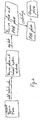
- Fig. 1 is a flow diagram of an embodiment of a process for extracting a PHA from biomass having cells that contain the PHA.
- a slurry is provided that contains the biomass and water.
- a solvent system is added to the slurry to form a mixture that contains the slurry and the solvent system.
- the mixture is agitated (e.g., stirred) to provide a combination that includes two phases.
- One phase is formed of a solution containing the PHA and the solvent system with trace amounts of biomass ("the PHA phase”).
- the second phase is formed of residual biomass having cells with reduced polymer content, water and a carry over portion of the solvent system ("the residual biomass phase").
- the two phases included in the combination are separated using an appropriate device that exploits centrifugal force to facilitate the separation (e.g.
- one or more solvents can be added to the device that exploits centrifugal force to facilitate the separation.
- a precipitant for the PHA is added to the PHA phase to form a mixture that contains the PHA phase and the precipitant.
- the mixture is agitated (e.g., stirred) to form a combination that contains precipitated PHA, the solvent system and the precipitant.
- the solvent system and the precipitant are miscible which results in the combination (precipitated PHA, solvent system and precipitant) having two phases (e.g., one phase containing the precipitated PHA, and one phase containing the solvent system and precipitant).
- the combination (precipitated PHA, solvent system and precipitant) is separated (e.g., by filtration or using centrifugal force) to provide the isolated, extracted PHA.
- the process in Fig. 1 can be referred to as a one-stage process.
- a one-stage process is a process in which only one centrifugation step is used during separation of the polymer from the biomass.
- a multi-stage process refers to a process in which more than one centrifugation step is used during separation of the polymer from the biomass (see additional discussion below).
- the residual biomass formed in the process in Fig. 1 can be treated and ultimately centrifuged, thereby creating a two-stage process (see, for example, Fig. 2 and discussion below).
- the process results in a relatively high yield of the PHA.
- a ratio of the dry weight of extracted PHA to the dry weight of the PHA initially contained in the biomass is at least about 0.9 (e.g., at least about 0.95, at least about 0.97, at least about 0.98).
- a relatively high yield of PHA can be achieved without using a multi-stage process (e.g., with a one-stage process).
- the process can be performed with relatively large amount of the solvent being transferred to the PHA phase.
- a ratio of the volume of solvent recovered in the PHA phase to the volume of solvent contacted with the biomass is at least about 0.8 (e.g., 0.85, at least about 0.9, at least about 0.95, at least about 0.98, at least about 0.99).
- a relatively large amount of solvent can be transferred to the PHA phase using, for example, countercurrent conditions during separation of the polymer from the biomass.
- the process can be performed with a relatively small amount of the solvent being transferred to the residual biomass phase.
- a ratio of the volume of solvent recovered in the residual biomass phase to the volume of solvent contacted with the biomass is at most about 0.2 (e.g., at most about 0.15, at most about 0.1, at most about 0.05, at most about 0.02, at most about 0.01).
- a relatively small amount of the solvent is transferred to the residual biomass phase using, for example, countercurrent conditions during separation of the polymer from the biomass.
- the slurry can be provided in any desired manner.
- the slurry is provided by forming a fermentation broth containing water and the biomass, and removing a portion of the water from the fermentation broth.
- the water can be removed, for example, by filtration (e.g., microfiltration, membrane filtration) and/or by decanting and/or by using centrifugal force.
- biomass impurities such as cell wall and cell membrane impurities, can be removed during the process of providing the slurry.
- Such impurities can include proteins, lipids (e.g., triglycerides, phospholipids, and lipoproteins) and lipopolysaccharides.
- the PHA content of the biomass can be varied as desired.
- the biomass in embodiments in which the biomass is of microbial origin, the biomass can have a PHA content of at least about 50 weight percent (e.g., at least about 60 weight percent, at least about 70 weight percent, at least about 80 weight percent).
- the biomass in embodiments in which the biomass is of plant origin, the biomass can have a PHA content of less than about 50 weight percent (e.g., less than about 40 weight percent, less than about 30 weight percent, less than about 20 weight percent).
- the slurry has a solids content (e.g., dry biomass, inclusive of its PHA content, weight relative to total wet weight of slurry) of from about 25 weight percent to about 40 weight percent (e.g., from about 25 weight percent to about 35 weight percent).
- a solids content e.g., dry biomass, inclusive of its PHA content, weight relative to total wet weight of slurry
- the biomass can be formed of one or more of a variety of entities.
- entities include, for example, microbial strains for producing PHAs (e.g., Alcaligenes eutrophus (renamed as Ralstonia eutropha), Alcaligenes latus, Azotobacter, Aeromonas, Comamonas, Pseudomonads), genetically engineered organisms for producing PHAs (e.g., Pseudomonas, Ralstonia, Escherichia coli, Klebsiella ) , yeasts for producing PHAs, and plant systems for producing PHAs.
- microbial strains for producing PHAs e.g., Alcaligenes eutrophus (renamed as Ralstonia eutropha), Alcaligenes latus, Azotobacter, Aeromonas, Comamonas, Pseudomonads
- the size of the microbial cells contained in the biomass can also be varied as desired.
- the microbial cells e.g., bacterial cells
- the microbial cells have at least one dimension with a size of at least about 0.2 micron (e.g., at least about 0.5 micron, at least about one micron, at least about two microns, at least about three microns, at least about four microns, at least about five microns).
- using relatively large microbial cells (e.g., relatively large bacterial cells) in the biomass can be advantageous because it can facilitate the separation of the biomass to form the biomass slurry.
- a PHA is formed by polymerization (e.g., enzymatic polymerization) of one or more monomer units.
- monomer units include, for example, 3-hydroxybutyrate, 3-hydroxypropionate, 3-hydroxyvalerate, 3-hydroxyhexanoate, 3-hydroxyheptanoate, 3-hydroxyoctanoate, 3-hydroxynonaoate, 3-hydroxydecanoate, 3-hydroxydodecanoate, 3-hydroxydodecenoate, 3-hydroxytetradecanoate, 3-hydroxyhexadecanoate, 3-hydroxyoctadecanoate, 4-hydroxybutyrate, 4-hydroxyvalerate, 5-hydroxyvalerate, and 6-hydroxyhexanoate.
- the PHA has at least one monomer unit with the chemical formula -OCR 1 R 2 (CR 3 R 4 ) n CO-.
- n is zero or an integer (e.g., one, two , three, four, five, six, seven, eight, nine, 10, 11, 12, 13, 14, 15, etc.).
- R 1 , R 2 , R 3 and R 4 is a hydrogen atom, a saturated hydrocarbon radical, an unsaturated hydrocarbon radical, a substituted radical (e.g., a substituted hydrocarbon radical) or an unsubstituted radical (e.g., an unsubstituted hydrocarbon radical).
- substituted radicals include halo-substituted radicals (e.g., halo substituted hydrocarbon radicals), hydroxy-substituted radicals (e.g., hydroxy-substituted hydrocarbon radicals), halogen radicals, nitrogen-substituted radicals (e.g., nitrogen-substituted hydrocarbon radicals) and oxygen-substituted radicals (e.g., oxygen-substituted hydrocarbon radicals).
- Substituted radicals include, for example, substituted, saturated hydrocarbon radicals and substituted, unsaturated hydrocarbon radicals.
- R 1 is the same as or different from each of R 2 , R 3 and R 4 .
- R 2 is the same as or different from each of R 1 , R 3 and R 4 .
- R 3 is the same as or different from each of R 2 , R 1 and R 4 , and R 4 is the same as or different from each of R 2 , R 3 and R 1 .
- the PHA is a copolymer that contains two or more different monomer units.
- copolymers include poly-3-hydroxybutyrate-co-3-hydroxypropionate, poly-3-hydroxybutyrate-co-3-hydroxyvalerate, poly-3-hydroxybutyrate-co-3-hydroxyhexanoate, poly-3-hydroxybutyrate-co-4-hydroxybutyrate, poly-3-hydroxybutyrate-co-4-hydroxyvalerate, poly-3-hydroxybutyrate-co-6-hydroxyhexanoate, poly 3-hydroxybutyrate-co-3-hydroxyheptanoate, poly-3-hydroxybutyrate-co-3-hydroxyoctanoate, poly-3-hydroxybutyrate-co-3-hydroxydecanoate, poly-3-hydroxybutyrate-co-3-hydroxydodecanotate, poly-3-hydroxybutyrate-co-3-hydroxyoctanoate -co-3-hydroxydecanoate, poly-3-hydroxydecanoate-co-3-hydroxyoctanoate, and
- the PHA is a homopolymer.
- homopolymers include poly-4-hydroxybutyrate, poly-3-hydroxypropionate, poly-3-hydroxybutyrate, poly-3-hydroxyhexanoate, poly-3-hydroxyheptanoate, poly-3-hydroxyoctanoate, poly-3-hydroxydecanoate and poly-3-hydroxydodecanoate.
- the PHA can have a polystyrene equivalent weight average molecular weight of at least about 500 (e.g., at least about 10,000, at least about 50,000) and/or less than about 2,000,000 (e.g., less than about 1,000,000, less than about 800,000).
- the amount of solvent system added to the slurry can be varied as desired.
- an amount of solvent system is added to the slurry so that, after centrifugation, the PHA phase has a PHA solids content of less than about 10 weight percent (e.g., less than about eight weight percent, less than about six weight percent, less than about five weight percent, less than about four weight percent, less than about three weight percent).
- the solvent system includes one or more solvents for the PHA, and can optionally include one or more precipitants for the PHA.
- a precipitant for the PHA in the solvent system can reduce the viscosity of the solution containing the polymer and the solvent system and/or enhance the selectivity of the process in extracting the desired PHA.
- a solvent for a given polymer is capable of dissolving the polymer to form a substantially uniform solution at the molecular or ionic size level.
- a precipitant for a given polymer is capable of inducing the precipitation of the polymer and/or weakening the solvent power of a solvent for the polymer.
- solvent(s) and/or precipitant(s) generally depends on the given PHA to be purified.
- an appropriate solvent for a given polymer can be selected by substantially matching appropriate solvation parameters (e.g., dispersive forces, hydrogen bonding forces and/or polarity) of the given polymer and solvent.
- suitable solvation parameters e.g., dispersive forces, hydrogen bonding forces and/or polarity
- Such solvation parameters are disclosed, for example, in Hansen, Solubility Parameters - A User's Handbook, CRC Press, NY, NY (2000 ).
- the PHA is a poly-3-hydroxybutyrate copolymer (e.g., poly-3-hydroxybutyrate-co-3-hydroxypropionate, poly-3-hydroxybutyrate-co-3-hydroxyvalerate, poly-3-hydroxybutyrate-co-3-hydroxyhexanoate and/or poly-3-hydroxybutyrate-co-4-hydroxybutyrate, poly-3-hydroxybutyrate-co-3-hydroxyoctanoate-co-3-hydroxydecanote-co-3-hydroxydodecanote), where the majority of the monomer units are 3-hydroxybutyrate (e.g., at least about 50% of the monomer units are 3-hydroxybutyrate, at least about 60% of the monomer units are 3-hydroxybutyrate), the solvent(s) may be selected from ketones, esters and/or alcohols with at least four carbon atoms, and the precipitant(s) may be selected from alkanes, methanol and ethanol.
- the solvent(s) may be selected from ketones, esters and/or alcohols with at
- the solvent(s) may be selected from ketones, esters, alcohols with at least four carbon atoms or alkanes (e.g., hexane).
- the ketones can be cyclic or acyclic, straight-chained or branched, and/or subsisted or unsubstituted.
- acyclic ketones and cyclic ketones include methyl isobutyl ketone ("MIBK"), 3-methyl-2-pentanone (butyl methyl ketone), 4-methyl-2-pentanone (methyl isobutyl ketone), 3-methyl-2-butanone (methyl isopropyl ketone), 2-pentanone (methyl n-propyl ketone), diisobutyl ketone, 2-hexanone (methyl n-butyl ketone), 3-pentanone (diethyl ketone), 2-methyl-3-heptanone (butyl isopropyl ketone), 3-heptanone (ethyl n-butyl ketone), 2-octanone (methyl n-hexyl ketone), 5-methyl-3-heptanone (eth)
- the esters can be cyclic or acyclic, straight-chained or branched, and/or substituted or unsubstituted.
- acyclic esters and cyclic esters include ethyl acetate, propyl acetate, butyl acetate, amyl acetate, butyl iso-butyrate, methyl n-butyrate, butyl propionate, butyl butyrate, methyl valerate, ethyl valerate, methyl caproate, ethyl butyrate, ethyl acetate, gamma-butyrolactone, gamma-valerolactone.
- the alcohols having at least four carbon atoms can be cyclic or acyclic, straight-chained or branched, and/or substituted or unsubstituted.
- cyclic alcohols and acyclic alcohols include methyl-1-butanol, ethyl-1-butanol, 3-methyl-1-butanol (amyl alcohol), 2-methyl-1-pentanol, 2-methyl-2-butanol (amyl alcohol), 3-methyl-2-pentanol (methyl iso-butyl carbinol), methyl-2-pentanol, 4-methyl-2-pentanol, butyl alcohol, pentyl alcohol, hexyl alcohol, heptyl alcohol, cyclo-hexanol, methyl-cyclo-hexanol and fusel oil (a mixture of higher alcohols, which is often a by-product of alcohol distillation, and typically is predominantly amyl alcohol (methyl butanol)).
- the alkanes can be cyclic or acyclic, straight-chained or branched, and/or substituted or unsubstituted.
- the alkanes include straight-chain alkanes and have five or more carbon atoms (e.g., heptane, hexane, octane, nonane, dodecane).
- the alkanes include isoalkanes (e.g. methyl heptane, methyl octane, dimethyl heptane).
- Soltrol ® 100 (a mixture of C9-C11 isoalkanes, commercially available from Chevron Phillips Chemical Company located in Houston, TX) can be used.
- the amount of solvent present in the solvent system can be varied as desired.
- the solvent system has at least about five parts (e.g., at least about 10 parts, at least about 15 parts) solvent per part PHA and/or less than about 50 parts (e.g., less than about 30 parts, less than about 25 parts) solvent per part PHA.
- a solvent for the PHA is non-halogenated.
- a non-halogenated solvent can be advantageous because this can reduce the negative environmental impact of the solvent, reduce the health risks associated with using the solvent, and/or reduce the costs associated with storing, handling and/or disposing the solvent
- a solvent for the PHA can have a relatively low density.
- a solvent for the PHA can have a density of less than about 0.95 kilograms per liter (e.g., less than about 0.9 kilograms per liter, less than about 0.8 kilograms per liter, less than about 0.7 kilograms per liter) at 20°C.
- a relatively low density solvent can enhance the quality of the separation of the PHA phase from the residual biomass phase.
- a solvent for the PHA has a relatively low solubility in water.
- a solvent for the PHA can have a solubility in water of less than about one percent (e.g., less than about 0.5 percent, less than about 0.2 percent) at 20°C.
- a solvent with a relatively low solubility in water can be desirable because such a solvent is less likely to intermix with water. This can enhance the ease of providing two separate phases during the process, thereby reducing the cost and/or complexity of the process.
- a solvent for the PHA is substantially non-hydrolyzable.
- the solvent can be at most as hydrolyzable as ethyl acetate.
- Using a substantially non-hydrolyzable solvent can reduce the likelihood of undesirable side product formation (e.g., chemically reactive species, such as organic acids). This can reduce the amount and/or rate of, for example, corrosion of portions (e.g., plumbing) of the system in which the PHA extraction is performed.
- a solvent for the PHA is relatively easily stripped from water.
- the solvent can have a logK value relative to water at 100°C of at least about 1.5 (e.g., at least about 1.8, at least about two, at least about 2.2) as determined according to Hwang et al., Ind. Eng. Chem. Res., Vol. 31, No. 7, pp. 1753-1767 (1992 ).
- Using a solvent that is readily stripped from water can be desirable because such a solvent can be more readily recovered and recycled relative to other solvents that are not as readily stripped from water.
- a solvent for the PHA has a boiling point greater than 100°C.
- an appropriate solvent is non-halogenated, has relatively low (e.g., less than ethyl acetate) water solubility, and relatively low reactivity from the perspective of hydrolysis and/or from the perspective of reactivity towards the polymer.
- the solubility of the PHA in the precipitant is less than about 0.2 percent (e.g., less than about 0.1 percent) of the PHA at 20°C.
- a relatively small volume of precipitant is added to the PHA phase relative to the volume of solvent system added to the slurry.
- the ratio of the volume of precipitant added to the PHA phase to the volume of solvent system added to the slurry is less than about 0.2 (e.g., less than about 0.1, less than about 0.07, less than about 0.05).
- the solvent(s) and the precipitant(s) can have a relative volatility of at least about two (e.g., at least about three, at least about four) at the equimolar bubble point of the solvent(s) and the precipitant(s) at atmospheric pressure.
- the solvent(s) and the precipitant(s) do not form an azeotrope.
- solvent(s) and precipitant(s) that do not form an azeotrope can be desirable because it can be easier to separate and recover the solvent and precipitant for re-use relative to a solvent and precipitant that form an azeotrope.
- the solution formed of the PHA and the solvent system contains less than about 25 volume percent (e.g., less than about 20 volume percent, less than about 15 volume percent, less than about 10 volume percent) of the precipitant.
- the mixture containing the solvent system and the slurry is heated to enhance the interaction of the solvent system with the PHA, thereby allowing the PHA to be removed from the biomass.
- the temperature of the solvent system and slurry mixture during agitation can be varied as desired.
- the temperature is less than about 160°C (e.g., less than about 125°C, less than about 95°C, less than about 65°C) and/or at least about 20°C.
- the temperature is from ambient temperature to about 95°C (e.g., from about 40°C to about 80°C, from about 60°C to about 70°C).
- the pressure can be regulated to greater than atmospheric pressure to facilitate extraction at elevated temperature (e.g. greater than 1 atmosphere, up to 20 atmosphere).
- the shear force used when agitating the solvent system and slurry mixture can be varied as desired.
- the solvent system and slurry mixture is agitated by stirring so that the dissolution time is reduced.
- a high shear impeller and agitator e.g. flat blade impeller such as the 6 bladed Rushton turbine
- a high speed disperser having a low profile blade can be used at tip speeds of, for examples, about 10 meter per second or more (e.g.
- the high speed dispersers have a blade with a low profile bladed or saw tooth edge to generate high shear at enhanced tip speeds.
- a rotor/stator system is used that generates relatively high shear (e.g., at tip speeds up to about 50 meters per second) in the gap between a high speed rotor that spins within a slotted stator.
- relatively high shear e.g., at tip speeds up to about 50 meters per second
- the geometry of the rotor and stator can be varied to suit particular applications and many designs are commercially available.
- the solvent system and slurry mixture is agitated until a centrifuged sample of the mixture has a PHA phase with a desired PHA solids content.
- the solvent system and slurry mixture is agitated for less than about three hours (e.g., less than about two hours) and/or at least about one minute (e.g., at least about 10 minutes, at least about 30 minutes).
- the PHA phase contains less than about 0.5 weight percent (e.g., less than about 0.25 weight percent, less than about 0.1 weight percent) biomass relative to the amount of dissolved PHA in the PHA phase.
- the biomass phase contains less than about 25 weight percent (e.g., less than about 20 weight percent, less than about 15 weight percent) of the solvent that was initially present in the solvent system and or at least about one weight percent (e.g., at least about five weight percent, at least about 10 weight percent) of the solvent that was initially present in the solvent system.
- the PHA phase has a relatively low viscosity.
- this phase can have a viscosity of less than about 100 centipoise (e.g., less than about 75 centipoise, less than about 50 centipoise, less than about 40 centipoise, less than about 30 centipoise).
- centipoise e.g., less than about 75 centipoise, less than about 50 centipoise, less than about 40 centipoise, less than about 30 centipoise.
- the rate of separation of the phases during centrifugation is inversely proportional to the viscosity of the PHA phase so that, for a given centrifugation time, decreasing the viscosity of the PHA phase results in an improved separation of the phases relative to certain systems in which the PHA phase has a higher viscosity.
- the PHA phase has a relatively high polymer concentration.
- the PHA phase can have a polymer concentration of at least about two percent (e.g., at least about 2.5 percent, at least about three percent, at least about 3.5 percent, at least about four percent, at least about 4.5 percent, at least about five percent).
- centrifugation is performed using a disc stack (e.g., a model SC-6, available from Westfalia Separator US, Inc., located in Northvale, NJ).
- centrifugation is performed using a decanter (e.g., a model CA-220, available from Westfalia Separator US, Inc., located in Northvale, NJ).
- a hydroclone can be used.
- a countercurrent centrifugal contacter e.g., a Podbielniak centrifugal contacter, a Luwesta centrifugal contacter, Taylor-Couette centrifugal contacter
- a countercurrent centrifugal contacter is used by having two (or possibly more) fluid streams contact each other.
- One stream (the solvent stream) begins as a fluid stream that is relatively rich in solvent.
- Another stream (the biomass stream) begins as a fluid stream that is relatively rich in PHA.
- the two streams contact each other under countercurrent conditions such that a portion of the solvent stream that is richest in solvent contacts a portion of the biomass stream that is poorest in PHA (to enhance, e.g., optimize, the recovery of PHA from the biomass stream), and/or such that a portion of the biomass stream that is richest in PHA contacts a portion of the solvent stream that is most laden with PHA (to enhance, e.g., optimize, the concentration of PHA in the solvent stream). In certain embodiments, this is achieved by flowing the solvent stream reverse to the biomass stream (reverse flow conditions).
- Countercurrent centrifugal contacters are available from, for example, B&P Process Equipment (Saginaw, MI) and Quadronics. Examples of commercially available countercurrent centrifugal contacters include the Podbielniak A-1 countercurrent centrifugal contacter (B&P Process Equipment) and the Podbielniak B-10 countercurrent centrifugal contacter (B&P Process Equipment).
- the conditions (e.g., force, time) used for centrifugation can be varied as desired.
- centrifugation can be performed using at least about 5,000 RCF (Relative Centrifugal Force) (e.g., at least about 6,000 RCF, at least about 7,000 RCF, at least about 8,000 RCF) and/or less than about 15,000 RCF (e.g., less than about 12,000 RCF, less than about 10,000 RCF).
- RCF Relative Centrifugal Force
- centrifugation can be performed using at least about 1,000 RCF (e.g., at least about 1,500 RCF, at least about 2,000 RCF, at least about 2,500 RCF) and/or less than about 5,000 RCF (e.g., less than about 4,000 RCF, less than about 3,500 RCF).
- centrifugation can be performed using at least about 1,000 RCF (e.g., at least about 1,500 RCF, at least about 2,000 RCF, at least about 2,500 RCF) and/or less than about 5,000 RCF (e.g., less than about 4,000 RCF, less than about 3,500 RCF).
- RCF e.g., at least about 1,500 RCF, at least about 2,000 RCF, at least about 2,500 RCF
- 5,000 RCF e.g., less than about 4,000 RCF, less than about 3,500 RCF.
- centrifugation can be performed for less than about one hour (e.g., less than about 30 minutes, less than about 10 minutes, less than about five minutes, less than about one minute) and/or at least about 10 seconds (e.g., at least about 20 seconds, at least about 30 seconds). In certain embodiments in which a decanter is used, centrifugation can be performed for less than about one hour (e.g., less than about 30 minutes, less than about 10 minutes, less than about five minutes, less than about one minute) and/or at least about 10 seconds (e.g., at least about 20 seconds, at least about 30 seconds).
- centrifugation can be performed for less than about one hour (e.g., less than about 30 minutes, less than about 10 minutes, less than about five minutes, less than about one minute) and/or at least about 10 seconds (e.g., at least about 20 seconds, at least about 30 seconds).
- a precipitant for the PHA is added to the separated PHA phase to form a mixture.
- the precipitant added to the separated PHA phase may be the same as or different from the precipitant(s) contained in the solvent system.
- the amount of the precipitant added to the separated PHA phase can be varied as desired.
- the amount of precipitant added to the separated PHA phase is at least about 0.1 part (e.g., at least about 0.25 part, at least about 0.5 part) precipitant by volume relevant to the volume of solvent in the PHA phase and/or less than about two parts (e.g., less than about 1.5 parts, less than about one part, less than about 0.75 part) precipitant by volume relevant to the volume of solvent in the PHA phase.
- the PHA phase/precipitant mixture is agitated to enhance the interaction of the PHA with the precipitant for the PHA. This allows the PHA to precipitate from the mixture, resulting in a combination formed of precipitated PHA and a mixture containing the solvent system and the added precipitant for the PHA.
- agitation of the PHA phase/precipitant mixture is performed at room temperature, but other temperatures can be used if desired.
- the PHA phase/precipitant mixture is mixed using high shear devices such as high shear impellers (e.g., a six-bladed Rushton turbine), high speed dispersers and rotor/stator high shear in-line or in-tank mixers.
- the shear rates are determined by the tip speeds of the various devices and can be varied between, for example, from about five meters per second to about 50 meters per second (e.g., from about 10 meters per second to about 25 meters per second). Without wishing to be bound by theory, it is believed that the high shear mixing can, under certain conditions, improve the quality of the precipitated polymer.
- the precipitated PHA is then separated from the remaining liquid (e.g., solvent system and precipitant).
- This separation can be performed by, for example, filtration or centrifugation (e.g., using a basket centrifuge, using a vacuum belt filter).
- the precipitated PHA is then washed to assist removing undesired impurities, such as remaining solvent and/or precipitant.
- the polymer can be washed with solvent (e.g., relatively freshly prepared solvent), such as, for example, a mixture of the PHA solvent and the PHA precipitant (e.g., with any ratio between 0-100%).
- solvent e.g., relatively freshly prepared solvent
- the composition for washing is selected to reduce (e.g., minimize) the re-dissolution of the polymer and/or to enhance (e.g., maximize) removal of impurities.
- the appropriate ratio can be dependent on the particular polymer composition and/or can be determined by standard experimentation (washing efficiency). In some embodiments this washing step can be conducted at elevated temperature and appropriate residence time to further facilitate the washing and removal of impurities
- the washed, precipitated PHA is dried (e.g., at a temperature of from about 40°C to about 100 °C). Drying can be performed under vacuum (e.g., to assist in facilitating recovery of the residual solvent).
- a gas stream e.g.
- Extrusion can consolidate drying and product formation (e.g. pelletizing) operations into a single unit with, for example, capital and process operating cost savings.
- the remaining liquid (solvent system and precipitant) can be further processed so that the components of the liquid (solvent(s) and/or precipitant(s)) can be re-used.
- the liquid can be distilled to separate solvent from precipitant.
- the separated solvent and/or precipitant can be re-used in the process described above (e.g., as a solvent in the solvent system, as a precipitant in the solvent system, as a precipitant added to the PHA phase).
- the separated solvent and/or precipitant can be re-used in the process described in Fig. 2 (see discussion below) (e.g., as a solvent in the solvent system, as a precipitant in the solvent system, as a precipitant added to the PHA phase).
- the process (or portions of the process) can be performed in a continuous and/or an in-line manner.
- the process can involve an in-line rotor/stator process for dissolution, and/or an in-line rotor/stator process for precipitation of the PHA and/or an in-line devolatilizing extruder (e.g. a Werner and Pfleiderer ZSK extruder supplied by Coperion Corporation of Ramsey, NJ) for removing the solvent and forming PHA solids (e.g. pellets).
- an in-line devolatilizing extruder e.g. a Werner and Pfleiderer ZSK extruder supplied by Coperion Corporation of Ramsey, NJ
- the process uses the solvent in a relatively efficient manner. For example, at least about 90 volume percent (e.g., at least about 95 volume percent, at least about 97 volume percent, at least about 98 volume percent) of the solvent initially used in the solvent is recovered for re-use.
- at least about 90 volume percent e.g., at least about 95 volume percent, at least about 97 volume percent, at least about 98 volume percent
- the process uses the precipitant in a relatively efficient manner. For example, at least about 90 volume percent (e.g., at least about 95 volume percent, at least about 97 volume percent, at least about 98 volume percent) of the combined amount of precipitant initially used in the solvent and added to the PHA phase is recovered for re-use.
- at least about 90 volume percent e.g., at least about 95 volume percent, at least about 97 volume percent, at least about 98 volume percent
- Fig. 2 is a flow diagram showing an embodiment of a second stage of a two-stage process that can be used to enhance the efficiency of PHA extraction by extracting at least a portion of the PHA present in the residual biomass phase ( Fig. 1 ).
- a solvent system is added to the biomass phase to provide a mixture containing the biomass phase and the solvent system.
- the mixture is agitated (e.g., using the conditions described above with respect to agitation of the slurry and solvent system mixture) to provide a combination including a PHA phase (containing predominantly solvent system and PHA) and a biomass phase (containing predominantly biomass, water and carry-over solvent system).
- the PHA phase and biomass phase are separated using centrifugation (e.g., using the conditions described above with respect to centrifuging the PHA phase and biomass phase).
- the PHA phase can be treated as described above (e.g., by adding a precipitant for the PHA, agitating, separating, washing, drying), or the PHA phase can be added to the slurry and solvent mixture described above.
- the components of the solvent system e.g., solvent(s) and/or precipitant(s)
- the residual solvent contained in the biomass can be recovered through a variety of means such as steam stripping in a suitable column, a desolventizing drier (e.g.
- the biomass containing the solvent can be co-dried with a compatible animal feed material (e.g., gluten feed, distiller dry grain, oil seed meal) in a drier that is suitably rated to handle and recover and/or safely eliminate (e.g. adsorption or incineration) the residual solvent
- a compatible animal feed material e.g., gluten feed, distiller dry grain, oil seed meal
- the residual biomass can be used as a nutrient for fermentation (e.g.
- the biomass can be hydrolyzed (e.g. by exposure to acidic conditions at elevated temperature, treatment with protease enzymes, lytic enzymes) to improve its nutrient profile for fermentation.
- dry biomass can be combined with water to provide a slurry.
- a precipitant for the PHA can be added to the slurry before adding the solvent system.
- the amount of precipitant added is at least about 0.5 volumes (e.g., from about 0.5 volumes to about two volumes) relative to the slurry.
- Adding precipitant before adding the solvent system can result in the formation of a relatively pure isolated, extracted PHA (e.g., a purity of at least about 99%, a purity of at least about 99.5%, at purity of at least about 99.9%).
- the polymer purity can be determined by gas chromatography (GC) analysis (e.g., with a Hewlett Packard 5890 Series II GC equipped with Supelco 24044 SBPTM-1 column of 30m x 0.32 mm ID with 0.25 ⁇ m film) following butanolysis of the polymer sample under acidic conditions to form butyl esters of the PHA monomeric units as well as the butyl esters of the lipids and phospholipids fatty acid residues.
- GC gas chromatography
- Suitable standards of the fatty acids and hydroxy acids are used to calibrate and standardize and quantify the chromatographic response. This can be used to quantify both the polymer content as well as the impurity content. Inorganic impurities can be quantified by ashing.
- adding a precipitant for the PHA to the slurry prior to adding the solvent system can assist in removing biomass impurities present in the biomass (e.g., phospholipids, neutral lipids, lipoproteins). This can be particularly advantageous if the PHA solids content in the biomass is relatively high (e.g., a PHA solids content of at least about 65%, at least about 75%).
- the the slurry can be chemically pretreated for example with relatively mild caustic conditions (e.g., a pH of from about 8.5 to 10, from about 8.5 to about 9, from about 9 to about 9.5, from about 9.5 to about 10) followed by neutralization before adding the solvent system.
- relatively mild caustic conditions e.g., a pH of from about 8.5 to 10, from about 8.5 to about 9, from about 9 to about 9.5, from about 9.5 to about 10.
- the caustic conditions can be prepared using one or more relatively basic materials, such as, for example, potassium hydroxide, sodium hydroxide and/or ammonium hydroxide.
- the temperature can be elevated (e.g. any temperature between room temperature and about 95°C) and other chemicals such as surfactants, detergents and/or enzymes added during the chemical pre-treatment step to further facilitate the formation of a relatively pure isolated, extracted PHA (e.g., a purity of at least about 99%, at least about 99.5%).
- other chemicals such as surfactants, detergents and/or enzymes added during the chemical pre-treatment step to further facilitate the formation of a relatively pure isolated, extracted PHA (e.g., a purity of at least about 99%, at least about 99.5%).
- a chemical treatment e.g., a relatively mild caustic treatment
- the slurry prior to adding the solvent system can assist in removing biomass impurities present in the biomass (e.g., lipids, phospholipids, lipoproteins).
- biomass impurities present in the biomass e.g., lipids, phospholipids, lipoproteins.
- the PHA solids content in the biomass is relatively high (e.g., a PHA solids content of at least about 65%, at least about 75%).
- the methods can include concentration (e.g., evaporation) of the PHA phase after separation of this phase from the residual biomass phase but before addition of the precipitant for the PHA to the PHA phase. This can reduce the volume of solution, thereby reducing precipitant.
- concentration e.g., evaporation
- the processes can be performed without adding a precipitant for the PHA to the PHA phase.
- the solvent system can be formed and then contacted with the biomass, or the biomass can be contacted with fewer than all the components of the solvent system, followed by subsequent addition of the remaining portion of the solvent system (e.g., in series or all at once).
- the solvent system includes a solvent for the PHA and a precipitant for the PHA
- the slurry can be contacted with the solvent, followed by addition of the precipitant, or vice-versa.
- the solvent and precipitant can be combined to form the solvent system, followed by contacting the biomass.
- the processes could be used to extract multiple PHAs (e.g., two, three, four, five, six) from a biomass.
- Such processes could involve the use of multiple solvents, precipitants and/or solvent systems.
- solvent systems containing a single solvent for the PHA and optionally a single precipitant for the PHA have been described, multiple solvents for the PHA (e.g., two, three, four, five, six) and/or multiple precipitants for the PHA (e.g., two, three, four, five, six) can be used.
- the slurry/solvent system mixture can be agitated without heating.
- the slurry/solvent system mixture can be agitated under pressure with heating.
- the methods can include distilling the solvent system/precipitant mixture formed (e.g., distilled) to separate the components (e.g., solvent for the PHA, precipitant for the PHA) so that one or more of the components can be re-used.
- the solvent system/precipitant mixture formed e.g., distilled
- the components e.g., solvent for the PHA, precipitant for the PHA
- the chemicals were from Aldrich Chemical Co. Inc. (Milwaukee, WI)
- the overhead stirrer was an Ika ® -werke Eurostar power control-vise overhead stirrer (Ika Work Inc., Wilmington, NC)
- the centrifuge was a Sorvall RC 5B plus centrifuge.
- the recovered polymer represented 32% dissolution of the starting polymer (approach 1), 43% of the starting polymer (approach 2), and greater than 97% dissolution of the starting polymer (approach 3).
- a polymer solution containing 5% polymer by weight was prepared by dissolving of Escherichia coli biomass slurry containing 70% polymer on a dry basis with a composition of polyhydroxybutyrate co 4-hydroxybutyrate with 25% 4-hydroxybutyrate in butyl acetate (Aldrich Chemical Co. Inc., Milwaukee, WI) using the procedure of Example Ic.
- the viscosity of the resulting solution was measured as 365 centiPoise (cP) using a Brookfield LVF Viscometer (Brookfield Engineering Laboratories Inc., Stoughton, MA). For solutions with viscosity less than 100 cP, a No.
- a recombinant E. coli was used to produce poly 3-hydroxybutyrate-co-4-hydroxybutyrate (30% 4-hydroxybutyrate on a molar basis) in a fed-batch fermentation, using glucose as the major carbon source.
- the E. coli cells had expanded in size to greater than 2 microns in at least one dimension.
- the biomass accumulated 70% polymer on a dry weight basis. The biomass was subsequently harvested using centrifugation to produce a wet biomass pellet, substantially free of dissolved impurities.
- the PHA content of the PHA phase was about 5.3%. 220 milliliters of the PHA phase was recovered by decantation after centrifugation, constituting about 73% by volume of the total recoverable ethyl acetate of slurry prior to centrifugation.
- a suitable amount of PHA (typically 0.5 gram) is placed between two PET sheets separated by shims to form a film of 100 micron thickness.
- the film assembly i.e. two sheets, shims and PHA
- the film assembly was placed between the heated (180 °C) blocks of the press (Carver Hydraulic Press model #3912, Carver Inc., Wabash, IN) and a load of 10 tons was applied for 30 seconds.
- the film was then cooled between aluminum blocks and then inspected for color and clarity. This yielded a substantially clear film with substantially no fuming or objectionable odors at the operating temperature of 180 °C during the press cycle.
- the supernatant was discarded and the paste extracted using 425 g of MIBK at room temperature with overhead stirring (Ika®-werke Eurostar power control-visc overhead stirrer, Ika Work Inc., Wilmington, NC) for three hours.
- the supernatant solution of polymer in MIBK
- the precipitated polymer was recovered by filtration and dried under vacuum in a Büchi B-171 rotavap (65 °C and 1 mm Hg vacuum for 8 hours) to yield 12 gram of dried polymer.
- the dried polymer was subjected to hot film pressing at 180°C. This yielded a film with only very slight discoloration/opaqueness.
- the mixture of cell paste and MIBK was fed to an A-1 pilot scale Podbielniak extractor (B&P Process Equipment, Saginaw, MI) as the heavy liquid in (HLI) at a rate of 635 ml/min.
- B&P Process Equipment, Saginaw, MI Podbielniak extractor
- HLI heavy liquid in
- MIBK light liquid in
- the LLI was fed at a rate of 175 ml/min to maintain a feed ratio ofHLI:LLI of 3.6:1.
- a total of 49.6 kg of HLI and 12.8 kg of LLI was fed over a 90 minute period.
- HLO heavy liquid out
- LLO light liquid out
- the temperature was controlled at 90 ⁇ 5°C during the solvent contacting step.
- the biomass paste/cyclo-hexanone mixture was then centrifuged at 3000g for 5 minutes to separate the supernatant (solution of polymer in cyclo-hexanone) by decanting from the residual biomass paste pellet using a Sorvall RC 5B plus centrifuge (Kendro Laboratory Products, Newtown, CT).
- the supernatant was then re-heated in a beaker to 80 ⁇ 5°C and an equal volume of heptane (held at room temperature) was slowly added to the solution over the course of 5 minutes while mixing vigorously with an overhead stirrer (Ika ® -werke Eurostar power control-visc overhead stirrer, Ika Work Inc., Wilmington, NC) to precipitate the polymer while maintaining the temperature between 70°C and 80°C.
- the precipitated polymer was recovered by filtration using a funnel lined with fluted filter paper (VWR Scientific Products, West Chester, PA) and air dried overnight in a chemical fume hood to yield 16 g of white polymer granules (80% overall recovery).
- a film was prepared by placing approximately 0.5 g of polymer between two PET sheets separated by shims to form a film of 100 micron thickness.
- the film assembly i.e. two sheets, shims and PHA
- the film assembly was placed between the heated (180°C) blocks of the press (Carver Hydraulic Press model #3912, Carver Inc., Wabash, IN) and a load of 10 tons was applied for 30 seconds.
- the film was then cooled between aluminum blocks and inspected for color and clarity. This yielded a substantially clear film with substantially no fuming or objectionable odors at the operating temperature of 180°C during the press cycle.
- the resulting biomass/solvent mixture was separated by centrifugation using a Sorvall RC 5B plus centrifuge (Kendro Laboratory Products, Newtown, CT).
- the biomass paste/cyclo-hexanone mixture was then centrifuged at 3000g for 5 minutes to separate the supernatant (solution of polymer in cyclo-hexanone) by decanting from the residual biomass paste pellet.
- This biomass was added to a suitable quantity of MIBK targeting a 5% solution (w/w) of PHBX in the solvent.
- the solution was homogenized for 5 minutes using a hand-held homogenizer equipped with a single slotted rotor stator combination at 30,000 rpm (Virtis, Gardiner, NY) and then agitated for 30 minutes using an overhead stirrer (Ika ® -werke Eurostar power control-visc overhead stirrer, Ika Work Inc., Wilmington, NC).
- the temperature was controlled at 80 ⁇ 5°C during the solvent contacting step.
- the resulting biomass/solvent mixture was separated by centrifugation using a Sorvall RC 5B plus centrifuge (Kendro Laboratory Products, Newtown, CT).
- the biomass paste/cyclo-hexanone mixture was then centrifuged at 3000g for 5 minutes to separate the supernatant (solution of polymer in cyclo-hexanone) by decanting from the residual biomass paste pellet.
Landscapes
- Chemical & Material Sciences (AREA)
- Health & Medical Sciences (AREA)
- Chemical Kinetics & Catalysis (AREA)
- Medicinal Chemistry (AREA)
- Polymers & Plastics (AREA)
- Organic Chemistry (AREA)
- Preparation Of Compounds By Using Micro-Organisms (AREA)
- Processes Of Treating Macromolecular Substances (AREA)
- Extraction Or Liquid Replacement (AREA)
- Addition Polymer Or Copolymer, Post-Treatments, Or Chemical Modifications (AREA)
- Separation, Recovery Or Treatment Of Waste Materials Containing Plastics (AREA)
Claims (57)
- Verfahren zum Abtrennen eines Polymers von einer Biomasse, die das Polymer enthält, wobei das Verfahren Folgendes umfasst:das Kontaktieren der Biomasse mit einem Lösungsmittelsystem, das ein Lösungsmittel für das Polymer und ein Ausfällungsmittel für das Polymer umfasst, um eine zurückbleibende Biomasse und eine Lösung bereitzustellen, die das Polymer, das Lösungsmittel für das Polymer und das Ausfällungsmittel für das Polymer umfasst; unddas Aufbringen einer Zentrifugalkraft auf die Lösung und die zurückbleibende Biomasse, um mindestens einen Teil der Lösung von der zurückbleibenden Biomasse abzutrennen;wobei:das Polymer ein Polyhydroxyalkanoat ("PHA") ist; unddie Biomasse eine Aufschlämmung der Biomasse und von Wasser umfasst.
- Verfahren nach Anspruch 1, wobei das Lösungsmittel für das Polymer eine Dichte von weniger als etwa 0,95 Kilogramm pro Liter aufweist.
- Verfahren nach Anspruch 1, wobei das Lösungsmittel für das Polymer nicht halogeniert ist.
- Verfahren nach Anspruch 1, wobei das Lösungsmittel für das Polymer eine Löslichkeit in Wasser von weniger als etwa ein Prozent aufweist.
- Verfahren nach Anspruch 1, wobei das Lösungsmittel für das Polymer im Wesentlichen nicht hydrolysierbar ist.
- Verfahren nach Anspruch 1, wobei das Lösungsmittel für das Polymer einen log K-Wert mit Bezug auf Wasser bei 100°C von mindestens 1,5 aufweist.
- Verfahren nach Anspruch 1, wobei das Lösungsmittel einen Siedepunkt von über 100°C aufweist.
- Verfahren nach Anspruch 1, wobei das Lösungsmittel für das Polymer aus der Gruppe ausgewählt wird bestehend aus Ketonen, Estern und Alkoholen.
- Verfahren nach Anspruch 1, wobei das Lösungsmittel für das Polymer aus der Gruppe ausgewählt wird bestehend aus MIBK, Butylacetat, Cyclohexanon und Kombinationen davon.
- Verfahren nach Anspruch 1, wobei das Ausfällungsmittel für das Polymer weniger als etwa 0,2 % des Polymers bei Raumtemperatur löst.
- Verfahren nach Anspruch 1, wobei das Lösungsmittel für das Polymer und das Ausfällungsmittel für das Polymer eine relative Flüchtigkeit von mindestens etwa zwei bei einem äquimolaren Blasenbildungspunkt für das Lösungsmittel für das Polymer und das Ausfällungsmittel für das Polymer aufweisen.
- Verfahren nach Anspruch 1, wobei das Lösungsmittel für das Polymer und das Ausfällungsmittel für das Polymer keinen Azeotrop bilden.
- Verfahren nach Anspruch 1, wobei das Ausfällungsmittel mindestens ein Alkan umfasst.
- Verfahren nach Anspruch 1, wobei die Lösung höchstens etwa 25 Volumen-% des Ausfällungsmittels für das Polymer umfasst.
- Verfahren nach Anspruch 1, des Weiteren das Entfernen mindestens eines Teils des Polymers aus der Lösung umfassend.
- Verfahren nach Anspruch 15, des Weiteren das Extrudieren des entfernten Polymers zum Trocknen und Pelletisieren des Polymers umfassend.
- Verfahren nach Anspruch 15, wobei das Entfernen des Polymers aus der Lösung nicht das Aussetzen der Lösung heißem Wasser gegenüber umfasst.
- Verfahren nach Anspruch 15, wobei das Entfernen des Polymers aus der Lösung das Hinzusetzen eines zweiten Ausfällungsmittels für das Polymer zu der Lösung umfasst.
- Verfahren nach Anspruch 18, wobei die ersten und zweiten Ausfällungsmittel für das Polymer dieselben sind.
- Verfahren nach Anspruch 15, des Weiteren das Verdampfen eines Anteils der Lösung vor dem Entfernen mindestens eines Teils des Polymers aus der Lösung umfassend.
- Verfahren nach Anspruch 1, des Weiteren das Hinzugeben, nach dem Aufbringen der Zentrifugalkraft auf die Lösung, eines Volumens eines zweiten Ausfällungsmittels für das Polymer zum Entfernen mindestens eines Teils des Polymers aus der Lösung umfassend, wobei das Volumen des zweiten Ausfällungsmittels weniger als etwa zwei Teile im Vergleich mit dem Volumen des Lösungsmittelsystems beträgt.
- Verfahren nach Anspruch 1, wobei das Ausfällungsmittel für das Polymer mit der Biomasse kontaktiert wird, nachdem das Lösungsmittel für das Polymer mit der Biomasse kontaktiert worden ist.
- Verfahren nach Anspruch 1 oder 22, wobei die Lösung eine Polymerkonzentration von mindestens etwa zwei Prozent aufweist.
- Verfahren nach Anspruch 1 oder 22, wobei die Lösung eine Viskosität von höchstens etwa 100 mPa.s (100 Centipoise) aufweist.
- Verfahren nach Anspruch 22, des Weiteren das Entfernen mindestens eines Anteils des Polymers aus der Lösung umfassend, wobei das Entfernen des Polymers nicht das Aussetzen der Lösung heißem Wasser gegenüber umfasst.
- Verfahren nach Anspruch 22, des Weiteren das Hinzusetzen, nach dem Abtrennen, eines Volumens eines zweiten Ausfällungsmittels für das Polymer umfassend, um mindestens einen Teil des Polymers aus der Lösung zu entfernen, wobei das Volumen des zweiten Ausfällungsmittels weniger als etwa zwei Teile im Vergleich mit dem Volumen des Lösungsmittelsystems beträgt.
- Verfahren nach Anspruch 22, des Weiteren Folgendes umfassend: das Entfernen mindestens eines Anteils des Polymers aus der Lösung; und das Extrudieren des entfernten Polymers, um das Polymer zu trocknen und zu pelletisieren.
- Verfahren nach Anspruch 22, wobei das Lösungsmittelsystem ein Lösungsmittel für das Polymer, wie in einem der Ansprüche 2-9 definiert, umfasst.
- Verfahren nach Anspruch 22, wobei das Lösungsmittelsystem ein Ausfällungsmittel für das Polymer umfasst, das weniger als etwa 0,2 % des Polymers bei Raumtemperatur löst.
- Verfahren nach Anspruch 22, wobei das Lösungsmittel für das Polymer und das Ausfällungsmittel für das Polymer eine relative Flüchtigkeit von mindestens etwa zwei bei einem äquimolaren Blasenbildungspunkt für das Lösungsmittel für das Polymer und das Ausfällungsmittel für das Polymer aufweisen.
- Verfahren nach Anspruch 22, wobei das Lösungsmittel für das Polymer und das Ausfällungsmittel für das Polymer keinen Azeotrop bilden.
- Verfahren nach Anspruch 22, wobei das Ausfällungsmittel für das Polymer ein Alkan umfasst.
- Verfahren nach Anspruch 1 oder 22, wobei die Biomasse, die das Polymer enthält, mikrobiellen Ursprungs ist und einen Polymergehalt von mindestens etwa 50 Gewichtsprozent aufweist oder pflanzlichen Ursprungs ist und einen Polymergehalt von weniger als etwa 50 Gewichtsprozent aufweist.
- Verfahren nach Anspruch 1 oder 22, wobei die Biomasse, die das Polymer enthält, Zellen umfasst, die das Polymer enthalten.
- Verfahren nach Anspruch 1 oder 22, wobei das Lösungsmittelsystem mit der Biomasse unter Gegenstrom-Strömungsbedingungen kontaktiert wird.
- Verfahren nach Anspruch 35, wobei das Verfahren ein Einstufenverfahren ist.
- Verfahren nach Anspruch 35, wobei das Verfahren ein Mehrstufenverfahren ist.
- Verfahren nach Anspruch 35, wobei die Gegenstrombedingungen einen Manometerdruck von mindestens etwa 4,4811 x 10⁵ Pa (einen Druck von mindestens etwa 65 psig) umfassen.
- Verfahren nach Anspruch 1, bei dem es sich um ein Verfahren zum Extrahieren eines Polyhydroxyalkanoats (PHA) aus Biomasse handelt, die Zellen aufweist, die das PHA enthalten, wobei das Verfahren Folgendes umfasst:(a) das Bereitstellen einer Aufschlämmung, die die Biomasse und Wasser enthält;(b) das Hinzusetzen eines Lösungsmittelsystems zu der Aufschlämmung, um eine Mischung zu bilden, die die Aufschlämmung und das Lösungsmittelsystem enthält;(c) das Rühren der Mischung, um eine Kombination bereitzustellen, die zwei Phasen umfasst, wobei eine Phase aus einer Lösung gebildet ist, die das PHA und das Lösungsmittelsystem mit Spurenmengen von Biomasse enthält, und die zweite Phase aus zurückbleibender Biomasse gebildet wird, die Zellen mit reduziertem Polymergehalt, Wasser und einen Übertragungsanteil des Lösungsmittelsystems aufweist;(d) das Trennen der beiden Phasen unter Anwendung einer Vorrichtung, die sich Zentrifugalkraft zunutze macht, um die Trennung zu ermöglichen;(e) das Hinzugeben eines Ausfällungsmittels für das PHA zu der PHA-Phase, um eine Mischung zu bilden, die das ausgefällte PHA, das Lösungsmittelsystem und das Ausfällungsmittel enthält; und dann(f) das Abtrennen des PHAs von der Mischung,wobei das Lösungsmittelsystem, das der Aufschlämmung hinzugegeben wird, ein oder mehrere Lösungsmittel für das PHA und ein oder mehrere Ausfällungsmittel für das PHA umfasst.
- Verfahren nach Anspruch 39, wobei das Lösungsmittel für das PHA eine Löslichkeit in Wasser von weniger als etwa ein Prozent aufweist.
- Verfahren nach Anspruch 39, wobei das Lösungsmittelsystem das der Aufschlämmung hinzugegeben wird, weniger als etwa 25 Volumenprozent des Ausfällungsmittels enthält.
- Verfahren nach Anspruch 39, wobei das Lösungsmittelsystem das der Aufschlämmung hinzugegeben wird, weniger als etwa 20 Volumenprozent des Ausfällungsmittels enthält.
- Verfahren nach Anspruch 39, wobei das Lösungsmittelsystem das der Aufschlämmung hinzugegeben wird, weniger als etwa 15 Volumenprozent des Ausfällungsmittels enthält.
- Verfahren nach Anspruch 39, wobei das Lösungsmittelsystem das der Aufschlämmung hinzugegeben wird, weniger als etwa 10 Volumenprozent des Ausfällungsmittels enthält.
- Verfahren nach Anspruch 39, wobei das ausgefällte PHA durch Filtrieren oder Zentrifugieren von der Mischung abgetrennt wird, die das Lösungsmittelsystem und das Ausfällungsmittel enthält.
- Verfahren nach Anspruch 39 oder Anspruch 45, des Weiteren den Schritt des Waschens des ausgefällten PHA mit Lösungsmittel umfassend.
- Verfahren nach Anspruch 46, wobei das Lösungsmittel eine Mischung eines Lösungsmittels für das PHA und eines Ausfällungsmittels für das PHA ist.
- Verfahren nach Anspruch 46 oder Anspruch 47, des Weiteren den Schritt des Trocknens des gewaschenen, ausgefällten PHA umfassend.
- Verfahren nach Anspruch 46 oder Anspruch 47, des Weiteren den Schritt des direkten Extrudierens des ausgefällten Polymers, das immer noch Lösungsmittel enthält, umfassend.
- Verfahren nach Anspruch 49, wobei das Polymer in einem flüchtige Bestandteile entfernenden Extruder extrudiert wird.
- Verfahren nach Anspruch 50, des Weiteren den Schritt des Bildens eines Produkts durch Pelletisieren des extrudierten Polymers umfassend.
- Verfahren nach Anspruch 39, wobei das Ausfällungsmittel für das PHA der Aufschlämmung vor dem Lösungsmittel für das PHA hinzugegeben wird.
- Verfahren nach Anspruch 52, wobei die Menge an hinzugegebenem Ausfällungsmittel 0,5 bis 2 Volumen, auf die Aufschlämmung bezogen, beträgt.
- Verfahren nach Anspruch 8, wobei das Lösungsmittel aus der Gruppe ausgewählt wird bestehend aus Methylisobutylketon, Ethylacetat, Propylacetat, Butylacetat, Amylacetat, Butylisobutyrat, Methyl-n-butyrat, Butylpropionat, Butylbutyrat, Methylvalerat, Ethylvalerat, Methylcaproat, Ethylbutyrat, Ethylacetat, gamma-Butyrolacton, gamma-Valerolacton, 3-Methyl-2-pentanon, 4-Methyl-2-pentanon, 3-Methyl-2-butanon, 2-Pentanon, Diisobutylketon, 2-Hexanon, 3-Pentanon, 2-Methyl-3-heptanon, 3-Heptanon, 2-Octanon, 5-Methyl-3-heptanon, 5-Methyl-2-hexanon, Heptanon, Cyclopentanon, Cyclohexanon, Methyl-1-butanol, Ethyl-1-butanol, 3-Methyl-1-butanol, 2-Methyl-1-pentanol, 2-Methyl-2-butanol, 3-Methyl-2-pentanol, Methyl-2-pentanol, 4-Methyl-2-pentanol, Butylalkohol, Pentylalkohol, Hexylalkohol, Heptylalkohol, Cyclohexanol, Methylcyclohexanol und Fuselöl.
- Verfahren nach Anspruch 54, wobei das Lösungsmittel für das Polymer aus der Gruppe ausgewählt wird bestehend aus Butylacetat, 3-Methyl-2-pentanon, 3-Methyl-2-butanon, 2-Pentanon, Diisobutylketon, 2-Hexanon, 3-Pentanon, 2-Methyl-3-heptanon, 3-Heptanon, 2-Octanon, 5-Methyl-3-heptanon, 5-Methyl-2-hexanon und Heptanon.
- Verfahren nach Anspruch 55, wobei das Lösungsmittel für das Polymer aus der Gruppe ausgewählt ist bestehend aus 2-Pentanon, 2-Hexanon, 3-Pentanon, 2-Methyl-3-heptanon, 3-Heptanon, 2-Octanon, 5-Methyl-3-heptanon, 5-Methyl-2-hexanon und Heptanon.
- Verfahren nach Anspruch 56, wobei das Lösungsmittel für das Polymer aus der Gruppe ausgewählt ist bestehend aus 2-Pentanon, 3-Pentanon und 2-Hexanon.
Applications Claiming Priority (5)
| Application Number | Priority Date | Filing Date | Title |
|---|---|---|---|
| US40149802P | 2002-08-06 | 2002-08-06 | |
| US401498P | 2002-08-06 | ||
| US42896302P | 2002-11-25 | 2002-11-25 | |
| US428963P | 2002-11-25 | ||
| PCT/US2003/023034 WO2004013204A2 (en) | 2002-08-06 | 2003-07-23 | Polymer extraction methods |
Publications (2)
| Publication Number | Publication Date |
|---|---|
| EP1529072A2 EP1529072A2 (de) | 2005-05-11 |
| EP1529072B1 true EP1529072B1 (de) | 2012-09-12 |
Family
ID=31498686
Family Applications (1)
| Application Number | Title | Priority Date | Filing Date |
|---|---|---|---|
| EP03766892A Expired - Lifetime EP1529072B1 (de) | 2002-08-06 | 2003-07-23 | Verfahren zur extrahierung von polymer |
Country Status (11)
| Country | Link |
|---|---|
| US (4) | US7252980B2 (de) |
| EP (1) | EP1529072B1 (de) |
| JP (3) | JP4589723B2 (de) |
| CN (1) | CN102443159B (de) |
| AU (2) | AU2003256707B2 (de) |
| BR (1) | BR0313251A (de) |
| CA (1) | CA2494322C (de) |
| DK (1) | DK1529072T3 (de) |
| ES (1) | ES2403881T3 (de) |
| PT (1) | PT1529072E (de) |
| WO (1) | WO2004013204A2 (de) |
Cited By (2)
| Publication number | Priority date | Publication date | Assignee | Title |
|---|---|---|---|---|
| US9359283B2 (en) | 2012-05-31 | 2016-06-07 | Micromidas, Inc. | Polyhydroxyalkanoate derivatives, preparation and uses thereof |
| TWI610935B (zh) * | 2013-03-15 | 2018-01-11 | 出光興產股份有限公司 | 木質素分解物的製造方法 |
Families Citing this family (31)
| Publication number | Priority date | Publication date | Assignee | Title |
|---|---|---|---|---|
| EP1529072B1 (de) * | 2002-08-06 | 2012-09-12 | Metabolix, Inc. | Verfahren zur extrahierung von polymer |
| US7781539B2 (en) * | 2003-02-21 | 2010-08-24 | Metabolix Inc. | PHA blends |
| PT1603987E (pt) * | 2003-02-21 | 2011-11-10 | Metabolix Inc | Composições adesivas pha |
| US7098298B2 (en) * | 2003-11-21 | 2006-08-29 | Kaneka Corporation | Method for producing polyhydroxyalkanoate crystal |
| TW200613560A (en) * | 2004-06-29 | 2006-05-01 | Procter & Gamble | Solvent extraction of polyhydroxyalkanoates from biomass |
| TW200617171A (en) * | 2004-06-29 | 2006-06-01 | Procter & Gamble | Improved process for the solvent-based extraction of polyhydroxyalkanoates from biomass |
| WO2006031492A1 (en) * | 2004-09-13 | 2006-03-23 | Metabolix, Inc. | Single solvent polymer extraction methods |
| US20060057691A1 (en) * | 2004-09-15 | 2006-03-16 | Karunakaran Narasimhan | Process for the extraction of polyhydroxyalkanoates from biomass |
| FR2877949B1 (fr) * | 2004-11-15 | 2007-11-23 | Solvay Sa Sa Belge | Procede d'epuration d'une solution de matiere plastique |
| US8133393B2 (en) * | 2006-09-01 | 2012-03-13 | Ra Energy | Advanced biorefinery process |
| JP4759529B2 (ja) * | 2007-03-06 | 2011-08-31 | 花王株式会社 | 微生物醗酵生産物の製造方法 |
| US9090910B2 (en) | 2008-07-16 | 2015-07-28 | Kbi Biopharma, Inc. | Methods and systems for manipulating particles using a fluidized bed |
| CN102781901B (zh) | 2010-02-11 | 2016-08-03 | 梅塔玻利克斯公司 | 用于从经遗传修饰的聚羟基链烷酸酯生物质制备单体组分的方法 |
| WO2012170793A1 (en) | 2011-06-08 | 2012-12-13 | Metabolix, Inc. | Biorefinery process for thf production |
| BR112014002859A2 (pt) | 2011-08-10 | 2017-06-13 | Metabolix Inc | purificação pós-processamento para produção de gama-butiro lactona |
| GB2499609A (en) * | 2012-02-22 | 2013-08-28 | Reckitt Benckiser Nv | Forming paste from powdered detergent |
| CN104755538B (zh) | 2012-08-17 | 2018-08-31 | Cj 第一制糖株式会社 | 用于聚合物共混物的生物基橡胶改性剂 |
| WO2014058655A1 (en) | 2012-10-10 | 2014-04-17 | Metabolix | Polyhydroxyalkanoate copolymer compositions and methods of making the same |
| US20160068463A1 (en) | 2012-11-14 | 2016-03-10 | Metabolix, Inc. | Production of salts of 4-hydroxybutyrate using biobased raw materials |
| CA2893685A1 (en) | 2012-12-18 | 2014-06-26 | Veolia Water Solutions & Technologies Support | Method of producing polyhydroxyalkanoate compounded plastics having improved mechanical properties |
| US20150376152A1 (en) * | 2013-02-13 | 2015-12-31 | Metabolix, Inc. | Process for Ultra Pure Chemical Production from Biobased Raw Starting Materials |
| US9290612B2 (en) | 2013-03-13 | 2016-03-22 | Tepha, Inc. | Compositions and devices of poly-4-hydroxybutyrate |
| EP3004225A1 (de) | 2013-05-30 | 2016-04-13 | Metabolix, Inc. | Rezyklatmischungen |
| US9480780B2 (en) | 2013-11-05 | 2016-11-01 | Tepha, Inc. | Compositions and devices of poly-4-hydroxybutyrate |
| WO2015149029A1 (en) | 2014-03-27 | 2015-10-01 | Metabolix, Inc. | Highly filled polymer systems |
| JP2016208909A (ja) * | 2015-05-08 | 2016-12-15 | 株式会社カネカ | 脂溶性生理活性物質の製造方法 |
| US11104761B1 (en) | 2020-10-30 | 2021-08-31 | Robert Whitehouse | Sequestered amorphous polyhydroxyalkanoate polymer (SAPP) material derived from cellular biomass and production thereof |
| US11078328B1 (en) * | 2020-10-30 | 2021-08-03 | Robert Whitehouse | Sequestered amorphous polyhydroxyalkanoate polymer (SAPP) material derived from cellular biomass and production thereof |
| EP4019576A1 (de) * | 2020-12-28 | 2022-06-29 | Trinseo Europe GmbH | Recyclingverfahren für elastomergehärtete thermoplastische polymere |
| FR3139337B1 (fr) * | 2022-09-06 | 2024-08-02 | Arkema France | PROCEDE DE FABRICATION D’ACIDES CARBOXYLIQUES α-β INSATURES BIOSOURCES A PARTIR DE POLY(3-HYDROXYALCANOATE) CONTENU DANS DE LA BIOMASSE |
| US20240228698A1 (en) * | 2022-12-22 | 2024-07-11 | Newlight Technologies, Inc. | Renewable and sustainable process for extraction of pha from microbial biomass |
Family Cites Families (22)
| Publication number | Priority date | Publication date | Assignee | Title |
|---|---|---|---|---|
| US4324907A (en) * | 1979-05-08 | 1982-04-13 | Imperial Chemical Industries Limited | Extraction process |
| US4358583A (en) * | 1980-08-13 | 1982-11-09 | Imperial Chemical Industries Plc | Extraction of poly(β-hydroxy butyric acid) |
| GB8311677D0 (en) * | 1983-04-28 | 1983-06-02 | Ici Plc | Extraction process |
| AT390068B (de) * | 1988-07-07 | 1990-03-12 | Danubia Petrochemie | Extraktionsmittel fuer poly-d(-)-3-hydroxybuttersaeure |
| AT395319B (de) * | 1990-10-05 | 1992-11-25 | Danubia Petrochem Polymere | Verfahren zur gewinnung eines polyhydroxyalkanoates aus dem zellmaterial eines mikroorganismus und polyhydroxyalkanoatflocken |
| US6043043A (en) * | 1993-04-02 | 2000-03-28 | Bayer Corporation | Method for the determination of hemoglobin adducts |
| ES2062955B1 (es) * | 1993-04-29 | 1995-06-16 | Repsol Quimica Sa | Procedimiento para la extraccion de polihidroxialcanoatos de bacterias halofilas que lo contienen. |
| BR9302312A (pt) | 1993-06-30 | 1995-02-07 | Cooperativa De Produtores De C | Process de extração de biopolímeros |
| GB9416690D0 (en) * | 1994-08-18 | 1994-10-12 | Zeneca Ltd | Process for the recovery of polyhydroxyalkanoic acid |
| US6111006A (en) * | 1994-12-19 | 2000-08-29 | Monsanto Company | Process for preparing films and coatings |
| US5942597A (en) * | 1995-08-21 | 1999-08-24 | The Procter & Gamble Company | Solvent extraction of polyhydroxyalkanoates from biomass |
| US6083729A (en) * | 1995-10-26 | 2000-07-04 | Metabolix, Inc. | Methods for isolating polyhydroxyalkanoates from plants |
| CA2234965C (en) | 1995-10-26 | 2007-08-14 | Metabolix, Inc. | Methods for isolating polyhydroxyalkanoates from plants |
| US5821299A (en) * | 1996-02-16 | 1998-10-13 | The Proctor & Gamble Company | Solvent extraction of polyhydroxy-alkanoates from biomass facilitated by the use of marginal nonsolvent |
| US6087471A (en) * | 1997-04-15 | 2000-07-11 | Monsanto Company | High temperature PHA extraction using PHA-poor solvents |
| EP0975788A1 (de) | 1997-04-15 | 2000-02-02 | Monsanto Company | Verfahren zur extraktion und rückgewinnung von pha mit nicht-halogenierten lösungsmitteln |
| WO1999064498A1 (en) * | 1998-06-09 | 1999-12-16 | Metabolix, Inc. | Methods and apparatus for the production of amorphous polymer suspensions |
| WO2000068409A1 (en) * | 1999-05-12 | 2000-11-16 | Metabolix, Inc. | Methods for purifying polyhydroxyalkanoates |
| US7025980B1 (en) * | 1999-09-14 | 2006-04-11 | Tepha, Inc. | Polyhydroxyalkanoate compositions for soft tissue repair, augmentation, and viscosupplementation |
| WO2001068890A2 (en) | 2000-03-10 | 2001-09-20 | Metabolix, Inc. | Method of extracting polyhydroxyalkanoate from a solution |
| CN1328160A (zh) * | 2000-06-13 | 2001-12-26 | 中国科学院微生物研究所 | 一种从发酵液中直接提取聚羟基烷酸酯的一步分离法 |
| EP1529072B1 (de) | 2002-08-06 | 2012-09-12 | Metabolix, Inc. | Verfahren zur extrahierung von polymer |
-
2003
- 2003-07-23 EP EP03766892A patent/EP1529072B1/de not_active Expired - Lifetime
- 2003-07-23 US US10/625,861 patent/US7252980B2/en not_active Expired - Lifetime
- 2003-07-23 DK DK03766892.8T patent/DK1529072T3/da active
- 2003-07-23 AU AU2003256707A patent/AU2003256707B2/en not_active Ceased
- 2003-07-23 PT PT03766892T patent/PT1529072E/pt unknown
- 2003-07-23 WO PCT/US2003/023034 patent/WO2004013204A2/en not_active Ceased
- 2003-07-23 BR BR0313251-0A patent/BR0313251A/pt not_active Application Discontinuation
- 2003-07-23 JP JP2004526138A patent/JP4589723B2/ja not_active Expired - Fee Related
- 2003-07-23 ES ES03766892T patent/ES2403881T3/es not_active Expired - Lifetime
- 2003-07-23 CN CN201110314892.9A patent/CN102443159B/zh not_active Expired - Lifetime
- 2003-07-23 CA CA2494322A patent/CA2494322C/en not_active Expired - Fee Related
-
2007
- 2007-07-02 US US11/772,574 patent/US7713720B2/en not_active Expired - Lifetime
-
2009
- 2009-08-17 AU AU2009210353A patent/AU2009210353C1/en not_active Ceased
- 2009-12-11 JP JP2009282063A patent/JP5031811B2/ja not_active Expired - Lifetime
-
2010
- 2010-04-15 US US12/760,972 patent/US7981642B2/en not_active Expired - Lifetime
- 2010-04-15 US US12/760,993 patent/US8003355B2/en not_active Expired - Lifetime
-
2012
- 2012-04-16 JP JP2012092927A patent/JP5600333B2/ja not_active Expired - Lifetime
Cited By (3)
| Publication number | Priority date | Publication date | Assignee | Title |
|---|---|---|---|---|
| US9359283B2 (en) | 2012-05-31 | 2016-06-07 | Micromidas, Inc. | Polyhydroxyalkanoate derivatives, preparation and uses thereof |
| US9688603B2 (en) | 2012-05-31 | 2017-06-27 | Micromidas, Inc. | Polyhydroxyalkanoate derivatives, preparation and uses thereof |
| TWI610935B (zh) * | 2013-03-15 | 2018-01-11 | 出光興產股份有限公司 | 木質素分解物的製造方法 |
Also Published As
Similar Documents
| Publication | Publication Date | Title |
|---|---|---|
| US7713720B2 (en) | Polymer extraction methods | |
| US7795376B2 (en) | Single solvent polymer extraction methods | |
| CN100408613C (zh) | 聚合物的萃取方法 | |
| HK1125391B (en) | Polymer extraction methods | |
| HK1084139B (en) | Polymer extraction methods |
Legal Events
| Date | Code | Title | Description |
|---|---|---|---|
| PUAI | Public reference made under article 153(3) epc to a published international application that has entered the european phase |
Free format text: ORIGINAL CODE: 0009012 |
|
| 17P | Request for examination filed |
Effective date: 20050304 |
|
| AK | Designated contracting states |
Kind code of ref document: A2 Designated state(s): AT BE BG CH CY CZ DE DK EE ES FI FR GB GR HU IE IT LI LU MC NL PT RO SE SI SK TR |
|
| AX | Request for extension of the european patent |
Extension state: AL LT LV MK |
|
| DAX | Request for extension of the european patent (deleted) | ||
| RIN1 | Information on inventor provided before grant (corrected) |
Inventor name: WALSEM, JOHAN, VAN Inventor name: SHIH, SIMON, S. Inventor name: ZHONG, LUHUA |
|
| 17Q | First examination report despatched |
Effective date: 20101202 |
|
| GRAP | Despatch of communication of intention to grant a patent |
Free format text: ORIGINAL CODE: EPIDOSNIGR1 |
|
| GRAS | Grant fee paid |
Free format text: ORIGINAL CODE: EPIDOSNIGR3 |
|
| GRAA | (expected) grant |
Free format text: ORIGINAL CODE: 0009210 |
|
| AK | Designated contracting states |
Kind code of ref document: B1 Designated state(s): AT BE BG CH CY CZ DE DK EE ES FI FR GB GR HU IE IT LI LU MC NL PT RO SE SI SK TR |
|
| REG | Reference to a national code |
Ref country code: DE Ref legal event code: R081 Ref document number: 60342108 Country of ref document: DE Owner name: CJ CHEILJEDANG CORPORATION, KR Free format text: FORMER OWNER: METABOLIX, INC., CAMBRIDGE, MASS., US Ref country code: GB Ref legal event code: FG4D |
|
| REG | Reference to a national code |
Ref country code: CH Ref legal event code: EP |
|
| REG | Reference to a national code |
Ref country code: AT Ref legal event code: REF Ref document number: 575074 Country of ref document: AT Kind code of ref document: T Effective date: 20120915 |
|
| REG | Reference to a national code |
Ref country code: IE Ref legal event code: FG4D |
|
| REG | Reference to a national code |
Ref country code: NL Ref legal event code: T3 |
|
| REG | Reference to a national code |
Ref country code: DE Ref legal event code: R096 Ref document number: 60342108 Country of ref document: DE Effective date: 20121108 |
|
| REG | Reference to a national code |
Ref country code: PT Ref legal event code: SC4A Free format text: AVAILABILITY OF NATIONAL TRANSLATION Effective date: 20121102 |
|
| REG | Reference to a national code |
Ref country code: DK Ref legal event code: T3 |
|
| PG25 | Lapsed in a contracting state [announced via postgrant information from national office to epo] |
Ref country code: CY Free format text: LAPSE BECAUSE OF FAILURE TO SUBMIT A TRANSLATION OF THE DESCRIPTION OR TO PAY THE FEE WITHIN THE PRESCRIBED TIME-LIMIT Effective date: 20120912 Ref country code: FI Free format text: LAPSE BECAUSE OF FAILURE TO SUBMIT A TRANSLATION OF THE DESCRIPTION OR TO PAY THE FEE WITHIN THE PRESCRIBED TIME-LIMIT Effective date: 20120912 |
|
| REG | Reference to a national code |
Ref country code: AT Ref legal event code: MK05 Ref document number: 575074 Country of ref document: AT Kind code of ref document: T Effective date: 20120912 |
|
| PG25 | Lapsed in a contracting state [announced via postgrant information from national office to epo] |
Ref country code: GR Free format text: LAPSE BECAUSE OF FAILURE TO SUBMIT A TRANSLATION OF THE DESCRIPTION OR TO PAY THE FEE WITHIN THE PRESCRIBED TIME-LIMIT Effective date: 20121213 Ref country code: SE Free format text: LAPSE BECAUSE OF FAILURE TO SUBMIT A TRANSLATION OF THE DESCRIPTION OR TO PAY THE FEE WITHIN THE PRESCRIBED TIME-LIMIT Effective date: 20120912 Ref country code: SI Free format text: LAPSE BECAUSE OF FAILURE TO SUBMIT A TRANSLATION OF THE DESCRIPTION OR TO PAY THE FEE WITHIN THE PRESCRIBED TIME-LIMIT Effective date: 20120912 |
|
| PG25 | Lapsed in a contracting state [announced via postgrant information from national office to epo] |
Ref country code: RO Free format text: LAPSE BECAUSE OF FAILURE TO SUBMIT A TRANSLATION OF THE DESCRIPTION OR TO PAY THE FEE WITHIN THE PRESCRIBED TIME-LIMIT Effective date: 20120912 Ref country code: BE Free format text: LAPSE BECAUSE OF FAILURE TO SUBMIT A TRANSLATION OF THE DESCRIPTION OR TO PAY THE FEE WITHIN THE PRESCRIBED TIME-LIMIT Effective date: 20120912 Ref country code: CZ Free format text: LAPSE BECAUSE OF FAILURE TO SUBMIT A TRANSLATION OF THE DESCRIPTION OR TO PAY THE FEE WITHIN THE PRESCRIBED TIME-LIMIT Effective date: 20120912 Ref country code: EE Free format text: LAPSE BECAUSE OF FAILURE TO SUBMIT A TRANSLATION OF THE DESCRIPTION OR TO PAY THE FEE WITHIN THE PRESCRIBED TIME-LIMIT Effective date: 20120912 |
|
| REG | Reference to a national code |
Ref country code: ES Ref legal event code: FG2A Ref document number: 2403881 Country of ref document: ES Kind code of ref document: T3 Effective date: 20130522 |
|
| PG25 | Lapsed in a contracting state [announced via postgrant information from national office to epo] |
Ref country code: SK Free format text: LAPSE BECAUSE OF FAILURE TO SUBMIT A TRANSLATION OF THE DESCRIPTION OR TO PAY THE FEE WITHIN THE PRESCRIBED TIME-LIMIT Effective date: 20120912 |
|
| PG25 | Lapsed in a contracting state [announced via postgrant information from national office to epo] |
Ref country code: AT Free format text: LAPSE BECAUSE OF FAILURE TO SUBMIT A TRANSLATION OF THE DESCRIPTION OR TO PAY THE FEE WITHIN THE PRESCRIBED TIME-LIMIT Effective date: 20120912 |
|
| PLBE | No opposition filed within time limit |
Free format text: ORIGINAL CODE: 0009261 |
|
| STAA | Information on the status of an ep patent application or granted ep patent |
Free format text: STATUS: NO OPPOSITION FILED WITHIN TIME LIMIT |
|
| PG25 | Lapsed in a contracting state [announced via postgrant information from national office to epo] |
Ref country code: BG Free format text: LAPSE BECAUSE OF FAILURE TO SUBMIT A TRANSLATION OF THE DESCRIPTION OR TO PAY THE FEE WITHIN THE PRESCRIBED TIME-LIMIT Effective date: 20121212 |
|
| 26N | No opposition filed |
Effective date: 20130613 |
|
| REG | Reference to a national code |
Ref country code: DE Ref legal event code: R097 Ref document number: 60342108 Country of ref document: DE Effective date: 20130613 |
|
| PGFP | Annual fee paid to national office [announced via postgrant information from national office to epo] |
Ref country code: NL Payment date: 20130726 Year of fee payment: 11 Ref country code: PT Payment date: 20121102 Year of fee payment: 11 |
|
| PGFP | Annual fee paid to national office [announced via postgrant information from national office to epo] |
Ref country code: FR Payment date: 20130717 Year of fee payment: 11 |
|
| REG | Reference to a national code |
Ref country code: DK Ref legal event code: EBP Effective date: 20130731 |
|
| PG25 | Lapsed in a contracting state [announced via postgrant information from national office to epo] |
Ref country code: MC Free format text: LAPSE BECAUSE OF FAILURE TO SUBMIT A TRANSLATION OF THE DESCRIPTION OR TO PAY THE FEE WITHIN THE PRESCRIBED TIME-LIMIT Effective date: 20120912 |
|
| REG | Reference to a national code |
Ref country code: CH Ref legal event code: PL |
|
| GBPC | Gb: european patent ceased through non-payment of renewal fee |
Effective date: 20130723 |
|
| REG | Reference to a national code |
Ref country code: IE Ref legal event code: MM4A |
|
| PG25 | Lapsed in a contracting state [announced via postgrant information from national office to epo] |
Ref country code: GB Free format text: LAPSE BECAUSE OF NON-PAYMENT OF DUE FEES Effective date: 20130723 Ref country code: LI Free format text: LAPSE BECAUSE OF NON-PAYMENT OF DUE FEES Effective date: 20130731 Ref country code: CH Free format text: LAPSE BECAUSE OF NON-PAYMENT OF DUE FEES Effective date: 20130731 |
|
| PG25 | Lapsed in a contracting state [announced via postgrant information from national office to epo] |
Ref country code: IE Free format text: LAPSE BECAUSE OF NON-PAYMENT OF DUE FEES Effective date: 20130723 |
|
| PG25 | Lapsed in a contracting state [announced via postgrant information from national office to epo] |
Ref country code: DK Free format text: LAPSE BECAUSE OF NON-PAYMENT OF DUE FEES Effective date: 20130731 |
|
| REG | Reference to a national code |
Ref country code: PT Ref legal event code: MM4A Free format text: LAPSE DUE TO NON-PAYMENT OF FEES Effective date: 20150123 |
|
| REG | Reference to a national code |
Ref country code: NL Ref legal event code: V1 Effective date: 20150201 |
|
| PG25 | Lapsed in a contracting state [announced via postgrant information from national office to epo] |
Ref country code: NL Free format text: LAPSE BECAUSE OF NON-PAYMENT OF DUE FEES Effective date: 20150201 |
|
| REG | Reference to a national code |
Ref country code: FR Ref legal event code: ST Effective date: 20150331 |
|
| PG25 | Lapsed in a contracting state [announced via postgrant information from national office to epo] |
Ref country code: PT Free format text: LAPSE BECAUSE OF NON-PAYMENT OF DUE FEES Effective date: 20150123 |
|
| PG25 | Lapsed in a contracting state [announced via postgrant information from national office to epo] |
Ref country code: FR Free format text: LAPSE BECAUSE OF NON-PAYMENT OF DUE FEES Effective date: 20140731 |
|
| PG25 | Lapsed in a contracting state [announced via postgrant information from national office to epo] |
Ref country code: TR Free format text: LAPSE BECAUSE OF FAILURE TO SUBMIT A TRANSLATION OF THE DESCRIPTION OR TO PAY THE FEE WITHIN THE PRESCRIBED TIME-LIMIT Effective date: 20120912 |
|
| PG25 | Lapsed in a contracting state [announced via postgrant information from national office to epo] |
Ref country code: HU Free format text: LAPSE BECAUSE OF FAILURE TO SUBMIT A TRANSLATION OF THE DESCRIPTION OR TO PAY THE FEE WITHIN THE PRESCRIBED TIME-LIMIT; INVALID AB INITIO Effective date: 20030723 Ref country code: LU Free format text: LAPSE BECAUSE OF NON-PAYMENT OF DUE FEES Effective date: 20130723 |
|
| REG | Reference to a national code |
Ref country code: DE Ref legal event code: R082 Ref document number: 60342108 Country of ref document: DE Representative=s name: ANDRAE WESTENDORP PATENTANWAELTE PARTNERSCHAFT, DE Ref country code: DE Ref legal event code: R081 Ref document number: 60342108 Country of ref document: DE Owner name: CJ CHEILJEDANG CORPORATION, KR Free format text: FORMER OWNER: METABOLIX, INC., CAMBRIDGE, MASS., US Ref country code: DE Ref legal event code: R082 Ref document number: 60342108 Country of ref document: DE Representative=s name: FLACH BAUER STAHL PATENTANWAELTE PARTNERSCHAFT, DE |
|
| REG | Reference to a national code |
Ref country code: ES Ref legal event code: PC2A Owner name: CJ CHEILJEDANG CORPORATION Effective date: 20171102 |
|
| REG | Reference to a national code |
Ref country code: DE Ref legal event code: R082 Ref document number: 60342108 Country of ref document: DE Representative=s name: FLACH BAUER & PARTNER PATENTANWAELTE MBB, DE Ref country code: DE Ref legal event code: R082 Ref document number: 60342108 Country of ref document: DE Representative=s name: FLACH BAUER STAHL PATENTANWAELTE PARTNERSCHAFT, DE |
|
| PGFP | Annual fee paid to national office [announced via postgrant information from national office to epo] |
Ref country code: IT Payment date: 20220523 Year of fee payment: 20 |
|
| PGFP | Annual fee paid to national office [announced via postgrant information from national office to epo] |
Ref country code: ES Payment date: 20220811 Year of fee payment: 20 Ref country code: DE Payment date: 20220520 Year of fee payment: 20 |
|
| P01 | Opt-out of the competence of the unified patent court (upc) registered |
Effective date: 20230606 |
|
| REG | Reference to a national code |
Ref country code: DE Ref legal event code: R071 Ref document number: 60342108 Country of ref document: DE |
|
| REG | Reference to a national code |
Ref country code: ES Ref legal event code: FD2A Effective date: 20230728 |
|
| PG25 | Lapsed in a contracting state [announced via postgrant information from national office to epo] |
Ref country code: ES Free format text: LAPSE BECAUSE OF EXPIRATION OF PROTECTION Effective date: 20230724 |