EP1528753A1 - Verfahren und Vorrichtung zum netzwerkiniziierten Warnen bezüglich einer Ereignisserinnerung - Google Patents
Verfahren und Vorrichtung zum netzwerkiniziierten Warnen bezüglich einer Ereignisserinnerung Download PDFInfo
- Publication number
- EP1528753A1 EP1528753A1 EP04255947A EP04255947A EP1528753A1 EP 1528753 A1 EP1528753 A1 EP 1528753A1 EP 04255947 A EP04255947 A EP 04255947A EP 04255947 A EP04255947 A EP 04255947A EP 1528753 A1 EP1528753 A1 EP 1528753A1
- Authority
- EP
- European Patent Office
- Prior art keywords
- data
- event
- alert
- subscriber
- mobile station
- Prior art date
- Legal status (The legal status is an assumption and is not a legal conclusion. Google has not performed a legal analysis and makes no representation as to the accuracy of the status listed.)
- Withdrawn
Links
Images


Classifications
-
- H—ELECTRICITY
- H04—ELECTRIC COMMUNICATION TECHNIQUE
- H04W—WIRELESS COMMUNICATION NETWORKS
- H04W4/00—Services specially adapted for wireless communication networks; Facilities therefor
- H04W4/12—Messaging; Mailboxes; Announcements
-
- G—PHYSICS
- G06—COMPUTING OR CALCULATING; COUNTING
- G06Q—INFORMATION AND COMMUNICATION TECHNOLOGY [ICT] SPECIALLY ADAPTED FOR ADMINISTRATIVE, COMMERCIAL, FINANCIAL, MANAGERIAL OR SUPERVISORY PURPOSES; SYSTEMS OR METHODS SPECIALLY ADAPTED FOR ADMINISTRATIVE, COMMERCIAL, FINANCIAL, MANAGERIAL OR SUPERVISORY PURPOSES, NOT OTHERWISE PROVIDED FOR
- G06Q10/00—Administration; Management
- G06Q10/10—Office automation; Time management
- G06Q10/109—Time management, e.g. calendars, reminders, meetings or time accounting
-
- H—ELECTRICITY
- H04—ELECTRIC COMMUNICATION TECHNIQUE
- H04L—TRANSMISSION OF DIGITAL INFORMATION, e.g. TELEGRAPHIC COMMUNICATION
- H04L67/00—Network arrangements or protocols for supporting network services or applications
- H04L67/50—Network services
- H04L67/55—Push-based network services
-
- H—ELECTRICITY
- H04—ELECTRIC COMMUNICATION TECHNIQUE
- H04W—WIRELESS COMMUNICATION NETWORKS
- H04W8/00—Network data management
- H04W8/18—Processing of user or subscriber data, e.g. subscribed services, user preferences or user profiles; Transfer of user or subscriber data
Definitions
- This invention relates to a method and apparatus for network initiated event reminder alerting. More particularly, the invention is directed to a system to provide network components that initiate an event reminder call prior to an upcoming event to alert a mobile subscriber (through a mobile station) of the event such as an appointment or a meeting.
- the network supports the provisioning of a user defined event list and corresponding reminder data for alerting the subscriber prior to each event.
- the network monitors the event schedule and takes appropriate action to alert the subscriber through a mobile station.
- PDAs Personal Digital Assistants
- the data in a PDA is typically stored locally in the device and the event notification is typically made by way of a warning sound such as a beep.
- the warning sound (or beep) used as a reminder notification in PDA technology does not convey any detailed information on the nature of the reminder.
- the PDA user typically has to review his or her calendar to determine the event for which he or she was reminded.
- PDA users typically do not carry PDAs and wireless phones with them at all times. As such, if a user does not always carry a PDA, a reminder will not always be conveyed to the user.
- a network initiated reminder system deployed through use of a mobile device that is usually carried by users, e.g. wireless phones, that will allow the users to receive a meaningful reminder that provides satisfactory detail.
- the present invention contemplates a new and improved network initiated reminder and alert system that resolves the above-referenced difficulties and others.
- a method and apparatus for network initiated event reminder alerting are provided.
- the system comprises a subscriber database having stored therein subscriber information, event data, event occurrence data, and alert time data, an event input module operative to receive the event data, the occurrence data and the alert time data from a mobile station and store the event data, the event occurrence data, and the alert data in the subscriber database, an event monitoring module operative to monitor the event data, the event occurrence data and the alert time data stored in the subscriber database and an event notification module operative to provide a network initiated call to the mobile station based on monitoring by the event monitoring module.
- the event data comprises one of audio data and text data corresponding to a description of an event.
- the event is a recurring event.
- the event occurrence data comprises data on a time and date of an event.
- the event occurrence data comprises text data.
- the subscriber database further includes alert preference data corresponding to a subscriber preference on a form of alert.
- the alert preference data comprises one of text data and voice data.
- the event input module is further operative to translate voice data to text data.
- the event input module is further operative to translate text data to voice data.
- the network initiated call comprises an announcement.
- the network initiated call comprises text data.
- the method comprises receiving event data, occurrence data and alert time data from a mobile station, storing the event data, the event occurrence data, and the alert data in a subscriber database, monitoring the event data, the event occurrence data and the alert time data stored in the subscriber database and initiating a call to the mobile station based on the monitoring.
- the receiving comprises receiving one of audio data and text data corresponding to a description of an event.
- the event is a recurring event.
- the receiving comprises receiving one of audio data and text data on the event occurrence data which comprises data on a time and date of an event.
- the method further comprises translating the event occurrence data that is received as audio data to text data.
- the method further comprises receiving from the subscriber alert preference data corresponding to a subscriber preference on a form of alert.
- the alert preference data comprises one of text data and voice data.
- the method further comprises translating voice data to text data.
- the method further comprises translating text data to voice data.
- initiating the call comprises initiating an announcement.
- initiating the call comprises initiating a text message call.
- the system comprises means for receiving event data, occurrence data and alert time data from a mobile station, means for storing the event data, the event occurrence data, and the alert data in a subscriber database, means for monitoring the event data, the event occurrence data and the alert time data stored in the subscriber database and means for initiating a call to the mobile station based on the monitoring.
- the means for receiving comprises means for receiving one of audio data and text data corresponding to a description of an event.
- the event is a recurring event.
- the means for receiving comprises means for receiving one of audio data and text data on the event occurrence data which comprises data on a time and date of an event.
- system further comprises means for translating the event occurrence data that is received as audio data to text data.
- system further comprises means for receiving from the subscriber alert preference data corresponding to a subscriber preference on a form of alert.
- the alert preference data comprises one of text data and voice data.
- system further comprises means for translating voice data to text data.
- system further comprises means for translating text data to voice data.
- means for initiating the call comprises means for initiating an announcement.
- means for initiating the call comprises means for initiating a text message call.
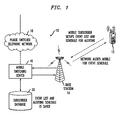
- Figure 1 illustrates a network into which the present invention may be incorporated
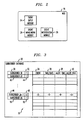
- FIG. 2 is a block diagram of a mobile switching center (MSC) according to the present invention.
- Figure 3 is an illustrative view of a database structure according to the present invention.
- Figure 4 is a flow chart illustrating a method according to the present invention.
- FIG. 5 is a call flow, or sequence diagram, illustrating an embodiment of the present invention.
- Figure 6 is a call flow, or sequence diagram, illustrating an embodiment of the present invention.
- FIG. 1 provides a view of an exemplary network into which the system according to the present invention may be implemented.
- a network 10 communicates with a mobile station 12.
- the network 10 may be formed in a variety of configurations; however, as illustrated, it comprises a base station, or cell site, 14 which communicates with a mobile switching center (MSC) 16.
- the mobile switching center (MSC) 16 may communicate with a variety of other networks or network components but, as shown, it communicates with a public switched telephone network (PSTN) 18.
- PSTN public switched telephone network
- the mobile switching center (MSC) 16 communicates with a subscriber database 20.
- the mobile station 12 may comprise any of a variety of known mobile communication devices such as wireless phones, personal digital assistance (PDAs) (with wireless connections), pagers, ... etc.
- the mobile station 12 communicates with the base station 14 to set-up an event list and schedule for alerting within the network, i.e., the mobile switching center (MSC) 16 and appropriate databases.
- Mobile station 12 is also operative to receive the network alerts based on the event list and schedule that is set-up by the user of the mobile station 12 within the network. Operation of the mobile station 12 according to the present invention also preferably depends on whether a user of mobile station 12 subscribes to the alert service of the present invention as provided by a service provider. Such subscription data is then maintained by the network.
- a subscribed mobile station 12 is used to set-up an event list and a schedule for alerting the mobile station 12. More specifically, the mobile station 12 accomplishes this by communicating with the base station 14 which, in turn, communicates this information to the mobile switching center (MSC) 16 and takes appropriate action.
- MSC mobile switching center
- mobile switching center (MSC) 16 which will be described in greater detail in connection with Figure 2, is operative to facilitate the set-up of the event list and schedule, receive appropriate data, determine if the user of mobile station 12 is a valid subscriber of the appropriate service, and otherwise facilitate the subsequent network initiated alerting of the mobile station 12. It should also be appreciated that not all networks use a mobile switching center, per se. However, the present invention may nonetheless be applied to whatever network component performs the primary switching functions.
- the subscriber database 20 which will be described in greater detail in connection with Figure 3, can be located at a variety of locations including in an appropriate home location register (HLR) associated with the mobile station 12.
- HLR home location register
- the subscriber database 20 is shown as a stand alone database; however, it might reside in a variety of locations and take a variety of forms.
- a feature of the subscriber database is that it stores therein an event list and an alerting schedule to facilitate the network initiated reminders and alerts according to the present invention.
- the subscriber database has stored therein subscriber information, event data, event occurrence data and alert time data.
- FIG. 2 a block diagram of a mobile switching center (MSC) 16 according to the present invention is illustrated.
- MSC mobile switching center
- the typically known network elements and functions of the mobile switching center are not illustrated.
- the mobile switching center (MSC) 16 includes an event input module 24, an event monitoring module 26, and an event notification module 28.
- the event input module 24 is operative to receive the event data, the occurrence data, and the alert time data from a mobile station 12 of a subscriber and store the event data, the event occurrence data, and the alert time data in the subscriber database 20. Furthermore, the event input module 24 is also operative to translate voice data to text data and/or text data to voice data. Procedures for accomplishing such translations are well known in the art.
- the event monitoring module 26 is operative to monitor the event data, the event occurrence data, and the alert time data stored in the subscriber database. In this regard, the event monitoring module 26 will trigger the event notification module 28 into operation upon detection of a necessary alert.
- the event notification module 28 is operative to provide a network initiated call to a subscriber, e.g., mobile station 12, based on the monitoring by the event monitoring module.
- the event notification module 28 includes means for translating voice or audio data to text data and text data to audio data using any of a variety of known techniques.
- subscriber database 20 having a user-defined event list 22 formed as a part thereof is shown.
- the subscriber database 20 includes subscriber identification information 30, subscriber information in the form of flag data (F) 32 to indicate whether a subscriber subscribes to the alert service, event data 34, event occurrence data 36 taking the form of time and date data, alert time data 38, and alert preference data 40.
- flag data F
- event data 34 may comprise either audio data that is input by a user or text data that could likewise be input by a user. In either form, the event data 34 corresponds to a description of an event, whether it be a simple text word such as "meeting" or a more lengthy audio segment recorded by a subscriber.
- the event input module 24 is operative and may be implemented to translate audio data to text data or text data to audio data, depending on the objectives of the user.
- the event occurrence data 36 comprises data on a time and date of the corresponding event.
- the alert time data 38 comprises data on a specified time to alert the subscriber through mobile station 12 that the event will be occurring.
- the alert time data may indicate that the subscriber be notified one hour before the event.
- the data may also take many forms.
- the event occurrence data 36 will comprise text data so that it can be appropriately monitored by the event monitoring module 26.
- the alert time data 38 is also, in most circumstances, stored as text data for appropriate monitoring and notification by the MSC.
- the alert preference data 40 comprises an indication as to a subscriber preference of the form of the alert to be provided to the subscriber.
- the alert preference data 40 comprises one of an indication of text data or voice data. This information is used by the event notification module 28 when it provides appropriate notification to a mobile station 12. In this way, the event notification module 28 can be used to provide an audio announcement to the mobile station 12 or a text message to be viewed on the mobile station 12.
- a subscriber # n-1 is shown as having a subscriber information flag reset to "0" at 48. Because the subscriber flag is indicated as being “0" in this case, no data need be entered in the event list. However, as shown, a default value of zero may also be input in the appropriate data block. Like the subscriber # 1, a subscriber # n, shown at 50, has a subscriber information flag set to "1". Again, because of the variety of forms that the event data, event occurrence data, alert time data, and alert preference data may take, no actual data is shown as being stored in these blocks.
- an additional field may be provided to indicate whether the event is a recurring event.
- the data field would also preferably include an indication as to the frequency at which the event will occur. This will allow for more effective monitoring by the event monitoring module 26.
- a recurring event data field also allows the system to delete events from the event listing for which notification and alert has already been provided, yet maintain the recurring events therein so that future alerts can be provided.
- FIG. 4 an exemplary method 100 is illustrated. It should be appreciated that the method 100 may be implemented using the network components illustrated in Figures 1, 2 and 3, or variations thereof, and appropriate software routines that are distributed among those components in manners that will be apparent to those of skill in the art upon reading and understanding the present invention. Of course, variations of the structure and objectives of the present invention may be implemented and still fall within the scope of the present invention.
- the method 100 includes initially allowing the mobile subscriber who uses mobile station 12 to set-up an event list and alert schedules on the network (step 102).
- the mobile switching center (MSC) 16 receives the event data, event occurrence data, and alert time data from mobile station 12.
- the mobile switching center (MSC) 16 then stores the event data, the event occurrence data, and the alert time data in a subscriber database 20 in a format such as that shown in Figure 3. Alert preference data may also be provided and stored.
- the data input to the mobile switching center (MSC) 16 and the storing of the data in the subscriber database is handled by the event input module 24.
- the mobile switching center (MSC) 16 also includes the event monitoring module 26 which monitors the subscriber database 20 (e.g., data fields 34, 36, 38 in Figure 3) to determine whether it is time to alert the mobile station 12 for any of the events listed in the event list 22 (step 104). If it is determined that no such alert should be undertaken, the system "does nothing" (step 106). However, if the event monitoring module 26 determines that an event will occur for which an alert should be provided, in one embodiment, the event text is translated to a voice using text-to-speech conversion techniques (step 106). Next, the mobile station 12 is alerted and the announcement is played to the mobile station 12 using the event notification module 28 (step 108).
- the subscriber database 20 e.g., data fields 34, 36, 38 in Figure 3
- the event data may be stored as audio data representing a recording of the subscriber's voice (stating, for example, "You have a group meeting in one hour"). In that case, no text to voice translation is necessary if the user alert preference 40 indicates that audio alerts should be provided.
- a call flow, or sequence diagram, 500 is provided to illustrate the set-up for the event list 22, as identified in Figure 3.
- the mobile station 12 sends a Mobile Event Set-up request 502 to a cell site 14.
- the Mobile Event Set-up request may include the event data, the event occurrence data, the alert time data, and the alert preference data.
- the Mobile Event Set-up request 504 is then forwarded on to the mobile switching center (MSC) 16 and received by the event input module 24.
- the input module 24 of the mobile switching center (MSC) 16 queries the subscriber database 20 through the home location register (HLR) 21, as shown at 506 and 508.
- the event listing 22 within the subscriber database 20 (as shown in Figure 3, for example) is accessed and the appropriate data is stored therein based on the data provided in the set-up message 502, 504.
- the mobile switching center (MSC) 16 is signaled, as shown at lines 510 and 512.
- the event input module 24 of the mobile switching center (MSC) 16 then sends an Event Set-up Acknowledge message back to the cell site 14 and then on to the mobile station 12, as shown at lines 514 and 516. In this way, the mobile station 12 is assured that the event has been listed and will be appropriately monitored by the network so that a suitable notification can be sent to the mobile station 12.
- the mobile switching center (MSC) 16 monitors the subscriber database 20 (e.g., the fields for the event data, the event occurrence data and the alert time data) to determine when an alert to the mobile station 12 will be necessary. Referring now to Figure 6, the monitoring is accomplished by using the event monitoring module 26 of the mobile switching center 16. Monitoring techniques are well known in the art. Upon detection that an event alert time stored in the database 20 has elapsed, the mobile switching center (MSC) 16 obtains appropriate information from the subscriber database, i.e., event list 22, as shown at lines 602 and 604. Through the event notification module 28, the mobile switching center (MSC) 16 then initiates the reminder or alert call.
- the subscriber database 20 e.g., the fields for the event data, the event occurrence data and the alert time data
- An MSC page message 606 is sent to a cell site 14 which then forwards a page mobile message 608 to the mobile station 12.
- the page mobile message may take the form of a ring or other indication to the mobile station 12 that an alert is forthcoming.
- the mobile station 12 then answers the page by providing a page response back to the mobile switching center (MSC) 16, as shown at lines 610 and 612. This may be accomplished by simply answering the call.
- MSC mobile switching center
- the appropriate message information is then retrieved from the event database as shown at lines 614 and 616, and then an announcement message is provided to the mobile station 12, as shown at lines 618 and 620.
- the form of the alert may be based on the alert preference data 40.
- the call flow 600 shown in Figure 6 is but one example of many circumstances that may occur with a system according to the present invention.
- the message ultimately forwarded to the mobile station 12 as an alert may also take the form of a text message.
- the network e.g., the event notification module
- variations in the types of data within the system may dictate variations in the call flow. For example, text-to-voice translation or voice-to-text translation may be included as steps within this procedure.
Landscapes
- Engineering & Computer Science (AREA)
- Business, Economics & Management (AREA)
- Human Resources & Organizations (AREA)
- Strategic Management (AREA)
- Entrepreneurship & Innovation (AREA)
- Operations Research (AREA)
- General Business, Economics & Management (AREA)
- Marketing (AREA)
- Data Mining & Analysis (AREA)
- Quality & Reliability (AREA)
- Tourism & Hospitality (AREA)
- Physics & Mathematics (AREA)
- Economics (AREA)
- General Physics & Mathematics (AREA)
- Theoretical Computer Science (AREA)
- Computer Networks & Wireless Communication (AREA)
- Signal Processing (AREA)
- Mobile Radio Communication Systems (AREA)
- Telephonic Communication Services (AREA)
Applications Claiming Priority (2)
| Application Number | Priority Date | Filing Date | Title |
|---|---|---|---|
| US10/698,916 US20050096095A1 (en) | 2003-10-31 | 2003-10-31 | Method and apparatus for network initiated event reminder alerting |
| US698916 | 2003-10-31 |
Publications (1)
| Publication Number | Publication Date |
|---|---|
| EP1528753A1 true EP1528753A1 (de) | 2005-05-04 |
Family
ID=34423428
Family Applications (1)
| Application Number | Title | Priority Date | Filing Date |
|---|---|---|---|
| EP04255947A Withdrawn EP1528753A1 (de) | 2003-10-31 | 2004-09-29 | Verfahren und Vorrichtung zum netzwerkiniziierten Warnen bezüglich einer Ereignisserinnerung |
Country Status (5)
| Country | Link |
|---|---|
| US (1) | US20050096095A1 (de) |
| EP (1) | EP1528753A1 (de) |
| JP (1) | JP2005303976A (de) |
| KR (1) | KR20050041875A (de) |
| CN (1) | CN1617610A (de) |
Cited By (1)
| Publication number | Priority date | Publication date | Assignee | Title |
|---|---|---|---|---|
| CN108391000A (zh) * | 2018-01-31 | 2018-08-10 | 维沃移动通信有限公司 | 一种提醒方法、移动终端 |
Families Citing this family (23)
| Publication number | Priority date | Publication date | Assignee | Title |
|---|---|---|---|---|
| US7535922B1 (en) * | 2002-09-26 | 2009-05-19 | At&T Intellectual Property I, L.P. | Devices, systems and methods for delivering text messages |
| US7532877B2 (en) * | 2004-05-21 | 2009-05-12 | Cisco Technology, Inc. | System and method for voice scheduling and multimedia alerting |
| US7631042B2 (en) * | 2004-06-30 | 2009-12-08 | International Business Machines Corporation | Method to update status on multiple voice and text systems from a single device |
| US8375119B2 (en) * | 2004-07-27 | 2013-02-12 | At&T Intellectual Property I, L. P. | Methods, systems, devices, and products for providing alerts for communications |
| US7400229B2 (en) * | 2005-04-04 | 2008-07-15 | International Business Machines Corporation | Method, system, and computer program product for providing an intelligent event notification system |
| CN1882014B (zh) * | 2005-06-17 | 2010-05-05 | 中兴通讯股份有限公司 | 一种基于智能网的用户日程提醒方法 |
| KR100742363B1 (ko) * | 2005-10-07 | 2007-07-25 | 엘지전자 주식회사 | 알림 통합 관리 휴대단말기 |
| US20070255786A1 (en) * | 2006-04-27 | 2007-11-01 | Mock Von A | Method and system for managing meetings using group calling |
| US20070273506A1 (en) * | 2006-05-25 | 2007-11-29 | Jeffrey H. Butler | Remote notification system |
| US20080039021A1 (en) * | 2006-07-27 | 2008-02-14 | Vadim Fux | Speech-Based Notification On A Handheld Device |
| GB2460199A (en) * | 2007-03-08 | 2009-11-25 | Promptalert Inc | System and method for processing and updating event related information using automated reminders |
| US7873520B2 (en) * | 2007-09-18 | 2011-01-18 | Oon-Gil Paik | Method and apparatus for tagtoe reminders |
| US8818466B2 (en) * | 2008-10-29 | 2014-08-26 | Centurylink Intellectual Property Llc | System and method for wireless home communications |
| EP2499850A4 (de) * | 2009-11-11 | 2014-02-26 | Chen Shiang Khoo | Personalisiertes schutzsystem mit automatischer notfallkontaktbenachrichtigung auf grundlage aufgezeichneter ereignisse |
| US8626553B2 (en) | 2010-07-30 | 2014-01-07 | General Motors Llc | Method for updating an electronic calendar in a vehicle |
| CN102012909A (zh) * | 2010-11-17 | 2011-04-13 | 深圳市多赢软件技术有限公司 | 一种事件提醒业务处理方法 |
| US8755788B2 (en) * | 2012-04-30 | 2014-06-17 | Motorola Solutions, Inc. | Method and apparatus for providing site and system-wide alert tones |
| CN103577965B (zh) * | 2012-07-30 | 2018-10-16 | 腾讯科技(深圳)有限公司 | 一种事务提醒方法和装置 |
| US9686365B2 (en) | 2012-11-14 | 2017-06-20 | Metropolitan Life Insurance Co. | System and method for event triggered information distribution |
| US10371472B2 (en) | 2012-11-14 | 2019-08-06 | Metropolitan Life Insurance Co. | System and method for event triggered information distribution |
| DE102015203193A1 (de) * | 2015-02-23 | 2016-08-25 | Bayerische Motoren Werke Aktiengesellschaft | Fahrzeug, System und Verfahren für die Weiterleitung von Ereignissen |
| CN106297780A (zh) * | 2015-06-03 | 2017-01-04 | 深圳市轻生活科技有限公司 | 一种语音交互方法及系统、以及智能语音播报终端 |
| CN106599211A (zh) * | 2016-12-15 | 2017-04-26 | 山西省交通科学研究院 | 一种事故隐患信息自动推送系统及方法 |
Citations (6)
| Publication number | Priority date | Publication date | Assignee | Title |
|---|---|---|---|---|
| US6044275A (en) * | 1998-03-23 | 2000-03-28 | Ericsson Inc. | System and method for time defined delivery of short message service messages |
| US20010019603A1 (en) * | 2000-03-06 | 2001-09-06 | Mitel Knowledge Corporation | Timed schedule reminder via telephone |
| US20020025813A1 (en) * | 2000-08-08 | 2002-02-28 | Bernhard Boehmer | Method and device for administering a multiplicity of terminals |
| US20020165751A1 (en) * | 2001-04-17 | 2002-11-07 | Bhargavi Upadhya | Reminder system using a service station |
| WO2003034157A2 (en) * | 2001-10-15 | 2003-04-24 | Outburst Technologies, Inc. | A method and apparatus to receive selected audio content |
| US20030088427A1 (en) * | 2001-11-02 | 2003-05-08 | Elsey Nicholas J. | Technique for effective management of schedules of time-sensitive events from different sources |
Family Cites Families (3)
| Publication number | Priority date | Publication date | Assignee | Title |
|---|---|---|---|---|
| US5903845A (en) * | 1996-06-04 | 1999-05-11 | At&T Wireless Services Inc. | Personal information manager for updating a telecommunication subscriber profile |
| US6219694B1 (en) * | 1998-05-29 | 2001-04-17 | Research In Motion Limited | System and method for pushing information from a host system to a mobile data communication device having a shared electronic address |
| US6459913B2 (en) * | 1999-05-03 | 2002-10-01 | At&T Corp. | Unified alerting device and method for alerting a subscriber in a communication network based upon the result of logical functions |
-
2003
- 2003-10-31 US US10/698,916 patent/US20050096095A1/en not_active Abandoned
-
2004
- 2004-09-29 CN CN200410100588.4A patent/CN1617610A/zh active Pending
- 2004-09-29 EP EP04255947A patent/EP1528753A1/de not_active Withdrawn
- 2004-09-30 JP JP2004286389A patent/JP2005303976A/ja active Pending
- 2004-09-30 KR KR1020040078001A patent/KR20050041875A/ko not_active Withdrawn
Patent Citations (6)
| Publication number | Priority date | Publication date | Assignee | Title |
|---|---|---|---|---|
| US6044275A (en) * | 1998-03-23 | 2000-03-28 | Ericsson Inc. | System and method for time defined delivery of short message service messages |
| US20010019603A1 (en) * | 2000-03-06 | 2001-09-06 | Mitel Knowledge Corporation | Timed schedule reminder via telephone |
| US20020025813A1 (en) * | 2000-08-08 | 2002-02-28 | Bernhard Boehmer | Method and device for administering a multiplicity of terminals |
| US20020165751A1 (en) * | 2001-04-17 | 2002-11-07 | Bhargavi Upadhya | Reminder system using a service station |
| WO2003034157A2 (en) * | 2001-10-15 | 2003-04-24 | Outburst Technologies, Inc. | A method and apparatus to receive selected audio content |
| US20030088427A1 (en) * | 2001-11-02 | 2003-05-08 | Elsey Nicholas J. | Technique for effective management of schedules of time-sensitive events from different sources |
Cited By (2)
| Publication number | Priority date | Publication date | Assignee | Title |
|---|---|---|---|---|
| CN108391000A (zh) * | 2018-01-31 | 2018-08-10 | 维沃移动通信有限公司 | 一种提醒方法、移动终端 |
| CN108391000B (zh) * | 2018-01-31 | 2019-10-29 | 维沃移动通信有限公司 | 一种提醒方法、移动终端及计算机可读存储介质 |
Also Published As
| Publication number | Publication date |
|---|---|
| JP2005303976A (ja) | 2005-10-27 |
| US20050096095A1 (en) | 2005-05-05 |
| KR20050041875A (ko) | 2005-05-04 |
| CN1617610A (zh) | 2005-05-18 |
Similar Documents
| Publication | Publication Date | Title |
|---|---|---|
| US20050096095A1 (en) | Method and apparatus for network initiated event reminder alerting | |
| CN100370789C (zh) | 自动对收到的邮件消息进行分类的设备、方法和记录媒体 | |
| US6892074B2 (en) | Selective message service to primary and secondary mobile stations | |
| US7010288B2 (en) | System and method for providing an automatic response to a telephone call | |
| US20180322186A1 (en) | System and method for processing speech files | |
| US20090067593A1 (en) | Method for Dynamically Assembling Voice Messages at a Wireless Communication Device | |
| US20040247090A1 (en) | Process for providing alert notification to communication devices | |
| JPH10512134A (ja) | テレコミュニケーションサービスを提供するための方法および装置 | |
| CN1272997A (zh) | 用于把消息通报给用户的方法 | |
| EP1683279A1 (de) | Gleichzeitige voice- und datenkommunikation über ein drahtloses netzwerk | |
| US7003279B2 (en) | Peak time indicator | |
| EP2059009A1 (de) | Mobiles Endgerät und Verfahren zur Verarbeitung von Multimedianachrichten | |
| US20060025159A1 (en) | System and method for context-based notification of a received transmission | |
| JP2003116175A (ja) | 発呼通知制御装置 | |
| US8331539B2 (en) | Method and system for representing the attributes of an incoming call | |
| US6987443B2 (en) | Unified paging | |
| US20070190991A1 (en) | Method for automatically restoring the default alert setting of a cellular telephone | |
| US20100041386A1 (en) | System and method for controlling handling of terminating a communication | |
| EP1694039A1 (de) | Nachrichten und Informationssystem | |
| US20040219906A1 (en) | Wireless verbal announcing method and system | |
| WO2002098149A2 (en) | Method and apparatus for remote scheduling | |
| CN101352024A (zh) | 用于向主叫方提供与播放给主叫方的消息有关的信息的方法和通信系统 | |
| US7711390B2 (en) | Apparatus and method for controlling display of a message at a mobile terminal | |
| US20050063521A1 (en) | Targeted information recognition in a voice communication | |
| WO2009035722A1 (en) | Apparatus. and an associated methodology, for providing repeat notification at a radio communication device |
Legal Events
| Date | Code | Title | Description |
|---|---|---|---|
| PUAI | Public reference made under article 153(3) epc to a published international application that has entered the european phase |
Free format text: ORIGINAL CODE: 0009012 |
|
| 17P | Request for examination filed |
Effective date: 20041011 |
|
| AK | Designated contracting states |
Kind code of ref document: A1 Designated state(s): AT BE BG CH CY CZ DE DK EE ES FI FR GB GR HU IE IT LI LU MC NL PL PT RO SE SI SK TR |
|
| AX | Request for extension of the european patent |
Extension state: AL HR LT LV MK |
|
| 17Q | First examination report despatched |
Effective date: 20050617 |
|
| AKX | Designation fees paid |
Designated state(s): DE FR GB |
|
| STAA | Information on the status of an ep patent application or granted ep patent |
Free format text: STATUS: THE APPLICATION IS DEEMED TO BE WITHDRAWN |
|
| 18D | Application deemed to be withdrawn |
Effective date: 20061020 |