EP1528467A2 - Verfahren und System zur Bereitstellung von Datenobjekten an Komponenten eines verteilten Systems, unter Verwendung von mehrfachen Datentyprepräsentationen - Google Patents
Verfahren und System zur Bereitstellung von Datenobjekten an Komponenten eines verteilten Systems, unter Verwendung von mehrfachen Datentyprepräsentationen Download PDFInfo
- Publication number
- EP1528467A2 EP1528467A2 EP04254855A EP04254855A EP1528467A2 EP 1528467 A2 EP1528467 A2 EP 1528467A2 EP 04254855 A EP04254855 A EP 04254855A EP 04254855 A EP04254855 A EP 04254855A EP 1528467 A2 EP1528467 A2 EP 1528467A2
- Authority
- EP
- European Patent Office
- Prior art keywords
- data type
- type representation
- data
- representation
- node
- Prior art date
- Legal status (The legal status is an assumption and is not a legal conclusion. Google has not performed a legal analysis and makes no representation as to the accuracy of the status listed.)
- Withdrawn
Links
Images



Classifications
-
- G—PHYSICS
- G06—COMPUTING OR CALCULATING; COUNTING
- G06F—ELECTRIC DIGITAL DATA PROCESSING
- G06F13/00—Interconnection of, or transfer of information or other signals between, memories, input/output devices or central processing units
-
- G—PHYSICS
- G06—COMPUTING OR CALCULATING; COUNTING
- G06F—ELECTRIC DIGITAL DATA PROCESSING
- G06F9/00—Arrangements for program control, e.g. control units
- G06F9/06—Arrangements for program control, e.g. control units using stored programs, i.e. using an internal store of processing equipment to receive or retain programs
- G06F9/46—Multiprogramming arrangements
- G06F9/54—Interprogram communication
- G06F9/547—Remote procedure calls [RPC]; Web services
- G06F9/548—Object oriented; Remote method invocation [RMI]
-
- G—PHYSICS
- G06—COMPUTING OR CALCULATING; COUNTING
- G06F—ELECTRIC DIGITAL DATA PROCESSING
- G06F13/00—Interconnection of, or transfer of information or other signals between, memories, input/output devices or central processing units
- G06F13/14—Handling requests for interconnection or transfer
- G06F13/36—Handling requests for interconnection or transfer for access to common bus or bus system
- G06F13/368—Handling requests for interconnection or transfer for access to common bus or bus system with decentralised access control
-
- G—PHYSICS
- G06—COMPUTING OR CALCULATING; COUNTING
- G06F—ELECTRIC DIGITAL DATA PROCESSING
- G06F13/00—Interconnection of, or transfer of information or other signals between, memories, input/output devices or central processing units
- G06F13/38—Information transfer, e.g. on bus
Definitions
- the invention relates generally to distributed software systems and networks, and more particularly to using text-based encoding to transfer data objects across networks. Still more particularly, the invention relates to a method and system for using multiple data type representations to deliver data objects to components in a distributed system.
- a data object typically includes a collection of data items, and may also include behavior or code associated with particular data.
- a data object is also "typed.”
- the "type" of a data object specifies the data items that the object contains as well as the operations it can perform.
- a text representation of a data object is utilized to transfer the information in the data object over a network. Each node in a network must be able to convert the text representation into a format that can be used by one or more components residing within that node. Nodes typically include various types of computing devices.
- FIG. 1a is a data flow diagram of a first type of data object conversion according to the prior art.
- a data object of a particular type (logical type 100) is converted to a native data type representation 102.
- a native data type representation refers to a native format, such as a native binary format, that is usable by the underlying software environment.
- a native binary format such as a native binary format
- One example would be the Java byte code that is executable on Java virtual machines.
- Each distinct type of data object can have its own unique binary representation, and a node in a distributed network includes instructions on how to represent the data objects in a native format.
- a receiving node within the network may be built and deployed before a sending node is produced.
- the newer sending node when deployed, may contain new data object types not known to the existing nodes in the network. Consequently, the older receiving node may not include all of the necessary instructions to convert all of the logical types 100 received from the newer sending node into native data type representations 102.
- the older receiving node must be retrofitted with additional instructions in order to receive data objects from the newer sending node.
- Each node in the network utilizes a fixed set of object encoding to convert a logical type 100 into to a generic container data type representation 104.
- a data object is represented by aggregating its constituent fundamental data items within a known type of container data structure such as an array or vector.
- a data model that utilizes a generic container data type representation is the IEEE 1451.1 specification.
- the generic container data type representation 104 does not provide the same design capabilities and support that a native data type representation 102 provides, since the generic container data type representation 104 cannot be typed at compile time. Consequently, systems that support the generic container data type representation lose the ability for static type checking. Additionally, the same container type is used to represent multiple logical data types, so these systems cannot associate type-specific behavior with the containers.
- a node within a network receives a data object and generates a generic container data type representation. Data in the received data object are mapped into one or more fundamental data items, such as integers, floats, and bytes, and then placed within a container such as an array.
- the container data type representation is assigned an annotation, or identifier, based on the contents within the container.
- the node determines whether a native data type representation that corresponds to the container data type representation is available on the node. If a native data type representation is available, the node transforms the container data type representation into a native data type representation and transmits the native data type representation to a component residing within the node.
- the node transmits the container data type representation to a component when a native data type representation does not exist within the node.
- the node determines whether some or all of the data in the container data type representation can be transformed into an incomplete native data type representation when a native data type representation is not available. If data cannot be transformed into an incomplete native data type representation, the node transmits the container data type representation to a component. If, however, data can be transformed into an incomplete native data type representation, the node transforms the known data into the incomplete native data type representation. The node then transmits the incomplete native data type representation to a component residing within the node. The node may also transmit the container data type representation to the component along with the incomplete native data type representation.
- the invention relates to a method and system for using multiple type representations to deliver data objects to components in a distributed system.
- the following description is presented to enable one skilled in the art to make and use the invention, and is provided in the context of a patent application and its requirements. Various modifications to the disclosed embodiments will be readily apparent to those skilled in the art, and the generic principles herein may be applied to other embodiments. Thus, the invention is not intended to be limited to the embodiments shown, but is to be accorded the widest scope consistent with the appended claims and with the principles and features described herein.
- a logical data type 100 is mapped into multiple physical type representations.
- the multiple physical type representations include a generic container data type representation 104 and different native data type representations 202, 204, 206 in this embodiment in accordance with the invention.
- the different native data type representations include, but are not limited to, C++ object types and Java object types.
- Each native data type representation can be transformed into the container data type representation, and the container data type representation can be transformed into one or more native data type representations.
- FIG. 3 is a flowchart of a method for receiving data objects in a first embodiment in accordance with the invention.
- a node receives data and decodes the network transmission format, as shown in block 300.
- Network transmission formats include, but are not limited to, data frames including a preamble and a payload, where the payload typically includes an aggregation of data objects, and network encoding based on the XML protocol.
- An instance of a generic container data type representation is created to hold the data objects, as shown in block 302.
- the container data type representation is then tagged with an annotation, or identifier, at block 304.
- the annotation in this embodiment in accordance with the invention is a human readable string to annotate the logical type the container data type represents.
- Containers that contain the same types and instances of data items are assigned identical annotations, while containers that contain different types and instances of data items are assigned different annotations.
- a determination is then made at block 306 as to whether the node has a native data type representation corresponding to the annotation and container content.
- the process passes to block 308 where the container data type representation is transmitted to a component within the node.
- a component includes any program or device that can access or utilize the data items within a container data type representation and/or a native data type representation.
- a component can elect to accept data in a container data type representation or in a native data type representation in this embodiment in accordance with the invention.
- a system designer may prefer the component accept data in a generic container data type representation.
- a component may be able to act on a specific type of data only, or it may require a behavior or code associated with a particular data.
- a system designer may prefer a component accept data in a native data type representation.
- FIG. 4 is a flowchart of a method for receiving data objects in a second embodiment in accordance with the invention.
- a node receives data and decodes the network transmission format, as shown in block 400.
- An instance of a generic container data type representation is created to hold the data objects and the container data type representation is annotated, as shown in block 402.
- Content is "known" by a node when some or all of the data fields can be transformed into an incomplete native data type representation.
- An incomplete native data type representation is a representation where all of the data fields in a native data type representation are not initialized. If the node does not know some or all of the content, the process passes to block 408 where the container data type representation is transmitted to a component.
- the container data type representation continues to store all of the content in this embodiment in accordance with the invention.
- the multiple data type representations i.e., the container data type representation and the incomplete native data type representation
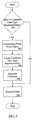
- FIG. 5 is a flowchart of a method for transmitting data objects in a third embodiment in accordance with the invention.
- a determination is made at block 500 as to whether the data is stored in a generic container data type representation.
- the container data type representation is transmitted over a network if the data is held in a container data type representation (block 502).
- the process passes to block 504 where the data fields are extracted from the object.
- a generic container data type representation is created to hold the data and the container data type representation is annotated (blocks 506 and 508).
- the annotation in this embodiment in accordance with the invention is a human readable string to annotate the logical type the container data type represents.
- the container data type representation is then transmitted over a network (block 502).
- Node 600 includes an interface 602 and a component 604.
- Node 600 receives data from a network and interface 602 creates a generic container data type representation to hold the data.
- Interface 602 determines whether node 600 has a native data type representation that corresponds to the container data type representation. In this embodiment in accordance with the invention, node 600 does have a native data type representation that corresponds to the container data type representation.
- Interface 602 extracts the data fields from the container data type representation and transforms the data fields into a native data type representation.
- Interface 602 then transmits the native data type representation to component 604.
- FIG. 7 is a block diagram of a second node in accordance with the invention.
- Node 700 includes an interface 702 and a component 704.
- Node 700 receives data from a network and interface 702 creates a generic container data type representation to hold the data.
- Interface 702 determines whether node 700 has a native data type representation that corresponds to the container data type representation. In this embodiment in accordance with the invention, node 700 does not have a native data type representation that corresponds to the container data type representation.
- Node 700 determines whether it knows some or all of the data in the container data type representation. Node 700, however, does not know any of the content in the container data type representation. Therefore, interface 702 transmits the container data type representation to component 704.
- Node 800 includes an interface 802 and two components 804, 806.
- Node 800 receives data from the network and interface 802 creates a generic container data type representation to hold the data.
- Node 800 does not have a native data type representation that corresponds to the container content, but node 800 does know some of the content in the container data type representation.
- Component 804 has elected to receive data in the generic container data type representation, so interface 802 transmits the container data type representation to component 804.
- component 806 has elected to receive an incomplete native data type representation. So interface 802 extracts the known data fields in the container and transforms these data fields into an incomplete native data type representation. Interface 802 then transmits the incomplete native data type to component 806.
Landscapes
- Engineering & Computer Science (AREA)
- Theoretical Computer Science (AREA)
- Physics & Mathematics (AREA)
- General Engineering & Computer Science (AREA)
- General Physics & Mathematics (AREA)
- Software Systems (AREA)
- Information Transfer Between Computers (AREA)
- Information Retrieval, Db Structures And Fs Structures Therefor (AREA)
- Computer And Data Communications (AREA)
Applications Claiming Priority (2)
| Application Number | Priority Date | Filing Date | Title |
|---|---|---|---|
| US674323 | 1996-07-01 | ||
| US10/674,323 US20050091405A1 (en) | 2003-09-30 | 2003-09-30 | Method and system for using multiple data type representations to deliver data objects to components in a distributed system |
Publications (2)
| Publication Number | Publication Date |
|---|---|
| EP1528467A2 true EP1528467A2 (de) | 2005-05-04 |
| EP1528467A3 EP1528467A3 (de) | 2006-02-15 |
Family
ID=34422061
Family Applications (1)
| Application Number | Title | Priority Date | Filing Date |
|---|---|---|---|
| EP04254855A Withdrawn EP1528467A3 (de) | 2003-09-30 | 2004-08-12 | Verfahren und System zur Bereitstellung von Datenobjekten an Komponenten eines verteilten Systems, unter Verwendung von mehrfachen Datentyprepräsentationen |
Country Status (4)
| Country | Link |
|---|---|
| US (1) | US20050091405A1 (de) |
| EP (1) | EP1528467A3 (de) |
| KR (1) | KR20050031954A (de) |
| CN (1) | CN100375425C (de) |
Families Citing this family (6)
| Publication number | Priority date | Publication date | Assignee | Title |
|---|---|---|---|---|
| US8132093B2 (en) * | 2006-08-14 | 2012-03-06 | Microsoft Corporation | Instance annotation in object-oriented programming |
| US8122101B2 (en) * | 2006-12-29 | 2012-02-21 | Sap Ag | Methods and systems for distributing software |
| US8200786B2 (en) * | 2006-12-29 | 2012-06-12 | Sap Ag | Methods and systems for distributing software |
| US20080163200A1 (en) * | 2006-12-29 | 2008-07-03 | Volker Schulz | Methods and systems for distributing software |
| US8200787B2 (en) * | 2006-12-29 | 2012-06-12 | Sap Ag | Methods and systems for distributing software |
| CN105787080B (zh) * | 2016-03-02 | 2019-04-19 | 深圳市元征科技股份有限公司 | 节点数据处理方法及装置 |
Citations (2)
| Publication number | Priority date | Publication date | Assignee | Title |
|---|---|---|---|---|
| EP1117033A1 (de) | 2000-01-14 | 2001-07-18 | Sun Microsystems, Inc. | Dynamische Sendefunktion |
| US20030014556A1 (en) | 2001-04-26 | 2003-01-16 | Alan Conway | Method and system for a client invoking on an interface defined in a first notation to invoke an object having an interface defined in a second notation |
Family Cites Families (8)
| Publication number | Priority date | Publication date | Assignee | Title |
|---|---|---|---|---|
| JPH03288934A (ja) * | 1990-04-05 | 1991-12-19 | Fujitsu Ltd | 仮想計算機システムにおけるデータ転送制御方式 |
| US20060129627A1 (en) * | 1996-11-22 | 2006-06-15 | Mangosoft Corp. | Internet-based shared file service with native PC client access and semantics and distributed version control |
| US6408342B1 (en) * | 1997-03-28 | 2002-06-18 | Keith E. Moore | Communications framework for supporting multiple simultaneous communications protocols in a distributed object environment |
| US6751573B1 (en) * | 2000-01-10 | 2004-06-15 | Agilent Technologies, Inc. | Performance monitoring in distributed systems using synchronized clocks and distributed event logs |
| US6822945B2 (en) * | 2000-11-08 | 2004-11-23 | Genesys Telecommunications Laboratories, Inc. | Method and apparatus for anticipating and planning communication-center resources based on evaluation of events waiting in a communication center master queue |
| US7296042B2 (en) * | 2001-04-20 | 2007-11-13 | Palo Alto Research Center Incorporated | System and method for enabling communication among arbitrary components |
| US8108499B2 (en) * | 2001-09-12 | 2012-01-31 | Alcatel Societe Anonyme | Name registrar system and method |
| US7840943B2 (en) * | 2003-08-08 | 2010-11-23 | Oracle America, Inc. | Method and apparatus for transferring data in a distributed testing system |
-
2003
- 2003-09-30 US US10/674,323 patent/US20050091405A1/en not_active Abandoned
-
2004
- 2004-06-15 CN CNB2004100487428A patent/CN100375425C/zh not_active Expired - Fee Related
- 2004-08-12 EP EP04254855A patent/EP1528467A3/de not_active Withdrawn
- 2004-09-24 KR KR1020040076974A patent/KR20050031954A/ko not_active Ceased
Patent Citations (2)
| Publication number | Priority date | Publication date | Assignee | Title |
|---|---|---|---|---|
| EP1117033A1 (de) | 2000-01-14 | 2001-07-18 | Sun Microsystems, Inc. | Dynamische Sendefunktion |
| US20030014556A1 (en) | 2001-04-26 | 2003-01-16 | Alan Conway | Method and system for a client invoking on an interface defined in a first notation to invoke an object having an interface defined in a second notation |
Also Published As
| Publication number | Publication date |
|---|---|
| CN100375425C (zh) | 2008-03-12 |
| EP1528467A3 (de) | 2006-02-15 |
| CN1604529A (zh) | 2005-04-06 |
| US20050091405A1 (en) | 2005-04-28 |
| KR20050031954A (ko) | 2005-04-06 |
Similar Documents
| Publication | Publication Date | Title |
|---|---|---|
| US7730150B2 (en) | System and method for improved client server communications of email messages | |
| US8423621B2 (en) | System and method for improved synchronization between a server and a client | |
| US20250086194A1 (en) | Data processing method, electronic device, and storage medium | |
| CN103294652B (zh) | 一种数据转换方法及系统 | |
| EP1631024B1 (de) | Verfahren zur Datenströmung zwischen einem Server und einem Client | |
| US10666718B2 (en) | Dynamic data transport between enterprise and business computing systems | |
| CN111683066B (zh) | 异构系统集成方法、装置、计算机设备和存储介质 | |
| US20100115041A1 (en) | Creating a message readable by a plurality of heterogeneous recipients | |
| US20100115126A1 (en) | Automated conversion of versioned data collections | |
| CN103389992A (zh) | 一种结构化数据存储方法及装置 | |
| KR101683287B1 (ko) | 메시지 맵을 활용한 포맷된 메시지 처리 | |
| CN103646015B (zh) | 发送、接收以及传输xml报文的方法和系统 | |
| US20050091405A1 (en) | Method and system for using multiple data type representations to deliver data objects to components in a distributed system | |
| US20230342342A1 (en) | Methods, Apparatuses and Computer Program Products for Stable Identifier Assignment for Evolving Data Structures | |
| US20070239818A1 (en) | Method, apparatus and system for transforming, converting and processing messages between multiple systems | |
| US11216424B2 (en) | Dynamically rendering an application programming interface for internet of things applications | |
| CN105827541A (zh) | 用于联机交易的数据报文处理方法和系统 | |
| CN117170908B (zh) | 基于网络系统异构数据的数据交换方法、系统及装置 | |
| CN101326519A (zh) | 用于将xml文档加载到存储器中的方法和机制 | |
| CN112434507A (zh) | 一种基于票据元素配置的电子票据生成方法 | |
| CN112379886A (zh) | 数据格式转换系统及其方法 | |
| JP2006216027A (ja) | 同じアイテムを表すデータ構造間で生データを転送するメカニズム | |
| US20240385820A1 (en) | Service code interpretation weaving method, service system and storage medium | |
| US20050022162A1 (en) | Method of translating a message from a first markup language into a second markup language | |
| KR20180108505A (ko) | 메타 모델 기반 프로토콜의 저용량 전송을 위한 데이터 변형 방법 및 메타 모델 기반 프로토콜의 저용량 전송을 위한 데이터 전송 시스템 |
Legal Events
| Date | Code | Title | Description |
|---|---|---|---|
| PUAI | Public reference made under article 153(3) epc to a published international application that has entered the european phase |
Free format text: ORIGINAL CODE: 0009012 |
|
| AK | Designated contracting states |
Kind code of ref document: A2 Designated state(s): AT BE BG CH CY CZ DE DK EE ES FI FR GB GR HU IE IT LI LU MC NL PL PT RO SE SI SK TR |
|
| AX | Request for extension of the european patent |
Extension state: AL HR LT LV MK |
|
| PUAL | Search report despatched |
Free format text: ORIGINAL CODE: 0009013 |
|
| AK | Designated contracting states |
Kind code of ref document: A3 Designated state(s): AT BE BG CH CY CZ DE DK EE ES FI FR GB GR HU IE IT LI LU MC NL PL PT RO SE SI SK TR |
|
| AX | Request for extension of the european patent |
Extension state: AL HR LT LV MK |
|
| RIC1 | Information provided on ipc code assigned before grant |
Ipc: G06F 9/54 20060101AFI20051223BHEP |
|
| 17P | Request for examination filed |
Effective date: 20060814 |
|
| AKX | Designation fees paid |
Designated state(s): DE FR GB |
|
| 17Q | First examination report despatched |
Effective date: 20061228 |
|
| RAP1 | Party data changed (applicant data changed or rights of an application transferred) |
Owner name: AGILENT TECHNOLOGIES, INC. |
|
| APBK | Appeal reference recorded |
Free format text: ORIGINAL CODE: EPIDOSNREFNE |
|
| APBN | Date of receipt of notice of appeal recorded |
Free format text: ORIGINAL CODE: EPIDOSNNOA2E |
|
| APAZ | Date of receipt of statement of grounds of appeal deleted |
Free format text: ORIGINAL CODE: EPIDOSDNOA3E |
|
| APBR | Date of receipt of statement of grounds of appeal recorded |
Free format text: ORIGINAL CODE: EPIDOSNNOA3E |
|
| APBR | Date of receipt of statement of grounds of appeal recorded |
Free format text: ORIGINAL CODE: EPIDOSNNOA3E |
|
| APAF | Appeal reference modified |
Free format text: ORIGINAL CODE: EPIDOSCREFNE |
|
| APAF | Appeal reference modified |
Free format text: ORIGINAL CODE: EPIDOSCREFNE |
|
| RAP1 | Party data changed (applicant data changed or rights of an application transferred) |
Owner name: JDS UNIPHASE CORPORATION |
|
| APBT | Appeal procedure closed |
Free format text: ORIGINAL CODE: EPIDOSNNOA9E |
|
| STAA | Information on the status of an ep patent application or granted ep patent |
Free format text: STATUS: THE APPLICATION HAS BEEN WITHDRAWN |
|
| 18W | Application withdrawn |
Effective date: 20110330 |