EP1527691A1 - Verfahren zur Herstellung von hochwertigen fermentierten Sojabohnenprodukten - Google Patents
Verfahren zur Herstellung von hochwertigen fermentierten Sojabohnenprodukten Download PDFInfo
- Publication number
- EP1527691A1 EP1527691A1 EP04256400A EP04256400A EP1527691A1 EP 1527691 A1 EP1527691 A1 EP 1527691A1 EP 04256400 A EP04256400 A EP 04256400A EP 04256400 A EP04256400 A EP 04256400A EP 1527691 A1 EP1527691 A1 EP 1527691A1
- Authority
- EP
- European Patent Office
- Prior art keywords
- soy
- deflavored
- proteins
- membrane
- ultrafiltration
- Prior art date
- Legal status (The legal status is an assumption and is not a legal conclusion. Google has not performed a legal analysis and makes no representation as to the accuracy of the status listed.)
- Granted
Links
- 0 CC1C2=CC2C(CCC2C*(C)CCC2)C1 Chemical compound CC1C2=CC2C(CCC2C*(C)CCC2)C1 0.000 description 1
Images




Classifications
-
- A—HUMAN NECESSITIES
- A21—BAKING; EDIBLE DOUGHS
- A21D—TREATMENT OF FLOUR OR DOUGH FOR BAKING, e.g. BY ADDITION OF MATERIALS; BAKING; BAKERY PRODUCTS
- A21D13/00—Finished or partly finished bakery products
- A21D13/06—Products with modified nutritive value, e.g. with modified starch content
- A21D13/064—Products with modified nutritive value, e.g. with modified starch content with modified protein content
-
- A—HUMAN NECESSITIES
- A23—FOODS OR FOODSTUFFS; TREATMENT THEREOF, NOT COVERED BY OTHER CLASSES
- A23C—DAIRY PRODUCTS, e.g. MILK, BUTTER OR CHEESE; MILK OR CHEESE SUBSTITUTES; PREPARATION THEREOF
- A23C11/00—Milk substitutes, e.g. coffee whitener compositions
- A23C11/02—Milk substitutes, e.g. coffee whitener compositions containing at least one non-milk component as source of fats or proteins
- A23C11/06—Milk substitutes, e.g. coffee whitener compositions containing at least one non-milk component as source of fats or proteins containing non-milk proteins
-
- A—HUMAN NECESSITIES
- A23—FOODS OR FOODSTUFFS; TREATMENT THEREOF, NOT COVERED BY OTHER CLASSES
- A23C—DAIRY PRODUCTS, e.g. MILK, BUTTER OR CHEESE; MILK OR CHEESE SUBSTITUTES; PREPARATION THEREOF
- A23C11/00—Milk substitutes, e.g. coffee whitener compositions
- A23C11/02—Milk substitutes, e.g. coffee whitener compositions containing at least one non-milk component as source of fats or proteins
- A23C11/10—Milk substitutes, e.g. coffee whitener compositions containing at least one non-milk component as source of fats or proteins containing or not lactose but no other milk components as source of fats, carbohydrates or proteins
- A23C11/103—Milk substitutes, e.g. coffee whitener compositions containing at least one non-milk component as source of fats or proteins containing or not lactose but no other milk components as source of fats, carbohydrates or proteins containing only proteins from pulses, oilseeds or nuts, e.g. nut milk
- A23C11/106—Addition of, or treatment with, microorganisms
-
- A—HUMAN NECESSITIES
- A23—FOODS OR FOODSTUFFS; TREATMENT THEREOF, NOT COVERED BY OTHER CLASSES
- A23G—COCOA; COCOA PRODUCTS, e.g. CHOCOLATE; SUBSTITUTES FOR COCOA OR COCOA PRODUCTS; CONFECTIONERY; CHEWING GUM; ICE-CREAM; PREPARATION THEREOF
- A23G1/00—Cocoa; Cocoa products, e.g. chocolate; Substitutes therefor
- A23G1/30—Cocoa products, e.g. chocolate; Substitutes therefor
- A23G1/32—Cocoa products, e.g. chocolate; Substitutes therefor characterised by the composition containing organic or inorganic compounds
- A23G1/44—Cocoa products, e.g. chocolate; Substitutes therefor characterised by the composition containing organic or inorganic compounds containing peptides or proteins
-
- A—HUMAN NECESSITIES
- A23—FOODS OR FOODSTUFFS; TREATMENT THEREOF, NOT COVERED BY OTHER CLASSES
- A23G—COCOA; COCOA PRODUCTS, e.g. CHOCOLATE; SUBSTITUTES FOR COCOA OR COCOA PRODUCTS; CONFECTIONERY; CHEWING GUM; ICE-CREAM; PREPARATION THEREOF
- A23G1/00—Cocoa; Cocoa products, e.g. chocolate; Substitutes therefor
- A23G1/30—Cocoa products, e.g. chocolate; Substitutes therefor
- A23G1/32—Cocoa products, e.g. chocolate; Substitutes therefor characterised by the composition containing organic or inorganic compounds
- A23G1/48—Cocoa products, e.g. chocolate; Substitutes therefor characterised by the composition containing organic or inorganic compounds containing plants or parts thereof, e.g. fruits, seeds or extracts
-
- A—HUMAN NECESSITIES
- A23—FOODS OR FOODSTUFFS; TREATMENT THEREOF, NOT COVERED BY OTHER CLASSES
- A23G—COCOA; COCOA PRODUCTS, e.g. CHOCOLATE; SUBSTITUTES FOR COCOA OR COCOA PRODUCTS; CONFECTIONERY; CHEWING GUM; ICE-CREAM; PREPARATION THEREOF
- A23G1/00—Cocoa; Cocoa products, e.g. chocolate; Substitutes therefor
- A23G1/30—Cocoa products, e.g. chocolate; Substitutes therefor
- A23G1/56—Liquid products; Solid products in the form of powders, flakes or granules for making liquid products, e.g. for making chocolate milk, drinks and the products for their preparation, pastes for spreading or milk crumb
-
- A—HUMAN NECESSITIES
- A23—FOODS OR FOODSTUFFS; TREATMENT THEREOF, NOT COVERED BY OTHER CLASSES
- A23G—COCOA; COCOA PRODUCTS, e.g. CHOCOLATE; SUBSTITUTES FOR COCOA OR COCOA PRODUCTS; CONFECTIONERY; CHEWING GUM; ICE-CREAM; PREPARATION THEREOF
- A23G3/00—Sweetmeats; Confectionery; Marzipan; Coated or filled products
- A23G3/34—Sweetmeats, confectionery or marzipan; Processes for the preparation thereof
- A23G3/346—Finished or semi-finished products in the form of powders, paste or liquids
-
- A—HUMAN NECESSITIES
- A23—FOODS OR FOODSTUFFS; TREATMENT THEREOF, NOT COVERED BY OTHER CLASSES
- A23G—COCOA; COCOA PRODUCTS, e.g. CHOCOLATE; SUBSTITUTES FOR COCOA OR COCOA PRODUCTS; CONFECTIONERY; CHEWING GUM; ICE-CREAM; PREPARATION THEREOF
- A23G3/00—Sweetmeats; Confectionery; Marzipan; Coated or filled products
- A23G3/34—Sweetmeats, confectionery or marzipan; Processes for the preparation thereof
- A23G3/36—Sweetmeats, confectionery or marzipan; Processes for the preparation thereof characterised by the composition containing organic or inorganic compounds
- A23G3/44—Sweetmeats, confectionery or marzipan; Processes for the preparation thereof characterised by the composition containing organic or inorganic compounds containing peptides or proteins
-
- A—HUMAN NECESSITIES
- A23—FOODS OR FOODSTUFFS; TREATMENT THEREOF, NOT COVERED BY OTHER CLASSES
- A23G—COCOA; COCOA PRODUCTS, e.g. CHOCOLATE; SUBSTITUTES FOR COCOA OR COCOA PRODUCTS; CONFECTIONERY; CHEWING GUM; ICE-CREAM; PREPARATION THEREOF
- A23G3/00—Sweetmeats; Confectionery; Marzipan; Coated or filled products
- A23G3/34—Sweetmeats, confectionery or marzipan; Processes for the preparation thereof
- A23G3/36—Sweetmeats, confectionery or marzipan; Processes for the preparation thereof characterised by the composition containing organic or inorganic compounds
- A23G3/48—Sweetmeats, confectionery or marzipan; Processes for the preparation thereof characterised by the composition containing organic or inorganic compounds containing plants or parts thereof, e.g. fruits, seeds, extracts
-
- A—HUMAN NECESSITIES
- A23—FOODS OR FOODSTUFFS; TREATMENT THEREOF, NOT COVERED BY OTHER CLASSES
- A23J—PROTEIN COMPOSITIONS FOR FOODSTUFFS; WORKING-UP PROTEINS FOR FOODSTUFFS; PHOSPHATIDE COMPOSITIONS FOR FOODSTUFFS
- A23J1/00—Obtaining protein compositions for foodstuffs; Bulk opening of eggs and separation of yolks from whites
- A23J1/14—Obtaining protein compositions for foodstuffs; Bulk opening of eggs and separation of yolks from whites from leguminous or other vegetable seeds; from press-cake or oil-bearing seeds
-
- A—HUMAN NECESSITIES
- A23—FOODS OR FOODSTUFFS; TREATMENT THEREOF, NOT COVERED BY OTHER CLASSES
- A23J—PROTEIN COMPOSITIONS FOR FOODSTUFFS; WORKING-UP PROTEINS FOR FOODSTUFFS; PHOSPHATIDE COMPOSITIONS FOR FOODSTUFFS
- A23J3/00—Working-up of proteins for foodstuffs
- A23J3/14—Vegetable proteins
- A23J3/16—Vegetable proteins from soybean
-
- A—HUMAN NECESSITIES
- A23—FOODS OR FOODSTUFFS; TREATMENT THEREOF, NOT COVERED BY OTHER CLASSES
- A23L—FOODS, FOODSTUFFS OR NON-ALCOHOLIC BEVERAGES, NOT OTHERWISE PROVIDED FOR; PREPARATION OR TREATMENT THEREOF
- A23L11/00—Pulses, i.e. fruits of leguminous plants, for production of food; Products from legumes; Preparation or treatment thereof
- A23L11/30—Removing undesirable substances, e.g. bitter substances
-
- A—HUMAN NECESSITIES
- A23—FOODS OR FOODSTUFFS; TREATMENT THEREOF, NOT COVERED BY OTHER CLASSES
- A23L—FOODS, FOODSTUFFS OR NON-ALCOHOLIC BEVERAGES, NOT OTHERWISE PROVIDED FOR; PREPARATION OR TREATMENT THEREOF
- A23L11/00—Pulses, i.e. fruits of leguminous plants, for production of food; Products from legumes; Preparation or treatment thereof
- A23L11/60—Drinks from legumes, e.g. lupine drinks
- A23L11/65—Soy drinks
-
- A—HUMAN NECESSITIES
- A23—FOODS OR FOODSTUFFS; TREATMENT THEREOF, NOT COVERED BY OTHER CLASSES
- A23L—FOODS, FOODSTUFFS OR NON-ALCOHOLIC BEVERAGES, NOT OTHERWISE PROVIDED FOR; PREPARATION OR TREATMENT THEREOF
- A23L13/00—Meat products; Meat meal; Preparation or treatment thereof
- A23L13/60—Comminuted or emulsified meat products, e.g. sausages; Reformed meat from comminuted meat product
- A23L13/65—Sausages
-
- A—HUMAN NECESSITIES
- A23—FOODS OR FOODSTUFFS; TREATMENT THEREOF, NOT COVERED BY OTHER CLASSES
- A23L—FOODS, FOODSTUFFS OR NON-ALCOHOLIC BEVERAGES, NOT OTHERWISE PROVIDED FOR; PREPARATION OR TREATMENT THEREOF
- A23L33/00—Modifying nutritive qualities of foods; Dietetic products; Preparation or treatment thereof
- A23L33/10—Modifying nutritive qualities of foods; Dietetic products; Preparation or treatment thereof using additives
- A23L33/17—Amino acids, peptides or proteins
- A23L33/185—Vegetable proteins
-
- A—HUMAN NECESSITIES
- A23—FOODS OR FOODSTUFFS; TREATMENT THEREOF, NOT COVERED BY OTHER CLASSES
- A23L—FOODS, FOODSTUFFS OR NON-ALCOHOLIC BEVERAGES, NOT OTHERWISE PROVIDED FOR; PREPARATION OR TREATMENT THEREOF
- A23L33/00—Modifying nutritive qualities of foods; Dietetic products; Preparation or treatment thereof
- A23L33/10—Modifying nutritive qualities of foods; Dietetic products; Preparation or treatment thereof using additives
- A23L33/17—Amino acids, peptides or proteins
- A23L33/19—Dairy proteins
-
- A—HUMAN NECESSITIES
- A23—FOODS OR FOODSTUFFS; TREATMENT THEREOF, NOT COVERED BY OTHER CLASSES
- A23L—FOODS, FOODSTUFFS OR NON-ALCOHOLIC BEVERAGES, NOT OTHERWISE PROVIDED FOR; PREPARATION OR TREATMENT THEREOF
- A23L5/00—Preparation or treatment of foods or foodstuffs, in general; Food or foodstuffs obtained thereby; Materials therefor
- A23L5/40—Colouring or decolouring of foods
- A23L5/49—Removing colour by chemical reaction, e.g. bleaching
-
- A—HUMAN NECESSITIES
- A23—FOODS OR FOODSTUFFS; TREATMENT THEREOF, NOT COVERED BY OTHER CLASSES
- A23G—COCOA; COCOA PRODUCTS, e.g. CHOCOLATE; SUBSTITUTES FOR COCOA OR COCOA PRODUCTS; CONFECTIONERY; CHEWING GUM; ICE-CREAM; PREPARATION THEREOF
- A23G2200/00—COCOA; COCOA PRODUCTS, e.g. CHOCOLATE; SUBSTITUTES FOR COCOA OR COCOA PRODUCTS; CONFECTIONERY; CHEWING GUM; ICE-CREAM; PREPARATION THEREOF containing organic compounds, e.g. synthetic flavouring agents
- A23G2200/10—COCOA; COCOA PRODUCTS, e.g. CHOCOLATE; SUBSTITUTES FOR COCOA OR COCOA PRODUCTS; CONFECTIONERY; CHEWING GUM; ICE-CREAM; PREPARATION THEREOF containing organic compounds, e.g. synthetic flavouring agents containing amino-acids, proteins, e.g. gelatine, peptides, polypeptides
-
- A—HUMAN NECESSITIES
- A23—FOODS OR FOODSTUFFS; TREATMENT THEREOF, NOT COVERED BY OTHER CLASSES
- A23G—COCOA; COCOA PRODUCTS, e.g. CHOCOLATE; SUBSTITUTES FOR COCOA OR COCOA PRODUCTS; CONFECTIONERY; CHEWING GUM; ICE-CREAM; PREPARATION THEREOF
- A23G2200/00—COCOA; COCOA PRODUCTS, e.g. CHOCOLATE; SUBSTITUTES FOR COCOA OR COCOA PRODUCTS; CONFECTIONERY; CHEWING GUM; ICE-CREAM; PREPARATION THEREOF containing organic compounds, e.g. synthetic flavouring agents
- A23G2200/14—COCOA; COCOA PRODUCTS, e.g. CHOCOLATE; SUBSTITUTES FOR COCOA OR COCOA PRODUCTS; CONFECTIONERY; CHEWING GUM; ICE-CREAM; PREPARATION THEREOF containing organic compounds, e.g. synthetic flavouring agents containing fruits, nuts, e.g. almonds, seeds, plants, plant extracts or essential oils
-
- A—HUMAN NECESSITIES
- A23—FOODS OR FOODSTUFFS; TREATMENT THEREOF, NOT COVERED BY OTHER CLASSES
- A23V—INDEXING SCHEME RELATING TO FOODS, FOODSTUFFS OR NON-ALCOHOLIC BEVERAGES AND LACTIC OR PROPIONIC ACID BACTERIA USED IN FOODSTUFFS OR FOOD PREPARATION
- A23V2002/00—Food compositions, function of food ingredients or processes for food or foodstuffs
-
- A—HUMAN NECESSITIES
- A23—FOODS OR FOODSTUFFS; TREATMENT THEREOF, NOT COVERED BY OTHER CLASSES
- A23V—INDEXING SCHEME RELATING TO FOODS, FOODSTUFFS OR NON-ALCOHOLIC BEVERAGES AND LACTIC OR PROPIONIC ACID BACTERIA USED IN FOODSTUFFS OR FOOD PREPARATION
- A23V2300/00—Processes
- A23V2300/34—Membrane process
Definitions
- This invention relates generally to the processing of soy-derived materials for use in various food products, especially cultured soy products. More particularly, the invention relates to a method of deflavoring soy materials in order to make them acceptable in a wide range of foods, including cultured soy products.
- soy proteins have become widely used in food products, for the health benefits to be obtained from their use.
- the taste of the soy materials is not objectionable.
- the flavors found in soy materials may prevent their ready acceptance by the consumer.
- the present inventors wanted to find a method of reducing the flavor components of soy materials.
- it was not evident that methods which had been used previously to remove flavor components from other organic materials would be successful in the treating of soy materials.
- Organic materials since they have complex compositions, must be tested to determine whether any given method of treating them will be satisfactory.
- U.S. Patent 4,477,480 shows that starch can be treated with an alkali to remove objectionable flavor components.
- U.S. Patent 4,761,186 ultrafiltration is used to purify starch.
- flavor components are removed from the starch, in the '480 patent by solubilizing the flavor components so that they can be washed out of the relatively insoluble starch.
- ultrafiltration was used to remove the flavor components as permeate, while the insoluble starch remained in an aqueous slurry.
- the present invention separates flavor components from soluble high molecular weight soy proteins.
- Mead Johnson Company disclosed processes for solubilizing soy proteins by raising the pH of an aqueous solution of soy materials and recovering the proteins which are said to have a bland taste. The processes are principally directed to concentrating proteins rather than removing flavor compounds.
- U.S. Patent 3,995,071 the pH was increased to 10.1 to 14 (preferably 11 to 12) to solubilize soy proteins, after which the pH was lowered to about 6 to 10 and ultrafiltration with a membrane having a molecular weight cutoff of 10,000 to 50,000 Daltons was used to retain the proteins while discarding carbohydrates and minerals.
- U.S. Patent 3,995,071 the pH was increased to 10.1 to 14 (preferably 11 to 12) to solubilize soy proteins, after which the pH was lowered to about 6 to 10 and ultrafiltration with a membrane having a molecular weight cutoff of 10,000 to 50,000 Daltons was used to retain the proteins while discarding carbohydrates and minerals.
- Patent 4,072,670 emphasis was placed on removing phytates and phytic acid by solubilizing proteins at a pH of 10.6 to 14 and a temperature of 10 to 50°C to make the phytates and phytic acid insoluble, then separating them and finally acidifying the solution to a pH of about 4 to 5 to precipitate the soy proteins.
- soy proteins were solubilized at a pH less than 10, preferably 7 to 9 and ultrafiltration was used to separate the proteins as retentate, while passing carbohydrates as permeate.
- the present inventors wanted to remove compounds in soy materials which contribute color and flavor and which interfere with the use of soy in certain food products such as beverages, dairy analogs, and the like. They have found that soy-derived materials can be treated successfully using the process to be described below, recovering substantially all of the proteins and rejecting the compounds which cause undesirable color and flavor. Moreover, by controlling the pH within the range of about 9 to about 12 during the ultrafiltration process, deflavored soy materials having improved functional properties can be obtained. Thus, the product is suitable for many food products.
- the present invention provides soy-containing fermented or cultured products, especially yogurt, prepared using deflavored soy protein.
- the deflavored soy protein is prepared using a process wherein an aqueous soy composition is prepared having a soy concentration of about 1 to about 20 percent, which composition is then pH-adjusted to solubilize the protein content and to release the flavoring compounds. Then the composition is subjected to ultrafiltration, while maintaining pH control, using a membrane capable of retaining substantially all of the protein content of the soy while removing flavoring components as permeate.
- the deflavored soy materials prepared by the present methods are ideally suited for use in dairy and non-dairy beverages, smoothies, health drinks, confectionary type products, nutritional bars, cheeses, cheese analogs, dairy and non-dairy yogurts, meat and meat analog products, cereals, baked products, snacks, and the like.
- Especially preferred yogurts are prepared using deflavored soy milk or flavored soy milk (e.g., chocolate soy milk, vanilla soy milk, and the like).
- Such preferred yogurts are generally prepared by fermenting the deflavored soymilk prepared by the methods described herein.
- Deflavored soy-containing yogurts containing essentially all soy protein or mixtures of soy protein and milk protein can be prepared using the present invention.
- the present invention provides a soy-containing fermented product comprising fermented soy milk prepared by fermenting deflavored soy milk, wherein the deflavored soy milk is prepared by a method comprising:
- the present invention provides a method of preparing a soy-containing fermented product, said method comprising
- the invention is a method of deflavoring soy-derived materials such as soy milk, soy flour, soy concentrates, and soy protein isolates, which method includes preparing an aqueous composition of the soy material containing flavoring compounds, adjusting the pH to the range of about 9 to 12 to solubilize the protein content of the soy material and release the flavor components, and then passing the pH-adjusted composition adjacent to an ultrafiltration membrane having pores which provide a molecular weight cutoff up to 50,000 Daltons while maintaining the pH in the range of about 9 to about 12, thus retaining substantially all of the protein content, while passing through the pores the flavor producing compounds.
- soy-derived materials such as soy milk, soy flour, soy concentrates, and soy protein isolates
- the invention includes adjusting the pH to the range of about 9 to 12 with an alkali such as sodium, potassium or calcium hydroxides to solubilize the protein content and releasing the flavor compounds, making it possible to separate such compounds by ultrafiltration.
- an alkali such as sodium, potassium or calcium hydroxides
- the pH is also controlled within the range of about 9 to about 12 during the ultrafiltration process.
- the invention is a method for deflavoring soy materials in a continuous process wherein a pH-adjusted aqueous mixture of soy materials is passed adjacent an ultrafiltration membrane to separate the flavor components.
- the pH is maintained at about 9 to about 12 during the ultrafiltration by the addition of the appropriate amount of an appropriate pH-altering material (generally a base).
- the permeate containing flavor components and water is passed adjacent a reverse osmosis membrane to dewater the permeate and the separated water is recycled to join recycled retentate and fresh pH-adjusted soy materials. A portion of the retentate is continually removed and the deflavored soy materials recovered.
- the invention is a method for deflavoring soy materials in a batch or semi-continuous process wherein a pH-adjusted aqueous mixture of soy materials is passed adjacent an ultrafiltration membrane, the permeate is separated for recovery of the flavor components, and the retentate is recycled to join fresh pH-adjusted soy materials. Water is added periodically or continuously to replace the water lost to the permeate and to adjust the concentration of soy materials in the combined stream to a predetermined level. If necessary, a pH-altering material (e.g., a base) can be added to the recycled retentate or added water to control the pH to the desired range during the ultrafiltration process. The process is continued until all of the flavoring compounds have been removed.
- a pH-altering material e.g., a base
- the present invention provides a method for preparing deflavored soy protein material, said method comprising:
- the ultrafiltration membrane used in the method of the invention will have a molecular weight cutoff up to 50,000 Daltons, preferably 1,000 to 50,000, most preferably about 10,000 and preferably is a polyethersulfone or ceramic membrane.
- Soybeans are valuable sources of oil and, in the present invention, of proteins. Soy beans contain about 40 percent proteins, which have been classified after ultracentrifugation as 2S, 7S, 11S and 15S (see also U.S. Patent 4,420,425). These fractions may contain other materials as well and they have a wide molecular-weight range, from 3,000 to 600,000. It is well known that soy products have undesirable odors and flavors which should be removed in order to make the soy materials widely useful in food products.
- lipoxygenases catalyze the oxidation of certain polyunsaturated fatty acids, producing hydroperoxides which are degraded into volatile carbonyl compounds, associated with objectionable odors and flavors in soy-derived materials.
- soy-derived materials While the protein content of soy-derived materials is considered a valuable fraction for use in food products, soluble carbohydrates are considered undesirable. Their removal from soy protein fractions is an objective in many processes in which the proteins are recovered.
- Phytates are compounds which also are considered undesirable in soy proteins. These compounds are calcium-magnesium-potassium salts of inositol hexaphosphoric acid. Such compounds are believed to chelate metal ions and are not readily absorbed by the human body. They are considered to bind to soy proteins and interfere with digestion. As mentioned above, removal of phytates has been an objective of workers in the field of soy-derived materials.
- Ultrafiltration Membranes Filtration is used to separate many materials.
- ultrafiltration is used to remove flavoring compounds from soy-derived materials.
- the pH of the soy-derived material should be maintained in the range of about 9 to about 12 during the ultrafiltration process.
- Ultrafiltration is intended to remove particles having a size between 10 to 1,000 Angstroms (0.001 to 0.1 ⁇ m), corresponding generally to particles having a molecular weight between 10,000 and 1,000,000, and which may also be affected by the shape of such high molecular weight particles.
- Soy proteins have molecular range between about 3,000 and 600,000.
- a membrane may be chosen which is capable of passing all of the soy proteins or only a selected portion.
- the soy proteins are retained by the ultra filtration membrane under the selected operating conditions, while the lower molecular weight flavoring compounds pass through the membrane and are separated, thus improving the color and flavor of the retained soy proteins and associated solids.
- a polymer ultrafiltration membrane may be defined as an anisotropic (non-uniform) layer.
- One face is a skin containing pores which determine the size of molecules which can pass through the membrane.
- Supporting the surface skin is a spongy structure which extends to the opposite face.
- Such membranes are commonly made by coagulation of polymers in an aqueous bath.
- Typical polymers which are used include polysulfones, cellulose esters, poly(vinyldenefluoride), poly (dimethylphenylene oxide), poly (acrylonitrile), which can be cast into membranes.
- the membranes are formed into hollow tubes which are assembled into bundles, through which the solution to be filtered is passed. Alternatively, flat membrane sheets and spiral designs may be used.
- pressure is applied to facilitate movement of the lower molecular weight compounds through the membrane.
- the membrane must be able to withstand the pressures used, making it important that the spongy supporting structure be uniform to avoid breaking the surface skin and bypassing the membrane
- the membrane of the invention will have a molecular weight cutoff up to about 50,000 Daltons, preferably about 1,000 to 50,000, more preferably 10,000 to 30,000.
- the process of the invention includes the following steps:
- soy materials are considered to be potential sources of soy for use in food products.
- soy materials which contain proteins are combined into an aqueous mixture, generally a slurry of soy solids.
- the protein content is needed for food products, but as discussed above, it is believed to contain flavoring compounds which must be released in order that they can be separated.
- the separation of flavoring compounds is carried out in an aqueous mixture in which both the proteins and flavoring compounds are dissolved.
- the concentration of the soy materials in the aqueous mixture will be in the range of about 1 to about 20 percent.
- the concentration of soy materials after pH adjustment will change during the subsequent ultrafiltration step as water is removed with the permeate.
- the water will be replaced either periodically or continuously. For example, in diafiltration water is added to gradually dilute the retained proteins in a batch or semi-continuous process.
- the second step is important if removal of the flavoring compounds is to be accomplished.
- the soy proteins are solubilized by adding a base to the aqueous mixture to achieve a pH of about 9 to 12.
- a pH of 9 is needed to solubilize all of the proteins, while a pH higher than 12 is likely to cause undesirable degradation of the proteins.
- any base might be used, sodium or potassium hydroxide are preferred, particularly potassium hydroxide.
- Other bases which may have application include calcium, magnesium and ammonium hydroxides.
- solubilizing the soy proteins changes their shape and in some manner results in releasing the flavoring compounds, which may be bound or encapsulated by the soy proteins when they are in a neutral or acid solution.
- the flavoring compounds which have relatively low molecular weight compared to the soy proteins are able to pass through the pores of the ultrafiltration membrane, while substantially all of the solubilized soy proteins are too large and are retained.
- the pH should be maintained within the just described range (i.e., about 9 to about 12) during the ultrafiltration/diafiltration process to allow as much of the flavoring compounds as possible to be removed.
- the third step could be carried out in a batch manner similar to the laboratory experiments reported below in Examples 1-5 in which the flavor compounds and water passed through the membrane and were removed by flowing water.
- the pH-adjusted aqueous mixture would be circulated continuously adjacent to an ultrafiltration membrane. Since water, the caustic and the flavoring compounds pass through the membrane as permeate and are discarded, additional water will be added to maintain the desired concentration of soy materials, which will tend to lower the pH of the aqueous mixture. This water may be augmented by dewatering the permeate and recycling the recovered water to the feed stream.
- a pH-modifying material e.g., base
- aqueous mixture of soy proteins and other materials may be used directly in food products, or it may be concentrated or dried as required for the intended use.
- a process for deflavoring soy materials by ultrafiltration may be operated in various ways.
- the pH during the ultrafiltration/diafiltration process is maintained in the range of about 9 to about 12, and preferably in the range of about 9.5 to about 10.5.
- Two methods will be described, continuous processing and batch (including semi-continuous operation) processing. It is expected that commercial processes will adopt batch or semi-continuous operation, which should be better suited to production of food-grade soy products.
- a continuous process is generally shown in FIG. 8.
- an aqueous mixture of soy materials is pH adjusted to solubilize soy proteins and release flavor compounds and then passed adjacent an ultrafiltration membrane which permits the lower molecular weight flavoring materials to pass through its pores along with water (the permeate), leaving the higher molecular weight soy materials (the retentate) to be recirculated.
- a portion of the retentate will be withdrawn as deflavored product, from which the soy materials can be recovered as needed for the ultimate end use. Water will be added to replace that lost in the permeate and to provide a constant concentration of soy materials in the feed stream supplied to the ultrafiltration membrane.
- the permeate 8 includes additional processing of the permeate to recover a portion of the water using a reverse osmosis membrane for recycling to join the retentate and fresh soy materials.
- the advantage of such a step is in reducing the amount of fresh water which must be added to the process and removed in concentrating the permeate.
- the pH of the soy-derived materials can be kept within the desired range by appropriate addition of a base to the recycled or fresh water added to the process or by direct addition of base as desired.
- a batch of soy material is placed in a vessel, pH adjusted, and fed to an ultrafiltration membrane.
- the permeate is separated and the retentate is returned to the vessel.
- the soy material is depleted in the lower molecular weight flavoring compounds and water and becomes more concentrated in the desirable soy proteins.
- water is added to the retentate to dilute it and provide a carrier for the flavoring compounds which are passed through the membrane.
- the water is added continuously at the rate it is being removed in the permeate.
- a batch or semi-continuous process may also include the concentration of the permeate, with recycle of separated water in a similar manner as that shown in FIG. 8.
- the pH during the ultrafiltration/diafiltration process is maintained in the range of about 9 to about 12, and preferably in the range of about 9.5 to about 10.5.
- the ultrafiltration membrane will be operated with a pressure differential across the membrane which assists migration of the flavoring compounds, water and other materials which are capable of passing through the pores of the membrane, while not exceeding the physical strength of the membrane.
- Typical average pressure for such membranes are about 50 psi (345 kPa).
- the trans-membrane pressure (in versus out) will be about 15 psi (103 kPa).
- these pressures could be varied based on the membrane's specifications and other operational concerns.
- the flow rate of the feed stream will provide sufficient residence time for significant permeate removal, but also will be high enough to provide turbulence so that the access of the feed stream to the membrane pores will not be hindered by solid deposits on the membrane walls.
- suitable operating parameters will be determined by experience with the materials being separated.
- the present invention provides a method for preparing deflavored soy protein material, said method comprising: (a) preparing an aqueous composition of a soy material containing soluble soy proteins, flavoring compounds, and insoluble materials; (b) solubilizing the soy proteins by adjusting the aqueous composition of (a) to a pH in the range of about 9 to about 12 and releasing the flavoring compounds; (c) removing the insoluble materials from the pH-adjusted aqueous composition of (b) to obtain a treated aqueous composition; (d) passing the treated aqueous composition of (c) adjacent an ultrafiltration membrane having a molecular weight cutoff up to about 50,000 Daltons, while maintaining the pH in the range of about 9 to about 12, under suitable ultrafiltration conditions wherein the flavor compounds pass through the membrane, thereby deflavoring the soy material and retaining substantially all of the solubilized soy proteins; and (e) recovering the solubilized soy proteins retained by the ultrafiltration membrane
- FIG. 11 This preferred embodiment is illustrated in FIG. 11 wherein the pH of an aqueous solution of soy protein is adjusted to about 9 to about 12.
- the pH-adjusted aqueous solution is then treated to remove insoluble materials. Any conventional technique (e.g., filtration, decantation, centrifugation, and the like) can be used.
- the insoluble material is removed by centrifugation. Commercial available continuous centrifugation units are ideally suited for this separation in a semi-batch or continuous type operation.
- the pH-adjusted aqueous is subjected to the removal technique (e.g., centrifugation) at least twice in order facilitate or more complete removal of insoluble materials.
- the treated supernatant is then subjected to ultrafiltration, preferably combined with diafiltration, in order to remove the flavor components normally associated with soybeans.
- ultrafiltration preferably combined with diafiltration
- the pH of the soy-derived material should be maintained in the range of about 9 to about 12.
- an edible acid e.g., citric acid
- the deflavored soy protein solution may be used directly or it may be converted to a solid form if desired. Any conventional technique for removing water can be used. Generally, spray or freeze drying techniques are preferred.
- the present invention provides soy-containing fermented dairy-type products prepared using deflavored soy protein.
- Fermented dairy-type products encompassed by this invention include yogurt, dairy toppings, sour cream, kefir, and similar fermented compositions which contain deflavored soy protein.
- the preferred fermented dairy product of this invention is yogurt.
- yogurt is prepared by fermenting deflavored soy milk with a culture of thermophilic organisms such as Streptococcus salivarius subsp. thermophilus (ST) and Lactobacillus delbrueckii subsp. bulgaricus (LB) that produce lactic acid and other acidic fermentation products. Additional cultures such as Lactobacillus acidophilus and bifidobacteria may also be included.
- the deflavored soy protein materials prepared by the present methods are ideally suited for use in dairy and non-dairy beverages, smoothies, health drinks, cheeses, cheese analogs, fermented dairy-type products such as dairy and non-dairy yogurts, meat and meat analog products, cereals, baked products, snacks, and the like.
- Especially preferred food products include dairy and non-dairy yogurts prepared using a yogurt based containing deflavored soy milk and, optionally, milk which is subjected to a conventional yogurt making process.
- Such preferred yogurts are generally prepared by combining a deflavored soy milk prepared by the methods described herein and a suitable dairy culture (along with other desired ingredients including, for example, milk (e.g., whole milk, low-fat milk, skim milk, and the like), sweeteners, flavors (e.g., cocoa, vanilla, chocolate, and the like), nutritional additives (e.g., vitamins, minerals, and the like), fruit, colorants, buffering salts, processing aids (e.g., gums, emulsifiers, and the like), other sources of soy protein (preferably also deflavored using the methods described herein), and the like) and then fermenting the resulting mixture to obtain the desired deflavored soy-containing yogurt.
- milk e.g., whole milk, low-fat milk, skim milk, and the like
- sweeteners e.g., cocoa, vanilla, chocolate, and the like
- nutritional additives e.g., vitamins, minerals, and the like
- fruit e.g., colorants,
- optional ingredients should not adversely effect the fermentation step; in that case, such optional ingredients should only be added after the fermentation step.
- many of these optional ingredients can be added to the soy-containing yogurt after the fermentation step if desired.
- milk if milk is included in the composition, it should be subjected to the fermentation process along with the deflavored soy milk. Generally, such optional ingredients are present at 0 to about 10 percent.
- the yogurt base portion is prepared in any manner consistent with the preparation of a high quality yogurt, preferably with live and active cultures. Essentially, the process will entail heating deflavored soy milk, or a deflavored soy milk mixture containing other permitted ingredients, under conditions effective to inactivate any organisms present in the soy milk or soy milk mixture.
- the soy milk or soy milk mixture is then inoculated with a suitable culture (e.g., a symbiotic blend of Streptococcus salvarius (e.g., subsp. themophilus ) and Lactobacillus debruechii (e.g., subsp. bulgaricus ) and held for a time sufficient to develop the typical yogurt texture and taste.
- a suitable culture e.g., a symbiotic blend of Streptococcus salvarius (e.g., subsp. themophilus ) and Lactobacillus debruechii (e.g., subsp. bulgaricus
- the final pH will typically be within the range of from about 4.2 to about 4.6.
- the yogurt is cooled to stop the culturing but not to inactivate or kill the culture.
- the yogurt base portion can be sweetened or mixed with bulky or other flavors as appropriate and understood by the art.
- sugar or other sweeteners can be added prior to fermentation, so long as it is not used in such large amounts to unduly inhibit the fermentation.
- Bulky flavorings such as syrups, jams, fruits in various forms (typically sweetened and of controlled pH to preserve their taste and color) and the like, can be added prior to fermentation or mixed with yogurt prior to packaging.
- Stabilizers can also be added prior to naturally setting the yogurt for the purpose of enhancing smoothness and decreasing syneresis during long periods of storage.
- Typical of the stabilizers are proteinaceous materials, such as gelatin, and whey protein concentrate, natural and synthetic hydrophilic colloids, such as carboxymethyl cellulose, vegetable/fruit gums, such as locust bean gum, carob bean gum, guar gum, pectin, carrageenans and alginates, and various starches and modified starches.
- the stabilizers are can be added prior to or after fermentation; generally addition prior to fermentation is preferred in order to assure thorough mixing with least effect on natural texture.
- the base composition normally used for preparing the soy-containing yogurts of this invention comprises deflavored soymilk prepared by the methods described herein, a sweetener, and an effective amount of a dairy culture.
- the base composition is a water based composition containing about 1 to about 10 percent deflavored soy milk proteins (preferably about 2 to about 8 percent), about 5 to 15 percent sweetener, and about 0.5 to about 2 percent dairy culture (preferably about 0.75 to about 1.5).
- Stabilizers can be used if desired at a level of about 0 to about 10 percent.
- Dairy cultures as described above which are normally used to prepare dairy-based yogurts can be used in the present invention.
- sweeteners that can be used to prepare the beverage of this invention include both natural and artificial sweeteners.
- sweeteners examples include natural sugars such as sucrose, fructose, glucose, maltose, high fructose com syrup, and lactose and artificial sweetening agents such as saccharin, aspartame, acesulfame potassium, and sucralose.
- natural sugars such as sucrose, fructose, glucose, maltose, high fructose com syrup, and lactose
- artificial sweetening agents such as saccharin, aspartame, acesulfame potassium, and sucralose.
- sweeteners normally used in food processing can be used if desired.
- Fruits and/or fruit flavors can be added to the soy-containing yogurts of the present invention if desired; generally, such fruits and/or fruits are added after fermentation.
- the soy-containing yogurts of this invention can be prepared using deflavored soy milk as prepared by the present method as well as mixture of the deflavored soy milk and milk (e.g., whole milk, reduced fat milk, skim milk, and the like); generally less than about 50 percent of the total protein is derived from milk.
- deflavored soy milk and milk e.g., whole milk, reduced fat milk, skim milk, and the like
- milk e.g., whole milk, reduced fat milk, skim milk, and the like
- milk e.g., whole milk, reduced fat milk, skim milk, and the like
- milk e.g., whole milk, reduced fat milk, skim milk, and the like
- milk e.g., whole milk, reduced fat milk, skim milk, and the like
- milk e.g., whole milk, reduced fat milk, skim milk, and the like
- milk e.g., whole milk, reduced fat milk, skim milk, and the like
- milk e.g., whole milk,
- the deflavored soy and the dry ingredients are mixed together, along with any required water, in blender and then preheated at about 105 to about 140°F.
- the heated mixture is then homogenized (preferably in a two stage homogenizer at pressures of about 500 to about 5000 psi) and then pasteurized (generally at about 160 to about 200°F for about 2 seconds to about 30 minutes).
- the homogenized mixture is heated, preferably using steam injection, to about 200 to about 250°F and held at that temperature for about 20 to about 60 seconds in order to hydrate any added stabilizer (especially any added starch).
- the resulting mixture is then vacuum flashed (generally at reduced pressures of about 25 to about 31 inches Hg) in order to remove any trapped air and/or foam which may have formed during processing; this step helps to insure the final product has the creamy texture normally associated with yogurt.
- the mixture is then cooled to about 90 to about 110°F before adding the starter culture. Culturing is generally carried out at about 100 to about 115°F for a time sufficient to obtain a pH of about 3.8 to about 5.5, and preferably about 4 to 5; generally a time of about 2 to about 6 hours is sufficient. After culturing is complete, the mixture is cooled to about 35 to about 45°F and then packaged using conventional techniques. If desired, fruit (preferably in the form of a fruit puree) can be added before packaging.
- soy-containing yogurts of this invention can also be prepared, if desired, using nisin-containing whey using the procedures and techniques described in U.S. Patent 6,136,351 (October 24, 2000), in combination with the present teachings.
- the chocolate flavored soy-containing yogurts of this invention can also be prepared, if desired, using the procedures and techniques described in U.S. Patent 6,068,865 (May 30, 2000), in combination with the present teachings. Both of these just-mentioned patents are owned by the same assignee of the present invention and are hereby incorporated by reference.
- the procedures described herein for incorporating deflavored soy proteins can be used in, with appropriate modifications, conventional yogurt making procedures.
- Soy protein isolate (Protein Technology International (PTI); St. Louis, MO) was hydrated in tap water to provide a concentration of 10 percent.
- the aqueous composition was mixed with a magnetic stirrer until all of the soy protein isolate was completely dispersed.
- the pH of the mixture was adjusted to 11.0 using sodium hydroxide.
- the pH-adjusted composition was placed in a dialysis tube (Spectrum, Inc.) having a 3500 molecular weight pore size and tap water was passed over the outside of the tube continuously for about 4 hours; the pH remained greater than about 9 during dialysis.
- the composition remaining in the dialysis tube was poured into a glass beaker, neutralized, and evaluated for aroma and taste.
- Example 2 was repeated with soy milk freshly prepared by soaking and blanching the beans and then grinding and separating the soy milk from the meal. After pH adjustment and dialysis as previously described, it was found that the taste and aroma of the soy milk was significantly improved.
- Example 3 was repeated using a dialysis tube having a pore size of 6000 molecular weight and similar results were obtained.
- Example 2 was repeated with dry soy flour (Cargill, Inc.). The soy flour was hydrated to a 10 percent composition and then pH-adjusted as previously described. After dialyzing overnight the pH of the remaining composition in the dialysis tube had a pH of 8.7 and had significantly improved aroma and taste.
- soy flour Cargill, Inc.
- a diafiltration of the alkalized soy solution was carried out by pumping the solution from the mixing tank through two parallel hollow fiber membranes (A/G Technology Corporation) having a molecular weight cutoff of 10,000 Daltons and a surface area of 3.3 m 2 .
- the trans-membrane pressure across the membranes was 20-50 psi (138-345 kPa).
- the material passed through the membrane was collected.
- the remaining material was continuously recycled to the mixing tank.
- 50 pounds (22.7 kg) of permeate had been collected, the mixing tank contained 50 pounds (22.7 kg) of soy solution.
- An additional 50 pounds (22.7 kg) of water was added to the mixing tank.
- the pH was maintained at about 9 to about 12 during ultrafiltration/diafiltration.
- the neutralized solution was evaluated by a trained sensory panel and compared with a control sample of Sun Rich soy milk which had been diluted to 10 percent with water, but not otherwise treated.
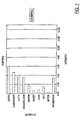
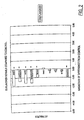
- the soy solutions were presented in a blind and randomized order. The results are shown in the graphs of FIGS. 1 and 2.
- FIG. 1 shows the mean intensity score for 10 attributes.
- the panel judged certain attributes to be more significant than others. When compared to the soy solution which had been treated as described above, the outstanding attributes had all been reduced with a 95 percent confidence level. Those attributes which had less prominent in the control (i.e., Brown, Sweet, Sour, Salt and Bitter) were reduced, except for Sweet which increased in value, but the panel mean values did not reach a 95 percent confidence level.
- Example 6 Five additions of water were made when the permeate withdrawn from the membrane reached one-half of the original volume in the mixing tank. After five water additions the pH of the washed soy solution was adjusted to 7.5 by adding 0.5 N HCl and then freeze dried for sensory evaluation.
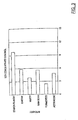
- the deflavored soy protein concentrate was evaluated for six attributes by a trained sensory panel.
- the mean values for each attribute for the control sample (untreated) are given in FIG. 3.
- a difference was found between the deflavored soy concentrate and the control, but none were at the 95 percent confidence level, although all the values were lower.
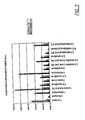
- FIG. 4 Also included are the results of a blind control used, which was rated after the deflavored sample. In this case, the blind control was found to have stronger flavor attributes than the original control of FIG. 3. It is believed that this occurred because the blind control in this example was tested after the deflavored sample and appeared to the panel to have a relatively stronger flavor in the second evaluation of the control. However, when compared with the blind control sample, the deflavored sample showed significant differences for three of the flavor attributes at the 90 to 95 percent confidence level, as shown in FIG. 5.
- the membrane used to deflavor soy proteins should have a molecular weight cutoff of 10,000 Daltons, shown to be effective in Examples 6 and 7.
- a higher molecular weight cutoff membrane can be used if desired, but at a molecular weight cutoff of 50,000 Daltons some valuable proteins have been lost in the permeate, as is shown in this example.
- Example 7 Five pounds (2.27 kg) is a dry soy isolate (Supro-670 PTI) was mixed with 95 pounds (43.2 kg) of water as in Example 7 to provide a slurry containing 5 percent soy solids. 1 N NaOH was added to raise the pH to 11 and solubilize the soy proteins. Diafiltration using five additions of water was carried out in a manner similar to that described in Examples 6 and 7 and using the hollow fiber membranes of Example 6. The pH was maintained at about 9 to about 12 during ultrafiltration/diafiltration. Samples of the permeate were taken at five minute intervals, neutralized and frozen for protein analysis.
- the membrane having a 10,000 Dalton cutoff retains more protein than the membrane having a 50,000 Dalton cutoff.
- the value at 35 minutes for the 10,000 Dalton membrane is believed to be erroneous.
- a control sample was diluted with 15 g of water, 2 ⁇ l of 300 ppm of 4-heptanone was added as an internal standard, and the mixture was purged with 100 ml/min of helium at 60°C for 30 min.
- a deflavored sample was prepared similarly as the control sample, except that the pH was raised to 10 by adding a NaOH solution in order to solubilize the proteins.
- the volatile compounds were analyzed by GC/MS (HP GC5890/MSD5972). The results for various compounds are shown in FIGS. 6 and 7.
- the deflavored soy sample contained smaller amounts of the flavoring compounds.
- the resulting rentenate was neutralized with 1 percent citric acid to a pH of 6.5.
- the collected deflavored soy milk was then pasteurized (about 185°F for about 5 minutes) and then stored under refrigeration conditions until used.
- the deflavored soy milk was found to be bland, much less beany and/or grassy, with an overall cleaner flavor as compared to a control sample (i.e., non-deflavored soy milk).
- Deflavored soy milk as prepared in Example 11 was used to prepared various soy-containing yogurts. In some cases, deflavored soy isolate (generally prepared using the method described in Example 11) was also used. The following base formulations were used: Ingredient Control Sample (%) Inventive Samples (%) 1 2 3 4 5 6 Whole Milk 26.3 11.1 26.3 26.3 13.3 0 0 Skim Milk 40.4 0 0 0 0 0 0 0 Deflavored Soy Milk 0 75.0 57.8 57.8 70.9 82.1 82.1 Water 19.4 0 0 0 0 0 0 0 0 Whey Protein Concentrate 3.0 0 0 0 0 0 0 Gelatin 0 0 0 0 0.2 0.2 Starch 3.0 3.0 3.0 3.0 3.0 3.0 3.0 Deflavored Soy Isolate 0 2.0 5.0 5.0 0 0 0 0 0 Lactose 0 0 0 0 0 0 0 0.2 Sugar 7.8 7.8 7.8 7.8 7.8
- the above composition (batch size of about 70 lbs) was prepared by mixing all ingredients except the dairy culture using a high speed mixer. The mixture was heated to about 125°F and then homogenized at about 1000 psi until no visible lumps were observed. The homogenized mixture was then pasteurized (185°F for 19 seconds, followed steam injection to raise the temperature to about 215°F for 38 seconds). The pasteurized mixture was vacuum flashed (30 inches Hg) in order to remove air and/or foam which may have formed during processing and then cooled to about 100°F.
- the dairy culture was then added and the inoculated mixture was fermented in a hot box (about 100 to about 115°F) for about 3.5 hours. Once the desired target pH (i.e., about 4.6) was reached, the fermented composition was cooled to about 40°F.
- Deflavored soy milk as prepared in Example 11 was used to prepare an especially preferred soy-containing yogurt which contains essentially no milk protein.
- the formulation contained 89.1 percent deflavored soy milk; 0.15 percent pectin (Type LM-104 AS/YA; CP Kelco, Wilmington, DE); 3 percent starch (Pur-Flo; National Starch, Bridgewater, NJ); 7.8 percent sugar (Florida Crystals, West Palm Beach, FL); and 1 percent bulk dairy culture (ABY-2C; Rhodia Foods, Cranbury, NJ).
- the above composition (batch size of about 70 lbs) was prepared by mixing all ingredients except the dairy culture using a high speed mixer. The mixture was heated to about 125°F and then homogenized at about 1000 psi until no visible lumps were observed. The homogenized mixture was then pasteurized (185°F for 19 seconds, followed steam injection to raise the temperature to about 215°F for 38 seconds). The pasteurized mixture was vacuum flashed (30 inches Hg) and then cooled to about 100°F.
- the dairy culture was then added and the inoculated mixture was fermented in a hot box (about 110 to about 115°F) for about 3.5 hours.
- the desired target pH i.e., about 4.6
- the fermented composition was cooled to about 40°F.
- the resulting soy-containing yogurt contained about 2.5 percent fat, about 81.5 percent moisture, and about 4.1 percent soy protein. A shelf life of at least about 50 days under refrigeration conditions was observed.
- a sample of the soy-containing yogurt was blended with about 20 percent of an organic fruit puree and evacuated by a trained taste panel.
- the resulting fruit-containing soy yogurt had excellent taste, texture, and mouthfeel without the off-flavors normally associated with soy beans and was considered similar to commercially available dairy based yogurts.
Landscapes
- Life Sciences & Earth Sciences (AREA)
- Chemical & Material Sciences (AREA)
- Engineering & Computer Science (AREA)
- Food Science & Technology (AREA)
- Polymers & Plastics (AREA)
- Health & Medical Sciences (AREA)
- Nutrition Science (AREA)
- Proteomics, Peptides & Aminoacids (AREA)
- Inorganic Chemistry (AREA)
- Botany (AREA)
- Mycology (AREA)
- Agronomy & Crop Science (AREA)
- Biochemistry (AREA)
- Chemical Kinetics & Catalysis (AREA)
- General Health & Medical Sciences (AREA)
- Molecular Biology (AREA)
- Microbiology (AREA)
- Oil, Petroleum & Natural Gas (AREA)
- Dairy Products (AREA)
- Beans For Foods Or Fodder (AREA)
- Separation Using Semi-Permeable Membranes (AREA)
Applications Claiming Priority (2)
| Application Number | Priority Date | Filing Date | Title |
|---|---|---|---|
| US10/696,284 US7108881B2 (en) | 2000-11-30 | 2003-10-29 | Method of preparation of high quality soy cultured products |
| US696284 | 2003-10-29 |
Publications (2)
| Publication Number | Publication Date |
|---|---|
| EP1527691A1 true EP1527691A1 (de) | 2005-05-04 |
| EP1527691B1 EP1527691B1 (de) | 2007-06-27 |
Family
ID=34423367
Family Applications (1)
| Application Number | Title | Priority Date | Filing Date |
|---|---|---|---|
| EP04256400A Expired - Lifetime EP1527691B1 (de) | 2003-10-29 | 2004-10-18 | Verfahren zur Herstellung von hochwertigen fermentierten Sojabohnenprodukten |
Country Status (12)
| Country | Link |
|---|---|
| US (1) | US7108881B2 (de) |
| EP (1) | EP1527691B1 (de) |
| CN (1) | CN1640278A (de) |
| AR (1) | AR046434A1 (de) |
| AT (1) | ATE365459T1 (de) |
| AU (1) | AU2004224942A1 (de) |
| BR (1) | BRPI0404758A (de) |
| CA (1) | CA2486332A1 (de) |
| DE (1) | DE602004007212D1 (de) |
| MX (1) | MXPA04010741A (de) |
| NZ (1) | NZ536146A (de) |
| RU (1) | RU2004131499A (de) |
Families Citing this family (17)
| Publication number | Priority date | Publication date | Assignee | Title |
|---|---|---|---|---|
| US6875455B2 (en) * | 2000-03-22 | 2005-04-05 | Paseluma Elettrica S.R.L. | Process for the preparation of a vegetable yogurt |
| US7108881B2 (en) * | 2000-11-30 | 2006-09-19 | Kraft Foods Holdings, Inc. | Method of preparation of high quality soy cultured products |
| US7045163B2 (en) * | 2000-11-30 | 2006-05-16 | Kraft Foods Holdings, Inc. | Method of deflavoring soy-derived materials |
| US20040175474A1 (en) * | 2000-11-30 | 2004-09-09 | Kraft Foods Holdings, Inc. | Method of preparation of high quality soy-containing cheese products |
| US7037547B2 (en) * | 2000-11-30 | 2006-05-02 | Kraft Foods Holdings, Inc. | Method of deflavoring soy-derived materials for use in beverages |
| US20040170743A1 (en) * | 2000-11-30 | 2004-09-02 | Kraft Foods Holdings, Inc. | Method of deflavoring soy-derived materials confectionary type products |
| US20040161512A1 (en) * | 2000-11-30 | 2004-08-19 | Kraft Foods Holdings, Inc. | Method of deflavoring soy-derived materials for use in dough-based and baked products |
| US20040161513A1 (en) * | 2000-11-30 | 2004-08-19 | Kraft Foods Holdings, Inc. | Method of preparation of high quality soy-containing meat and meat analog products |
| US20040253355A1 (en) * | 2001-08-23 | 2004-12-16 | Ahmad Akashe | Method of deflavoring soy-derived materials |
| US7582326B2 (en) * | 2003-10-29 | 2009-09-01 | Kraft Foods Global Brands Llc | Method of deflavoring whey protein using membrane electrodialysis |
| US7887867B2 (en) * | 2004-02-23 | 2011-02-15 | Kraft Foods Global Brands Llc | Stabilized non-sour dairy base materials and methods for preparation |
| US20070207244A1 (en) | 2006-03-03 | 2007-09-06 | Specialty Protein Producers, Inc. | Methods of separating fat from non-soy plant materials and compositions produced therefrom |
| BRPI0922737B1 (pt) | 2009-01-30 | 2022-09-27 | The Coca-Cola Company | Método de preparo de um produto fermentado à base de soja |
| US20110053832A1 (en) * | 2009-09-03 | 2011-03-03 | Kraft Foods Global Brands Llc | Natural antimicrobial composition |
| US20110293780A1 (en) * | 2010-05-28 | 2011-12-01 | Lunzer Joeseph F | System and method of manufacturing a food product |
| EP3445175A4 (de) * | 2016-04-22 | 2019-12-25 | Ripple Foods, PBC | Milchproduktanaloga und verfahren zur herstellung davon |
| US12376607B2 (en) | 2017-03-31 | 2025-08-05 | J.R. Simplot Company | Potato protein powders |
Citations (4)
| Publication number | Priority date | Publication date | Assignee | Title |
|---|---|---|---|---|
| WO1997043906A1 (de) * | 1996-05-18 | 1997-11-27 | Wilhelm Hansen | Verfahren zur herstellung von käse-, quark- und joghurtprodukten aus sojabohnen |
| WO2000016642A1 (en) * | 1998-09-24 | 2000-03-30 | I.G.R. S.A. | Method for making soy extracts |
| EP1210879A1 (de) * | 2000-11-30 | 2002-06-05 | Kraft Foods Holdings, Inc. | Verfahren zur Entaromatisierung von sojahaltigen Materialen |
| US20040170744A1 (en) * | 2000-11-30 | 2004-09-02 | Kraft Foods Holdings, Inc. | Method of preparation of high quality soy cultured products |
Family Cites Families (58)
| Publication number | Priority date | Publication date | Assignee | Title |
|---|---|---|---|---|
| US4205090A (en) * | 1969-07-18 | 1980-05-27 | Etablissement Public: Institut National de la Recherche Agronomique | Preparation of cheese using ultrafiltration |
| US3852491A (en) * | 1972-03-22 | 1974-12-03 | Ralston Purina Co | High protein ready-to-eat breakfast cereal |
| US3995071A (en) * | 1975-06-23 | 1976-11-30 | Mead Johnson & Company | Aqueous purified soy protein and beverage |
| GB1547911A (en) * | 1976-01-19 | 1979-06-27 | Novo Industri As | Polypeptides |
| GB1580051A (en) | 1976-06-11 | 1980-11-26 | Unilever Ltd | Proteinaceous foodstuff |
| US4072670A (en) * | 1976-10-26 | 1978-02-07 | Mead Johnson & Company | Low phytate isoelectric precipitated soy protein isolate |
| US4091120A (en) * | 1976-11-15 | 1978-05-23 | Mead Johnson & Company | Liquid dietary product containing soy protein membrane isolate |
| US4088795A (en) * | 1976-11-19 | 1978-05-09 | Mead Johnson & Company | Low carbohydrate oilseed lipid-protein comestible |
| US4105803A (en) * | 1977-05-02 | 1978-08-08 | Ohio Agricultural Research And Development Center | Soybean-cheese whey food product |
| US4172828A (en) * | 1977-09-30 | 1979-10-30 | Anderson, Clayton & Co. | Method for processing soy protein and composition of matter |
| US5725899A (en) * | 1978-03-16 | 1998-03-10 | Cole; Morton S. | Protein-lipid emulsifying and gelling composition and method of preparing same |
| US4211694A (en) * | 1978-07-07 | 1980-07-08 | The Procter & Gamble Company | Deflavoring vegetable seed materials |
| USRE32725E (en) * | 1978-12-26 | 1988-08-02 | Central Soya Company, Inc. | Water-soluble vegetable protein aggregates |
| US4432999A (en) * | 1981-09-10 | 1984-02-21 | Bily Robert Raymond | Whey-soybean product and process for making the product |
| US4478854A (en) * | 1982-05-06 | 1984-10-23 | Novo Industri A/S | Method of treating plant polysaccharides |
| US4477480A (en) * | 1982-07-06 | 1984-10-16 | General Foods Corporation | Method of preparing a clean flavored cereal starch |
| US4420425A (en) * | 1982-08-02 | 1983-12-13 | The Texas A&M University System | Method for processing protein from nonbinding oilseed by ultrafiltration and solubilization |
| US4497836A (en) * | 1982-08-06 | 1985-02-05 | Dairy Technology Ltd. | Modified whey product and process including ultrafiltration and demineralization |
| US4908224A (en) * | 1982-09-30 | 1990-03-13 | Lois Yoder | Process for debittering soybean grit |
| US4530788A (en) * | 1982-12-03 | 1985-07-23 | Stauffer Chemical Company | Oil seed proteins evidencing improved functionality |
| US4632903A (en) * | 1984-12-28 | 1986-12-30 | Novo Laboratories, Inc. | Enzyme modified soy protein for use as an egg white substitute |
| US4623550A (en) * | 1985-05-09 | 1986-11-18 | Willard Miles J | Method for preparing sheeted fried snack products from corn and other cereal flours |
| US4770891A (en) * | 1986-01-20 | 1988-09-13 | Willard Miles J | Method for preparing sheeted fried snack products |
| US4761186A (en) * | 1986-08-18 | 1988-08-02 | General Foods Corporation | Method of purifying starches and products produced therefrom |
| EP0421309B2 (de) * | 1989-10-02 | 2001-08-16 | Novartis Nutrition AG | Proteinhydrolysaten |
| US5077062A (en) * | 1990-05-03 | 1991-12-31 | Excelpro Inc. | Hydrolyzed soy protein and process for preparing soy protein |
| US5100679A (en) * | 1990-10-03 | 1992-03-31 | Cargill B.V. | Method of making a modified proteinaceous product and composition thereof |
| US6299929B1 (en) * | 1991-01-15 | 2001-10-09 | Bariatrix Products International, Inc. | Confectionery product made of protein and carbohydrate materials present in a relative weight ratio higher than 1 |
| IE914558A1 (en) * | 1991-02-28 | 1992-09-09 | Abbott Lab | Isolation of proteins by ultrafiltration |
| US5160758A (en) * | 1991-05-31 | 1992-11-03 | Protein Technologies International, Inc. | Process for the production of a protein granule suitable for use as a meat extender |
| US5433969A (en) * | 1993-12-27 | 1995-07-18 | Protein Technologies International, Inc. | Process for the production of an improved protein granule suitable for use as a meat extender |
| JPH0866161A (ja) | 1994-06-21 | 1996-03-12 | Kikkoman Corp | 豆乳乳酸発酵食品の製造法 |
| US5626899A (en) * | 1995-06-07 | 1997-05-06 | Archer Daniels Midland Company | Process for making vegetable-based meat extenders |
| US5858442A (en) * | 1995-06-07 | 1999-01-12 | Archer Daniels Midland Company | Process for making extenders for lower fat meat systems |
| US5936069A (en) * | 1995-12-06 | 1999-08-10 | Iowa State University Research Foundation | Process for producing improved soy protein concentrate from genetically-modified soybeans |
| AU708761B2 (en) * | 1996-01-26 | 1999-08-12 | Massey University | Method of separating and recovering proteins from a protein solution |
| EP0797928B1 (de) * | 1996-03-28 | 1999-11-10 | Fuji Oil Co., Ltd. | Verfahren zur Herstellung eines Sojaproteinhydrolysats |
| EP0797927B1 (de) * | 1996-03-28 | 2000-10-18 | Fuji Oil Co., Ltd. | Sojaproteinhydrolysat, Verfahren zur Herstellung und Fleischprodukte und Getränke unter Verwendung derselben |
| US6139901A (en) * | 1997-09-16 | 2000-10-31 | New Zealand Milk Products (North Amerca) Inc. | Membrane filtered milk proteins varying in composition and functional attributes |
| US6068865A (en) * | 1997-11-07 | 2000-05-30 | Kraft Foods, Inc | Chocolate yogurt and preparation |
| US6221423B1 (en) * | 1998-04-13 | 2001-04-24 | Protein Technologies Int'l Inc. | Short-chained peptide material |
| CA2281052A1 (en) * | 1998-08-31 | 2000-02-29 | Kraft Foods, Inc. | Stabilization of fermented dairy compositions using whey from nisin producing cultures |
| US6399135B2 (en) * | 1999-09-29 | 2002-06-04 | Archer-Daniels-Midland Company | Use of soy isolated protein for making fresh cheese |
| US6413569B1 (en) * | 1999-09-29 | 2002-07-02 | Archer-Daniels-Midland Company | Use of isolated soy protein for making fresh, unripened cheese analogs |
| JP4491698B2 (ja) * | 2000-02-29 | 2010-06-30 | 不二製油株式会社 | 大豆蛋白加水分解物の製造方法 |
| US6726943B2 (en) * | 2000-04-12 | 2004-04-27 | Mid-America Commercialization Corporation | Nutritionally balanced snack food compositions |
| US6291009B1 (en) * | 2000-05-16 | 2001-09-18 | Deborah W. Cohen | Method of producing a soy-based dough and products made from the dough |
| US6630195B1 (en) * | 2000-11-21 | 2003-10-07 | Cargill, Incorporated | Process for producing oilseed protein products |
| MXPA03004478A (es) | 2000-11-21 | 2004-10-15 | Cargill Inc | Material de semillas oleginosas modificado. |
| US7045163B2 (en) * | 2000-11-30 | 2006-05-16 | Kraft Foods Holdings, Inc. | Method of deflavoring soy-derived materials |
| US20040175474A1 (en) * | 2000-11-30 | 2004-09-09 | Kraft Foods Holdings, Inc. | Method of preparation of high quality soy-containing cheese products |
| US20040161512A1 (en) * | 2000-11-30 | 2004-08-19 | Kraft Foods Holdings, Inc. | Method of deflavoring soy-derived materials for use in dough-based and baked products |
| US7037547B2 (en) * | 2000-11-30 | 2006-05-02 | Kraft Foods Holdings, Inc. | Method of deflavoring soy-derived materials for use in beverages |
| US20040170743A1 (en) * | 2000-11-30 | 2004-09-02 | Kraft Foods Holdings, Inc. | Method of deflavoring soy-derived materials confectionary type products |
| US6582746B2 (en) * | 2001-02-28 | 2003-06-24 | Solae, Llp | Meat product |
| US20040253355A1 (en) * | 2001-08-23 | 2004-12-16 | Ahmad Akashe | Method of deflavoring soy-derived materials |
| AU2003215774A1 (en) | 2002-02-23 | 2003-09-09 | Nutri Pharma Asa | Method for manufacturing beads containing exogenous soy protein |
| DE10393773T5 (de) | 2002-11-25 | 2005-10-20 | Shell Internationale Research Maatschappij B.V. | Silikonzusammensetzungen zur Verwendung beim Reifenaufbereiten und Verfahren zur Herstellung |
-
2003
- 2003-10-29 US US10/696,284 patent/US7108881B2/en not_active Expired - Fee Related
-
2004
- 2004-10-18 AT AT04256400T patent/ATE365459T1/de not_active IP Right Cessation
- 2004-10-18 EP EP04256400A patent/EP1527691B1/de not_active Expired - Lifetime
- 2004-10-18 DE DE602004007212T patent/DE602004007212D1/de not_active Expired - Lifetime
- 2004-10-26 NZ NZ536146A patent/NZ536146A/en unknown
- 2004-10-26 CA CA002486332A patent/CA2486332A1/en not_active Abandoned
- 2004-10-28 BR BRPI0404758-3A patent/BRPI0404758A/pt not_active Application Discontinuation
- 2004-10-28 CN CNA2004101005600A patent/CN1640278A/zh active Pending
- 2004-10-28 RU RU2004131499/13A patent/RU2004131499A/ru not_active Application Discontinuation
- 2004-10-29 AU AU2004224942A patent/AU2004224942A1/en not_active Abandoned
- 2004-10-29 MX MXPA04010741A patent/MXPA04010741A/es not_active Application Discontinuation
- 2004-10-29 AR ARP040103969A patent/AR046434A1/es unknown
Patent Citations (4)
| Publication number | Priority date | Publication date | Assignee | Title |
|---|---|---|---|---|
| WO1997043906A1 (de) * | 1996-05-18 | 1997-11-27 | Wilhelm Hansen | Verfahren zur herstellung von käse-, quark- und joghurtprodukten aus sojabohnen |
| WO2000016642A1 (en) * | 1998-09-24 | 2000-03-30 | I.G.R. S.A. | Method for making soy extracts |
| EP1210879A1 (de) * | 2000-11-30 | 2002-06-05 | Kraft Foods Holdings, Inc. | Verfahren zur Entaromatisierung von sojahaltigen Materialen |
| US20040170744A1 (en) * | 2000-11-30 | 2004-09-02 | Kraft Foods Holdings, Inc. | Method of preparation of high quality soy cultured products |
Non-Patent Citations (1)
| Title |
|---|
| PATENT ABSTRACTS OF JAPAN vol. 1996, no. 07 31 July 1996 (1996-07-31) * |
Also Published As
| Publication number | Publication date |
|---|---|
| AU2004224942A1 (en) | 2005-05-19 |
| DE602004007212D1 (de) | 2007-08-09 |
| US7108881B2 (en) | 2006-09-19 |
| AR046434A1 (es) | 2005-12-07 |
| CN1640278A (zh) | 2005-07-20 |
| BRPI0404758A (pt) | 2006-03-21 |
| ATE365459T1 (de) | 2007-07-15 |
| CA2486332A1 (en) | 2005-04-29 |
| US20040170744A1 (en) | 2004-09-02 |
| RU2004131499A (ru) | 2006-04-10 |
| MXPA04010741A (es) | 2005-08-19 |
| EP1527691B1 (de) | 2007-06-27 |
| NZ536146A (en) | 2006-08-31 |
Similar Documents
| Publication | Publication Date | Title |
|---|---|---|
| US7037547B2 (en) | Method of deflavoring soy-derived materials for use in beverages | |
| EP1527691B1 (de) | Verfahren zur Herstellung von hochwertigen fermentierten Sojabohnenprodukten | |
| EP1512325B1 (de) | Süsswaren enthaltend geruchsneutralisierte Sojaprotein-Zusatzstoffe erhältlich mittels ein spezifisches Verfahren | |
| EP1512324B1 (de) | Verfahren zur Geruchsneutralisation von Sojaprotein-Zusatzstoffe | |
| US7582326B2 (en) | Method of deflavoring whey protein using membrane electrodialysis | |
| US7094439B2 (en) | Method of deflavoring whey protein | |
| EP1512327B1 (de) | Produkte auf Teigbasis und Backwaren enthaltend geruchsneutralisierte Sojaprotein-Zusatzstoffe erhältlich mittels ein spezifisches Verfahren | |
| US20040161513A1 (en) | Method of preparation of high quality soy-containing meat and meat analog products | |
| US20040175474A1 (en) | Method of preparation of high quality soy-containing cheese products | |
| FI130327B (en) | Non-dairy edible protein product and method for its preparation | |
| US20050095344A1 (en) | Method of preparation of highly functional soy protein |
Legal Events
| Date | Code | Title | Description |
|---|---|---|---|
| PUAI | Public reference made under article 153(3) epc to a published international application that has entered the european phase |
Free format text: ORIGINAL CODE: 0009012 |
|
| AK | Designated contracting states |
Kind code of ref document: A1 Designated state(s): AT BE BG CH CY CZ DE DK EE ES FI FR GB GR HU IE IT LI LU MC NL PL PT RO SE SI SK TR |
|
| AX | Request for extension of the european patent |
Extension state: AL HR LT LV MK |
|
| 17P | Request for examination filed |
Effective date: 20051011 |
|
| AKX | Designation fees paid |
Designated state(s): AT BE BG CH CY CZ DE DK EE ES FI FR GB GR HU IE IT LI LU MC NL PL PT RO SE SI SK TR |
|
| GRAP | Despatch of communication of intention to grant a patent |
Free format text: ORIGINAL CODE: EPIDOSNIGR1 |
|
| GRAS | Grant fee paid |
Free format text: ORIGINAL CODE: EPIDOSNIGR3 |
|
| GRAA | (expected) grant |
Free format text: ORIGINAL CODE: 0009210 |
|
| AK | Designated contracting states |
Kind code of ref document: B1 Designated state(s): AT BE BG CH CY CZ DE DK EE ES FI FR GB GR HU IE IT LI LU MC NL PL PT RO SE SI SK TR |
|
| REG | Reference to a national code |
Ref country code: GB Ref legal event code: FG4D |
|
| REG | Reference to a national code |
Ref country code: CH Ref legal event code: EP |
|
| REG | Reference to a national code |
Ref country code: IE Ref legal event code: FG4D |
|
| REF | Corresponds to: |
Ref document number: 602004007212 Country of ref document: DE Date of ref document: 20070809 Kind code of ref document: P |
|
| PG25 | Lapsed in a contracting state [announced via postgrant information from national office to epo] |
Ref country code: SE Free format text: LAPSE BECAUSE OF FAILURE TO SUBMIT A TRANSLATION OF THE DESCRIPTION OR TO PAY THE FEE WITHIN THE PRESCRIBED TIME-LIMIT Effective date: 20070927 |
|
| PG25 | Lapsed in a contracting state [announced via postgrant information from national office to epo] |
Ref country code: PL Free format text: LAPSE BECAUSE OF FAILURE TO SUBMIT A TRANSLATION OF THE DESCRIPTION OR TO PAY THE FEE WITHIN THE PRESCRIBED TIME-LIMIT Effective date: 20070627 Ref country code: AT Free format text: LAPSE BECAUSE OF FAILURE TO SUBMIT A TRANSLATION OF THE DESCRIPTION OR TO PAY THE FEE WITHIN THE PRESCRIBED TIME-LIMIT Effective date: 20070627 |
|
| NLV1 | Nl: lapsed or annulled due to failure to fulfill the requirements of art. 29p and 29m of the patents act | ||
| REG | Reference to a national code |
Ref country code: CH Ref legal event code: PL |
|
| PG25 | Lapsed in a contracting state [announced via postgrant information from national office to epo] |
Ref country code: BE Free format text: LAPSE BECAUSE OF FAILURE TO SUBMIT A TRANSLATION OF THE DESCRIPTION OR TO PAY THE FEE WITHIN THE PRESCRIBED TIME-LIMIT Effective date: 20070627 |
|
| PG25 | Lapsed in a contracting state [announced via postgrant information from national office to epo] |
Ref country code: SI Free format text: LAPSE BECAUSE OF FAILURE TO SUBMIT A TRANSLATION OF THE DESCRIPTION OR TO PAY THE FEE WITHIN THE PRESCRIBED TIME-LIMIT Effective date: 20070627 Ref country code: PT Free format text: LAPSE BECAUSE OF FAILURE TO SUBMIT A TRANSLATION OF THE DESCRIPTION OR TO PAY THE FEE WITHIN THE PRESCRIBED TIME-LIMIT Effective date: 20071127 Ref country code: CZ Free format text: LAPSE BECAUSE OF FAILURE TO SUBMIT A TRANSLATION OF THE DESCRIPTION OR TO PAY THE FEE WITHIN THE PRESCRIBED TIME-LIMIT Effective date: 20070627 Ref country code: BG Free format text: LAPSE BECAUSE OF FAILURE TO SUBMIT A TRANSLATION OF THE DESCRIPTION OR TO PAY THE FEE WITHIN THE PRESCRIBED TIME-LIMIT Effective date: 20070927 Ref country code: NL Free format text: LAPSE BECAUSE OF FAILURE TO SUBMIT A TRANSLATION OF THE DESCRIPTION OR TO PAY THE FEE WITHIN THE PRESCRIBED TIME-LIMIT Effective date: 20070627 Ref country code: ES Free format text: LAPSE BECAUSE OF FAILURE TO SUBMIT A TRANSLATION OF THE DESCRIPTION OR TO PAY THE FEE WITHIN THE PRESCRIBED TIME-LIMIT Effective date: 20071008 |
|
| EN | Fr: translation not filed | ||
| PG25 | Lapsed in a contracting state [announced via postgrant information from national office to epo] |
Ref country code: LI Free format text: LAPSE BECAUSE OF FAILURE TO SUBMIT A TRANSLATION OF THE DESCRIPTION OR TO PAY THE FEE WITHIN THE PRESCRIBED TIME-LIMIT Effective date: 20070627 Ref country code: SK Free format text: LAPSE BECAUSE OF FAILURE TO SUBMIT A TRANSLATION OF THE DESCRIPTION OR TO PAY THE FEE WITHIN THE PRESCRIBED TIME-LIMIT Effective date: 20070627 Ref country code: CH Free format text: LAPSE BECAUSE OF FAILURE TO SUBMIT A TRANSLATION OF THE DESCRIPTION OR TO PAY THE FEE WITHIN THE PRESCRIBED TIME-LIMIT Effective date: 20070627 |
|
| PG25 | Lapsed in a contracting state [announced via postgrant information from national office to epo] |
Ref country code: DE Free format text: LAPSE BECAUSE OF FAILURE TO SUBMIT A TRANSLATION OF THE DESCRIPTION OR TO PAY THE FEE WITHIN THE PRESCRIBED TIME-LIMIT Effective date: 20070928 Ref country code: GR Free format text: LAPSE BECAUSE OF FAILURE TO SUBMIT A TRANSLATION OF THE DESCRIPTION OR TO PAY THE FEE WITHIN THE PRESCRIBED TIME-LIMIT Effective date: 20070928 Ref country code: IT Free format text: LAPSE BECAUSE OF FAILURE TO SUBMIT A TRANSLATION OF THE DESCRIPTION OR TO PAY THE FEE WITHIN THE PRESCRIBED TIME-LIMIT Effective date: 20070627 Ref country code: DK Free format text: LAPSE BECAUSE OF FAILURE TO SUBMIT A TRANSLATION OF THE DESCRIPTION OR TO PAY THE FEE WITHIN THE PRESCRIBED TIME-LIMIT Effective date: 20070627 |
|
| PLBE | No opposition filed within time limit |
Free format text: ORIGINAL CODE: 0009261 |
|
| STAA | Information on the status of an ep patent application or granted ep patent |
Free format text: STATUS: NO OPPOSITION FILED WITHIN TIME LIMIT |
|
| PG25 | Lapsed in a contracting state [announced via postgrant information from national office to epo] |
Ref country code: RO Free format text: LAPSE BECAUSE OF FAILURE TO SUBMIT A TRANSLATION OF THE DESCRIPTION OR TO PAY THE FEE WITHIN THE PRESCRIBED TIME-LIMIT Effective date: 20070627 Ref country code: MC Free format text: LAPSE BECAUSE OF NON-PAYMENT OF DUE FEES Effective date: 20071031 |
|
| 26N | No opposition filed |
Effective date: 20080328 |
|
| PG25 | Lapsed in a contracting state [announced via postgrant information from national office to epo] |
Ref country code: FR Free format text: LAPSE BECAUSE OF FAILURE TO SUBMIT A TRANSLATION OF THE DESCRIPTION OR TO PAY THE FEE WITHIN THE PRESCRIBED TIME-LIMIT Effective date: 20080222 |
|
| PG25 | Lapsed in a contracting state [announced via postgrant information from national office to epo] |
Ref country code: IE Free format text: LAPSE BECAUSE OF NON-PAYMENT OF DUE FEES Effective date: 20071018 |
|
| PG25 | Lapsed in a contracting state [announced via postgrant information from national office to epo] |
Ref country code: EE Free format text: LAPSE BECAUSE OF FAILURE TO SUBMIT A TRANSLATION OF THE DESCRIPTION OR TO PAY THE FEE WITHIN THE PRESCRIBED TIME-LIMIT Effective date: 20070627 |
|
| PG25 | Lapsed in a contracting state [announced via postgrant information from national office to epo] |
Ref country code: FI Free format text: LAPSE BECAUSE OF FAILURE TO SUBMIT A TRANSLATION OF THE DESCRIPTION OR TO PAY THE FEE WITHIN THE PRESCRIBED TIME-LIMIT Effective date: 20070627 |
|
| GBPC | Gb: european patent ceased through non-payment of renewal fee |
Effective date: 20081018 |
|
| PG25 | Lapsed in a contracting state [announced via postgrant information from national office to epo] |
Ref country code: CY Free format text: LAPSE BECAUSE OF FAILURE TO SUBMIT A TRANSLATION OF THE DESCRIPTION OR TO PAY THE FEE WITHIN THE PRESCRIBED TIME-LIMIT Effective date: 20070627 |
|
| PG25 | Lapsed in a contracting state [announced via postgrant information from national office to epo] |
Ref country code: LU Free format text: LAPSE BECAUSE OF NON-PAYMENT OF DUE FEES Effective date: 20071018 |
|
| PG25 | Lapsed in a contracting state [announced via postgrant information from national office to epo] |
Ref country code: HU Free format text: LAPSE BECAUSE OF FAILURE TO SUBMIT A TRANSLATION OF THE DESCRIPTION OR TO PAY THE FEE WITHIN THE PRESCRIBED TIME-LIMIT Effective date: 20071228 Ref country code: TR Free format text: LAPSE BECAUSE OF FAILURE TO SUBMIT A TRANSLATION OF THE DESCRIPTION OR TO PAY THE FEE WITHIN THE PRESCRIBED TIME-LIMIT Effective date: 20070627 |
|
| PG25 | Lapsed in a contracting state [announced via postgrant information from national office to epo] |
Ref country code: GB Free format text: LAPSE BECAUSE OF NON-PAYMENT OF DUE FEES Effective date: 20081018 |