EP1526685A1 - Inter-Cell Interference mitigation technique using reservation indicators - Google Patents
Inter-Cell Interference mitigation technique using reservation indicators Download PDFInfo
- Publication number
- EP1526685A1 EP1526685A1 EP03024367A EP03024367A EP1526685A1 EP 1526685 A1 EP1526685 A1 EP 1526685A1 EP 03024367 A EP03024367 A EP 03024367A EP 03024367 A EP03024367 A EP 03024367A EP 1526685 A1 EP1526685 A1 EP 1526685A1
- Authority
- EP
- European Patent Office
- Prior art keywords
- data
- transmitting
- station
- receiving
- reservation
- Prior art date
- Legal status (The legal status is an assumption and is not a legal conclusion. Google has not performed a legal analysis and makes no representation as to the accuracy of the status listed.)
- Withdrawn
Links
- 238000000034 method Methods 0.000 title claims description 12
- 230000000116 mitigating effect Effects 0.000 title description 2
- 230000005540 biological transmission Effects 0.000 claims abstract description 106
- 238000004891 communication Methods 0.000 claims abstract description 43
- 230000001413 cellular effect Effects 0.000 claims abstract description 19
- 230000010267 cellular communication Effects 0.000 claims description 9
- 230000008054 signal transmission Effects 0.000 claims description 5
- 101100073099 Schizosaccharomyces pombe (strain 972 / ATCC 24843) its3 gene Proteins 0.000 abstract description 2
- 230000011664 signaling Effects 0.000 description 12
- 239000000969 carrier Substances 0.000 description 10
- 238000013459 approach Methods 0.000 description 9
- 108091023242 Internal transcribed spacer Proteins 0.000 description 4
- 101150060836 KSL4 gene Proteins 0.000 description 3
- 230000009286 beneficial effect Effects 0.000 description 2
- 230000008901 benefit Effects 0.000 description 2
- 230000003111 delayed effect Effects 0.000 description 2
- 230000006870 function Effects 0.000 description 2
- 206010010071 Coma Diseases 0.000 description 1
- 108700026140 MAC combination Proteins 0.000 description 1
- 230000008568 cell cell communication Effects 0.000 description 1
- 230000008859 change Effects 0.000 description 1
- 230000001010 compromised effect Effects 0.000 description 1
- 230000001419 dependent effect Effects 0.000 description 1
- 230000003834 intracellular effect Effects 0.000 description 1
- 230000007246 mechanism Effects 0.000 description 1
- 238000010295 mobile communication Methods 0.000 description 1
- 230000004044 response Effects 0.000 description 1
- 230000003595 spectral effect Effects 0.000 description 1
- 230000001360 synchronised effect Effects 0.000 description 1
Images




Classifications
-
- H—ELECTRICITY
- H04—ELECTRIC COMMUNICATION TECHNIQUE
- H04W—WIRELESS COMMUNICATION NETWORKS
- H04W72/00—Local resource management
- H04W72/50—Allocation or scheduling criteria for wireless resources
- H04W72/54—Allocation or scheduling criteria for wireless resources based on quality criteria
- H04W72/542—Allocation or scheduling criteria for wireless resources based on quality criteria using measured or perceived quality
-
- H—ELECTRICITY
- H04—ELECTRIC COMMUNICATION TECHNIQUE
- H04W—WIRELESS COMMUNICATION NETWORKS
- H04W28/00—Network traffic management; Network resource management
- H04W28/16—Central resource management; Negotiation of resources or communication parameters, e.g. negotiating bandwidth or QoS [Quality of Service]
- H04W28/26—Resource reservation
Definitions
- the present invention relates to a communications network comprising a plurality of stations for transmitting and receiving signals, wherein a data signal is transmitted by a transmitting station as a series of data packets.
- the invention relates further to a corresponding communications method, to a transmitting station and to a receiving station for use in such a communications network.
- Coordinating transmissions in neighbouring cells, in a centralised manner, is one way that has been proposed to combat this problem, but it involves significant overhead over the air-interface.
- information of the link-gains between each MS in a cell to all MSs and BSs (base stations) in neighbouring cells needs to be signalled to the network to mitigate MS-to-MS interference (in TDD) and MS-to-BS/BS-to-MS interference (in both TDD and FDD), respectively.
- This overhead could compromise capacity.
- a communications system as claimed in claim 1 wherein a reservation indicator is transmitted by a receiving station for reception by transmitting stations, said reservation indicator indicating if the last data packet has been received with acceptable interference from said transmitting station and/or if a data transmission resource has been reserved by said receiving station for reception of the next data packet from said transmitting station.
- a corresponding communications method is defined in claim 13.
- An appropriate transmitting station according to the invention is defined in claim 14, an appropriate transmitting station according to the invention is defined in claim 15.
- Preferred embodiments are defined in the dependent claims.
- the present invention is based on the idea to provide carrier sensing as an active distributed scheduler, which detects interference and reacts in real-time to mitigate this interference. Since it enables to resolve inter-cell conflicts, it can be used with a centralised intra-cell scheduler to provide high performance in a multi-cellular TDD or FDD environment. Also, the distributed nature of proposed scheme allows it to be used in hybrid cellular and ad-hoc communications networks, where it fully coordinates communication in the ad-hoc segment, while only coordinating communication between cells in the cellular segment.
- a reservation indicator is introduced which is emitted by a receiving station for reception of the transmitting station which has sent a data packet to the receiving station, but also for reception by other transmitting stations located in the surrounding area (i.e. in the reception area) to inform them if a particular data transmission resource has been reserved for communication with a different transmitting station.
- the transmitting station which has sent the data packet to the receiving station Based on a received reservation indicator the transmitting station which has sent the data packet to the receiving station then knows if the data packet has been received correctly, i.e. without unacceptable interference caused by transmissions of other stations in the same data transmission resource, and if the same data transmission resource is still reserved for transmission of at least one further data packet.
- transmitting stations which shall be understood as including all stations that are actually transmitting data packets and that are planning to transmit data packets, know based on a received reservation indicator that a particular data transmission resource has been reserved for a different transmitting station so that their own transmission of data packets can be scheduled in a different data transmission resource. Conflicts leading to interferences and data loss during transmission can thus be effectively avoided.
- the proposed channel-sensing scheme when used in a TDMA system, shall be denoted as CSTDMA (Channel Sensing TDMA) and is a "busy-tone" broadcast protocol, "busy-tone” meaning the use of a reservation indicator, which preferably uses TDD instead of FDD to support the additional signalling.
- TDD Time Division Duplex
- the preferred use of TDD in the protocol is compatible with the air-interface and avoids the increase in receiver complexity and wasted bandwidth, associated with the use of FDD to support protocol signalling.
- the proposed "busy-tone" broadcast approach has the advantage over pure carrier sensing of avoiding the hidden and exposed node problems, which are characteristic of the latter in the wireless environment.
- the proposed "busy-tone" broadcast approach is physically orthogonal and so they do not mutually interfere, unlike in RTS/CTS handshaking.
- the proposed "busy-tone" broadcast approach requires less overhead than RTS/CTS handshaking and less stringent turn-around time constraints, which is especially critical in high speed wireless networks.
- the invention is applied in a TDMA network, which may be a cellular communications network, and ad-hoc communications network or a hybrid cellular/ad-hoc communications network.
- the data transmission resource will then be either a data time slot and/or a data sub-carrier.
- the invention can also be applied in other networks, like CDMA and FDMA networks.
- data codes are used as data transmission resource, instead of, or in addition to data time-slots/sub-carriers.
- data carriers are used as data transmission resource, instead of, or in addition to data time-slots/sub-carriers.
- an indicator resource in particular indicator time slots, indicator sub-carriers, indicator carriers and/or indicator codes, is provided.
- each data packet is transmitted in a fixed data time slot within a time frame, wherein indicator time slots are assigned to said data time slots, and wherein said reservation indicator indicates if the associated data time slot has been reserved in the subsequent time frame for transmission of the next data packet by said transmitting station.
- indicator time slots are assigned to said data time slots
- said reservation indicator indicates if the associated data time slot has been reserved in the subsequent time frame for transmission of the next data packet by said transmitting station.
- a corresponding indicator time slot which requires much less space, for instance only one bit, is required.
- the indicated time slots are provided at the end of each data time slot so that subsequent data time slots are separated by such indicator time slots.
- said data packets are transmitted in a fixed data sub-carrier, wherein an indicator sub-carrier is assigned to said data sub-carrier, and wherein said reservation indicator indicates if the associated data sub-carrier is reserved for transmission of the next data packet by said transmitting station.
- This embodiment can be implemented in a TDD or FDD (Frequency Division Duplex) system.
- FDD Frequency Division Duplex
- no particular reservation indicator time slots are provided between the data time slots, but a separate indicator sub-carrier is provided for transmission of only the reservation indicator.
- a separate sub-carrier may be provided for the transmission of reservation indicators or, alternatively, reservation indicators of different receiving stations and/or for reception of different transmitting stations may be multiplexed into the same sub-carrier.
- a corresponding indicator time slot may be provided in the indicator sub-carrier where the indicator time slot is transmitted simultaneously or delayed with a slight time offset compared to the transmission of the corresponding data time slot.
- the use of indicator sub-carriers has the advantage over the use of indicator time-slots of potentially less overhead and relaxed transmission/reception turn-around time restrictions.
- a data transmission resource for the transmission of data packets be selected based on the reservation indicator. More particularly, according to a further embodiment, the transmission of a signal from a transmitting station to receiving station is controlled based on received reservation indicators such that the data packets of the signal are transmitted in a non-reserved data transmission resource.
- transmitting stations wanting to transmit a signal can be deterred from transmitting the signal in reserved data transmission resources.
- a transmission station listens to the desired sub-carrier if a reservation indicator indicates that the desired data transmission resource is reserved or not. If a reservation indicator indicates that the desired data transmission resource is reserved, a transmission of the data packet is delayed or a different data transmission resource is selected.
- a transmitting station stops the transmission of data packets in the reserved data transmission resource upon receipt of a reservation indicator from the receiving station to which the transmission station transmits data packets, if said received reservation indicator carries a reservation indication value indicating that a data transmission resource has not been reserved by said receiving station for reception of the next data packet from said transmitting station and/or that the last data packet has not been received with acceptable interference from said transmitting station.
- a transmitting station which has sent a data packet to the receiving station avoids the continuation of the conflict.by stopping the transmission and rescheduling the transmission of further data packets into a different data transmission resource.
- a transmitting station transmits a continue indicator along with a data packet indicating if at least one further data packet shall be transmitted to the receiving station in the same data transmission resource.
- the receiving station transmits a reservation indicator value indicating that the data transmission resource has been reserved for reception of at least one further data packet if said continue indicator indicates that at least one further data packet shall be transmitted in the same data transmission resource, as proposed according to a further embodiment, and that the last data packet has been received with acceptable interference from said transmitting station.
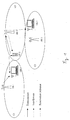
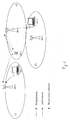
- Fig. 1 shows a first embodiment of a cellular communications network according to the invention, in the example comprising three cells C1, C2, C3, for each of which one base station BS1, BS2, BS3 and one user equipment UE1, UE2, UE3, for instance a mobile station, a PC or any other terminal, are symbolically shown. Further, by means of different arrows, the transmission of signals, the transmission of a reservation indicator and the occurrence of a conflict due to an interference are indicated. This shall be illustrated by way of the protocols shown in Fig. 2.
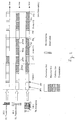
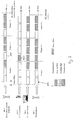
- Fig. 2 the protocols as used in a TDMA TDD system are shown for the uplink transmission from the user equipment UE2 to the base station BS2 in cell C2, for the downlink transmission from the base station BS1 to the user equipment UE1 in cell C1 and for the downlink reception of the user equipment UE1 and its emission of a reservation indicator.
- the transmission of signals is established by transmitting a series of data packets in particular data time slots DTS in frames of a particular data sub-carrier j, i.e. all packets of a particular signal are originally scheduled to be sent in the same (fixed) data time slot DTS with subsequent frames.
- TDMA TDD data time slots DTS are thus organized into frames, and a data time slot DTS is either in contention or in reservation.
- the transmission from the base station BS1 to the user equipment UE 1 starts in frame i with the third data time slot DTS3, and continues in all three data time slots DTS1, DTS2 and DTS 3 in frame i+1.
- DTS1 of frame i+1 also user equipment UE2 transmits a data packet to its base station BS2 thus leading to a conflict and an interference at the receiving user equipment UE1, as indicated in its reception protocol as collision slot and as shown in Fig. 1 by the arrow "interference".
- DTS2 and DTS3 in which only the base station BS1 transmits data packets no collision happens.
- conflict-signalling indicator time slots ITS are provided between the data time slots, i.e. at the end of each data time slot an indicator time slot ITS is provided assigned to the previous data time slot DTS, in which a reservation indicator can be transmitted by a receiving station.
- the receiving station UE1 emits a reservation indicator after correct receipt of the data packet transmitted in data time slot DTS3 of frame i, indicating to the transmitting station BS1 that the data packet has been received without unacceptable interference and indicating to other transmitting stations in the same cell C1, which listen if a corresponding reservation indicator is received before sending data packets in the same data time slot DTS3, that this data has been reserved for another transmitting station (i.e. the transmitting station BS1) to deter them from sending data packets in the same data time slot DTS3.
- the receiving station does not emit a reservation indicator (or emits a different indicator value) in the indicator time slot ITS1 indicating to the transmitting station BS1 that the data packet sent in data time slot DTS1 of frame i+1 has not been received without unacceptable interference and indicating to all transmitting station that the data time slot DTS1 is no longer reserved in subsequent frames, e.g. in the next frame i+2, which is indicated by not emitting a reservation indicator in the indicator time slot ITS1 in subsequent frames, e.g. in the next frame i+2.
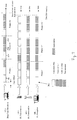
- a separate indicator time slot ITS are provided in the same data sub-carrier j for the transmission of the reservation indicator by a receiving station.
- a separate reservation indicator sub-carrier k is provided for this purpose.
- the transmission of the reservation indicator is also referred to as broadcast of a "busy-tone".
- a corresponding indicator time slot ITS is provided in the indicator sub-carrier k, possibly, but not necessarily emitted by the receiving station UE1 with a time offset with respect to the transmission of the data packet in the corresponding data time slot DTS.
- the function of the indicator time slots is identical as illustrated with reference to Fig. 2.
- several different receiving stations use the same indicator sub-carrier.
- FIG. 4 A flow chart of the communications method according to the present invention is shown in Fig. 4. The method comprises the following steps and behaves as follows:
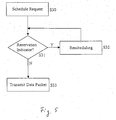
- step S3 The scheduling of a transmission (step S3) is shown in more detail in the flow chart of Fig. 5.
- the transmitter does not transmit in the scheduled data time slot, if the data time slot has been reserved (by hearing a busy signal or reservation indicator, S31) in a neighbouring cell.
- the transmitter is then rescheduled (S32) for a future frame. This avoids interference to the neighbouring cell's transmission but results in a wasted slot allocation in the cell in which the UL transmission was scheduled. However, this is generally unavoidable without some dedicated signalling (between UEs and BSs), which is overhead intensive.
- the BS only schedules a DL transmission in contention data time slots (slots unreserved by neighbouring cells), that is data time slots in which it hears no prior busy signal (reservation indicator). This avoids interference to the neighbouring cell's transmission and also minimises the chances of a wasted slot allocation in the cell in which the DL transmission was scheduled. This is because the BS is the transmitter on the DL and so can hear busy signals (reservation indicators) from receivers it would interfere with.
- the receiver stops broadcasting the busy signal (reservation indicator), which informs the transmitter to stop transmitting and the reservation is effectively terminated.
- a transmitter can only hear one busy signal (reservation indicator), which comes only from its intended receiver, or no busy signal (reservation indicator) indicating a collision.
- the performance of the protocol is expected to be affected by mobile speed, burst duration and busy tone signalling transmit power, while overhead will be affected by the propagation delay and transmitter turn-around time. It requires synchronised data time slots and indicator time slots.
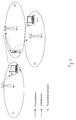
- Fig. 6 shows another embodiment of a cellular communications network illustrating an FDD uplink.
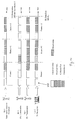
- An embodiment of the corresponding protocols is shown in Fig. 7, which uses a separate reservation indicator sub-carrier k, similar to the embodiment of Fig. 3.
- a collision exists between an uplink transmission in cell C1 from UE1 to BS1 and an uplink transmission from UE2 to BS2 in data time slot DTS1 of frame i+1 (in the embodiment shown in Fig. 7). Therefore, as explained above with reference to Figs. 2 and 3, no reservation indicator is emitted by the receiving station BS1 in indicator time slot ITS1 of frame i+1.
- the indicator sub-carrier for an UL data sub-carrier is a DL sub-carrier, while it is an UL sub-carrier for a DL data sub-carrier, where UL and DL sub-carriers reside in separate frequency bands.
- a MS only sends the indicator to BSs and not to MSs, while a BS only sends the indicator to MSs and not to BSs.
- a MS sends the indicator to both BSs and MSs, while a BS also sends the indicator to both MSs and BSs. This is because in FDD systems there is only MS-to-BS and BS-to-MS intercell interference. This is unlike TDD systems, where there is also MS-to-MS and BS-to-BS intercell interference.
- Fig. 8 an embodiment using continuous data transmission or variable-size data packets instead of fixed-size data packets is shown for the conflict situation shown in Fig. 6.
- no reservation indicator is emitted on the indicator sub-carrier.
- no reservation indicator is transmitted by the receiving station BS1. If the data sub-carrier is only used by the transmitting station UE1 and if the data are received by BS1 without unacceptable interference, a reservation indicator is transmitted on the indicator sub-carrier k as shown for time interval D2.
- FIG. 9 another embodiment of a cellular communications network illustrating an FDD downlink.
- An embodiment of the corresponding protocols is shown in Fig. 10, which uses a separate reservation indicator sub-carrier k, similar to the embodiment of Figs. 3 and 7.
- a collision exists between a downlink transmission in cell C1 from BS1 to UE1 and a downlink transmission from BS2 to UE2 in data time slot DTS1 of frame i+1 (in the embodiment shown in Fig. 10). Therefore, as explained above with reference to Figs. 2 and 3, no reservation indicator is emitted by the receiving station BS1 in indicator time slot ITS1 of frame i+1.
- the time offset between the data time slots and the corresponding indicator time slot could be zero.
- FIG. 11 an embodiment using continuous data transmission or variable-size data packets instead of fixed-size data packets is shown for the conflict situation shown in Fig. 9, similar to the embodiment shown in Fig. 8.
- the present invention is preferably applicable in a TDMA communications system, which particularly uses a TDD and FDD mode. But the invention can also be applied in other networks, like CDMA and FDMA networks.
- CDMA data codes are used as data transmission resource, instead of, or in addition to data time-slots/sub-carriers.
- FDMA data carriers are used as data transmission resource, instead of, or in addition to data time-slots/sub-carriers.
- Protocols for a CDMA or FDMA embodiment are similar to the protocols shown in Figs. 8 and 11, where "sub-carrier" is replaced by "code” (for CDMA) or "carrier” (for FDMA), respectively.
- the invention applies the "busy-tone" broadcast approach, in a novel way, for application in cellular mobile, ad-hoc and hybrid networks. It introduces a novel concept of an 'active' distributed scheduling inter-cell MAC, which employs carrier-sensing and busy-tone signalling, in order to perform fast dynamic channel allocation to mitigate inter-cell interference and conflicts. This is distinct from traditional overhead intensive and, hence, slow centralized inter-cell dynamic channel allocation or passive, slow distributed inter-cell dynamic channel allocation schemes that are based on channel hopping. Therefore, the traditional approaches are ineffective in providing real-time inter-cell interference rejection. A better performance is expected from the proposed method.
- the invention applies (inter-cell) MS-to-MS signalling to resolve inter-cell interference in a cellular mobile network, where traditionally there is no MS-to-MS communication. Also, it applies active carrier-sensing and busy-tone signalling between all nodes in the cellular mobile network to resolve intercell interference in real-time and so minimizes overhead and achieves a high performance.
- BS-to-BS, MS-to-BS and BS-to-BS signalling are supported for this purpose.
- the proposed protocol adapts autonomously and dynamically to the network topology and cell-size. It can seamlessly operate in ad-hoc, hybrid or cellular mobile mode, while supporting QoS, without any change to the protocol.
- Traditional approaches require two separate protocols for ad-hoc and cellular mobile operation. This results from the fact that the protocol is built around busy-tone broadcasts by receivers. In larger cells with most MSs away from the cell edge, the intra-cell scheduler dominates the proposed method, since not much inter-cell interference is present. But as cell sizes diminish and more MSs are closer to the edge of cells, then the proposed method dominates. In the limit, as the system reduces to direct peer-to-peer communication the proposed method becomes the default MAC, as there is little or no centralized scheduling.
Landscapes
- Engineering & Computer Science (AREA)
- Quality & Reliability (AREA)
- Computer Networks & Wireless Communication (AREA)
- Signal Processing (AREA)
- Mobile Radio Communication Systems (AREA)
Priority Applications (8)
| Application Number | Priority Date | Filing Date | Title |
|---|---|---|---|
| EP03024367A EP1526685A1 (en) | 2003-10-24 | 2003-10-24 | Inter-Cell Interference mitigation technique using reservation indicators |
| PCT/EP2004/011840 WO2005041494A1 (en) | 2003-10-24 | 2004-10-20 | Inter-cell interference mitigation technique using reservation indicators |
| CN2004800384896A CN1898920B (zh) | 2003-10-24 | 2004-10-20 | 通信网络和对应的通信方法及应用于这种通信网络的传送站和接收站及其操作方法 |
| EP04790652A EP1680896A1 (en) | 2003-10-24 | 2004-10-20 | Inter-cell interference mitigation technique using reservation indicators |
| CN2011103324244A CN102427606A (zh) | 2003-10-24 | 2004-10-20 | 应用于通信网络的传送站和接收站及其操作方法 |
| KR1020067010163A KR20060123199A (ko) | 2003-10-24 | 2004-10-20 | 예약 표시자를 이용한 셀간의 간섭을 감소시키는 기술 |
| US10/576,980 US7924867B2 (en) | 2003-10-24 | 2004-10-20 | Communications network using reservation indicator |
| JP2006536033A JP4664303B2 (ja) | 2003-10-24 | 2004-10-20 | 予約インジケータを用いたセル間干渉緩和技術 |
Applications Claiming Priority (1)
| Application Number | Priority Date | Filing Date | Title |
|---|---|---|---|
| EP03024367A EP1526685A1 (en) | 2003-10-24 | 2003-10-24 | Inter-Cell Interference mitigation technique using reservation indicators |
Publications (1)
| Publication Number | Publication Date |
|---|---|
| EP1526685A1 true EP1526685A1 (en) | 2005-04-27 |
Family
ID=34384622
Family Applications (2)
| Application Number | Title | Priority Date | Filing Date |
|---|---|---|---|
| EP03024367A Withdrawn EP1526685A1 (en) | 2003-10-24 | 2003-10-24 | Inter-Cell Interference mitigation technique using reservation indicators |
| EP04790652A Withdrawn EP1680896A1 (en) | 2003-10-24 | 2004-10-20 | Inter-cell interference mitigation technique using reservation indicators |
Family Applications After (1)
| Application Number | Title | Priority Date | Filing Date |
|---|---|---|---|
| EP04790652A Withdrawn EP1680896A1 (en) | 2003-10-24 | 2004-10-20 | Inter-cell interference mitigation technique using reservation indicators |
Country Status (6)
| Country | Link |
|---|---|
| US (1) | US7924867B2 (enExample) |
| EP (2) | EP1526685A1 (enExample) |
| JP (1) | JP4664303B2 (enExample) |
| KR (1) | KR20060123199A (enExample) |
| CN (2) | CN1898920B (enExample) |
| WO (1) | WO2005041494A1 (enExample) |
Cited By (7)
| Publication number | Priority date | Publication date | Assignee | Title |
|---|---|---|---|---|
| EP1763268A1 (en) * | 2005-09-13 | 2007-03-14 | NTT DoCoMo, Inc. | Dynamic sub-channel allocation in a OFDM/TDMA TDD communication system |
| EP1855422A1 (en) * | 2006-05-12 | 2007-11-14 | NTT DoCoMo, Inc. | Receiver feedback and broadcast signaling using busy bursts |
| EP1855423A1 (en) * | 2006-05-12 | 2007-11-14 | NTT DoCoMo INC. | Decentralized multi-user link adaptation for QoS support |
| WO2008087465A1 (en) * | 2007-01-15 | 2008-07-24 | Nokia Corporation | A method of transmitting between two nodes |
| EP1995891A1 (en) * | 2007-05-21 | 2008-11-26 | NTT DoCoMo, Inc. | Busy signal transceiver |
| EP1748605A3 (en) * | 2005-07-27 | 2011-03-30 | Fujitsu Ltd. | Control of data transmission from a mobile station at the time of handover |
| CN114600545A (zh) * | 2019-08-14 | 2022-06-07 | 弗劳恩霍夫应用研究促进协会 | 用于无线通信的设备和方法 |
Families Citing this family (28)
| Publication number | Priority date | Publication date | Assignee | Title |
|---|---|---|---|---|
| US7693119B2 (en) * | 2005-12-09 | 2010-04-06 | Hong Kong Applied Science And Technology Research Institute Co., Ltd. | Transmission power control over a wireless ad-hoc network |
| JP4804184B2 (ja) * | 2006-03-23 | 2011-11-02 | キヤノン株式会社 | 通信方法、通信装置、コンピュータプログラム |
| EP1855390B1 (en) * | 2006-05-12 | 2008-05-07 | NTT DoCoMo, Inc. | Methods and devices for interference tolerance signalling and power control using busy-signal concept |
| US20070280175A1 (en) * | 2006-06-01 | 2007-12-06 | Fang-Chen Cheng | Coordinating transmission scheduling among multiple base stations |
| EP2055022A1 (en) * | 2006-07-27 | 2009-05-06 | Telefonaktiebolaget LM Ericsson (PUBL) | Hierarchical broadcast transmission via multiple transmitters |
| US8503343B2 (en) * | 2006-08-21 | 2013-08-06 | Panasonic Corporation | Wireless communication system, communication control method and communication node |
| TWI392277B (zh) * | 2006-09-29 | 2013-04-01 | Koninkl Philips Electronics Nv | 在共同合作媒體存取控制協定中之自動夥伴選擇 |
| CN100426935C (zh) * | 2006-10-31 | 2008-10-15 | 华为技术有限公司 | 一种多小区上行随机物理信道接入的方法和装置 |
| US8958810B2 (en) | 2006-11-07 | 2015-02-17 | Alcatel Lucent | Method and apparatus for spectrum allocation in wireless networks |
| JP4913641B2 (ja) * | 2007-03-20 | 2012-04-11 | 株式会社エヌ・ティ・ティ・ドコモ | 基地局、通信端末、送信方法、受信方法、通信システム |
| JP5152472B2 (ja) | 2007-04-28 | 2013-02-27 | 日本電気株式会社 | 無線通信システムにおけるリソース割当制御方法および装置 |
| US8498247B2 (en) * | 2008-03-25 | 2013-07-30 | Qualcomm Incorporated | Adaptively reacting to resource utilization messages including channel gain indication |
| US8599748B2 (en) | 2008-03-25 | 2013-12-03 | Qualcomm Incorporated | Adapting decision parameter for reacting to resource utilization messages |
| US8046016B2 (en) * | 2008-08-27 | 2011-10-25 | Motorola Solutions, Inc. | Indicating availability of RF resources at a peer base station in a two-way peer-to-peer communication system |
| CN101902820B (zh) * | 2009-05-25 | 2013-04-03 | 电信科学技术研究院 | 一种发送上行数据的方法、系统和装置 |
| GB2471299B (en) * | 2009-06-24 | 2013-05-15 | Nokia Corp | Radio channel allocation |
| US9560682B2 (en) * | 2010-11-05 | 2017-01-31 | Qualcomm Incorporated | Methods and apparatus for resource allocations to support peer-to-peer communications in cellular networks |
| US8873526B2 (en) * | 2010-12-17 | 2014-10-28 | Cisco Technology, Inc. | Collision avoidance for wireless networks |
| US20140092857A1 (en) * | 2011-06-16 | 2014-04-03 | Nokia Corporation | Method and apparatus for wireless medium access |
| KR20130052098A (ko) * | 2011-11-11 | 2013-05-22 | 삼성전자주식회사 | 멀티 피코넷에서 간섭을 회피하는 방법 |
| RU2590906C2 (ru) | 2011-11-17 | 2016-07-10 | ЭлДжи ЭЛЕКТРОНИКС ИНК. | Способы передачи и приема кадра станцией, работающей в режиме энергосбережения в системе беспроводной локальной сети, и устройство для его поддержки |
| JP5997487B2 (ja) * | 2012-04-18 | 2016-09-28 | 株式会社Nttドコモ | 無線通信端末、通信制御装置及び通信制御方法 |
| JP5448012B2 (ja) * | 2012-09-13 | 2014-03-19 | 日本電気株式会社 | 無線通信システム、その通信方法、基地局および移動局 |
| JP6075912B2 (ja) * | 2013-03-14 | 2017-02-08 | Juki株式会社 | 画像処理装置及び画像処理方法 |
| US9560674B2 (en) | 2014-09-22 | 2017-01-31 | Huawei Technologies Co., Ltd. | Virtual busy-tone for full-duplex wireless networks |
| CN105848181B (zh) | 2015-01-30 | 2019-09-20 | 财团法人资讯工业策进会 | 基站、使用者装置及频道选择方法 |
| US10356626B2 (en) * | 2016-12-06 | 2019-07-16 | Qualcomm Incorporated | Opportunistic reclaiming of resources in new radio-spectrum sharing (NR-SS) |
| US10813109B2 (en) * | 2018-10-11 | 2020-10-20 | Sony Corporation | Distributed scheduling protocol with directional transmission knowledge |
Citations (7)
| Publication number | Priority date | Publication date | Assignee | Title |
|---|---|---|---|---|
| US20020041584A1 (en) * | 2000-10-05 | 2002-04-11 | Nec Corporation | Asynchronous interference avoidance technique in TDMA communications system |
| US20020061031A1 (en) * | 2000-10-06 | 2002-05-23 | Sugar Gary L. | Systems and methods for interference mitigation among multiple WLAN protocols |
| US6400698B1 (en) * | 1998-01-29 | 2002-06-04 | Northern Telecom Limited | State machine and random reserve access protocol for IS136 based TDMA packet date mobile stations |
| US20020071448A1 (en) * | 2000-07-07 | 2002-06-13 | Gerard Cervello | Collision avoidance in IEEE 802.11 contention free period (CFP) with overlapping basic service sets (BSSs) |
| FR2821514A1 (fr) * | 2001-02-28 | 2002-08-30 | Jacques Lewiner | Systeme de radiocommunication local |
| EP1257098A2 (en) * | 2001-05-12 | 2002-11-13 | Samsung Electronics Co., Ltd. | Method for avoiding mutual interference between wireless communication systems, and apparatus therefore |
| WO2003069937A1 (en) * | 2002-02-11 | 2003-08-21 | Hrl Laboratories, Llc | Apparatus, method, and computer program product for wireless networking using directional signaling |
Family Cites Families (9)
| Publication number | Priority date | Publication date | Assignee | Title |
|---|---|---|---|---|
| US6570865B2 (en) * | 1995-08-10 | 2003-05-27 | Hitachi, Ltd. | CDMA mobile communications system and communication method |
| KR20010090864A (ko) * | 1999-10-05 | 2001-10-19 | 요트.게.아. 롤페즈 | 등시성 서비스들을 위한 지원을 가진 분산된 무선 매체접근 제어 프로토콜 |
| AU2001286447A1 (en) * | 2000-08-11 | 2002-02-25 | The Regents Of The University Of California | Receiver-initiated multiple access for ad-hoc networks (rima) |
| AU2001277766B2 (en) * | 2000-08-11 | 2006-05-18 | Nec Corporation | Communication system, method thereof, switching center thereof and base station control station thereof |
| GB2367447B (en) * | 2000-09-27 | 2003-11-05 | Airspan Networks Inc | Transfer of data in a telecommunications system |
| WO2002037754A2 (en) * | 2000-11-03 | 2002-05-10 | At & T Corp. | Tiered contention multiple access (tcma): a method for priority-based shared channel access |
| JP2002217913A (ja) * | 2001-01-23 | 2002-08-02 | Hitachi Kokusai Electric Inc | 無線lanシステム |
| US20020172186A1 (en) * | 2001-04-09 | 2002-11-21 | Peter Larsson | Instantaneous joint transmit power control and link adaptation for RTS/CTS based channel access |
| US6765882B2 (en) | 2001-07-02 | 2004-07-20 | Motorola, Inc. | Method and system for data packet collision avoidance in a wireless communication system |
-
2003
- 2003-10-24 EP EP03024367A patent/EP1526685A1/en not_active Withdrawn
-
2004
- 2004-10-20 EP EP04790652A patent/EP1680896A1/en not_active Withdrawn
- 2004-10-20 CN CN2004800384896A patent/CN1898920B/zh not_active Expired - Fee Related
- 2004-10-20 KR KR1020067010163A patent/KR20060123199A/ko not_active Withdrawn
- 2004-10-20 WO PCT/EP2004/011840 patent/WO2005041494A1/en not_active Ceased
- 2004-10-20 JP JP2006536033A patent/JP4664303B2/ja not_active Expired - Fee Related
- 2004-10-20 CN CN2011103324244A patent/CN102427606A/zh active Pending
- 2004-10-20 US US10/576,980 patent/US7924867B2/en not_active Expired - Fee Related
Patent Citations (7)
| Publication number | Priority date | Publication date | Assignee | Title |
|---|---|---|---|---|
| US6400698B1 (en) * | 1998-01-29 | 2002-06-04 | Northern Telecom Limited | State machine and random reserve access protocol for IS136 based TDMA packet date mobile stations |
| US20020071448A1 (en) * | 2000-07-07 | 2002-06-13 | Gerard Cervello | Collision avoidance in IEEE 802.11 contention free period (CFP) with overlapping basic service sets (BSSs) |
| US20020041584A1 (en) * | 2000-10-05 | 2002-04-11 | Nec Corporation | Asynchronous interference avoidance technique in TDMA communications system |
| US20020061031A1 (en) * | 2000-10-06 | 2002-05-23 | Sugar Gary L. | Systems and methods for interference mitigation among multiple WLAN protocols |
| FR2821514A1 (fr) * | 2001-02-28 | 2002-08-30 | Jacques Lewiner | Systeme de radiocommunication local |
| EP1257098A2 (en) * | 2001-05-12 | 2002-11-13 | Samsung Electronics Co., Ltd. | Method for avoiding mutual interference between wireless communication systems, and apparatus therefore |
| WO2003069937A1 (en) * | 2002-02-11 | 2003-08-21 | Hrl Laboratories, Llc | Apparatus, method, and computer program product for wireless networking using directional signaling |
Cited By (12)
| Publication number | Priority date | Publication date | Assignee | Title |
|---|---|---|---|---|
| EP1748605A3 (en) * | 2005-07-27 | 2011-03-30 | Fujitsu Ltd. | Control of data transmission from a mobile station at the time of handover |
| EP1763268A1 (en) * | 2005-09-13 | 2007-03-14 | NTT DoCoMo, Inc. | Dynamic sub-channel allocation in a OFDM/TDMA TDD communication system |
| JP2007116674A (ja) * | 2005-09-13 | 2007-05-10 | Ntt Docomo Inc | 動的なサブチャネル割り当てのための方法、送信機、受信機およびシステム |
| EP1855422A1 (en) * | 2006-05-12 | 2007-11-14 | NTT DoCoMo, Inc. | Receiver feedback and broadcast signaling using busy bursts |
| EP1855423A1 (en) * | 2006-05-12 | 2007-11-14 | NTT DoCoMo INC. | Decentralized multi-user link adaptation for QoS support |
| WO2008087465A1 (en) * | 2007-01-15 | 2008-07-24 | Nokia Corporation | A method of transmitting between two nodes |
| EP1995891A1 (en) * | 2007-05-21 | 2008-11-26 | NTT DoCoMo, Inc. | Busy signal transceiver |
| CN114600545A (zh) * | 2019-08-14 | 2022-06-07 | 弗劳恩霍夫应用研究促进协会 | 用于无线通信的设备和方法 |
| EP4014665A1 (en) * | 2019-08-14 | 2022-06-22 | Fraunhofer-Gesellschaft zur Förderung der angewandten Forschung e.V. | Apparatuses and methods for wireless communications |
| CN114600545B (zh) * | 2019-08-14 | 2025-02-18 | 皇家飞利浦有限公司 | 用于无线通信的设备和方法 |
| US12363747B2 (en) | 2019-08-14 | 2025-07-15 | Koninklijke Philips N.V. | User device and method with beam management enhancements |
| EP4014665B1 (en) * | 2019-08-14 | 2025-10-08 | Koninklijke Philips N.V. | Apparatuses and methods for wireless communications |
Also Published As
| Publication number | Publication date |
|---|---|
| CN1898920A (zh) | 2007-01-17 |
| US20070274280A1 (en) | 2007-11-29 |
| JP4664303B2 (ja) | 2011-04-06 |
| US7924867B2 (en) | 2011-04-12 |
| WO2005041494A1 (en) | 2005-05-06 |
| CN1898920B (zh) | 2012-05-30 |
| KR20060123199A (ko) | 2006-12-01 |
| EP1680896A1 (en) | 2006-07-19 |
| CN102427606A (zh) | 2012-04-25 |
| JP2007509549A (ja) | 2007-04-12 |
Similar Documents
| Publication | Publication Date | Title |
|---|---|---|
| US7924867B2 (en) | Communications network using reservation indicator | |
| EP4162757B1 (en) | Rts/cts coordination for txop sharing | |
| KR102765110B1 (ko) | 공유 통신 매체 상의 공존을 위한 채널 구성 | |
| US7561525B2 (en) | Wireless communication system, wireless communication apparatus, wireless communication method, and computer program | |
| EP1848122B1 (en) | Radio device and interference avoiding method by transmission power control | |
| US6134231A (en) | Uplink channel puncturing for reduced interference within a wireless data communications network | |
| CN113632580B (zh) | 随机接入过程中消息3的cot共享指示符 | |
| EP3143790B1 (en) | Access to a communications channel in a wireless communications network | |
| US20060050742A1 (en) | Method and system for controlling access to a wireless communication medium | |
| US20050117536A1 (en) | System and method for transmitting and receiving resource allocation information in a wireless communication system | |
| US20090303939A1 (en) | Shared data channel assigning apparatus and shared data channel assigning method | |
| US10015788B2 (en) | System and method of signalling for point-to-multipoint (PtMP) transmission in fixed wireless backhaul networks | |
| JP2008060994A (ja) | 通信制御装置及び通信制御方法 | |
| US20100091717A1 (en) | Method to quite hidden nodes | |
| CN112189367A (zh) | 在新无线电非授权中的备用寻呼机会 | |
| US20250317956A1 (en) | User device and method with beam management enhancements | |
| EP2187568A1 (en) | Wireless access method and its apparatus | |
| US7924869B2 (en) | Time-division-based channel collision collaboration in a dynamic frequency hopping wireless regional area network (WRAN) | |
| Omiyi et al. | Improving time-slot allocation in 4/sup th/generation OFDM/TDMA TDD radio access networks with innovative channel-sensing | |
| EP1855390B1 (en) | Methods and devices for interference tolerance signalling and power control using busy-signal concept | |
| EP1855423B1 (en) | Decentralized multi-user link adaptation for QoS support | |
| EP1855422B1 (en) | Receiver feedback and broadcast signaling using busy bursts | |
| Omiyi et al. | Maximising spectral efficiency in 3G with hybrid ad-hoc UTRA TDD/UTRA FDD cellular mobile communications |
Legal Events
| Date | Code | Title | Description |
|---|---|---|---|
| PUAI | Public reference made under article 153(3) epc to a published international application that has entered the european phase |
Free format text: ORIGINAL CODE: 0009012 |
|
| AK | Designated contracting states |
Kind code of ref document: A1 Designated state(s): AT BE BG CH CY CZ DE DK EE ES FI FR GB GR HU IE IT LI LU MC NL PT RO SE SI SK TR |
|
| AX | Request for extension of the european patent |
Extension state: AL LT LV MK |
|
| AKX | Designation fees paid | ||
| STAA | Information on the status of an ep patent application or granted ep patent |
Free format text: STATUS: THE APPLICATION IS DEEMED TO BE WITHDRAWN |
|
| 18D | Application deemed to be withdrawn |
Effective date: 20051028 |
|
| REG | Reference to a national code |
Ref country code: DE Ref legal event code: 8566 |