EP1524335A1 - Copper electrolyte comprising amine compound having specific skeleton and organic sulfur compound and electrolytic copper foil prepared using the same - Google Patents
Copper electrolyte comprising amine compound having specific skeleton and organic sulfur compound and electrolytic copper foil prepared using the same Download PDFInfo
- Publication number
- EP1524335A1 EP1524335A1 EP03730553A EP03730553A EP1524335A1 EP 1524335 A1 EP1524335 A1 EP 1524335A1 EP 03730553 A EP03730553 A EP 03730553A EP 03730553 A EP03730553 A EP 03730553A EP 1524335 A1 EP1524335 A1 EP 1524335A1
- Authority
- EP
- European Patent Office
- Prior art keywords
- groups
- compound
- group
- copper foil
- amine compound
- Prior art date
- Legal status (The legal status is an assumption and is not a legal conclusion. Google has not performed a legal analysis and makes no representation as to the accuracy of the status listed.)
- Granted
Links
- YLLISVCOFBNBKW-JXMROGBWSA-N C/C(/SC)=N\c1ccccc1S Chemical compound C/C(/SC)=N\c1ccccc1S YLLISVCOFBNBKW-JXMROGBWSA-N 0.000 description 1
Images


Classifications
-
- C—CHEMISTRY; METALLURGY
- C25—ELECTROLYTIC OR ELECTROPHORETIC PROCESSES; APPARATUS THEREFOR
- C25D—PROCESSES FOR THE ELECTROLYTIC OR ELECTROPHORETIC PRODUCTION OF COATINGS; ELECTROFORMING; APPARATUS THEREFOR
- C25D7/00—Electroplating characterised by the article coated
- C25D7/06—Wires; Strips; Foils
- C25D7/0614—Strips or foils
-
- C—CHEMISTRY; METALLURGY
- C25—ELECTROLYTIC OR ELECTROPHORETIC PROCESSES; APPARATUS THEREFOR
- C25D—PROCESSES FOR THE ELECTROLYTIC OR ELECTROPHORETIC PRODUCTION OF COATINGS; ELECTROFORMING; APPARATUS THEREFOR
- C25D1/00—Electroforming
- C25D1/04—Wires; Strips; Foils
-
- C—CHEMISTRY; METALLURGY
- C25—ELECTROLYTIC OR ELECTROPHORETIC PROCESSES; APPARATUS THEREFOR
- C25D—PROCESSES FOR THE ELECTROLYTIC OR ELECTROPHORETIC PRODUCTION OF COATINGS; ELECTROFORMING; APPARATUS THEREFOR
- C25D3/00—Electroplating: Baths therefor
- C25D3/02—Electroplating: Baths therefor from solutions
- C25D3/38—Electroplating: Baths therefor from solutions of copper
-
- H—ELECTRICITY
- H05—ELECTRIC TECHNIQUES NOT OTHERWISE PROVIDED FOR
- H05K—PRINTED CIRCUITS; CASINGS OR CONSTRUCTIONAL DETAILS OF ELECTRIC APPARATUS; MANUFACTURE OF ASSEMBLAGES OF ELECTRICAL COMPONENTS
- H05K1/00—Printed circuits
- H05K1/02—Details
- H05K1/09—Use of materials for the conductive, e.g. metallic pattern
-
- Y—GENERAL TAGGING OF NEW TECHNOLOGICAL DEVELOPMENTS; GENERAL TAGGING OF CROSS-SECTIONAL TECHNOLOGIES SPANNING OVER SEVERAL SECTIONS OF THE IPC; TECHNICAL SUBJECTS COVERED BY FORMER USPC CROSS-REFERENCE ART COLLECTIONS [XRACs] AND DIGESTS
- Y10—TECHNICAL SUBJECTS COVERED BY FORMER USPC
- Y10T—TECHNICAL SUBJECTS COVERED BY FORMER US CLASSIFICATION
- Y10T428/00—Stock material or miscellaneous articles
- Y10T428/12—All metal or with adjacent metals
- Y10T428/12493—Composite; i.e., plural, adjacent, spatially distinct metal components [e.g., layers, joint, etc.]
- Y10T428/12771—Transition metal-base component
- Y10T428/12861—Group VIII or IB metal-base component
- Y10T428/12903—Cu-base component
-
- Y—GENERAL TAGGING OF NEW TECHNOLOGICAL DEVELOPMENTS; GENERAL TAGGING OF CROSS-SECTIONAL TECHNOLOGIES SPANNING OVER SEVERAL SECTIONS OF THE IPC; TECHNICAL SUBJECTS COVERED BY FORMER USPC CROSS-REFERENCE ART COLLECTIONS [XRACs] AND DIGESTS
- Y10—TECHNICAL SUBJECTS COVERED BY FORMER USPC
- Y10T—TECHNICAL SUBJECTS COVERED BY FORMER US CLASSIFICATION
- Y10T428/00—Stock material or miscellaneous articles
- Y10T428/12—All metal or with adjacent metals
- Y10T428/12993—Surface feature [e.g., rough, mirror]
-
- Y—GENERAL TAGGING OF NEW TECHNOLOGICAL DEVELOPMENTS; GENERAL TAGGING OF CROSS-SECTIONAL TECHNOLOGIES SPANNING OVER SEVERAL SECTIONS OF THE IPC; TECHNICAL SUBJECTS COVERED BY FORMER USPC CROSS-REFERENCE ART COLLECTIONS [XRACs] AND DIGESTS
- Y10—TECHNICAL SUBJECTS COVERED BY FORMER USPC
- Y10T—TECHNICAL SUBJECTS COVERED BY FORMER US CLASSIFICATION
- Y10T428/00—Stock material or miscellaneous articles
- Y10T428/26—Web or sheet containing structurally defined element or component, the element or component having a specified physical dimension
Definitions
- the present invention relates to a copper electrolytic solution used in the manufacture of an electrolytic copper foil, and in particular to a copper electrolytic solution used in the manufacture of an electrolytic copper foil that can be finely patterned and has excellent elongation and tensile strength at normal temperature and high temperature.
- an electrolytic copper foil In general, to manufacture an electrolytic copper foil, a rotating metal cathode drum having a polished surface, and an insoluble metal anode that goes around the periphery of approximately the lower half of the cathode drum are used, and a copper electrolytic solution is made to flow between the cathode drum and the anode. A potential is also applied between the cathode drum and the anode, whereby copper is electrodeposited onto the cathode drum. Once the electrodeposited copper has reached a prescribed thickness, the electrodeposited copper is peeled off from the cathode drum, whereby copper foil is manufactured continuously.
- Copper foil obtained in this way is generally referred to as raw foil; this raw foil is subsequently subjected to various surface treatment and is then used in printed wiring boards or the like.
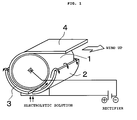
- FIG. 1 A conventional copper foil manufacturing apparatus is shown schematically in FIG. 1.
- a cathode drum is installed in an electrolysis bath housing an electrolytic solution.
- the cathode drum 1 rotates in a state partially submerged (i.e. with approximately the lower half submerged) in the electrolytic solution.
- An insoluble anode 2 is provided so as to go around the lower half of the outer periphery of the cathode drum 1. There is a constant gap 3 between the cathode drum 1 and the anode 2, and the electrolytic solution flows through this gap. In the apparatus of FIG. 1, two anode plates are used.
- the constitution is such that the electrolytic solution is fed in from below, passes through the gap 3 between the cathode drum 1 and the anode 2, and flows over upper edges of the anode 2, thus circulating.
- a prescribed voltage is maintained between the cathode drum 1 and the anode 2 using a rectifier.
- the cathode drum 1 rotates, the copper electrodeposited from the electrolytic solution glows thicker, and once the copper has become at least a certain thickness, the raw foil 4 is peeled off, and is wound up continuously.
- the thickness of the raw foil manufactured in this way is adjusted through the distance between the cathode drum 1 and the anode 2, the flow rate of the electrolytic solution fed in, and the amount of electricity fed in.
- the surface contacting the cathode drum becomes a specular surface, but the surface on the other side becomes a rough surface having irregularities.
- the irregularities on the rough surface are severe, and hence there is a problem that undercutting is prone to occurring during etching, and thus fine patterning is difficult.
- the present inventors found that by adding optimum additives enabling a low profiled foil to an electrolytic solution, therefore, it is possible to obtain an electrolytic copper foil that can be finely patterned and has excellent elongation and tensile strength at normal temperature and high temperature.
- the present inventors discovered that, by electrolysis using a copper electrolytic solution containing an amine compound having a specific skeleton and an organosulfur compound, it is possible to obtain an electrolytic copper foil that can be finely patterned and has excellent elongation and tensile strength at normal temperature and high temperature, in the case of an electrolytic copper foil manufacturing method in which a copper electrolytic solution is made to flow between a cathode drum and an anode, copper is electrodeposited onto the cathode drum, and the electrodeposited copper is peeled off from the cathode drum to continuously manufacture copper foil; the present invention was thus achieved.
- the present invention is constituted as follows.
- (n: an integer from 1 to 5) (n: an integer from 1 to 22) (n: an integer from 1 to 3)
- R 1 and R 2 are each selected from a group consisting of hydroxyalkyl groups, ether groups, aromatic groups, aromatic-substituted alkyl groups, unsaturated hydrocarbon groups, and alkyl groups.)
- the electrolytic solution it is important for the electrolytic solution to contain an organosulfur compound, and the amine compound having the specific skeleton represented by above-mentioned general formula (1) that is obtained through an addition reaction between an amine compound and a compound having one or more epoxy groups in a molecule thereof. If only one of these were to be added, then it would not be possible to attain the object of the present invention.
- the amine compound (1) having the specific skeleton is synthesized through the addition reaction represented by the undermentioned reaction formula.
- the amine compound having the specific skeleton can be produced by mixing together an amine compound and a compound having one or more epoxy groups in a molecule thereof, and reacting for approximately 30 minutes to 6 hours at 50 to 150°C.
- R 1 and R 2 are each selected from the set consisting of hydroxyalkyl groups, ether groups, aromatic groups, aromatic-substituted alkyl groups, unsaturated hydrocarbon groups, and alkyl groups, A represents an epoxy residue, and n represents an integer greater than or equal to 1.
- R 1 and R 2 in the structure of the amine compound having the specific skeleton are a hydroxyethyl group and a hydroxyisopropyl group ('hydroxyalkyl groups' above), a 2-ethoxyethyl group and a 2-propoxyethyl group ('ether groups' above), a phenyl group and a naphthyl group ('aromatic groups' above), a tolyl group, a xylyl group, a cumenyl group and a 1-phenylethyl group ('aromatic-substituted alkyl groups' above), an allyl group, a 1-propenyl group, an isopropenyl group, a 1-butenyl group, a 2-butenyl group and a 2-methylallyl group ('unsaturated hydrocarbon groups' above), and a methyl group, an ethyl group, a propyl group, a butyl group, a pentyl
- the amine compound having the specific skeleton prefferably be a compound having a linear ether linkage in the epoxy compound residue A.
- Compounds having the structural formulae of undermentioned general formulae (2) to (9) are preferable as such compounds in which the epoxy compound residue A has a linear ether linkage, with the epoxy compound residue A in each of general formulae (2) to (9) being as shown below.
- R 1 and R 2 are each selected from a group consisting of hydroxyalkyl groups, ether groups, aromatic groups, aromatic-substituted alkyl groups, unsaturated hydrocarbon groups, and alkyl groups.
- the organosulfur compound is preferably a compound having a structural formula of above-mentioned general formula (10) or (11).
- organosulfur compounds represented by above-mentioned general formula (10) are as follows, with it being preferable to use these.
- organosulfur compounds represented by above-mentioned general formula (11) are as follows, with it being preferable to use these. HS ⁇ CH 2 CH 2 CH 2 ⁇ SO 3 Na HS ⁇ CH 2 CH 2 ⁇ SO 3 N a
- the weight ratio of the amine compound to the organosulfur compound in the copper electrolytic solution is preferably in a range of 1:5 to 5:1, more preferably 1:2 to 2:1.
- the concentration of the amine compound in the copper electrolytic solution is preferably in a range of 1 to 50 ppm.
- polyether compounds such as polyethylene glycol and polypropylene glycol, and, polyethyleneimine, phenazine dyes, animal glue and cellulose may be added into the copper electrolytic solution.
- a copper-clad laminate obtained by laminating on the electrolytic copper foil of the present invention has excellent elongation and tensile strength at normal temperature and high temperature.
- FIG. 1 is a drawing showing an example of an electrolytic copper foil manufacturing apparatus.
- FIG. 2 is the FT-IR spectrum of a dimethylamine compound obtained in an example of synthesis of the amine compound having the specific skeleton.
- FIG. 3 is the H-NMR spectrum of the dimethylamine compound obtained in the example of synthesis of the amine compound having the specific skeleton.
- FIG. 4 is the 13 C-NMR spectrum of the dimethylamine compound obtained in the example of synthesis of the amine compound having the specific skeleton.
- epoxy resins modified with each of bis(2-ethoxyethyl)amine, diethanolamine, diphenylamine, diallylamine and dimethylamine were obtained.
- the FT-IR, 1 H-NMR and 13 C-NMR spectra of the epoxy resin modified with dimethylamine are shown in FIGS. 2 to 4.
- the compound obtained was the dimethylamine compound represented by the undermentioned chemical formula.
- 35 ⁇ m electrolytic copper foil was manufactured using an electrolytic copper foil manufacturing apparatus as shown in FIG. 1.
- the composition of the electrolytic solution was as follows, with the amounts added of the additives being as shown in Table 1.
- the surface roughness Rz ( ⁇ m) of each electrolytic copper foil obtained was measured in accordance with JIS B 0601, and the normal-temperature elongation (%), the normal-temperature tensile strength (kgf/mm 2 ), the high-temperature elongation (%) and the high-temperature tensile strength (kgf/mm 2 ) were measured in accordance with IPC-TM650. The results are shown in Table 1.
- each Rz was in a range of 0.90 to 1.20 ⁇ m
- each normal-temperature elongation was in a range of 6.62 to 8.90%
- each normal-temperature tensile strength was in a range of 30.5 to 37.9 kgf/mm 2
- each high-temperature elongation was in a range of 12.1 to 18.2%
- each high-temperature tensile strength was in a range of 20.1 to 22.3 kgf/mm 2 .
- the copper electrolytic solution of the present invention to which the amine compound having the specific skeleton and the organosulfur compound have been added is extremely effective in making the rough surface of an electrolytic copper foil obtained have a low profile; moreover excellent properties are observed in that extension properties can be maintained effectively not only at normal temperature but also at high temperature, and furthermore high tensile strength can similarly be obtained.
- addition of both the amine compound having the specific skeleton and the organosulfur compound is important, since only then can the above properties be obtained.
Landscapes
- Chemical & Material Sciences (AREA)
- Engineering & Computer Science (AREA)
- Chemical Kinetics & Catalysis (AREA)
- Electrochemistry (AREA)
- Materials Engineering (AREA)
- Metallurgy (AREA)
- Organic Chemistry (AREA)
- Electroplating And Plating Baths Therefor (AREA)
- Organic Low-Molecular-Weight Compounds And Preparation Thereof (AREA)
- Laminated Bodies (AREA)
- Parts Printed On Printed Circuit Boards (AREA)
Abstract

Description


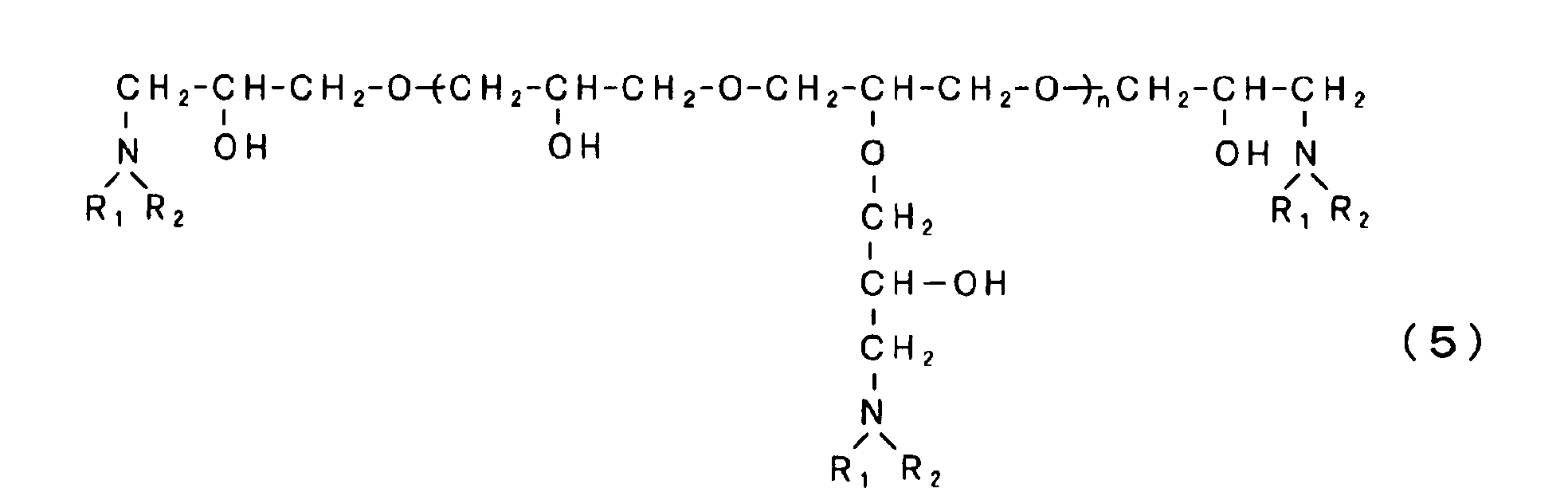
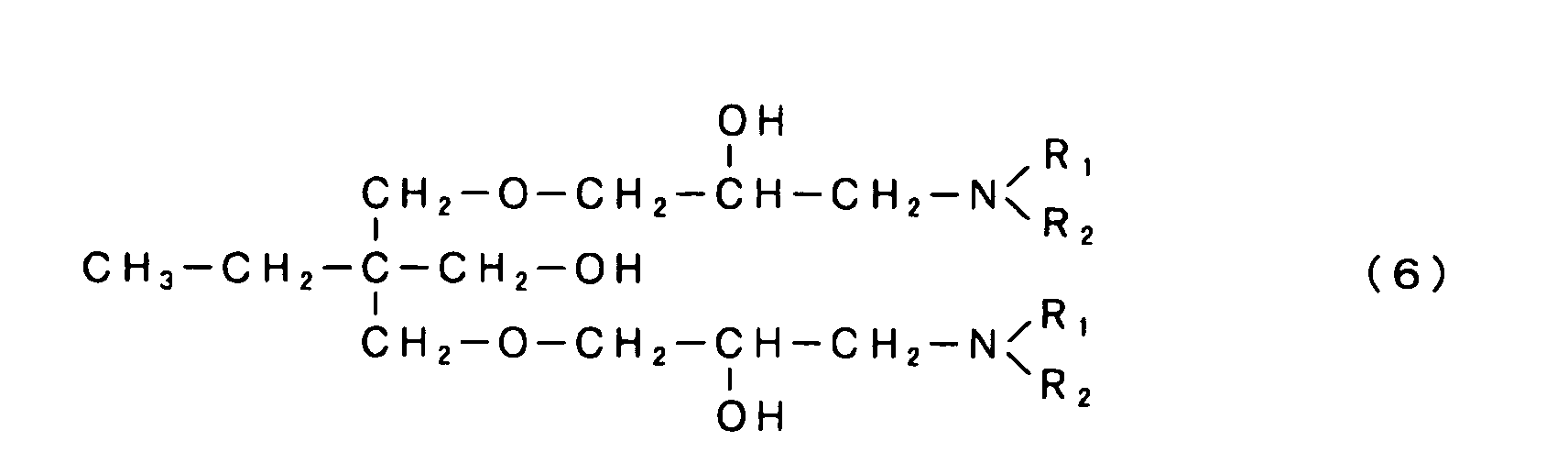

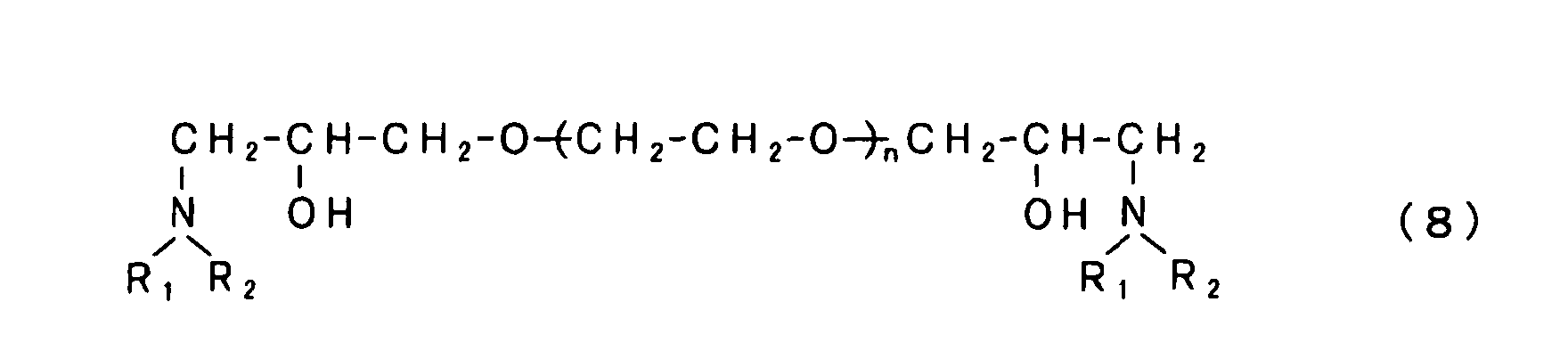

(In general formulae (2) to (9), R1 and R2 are each selected from a group consisting of hydroxyalkyl groups, ether groups, aromatic groups, aromatic-substituted alkyl groups, unsaturated hydrocarbon groups, and alkyl groups.)
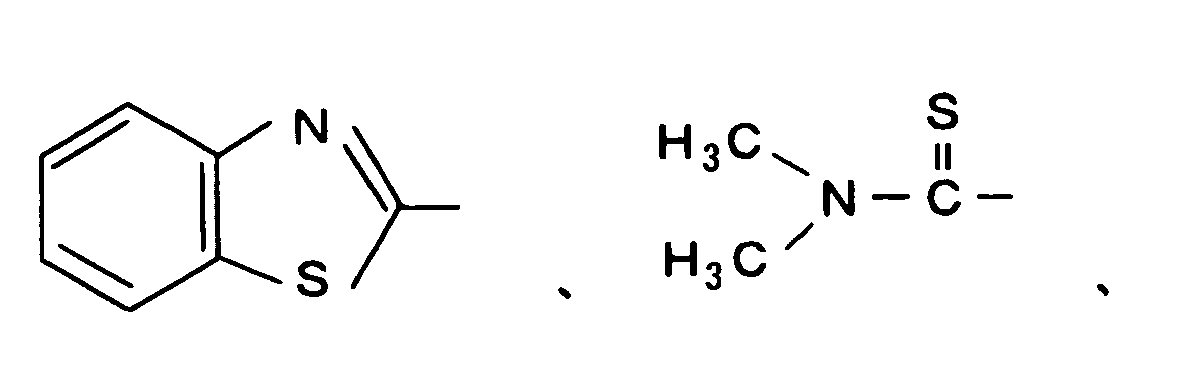


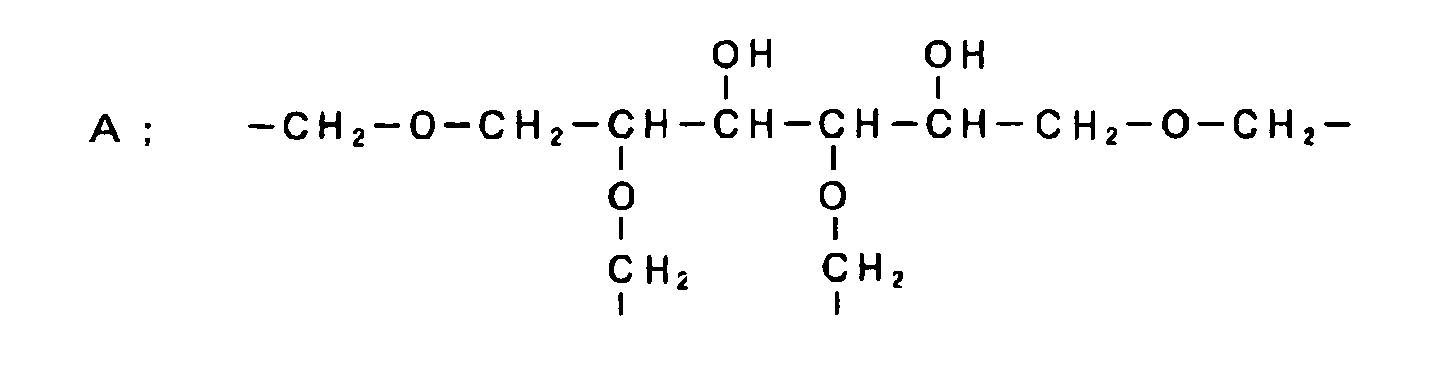

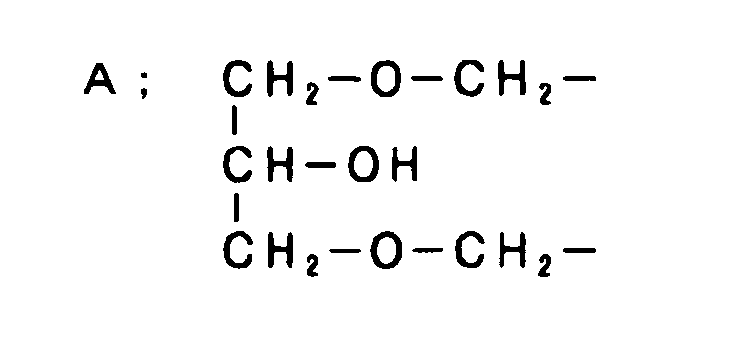

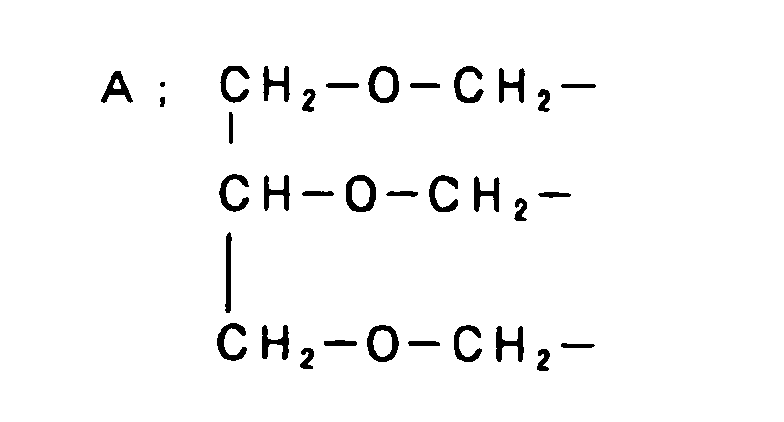

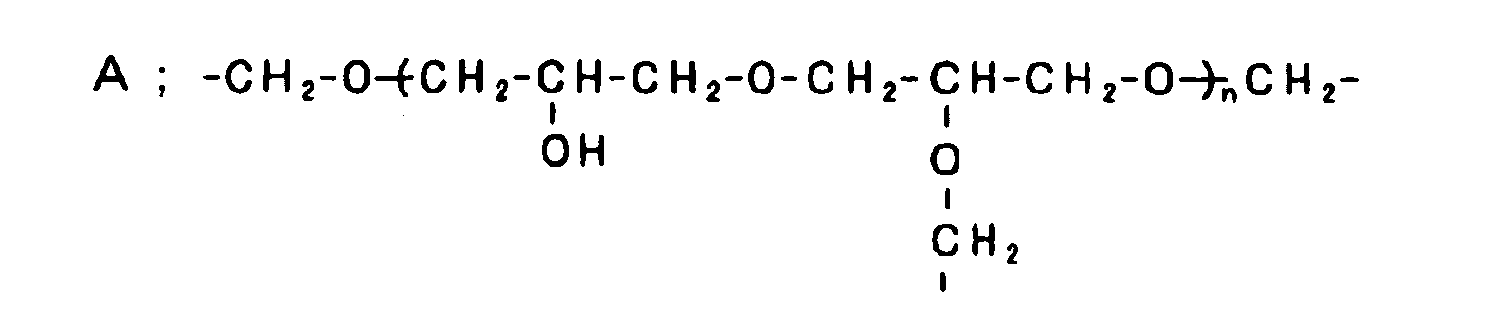

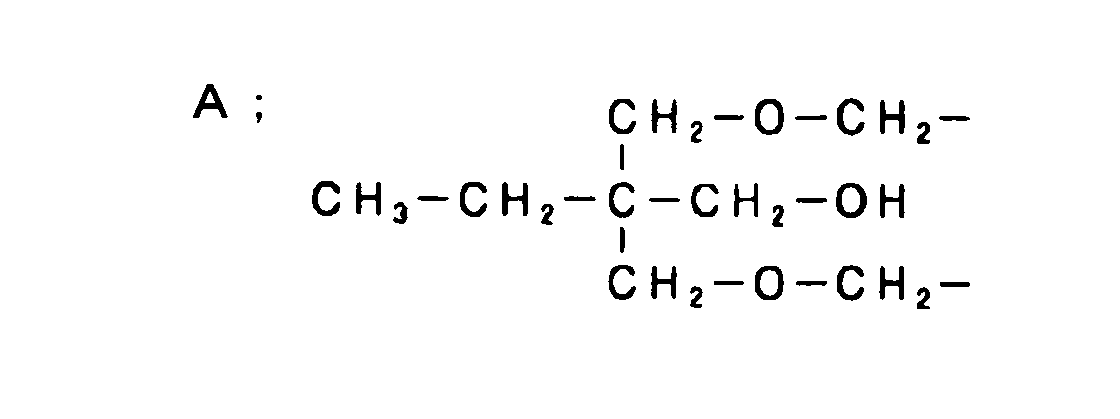

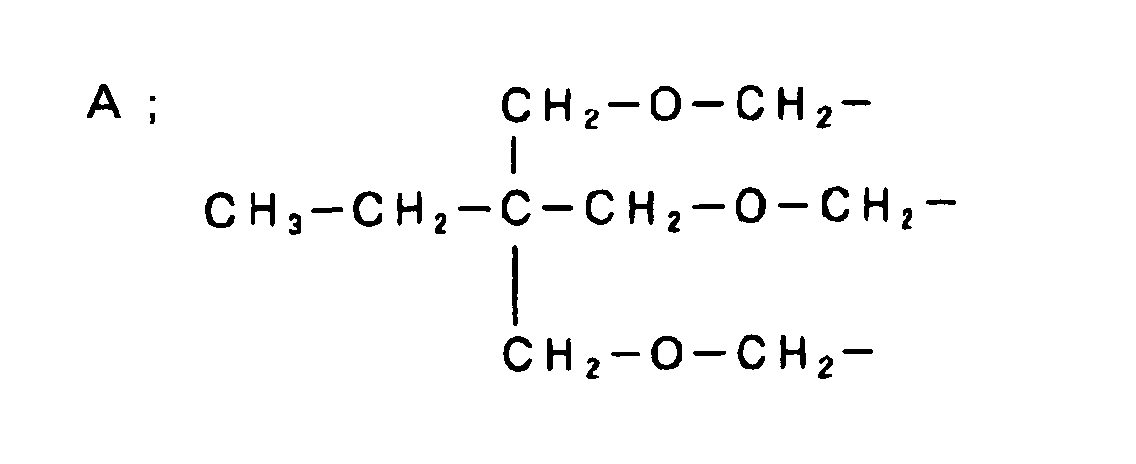


(In general formulae (2) to (9), R1 and R2 are each selected from a group consisting of hydroxyalkyl groups, ether groups, aromatic groups, aromatic-substituted alkyl groups, unsaturated hydrocarbon groups, and alkyl groups.)





- Cu:
- 90 g/l
- H2SO4:
- 80 g/l
- Cl:
- 60 ppm
- Temperature:
- 55 to 57°C
- Additive A:
- Disodium bis(3-sulfopropyl)disulfide (CPS, made by Raschig Inc.)
- Additive B:
- Sodium 3-mercapto-1-propanesulfonate (MPS, made by Raschig Inc.)
- Additive C:
- The amine compound having the specific skeleton obtained in the example of synthesis described above
- C1:
- Dibenzylamine-modified substance
- C2:
- Bis(2-ethoxyethyl)amine-modified substance
- C3:
- Diethanolamine-modified substance
- C4:
- Diphenylamine-modified substance
- C5:
- Diallylamine-modified substance
- C6:
- Dimethylamine-modified substance


Claims (6)
- A copper electrolytic solution containing, as additives, an organosulfur compound, and an amine compound having a specific skeleton represented by undermentioned general formula (1) obtained by additively reacting an amine compound and a compound having one or more epoxy groups in a molecule thereof.(In general formula (1), R1 and R2 are each selected from a group consisting of hydroxyalkyl groups, ether groups, aromatic groups, aromatic-substituted alkyl groups, unsaturated hydrocarbon groups, and alkyl groups, A represents an epoxy compound residue, and n represents an integer greater than or equal to 1.)

- A copper electrolytic solution according to claim 1, wherein the epoxy compound residue A of said amine compound having a specific skeleton has a linear ether linkage.
- A copper electrolytic solution according to claim 1 or 2, wherein said amine compound having a specific skeleton includes any of undermentioned general formulae (2) to (9).
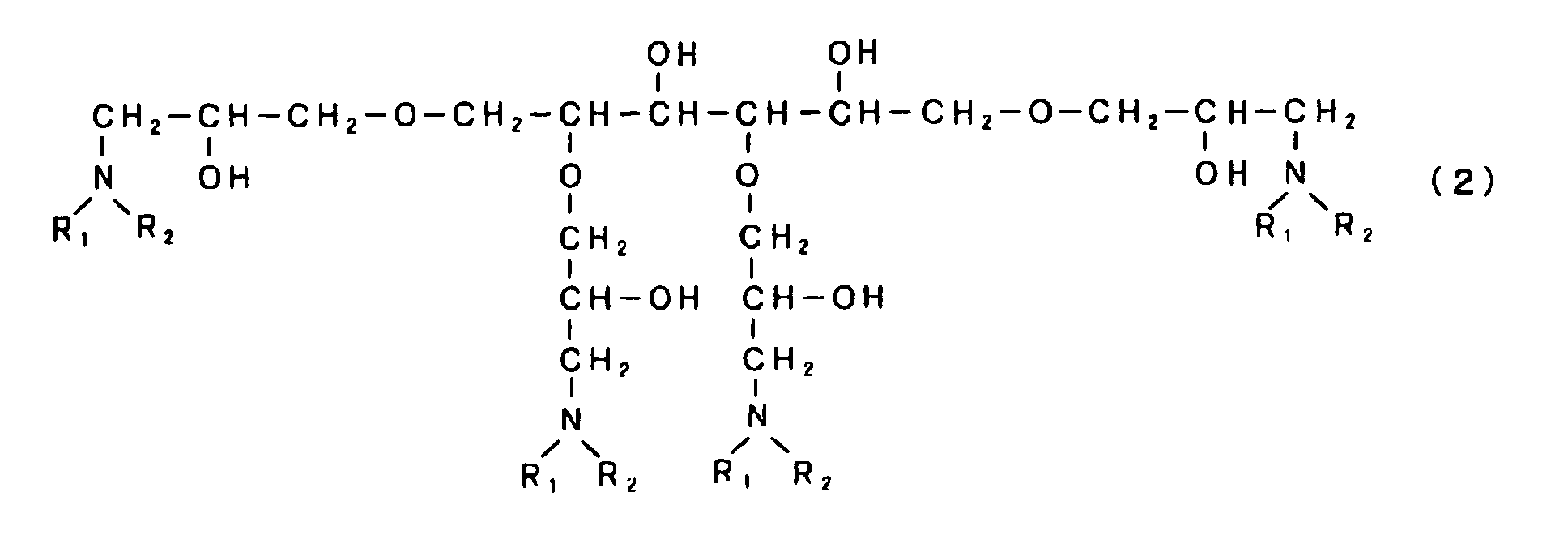
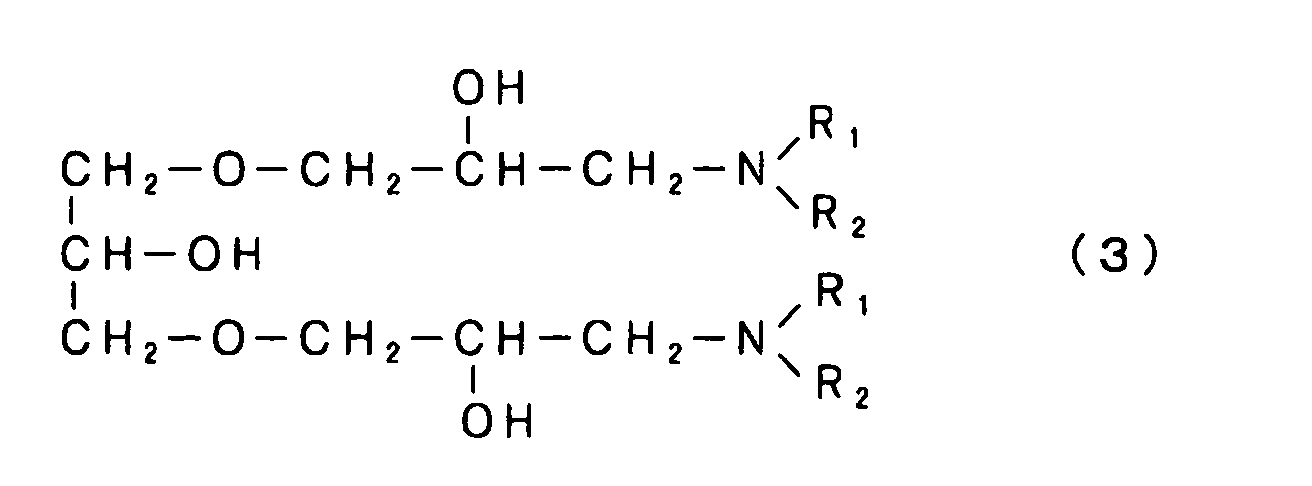
 (n: an integer from 1 to 5)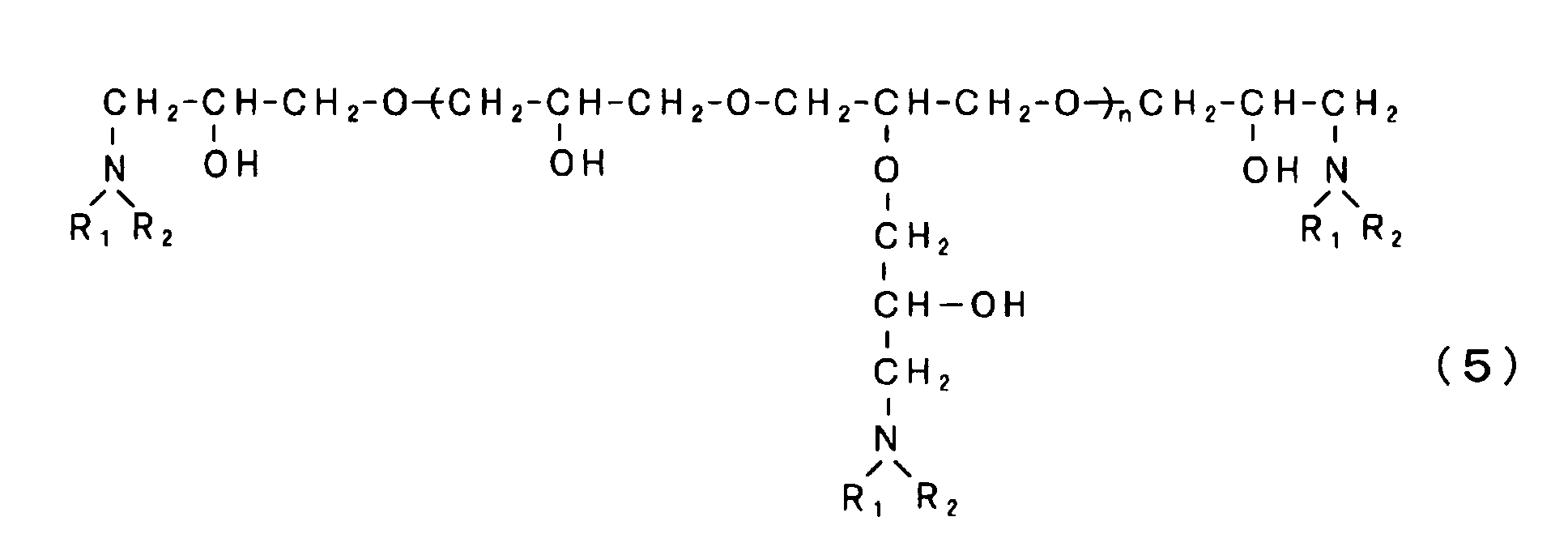
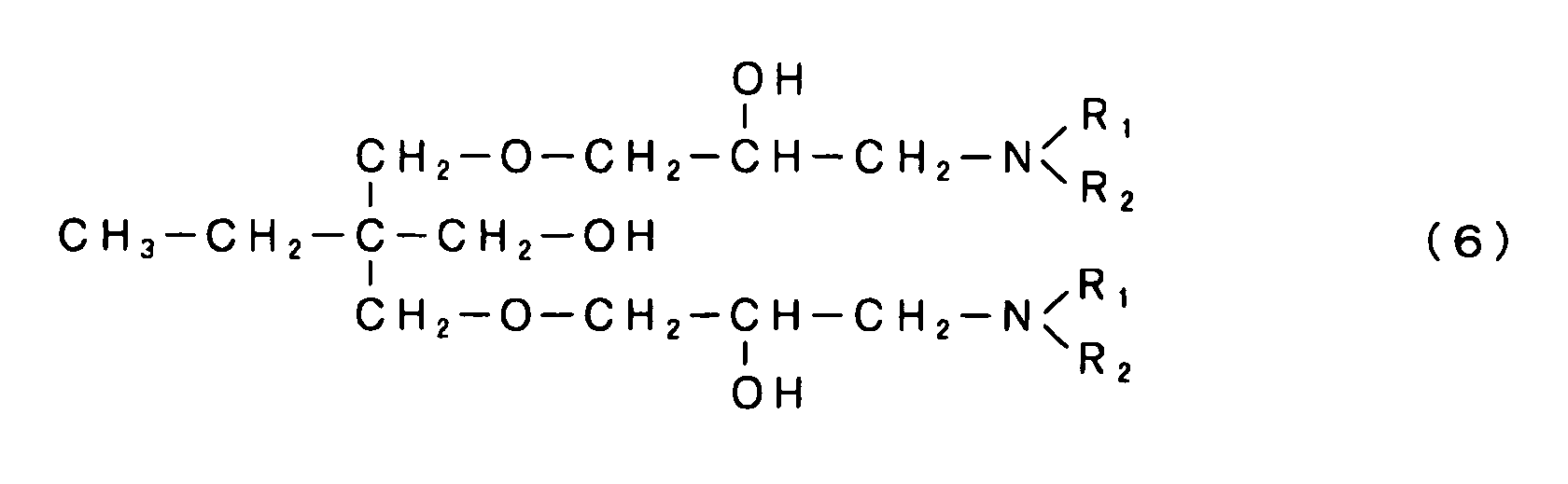
 (n: an integer from 1 to 22)
 (n: an integer from 1 to 3)
(In general formulae (2) to (9), R1 and R2 are each selected from a group consisting of hydroxyalkyl groups, ether groups, aromatic groups, aromatic-substituted alkyl groups, unsaturated hydrocarbon groups, and alkyl groups.) - A copper electrolytic solution according to claim 1, wherein said organosulfur compound is a compound represented by undermentioned general formula (10) or (11).
 , X is selected from a group consisting of hydrogen, a sulfonic acid group, a phosphonic acid group, and sulfonic acid or phosphonic acid alkali metal salt groups or ammonium salt groups, Y is sulfur or phosphorus, Z1 and Z2 are each hydrogen, sodium or potassium, and n is 2 or 3.)
- An electrolytic copper foil produced using the copper electrolytic solution according to any of claims 1 through 4.
- A copper-clad laminate using the electrolytic copper foil according to claim 5.
Applications Claiming Priority (5)
| Application Number | Priority Date | Filing Date | Title |
|---|---|---|---|
| JP2002213889 | 2002-07-23 | ||
| JP2002213889 | 2002-07-23 | ||
| JP2002291403 | 2002-10-03 | ||
| JP2002291403A JP3789107B2 (en) | 2002-07-23 | 2002-10-03 | Copper electrolytic solution containing amine compound and organic sulfur compound having specific skeleton as additive, and electrolytic copper foil produced thereby |
| PCT/JP2003/006363 WO2004009876A1 (en) | 2002-07-23 | 2003-05-21 | Copper electrolyte comprising amine compound having specific skeleton and organic sulfur compound and electrolytic copper foil prepared using the same |
Publications (4)
| Publication Number | Publication Date |
|---|---|
| EP1524335A1 true EP1524335A1 (en) | 2005-04-20 |
| EP1524335A4 EP1524335A4 (en) | 2006-03-29 |
| EP1524335B1 EP1524335B1 (en) | 2014-06-04 |
| EP1524335B8 EP1524335B8 (en) | 2014-11-19 |
Family
ID=30772236
Family Applications (1)
| Application Number | Title | Priority Date | Filing Date |
|---|---|---|---|
| EP03730553.9A Expired - Lifetime EP1524335B8 (en) | 2002-07-23 | 2003-05-21 | COPPER ELECTROLYTE COMPRISING AMINE COMPOUND HAVING SPECIFIC SKELETON AND ORGANIC SULFUR COMPOUND AND PROCESS fOR PRODUCING ELECTROLYTIC COPPER FOIL USING THE SAME |
Country Status (9)
| Country | Link |
|---|---|
| US (3) | US7005055B2 (en) |
| EP (1) | EP1524335B8 (en) |
| JP (1) | JP3789107B2 (en) |
| KR (1) | KR100588176B1 (en) |
| CN (1) | CN1293235C (en) |
| ES (1) | ES2497090T3 (en) |
| MY (1) | MY146397A (en) |
| TW (1) | TWI250225B (en) |
| WO (1) | WO2004009876A1 (en) |
Cited By (1)
| Publication number | Priority date | Publication date | Assignee | Title |
|---|---|---|---|---|
| EP1842939A4 (en) * | 2005-01-25 | 2010-04-07 | Nippon Mining Co | COPPER ELECTROLYSIS SOLUTION CONTAINING A COMPOUND HAVING A SPECIFIC SKELETON AS AN ADDITIVE, AND ELECTROLYTIC COPPER FILM MADE THEREFROM |
Families Citing this family (25)
| Publication number | Priority date | Publication date | Assignee | Title |
|---|---|---|---|---|
| KR100389061B1 (en) * | 2002-11-14 | 2003-06-25 | 일진소재산업주식회사 | Electrolytic copper foil and process producing the same |
| DE102005041925A1 (en) * | 2005-09-03 | 2007-04-26 | Bayer Materialscience Ag | 2K PUR systems containing OH-functional polydimethylsiloxanes |
| DE102005041951A1 (en) * | 2005-09-03 | 2007-03-08 | Bayer Materialscience Ag | Aqueous 2K-PUR systems containing hydroxy-functional polydimethylsiloxanes |
| KR20070044774A (en) * | 2005-10-25 | 2007-04-30 | 미쓰이 긴조꾸 고교 가부시키가이샤 | 2-layer flexible printed wiring board and manufacturing method of 2-layer flexible printed wiring board |
| JP2007146289A (en) * | 2005-10-31 | 2007-06-14 | Mitsui Mining & Smelting Co Ltd | Manufacturing method of electrolytic copper foil, electrolytic copper foil obtained by the manufacturing method, surface-treated copper foil obtained by using the electrolytic copper foil, and copper-clad laminate obtained by using the electrolytic copper foil or the surface-treated copper foil |
| KR100723391B1 (en) * | 2006-01-13 | 2007-05-30 | 삼성에스디아이 주식회사 | Polymer electrolyte membrane and fuel cell having same |
| TWI414638B (en) * | 2006-06-07 | 2013-11-11 | Furukawa Electric Co Ltd | A method for manufacturing a surface-treated electrolytic copper foil, and a circuit board |
| US20080142249A1 (en) * | 2006-12-13 | 2008-06-19 | International Business Machines Corporation | Selective surface roughness for high speed signaling |
| US7872297B2 (en) * | 2007-04-17 | 2011-01-18 | Snu R&Db Foundation | Flash memory device and fabricating method thereof comprising a body recess region |
| WO2010061737A1 (en) * | 2008-11-25 | 2010-06-03 | 日鉱金属株式会社 | Method of winding up copper foil or copper-clad laminate |
| US8268157B2 (en) * | 2010-03-15 | 2012-09-18 | Rohm And Haas Electronic Materials Llc | Plating bath and method |
| US8262895B2 (en) * | 2010-03-15 | 2012-09-11 | Rohm And Haas Electronic Materials Llc | Plating bath and method |
| JP4999126B2 (en) * | 2010-06-15 | 2012-08-15 | 古河電気工業株式会社 | Circuit parts |
| JP5352542B2 (en) | 2010-07-15 | 2013-11-27 | エル エス エムトロン リミテッド | Copper foil for current collector of lithium secondary battery |
| JP5312412B2 (en) | 2010-08-06 | 2013-10-09 | 三洋電機株式会社 | Content playback device |
| KR20130067313A (en) | 2010-11-15 | 2013-06-21 | 제이엑스 닛코 닛세키 킨조쿠 가부시키가이샤 | Electrolytic copper foil |
| WO2012121020A1 (en) * | 2011-03-04 | 2012-09-13 | Jx日鉱日石金属株式会社 | Electrolytic copper foil having high strength and less projections due to abnormal electrodeposition and method for manufacturing same |
| WO2013008349A1 (en) | 2011-07-13 | 2013-01-17 | Jx日鉱日石金属株式会社 | High-strength, low-warping electrolytic copper foil and method for producing same |
| WO2014033917A1 (en) * | 2012-08-31 | 2014-03-06 | Jx日鉱日石金属株式会社 | Electrolytic copper foil and process for producing same |
| JP6640567B2 (en) | 2015-01-16 | 2020-02-05 | Jx金属株式会社 | Copper foil with carrier, laminate, printed wiring board, method for manufacturing electronic equipment, and method for manufacturing printed wiring board |
| JP6346244B2 (en) * | 2015-11-10 | 2018-06-20 | Jx金属株式会社 | Electrolytic copper foil, electrolytic copper foil manufacturing method, copper-clad laminate, printed wiring board, printed wiring board manufacturing method, and electronic device manufacturing method |
| KR102377286B1 (en) | 2017-03-23 | 2022-03-21 | 에스케이넥실리스 주식회사 | Electrodeposited copper foil, current collectors for negative electrode of lithium-ion secondary batteries and lithium-ion secondary batteries |
| TW201900939A (en) * | 2017-05-09 | 2019-01-01 | 日商Jx金屬股份有限公司 | Electrolytic copper foil, copper-clad laminate, printed wiring board, production method therefor, electronic device, and production method therefor |
| KR20190131579A (en) * | 2017-05-09 | 2019-11-26 | 제이엑스금속주식회사 | Electrolytic copper foil and its manufacturing method, copper clad laminated board, printed wiring board, its manufacturing method, electronic device, and its manufacturing method |
| WO2018207785A1 (en) * | 2017-05-09 | 2018-11-15 | Jx金属株式会社 | Electrolytic copper foil, production method therefor, copper-clad laminate, printed wiring board, production method therefor, electronic device, and production method therefor |
Family Cites Families (17)
| Publication number | Priority date | Publication date | Assignee | Title |
|---|---|---|---|---|
| US3902951A (en) * | 1969-12-28 | 1975-09-02 | Matsushita Electric Works Ltd | Copper-clad laminate and production thereof |
| US4384930A (en) | 1981-08-21 | 1983-05-24 | Mcgean-Rohco, Inc. | Electroplating baths, additives therefor and methods for the electrodeposition of metals |
| US4490220A (en) * | 1982-09-30 | 1984-12-25 | Learonal, Inc. | Electrolytic copper plating solutions |
| US4529486A (en) * | 1984-01-06 | 1985-07-16 | Olin Corporation | Anode for continuous electroforming of metal foil |
| JPH0649958B2 (en) | 1987-06-15 | 1994-06-29 | 日本電解株式会社 | Method for manufacturing electrolytic copper foil |
| JP2993968B2 (en) | 1989-01-10 | 1999-12-27 | 古河サーキットフォイル株式会社 | Manufacturing method of electrolytic copper foil |
| US5403465A (en) * | 1990-05-30 | 1995-04-04 | Gould Inc. | Electrodeposited copper foil and process for making same using electrolyte solutions having controlled additions of chloride ions and organic additives |
| CN1111567A (en) | 1993-12-28 | 1995-11-15 | 日本电解株式会社 | Copper clad laminate, multilayer printed circuit board and their processing method |
| JPH0853789A (en) | 1994-08-09 | 1996-02-27 | Furukawa Circuit Foil Kk | Production of elelctrolytic copper foil |
| JP3313277B2 (en) * | 1995-09-22 | 2002-08-12 | 古河サーキットフォイル株式会社 | Electrodeposited copper foil for fine pattern and its manufacturing method |
| TW432124B (en) | 1996-05-13 | 2001-05-01 | Mitsui Mining & Amp Smelting C | Electrolytic copper foil with high post heat tensile strength and its manufacturing method |
| JPH10330983A (en) | 1997-05-30 | 1998-12-15 | Fukuda Metal Foil & Powder Co Ltd | Electrolytic copper foil and method for producing the same |
| DE19758121C2 (en) * | 1997-12-17 | 2000-04-06 | Atotech Deutschland Gmbh | Aqueous bath and method for electrolytic deposition of copper layers |
| JP2001073182A (en) * | 1999-07-15 | 2001-03-21 | Boc Group Inc:The | Improved acidic copper electroplating solution |
| US6881319B2 (en) * | 2000-12-20 | 2005-04-19 | Shipley Company, L.L.C. | Electrolytic copper plating solution and method for controlling the same |
| US6800188B2 (en) * | 2001-05-09 | 2004-10-05 | Ebara-Udylite Co., Ltd. | Copper plating bath and plating method for substrate using the copper plating bath |
| KR100877923B1 (en) | 2001-06-07 | 2009-01-12 | 롬 앤드 하스 일렉트로닉 머트어리얼즈, 엘.엘.씨 | Electrolytic Copper Plating |
-
2002
- 2002-10-03 JP JP2002291403A patent/JP3789107B2/en not_active Expired - Lifetime
-
2003
- 2003-05-21 EP EP03730553.9A patent/EP1524335B8/en not_active Expired - Lifetime
- 2003-05-21 WO PCT/JP2003/006363 patent/WO2004009876A1/en not_active Ceased
- 2003-05-21 KR KR1020037016792A patent/KR100588176B1/en not_active Expired - Lifetime
- 2003-05-21 CN CNB038005557A patent/CN1293235C/en not_active Expired - Lifetime
- 2003-05-21 US US10/479,896 patent/US7005055B2/en not_active Expired - Lifetime
- 2003-05-21 ES ES03730553.9T patent/ES2497090T3/en not_active Expired - Lifetime
- 2003-07-04 TW TW092118287A patent/TWI250225B/en not_active IP Right Cessation
- 2003-07-10 MY MYPI20032589A patent/MY146397A/en unknown
-
2005
- 2005-07-22 US US11/187,282 patent/US7378160B2/en not_active Expired - Lifetime
-
2007
- 2007-10-03 US US11/906,663 patent/US8449751B2/en not_active Expired - Lifetime
Cited By (1)
| Publication number | Priority date | Publication date | Assignee | Title |
|---|---|---|---|---|
| EP1842939A4 (en) * | 2005-01-25 | 2010-04-07 | Nippon Mining Co | COPPER ELECTROLYSIS SOLUTION CONTAINING A COMPOUND HAVING A SPECIFIC SKELETON AS AN ADDITIVE, AND ELECTROLYTIC COPPER FILM MADE THEREFROM |
Also Published As
| Publication number | Publication date |
|---|---|
| US7005055B2 (en) | 2006-02-28 |
| EP1524335A4 (en) | 2006-03-29 |
| US7378160B2 (en) | 2008-05-27 |
| US20040149583A1 (en) | 2004-08-05 |
| US20050252778A1 (en) | 2005-11-17 |
| MY146397A (en) | 2012-08-15 |
| EP1524335B8 (en) | 2014-11-19 |
| TWI250225B (en) | 2006-03-01 |
| HK1064713A1 (en) | 2005-02-04 |
| WO2004009876A1 (en) | 2004-01-29 |
| KR100588176B1 (en) | 2006-06-08 |
| US8449751B2 (en) | 2013-05-28 |
| TW200402482A (en) | 2004-02-16 |
| ES2497090T3 (en) | 2014-09-22 |
| JP3789107B2 (en) | 2006-06-21 |
| KR20040028792A (en) | 2004-04-03 |
| US20080073219A1 (en) | 2008-03-27 |
| CN1522316A (en) | 2004-08-18 |
| JP2004107786A (en) | 2004-04-08 |
| CN1293235C (en) | 2007-01-03 |
| EP1524335B1 (en) | 2014-06-04 |
Similar Documents
| Publication | Publication Date | Title |
|---|---|---|
| US8449751B2 (en) | Copper electrolytic solution containing amine compound having specific skeleton and organosulfur compound as additives, and electrolytic copper foil produced using the same | |
| EP1568802B1 (en) | Copper electrolytic solution containing organic sulfur compound and quaternary amine compound of specified skeleton as additives and electrolytic copper foil produced therewith | |
| US20100270163A1 (en) | Copper electrolytic solution and electrolytic copper foil produced therewith | |
| US20100224496A1 (en) | Copper electrolytic solution containing as additive compound having specific skeleton, and electrolytic copper foil manufactured therewith | |
| HK1068655B (en) | Copper electrolytic solution containing quaternary amine compound with specific skeleton and organo-sulfur compound as additives, and electrolytic copper foil manufactured using the same | |
| HK1084159B (en) | Copper electrolytic solution and electrolytic copper foil produced therewith | |
| HK1064713B (en) | Copper electrolytic solution and electrolytic copper foil produced using the same |
Legal Events
| Date | Code | Title | Description |
|---|---|---|---|
| PUAI | Public reference made under article 153(3) epc to a published international application that has entered the european phase |
Free format text: ORIGINAL CODE: 0009012 |
|
| 17P | Request for examination filed |
Effective date: 20031204 |
|
| AK | Designated contracting states |
Kind code of ref document: A1 Designated state(s): DE ES FR GB LU |
|
| A4 | Supplementary search report drawn up and despatched |
Effective date: 20060214 |
|
| RAP1 | Party data changed (applicant data changed or rights of an application transferred) |
Owner name: NIPPON MINING & METALS CO., LTD. |
|
| 17Q | First examination report despatched |
Effective date: 20061229 |
|
| RAP1 | Party data changed (applicant data changed or rights of an application transferred) |
Owner name: NIPPON MINING HOLDINGS, INC. |
|
| GRAP | Despatch of communication of intention to grant a patent |
Free format text: ORIGINAL CODE: EPIDOSNIGR1 |
|
| RAP1 | Party data changed (applicant data changed or rights of an application transferred) |
Owner name: JX NIPPON MINING & METALS CORPORATION |
|
| INTG | Intention to grant announced |
Effective date: 20140218 |
|
| GRAS | Grant fee paid |
Free format text: ORIGINAL CODE: EPIDOSNIGR3 |
|
| GRAA | (expected) grant |
Free format text: ORIGINAL CODE: 0009210 |
|
| AK | Designated contracting states |
Kind code of ref document: B1 Designated state(s): DE ES FR GB LU |
|
| REG | Reference to a national code |
Ref country code: GB Ref legal event code: FG4D |
|
| REG | Reference to a national code |
Ref country code: DE Ref legal event code: R096 Ref document number: 60346284 Country of ref document: DE Effective date: 20140717 |
|
| REG | Reference to a national code |
Ref country code: ES Ref legal event code: FG2A Ref document number: 2497090 Country of ref document: ES Kind code of ref document: T3 Effective date: 20140922 |
|
| REG | Reference to a national code |
Ref country code: DE Ref legal event code: R097 Ref document number: 60346284 Country of ref document: DE |
|
| PLBE | No opposition filed within time limit |
Free format text: ORIGINAL CODE: 0009261 |
|
| STAA | Information on the status of an ep patent application or granted ep patent |
Free format text: STATUS: NO OPPOSITION FILED WITHIN TIME LIMIT |
|
| 26N | No opposition filed |
Effective date: 20150305 |
|
| REG | Reference to a national code |
Ref country code: DE Ref legal event code: R097 Ref document number: 60346284 Country of ref document: DE Effective date: 20150305 |
|
| REG | Reference to a national code |
Ref country code: FR Ref legal event code: PLFP Year of fee payment: 14 |
|
| REG | Reference to a national code |
Ref country code: LU Ref legal event code: TE Owner name: JX NIPPON MINING METALS CORPORATION; JP Effective date: 20170524 Ref country code: LU Ref legal event code: TE Owner name: JX NIPPON MINING & METALS CORPORATION; JP Effective date: 20170524 |
|
| REG | Reference to a national code |
Ref country code: FR Ref legal event code: CA Effective date: 20170801 |
|
| REG | Reference to a national code |
Ref country code: FR Ref legal event code: PLFP Year of fee payment: 15 |
|
| REG | Reference to a national code |
Ref country code: FR Ref legal event code: PLFP Year of fee payment: 16 |
|
| REG | Reference to a national code |
Ref country code: LU Ref legal event code: HC Owner name: JX NIPPON MINING & METALS CORPORATION; JP Free format text: FORMER OWNER: JX NIPPON MINING & METALS CORPORATION Effective date: 20210315 |
|
| PGFP | Annual fee paid to national office [announced via postgrant information from national office to epo] |
Ref country code: LU Payment date: 20220512 Year of fee payment: 20 Ref country code: GB Payment date: 20220401 Year of fee payment: 20 Ref country code: FR Payment date: 20220408 Year of fee payment: 20 Ref country code: ES Payment date: 20220602 Year of fee payment: 20 Ref country code: DE Payment date: 20220329 Year of fee payment: 20 |
|
| REG | Reference to a national code |
Ref country code: DE Ref legal event code: R071 Ref document number: 60346284 Country of ref document: DE |
|
| REG | Reference to a national code |
Ref country code: ES Ref legal event code: FD2A Effective date: 20230602 |
|
| REG | Reference to a national code |
Ref country code: GB Ref legal event code: PE20 Expiry date: 20230520 |
|
| PG25 | Lapsed in a contracting state [announced via postgrant information from national office to epo] |
Ref country code: ES Free format text: LAPSE BECAUSE OF EXPIRATION OF PROTECTION Effective date: 20230522 |
|
| PG25 | Lapsed in a contracting state [announced via postgrant information from national office to epo] |
Ref country code: GB Free format text: LAPSE BECAUSE OF EXPIRATION OF PROTECTION Effective date: 20230520 |