EP1521178A2 - Dynamische Transaktionskontrolle innerhalb eines Gast-Transaktionsverarbeitungssystems - Google Patents
Dynamische Transaktionskontrolle innerhalb eines Gast-Transaktionsverarbeitungssystems Download PDFInfo
- Publication number
- EP1521178A2 EP1521178A2 EP04104665A EP04104665A EP1521178A2 EP 1521178 A2 EP1521178 A2 EP 1521178A2 EP 04104665 A EP04104665 A EP 04104665A EP 04104665 A EP04104665 A EP 04104665A EP 1521178 A2 EP1521178 A2 EP 1521178A2
- Authority
- EP
- European Patent Office
- Prior art keywords
- transaction
- defining
- level
- criterion
- metric
- Prior art date
- Legal status (The legal status is an assumption and is not a legal conclusion. Google has not performed a legal analysis and makes no representation as to the accuracy of the status listed.)
- Ceased
Links
Images

Classifications
-
- G—PHYSICS
- G06—COMPUTING OR CALCULATING; COUNTING
- G06F—ELECTRIC DIGITAL DATA PROCESSING
- G06F9/00—Arrangements for program control, e.g. control units
- G06F9/06—Arrangements for program control, e.g. control units using stored programs, i.e. using an internal store of processing equipment to receive or retain programs
- G06F9/46—Multiprogramming arrangements
- G06F9/466—Transaction processing
Definitions
- This invention relates to transaction processing systems, and more particularly, to autonomic control and administration of individual transactions or groups of transactions based upon their unique current resource usage characteristics relative to the present status of one or more present characteristics of the transaction processing system or the host computer system.
- Transaction processing systems serve as a basis for electronic commerce.
- two or more entities electronically process specific tasks related to commerce ranging from purchase and payment to banking transactions.
- Examples of electronic commerce include purchase and payment transactions using credit and debit cards, paying bills online and the handling of return merchandise credits.
- Transaction processing systems also facilitate the accessing of data across a network, such as the Internet. Browsing merchandise on a vendor's website, obtaining stock quotes from a financial service institution's website and checking sporting event scores at a news website are examples of such accesses.
- Other examples of routine network transaction events include the interchange of data that occurs during online gaming, downloading product updates from a software vendor's server and the exchange of email.
- a transaction processing system Prior to the days of the Internet, an example of a transaction processing system would be a given corporation's internal users accessing a host mainframe processor, with individual transactions being serviced via an executing software "transaction monitor", such as, for example, IBM's CICS (Customer Information Control System).
- a transaction processing system includes the server or servers that host a given Internet website, along with the underlying hardware and software infrastructure, frequently including an "application server” such as IBM's WebSphere Application Server (IBM, CICS and WebSphere are trademarks of IBM Corporation).
- Transactions that are serviced by a transaction processing system may come from any number of sources, examples of which include users accessing the system from a home or office personal computer, personal digital assistant (PDA), network-enabled cellular devices and automated teller machines (ATM's). Additionally, transaction processing systems may also be accessed by other systems, such as partner transaction processing systems, interactive voice response systems, or any other automated entity that has access to the transaction processing system through a network.
- PDA personal digital assistant
- ATM's automated teller machines
- transaction processing systems may also be accessed by other systems, such as partner transaction processing systems, interactive voice response systems, or any other automated entity that has access to the transaction processing system through a network.
- a further shortcoming is when remedial action is taken or initiated to address an alert from the transaction processing system, but the nature of the action is poorly targeted and/or overly drastic, affecting transactions that have little or no bearing on the alert, itself.
- autonomic corrective action is typically ill-targeted, poorly timed, and affects the user community too broadly.
- a method for managing a transaction processing system.
- the method comprises defining at least one criterion which is at least a workload characteristic and defining at least one threshold metric for each of the at least one criterion.
- the method further comprises defining at least one trigger action in response to the at least one threshold metric and performing the at least one trigger action in response to the at least one threshold metric being met.
- a method for managing a system.
- the system comprises the steps of determining current conditions of a workload characteristic, evaluating the current conditions of the workload characteristic and dynamically adjusting system administration criteria based on a threshold metric associated with the current conditions of the workload characteristic.
- the workload characteristic is at least one of a transaction workload characteristic and a system environment workload characteristic.
- the workload characteristic is preferably a transaction processing system characteristic.
- the adjusting includes at least one of changing the priority of a transaction, terminating a transaction, delaying a transaction, quiescing a transaction, causing another system from forwarding transactions, triggering routing of transactions to a different system, and ending a process.
- a preferred method further comprises the steps of: defining a system level threshold metric associated with the workload characteristic; defining at least one transaction identifier that identifies subsets of transactions; defining at least one transaction level threshold metric associated with the at least one transaction identifier and a transaction workload characteristic; and associating the system level threshold metric with the at least one transaction identifier and with the at least one transaction level threshold metric.
- the dynamically adjusting step is preferably only performed when both the system level threshold metric and the transaction level threshold metric are met.
- a system for managing a transaction processing system.
- the system comprises a means for defining at least one criterion, wherein the at least one criterion is a workload characteristic of the transaction processing system and a means for defining at least one threshold metric for each of the at least one criterion.
- the system further comprises a means for defining at least one trigger action in response to the at least one threshold metric.
- a system for managing a transaction processing system.
- the system comprises a means for determining current conditions of at least a workload characteristic, a means for evaluating the current conditions of at least the workload characteristic and a means for dynamically adjusting system administration criteria based on a threshold metric associated with the current conditions of at least the workload characteristic.
- a computer program product comprising a computer usable medium having readable program code embodied in the medium.
- the computer program product includes a first computer code to define at least one criterion, wherein the at least one criterion is a workload characteristic of the transaction processing system and a second computer code to define at least one threshold metric for each of the at least one criterion. Further included are a third computer code to define at least one trigger action in response to the at least one threshold metric and a fourth computer code to perform the at least one trigger action in response to the at least one threshold metric being met.
- an autonomic extension of a transaction processing system dynamically adjusts system administration criteria based upon the current conditions of the transaction processing system.
- the invention provides for the ability of system designers and administrators to apply greater autonomic logic to the governance of a transaction processing system.
- the invention also allows for very granular autonomic administrative action relative to varying conditions within the transaction processing system as well as a host of other advantages as discussed herein. System designers and administrators are enabled to take into consideration fluctuating conditions throughout the server/system when developing autonomic control models.
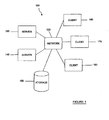
- FIG. 1 is a block diagram illustrating a typical distributed data processing system in which the present invention may be implemented
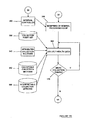
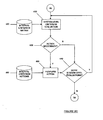
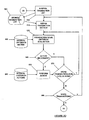
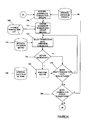
- FIGS. 2A-2E are flow diagrams of an embodiment showing steps of using the invention.
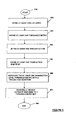
- Figure 3 is a flow diagram showing an embodiment of using an aspect of the invention.
- FIG. 1 is a block diagram illustrating a typical distributed data processing system in which the invention may be implemented.
- the distributed data processing system 100 comprises a number of computers, connected by a network 120.
- server computer 130 is connected to the network 120 along with a storage unit 150 and client computers 160, 170 and 180.
- distributed data processing system 100 may be the Internet, with the network 120 representing a world-wide collection of networks and gateways that use the transmission control protocol over internet protocol (TCP/IP) suite of protocols to communicate with one another.
- TCP/IP transmission control protocol over internet protocol
- An embodiment of this invention may involve server 130 to server 140 interactions, or storage to storage interactions.
- An embodiment of the invention may be divided into four recurring stages: (1) obtain system level metrics, (2) obtain transaction level metrics, (3) perform evaluations, and (4) perform action based on the evaluations. Restated, as a processing cycle begins, the technique gathers salient details regarding the state of the transaction processing system and related environment, i.e., the system level metrics.
- the second stage of processing involves the collection of details or metrics regarding individual executing transactions, i.e., transactional level metrics.
- the third stage of processing performs evaluations which are defined in the interval criterion tables, which may result in stage four, which includes performing an administrative action.
- Embodiments of the invention are referenced herein as "facility" or "the facility” and may be a software extension of a transaction processing system.
- the components to support the four stages may include: (i) a component to collect system and transaction information that is germane to an administrator's decision making process, (ii) a component to perform complex evaluations between the collected data and the invention's configuration data, and (iii) a component to execute an action that is germane to an administrator's functions. (See discussion, for example, of Figures 2A-2E).
- the embodiment also includes implementation of an interval criterion matrix and it typically may be a source of configurable data used by the invention and may be created by an administrator or accessed from a pre-built electronic source.
- An example of the interval criterion matrix is shown in Table 1 and is described in further detail below with reference to Figures 2A-2E.
- the configuration data shown in Table 1 comprises a matrix that includes a "System Level Metric” 601.
- the system level metric may be a single or progressive variable (e.g., ranges) relative to a measurement of an aspect of the transaction processing system.
- the matrix of Table 1 further includes a "Transaction Identifier” 602 which may, for example, provide selection criteria for a single transaction or plurality of transactions.
- Table 1 further includes a "Transaction Level Metric” 603 and a "Facility Action” 604.
- the Transaction Level Metric 603 may be a single or progressive variable relative to an aspect of the included transaction, and the Facility Action 604 may be, for example, a reference to an action to occur should the variable evaluation result be positive.
- system-level criterion (e.g., 601 and 604) may be in a separate table.
- the Facility Action 604 may reduce the priority of a current transaction.
- system-level metrics may include but not limited to, processor utilization, memory utilization, storage utilization, load upon the input/output subsystem(s) and load upon the network interfaces.
- a list of salient metrics to be collected and a reference to a logical process that performs collection of each of these metrics exists on an interval criterion data source (e.g., a database).
- a method for gathering details of each transaction executing on the transaction processing system at a point in time. As with the system-level metrics, this method accesses a list of salient metrics to be collected and a reference to a logical process that performs collection of each of these metrics from the interval criterion data source.
- the embodiment processes through each individual transaction in some order, which may be a sequential order.
- thresholds that may be stored in the interval criterion matrix are evaluated.
- a feature of the embodiment includes the incremental nature of both the system-level and transaction-level metrics. For example, system-level processor utilization levels of 30%, 40%, 50% and 60% may all have differing thresholds on the transaction-level side of the metric's evaluation. Furthering the example, transaction-level processor utilization of 10 CPU seconds may be considered excessive at 50% system-level processor utilization, transaction-level processor utilization of 8 CPU seconds may be considered excessive at 60% system-level processor utilization.
- the invention invokes the action specified in the same interval criterion entry.
- the action is stored in the interval criterion data source as a reference to a logical process that performs said action.
- Figures 2A-3 are flow diagrams of an embodiment showing steps of using the invention.
- Figures 2A-3 may equally represent a high-level block diagram of components of the invention implementing the steps thereof.
- the steps of Figures 2A-3 may be implemented on computer program code in combination with the appropriate hardware.
- This computer program code may be stored on storage media such as a diskette, hard disk, CD-ROM, DVD-ROM or tape, as well as a memory storage device or collection of memory storage devices such as read-only memory (ROM) or random access memory (RAM). Additionally, the computer program code can be transferred to a workstation over the Internet or some other type of network.
- Figures 2A-3 may be implemented, for example, using the components of Figure 1.
- the runtime parameters 210 of the facility are loaded at step 220 and validated at step 230.
- a check is made at step 240 to determine whether processing should continue, based upon the qualification criteria present in the embodiment of the invention. Should validation fail, the facility terminates at step 270.
- the system enters a nominal mode of processing at step 260, which may be regulated in intervals.
- the frequency may be governed by an interval controller 380, discussed below.
- the facility collects data regarding the present or current workload characteristics, status, or "health", of the transaction processing system.
- the facility accesses a pre-provided list of characteristics 330 for which data is to be collected. Examples of the source of this data may include the facility's runtime parameters 210 or the storage mechanism used to maintain the interval criterion (e.g., 420) which may be a database, for example.
- the interval criterion e.g., 420
- the invention may perform three levels of dynamic administration:
- system-level criterion is evaluated from the interval criterion data source 420.
- the system-level evaluation step 410 may be performed directly against the data gathered at step 320.
- a check is made whether the evaluation results in a required action. If not, at step 440, the facility determines if there are more system-level evaluations to be performed. If there are more system-level evaluations, the process continues at step 410 with the next evaluation. Otherwise the facility proceeds to the next series of evaluations.
- the action defined by the interval criterion data source 420 is carried out at step 450, using the logic of the interval criterion actions 460, which is associated with the interval criterion that was evaluated at step 410, and may be executed within the software of the facility itself.
- the action defined in 460 may be provided through other mechanisms, such as sending messages to other entities to perform an action. Examples of such an action include informing a peer server that the triggering server is now available to accept work, alerting a remote operator of an anomalous condition, or triggering a diagnostic trace on a Storage Area Network unit. After the triggered action is carried out (or instigated) at step 450, the process proceeds to step 440 to determine if there are more system evaluations.
- System-level criterion evaluations deal with characteristics of the system, which may be the transaction processing system of the host server.
- characteristics of the system which may be the transaction processing system of the host server.
- a representation of a system-level criterion tree based on the present/current state of "SYSTEM MEMORY UTILIZATION" would be:
- each action identifier e.g., SLSMU_1, SLSMU_2, etc
- action identifiers e.g., SLSMU_1, SLSMU_2, etc.
- transaction-level criterion evaluation may be performed starting at step 500 where the facility acquires a list of currently executing transactions from the transaction processing system, which may in embodiments, be a list of currently executing transactions stored for reference in a Stored Transaction List 590.
- a series of relevant details is collected or obtained.
- transaction level evaluation is performed against the data collected in step 510 using interval criterion matrix 530.
- step 540 a determination is made whether any action is necessary based upon the evaluation at step 520. If no action is required (e.g. negative evaluation), at step 570, the facility determines if there are more transaction-level evaluations to be performed and if so, the process continues with the next evaluation at step 520. Should the result of step 540 require action (e.g. be positive) then, at step 550, action defined by the interval criterion data source 560 is carried out. This action may be carried out within the software of the facility, itself, or may alternatively cause action to be triggered and carried out by another system component. After the triggered action is carried out at step 550, at step 570, the process proceeds to the next transaction-level evaluation check. When there are no further transaction-level evaluations remaining to be performed at step 570, at step 580, the facility determines whether any transactions remain for processing. If so, the next transaction on the list 590 is selected, and processing continues at step 510.
- action defined by the interval criterion data source 560 is carried out
- transaction-level criterion evaluations deal with the characteristics of individual transactions relative to the present/current characteristics of the overall system, be it the transaction processing system or a host server.
- An example representation of a transaction-level criterion matrix is given in TABLE 1.
- the first element of this matrix is System Level Metric 601, which may be obtained in step 320 ( Figure 2B).
- the matrixes second element is Transaction Identifier 602.
- the transaction processing system may identify transactions via 4-byte alphanumeric identifiers (or other identification technique).
- the asterisk in the example Transaction Identifiers 602 in Table 1 indicates a 'wild card', these Transaction Level Criterion affect only transactions that have identifiers starting with "AA".
- Use of Transaction Identifier 602 in this example illustrates that Transaction Level Criterion do not necessarily need to affect all transactions on a transaction processing system, and may be selectively qualified via any convenient mode of unique identification for a given subset of transactions.
- the Transaction Level Metric 603 indicates which present characteristic of the transaction to evaluate and the value to evaluate said characteristic against, should the condition listed under System Level Metric 601 be met.
- the Facility Action 604 is triggered.
- the actions to be invoked under Facility Action 604 are described in plain text.
- the Facility Action 604 may be carried on the Transaction Level Criterion Matrix 530 as an identifier referencing a logical process that may be embodied in a form executable by the facility, illustrated as Interval Criterion Actions 560 ( Figure 2D).
- Multi-transaction criterion evaluations deal with the characteristics of groups of transactions relative to the overall system's present/current characteristics. These evaluations are similar to transaction level criterion evaluation, with the added concept of "transaction groups", which may be built and administered by an administrator or pre-built and obtained from an electronic source. Examples of such transaction groups are provided in TABLE 2.
- transaction groups permits aggregated accounting of transactions over similar or related entities (e.g., same server, search functions, etc.) or common identifier (e.g., IP subnet, transmission medium, etc.) and applying a transaction group level metric to the aggregated entities.
- similar or related entities e.g., same server, search functions, etc.
- common identifier e.g., IP subnet, transmission medium, etc.
- the facility acquires a list of aggregate transaction groups from the Interval Criterion tables 790 which defines aggregations of related transaction types or characteristics.
- step 710 for each aggregate transaction group, a series of relevant details is collected, optionally referencing the Stored Transaction List 590 for efficiency reasons.
- transaction-group level evaluation is performed against the data collected at step 710 using interval criterion 730 (e.g., Table 2).
- interval criterion 730 e.g., Table 2.
- step 740 a determination is made whether action is necessary. Should no action be required (e.g., the result is negative), at step 770, the facility determines if there are more transaction-group level evaluations to be performed. If there are more transaction-group level evaluations, the process continues with the next evaluation at step 720.
- step 750 the action defined by the interval criterion data source 760 is carried out.
- the logic of the action, which is associated with the interval criterion that was qualified at step 730 may be carried out within the software of the facility itself. In other embodiments the action logic may trigger action by other components.
- step 770 the process proceeds to the next transaction-group level evaluation check at step 770.
- step 770 there are no further transaction-group level evaluations remaining to be performed
- step 780 the facility determines if any transactions-group evaluations remain for processing. If so, the next transaction-group evaluation on the list 590 is selected, and processing continues at step 710.
- processing proceeds to an Interval Controller 380 that, in this embodiment, halts processing for a set period of time, for example sixty seconds, before allowing processing to continue. Other time intervals may be chosen based on circumstances.
- the Interval Controller acts upon variable timers which may change based upon the results of prior scan cycles.
- the Interval Controller may resume processing based upon one or more system characteristics, such as when average processor utilization is greater than 75%, or, when the number of connections to this transaction processing system exceed 2000 (or other parametric criterion).
- the Interval Controller may be substantially absent or by-passed, with implies continuous processing of the invention.
- the first element of this matrix is System Level Metric 801, which may be obtained previously at step 320 ( Figure 2B).
- the matrixes second element is Transaction Grouping Method 802.
- the Transaction Grouping Method 802 is described in plain text.
- the Transaction Grouping Method 802 may be carried on the Transaction Level Criterion Matrix 730 as an identifier referencing a logical process that would be embodied in a form executable by the facility, illustrated as Interval Criterion Actions 760 ( Figure 2F).
- the Transaction Group Level Metric 803 indicates which present characteristic of the transaction group to evaluate and the value to evaluate the characteristic against, should the condition listed under System Level Metric 801 be met.
- the Facility Action 804 is triggered.
- the actions to be invoked under Facility Action 804 are described in plain text.
- the Facility Action 804 may be carried on the Transaction Level Criterion Matrix 530 as an identifier referencing a logical process that would be embodied in a form executable by the facility, illustrated as Interval Criterion Actions 560 ( Figure 2D).
- FIG. 3 is a flow diagram showing an embodiment of using an aspect of the invention beginning at step 810.
- at least one criterion of a workload characteristic of the transaction processing system is defined.
- at least one threshold metric for each criterion is defined (these may be system level and/or transaction level metrics).
- at least one trigger action is defined to be executed in response to the at least one threshold metric being met.
- at least one transaction identifier identifying subsets of transactions is defined.
- the at least one transactional level threshold metric is associated with the at least one transaction identifier. In one aspect, a step may occur to check and determine when a threshold metric (or metrics) is met.
- at least one trigger action is performed in response to the at least one threshold metric being met. The process then exists at step 880.
- the invention provides for the ability to deliver substantially improved autonomic administration of transaction and system level functions via consideration of any number and degree of workload characteristics in the decision making process. Better system performance results. Further, since the services provided in accordance with the invention occur during real-time system processing, system administrators have improved ability to more accurately control specific deficiencies in system performance and develop criterion to overcome those deficiencies.
- inventions of the invention may include or exclude particular transactions from consideration under a given interval criterion entry. Still other embodiments of the system may allow for evaluation of system-level criterion only, without regard to transaction-level evaluations. Yet in other embodiments, the invention allows for the converse, transaction-level criterion evaluation without system-level criterion evaluation. An example implementation of either of these would be the support of a 'null' evaluation for either criterion column.
- Yet another embodiment of the invention allows for the evaluation of groups of transactions.
- An example of this includes evaluation of an aggregate of a transaction-level metric data gathered from a logical grouping of transactions.
- An example of where a reference to such grouping logic would be carried is on a column upon the interval criterion data source. This may include, for example, classes of preferred users that might have less stringent controls, or certain transactions that are exempt from certain criteria.
- the facility may execute at set time (i.e., predefined) increments within an embodiment of the invention.
- set time i.e., predefined
- One of ordinary skill in the art may choose to establish other techniques of triggering the invocation of the facility which embodies the invention.
- a straightforward manner of specifying and recording the desired system behaviors that form the basis of the invention's decision tree is a useful and flexible feature of the invention.
- the action to be taken may act against a given transaction, other transactions or some other aspect of the hosting transaction processing system or another transaction processing system.
- An example of the invention acting upon the given transaction is the purging or quiescing of the transaction.
- An example of the invention acting upon another transaction is the purging or quiescing of other transactions to allow a more important transaction to have preferred access to constrained resources.
- Examples of the invention acting upon other aspects of the transaction processing system include suspending new transactions from entering the system, disallowing transactions from a given source, quiescing the system and triggering routing of transactions to a different transaction processing system.
- An example of the invention action upon another transaction processing system is the triggering of another transaction processing system to cease forwarding transactions to the host transaction processing system. Terminating a process may also occur.
Landscapes
- Engineering & Computer Science (AREA)
- Software Systems (AREA)
- Theoretical Computer Science (AREA)
- Physics & Mathematics (AREA)
- General Engineering & Computer Science (AREA)
- General Physics & Mathematics (AREA)
- Debugging And Monitoring (AREA)
- Management, Administration, Business Operations System, And Electronic Commerce (AREA)
- Acyclic And Carbocyclic Compounds In Medicinal Compositions (AREA)
Applications Claiming Priority (2)
| Application Number | Priority Date | Filing Date | Title |
|---|---|---|---|
| US671890 | 1996-06-28 | ||
| US10/671,890 US7818745B2 (en) | 2003-09-29 | 2003-09-29 | Dynamic transaction control within a host transaction processing system |
Publications (2)
| Publication Number | Publication Date |
|---|---|
| EP1521178A2 true EP1521178A2 (de) | 2005-04-06 |
| EP1521178A3 EP1521178A3 (de) | 2006-06-21 |
Family
ID=34313933
Family Applications (1)
| Application Number | Title | Priority Date | Filing Date |
|---|---|---|---|
| EP04104665A Ceased EP1521178A3 (de) | 2003-09-29 | 2004-09-24 | Dynamische Transaktionskontrolle innerhalb eines Gast-Transaktionsverarbeitungssystems |
Country Status (4)
| Country | Link |
|---|---|
| US (1) | US7818745B2 (de) |
| EP (1) | EP1521178A3 (de) |
| JP (1) | JP3974608B2 (de) |
| CN (1) | CN1604040B (de) |
Families Citing this family (30)
| Publication number | Priority date | Publication date | Assignee | Title |
|---|---|---|---|---|
| US7493380B2 (en) * | 2003-12-02 | 2009-02-17 | International Business Machines Corporation | Method for determining load balancing weights using application instance topology information |
| US8818988B1 (en) * | 2003-12-08 | 2014-08-26 | Teradata Us, Inc. | Database system having a regulator to provide feedback statistics to an optimizer |
| US8151269B1 (en) * | 2003-12-08 | 2012-04-03 | Teradata Us, Inc. | Database system having a service level goal responsive regulator |
| JP2007047845A (ja) * | 2005-07-11 | 2007-02-22 | Fujitsu Ltd | 自律制御装置・自律制御方法、及び自律制御プログラム |
| US20070260641A1 (en) * | 2006-05-02 | 2007-11-08 | Mypoints.Com Inc. | Real-time aggregate counting in a distributed system architecture |
| US20080228690A1 (en) * | 2007-03-15 | 2008-09-18 | Yair Horovitz | System and method for calculating a metric of a sub-transaction on an IP network |
| US20080256552A1 (en) | 2007-04-10 | 2008-10-16 | International Business Machines Corporation | System and method for a cics application using a same program on a local system and a remote system |
| US20100125546A1 (en) * | 2008-11-19 | 2010-05-20 | Melyssa Barrett | System and method using superkeys and subkeys |
| US8332857B1 (en) * | 2008-12-30 | 2012-12-11 | Teradota Us, Inc. | Database system having a regulator that performs workload regulation based on optimizer estimates |
| US8595740B2 (en) * | 2009-03-31 | 2013-11-26 | Microsoft Corporation | Priority-based management of system load level |
| US8626705B2 (en) * | 2009-11-05 | 2014-01-07 | Visa International Service Association | Transaction aggregator for closed processing |
| US8516488B1 (en) * | 2010-11-09 | 2013-08-20 | Teradata Us, Inc. | Adjusting a resource estimate in response to progress of execution of a request |
| US8924981B1 (en) | 2010-11-12 | 2014-12-30 | Teradat US, Inc. | Calculating priority indicators for requests in a queue |
| US8745032B1 (en) | 2010-11-23 | 2014-06-03 | Teradata Us, Inc. | Rejecting a request in a database system |
| CN103312878B (zh) * | 2012-03-13 | 2015-09-02 | 宇龙计算机通信科技(深圳)有限公司 | 一种事务管理方法和移动终端 |
| WO2013149207A1 (en) | 2012-03-30 | 2013-10-03 | Bytemobile , Inc. | Measuring web browsing quality of experience in real-time at an intermediate network node |
| US9167021B2 (en) * | 2012-03-30 | 2015-10-20 | Citrix Systems, Inc. | Measuring web browsing quality of experience in real-time at an intermediate network node |
| US9378112B2 (en) * | 2012-06-25 | 2016-06-28 | International Business Machines Corporation | Predictive alert threshold determination tool |
| US10362081B2 (en) | 2013-08-30 | 2019-07-23 | Citrix Systems, Inc. | Methods and systems for quantifying the holistic quality of experience for internet multimedia |
| US10129168B2 (en) | 2014-06-17 | 2018-11-13 | Analitiqa Corporation | Methods and systems providing a scalable process for anomaly identification and information technology infrastructure resource optimization |
| US10169816B2 (en) * | 2015-01-06 | 2019-01-01 | Morgan Stanley Services Group Inc. | Trading anomaly kill switch |
| CN104767606B (zh) * | 2015-03-19 | 2018-10-19 | 华为技术有限公司 | 数据同步装置及方法 |
| US10831509B2 (en) | 2017-02-23 | 2020-11-10 | Ab Initio Technology Llc | Dynamic execution of parameterized applications for the processing of keyed network data streams |
| US11947978B2 (en) | 2017-02-23 | 2024-04-02 | Ab Initio Technology Llc | Dynamic execution of parameterized applications for the processing of keyed network data streams |
| US11418583B2 (en) * | 2018-02-14 | 2022-08-16 | International Business Machines Corporation | Transaction process management by dynamic transaction aggregation |
| US11429628B2 (en) * | 2019-09-20 | 2022-08-30 | Samsung Electronics Co., Ltd. | Transaction grouping for overwrite merge |
| US11443320B2 (en) | 2020-01-07 | 2022-09-13 | Bank Of America Corporation | Intelligent systems for identifying transactions associated with an institution impacted by an event using a dashboard |
| US11238459B2 (en) | 2020-01-07 | 2022-02-01 | Bank Of America Corporation | Intelligent systems for identifying transactions associated with an institution impacted by an event |
| US11645130B2 (en) * | 2020-11-05 | 2023-05-09 | International Business Machines Corporation | Resource manager for transaction processing systems |
| CN119784444A (zh) * | 2025-03-12 | 2025-04-08 | 航天智控(北京)监测技术有限公司 | 一种多时间维度的数据筛查稀释系统、方法及存储介质 |
Family Cites Families (35)
| Publication number | Priority date | Publication date | Assignee | Title |
|---|---|---|---|---|
| US5581749A (en) | 1992-12-21 | 1996-12-03 | Thedow Chemical Company | System and method for maintaining codes among distributed databases using a global database |
| WO1994018634A1 (en) | 1993-02-01 | 1994-08-18 | Lsc, Inc. | Archiving file system for data servers in a distributed network environment |
| JPH06301543A (ja) | 1993-04-19 | 1994-10-28 | Fuji Electric Co Ltd | ファジィ規則の調整,評価装置 |
| JP2921458B2 (ja) | 1995-11-15 | 1999-07-19 | 日本電気株式会社 | トランザクション処理の負荷分散方式 |
| US5855020A (en) | 1996-02-21 | 1998-12-29 | Infoseek Corporation | Web scan process |
| JPH10187451A (ja) | 1996-12-27 | 1998-07-21 | Nec Corp | 制約調整装置 |
| US6321263B1 (en) * | 1998-05-11 | 2001-11-20 | International Business Machines Corporation | Client-based application availability |
| US6256634B1 (en) | 1998-06-30 | 2001-07-03 | Microsoft Corporation | Method and system for purging tombstones for deleted data items in a replicated database |
| EP1003117A3 (de) * | 1998-11-17 | 2003-07-23 | Citibank, N.A. | Verfahren und System für eine strategische Verwaltung der anfallenden Arbeiten in Dienstleistungsunternehmen |
| US6553392B1 (en) | 1999-02-04 | 2003-04-22 | Hewlett-Packard Development Company, L.P. | System and method for purging database update image files after completion of associated transactions |
| US6430562B1 (en) | 1999-03-01 | 2002-08-06 | Electronic Data Systems Corporation | Integrated resource management system and method |
| US6542854B2 (en) * | 1999-04-30 | 2003-04-01 | Oracle Corporation | Method and mechanism for profiling a system |
| US6446091B1 (en) | 1999-07-29 | 2002-09-03 | Compaq Information Technologies Group, L.P. | Method and apparatus for undeleting files in a computer system |
| US6571213B1 (en) | 1999-12-30 | 2003-05-27 | Pitney Bowes Inc. | Router utility for a parcel shipping system |
| CA2397127C (en) | 2000-01-10 | 2007-03-27 | Connected Corporation | Administration of a differential backup system in a client-server environment |
| US6556989B1 (en) | 2000-01-28 | 2003-04-29 | Interval Research Corporation | Quantifying the level of interest of an item of current interest |
| US6601020B1 (en) * | 2000-05-03 | 2003-07-29 | Eureka Software Solutions, Inc. | System load testing coordination over a network |
| AU2001279151A1 (en) * | 2000-08-04 | 2002-03-04 | Xtremesoft, Inc. | System and method for analysing a transactional monitoring system |
| US6671686B2 (en) * | 2000-11-02 | 2003-12-30 | Guy Pardon | Decentralized, distributed internet data management |
| US7600014B2 (en) * | 2000-11-16 | 2009-10-06 | Symantec Corporation | Method and system for monitoring the performance of a distributed application |
| US6636850B2 (en) | 2000-12-28 | 2003-10-21 | Fairisaac And Company, Inc. | Aggregate score matching system for transaction records |
| US7099350B2 (en) * | 2001-04-24 | 2006-08-29 | Atitania, Ltd. | Method and apparatus for converting data between two dissimilar systems |
| US6738933B2 (en) * | 2001-05-09 | 2004-05-18 | Mercury Interactive Corporation | Root cause analysis of server system performance degradations |
| US7197559B2 (en) * | 2001-05-09 | 2007-03-27 | Mercury Interactive Corporation | Transaction breakdown feature to facilitate analysis of end user performance of a server system |
| JP2002351852A (ja) | 2001-05-28 | 2002-12-06 | Mitsubishi Electric Corp | システム運用管理方式 |
| US20020194244A1 (en) * | 2001-06-01 | 2002-12-19 | Joan Raventos | System and method for enabling transaction-based service utilizing non-transactional resources |
| US6876656B2 (en) | 2001-06-15 | 2005-04-05 | Broadcom Corporation | Switch assisted frame aliasing for storage virtualization |
| US7028225B2 (en) * | 2001-09-25 | 2006-04-11 | Path Communications, Inc. | Application manager for monitoring and recovery of software based application processes |
| US7047213B2 (en) | 2001-10-03 | 2006-05-16 | International Business Machines Corporation | Method for purging abandoned shopping carts from an electronic commerce web site |
| WO2003037018A1 (en) * | 2001-10-25 | 2003-05-01 | Nokia Corporation | Method and system for optimising the performance of a network |
| US6633835B1 (en) * | 2002-01-10 | 2003-10-14 | Networks Associates Technology, Inc. | Prioritized data capture, classification and filtering in a network monitoring environment |
| US20030135609A1 (en) * | 2002-01-16 | 2003-07-17 | Sun Microsystems, Inc. | Method, system, and program for determining a modification of a system resource configuration |
| US7266823B2 (en) | 2002-02-21 | 2007-09-04 | International Business Machines Corporation | Apparatus and method of dynamically repartitioning a computer system in response to partition workloads |
| JP3996040B2 (ja) * | 2002-11-06 | 2007-10-24 | 株式会社日立製作所 | データベース乱れ解消処理方法及びその実施装置並びにその処理プログラム |
| US7379999B1 (en) * | 2003-10-15 | 2008-05-27 | Microsoft Corporation | On-line service/application monitoring and reporting system |
-
2003
- 2003-09-29 US US10/671,890 patent/US7818745B2/en not_active Expired - Fee Related
-
2004
- 2004-09-24 EP EP04104665A patent/EP1521178A3/de not_active Ceased
- 2004-09-28 CN CN200410080528.0A patent/CN1604040B/zh not_active Expired - Lifetime
- 2004-09-28 JP JP2004282751A patent/JP3974608B2/ja not_active Expired - Fee Related
Non-Patent Citations (4)
| Title |
|---|
| JIM GRAY: "Transaction processing: concepts and techniques" 1993, MORGAN KAUFMANN PUBLISHERS, INC , 340 PINE STREET, 6TH FLOOR, SAN FRANCISCO, CA 94104, U.S.A. , XP002319448 * page 294; table 6.1 * * page 347, section 6.5.1 - page 349, paragraph 6 * * |
| MITTAL V ET AL: "An expert system based load monitoring and scheduling system for load balancing in distributed systems" INTELLIGENT CONTROL, 1988. PROCEEDINGS., IEEE INTERNATIONAL SYMPOSIUM ON ARLINGTON, VA, USA 24-26 AUG. 1988, WASHINGTON, DC, USA,IEEE COMPUT. SOC. PR, US, 24 August 1988 (1988-08-24), pages 215-220, XP010017977 ISBN: 0-8186-2012-9 * |
| PAZEL D P ET AL: "Neptune: a dynamic resource allocation and planning system for a cluster computing utility" CLUSTER COMPUTING AND THE GRID 2ND IEEE/ACM INTERNATIONAL SYMPOSIUM CCGRID2002 BERLIN, GERMANY 21-24 MAY 2002, PISCATAWAY, NJ, USA,IEEE COMPUT. SOC, US, 21 May 2002 (2002-05-21), pages 57-64, XP010592606 ISBN: 0-7695-1582-7 * |
| RIEDL R ET AL: "Classification of load distribution algorithms" PARALLEL AND DISTRIBUTED PROCESSING, 1996. PDP '96. PROCEEDINGS OF THE FOURTH EUROMICRO WORKSHOP ON BRAGA, PORTUGAL 24-26 JAN. 1996, LOS ALAMITOS, CA, USA,IEEE COMPUT. SOC, US, 24 January 1996 (1996-01-24), pages 404-413, XP010160741 ISBN: 0-8186-7376-1 * |
Also Published As
| Publication number | Publication date |
|---|---|
| EP1521178A3 (de) | 2006-06-21 |
| CN1604040B (zh) | 2010-05-26 |
| US7818745B2 (en) | 2010-10-19 |
| CN1604040A (zh) | 2005-04-06 |
| US20050071307A1 (en) | 2005-03-31 |
| JP3974608B2 (ja) | 2007-09-12 |
| JP2005108238A (ja) | 2005-04-21 |
Similar Documents
| Publication | Publication Date | Title |
|---|---|---|
| US7818745B2 (en) | Dynamic transaction control within a host transaction processing system | |
| US8220054B1 (en) | Process exception list updating in a malware behavior monitoring program | |
| US10785131B2 (en) | Method and system for synchronous and asynchronous monitoring | |
| US8271641B2 (en) | Method and system for governing resource consumption in a multi-tenant system | |
| CN111580874B (zh) | 数据申请的系统安全控制方法、系统和计算机设备 | |
| US10489807B1 (en) | Non-deterministic load-testing | |
| CN110262889B (zh) | 一种链路追踪方法及装置 | |
| CN110100429A (zh) | 实时检测并防止欺诈和滥用 | |
| CN1639723A (zh) | 用于处理信用卡相关业务的方法和系统 | |
| US11567756B2 (en) | Causality determination of upgrade regressions via comparisons of telemetry data | |
| WO1997030394A1 (en) | System and method for failure detection and recovery | |
| US10277529B2 (en) | Visualization of computer resource quotas | |
| CN108416665B (zh) | 数据交互方法、装置、计算机设备和存储介质 | |
| US20170272541A1 (en) | Local enforcement of computer resource quotas | |
| CN107592300A (zh) | 一种防机器人攻击的方法及系统 | |
| US7937460B2 (en) | System and method for providing service level management | |
| CN112559300A (zh) | 一种故障原因确定系统、方法及装置 | |
| CN114237885A (zh) | 容器资源调整方法及装置、存储介质及电子设备 | |
| Welsh | The staged event-driven architecture for highly-concurrent server applications | |
| CN115659016A (zh) | 一种召回策略筛选方法及相关装置 | |
| US20070174655A1 (en) | System and method of implementing automatic resource outage handling | |
| CN113747506B (zh) | 一种资源调度方法、装置和网络系统 | |
| US7769784B2 (en) | System for autonomically improving performance of Enterprise Java Beans through dynamic workload management | |
| CN114201380A (zh) | 变更服务评价方法、装置、设备、介质和程序产品 | |
| Lazăr et al. | Where Should I Deploy My Contracts? A Practical Experience Report |
Legal Events
| Date | Code | Title | Description |
|---|---|---|---|
| PUAI | Public reference made under article 153(3) epc to a published international application that has entered the european phase |
Free format text: ORIGINAL CODE: 0009012 |
|
| AK | Designated contracting states |
Kind code of ref document: A2 Designated state(s): AT BE BG CH CY CZ DE DK EE ES FI FR GB GR HU IE IT LI LU MC NL PL PT RO SE SI SK TR |
|
| AX | Request for extension of the european patent |
Extension state: AL HR LT LV MK |
|
| PUAL | Search report despatched |
Free format text: ORIGINAL CODE: 0009013 |
|
| AK | Designated contracting states |
Kind code of ref document: A3 Designated state(s): AT BE BG CH CY CZ DE DK EE ES FI FR GB GR HU IE IT LI LU MC NL PL PT RO SE SI SK TR |
|
| AX | Request for extension of the european patent |
Extension state: AL HR LT LV MK |
|
| 17P | Request for examination filed |
Effective date: 20060830 |
|
| 17Q | First examination report despatched |
Effective date: 20061019 |
|
| AKX | Designation fees paid |
Designated state(s): AT BE BG CH CY CZ DE DK EE ES FI FR GB GR HU IE IT LI LU MC NL PL PT RO SE SI SK TR |
|
| STAA | Information on the status of an ep patent application or granted ep patent |
Free format text: STATUS: THE APPLICATION HAS BEEN REFUSED |
|
| 18R | Application refused |
Effective date: 20080912 |