EP1519542A1 - Information device having telephone function, and call arrival history processing method, and program - Google Patents
Information device having telephone function, and call arrival history processing method, and program Download PDFInfo
- Publication number
- EP1519542A1 EP1519542A1 EP02713274A EP02713274A EP1519542A1 EP 1519542 A1 EP1519542 A1 EP 1519542A1 EP 02713274 A EP02713274 A EP 02713274A EP 02713274 A EP02713274 A EP 02713274A EP 1519542 A1 EP1519542 A1 EP 1519542A1
- Authority
- EP
- European Patent Office
- Prior art keywords
- ring
- time
- history
- call
- ring history
- Prior art date
- Legal status (The legal status is an assumption and is not a legal conclusion. Google has not performed a legal analysis and makes no representation as to the accuracy of the status listed.)
- Withdrawn
Links
Images




Classifications
-
- H—ELECTRICITY
- H04—ELECTRIC COMMUNICATION TECHNIQUE
- H04M—TELEPHONIC COMMUNICATION
- H04M1/00—Substation equipment, e.g. for use by subscribers
- H04M1/57—Arrangements for indicating or recording the number of the calling subscriber at the called subscriber's set
- H04M1/575—Means for retrieving and displaying personal data about calling party
-
- H—ELECTRICITY
- H04—ELECTRIC COMMUNICATION TECHNIQUE
- H04B—TRANSMISSION
- H04B1/00—Details of transmission systems, not covered by a single one of groups H04B3/00 - H04B13/00; Details of transmission systems not characterised by the medium used for transmission
- H04B1/38—Transceivers, i.e. devices in which transmitter and receiver form a structural unit and in which at least one part is used for functions of transmitting and receiving
- H04B1/40—Circuits
-
- H—ELECTRICITY
- H04—ELECTRIC COMMUNICATION TECHNIQUE
- H04M—TELEPHONIC COMMUNICATION
- H04M1/00—Substation equipment, e.g. for use by subscribers
- H04M1/66—Substation equipment, e.g. for use by subscribers with means for preventing unauthorised or fraudulent calling
- H04M1/663—Preventing unauthorised calls to a telephone set
-
- H—ELECTRICITY
- H04—ELECTRIC COMMUNICATION TECHNIQUE
- H04M—TELEPHONIC COMMUNICATION
- H04M3/00—Automatic or semi-automatic exchanges
- H04M3/42—Systems providing special services or facilities to subscribers
- H04M3/42195—Arrangements for calling back a calling subscriber
-
- H—ELECTRICITY
- H04—ELECTRIC COMMUNICATION TECHNIQUE
- H04M—TELEPHONIC COMMUNICATION
- H04M1/00—Substation equipment, e.g. for use by subscribers
- H04M1/72—Mobile telephones; Cordless telephones, i.e. devices for establishing wireless links to base stations without route selection
- H04M1/724—User interfaces specially adapted for cordless or mobile telephones
-
- H—ELECTRICITY
- H04—ELECTRIC COMMUNICATION TECHNIQUE
- H04M—TELEPHONIC COMMUNICATION
- H04M2201/00—Electronic components, circuits, software, systems or apparatus used in telephone systems
- H04M2201/14—Delay circuits; Timers
-
- H—ELECTRICITY
- H04—ELECTRIC COMMUNICATION TECHNIQUE
- H04M—TELEPHONIC COMMUNICATION
- H04M3/00—Automatic or semi-automatic exchanges
- H04M3/22—Arrangements for supervision, monitoring or testing
- H04M3/2218—Call detail recording
Definitions
- the present invention relates generally to an information apparatus with a phone function for the storage and display of ring histories of fixed telephone sets, mobile telephone sets, personal computers, PDAs, etc., a ring history processing method and a program, and more particularly to an information apparatus with a phone function for calling attention to wicked calls which use ring histories, a ring history processing method and a program.
- an caller ID service for mobile telephone sets or a number (ID) service for fixed telephone sets is a service for informing of the telephone number of an caller.
- the ring history function displays information including the ring date and time, the calling partner's telephone No., and the caller name (if the caller telephone No. is listed in the phone book) .
- functions are proposed, including a function for displaying the "unattended ring" and "answer ring" in different colors (Japanese Patent Application Laid-open ( Kokai ) No.
- the present invention provides an information apparatus with a phone function comprising a time measurement unit for measuring time (hereinafter referred to as "access time") from ring to disconnection; a ring history storage processing unit for storing at every ring a ring history including the time; and a ring history display processing unit for displaying a ring history with an attention calling indication attached to the time, if the time is equal to or shorter than predetermined time.
- the time measurement unit acquires the ring time and disconnection time, and thereafter figures out access time from ring to disconnection in the form of the difference between the two times.
- the ring history storage unit stores as the ring history ring day and time, caller telephone No. and caller name, in addition to the time.
- the information apparatus with a phone function according to the present invention further comprises a nuisance call entry unit for entering into exchange side a nuisance call judged from the time displayed as the ring history, by using a predetermined operation.
- the information apparatus with a phone function further comprises a ring history prohibit unit for prohibiting the ring history storage unit from storing the ring history so that the ring history is not left, if the time is equal to or shorter than predetermined time.
- a ring history prohibit unit for prohibiting the ring history storage unit from storing the ring history so that the ring history is not left, if the time is equal to or shorter than predetermined time.
- the information apparatus with a phone function according to the present invention further comprises a ring call control unit for prohibiting a ring call until the time in measurement reaches predetermined time in a nuisance call prevention mode being set, the ring call control unit permitting a ring call operation after the elapse of the predetermined time. Because of this, potential annoyances caused by the so-called "one call” or “one off” wicked calls can be prevented, and thus sleep will no longer be disturbed by short-time rings of such wicked calls.
- the present invention provides a ring history processing method for an information apparatus with a phone function.
- the ring history processing method comprises a time measurement step for measuring time from ring to disconnection; a ring history storage step for storing at every ring a ring history including the time; and a ring history display step for displaying a ring history with an attention calling indication attached to the time, if the time is equal to or shorter than predetermined time.
- the present invention provides a program which is executed by a computer of an information apparatus with a phone function.
- the program allows the computer of the information apparatus with a phone function to execute a time measurement step for measuring time from ring to disconnection; a ring history storage step for storing at every ring a ring history including the time; and a ring history display step for displaying a ring history with an attention calling indication attached to the time, when subjected to a ring history display operation, if the time is equal to or shorter than predetermined time.
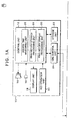
- Figs. 1A and 1B are block diagrams showing a functional configuration for an embodiment of an information apparatus with a phone function according to the present invention, together with an exchange on a network side and a telephone set of an caller.
- a mobile telephone set 10 is taken as an example of an information apparatus with a phone function, and the mobile telephone set is connected to an exchange 34 on the ring side through a network 32, by means of a wireless line, and further to a telephone set of an caller 40 by way from an exchange 36 on the caller side to a network 38.
- the mobile telephone set 10 includes a control unit 12, and to the control unit 12, a storage unit 22 comprising a speaker 14, a microphone 16, a display unit 18, a key operation unit 20 and a memory, and a line control unit 24 are connected.
- This mobile telephone set 10 has an external configuration, for example, as shown in Fig. 2.
- the mobile telephone set 10 has at its upper portion the speaker 14 and then the display unit 18 with a color display function.
- the key operation unit 20 comprising a selector button 58 and a menu button 60 is provided.
- the microphone 16 is built into place.
- an antenna 11 is provided on the upper portion of the mobile telephone set 10.
- an access time measurement unit 26 measures the access time from ring to disconnecting.
- the ring history storage processing unit 28 stores in the storage unit 22, and keeps every ring call, the ring history including the access time from ring to disconnecting measured by the access time measurement unit 26.
- the ring history display processing unit 30 displays the ring history on the display unit 18, attaching an indication for calling attention to the access time, if the access time is as short as a specified time, for example, 5 seconds or less.
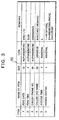
- ring history information in accordance with the ring history format 60 shown in Fig. 3 is stored in the storage unit 22.
- the ring history format 60 has items such as ring date, ring time, caller telephone No., caller name, access time and ending state, and defines the default character size and character type for display for each item, respectively.
- the contents of the history for example, ring date "2002/1/31", ring time "23:30", caller telephone No. "09099999999", caller name "Kaketaro Meiwaku”, and access time. "3 seconds” are stored.
- the ending state, the last item, is expressed by figures, such as “1” means answering, "2” means phone-answering machine, and "3" means disconnected.
- the caller name is available, only when the name is pre-listed in the telephone directory of the mobile telephone set 10, however, since the caller name of a nuisance call is unknown, this item is not displayed, or a tentative name representing the caller of a wicked call, for example "Kaketaro Meiwaku" is used.
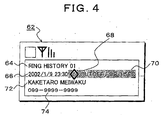
- Fig. 4 is a diagram for describing a ring history display screen 62 to be displayed on a display unit 18 by the ring history display processing unit 30 shown in Figs. 1A and 1B, when a wicked call is received.
- a ring year-month-day 66 is displayed following a ring history No. 64, and then "3 seconds disconnected" is displayed as an access time 70, after an attention calling mark 68, for example, a "! mark is displayed for indicating the possibility of a wicked call.
- an attention calling mark 68 for example, a "! mark is displayed for indicating the possibility of a wicked call.
- an attention calling mark 72 is displayed, and under the name, an caller telephone No. 74 is registered.
- the items are the same as those of the conventional ring history display, except the attention calling mark 68 and the access time 70.
- a line control unit 42, a control unit 44, and a storage unit 46 are provided on the exchange 34 on the ring side to be connected through the network 32.
- a nuisance call prevention control unit 48 is provided on the control unit 44 for the exchange 34 on the ring side, in accordance with the wicked call entry processing from the mobile telephone set 10, which received a wicked call.
- an exchange 36 on the caller side comprises a line control unit 50, a control unit 52 and a storage unit 54.
- a nuisance call prevention control unit 56 is provided as the caller side on the exchange 36 on the caller side, corresponding to the function of the nuisance call prevention control unit 48 in the exchange 34 on the ring side.
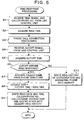
- Fig. 5 is a flowchart for a ring call response processing including ring of wicked calls in the mobile telephone set 10 shown in Figs. 1A and 1B.
- a ring signal and an caller telephone No. are received from the line control unit 42 in the exchange 34 on the ring side at step S1
- a ring operation by the control unit 12 is activated, and the ring time is obtained as the current time at step S2.
- a speech communication connection processing is performed in accordance with the normal ring sequence.
- the speech communication connection processing comprises three processes; a process for connecting speech communication by the normal ring phone answering, a process for connecting a phone-answering machine according to the entry of a phone-answering machine, and further a process for disconnecting ring call before ring call answering.
- step S4 when a disconnect signal is received from the line control unit 42 in the exchange 34 on the ring side, disconnection time is obtained at step S5 as the current time.
- step S6 confirmation is made if disconnection was made before ring call answering or not. If disconnection is made in a short time from ring due to a wicked phone, the disconnection before ring phone answering is discriminated.
- step S7 the program goes to step S7, and the caller name is obtained, if registered, by the search of the telephone directory with the obtained caller telephone No.
- step S8 the access time from ring to disconnecting is calculated, by means of subtracting the ring time obtained at step S2 from the disconnection time obtained at step S5.
- step S9 the ring day and time, caller telephone No., caller name, access time, and ending state are written into memory according to the ring history format shown in Fig. 3.
- step S6 if disconnection was not made before ring call answering at step S6, and instead, connection was made to a speech communication connection or a phone-answering machine service, the program goes to step S10, and conversation or the ring history of the phone answering machine is written into memory.
- the conversation or the ring history of the phone-answering machine either one of the following two methods is tolerable; the conventional method of writing the ring history excluding the access time into memory, or the method of writing the ring history according to the ring history format shown in Fig. 3, where the access time from ring to disconnecting is included, like the cases of steps S7 to S9, where disconnection was made before ring call answering.
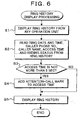
- Fig. 6 is a flowchart for a ring history display processing in the mobile telephone set 10 shown in Figs. 1A and 1B.
- step S1 when the operation entry of the ring history display from the key operation unit 20 is accepted, at step S2, the ring day and time, caller telephone No., caller name, access time and ending state selectively operated from the ring history stored in the storage unit 22 are read into work memory, and then at step S3, confirmation is made if the access time is, for example, 5 seconds or less.
- the ring call is judged as a so-called "one call” or “one off” wicked call, and at step S4, an attention ring mark 68 is attached as shown on the ring history display screen 62 in Fig. 4, and the ring history is displayed at step S5.
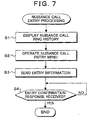
- Fig. 7 is a flowchart for a nuisance call entry processing for the exchange 34 on the ring side in the mobile telephone set 10 shown in Figs. 1A and 1B.
- this nuisance call entry processing the ring history of a nuisance call to be registered is displayed at step S1, and a nuisance call entry menu screen is selectively operated at step S2.
- processing for sending the entry information is performed by the use of the selective screen.
- step S4 when entry confirmed answer from the exchange 34 on the ring side is received, processing ends.
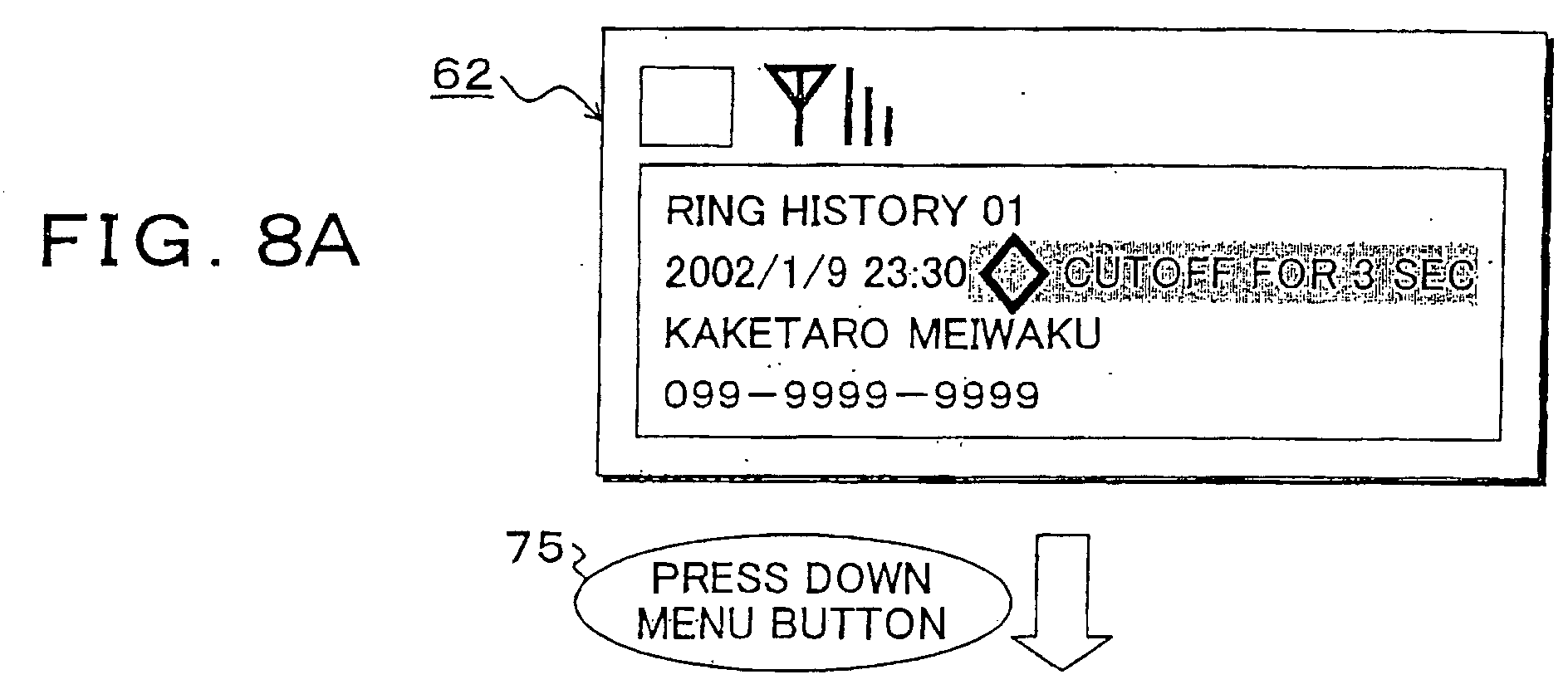
- Figs. 8A-8D show transition of the operation screen in the nuisance call entry processing for the exchange 34 on the ring side shown in Fig. 7.
- the ring history screen 62 for the wicked call is selected and displayed for performing the entry processing of the nuisance call.
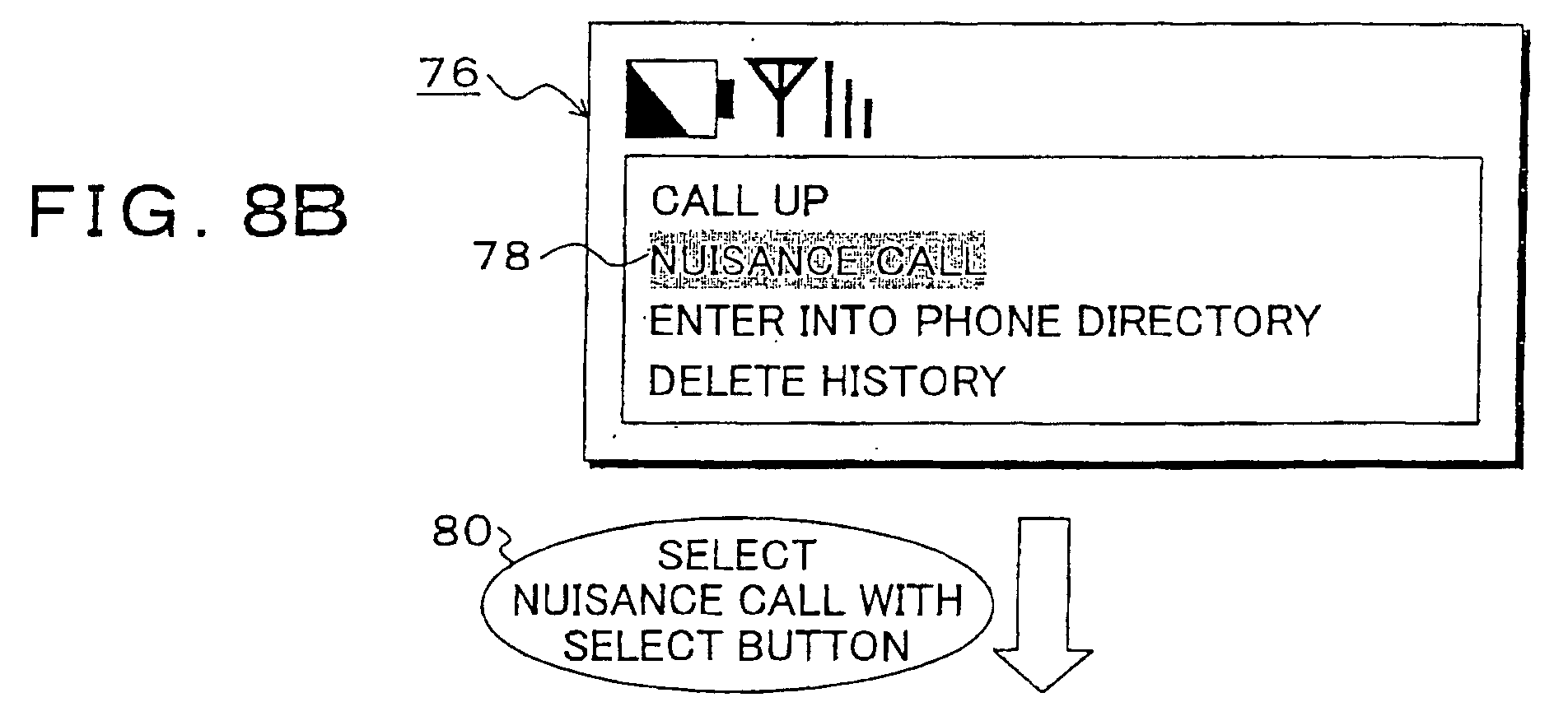
- the screen is changed to a menu screen 76 shown in Fig. 8B, when a menu button is pushed down 75.
- this menu screen 76 includes a nuisance call entry menu 78, this menu is selected for selecting a nuisance call 80 with a selector button. Due to this nuisance call 80, the screen is changed to a screen 82 showing the state under entry as shown in Fig. 8C.
- Fig. 9 is a flowchart for a entry processing by a nuisance call prevention control unit 48 provided on the exchange 34 on the ring side, associated with a nuisance call entry processing from the mobile telephone set 10 shown in Figs. 7, 8A-8D.
- the nuisance call entry processing of the exchange on the ring side when a entry signal of an unsolicited telephone No. from the line control unit 42 is received at step S1, at step S2, the state of a ring rejection file which is pre-held is checked, to be more specific, non-registered number and the maximum number of entries are checked. Then, the program goes to step S3, and the received unsolicited telephone No. is written into the ring rejection file. Finally at step S4, the nuisance call that is the risky customer entry is transferred to the exchange 36 on the ring side.
- Fig. 10 is a flowchart for a risky customer entry processing in the exchange 36 on the caller side, in response to an entered telephone No. transfer processing from the exchange 34 on the ring side shown in Fig. 9.
- the risky customer information received at step S1 is registered in a risky customer information file. If the information is already registered in the file, the number of times is added.
- Fig. 11 is a flowchart for an origination exchange processing by a nuisance call prevention control unit 56 in the exchange 36 on the caller side by the use of the risky customer file generated in Fig. 10.
- the exchange 36 on the caller side receives an issue signal from a line control unit 50 at step S1
- the program goes to step S2, and the pre-held customer file (line file) is read in.
- step S3 issue to the line control unit 50 is instructed, and an answer signal is received from the line control unit 50 at step S4.
- step S5 checking is made whether the customer is risky or not from the customer file read in at step S2. If the customer is risky, the program goes to step S6, and whether the caller side disconnects the call before receiving an answer signal from the ring side.
- step S7 If the caller side disconnected the call before receiving an answer signal, the call is judged as a nuisance call, and a nuisance call counter is counted up by 1 at step S7.
- the nuisance call counter in the initial state is set to zero.
- step S8 an origination processing of risky customers is registered in a detail system.
- step 9 checking is made if the number of times when the caller side of the same risky customer disconnected the ring 30 seconds reached 6 times or not. If the number of times is under 6 times, the program goes to step S1, and the same processing is repeated.
- step S9 if the number of times when the caller side disconnected the call from the same risky customer in 30 seconds reached 6 times, in short, if the value of the nuisance call counter reached 6 times, the program goes to step S10, and informs to a monitor center, that the origination operation of a so-called "one call” or "one off” wicked call is being performed.
- the program goes to step S11, and resets the nuisance call counter and ends the processing.
- Such processing adapted to deal with wicked calls in the exchange 34 on the ring side and the exchange 36 on the caller side associated with the entry based on the ring history of wicked calls from the mobile telephone set 10 according to the present invention as shown in Figs. 9, 10 and 11 does not include the contents adapted to directly deal with calling attention to the ring history of wicked calls in the mobile telephone set 10 according to the present invention, however, by additional provision given to the exchange side, in addition to the function calling attention to wicked calls by the use of the ring history in the mobile telephone set 10 according to the present invention, so-called "one off” or "one call" wicked calls can be more properly prevented.
- Fig. 12 is a block diagram of another embodiment of the present invention, wherein a function is provided against wicked calls using ring history, for prohibiting ring history and ring call.
- This embodiment of the mobile telephone set 10 newly adds a ring history prohibit unit 86 and a ring call control unit 88, in addition to the structure of the control unit 12 in the embodiment shown in Figs. 1A and 1B.
- the other structural functions are the same as those of the embodiment shown in Figs. 1A and 1B.
- the ring history prohibit unit 86 prohibits the ring history storage processing unit 28 from recording a ring history, so that the record is not left as the ring history, if the access time measured by the access time measurement 26 is a specified time, for example, 5 seconds or less, justifiable duration for defining a wicked call. Due to this system, even if a so-called "one off” or "one call", which is disconnected immediately after ring, is received, the technique of wicked calls intending to use a ring history cannot be used, because a ring history itself is not left.
- the ring call control unit 88 prohibits the ring call until the time elapsed from the ring time reached a specified time, for example, 5 seconds, a justifiable duration for defining wicked calls, in a specified mode, for example, a nuisance call prevention mode being set, and 5 seconds after allows the operation of ring call to be activated. Due to this system, even if a wicked call using a technique for disconnecting immediately after ring is received, the ring call is prohibited, so that potential annoyances such as sleep disturbance by ring call of so-called "one off” or "one call" can be prevented in advance.
- Fig. 13 is a flowchart for a ring call response processing in the embodiment shown in Fig. 12.
- this processing after a ring signal receipt and an caller telephone No. are obtained from the line control unit in the exchange on the ring side at step S1, the ring time is obtained at step S2, and then the measurement of the elapsed time starts.
- the nuisance call prevention mode is set, the output of the ring call is in the mute state, so that a ring call or ring melody is not delivered.
- the ring call operation becomes effective at step S4, and a ring call or ring melody is outputted.
- step S5 when a disconnection signal is received from the line control unit in the exchange on the ring side, the disconnection time is obtained as the current time at step S6. Then, at step S7, checking is made if disconnection was made before ring call answer, or not, and if disconnection was made before ring call answer, the access time is calculated at step S8. Next, at step S9, if the access time is a specified time, for example, 5 seconds or less, justifiable duration for defining wicked calls, the process at step S10 for writing the ring history into memory is skipped, so that no ring history is left. If the access time exceeded 5 seconds, at step S10, the ring history is written into memory according to the ring history format shown in Fig. 3. As a matter of course, if disconnection is not made before ring call answer at step S7, the conversation or the ring history of the phone-answering machine is written in memory at step S12.
- both of the functions of the ring history prohibit unit 86 and the ring call control unit 88 are provided on the control unit 12, however, either one of the two can be provided as other embodiments.
- the above-mentioned embodiment takes a mobile telephone set as an information apparatus with a phone function, however, other than that, the present invention can be applied, without modification, to information apparatuses with phone functions such as fixed telephone sets, personal computers, PDAs or television sets.
- the present invention covers reasonable variations, which do not impair its object and merit, and is not subject to restrictions by values given in the above-mentioned embodiment.
- the user can securely recognize a wicked call, when the ring history is displayed, because an attention calling mark is attached to the displayed history for pointing out the possibility that the ring history is of a wicked call, even if the user received a so-called "one call” or “one off” wicked call which is disconnected immediately after ring, and leaves the ring history, so that the user can be protected from damages in advance, such as the user can be prevented from ringg back without noticing that the ring history is of the wicked call, and being forced to connect to a wicked site, thereby resulting in paying a large amount of tolls.
- the user can make the technique of wicked calls using the ring history unavailable, by not allowing the ring history itself to remain, if the, user judged the ring call as a wicked call abusing the ring history.
- sleep disturbance caused by short time ring tone or ring melody produced from a wicked call using the ring history can be prevented, by means of setting a particular mode, such as a nuisance call prohibit mode for prohibiting ring call until the access time elapsed from ring reaches a specified time, justifiable duration for defining wicked calls.
Landscapes
- Engineering & Computer Science (AREA)
- Signal Processing (AREA)
- Computer Security & Cryptography (AREA)
- Computer Networks & Wireless Communication (AREA)
- Telephone Function (AREA)
- Telephonic Communication Services (AREA)
- Mobile Radio Communication Systems (AREA)
Abstract
An information apparatus with a phone
function is disclosed which comprises a time
measurement unit for measuring access time from
ring to disconnection, a ring history storage
processing unit for storing at every ring a ring
history including the access time, and a ring
history display processing unit for displaying a
ring history with an attention calling indication
attached to the access time, when subjected to a
ring history display operation, if the access time
is equal to or shorter than predetermined time.
Description
The present invention relates generally to
an information apparatus with a phone function for
the storage and display of ring histories of fixed
telephone sets, mobile telephone sets, personal
computers, PDAs, etc., a ring history processing
method and a program, and more particularly to an
information apparatus with a phone function for
calling attention to wicked calls which use ring
histories, a ring history processing method and
a program.
Conventionally, an caller ID service for
mobile telephone sets or a number (ID) service for
fixed telephone sets is a service for informing
of the telephone number of an caller. According
to the service, the ring history remains such that
a recipient can call back the caller, observing
good manners to the caller, even if the recipient
was away from home, or could not answer the phone.
The ring history function displays information
including the ring date and time, the calling
partner's telephone No., and the caller name (if
the caller telephone No. is listed in the phone
book) . Also in the ring history, such functions
are proposed, including a function for displaying
the "unattended ring" and "answer ring" in
different colors (Japanese Patent Application
Laid-open (Kokai) No. 2001-111675), and a
function for leaving only the unattended ring as
a history (Japanese Patent Application Laid-open
(Kokai) No. 2001-77907). In addition, such a
service has been so far provided wherein the ring
of the call from a certain specified telephone No.
is rejected, and users can receive the service,
by applying for entry at the service-window of the
telephone company. In the ring rejection service,
the system enters a pre-determined specific
telephone No., immediately after receiving the
call from the telephone No. which the user wants
to reject the receipt.
Recently, wicked and nuisance calls are on
the rise, which use the display function of the
ring history held by information apparatuses with
phone functions, such as mobile telephone sets,
fixed telephone sets, and moreover, personal
computers and PDAs. To be more specific, such
acts against public order and good custom are
rampant, which collect a large amount of toll, by
using a so-called "one call" or "one off"
technique, where the call is disconnected
immediately after being received, such that the
ring history can be left, without being subject
to an accounting of toll charge at the exchange,
and the recipient is forced to connect to a wicked
site, when the recipient calls back. As the
technique abusing the ring history automatically
performs the processing for disconnecting a call
immediately after dialing by means of executing
the program, while continuously changing
telephone Nos., the abuse of such wicked
businesses adversely affect the normal telephone
traffic of network facilities.
It is therefore an object of the present
invention to provide an information apparatus
with a phone function for isolating wicked calls
which use ring histories to call attention, a ring
history processing method and a program.
The present invention provides an
information apparatus with a phone function
comprising a time measurement unit for measuring
time (hereinafter referred to as "access time")
from ring to disconnection; a ring history storage
processing unit for storing at every ring a ring
history including the time; and a ring history
display processing unit for displaying a ring
history with an attention calling indication
attached to the time, if the time is equal to or
shorter than predetermined time. Because of this,
even if a wicked call, such as so-called "one call"
or "one off" is received, wherein the call is
disconnected immediately after being received
but leaves a ring history, when the ring history
is displayed, for example, an exclamation mark "!"
is attached to a short access time, for example,
5 seconds or less, for pointing out the
possibility that the ring history can be generated
by a wicked call, such that users can be prevented
in advance from mistakenly calling back without
suspecting it was a wicked call.
Herein, the time measurement unit acquires
the ring time and disconnection time, and
thereafter figures out access time from ring to
disconnection in the form of the difference
between the two times. The ring history storage
unit stores as the ring history ring day and time,
caller telephone No. and caller name, in addition
to the time. The information apparatus with a
phone function according to the present invention
further comprises a nuisance call entry unit for
entering into exchange side a nuisance call judged
from the time displayed as the ring history, by
using a predetermined operation. By this
configuration, the information on wicked calls
using the ring history can be supplied to the
telephone company, so that the telephone company
can take necessary measures. The information
apparatus with a phone function according to the
present invention further comprises a ring
history prohibit unit for prohibiting the ring
history storage unit from storing the ring history
so that the ring history is not left, if the time
is equal to or shorter than predetermined time.
Thus, so-called "one call" or "one off" wicked
calls with short access time no longer leave the
ring history, and thus the ring history itself
cannot be abused. The information apparatus with
a phone function according to the present
invention further comprises a ring call control
unit for prohibiting a ring call until the time
in measurement reaches predetermined time in a
nuisance call prevention mode being set, the ring
call control unit permitting a ring call operation
after the elapse of the predetermined time.
Because of this, potential annoyances caused by
the so-called "one call" or "one off" wicked calls
can be prevented, and thus sleep will no longer
be disturbed by short-time rings of such wicked
calls.
The present invention provides a ring
history processing method for an information
apparatus with a phone function. The ring
history processing method comprises a time
measurement step for measuring time from ring to
disconnection; a ring history storage step for
storing at every ring a ring history including the
time; and a ring history display step for
displaying a ring history with an attention
calling indication attached to the time, if the
time is equal to or shorter than predetermined
time.
The present invention provides a program
which is executed by a computer of an information
apparatus with a phone function. The program
allows the computer of the information apparatus
with a phone function to execute a time
measurement step for measuring time from ring to
disconnection; a ring history storage step for
storing at every ring a ring history including the
time; and a ring history display step for
displaying a ring history with an attention
calling indication attached to the time, when
subjected to a ring history display operation, if
the time is equal to or shorter than predetermined
time.
Figs. 1A and 1B are block diagrams showing
a functional configuration for an embodiment of
an information apparatus with a phone function
according to the present invention, together with
an exchange on a network side and a telephone set
of an caller. In this embodiment, a mobile
telephone set 10 is taken as an example of an
information apparatus with a phone function, and
the mobile telephone set is connected to an
exchange 34 on the ring side through a network 32,
by means of a wireless line, and further to a
telephone set of an caller 40 by way from an
exchange 36 on the caller side to a network 38.
The mobile telephone set 10 includes a control
unit 12, and to the control unit 12, a storage unit
22 comprising a speaker 14, a microphone 16, a
display unit 18, a key operation unit 20 and a
memory, and a line control unit 24 are connected.
This mobile telephone set 10 has an external
configuration, for example, as shown in Fig. 2.
The mobile telephone set 10 has at its upper
portion the speaker 14 and then the display unit
18 with a color display function. Under the
display unit 18, the key operation unit 20
comprising a selector button 58 and a menu button
60 is provided. Furthermore, on the lowermost
portion, the microphone 16 is built into place.
Also, an antenna 11 is provided on the upper
portion of the mobile telephone set 10.
Referring back to Figs. 1A and 1B, in order
to call attention to so-called "one off" or "one
call" wicked calls using a ring history when the
ring history of such wicked calls is displayed,
an access time measurement unit 26, a ring history
storage processing unit 28, and a ring history
display processing unit 30 are provided on the
control unit 12 of the mobile telephone set 10.
The access time measurement unit 26 measures the
access time from ring to disconnecting. The ring
history storage processing unit 28 stores in the
storage unit 22, and keeps every ring call, the
ring history including the access time from ring
to disconnecting measured by the access time
measurement unit 26. In response to the ring
history display operation from the key operation
unit 20, the ring history display processing unit
30 displays the ring history on the display unit
18, attaching an indication for calling attention
to the access time, if the access time is as short
as a specified time, for example, 5 seconds or
less.
Here, ring history information in
accordance with the ring history format 60 shown
in Fig. 3 is stored in the storage unit 22. The
ring history format 60 has items such as ring date,
ring time, caller telephone No., caller name,
access time and ending state, and defines the
default character size and character type for
display for each item, respectively. As shown
under the Remarks, the contents of the history,
for example, ring date "2002/1/31", ring time
"23:30", caller telephone No. "09099999999",
caller name "Kaketaro Meiwaku", and access time.
"3 seconds" are stored. The ending state, the
last item, is expressed by figures, such as "1"
means answering, "2" means phone-answering
machine, and "3" means disconnected. The caller
name is available, only when the name is
pre-listed in the telephone directory of the
mobile telephone set 10, however, since the caller
name of a nuisance call is unknown, this item is
not displayed, or a tentative name representing
the caller of a wicked call, for example "Kaketaro
Meiwaku" is used.
Fig. 4 is a diagram for describing a ring
history display screen 62 to be displayed on a
display unit 18 by the ring history display
processing unit 30 shown in Figs. 1A and 1B, when
a wicked call is received. On the ring history
display screen 62, a ring year-month-day 66 is
displayed following a ring history No. 64, and
then "3 seconds disconnected" is displayed as an
access time 70, after an attention calling mark
68, for example, a "!" mark is displayed for
indicating the possibility of a wicked call.
Further, if pre-listed in the telephone directory,
an caller name 72 is displayed, and under the name,
an caller telephone No. 74 is registered. On this
ring history display screen 62, the items are the
same as those of the conventional ring history
display, except the attention calling mark 68 and
the access time 70.
Referring again to Figs. 1A and 1B, a line
control unit 42, a control unit 44, and a storage
unit 46 are provided on the exchange 34 on the ring
side to be connected through the network 32.
According to the present invention, a nuisance
call prevention control unit 48 is provided on the
control unit 44 for the exchange 34 on the ring
side, in accordance with the wicked call entry
processing from the mobile telephone set 10, which
received a wicked call. Also, an exchange 36 on
the caller side comprises a line control unit 50,
a control unit 52 and a storage unit 54. Also,
a nuisance call prevention control unit 56 is
provided as the caller side on the exchange 36 on
the caller side, corresponding to the function of
the nuisance call prevention control unit 48 in
the exchange 34 on the ring side.
Fig. 5 is a flowchart for a ring call
response processing including ring of wicked
calls in the mobile telephone set 10 shown in Figs.
1A and 1B. When a ring signal and an caller
telephone No. are received from the line control
unit 42 in the exchange 34 on the ring side at step
S1, a ring operation by the control unit 12 is
activated, and the ring time is obtained as the
current time at step S2. Then at step S3, a speech
communication connection processing is performed
in accordance with the normal ring sequence. The
speech communication connection processing
comprises three processes; a process for
connecting speech communication by the normal
ring phone answering, a process for connecting a
phone-answering machine according to the entry of
a phone-answering machine, and further a process
for disconnecting ring call before ring call
answering. Next at step S4, when a disconnect
signal is received from the line control unit 42
in the exchange 34 on the ring side, disconnection
time is obtained at step S5 as the current time.
Then at step S6, confirmation is made if
disconnection was made before ring call answering
or not. If disconnection is made in a short time
from ring due to a wicked phone, the disconnection
before ring phone answering is discriminated.
Then, the program goes to step S7, and the caller
name is obtained, if registered, by the search of
the telephone directory with the obtained caller
telephone No. Next, at step S8, the access time
from ring to disconnecting is calculated, by means
of subtracting the ring time obtained at step S2
from the disconnection time obtained at step S5.
Finally at step S9, the ring day and time, caller
telephone No., caller name, access time, and
ending state are written into memory according to
the ring history format shown in Fig. 3. On the
other hand, if disconnection was not made before
ring call answering at step S6, and instead,
connection was made to a speech communication
connection or a phone-answering machine service,
the program goes to step S10, and conversation or
the ring history of the phone answering machine
is written into memory. As to the conversation
or the ring history of the phone-answering machine,
either one of the following two methods is
tolerable; the conventional method of writing the
ring history excluding the access time into memory,
or the method of writing the ring history
according to the ring history format shown in Fig.
3, where the access time from ring to
disconnecting is included, like the cases of steps
S7 to S9, where disconnection was made before ring
call answering.
Fig. 6 is a flowchart for a ring history
display processing in the mobile telephone set 10
shown in Figs. 1A and 1B. At step S1, when the
operation entry of the ring history display from
the key operation unit 20 is accepted, at step S2,
the ring day and time, caller telephone No.,
caller name, access time and ending state
selectively operated from the ring history stored
in the storage unit 22 are read into work memory,
and then at step S3, confirmation is made if the
access time is, for example, 5 seconds or less.
If the access time is 5 seconds or less, the ring
call is judged as a so-called "one call" or "one
off" wicked call, and at step S4, an attention ring
mark 68 is attached as shown on the ring history
display screen 62 in Fig. 4, and the ring history
is displayed at step S5.
Fig. 7 is a flowchart for a nuisance call
entry processing for the exchange 34 on the ring
side in the mobile telephone set 10 shown in Figs.
1A and 1B. In this nuisance call entry processing,
the ring history of a nuisance call to be
registered is displayed at step S1, and a nuisance
call entry menu screen is selectively operated at
step S2. In addition, at step S3, processing for
sending the entry information is performed by the
use of the selective screen. Finally at step S4,
when entry confirmed answer from the exchange 34
on the ring side is received, processing ends.
Figs. 8A-8D show transition of the
operation screen in the nuisance call entry
processing for the exchange 34 on the ring side
shown in Fig. 7. First of all, as shown in Fig.
8A, the ring history screen 62 for the wicked call
is selected and displayed for performing the entry
processing of the nuisance call. Next, the
screen is changed to a menu screen 76 shown in Fig.
8B, when a menu button is pushed down 75. As this
menu screen 76 includes a nuisance call entry menu
78, this menu is selected for selecting a nuisance
call 80 with a selector button. Due to this
nuisance call 80, the screen is changed to a screen
82 showing the state under entry as shown in Fig.
8C. When a finish answer 84 of the exchange is
accepted, the screen is changed to a nuisance call
entry finish screen 85 shown in Fig. 8D, thus a
series of nuisance call entry processing ends.
As described above, in the mobile telephone set
10 according to the present invention, nuisance
calls can be easily registered to the exchange 34
on the ring side, with the use of the ring history
of a nuisance call.
Fig. 9 is a flowchart for a entry processing
by a nuisance call prevention control unit 48
provided on the exchange 34 on the ring side,
associated with a nuisance call entry processing
from the mobile telephone set 10 shown in Figs.
7, 8A-8D. In the nuisance call entry processing
of the exchange on the ring side, when a entry
signal of an unsolicited telephone No. from the
line control unit 42 is received at step S1, at
step S2, the state of a ring rejection file which
is pre-held is checked, to be more specific,
non-registered number and the maximum number of
entries are checked. Then, the program goes to
step S3, and the received unsolicited telephone
No. is written into the ring rejection file.
Finally at step S4, the nuisance call that is the
risky customer entry is transferred to the
exchange 36 on the ring side.
Fig. 10 is a flowchart for a risky customer
entry processing in the exchange 36 on the caller
side, in response to an entered telephone No.
transfer processing from the exchange 34 on the
ring side shown in Fig. 9. In the risky customer
entry processing, the risky customer information
received at step S1 is registered in a risky
customer information file. If the information is
already registered in the file, the number of
times is added.
Fig. 11 is a flowchart for an origination
exchange processing by a nuisance call prevention
control unit 56 in the exchange 36 on the caller
side by the use of the risky customer file
generated in Fig. 10. When the exchange 36 on the
caller side receives an issue signal from a line
control unit 50 at step S1, the program goes to
step S2, and the pre-held customer file (line
file) is read in. Then at step S3, issue to the
line control unit 50 is instructed, and an answer
signal is received from the line control unit 50
at step S4. At step S5, checking is made whether
the customer is risky or not from the customer file
read in at step S2. If the customer is risky, the
program goes to step S6, and whether the caller
side disconnects the call before receiving an
answer signal from the ring side. If the caller
side disconnected the call before receiving an
answer signal, the call is judged as a nuisance
call, and a nuisance call counter is counted up
by 1 at step S7. The nuisance call counter in the
initial state is set to zero. Next at step S8,
an origination processing of risky customers is
registered in a detail system. Then at step 9,
checking is made if the number of times when the
caller side of the same risky customer
disconnected the ring 30 seconds reached 6 times
or not. If the number of times is under 6 times,
the program goes to step S1, and the same
processing is repeated. At step S9, if the number
of times when the caller side disconnected the
call from the same risky customer in 30 seconds
reached 6 times, in short, if the value of the
nuisance call counter reached 6 times, the program
goes to step S10, and informs to a monitor center,
that the origination operation of a so-called "one
call" or "one off" wicked call is being performed.
On the other hand, if the customer read from the
line file at step S5 was not a risky customer, or
if the caller side disconnected the call after
receiving an answer signal at step S6, the program
goes to step S11, and resets the nuisance call
counter and ends the processing.
Such processing adapted to deal with wicked
calls in the exchange 34 on the ring side and the
exchange 36 on the caller side associated with the
entry based on the ring history of wicked calls
from the mobile telephone set 10 according to the
present invention as shown in Figs. 9, 10 and 11
does not include the contents adapted to directly
deal with calling attention to the ring history
of wicked calls in the mobile telephone set 10
according to the present invention, however, by
additional provision given to the exchange side,
in addition to the function calling attention to
wicked calls by the use of the ring history in the
mobile telephone set 10 according to the present
invention, so-called "one off" or "one call"
wicked calls can be more properly prevented.
Fig. 12 is a block diagram of another
embodiment of the present invention, wherein a
function is provided against wicked calls using
ring history, for prohibiting ring history and
ring call. This embodiment of the mobile
telephone set 10 newly adds a ring history
prohibit unit 86 and a ring call control unit 88,
in addition to the structure of the control unit
12 in the embodiment shown in Figs. 1A and 1B. The
other structural functions are the same as those
of the embodiment shown in Figs. 1A and 1B. The
ring history prohibit unit 86 prohibits the ring
history storage processing unit 28 from recording
a ring history, so that the record is not left as
the ring history, if the access time measured by
the access time measurement 26 is a specified time,
for example, 5 seconds or less, justifiable
duration for defining a wicked call. Due to this
system, even if a so-called "one off" or "one call",
which is disconnected immediately after ring, is
received, the technique of wicked calls intending
to use a ring history cannot be used, because a
ring history itself is not left. The ring call
control unit 88 prohibits the ring call until the
time elapsed from the ring time reached a
specified time, for example, 5 seconds, a
justifiable duration for defining wicked calls,
in a specified mode, for example, a nuisance call
prevention mode being set, and 5 seconds after
allows the operation of ring call to be activated.
Due to this system, even if a wicked call using
a technique for disconnecting immediately after
ring is received, the ring call is prohibited, so
that potential annoyances such as sleep
disturbance by ring call of so-called "one off"
or "one call" can be prevented in advance.
Fig. 13 is a flowchart for a ring call
response processing in the embodiment shown in Fig.
12. In this processing, after a ring signal
receipt and an caller telephone No. are obtained
from the line control unit in the exchange on the
ring side at step S1, the ring time is obtained
at step S2, and then the measurement of the elapsed
time starts. At this time, if the nuisance call
prevention mode is set, the output of the ring call
is in the mute state, so that a ring call or ring
melody is not delivered. When 5 seconds elapsed
from ring at step S3, the ring call operation
becomes effective at step S4, and a ring call or
ring melody is outputted. Next at step S5, when
a disconnection signal is received from the line
control unit in the exchange on the ring side, the
disconnection time is obtained as the current time
at step S6. Then, at step S7, checking is made
if disconnection was made before ring call answer,
or not, and if disconnection was made before ring
call answer, the access time is calculated at step
S8. Next, at step S9, if the access time is a
specified time, for example, 5 seconds or less,
justifiable duration for defining wicked calls,
the process at step S10 for writing the ring
history into memory is skipped, so that no ring
history is left. If the access time exceeded 5
seconds, at step S10, the ring history is written
into memory according to the ring history format
shown in Fig. 3. As a matter of course, if
disconnection is not made before ring call answer
at step S7, the conversation or the ring history
of the phone-answering machine is written in
memory at step S12.
In the embodiment shown in Fig. 12, both of
the functions of the ring history prohibit unit
86 and the ring call control unit 88 are provided
on the control unit 12, however, either one of the
two can be provided as other embodiments. The
above-mentioned embodiment takes a mobile
telephone set as an information apparatus with a
phone function, however, other than that, the
present invention can be applied, without
modification, to information apparatuses with
phone functions such as fixed telephone sets,
personal computers, PDAs or television sets. The
present invention covers reasonable variations,
which do not impair its object and merit, and is
not subject to restrictions by values given in the
above-mentioned embodiment.
As set forth hereinabove, according to the
present invention, the user can securely
recognize a wicked call, when the ring history is
displayed, because an attention calling mark is
attached to the displayed history for pointing out
the possibility that the ring history is of a
wicked call, even if the user received a so-called
"one call" or "one off" wicked call which is
disconnected immediately after ring, and leaves
the ring history, so that the user can be protected
from damages in advance, such as the user can be
prevented from ringg back without noticing that
the ring history is of the wicked call, and being
forced to connect to a wicked site, thereby
resulting in paying a large amount of tolls. Also,
the user can make the technique of wicked calls
using the ring history unavailable, by not
allowing the ring history itself to remain, if the,
user judged the ring call as a wicked call abusing
the ring history. Furthermore, sleep
disturbance caused by short time ring tone or ring
melody produced from a wicked call using the ring
history can be prevented, by means of setting a
particular mode, such as a nuisance call prohibit
mode for prohibiting ring call until the access
time elapsed from ring reaches a specified time,
justifiable duration for defining wicked calls.
Claims (8)
- An information apparatus with a phone function comprising:a time measurement unit for measuring time from ring to disconnection;a ring history storage processing unit for storing at every ring a ring history including said time; anda ring history display processing unit for displaying a ring history with an attention calling indication attached to said time, if said time is equal to or shorter than predetermined time.
- The information apparatus according to claim 1, wherein said time measurement unit acquires the ring time and disconnection time, and thereafter figures out access time from ring to disconnection in the form of the difference between the two times.
- The information apparatus according to claim 1, wherein said ring history storage unit stores as said ring history ring day and time, caller telephone No. and caller name, in addition to said time.
- The information apparatus according to claim 1, further comprising a nuisance call entry unit for entering into exchange side a nuisance call judged from said time displayed as said ring history, by using a predetermined operation.
- The information apparatus according to claim 1, further comprising a ring history prohibit unit for prohibiting the ring history storage unit from storing said ring history so that said ring history is not left, if said time is equal to or shorter than predetermined time.
- The information apparatus according to claim 1, further comprising a ring call control unit for prohibiting a ring call until said time in measurement reaches predetermined time in a nuisance call prevention mode being set, said ring call control unit permitting a ring call operation after the elapse of said predetermined time.
- A ring history processing method for an information apparatus with a phone function, the method comprising:a time measurement step for measuring time from ring to disconnection;a ring history storage step for storing at every ring a ring history including said time; anda ring history display step for displaying a ring history with an attention calling indication attached to said time, if said time is equal to or shorter than predetermined time.
- A program allowing a computer of an information apparatus with a phone function to execute:a time measurement step for measuring time from ring to disconnection;a ring history storage step for storing at every ring a ring history including said time; anda ring history display step for displaying a ring history with an attention calling indication attached to said time, when subjected to a ring history display operation, if said time is equal to or shorter than predetermined time.
Applications Claiming Priority (1)
| Application Number | Priority Date | Filing Date | Title |
|---|---|---|---|
| PCT/JP2002/003214 WO2003084189A1 (en) | 2002-03-29 | 2002-03-29 | Information device having telephone function, and call arrival history processing method, and program |
Publications (2)
| Publication Number | Publication Date |
|---|---|
| EP1519542A1 true EP1519542A1 (en) | 2005-03-30 |
| EP1519542A4 EP1519542A4 (en) | 2008-12-24 |
Family
ID=28470410
Family Applications (1)
| Application Number | Title | Priority Date | Filing Date |
|---|---|---|---|
| EP02713274A Withdrawn EP1519542A4 (en) | 2002-03-29 | 2002-03-29 | INFORMATION DEVICE HAVING A TELEPHONE FUNCTION, METHOD AND PROGRAM FOR PROCESSING HISTORY OF CALL RECEPTIONS |
Country Status (6)
| Country | Link |
|---|---|
| US (1) | US6968046B2 (en) |
| EP (1) | EP1519542A4 (en) |
| JP (1) | JPWO2003084189A1 (en) |
| KR (1) | KR100784614B1 (en) |
| CN (1) | CN100438525C (en) |
| WO (1) | WO2003084189A1 (en) |
Cited By (1)
| Publication number | Priority date | Publication date | Assignee | Title |
|---|---|---|---|---|
| GB2470102A (en) * | 2009-05-04 | 2010-11-10 | Avaya Inc | Annoying telephone call prediction and prevention |
Families Citing this family (13)
| Publication number | Priority date | Publication date | Assignee | Title |
|---|---|---|---|---|
| US7577239B1 (en) * | 2004-05-10 | 2009-08-18 | Cisco Technology, Inc. | Tracking and controlling the impact of unwanted messages |
| JP4696528B2 (en) * | 2004-10-29 | 2011-06-08 | 日本電気株式会社 | Nuisance call prevention method and program |
| KR100703274B1 (en) * | 2004-12-14 | 2007-04-03 | 삼성전자주식회사 | Apparatus and method for managing user data in mobile communication terminal |
| CN1852337B (en) * | 2005-09-13 | 2010-08-04 | 华为技术有限公司 | Terminal equipment ringing control method and terminal equipment |
| KR100763195B1 (en) * | 2006-01-20 | 2007-10-04 | 삼성전자주식회사 | Apparatus and method for displaying communication record information as WI image |
| CN101478591A (en) * | 2008-12-17 | 2009-07-08 | 康佳集团股份有限公司 | Method for preventing incoming call disturbance of mobile phone |
| CN101510908B (en) * | 2009-03-12 | 2012-01-11 | 中兴通讯股份有限公司 | Method and apparatus for implementing terminal calling firewall |
| JP5633926B2 (en) * | 2010-09-24 | 2014-12-03 | Necプラットフォームズ株式会社 | Nuisance call prevention device and method |
| CN103248737B (en) * | 2012-02-10 | 2016-08-17 | 联想(北京)有限公司 | A kind of interface display control method, device and communication terminal |
| CN103391348A (en) * | 2012-05-09 | 2013-11-13 | 北京千橡网景科技发展有限公司 | Crank call prevention method and device |
| CN103595879A (en) * | 2013-11-18 | 2014-02-19 | 深圳创维数字技术股份有限公司 | Method, device and system for transmitting text information through speech network |
| CN104780251A (en) * | 2014-01-13 | 2015-07-15 | 联发科技(新加坡)私人有限公司 | Telephone dialing automatic conversion device and telephone dialing automatic conversion method |
| CN105791545B (en) * | 2016-02-24 | 2019-08-02 | 宇龙计算机通信科技(深圳)有限公司 | A terminal device anti-disturbance method and device |
Family Cites Families (14)
| Publication number | Priority date | Publication date | Assignee | Title |
|---|---|---|---|---|
| JPS6017858A (en) | 1983-07-12 | 1985-01-29 | Fuji Elelctrochem Co Ltd | Nonaqueous electrolyte battery |
| JPS60178758A (en) * | 1984-02-24 | 1985-09-12 | Nippon Telegr & Teleph Corp <Ntt> | Telephone set |
| JPS6424547A (en) * | 1987-07-20 | 1989-01-26 | Nippon Telegraph & Telephone | Delay telephone calling equipment |
| DE4116469A1 (en) * | 1991-05-21 | 1992-11-26 | Standard Elektrik Lorenz Ag | TELEPHONE SET WITH RINGER TURN OFF |
| US5179589A (en) * | 1991-11-27 | 1993-01-12 | International Telesystems Corporation | Call progress pacing |
| JPH06188977A (en) * | 1992-08-24 | 1994-07-08 | Nippon Idou Tsushin Kk | System for eliminating nuisance call |
| JPH06311240A (en) * | 1993-04-21 | 1994-11-04 | Fujitsu General Ltd | Telephone with ringer priority ringing function |
| JP3638330B2 (en) * | 1995-02-22 | 2005-04-13 | シャープ株式会社 | Telephone |
| JPH0927854A (en) * | 1995-07-12 | 1997-01-28 | Nippon Telegr & Teleph Corp <Ntt> | Terminal addition device used for call rejection service |
| JPH09116620A (en) * | 1995-10-17 | 1997-05-02 | Canon Inc | Communication device |
| JP3866418B2 (en) * | 1998-07-09 | 2007-01-10 | 株式会社ナカヨ通信機 | Communication terminal |
| US6198812B1 (en) * | 1998-09-23 | 2001-03-06 | Effectrol Patent Trust | Incoming telephone call filter utilizing a duplicitous caller-ID recognition method and apparatus |
| JP2000295324A (en) * | 1999-04-08 | 2000-10-20 | Ricoh Co Ltd | Communication device |
| JP2001326716A (en) * | 2000-05-15 | 2001-11-22 | Nec Eng Ltd | System for displaying information on incoming call unresponsiveness |
-
2002
- 2002-03-29 CN CNB02802253XA patent/CN100438525C/en not_active Expired - Fee Related
- 2002-03-29 JP JP2003523886A patent/JPWO2003084189A1/en active Pending
- 2002-03-29 WO PCT/JP2002/003214 patent/WO2003084189A1/en not_active Ceased
- 2002-03-29 KR KR1020037002908A patent/KR100784614B1/en not_active Expired - Fee Related
- 2002-03-29 EP EP02713274A patent/EP1519542A4/en not_active Withdrawn
-
2003
- 2003-01-17 US US10/347,106 patent/US6968046B2/en not_active Expired - Fee Related
Cited By (1)
| Publication number | Priority date | Publication date | Assignee | Title |
|---|---|---|---|---|
| GB2470102A (en) * | 2009-05-04 | 2010-11-10 | Avaya Inc | Annoying telephone call prediction and prevention |
Also Published As
| Publication number | Publication date |
|---|---|
| KR100784614B1 (en) | 2007-12-11 |
| US20030186688A1 (en) | 2003-10-02 |
| US6968046B2 (en) | 2005-11-22 |
| EP1519542A4 (en) | 2008-12-24 |
| CN100438525C (en) | 2008-11-26 |
| WO2003084189A1 (en) | 2003-10-09 |
| CN1537379A (en) | 2004-10-13 |
| KR20040096759A (en) | 2004-11-17 |
| JPWO2003084189A1 (en) | 2005-08-11 |
Similar Documents
| Publication | Publication Date | Title |
|---|---|---|
| JP3621612B2 (en) | Mobile phone | |
| US6968046B2 (en) | Information apparatus with phone function, ring history processing method and program | |
| EP2101481B1 (en) | Call origination in a mobile telephone apparatus | |
| JP2998889B2 (en) | Wireless communication system | |
| US20050170817A1 (en) | Communication apparatus and reception history deleting method | |
| JP4111343B2 (en) | Call billing system and method | |
| JP6631653B2 (en) | Safety confirmation system, safety confirmation method, and subscriber information management server | |
| KR100782726B1 (en) | Information equipment having a telephone function, call history processing method and recording medium | |
| JP4454099B2 (en) | Mobile phone | |
| JP3992972B2 (en) | Phone terminal | |
| JP4452754B2 (en) | Mobile phone and mobile phone control method | |
| JP5049577B2 (en) | Communication terminal device and computer program therefor | |
| JP4150302B2 (en) | Mobile phone | |
| JP3365323B2 (en) | Public telephone | |
| JP2004297463A (en) | Phone terminal | |
| JPH0831929B2 (en) | Public telephone | |
| JP3328178B2 (en) | Telephone equipment | |
| JP2004187056A (en) | Mobile phone | |
| JP2004048264A (en) | Mobile phone device and method for rejecting incoming call | |
| JP2000078319A (en) | Communication equipment provided with history storage function | |
| JP2001119501A (en) | Communication device and recording medium recording call charge notification program | |
| JP2002335353A (en) | Telephone equipment | |
| JP2004356672A (en) | Mobile terminal device | |
| JPH05336219A (en) | Telephone terminal equipment | |
| JP2005203870A (en) | Telephone terminal and control program |
Legal Events
| Date | Code | Title | Description |
|---|---|---|---|
| PUAI | Public reference made under article 153(3) epc to a published international application that has entered the european phase |
Free format text: ORIGINAL CODE: 0009012 |
|
| 17P | Request for examination filed |
Effective date: 20030212 |
|
| AK | Designated contracting states |
Kind code of ref document: A1 Designated state(s): DE FI FR GB SE |
|
| AX | Request for extension of the european patent |
Extension state: AL LT LV MK RO SI |
|
| A4 | Supplementary search report drawn up and despatched |
Effective date: 20081126 |
|
| 17Q | First examination report despatched |
Effective date: 20090310 |
|
| STAA | Information on the status of an ep patent application or granted ep patent |
Free format text: STATUS: THE APPLICATION IS DEEMED TO BE WITHDRAWN |
|
| 18D | Application deemed to be withdrawn |
Effective date: 20090922 |