EP1517540A2 - Multimediales Suchverfahren auf Grundlage einer HMMD-Farbraum basierten Farbquantizierung - Google Patents
Multimediales Suchverfahren auf Grundlage einer HMMD-Farbraum basierten Farbquantizierung Download PDFInfo
- Publication number
- EP1517540A2 EP1517540A2 EP04078296A EP04078296A EP1517540A2 EP 1517540 A2 EP1517540 A2 EP 1517540A2 EP 04078296 A EP04078296 A EP 04078296A EP 04078296 A EP04078296 A EP 04078296A EP 1517540 A2 EP1517540 A2 EP 1517540A2
- Authority
- EP
- European Patent Office
- Prior art keywords
- taking
- color
- equal parts
- divided
- axis
- Prior art date
- Legal status (The legal status is an assumption and is not a legal conclusion. Google has not performed a legal analysis and makes no representation as to the accuracy of the status listed.)
- Ceased
Links
Images



Classifications
-
- G—PHYSICS
- G06—COMPUTING OR CALCULATING; COUNTING
- G06F—ELECTRIC DIGITAL DATA PROCESSING
- G06F16/00—Information retrieval; Database structures therefor; File system structures therefor
- G06F16/50—Information retrieval; Database structures therefor; File system structures therefor of still image data
- G06F16/58—Retrieval characterised by using metadata, e.g. metadata not derived from the content or metadata generated manually
- G06F16/583—Retrieval characterised by using metadata, e.g. metadata not derived from the content or metadata generated manually using metadata automatically derived from the content
- G06F16/5854—Retrieval characterised by using metadata, e.g. metadata not derived from the content or metadata generated manually using metadata automatically derived from the content using shape and object relationship
-
- G—PHYSICS
- G06—COMPUTING OR CALCULATING; COUNTING
- G06T—IMAGE DATA PROCESSING OR GENERATION, IN GENERAL
- G06T7/00—Image analysis
- G06T7/90—Determination of colour characteristics
-
- G—PHYSICS
- G06—COMPUTING OR CALCULATING; COUNTING
- G06T—IMAGE DATA PROCESSING OR GENERATION, IN GENERAL
- G06T7/00—Image analysis
-
- G—PHYSICS
- G06—COMPUTING OR CALCULATING; COUNTING
- G06F—ELECTRIC DIGITAL DATA PROCESSING
- G06F16/00—Information retrieval; Database structures therefor; File system structures therefor
- G06F16/50—Information retrieval; Database structures therefor; File system structures therefor of still image data
- G06F16/58—Retrieval characterised by using metadata, e.g. metadata not derived from the content or metadata generated manually
- G06F16/583—Retrieval characterised by using metadata, e.g. metadata not derived from the content or metadata generated manually using metadata automatically derived from the content
- G06F16/5838—Retrieval characterised by using metadata, e.g. metadata not derived from the content or metadata generated manually using metadata automatically derived from the content using colour
-
- G—PHYSICS
- G06—COMPUTING OR CALCULATING; COUNTING
- G06V—IMAGE OR VIDEO RECOGNITION OR UNDERSTANDING
- G06V10/00—Arrangements for image or video recognition or understanding
- G06V10/40—Extraction of image or video features
- G06V10/56—Extraction of image or video features relating to colour
-
- H—ELECTRICITY
- H04—ELECTRIC COMMUNICATION TECHNIQUE
- H04N—PICTORIAL COMMUNICATION, e.g. TELEVISION
- H04N1/00—Scanning, transmission or reproduction of documents or the like, e.g. facsimile transmission; Details thereof
- H04N1/46—Colour picture communication systems
- H04N1/64—Systems for the transmission or the storage of the colour picture signal; Details therefor, e.g. coding or decoding means therefor
- H04N1/644—Systems for the transmission or the storage of the colour picture signal; Details therefor, e.g. coding or decoding means therefor using a reduced set of representative colours, e.g. each representing a particular range in a colour space
Definitions
- the present invention relates to a color quantization method based on an HMMD color space and a multimedia searching method using the same in extracting color features for searching multimedia, thereby enabling to search multimedia data which are quantized on different levels.
- Search engines generally use global and local color information and texture information for image search. And, it is known that color information plays a great role in image search.
- Color information includes various feature information such as color histogram, local representative color and the like. Thus, search performance greatly depends how to quantize the colors.
- RGB element is represented by a numerical character which ranges 0 to 255.
- color classes amount to 256 3 , which is unrealistic to be represented by color histograms constituted with 256 3 bins.
- a color space is divided into partial spaces amounting to the number of colors to be represented, in which the division method is called a color quantization method.
- the color quantization method should be proper for high search performance.
- the number of colors represented by an arbitrary color space is infinite.
- the number of colors represented in a computer by an RGB color space of 256 dimensions amounts to 256 3 (16777216).
- color labels are allocated by grouping the represented colors into N of a natural number.
- the number of color groups is called a color quantization number.
- one color histogram is constituted with 32 bins by quantizing one data into 32 levels, while the other histogram is constituted with 64 bins by quantizing the other data into 64 levels.
- first to know is which respective bins of the first histogram corresponds to predetermined bins of the second histogram.
- the quantization is carried out by an arbitrary method, it is very difficult to define the relation of the bins.
- the respective bins represented by 64 levels are able to calculate the inclusive relation with ease so as to be mapped into one of the 32 levels.
- the HMMD color space is disclosed in a Korean Patent Appl. No. 98-15326(title of the invention: color coordination space structure and color quantization method using the color coordination) filed 1998. April. 29 by the same inventor of the present invention.
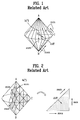
- the HMMD color space having a shape of a pair of double corns of which bottoms are overlapped face to face, as shown in Fig. 1, contains 5 parameters.
- the 5 parameters consist of hue, max, min, diff(differential value), and sum, which mean hue, shade, tint, chroma, and brightness respectively.
- Fig. 2 shows an internal cross-sectional view of the structure of the HMMD color space as shown in Fig. 1.
- a vertical axis connecting two confronting vertexes A and B of the symmetrical corns is 'sum'.
- a varying value by rotating 0° to 360° along a circumference to a perpendicular direction of the vertical axis is 'hue'.
- a shortest straight line segment from a center O to a maximum circumference C is 'diff.
- An other shortest straight line segment from the vertex of a lower corn to the maximum circumference C is 'max'.
- another shortest straight line segment from a minimum circumference to the vertex A of an upper corn means 'min'.
- the 5 parameters, hue, max, min, diff, and sum are attained from 3 parameters, r, g, and b of an RGB color space as follows. In this case, hue varies 0 to 360.
- the present invention is directed to a color quantization method based on an HMMD color space and multimedia searching method using the same that substantially obviates one or more of the problems due to limitations and disadvantages of the related art.
- a color quantization method based on an HMMD color space in a search system using color informations in the HMMD color space includes the steps of dividing firstly the color space using at least one arbitrarily-designated diff value in use of a differential value(diff) as an axis, dividing a lowest diff region of divided regions of the color space into N equal parts by taking sum as a reference regardless of hue wherein the lowest diff region is a gray region and wherein N is a natural number, and dividing the rest divided regions into equal parts by given respective constants by taking a sum axis and a hue axis as references, respectively.
- the diff values for dividing firstly the color space centering around the diff axis are determined such that small width is designated to low chroma(low diff region), and vice versa.
- a longer sum width (a) is selected from both end sum widths (a,b) to be used as a reference when partial parts divided by the determined diff values are divided into equal parts by respective given constants by taking the sum axis as a reference.
- the respective regions are divided into N equal parts from a red color, namely 0°, by taking the hue axis as a reference.
- a color quantization method based on an HMMD color space in an image search system using color informations in the HMMD color space includes the steps of dividing the color space first by taking at least one designated diff value as a reference, and dividing the respective divided regions into 2 x equal parts by taking a sum axis as a reference and 2 y equal parts by taking a hue axis as a reference wherein x and y are integer.
- a color quantization method based on an HMMD color space in an image search system using color informations in the HMMD color space so as to maintain interoperability between features produced by color quantization for different levels includes a step (a) of dividing the color space into a reference level by carrying out a color quantization of the reference level using diff, sum, and hue, and a step (b) of carrying out another color quantization of a larger level by subdividing at least one of the respective partial regions having been divided by the color quantization of the step (a) by taking at least one combination out of diff, sum, hue, min, and max as a reference.
- a color quantization method based on an HMMD color space in an image search system using color informations in the HMMD color space includes a step (a) of dividing the color space into a reference level by carrying out a color quantization of the reference level using diff, sum, and hue, and a step (b) of carrying out another color quantization of a smaller level by merging at least one of the respective regions having been divided by the color quantization of the step (a).
- a multimedia searching method using color features quantized by a different-level color quantization method includes a step (a) of mapping meanings of color labels of two features produced by different quantization methods by mapping the color label of the feature produced by the quantization method for a large level to one of the color labels produced by the quantization method for a small level, a step (b) of measuring similarity using the mapped color label, and a step (c) of outputting multimedia data by taking the measured similarity as a reference.
- the mapped color label, in the step (a), is determined provided that an arbitrary point at the corresponding partial regions of the color label produced by the quantization method for a large level is included in one of the respective regions corresponding to the color labels produced by the quantization method for a small level to be mapped.
- the color label mapping in the step (a) is executed at a time point initiating to compare the similarity of two initial data, wherein a mapping relation of the color labels according to the two quantization methods is stored as a table for and the like, and wherein the stored relation table information is used for following data without further execution of another color label mapping.
- An advantage of the present invention is the provision of a color quantization method based on an HMMD color space and a multimedia searching method using the same, in which a quantization method is optimized to be proper for various quantization levels so as to increase search performance in an HMMD color space.
- An advantage of the present invention is the provision of a color quantization method based on an HMMD color space and a multimedia searching method using the same; in which interoperability between color features quantized into different quantization levels is provided so as to search multimedia generated from different application programs and in which a quantization rule is defined so as to maintain high search performance.
- the present invention provides a color quantization method for various levels, thereby enabling to achieve high search performance on maintaining interoperability. And, the present invention provides a multimedia search method enabling to measure the similarity between features quantized into different levels.
- an HMMD color space which has an excellent inter-operable property and is good for search, is quantized to be fit for image search most effectively.
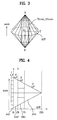
- Fig. 3 shows a state of dividing a gray region in a HMMD color space.
- an HMMD color space is divided first by diff. And, a region having a diff value under a predetermined critical value Thres_Chrom, as shown in Fig. 3, is a gray region of which color is unable to be discerned by hue.
- this region is divided by taking sum corresponding to brightness as a reference.
- Fig. 4 shows an MMD cross-sectional view of an HMMD color space in a basic 32-level quantization method according to the present invention.
- the color space is divided into four partial regions by taking diff values of 9, 29, and 75 as references. And, let us assum that the partial regions are designated by S41, S42, S43, and S44, respectively.
- 'S41' is the region having the lowest diff value, i.e. the gray region of which chroma is the lowest.
- the partial region S41 is divided into 8 equal parts using brightness, i.e. sum as a reference instead of hue.
- 'S42' is divided into 4 equal parts by taking hue as a reference, and each of the 4 equal parts is divided into 2 equal parts again by taking sum as a reference.
- 'S43' is divided into 3 equal parts by taking hue as a reference, and each of the 3 equal parts is divided into 4 equal parts again by taking sum as a reference.
- 'S44' is divided into 2 equal parts repeatedly by taking hue and sum as references respectively.
- the HMMD color space is divided into equal parts by taking hue as a reference and then, the other division into equal parts is carried out by taking sum as a reference, and vice versa. Namely, in the partial regions S42 and S43, the divisions are carried out in random order. This relation is applied to all the divisions of arbitrary regions by taking sum and hue as references.
- a wider sum width a rather than a narrower width b in both end sum widths in the divided regions is taken as a reference when taking sum as a reference, which is also applied to the divisions into equal parts by the given constants in the regions divided by the diff values when taking sum as a reference.
- the division by hue is carried out more finely compared to that of a high chroma region so as to divide a low chroma region into smaller partial regions. Therefore, the regions are effectively represented by using a color of less level.
- Fig. 5 shows an MMD cross-sectional view of an HMMD color space in a 64-level quantization method according to the present invention.
- the color space is divided into four partial regions by taking diff values of 9, 29, and 75 in a diff axis as references. And, it is assumed that the partial regions are designated by S51, S52, S53, and S54, respectively.
- 'S51' is the region having the lowest diff value, i.e. the gray region of which chroma is the lowest.
- the partial region S51 is divided into 8 equal parts using brightness, i.e. sum as a reference instead of hue.
- 'S52' is divided into 4 equal parts by taking hue as a reference and 4 equal parts be taking sum as a reference.
- 'S53' is divided into 6 equal parts by taking hue as a reference and 4 equal parts by taking sum as a reference.
- 'S54' is divided into 4 equal parts repeatedly by taking hue and sum as references respectively.
- the sixty four divided regions are completely included in one of the thirty two divided regions in Fig. 4.
- the measurement of data similarity differs in accordance with the characteristics of the color information, which is applied to image search using color histograms as color informations in the embodiment of the present invention.
- a color histogram is an information meaning the color distribution through entire image pixels.
- the color histogram it is first calculated that the color values of the respective pixels in an image are belonged to certain divided spaces when an HMMD color space is divided by the given quantization method. Then, the distributions are recorded in the histogram bins having the corresponding color labels of the respective divided spaces.
- the method of searching an image using such color histograms is carried out by measuring the similarity between a color histogram of a reference image and another color histogram of a target image.
- the similarity is attained by the following formula 1.
- n the number of bins of histogram Hr[i] : ith bin value of a histogram of a reference image Ht[i] : ith bin value of a histogram of a target image
- the respective bin values of the histogram representing a general distribution are fractions.
- the fractional values are quantized to be represented by a space under one byte instead of using all the four bytes which are generally used for representing the fraction.
- the respective fractional values are represented by 8 bits, i.e. 1 byte, for which a fractional value is quantized into 0 to 255 values.
- Fig. 8 shows MMD cross-sectional views in HMMD color spaces for illustrating a color label mapping relation between 184 and 64 levels, wherein the finely-divided regions are able to be mapped directly into a roughly-divided regions.
- a mapping method is to transform a color label of a color information, which is quantized into a larger level in color information quantized by different quantization methods, into another color label of another color information quantized into a small level.
- sought is a new color label of an arbitrary point included in the respective divided regions of the color information which is quantized into a large level using a quantization method of a corresponding small level. Then, the transformation is executed in accordance with the new color label.
- Another method for color mapping is carried out by mapping a quantized color label from a larger level to a small level.
- An arbitrary point in the respective regions quantized into large levels has to be included in one of the other regions quantized into small levels. Therefore, mapping is completed in a manner that the arbitrary point is transformed into the level of the corresponding inclusive region.
- the first-described method is used when two different quantization formulae are known in general.
- the second-described method may be used.
- the mapping is directly executed using the relation stored in the table.
- Fig. 6 shows an MMD cross-sectional view of an HMMD color space in a 120-level quantization method according to the present invention.
- the color space is divided into four partial regions by taking diff values of 9, 29, and 75 in a diff axis as references. And, it is assumed that the partial regions are designated by S61, S62, S63, and S64, respectively.
- 'S61' is the region having the lowest diff value, i.e. the gray region of which chroma is the lowest.
- the partial region S61 is divided into 8 equal parts using brightness, i.e. sum as a reference instead of hue.
- 'S62' is divided into 4 equal parts by taking hue as a reference, and divided again into 4 equal parts by taking sum as a reference.
- 'S63' is divided into 12 equal parts by taking hue as a reference, and divided again into 4 equal parts by taking sum as a reference.
- 'S64' is divided into 12 equal parts by taking hue as a reference, and divided again into 4 equal parts by taking sum as a reference.
- the 120 divided regions are completely included in one of the 64 divided regions in Fig. 5.
- the color space is constituted by dividing all the divided regions corresponding to 'S53' in the divided regions into two equal parts respectively by taking hue as a reference and by dividing all the divided regions corresponding to 'S54' into 3 equal parts respectively by taking hue as a reference.
- Fig. 7 shows an MMD cross-sectional view of an HMMD color space in a 184-level quantization method according to the present invention.
- the color space is divided into five partial regions by taking diff values of 9, 29, 75, and 200 in a diff axis as references. And, it is assumed that the partial regions are designated by S71, S72, S73, S74, and S75 respectively.
- 'S71' is the region having the lowest diff value, i.e. the gray region of which chroma is the lowest.
- the partial region S71 is divided into 8 equal parts using brightness, i.e. sum as a reference instead of hue.
- 'S72' is divided into 8 equal parts by taking hue as a reference, and divided again into 4 equal parts by taking sum as a reference.
- 'S73' is divided into 12 equal parts by taking hue as a reference, and divided again into 4 equal parts by taking sum as a reference.
- 'S74' is divided into 12 equal parts by taking hue as a reference, and divided again into 4 equal parts by taking sum as a reference.
- 'S75' is divided into 24 equal parts by taking hue as a reference, and divided again into 2 equal parts by taking sum as a reference.
- the 184 divided regions are completely included in one of the 120 divided regions in Fig. 6.
- Fig. 10A shows a cross-sectional view of a HMMD color space by taking hue as a reference
- Fig. 10B shows a quantization process taking hue as a reference wherein the division is processed on a hue plane by taking 0° as a reference.
- red color In data characteristics, a dark color of red series is widely used to represent a shade region of one object area. In this case, the red color is applied uniformly to a combination of either red/green components or red/blue components in a data.
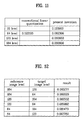
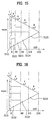
- Fig. 11 shows a table of the result of searching images using the respective quantization methods according to the first embodiment of the present invention.
- the present invention provides excellent search performance which becomes higher by the increase of level number.
- Fig. 12 shows a table of search result by calculating the similarity between features extracted with different quantization levels using the respective quantization methods according to the first embodiment of the present invention.
- the search performance of the lowest level quantization is guaranteed at least by the interoperability.
- the search performance has to be equal to the search result of the low level in a reference image level and a target image level, little difference occurs practically during operation due to hardware and the like.
- the search performance should have resulted in 64 levels ideally as shown in Fig. 11. Yet, the search performance result shows the result in Fig. 12 practically.
- the diff values used for color quantization and the adjunctive predetermined constants dividing the respective regions are the values resulted from the experiments for providing the best search performance.
- the reference color quantization level and the other color quantization level used subsequently to divide more minutely the quantized color regions are attained by using the result values of the experiments.
- the result of the present invention guarantees high search performance at all times, thereby enabling to search all the multimedia data existing regardless of time and places.
- diff values are introduced to represent color quantization levels by 2 x such as 256, 128, 64, and 32. Then, partial regions are divided by taking the levels as references so that search can be processed in the different quantization levels respectively.
- a color quantization method based on an HMMD color space includes the steps of dividing the color space first by taking at least one predetermined diff value as a reference when a differential value diff lies between 0 and 255, and dividing diff regions into 2 x equal parts by taking sum as a reference and 2 y equal parts by taking hue as a reference wherein x and y are integer.
- diff values are established as 6, 20, 60, and 110 to divide the color space along a diff axis. Then, the color space is divided into 5 partial regions by taking the diff values as references. And, it is assumed that the divided partial regions are S1, S2, S3, S4, and S5 respectively.
- the respective divides regions S1, S2, S3, S4, and S5 are divided into 2 x equal parts by taking sum as a reference and 2 y equal parts by taking hue as a reference, thereby dividing the color space region into various regions consisting of various levels.
- the regions S1, S2, S3, S4, and S5 divided along the diff axis are equal and are further divided into predetermined number, which satisfies positive numbers of exponents to 2 i.e. 2 x and 2 y , equal parts, it is always possible to search by transforming the region into one of 256/128/64/32 level quantizations.
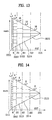
- Fig. 13 shows an MMD cross-sectional view of an HMMD color space in a 256-level quantization method according to a second embodiment of the present invention.
- the color space is first divided into five partial regions by taking diff values of 6, 20, 60, and 110 as references when a color quantization level to be divided is 256. And, it is assumed that the partial regions are designated by S101, S 102, S 103, S104, and S105 respectively. And, the partial regions S101 to S105 are divided into equal parts by taking sum and hue axes as references to satisfy positive numbers of exponents to 2 respectively.
- the region S101 is divided into 32 equal parts by taking the sum axis as a reference, thereby providing 32 partial regions.
- 'S102' is divided into 8 equal parts by taking the sum axis as a reference and again into 4 equal parts by taking the hue axis as a reference, thereby being divided into 32 partial regions.
- 'S103' is divided into 4 equal parts by taking the sum axis as a reference and again into 16 equal parts by taking the hue axis as a reference, thereby being divided into 64 partial regions.
- 'S104' is divided into 4 equal parts by taking the sum axis as a reference and again into 16 equal parts by taking the hue axis as a reference, thereby being divided into 64 partial regions.
- 'S105' is divided into 4 equal parts by taking the sum axis as a reference and again into 16 equal parts by taking the hue axis as a reference, thereby being divided into 64 partial regions.
- the color space is divided into 256 partial regions, i.e. 256 levels.
- Fig. 14 shows an MMD cross-sectional view of an HMMD color space in a 128-level quantization method according to a second embodiment of the present invention.
- the color space is first divided into five partial regions by taking diff values of 6, 20, 60, and 110 as references when a color quantization level to be divided is 128. And, it is assumed that the partial regions are designated by S111, S 112, S113, S114, and S115 respectively. And, the partial regions S111 to S115 are divided into equal parts by taking sum and hue axes as references to satisfy positive numbers of exponents to 2 respectively.
- the region S111 is divided into 16 equal parts by taking the sum axis as a reference, thereby providing 16 partial regions.
- 'S112' is divided into 4 equal parts by taking the sum axis as a reference and again into 4 equal parts by taking the hue axis as a reference, thereby being divided into 16 partial regions.
- 'S113' is divided into 4 equal parts by taking the sum axis as a reference and again into 8 equal parts by taking the hue axis as a reference, thereby being divided into 32 partial regions.
- 'S 115' is divided into 4 equal parts by taking the sum axis as a reference and again into 8 equal parts by taking the hue axis as a reference, thereby being divided into 32 partial regions.
- the color space is divided into 128 partial regions.
- Fig. 15 shows an MMD cross-sectional view of an HMMD color space in a 64-level quantization method according to a second embodiment of the present invention.
- the color space is first divided into five partial regions by taking diff values of 6, 20, 60, and 110 as references when a color quantization level to be divided is 64. And, it is assumed that the partial regions are designated by S121, S122, S123, S124, and S125 respectively. And, the partial regions S121 to S125 are divided into equal parts by taking sum and hue axes as references to satisfy positive numbers of exponents to 2 respectively.
- the region S121 is divided into 8 equal parts by taking the sum axis as a reference, thereby providing 8 partial regions.
- 'S122' is divided into 4 equal parts by taking the sum axis as a reference and again into 4 equal parts by taking the hue axis as a reference, thereby being divided into 16 partial regions.
- 'S123' is divided into 4 equal parts by taking the sum axis as a reference and again into 4 equal parts by taking the hue axis as a reference, thereby being divided into 16 partial regions.
- 'S125' is divided into 8 equal parts by taking the hue axis as a reference, thereby being divided into 8 partial regions.
- the color space is divided into 64 partial regions.
- Fig. 16 shows an MMD cross-sectional view of an HMMD color space in a 32-level quantization method according to a second embodiment of the present invention.
- the color space is first divided into five partial regions by taking diff values of 6, 60 and 110 in a diff axis as references when a color quantization level to be divided is 32. And, it is assumed that the partial regions are designated by S131, S 132, S 133, and S 134 respectively. And, the partial regions S131 to S 134 are divided into equal parts by taking sum and hue axes as references to satisfy positive numbers of exponents to 2 respectively.
- the region S131 is divided into 8 equal parts by taking the sum axis as a reference, thereby providing 8 partial regions.
- 'S132' is divided into 4 equal parts by taking the sum axis as a reference and again into 4 equal parts by taking the hue axis as a reference, thereby being divided into 16 partial regions.
- 'S134' is divided into 4 equal parts by taking the hue axis as a reference, thereby being divided into 4 partial regions.
- the color space is divided into 32 partial regions, i.e. 32 levels.
- the region, which has the lowest diff value i.e. the gray region of which chroma is the lowest
- the division is carried out only using brightness, i.e. sum as a reference.
- Fig. 17 shows a table of the result of searching images using the respective quantization methods according to the second embodiment of the present invention.
- Fig. 18 shows a table of search result by calculating the similarity between features extracted with different quantization levels using the respective quantization methods according to the second embodiment of the present invention.
- the diff values used for color quantization and the adjunctive predetermined constants of exponents to 2 dividing the respective regions are the values resulted from the experiments for providing the best search performance.
- the color quantization is processed by carrying out a color quantization for a reference level first. Then, another color quantization for a larger level is carried out by subdividing the respective partial regions having been color-quantized into more minute regions, or other color quantization for a smaller level is carried out by combining the respective partial regions having been color-quantized.
- a reference quantization level For example, by taking a reference quantization level as 32, the subdivision is carried out on the divided regions generated from the quantization in accordance with the level order from 64, 128, and 256 subsequently. On the other hand, by taking a reference quantization level as 256, the division is carried out on the divided regions generated from the quantization more minutely in accordance with the level order from 128, 64, and 32 subsequently.
- the former case of quantizing the partial regions, which have been quantized by a reference level, into a larger level by subdivision includes the first step of dividing the color space into a reference level by carrying out a color quantization of the reference level using diff, sum, and hue, and the second step of carrying out another color quantization of a larger level by subdividing at least one of the respective partial regions having been divided by the color quantization of the first step by taking at least one combination out of diff, sum, hue, min, and max as a reference.
- the reference of the color quantization level is 32
- the diff values designated for dividing the color space into the reference level are 6, 60, and 110 respectively when a differential value diff ranges 0 to 255
- the color space is first divided into 4 partial regions by the diff values.
- the partial regions are S131, S132, S133, and S134. Then, the regions S131 to S134 are divided into positive numbers of exponents to 2 equal parts by taking sum and hue axes as references, thereby dividing the color space into the reference level of 32.
- the process of dividing the partial regions S131 to S134 into 32 level is as good as that of the second embodiment for the 32-level quantization method.
- the partial regions S132-1 and S132-2 are divided into 4 equal parts by taking the sum axis as a reference while the quadruply-divided hue axis remains as it is.
- the region S132 is divided into 32 partial regions.
- the region S131 having been divided into 8 equal parts in 32-level by taking the sum axis as a reference is untouched.
- the region S133 is divided into 2 equal parts by taking the sum axis as a reference and the respective divided regions are subdivided into 8 equal parts by taking the hue axis as a reference, thereby being divided into 16 partial regions. Namely, the region S133 was divided into 4 equal parts in 32-level but is divided into 8 equal parts in 64-level.
- the region S134 which has been divided into 4 equal parts in 32-level by taking the hue axis as a reference, is divided into 8 equal parts, thereby being divided into 8 partial regions.
- the color space is divided into 64 levels from 32.
- the region S131 which has been divided into 8 equal parts in 64-level, is divided into 16 equal parts by taking the sum axis as a reference, thereby being subdivided into 16 partial regions.
- the region S132-1 which has been divided into 4 equal parts by taking the sum axis as a reference and 4 equal parts by taking the hue axis as a reference in 64-level, maintains as it is.
- the region S 132-2 maintains the state that has been divided into 4 equal parts in 64-level by taking the sum axis as a reference and is divided into 8 equal parts instead of 4 equal parts in 64-level by taking the hue axis as a reference, thereby being subdivided into 32 partial regions.
- the region S 133 maintains the state that has been divided into 8 equal parts by taking the hue axis as a reference and is divided into 4 equal parts instead of 2 equal parts in 64-level by taking the sum axis as a reference, thereby being subdivided into 32 partial regions.
- the region S 134 maintains the state that has been divided into 8 equal parts and is divided into 4 equal parts by taking the sum axis as a reference, thereby being subdivided into 32 partial regions.
- the color space is divided into 128 levels from 64.
- the region S131 which has been divided into 16 equal parts in 128-level, is divided into 32 equal parts by taking the sum axis as a reference, thereby being subdivided into 32 partial regions.
- the region S132-1 maintains the state that has been divided into 4 equal parts by taking the hue axis as a reference and is divided into 8 equal parts instead of 4 equal parts in 128-level by taking the sum axis as a reference, thereby being subdivided into 32 partial regions.
- the region S132-2 maintains the state that has been divided into 4 equal parts by taking the sum axis as a reference and is divided into 16 equal parts instead of 8 equal parts in 128-level by taking the hue axis as a reference, thereby being subdivided into 64 partial regions.
- the region S133 maintain the state that has been divided into 4 equal parts by taking the sum axis as a reference and is divided into 16 equal parts instead of 8 equal parts in 128-level by taking the hue axis as a reference, thereby being subdivided into 64 partial regions.
- the region S134 maintains the state that has been divided into 4 equal parts by taking the sum axis as a reference and is divided into 16 equal parts instead of 8 equal parts in 128-level by taking the hue axis as a reference, thereby being subdivided into 64 partial regions.
- the color space is divided into 256 levels from 128.
- the latter case of quantizing the partial regions, which have been quantized by a reference level, into a smaller level by mergence includes the first step of dividing the color space into a reference level by carrying out a color quantization of the reference level using diff, sum, and hue, and the second step of carrying out another color quantization of a smaller level by merging at least one of the respective partial regions having been divided by the color quantization of the first step.
- the reference of the color quantization level is 256
- the diff values designated for dividing the color space into the reference level are 6, 20, 60, and 110 respectively when a differential value diff ranges 0 to 255
- the color space is first divided into 5 partial regions by the diff values.
- the partial regions are S101, S 102, S 103, S104, and S105.
- the regions S101 to S105 are divided into positive numbers of exponents to 2 equal parts by taking sum and hue axes as references, thereby dividing the color space into the reference level of 256.
- the process of dividing the partial regions S101 to S105 into 256 levels are as good as the quantization method of 256 levels described in the second embodiment of the present invention.
- the region S101 is divided into 16 equal parts instead of 32 equal parts in 256-level by taking the sum axis as a reference, whereby the quantization level of the region S101 is reduced to 16 levels.
- the region S102 maintains the state that has been divided into 4 equal parts in 256-level by taking the hue axis as a reference and is divided into 4 equal parts instead of 8 equal parts in 256-level by taking the sum axis as a reference, whereby the quantization level of the region S102 is reduced to 16 levels.
- the region S103 maintains the state that has been divided into 4 equal parts in 256-level by taking the sum axis as a reference and is divided into 8 equal parts instead of 16 equal parts in 256-level by taking the hue axis as a reference, whereby the quantization level of the region S103 is reduced to 32 levels.
- the region S104 maintains the state that has been divided into 4 equal parts in 256-level by taking the sum axis as a reference and is divided into 8 equal parts instead of 16 equal parts in 256-level by taking the sum axis as a reference, whereby the quantization level of the region S104 is reduced to 32 levels.
- the region S105 maintains the state that has been divided into 4 equal parts in 256-level by taking the sum axis as a reference and is divided into 8 equal parts instead of 16 equal parts in 256-level by taking the hue axis as a reference, whereby the quantization level of the region S 105 is reduced to 32 levels.
- the color space is divided into 128 levels from 256.
- the region S101 is divided into 8 equal parts instead of 16 equal parts in 128-level by taking the sum axis as a reference, whereby the quantization level of the region S101 is reduced to 8 levels.
- the region S102 maintains the state that has been divided into 4 equal parts by taking the sum axis as a reference and 4 equal parts by taking the hue axis as a reference.
- the region S103 maintains the state that has been divided into 4 equal parts by taking the sum axis as a reference and is divided into 4 equal parts instead of 8 equal parts in 128-level by taking the hue axis as a reference, whereby the quantization level of the region S103 is reduced to 16 levels.
- the region S104 maintains the state that has been divided into 8 equal parts by taking the hue axis as a reference and is divided into 2 equal parts instead of 4 equal parts in 128-level by taking the sum axis as a reference, whereby the quantization level of the region S104 is reduced to 16 levels.
- the region S105 maintains the state that has been divided into 8 equal parts by taking the hue axis as a reference and is divided into 1 equal part instead of 4 equal parts in 128-level by taking the sum axis as a reference, whereby the quantization level of the region S105 is reduced to 8 levels.
- the color space is divided into 64 levels from 128.
- the region S101 maintains the state that has been divided into 8 equal parts in 64-level by taking the sum axis as a reference.
- the region S102 and the region S103 are merged in a merged region. And, the merged region maintains the state that has been divided into 4 equal parts by taking the hue axis as a reference and is divided into 2 equal parts by taking the sum axis as a reference, whereby the quantization level of the merged region is reduced to 8 levels.
- the region S104 maintains the state that has been divided into 1 equal part instead of 2 equal parts in 64-level by taking the sum axis as a reference and is divided into 4 equal part instead of 8 equal parts in 64-level by taking the hue axis as a reference, whereby the quantization level of the region S104 is reduced to 4 levels.
- the region S105 maintains the state that has been divided into 1 equal part by taking the sum axis as a reference and is divided into 4 equal parts instead of 8 equal parts in 64-level by taking the hue axis as a reference, whereby the quantization level of the region S105 is reduced to 4 levels.
- the color space is divided into 32 levels from 64.
- the present invention for multimedia searches such as an image search and the like uses an HMMD color space proper for the search in order to use the most important color informations effectively, and particularly enables to guarantee high search performance in spite of the quantization using small-numbered color levels.
- the present invention enables to provide high search performance by standardizing the most optimum color quantization method through the search-related standardization such as MPEG-7 as well as by using less space of features which is required for the search.
- the present invention enables to provide a multimedia search method based on colors which corresponds with the true standardization and a solution to settle the feature structures by providing a quantization method which guarantees the interoperability enabling to compare and search reciprocally regardless of the different quantization methods applied to various usages.
- embodiments of the invention provide a color quantization method based on the HMMD color space comprising the steps of, dividing firstly the color space using at least one arbitrarily-designed diff value in use of a differential value (diff) as an axis, dividing a lowest diff region of divided regions of the color space into N equal parts by taking sum as a reference regardless of hue wherein the lowest diff region is a gray region and wherein N is a natural number, and, dividing the rest divided regions into equal parts by given respective constants by taking a sum axis and a hue axis as references, respectively.
- a differential value diff
- the diff values for dividing firstly the color space centering around the diff axis are determined such that small width is designated to low chroma (low diff region), and vice versa.
- a longer sum width (a) is selected from both end sum widths (a, b) to be used as a reference when partial parts divided by the determined diff values are divided into equal parts by respective given constants by taking the sum axis as a reference.
- the respective regions are divided into N equal parts from a red color (namely, 0°) by taking the hue axis as a reference.
- the respective regions divided by taking the diff axis as a reference are divided again into 2 x (x is a positive number) equal parts by taking the sum axis as a reference and 2 y (y is a positive number) equal parts by taking the hue axis as a reference.
- the color space has the diff values ranging 0 to 255, the diff values are established as 6, 20, 60, and 110 to divide the color space along a diff axis, and the color space is divided into 5 regions S101 to S105 by taking the diff values as references, and wherein the color space is divided into 256 partial regions by dividing the region S101 into 32 equal parts by taking the sum axis as a reference so as to provide 32 partial regions, dividing the region S102 into 8 equal parts by taking the sum axis as a reference and again into 4 equal parts by taking the hue axis as a reference so as to provide 32 partial regions, dividing the region S103 into 4 equal parts by taking the sum axis as a reference and again into 16 equal parts by taking the hue axis as a reference so as to provide 64 partial regions, dividing the region S 104 into 4 equal parts by taking the sum axis as a reference and again into 16 equal parts by taking the hue axis as a reference so as to provide 64 partial regions, and dividing the region S105
- the color space has the diff values ranging 0 to 255, the diff values are established as 6, 20, 60, and 110 to divide the color space along a diff axis, and the color space is divided into 5 regions S111 to S115 by taking the diff values as references, and wherein the color space is divided into 128 partial regions by dividing the region S111 into 16 equal parts by taking the sum axis as a reference so as to provide 16 partial regions, dividing the region S112 into 4 equal parts by taking the sum axis as a reference and again into 4 equal parts by taking the hue axis as a reference so as to provide 16 partial regions, dividing the region S113 into 4 equal parts by taking the sum axis as a reference and again into 8 equal parts by taking the hue axis as a reference so as to provide 32 partial regions, dividing the region S 114 into 4 equal parts by taking the sum axis as a reference and again into 8 equal parts by taking the hue axis as a reference so as to provide 32 partial regions, and dividing the region S 114 into
- the color space has the diff values ranging 0 to 255, the diff values are established as 6, 20, 60, and 110 to divide the color space along a diff axis, and the color space is divided into 5 regions S121 to S125 by taking the diff values as references, and wherein the color space is divided into 64 partial regions by dividing the region S121 into 8 equal parts by taking the sum axis as a reference so as to provide 8 partial regions, dividing the region S122 into 4 equal parts by taking the sum axis as a reference and again into 4 equal parts by taking the hue axis as a reference so as to provide 16 partial regions, dividing the region S123 into 4 equal parts by taking the sum axis as a reference and again into 4 equal parts by taking the hue axis as a reference so as to provide 16 partial regions, dividing the region S124 into 2 equal parts by taking the sum axis as a reference and again into 8 equal parts by taking the hue axis as a reference so as to provide 16 partial regions, and dividing the region S125 into 8
- the color space has the diff values ranging 0 to 255, the diff values are established as 6, 60, and 110 to divide the color space along a diff axis, and the color space is divided into 4 regions S131 to S134 by taking the diff values as references, and wherein the color space is divided into 32 partial regions by dividing the region S131 into 8 equal parts by taking the sum axis as a reference so as to provide 8 partial regions, dividing the region S132 into 4 equal parts by taking the sum axis as a reference and again into 4 equal parts by taking the hue axis as a reference so as to provide 16 partial regions, dividing the region S133 into 4 equal parts by taking the hue axis as a reference so as to provide 4 partial regions, and dividing the region S 134 into 4 equal parts by taking the hue axis as a reference so as to provide 4 partial regions.
- the color space has the diff values ranging 0 to 255, the diff values are established as 9, 29, and 75 to divide the color space along a diff axis, and the color space is divided into 4 regions S41 to S44 by taking the diff values as references, and wherein the color space is divided into 32 partial regions by dividing the region S41 into 8 equal parts by taking the sum axis as a reference so as to provide 8 partial regions, dividing the region S42 into 2 equal parts by taking the sum axis as a reference and 4 equal parts again by taking the hue axis as a reference so as to provide 8 partial regions, dividing the region S43 into 4 equal parts by taking the sum axis as a reference and into 3 equal parts by taking the hue axis as a reference so as to provide 12 partial regions, and dividing the region S44 into 2 equal parts by taking the sum axis as a reference and 2 equal parts by taking the hue axis as a reference so as to provide 4 partial regions.
- the color space has the diff values ranging 0 to 255, the diff values are established as 9, 29, and 75 to divide the color space along a diff axis, and the color space is divided into 4 regions S51 to S54 by taking the diff values as references, and wherein the color space is divided into 64 partial regions by dividing the region S51 into 8 equal parts by taking the sum axis as a reference so as to provide 8 partial regions, dividing the region S52 into 4 equal parts by taking the sum axis as a reference and 4 equal parts by taking the hue axis as a reference so as to provide 16 partial regions, dividing the region S53 into 4 equal parts by taking the sum axis as a reference and 6 equal parts by taking the hue axis as a reference so as to provide 24 partial regions, and dividing the region S54 into 4 equal parts by taking the sum axis as a reference and 4 equal parts by taking the hue axis as a reference so as to provide 16 partial regions.
- the color space has the diff values ranging 0 to 255, the diff values are established as 9, 29, and 75 to divide the color space along a diff axis, and the color space is divided into 4 regions S61 to S64 by taking the diff values as references, and wherein the color space is divided into 120 partial regions by dividing the region S61 into 8 equal parts by taking the sum axis as a reference so as to provide 8 partial regions, dividing the region S62 into 4 equal parts by taking the sum axis as a reference and into 4 equal parts by taking the hue axis as a reference so as to provide 16 partial regions, dividing the region S63 into 4 equal parts by taking the sum axis as a reference and 12 equal parts by taking the hue axis as a reference so as to provide 48 partial regions, and dividing the region S64 into 4 equal parts by taking the sum axis as a reference and 12 equal parts by taking the hue axis as a reference so as to provide 48 partial regions.
- the color space has the diff values ranging 0 to 255, the diff values are established as 9, 29, 75, and 200 to divide the color space along a diff axis, and the color space is divided into 5 regions S71 to S75 by taking the diff values as references, and wherein the color space is divided into 184 partial regions by dividing the region S71 into 8 equal parts by taking the sum axis as a reference so as to provide 8 partial regions, dividing the region S72 into 4 equal parts by taking the sum axis as a reference and 8 equal parts by taking the hue axis as a reference so as to provide 32 partial regions, dividing the region S73 into 4 equal parts by taking the sum axis as a reference and 12 equal parts by taking the hue axis as a reference so as to provide 48 partial regions, dividing the region S74 into 4 equal parts by taking the sum axis as a reference and 12 equal parts by taking the hue axis as a reference so as to provide 48 partial regions, and dividing the region S75 into 2 equal parts by taking the
- embodiments of the invention also provide a color quantization method based on the HMMD color space comprising the steps of dividing the color space first by taking at least one designated diff value as a reference, and dividing the respective divided regions into 2 x equal parts by taking a sum axis as a reference and 2 y equal parts by taking the hue axis as a reference wherein x and y are integer.
- the color space has the diff values ranging 0 to 255 for a color quantization level of 256 after division, the designated diff values are 6, 20, 60, and 110 to divide the color space, and the color space is divided into 5 regions S101 to S 105, and wherein the color space is divided into 256 partial regions by dividing the region S101 into 32 equal parts by taking the sum axis as a reference so as to provide 32 partial regions, dividing the region S102 into 8 equal parts by taking the sum axis as a reference and 4 equal parts by taking the hue axis as a reference so as to provide 32 partial regions, dividing the region S103 into 4 equal parts by taking the sum axis as a reference and 16 equal parts by taking the hue axis as a reference so as to provide 64 partial regions, dividing the region S104 into 4 equal parts by taking the sum axis as a reference and 16 equal parts by taking the hue axis as a reference so as to provide 64 partial regions, and dividing the region S105 into 4 equal parts by taking the sum the sum axi
- the color space has the diff values ranging 0 to 255 for a color quantization level of 128 after division, the designated diff values are 6, 20, 60, and 110 to divide the color space, and the color space is divided into 5 regions S111 to S115, and wherein the color space is divided into 128 partial regions by dividing the region S111 into 16 equal parts by taking the sum axis as a reference so as to provide 16 partial regions, dividing the region S 112 into 4 equal parts by taking the sum axis as a reference and 4 equal parts by taking the hue axis as a reference so as to provide 16 partial regions, dividing the region S113 into 4 equal parts by taking the sum axis as a reference and 8 equal parts by taking the hue axis as a reference so as to provide 32 partial regions, dividing the region S114 into 4 equal parts by taking the sum axis as a reference and 8 equal parts by taking the hue axis as a reference so as to provide 32 partial regions, and dividing the region S115 into 4 equal parts by taking the sum the sum axi
- the color space has the diff values ranging 0 to 255 for a color quantization level of 64 after division, the designated diff values are 6, 20, 60, and 110 to divide the color space, and the color space is divided into 5 regions S121 to S125, and wherein the color space is divided into 64 partial regions by dividing the region S121 into 8 equal parts by taking the sum axis as a reference so as to provide 8 partial regions, dividing the region S122 into 4 equal parts by taking the sum axis as a reference and 4 equal parts by taking the hue axis as a reference so as to provide 16 partial regions, dividing the region S123 into 4 equal parts by taking the sum axis as a reference and 4 equal parts by taking the hue axis as a reference so as to provide 16 partial regions, dividing the region S124 into 2 equal parts by taking the sum axis as a reference and 8 equal parts by taking the hue axis as a reference so as to provide 16 partial regions, and dividing the region S125 into 8 equal parts by taking the hue axis as
- the color space has the diff values ranging 0 to 255 for a color quantization level of 32 after division, the designated diff values are 6, 60, and 110 to divide the color space, and the color space is divided into 5 regions S 131 to S 135, and wherein the color space is divided into 32 partial regions by dividing the region S 131 into 8 equal parts by taking the sum axis as a reference so as to provide 8 partial regions, dividing the region S 132 into 4 equal parts by taking the sum axis as a reference and 4 equal parts by taking the hue axis as a reference so as to provide 16 partial regions, dividing the region S 133 into 4 equal parts by taking the hue axis as a reference so as to provide 4 partial regions, and dividing the region S 134 into 4 equal parts by taking the hue axis as a reference so as to provide 4 partial regions.
- embodiments of the invention also provide a color quantization method based on the HMMD color space comprising a step (a) of dividing the color space into a reference level by carrying out a color quantization of the reference level using diff, sum, and hue, and a step (b) of carrying out another color quantization of a larger level by subdividing at least one of the respective partial regions having been divided by the color quantization of the step (a) by taking at least one combination out of diff, sum, hue, min, and max as a reference.
- the reference of the color quantization level in the step (a) is 32
- the diff values designated for dividing the color space into the reference level are 6, 60, and 110 respectively when a differential value diff ranges 0 to 255
- the color space is first divided into 4 partial regions S 131, S 132, S 133, and S 134 by the diff values
- the color space is divided into 32 partial regions by dividing the region S 131 into 8 equal parts by taking the sum axis as a reference so as to provide 8 partial regions
- dividing the region S 133 into 4 equal parts by taking the hue axis as a reference so as to provide 4 partial regions
- dividing the region S 134 into 4 equal parts by taking the hue axis as a reference so as to provide 4 partial regions.
- the color space is divided into 62 partial regions in the step (b) of carrying out the color quantization for a larger level by dividing the region S 132 into two partial regions S 132-1 and S 132-2 by taking the diff value of 20 as a reference, dividing the partial regions S 132-1 and S 132-2 into 4 equal parts respectively by taking the sum axis as a reference while the quadruply-divided hue axis in the step (a) remains as it is so as to provide 32 partial regions, maintaining the region S 131 having been divided into 8 equal parts in the step (a) by taking the sum axis as a reference, dividing the region S 133 into 2 equal parts by taking the sum axis as a reference and 8 equal parts by taking the hue axis as a reference so as to provide 16 partial regions, and dividing the region S 134 into 8 equal parts so as to provide 8 partial regions.
- the color space is divided into 128 partial regions in the step (b) of carrying out the color quantization for a larger level by dividing the region S 131 into 16 equal parts by taking the sum axis as a reference so as to provide 16 partial regions, maintaining the region S132-1 having been divided into 4 equal parts by taking the sum axis as a reference and 4 equal parts by taking the hue axis as a reference in 64-level, dividing the region S 132-2 into 8 equal parts instead of 4 equal parts in 64-level by taking the hue axis as a reference while maintaining the state that has been divided into 4 equal parts by taking the sum axis as a reference so as to provide 32 partial regions, dividing the region S 133 into 4 equal parts by taking the sum axis as a reference while maintaining the state that has been divided into 8 equal parts by taking the hue axis as a reference so as to provide 32 partial regions, and dividing the region S 134 into 4 equal parts by taking the sum axis as a reference while maintaining the state that has been divided into 8
- the color space is divided into 256 partial regions in the step (b) of carrying out the color quantization for a larger level by dividing the region S 131 into 32 equal parts by taking the sum axis as a reference so as to provide 32 partial regions, dividing the region S 132-1 into 8 equal parts by taking the sum axis as a reference while maintaining the state that has been divided into 4 equal parts by taking the hue axis as a reference so as to provide 32 partial regions, dividing the region S 132-2 into 16 equal parts by taking the hue axis as a reference while maintaining the state that has been divided into 4 equal parts by taking the sum axis as a reference so as to provide 64 partial regions, dividing the region S133 into 16 equal parts by taking the hue axis as a reference while maintaining the state that has been divided into 4 equal parts by taking the sum axis as a reference so as to provide 64 partial regions, and dividing the region S 134 into 16 equal parts by taking the hue axis as a reference while maintaining the state that has been divided into 4 equal
- the step (b) of carrying out another color quantization of a larger level subdivides at least one of the respective regions, which have been divided by the color quantization of the step (a), into smaller partial regions by taking at least one combination out of diff, sum, hue, min, and max as a reference.
- embodiments of the invention also provide a color quantization method based on the HMMD color space comprising a step (a) of dividing the color space into a reference level by carrying out a color quantization of the reference level using diff, sum, and hue, and a step (b) of carrying out another color quantization of a smaller level by merging at least one of the respective regions having been divided by the color quantization of the step (a).
- the reference of the color quantization level in the step (a) is 256
- the diff values designated for dividing the color space into the reference level are 6, 20, 60, and 110 respectively when a differential value diff ranges 0 to 255
- the color space is first divided into 5 partial regions S101, S102, S103, S104, and S105 by the diff values
- the color space is divided into 256 partial regions by dividing the region S101 into 32 equal parts by taking the sum axis as a reference so as to provide 32 partial regions
- dividing the region S103 into 4 equal parts by taking the sum axis as a reference and 16 equal parts by taking the hue axis as a reference so as to provide 64 partial regions
- the color space is divided into 128 partial regions in the step (b) of carrying out the color quantization for a smaller level by dividing the region S101 into 16 equal parts by taking the sum axis as a reference so as to reduce a quantization level of the region to 16 levels, dividing the region S102 into 4 equal parts by taking the sum axis as a reference while maintaining the state that has been divided into 4 equal parts by taking the hue axis as a reference so as to reduce a quantization level of the region S102 to 16 levels, dividing the region S103 into 8 equal parts by taking the hue axis as a reference while maintaining the state that has been divided into 4 equal parts by taking the sum axis as a reference so as to reduce a quantization level of the region S103 to 32 levels, dividing the regions S104 into 8 equal parts by taking the sum axis as a reference while maintaining the state that has been divided into 4 equal parts by taking the sum axis as a reference so as to reduce a quantization level of the region S104 to 32 levels
- the color space is divided into 64 partial regions in the step (b) of carrying out the color quantization for a smaller level by dividing the region S101 into 8 equal parts by taking the sum axis as a reference so as to reduce a quantization level of the region S101 to 8 levels, maintaining the region S102 that has been divided into 4 equal parts by taking the sum axis as a reference and 4 equal parts by taking the hue axis as a reference, dividing the region S103 into 4 equal parts by taking the hue axis as a reference while maintaining the state that has been divided into 4 equal parts by taking the sum axis as a reference so as to reduce a quantization level of the region S103 to 16 levels, dividing the region S 104 into 2 equal parts by taking the sum axis as a reference while maintaining the state that has been divided into 8 equal parts by taking the hue axis as a reference so as to reduce a quantization level of the region S 104 to 16 levels, and dividing the region S105 into 1 equal part by taking the sum axis
- the color space is divided into 32 partial regions in the step (b) of carrying out the color quantization for a smaller level by maintaining the region S101 that has been divided into 8 equal parts by taking the sum axis as a reference, merging the region S102 and the region S103 in a merged region, dividing the merged region into 2 equal parts by taking the sum axis as a reference while maintaining the state that has been divided into 4 equal parts by taking the hue axis as a reference so as to reduce a quantization level of the merged region to 8 levels, dividing the region S104 into 4 equal parts by taking the hue axis as a reference while maintaining the state that has been divided into 1 equal part by taking the sum axis as a reference so as to reduce a quantization level of the region S 104 to 4 levels, and dividing the region S105 into 4 equal parts by taking the hue axis as a reference while maintaining the state that has been divided into 1 equal part by taking the sum axis as a reference so as to reduce a quantization level of
- Embodiments of the invention also provide a multimedia search method using color features quantized by a color quantization method for different levels comprising a step (a) of mapping meanings of color labels of two features produced by different quantization methods by mapping the color label of the feature produced by the quantization method for a large level to one of the color labels produced by the quantization method for a small level, a step (b) of measuring similarity using the mapped color label, and a step (c) of outputting multimedia data by taking the measured similarity as a reference.
- the mapped color label, in the step (a), is determined provided that an arbitrary point at the corresponding partial regions of the color label produced by the quantization method for a large level is included in one of the respective regions corresponding to the color labels produced by the quantization method for a small level to be mapped.
- the color label mapping in the step (a) is executed at a time point initiating to compare the similarity of two initial data, wherein a mapping relation of the color labels according to the two quantization methods is stored as a table for and the like, and wherein the stored relation table information is used for following data without further execution of another color label mapping.
Landscapes
- Engineering & Computer Science (AREA)
- Theoretical Computer Science (AREA)
- Physics & Mathematics (AREA)
- General Physics & Mathematics (AREA)
- Library & Information Science (AREA)
- Multimedia (AREA)
- Computer Vision & Pattern Recognition (AREA)
- Data Mining & Analysis (AREA)
- Databases & Information Systems (AREA)
- General Engineering & Computer Science (AREA)
- Signal Processing (AREA)
- Image Analysis (AREA)
Applications Claiming Priority (5)
| Application Number | Priority Date | Filing Date | Title |
|---|---|---|---|
| KR2000028759 | 2000-05-26 | ||
| KR20000028759 | 2000-05-26 | ||
| KR10-2000-0063163A KR100374063B1 (ko) | 2000-05-26 | 2000-10-26 | 에이취엠엠디(hmmd)칼라 스페이스 기반의칼라양자화 방법과 멀티미디어 특징소 추출 및 검색 방법 |
| KR2000063163 | 2000-10-26 | ||
| EP01304696A EP1176804A3 (de) | 2000-05-26 | 2001-05-29 | HMMD-Farbraum basierte Farbquantizierung und multimediale Suchverfahren unter seiner Verwendung |
Related Parent Applications (2)
| Application Number | Title | Priority Date | Filing Date |
|---|---|---|---|
| EP01304696.6 Division | 2001-05-29 | ||
| EP01304696A Division EP1176804A3 (de) | 2000-05-26 | 2001-05-29 | HMMD-Farbraum basierte Farbquantizierung und multimediale Suchverfahren unter seiner Verwendung |
Publications (2)
| Publication Number | Publication Date |
|---|---|
| EP1517540A2 true EP1517540A2 (de) | 2005-03-23 |
| EP1517540A3 EP1517540A3 (de) | 2005-11-09 |
Family
ID=19670529
Family Applications (1)
| Application Number | Title | Priority Date | Filing Date |
|---|---|---|---|
| EP04078296A Ceased EP1517540A3 (de) | 2000-05-26 | 2001-05-29 | Multimediales Suchverfahren auf Grundlage einer HMMD-Farbraum basierten Farbquantizierung |
Country Status (2)
| Country | Link |
|---|---|
| EP (1) | EP1517540A3 (de) |
| KR (1) | KR100374063B1 (de) |
Cited By (1)
| Publication number | Priority date | Publication date | Assignee | Title |
|---|---|---|---|---|
| US7126720B2 (en) * | 2000-05-26 | 2006-10-24 | Lg Electronics Inc. | Color quantization and method thereof and searching method using the same |
Families Citing this family (1)
| Publication number | Priority date | Publication date | Assignee | Title |
|---|---|---|---|---|
| KR101537032B1 (ko) * | 2014-05-15 | 2015-07-15 | 심해청 | 영상 필터링을 위한 영상 특징정보 생성 방법 및 그 방법이 기록된 기록매체 |
Family Cites Families (2)
| Publication number | Priority date | Publication date | Assignee | Title |
|---|---|---|---|---|
| US6633407B1 (en) * | 1998-04-29 | 2003-10-14 | Lg Electronics, Inc. | HMMD color space and method for quantizing color using HMMD space and color spreading |
| US6721449B1 (en) * | 1998-07-06 | 2004-04-13 | Koninklijke Philips Electronics N.V. | Color quantization and similarity measure for content based image retrieval |
-
2000
- 2000-10-26 KR KR10-2000-0063163A patent/KR100374063B1/ko not_active Expired - Fee Related
-
2001
- 2001-05-29 EP EP04078296A patent/EP1517540A3/de not_active Ceased
Non-Patent Citations (6)
| Title |
|---|
| ANONYMOUS: "Coding of audio, picture, multimedia and hypermedia information", INTERNET CITATION, 12 April 2011 (2011-04-12), pages 1, XP001562225, Retrieved from the Internet <URL:http://www.iso.org/iso/home.html> [retrieved on 20110412] * |
| ANONYMOUS: "ISO/IEC JTC1 N3348: Final Text of ISO/IEC JTC1 Directives: Procedures for the technical work of ISO/IEC JTC 1 on Information Technology (Third Edition)", 20 December 1994 (1994-12-20), XP007921827, Retrieved from the Internet <URL:http://isotc.iso.org/livelink/livelink?func=ll&objId=6721404&objAction=browse&sort=name> * |
| ANONYMOUS: "MPEG Basics", 16 July 2013 (2013-07-16), XP055071496, Retrieved from the Internet <URL:http://mpeg.chiariglione.org/mpeg-basics> [retrieved on 20130716] * |
| HEON JUN KIM / HJKLAMBDAGE CO KR ET AL: "CE Result of CT1 : Interoperability between color histogram descriptors using different color spaces and quantization methods", 51. MPEG MEETING; 20-03-2000 - 24-03-2000; NOORDWIJKERHOUT; (MOTIONPICTURE EXPERT GROUP OR ISO/IEC JTC1/SC29/WG11),, no. M5744, 14 March 2000 (2000-03-14), XP030034921, ISSN: 0000-0296 * |
| JENS-RAINER OHM ET AL: "Results of CE CT1 on interoperability between different color histogram quantizations", 52. MPEG MEETING; 31-05-2000 - 02-06-2000; GENÃVE; (MOTION PICTUREEXPERT GROUP OR ISO/IEC JTC1/SC29/WG11),, no. M6030, 23 May 2000 (2000-05-23), XP030035204, ISSN: 0000-0293 * |
| SC29 (UPLOADED BY WG1 CONVENER) ED - JOINT PHOTOGRAPHIC EXPERT GROUP (JPEG): "ISO/IEC JTC 1 Directives: Procedures for the technical work of ISO/IEC JTC 1 on Information Technology (Fifth edition)", JOINT PHOTOGRAPHIC EXPERT GROUP CONFERENCE, CROWBOROUGH : JPEG FORUM LTD, GB, 10 February 2004 (2004-02-10), XP017204749 * |
Cited By (2)
| Publication number | Priority date | Publication date | Assignee | Title |
|---|---|---|---|---|
| US7126720B2 (en) * | 2000-05-26 | 2006-10-24 | Lg Electronics Inc. | Color quantization and method thereof and searching method using the same |
| US7180634B2 (en) | 2000-05-26 | 2007-02-20 | Lg Electronics Inc. | Color quantization and method thereof and searching method using the same |
Also Published As
| Publication number | Publication date |
|---|---|
| EP1517540A3 (de) | 2005-11-09 |
| KR20010107506A (ko) | 2001-12-07 |
| KR100374063B1 (ko) | 2003-03-03 |
Similar Documents
| Publication | Publication Date | Title |
|---|---|---|
| EP1176804A2 (de) | HMMD-Farbraum basierte Farbquantizierung und multimediale Suchverfahren unter seiner Verwendung | |
| KR100649338B1 (ko) | 컨텐트 기반 영상 검색용 컬러 양자화 및 상사 측정 방법 | |
| US6961736B1 (en) | Compact color feature vector representation | |
| US7062084B2 (en) | Method for image description using color and local spatial information | |
| Wong et al. | Dominant color structure descriptor for image retrieval | |
| CN100392676C (zh) | 多媒体搜索装置和方法 | |
| JP4052837B2 (ja) | イメージ領域を描写する方法 | |
| Gagliardi et al. | A method for the automatic indexing of colour images for effective image retrieval | |
| KR20030005908A (ko) | 영상의 객체 특징 추출과 이를 이용한 내용 기반 영상검색 장치 및 방법 | |
| EP1517540A2 (de) | Multimediales Suchverfahren auf Grundlage einer HMMD-Farbraum basierten Farbquantizierung | |
| Wang et al. | Color space quantization for color-content-based query systems | |
| Yadav et al. | Content based image retrieval using Dither Block Truncation coding with similarity comparison algorithm | |
| Schettini et al. | Color in databases: Indexation and similarity | |
| Chua et al. | Color-based pseudo object model for image retrieval with relevance feedback | |
| El-Feghi et al. | Content-Based Image Retrieval based on efficient fuzzy color signature | |
| Shih et al. | Indexing and retrieval scheme of the image database based on color and spatial relations | |
| Berretti et al. | Color spatial arrangement for image retrieval by visual similarity | |
| Tyagi | Color Feature | |
| Gevers et al. | Interactive Retrieval of Color Images | |
| Thakare et al. | Efficient Image Retrieval Mechanisms using Color Feature |
Legal Events
| Date | Code | Title | Description |
|---|---|---|---|
| PUAI | Public reference made under article 153(3) epc to a published international application that has entered the european phase |
Free format text: ORIGINAL CODE: 0009012 |
|
| AC | Divisional application: reference to earlier application |
Ref document number: 1176804 Country of ref document: EP Kind code of ref document: P |
|
| AK | Designated contracting states |
Kind code of ref document: A2 Designated state(s): AT BE CH CY DE DK ES FI FR GB GR IE IT LI LU MC NL PT SE TR |
|
| AX | Request for extension of the european patent |
Extension state: AL LV MK RO SI |
|
| PUAL | Search report despatched |
Free format text: ORIGINAL CODE: 0009013 |
|
| AK | Designated contracting states |
Kind code of ref document: A3 Designated state(s): AT BE CH CY DE DK ES FI FR GB GR IE IT LI LU MC NL PT SE TR |
|
| AX | Request for extension of the european patent |
Extension state: AL LV MK RO SI |
|
| RIC1 | Information provided on ipc code assigned before grant |
Ipc: 7G 06F 17/30 B Ipc: 7H 04N 1/64 B Ipc: 7H 04N 1/60 A |
|
| 17P | Request for examination filed |
Effective date: 20060509 |
|
| AKX | Designation fees paid |
Designated state(s): AT BE CH CY DE DK ES FI FR GB GR IE IT LI LU MC NL PT SE TR |
|
| 17Q | First examination report despatched |
Effective date: 20060628 |
|
| STAA | Information on the status of an ep patent application or granted ep patent |
Free format text: STATUS: THE APPLICATION HAS BEEN REFUSED |
|
| 18R | Application refused |
Effective date: 20151208 |