EP1517391A2 - Fuel cell assembly with Improved Heat Retention - Google Patents
Fuel cell assembly with Improved Heat Retention Download PDFInfo
- Publication number
- EP1517391A2 EP1517391A2 EP04253576A EP04253576A EP1517391A2 EP 1517391 A2 EP1517391 A2 EP 1517391A2 EP 04253576 A EP04253576 A EP 04253576A EP 04253576 A EP04253576 A EP 04253576A EP 1517391 A2 EP1517391 A2 EP 1517391A2
- Authority
- EP
- European Patent Office
- Prior art keywords
- fuel cell
- fuel
- cell assembly
- housing
- inner region
- Prior art date
- Legal status (The legal status is an assumption and is not a legal conclusion. Google has not performed a legal analysis and makes no representation as to the accuracy of the status listed.)
- Withdrawn
Links
- 239000000446 fuel Substances 0.000 title claims abstract description 204
- 239000000376 reactant Substances 0.000 claims abstract description 24
- 238000011144 upstream manufacturing Methods 0.000 claims abstract description 8
- 239000006227 byproduct Substances 0.000 claims description 50
- 239000007800 oxidant agent Substances 0.000 claims description 49
- 230000001590 oxidative effect Effects 0.000 claims description 49
- 239000000463 material Substances 0.000 description 18
- 239000003792 electrolyte Substances 0.000 description 15
- 229910001233 yttria-stabilized zirconia Inorganic materials 0.000 description 8
- 230000000712 assembly Effects 0.000 description 6
- 238000000429 assembly Methods 0.000 description 6
- 238000006243 chemical reaction Methods 0.000 description 6
- 239000000945 filler Substances 0.000 description 6
- 238000004519 manufacturing process Methods 0.000 description 6
- 239000002001 electrolyte material Substances 0.000 description 5
- 239000002904 solvent Substances 0.000 description 5
- 238000007514 turning Methods 0.000 description 5
- 239000000919 ceramic Substances 0.000 description 4
- BASFCYQUMIYNBI-UHFFFAOYSA-N platinum Chemical compound [Pt] BASFCYQUMIYNBI-UHFFFAOYSA-N 0.000 description 4
- KFZMGEQAYNKOFK-UHFFFAOYSA-N Isopropanol Chemical compound CC(C)O KFZMGEQAYNKOFK-UHFFFAOYSA-N 0.000 description 3
- 230000008901 benefit Effects 0.000 description 3
- 239000011230 binding agent Substances 0.000 description 3
- 229910010293 ceramic material Inorganic materials 0.000 description 3
- 239000011248 coating agent Substances 0.000 description 3
- 238000000576 coating method Methods 0.000 description 3
- 238000000034 method Methods 0.000 description 3
- 238000002156 mixing Methods 0.000 description 3
- PXHVJJICTQNCMI-UHFFFAOYSA-N Nickel Chemical compound [Ni] PXHVJJICTQNCMI-UHFFFAOYSA-N 0.000 description 2
- 238000007792 addition Methods 0.000 description 2
- 239000012080 ambient air Substances 0.000 description 2
- 230000003197 catalytic effect Effects 0.000 description 2
- CETPSERCERDGAM-UHFFFAOYSA-N ceric oxide Chemical compound O=[Ce]=O CETPSERCERDGAM-UHFFFAOYSA-N 0.000 description 2
- 229910000422 cerium(IV) oxide Inorganic materials 0.000 description 2
- 238000001125 extrusion Methods 0.000 description 2
- 238000010304 firing Methods 0.000 description 2
- 239000011810 insulating material Substances 0.000 description 2
- 238000009413 insulation Methods 0.000 description 2
- 238000012986 modification Methods 0.000 description 2
- 230000004048 modification Effects 0.000 description 2
- 239000003960 organic solvent Substances 0.000 description 2
- 239000002245 particle Substances 0.000 description 2
- 229910052697 platinum Inorganic materials 0.000 description 2
- 239000000843 powder Substances 0.000 description 2
- 238000007639 printing Methods 0.000 description 2
- 230000036647 reaction Effects 0.000 description 2
- 239000004215 Carbon black (E152) Substances 0.000 description 1
- RYGMFSIKBFXOCR-UHFFFAOYSA-N Copper Chemical compound [Cu] RYGMFSIKBFXOCR-UHFFFAOYSA-N 0.000 description 1
- QAAXRTPGRLVPFH-UHFFFAOYSA-N [Bi].[Cu] Chemical group [Bi].[Cu] QAAXRTPGRLVPFH-UHFFFAOYSA-N 0.000 description 1
- OQKOQEWPYHIUMN-UHFFFAOYSA-N [Sr].[Co]=O.[Sm] Chemical compound [Sr].[Co]=O.[Sm] OQKOQEWPYHIUMN-UHFFFAOYSA-N 0.000 description 1
- 238000003490 calendering Methods 0.000 description 1
- 238000005266 casting Methods 0.000 description 1
- 239000003054 catalyst Substances 0.000 description 1
- 239000011195 cermet Substances 0.000 description 1
- 239000007795 chemical reaction product Substances 0.000 description 1
- 229910052802 copper Inorganic materials 0.000 description 1
- 239000010949 copper Substances 0.000 description 1
- 230000005611 electricity Effects 0.000 description 1
- 238000004049 embossing Methods 0.000 description 1
- 238000005516 engineering process Methods 0.000 description 1
- 230000007613 environmental effect Effects 0.000 description 1
- 229930195733 hydrocarbon Natural products 0.000 description 1
- 150000002430 hydrocarbons Chemical class 0.000 description 1
- 150000002500 ions Chemical class 0.000 description 1
- 238000003475 lamination Methods 0.000 description 1
- 238000003754 machining Methods 0.000 description 1
- 230000000873 masking effect Effects 0.000 description 1
- 239000012528 membrane Substances 0.000 description 1
- 229910052751 metal Inorganic materials 0.000 description 1
- 239000002184 metal Substances 0.000 description 1
- 239000002905 metal composite material Substances 0.000 description 1
- 150000002739 metals Chemical class 0.000 description 1
- 229910052759 nickel Inorganic materials 0.000 description 1
- 239000007787 solid Substances 0.000 description 1
- 238000005507 spraying Methods 0.000 description 1
- IGPAMRAHTMKVDN-UHFFFAOYSA-N strontium dioxido(dioxo)manganese lanthanum(3+) Chemical group [Sr+2].[La+3].[O-][Mn]([O-])(=O)=O IGPAMRAHTMKVDN-UHFFFAOYSA-N 0.000 description 1
- 238000010023 transfer printing Methods 0.000 description 1
- LSGOVYNHVSXFFJ-UHFFFAOYSA-N vanadate(3-) Chemical class [O-][V]([O-])([O-])=O LSGOVYNHVSXFFJ-UHFFFAOYSA-N 0.000 description 1
- XLYOFNOQVPJJNP-UHFFFAOYSA-N water Chemical compound O XLYOFNOQVPJJNP-UHFFFAOYSA-N 0.000 description 1
- 238000004804 winding Methods 0.000 description 1
Images






Classifications
-
- H—ELECTRICITY
- H01—ELECTRIC ELEMENTS
- H01M—PROCESSES OR MEANS, e.g. BATTERIES, FOR THE DIRECT CONVERSION OF CHEMICAL ENERGY INTO ELECTRICAL ENERGY
- H01M8/00—Fuel cells; Manufacture thereof
- H01M8/04—Auxiliary arrangements, e.g. for control of pressure or for circulation of fluids
- H01M8/04007—Auxiliary arrangements, e.g. for control of pressure or for circulation of fluids related to heat exchange
- H01M8/04067—Heat exchange or temperature measuring elements, thermal insulation, e.g. heat pipes, heat pumps, fins
- H01M8/04074—Heat exchange unit structures specially adapted for fuel cell
-
- H—ELECTRICITY
- H01—ELECTRIC ELEMENTS
- H01M—PROCESSES OR MEANS, e.g. BATTERIES, FOR THE DIRECT CONVERSION OF CHEMICAL ENERGY INTO ELECTRICAL ENERGY
- H01M8/00—Fuel cells; Manufacture thereof
- H01M8/02—Details
-
- H—ELECTRICITY
- H01—ELECTRIC ELEMENTS
- H01M—PROCESSES OR MEANS, e.g. BATTERIES, FOR THE DIRECT CONVERSION OF CHEMICAL ENERGY INTO ELECTRICAL ENERGY
- H01M8/00—Fuel cells; Manufacture thereof
- H01M8/04—Auxiliary arrangements, e.g. for control of pressure or for circulation of fluids
- H01M8/04007—Auxiliary arrangements, e.g. for control of pressure or for circulation of fluids related to heat exchange
- H01M8/04014—Heat exchange using gaseous fluids; Heat exchange by combustion of reactants
-
- H—ELECTRICITY
- H01—ELECTRIC ELEMENTS
- H01M—PROCESSES OR MEANS, e.g. BATTERIES, FOR THE DIRECT CONVERSION OF CHEMICAL ENERGY INTO ELECTRICAL ENERGY
- H01M8/00—Fuel cells; Manufacture thereof
- H01M8/24—Grouping of fuel cells, e.g. stacking of fuel cells
-
- H—ELECTRICITY
- H01—ELECTRIC ELEMENTS
- H01M—PROCESSES OR MEANS, e.g. BATTERIES, FOR THE DIRECT CONVERSION OF CHEMICAL ENERGY INTO ELECTRICAL ENERGY
- H01M8/00—Fuel cells; Manufacture thereof
- H01M8/24—Grouping of fuel cells, e.g. stacking of fuel cells
- H01M8/241—Grouping of fuel cells, e.g. stacking of fuel cells with solid or matrix-supported electrolytes
- H01M8/2425—High-temperature cells with solid electrolytes
- H01M8/243—Grouping of unit cells of tubular or cylindrical configuration
-
- H—ELECTRICITY
- H01—ELECTRIC ELEMENTS
- H01M—PROCESSES OR MEANS, e.g. BATTERIES, FOR THE DIRECT CONVERSION OF CHEMICAL ENERGY INTO ELECTRICAL ENERGY
- H01M8/00—Fuel cells; Manufacture thereof
- H01M8/24—Grouping of fuel cells, e.g. stacking of fuel cells
- H01M8/2465—Details of groupings of fuel cells
- H01M8/247—Arrangements for tightening a stack, for accommodation of a stack in a tank or for assembling different tanks
- H01M8/2475—Enclosures, casings or containers of fuel cell stacks
-
- Y—GENERAL TAGGING OF NEW TECHNOLOGICAL DEVELOPMENTS; GENERAL TAGGING OF CROSS-SECTIONAL TECHNOLOGIES SPANNING OVER SEVERAL SECTIONS OF THE IPC; TECHNICAL SUBJECTS COVERED BY FORMER USPC CROSS-REFERENCE ART COLLECTIONS [XRACs] AND DIGESTS
- Y02—TECHNOLOGIES OR APPLICATIONS FOR MITIGATION OR ADAPTATION AGAINST CLIMATE CHANGE
- Y02E—REDUCTION OF GREENHOUSE GAS [GHG] EMISSIONS, RELATED TO ENERGY GENERATION, TRANSMISSION OR DISTRIBUTION
- Y02E60/00—Enabling technologies; Technologies with a potential or indirect contribution to GHG emissions mitigation
- Y02E60/30—Hydrogen technology
- Y02E60/50—Fuel cells
Definitions
- the present invention relates to a fuel cell assembly.
- Fuel cells which convert reactants (i.e. fuel and oxidant) into electricity and reaction products, are advantageous because they are not hampered by lengthy recharging cycles, as are rechargeable batteries, and are relatively small, lightweight and produce virtually no environmental emissions. Nevertheless, the inventor herein has determined that conventional fuel cells are susceptible to improvement. For example, the inventor herein has determined that it would be desirable to provide fuel cells that utilize the heat associated with the fuel cell reaction more efficiently than conventional fuel cells.
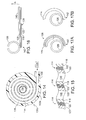
- a fuel cell assembly 100 in accordance with one embodiment of the present invention includes a housing 102 with a main wall 104, end walls 106, a fuel inlet 108, an oxidant inlet 110 and a pair of exhaust ports 112.
- the housing 102 will also include insulation or be formed from material with insulative properties, and the inner surface will preferably have a coating of infrared reflector material.
- the exemplary assembly also includes pair of fuel cells 114 and 116, each of which has an anode 118 and a cathode 120 separated by an electrolyte 122.
- a fuel supply 124 supplies fuel, such as H2 or hydrocarbon fuels such as CH4, C2H6, C3H8, etc.
- an oxidant supply 126 supplies oxidant, such as 02. or ambient air, to the cathodes 120 of each fuel cell by way of the oxidant inlet 110.
- the present fuel cell assemblies include those in which the fuel supply 124 is replenishable or replaceable, as well as those in which all of the fuel that will be consumed by a fuel cell is initially present in the fuel supply. In those instances where ambient air is used, the oxidant supply may simply be a vent or a vent and fan arrangement.
- the oxidant is electrochemically ionized at the cathodes 120, thereby producing ions that diffuse through the conducting electrolytes 122 and react with the fuel at the anodes 118 to produce by-products (CO 2 and water vapor in the exemplary embodiment).
- the byproducts and any unused reactants are vented out of the housing 102 by way of a byproduct outlet tube 128 that extends to the exhaust ports 112.
- the byproduct outlet tube 128 also defines the longitudinal axis of the exemplary assembly 100.
- the exemplary outlet tube 128 is formed from a gas permeable material such as porous yttria stabilized zirconia ("YSZ").
- YSZ used for the gas permeable outlet tube 128 will, in its green state, include relatively large YSZ grains/powder particles (e.g. 10 ⁇ m to 100 ⁇ m) and, in some instances finer grain powder (e.g. 0.5 ⁇ m), in an organic binding agent.
- YSZ grains/powder particles e.g. 10 ⁇ m to 100 ⁇ m
- finer grain powder e.g. 0.5 ⁇ m
- Such material may be extruded under pressure into a tube when in the green state and will produce a porous tube when sintered.
- Platinum catalyst particles may also be embedded into the green YSZ material.
- portions of the inner surfaces of the byproduct outlet tubes 128 and 128' may be provided with a catalytic combustor material 132 ( Figure 6), such as platinum, in order to insure that any unused fuel is consumed prior to reaching the exhaust ports 112.
- a controller may be provided to monitor and control the operations of the exemplary fuel cell assembly 100 as well as the fuel and oxidant supplies 124 and 126, which together define a fuel cell system. Alternatively, the operation of the fuel cell system may be controlled by the host (i.e. power consuming) device.
- the fuel cells 114 and 116 in the exemplary fuel cell assembly 100 illustrated in Figures 1-5 are substantially coextensive and arranged such that the anodes 118 of each cell face one another (or face a portion of the housing main wall 104) with fuel passages 134 defined therebetween, while the cathodes 120 face one another (or face a portion of the housing main wall) with oxidant passages 136 defined therebetween.
- the fuel cells 114 and 116 are arranged such that the fuel, oxidant and reaction byproducts travel from the outer region of the fuel cell assembly 100 to the inner region of the assembly, and complete one or more revolutions around the perimeter of the inner region of the assembly, as they travel through the fuel and oxidant passages 134 and 136 from the fuel and oxidant inlets 108 and 110 to the byproduct outlet tube 128.
- the reactant and byproduct flow through the fuel and oxidant passages 134 and 136 will work to drive heat inwardly (due to convective heat transfer) and counter the tendency of the heat to move outwardly (due to conductive and radiative heat transfer). Retaining heat in this manner reduces the thermal losses of the overall assembly and creates an environment that facilitates self-sustaining fuel cell reactions.
- the inner region of the assembly 100 is defined by the byproduct outlet tube 128.
- the fuel cells 114 and 116 are preferably both spiral shaped and complete a plurality of revolutions (typically about 1 to 50 or more revolutions) around the byproduct outlet tube 128.
- the fuel (and associated byproducts) and oxidant (and associated byproducts) travel through respective spiral shaped fuel and oxidant passages 134 and 136.
- the reactants and byproducts will, accordingly, move continuously closer to the byproduct outlet tube 128 as they move away from the upstream ends of the fuel cells 114 and 116, i.e. the ends adjacent to the inlets 108 and 110, until they reach the downstream ends of the fuel cells, i.e. the ends adjacent to the byproduct outlet tube.
- the fuel cell ends adjacent to the byproduct outlet tube 128 are identified by reference numerals 142 and 144 in Figures 7-8B.
- the present inventions are not limited to fuel cells 114 and 116 with the substantially circular spiral shaped configuration (when viewed from the side) illustrated in Figure 5.
- fuel cells that have a substantially elliptical spiral shaped configuration may be employed.
- the present invention are also not limited to curvilinear shapes such as circles and ellipses. Linear shapes, such a square, rectangular or octagon based spiral shaped, may also be employed so long as the reactant passages direct the byproducts and unused reactants around and to the inner region of the fuel cell assembly.
- exemplary fuel cells 114 and 116 will depend upon the type of fuel cell (e.g. SOFC, PEM, etc.) and intended application, and although the present inventions are not limited to any particular materials, dimensions, configuration or type, exemplary fuel cells are described below for fuel cell assemblies which range from relatively small fuel cell assemblies that are intended for use in applications such as portable electronic device to medium sized fuel cell assemblies that are intended for use with larger electrical devices.
- the exemplary fuel cells are preferably between about 50 ⁇ m and 1 mm thick, although thinner and thicker fuel cells may be employed as applications so require.
- the fuel and oxidant passages 134 and 136 are about 25 ⁇ m to 2 mm thick, while the width of the fuel cells 114 and 116 will typically be about 10 mm to 300 mm from end wall 106 to end wall 106.
- the anodes are preferably a porous, ceramic and metal composite (also referred to as "cermet") film. Suitable ceramics include samaria-doped ceria (“SDC”), gandolinia-doped ceria (GDC) and YSZ and suitable metals include nickel and copper.
- the cathodes are preferably a porous ceramic film.
- Suitable ceramic materials include samarium strontium cobalt oxide ("SSCO"), lanthanum strontium manganate, bismuth copper substituted vanadate.
- SSCO samarium strontium cobalt oxide
- the electrolytes are preferably a non-porous ceramic film, such as SDC, GDC or YSZ.
- the exemplary fuel cells 114 and 116 may also be formed in a variety of ways.
- the exemplary fuel cells 114 and 116 may be formed from generally planar fuel cells sheets 138 and 140.
- the sheets 138 and 140 each of which includes an anode 118, cathode 120 and electrolyte 122, are preferably manufactured by a tape calendaring process that joins separate anode, cathode and electrolyte films into a single sheet.
- the current collectors are typically part of the anode and cathode sheets.
- Other processes such as casting, lamination, transfer printing, shadow masking and spraying, extrusion printing, and extrusion printing with embossing, may also be employed.
- the downstream ends 142 and 144 of the fuel cells sheets 138 and 140 are secured to the byproduct outlet tube 128 through the use of solvents such as isopropyl alcohol.
- the solvent softens the portions of the materials that are to be joined so that the materials will fuse when brought into intimate contact with one another when the fuel cell sheets are still in the flexible, green state.
- the solvent will eventually evaporate.
- Sacrificial filler sheets 146 and 148 which prevent the fuel cell sheets from sticking to one another, may also be provided.
- the down stream ends 142 and 144 of the fuel cell sheets 138 and 140 may be tapered in the manner illustrated in Figures 7 and 8A, if desired, in order to increase the amount of surface area in contact with the outlet tube 128. Ends without such tapering are shown in Figures 16-17B.
- the fuel cell sheets 138 and 140 are wound around the byproduct outlet tube 128 in the direction of arrows A and B ( Figure 7) until they are arranged in the spiral orientation illustrated in Figures 4 and 8A. This may be accomplished by applying force to the fuel cell sheets 138 and 140 themselves, by rotating the byproduct outlet tube 128 about its longitudinal axis, or some combination thereof, while the sheets are in the green state.
- the sheets 146 and 148 (and byproduct outlet tube 128) will then be fired in order to burn out the organic solvents and binders and sinter together the ceramic materials.
- FIG. 9 Another exemplary fuel cell assembly, which is generally represented by reference numeral 100a, is illustrated in Figures 9 and 10.
- the fuel cell assembly 100a is substantially similar to assembly 100 and similar elements are represented by similar reference numerals.
- the fuel cell assembly includes a single fuel cell 114a that is arranged in such a manner that portions the anode 118 ( Figure 12) face one another (or face a portion of the housing main wall 104) with fuel passages 134 defined therebetween, while portions of the cathode 120 ( Figure 12) face one another (or face a portion of the housing main wall) with oxidant passages 136 defined therebetween.
- the fuel, oxidant and reaction byproducts will travel from the outer region of the fuel cell assembly 100a to the inner region of the assembly, and complete one or more revolutions around the inner region of the assembly, as they travel through the fuel and oxidant passages 134 and 136 from the fuel and oxidant inlets 108 and 110 to the inner region of the assembly. More specifically, the fuel and oxidant passages 134 and 136 in the exemplary fuel cell assembly 100a have the same spiral shape, and provide the same thermal efficiency benefits, as they do in the fuel cell assembly 100.
- the exemplary fuel cell assembly 100a illustrated in Figures 9 and 10 also lacks the byproduct outlet tube 128 that is included in the exemplary assembly 100. Instead, the exemplary fuel cell assembly 100a includes a pair of byproduct outlet regions 128a and 128b which are defined by portions of the fuel cell 114a at the inner region of the assembly, and are connected to the exhaust ports 112 on the housing 102.
- the respective portions of the fuel cell 114a that define the byproduct outlet regions 128a and 128b also include fuel passage apertures 150, oxidant passage apertures 152 and mixing apertures 154 ( Figure 10).
- the fuel and oxidant passage apertures 150 and 152 allow the byproducts (and any unused reactants) from the fuel and oxidant passages 134 and 136 to enter the byproduct outlet regions 128a and 128b.
- the mixing apertures 152 allow the contents of the byproduct outlet regions 128a and 128b to mix so that any unused reactants can be properly combusted.
- catalytic combustor material may be positioned within the byproduct outlet regions 128a and 128b.
- the exemplary fuel cell 114a may be formed from the generally planar fuel cell sheet 138a illustrated in Figures 11 and 12, which includes an anode 118, cathode 120 and electrolyte 122, and is manufactured in the manner described above.
- the apertures 150-154 may be punched into the fuel cell sheet 138a when the sheet is still in the green state.
- Sacrificial filler sheets (not shown) may also be provided in the manner described above.
- the green fuel cell sheet 138a is twisted, first into the orientation illustrated in Figure 13A and then into the orientation illustrated in Figure 13B.
- This may be accomplished by applying force to the fuel cell sheet portions themselves, by rotating the byproduct outlet regions 128a and 128b about their combined longitudinal axis, or some combination thereof, while the sheet 138a is in the green state.
- the fuel cell sheet 138a will then be fired in order to burn out the organic solvents and binders and sinter together the ceramic materials.
- the fuel cell 114a may then be placed in the housing 102.
- FIG. 14 and 15 Another exemplary fuel cell assembly, which is generally represented by reference numeral 100b, is illustrated in Figures 14 and 15.
- the fuel cell assembly 100b is substantially similar to assembly 100 and similar elements are represented by similar reference numerals.
- the fuel cell assembly 100b is a single chamber assembly that includes a single fuel cell 114.
- the fuel cell 114 is arranged in such a manner that the anode 118 and cathode 120 face one another (or face a portion of the housing main wall) with a combined fuel/oxidant passage 135 defined therebetween.
- the fuel, oxidant and reaction byproducts will travel from the outer region of the fuel cell assembly 100b to the inner region of the assembly, and complete one or more revolutions around the inner region of the assembly, as they travel through the fuel/oxidant passage 135 from a combined fuel/oxidant inlet 109 to the inner region. More specifically, the fuel/oxidant passage 135 has a spiral shape, and provides the same thermal efficiency benefits, as the individual fuel and oxidant passages 134 and 136 do in the fuel cell assembly 100.
- the reaction byproducts, and any unused reactants are vented out of the housing 102b by way of a byproduct outlet tube 128 that extends to the housing exhaust ports 112 ( Figure 1).
- a combined fuel/oxidant supply 125 may be connected to the fuel/oxidant inlet 109.
- the exemplary fuel cell 114 in the assembly 100b is manufactured in substantially the same manner as the fuel cell 114 in the assembly 100. More specifically, and referring to Figure 16, the downstream end 142 of the generally planar fuel cell sheet 138 is secured to the byproduct outlet tube 128 in the manner described above when the sheet is still in the green state. A sacrificial filler sheet 146 is also be provided to prevent sticking. Next, the fuel cell sheet 138 is wound around the byproduct outlet tube 128 in the manner described above until it is arranged in the spiral orientation illustrated in Figures 14 and 17A. The fuel cell sheet 138 will then be fired and set in the spiral orientation illustrated in Figures 14 and 17B, thereby creating the fuel cell 114. The sacrificial filler sheet 146 will also burn off. The fuel cell 114 and byproduct outlet tube 128 may then be placed in the housing 102b.
- the exemplary fuel cells 114, 114a and 116 that are described above with reference to Figures 1-17B are open at their longitudinal ends, i.e. the right and left side ends when the fuel cells are in the orientation illustrated in Figure 1.
- the housings 102 and 102b include end walls 106 and the end walls hold the reactants and byproducts in the fuel, combined fuel/oxidant, and oxidant passages 134, 135 and 136.
- the exemplary fuel cell assembly 100c illustrated in Figure 18 includes its own end walls 160 (only one visible in Figure 18) that are formed from portions of the fuel cell electrolytes 122c.
- the corresponding housing 102c which is formed from the same material as the electrolytes 122c, also forms a small portion of the end walls 160.
- the electrolytes 122c in the fuel cell sheets 138c and140c are configured such that, after the sheets have been positioned in their final orientation (Figure 19A), which is similar to that illustrated in Figure 4, portions of the electrolytes will extend longitudinally beyond the anodes 118 and cathodes 120.
- the distance from the free edge of the electrolytes 122c to the anodes 118 and cathodes 120 increases with distance from the byproduct outlet tube 128.
- the extra electrolyte material allows the electrolytes 122c to be radially compressed or otherwise bent towards the byproduct outlet tube 128 ( Figure 19B) while the fuel cell sheets 138c and 140c are still in the green state.
- the green electrolytes 122c may be treated with a solvent, if necessary, in order to increase their flexibility. During the firing process, the bent portions of the electrolytes 122c will merge together to form the end walls 160 as the fuel cells 114c and 116c are being created.
- the housing is preferably formed from relatively thick lengths of electrolyte material that are respectively secured to the ends of the fuel cell sheets 138c and 140c prior to winding the sheets around the byproduct outlet tube 128. This material is wound around the fuel cell sheets 138c and 140c after the fuel cell sheets have been wound around the byproduct outlet tube 128.
- the regions of the electrolyte material that will define the fuel and oxidant inlets will have preformed openings, although some machining may be required after firing.
- the small portion of the electrolyte material that will ultimately form the housing 102c extends beyond the longitudinally beyond the anodes 118 and cathodes 120.
- One advantage of forming a fuel cell assembly in the manner illustrated in Figures 18-19C is that it provides an integrated, and cost reducing, manufacturing process wherein the housing and reactant manifolds (here, the fuel and oxidant passages) are formed at the same time as the fuel cells themselves.
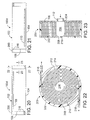
- a fuel cell assembly 100d which is substantially identical to fuel cell assembly 100, is provided with a pair of heat exchangers 200.
- the heat exchangers 200 are respectively mounted adjacent to the housing end walls 106.
- the exemplary heat exchangers 200 each include a housing 202, which is preferably formed from an insulating material that has a coating of infrared reflector material on the inner surface, with an inlet 204 that is adapted to mate with the fuel cell assembly exhaust ports 112 and an inner region 206 which receives the fuel cell exhaust.
- insulation may be placed on the outer surface of the heat exchanger housings 202.
- the exemplary heat exchangers 200 also have a "Swiss roll" configuration.
- a pair of spiral walls 208 and 210 define a pair of spiral exhaust paths 212 and 214.
- the fuel cell exhaust will travel from the inner region 206, through the spiral exhaust paths 212 and 214, to the outlets 216 and 218 of each heat exchanger 200.
- heat will be transferred into the fuel cell housing 102 by way of the end walls 106 and, to that end, the end walls 106 should be formed from material with good heat transfer properties in those fuel cell assembly implementations that include the heat exchangers 200.
- one or more heat exchangers may also be used to pre-heat the reactants before they enter the housing.
- an exemplary fuel cell assembly 100e which is substantially identical to fuel cell assembly 100d, is provided with fuel and oxidant heaters 220 and 222.
- the fuel and oxidant heaters 220 and 222 are substantially identical to one another and to the heat exchangers 200. More specifically, the fuel and oxidant heaters 220 and 222 each include a housing 224, which is preferably formed from an insulating material that has a coating of infrared reflector material on the inner surface.
- the fuel and oxidant heaters 220 and 222 also each include inlets 226, which are respectively adapted to mate with fuel. and oxidant sources, and outlets 228, as well as the above-described inner regions, spiral walls and paths.
- the fuel and oxidant travels from the inner regions, through the spiral paths, to the outlets 228.
- heat from the fuel cell exhaust will be transferred to the fuel and oxidant entering the fuel cell assembly 100e by way of the heat exchangers 200, which are also used to supply heat to the housing 102.
- the walls of the heat exchangers 200 adjacent to the fuel and oxidant heaters 220 should be formed from material with good heat transfer properties in those fuel cell assembly implementations that include the fuel and oxidant heaters.
- the present inventions also include a wide variety of electrically powered devices and systems including, but not limited to electronic devices (e.g. notebook computers, personal digital assistants, digital cameras, portable telephones and games), vehicles, homes, relatively small portable power generators, such as those used for camping, and relatively large portable power generators used in commercial applications, which are powered at least in part by one of the aforementioned fuel cell systems.
- electronic devices e.g. notebook computers, personal digital assistants, digital cameras, portable telephones and games
- vehicles e.g. notebook computers, personal digital assistants, digital cameras, portable telephones and games
- vehicles homes
- relatively small portable power generators such as those used for camping
- relatively large portable power generators used in commercial applications which are powered at least in part by one of the aforementioned fuel cell systems.
- an exemplary device or system 300 includes a fuel cell assembly 100 and various power consuming apparatus 302, 304 and 306.
Landscapes
- Engineering & Computer Science (AREA)
- Chemical & Material Sciences (AREA)
- Life Sciences & Earth Sciences (AREA)
- Manufacturing & Machinery (AREA)
- Sustainable Development (AREA)
- Sustainable Energy (AREA)
- Chemical Kinetics & Catalysis (AREA)
- Electrochemistry (AREA)
- General Chemical & Material Sciences (AREA)
- Combustion & Propulsion (AREA)
- Fuel Cell (AREA)
- Inert Electrodes (AREA)
Abstract
Description
Claims (11)
- A fuel cell assembly, comprising:a housing (102, 102b, 102c) having an outer region and an inner region defining a perimeter; andat least one fuel cell (114, 114a, 114c, 116, 116c) shaped to define at least one reactant path (134, 135, 136) which extends at least once around the perimeter of the inner region and has an upstream end associated with the outer region and a downstream end associated with the inner region.
- A fuel cell assembly as claimed in claim 1, wherein the housing (102, 102b, 102c) includes at least one housing inlet (108, 109, 110) associated with the upstream end of the at least one reactant path (134, 135, 136) and at least one exhaust port (112) operably connected to the downstream end of the at least one reactant path (134, 135, 136).
- A fuel cell assembly as claimed in claim 1, wherein the at least one fuel cell comprises first and second fuel cells (114, 114c, 116, 116c), and the at least one reactant path comprises fuel and oxidant paths (134, 136) that each extend at least once around the perimeter of the inner region and have respective upstream ends associated with the outer region and downstream ends associated with the inner region.
- A fuel cell assembly as claimed in claim 3, wherein the housing (102, 102c) includes a fuel inlet (108) associated with the upstream end of the fuel path and an oxidant inlet (110) associated with the upstream end of the oxidant path.
- A fuel cell assembly as claimed in any preceding claim, wherein the reactant path (134, 135, 136) extends more than once around the perimeter of the inner region of the housing (102, 102b, 102c).
- A fuel cell assembly as claimed in any preceding claim, wherein the reactant path (134, 135, 136) extends at least a plurality of times around the perimeter of the inner region of the housing (102, 102b, 102c).
- A fuel cell assembly as claimed in any preceding claim further comprising:a byproduct outlet tube (128, 128') associated with the inner region of the housing (102, 102b, 102c).
- A fuel cell assembly as claimed in any preceding claim, wherein the housing includes an exhaust port (112) operably connected to the inner region, the fuel cell assembly further comprising:a heat exchanger (200) associated with the housing and operably connected to the exhaust port.
- A fuel cell assembly as claimed in any preceding claim, further comprising:at least one reactant supply (124, 125, 126) operably connected to the upstream end of the at least one reactant path (134, 135, 136).
- A fuel cell assembly as claimed in any preceding claim, wherein the reactant path (134, 135, 136) defines a spiral shape.
- A fuel cell assembly as claimed in claim 10, wherein the reactant path (134, 135, 136) defines a substantially curvilinear spiral shape.
Applications Claiming Priority (2)
| Application Number | Priority Date | Filing Date | Title |
|---|---|---|---|
| US620910 | 1984-06-15 | ||
| US10/620,910 US7425382B2 (en) | 2003-07-15 | 2003-07-15 | Fuel cell assembly |
Publications (2)
| Publication Number | Publication Date |
|---|---|
| EP1517391A2 true EP1517391A2 (en) | 2005-03-23 |
| EP1517391A3 EP1517391A3 (en) | 2009-05-20 |
Family
ID=34062873
Family Applications (1)
| Application Number | Title | Priority Date | Filing Date |
|---|---|---|---|
| EP04253576A Withdrawn EP1517391A3 (en) | 2003-07-15 | 2004-06-15 | Fuel cell assembly with Improved Heat Retention |
Country Status (6)
| Country | Link |
|---|---|
| US (1) | US7425382B2 (en) |
| EP (1) | EP1517391A3 (en) |
| JP (1) | JP2005038852A (en) |
| KR (1) | KR20050008508A (en) |
| CA (1) | CA2457302A1 (en) |
| TW (1) | TW200503312A (en) |
Families Citing this family (6)
| Publication number | Priority date | Publication date | Assignee | Title |
|---|---|---|---|---|
| JP5093980B2 (en) * | 2002-06-21 | 2012-12-12 | ヴァーサ パワー システムズ リミテッド | Fuel cell heat insulation heat exchanger |
| KR101049830B1 (en) * | 2004-04-21 | 2011-07-15 | 삼성에스디아이 주식회사 | Fuel cell system |
| US8410747B2 (en) | 2004-07-21 | 2013-04-02 | Societe Bic | Flexible fuel cell structures having external support |
| US7314212B2 (en) * | 2005-09-12 | 2008-01-01 | William Ray Higgins | Sound attenuating fencing assembly |
| US7611791B2 (en) * | 2005-11-16 | 2009-11-03 | Ford Motor Company | Spirally-wound fuel cell assembly |
| DE102006003740B4 (en) * | 2006-01-20 | 2011-06-30 | Fraunhofer-Gesellschaft zur Förderung der angewandten Forschung e.V., 80686 | Method and system for operating a high temperature fuel cell |
Family Cites Families (17)
| Publication number | Priority date | Publication date | Assignee | Title |
|---|---|---|---|---|
| US4910100A (en) * | 1989-07-21 | 1990-03-20 | Fuji Electric Co., Ltd. | Solid electrolyte fuel cell |
| US5219673A (en) * | 1991-08-23 | 1993-06-15 | Kaun Thomas D | Cell structure for electrochemical devices and method of making same |
| US5336570A (en) | 1992-08-21 | 1994-08-09 | Dodge Jr Cleveland E | Hydrogen powered electricity generating planar member |
| JP3459300B2 (en) * | 1994-08-02 | 2003-10-20 | マツダ株式会社 | Polymer electrolyte fuel cell |
| DE4428935C1 (en) * | 1994-08-16 | 1995-11-02 | Hans Lambrecht | Compact high temp. fuel cell |
| WO1997047052A1 (en) | 1996-06-05 | 1997-12-11 | Southwest Research Institute | Cylindrical proton exchange membrane fuel cells and methods of making same |
| DE19739019C2 (en) * | 1997-09-06 | 2002-10-31 | Forschungszentrum Juelich Gmbh | Coiled fuel cell |
| US6063517A (en) * | 1997-10-16 | 2000-05-16 | Southwest Research Institute | Spiral wrapped cylindrical proton exchange membrane fuel cells and methods of making same |
| DE59707434D1 (en) | 1997-11-25 | 2002-07-11 | Sulzer Hexis Ag Winterthur | Fuel cell module with integrated additional heating |
| JP3686773B2 (en) | 1999-03-17 | 2005-08-24 | 京セラ株式会社 | Solid oxide fuel cell |
| JP2001038198A (en) | 1999-08-03 | 2001-02-13 | Akio Takaku | Fluid flow separation device |
| US6656623B2 (en) * | 2001-02-15 | 2003-12-02 | Siemens Westinghouse Power Corporation | Low-cost atmospheric SOFC power generation system |
| AUPR435101A0 (en) | 2001-04-11 | 2001-05-17 | Rmg Services Pty. Ltd. | Further additions to the modified proton electrolytic membrane fuel cell |
| US6824906B2 (en) * | 2001-07-16 | 2004-11-30 | Modine Manufacturing Company | Fuel cell system incorporating and integrated cathode exhaust condenser and stack cooler |
| GB0117939D0 (en) | 2001-07-24 | 2001-09-19 | Rolls Royce Plc | A solid oxide fuel cell stack |
| JP3897149B2 (en) | 2001-08-23 | 2007-03-22 | 独立行政法人産業技術総合研究所 | Solid oxide fuel cell and Stirling engine combined system |
| JP2003109650A (en) * | 2001-09-28 | 2003-04-11 | Mitsubishi Materials Corp | Current collector structure of fuel cell |
-
2003
- 2003-07-15 US US10/620,910 patent/US7425382B2/en not_active Expired - Lifetime
-
2004
- 2004-01-30 TW TW093102159A patent/TW200503312A/en unknown
- 2004-02-11 CA CA002457302A patent/CA2457302A1/en not_active Abandoned
- 2004-06-15 EP EP04253576A patent/EP1517391A3/en not_active Withdrawn
- 2004-07-13 JP JP2004206053A patent/JP2005038852A/en active Pending
- 2004-07-14 KR KR1020040054711A patent/KR20050008508A/en not_active Withdrawn
Also Published As
| Publication number | Publication date |
|---|---|
| CA2457302A1 (en) | 2005-01-15 |
| TW200503312A (en) | 2005-01-16 |
| EP1517391A3 (en) | 2009-05-20 |
| US7425382B2 (en) | 2008-09-16 |
| JP2005038852A (en) | 2005-02-10 |
| US20050014054A1 (en) | 2005-01-20 |
| KR20050008508A (en) | 2005-01-21 |
Similar Documents
| Publication | Publication Date | Title |
|---|---|---|
| US6489050B1 (en) | Apparatus and method for cooling high-temperature fuel cell stacks | |
| US7816055B2 (en) | Compact fuel cell | |
| US20030082423A1 (en) | Fuel cell | |
| EP2701225B1 (en) | Fuel cell and fuel cell stack | |
| US20050106446A1 (en) | Fuel cell system | |
| US20110195334A1 (en) | Fuel cell stack including interconnected fuel cell tubes | |
| US20040121217A1 (en) | Fuel cell assemblies and methods of making the same | |
| US7090942B2 (en) | Flow disruptor enhanced fuel cell | |
| US20090081521A1 (en) | Fuel cell device and electronic equipment using fuel cell device | |
| US20080286630A1 (en) | Electrochemical Cell Holder and Stack | |
| US7255952B2 (en) | Solid oxide fuel cells having gas channel | |
| US7014929B2 (en) | Fuel cell | |
| US7425382B2 (en) | Fuel cell assembly | |
| JP2004152645A (en) | A solid oxide fuel cell having a honeycomb structure and a fluid supply method in the solid oxide fuel cell. | |
| US11394036B2 (en) | Fuel cell power generation unit and fuel cell stack | |
| US7247402B2 (en) | Power generator and method for forming the same | |
| JP2002170581A (en) | Polymer electrolyte fuel cell | |
| JP6760869B2 (en) | Electrochemical reaction single cell and electrochemical reaction cell stack | |
| US9123945B2 (en) | Fuel cell with electrolyte electrode assembly projections forming reactant gas channel | |
| JP2018006292A (en) | Manufacturing method of electrochemical reaction unit cell, and manufacturing method of electrochemical reaction cell stack | |
| JPH09245812A (en) | Flat plate solid oxide fuel cell | |
| JPH10189023A (en) | Solid electrolyte fuel cell with honeycomb integrated structure | |
| JPH11126617A (en) | Solid oxide fuel cell and method of manufacturing the same | |
| JP2004055196A (en) | Oxidant gas supply mechanism for fuel cells | |
| JPH09190825A (en) | Solid oxide fuel cell and unit cell used therefor |
Legal Events
| Date | Code | Title | Description |
|---|---|---|---|
| PUAI | Public reference made under article 153(3) epc to a published international application that has entered the european phase |
Free format text: ORIGINAL CODE: 0009012 |
|
| AK | Designated contracting states |
Kind code of ref document: A2 Designated state(s): AT BE BG CH CY CZ DE DK EE ES FI FR GB GR HU IE IT LI LU MC NL PL PT RO SE SI SK TR |
|
| AX | Request for extension of the european patent |
Extension state: AL HR LT LV MK |
|
| PUAL | Search report despatched |
Free format text: ORIGINAL CODE: 0009013 |
|
| AK | Designated contracting states |
Kind code of ref document: A3 Designated state(s): AT BE BG CH CY CZ DE DK EE ES FI FR GB GR HU IE IT LI LU MC NL PL PT RO SE SI SK TR |
|
| AX | Request for extension of the european patent |
Extension state: AL HR LT LV MK |
|
| 17P | Request for examination filed |
Effective date: 20091116 |
|
| AKX | Designation fees paid |
Designated state(s): DE GB |
|
| 17Q | First examination report despatched |
Effective date: 20100901 |
|
| RAP1 | Party data changed (applicant data changed or rights of an application transferred) |
Owner name: EVEREADY BATTERY COMPANY, INC. |
|
| RAP1 | Party data changed (applicant data changed or rights of an application transferred) |
Owner name: INTELLIGENT ENERGY LIMITED |
|
| STAA | Information on the status of an ep patent application or granted ep patent |
Free format text: STATUS: EXAMINATION IS IN PROGRESS |
|
| STAA | Information on the status of an ep patent application or granted ep patent |
Free format text: STATUS: THE APPLICATION IS DEEMED TO BE WITHDRAWN |
|
| 18D | Application deemed to be withdrawn |
Effective date: 20170302 |