EP1516882B1 - Composition containing a marine-derived inorganic substance and chitin/chitosan, and method of producing the composition - Google Patents
Composition containing a marine-derived inorganic substance and chitin/chitosan, and method of producing the composition Download PDFInfo
- Publication number
- EP1516882B1 EP1516882B1 EP04022060A EP04022060A EP1516882B1 EP 1516882 B1 EP1516882 B1 EP 1516882B1 EP 04022060 A EP04022060 A EP 04022060A EP 04022060 A EP04022060 A EP 04022060A EP 1516882 B1 EP1516882 B1 EP 1516882B1
- Authority
- EP
- European Patent Office
- Prior art keywords
- inorganic substance
- composition
- skins
- chitosan
- chitin
- Prior art date
- Legal status (The legal status is an assumption and is not a legal conclusion. Google has not performed a legal analysis and makes no representation as to the accuracy of the status listed.)
- Expired - Lifetime
Links
- 239000000126 substance Substances 0.000 title claims description 69
- 239000000203 mixture Substances 0.000 title claims description 32
- 229920001661 Chitosan Polymers 0.000 title claims description 20
- 229920002101 Chitin Polymers 0.000 title claims description 14
- 238000000034 method Methods 0.000 title claims description 11
- VYPSYNLAJGMNEJ-UHFFFAOYSA-N Silicium dioxide Chemical compound O=[Si]=O VYPSYNLAJGMNEJ-UHFFFAOYSA-N 0.000 claims description 10
- 102000008186 Collagen Human genes 0.000 claims description 9
- 108010035532 Collagen Proteins 0.000 claims description 9
- 229920001436 collagen Polymers 0.000 claims description 9
- 239000000463 material Substances 0.000 claims description 9
- 239000000843 powder Substances 0.000 claims description 7
- 239000012620 biological material Substances 0.000 claims description 6
- 238000004898 kneading Methods 0.000 claims description 5
- 239000000377 silicon dioxide Substances 0.000 claims description 5
- 229910052681 coesite Inorganic materials 0.000 claims description 4
- 229910052906 cristobalite Inorganic materials 0.000 claims description 4
- 229910052682 stishovite Inorganic materials 0.000 claims description 4
- 229910052905 tridymite Inorganic materials 0.000 claims description 4
- 239000005548 dental material Substances 0.000 claims 2
- 230000004820 osteoconduction Effects 0.000 description 16
- 210000000988 bone and bone Anatomy 0.000 description 11
- 239000007864 aqueous solution Substances 0.000 description 9
- 239000008279 sol Substances 0.000 description 8
- XLOMVQKBTHCTTD-UHFFFAOYSA-N Zinc monoxide Chemical compound [Zn]=O XLOMVQKBTHCTTD-UHFFFAOYSA-N 0.000 description 6
- 150000002500 ions Chemical class 0.000 description 6
- 229910052588 hydroxylapatite Inorganic materials 0.000 description 5
- XYJRXVWERLGGKC-UHFFFAOYSA-D pentacalcium;hydroxide;triphosphate Chemical compound [OH-].[Ca+2].[Ca+2].[Ca+2].[Ca+2].[Ca+2].[O-]P([O-])([O-])=O.[O-]P([O-])([O-])=O.[O-]P([O-])([O-])=O XYJRXVWERLGGKC-UHFFFAOYSA-D 0.000 description 5
- 230000002378 acidificating effect Effects 0.000 description 4
- 229910001424 calcium ion Inorganic materials 0.000 description 4
- BRPQOXSCLDDYGP-UHFFFAOYSA-N calcium oxide Chemical compound [O-2].[Ca+2] BRPQOXSCLDDYGP-UHFFFAOYSA-N 0.000 description 4
- 239000000292 calcium oxide Substances 0.000 description 4
- ODINCKMPIJJUCX-UHFFFAOYSA-N calcium oxide Inorganic materials [Ca]=O ODINCKMPIJJUCX-UHFFFAOYSA-N 0.000 description 4
- 229910001425 magnesium ion Inorganic materials 0.000 description 4
- QTBSBXVTEAMEQO-UHFFFAOYSA-N Acetic acid Chemical compound CC(O)=O QTBSBXVTEAMEQO-UHFFFAOYSA-N 0.000 description 3
- 241000251468 Actinopterygii Species 0.000 description 3
- 241001465754 Metazoa Species 0.000 description 3
- KRKNYBCHXYNGOX-UHFFFAOYSA-N citric acid Chemical compound OC(=O)CC(O)(C(O)=O)CC(O)=O KRKNYBCHXYNGOX-UHFFFAOYSA-N 0.000 description 3
- 235000019688 fish Nutrition 0.000 description 3
- 108010025899 gelatin film Proteins 0.000 description 3
- XEEYBQQBJWHFJM-UHFFFAOYSA-N iron Substances [Fe] XEEYBQQBJWHFJM-UHFFFAOYSA-N 0.000 description 3
- 239000000395 magnesium oxide Substances 0.000 description 3
- CPLXHLVBOLITMK-UHFFFAOYSA-N magnesium oxide Inorganic materials [Mg]=O CPLXHLVBOLITMK-UHFFFAOYSA-N 0.000 description 3
- AXZKOIWUVFPNLO-UHFFFAOYSA-N magnesium;oxygen(2-) Chemical compound [O-2].[Mg+2] AXZKOIWUVFPNLO-UHFFFAOYSA-N 0.000 description 3
- 210000000963 osteoblast Anatomy 0.000 description 3
- 239000002699 waste material Substances 0.000 description 3
- 239000011787 zinc oxide Substances 0.000 description 3
- 241000972773 Aulopiformes Species 0.000 description 2
- 241000283690 Bos taurus Species 0.000 description 2
- OFOBLEOULBTSOW-UHFFFAOYSA-N Malonic acid Chemical compound OC(=O)CC(O)=O OFOBLEOULBTSOW-UHFFFAOYSA-N 0.000 description 2
- 241001098054 Pollachius pollachius Species 0.000 description 2
- FAPWRFPIFSIZLT-UHFFFAOYSA-M Sodium chloride Chemical compound [Na+].[Cl-] FAPWRFPIFSIZLT-UHFFFAOYSA-M 0.000 description 2
- WNLRTRBMVRJNCN-UHFFFAOYSA-N adipic acid Chemical compound OC(=O)CCCCC(O)=O WNLRTRBMVRJNCN-UHFFFAOYSA-N 0.000 description 2
- 230000000975 bioactive effect Effects 0.000 description 2
- 210000004204 blood vessel Anatomy 0.000 description 2
- 229940036811 bone meal Drugs 0.000 description 2
- 239000002374 bone meal Substances 0.000 description 2
- 230000010478 bone regeneration Effects 0.000 description 2
- 239000002131 composite material Substances 0.000 description 2
- 150000001875 compounds Chemical class 0.000 description 2
- 230000000694 effects Effects 0.000 description 2
- 210000004195 gingiva Anatomy 0.000 description 2
- 229910052742 iron Inorganic materials 0.000 description 2
- JVTAAEKCZFNVCJ-UHFFFAOYSA-N lactic acid Chemical compound CC(O)C(O)=O JVTAAEKCZFNVCJ-UHFFFAOYSA-N 0.000 description 2
- 238000004519 manufacturing process Methods 0.000 description 2
- 239000002245 particle Substances 0.000 description 2
- 208000028169 periodontal disease Diseases 0.000 description 2
- CHWRSCGUEQEHOH-UHFFFAOYSA-N potassium oxide Chemical compound [O-2].[K+].[K+] CHWRSCGUEQEHOH-UHFFFAOYSA-N 0.000 description 2
- 238000004064 recycling Methods 0.000 description 2
- 235000019515 salmon Nutrition 0.000 description 2
- 239000012266 salt solution Substances 0.000 description 2
- 238000000926 separation method Methods 0.000 description 2
- 238000011282 treatment Methods 0.000 description 2
- XLYOFNOQVPJJNP-UHFFFAOYSA-N water Substances O XLYOFNOQVPJJNP-UHFFFAOYSA-N 0.000 description 2
- BJEPYKJPYRNKOW-REOHCLBHSA-N (S)-malic acid Chemical compound OC(=O)[C@@H](O)CC(O)=O BJEPYKJPYRNKOW-REOHCLBHSA-N 0.000 description 1
- 241000251730 Chondrichthyes Species 0.000 description 1
- FEWJPZIEWOKRBE-JCYAYHJZSA-N Dextrotartaric acid Chemical compound OC(=O)[C@H](O)[C@@H](O)C(O)=O FEWJPZIEWOKRBE-JCYAYHJZSA-N 0.000 description 1
- 241000276438 Gadus morhua Species 0.000 description 1
- 241001442210 Pleurogrammus monopterygius Species 0.000 description 1
- 241000269980 Pleuronectidae Species 0.000 description 1
- 239000012891 Ringer solution Substances 0.000 description 1
- 241000277331 Salmonidae Species 0.000 description 1
- 241000785681 Sander vitreus Species 0.000 description 1
- UIIMBOGNXHQVGW-DEQYMQKBSA-M Sodium bicarbonate-14C Chemical compound [Na+].O[14C]([O-])=O UIIMBOGNXHQVGW-DEQYMQKBSA-M 0.000 description 1
- 241000251778 Squalus acanthias Species 0.000 description 1
- FEWJPZIEWOKRBE-UHFFFAOYSA-N Tartaric acid Natural products [H+].[H+].[O-]C(=O)C(O)C(O)C([O-])=O FEWJPZIEWOKRBE-UHFFFAOYSA-N 0.000 description 1
- 235000011054 acetic acid Nutrition 0.000 description 1
- 239000001361 adipic acid Substances 0.000 description 1
- 235000011037 adipic acid Nutrition 0.000 description 1
- BJEPYKJPYRNKOW-UHFFFAOYSA-N alpha-hydroxysuccinic acid Natural products OC(=O)C(O)CC(O)=O BJEPYKJPYRNKOW-UHFFFAOYSA-N 0.000 description 1
- 229910052586 apatite Inorganic materials 0.000 description 1
- 235000015895 biscuits Nutrition 0.000 description 1
- 208000005881 bovine spongiform encephalopathy Diseases 0.000 description 1
- 238000001354 calcination Methods 0.000 description 1
- 210000004027 cell Anatomy 0.000 description 1
- 239000003795 chemical substances by application Substances 0.000 description 1
- 235000015165 citric acid Nutrition 0.000 description 1
- 230000003247 decreasing effect Effects 0.000 description 1
- 230000018044 dehydration Effects 0.000 description 1
- 238000006297 dehydration reaction Methods 0.000 description 1
- 238000001035 drying Methods 0.000 description 1
- 238000000605 extraction Methods 0.000 description 1
- 208000015181 infectious disease Diseases 0.000 description 1
- 229910052500 inorganic mineral Inorganic materials 0.000 description 1
- 239000004310 lactic acid Substances 0.000 description 1
- 235000014655 lactic acid Nutrition 0.000 description 1
- 239000001630 malic acid Substances 0.000 description 1
- 235000011090 malic acid Nutrition 0.000 description 1
- 239000012567 medical material Substances 0.000 description 1
- 235000010755 mineral Nutrition 0.000 description 1
- 239000011707 mineral Substances 0.000 description 1
- 230000011164 ossification Effects 0.000 description 1
- 230000000278 osteoconductive effect Effects 0.000 description 1
- 230000001717 pathogenic effect Effects 0.000 description 1
- VSIIXMUUUJUKCM-UHFFFAOYSA-D pentacalcium;fluoride;triphosphate Chemical compound [F-].[Ca+2].[Ca+2].[Ca+2].[Ca+2].[Ca+2].[O-]P([O-])([O-])=O.[O-]P([O-])([O-])=O.[O-]P([O-])([O-])=O VSIIXMUUUJUKCM-UHFFFAOYSA-D 0.000 description 1
- 229910001392 phosphorus oxide Inorganic materials 0.000 description 1
- 229910001950 potassium oxide Inorganic materials 0.000 description 1
- 230000001737 promoting effect Effects 0.000 description 1
- 235000012239 silicon dioxide Nutrition 0.000 description 1
- 239000011780 sodium chloride Substances 0.000 description 1
- 235000002639 sodium chloride Nutrition 0.000 description 1
- 235000019830 sodium polyphosphate Nutrition 0.000 description 1
- 239000000243 solution Substances 0.000 description 1
- 238000001356 surgical procedure Methods 0.000 description 1
- 239000011975 tartaric acid Substances 0.000 description 1
- 235000002906 tartaric acid Nutrition 0.000 description 1
- VSAISIQCTGDGPU-UHFFFAOYSA-N tetraphosphorus hexaoxide Chemical compound O1P(O2)OP3OP1OP2O3 VSAISIQCTGDGPU-UHFFFAOYSA-N 0.000 description 1
- 210000001519 tissue Anatomy 0.000 description 1
Images

Classifications
-
- C—CHEMISTRY; METALLURGY
- C08—ORGANIC MACROMOLECULAR COMPOUNDS; THEIR PREPARATION OR CHEMICAL WORKING-UP; COMPOSITIONS BASED THEREON
- C08L—COMPOSITIONS OF MACROMOLECULAR COMPOUNDS
- C08L5/00—Compositions of polysaccharides or of their derivatives not provided for in groups C08L1/00 or C08L3/00
- C08L5/08—Chitin; Chondroitin sulfate; Hyaluronic acid; Derivatives thereof
-
- A—HUMAN NECESSITIES
- A61—MEDICAL OR VETERINARY SCIENCE; HYGIENE
- A61L—METHODS OR APPARATUS FOR STERILISING MATERIALS OR OBJECTS IN GENERAL; DISINFECTION, STERILISATION OR DEODORISATION OF AIR; CHEMICAL ASPECTS OF BANDAGES, DRESSINGS, ABSORBENT PADS OR SURGICAL ARTICLES; MATERIALS FOR BANDAGES, DRESSINGS, ABSORBENT PADS OR SURGICAL ARTICLES
- A61L27/00—Materials for grafts or prostheses or for coating grafts or prostheses
- A61L27/40—Composite materials, i.e. containing one material dispersed in a matrix of the same or different material
- A61L27/44—Composite materials, i.e. containing one material dispersed in a matrix of the same or different material having a macromolecular matrix
- A61L27/46—Composite materials, i.e. containing one material dispersed in a matrix of the same or different material having a macromolecular matrix with phosphorus-containing inorganic fillers
-
- A—HUMAN NECESSITIES
- A61—MEDICAL OR VETERINARY SCIENCE; HYGIENE
- A61P—SPECIFIC THERAPEUTIC ACTIVITY OF CHEMICAL COMPOUNDS OR MEDICINAL PREPARATIONS
- A61P19/00—Drugs for skeletal disorders
Definitions
- This invention relates to a composition containing an inorganic substance derived from skins of marine organisms and chitin/chitosan, and to a method of producing the composition.
- a composition as a medical biomaterial is known.
- a composition for jaw bone regeneration is known in the field of dental treatment.
- the composition is called an osteoconduction substance.
- the osteoconduction substance When the osteoconduction substance is implanted or embedded between a jaw bone and gingiva after a surgical treatment for a periodontal disease, the osteoconduction substance exhibits an ability of creating a new bone by a function of increasing osteoblasts. Alternatively, the osteoconduction substance creates a new bone if it is implanted in the vicinity of a bone or into a bone.
- the osteoconduction substance is produced by preparing a powder mixture of apatite and animal bone meal and kneading the powder mixture with chitosan sol obtained by dissolving chitosan by an acidic aqueous solution.
- the animal bone meal is obtained from bone tissues of domestic animals, such as bovine bones and pig bones (for example, see JP-A-H5-220211 ).
- BSE bovine spongiform encephalopathy
- Porous Bioactive Composites from Marine Origin Based in Chitosan and Hydroxylapatite Particles Key Engineering Materials, vol. 240-242, 2003, pages 39-42 discloses porous bioactive composites from marine origin based on chitosan and hydroxylapatite particles for bone tissue engineering.
- EP-A-1 053 739 discloses a method of making an osteoconductive substance made from an acidic chitosan sol and hydroxyapatite followed by kneading, drying and treatment with Ringer's solution.
- a method of producing a composition comprising the steps of incinerating skins of marine organisms at a temperature within a range between 600°C and 1000°C to obtain an inorganic substance as a residue, obtaining a powdered inorganic substance from the inorganic substance, and kneading the powdered inorganic substance with chitin/chitosan powder.
- a composition according to this invention contains an inorganic substance obtained as a residue after incinerating skins of marine organisms, and chitin/chitosan.
- the inorganic substance as the sample SAB was obtained as a residue after incinerating skins of marine organisms.
- the amount of the inorganic substance extracted after incineration was about 65 wt% with respect to the weight of the skins of the marine organisms before incineration as 100%.
- skins of salmon were used as the skins of the marine organisms.
- the inorganic substance as the sample SAB comprises 54.8 % P 2 O 5 (phosphorus oxide), 35.4 % CaO (calcium oxide), 5.0 % MgO (magnesium oxide), 4.1 % SiO 2 (silicon dioxide), 0.3 % K 2 O (potassium oxide), 0.2 % ZnO (zinc oxide), and 0.2 % Fe (iron).
- the inorganic substance as the sample SAB was visually observed by the use of a photograph taken by an electron microscope. As a result, presence of a number of voids randomly adjacent to one another was confirmed. An average surface area of the voids was 5 to 300 ⁇ m.
- the inorganic substance as the sample SAA was obtained by immersing the skins of the marine organisms into hot water to extract collagen and thereafter incinerating the skin to leave the inorganic substance as a residue.
- the amount of the inorganic substance extracted after incineration was about 55 wt% with respect to the weight of the skins of the marine organisms before incineration as 100 %.
- skins of the marine organisms skins of salmon were used.
- the inorganic substance as the sample SAA comprises 58.8 % P 2 O 5 , 32.8 % CaO, 4.7 % MgO, 3.5 % SiO 2 , 0.1 % ZnO, and 0.1 % other substances.
- the inorganic substance as the sample SAA was visually observed by the use of a photograph taken by the electron microscope. As a result, presence of a number of voids randomly adjacent to one another was confirmed. An average surface area of the voids was 5 to 300 ⁇ m.
- JP-B Japanese patent
- JP-A Japanese Patent Application Publication
- the skins of the marine organisms use may be made of skins of trout, walleye pollack (Alaska pollack) or cod, shark or dogfish, Atka mackerel, halibut, or tuna. It is noted here that the marine organisms used for obtaining the inorganic substance are not restricted to those mentioned above. It is desired to select the skins of the marine organisms for obtaining the inorganic substance taking a limited amount of resources and productivity into consideration.
- the inorganic substances as the samples SAB and SAA were bathed or immersed in a physiological salt solution. After 7 days, 14 days, and 30 days, the amount of release (ppm) of each of Ca ions, P ions, and Mg ions was measured.
- the amount of release of each of Ca ions and Mg ions was increased with lapse of time.
- the amount of release of P ions was slightly decreased after 30 days.
- the inorganic substance mentioned above is kneaded with chitin/chitosan to produce a composition suitably used in various applications, such as a medical biomaterial.
- the inorganic substance as the sample SAB is obtained in the following manner.
- the skins of the marine organisms are incinerated at a temperature within a range between 600°C and 1000°C to leave, as a residue, the inorganic substance as the sample SAB.
- the inorganic substance as the sample SAA is obtained in the following manner.
- the skins of the marine organisms are immersed in hot water to extract collagen from the skins. After extraction of collagen, the skins are incinerated at a temperature within a range between 600°C and 1000°C to leave, as a residue, the inorganic substance as the sample SAA.
- the inorganic substance SAB or SAA is kneaded with chitin/chitosan sol obtained by dissolving chitosan powder by an acidic aqueous solution.
- an acidic aqueous solution use may be made of one of acetic acid, lactic acid, malic acid, citric acid, adipic acid, tartaric acid, malonic acid, and the like.
- the sol material is neutralized with an aqueous solution containing a compound.
- the sol material is hardened in the aqueous solution in 3 to 60 minutes to obtain a composition having a pH within a range of 7.0 to 10.0.
- the compound used to neutralize the sol material is calcium oxide.
- the composition is dehydrated. After dehydration, the composition has a brittle or fragile nature, like biscuits.
- the composition may be used as an osteoconduction substance as a medical material.
- an aqueous solution (which will later be described) is absorbed into the osteoconduction substance to produce a gel film having elasticity like rubber and a predetermined strength. Thereafter, the osteoconduction substance as the gel film is cut into a predetermined shape in conformity with the size of a diseased part of the living body and implanted into a treated site of the diseased part of the living body. For example, after a surgical operation for a periodontal disease, the osteoconduction substance is inserted between a jaw bone and gingiva to regenerate a new jaw bone.
- osteoconduction substance When used in bone regeneration, new blood vessels are grown and spread into small voids in the organic substance and the inorganic substance is surrounded by cells. Around the inorganic substance, osteoblast activity is exhibited and osteoconduction is quickly attained.
- Chitin/chitosan serves to fix a powdered inorganic substance to a diseased part of a living body. At the time when chitin/chitosan is absorbed into the living body, an osteoid tissue is observed and transformed into a bone.
- the aqueous solution Upon production of the gel film, the aqueous solution is absorbed into the osteoconduction substance.
- the aqueous solution use may be made of a physiological salt solution, an aqueous solution of sodium chloride, sodium bicarbonate, or sodium polyphosphate, a Ringer solution, or the like.
- the composition has a number of small voids formed in the organic substance.
- the new blood vessels are readily spread into the small voids in the inorganic substance.
- the osteoblast activity is exhibited to promote osteoconduction.
- the skins of the marine organisms In order to produce the composition, it is possible to use the skins of the marine organisms to be disposed of as waste after bodies of the marine organisms are used or after the skins themselves are used to extract collagen. In this case, economic efficiency is excellent in view of waste management and recycling.
- the inorganic substance is a natural mineral having a number of small voids formed inside. Therefore, the composition containing the inorganic substance may be used in various applications, such as various kinds of medical biomaterials.
Landscapes
- Chemical & Material Sciences (AREA)
- Health & Medical Sciences (AREA)
- Medicinal Chemistry (AREA)
- Public Health (AREA)
- Life Sciences & Earth Sciences (AREA)
- Chemical Kinetics & Catalysis (AREA)
- Veterinary Medicine (AREA)
- Engineering & Computer Science (AREA)
- General Health & Medical Sciences (AREA)
- Organic Chemistry (AREA)
- Animal Behavior & Ethology (AREA)
- Transplantation (AREA)
- Dermatology (AREA)
- Epidemiology (AREA)
- Oral & Maxillofacial Surgery (AREA)
- Materials Engineering (AREA)
- Polymers & Plastics (AREA)
- Inorganic Chemistry (AREA)
- Composite Materials (AREA)
- General Chemical & Material Sciences (AREA)
- Pharmacology & Pharmacy (AREA)
- Bioinformatics & Cheminformatics (AREA)
- Physical Education & Sports Medicine (AREA)
- Nuclear Medicine, Radiotherapy & Molecular Imaging (AREA)
- Cosmetics (AREA)
- Materials For Medical Uses (AREA)
- Solid-Sorbent Or Filter-Aiding Compositions (AREA)
- Coloring Foods And Improving Nutritive Qualities (AREA)
- Pharmaceuticals Containing Other Organic And Inorganic Compounds (AREA)
- Medicines Containing Material From Animals Or Micro-Organisms (AREA)
Description
- This invention relates to a composition containing an inorganic substance derived from skins of marine organisms and chitin/chitosan, and to a method of producing the composition.
- In the medical field, a composition as a medical biomaterial is known. As a specific example, a composition for jaw bone regeneration is known in the field of dental treatment. The composition is called an osteoconduction substance.
- When the osteoconduction substance is implanted or embedded between a jaw bone and gingiva after a surgical treatment for a periodontal disease, the osteoconduction substance exhibits an ability of creating a new bone by a function of increasing osteoblasts. Alternatively, the osteoconduction substance creates a new bone if it is implanted in the vicinity of a bone or into a bone.
- The osteoconduction substance is produced by preparing a powder mixture of apatite and animal bone meal and kneading the powder mixture with chitosan sol obtained by dissolving chitosan by an acidic aqueous solution. In most cases, the animal bone meal is obtained from bone tissues of domestic animals, such as bovine bones and pig bones (for example, see
JP-A-H5-220211 - Recently, however, a problem of BSE (bovine spongiform encephalopathy) is exposed. In particular, it is pointed out that the osteoconduction substance using bovine bone powder as a material brings a potential risk of human infection by a pathogenic agent. Thus, in the medical field, it is desired to obtain a novel composition in view of the safety and a limited amount of resources.
- "Porous Bioactive Composites from Marine Origin Based in Chitosan and Hydroxylapatite Particles" Key Engineering Materials, vol. 240-242, 2003, pages 39-42 discloses porous bioactive composites from marine origin based on chitosan and hydroxylapatite particles for bone tissue engineering.
-
EP-A-1 053 739 discloses a method of making an osteoconductive substance made from an acidic chitosan sol and hydroxyapatite followed by kneading, drying and treatment with Ringer's solution. - Compendex database engineering information, inc., New York, US; 1996, Sawa Hiroyuki, Torii Tamotsu, Nakata Hokuta, Matsumoto Kouta, Aoki Kaoru: "Separation of hydroxyapatite from scales of fish" discloses the separation of hydroxyapatite from scales of fish by calcining and using this as bone materials.
- It is an object of this invention to provide a composition which is capable of promoting bone formation and which is excellent in safety.
- It is another object of this invention to provide a composition which is excellent in economical efficiency in view of waste recycling.
- According to this invention, there is provided a composition containing an inorganic substance obtained as a residue after incinerating skins of marine organisms, and chitin/chitosan.
- According to this invention, there is also provided a method of producing a composition, the method comprising the steps of incinerating skins of marine organisms at a temperature within a range between 600°C and 1000°C to obtain an inorganic substance as a residue, obtaining a powdered inorganic substance from the inorganic substance, and kneading the powdered inorganic substance with chitin/chitosan powder.
-
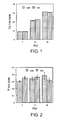
Fig 1 is a graph showing the amounts of release of Ca ions in inorganic substances used in a specific embodiment of this invention; -
Fig. 2 is a graph showing the amounts of release of P ions in the inorganic substances used in the specific embodiment of this invention; and -
Fig. 3 is a graph showing the amounts of release of Mg ions in the inorganic substances used in the specific embodiment of this invention. - A composition according to this invention contains an inorganic substance obtained as a residue after incinerating skins of marine organisms, and chitin/chitosan.
- In this embodiment, use is made of two kinds of inorganic substances as samples SAB and SAA.
- The inorganic substance as the sample SAB was obtained as a residue after incinerating skins of marine organisms. The amount of the inorganic substance extracted after incineration was about 65 wt% with respect to the weight of the skins of the marine organisms before incineration as 100%. In this embodiment, skins of salmon were used as the skins of the marine organisms.
- The inorganic substance as the sample SAB comprises 54.8 % P2O5 (phosphorus oxide), 35.4 % CaO (calcium oxide), 5.0 % MgO (magnesium oxide), 4.1 % SiO2 (silicon dioxide), 0.3 % K2O (potassium oxide), 0.2 % ZnO (zinc oxide), and 0.2 % Fe (iron).
- The inorganic substance as the sample SAB was visually observed by the use of a photograph taken by an electron microscope. As a result, presence of a number of voids randomly adjacent to one another was confirmed. An average surface area of the voids was 5 to 300 µm.
- The inorganic substance as the sample SAA was obtained by immersing the skins of the marine organisms into hot water to extract collagen and thereafter incinerating the skin to leave the inorganic substance as a residue. The amount of the inorganic substance extracted after incineration was about 55 wt% with respect to the weight of the skins of the marine organisms before incineration as 100 %. As the skins of the marine organisms, skins of salmon were used.
- The inorganic substance as the sample SAA comprises 58.8 % P2O5, 32.8 % CaO, 4.7 % MgO, 3.5 % SiO2, 0.1 % ZnO, and 0.1 % other substances.
- The inorganic substance as the sample SAA was visually observed by the use of a photograph taken by the electron microscope. As a result, presence of a number of voids randomly adjacent to one another was confirmed. An average surface area of the voids was 5 to 300 µm.
- In order to extract collagen from the skins of the marine organisms, use may be made of various well-known techniques. For example, a method of extracting collagen from skins of fishes is disclosed in Japanese patent (
JP-B) No. 2722014 JP-A) Nos. 2000-50811 2001-200000 - As the skins of the marine organisms, use may be made of skins of trout, walleye pollack (Alaska pollack) or cod, shark or dogfish, Atka mackerel, halibut, or tuna. It is noted here that the marine organisms used for obtaining the inorganic substance are not restricted to those mentioned above. It is desired to select the skins of the marine organisms for obtaining the inorganic substance taking a limited amount of resources and productivity into consideration.
- Referring to
Figs. 1, 2 , and3 , the inorganic substances as the samples SAB and SAA were bathed or immersed in a physiological salt solution. After 7 days, 14 days, and 30 days, the amount of release (ppm) of each of Ca ions, P ions, and Mg ions was measured. - As is obvious from
Figs. 1 through 3 , in the inorganic substance as the sample SAB, the amount of release of each of Ca ions, P ions, and Mg ions was increased with lapse of time. - In the inorganic substance as the sample SAA, the amount of release of each of Ca ions and Mg ions was increased with lapse of time. However, the amount of release of P ions was slightly decreased after 30 days.
- As described above, in the inorganic substances as the samples SAA and SAB, the amounts of release of those ions were generally increased with lapse of time. Thus, it has been confirmed that those ions are released and absorbed in a living body.
- The inorganic substance mentioned above is kneaded with chitin/chitosan to produce a composition suitably used in various applications, such as a medical biomaterial.
- Hereinafter, description will be made of a method of producing the composition containing the inorganic substance and chitin/chitosan.
- The inorganic substance as the sample SAB is obtained in the following manner. The skins of the marine organisms are incinerated at a temperature within a range between 600°C and 1000°C to leave, as a residue, the inorganic substance as the sample SAB.
- On the other hand, the inorganic substance as the sample SAA is obtained in the following manner. The skins of the marine organisms are immersed in hot water to extract collagen from the skins. After extraction of collagen, the skins are incinerated at a temperature within a range between 600°C and 1000°C to leave, as a residue, the inorganic substance as the sample SAA.
- Then, the inorganic substance SAB or SAA is kneaded with chitin/chitosan sol obtained by dissolving chitosan powder by an acidic aqueous solution. For the acidic aqueous solution, use may be made of one of acetic acid, lactic acid, malic acid, citric acid, adipic acid, tartaric acid, malonic acid, and the like. By kneading the inorganic substance and the chitin/chitosan sol a sol material is obtained.
- Thereafter, the sol material is neutralized with an aqueous solution containing a compound. The sol material is hardened in the aqueous solution in 3 to 60 minutes to obtain a composition having a pH within a range of 7.0 to 10.0. For example, the compound used to neutralize the sol material is calcium oxide.
- Then, the composition is dehydrated. After dehydration, the composition has a brittle or fragile nature, like biscuits. The composition may be used as an osteoconduction substance as a medical material.
- Before the osteoconduction substance is implanted into a living body as a biomaterial, an aqueous solution (which will later be described) is absorbed into the osteoconduction substance to produce a gel film having elasticity like rubber and a predetermined strength. Thereafter, the osteoconduction substance as the gel film is cut into a predetermined shape in conformity with the size of a diseased part of the living body and implanted into a treated site of the diseased part of the living body. For example, after a surgical operation for a periodontal disease, the osteoconduction substance is inserted between a jaw bone and gingiva to regenerate a new jaw bone.
- When the osteoconduction substance is used in bone regeneration, new blood vessels are grown and spread into small voids in the organic substance and the inorganic substance is surrounded by cells. Around the inorganic substance, osteoblast activity is exhibited and osteoconduction is quickly attained.
- Chitin/chitosan serves to fix a powdered inorganic substance to a diseased part of a living body. At the time when chitin/chitosan is absorbed into the living body, an osteoid tissue is observed and transformed into a bone.
- Upon production of the gel film, the aqueous solution is absorbed into the osteoconduction substance. As the aqueous solution, use may be made of a physiological salt solution, an aqueous solution of sodium chloride, sodium bicarbonate, or sodium polyphosphate, a Ringer solution, or the like.
- As described above in connection with the specific embodiment, the composition has a number of small voids formed in the organic substance. When the composition is used as the osteoconduction substance, the new blood vessels are readily spread into the small voids in the inorganic substance. Around the inorganic substance, the osteoblast activity is exhibited to promote osteoconduction.
- In order to produce the composition, it is possible to use the skins of the marine organisms to be disposed of as waste after bodies of the marine organisms are used or after the skins themselves are used to extract collagen. In this case, economic efficiency is excellent in view of waste management and recycling.
- Further, the inorganic substance is a natural mineral having a number of small voids formed inside. Therefore, the composition containing the inorganic substance may be used in various applications, such as various kinds of medical biomaterials.
Claims (7)
- A composition containing an inorganic substance obtainable as a residue after incinerating skins of marine organisms, and chitin/chitosan,
wherein said inorganic substance at least contains P2O5, CaO, MgO, SiO2, and ZnO. - The composition according to claim 1, wherein said inorganic substance is obtainable as a residue after extracting collagen from said skins.
- The composition according to claim 1 or 2, wherein each of said inorganic substance and chitin/chitosan is in a powder state.
- The composition according to claim 1, 2 or 3, wherein said composition is used as a material of one of a dental material and a medical biomaterial.
- A method of producing a composition, said method comprising the steps of:extracting collagen from skins of marine organisms;incinerating the skins, after collagen is extracted from the skins, at a temperature within a range between 600°C and 1000°C to obtain an inorganic substance as a residue;obtaining a powdered inorganic substance from said inorganic substance; andkneading the powdered inorganic substance with chitin/chitosan powder.
- The method according to claim 5, wherein said inorganic substance at least contains P2O5, CaO, MgO, SiO2 and ZnO.
- The method according to claim 5 or 6, wherein said composition is used as a material of one of a dental material and a medical biomaterial.
Applications Claiming Priority (2)
| Application Number | Priority Date | Filing Date | Title |
|---|---|---|---|
| JP2003324229A JP2005087440A (en) | 2003-09-17 | 2003-09-17 | Composition containing marine organism raw material and method for producing the composition |
| JP2003324229 | 2003-09-17 |
Publications (2)
| Publication Number | Publication Date |
|---|---|
| EP1516882A1 EP1516882A1 (en) | 2005-03-23 |
| EP1516882B1 true EP1516882B1 (en) | 2008-03-26 |
Family
ID=34191296
Family Applications (1)
| Application Number | Title | Priority Date | Filing Date |
|---|---|---|---|
| EP04022060A Expired - Lifetime EP1516882B1 (en) | 2003-09-17 | 2004-09-16 | Composition containing a marine-derived inorganic substance and chitin/chitosan, and method of producing the composition |
Country Status (5)
| Country | Link |
|---|---|
| US (1) | US7232579B2 (en) |
| EP (1) | EP1516882B1 (en) |
| JP (1) | JP2005087440A (en) |
| DE (1) | DE602004012679T2 (en) |
| NO (1) | NO20043885L (en) |
Families Citing this family (4)
| Publication number | Priority date | Publication date | Assignee | Title |
|---|---|---|---|---|
| WO2008007935A1 (en) * | 2006-07-12 | 2008-01-17 | Sonia Cecilia Ochoa Dieguez | Substance for treating infectious diseases in animals, including humans, and method for obtaining same |
| CN101020072B (en) * | 2007-01-29 | 2010-05-19 | 杜永生 | Deodorant, antibacterial, anti-mildew powder |
| EP2016946B1 (en) * | 2007-07-18 | 2013-02-27 | The Jordanian Pharmaceutical Manufacturing Co. | Chitosan silicon dioxide coprecipitate composition for use as a therapeutically active agent |
| CN107050521B (en) * | 2017-04-27 | 2020-10-09 | 天新福(北京)医疗器材股份有限公司 | Double-layer collagen dermal scaffold and preparation method thereof |
Family Cites Families (11)
| Publication number | Priority date | Publication date | Assignee | Title |
|---|---|---|---|---|
| JPS5733573A (en) * | 1980-08-06 | 1982-02-23 | Sanyo:Kk | Preparation of food or feed from scale powder of fish |
| FR2678624A1 (en) | 1991-07-04 | 1993-01-08 | Coletica | USE OF NON-PIGMENTED FISH SKIN, ESPECIALLY FLAT FISH AS A NEW INDUSTRIAL SOURCE OF COLLAGEN, EXTRACTION PROCESS, COLLAGEN AND BIOMATERIAL OBTAINED THEREBY. |
| EP0555807B1 (en) | 1992-02-10 | 1996-08-21 | Matsumoto Dental College | Bone substitute product and method of producing the same |
| JP3208586B2 (en) | 1992-02-10 | 2001-09-17 | 学校法人松本歯科大学 | Method for producing sheet-like bone filling material |
| JP3393560B2 (en) | 1993-12-29 | 2003-04-07 | 日本水産株式会社 | Calcium absorption promoting composition containing water-soluble chitosan and additive for promoting calcium absorption |
| JP4319708B2 (en) * | 1998-06-08 | 2009-08-26 | 学校法人松本歯科大学 | Bone-forming material manufacturing method |
| JP2931814B1 (en) | 1998-08-11 | 1999-08-09 | 井原水産株式会社 | Method for producing fish collagen |
| US6271350B1 (en) | 1998-08-11 | 2001-08-07 | Thara & Company Ltd. | Fish collagen and method of producing same |
| JP4472804B2 (en) * | 1999-05-18 | 2010-06-02 | 学校法人松本歯科大学 | Bone filler and method for producing the same |
| JP3532817B2 (en) | 2000-01-24 | 2004-05-31 | エア・ウォーター株式会社 | Method for producing marine organism-derived collagen |
| JP2003128704A (en) * | 2001-10-24 | 2003-05-08 | Matsumoto Shika Univ | Method for depolymerizing chitin / chitosan and method for producing osteoconductive substance |
-
2003
- 2003-09-17 JP JP2003324229A patent/JP2005087440A/en active Pending
-
2004
- 2004-09-15 US US10/940,998 patent/US7232579B2/en not_active Expired - Fee Related
- 2004-09-16 EP EP04022060A patent/EP1516882B1/en not_active Expired - Lifetime
- 2004-09-16 DE DE602004012679T patent/DE602004012679T2/en not_active Expired - Lifetime
- 2004-09-16 NO NO20043885A patent/NO20043885L/en not_active Application Discontinuation
Also Published As
| Publication number | Publication date |
|---|---|
| US7232579B2 (en) | 2007-06-19 |
| US20050058715A1 (en) | 2005-03-17 |
| DE602004012679T2 (en) | 2009-04-23 |
| DE602004012679D1 (en) | 2008-05-08 |
| JP2005087440A (en) | 2005-04-07 |
| NO20043885L (en) | 2005-03-18 |
| EP1516882A1 (en) | 2005-03-23 |
Similar Documents
| Publication | Publication Date | Title |
|---|---|---|
| US5618339A (en) | Osteoinduction substance, method of manufacturing the same, and bone filling material including the same | |
| Mitchell et al. | Osteogenic potential of calcium hydroxide and other materials in soft tissue and bone wounds | |
| US5585116A (en) | Method of manufacture of a material for osteoplasty from a natural bone tissue and material obtained thereby | |
| Katthagen | Bone regeneration with bone substitutes: an animal study | |
| EP0555807A1 (en) | Bone substitute product and method of producing the same | |
| Oladele et al. | Non-synthetic sources for the development of hydroxyapatite | |
| US5755787A (en) | Semi-synthetic material usable in medicine and surgery | |
| AU7983901A (en) | Biologically active material | |
| EP0842670A1 (en) | Biomedical materials | |
| Dias et al. | Biocompatibility and osseointegration of reconstituted keratin in an ovine model | |
| Ishikawa et al. | Dentin materials as biological scaffolds for tissue engineering | |
| CA1333050C (en) | Biologic absorbable implant material for filling and closing soft-tissue cavities and method of its preparation | |
| Lopez-Heredia et al. | Processing and in vivo evaluation of multiphasic calcium phosphate cements with dual tricalcium phosphate phases | |
| US7232579B2 (en) | Composition containing a marine-derived inorganic substance and chitin/chitosan, and method of producing the composition | |
| KR101299395B1 (en) | Adjust the proportion of inorganic and organic teeth bone graft processing method | |
| KR101885896B1 (en) | Natural bone regeneration material containing minerals derived from human bone | |
| JPH08276003A (en) | Head tissue restorative dental material and imbedded medical appliance | |
| Mansouri et al. | The role of cuttlebone and cuttlebone derived hydroxyapatite with platelet rich plasma on tibial bone defect healing in rabbit: An experimental study | |
| EP1306390B1 (en) | Method of producing low molecular weight chitin/chitosan and method of producing an osteoconduction substance | |
| Borisovich et al. | Application of porous titanium nickelide for treatment of patients with chronic osteomyelitis | |
| JP3718723B2 (en) | Biological tissue-derived absorbable calcium phosphate functionally graded composite material and production method thereof | |
| KR20220121954A (en) | Method for producing hydroxyapatite derived from oyster shell and hydroxyapatite prepared therefrom | |
| WO1996012509A1 (en) | Process for inactivating and eliminating the organic matrix from animal bone for heterotopic xenografts | |
| RU2373943C1 (en) | Material for bone neogenesis | |
| Sindhu et al. | Bioresorbable dental materials: innovations and applications |
Legal Events
| Date | Code | Title | Description |
|---|---|---|---|
| PUAI | Public reference made under article 153(3) epc to a published international application that has entered the european phase |
Free format text: ORIGINAL CODE: 0009012 |
|
| AK | Designated contracting states |
Kind code of ref document: A1 Designated state(s): AT BE BG CH CY CZ DE DK EE ES FI FR GB GR HU IE IT LI LU MC NL PL PT RO SE SI SK TR |
|
| AX | Request for extension of the european patent |
Extension state: AL HR LT LV MK |
|
| 17P | Request for examination filed |
Effective date: 20050823 |
|
| AKX | Designation fees paid |
Designated state(s): DE FR GB IT SE |
|
| GRAP | Despatch of communication of intention to grant a patent |
Free format text: ORIGINAL CODE: EPIDOSNIGR1 |
|
| GRAS | Grant fee paid |
Free format text: ORIGINAL CODE: EPIDOSNIGR3 |
|
| GRAA | (expected) grant |
Free format text: ORIGINAL CODE: 0009210 |
|
| AK | Designated contracting states |
Kind code of ref document: B1 Designated state(s): DE FR GB IT SE |
|
| REG | Reference to a national code |
Ref country code: GB Ref legal event code: FG4D |
|
| REF | Corresponds to: |
Ref document number: 602004012679 Country of ref document: DE Date of ref document: 20080508 Kind code of ref document: P |
|
| REG | Reference to a national code |
Ref country code: SE Ref legal event code: TRGR |
|
| ET | Fr: translation filed | ||
| PLBE | No opposition filed within time limit |
Free format text: ORIGINAL CODE: 0009261 |
|
| STAA | Information on the status of an ep patent application or granted ep patent |
Free format text: STATUS: NO OPPOSITION FILED WITHIN TIME LIMIT |
|
| 26N | No opposition filed |
Effective date: 20081230 |
|
| PGFP | Annual fee paid to national office [announced via postgrant information from national office to epo] |
Ref country code: DE Payment date: 20101029 Year of fee payment: 7 |
|
| PGFP | Annual fee paid to national office [announced via postgrant information from national office to epo] |
Ref country code: SE Payment date: 20110920 Year of fee payment: 8 Ref country code: GB Payment date: 20110930 Year of fee payment: 8 |
|
| PGFP | Annual fee paid to national office [announced via postgrant information from national office to epo] |
Ref country code: IT Payment date: 20110917 Year of fee payment: 8 |
|
| PGFP | Annual fee paid to national office [announced via postgrant information from national office to epo] |
Ref country code: FR Payment date: 20111013 Year of fee payment: 8 |
|
| PG25 | Lapsed in a contracting state [announced via postgrant information from national office to epo] |
Ref country code: SE Free format text: LAPSE BECAUSE OF NON-PAYMENT OF DUE FEES Effective date: 20120917 |
|
| REG | Reference to a national code |
Ref country code: SE Ref legal event code: EUG |
|
| GBPC | Gb: european patent ceased through non-payment of renewal fee |
Effective date: 20120916 |
|
| REG | Reference to a national code |
Ref country code: FR Ref legal event code: ST Effective date: 20130531 |
|
| PG25 | Lapsed in a contracting state [announced via postgrant information from national office to epo] |
Ref country code: GB Free format text: LAPSE BECAUSE OF NON-PAYMENT OF DUE FEES Effective date: 20120916 Ref country code: DE Free format text: LAPSE BECAUSE OF NON-PAYMENT OF DUE FEES Effective date: 20130403 |
|
| PG25 | Lapsed in a contracting state [announced via postgrant information from national office to epo] |
Ref country code: IT Free format text: LAPSE BECAUSE OF NON-PAYMENT OF DUE FEES Effective date: 20120916 Ref country code: FR Free format text: LAPSE BECAUSE OF NON-PAYMENT OF DUE FEES Effective date: 20121001 |
|
| REG | Reference to a national code |
Ref country code: DE Ref legal event code: R119 Ref document number: 602004012679 Country of ref document: DE Effective date: 20130403 |