EP1515481B1 - System und Verfahren zur Mediumszugriffssteuerung, MAC, in einem energiesparenden Netzwerk - Google Patents
System und Verfahren zur Mediumszugriffssteuerung, MAC, in einem energiesparenden Netzwerk Download PDFInfo
- Publication number
- EP1515481B1 EP1515481B1 EP04017688A EP04017688A EP1515481B1 EP 1515481 B1 EP1515481 B1 EP 1515481B1 EP 04017688 A EP04017688 A EP 04017688A EP 04017688 A EP04017688 A EP 04017688A EP 1515481 B1 EP1515481 B1 EP 1515481B1
- Authority
- EP
- European Patent Office
- Prior art keywords
- networked device
- module
- control
- communication medium
- power
- Prior art date
- Legal status (The legal status is an assumption and is not a legal conclusion. Google has not performed a legal analysis and makes no representation as to the accuracy of the status listed.)
- Expired - Lifetime
Links
- 238000000034 method Methods 0.000 title claims description 81
- 238000004891 communication Methods 0.000 claims description 320
- 238000012546 transfer Methods 0.000 claims description 12
- 230000007246 mechanism Effects 0.000 description 13
- 101100172132 Mus musculus Eif3a gene Proteins 0.000 description 9
- 230000006870 function Effects 0.000 description 9
- 238000010586 diagram Methods 0.000 description 8
- 230000000694 effects Effects 0.000 description 6
- 230000003287 optical effect Effects 0.000 description 4
- 230000003993 interaction Effects 0.000 description 3
- 230000004044 response Effects 0.000 description 2
- 238000012795 verification Methods 0.000 description 2
- 206010012186 Delayed delivery Diseases 0.000 description 1
- 238000013459 approach Methods 0.000 description 1
- 230000003139 buffering effect Effects 0.000 description 1
- 230000001419 dependent effect Effects 0.000 description 1
- 238000001514 detection method Methods 0.000 description 1
- 230000001627 detrimental effect Effects 0.000 description 1
- 230000008571 general function Effects 0.000 description 1
- 239000000463 material Substances 0.000 description 1
- 238000012986 modification Methods 0.000 description 1
- 230000004048 modification Effects 0.000 description 1
- 230000000737 periodic effect Effects 0.000 description 1
- 230000008569 process Effects 0.000 description 1
- 239000013589 supplement Substances 0.000 description 1
Images



Classifications
-
- H—ELECTRICITY
- H04—ELECTRIC COMMUNICATION TECHNIQUE
- H04L—TRANSMISSION OF DIGITAL INFORMATION, e.g. TELEGRAPHIC COMMUNICATION
- H04L12/00—Data switching networks
- H04L12/28—Data switching networks characterised by path configuration, e.g. LAN [Local Area Networks] or WAN [Wide Area Networks]
- H04L12/40—Bus networks
- H04L12/407—Bus networks with decentralised control
- H04L12/413—Bus networks with decentralised control with random access, e.g. carrier-sense multiple-access with collision detection [CSMA-CD]
-
- H—ELECTRICITY
- H04—ELECTRIC COMMUNICATION TECHNIQUE
- H04L—TRANSMISSION OF DIGITAL INFORMATION, e.g. TELEGRAPHIC COMMUNICATION
- H04L12/00—Data switching networks
- H04L12/02—Details
- H04L12/12—Arrangements for remote connection or disconnection of substations or of equipment thereof
-
- H—ELECTRICITY
- H04—ELECTRIC COMMUNICATION TECHNIQUE
- H04W—WIRELESS COMMUNICATION NETWORKS
- H04W52/00—Power management, e.g. Transmission Power Control [TPC] or power classes
- H04W52/02—Power saving arrangements
- H04W52/0209—Power saving arrangements in terminal devices
- H04W52/0212—Power saving arrangements in terminal devices managed by the network, e.g. network or access point is leader and terminal is follower
- H04W52/0219—Power saving arrangements in terminal devices managed by the network, e.g. network or access point is leader and terminal is follower where the power saving management affects multiple terminals
-
- H—ELECTRICITY
- H04—ELECTRIC COMMUNICATION TECHNIQUE
- H04W—WIRELESS COMMUNICATION NETWORKS
- H04W74/00—Wireless channel access
- H04W74/08—Non-scheduled access, e.g. ALOHA
-
- Y—GENERAL TAGGING OF NEW TECHNOLOGICAL DEVELOPMENTS; GENERAL TAGGING OF CROSS-SECTIONAL TECHNOLOGIES SPANNING OVER SEVERAL SECTIONS OF THE IPC; TECHNICAL SUBJECTS COVERED BY FORMER USPC CROSS-REFERENCE ART COLLECTIONS [XRACs] AND DIGESTS
- Y02—TECHNOLOGIES OR APPLICATIONS FOR MITIGATION OR ADAPTATION AGAINST CLIMATE CHANGE
- Y02D—CLIMATE CHANGE MITIGATION TECHNOLOGIES IN INFORMATION AND COMMUNICATION TECHNOLOGIES [ICT], I.E. INFORMATION AND COMMUNICATION TECHNOLOGIES AIMING AT THE REDUCTION OF THEIR OWN ENERGY USE
- Y02D30/00—Reducing energy consumption in communication networks
- Y02D30/50—Reducing energy consumption in communication networks in wire-line communication networks, e.g. low power modes or reduced link rate
-
- Y—GENERAL TAGGING OF NEW TECHNOLOGICAL DEVELOPMENTS; GENERAL TAGGING OF CROSS-SECTIONAL TECHNOLOGIES SPANNING OVER SEVERAL SECTIONS OF THE IPC; TECHNICAL SUBJECTS COVERED BY FORMER USPC CROSS-REFERENCE ART COLLECTIONS [XRACs] AND DIGESTS
- Y02—TECHNOLOGIES OR APPLICATIONS FOR MITIGATION OR ADAPTATION AGAINST CLIMATE CHANGE
- Y02D—CLIMATE CHANGE MITIGATION TECHNOLOGIES IN INFORMATION AND COMMUNICATION TECHNOLOGIES [ICT], I.E. INFORMATION AND COMMUNICATION TECHNOLOGIES AIMING AT THE REDUCTION OF THEIR OWN ENERGY USE
- Y02D30/00—Reducing energy consumption in communication networks
- Y02D30/70—Reducing energy consumption in communication networks in wireless communication networks
-
- Y—GENERAL TAGGING OF NEW TECHNOLOGICAL DEVELOPMENTS; GENERAL TAGGING OF CROSS-SECTIONAL TECHNOLOGIES SPANNING OVER SEVERAL SECTIONS OF THE IPC; TECHNICAL SUBJECTS COVERED BY FORMER USPC CROSS-REFERENCE ART COLLECTIONS [XRACs] AND DIGESTS
- Y10—TECHNICAL SUBJECTS COVERED BY FORMER USPC
- Y10S—TECHNICAL SUBJECTS COVERED BY FORMER USPC CROSS-REFERENCE ART COLLECTIONS [XRACs] AND DIGESTS
- Y10S370/00—Multiplex communications
- Y10S370/912—Packet communications
Definitions
- the present invention relates generally to medium access control. More specifically, the present invention relates to method and apparatus for accessing, controlling and utilizing a communication medium in a network.
- Modem communication networks include a vast array of device types. Such device types may include, for example, wired and wireless devices, and stationary and portable devices. Some networked devices may have relatively limitless electrical power supplies, for example those drawing electrical power from wall outlets. Conversely, some networked devices may have limited power supplies, for example those operating on internal batteries.
- a remote network device in power-save mode may exit the power-save mode and establish communications with a communication network access point. Once such communications are established, the exemplary remote network device and network access point may exchange information. For example, the remote device may transmit information to the access point that is destined for another networked device, and the access point may transmit information to the remote device that the access point has buffered for the remote device while the remote device was in power-save mode and unable to communicate with the access point.
- Communication networks are generally governed by various communication procedures and protocols that control various communication functions. Such functions may include, for example, access to the communication medium and message queuing. Such communication protocols and other governing rules of information transfer typically include aspects that are inefficient with regard to, for example, power consumption, information transfer speed, and bandwidth utilization.
- This object is achieved by a method as indicated in independent claim 1 and an apparatus as indicated in independent claim 6.
- Advantageous embodiments of the invention are defined in the dependent claims.
- Various aspects of the present invention provide a method and apparatus for accessing, controlling and utilizing a network communication medium.
- Various aspects of the present invention may comprise a first networked device with power-save capability.
- the first networked device may, for example, communicate an indication to various other network devices that the first networked device is capable of operating in a power-save mode.
- Various aspects of the present invention may comprise the first networked device acquiring control of a network communication medium utilizing a medium access protocol, which may, for example, be a contention-based medium access protocol.
- the first networked device may, for example, acquire control of the communication medium after exiting from a sleep state of a power-save mode.
- the first networked device may utilize the communication medium to communicate information to a second networked device.
- Various aspects of the present invention may comprise the first networked device transferring control of the communication medium to the second networked device, whereby the second networked device may control the communication medium without having to acquire control of the communication medium by utilizing the normal rules of the medium access protocol.
- the first networked device may, for example, transfer control of the communication medium to the second networked device by communicating a hand-off indication to the second networked device.
- a hand-off indication may comprise, for example, an indication that the second networked device may assume control over the communication medium.
- the first networked device may receive information from the second networked device, if the second networked device has such information to send.
- the first networked device may re-enter a sleep state of a power-save mode.
- Various aspects of the present invention may comprise the second networked device assuming control of the communication medium following receipt of a medium control hand-off indication from the first networked device.
- the second networked device may, for example, accept a medium control hand-off from some networked devices, such as power-save devices, and not from other devices, such as non-power-save devices.
- Various aspects of the present invention may comprise the second networked device, having assumed control of the communication medium, utilizing the communication medium to communicate information to the first networked device while maintaining control over the communication medium.
- the second networked device may, for example, communicate such information to the first networked device in a single data packet or stream of data packets.
- the second networked device may, for example, have buffered such information for delayed delivery to the first networked device.
- a method for controlling access to a communication medium comprises:
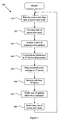
- Figure 1 shows a flow diagram of a method for controlling access to and utilizing a communication medium in accordance with various aspects of the present invention.
- Figure 2 shows a flow diagram of a method for controlling access to and utilizing a communication medium in accordance with various aspects of the present invention.
- Figure 3 illustrates a first exemplary message exchange between two networked devices in accordance with various aspects of the present invention.
- Figure 4 illustrates a second exemplary message exchange between two networked devices in accordance with various aspects of the present invention.
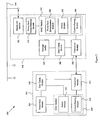
- Figure 5 shows a block diagram of a system for controlling access to and utilizing a communication medium in accordance with various aspects of the present invention.
- Figure 6 shows a flow diagram of a method for controlling access to a communication medium in accordance with various aspects of the present invention.
- Figure 1 shows a flow diagram of a method 100 for controlling access to and utilizing a communication medium in accordance with various aspects of the present invention.
- the method 100 may be implemented in a first device (e.g. , a remote device with power-save capability) in a communication network.
- a device implementing the method 100 may be referred to generally as the "first device.”
- the method 100 includes, at step 110, waiting for an event to exit a sleep state of a power-save mode.
- an event may include, for example, a direct command from a user that requires a networked device operating in the sleep state of the power-save mode to exit the sleep state of the power-save mode.
- Such an event may include, for example, periodic expiration of a timer.
- Such an event may, in general, include any event that would cause a device to at least temporarily exit the sleep state of the power-save mode.
- the method 100 then includes, at step 120, the first device exiting the power-save mode.
- the exemplary method 100 illustrated in Figure 1 incorporates aspects associated with a networked device having power-save capability, because the power-save environment is a convenient environment in which to present some of the various aspects of the present invention. Accordingly, the scope of various aspects of the present invention should not be limited to characteristics of devices having power-save capabilities or a network having devices with power-save capabilities.
- Such acquisition may include, for example, utilizing a contention-based medium access protocol to obtain access and control of at least a portion of a shared communication medium.
- the first device may operate according to a carrier sense multiple access with collision avoidance (CSMA/CA) protocol to obtain control of the network communication medium.
- the first device may, for example in a wired network, obtain access to the communication medium utilizing a carrier sense multiple access with collision detection (CSMA/CD) protocol.
- CSMA/CD carrier sense multiple access with collision detection
- the method 100 includes the first device utilizing the communication medium to communicate information to a second networked device.
- a first device that has no information to communicate to a second networked device may skip step 140.
- Such information may include, for example, data or control information.
- Such information may be included in a single data packet or plurality of data packets.
- Such information may include, for example, unicast, multicast or broadcast information.
- the information communication may or may not include packet acknowledgement indications from the receiver of the communicated information. Accordingly, the scope of various aspects of the present invention should not be limited to characteristics of particular information format or type. Nor should the scope of various aspects of the present invention be limited to characteristics of a particular communication mechanism.
- step 140 may include utilizing typical medium access safeguards, such as time limits, to maintain communication discipline in the communication network. For example, step 140 need not enable the first device to control the communication medium in an uninterrupted fashion until the device has no more information to communicate. Such unchecked control could, in particular scenarios, have detrimental effects on the communication network. Accordingly, for example, the network may place constraints on the duration for which a device or group of devices may maintain control over the communication medium or portions thereof.
- typical medium access safeguards such as time limits
- the method 100 includes the first device passing control of the communication medium to a second networked device. Having received such medium control from the first device, the second device may then utilize the communication medium for communicating information traffic without having to perform various medium access activities, such as, for example, contending with other networked devices for access to the communication medium. For example and without limitation, if the first device communicates information at step 140 to a second device (e.g. , a network access point), the first device may, at step 150, pass control of the communication medium to the second device or to some other networked device.
- a second device e.g. , a network access point
- the first device may pass control of the communication medium to a second device in a variety of ways.
- the first device may communicate an explicit notification to the second device indicating that the second device may assume control over the communication medium.
- a notification may be incorporated into a packet that the first device communicates to the second device or another networked device.
- Such a packet may also include, for example, control information and/or data information. Accordingly, the scope of various aspects of the present invention should not be limited to characteristics of a particular mechanism of passing control of the communication medium.
- a remote power-save device may notify a network controlling entity or access point that the power-save device has power-save capability. Then, upon the power-save device sending a packet to the access point indicating that the power-save device has no data or no more data to send, the access point may automatically assume control of the communication medium for sending downstream traffic to the power-save device.
- the access point may, for example, distinguish between power-save devices and non-power-save devices in its network and interact with each type of device in a different manner. For example, the exemplary access point may choose not to accept control from the remote device if the access point determines that the remote device does not have power-save capability.
- the method 100 includes receiving information from the second device, which received control of the communication medium at step 150.
- step 160 may be skipped.
- Such information is not to be limited to a particular type of data or data format.
- such information may take the form of several discrete packets of information, which include data and/or control information.
- the second device may, for example, communicate one or more discrete packets to the first device while maintaining control of the communication medium.
- the network may utilize various mechanisms to ensure that the second device does not retain control of the communication medium for an unduly long period.
- a communication system that places an upper limit on the time that a particular device may control the communication medium
- such a communication system incorporating medium access control in accordance with various aspects of the present invention may place such a limit on the combined time for which the first and second devices may control the communication medium.
- the second device may be a network access point that has buffered traffic destined for the power-save device while the power-save device was in a sleep state of a power-save mode.
- the second device may include any networked entity that has traffic to deliver to the first device.
- the method 100 flow may by-pass step 160. Note that the scope of various aspects of the present invention should not be limited to receiving a particular type of information or receiving information from a particular type of network entity.
- the method 100 includes notifying a user of recently transferred information.
- a remote device may notify the user of the remote device that the remote device has recently received updated information from the network.
- the user may, for example, control the existence, nature and timing of such a notification.
- the user may specify that the device is not to notify the user.
- the user may specify that the device is only to notify the user of updates regarding particular types of information. Accordingly, the scope of various aspects of the present invention is not to be limited to the existence of such a notification or the nature of any notification provided.
- the method 100 includes the first device re-entering the sleep state of the power-save mode.
- the first device may re-enter the sleep state of the power-save mode.
- the method 100 flow may then return to method step 110, where the first device again waits for an event to cause the first device to exit the sleep state of the power-save mode.
- the power-save network environment is for illustrative purposes and should not limit the scope of various aspects of the present invention to characteristics of power-save devices or networks including such devices.
- Figure 2 shows a flow diagram of a method 200 for controlling access to and utilizing a communication medium in accordance with various aspects of the present invention.
- a device implementing the method 200 may be referred to generally as the "first device.”
- the first device may include, for example and without limitation, an access point device in a communication network.
- a device implementing the method 200 may be referred to generally as the "first device.”
- the method 200 includes receiving information from a second device.
- the second device may have acquired access to the communication medium by performing steps of a medium access protocol (e.g. , a contention-based medium access protocol).
- Step 210 includes various sub-steps, which may or may not be followed by the first device depending on the particular communication scenario.
- Step 210 may include at step 212, for example, receiving an initial packet from the second device.
- Step 210 may also include at step 214, for example, receiving additional information packets from the second device.
- the first device may perform step 214 when the second device has more information to communicate to the first device than can reasonably be packaged in a single packet.
- System packet size constraints may also limit packet size.
- Step 210 may further include at step 216, for example, receiving an indication from the second device that the first device may assume control of the communication medium. Such an indication may be an explicit directive or may, for example, be an indication that the second device has no data or no more data to send to the first device.
- the initial packet communicated at step 212 may be the only packet communicated to the first device. That initial packet may, for example, include data information, control information, and the indication that the first device is to take control of the communication medium. Accordingly, the scope of various aspects of the present invention should not be limited to a particular packet or message format or packet stream format.
- the exemplary method 200 includes determining if the second device is a power-save device. Such a determination may be made in a variety of ways. For example, the second device may have previously registered with the network as having power-save capability and may be listed in a database as having such capability. Also, for example, the second device may incorporate indications of its power-save capability in various messages sent by the second device to the first device. Accordingly, the scope of various aspects of the present invention shall not be limited by a particular method of indicating power-save capability or a particular method of determining whether a networked device has power-save capability.
- the method 200 includes communicating information traffic to the second device.
- Step 240 includes various sub-steps, as illustrated in Figure 2, that may or may not be followed depending on the particular communication scenario.
- the method 200 includes accepting control of the communication medium that was passed from the second device at step 216.
- the first device may by-pass having to perform various medium access acquisition tasks, such as, for example, contending with other network devices for access to the communication medium.
- the communication medium is generally governed by a contention-based medium access protocol
- the first device may immediately begin communicating information back to the second device instead of having to queue the information and contend for access to the communication medium for each information packet to be sent to the second device.
- the exemplary method 200 does not accept a communication medium control hand-off from a non-power-save device.
- the scope of various aspects of the present invention should not be limited to only accepting medium control hand-off from power-save devices.
- Step 246, in turn, includes communicating a message over the communication medium to the second device that indicates information will eventually follow.
- the mechanism discussed above to compensate for information retrieval latency is exemplary.
- the method 200 may employ a variety of alternative mechanisms to handle such latency. Accordingly, the scope of various aspects of the present invention should not be limited to characteristics of a particular latency handling mechanism.
- the method 200 releases control of the communication medium.
- release may include, for example, communicating an explicit release message or may include, for example, remaining silent for a predetermined period of time in accordance with the rules of medium access for the particular communication medium in use. Accordingly, the scope of various aspects of the present invention should not be limited to a particular medium control release mechanism.
- the communications between the first and second devices may be subjected to various communication network safeguards, such as time constraints, to ensure that other networked devices have fair access to the communication medium.
- FIG. 3 illustrates a first exemplary message exchange 300 between two networked devices in accordance with various aspects of the present invention.
- the exemplary message exchange 300 is provided in the context of the IEEE 802.11 standard. However, by no means, should the scope of various aspects of the present invention be limited to IEEE 802.11 features and implementations.
- the top row of the message exchange 300 is labeled "QSTA.” This generally refers to a quality of service station in the IEEE 802.11 context.
- the QSTA may be generally thought of, for this example, as a first networked device that may have power-save capabilities.
- the bottom row of the message exchange 300 is labeled "QAP.” This generally refers to a quality of service access point in the IEEE 802.11 context.
- the QAP may be generally thought of, for this example, as a second networked device.
- the QSTA Prior to the exemplary message exchange 300, the QSTA gains access to and control of the communication medium. For example, the QSTA may acquire access to the communication medium following a contention-based medium access protocol, such as CSMA/CA.
- a contention-based medium access protocol such as CSMA/CA.
- the message exchange 300 includes the QAP sending a second message 320 to the QSTA.
- the second message 320 may, for example, be an acknowledgement message (ACK) to indicate to the QSTA that the QAP successfully received the first message 310.
- ACK acknowledgement message
- the message exchange 300 then includes a third message 330 from the QSTA to the QAP.
- the third message 330 may, for example, be a Q-Data message with the More flag unset.
- the unset More flag may indicate to the QAP that the QSTA has no more data to send to the QAP.
- the unset More flag may also, for example, indicate a handoff of control of the communication medium from the QSTA to the QAP.
- the QAP may treat power-save devices differently than non-power-save devices. For example, if the QAP determines that the QSTA is not a power-save device, the QAP may merely acknowledge receipt of the third message 330 and cease communicating with the QSTA, thereby releasing the communication medium. Conversely, if the QAP determines that the QSTA is a power-save device, the QAP may accept control of the communication medium from the QSTA, for example, for the communication of information traffic back to the QSTA.
- the QAP assumes control over the communication medium.
- the QAP responds by sending a fourth message 340 to the QSTA.
- the fourth message 340 may, for example, be a Q-Data message that includes data for the QSTA and an indication acknowledging receipt of the third message 330.
- the exemplary message exchange 300 then includes a fifth message 350 from the QSTA to the QAP, which may, for example, acknowledge receipt of the fourth message 340.
- the message exchange 300 then includes a sixth message 360 from the QAP to the QSTA, which may, for example, include additional data for the QSTA.
- the message exchange 300 then includes a seventh message 370 from the QSTA to the QAP, which may, for example, include an indication acknowledging receipt of the sixth message 360.
- the exemplary message exchange 300 may continue with the QSTA and the QAP exchanging information, for example, until the QAP exhausts its supply of information to be communicated to the QSTA.
- the QSTA and QAP may discontinue the message exchange 300 due to expiration of a medium access time limit or other medium access control mechanism, or due to other considerations regarding fairness of access or attempts to guarantee good quality of service to the collection of QSTA within the network.
- FIG 4 illustrates a second exemplary message exchange 400 between two networked devices in accordance with various aspects of the present invention.
- the second exemplary message exchange 400 is provided in the context of the IEEE 802.11 standard. However, by no means, should the scope of various aspects of the present invention be limited to IEEE 802.11 features and implementations.
- the top row of the message exchange 400 is labeled "QSTA.” This generally refers to a quality of service station in the IEEE 802.11 context.
- the QSTA may be generally thought of, for this example, as a first networked device that may have power-save capabilities.
- the bottom row of the message exchange 400 is labeled "QAP.” This generally refers to a quality of service access point in the IEEE 802.11 context.
- the QAP may be generally thought of, for this example, as a second networked device.
- the QSTA Prior to the exemplary message exchange 400, the QSTA gains access to and control of the communication medium. For example, the QSTA may acquire access to the communication medium following a contention-based medium access protocol, such as CSMA/CA.
- a contention-based medium access protocol such as CSMA/CA.
- the QAP may treat power-save devices differently than non-power-save devices. For example, if the QAP determines that the QSTA is not a power-save device, the QAP may merely acknowledge receipt of the first message 410 and cease communicating with the QSTA, thereby releasing the communication medium. Conversely, if the QAP determines that the QSTA is a power-save device, the QAP may accept control of the communication medium from the QSTA for the communication of information traffic, for example, from the QAP to the QSTA.
- the QAP assumes control over the communication medium.
- the message exchange 400 includes the QAP sending a second message 420 to the QSTA.
- the second message 420 may, for example, include an acknowledgement indication (ACK) to indicate to the QSTA that the QAP successfully received the first message 410.
- ACK acknowledgement indication
- the second message 420 may include a null data frame, which may indicate to the QSTA that the QAP has information traffic buffered for delivery to the QSTA, but that the QAP needs additional time to acquire the information from the buffer.
- a null data frame may, for example, allow the QAP to retain control of the communication medium (e.g ., a communication medium controlled by a contention-based medium access control protocol) while the QAP is obtaining the information traffic destined for the QSTA.
- the message exchange 400 then includes a sixth message 460 from the QAP to the QSTA, which may, for example, include additional information for the QSTA that the QAP retrieved from a buffer.
- the message exchange 400 then includes a seventh message 470 from the QSTA to the QAP, which may, for example, include an indication acknowledging receipt of the sixth message 460.
- the exemplary message exchange 400 may continue with the QSTA and the QAP exchanging information, for example, until the QAP exhausts its supply of information to be communicated to the QSTA.
- the QSTA and QAP may discontinue the message exchange 400 due to expiration of a medium access time limit or due to some other form of medium access control mechanism, or due to other considerations regarding fairness of access or attempts to guarantee good quality of service to the collection of QSTA within the network.
- FIG. 5 shows a block diagram of a system 500 for controlling access to and utilizing a communication medium in accordance with various aspects of the present invention.
- the system 500 includes a first communication module 510, which may, for example, be utilized by a first networked device. Various components of the first communication module 510 may, for example, perform various aspects of the method 100 illustrated in Figure 1.
- the system 500 also includes a second communication module 540, which may, for example, be utilized by a second networked device. Various components of the second communication module 540 may, for example, perform various aspects of the method 200 illustrated in Figure 2.
- a network device utilizing the first communication module 510 may be referred to as the "first device”
- a device utilizing the second communication module 520 may be referred to as the "second device.”
- the first communication module 510 includes a power-save module 505.
- the power-save module may control the first device entering and exiting a power-save mode.
- the power-save module 505 may automatically place the first device into a sleep state of a power-save mode when the power-save module 505 detects no user interaction with the first device for a period of time.
- the power-save module 505 may automatically place the first device into a wake state of a power-save mode periodically based on the timeout of a wake-up timer.
- the power-save module 505 may place the first device in the wake state when the module 505 detects an attempt at user interaction with the first device. Accordingly, the scope of various aspects of the present invention should not be limited to particular characteristics and implementations of power-save functionality.
- the first communication module 510 includes a transceiver module 515.
- the transceiver module 515 may communicate with various network devices over a variety of communication links.
- the transceiver module 515 may communicate with another networked device over a wired link, wireless link, electrical link, radio frequency link, tethered optical link, or non-tethered optical link. Accordingly, the scope of various aspects of the present invention should not be limited by characteristics of a particular type of transceiver or communication link.
- the first communication module 510 includes a medium access control (MAC) module 520.
- the exemplary MAC module 520 is communicatively coupled to the power-save module 505 and the transceiver module 515.
- the general function of the MAC module 520 is to control access to and control the network communication medium. Such access may include, for example, acquiring access and control of a channel of the communication medium, such as a time slot of a communication medium governed by TDMA, a frequency of a communication medium governed by FDM, a frequency hopping sequence, or a code of a communication medium governed by CDMA.
- the MAC module 520 includes a medium access module 522 that performs communication medium access functionality.
- acquiring access to and control of the network communication medium may include, for example, gaining access to and control of a plurality of communication channels or all of the communication channels.
- the medium access module 522 may utilize the transceiver module 515 to acquire access and control of a communication medium by utilizing any of a variety of communication medium access protocols.
- the medium access module 522 may acquire medium access and control according to a carrier sense multiple access with collision avoidance (CSMA/CA) protocol.
- the medium access module 522 may, for example, acquire access to the communication medium according to an ALOHA or a CSMA/CD protocol. Accordingly, the scope of various aspects of the present invention should not be limited to characteristics of a particular medium access protocol.
- the exemplary MAC module 520 also includes a communication medium control-passing module 521. After the medium access module 522 has gained access and control of the communication medium, the control-passing module 521 may pass control of the communication medium to another networked device. Such a networked device may, for example, include a second networked device utilizing the second communication module 540 (the "second device). After the second device receives control of the communication medium from the first device, the second device may then utilize the communication medium without having to perform various medium access activities, such as, for example, contending with other network devices for access and control of the communication medium.
- a networked device may, for example, include a second networked device utilizing the second communication module 540 (the "second device). After the second device receives control of the communication medium from the first device, the second device may then utilize the communication medium without having to perform various medium access activities, such as, for example, contending with other network devices for access and control of the communication medium.
- the exemplary MAC module 520 may also communicate to various network devices that the first device has the capability to enter and exit a sleep state of a power-save mode. Other network devices may then utilize this information to govern their treatment of and communication with the first device.
- the MAC module 520 may incorporate various safeguards generally associated with medium access, including for example, timeout functions to ensure fair access to the communication medium for all network devices. Thus, the MAC module 520 may include various aspects to ensure that the first device may not control the communication medium for an inappropriate amount of time.
- the control-passing module 521 may pass control of the communication medium to another networked device in a variety of ways.
- the control-passing module 521 may utilize the transceiver module 515 to communicate an explicit message to another device transferring control of the communication medium to the other device.
- the control-passing module 521 may utilize the transceiver module 515 to communicate a null data frame to another device, thus signifying that the first device is no longer utilizing the communication medium and that the other device may then take control of the communication medium.
- the first communication module 520 also includes a data communication module 530 that is coupled to the MAC module 520, the transceiver module 515 and the power-save module 505.
- the data communication module 530 may utilize the transceiver module 515 to communicate information to another networked device.
- the data communication module 530 may utilize the transceiver module 515 to communicate with the second device.
- the data communication module 530 may, for example, utilize the transceiver module 515 to communicate a single packet or a stream of packets to the second device.
- the data communication module 530 may also perform various data receiving functions. For example, following transfer of control of the communication from the first device to the second device, the data communication module 530 may utilize the transceiver module 515 to receive information communicated to the first device from the second device, which now has control of the communication medium. Such information may, for example, be in the form of a single data packet or a stream of data packets.
- the data communication module 530 may communicate with the power-save module 505 to indicate to the power-save module 505 when communication between the first device and the second device is complete, thereby allowing the power-save module 505 to decide whether to cause the first device to enter a sleep state of a power-save mode.
- modules of the first communication module 510 may, for example, be incorporated into a single integrated circuit.
- Various modules may include hardware, software, or combinations thereof.
- Various modules may also share components of the communication module 510, such as, for example, a microprocessor, memory devices, bus infrastructure, clocks, etc. Accordingly, the scope of various aspects of the present invention should not be limited to particular arrangements and implementations of the various modules discussed.
- the first communication module 510 may also include various user interface modules, which may, for example, indicate to the user whether the device is in a power-save mode.
- the various user interface modules may also indicate to a user that the device has recently received updated information. Such modules may provide the user with the ability to tailor user interface interaction with the device in the manner best suited to the individual user. Accordingly, the scope of various aspects of the present invention should by no means be limited to various user interface modes, functions or features.
- the second communication module 540 is illustrated connected to a wired LAN 544 through a wired LAN module 542.
- the second communication module 540 may, for example, be utilized in a network access point device.
- the scope of various aspects of the present invention should not be limited to a particular type of network device.
- the second communication module 540 includes a transceiver module 550.
- the transceiver module 550 may communicate with various network devices over a variety of communication links.
- the transceiver module 515 may communicate with another networked device over a wired link, wireless link, electrical link, radio frequency link, tethered optical link, or non-tethered optical link. Accordingly, the scope of various aspects of the present invention should not be limited by characteristics of a particular type of transceiver or communication link.
- the second communication module 540 also includes a MAC module 560, which is communicatively coupled to the transceiver module 550. Similar to the MAC module 520 discussed previously with respect to the first communication module 510, the exemplary MAC module 560 includes a medium access module 562. The medium access module 562 may, for example, share various aspects with the medium access module 522 discussed with regard to the first communication module 510.
- the MAC module 560 also includes a control-passing module 564.
- the control-passing module 564 may utilize the transceiver module 550 to receive a message from the first device passing control of the communication medium from the first device to the second device. Having acquired control of the communication medium in this manner, the MAC module 560 may access and control the communication medium without having to perform various medium access activities. For example, if access to the communication medium is generally governed by a contention-based medium access protocol, such as, for example, CSMA/CA, the MAC module 560 may acquire control directly from the first device, thereby by-passing the need to contend with other network devices for access to the communication medium.
- a contention-based medium access protocol such as, for example, CSMA/CA
- the second communication module 540 also includes a data communication module 580 that is communicatively coupled to the transceiver module 550 and the MAC module 560.
- the data communication module 580 may, for example, utilize the transceiver module 550 to receive information from networked devices.
- the data communication module 580 may also, for example, utilize the transceiver module 550 to communicate information to other networked devices.
- the data communication module 580 may utilize the transceiver module 550 to receive information from the first device.
- information may include data and/or control information, and may also include a medium access hand-off message.
- a medium access hand-off message may also, for example, be a stand-alone message.
- the data communication module 580 may utilize the transceiver module 550 to communicate information back to the first device.
- the access point device may have been storing information destined for the first device in a buffer and awaiting instructions from the first device or an indication that the first device is not in a sleep state of a power-save mode.
- the data communication module 580 is shown communicatively coupled to a message buffer 590, in which may be stored information destined for the first device.
- the data communication module 580 may retrieve such information from the message buffer 590 and utilize the transceiver module 550 to communicate the information to the first device.
- the data communication module 580 may, for example, communicate such information to the first device by communicating a single data packet or a stream of data packets to the first device, while the MAC module 560 maintains control of the communication medium.
- the message buffer 590 may be incorporated into the second communication module 540 or not.
- the message buffer 590 may be at another location accessible on the wired LAN 544.
- the second communication module 540 includes a power-save device database module 570, which is communicatively coupled to the power-save determination module 566 of the MAC module 560.
- the power-save determination module 566 e.g. , in coordination with the control-passing module 564) may utilize the information in the power-save device database module 570 to determine if a received medium control hand-off message was transmitted by a network device with power-save capability.
- the second communication module 540 may respond to such a message differently depending on the message source.
- the second communication module 540 may decide not to accept control of the communication medium in response to messages received from networked devices that do not have power-save capability.
- the second communication module 540 may, for example, always accept control of the communication medium in response to medium control hand-off messages received from networked devices that are power-save devices.
- modules of the second communication module 540 may, for example, be incorporated into a single integrated circuit.
- Various modules may include hardware, software, or combinations of hardware and software.
- Various modules may also share components of the second communication module 540, such as, for example, a microprocessor, memory devices, bus infrastructure, clocks, etc. Accordingly, the scope of various aspects of the present invention should not be limited to particular arrangements and implementations of the various modules discussed.
- Figure 6 shows a flow diagram of a method 600 for controlling access to a communication medium in accordance with various aspects of the present invention.
- the exemplary method 600 is presented in the context of a communication network having a networked device with power-save capability. However, the scope of various aspects of the present invention should, by no means, be limited to characteristics of such power-save devices or a network having such devices. Additionally, the exemplary method 600 may incorporate various aspects of the exemplary methods 100, 200 shown in Figures 1 and 1 and discussed previously.
- the method 600 includes a first networked device exiting a sleep state of a power-save mode.
- the first networked device may exit the sleep state of the power-save mode for a variety of reasons, including but not limited to, user activity or timer activity.
- the first networked device may complete some other activity with which it was pre-occupied.
- the method 600 at step 620, then includes the first networked device gaining access to and control of the network communications medium.
- access and control may, for example, correspond to one or more channel, frequency, timeslot, frequency hopping pattern, or code.
- the first networked device may, for example, utilize a contention-based medium access protocol (e.g ., CSMA/CA) to gain access to the communication medium.
- CSMA/CA contention-based medium access protocol
- the method 600 includes the first networked device utilizing the communication medium to communicate information to a second networked device.
- the second networked device may be, for example, an access point device in a wireless network.
- the second networked device may be, for example, a peer device. Accordingly, the scope of various aspects of the present invention should, by no means, be limited to characteristics of particular devices or networks.
- Step 630 may include the first networked device communicating information to the second networked device in a data packet or a plurality of data packets.
- the first networked device may by-pass step 630.
- the method 600 includes passing control of the communication medium from the first networked device to a second networked device.
- the second networked device may, for example, be the same networked device to which the first networked device communicated information in step 630.
- the second networked device having thereby gained control of the communication medium, may then utilize the communication medium without having to follow the medium access protocol generally governing access to the communication medium.
- the medium access protocol generally governing access to the communication medium.
- the second networked device may utilize the communication medium without having to contend with other networked devices for access to the communication medium.
- Step 640 is illustrated having two exemplary sub-steps.
- Step 642 includes the first networked device communicating a medium control hand-off message to the second networked device.
- the medium control hand-off message may, for example, notify the second networked device that the second networked device may have control over the communication medium.
- the medium control hand-off message may have a variety of forms.
- the hand-off message may be a stand-alone message or may be a flag in a multi-purpose message.
- the hand-off message may be a flag in a packet containing data and/or control information, which may be set to indicate to the receiving device that the sending device has no data or no more data to send.
- Step 644 includes the second networked device, which received the hand-off message, verifying that the first networked device is a power-save device.
- the second networked device may distinguish between power-save and non-power-save devices.
- the second networked device may only accept a medium control hand-off from a power-save device and not from a non-power-save device. Note that allowing hand-off from a power-save device and not allowing hand-off from a non-power-save device is an exemplary scenario and should, by no means, limit the scope of various aspects of the present invention.
- Step 644 may include, for example, the second networked device analyzing messages from the first networked device to determine whether the first networked device is a power-save device.
- the second networked device may access a database of known power-save devices to determine if the first networked device is a power-save device.
- the second networked device may perform such verification in a variety of ways, and the scope of various aspects of the present invention should not be limited by characteristics of particular verification mechanisms.
- the method 600 includes the second networked device, having acquired control over the communication medium at step 640, utilizing the communication medium to communicate information.
- the second networked device may communicate information back to the first networked device.
- the second networked device may have stored traffic destined for the first networked device in a buffer, waiting for an indication that the first networked device is not in a sleep state of a power-save mode.
- the second networked device may then, for example, having received an indication that the first networked device is not in a sleep state of a power-save mode, and having just received control of the communication medium from the first networked device, retrieve such stored information from the buffer and utilize the communication medium to communicate the retrieved information to the first networked device.
- Step 650 may include, for example, communicating information to the first networked device, or other networked device, using a single packet or a stream of packets. Step 650 may include communicating such information over the communication medium while maintaining control over the communication medium.
- the method 600 thereby provides a mechanism whereby a first and second networked device may communicate information with each other following only one successful acquisition of access to and control of the communication medium.
- the method 600 includes the second networked device releasing control of the communication medium.
- Step 660 may include, for example, the second networked device communicating a message explicitly indicating that the second networked device is releasing control of the communication medium.
- step 660 may include the second networked device discontinuing its utilization of the communication medium. Accordingly, the scope of various aspects of the present invention should not be limited by characteristics of particular mechanisms for releasing control of the communication medium.
- the medium access control for the communication medium may include safeguards to keep a networked entity or set of networked entities from controlling the communication medium for an inappropriate period of time.
- the medium access protocol may include an upper time limit on the time that a device or group of devices may maintain uninterrupted control of the communication medium.
Landscapes
- Engineering & Computer Science (AREA)
- Computer Networks & Wireless Communication (AREA)
- Signal Processing (AREA)
- Mobile Radio Communication Systems (AREA)
- Small-Scale Networks (AREA)
Claims (10)
- Verfahren zur Verwendung in einer Netzwerk-Vorrichtung mit der Fähigkeit, einen Ruhezustand eines Energiespar-Modus aufzunehmen und zu verlassen, wobei das Verfahren (100) zur Steuerung des Zugriffs auf ein Kommunikationsmedium dient, wobei das Verfahren (100) dadurch gekennzeichnet ist, dass es die folgenden Schritte umfasst:Verlassen (120) des Ruhezustands des Energiespar-Modus;Übernehmen (130) der Steuerung des Kommunikationsmediums unter Verwendung eines Contention Based Medium Access Protokolls; undÜbergeben (150) der Steuerung des Kommunikationsmediums an eine zweite Netzwerk-Vorrichtung, wobei die zweite Netzwerk-Vorrichtung während des wettbewerbsfreien Intervalls des Medium Access Protokolls eine Vielzahl von Informationspaketen an die Netzwerk-Vorrichtung kommunizieren kann.
- Verfahren nach Anspruch 1, das des Weiteren, vor dem Übergeben (150) der Steuerung des Kommunikationsmediums an die zweite Netzwerk-Vorrichtung, das Kommunizieren (140) von Daten an die zweite Netzwerk-Vorrichtung umfasst.
- Verfahren nach Anspruch 1 oder 2, wobei das Übergeben (150) der Steuerung des Kommunikationsmediums an die zweite Netzwerk-Vorrichtung das Kommunizieren (140) einer Nachricht an die zweite Netzwerk-Vorrichtung umfasst, die angibt, dass die Netzwerk-Vorrichtung eine energiesparende Operation durchführen kann.
- Verfahren nach Anspruch 1 oder 2, wobei das Übergeben (150) der Steuerung des Kommunikationsmediums an die zweite Netzwerk-Vorrichtung das Kommunizieren (140) einer Nachricht an die zweite Netzwerk-Vorrichtung umfasst, die angibt, dass die Netzwerk-Vorrichtung keine Daten an die zweite Netzwerk-Vorrichtung zu kommunizieren hat.
- Verfahren nach Anspruch 1, das des Weiteren, nach dem Übergeben (150) der Steuerung des Kommunikationsmediums an die zweite Netzwerk-Vorrichtung, das Empfangen (160) einer Vielzahl von Informationspaketen von der zweiten Netzwerk-Vorrichtung umfasst, die über das Kommunikationsmedium übertragen werden, während die zweite Netzwerk-Vorrichtung die Steuerung des Kommunikationsmediums beibehält.
- Kommunikationsmodul (510) zur Verwendung in einer Netzwerk-Vorrichtung, wobei die Netzwerk-Vorrichtung die Fähigkeit besitzt, einen Ruhezustand eines Energiespar-Modus aufzunehmen und zu verlassen, wobei das Kommunikationsmodul (510) dadurch gekennzeichnet ist, dass es aufweist:ein Transceiver-Modul (515);ein Energiespar-Modul (505), das die Netzwerk-Vorrichtung beim Aufnehmen und Verlassen eines Energiespar-Modus steuert;ein Medium Access Control (MAC) Modul (520), das mit dem Transceiver-Modul (515) und dem Energiespar-Modul (505) kommunikativ gekoppelt ist, wobei das Medium Access Control Modul (520) aufweist:ein erstes Modul (522), das, nachdem das Energiespar-Modul (505) veranlasst hat, dass die Netzwerk-Vorrichtung den Ruhezustand des Energiespar-Modus verlässt, das Transceiver-Modul (515) verwendet, um die Steuerung eines Netzwerk-Kommunikationsmediums zu übernehmen, unter Verwendung eines Contention Based Medium Access Protokolls; undein zweites Modul (521), das das Transceiver-Modul (515) verwendet, um die Steuerung des Kommunikationsmediums an eine zweite Netzwerk-Vorrichtung zu übertragen, wobei die zweite Netzwerk-Vorrichtung während des wettbewerbsfreien Intervalls des Medium Access Protokolls über das Kommunikationsmedium eine Vielzahl von Informationspaketen an die Netzwerk-Vorrichtung kommunizieren kann.
- Kommunikationsmodul (510) nach Anspruch 6, das des Weiteren ein Datenkommunikations-Modul (530) aufweist, das kommunikativ mit dem Transceiver-Modul (515) und dem Medium Access Control Modul (520) gekoppelt ist, wobei das Datenkommunikations-Modul (530), bevor das zweite Modul (521) die Steuerung des Kommunikationsmoduls an die zweite Netzwerk-Vorrichtung überträgt, das Transceiver-Modul (515) verwendet, um Informationen an die zweite Netzwerk-Vorrichtung zu übertragen.
- Kommunikationsmodul nach Anspruch 6, das des Weiteren ein Datenkommunikations-Modul (530) aufweist, das kommunikativ mit dem Transceiver-Modul (515) und dem Medium Access Modul (520) gekoppelt ist, wobei das Daten-Kommunikationsmodul (530), nachdem das zweite Modul (521) die Steuerung des Kommunikationsmediums an die zweite Netzwerk-Vorrichtung übertragen hat, das Transceiver-Modul (515) verwendet, um eine Vielzahl von Informationspaketen von der zweiten Netzwerk-Vorrichtung zu erhalten, die über das Kommunikationsmedium kommuniziert werden, während die zweite Netzwerk-Vorrichtung die Steuerung über das Kommunikationsmedium beibehält.
- Kommunikationsmodul nach Anspruch 6, das des Weiteren ein Datenkommunikations-Modul (530) aufweist, das kommunikativ mit dem Transceiver-Modul (515) und dem Medium Access Modul (520) gekoppelt ist, wobei das Energiespar-Modul (505), nachdem das Datenkommunikations-Modul (530) eine Anzeige erhalten hat, dass die zweite Netzwerk-Vorrichtung keine Daten zu der Netzwerk-Vorrichtung zu kommunizieren hat, veranlasst, dass die Netzwerk-Vorrichtung einen Ruhezustand eines Energiespar-Modus aufnimmt.
- Kommunikationsmodul nach einem der Ansprüche 6 bis 9, wobei das zweite Modul (521) die Steuerung des Kommunikationsmediums an die zweite Netzwerk-Vorrichtung überträgt, indem es das Transceiver-Modul (515) verwendet, um eine Nachricht an die zweite Netzwerk-Vorrichtung zu kommunizieren, die angibt, dass die Netzwerk-Vorrichtung keine Daten an die zweite Netzwerk-Vorrichtung zu kommunizieren hat.
Applications Claiming Priority (4)
| Application Number | Priority Date | Filing Date | Title |
|---|---|---|---|
| US50178103P | 2003-09-10 | 2003-09-10 | |
| US501781P | 2003-09-10 | ||
| US10/770,171 US7324468B2 (en) | 2003-09-10 | 2004-02-02 | System and method for medium access control in a power-save network |
| US770171 | 2004-02-02 |
Publications (2)
| Publication Number | Publication Date |
|---|---|
| EP1515481A1 EP1515481A1 (de) | 2005-03-16 |
| EP1515481B1 true EP1515481B1 (de) | 2006-10-18 |
Family
ID=34139068
Family Applications (1)
| Application Number | Title | Priority Date | Filing Date |
|---|---|---|---|
| EP04017688A Expired - Lifetime EP1515481B1 (de) | 2003-09-10 | 2004-07-26 | System und Verfahren zur Mediumszugriffssteuerung, MAC, in einem energiesparenden Netzwerk |
Country Status (3)
| Country | Link |
|---|---|
| US (2) | US7324468B2 (de) |
| EP (1) | EP1515481B1 (de) |
| DE (1) | DE602004002826T2 (de) |
Families Citing this family (57)
| Publication number | Priority date | Publication date | Assignee | Title |
|---|---|---|---|---|
| US7532639B2 (en) * | 2003-09-10 | 2009-05-12 | Broadcom Corporation | System and method for message queue management in a power-save network |
| US20050165909A1 (en) * | 2003-12-19 | 2005-07-28 | Cromer Daryl C. | Data processing system and method for permitting a server to remotely access asset information of a mobile client |
| JP4628162B2 (ja) * | 2004-04-16 | 2011-02-09 | 株式会社ソニー・コンピュータエンタテインメント | 通信端末装置、通信システムおよび電力制御方法 |
| US7424007B2 (en) * | 2004-05-12 | 2008-09-09 | Cisco Technology, Inc. | Power-save method for 802.11 multicast paging applications |
| US7551568B2 (en) * | 2004-06-22 | 2009-06-23 | Ntt Docomo Inc. | Power mode aware packet communication method and apparatus |
| US20060094477A1 (en) * | 2004-11-04 | 2006-05-04 | Motorola, Inc. | Power saving system and method |
| US20060176896A1 (en) * | 2005-02-10 | 2006-08-10 | Callaway Edgar H Jr | Method and apparatus for transmitting data within a communication system |
| US7529925B2 (en) | 2005-03-15 | 2009-05-05 | Trapeze Networks, Inc. | System and method for distributing keys in a wireless network |
| US7606602B2 (en) * | 2005-08-11 | 2009-10-20 | Toshiba America Research, Inc. | Reducing power consumption of Wi-Fi enabled mobile devices |
| JP4481912B2 (ja) * | 2005-10-06 | 2010-06-16 | キヤノン株式会社 | ネットワークデバイスおよびネットワークシステムおよびネットワークデバイスの省電力制御方法およびプログラム |
| US7573859B2 (en) * | 2005-10-13 | 2009-08-11 | Trapeze Networks, Inc. | System and method for remote monitoring in a wireless network |
| US8638762B2 (en) * | 2005-10-13 | 2014-01-28 | Trapeze Networks, Inc. | System and method for network integrity |
| US7551619B2 (en) * | 2005-10-13 | 2009-06-23 | Trapeze Networks, Inc. | Identity-based networking |
| US7724703B2 (en) * | 2005-10-13 | 2010-05-25 | Belden, Inc. | System and method for wireless network monitoring |
| WO2007044986A2 (en) * | 2005-10-13 | 2007-04-19 | Trapeze Networks, Inc. | System and method for remote monitoring in a wireless network |
| US20070110011A1 (en) * | 2005-11-14 | 2007-05-17 | Joakim Nelson | Mobile communication apparatus for operation in a wireless local area network |
| US7500119B2 (en) * | 2005-12-21 | 2009-03-03 | Intel Corporation | Power saving techniques for use in communication systems, networks, and devices |
| US7672682B2 (en) * | 2006-03-28 | 2010-03-02 | Airvana, Inc. | Managing page cycle periods of access terminals |
| US7724696B1 (en) * | 2006-03-29 | 2010-05-25 | Amazon Technologies, Inc. | Predictive reader power management |
| US20070260720A1 (en) * | 2006-05-03 | 2007-11-08 | Morain Gary E | Mobility domain |
| US7558266B2 (en) | 2006-05-03 | 2009-07-07 | Trapeze Networks, Inc. | System and method for restricting network access using forwarding databases |
| US8966018B2 (en) * | 2006-05-19 | 2015-02-24 | Trapeze Networks, Inc. | Automated network device configuration and network deployment |
| US7577453B2 (en) * | 2006-06-01 | 2009-08-18 | Trapeze Networks, Inc. | Wireless load balancing across bands |
| US9258702B2 (en) | 2006-06-09 | 2016-02-09 | Trapeze Networks, Inc. | AP-local dynamic switching |
| US9191799B2 (en) | 2006-06-09 | 2015-11-17 | Juniper Networks, Inc. | Sharing data between wireless switches system and method |
| US7912982B2 (en) * | 2006-06-09 | 2011-03-22 | Trapeze Networks, Inc. | Wireless routing selection system and method |
| US8818322B2 (en) | 2006-06-09 | 2014-08-26 | Trapeze Networks, Inc. | Untethered access point mesh system and method |
| US7724704B2 (en) * | 2006-07-17 | 2010-05-25 | Beiden Inc. | Wireless VLAN system and method |
| US8340110B2 (en) * | 2006-09-15 | 2012-12-25 | Trapeze Networks, Inc. | Quality of service provisioning for wireless networks |
| US8072952B2 (en) | 2006-10-16 | 2011-12-06 | Juniper Networks, Inc. | Load balancing |
| US7974235B2 (en) * | 2006-11-13 | 2011-07-05 | Telecommunication Systems, Inc. | Secure location session manager |
| US20080151844A1 (en) * | 2006-12-20 | 2008-06-26 | Manish Tiwari | Wireless access point authentication system and method |
| WO2008083339A2 (en) * | 2006-12-28 | 2008-07-10 | Trapeze Networks, Inc. | Application-aware wireless network system and method |
| US7873061B2 (en) | 2006-12-28 | 2011-01-18 | Trapeze Networks, Inc. | System and method for aggregation and queuing in a wireless network |
| KR100926941B1 (ko) * | 2007-01-05 | 2009-11-17 | 삼성전자주식회사 | 광대역 무선통신 시스템에서 멀티캐스트 및 브로드캐스트서비스를 위한 장치 및 방법 |
| US20080226075A1 (en) * | 2007-03-14 | 2008-09-18 | Trapeze Networks, Inc. | Restricted services for wireless stations |
| US20080276303A1 (en) * | 2007-05-03 | 2008-11-06 | Trapeze Networks, Inc. | Network Type Advertising |
| US8902904B2 (en) * | 2007-09-07 | 2014-12-02 | Trapeze Networks, Inc. | Network assignment based on priority |
| US8238942B2 (en) * | 2007-11-21 | 2012-08-07 | Trapeze Networks, Inc. | Wireless station location detection |
| KR101500970B1 (ko) * | 2008-01-15 | 2015-03-11 | 삼성전자주식회사 | 무선 네트워크 기기의 전력 소모 저감 방법, 장치 및기록매체 |
| JP5178230B2 (ja) * | 2008-02-19 | 2013-04-10 | キヤノン株式会社 | 情報処理装置、情報処理方法及びプログラム |
| US8150357B2 (en) | 2008-03-28 | 2012-04-03 | Trapeze Networks, Inc. | Smoothing filter for irregular update intervals |
| US8145931B2 (en) * | 2008-05-27 | 2012-03-27 | Sharp Laboratories Of America, Inc. | Imaging device with adaptive power saving behavior and method for use thereon |
| US8474023B2 (en) | 2008-05-30 | 2013-06-25 | Juniper Networks, Inc. | Proactive credential caching |
| US8978105B2 (en) * | 2008-07-25 | 2015-03-10 | Trapeze Networks, Inc. | Affirming network relationships and resource access via related networks |
| US8238298B2 (en) * | 2008-08-29 | 2012-08-07 | Trapeze Networks, Inc. | Picking an optimal channel for an access point in a wireless network |
| US8259775B1 (en) * | 2008-10-17 | 2012-09-04 | Honeywell International, Inc. | System, apparatus and method for managing message communications in systems employing frequency hopping |
| US9735831B1 (en) | 2009-09-22 | 2017-08-15 | Honeywell International Inc. | System, apparatus and method for synchronizing communications between devices |
| US8717956B2 (en) * | 2009-12-18 | 2014-05-06 | Electronics And Telecommunications Research Institute | Adaptive power-saving/power-saving support method in wireless communication system and apparatus using the same |
| US9351244B2 (en) * | 2010-02-04 | 2016-05-24 | Telefonaktiebolaget Lm Ericsson (Publ) | Prioritization of energy over system throughput in a wireless communications system |
| KR101867089B1 (ko) | 2011-09-14 | 2018-06-15 | 삼성전자주식회사 | 레거시 와이파이와 와이파이 p2p의 동시 사용 방법 |
| US9439142B2 (en) * | 2013-03-15 | 2016-09-06 | Samsung Electronics Co., Ltd. | Power saving for low latency deterministic networks in wireless personal area networks |
| GB2513312B (en) * | 2013-04-22 | 2020-01-29 | Sony Corp | Communications system for transmitting and receiving data |
| US10036215B2 (en) | 2014-03-28 | 2018-07-31 | Weatherford Technology Holdings, Llc | Swivel elevator |
| US9848380B1 (en) * | 2016-06-21 | 2017-12-19 | International Business Machines Corporation | Context-based coordinated data retrieval for mobile devices |
| US10320442B1 (en) | 2018-02-09 | 2019-06-11 | Ademco Inc. | High bandwidth channel in a frequency hopping system |
| US10783026B2 (en) * | 2018-02-15 | 2020-09-22 | Honeywell International Inc. | Apparatus and method for detecting network problems on redundant token bus control network using traffic sensor |
Family Cites Families (10)
| Publication number | Priority date | Publication date | Assignee | Title |
|---|---|---|---|---|
| US4506360A (en) * | 1982-03-29 | 1985-03-19 | Gould Inc. | Multi-station token pass communication system and method |
| US5657317A (en) * | 1990-01-18 | 1997-08-12 | Norand Corporation | Hierarchical communication system using premises, peripheral and vehicular local area networking |
| GB9304622D0 (en) | 1993-03-06 | 1993-04-21 | Ncr Int Inc | Wireless local area network apparatus |
| DE69433872T2 (de) * | 1994-10-26 | 2005-07-14 | International Business Machines Corp. | Mediumzugriffssteuerungsschema für drahtlose lokale Netze mit verschachtelten Zeitmultiplexrahmen variabler Länge |
| AUPO932297A0 (en) * | 1997-09-19 | 1997-10-09 | Commonwealth Scientific And Industrial Research Organisation | Medium access control protocol for data communications |
| US6463307B1 (en) * | 1998-08-14 | 2002-10-08 | Telefonaktiebolaget Lm Ericsson | Method and apparatus for power saving in a mobile terminal with established connections |
| US6463542B1 (en) * | 1999-05-28 | 2002-10-08 | Advanced Micro Devices, Inc. | Power management indication mechanism for supporting power saving mode in computer system |
| US6834045B1 (en) * | 2000-07-11 | 2004-12-21 | Lappetelaeinen Antti | Assembly, and associated method, for facilitating frequency allocations in a radio communications system to attain statistical spreading of electromagnetic energy |
| US7184767B2 (en) * | 2001-11-28 | 2007-02-27 | Freescale Semiconductor, Inc. | System and method of communication between multiple point-coordinated wireless networks |
| US7715434B2 (en) * | 2003-07-30 | 2010-05-11 | Michael Andrew Fischer | Managing an access point in the presence of separate protocols that share the same communications channel |
-
2004
- 2004-02-02 US US10/770,171 patent/US7324468B2/en not_active Expired - Lifetime
- 2004-07-26 DE DE602004002826T patent/DE602004002826T2/de not_active Expired - Lifetime
- 2004-07-26 EP EP04017688A patent/EP1515481B1/de not_active Expired - Lifetime
-
2007
- 2007-10-02 US US11/865,962 patent/US8325610B2/en not_active Expired - Fee Related
Also Published As
| Publication number | Publication date |
|---|---|
| US20050170868A1 (en) | 2005-08-04 |
| US8325610B2 (en) | 2012-12-04 |
| DE602004002826D1 (de) | 2006-11-30 |
| US20080031175A1 (en) | 2008-02-07 |
| US7324468B2 (en) | 2008-01-29 |
| DE602004002826T2 (de) | 2007-06-14 |
| EP1515481A1 (de) | 2005-03-16 |
Similar Documents
| Publication | Publication Date | Title |
|---|---|---|
| US7324468B2 (en) | System and method for medium access control in a power-save network | |
| US8355716B2 (en) | Communication system, communication apparatus, communication method and computer program | |
| US7881322B1 (en) | Power-saving mechanism for periodic traffic streams in wireless local-area networks | |
| JP4309168B2 (ja) | ワイヤレスネットワークにおけるチャネルアクセススケジューリングのための方法およびシステム | |
| US7245946B2 (en) | Optimal power saving scheduler for 802.11e APSD | |
| US6192230B1 (en) | Wireless data communication system having power saving function | |
| US7852872B2 (en) | System and method for message queue management in a power-save network | |
| US20060029024A1 (en) | System and method for battery conservation in wireless stations | |
| US20040184475A1 (en) | Method for a simple 802.11e HCF implementation | |
| US20090196212A1 (en) | Scheduled peer power save mode | |
| US20070230418A1 (en) | Triggering rule for energy efficient data delivery | |
| CN103369597A (zh) | 无线帧的发送方法及装置 | |
| Lin et al. | A power-saving scheduling for infrastructure-mode 802.11 wireless LANs | |
| Agrawal et al. | Opsm-opportunistic power save mode for infrastructure ieee 802.11 wlan | |
| TWI250400B (en) | System and method for medium access control in a power-save network | |
| Takeuchi et al. | Quick data-retrieving for U-APSD in IEEE802. 11e WLAN networks |
Legal Events
| Date | Code | Title | Description |
|---|---|---|---|
| PUAI | Public reference made under article 153(3) epc to a published international application that has entered the european phase |
Free format text: ORIGINAL CODE: 0009012 |
|
| AK | Designated contracting states |
Kind code of ref document: A1 Designated state(s): AT BE BG CH CY CZ DE DK EE ES FI FR GB GR HU IE IT LI LU MC NL PL PT RO SE SI SK TR |
|
| AX | Request for extension of the european patent |
Extension state: AL HR LT LV MK |
|
| 17P | Request for examination filed |
Effective date: 20050916 |
|
| AKX | Designation fees paid |
Designated state(s): DE FR GB |
|
| GRAP | Despatch of communication of intention to grant a patent |
Free format text: ORIGINAL CODE: EPIDOSNIGR1 |
|
| GRAS | Grant fee paid |
Free format text: ORIGINAL CODE: EPIDOSNIGR3 |
|
| GRAA | (expected) grant |
Free format text: ORIGINAL CODE: 0009210 |
|
| AK | Designated contracting states |
Kind code of ref document: B1 Designated state(s): DE FR GB |
|
| REG | Reference to a national code |
Ref country code: GB Ref legal event code: FG4D |
|
| REF | Corresponds to: |
Ref document number: 602004002826 Country of ref document: DE Date of ref document: 20061130 Kind code of ref document: P |
|
| RAP2 | Party data changed (patent owner data changed or rights of a patent transferred) |
Owner name: BROADCOM CORPORATION |
|
| ET | Fr: translation filed | ||
| PLBE | No opposition filed within time limit |
Free format text: ORIGINAL CODE: 0009261 |
|
| STAA | Information on the status of an ep patent application or granted ep patent |
Free format text: STATUS: NO OPPOSITION FILED WITHIN TIME LIMIT |
|
| 26N | No opposition filed |
Effective date: 20070719 |
|
| REG | Reference to a national code |
Ref country code: FR Ref legal event code: CA |
|
| PGFP | Annual fee paid to national office [announced via postgrant information from national office to epo] |
Ref country code: GB Payment date: 20130723 Year of fee payment: 10 Ref country code: FR Payment date: 20130719 Year of fee payment: 10 |
|
| GBPC | Gb: european patent ceased through non-payment of renewal fee |
Effective date: 20140726 |
|
| REG | Reference to a national code |
Ref country code: FR Ref legal event code: ST Effective date: 20150331 |
|
| PG25 | Lapsed in a contracting state [announced via postgrant information from national office to epo] |
Ref country code: GB Free format text: LAPSE BECAUSE OF NON-PAYMENT OF DUE FEES Effective date: 20140726 Ref country code: FR Free format text: LAPSE BECAUSE OF NON-PAYMENT OF DUE FEES Effective date: 20140731 |
|
| REG | Reference to a national code |
Ref country code: DE Ref legal event code: R082 Ref document number: 602004002826 Country of ref document: DE Representative=s name: BOSCH JEHLE PATENTANWALTSGESELLSCHAFT MBH, DE Ref country code: DE Ref legal event code: R081 Ref document number: 602004002826 Country of ref document: DE Owner name: AVAGO TECHNOLOGIES INTERNATIONAL SALES PTE. LT, SG Free format text: FORMER OWNER: BROADCOM CORP., IRVINE, CALIF., US Ref country code: DE Ref legal event code: R081 Ref document number: 602004002826 Country of ref document: DE Owner name: AVAGO TECHNOLOGIES GENERAL IP (SINGAPORE) PTE., SG Free format text: FORMER OWNER: BROADCOM CORP., IRVINE, CALIF., US |
|
| REG | Reference to a national code |
Ref country code: DE Ref legal event code: R082 Ref document number: 602004002826 Country of ref document: DE Representative=s name: BOSCH JEHLE PATENTANWALTSGESELLSCHAFT MBH, DE Ref country code: DE Ref legal event code: R081 Ref document number: 602004002826 Country of ref document: DE Owner name: AVAGO TECHNOLOGIES INTERNATIONAL SALES PTE. LT, SG Free format text: FORMER OWNER: AVAGO TECHNOLOGIES GENERAL IP (SINGAPORE) PTE. LTD., SINGAPORE, SG |
|
| PGFP | Annual fee paid to national office [announced via postgrant information from national office to epo] |
Ref country code: DE Payment date: 20220624 Year of fee payment: 19 |
|
| REG | Reference to a national code |
Ref country code: DE Ref legal event code: R119 Ref document number: 602004002826 Country of ref document: DE |
|
| PG25 | Lapsed in a contracting state [announced via postgrant information from national office to epo] |
Ref country code: DE Free format text: LAPSE BECAUSE OF NON-PAYMENT OF DUE FEES Effective date: 20240201 |