EP1514178B1 - Mehrdimensionaler ansatz zur kontextbewusstheit - Google Patents
Mehrdimensionaler ansatz zur kontextbewusstheit Download PDFInfo
- Publication number
- EP1514178B1 EP1514178B1 EP03759957A EP03759957A EP1514178B1 EP 1514178 B1 EP1514178 B1 EP 1514178B1 EP 03759957 A EP03759957 A EP 03759957A EP 03759957 A EP03759957 A EP 03759957A EP 1514178 B1 EP1514178 B1 EP 1514178B1
- Authority
- EP
- European Patent Office
- Prior art keywords
- information
- user
- client
- context
- enterprise
- Prior art date
- Legal status (The legal status is an assumption and is not a legal conclusion. Google has not performed a legal analysis and makes no representation as to the accuracy of the status listed.)
- Expired - Lifetime
Links
Images




Classifications
-
- G—PHYSICS
- G06—COMPUTING OR CALCULATING; COUNTING
- G06Q—INFORMATION AND COMMUNICATION TECHNOLOGY [ICT] SPECIALLY ADAPTED FOR ADMINISTRATIVE, COMMERCIAL, FINANCIAL, MANAGERIAL OR SUPERVISORY PURPOSES; SYSTEMS OR METHODS SPECIALLY ADAPTED FOR ADMINISTRATIVE, COMMERCIAL, FINANCIAL, MANAGERIAL OR SUPERVISORY PURPOSES, NOT OTHERWISE PROVIDED FOR
- G06Q10/00—Administration; Management
- G06Q10/10—Office automation; Time management
-
- G—PHYSICS
- G06—COMPUTING OR CALCULATING; COUNTING
- G06F—ELECTRIC DIGITAL DATA PROCESSING
- G06F9/00—Arrangements for program control, e.g. control units
- G06F9/06—Arrangements for program control, e.g. control units using stored programs, i.e. using an internal store of processing equipment to receive or retain programs
- G06F9/44—Arrangements for executing specific programs
- G06F9/451—Execution arrangements for user interfaces
Definitions
- This invention relates to the use of context information by computing applications.
- An enterprise resource planning (ERP) system includes various business-related enterprise services.
- the ERP system provides an organization-wide information handling infrastructure to control the business processes of a company.
- the ERP system and the enterprise services that it includes may be extremely complex and the company may depend on their correct operation.
- ERP enterprise services of the ERP system
- client devices For example, an accountant may access the ERP system on a desktop computer to update financial records of the company.
- CEO chief executive officer
- laptop computer may be used to obtain a strategic overview of company performance from the ERP system.
- a delivery driver may access the ERP system using a personal digital assistant (PDA) to determine a delivery schedule.
- PDA personal digital assistant
- Each also might use the ERP system to inquire about the status of their employee benefits from home, for example, using a phone.
- employees may access the ERP system, and each may do so in a variety of contexts.
- Document WO 01/69387 A discloses a system and a method to enable a variety of information associated with one or more notification sources to be directed to one or more notification sinks. Therein, it is further described to adapt information sent to a client device according to the client device capability and the user profile information.
- an enterprise system with multi-dimensional context awareness includes a network, an enterprise service coupled to the network, and a plurality of information sources that include enterprise information related to one or more activities of the enterprise system.
- the enterprise system also includes a plurality of differing clients with user interfaces by which a user may access the enterprise service over the network.
- the clients may or may not be wireless.
- a context determination service determines context information describing a multi-dimensional context based on the enterprise information.
- the context information determined by the context determination service includes a user identification, an identification of the client selected by the user, a user role, a user expertise related to the enterprise service, and a user expertise related to the client selected by the user.
- an interface adaptation service adapts the user interface of the selected client
- adapting the user interface of the selected client may include selecting a sensory communication path for the interaction of the user with the enterprise service that is suited to a context described by the context information.
- the sensory communication path selected may include, for example, a voice communication path, a text communication path, or a graphical communication path.
- the interface also may be adapted to adjust a level of help automatically provided to the user regarding operation of the selected client or the enterprise service.
- the level of help may be adjusted based on the context information describing the user expertise related to the selected client or the enterprise service, respectively.
- Adaptation also may include adapting the user interface to present only information to the user relevant to the role or identification of the user described by the context information.
- the context determination service may include a rule engine or an inference engine.
- the sources of the enterprise information accessed by the context determination service include databases, enterprise security devices, and location determining devices. Nevertheless, in a further implementation, the information sources include no information source configured only to provide context information.
- the context information that the context determination service determines may further include a measure of time, or information regarding a physical environment of the user.
- the physical environment information may include information related to a location of the user, an activity of the user, a measure of background noise, or a measure of - lightness or- darkness.
- the interface adaptation service also may include a rule engine, and/or an inference engine.
- the inference engines of the context determination service and the interface adaptation service may employ, for example, Bayesian reasoning, the Dempster-Shafer theory, a knowledge base, an expert system, plan recognition, collaborative filtering, statistical analysis, a neural network, data mining, keyword analysis, fuzzy logic, an overlay model, a bug library, or a combination of one or more of these methods or systems.
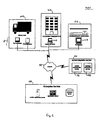
- a generalized enterprise system 100 may be used to configure a user interface of a client to facilitate a user's access to an enterprise service based upon a multi-dimensional context (i.e., a context described by more than one parameter) of the user's use.
- the multi-dimensional context includes, for example, an identification of the user and of the client, a role of the user, expertise of the user relative to the enterprise service and relative to the client. Exemplary components of the enterprise system 100 are described in greater detail below.
- the enterprise system 100 of FIG 1 generally includes one or more clients 110, a network 130, an enterprise service 150, and a context adaptation service 170.
- the clients 110 generally may include any device, system, and/or piece of code that relies on another service to perform an operation.
- the clients 110 may include a workstation, a notebook computer, a pen based computer, a personal digital assistant (PDA) or cellular telephone.
- PDA personal digital assistant
- the clients 110 also may include a web browser, an email client, a synchronization client (e.g., a calendar synchronization client, a task list synchronization client), an instant messaging (IM) client, a business productivity application (e.g., a word processor, a spreadsheet), and/or an operating system or operating system kernel.
- the clients 110 may access data or services provided by the enterprise service 150 by communicating with the enterprise service 150 using voice and/or non-voice data.
- the enterprise service 150 generally may include, for example, any device, system, and/or piece of code configured to perform an operation requested by a client 110 (e.g., a cellular telephone, a web browser, or other service).
- a client 110 e.g., a cellular telephone, a web browser, or other service.
- the enterprise service 150 may include an ERP service, an email service, an accounting service, a resource management service, a synchronization service (e.g., a calendar synchronization service, a task list synchronization service), a print service, a file access service, an IM service, an operating system, an operating system kernel, an authentication service, an authorization service, and/or any combination of these or other services.
- the context adaptation service 170 generally may include, for example, any device, system, and/or piece of code configured to determine a users multi-dimensional context and adapt an interaction of the enterprise system with the user based on that context.
- the context adaptation service 170 may include a context determination service 175, and an interface adaptation service 180.
- the services 175, 180 and the context adaptation service 170 may include a database access service, a sensor data access service, a rule engine, an inference engine (e.g., a Bayesian reasoning engine, a Dempster-Shafer engine, a probabilistic reasoning engine), a file access service, an operating system, an operating system kernel, and/or any combination of these services.
- the context adaptation service 170 may or may not be included in the enterprise service 150.
- the communication network 130 typically allows direct or indirect communication between the system services (e.g., between the client 110, the enterprise service 150, and the context adaptation service 170), irrespective of physical or logical separation.
- the communication network 130 may include a secured communication network (e.g., a communication network protected by a firewall and/or other security mechanisms).
- the communication network 130 may further include various mechanisms for delivering voice and/or non-voice data, such as, for example, the transport connection protocol (TCP), the Internet protocol (IP), the World Wide Web, one or more local area networks (LANs) and/or one or more wide area networks (WANs).
- the communication network 130 also may include analog or digital wired and wireless telephone networks, e.g., public switched telephone networks (PSTN), integrated services digital networks (ISDN), various types of digital subscriber lines (xDSL), advance mobile telephone service (AMPS), global system for mobile communications (GSM), general packet radio service (GPRS), code division multiple access (CDMA), radio, cable, satellite, and/or other delivery mechanisms for carrying voice or non-voice data.
- PSTN public switched telephone networks
- ISDN integrated services digital networks
- xDSL various types of digital subscriber lines
- AMPS advance mobile telephone service
- GSM global system for mobile communications
- GPRS general packet radio service
- CDMA code division multiple access
- radio cable, satellite, and/or other delivery mechanisms for
- One or more other services may be included in the components of enterprise system 100 and/or these components (hereinafter the system services) may be included as part of one or more other services.
- the system services may include or be included in a general-purpose or a special-purpose computer (e.g., a personal computer, a personal digital assistant (PDAs), or a device specifically programmed to perform certain tasks), at least one Local Area Network (LAN), and/or at least one Wide Area Network (WAN).
- PDAs personal digital assistant
- LAN Local Area Network
- WAN Wide Area Network
- the response to and execution of instructions received by any or all of the system services may be controlled by, for example, a program, a piece of code, an instruction, a device, a computer system, or a combination thereof, for independently or collectively instructing the services to interact and operate as described herein.
- FIG. 2 shows an enterprise system 200, generally similar to enterprise system 100 of FIG 1, illustrating several multi-dimensional contexts 205, 210, 215 in which a company employee may access the enterprise service 150 using a client 110.
- company employees may include a delivery truck driver (context 205), a corporate executive (context 210), and a manufacturing manager (context 215).
- Context 205 delivery truck driver
- context 210 corporate executive
- manufacturing manager context 215
- the responsibilities of each employee differ greatly as well as the information and services that their jobs require the enterprise service 150 to provide them. As with their responsibilities, the training and experience of the employees may differ dramatically.
- the physical environments under which each employee accesses the enterprise service may differ greatly, both from access to access and from employee to employee.
- the delivery driver uses a mobile client (e.g., a pen computer, a PDA, a cellular telephone) to access, for example, delivery lists, addresses, and schedules maintained by the enterprise service 150.
- the delivery driver may use the mobile client to access the enterprise service 150, for example, from the delivery truck, or at a pick-up or delivery site.
- the delivery driver may wish to verify delivery information while driving the delivery truck.
- ambient conditions such as lighting, temperature, and noise may vary greatly and may further complicate the task of accessing the enterprise service 150 using the client
- the corporate executive may access the enterprise service 150, for example, to obtain data showing corporate performance, or reflecting strategic relationships with other companies.
- the corporate executive may use a laptop computer or other client 110 to access the enterprise service 150 from an office in a corporate headquarters, from a corporate boardroom during a meeting, or while traveling (e.g., in an airplane or at a hotel).
- the privacy and security with which the corporate executive may access the enterprise service 150 may substantially influence the corporate executive's ability to use the enterprise service 150 in certain situations (e.g., while at an on-site meeting with a customer or competitor, or while traveling on a plane).
- the manufacturing manager may access the enterprise service 150 to determine order status, manufacturing schedules, or work schedules.
- the manufacturing manager may use a workstation or other client device to access the enterprise service 150 from the manufacturing floor.
- Conditions on the manufacturing floor may be loud or may require silence, lighting conditions may vary, and there may be many spurious audible and visual distractions.
- Certain clothing or protective gear may be required (e.g., a cleansuit, a respirator, ear protection, eye protection), and may or may not interfere with using the client 110 to access the enterprise service 150.
- FIGS. 3 and 4 describe systems that may be used to implement the context determination service 175 and the interface adaptation service 180, respectively, of FIGS. 1 and 2.
- some implementations of the context determination service 175 include a decision engine 310 used to determine_context information 330 from enterprise information 350.
- the enterprise information 350 includes a user identification and a client device identification 352.
- the enterprise information also may include an activity history 354 of the enterprise service users.
- the activity history 354 may include, for example, an application use history 356 that shows details of user's past use of the enterprise service. For each enterprise user, the application use history 356 might show, for example, a frequency of access to the enterprise service, a frequency of access to help procedures of the enterprise services and a nature or timing of the help requested, and/or a frequency of functions performed using the enterprise service.
- the user activity history 354 also may include a client use history 358 showing, for each enterprise user, clients used to access the enterprise service and a frequency that those clients have been used.
- the user activity history 354 may include security and authentication data 360 related to the current and past security status and privileges of enterprise service users.
- the security and authentication data 360 also may include information regarding when and where secure resources were accessed. For example, the security and authentication data 360 may record that a user entered a building through a secured door at 7:30 am on a Monday morning.
- the enterprise information 350 also may include information 362 that indicates current and past characteristics and features of the enterprise service and clients.
- the application and client feature data 362 may include, for example, information that a new capability has been added to a newly released version of the enterprise service, or that a PDA client may be voice enabled while a pen based computer client may not
- employee data 364 may include information such as the role, job title, job description, or job location of the employee. This information may describe the workplace, permissions, restrictions and tasks associated with each employee. Information regarding home contact information, education, physical characteristics, health record, or employee benefits also may be included.
- customer data 366 may include information identifying services or goods generally provided to the customer, delivery or payment preferences, customer contacts, and associated customer locations (e.g., addresses, approximate latitude and longitude).
- the enterprise information also may include data 368 from specialized context sensors.
- the context sensors might include a global positioning system (GPS) which might detect a client device and provide location data (e.g., latitude and longitude) related to the client device.
- Location data also may be obtained using a beacon emitting signals, such as, radio frequency signals or infrared signals. These signals may be received, for example, by a client.
- the beacon may broadcast location identifying information, such as, a geographical identifier (e.g., latitude and longitude of the beacon) or an abstract representation of a location (e.g., the street address of the beacon, the name of a store, a numerical identifier).
- the context sensor data 368 also might include data provided by other context sensors related to temperature, loudness, lighting, a pulse or respiration rate of the user, or a skin conductivity of the user.
- the enterprise information also may include for each user a user profile 370.
- the user profile 370 may include previously determined context information, such as, for example, context information based on the users' most recent accesses to the enterprise service.
- the user profile may include information stored, for example, in a data repository based on the X.500 directory access standard (e.g., a lightweight directory access protocol (LDAP)).
- LDAP lightweight directory access protocol
- LDAP allows different kinds of context information to be stored, such as, for example, client and service profiles.
- the decision engine 310 includes, for example, a rule engine 315, and/or an inference engine 320.
- the rule engine 315 may be configured to enable the decision engine 310 to determine the context information 330 by applying one or more rules to the enterprise information 350 accessed by the decision engine 310.
- Each rule of the rule engine 310 may include a condition and an associated action that is performed or a conclusion that is drawn if the condition is satisfied.
- the inference engine 320 may be configured to infer the context information 330 from information input to the decision engine 310.
- the inference engine 320 may employ one or more methods or systems to infer the context information 330 from information accessed by the decision engine 310 that is uncertain, contradictory, or ambiguous.
- the inference engine 320 may employ Bayesian reasoning, the Dempster-Shafer theory, a knowledge base, an expert system, plan recognition, collaborative filtering, statistical analysis, a neural network, data mining, keyword analysis, fuzzy logic, an overlay model, a bug library, or a combination of one or more of these methods or systems.
- the decision engine may, for example, update the user profile 370 with the newly determined context information 330.
- the context information 330 determined by the decision engine 310 includes at least a user identification 332 of the user accessing the enterprise service, a client identification 334 of the client device used by the user to access the enterprise service, a user role 336 associated with the user, an application expertise 338 of the user related to the enterprise service, and a client expertise 340 of the user related to the client.
- the context data 330 may include many additional items of information.
- the context data 330 may include physical environment information 342 related to a physical environment of the user, such as, for example, time, temperature, lighting, or loudness.
- the context data 330 also may include physical status information 344 related to a physical status of the user, such as, for example, whether the user is hard of hearing, near-sighted or far-sighted, or whether the user is distracted or nervous.
- the interface adaptation service 180 may include an adaptation engine 410 configured to access the context information 330 (e.g., directly from the decision engine, or from the user profile 370) and to adapt an interface of a client 430 according to the context information 330.
- the adaptation engine 410 may include a rule engine 415 or an inference engine 420 that may determine adaptation of the client interface based on the context information 330 accessed by the adaptation engine 410.
- the inference engine 420 may adapt the user interface even when the context information 330 accessed by the adaptation engine 410 is uncertain, ambiguous or contradictory.
- the inference engine 420 may employ Bayesian reasoning and/or any of the methods or systems described with respect to the inference engine 320 of FIG. 3, either alone or in combination.
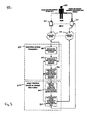
- FIG 5 illustrates a systematic process 500 implementable by the systems of FIGS. 1-4 to adapt a user interface of a client 510 accessing an enterprise service 515 based upon multi-dimensional context information.
- a user 505 may use the client 510 to access the enterprise service 515.
- the process 500 may respond by identifying multi-dimensional context information (steps 520), and adapting a user interface based on the multi-dimensional context information (steps 540).
- Determining the multi-dimensional context information may include, for example, obtaining first information regarding the access or login (e.g. a user identification, a client identification) from the enterprise service (step 525). Based on the first information, second information may be determined, for example, from information sources of the enterprise service (step 530). Based on the first and second information, multi-dimensional context information then may be determined (step 535).
- first information regarding the access or login e.g. a user identification, a client identification
- second information may be determined, for example, from information sources of the enterprise service (step 530).
- multi-dimensional context information then may be determined (step 535).
- Adapting the interface based on the multi-dimensional context information includes using the multi-dimensional context information to determine an interface adaptation suited to the context information (step 545).
- the interface configuration also may be based on direct user input, received, for example, by making a query to the user based on an initially determined interface configuration.
- the interface adaptation may be based, among other things, on an expertise of the user related to the enterprise service 515, or related to the client 510 or interaction scheme. Specifically, a user not familiar with a specific aspect of the enterprise service 515 may need to be instructed regarding what information to enter in information fields associated with that aspect of the enterprise service 515. At the same time, when accessing the enterprise service 515 from a familiar client such as a desk-top computer, the user may require no help to use the screen, keyboard and mouse. On the other hand, the user may access the enterprise service 515 using a client with a fully VoiceXML (voice extensible markup language) enabled interface.
- VoiceXML voice extensible markup language
- the user may need more support with an unfamiliar interaction scheme of the interface (e.g. the interface may advise the user "you can say the number or type into the keyboard'').
- the interface might also be adapted to hide items expected to be irrelevant to a current task of the user while offering shortcuts to probably needed functions.
- the context adaptation process 500 may communicate the interface configuration to the client 510 and/or to the enterprise service 515 causing the interface to be adapted (step 550). The user then may interact with the enterprise service 515 through the client 510 using the adapted interface.
- the context adaptation process 500 may continually determine context and may readapt the user interface based on a changed context. For example, after communicating the interface configuration to the enterprise service and/or the client (step 550), the process 500 may continue to monitor the information sources of the enterprise service (step 530) and determine context information (step 535) to determine if a changed context exists. When a changed context is determined, the process 500 may re-determine the interface configuration (step 545) and communicate the re-determined interface configuration to the enterprise service and/or the client (step 550).
- FIG 6A illustrates multi-dimensional context information 600 such as may be determined using the process 500 of FIG. 5.
- the multi-dimensional context information 600 includes an identification of the user 605 as David Dudley, age 52, with an employee number 14999.
- the multi-dimensional context information 600 also includes information 610 that identifies the client device used by David Dudley to access the enterprise as a BrainFlex model 32xi voice-capable PDA.
- User role information 615 identifies David Dudley's role as a company employee, and, more specifically, as a driver of a long haul delivery truck.
- the user role information 615 further identifies that David Dudley currently is making a delivery to Alyeska Pipeline Service Co. of Fairbanks, Alaska.
- the multi-dimensional context information 600 also includes information 620 regarding aspects of David Dudley's physical environment. Specifically, it includes information 622 that identifies David Dudley as being in truck 103, 50 miles outside of Fairbanks, Alaska, and moving towards that city on Route 3. Information 624 and 626 is included that informs also that the time is 2:30 p.m. on January 5, 2003, and that the background noise in the truck is moderate. David Dudley's expertise with the aspect of the enterprise service he has accessed is shown by information 630 to be substantial while his expertise with the client is identified by information 635 as modest Context information 640 indicates that David Dudley historically has preferred to take a passive role with respect to accessing help. In other words, he has preferred that he not be required to request the help, but that appropriate help be offered to him. In addition, information 645 identifies no physical constraints associated with David Dudley, such as, for example, hardness of hearing.
- FIG 6B illustrates an interface adaptation 650 determined based on the multi-dimensional context information 600 of FIG. 6A.
- the interface adaptation 650 includes a description 655 of the enterprise service content that the interface will present to David Dudley.
- the interface adaptation service has determined from the context information to present to David Dudley information relating to his shipping tasks for a three day period extending from his time of access to the enterprise service.
- the interface adaptation service may presume that David Dudley will most likely inquire about either his present delivery task, or about a delivery task scheduled for the near future.
- the interface adaptation service may determine to simplify the interface by limiting the information presented to David Dudley accordingly. Contrary to expectation, however, David Dudley may desire to access employee benefit services, or to view shipping tasks further in the future in order to plan for a vacation.
- the interface adaptation may allow David Dudley to override its preliminary determination 655 based on his actual rather than expected needs.
- the interface adaptation 650 may provide 660 that the primary interface path should be voice (e.g., using VoiceXML), thus allowing David Dudley to maintain eye contact with the road.
- the primary interface path should be voice (e.g., using VoiceXML), thus allowing David Dudley to maintain eye contact with the road.
- another primary interface path might be chosen were the context information to indicate that the noise level were high, or that David Dudley were hard of hearing or deaf.
- another suitable interface path might be available where the delivery truck includes a heads-up display with integrated steering-wheel controls configured to operate with the client PDA. In that case, the heads up display might be selected as the primary interface path in the interface adaptation.
- the interface adaptation 650 may indicate an enterprise help level 665 of "low” that may cause the interface to be streamlined by minimizing the level of help offered regarding use of the enterprise service.
- the interface adaptation may indicate a client device help level 670 that is "moderate to high,” (e.g., the company recently may have replaced a notebook computer on which David Dudley was proficient with the PDA). In that circumstance, the client device help level 670 may cause the user interface to provide a moderate to high level of help with respect to the client PDA.
- the interface adaptation may indicate 675 that help should be offered to David Dudley in a proactive style (e.g., offered when a pause indicates possible user confusion). This determination may be based on the context information showing that David Dudley historically has preferred a passive role in receiving help.
- the interface adaptation might provide that the help style should be passive (e.g., activated only upon user request) if the context information indicated that David Dudley preferred to refer to help only after having failed himself to determine a solution.
- the interface adaptation 650 may be implemented based on an interface or protocol associated with the interface adaptation service, and/or as a data structure.
- the interface adaptation service may "push" the information of the interface adaptation 650 to the enterprise service or the client device using a suitable protocol.
- the interface adaptation service also may be configured to populate the information of the interface adaptation 650 into an appropriate data structure.
- the enterprise service or the client device may then access the information of the interface adaptation 650 by accessing the data structure.
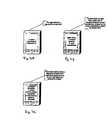
- FIGS. 7A-C illustrate an interaction of David Dudley with the client PDA using the adapted interface.
- the client PDA initially may await for David Dudley to provide login information or to demonstrate an intent to login.
- David Dudley might provide login information using a handwriting recognition system of the PDA, through an attached keyboard, or might indicate an intent to login vocally by saying "Login.”
- the client PDA Upon receiving the verbal command "login,” the client PDA might respond: "To login, state your username and password.”
- the client PDA might employ biometrics such as through finger-printing or a voice scan to provide the needed identification and authentication.
- the context adaptation service may determine context and adapt the client PDA interface as described above. Based on the interface adaptation, the client PDA may display a main menu offering selections related to David Dudley's immediate and near future tasks as a truck driver. These might include his short term transport schedule, as well as any maintenance scheduled for his truck for the same period. Based on the interface adaptation determination of voice as the primary interface, the client PDA may present the menu information vocally without further prompting by David Dudley.
- the interface may instruct: "To select from the Main menu, state 'one' or 'transport schedule' to select the first item, or state 'two' or truck maintenance' to select the second item.” David Dudley might determine to access the transport schedule and might do so by stating "one.”
- the client PDA may respond to David Dudley's instruction by indicating through speech that "Your current delivery time is delayed by 3-hours at the customer's request; pick-up for you next delivery is deferred for 3-hours.” Similar information also may be provided textually by the client PDA.
- the textual information displayed by the client PDA may be more limited in view of a more limited display capacity of the PDA.
- the client PDA may provide an associated on screen text description as shown in FIG. 7C, but may require a user to make an additional selection to provide the more detailed information readily provided using voice.
- the context information may be updated to match changing context continuously, periodically, or by any other suitable method.
- the interface adaptation also may be updated. For example, David Dudley may determine to stop at a diner to eat before reaching Fairbanks, but to continue interacting with the enterprise service while at the diner.
- the context information may be updated to reflect that David Dudley no is outside of his truck which no longer is moving.
- the noise level in the diner may be high.
- the interface adaptation may indicate that that the primary interface path should be text rather than voice based on the noise level and in order to protect privacy while David Dudley is outside of his truck.
- enterprise process workflows also may be adapted to recognize and respond automatically to complex situations based on multi-dimensional context information.
- Multi-dimensional context information also may improve user identification and authentication schemes by combining existing enterprise information with, for example, biometric identification of a user.
Landscapes
- Engineering & Computer Science (AREA)
- Business, Economics & Management (AREA)
- Software Systems (AREA)
- Theoretical Computer Science (AREA)
- Entrepreneurship & Innovation (AREA)
- Human Resources & Organizations (AREA)
- Strategic Management (AREA)
- General Physics & Mathematics (AREA)
- Physics & Mathematics (AREA)
- Tourism & Hospitality (AREA)
- Quality & Reliability (AREA)
- Operations Research (AREA)
- General Business, Economics & Management (AREA)
- Marketing (AREA)
- Economics (AREA)
- Human Computer Interaction (AREA)
- Data Mining & Analysis (AREA)
- General Engineering & Computer Science (AREA)
- User Interface Of Digital Computer (AREA)
- Management, Administration, Business Operations System, And Electronic Commerce (AREA)
Claims (20)
- Unternehmenssystem mit mehrdimensionaler Kontextbewußtheit bzw. - Awareness, wobei das System umfaßt:ein Netzwerk (130);ein Unternehmensservice bzw. -dienst (150), das mit dem Netzwerk (130) gekoppelt ist;eine Mehrzahl von Clients (110), die konfiguriert sind, um mit dem Netzwerk (130) zu kommunizieren, um auf das Unternehmensservice (150) zuzugreifen, wobei jeder Client (110) ein Benutzerinterface beinhaltet, durch welches ein Benutzer mit dem Unternehmensservice (150) zusammenwirken kann;eine Mehrzahl von Informationsquellen (350), welche Unternehmensinformation beinhalten, die sich auf eine oder mehrere Aktivität(en) des Unternehmenssystems bezieht;ein Kontextbestimmungsservice bzw. -dienst (175), das konfiguriert ist, um Kontextinformation (330) zu bestimmen, die einen mehrdimensionalen Kontext basierend auf der Unternehmensinformation (350) beschreibt, wobei die Kontextinformation (330) eine Benutzeridentifikation, eine Identifikation des Client, der durch den Benutzer ausgewählt ist, eine Benutzerrolle und eine Benutzerexpertise umfaßt, die sich auf das Unternehmensservice (150) bezieht; undein Interface-Adaptierungsservice bzw. -dienst (180), das betätigbar bzw. betreibbar ist, um das Benutzerinterface des gewählten Client (110) basierend auf der Kontextinformation zu adaptieren;dadurch gekennzeichnet, daßdas Kontextbestimmungsservice (175) weiterhin konfiguriert ist, um als weitere Kontextinformation eine Benutzerexpertise zu bestimmen, die sich auf den gewählten Client (110) bezieht;und daßdas Interface-Adaptierungsservice (180) betätigbar ist, um weiterhin das Benutzerinterface des gewählten Client basierend auf der Benutzerexpertise zu adaptieren, die sich auf den gewählten Client (110) bezieht.
- System nach Anspruch 1, wobei die Mehrzahl von Clients (110) eine oder mehrere drahtlose, in der Hand zu haltende Vorrichtung(en) umfassen.
- System nach Anspruch 1 oder 2, wobei ein Adaptieren des Benutzerinterface des gewählten Client (110) basierend auf der Kontextinformation (330) ein Auswählen eines Sensorkommunikationspfads für die Interaktion bzw. Wechselwirkung des Benutzers mit dem Unternehmensservice (150) umfaßt, welches für einen Kontext geeignet ist, der durch die Kontextinformation (330) beschrieben ist.
- System nach Anspruch 3, wobei der gewählte Sensorkommunikationspfad einen Sprach- bzw. Stimmkommunikationspfad, einen Textkommunikationspfad und/oder einen graphischen Kommunikationspfad umfaßt.
- System nach einem der vorhergehenden Ansprüche, wobei ein Adaptieren des Benutzerinterface des gewählten Client (110) basierend auf der Kontextinformation (330) ein Adaptieren des Benutzerinterface umfaßt, um ein Hilfeniveau automatisch einzustellen, das dem Benutzer betreffend eine Tätigkeit bzw. einen Betrieb des gewählten Client (110) basierend auf der Kontextinformation zur Verfügung gestellt ist bzw. wird, die die Benutzerexpertise in bezug auf den gewählten Client (110) beschreibt.
- System nach einem der vorhergehenden Ansprüche, wobei ein Adaptieren des Benutzerinterface des gewählten Client (110) basierend auf der Kontextinformation (330) ein Adaptieren des Benutzerinterface umfaßt, um ein Hilfeniveau automatisch einzustellen, das dem Benutzer betreffend eine Tätigkeit des Unternehmensservice (150) basierend auf der Kontextinformation (330) zur Verfügung gestellt ist bzw. wird, welche die Benutzerexpertise in bezug auf das Unternehmensservice (150) beschreibt.
- System nach einem der vorhergehenden Ansprüche, wobei ein Adaptieren des Benutzerinterface des gewählten Client (110) basierend auf der Kontextinformation (330) ein Adaptieren des Benutzerinterface umfaßt, um lediglich Information dem Benutzer zu präsentieren, die für die Benutzerrolle relevant ist, die durch die Kontextinformation (330) beschrieben ist.
- System nach einem der Ansprüche 1 bis 6, wobei ein Adaptieren des Benutzerinterface des gewählten Client (110) basierend auf der Kontextinformation (330) ein Adaptieren des Benutzerinterface umfaßt, um lediglich Information dem Benutzer zur Verfügung zu stellen, die für die Benutzeridentifikation relevant ist, die durch die Kontextinformation (350) beschrieben ist.
- System nach einem der vorhergehenden Ansprüche, wobei das Kontextbestimmungsservice (175) eine Regelmaschine (315) und/oder eine Inferenzmaschine (320) umfaßt.
- System nach einem der vorhergehenden Ansprüche, wobei das Interface-Adaptierungsservice (180) eine Regelmaschine (315) und/oder eine Inferenzmaschine (320) umfaßt.
- System nach Anspruch 9 oder 10, wobei die Inferenzmaschine eine Baye'sche Begründungsmaschine umfaßt.
- System nach einem der vorhergehenden Ansprüche, wobei die Kontextinformation (330) weiterhin eine Zeitmessung und/oder Information betreffend eine physikalische Umgebung des Benutzers umfaßt.
- System nach Anspruch 12, wobei die Information der physikalischen Umgebung Information in bezug auf einen Ort des Benutzers, eine Aktivität des Benutzers, eine Messung eines Hintergrundrauschens bzw. -geräuschs und eine Messung von Helligkeit oder Dunkelheit umfaßt.
- System nach einem der vorhergehenden Ansprüche, wobei die Mehrzahl von Informationsquellen eine oder mehrere Datenbank(en), eine Sicherheitsvorrichtung und/oder ein globales Positionierungssystem umfaßt.
- System nach einem der vorhergehenden Ansprüche, wobei die Mehrzahl von Informationsquellen nicht eine Informationsquelle umfaßt, die lediglich konfiguriert ist, um Kontextinformation (330) zur Verfügung zu stellen.
- System nach Anspruch 15, wobei die Mehrzahl von Informationsquellen nicht ein GPS beinhaltet, das konfiguriert ist, um einen Ort einer Clientvorrichtung (110) zur Verfügung zu stellen.
- Computerprogramm zum Adaptieren eines Benutzerinterface eines Client in einem Unternehmenssystem basierend auf mehrdimensionaler Kontextinformation (330), wobei das Computerprogramm umfaßt:ein Login-Codesegment bzw. Zugangs-Codesystem, um einen Computer zu veranlassen, eine Anfrage eines Benutzers zu empfangen, um in ein Unternehmensservice bzw. -dienst (150) des Unternehmenssystems unter Verwendung eines Client einzuloggen;ein erstes Informationsbestimmungs-Codesegment, um den Computer zu veranlassen, erste Information basierend auf der Anfrage zum Einloggen in das Unternehmensservice (150) zu bestimmen (525), das der bzw. den Client verwendet; ein zweites Informationsbestimmungs-Codesegment, um den Computer zu veranlassen, zweite Information aus einer Mehrzahl von Informationsquellen des Unternehmenssystems basierend auf der ersten Information zu bestimmen (530);ein Kontextinformationsbestimmungs-Codesegment, um den Computer zu veranlassen, Kontextinformation, die einen mehrdimensionalen Kontext beschreibt, basierend auf der ersten Information und der zweiten Information zu bestimmen (535), wobei die Kontextinformation (330) eine Benutzeridentifikation, eine Clientidentifikation, eine Benutzerrolle und eine Benutzerexpertise in bezug auf das Unternehmensservice (150) umfaßt; undein Adaptierungs-Codesegment, um den Computer zu veranlassen, das Benutzerinterface des Client (510) basierend auf der Kontextinformation (330) zu adaptieren;gekennzeichnet durchein weiteres Kontextinformationsbestimmungs-Codesegment, um den Computer zu veranlassen, eine Benutzerexpertise in bezug auf den Client (510),zu bestimmen; undein weiteres Adaptierungs-Codesegment, um den Computer zu veranlassen, das Benutzerinterface des Client (510) basierend auf der Benutzerexpertise in bezug auf den Client anzupassen.
- Verfahren zum Adaptieren eines Benutzerinterface eines Client (510) in einem Unternehmenssystem basierend auf mehrdimensionaler Kontextinformation, wobei das Verfahren umfaßt:Empfangen einer Anfrage eines Benutzers, um sich in ein Unternehmensservice bzw. -dienst des Unternehmenssystems unter Verwendung eines Client einzuloggen; Bestimmen (525) von erster Information basierend auf der Anfrage zum Einloggen in das Unternehmensservice (515), das den Client verwendet;Bestimmen (530) von zweiter Information aus einer Mehrzahl von Informationsquellen des Unternehmenssystems basierend auf der ersten Information;Bestimmen (535) von Kontextinformation (330), die einen mehrdimensionalen Kontext beschreibt, basierend auf der ersten Information und der zweiten Information, wobei die Kontextinformation eine Benutzeridentifikation, eine Clientidentifikation, eine Benutzerrolle und eine Benutzerexpertise in bezug auf das Unternehmensservice umfaßt; undAdaptieren (540) des Benutzerinterface des Client (510) basierend auf der Kontextinformation (330), dadurch gekennzeichnet, daßdas Bestimmen der Kontextinformation (330) weiterhin das Bestimmen einer Benutzerexpertise in bezug auf den Client (510) umfaßt; und daßdas Adaptieren (540) des Benutzerinterface des Client (510) weiterhin auf der Benutzerexpertise in bezug auf den Client (510) basiert.
- Verfahren nach Anspruch 18, wobei ein Adaptieren des Benutzerinterface des Client basierend auf der mehrdimensionalen Kontextinformation (330) ein Adaptieren des Benutzerinterface umfaßt, um ein Hilfeniveau automatisch einzustellen, das dem Benutzer basierend auf der mehrdimensionalen Kontextinformation zur Verfügung gestellt wird.
- Verfahren nach Anspruch 18 oder 19, wobei ein Adaptieren des Benutzerinterface des Client (510) basierend auf der mehrdimensionalen Kontextinformation (330) ein Adaptieren des Benutzerinterface umfaßt, um lediglich Information dem Benutzer zu präsentieren, die in bezug auf einen Kontext relevant ist, der durch die mehrdimensionale Kontextinformation (330) beschrieben wird.
Applications Claiming Priority (7)
| Application Number | Priority Date | Filing Date | Title |
|---|---|---|---|
| US38828902P | 2002-06-14 | 2002-06-14 | |
| US388289P | 2002-06-14 | ||
| US42211202P | 2002-10-30 | 2002-10-30 | |
| US422112P | 2002-10-30 | ||
| US10/457,010 US20040006593A1 (en) | 2002-06-14 | 2003-06-09 | Multidimensional approach to context-awareness |
| US457010 | 2003-06-09 | ||
| PCT/EP2003/006269 WO2003107179A1 (en) | 2002-06-01 | 2003-06-13 | Multidimensional approach to context-awareness |
Publications (2)
| Publication Number | Publication Date |
|---|---|
| EP1514178A1 EP1514178A1 (de) | 2005-03-16 |
| EP1514178B1 true EP1514178B1 (de) | 2007-04-25 |
Family
ID=29740836
Family Applications (1)
| Application Number | Title | Priority Date | Filing Date |
|---|---|---|---|
| EP03759957A Expired - Lifetime EP1514178B1 (de) | 2002-06-14 | 2003-06-13 | Mehrdimensionaler ansatz zur kontextbewusstheit |
Country Status (5)
| Country | Link |
|---|---|
| US (2) | US20040006593A1 (de) |
| EP (1) | EP1514178B1 (de) |
| AU (1) | AU2003257417A1 (de) |
| DE (1) | DE60313457T2 (de) |
| WO (1) | WO2003107179A1 (de) |
Families Citing this family (91)
| Publication number | Priority date | Publication date | Assignee | Title |
|---|---|---|---|---|
| US7192615B2 (en) * | 2001-02-28 | 2007-03-20 | J&J Consumer Companies, Inc. | Compositions containing legume products |
| JP2006527890A (ja) * | 2003-06-16 | 2006-12-07 | ユーアールユー テクノロジー インコーポレイテッド | バイオメトリクスに有効な多目的証明管理装置を構築および処理する方法およびシステム |
| JP4483259B2 (ja) * | 2003-10-16 | 2010-06-16 | 富士ゼロックス株式会社 | 応用プログラム実行システム、そのセンサ、その第1のサーバ、その第2のサーバ、そのオブジェクト及び応用プログラム実行方法 |
| US20050278640A1 (en) * | 2004-06-09 | 2005-12-15 | Jones Edwin R | System and method of dynamic entitlement |
| KR100587563B1 (ko) | 2004-07-26 | 2006-06-08 | 삼성전자주식회사 | 상황인지 서비스를 제공하는 장치 및 방법 |
| US7614049B2 (en) | 2004-08-24 | 2009-11-03 | International Business Machines Corporation | Autonomic installation and configuration of an enterprise business process on-demand |
| US7283093B2 (en) * | 2004-10-27 | 2007-10-16 | International Business Machines Corporation | Method and system for monitoring location based service emitter infrastructure |
| US8677377B2 (en) | 2005-09-08 | 2014-03-18 | Apple Inc. | Method and apparatus for building an intelligent automated assistant |
| US20070078535A1 (en) * | 2005-09-30 | 2007-04-05 | Rockwell Automation Technologies, Inc. | System and method for identifying particularized equipment information of interest to varied users in an industrial automation environment |
| US7433741B2 (en) | 2005-09-30 | 2008-10-07 | Rockwell Automation Technologies, Inc. | Hybrid user interface having base presentation information with variably prominent supplemental information |
| US8434021B2 (en) * | 2005-11-30 | 2013-04-30 | Microsoft Corporation | Centralized user interface for displaying contextually driven business content and business related functionality |
| US20080005679A1 (en) * | 2006-06-28 | 2008-01-03 | Microsoft Corporation | Context specific user interface |
| US8336078B2 (en) * | 2006-07-11 | 2012-12-18 | Fmr Corp. | Role-based access in a multi-customer computing environment |
| US9318108B2 (en) | 2010-01-18 | 2016-04-19 | Apple Inc. | Intelligent automated assistant |
| US9471333B2 (en) * | 2006-11-03 | 2016-10-18 | Conceptual Speech, Llc | Contextual speech-recognition user-interface driven system and method |
| KR100844293B1 (ko) | 2007-01-04 | 2008-07-07 | 성균관대학교산학협력단 | 상황인식 보안 서비스의 관리 시스템 및 그 관리 방법 |
| US20080250316A1 (en) * | 2007-04-04 | 2008-10-09 | Honeywell International Inc. | Mechanism to improve a user's interaction with a computer system |
| US20080270913A1 (en) * | 2007-04-26 | 2008-10-30 | Howard Singer | Methods, Media, and Devices for Providing a Package of Assets |
| KR101027667B1 (ko) | 2008-02-27 | 2011-04-12 | 성균관대학교산학협력단 | 상황 인식 접근 제어 관리 시스템, 그 관리 방법 및 기록 매체 |
| US8996376B2 (en) | 2008-04-05 | 2015-03-31 | Apple Inc. | Intelligent text-to-speech conversion |
| US8209638B2 (en) * | 2008-12-31 | 2012-06-26 | Sap Ag | Customization abstraction |
| US8229909B2 (en) * | 2009-03-31 | 2012-07-24 | Oracle International Corporation | Multi-dimensional algorithm for contextual search |
| US10241752B2 (en) | 2011-09-30 | 2019-03-26 | Apple Inc. | Interface for a virtual digital assistant |
| US10241644B2 (en) | 2011-06-03 | 2019-03-26 | Apple Inc. | Actionable reminder entries |
| US9858925B2 (en) | 2009-06-05 | 2018-01-02 | Apple Inc. | Using context information to facilitate processing of commands in a virtual assistant |
| US9431006B2 (en) | 2009-07-02 | 2016-08-30 | Apple Inc. | Methods and apparatuses for automatic speech recognition |
| US8682667B2 (en) | 2010-02-25 | 2014-03-25 | Apple Inc. | User profiling for selecting user specific voice input processing information |
| US8606923B2 (en) * | 2010-09-15 | 2013-12-10 | Core Mobile Networks, Inc. | System and method for real time delivery of context based content from the cloud to mobile devices |
| US10511609B2 (en) | 2010-09-15 | 2019-12-17 | Core Mobile Networks, Inc. | Context-based analytics and intelligence |
| US10026058B2 (en) | 2010-10-29 | 2018-07-17 | Microsoft Technology Licensing, Llc | Enterprise resource planning oriented context-aware environment |
| CN102023894A (zh) * | 2010-11-18 | 2011-04-20 | 华为终端有限公司 | 一种用户操作界面的变换方法及终端 |
| US8555249B2 (en) * | 2010-12-13 | 2013-10-08 | Sap Ag | Lifecycle stable user interface adaptations |
| US20130031619A1 (en) * | 2011-07-25 | 2013-01-31 | Lenovo (Singapore) Pte. Ltd. | Remote authentication screen locker for a mobile device |
| US9911089B2 (en) * | 2011-09-16 | 2018-03-06 | Oracle International Corporation | Email client with ERP task integration |
| US8214904B1 (en) * | 2011-12-21 | 2012-07-03 | Kaspersky Lab Zao | System and method for detecting computer security threats based on verdicts of computer users |
| US8214905B1 (en) * | 2011-12-21 | 2012-07-03 | Kaspersky Lab Zao | System and method for dynamically allocating computing resources for processing security information |
| US8209758B1 (en) * | 2011-12-21 | 2012-06-26 | Kaspersky Lab Zao | System and method for classifying users of antivirus software based on their level of expertise in the field of computer security |
| US9280610B2 (en) | 2012-05-14 | 2016-03-08 | Apple Inc. | Crowd sourcing information to fulfill user requests |
| US9721563B2 (en) | 2012-06-08 | 2017-08-01 | Apple Inc. | Name recognition system |
| US20140068445A1 (en) * | 2012-09-06 | 2014-03-06 | Sap Ag | Systems and Methods for Mobile Access to Enterprise Work Area Information |
| US9058583B2 (en) | 2012-09-06 | 2015-06-16 | Sap Se | Systems and methods for mobile access to item information |
| US9547647B2 (en) | 2012-09-19 | 2017-01-17 | Apple Inc. | Voice-based media searching |
| US20140181652A1 (en) * | 2012-12-21 | 2014-06-26 | Timothy A. Stanke | Contextual and Personalized Help |
| US9807145B2 (en) | 2013-05-10 | 2017-10-31 | Successfactors, Inc. | Adaptive tile framework |
| WO2014197334A2 (en) | 2013-06-07 | 2014-12-11 | Apple Inc. | System and method for user-specified pronunciation of words for speech synthesis and recognition |
| US9350625B2 (en) | 2013-06-25 | 2016-05-24 | Sap Se | Service consumption based on gamification level classification |
| US20150025927A1 (en) * | 2013-07-16 | 2015-01-22 | Raytheon Company | Mission component evaluation and response architecture |
| US9747463B2 (en) | 2013-11-30 | 2017-08-29 | Sap Se | Securing access to business information |
| US20150332383A1 (en) * | 2014-05-13 | 2015-11-19 | Ebay Inc. | Streamlined online checkout |
| US9430463B2 (en) | 2014-05-30 | 2016-08-30 | Apple Inc. | Exemplar-based natural language processing |
| US9338493B2 (en) | 2014-06-30 | 2016-05-10 | Apple Inc. | Intelligent automated assistant for TV user interactions |
| US9668121B2 (en) | 2014-09-30 | 2017-05-30 | Apple Inc. | Social reminders |
| US10567477B2 (en) | 2015-03-08 | 2020-02-18 | Apple Inc. | Virtual assistant continuity |
| US9565528B2 (en) * | 2015-04-08 | 2017-02-07 | Verizon Patent And Licensing Inc. | Providing a message based on translating a beacon identifier to a virtual beacon identifier |
| US9578173B2 (en) | 2015-06-05 | 2017-02-21 | Apple Inc. | Virtual assistant aided communication with 3rd party service in a communication session |
| CN105023101A (zh) * | 2015-07-17 | 2015-11-04 | 浙江云景信息科技有限公司 | 中小学生智能综合管理云平台 |
| US10747498B2 (en) | 2015-09-08 | 2020-08-18 | Apple Inc. | Zero latency digital assistant |
| US10671428B2 (en) | 2015-09-08 | 2020-06-02 | Apple Inc. | Distributed personal assistant |
| US11010550B2 (en) | 2015-09-29 | 2021-05-18 | Apple Inc. | Unified language modeling framework for word prediction, auto-completion and auto-correction |
| US10366158B2 (en) | 2015-09-29 | 2019-07-30 | Apple Inc. | Efficient word encoding for recurrent neural network language models |
| US11587559B2 (en) | 2015-09-30 | 2023-02-21 | Apple Inc. | Intelligent device identification |
| US10691473B2 (en) | 2015-11-06 | 2020-06-23 | Apple Inc. | Intelligent automated assistant in a messaging environment |
| US10049668B2 (en) | 2015-12-02 | 2018-08-14 | Apple Inc. | Applying neural network language models to weighted finite state transducers for automatic speech recognition |
| US10223066B2 (en) | 2015-12-23 | 2019-03-05 | Apple Inc. | Proactive assistance based on dialog communication between devices |
| US10446143B2 (en) | 2016-03-14 | 2019-10-15 | Apple Inc. | Identification of voice inputs providing credentials |
| US9934775B2 (en) | 2016-05-26 | 2018-04-03 | Apple Inc. | Unit-selection text-to-speech synthesis based on predicted concatenation parameters |
| US9972304B2 (en) | 2016-06-03 | 2018-05-15 | Apple Inc. | Privacy preserving distributed evaluation framework for embedded personalized systems |
| US10249300B2 (en) | 2016-06-06 | 2019-04-02 | Apple Inc. | Intelligent list reading |
| US10049663B2 (en) | 2016-06-08 | 2018-08-14 | Apple, Inc. | Intelligent automated assistant for media exploration |
| DK179588B1 (en) | 2016-06-09 | 2019-02-22 | Apple Inc. | INTELLIGENT AUTOMATED ASSISTANT IN A HOME ENVIRONMENT |
| US10067938B2 (en) | 2016-06-10 | 2018-09-04 | Apple Inc. | Multilingual word prediction |
| US10586535B2 (en) | 2016-06-10 | 2020-03-10 | Apple Inc. | Intelligent digital assistant in a multi-tasking environment |
| US10192552B2 (en) | 2016-06-10 | 2019-01-29 | Apple Inc. | Digital assistant providing whispered speech |
| US10509862B2 (en) | 2016-06-10 | 2019-12-17 | Apple Inc. | Dynamic phrase expansion of language input |
| US10490187B2 (en) | 2016-06-10 | 2019-11-26 | Apple Inc. | Digital assistant providing automated status report |
| DK179049B1 (en) | 2016-06-11 | 2017-09-18 | Apple Inc | Data driven natural language event detection and classification |
| DK179343B1 (en) | 2016-06-11 | 2018-05-14 | Apple Inc | Intelligent task discovery |
| DK201670540A1 (en) | 2016-06-11 | 2018-01-08 | Apple Inc | Application integration with a digital assistant |
| DK179415B1 (en) | 2016-06-11 | 2018-06-14 | Apple Inc | Intelligent device arbitration and control |
| US10043516B2 (en) | 2016-09-23 | 2018-08-07 | Apple Inc. | Intelligent automated assistant |
| US10593346B2 (en) | 2016-12-22 | 2020-03-17 | Apple Inc. | Rank-reduced token representation for automatic speech recognition |
| US11361266B2 (en) | 2017-03-20 | 2022-06-14 | Microsoft Technology Licensing, Llc | User objective assistance technologies |
| DK201770439A1 (en) | 2017-05-11 | 2018-12-13 | Apple Inc. | Offline personal assistant |
| DK179745B1 (en) | 2017-05-12 | 2019-05-01 | Apple Inc. | SYNCHRONIZATION AND TASK DELEGATION OF A DIGITAL ASSISTANT |
| DK179496B1 (en) | 2017-05-12 | 2019-01-15 | Apple Inc. | USER-SPECIFIC Acoustic Models |
| DK201770432A1 (en) | 2017-05-15 | 2018-12-21 | Apple Inc. | Hierarchical belief states for digital assistants |
| DK201770431A1 (en) | 2017-05-15 | 2018-12-20 | Apple Inc. | Optimizing dialogue policy decisions for digital assistants using implicit feedback |
| DK179549B1 (en) | 2017-05-16 | 2019-02-12 | Apple Inc. | FAR-FIELD EXTENSION FOR DIGITAL ASSISTANT SERVICES |
| EP3605326B1 (de) | 2018-07-31 | 2021-09-08 | Hewlett Packard Enterprise Development LP | Kombination von computeranwendungen |
| US11438452B1 (en) | 2019-08-09 | 2022-09-06 | Apple Inc. | Propagating context information in a privacy preserving manner |
| US11157679B2 (en) | 2020-01-27 | 2021-10-26 | Capital One Services, Llc | Semantic navigation of content documents |
Family Cites Families (22)
| Publication number | Priority date | Publication date | Assignee | Title |
|---|---|---|---|---|
| US4964077A (en) * | 1987-10-06 | 1990-10-16 | International Business Machines Corporation | Method for automatically adjusting help information displayed in an online interactive system |
| US5115501A (en) * | 1988-11-04 | 1992-05-19 | International Business Machines Corporation | Procedure for automatically customizing the user interface of application programs |
| US7006881B1 (en) * | 1991-12-23 | 2006-02-28 | Steven Hoffberg | Media recording device with remote graphic user interface |
| US5799292A (en) * | 1994-04-29 | 1998-08-25 | International Business Machines Corporation | Adaptive hypermedia presentation method and system |
| US5948040A (en) * | 1994-06-24 | 1999-09-07 | Delorme Publishing Co. | Travel reservation information and planning system |
| US6049711A (en) * | 1995-08-23 | 2000-04-11 | Teletrac, Inc. | Method and apparatus for providing location-based information services |
| US6021403A (en) * | 1996-07-19 | 2000-02-01 | Microsoft Corporation | Intelligent user assistance facility |
| US5930699A (en) * | 1996-11-12 | 1999-07-27 | Ericsson Inc. | Address retrieval system |
| US6236978B1 (en) * | 1997-11-14 | 2001-05-22 | New York University | System and method for dynamic profiling of users in one-to-one applications |
| US6088594A (en) * | 1997-11-26 | 2000-07-11 | Ericsson Inc. | System and method for positioning a mobile terminal using a terminal based browser |
| US6026375A (en) * | 1997-12-05 | 2000-02-15 | Nortel Networks Corporation | Method and apparatus for processing orders from customers in a mobile environment |
| US6199099B1 (en) * | 1999-03-05 | 2001-03-06 | Ac Properties B.V. | System, method and article of manufacture for a mobile communication network utilizing a distributed communication network |
| TW426175U (en) * | 1999-03-16 | 2001-03-11 | Hon Hai Prec Ind Co Ltd | Carrying apparatus for electric circuit board |
| FI112433B (fi) * | 2000-02-29 | 2003-11-28 | Nokia Corp | Sijaintiin sidotut palvelut |
| AU2001249261A1 (en) * | 2000-03-16 | 2001-09-24 | Microsoft Corporation | Notification platform architecture |
| US7343165B2 (en) * | 2000-04-11 | 2008-03-11 | American Calcar Inc. | GPS publication application server |
| US20030046401A1 (en) * | 2000-10-16 | 2003-03-06 | Abbott Kenneth H. | Dynamically determing appropriate computer user interfaces |
| WO2002044897A1 (en) * | 2000-11-29 | 2002-06-06 | Fourbit Group, Inc. | Generating a declarative user interface |
| AU2002310341A1 (en) * | 2001-06-07 | 2002-12-16 | Unwired Express, Inc. | Method and system for providing context awareness |
| US20030090515A1 (en) * | 2001-11-13 | 2003-05-15 | Sony Corporation And Sony Electronics Inc. | Simplified user interface by adaptation based on usage history |
| US20030144846A1 (en) * | 2002-01-31 | 2003-07-31 | Denenberg Lawrence A. | Method and system for modifying the behavior of an application based upon the application's grammar |
| US6917938B2 (en) * | 2002-05-06 | 2005-07-12 | Ideapivot Corporation | Collaborative context information management system |
-
2003
- 2003-06-09 US US10/457,010 patent/US20040006593A1/en not_active Abandoned
- 2003-06-13 DE DE60313457T patent/DE60313457T2/de not_active Expired - Lifetime
- 2003-06-13 EP EP03759957A patent/EP1514178B1/de not_active Expired - Lifetime
- 2003-06-13 WO PCT/EP2003/006269 patent/WO2003107179A1/en not_active Ceased
- 2003-06-13 AU AU2003257417A patent/AU2003257417A1/en not_active Abandoned
-
2008
- 2008-09-15 US US12/210,493 patent/US8126984B2/en not_active Expired - Fee Related
Also Published As
| Publication number | Publication date |
|---|---|
| AU2003257417A1 (en) | 2003-12-31 |
| US20040006593A1 (en) | 2004-01-08 |
| EP1514178A1 (de) | 2005-03-16 |
| DE60313457D1 (de) | 2007-06-06 |
| WO2003107179A1 (en) | 2003-12-24 |
| US20090013038A1 (en) | 2009-01-08 |
| US8126984B2 (en) | 2012-02-28 |
| DE60313457T2 (de) | 2008-01-03 |
Similar Documents
| Publication | Publication Date | Title |
|---|---|---|
| US8126984B2 (en) | Multidimensional approach to context-awareness | |
| US11544675B2 (en) | Contextually aware schedule services | |
| EP1363221B1 (de) | Erhöhung des Niveaus der Automatisierung, wenn Sitzungen festgelegt und gehandhabt werden | |
| US20030182394A1 (en) | Method and system for providing context awareness | |
| US8903870B2 (en) | System for managing risk in employee travel | |
| US7107539B2 (en) | Thematic response to a computer user's context, such as by a wearable personal computer | |
| US7689524B2 (en) | Dynamic environment evaluation and service adjustment based on multiple user profiles including data classification and information sharing with authorized other users | |
| US20170289305A1 (en) | Extensibility for context-aware digital personal assistant | |
| US20020198991A1 (en) | Intelligent caching and network management based on location and resource anticipation | |
| US20020083025A1 (en) | Contextual responses based on automated learning techniques | |
| EP1915711A2 (de) | Virtueller assistent | |
| US20100153171A1 (en) | Method and apparatus for furlough, leave, closure, sabbatical, holiday, or vacation geo-location service | |
| US20150213371A1 (en) | Method, system and device for inferring a mobile user's current context and proactively providing assistance | |
| EP1314102B1 (de) | Thematische antwort auf den kontext eines computerbenutzers, so wie ein zusammenhang mit einem am körper tragbaren personalcomputer | |
| US9898555B2 (en) | Systems and methods to automatically suggest elements for a content aggregation system | |
| US9665834B2 (en) | System for managing risk in employee travel | |
| US8667602B2 (en) | System for managing risk in employee travel | |
| US20250355552A1 (en) | Ai agent creation processes and interfaces | |
| US20070239506A1 (en) | Priority based scheduling system | |
| Hong et al. | Ubiquitous enterprise service adaptations based on contextual user behavior | |
| US12034602B2 (en) | Management of computing devices via reference to linked employee records | |
| EP4651035A2 (de) | Speicherverwaltung von ki-agenten | |
| US20080082465A1 (en) | Guardian angel | |
| US20080178075A1 (en) | Configuration Data Store for Overriding a Web Application Configuration Involving Multiple Customers | |
| US20250355697A1 (en) | Task management interfaces for end-to-end task processing and sub-task generation and modification |
Legal Events
| Date | Code | Title | Description |
|---|---|---|---|
| PUAI | Public reference made under article 153(3) epc to a published international application that has entered the european phase |
Free format text: ORIGINAL CODE: 0009012 |
|
| 17P | Request for examination filed |
Effective date: 20041217 |
|
| AK | Designated contracting states |
Kind code of ref document: A1 Designated state(s): AT BE BG CH CY CZ DE DK EE ES FI FR GB GR HU IE IT LI LU MC NL PT RO SE SI SK TR |
|
| AX | Request for extension of the european patent |
Extension state: AL LT LV MK |
|
| DAX | Request for extension of the european patent (deleted) | ||
| RBV | Designated contracting states (corrected) |
Designated state(s): DE FR GB |
|
| RAP1 | Party data changed (applicant data changed or rights of an application transferred) |
Owner name: SAP AG |
|
| GRAP | Despatch of communication of intention to grant a patent |
Free format text: ORIGINAL CODE: EPIDOSNIGR1 |
|
| RIN1 | Information on inventor provided before grant (corrected) |
Inventor name: GOSLAR, KEVIN Inventor name: VOGLER, HARMUT, K. |
|
| GRAS | Grant fee paid |
Free format text: ORIGINAL CODE: EPIDOSNIGR3 |
|
| GRAA | (expected) grant |
Free format text: ORIGINAL CODE: 0009210 |
|
| AK | Designated contracting states |
Kind code of ref document: B1 Designated state(s): DE FR GB |
|
| REG | Reference to a national code |
Ref country code: GB Ref legal event code: FG4D |
|
| REF | Corresponds to: |
Ref document number: 60313457 Country of ref document: DE Date of ref document: 20070606 Kind code of ref document: P |
|
| ET | Fr: translation filed | ||
| PLBE | No opposition filed within time limit |
Free format text: ORIGINAL CODE: 0009261 |
|
| STAA | Information on the status of an ep patent application or granted ep patent |
Free format text: STATUS: NO OPPOSITION FILED WITHIN TIME LIMIT |
|
| 26N | No opposition filed |
Effective date: 20080128 |
|
| REG | Reference to a national code |
Ref country code: DE Ref legal event code: R082 Ref document number: 60313457 Country of ref document: DE Representative=s name: MUELLER-BORE & PARTNER PATENTANWAELTE PARTG MB, DE |
|
| REG | Reference to a national code |
Ref country code: DE Ref legal event code: R081 Ref document number: 60313457 Country of ref document: DE Owner name: SAP SE, DE Free format text: FORMER OWNER: SAP AG, 69190 WALLDORF, DE Effective date: 20141210 Ref country code: DE Ref legal event code: R082 Ref document number: 60313457 Country of ref document: DE Representative=s name: MUELLER-BORE & PARTNER PATENTANWAELTE PARTG MB, DE Effective date: 20141210 |
|
| REG | Reference to a national code |
Ref country code: FR Ref legal event code: PLFP Year of fee payment: 14 |
|
| REG | Reference to a national code |
Ref country code: FR Ref legal event code: PLFP Year of fee payment: 15 |
|
| REG | Reference to a national code |
Ref country code: FR Ref legal event code: PLFP Year of fee payment: 16 |
|
| PGFP | Annual fee paid to national office [announced via postgrant information from national office to epo] |
Ref country code: GB Payment date: 20220622 Year of fee payment: 20 Ref country code: DE Payment date: 20220620 Year of fee payment: 20 |
|
| PGFP | Annual fee paid to national office [announced via postgrant information from national office to epo] |
Ref country code: FR Payment date: 20220628 Year of fee payment: 20 |
|
| REG | Reference to a national code |
Ref country code: DE Ref legal event code: R071 Ref document number: 60313457 Country of ref document: DE |
|
| REG | Reference to a national code |
Ref country code: GB Ref legal event code: PE20 Expiry date: 20230612 |
|
| PG25 | Lapsed in a contracting state [announced via postgrant information from national office to epo] |
Ref country code: GB Free format text: LAPSE BECAUSE OF EXPIRATION OF PROTECTION Effective date: 20230612 |