EP1511859B1 - Diagnose abnormaler blutzustände basierend auf polymorphismen des glycoprotein vi gens - Google Patents
Diagnose abnormaler blutzustände basierend auf polymorphismen des glycoprotein vi gens Download PDFInfo
- Publication number
- EP1511859B1 EP1511859B1 EP03725431A EP03725431A EP1511859B1 EP 1511859 B1 EP1511859 B1 EP 1511859B1 EP 03725431 A EP03725431 A EP 03725431A EP 03725431 A EP03725431 A EP 03725431A EP 1511859 B1 EP1511859 B1 EP 1511859B1
- Authority
- EP
- European Patent Office
- Prior art keywords
- gpvi
- subject
- allele
- allelotype
- snps
- Prior art date
- Legal status (The legal status is an assumption and is not a legal conclusion. Google has not performed a legal analysis and makes no representation as to the accuracy of the status listed.)
- Expired - Lifetime
Links
Images







Classifications
-
- C—CHEMISTRY; METALLURGY
- C07—ORGANIC CHEMISTRY
- C07K—PEPTIDES
- C07K16/00—Immunoglobulins [IG], e.g. monoclonal or polyclonal antibodies
- C07K16/18—Immunoglobulins [IG], e.g. monoclonal or polyclonal antibodies against material from animals or humans
- C07K16/28—Immunoglobulins [IG], e.g. monoclonal or polyclonal antibodies against material from animals or humans against receptors, cell surface antigens or cell surface determinants
- C07K16/2803—Immunoglobulins [IG], e.g. monoclonal or polyclonal antibodies against material from animals or humans against receptors, cell surface antigens or cell surface determinants against the immunoglobulin superfamily
-
- A—HUMAN NECESSITIES
- A61—MEDICAL OR VETERINARY SCIENCE; HYGIENE
- A61P—SPECIFIC THERAPEUTIC ACTIVITY OF CHEMICAL COMPOUNDS OR MEDICINAL PREPARATIONS
- A61P7/00—Drugs for disorders of the blood or the extracellular fluid
-
- C—CHEMISTRY; METALLURGY
- C12—BIOCHEMISTRY; BEER; SPIRITS; WINE; VINEGAR; MICROBIOLOGY; ENZYMOLOGY; MUTATION OR GENETIC ENGINEERING
- C12Q—MEASURING OR TESTING PROCESSES INVOLVING ENZYMES, NUCLEIC ACIDS OR MICROORGANISMS; COMPOSITIONS OR TEST PAPERS THEREFOR; PROCESSES OF PREPARING SUCH COMPOSITIONS; CONDITION-RESPONSIVE CONTROL IN MICROBIOLOGICAL OR ENZYMOLOGICAL PROCESSES
- C12Q1/00—Measuring or testing processes involving enzymes, nucleic acids or microorganisms; Compositions therefor; Processes of preparing such compositions
- C12Q1/68—Measuring or testing processes involving enzymes, nucleic acids or microorganisms; Compositions therefor; Processes of preparing such compositions involving nucleic acids
- C12Q1/6876—Nucleic acid products used in the analysis of nucleic acids, e.g. primers or probes
- C12Q1/6883—Nucleic acid products used in the analysis of nucleic acids, e.g. primers or probes for diseases caused by alterations of genetic material
-
- C—CHEMISTRY; METALLURGY
- C07—ORGANIC CHEMISTRY
- C07K—PEPTIDES
- C07K2317/00—Immunoglobulins specific features
- C07K2317/60—Immunoglobulins specific features characterized by non-natural combinations of immunoglobulin fragments
- C07K2317/62—Immunoglobulins specific features characterized by non-natural combinations of immunoglobulin fragments comprising only variable region components
- C07K2317/622—Single chain antibody (scFv)
-
- C—CHEMISTRY; METALLURGY
- C12—BIOCHEMISTRY; BEER; SPIRITS; WINE; VINEGAR; MICROBIOLOGY; ENZYMOLOGY; MUTATION OR GENETIC ENGINEERING
- C12Q—MEASURING OR TESTING PROCESSES INVOLVING ENZYMES, NUCLEIC ACIDS OR MICROORGANISMS; COMPOSITIONS OR TEST PAPERS THEREFOR; PROCESSES OF PREPARING SUCH COMPOSITIONS; CONDITION-RESPONSIVE CONTROL IN MICROBIOLOGICAL OR ENZYMOLOGICAL PROCESSES
- C12Q2600/00—Oligonucleotides characterized by their use
- C12Q2600/156—Polymorphic or mutational markers
-
- C—CHEMISTRY; METALLURGY
- C12—BIOCHEMISTRY; BEER; SPIRITS; WINE; VINEGAR; MICROBIOLOGY; ENZYMOLOGY; MUTATION OR GENETIC ENGINEERING
- C12Q—MEASURING OR TESTING PROCESSES INVOLVING ENZYMES, NUCLEIC ACIDS OR MICROORGANISMS; COMPOSITIONS OR TEST PAPERS THEREFOR; PROCESSES OF PREPARING SUCH COMPOSITIONS; CONDITION-RESPONSIVE CONTROL IN MICROBIOLOGICAL OR ENZYMOLOGICAL PROCESSES
- C12Q2600/00—Oligonucleotides characterized by their use
- C12Q2600/158—Expression markers
-
- C—CHEMISTRY; METALLURGY
- C12—BIOCHEMISTRY; BEER; SPIRITS; WINE; VINEGAR; MICROBIOLOGY; ENZYMOLOGY; MUTATION OR GENETIC ENGINEERING
- C12Q—MEASURING OR TESTING PROCESSES INVOLVING ENZYMES, NUCLEIC ACIDS OR MICROORGANISMS; COMPOSITIONS OR TEST PAPERS THEREFOR; PROCESSES OF PREPARING SUCH COMPOSITIONS; CONDITION-RESPONSIVE CONTROL IN MICROBIOLOGICAL OR ENZYMOLOGICAL PROCESSES
- C12Q2600/00—Oligonucleotides characterized by their use
- C12Q2600/172—Haplotypes
Definitions
- This invention relates to the diagnosis of abnormal blood conditions, in particular to diagnosis of an increased risk of bleeding.
- Glycoprotein VI plays a crucial role in platelet activation and aggregation. Deficiency of GPVI is associated with a mild bleeding phenotype and a major reduction in the response to collagen on platelets (Moroi et al, 1989). GPVI is a 63 kDa type I transmembrane platelet glycoprotein and is the major signalling receptor for collagen on platelets (Watson et al, 2001).
- the mature GPVI protein consists of 319 amino acids, the first 185 encoding two immunoglobulin (Ig)-like C2 type folds, a highly glycosylated stem of 64 amino acids, an arginine containing 19 amino acid transmembrane domain and a 51 amino acid cytoplasmic domain (Clemetson et al, 1999). Collagen binds GPVI via the two tandem Ig-like domains and clustering of GPVI upon interaction with collagen results in signalling via the ⁇ chain of the Fc ⁇ R.
- Ig immunoglobulin
- the GPVI gene has multiple alleles, but two of these are frequently used in Caucasians: GPVI a and GPVI b .
- the cDNA sequences of these alleles are shown in Figure 8, and the cDNA sequence and translation of the GPVI a allele is shown in Figure 7.
- the proteins encoded by the GPVI a and GPVI b alleles differ by five amino acids. Three of these are in the stem (S219P, K237E, T249A), and two are in the cytoplasmic domain (Q317L and H322N).
- Croft et al, 2001 have reported that homozygosity for the 'b' allele encoding P219 (referred to as T13254C by Croft et al, 2001) is associated with an increased risk of myocardial infarction, particularly in older female individuals.
- Collagen related peptide acts specifically via GPVI to activate platelets, and results in a signalling cascade very similar to that evoked by native collagen (Kehrel et al, 1998; Knight et al, 1999).
- CRP collagen related peptide
- SNP single nucleotide polymorphism
- a method of diagnosing whether a subject has, or is at risk of, an abnormal blood condition associated with an increased risk of bleeding which comprises determining the GPVI allelotype of the subject to determine whether the subject is homozygous or heterozygous for the GPVI b allele.
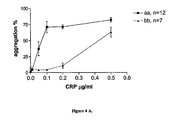
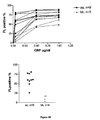
- Platelets of subjects who are homozygous for the GPVI b allele have a reduced ability to respond to CRP and to induce thrombin generation. Such individuals are thought to have an increased risk of bleeding. It is also possible that subjects who are heterozygous for the GPVI b allele have an increased risk of bleeding.
- the GPVI allelotype of the subject may be determined by any suitable method.
- one or more single nucleotide polymorphisms (SNPs) which are distinctive of a GPVI allele are detected for (suitably by genotyping of nucleic acid, preferably DNA, encoding GPVI) in order to determine the GPVI allelotype.
- SNPs single nucleotide polymorphisms
- the or each SNP which is detected for is selected from the five SNPs which give rise to amino acid differences between the protein expression products of the GPVI a and GPVI b alleles (there are other SNPs of the GPVI gene which are not associated with amino acid changes).
- the five SNPs are at positions 655, 709, 745, 950, and 964 of the GPVI cDNA sequence (these correspond to positions 13010,19570, 22524, 23246, and 23260 of the GPVI genomic sequence, respectively, and positions 199, 217, 229, 297, and 302 of the amino acid sequence, respectively (see Table 4), or positions 219, 237, 249, 317, and 322 of the amino acid sequence, respectively, if the signal peptide is included (see Figure 7)).
- Figure 7 shows the wild-type GPVI (GPVI a ) cDNA sequence and translation - the SNPs that encode amino acid substitutions are marked.
- the cDNA sequences of the GPVI a and GPVI b alleles are shown in Figure 8.
- the GPVI a allele contains T at 655, A at 709, A at 745, A at 950, and C at 964.
- the GPVI b allele contains C at 655, G at 709, G at 745, T at 950, and A at 964.
- the amino acids encoded by the SNPs at positions 655, 709, 745, 950, and 964 of the GPVI cDNA sequence are at positions 219, 237, 249, 317, and 322 of the GPVI amino acid sequence (see Figure 7).
- the GPVI a allele protein expression product contains S at 219, K at 237, T at 249, Q at 317, and H at 322.
- the GPVI b allele protein expression product contains P at 219, E at 237, A at 249, L at 317, and N at 322.
- the existence of rare alleles means that a test in which a single SNP distinctive of the GPVI a or GPVI b alleles is detected for to determine whether the subject has a GPVI aa , GPVI ab , or GPVI bb allelotype would give a false result for a subject with a rare allelotype. Because the frequency of rare alleles was found to be 7% in the Caucasoid population examined, the accuracy of such a test may be considered to be unacceptably low for clinical use. In order to increase the accuracy of the test, it is necessary to test for more than one SNP. Most preferably, all five SNPs which give rise to amino acid differences between the protein expression products of the GPVI a and GPVI b alleles are detected for.
- Example 2 In the study reported in Example 2 below, an additional 183 individuals (1127 Caucasians, 63 Koreans, 40 South African blacks, 40 Ethiopians and 40 Curacao) were investigated to fully characterise variation in GPVI. Based on the typing of the core panel of 1,127 Caucasoid it was concluded that for a reliable assignment of a GPVI core haplotype of 5 non-synonymous SNPs, testing on at least two SNPs is required. An over 99.5% reliability of haplotype assignment can be achieved when testing is performed at position T13010C (S199P) and at position A23246T (Q297L). Thus, where the subject is a Caucasian, preferably at least two SNPs which are distinctive of the GPVI b allele are detected for. Preferably the SNPs are at positions 13010 and 23246 of the genomic sequence.
- Detection for the, or each SNP may be carried out using any suitable method.
- suitable in vitro methods of SNP detection known to those of ordinary skill in the art include real-time PCR, fluorimetric analysis, restriction enzyme analysis, restriction fragment length polymorphism (RFLP), single strand conformation polymorphism (SSCP), or use of a probe (preferably a labelled probe) which hybridises specifically to a region of nucleic acid which includes an SNP, use of a micro array comprising a probe which hybridises specifically to a region of nucleic acid which includes an SNP, and sequencing of nucleic acid.
- RFLP restriction fragment length polymorphism
- SSCP single strand conformation polymorphism
- SNPs may be detected for in genomic DNA, RNA (for example platelet mRNA or total RNA), cDNA, or nucleic acid amplified from genomic DNA, RNA, or cDNA.
- Nucleic acid amplification may be carried out using any suitable method, for example the PCR, ligase chain reaction, or 3SR methods.
- the presence of a protein product encoded by a GPVI allele may be detected for. This may be achieved by use of an antibody, or fragment or derivative thereof, specific for the protein expression product.
- An antibody, or fragment or derivative is specific for a protein expression product of a GPVI allele if it can be used to distinguish one GPVI allele expression product from another.
- the antibody, or fragment or derivative thereof is able to distinguish the GPVI a and GPVI b allele protein expression products.
- Specific antibodies may be obtained by use of a polypeptide with an amino acid sequence corresponding to the sequence of a region of a GPVI allele protein expression product which includes an amino acid residue encoded by an SNP distinctive of the GPVI allele.
- the polypeptide includes an amino acid sequence corresponding to a region which includes any of the following positions of the GPVI a or GPVI b allele protein expression product: 219, 237, 249, 317 and 322.
- the polypeptide is 4-100, more preferably 7-50 amino acids in length.
- the presence of the protein expression product of a GPVI allele may be detected for on the basis of its molecular weight, for example by using comparative electrophoretic mobility or mass spectrometry, or using isoelectric focusing. It is possible that the molecular weight of the two allele protein expression products may vary due to differences in glycosylation, in particular the GPVI a allele product may be heavier than the GPVI b allele product as a result of two potential extra O-glycosylation sites present in the GPVI a allele product. The allele protein expression products also differ in charge, because of the polymorphism at position 217.
- the GPVI allelotype of the subject may be determined by measuring the total expression of GPVI in platelets of the subject.
- the level of expression of the GPVI b allele is much lower than the GPVI a allele.
- Expression could be measured, for example by Western blotting using the antibodies 10B12 and 1C3 (described in Example 3 below) as described in Joutsi-Korhonen et al (Blood, Jan 30, 2003 ).
- An advantage of such methods is that specific antibodies able to distinguish the GPVI a and GPVI b allele protein expression products are not required.
- an antibody specific for a protein expression product of a GPVI a allele, or fragment or derivative thereof there is also provided an antibody specific for a protein expression product of a GPVI b allele, or fragment or derivative thereof.
- an antibody specific for a protein expression product of a GPVI b allele, or fragment or derivative thereof Such antibodies can be used in a method of the invention for diagnosing whether a subject has, or is at risk of, an abnormal blood condition associated with an increased risk of bleeding.
- an abnormal blood condition diagnosis kit which comprises means for determining the GPVI allelotype of a subject to determine whether the subject is homozygous or heterozygous for the GPVI b allele, wherein the abnormal blood condition is associated with an increased risk of bleeding.
- the invention also provides a kit for diagnosing whether a subject has, or is at risk of, an abnormal blood condition associated with an increased risk of bleeding, which comprises means for determining the GPVI allelotype of the subject to determine whether the subject is homozygous or heterozygous for the GPVI b allele, wherein the determining means allow detection of two or more SNPs, or amino acids encoded by two or more SNPs, which are distinctive of the GPVI b allele.
- the kit may further comprise determining means for detection of two or more SNPs, or amino acids encoded by two or more SNPs of the GPVI a allele.
- the determining means allow detection of SNPs at positions 655, 709, 745, 950, and 964 of the cDNA sequence (or positions 13010, 19570, 22524, 23246, and 23260 of the genomic sequence).
- the invention also provides a corresponding method for diagnosing whether a subject has, or is at risk of, an abnormal blood condition associated with an increased risk of bleeding, which comprises determining the GPVI allelotype of the subject to determine whether the subject is homozygous or heterozygous for the GPVI b allele, wherein two or more SNPs, or amino acids encoded by two or more SNPs, which are distinctive of the GPVI b allele are detected for.
- kits or methods of the invention are for diagnosing a Caucasian, preferably the determining means is for detection of SNPs at genomic nucleotides 13010 and 23246.
- the determining means is for detection of SNPs at genomic nucleotides 13010, 19570, 22524, 23246, and 23260.
- the determining means may include a probe capable of hybridising specifically to a region of GPVI nucleic acid which includes an SNP distinctive of a GPVI allele.
- the probe preferably comprises nucleic acid consisting of 8-50 nucleotides.
- the probe preferably hybridises under stringent conditions. Stringent conditions are defined herein as 0.1x SSC, 0.1%SDS at 65 degrees C.
- the determining means may include an antibody, or fragment or derivative thereof, which is specific to the protein expression product of a GPVI allele.
- the determining means may include probes and primers required for detection of the SNPs by real-time PCR.
- kits may be provided with all the reagents necessary for the determination of the GPVI allelotype.
- the kits may include oligonucleotide primers for amplification of nucleic acid which includes an SNP to be detected for, labels for detection of bound antibodies, or probes, reagents for isolating or obtaining genomic DNA, mRNA or cDNA from a biological sample obtained from the subject.
- kits may be provided with instructions for the use thereof as a test to diagnose whether a subject has, or is at risk of, an abnormal blood condition associated with an increased risk of bleeding.
- a probe capable of binding specifically to a region of GPVI nucleic acid which includes an SNP distinctive of a GPVI allele for the diagnosis of an abnormal blood condition.
- EBs easy bruisers
- a method of determining the GPVI allelotype of a subject which comprises detecting for at least one single nucleotide polymorphism (SNP) which is distinctive of a GPVI allele.
- SNP single nucleotide polymorphism
- the SNP or SNPs may be selected from any, or any combination, of the SNPs identified in Table 4.
- nucleic acid (preferably DNA) encoding GPVI is genotyped for the, or each SNP.
- Collagen is a major extracellular matrix protein exposed after arterial vessel wall injury. Interaction of platelets with collagen is a multi-step process with tethering over glycoprotein (GP)Ib/IX/V via von Willebrand factor, adhesion by interaction with the ( ⁇ 2 ⁇ 1 integrin and signalling via GPVI.
- GP glycoprotein
- GPVI collagen related peptide
- CRP collagen related peptide
- the GPVI gene has two frequent alleles and genotyping of 1153 Caucasoid showed allele frequencies of 0.85 and 0.13.
- the two isoforms of GPVI differ by three replacements in the extracellular region proposed to form a glycosylation stem and two in the cytoplasmic domain, by a total of five amino acid replacements.
- Clustering of GPVI has been postulated to be important for ligand binding and signalling, and various mechanisms may account for the observed signalling differences. For instance, the reduced O-glycosylation which may result from the substitution of S219 or T249, as well as alterations in the main chain of the protein by replacement of S219 with proline.
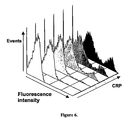
- the synthetic collagen-derived triple-helical peptide CRP causes platelet activation by selectively activating GPVI.
- ADP activates platelets via G-coupled proteins (Gachet et al, 2001).
- Inter-individual variation in the response to both agonists has been previously observed in our laboratory, but without an obvious genetic linkage.
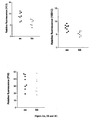
- the baseline levels for activation as determined by the three markers did not differ between the two groups (data not shown).
- the response to ADP was dose-dependent with all the activation markers, but there were no significant differences between the 'aa' and 'bb' samples (data not shown).
- Samples were obtained from the static clinic of our blood centre which consists of donors who are regularly apheresed for procurement of platelet concentrates as well as whole blood donors.
- the apheresis donors are selected on ABO groups (mainly A and O) and on platelet counts (over 250 x 10 9 /l).
- the study group consisted of 19 healthy blood donors (14 male, 5 female).
- 1153 donors were genotyped for the five replacement SNPs in the GPVI gene in order to identify adequate numbers of donors homozygous for each allele and to exclude individuals with rare GPVI alleles.
- Homozygotes for the high frequency allele (encoding SKTQH) are labelled 'aa' and for the low frequency allele (encoding PEALN) 'bb'. All experiments were performed on freshly drawn samples and when possible on paired ('aa' versus 'bb') samples. Samples of the 'aa' type were used as controls for calibration of the flow cytometry and platelet aggregation studies. In addition, 89 random blood donors were studied for the GPVI expression levels. The project has an approval from the local regional ethics committee, and is in accordance with the National Blood Service guidance for the use of donor blood for research. All the donors have consented. None of the volunteers had used aspirin in the 5 days preceding donation and sampling was by venepuncture of the antecubital vein with a 19 gauge needle.
- moAb monoclonal antibodies
- scFvs Single chain variable domain antibody fragments 1C3 and 10B12 against GPVI
- scFv 2D4 anti-HLA-A2, Watkins et al, personal communications
- scFv Fog-1 anti-D
- the murine moAbs NBS-P16 CD49, anti-GPIaIIa
- 9E10 anti-myc tag
- scFvs The binding of scFvs was as previously described in a three-step assay using moAb 9E10 and fluorescein isothiocyanate (FITC)-conjugated goat anti-mouse IgG (Dako, Cambridge, UK; Watkins et al, 2000) and the binding of the murine moAbs was by the classic two-step assay (von dem Borne et al, 1978).
- FITC fluorescein isothiocyanate
- DNA samples of the 1153 donors were genotyped for all GPVI SNPs.
- Allelic discrimination assays were performed in a total volume of 15 ⁇ l with 900 nM each primer, 200 nM each probe and 5 ⁇ l of genomic DNA. Amplification reactions were performed following standard conditions with an annealing temperatures of 60° C. Allelic discrimination was determined using a post-PCR plate reader on a PE 7700 (Perkin Elmer) and the alleles were assigned using the autocalling software. The raw data and allele assignments were exported as an Excel spreadsheet.
- Platelet rich plasma was prepared from EDTA-anticoagulated blood (stored at 4°C overnight) by centrifugation at 1400 rpm for 10 min.
- the PRP was washed twice in PBS/EDTA/BSA buffer (phosphate-buffered saline, PBS with 10 mM EDTA, pH 6.8 and supplemented with 0.25% bovine serum albumin, BSA) by centrifugation at 3000 g for 6 min.
- PBS/EDTA/BSA buffer phosphate-buffered saline, PBS with 10 mM EDTA, pH 6.8 and supplemented with 0.25% bovine serum albumin, BSA
- Platelet count was adjusted to 1 x 10 7 /ml (counted by Sysmex K1000, Milton Keynes, UK), and PRP containing 5 x 10 5 platelets was transferred into polystyrene tubes (for the flow cytometry, LIP Ltd) containing 150 ⁇ l purified monoclonal scFv or antibody.
- the assay was performed using 96-well microtiter plates (Dynex Technologies, Chantilly, VA).
- the antibodies were used at saturating concentrations: scFv 1C3 at 10 (or 20) ⁇ g/ml, scFv 10B12 at 50 ⁇ g/ml, scFv 2D4 at 20 ⁇ g/ml and moAb NBS-P16 at 1 ⁇ g/ml, moAb 9E10 at 30 ⁇ g/ml.
- scFv 1C3 at 10 (or 20) ⁇ g/ml
- scFv 10B12 at 50 ⁇ g/ml
- scFv 2D4 at 20 ⁇ g/ml
- moAb NBS-P16 at 1 ⁇ g/ml
- moAb 9E10 at 30 ⁇ g/ml
- the platelets were then washed once, resuspended in 50 ⁇ l of a 1:20 dilution of FITC-conjugated goat anti-mouse IgG (Dako, Cambridge, UK) and incubated for 30 min at RT in the dark. After a final wash, platelets were resuspended in 200 ⁇ l buffer and the fluorescence intensities of 10,000 events were analysed using a flow cytometer (Coulter XL, Luton, UK). The median fluorescence intensity (FL) for green fluorescence, FL1, was recorded on a logarithmic scale from 0.1 to 1000. The relative FL for each sample was obtained by dividing the median FL by that of the negative control (9E10) of each sample.
- FL median fluorescence intensity
- PRP platelet-poor plasma
- PRP Platelet-poor plasma
- the platelet count was then adjusted to 200 x 10 9 /l with PPP.
- light transmission in PRP 250 ⁇ l was measured and recorded on a PAP-4 four channel aggregometer (Bio/Data Corporation, Horsham, PA, USA) at 37°C over 10 min. The results were expressed as arbitrary units with 100% transmission (corresponding to 100% aggregation) set using PPP.
- Platelet aggregation was induced by addition of either CRP at concentrations between 0.05 and 2.0 ⁇ g/ml, collagen as native type I fibers from bovine tendon at 0.1 to 10.0 ⁇ g/ml and ADP at 1.0 to 20 ⁇ M.
- activation markers anti-fibrinogen (2 ⁇ l/test), anti-CD62P (P-selectin, 10 ⁇ l/test) and annexin V (5 ⁇ l/test). After the incubation for 20 min at RT, the cells were fixed with 200 ⁇ l of 0.2% formaldehyde (37-41% formaldehyde solution, BDH Laboratory Supplies, Poole, UK) in 0.9% NaCl for 10 min.
- annexin V as the activation marker
- the HBS contained 1 mM CaCl2 and GPRP and the samples were not fixed.
- the samples were freshly analysed with a flow cytometer (Coulter XL, Luton, UK) using a "live platelet gate" set on the basis of forward and side light scatter profiles.
- FL2 positive events i.e. CD61 positive ones
- data from 5000 - 10000 events per sample was collected.
- the median FL1 of each activation marker for unstimulated platelets was recorded in order to compare the baseline activation level between different donors.
- the analysis was carried out with software Expo32 (Applied Cytometry Systems, Sheffield, UK).
- the threshold for positive events was set by adjusting a marker on non-stimulated platelets stained with the activation marker, so that less than 1% were above the level on the FL1 histogram. Since bound fibrinogen, P-selectin and annexin V are present at low levels on non-stimulated platelets, the data were expressed as the % FL1 positive platelets.
- Collagen mediated signalling of platelets is via GPVI, the absence of which is associated with a mild bleeding phenotype and a strongly reduced response to collagen and no response to CRP in vitro (Moroi et al, 1989).
- CRP binding to GPVI is dependent on the presence of the GPO repeat motif (Knight et al, 1999), and activation of platelets evokes tyrosine phosphorylation of an immunoreceptor tyrosine-based activation motif (ITAM) by a Src family kinase (Watson et al, 2001).
- ITAM immunoreceptor tyrosine-based activation motif
- the PLPPLPPLP motif is a target of that for the SH3 domain of the Src family kinases (Rickles et al, 1994) indicating that such signalling proteins may dock in this region of GPVI (Watson et al, 2001).
- GPVI dimerisation occurs upon ligand binding and the kinetics of this process may depend on the sequence of the stem and possibly the cytoplasmic domain.
- the GPIa and GPVI SNPs may be in linkage disequilibrium. We tested this on the data obtained from 600+ DNA samples and were unable to obtain evidence for such a linkage (data not shown). The absence of linkage is not surprising as the GPIa and GPVI genes are on chromosomes 5 and 19, respectively. Third, it may be the type of collagen used and its purity and composition differed. Finally, our donors were selected on basis of their GPVI allele status, and in this group there was only one donor homozygous - 52TT for the GPIa, SNP linked to low expression (Table I).
- Croft et al (2001) found that the 'bb' type (homozygous for 219PP) to be a risk factor for cardiovascular disease, only after sub-grouping the patient population. However, it is interesting that they stated the 'bb' type being the risk factor for arterial thrombosis, although we find that to be the less-responsive, i.e. EB or bleeder phenotype.
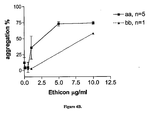
- EB or bleeder phenotype We found with CRP-induced platelet aggregation and activation, clear differences between the two groups. No differences were seen with other agonists, such as ADP, indicating that the functional differences seen are GPVI-mediated. Whether the possible GPVI expression variation between individuals and the observed in vitro functional differences in platelet activation are of pathological significance is not yet known.
- Example 2 The data presented in Example 1, and shown in Figures 9-12 has been further expanded upon, and is presented in Example 2.
- variable sites were identified that segregated as 37 haplotypes with frequencies between 0.195 to 0.003. All the variable sites were single nucleotide polymorphisms (SNPs), six of which encoded amino acid substitutions in GP6. However, only one of these (C307G), encoding a Leu83Val substitution with a frequency of 0.005, was in the immunoglobulin-like, ligand binding domains of GP6.
- the sequencing panel consisting of DNA from 94 apheresis donors, was used to identify polymorphisms in the GP6 exons (plus flanking intron sequences) by direct sequencing of PCR products.
- Panel 1 was composed of 1127 DNA samples from donors and was used to determine the frequency of the 6 non-synonymous SNPs found at the GP6 locus. The only selection criterion for both panels was a platelet count > 150 x 10 9 /L. All samples were obtained with informed consent and with the approval of the National Blood Service internal review panel. Ethnic DNA samples were a kind gift from Dr Peter Forster (Department of Archaeology, University of Cambridge) and Dr Ellen van der Schoot (University of Amserdam).
- gDNA was prepared from EDTA-anticoagulated blood samples using the Promega Wizard Genomic DNA isolation kit following the manufacturers' instructions (Promega, Southampton, UK). All gDNA samples were stored at -40 °C in distilled water. For genotyping and PCR, aliquots of gDNA (4 ng/ ⁇ l) were dispensed into 96 well master plates and stored at 4°C.
- Oligonucleotides were designed to amplify exons 1 to 8 of GP6 in a total of 6 fragments as (Table 2).
- the primers were designed to be at least 50 to 100 bp from the end of the exons to allow the identification splice donor and acceptor site variants.
- Amplification reactions contained 25 mM MgCl 2 , 20 mM each primer, 2 mM dNTPs, 0.6 U Hot-Start Taq polymerase (Qiagen, Crawley UK) and 20 ng of gDNA in a total volume of 30 ⁇ l. Amplification was performed over 40 cycles consisting of 1 min at 95 °C, 1 min annealing and 1 min at 72 °C using a "touchdown" program.
- the products were purified using a QiaQuick PCR clean up kit following the manufacturers' instructions (Qiagen). Purified PCR products were eluted into 25 ⁇ l of distilled water and 1 ⁇ l analysed on a 1.5 % agarose gel containing 1 % (w/v) ethidium bromide. DNA quantification was performed by comparing the intensity of the purified sample with one of known concentration. The purified PCR products were then diluted to a concentration of 10 ⁇ g/ml for sequencing which was performed using BigDye v1.0 (Applied Biosystems) and an ABI373XL genetic analyser (Applied Biosystems).
- a total of 18 SNPs were identified following the sequencing of GP6 in the 94 samples. Taqman allelic discrimination assays were then designed for 9 of these 18 using Primer Express (Applied Biosystems). For three SNPs standard probes were used and for the remaining 5 MGB probes were used (Table 3). Allelic discrimination assays were performed in a total volume of 15 ⁇ l with 900 nM each primer, 200 nM each probe and 20 ng of gDNA. Amplification reactions were performed following standard conditions with annealing temperatures as detailed in Table 3. Where possible, control samples consisting of gDNA from homozygous and heterozygous donors was used. Allelic discrimination was determined using a post-PCR plate read on a PE 7700 (Perkin Elmer). The raw data and allele assignments were merged into the donor database for analysis.
- Amplification was performed in a total volume of 50 ⁇ l containing 5 ⁇ l genomic DNA (4 ng/ ⁇ l), 7.5 ⁇ l 10 x PCR buffer, 1.5 ⁇ l MgCl 2 , 15 mM each dNTPs, 12 ⁇ M each primer and 0.3 U of Taq DNA polymerase. Thermocycling conditions were as for amplification of GP6 exons. 20 ⁇ l of the PCR product was then digested with 1 U Bst N1 (New England BioLabs) for 120 minutes at 60 °C and then analyzed on a 2% agarose gel containing 1 % (w/v) ethidium bromide.
- Haplotypes in the genotyped samples were determined by using either Clarks algorithm (Clark, 1990) or the EM algorithm implemented using Arlequin.
- the parameter FST was used to measure variation between populations.
- Taqman allelic discrimination assays were developed for 9 of the SNPs as described (Table 3) and these were used to genotype the sequencing panel samples. We observed complete concordance between the genotypes as determined by gDNA sequencing and by Taqman (Data not shown). The 9 Taqman assays were next used to genotype the 1 127 panel 1 samples (Table 4). In all instances, no significant differences between the allele frequencies in the two panels was observed for any SNP (Table 4). None of the variant sites showed deviation from the Hardy-Weinberg equilibrium in either the sequencing panel or Panel 1 (Data not shown).
- the population genotyping data was used to infer the GP6 haplotypes that encoded different protein variants. This analysis identified 12 different GP6 haplotypes (Table 8). Identical results were obtained when the data was either analysed as a complete data set or as individual populations. The analysis revealed the presence of both shared and population specific GP6 haplotypes and that, in general, more haplotypes were observed in individuals of African origin.
- Glycoprotein VI (GP6) is found exclusively on platelets and brings about their activation following binding to collagen, thus playing a central role in platelet activation following exposure of the subendothelial matrix.
- the signaling cascade that is induced following ligation of GP6 by collagen has been studied in detail using the GP6 specific ligand CRP.
- Two GP6 alleles were identified following a study of 21 individuals. These alleles differ at 9 dimorphisms which encode for 5 amino acid substitutions in the mature form of the GP6 protein (Table 4).
- Croft et al have shown an association between GP6 haplotype and the risk of myocardial infarction in a restricted patient group.
- GP6 specific ligand CRP we observed a significant reduction in the response to CRP in individuals homozygous for the GP6 'b' allele relative to those homozygous for the 'a' allele.
- the genotyping data was used to determine GP6 protein haplotypes, each of which would encode a unique form of GP6 with potentially unique signalling responses.
- a total of 12 GP6 protein haplotypes were identified (Table 8), 8 of which were shared between populations and 4 were population specific. The haplotypes were numbered according to their prevalence in the study group. Interestingly, a third common GP6 haplotype was observed in all populations studied with a frequency between 0.13 and 0.02.
- the SNPs in GP6 encode for 6 amino acid substitutions that are present in all populations studied with significantly different frequencies between populations.
- the 6 SNPs encode for 12 GP6 protein variants, the most common of which differ in their response to GP6 specific ligands. It is currently not known whether or not single or multiple amino acid substitutions contribute to this difference.
- the panel of GP6 variants that we have identified will be invaluable in elucidating the molecular mechanism of allele specific GP6 signalling.
- Collagen mediated activation of platelets is dependent upon the engagement and clustering of GPVI, an immunoglobulin (Ig) superfamily member with homology to killer-cell Ig-like receptors (KIRs) and the Fc ⁇ RI.
- Ig immunoglobulin
- KIRs killer-cell Ig-like receptors
- Fc ⁇ RI Fc ⁇ RI
- Glycoprotein (GP) VI is the major receptor responsible for platelet activation by collagen, but the collagen-binding surface of GPVI is unknown. Recent work has demonstrated the key role played by GPVI in arterial thrombus formation in mice and provides a clear basis for the development of potentially therapeutic GPVI inhibitors. Indeed, blockade of GPVI is attractive for several reasons. Firstly, the expression of GPVI is restricted to platelets and megakaryocytes. Secondly, collagen is required for prothrombotic 'COAT' platelet formation, for which blockade of GPVI may provide a specific control point. Thirdly, patients with congenital or acquired autoantibody mediated GPVI deficiency have only a mild bleeding disorder, despite having a significantly reduced platelet response to collagen. These observations have been recently confirmed in mice.
- the GPVI gene is part of the human leukocyte receptor cluster (LRC) on chromosome 19q13.4 15 .
- GPVI has two extracellular C2-type Ig-like domains (D1 and D2). These Ig-like domains are connected by a glycosylated stem of ⁇ 60 amino acids to a transmembrane sequence within which an arginine residue forms a salt-bridge with a transmembrane aspartate in the FcR ⁇ chain.
- GPVI signalling is dependent upon its' interaction with the ⁇ chain.
- the 51 residue cytoplasmic domain of human GPVI has binding sites for various signalling proteins. Two modes of ligand binding for LRC members have been described.
- the KIRs bind to HLA via a surface that contains the interdomain linker, whereas Fc ⁇ RI binds IgA via its' N-terminal Ig-like domain.
- GPVI recognises glycine-proline-hydroxyproline (GPO) repeat motifs in the triple helical structure of collagen. It was also shown that collagen related peptide (CRP), which contains 10 GPO motifs and spontaneously forms helices under physiological conditions is a powerful and specific agonist for GPVI. GPVI specifically recognises CRP but not a peptide of similar structure (GPP10) lacking hydroxyproline.
- Studies with GPVI-deficient murine platelets and the inhibitory monoclonal antibody JAQ-1 are suggestive of the existence of two collagen binding sites on GPVI, the primary one being the binding site for CRP.
- Human single chain variable domain antibody fragments can be selected from repertoires of human antibodies displayed on the surface of philamentous phage.
- Antibodies specific for antigen can be obtained from such libraries by rounds of phage affinity selection followed by expansion of selected and antigen specific phage. Once antigen-specific 'phage antibodies' have been obtained the genes encoding the Variable domains of Heavy (VH) and Light (VL) chains of the antibody can be rescued.
- VH Variable domains of Heavy
- VL Light
- CAT Vaughan et al, Nat. Biotechnol.
- the second round of selection was designed to enrich for scFvs that specifically blocked the CRP-D1D2 interaction.
- pre-formed, immobilised hD1D2-CRP complexes were obtained by incubating CaM tagged hD1D2 in wells coated with CRP. Regrown phage particles from the first round were added to these wells and allowed to compete with CRP for binding to hD1D2, thus releasing phage-hD1D2 complexes into solution. These complexes were captured via the CaM tag, washed and eluted with EDTA as before. Clones from this second round of selection were extensively screened for specificity.
- VH and VL genes of both clones were sequenced as previously described ( Watkins et al, Tissue Antigens, 2000;55:219-28 ) and nucleotide sequences compared with germline V-gene sequences in the V-base directory ( Cook et al, Immunology Today, 1995;16:237-42 ).
- the scFv gene cassettes of both clones were subcloned into the pUC119-Sfi/Not-His6 vector and scFv expressed as described previously described ( Watkins et al, Tissue Antigens, 2000;55:219-28 ) and purified as above.
- the specificity of selected scFvs 1OB12 and 1C3 was investigated:
- scFv 10B12 but not scFv 1C3 was able to inhibit the aggregation of platelets induced by either collagen type I fibres (Ethicon, Somerville, New Jersey, USA) or collagen related peptide.
- the inhibitory antibody 10B12 did not abrogate platelet aggregation induced by other platelet agonists which do activate platelets via alternative signalling pathways then GPVI, such as adenosine 5'-diphosphate (ADP; Sigma), U46619 (Sigma), thrombin receptor activating peptide (TRAP; Sigma) or epinephrine (EPI; Sigma).
- ADP adenosine 5'-diphosphate
- U46619 U46619
- TRAP thrombin receptor activating peptide
- EPI epinephrine
- ScFv 10B12 was also able to inhibit the formation of thrombi in flowing whole blood over a surface coated with collagen. Perfusion flow assays were performed as previously described ( Roest et al, Blood, 2000;96:1433-7 ). In sharp contrast scFv 1C3 had no ability to inhibit the aggregation of platelets induced by collagen or CRP or reduce the thrombus formation in whole blood.
- Modelling of the 1OB12-GPVI interface using information on wild type human GPVI and the K59E mutant provided insight into the epitope recognised by scFv 10B12.
- the highly acidic H3 loop of the VH domain of 10B12 forms part of a negatively charged region in the antigen-binding surface of the antibody. This surface has both charge and shape complementarity with a basic multi-lobed patch on the apical surface of human GPVI.
- the modelling supports the notion that this lobed patch is at the centre of the 10B12 epitope.
- the basic patch on human GPVI appears to be formed by residues R38, K41, R46, K59 and R60.
- the K59E mutation reduces the basic nature of the patch whilst the surrounding features are preserved explaining the reduced binding of 10B12 to the K59E mutant of human GPVI.
- the model generated is compatible with a footprint of the antibody which would cover the interdomain linker and extend to the apical surface of the second domain.
- GPVI polymorphic epitopes on GPVI
- This can be applied to determine i.e. the overall level of GPVI in platelets, the amount of GPVI displayed on the platelet membrane and the levels of soluble GPVI in plasma.
- Such measurements provide an alternative method to determine the GPVI alleles present in a certain individual as the amount of GPVI is linked to the haplotype of the GPVI gene.
- Measuring GPVI levels may be of relevance to determine the extent of platelet activation in certain clinical conditions (i.e.
- GPVI levels may be used to determine the appropriate levels of a GPVI inhibitory drug to be administered, or may lead to the adjustment of the dosing of other anti-thrombotics.
- Human antibodies against human GPVI including 10B12 and 1C3, are also the subject of International patent application No. PCT/GB01/005755 .
Landscapes
- Chemical & Material Sciences (AREA)
- Health & Medical Sciences (AREA)
- Life Sciences & Earth Sciences (AREA)
- Organic Chemistry (AREA)
- Proteomics, Peptides & Aminoacids (AREA)
- Immunology (AREA)
- Genetics & Genomics (AREA)
- Engineering & Computer Science (AREA)
- General Health & Medical Sciences (AREA)
- Zoology (AREA)
- Biophysics (AREA)
- Molecular Biology (AREA)
- Wood Science & Technology (AREA)
- Analytical Chemistry (AREA)
- Biochemistry (AREA)
- Bioinformatics & Cheminformatics (AREA)
- Medicinal Chemistry (AREA)
- Biotechnology (AREA)
- Microbiology (AREA)
- Physics & Mathematics (AREA)
- General Engineering & Computer Science (AREA)
- Pathology (AREA)
- Hematology (AREA)
- Chemical Kinetics & Catalysis (AREA)
- General Chemical & Material Sciences (AREA)
- Diabetes (AREA)
- Nuclear Medicine, Radiotherapy & Molecular Imaging (AREA)
- Pharmacology & Pharmacy (AREA)
- Animal Behavior & Ethology (AREA)
- Public Health (AREA)
- Veterinary Medicine (AREA)
- Measuring Or Testing Involving Enzymes Or Micro-Organisms (AREA)
- Investigating Or Analysing Biological Materials (AREA)
- External Artificial Organs (AREA)
- Medicines Containing Material From Animals Or Micro-Organisms (AREA)
Claims (30)
- Verfahren zum Diagnostizieren, ob eine Person einen anormalen Blutzustand in Verbindung mit einem erhöhten Blutungsrisiko hat oder dafür gefährdet ist, das die Bestimmung des GPVI-Allelotyps der Person beinhaltet, um zu ermitteln, ob die Person homozygot oder heterozygot für das GPVIb-Allel ist.
- Verfahren nach Anspruch 1, wobei der GPVI-Allelotyp durch Nachweisen eines oder mehrerer Einzel-Nucleotid-Polymorphismen (SNPs) bestimmt wird, die für ein GPVI-Allel charakteristisch sind.
- Verfahren nach Anspruch 2, wobei das Allel das GPVIb-Allel ist.
- Verfahren nach Anspruch 2 oder 3, wobei die Person ein Kaukasier ist und der SNP-Nachweis an den genomischen Nucleotidpositionen 13010 und 23246 erfolgt, die jeweils den Positionen 655 und 709 wie in Fig. 7 illustriert entsprechen.
- Verfahren nach Anspruch 3 oder 4, wobei der Nachweis aller fünf hierin als für das GPVIb-Allel charakteristisch identifizierten SNPs (an den genomischen Nucleotidpositionen 13010, 19570, 22524, 23246 und 23260, die jeweils den Positionen 655, 709, 745, 950 und 964 wie in Fig. 7 illustriert entsprechen) erfolgt.
- Verfahren nach Anspruch 2 oder 3, wobei die Person kein Kaukasier ist und der Nachweis von mehr als zwei SNPs, vorzugsweise aller fünf hierin als für das GPVIb-Allel charakteristisch identifizierten SNPs (an den genomischen Nucleotidpositionen 13010, 19570, 22524, 23246 und 23260, die jeweils den Positionen 655, 709, 745, 950 und 964 wie in Fig. 7 illustriert entsprechen) erfolgt.
- Verfahren nach einem der Ansprüche 2 bis 6, das den Schritt des Amplifizierens von Nucleinsäure beinhaltet, die von der Person gewonnen oder abgeleitet wird.
- Verfahren nach einem der Ansprüche 2 bis 7, wobei der Nachweis der Anwesenheit des oder jedes SNP unter Anwendung von Echtzeit-PCR oder Fluorimetrieanalyse erfolgt.
- Verfahren nach Anspruch 1 oder 2, wobei der GPVI-Allelotyp durch Nachweisen eines Proteinexpressionsprodukts bestimmt wird, das durch ein GPVI-Allel kodiert ist.
- Verfahren nach Anspruch 9, wobei der GPVI-Allelotyp unter Verwendung eines Antikörpers oder Fragments oder Derivats davon bestimmt wird, der/das für das Proteinexpressionsprodukt spezifisch ist.
- Verfahren nach Anspruch 10, wobei der Nachweis des Proteinexpressionsprodukts auf der Basis seiner relativen Molekülmasse oder unter Anwendung von isoelektrischer Fokussierung erfolgt.
- Verfahren nach Anspruch 1 oder 2, wobei der GPVI-Allelotyp mit einer Restriktionsenzymanalyse bestimmt wird.
- Kit zum Diagnostizieren eines anormalen Blutzustands, der ein Mittel zum Bestimmen des GPVI-Allelotyps einer Person umfasst, um zu ermitteln, ob die Person homozygot oder heterozygot für das GPVIb-Allel ist, wobei der anormale Blutzustand mit einem erhöhten Blutungsrisiko assoziiert ist.
- Kit nach Anspruch 13, wobei das Bestimmungsmittel den Nachweis von zwei oder mehr SNPs oder Aminosäuren, die durch zwei oder mehr SNPs kodiert sind, ermöglicht, die für das GPVIb-Allel charakteristisch sind.
- Kit nach Anspruch 14 zum Stellen einer Diagnose bei einem Kaukasier, wobei das Bestimmungsmittel für den Nachweis von SNPs an den genomischen Nucleotidpositionen 13010 und 23246 vorgesehen ist, die jeweils den Positionen 655 und 709 wie in Fig. 7 illustriert entsprechen.
- Kit nach Anspruch 15, wobei das Bestimmungsmittel für den Nachweis von SNPs an den genomischen Nucleotidpositionen 13010, 19570, 22524, 23246 und 23260 vorgesehen ist, die jeweils den Positionen 655, 709, 745, 950 und 964 wie in Fig. 7 illustriert entsprechen.
- Kit nach Anspruch 14 zum Stellen einer Diagnose bei einem Nicht-Kaukasier, wobei das Bestimmungsmittel für den Nachweis von mehr als zwei SNPs, vorzugsweise von allen fünf genomischen Nucleotidpositionen 13010, 19570, 22524, 23246 und 23260 vorgesehen ist, die jeweils den Positionen 655, 709, 745, 950 und 964 wie in Fig. 7 illustriert entsprechen.
- Verwendung einer Sonde, die sich spezifisch an eine Region von GPVI-Nucleinsäure binden kann, oder Verwendung eines Primers, der GPVI-Nucleinsäure amplifizieren kann, wobei die Region von GPVI-Nucleinsäure oder die GPVI-Nucleinsäure einen für ein GPVI-Allel charakteristischen SNP beinhaltet, zur Diagnose eines anormalen Blutzustands, der mit einem erhöhten Blutungsrisiko assoziiert ist.
- GPVIa-spezifischer Antikörper oder Fragment oder Derivat davon, der/das für GPVIa spezifisch ist.
- GPVIb-spezifischer Antikörper oder Fragment oder Derivat davon, der/das für GPVIb spezifisch ist.
- Verwendung eines Anti-GPVI-Antikörpers, Fragments oder Derivats zur Diagnose eines anormalen Blutzustands, der mit einem erhöhten Blutungsrisiko assoziiert ist.
- Verwendung nach Anspruch 21, wobei der Anti-GPVI-Antikörper, das Fragment oder Derivat ein Antikörper, Fragment oder Derivat nach Anspruch 19 oder 20 ist.
- Anwendung eines Verfahrens nach einem der Ansprüche 1 bis 12 oder Kit nach einem der Ansprüche 13 bis 17 zum Bestimmen des GPVI-Allelotyps von:einem Blutspender,einer Person, die einer Operation bedarf,einer Person mit geringer Blutplättchenzahl,einer Person mit einer geerbten oder erworbenen Blutungsstörung,einer Person, der ein Blutverdünnungswirkstoff, d.h.Antithrombotika, thrombolytische Mittel oder andere Wirkstoffe, die das Risiko einer Thrombusbildung verringern, verabreicht wird oder die dieses benötigt,
oder von einer Person, die an einem klinischen Versuch zur Beurteilung eines in Frage kommenden Blutverdünnungswirkstoffs, d.h. Antithrombotika, thrombolytische Mittel oder andere Wirkstoffe, die das Risiko einer Thrombusbildung verringern, teilnimmt. - Anwendung nach Anspruch 23 zum Bestimmen des GPVI-Allelotyps einer Person, die einer Operation bedarf, ferner umfassend das Verabreichen eines Wirkstoffs und/oder das Erhöhen der Dosierung eines Wirkstoffs zum Verringern des Risikos einer Blutung im Laufe einer Operation und/oder das Erhöhen der Verfügbarkeit von Spenderblut, wenn ermittelt wird, dass der GPVI-Allelotyp der Person homozygot oder heterozygot für das GPVIb-Allel ist.
- Anwendung nach Anspruch 23 zum Bestimmen des GPVI-Allelotyps einer Person mit einer geringen Blutplättchenzahl, wobei die geringe Blutplättchenzahl in einer geringen endogenen Blutplättchenproduktion oder einer erhöhten Zerstörung oder einem erhöhten Verbrauch von Blutplättchen begründet ist.
- Anwendung nach Anspruch 23 zum Bestimmen des GPVI-Allelotyps einer Person mit einer geringen Blutplättchenzahl, ferner umfassend das Erhöhen des Blutplättchentransfusionstriggers für die Person, wenn ermittelt wird, dass der GPVI-Allelotyp der Person homozygot oder heterozygot für das GPVIb-Allel ist.
- Anwendung nach Anspruch 23 zum Bestimmen des GPVI-Allelotyps einer Person mit einer geerbten oder erworbenen Blutungsstörung, wobei die geerbte Blutungsstörung Hämophilie A oder B, die von-Willebrand-Krankheit oder eine seltene Blutungsstörung wie Glanzmann-Thrombasthenie ist.
- Anwendung nach Anspruch 23 zum Bestimmen des GPVI-Allelotyps einer Person, der ein Blutverdünnungswirkstoff, d.h. Antithrombotika, thrombolytische Mittel oder sonstige Wirkstoffe, die das Risiko einer Thrombusbildung verringern, verabreicht wird oder die ein solches benötigt, ferner umfassend das Reduzieren der Dosierung des Blutverdünnungswirkstoffs, wenn ermittelt wird, dass der GPVI-Allelotyp der Person homozygot oder heterozygot für das GPVIb-Allel ist.
- Anwendung nach Anspruch 23 zum Bestimmen des GPVI-Allelotyps einer Person, der ein Blutverdünnungswirkstoff, d.h. Antithrombotika, thrombolytische Mittel oder sonstige Wirkstoffe, die das Risiko einer Thrombusbildung verringern, verabreicht wird oder die ein solches benötigt, oder Anwendung nach Anspruch 28, wobei der Blutverdünnungswirkstoff ein Inhibitor von Kollagenvermittelter Blutplättchenaktivierung ist, wie z.B. ein auf Folgendes gerichteter Wirkstoff: GPVI (wie Antikörper 10B12); Proteine, die direkt mit den intrazellulären Domänen von GPVI assoziiert sind (zum Beispiel Kinasen der src-Familie wie fyn); Proteine, die sich mit FcR-Gamma assoziieren (Tyrosinkinase: p72syk; Adaptoren: LAT oder SLP-76) oder Proteine stromabwärts davon in GPVIvermittelter Signalisierung (wie P13-Kinase, Phospholipase C-gamma-2).
- Anwendung nach Anspruch 23 zum Bestimmen des GPVI-Allelotyps eines Blutspenders, ferner umfassend das Verhindern der Blutplättchenspende durch den Spender, wenn ermittelt wird, dass der GPVI-Allelotyp der Person homozygot für das GPVIb-Allel ist.
Applications Claiming Priority (3)
| Application Number | Priority Date | Filing Date | Title |
|---|---|---|---|
| GBGB0211750.5A GB0211750D0 (en) | 2002-05-22 | 2002-05-22 | Abnormal blood conditions |
| GB0211750 | 2002-05-22 | ||
| PCT/GB2003/002208 WO2003097875A1 (en) | 2002-05-22 | 2003-05-22 | Diagnosis of abnormal blood conditions based on polymorphisms in the glycoprotein vi gene |
Publications (2)
| Publication Number | Publication Date |
|---|---|
| EP1511859A1 EP1511859A1 (de) | 2005-03-09 |
| EP1511859B1 true EP1511859B1 (de) | 2007-10-10 |
Family
ID=9937168
Family Applications (1)
| Application Number | Title | Priority Date | Filing Date |
|---|---|---|---|
| EP03725431A Expired - Lifetime EP1511859B1 (de) | 2002-05-22 | 2003-05-22 | Diagnose abnormaler blutzustände basierend auf polymorphismen des glycoprotein vi gens |
Country Status (8)
| Country | Link |
|---|---|
| US (1) | US7855050B2 (de) |
| EP (1) | EP1511859B1 (de) |
| AT (1) | ATE375405T1 (de) |
| AU (1) | AU2003227963B2 (de) |
| CA (1) | CA2525646A1 (de) |
| DE (1) | DE60316799T2 (de) |
| GB (1) | GB0211750D0 (de) |
| WO (1) | WO2003097875A1 (de) |
Families Citing this family (7)
| Publication number | Priority date | Publication date | Assignee | Title |
|---|---|---|---|---|
| EP1369128A1 (de) | 2002-06-07 | 2003-12-10 | Procorde GmbH | Glycoprotein VI Inhibitoren und deren therapeutische Verwendung |
| US20070071744A1 (en) | 2002-06-07 | 2007-03-29 | Gotz Munch | Agents which bind to epitopes of glycoprotein VI |
| US7531178B2 (en) | 2002-06-07 | 2009-05-12 | Trigen Gmbh | Immunoadhesin comprising a glycoprotein VI domain |
| GB0713364D0 (en) * | 2007-07-10 | 2007-08-22 | Europ Cardiovascular Genetics | Abnormal blood conditions |
| RU2469322C1 (ru) * | 2011-10-17 | 2012-12-10 | Федеральное государственное учреждение "Кировский научно-исследовательский институт гематологии и переливания крови Федерального медико-биологического агентства" | Способ прогнозирования риска развития ингибиторной формы гемофилии а |
| WO2021222772A2 (en) * | 2020-05-01 | 2021-11-04 | The Johns Hopkins University | Compositions and methods for coronavirus detection |
| CN116120421B (zh) * | 2022-08-26 | 2026-04-03 | 湖南家辉生物技术有限公司 | 一种itga2b突变体蛋白、itga2b基因突变体、扩增引物组、检测试剂及应用 |
Family Cites Families (5)
| Publication number | Priority date | Publication date | Assignee | Title |
|---|---|---|---|---|
| GB9806806D0 (en) | 1998-03-30 | 1998-05-27 | Univ Cambridge Tech | Peptides and uses thereof |
| US6245527B1 (en) * | 1999-06-30 | 2001-06-12 | Millennium Pharmaceuticals, Inc. | Nucleic acid molecules encoding glycoprotein VI and recombinant uses thereof |
| WO2001016321A1 (en) * | 1999-09-01 | 2001-03-08 | Otsuka Pharmaceutical Co., Ltd. | Platelet membrane glycoprotein vi (gpvi) dna and protein sequences, and uses thereof |
| US6825323B2 (en) * | 2001-01-10 | 2004-11-30 | The United States Of America As Represented By The Secretary Of The Army | Compositions for treatment of hemorrhaging with activated factor VIIa in combination with fibrinogen and methods of using same |
| US7135286B2 (en) * | 2002-03-26 | 2006-11-14 | Perlegen Sciences, Inc. | Pharmaceutical and diagnostic business systems and methods |
-
2002
- 2002-05-22 GB GBGB0211750.5A patent/GB0211750D0/en not_active Ceased
-
2003
- 2003-05-22 AU AU2003227963A patent/AU2003227963B2/en not_active Ceased
- 2003-05-22 WO PCT/GB2003/002208 patent/WO2003097875A1/en not_active Ceased
- 2003-05-22 EP EP03725431A patent/EP1511859B1/de not_active Expired - Lifetime
- 2003-05-22 CA CA002525646A patent/CA2525646A1/en not_active Abandoned
- 2003-05-22 AT AT03725431T patent/ATE375405T1/de not_active IP Right Cessation
- 2003-05-22 US US10/514,999 patent/US7855050B2/en not_active Expired - Fee Related
- 2003-05-22 DE DE60316799T patent/DE60316799T2/de not_active Expired - Lifetime
Also Published As
| Publication number | Publication date |
|---|---|
| ATE375405T1 (de) | 2007-10-15 |
| GB0211750D0 (en) | 2002-07-03 |
| US7855050B2 (en) | 2010-12-21 |
| AU2003227963B2 (en) | 2009-05-07 |
| WO2003097875A1 (en) | 2003-11-27 |
| AU2003227963A1 (en) | 2003-12-02 |
| DE60316799D1 (de) | 2007-11-22 |
| DE60316799T2 (de) | 2008-07-17 |
| US20050255470A1 (en) | 2005-11-17 |
| CA2525646A1 (en) | 2003-11-27 |
| EP1511859A1 (de) | 2005-03-09 |
Similar Documents
| Publication | Publication Date | Title |
|---|---|---|
| Matus et al. | An adenine insertion in exon 6 of human GP6 generates a truncated protein associated with a bleeding disorder in four Chilean families | |
| Hermans et al. | A compound heterozygous mutation in glycoprotein VI in a patient with a bleeding disorder | |
| Dijstelbloem et al. | Fcγ receptor polymorphisms in systemic lupus erythematosus: association with disease and in vivo clearance of immune complexes | |
| Ware et al. | Nonsense mutation in the glycoprotein Ib alpha coding sequence associated with Bernard-Soulier syndrome. | |
| Nurden et al. | Advances in our understanding of the molecular basis of disorders of platelet function | |
| Soranzo et al. | A novel variant on chromosome 7q22. 3 associated with mean platelet volume, counts, and function | |
| Nurden et al. | Severe deficiency of glycoprotein VI in a patient with gray platelet syndrome | |
| Rollin et al. | Polymorphisms of protein tyrosine phosphatase CD148 influence FcγRIIA-dependent platelet activation and the risk of heparin-induced thrombocytopenia | |
| Zen et al. | Critical factors in basal cell adhesion molecule/lutheran-mediated adhesion to laminin | |
| Simsek et al. | Molecular characterization of antigenic polymorphisms (ONDa and MARTa) of the β2 family recognized by human leukocyte alloantisera | |
| Santoso et al. | A Point Mutation Thr799Met on the 2 Integrin Leads to the Formation of New Human Platelet Alloantigen Sita and Affects Collagen-Induced Aggregation | |
| Wu et al. | Novel human FCGR1A variants affect CD64 functions and are risk factors for sarcoidosis | |
| Cheli et al. | The Modifier of hemostasis (Mh) locus on chromosome 4 controls in vivo hemostasis of Gp6−/− mice | |
| US7855050B2 (en) | Diagnosis of abnormal blood conditions based on polymorphisms in the glycoprotein VI gene | |
| Kojima et al. | Characterization of a patient with glycoprotein (GP) VI deficiency possessing neither anti‐GPVI autoantibody nor genetic aberration | |
| Ambo et al. | Novel point mutations in the αIIb subunit (Phe289→ Ser, Glu324→ Lys and Gln747→ Pro) causing thrombasthenic phenotypes in four Japanese patients | |
| Noris et al. | A phenylalanine‐55 to serine amino‐acid substitution in the human glycoprotein IX leucine‐rich repeat is associated with Bernard‐Soulier syndrome | |
| Koskela et al. | Variant Bernard‐Soulier syndrome due to homozygous Asn45Ser mutation in the platelet glycoprotein (GP) IX in seven patients of five unrelated Finnish families | |
| Ferrer et al. | A mutant (Arg327→ His) GPIIb associated to thrombasthenia exerts a dominant negative effect in stably transfected CHO cells | |
| Afshar-Kharghan et al. | Platelet polymorphisms | |
| Suzuki et al. | Novel point mutation in the leucine‐rich motif of the platelet glycoprotein IX associated with Bernard‐Soulier syndrome | |
| IE914495A1 (en) | Diagnosis for porcine malignant hyperthermia | |
| Streichert et al. | The microbial receptor CEACAM3 is linked to the calprotectin complex in granulocytes | |
| EP1751310A1 (de) | Fcgr3a genotyp und verfahren zur ermittlung des behandlungserfolgs mit nicht-zellzahlverringernden antikörpern | |
| WO2001012848A2 (en) | Genetic marker for rheumatoid arthritis |
Legal Events
| Date | Code | Title | Description |
|---|---|---|---|
| PUAI | Public reference made under article 153(3) epc to a published international application that has entered the european phase |
Free format text: ORIGINAL CODE: 0009012 |
|
| 17P | Request for examination filed |
Effective date: 20041221 |
|
| AK | Designated contracting states |
Kind code of ref document: A1 Designated state(s): AT BE BG CH CY CZ DE DK EE ES FI FR GB GR HU IE IT LI LU MC NL PT RO SE SI SK TR |
|
| AX | Request for extension of the european patent |
Extension state: AL LT LV MK |
|
| DAX | Request for extension of the european patent (deleted) | ||
| 17Q | First examination report despatched |
Effective date: 20060707 |
|
| GRAP | Despatch of communication of intention to grant a patent |
Free format text: ORIGINAL CODE: EPIDOSNIGR1 |
|
| GRAS | Grant fee paid |
Free format text: ORIGINAL CODE: EPIDOSNIGR3 |
|
| GRAA | (expected) grant |
Free format text: ORIGINAL CODE: 0009210 |
|
| AK | Designated contracting states |
Kind code of ref document: B1 Designated state(s): AT BE BG CH CY CZ DE DK EE ES FI FR GB GR HU IE IT LI LU MC NL PT RO SE SI SK TR |
|
| REG | Reference to a national code |
Ref country code: GB Ref legal event code: FG4D |
|
| REG | Reference to a national code |
Ref country code: CH Ref legal event code: EP |
|
| REG | Reference to a national code |
Ref country code: IE Ref legal event code: FG4D |
|
| REF | Corresponds to: |
Ref document number: 60316799 Country of ref document: DE Date of ref document: 20071122 Kind code of ref document: P |
|
| REG | Reference to a national code |
Ref country code: CH Ref legal event code: NV Representative=s name: BOVARD AG PATENTANWAELTE |
|
| NLV1 | Nl: lapsed or annulled due to failure to fulfill the requirements of art. 29p and 29m of the patents act | ||
| PG25 | Lapsed in a contracting state [announced via postgrant information from national office to epo] |
Ref country code: ES Free format text: LAPSE BECAUSE OF FAILURE TO SUBMIT A TRANSLATION OF THE DESCRIPTION OR TO PAY THE FEE WITHIN THE PRESCRIBED TIME-LIMIT Effective date: 20080121 Ref country code: SE Free format text: LAPSE BECAUSE OF FAILURE TO SUBMIT A TRANSLATION OF THE DESCRIPTION OR TO PAY THE FEE WITHIN THE PRESCRIBED TIME-LIMIT Effective date: 20080110 Ref country code: NL Free format text: LAPSE BECAUSE OF FAILURE TO SUBMIT A TRANSLATION OF THE DESCRIPTION OR TO PAY THE FEE WITHIN THE PRESCRIBED TIME-LIMIT Effective date: 20071010 |
|
| PG25 | Lapsed in a contracting state [announced via postgrant information from national office to epo] |
Ref country code: BG Free format text: LAPSE BECAUSE OF FAILURE TO SUBMIT A TRANSLATION OF THE DESCRIPTION OR TO PAY THE FEE WITHIN THE PRESCRIBED TIME-LIMIT Effective date: 20080110 Ref country code: PT Free format text: LAPSE BECAUSE OF FAILURE TO SUBMIT A TRANSLATION OF THE DESCRIPTION OR TO PAY THE FEE WITHIN THE PRESCRIBED TIME-LIMIT Effective date: 20080310 |
|
| PG25 | Lapsed in a contracting state [announced via postgrant information from national office to epo] |
Ref country code: AT Free format text: LAPSE BECAUSE OF FAILURE TO SUBMIT A TRANSLATION OF THE DESCRIPTION OR TO PAY THE FEE WITHIN THE PRESCRIBED TIME-LIMIT Effective date: 20071010 |
|
| ET | Fr: translation filed | ||
| PG25 | Lapsed in a contracting state [announced via postgrant information from national office to epo] |
Ref country code: DK Free format text: LAPSE BECAUSE OF FAILURE TO SUBMIT A TRANSLATION OF THE DESCRIPTION OR TO PAY THE FEE WITHIN THE PRESCRIBED TIME-LIMIT Effective date: 20071010 Ref country code: CZ Free format text: LAPSE BECAUSE OF FAILURE TO SUBMIT A TRANSLATION OF THE DESCRIPTION OR TO PAY THE FEE WITHIN THE PRESCRIBED TIME-LIMIT Effective date: 20071010 |
|
| PLBE | No opposition filed within time limit |
Free format text: ORIGINAL CODE: 0009261 |
|
| STAA | Information on the status of an ep patent application or granted ep patent |
Free format text: STATUS: NO OPPOSITION FILED WITHIN TIME LIMIT |
|
| PG25 | Lapsed in a contracting state [announced via postgrant information from national office to epo] |
Ref country code: RO Free format text: LAPSE BECAUSE OF FAILURE TO SUBMIT A TRANSLATION OF THE DESCRIPTION OR TO PAY THE FEE WITHIN THE PRESCRIBED TIME-LIMIT Effective date: 20071010 Ref country code: SK Free format text: LAPSE BECAUSE OF FAILURE TO SUBMIT A TRANSLATION OF THE DESCRIPTION OR TO PAY THE FEE WITHIN THE PRESCRIBED TIME-LIMIT Effective date: 20071010 Ref country code: BE Free format text: LAPSE BECAUSE OF FAILURE TO SUBMIT A TRANSLATION OF THE DESCRIPTION OR TO PAY THE FEE WITHIN THE PRESCRIBED TIME-LIMIT Effective date: 20071010 |
|
| 26N | No opposition filed |
Effective date: 20080711 |
|
| PG25 | Lapsed in a contracting state [announced via postgrant information from national office to epo] |
Ref country code: MC Free format text: LAPSE BECAUSE OF NON-PAYMENT OF DUE FEES Effective date: 20080531 |
|
| PG25 | Lapsed in a contracting state [announced via postgrant information from national office to epo] |
Ref country code: GR Free format text: LAPSE BECAUSE OF FAILURE TO SUBMIT A TRANSLATION OF THE DESCRIPTION OR TO PAY THE FEE WITHIN THE PRESCRIBED TIME-LIMIT Effective date: 20080111 |
|
| PG25 | Lapsed in a contracting state [announced via postgrant information from national office to epo] |
Ref country code: FI Free format text: LAPSE BECAUSE OF FAILURE TO SUBMIT A TRANSLATION OF THE DESCRIPTION OR TO PAY THE FEE WITHIN THE PRESCRIBED TIME-LIMIT Effective date: 20071010 |
|
| PG25 | Lapsed in a contracting state [announced via postgrant information from national office to epo] |
Ref country code: IE Free format text: LAPSE BECAUSE OF NON-PAYMENT OF DUE FEES Effective date: 20080522 Ref country code: EE Free format text: LAPSE BECAUSE OF FAILURE TO SUBMIT A TRANSLATION OF THE DESCRIPTION OR TO PAY THE FEE WITHIN THE PRESCRIBED TIME-LIMIT Effective date: 20071010 |
|
| PG25 | Lapsed in a contracting state [announced via postgrant information from national office to epo] |
Ref country code: SI Free format text: LAPSE BECAUSE OF FAILURE TO SUBMIT A TRANSLATION OF THE DESCRIPTION OR TO PAY THE FEE WITHIN THE PRESCRIBED TIME-LIMIT Effective date: 20071010 |
|
| PG25 | Lapsed in a contracting state [announced via postgrant information from national office to epo] |
Ref country code: CY Free format text: LAPSE BECAUSE OF FAILURE TO SUBMIT A TRANSLATION OF THE DESCRIPTION OR TO PAY THE FEE WITHIN THE PRESCRIBED TIME-LIMIT Effective date: 20071010 |
|
| PG25 | Lapsed in a contracting state [announced via postgrant information from national office to epo] |
Ref country code: HU Free format text: LAPSE BECAUSE OF FAILURE TO SUBMIT A TRANSLATION OF THE DESCRIPTION OR TO PAY THE FEE WITHIN THE PRESCRIBED TIME-LIMIT Effective date: 20080411 Ref country code: LU Free format text: LAPSE BECAUSE OF NON-PAYMENT OF DUE FEES Effective date: 20080522 |
|
| PG25 | Lapsed in a contracting state [announced via postgrant information from national office to epo] |
Ref country code: TR Free format text: LAPSE BECAUSE OF FAILURE TO SUBMIT A TRANSLATION OF THE DESCRIPTION OR TO PAY THE FEE WITHIN THE PRESCRIBED TIME-LIMIT Effective date: 20071010 |
|
| PG25 | Lapsed in a contracting state [announced via postgrant information from national office to epo] |
Ref country code: IT Free format text: LAPSE BECAUSE OF NON-PAYMENT OF DUE FEES Effective date: 20080531 |
|
| REG | Reference to a national code |
Ref country code: CH Ref legal event code: PFA Owner name: OUWEHAND, WILLEM Free format text: OUWEHAND, WILLEM#DEPARTMENT OF HAEMATOLOGY UNIVERSITY OF CAMBRIDGE LONG ROAD#CAMBRIDGE CB2 2PT (GB) -TRANSFER TO- OUWEHAND, WILLEM#DEPARTMENT OF HAEMATOLOGY UNIVERSITY OF CAMBRIDGE LONG ROAD#CAMBRIDGE CB2 2PT (GB) |
|
| REG | Reference to a national code |
Ref country code: GB Ref legal event code: S117 Free format text: REQUEST FILED; REQUEST FOR CORRECTION UNDER SECTION 117 FILED ON 25 MAY 2011 Ref country code: GB Ref legal event code: 732E Free format text: REGISTERED BETWEEN 20110526 AND 20110601 |
|
| PGFP | Annual fee paid to national office [announced via postgrant information from national office to epo] |
Ref country code: FR Payment date: 20110523 Year of fee payment: 9 Ref country code: CH Payment date: 20110512 Year of fee payment: 9 |
|
| REG | Reference to a national code |
Ref country code: GB Ref legal event code: S117 Free format text: REQUEST NOT PROCEEDED WITH; REQUEST FOR CORRECTION UNDER SECTION 117 FILED ON 25 MAY 2011, NOT PROCEEDED WITH 12 OCTOBER 2011 CASE DECIDED BY THE COMPTROLLER |
|
| REG | Reference to a national code |
Ref country code: DE Ref legal event code: R082 Ref document number: 60316799 Country of ref document: DE Representative=s name: KUHNEN & WACKER PATENT- UND RECHTSANWALTSBUERO, DE Effective date: 20120412 Ref country code: DE Ref legal event code: R081 Ref document number: 60316799 Country of ref document: DE Owner name: CAMBRIDGE ENTERPRISE LTD., CAMBRIDGE, GB Free format text: FORMER OWNER: OUWEHAND, WILLEM, CAMBRIDGE, GB Effective date: 20120412 |
|
| REG | Reference to a national code |
Ref country code: CH Ref legal event code: PL |
|
| PG25 | Lapsed in a contracting state [announced via postgrant information from national office to epo] |
Ref country code: LI Free format text: LAPSE BECAUSE OF NON-PAYMENT OF DUE FEES Effective date: 20120531 Ref country code: CH Free format text: LAPSE BECAUSE OF NON-PAYMENT OF DUE FEES Effective date: 20120531 |
|
| REG | Reference to a national code |
Ref country code: FR Ref legal event code: ST Effective date: 20130131 |
|
| PG25 | Lapsed in a contracting state [announced via postgrant information from national office to epo] |
Ref country code: FR Free format text: LAPSE BECAUSE OF NON-PAYMENT OF DUE FEES Effective date: 20120531 |
|
| PGFP | Annual fee paid to national office [announced via postgrant information from national office to epo] |
Ref country code: DE Payment date: 20130515 Year of fee payment: 11 Ref country code: GB Payment date: 20130522 Year of fee payment: 11 |
|
| REG | Reference to a national code |
Ref country code: DE Ref legal event code: R119 Ref document number: 60316799 Country of ref document: DE |
|
| GBPC | Gb: european patent ceased through non-payment of renewal fee |
Effective date: 20140522 |
|
| REG | Reference to a national code |
Ref country code: DE Ref legal event code: R119 Ref document number: 60316799 Country of ref document: DE Effective date: 20141202 |
|
| PG25 | Lapsed in a contracting state [announced via postgrant information from national office to epo] |
Ref country code: DE Free format text: LAPSE BECAUSE OF NON-PAYMENT OF DUE FEES Effective date: 20141202 |
|
| PG25 | Lapsed in a contracting state [announced via postgrant information from national office to epo] |
Ref country code: GB Free format text: LAPSE BECAUSE OF NON-PAYMENT OF DUE FEES Effective date: 20140522 |