EP1511336B1 - Verfahren zur Steuerung des Schlafmodus in einem drahtlosen Breitband-Zugangskommunikationssystem - Google Patents
Verfahren zur Steuerung des Schlafmodus in einem drahtlosen Breitband-Zugangskommunikationssystem Download PDFInfo
- Publication number
- EP1511336B1 EP1511336B1 EP04020778A EP04020778A EP1511336B1 EP 1511336 B1 EP1511336 B1 EP 1511336B1 EP 04020778 A EP04020778 A EP 04020778A EP 04020778 A EP04020778 A EP 04020778A EP 1511336 B1 EP1511336 B1 EP 1511336B1
- Authority
- EP
- European Patent Office
- Prior art keywords
- sleep
- subscriber terminal
- base station
- index value
- listening position
- Prior art date
- Legal status (The legal status is an assumption and is not a legal conclusion. Google has not performed a legal analysis and makes no representation as to the accuracy of the status listed.)
- Expired - Lifetime
Links
Images



Classifications
-
- H—ELECTRICITY
- H04—ELECTRIC COMMUNICATION TECHNIQUE
- H04W—WIRELESS COMMUNICATION NETWORKS
- H04W52/00—Power management, e.g. Transmission Power Control [TPC] or power classes
- H04W52/02—Power saving arrangements
- H04W52/0209—Power saving arrangements in terminal devices
- H04W52/0212—Power saving arrangements in terminal devices managed by the network, e.g. network or access point is leader and terminal is follower
- H04W52/0216—Power saving arrangements in terminal devices managed by the network, e.g. network or access point is leader and terminal is follower using a pre-established activity schedule, e.g. traffic indication frame
-
- Y—GENERAL TAGGING OF NEW TECHNOLOGICAL DEVELOPMENTS; GENERAL TAGGING OF CROSS-SECTIONAL TECHNOLOGIES SPANNING OVER SEVERAL SECTIONS OF THE IPC; TECHNICAL SUBJECTS COVERED BY FORMER USPC CROSS-REFERENCE ART COLLECTIONS [XRACs] AND DIGESTS
- Y02—TECHNOLOGIES OR APPLICATIONS FOR MITIGATION OR ADAPTATION AGAINST CLIMATE CHANGE
- Y02D—CLIMATE CHANGE MITIGATION TECHNOLOGIES IN INFORMATION AND COMMUNICATION TECHNOLOGIES [ICT], I.E. INFORMATION AND COMMUNICATION TECHNOLOGIES AIMING AT THE REDUCTION OF THEIR OWN ENERGY USE
- Y02D30/00—Reducing energy consumption in communication networks
- Y02D30/70—Reducing energy consumption in communication networks in wireless communication networks
Definitions
- the present invention relates to a wireless access communication system, and more particularly to a method and to a corresponding apparatus for controlling a sleep mode in a wireless access communication system.
- a slotted paging method is used for achieving a sleep mode. That is, when terminals operating in the conventional cellular network are not in an active mode, the terminals operate in a sleep mode, in which power consumption is reduced. The terminals periodically awake from the sleep mode to determine if messages have been received. The terminals are shifted to the active mode only when messages have arrived; otherwise, the terminals re-enter the sleep mode.
- a CDMA Code Division Multiplex Access
- GSM Global System for Mobile Communication
- a paging slot which in monitored by the terminal itself, is predefined between a base station and the terminal, each terminal has only to awake at the appointed paging slot in order to check its own paging message.
- a paging slot is defined for each terminal in a CDMA system
- a paging group is defined for each group of terminals in a GSM system. Accordingly, CDMA and GSM terminals have only to awake during the predetermined time periods.
- the predetermined time periods are fixed values specified by a system, and thus are easily realized and managed in the system.
- a sleep mode has a sleep interval that is increased according to an exponential power of 2 of an initial sleep interval (or twice as large as a previous sleep interval). It is not simple process to manage a sleep mode starting point of time, a sleep interval, and an awaking point of time for each of a plurality of subscriber terminals, and therefore it is difficult to control the sleep mode in the IEEE 802.16e communication system.
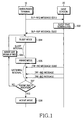
- FIG. 1 is a flowchart illustrating a conventional sleep mode controlling method proposed by the IEEE 802.16e communication system.
- controlling a sleep mode of the IEEE 802.16e communication system begins with either a subscriber terminal request or by control of a base station.
- FIG. 1 illustrates a sleep mode controlling method which is started by a subscriber terminal request.
- a subscriber terminal 10 which desires to enter a sleep mode, sends a sleep request message (hereinafter, referred to as an SLP-REQ message) to a base station 20 (S31).
- the subscriber terminal 10 sends a minimum size value (e.g. a min-window) and a maximum size value (e.g. a max-window) of a sleep interval window according to its configuration, and a value of a listening interval, that is, a time interval during which the corresponding terminal awakes and determines if a message has become received.
- the unit of these values is a frame.
- the base station 20 having received the SLP-REQ message performs a sleep time scheduling with reference to preset sleep control information (e.g. the min-window, the max-window, and the listening interval which are allowable) (S32), and then sends a sleep response message (hereinafter, referred to as an SLP-RSP message) to the subscriber terminal 10 (S33).
- This SLP-RSP message includes the number of frames (hereinafter, referred to as a start-time) which remain until the subscriber terminal 10 enters the sleep mode, and a min-window value, a max-window value and a listening interval value which are approved by the base station 20.
- the unit of these values is a frame.
- the subscriber terminal 10 having received the SLP-RSP message enters the sleep mode at the start-time included in the SLP-RSP message (S34).
- the subscriber terminal 10 awakes from the sleep mode after the sleep interval passes, and checks whether or not there exist PDU data which it should receive from the base station 20. That is, if the sleep interval passes, the subscriber terminal 10 enters an awake mode (S35) and checks a traffic-indication message (hereinafter, referred to as a TRF-IND message) which is broadcast by the base station 20 during the listening interval (S36).
- the TRF-IND message is information which the base station 20 broadcasts to the subscriber terminal 10, and includes basic connection identification (CIDs) of a terminal to which PDU data should be transmitted.
- CIDs basic connection identification
- the subscriber terminal 10 determines whether or not its own basic CIDs (BCIDs) are included in the TRF-IND message and then determines whether or not to awake form the sleep mode. That is, when the terminal's own BCIDs are included in the received TRF-IND message, the subscriber terminal 10 recognizes that there are PDU data to be received, and thus awakes from the sleep mode. If the TRF-IND message having been received by the subscriber terminal 10 is a positive traffic indication (S37), the subscriber terminal 10 is shifted to an active mode (S38).
- BCIDs basic CIDs
- the subscriber terminal 10 determines that no PDU data exists to be transmitted to the subscriber terminal 10, and enters the sleep mode again. If the TRF-IND message having been received by the subscriber terminal 10 is a negative traffic indication, the subscriber terminal 10 is shifted to the sleep mode (S34) and then maintains the sleep mode during the sleep interval.
- the subscriber terminal 10 increases the sleep interval by twice as long as the prior sleep interval (S39) and then maintains the sleep mode during the increased sleep interval.
- the subscriber terminal 10 repeats the sleep mode and the awake mode until it is shifted to the active mode, and increases the sleep interval by twice as long as the prior sleep interval every repetition period until the sleep interval comes into the max-window which the base station 20 permits.
- the IEEE 802.16e communication system drives the sleep mode while increasing the sleep interval by twice as long as the prior sleep interval by means of the above-mentioned sleep update algorithm. Accordingly, in the IEEE 802.16e communication system, a sleep interval becomes increased according to an exponential power of 2, which makes it difficult for a base station to manage each sleep interval of a plurality of subscriber terminals.
- three messages that is, a SLP-REQ message, a SLP-RSP message, and a TRF-IND message, are defined between a subscriber terminal and a base station in order for the subscriber terminal to enter a sleep mode.
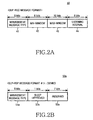
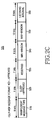
- FIGs. 2a to 2d are views showing conventional message formats transceived between a base station and a subscriber terminal in order to control the sleep mode as described above. That is, FIG. 2a shows a format of a SLP-REQ message 40, FIG. 2b shows a format of a SLP-RSP message 50a used in denying a sleep mode, FIG. 2c shows a format of a SLP-RSP message 50b used in approving a sleep mode, and FIG. 2d shows a format of a TRF-IND message 60.
- the SLP-REQ message 40 includes a management message type (8 bits) 41, a min-window (6 bits) 42, a max-window (10 bits) 43, and a listening interval (8 bits) 44.
- the SLP-REQ message 40 is a dedicated message transmitted on the basis of a connection ID (CID) of a subscriber terminal, representing a request of a sleep mode by the subscriber terminal.
- CID connection ID
- the management message type 41 is information representing the message types that are currently being transmitted. For instance, when the management message type is '45', it means that the corresponding message is an SLP-REQ message.
- the management message type 41 consists of 8 bits.
- the min-window 42 represents a start value requested for the sleep interval (measured in frames)
- the max-window 43 represents a stop value requested for the sleep interval (measured in frames). That is, the sleep interval is updated while being increased according to an exponential power of 2 of the min-window value within a range from the min-window value to the max-window value.
- the listening interval 44 represents a requested listening interval (measured in frames).
- all of the min-window 42, the max-window 43, and the listening interval 44 are set in the unit of a frame.
- the SLP-RSP message 50a used in denying a sleep mode request includes a management message type (8 bits) 51a, a sleep-approved area (1 bit) 52a, and a reserved area (7 bits) 53a.
- This SLP-RSP message 50a is a dedicated message transmitted on the basis of the connection ID (CID) of the subscriber terminal, and is a message setting a sleep timing of a the subscriber terminal after scheduling of a sleep time of the subscriber terminal in a base station.
- CID connection ID
- the management message type 51a is information representing the message types that are currently being transmitted. For instance, when the management message type is '46', it means that the corresponding message is an SLP-RSP message.
- the sleep-approved area 52a is expressed in 1 bit. When the sleep-approved area 52a is zero, the subscriber terminal cannot be shifted to the sleep mode.
- the reserved area 53a is an preparatory area.
- the SLP-RSP message 50b which is transmitted to a subscriber terminal when a base station approves a sleep request, includes a management message type (8 bits) 51b, a sleep-approved area (1 bit) 52b, a start-time (7 bits) 53b, a min-window 54b, a max-window 55b and a listening interval 56b.
- the management message type 51b is information representing the message types that are currently being transmitted. For instance, when the management message type is '46', it means that the corresponding message is an SLP-RSP message.
- the sleep-approved area 52b is expressed in 1 bit.
- the sleep-mode request is approved.
- the start-time 53b represents values of frames required until the subscriber terminal enters a first sleep interval, from which a frame having received the SLP-RSP message is excluded.
- the subscriber terminal is state-transited into the sleep mode after passing through frames from a frame positioned next to a frame receiving the sleep mode response message to frames corresponding to the start time.
- the min-window 54b represents a start value for the sleep interval (measured in frames)
- the max-window 55b represents a stop value for the sleep interval (measured in frames)
- the listening interval 56b represents a value for a listening interval (measured in frames).
- the TRF-IND message 60 includes a management message type (8 bits) 61, the number of positive subscribers (NUM-POSITIVE) (8 bits) 62 and connection Ids CIDs of the respective positive subscribers (16 bits) 63 and 64. Differently from the SLP-REQ message and the SLP-RSP message, the TRF-IND message 60 is transmitted in a broadcasting method.
- the management message type 61 is information representing the message types that are currently being transmitted. For instance, when the management message type 61 is '47', it means that the corresponding message is a TRF-IND message.
- the number of positive subscribers 62 represents the number of subscriber terminals to which packet data will be transmitted, and the connection IDs of the respective positive subscriber 63 and 64 include connection identification information the number of which corresponds to the number of the positive subscribers.
- FIG. 3 is a diagram for explaining a conventional sleep interval update algorithm proposed by the IEEE 802.16e communication system.
- a reference mark 'SS' represents a subscriber terminal
- a reference mark 'BS' represents a base station
- a box in which the 'SS' and 'BS' are written represents a frame.
- FIG. 3 shows that the subscriber terminal SS requests a sleep mode to the base station BS at Nth frame (S71), and repeats a sleep interval and a listening interval when the base station BS responds to the sleep request by designating a sleep mode start time as (N+3)th frame at (N+1)th frame (S72).
- the initial sleep interval consists of two frames, but the second sleep interval consists of four frames corresponding to twice as many as the initial sleep interval.
- WO 01/69859 A1 relates to mobile terminal sleep phase assignment and announcement in a wireless local area network including an access point and a plurality of mobile terminals.
- the access point decides when the sleep mode of a mobile terminal will start and can allocate the mobile terminals within its cell into different sleep groups.
- the groups can have the same or different time durations but awake at different times so that they are not in phase.
- the organization of the mobile terminals into different sleep groups having different phases starts with a first mobile terminal sending a sleep request signal to the access point including a proposed sleep duration.
- the access point then sends a sleep reservation signal to the first mobile terminal including a sleep duration and sleep start time that the access point has chosen for the first mobile terminal.
- a second mobile terminal sends a sleep request signal to the access point including a proposed sleep duration.
- the access point thereupon sends a sleep reservation signal to the second mobile terminal including a sleep duration and sleep start time that the access point has chosen for the second mobile terminal.
- the first mobile terminal enters sleep at the time specified by the access point and subsequently the second mobile terminal enters sleep at the other time specified by the access point.
- the access point can select the sleep start times, for example to add a mobile terminal to an already existing sleep group.
- the present invention has been made to solve the above-mentioned problems occurring in the prior art.
- An aspect of the present invention is to provide a method for controlling a sleep mode, which can reduce the amount of traffic for a broadcasting message transmission by grouping subscriber terminals and managing in a base station the grouped the subscriber terminals of a wireless access communication system.
- a further aspect of the present invention is to provide a method for controlling a sleep mode, which can reduce the amount of traffic between a subscriber terminal and a base station by not transmitting information for a sleep interval scheduling when a subscriber terminal is state-transited into a sleep mode.
- Another aspect of the present invention is to provide an apparatus for controlling a sleep mode, which can reduce the amount of traffic for a broadcasting message transmission by grouping subscriber terminals and managing in a base station the grouped the subscriber terminals of a wireless access communication system.
- a method for controlling a sleep mode in a wireless access communication system including a base station and subscriber terminals, the method including the steps of assigning to the subscriber terminals connected to the base station a group identifier for grouping subscriber terminals assigning a preset index value from a plurality of preset index values for a sleep period control to the subscriber terminal through a negotiation between the base station and the subscriber terminal having requested a state-transition into the sleep mode; and determining a listening position using the group identifier of the subscriber terminal having requested the state-transition into the sleep mode and an index value.
- FIG. 4 is a flowchart illustrating processing procedures between a base station and a subscriber terminal for controlling a sleep mode according to an embodiment of the present invention.
- a base station and a subscriber terminal in a wireless access communication system must perform a step of sharing multiple preset index values (SI :sleep period indexes) (hereinafter, referred to as an index value) for controlling a sleep period.
- SI preset index values
- the index value has multiple values of a preset sleep unit time [e.g. frame (256 frame)] "F". It is preferable that the SI is set as four numerals (i.e. 00, 01, 10, 11) expressed in a 2 bit value. That is, the base station and the subscriber terminal must already know that the four numerals are used as the index value.
- a_P a sleep period set in the subscriber terminal
- F a preset sleep unit time
- SI sleep period setting information such as the index value.
- P a sleep period set in the subscriber terminal
- P a preset sleep unit time
- SI sleep period setting information such as the index value.
- the base station 200 assigns predetermined a basic connection ID (hereinafter, referred to as a BCID) to the subscriber terminal 100 (S110 and S115).
- a BCID basic connection ID
- the base station 200 assigns the same predetermined number of ciphers of the BCID to terminals which will be formed into a group having the same sleep start time. For example, the base station typically selects low-ranked 8 bits from 16 bits forming a BCID of the subscriber terminal as a value (e.g., group identifier) achieving a group having the same sleep start time.
- subscriber terminals which receive the BCID having the same value of low-ranked 8 bits from the base station, start an operation of a sleep mode at the same time point. Also, a separate bit value for achieving the group having the same sleep start time may be generated and added. Further, the base station 200 waits for a sleep request by the subscriber terminal 100. In this case, the maximum number of the groups having the same sleep start time is 1024 (2 8 * 4, the number of SI).
- the subscriber terminal 100 selects one from among the index values (e.g. 00, 01, 10, 11), and transmits a sleep request message (hereinafter, referred to as an SLP-REQ message) including the selected index value to the base station 200 (S 120).
- the index value is the same as description described above.
- the base station 200 receiving the SLP-REQ message transmits to the subscriber terminal 100 a response message SLP-RSP, which responds to the sleep request, (S125).
- the response message includes whether or not the index value selected by the subscriber terminal 100 can be approved.
- the base station 200 transmits the response message containing the index value. Otherwise, the base station 200 transmits a response message containing another index value which can be approved.
- the subscriber terminal 100 receiving the response message determines a sleep start time by the BCID received from the base station 200 in step S115, and calculates an awake frame (i.e. a listening position) of the subscriber terminal 100 by means of the BCID and the index value contained in the received response message in step S125 (S 13 5).
- the subscriber terminal 100 determines whether or not a current frame is equal to the awake frame calculated in step S135 (S140). When the current frame is equal to the awake frame calculated in step S135, the subscriber terminal 100 operates in an awake mode (S145). That is, the subscriber terminal 100 awakes and checks a broadcasting message (hereinafter, referred to as a TRF-IND message) transmitted to itself.
- a broadcasting message hereinafter, referred to as a TRF-IND message
- the subscriber terminal 100 operates in the sleep mode (S 155).
- the subscriber terminal 100 checks whether or not a BCID of the subscriber terminal 100 is included in the received TRF-IND message (S150).
- the subscriber terminal 100 checks whether or not the received TRF-IND message is a positive traffic indication. From the result of the check (S 150), when the received TRF-IND message is a positive traffic indication, the subscriber terminal 100 state-transits into an active mode (S160). In contrast, when the received TRF-IND message is not the positive traffic indication, the subscriber terminal 100 re-shifts to the sleep mode (S 155).
- the base station 200 transmitting a SLP-RSP message to the subscriber terminal 100 in step S125 determines a listening position of the subscriber terminal 100 by means of the BCID of the corresponding subscriber terminal 100 and an index value included in the SLP-RSP message (S165).
- the base station 200 determines a listening position based on Equation 2.
- Sb * SI + 1 FN mod ⁇ F * SI + 1
- Sb represents a BCID set in a corresponding subscriber terminal
- F represents a preset sleep unit time
- SI represents an index value
- FN 24 bits
- the base station 200 When the current frame comes into the determined listening position (S 170), the base station 200 generates the TRF-IND message which includes the BCID of the subscriber terminal 100 (S175), and then transmits the generated TRF-IND message to the subscriber terminal 100.
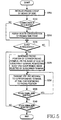
- FIGs. 5 and 6 are flowcharts illustrating steps for processing the above mentioned process in the base station and the subscriber terminal, respectively.
- FIG. 5 is a flowchart illustrating steps performed by the base station in order to control the sleep mode according to an embodiment of the present invention.
- the base station in order to control the sleep mode according to the embodiment of the present invention, the base station initializes a listening group by the BCID of the subscriber terminal connected to the a corresponding base station (S205). Initializing a listening group signifies that the base station sets a sleep start time according to the BCID of the subscriber terminal.
- the base station assigns the BCID to the subscriber terminal (S215).
- the base station determines a listening position of the corresponding subscriber terminal on the basis of the BCID of the subscriber terminal requesting a sleep mode and the index value selected by the subscriber terminal (S225).
- the base station assigns another index value to the subscriber terminal and determines a listening position of a corresponding subscriber terminal by means of the index value.
- the base station transmits the TRF-IND message to the corresponding subscriber terminal at a time corresponding to the determined listening position (S230).
- This step (S230) repeats while terminals having a sleep state exist. Further, when there are no terminals having the sleep state (S235), the base station understands whether or not there are terminals newly requesting a sleep mode from among subscriber terminals connected in advance (S240). From the result of the understanding, when there are terminals newly requesting the sleep, the base station repeats the steps (S225 to S235).
- FIG. 6 is a flowchart illustrating steps performed by the subscriber terminal in order to control a sleep mode according to one embodiment of the present invention. Referring to FIG. 6 , the steps performed by the subscriber terminal in order to control the sleep mode according to one embodiment of the present invention is as follows.
- the subscriber terminal requests a connection to a random base station (S305), receives a BCID from the base station (S310), and sets a BCID of the subscriber terminal (S315).
- the subscriber terminal selects a preset index value to request the sleep mode in order to control a sleep period (S320).
- the subscriber terminal selects a random one from among the preset predetermined number of index values and then requests the sleep mode.
- the subscriber terminal When the sleep mode request is approved by the base station (S325), the subscriber terminal state-transits to the sleep mode (S330).
- the subscriber terminal calculates and stores an awake frame (i.e., listening position) of the subscriber terminal by means of the BCID of the corresponding subscriber terminal and the index value (the value designated by the subscriber terminal or the value designated by the base station) approved by the base station (S335).
- the awake frame of the subscriber terminal is calculated by equation 2.
- the subscriber terminal 100 When a current frame is equal to the calculated awake frame, the subscriber terminal 100 changes the sleep mode into the awake mode (S345). Since the next steps S350, S355, and S360 correspond to steps S150, S160, and S155 in FIG. 4 , a description for steps S350, S355, and S360 is omitted.
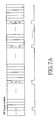
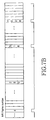
- FIGs. 7a to 7b are views illustrating an example in which a sleep mode is controlled by a sleep mode control method according to an embodiment of the present invention.
- FIG. 7a shows an example in which the BCID of the subscriber terminal is 0x0001 and the SI has a value of '0 10 '.
- FIG. 7b shows an example in which the BCID of the subscriber terminal is 0x1002 and the SI has a value of '1 10 '.
- the subscriber terminals having the same index values from among the subscriber terminals having the same group identifiers have the same sleep start times and the same listening periods, the subscriber terminals have the same listening positions.
- the base station and the subscriber terminal share the predetermined number of SI for the sleep mode control, and the base station sets the paging position by means of the predetermined BCID assigned to subscriber terminals and the SI, so that the base station can easily manage sleep intervals of the subscriber terminals. Further, since information for a sleep interval scheduling is not transmitted when the subscriber terminal state-transits to the sleep mode, traffic amount between the subscriber terminal and the base station can be reduced.
Landscapes
- Engineering & Computer Science (AREA)
- Computer Networks & Wireless Communication (AREA)
- Signal Processing (AREA)
- Mobile Radio Communication Systems (AREA)
Claims (25)
- Verfahren zum Steuern eines Ruhemodus (sleep mode) durch eine Basisstation in einem Drahtloszugriff-Kommunikationssystem, das die Basisstation und Teilnehmer-Endgeräte enthält, wobei das Verfahren die folgenden Schritte umfasst:Zuweisen und Senden (S100, S115, S215) einer Verbindungs-Kennung zu einem Teilnehmer-Endgerät, wobei die Verbindungs-Kennung verwendet wird, um eine Gruppen-Kennung zu erzeugen;Empfangen (S120, S220) einer Ruhe-Anforderungsnachricht von dem Teilnehmer-Endgerät, wobei die Ruhe-Anforderungsnachricht einen vorgeschlagenen Indexwert enthält, der aus einer Vielzahl von Indexwerten ausgewählt wird, und ein Indexwert Informationen zum Einstellen einer Ruheperiode darstellt;Bestimmen eines Indexwertes aus der Vielzahl von Indexwerten in Reaktion auf den vorgeschlagenen Indexwert und Senden (S125) einer Ruhe-Antwort-Nachricht, die den bestimmten Indexwert enthält, zu dem Teilnehmer-Endgerät; undBestimmen (S165, S225) einer Hörposition, die die Zeit ist, zu der das Teilnehmer Endgerät aufwachen soll, unter Verwendung der Gruppen-Kennung des Teilnehmer-Endgerätes, das die Ruhe-Anforderungsnachricht gesendet hat, und des Weiteren auf Basis des bestimmten Indexwertes.
- Verfahren nach Anspruch 1, wobei die Gruppen-Kennung des Weiteren verwendet wird, um eine Anfangszeit eines Ruhemodus zu bestimmen.
- Verfahren nach Anspruch 2, wobei die Verbindungs-Kennung eine inhärente grundlegende Verbindungs-Identfikation ist.
- Verfahren nach einem der Ansprüche 1 bis 3, wobei der Indexwert mehrere Werte einer voreingestellten Ruheperioden-Zeiteinheit hat.
- Verfahren nach einem der Ansprüche 1 bis 4, wobei der Schritt zum Bestimmen der Hörposition gleichzeitig und unabhängig durch das Teilnehmer-Endgerät und die Basisstation durchgeführt wird.
- Verfahren nach einem der Ansprüche 1 bis 5, wobei die Hörposition bestimmt wird mittels

wobei Sb die Gruppen-Kennung darstellt, SI den bestimmten Indexwert darstellt, F eine voreingestellte Ruhe-Zeiteinheit darstellt und FN eine Rahmennummer darstellt, die der Hörposition entspricht. - Verfahren nach einem der Ansprüche 1 bis 6, das des Weiteren einen Schritt des Erzeugens (S175) und Sendens (S230) einer Verkehrsanzeige-Nachricht, die eine grundlegende Verbindungs-Kennung des Teilnehmer-Endgerätes beinhaltet, zu einer Zeit einschließt, die der Hörposition entspricht.
- Verfahren zum Steuern eines Ruhemodus (sleep mode) durch ein Teilnehmer-Endgerät in einem Drahtloszugriff-Kommunikationssystem, das eine Basisstation (200) und Teilnehmer-Endgeräte (100) enthält, wobei das Verfahren die folgenden Schritte umfasst:Empfangen (S115, S310) einer Verbindungs-Kennung von der Basisstation, wobei die Verbindungs-Kennung verwendet wird, um eine Gruppen-Kennung zu erzeugen;Senden (S120, S320) einer Ruhe-Anforderungsnachricht, die einen vorgeschlagenen Indexwert enthält, der durch das Teilnehmer-Endgerät aus einer Vielzahl von Indexwerten ausgewählt wird, wobei ein Indexwert Informationen zum Einstellen einer Ruheperiode darstellt;Empfangen (S125) einer Ruhe-Antwortnachricht von der Basisstation, die einen Indexwert enthält, der durch die Basisstation in Reaktion auf den vorgeschlagenen Indexwert aus der Vielzahl von Indexwerten bestimmt wird; undBestimmen (S135, S335) einer Hörposition, die die Zeit ist, zu der das Teilnehmer-Endgerät aufwachen soll, unter Verwendung des in der Ruhe-Antwortnachricht enthaltenen Indexwertes und der Verbindungs-Kennung.
- Verfahren nach Anspruch 8, wobei die Gruppen-Kennung des Weiteren verwendet wird, um eine Anfangszeit eines Ruhemodus zu bestimmen.
- Verfahren nach einem der Ansprüche 8 bis 9, wobei der Indexwert, der verwendet wird, um die Hörposition zu bestimmen, mehrere Werte einer voreingestellten Ruheperioden-Zeiteinheit hat.
- Verfahren nach einem der Ansprüche 8 bis 10, wobei der Schritt zum Bestimmen der Hörposition gleichzeitig und unabhängig durch das Teilnehmer-Endgerät und die Basisstation durchgeführt wird.
- Verfahren nach einem der Ansprüche 8 bis 11, wobei die Hörposition bestimmt wird mittels:

wobei Sb die Gruppen-Kennung darstellt, SI den bestimmten Indexwert darstellt, der in der Ruhe-Antwortnachricht enthalten ist, F eine voreingestellte Ruhe-Zeiteinheit darstellt und FN eine Rahmennummer darstellt, die der Hörposition entspricht. - Verfahren nach einem der Ansprüche 8 bis 12, das des Weiteren einen Schritt des Empfangens (S350) einer Verkehrsanzeige-Nachricht zu einer Zeit einschließt, die der Hörposition entspricht.
- Basisstation zum Steuern eines Ruhemodus (sleep mode) in einem Drahtloszugriff-Kommunikationssystem, das die Basisstation (200) und Teilnehmer-Endgeräte (100) enthält, wobei die Basisstation umfasst:eine Einrichtung zum Zuweisen und Senden einer Verbindungs-Kennung zu einem Teilnehmer-Endgerät, wobei die Verbindungs-Kennung verwendet wird, um eine Gruppen-Kennung zu erzeugen;eine Einrichtung zum Empfangen einer Ruhe-Anforderungsnachricht von dem Teilnehmer-Endgerät, wobei die Ruhe-Anforderungsnachricht einen vorgeschlagenen Indexwert enthält, der aus einer Vielzahl von Indexwerten ausgewählt wird, und wobei ein Indexwert Informationen zum Einstellen einer Ruheperiode darstellt;eine Einrichtung, mit der in Reaktion auf den vorgeschlagenen Indexwert ein Indexwert aus der Vielzahl von Indexwerten bestimmt wird und eine Ruhe-Antwortnachricht, die den bestimmten Indexwert enthält, zu dem Teilnehmer-Endgerät gesendet wird; undeine Einrichtung zum Bestimmen einer Hörposition, die die Zeit ist, zu der das Teilnehmer-Endgerät aufwachen soll, unter Verwendung der Gruppen-Kennung des Teilnehmer-Endgerätes, das die Ruhe-Anforderungsnachricht gesendet hat, und des Weiteren auf Basis des bestimmten Indexwertes.
- Basisstation nach Anspruch 14, wobei die Einrichtung zum Erzeugen der Gruppen-Kennung des Weiteren zum Bestimmen einer Anfangszeit eines Ruhemodus unter Verwendung der Gruppen-Kennung eingerichtet ist.
- Basisstation nach Anspruch 15, wobei die Verbindungs-Kennung eine inhärente grundlegende Verbindungs-Identifikation ist.
- Basisstation nach einem der Ansprüche 14 bis 16, wobei der Indexwert mehrere Werte der voreingestellten Ruhe-Zeiteinheit hat.
- Basisstation nach Anspruch 17, wobei die Hörposition gegeben ist durch

wobei Sb die Gruppen-Kennung darstellt, SI den bestimmten Indexwert darstellt, F eine voreingestellte Ruhe-Zeiteinheit darstellt, und FN eine Rahmennummer darstellt, die der Hörposition entspricht. - Basisstation nach einem der Ansprüche 14 bis 18, die des Weiteren eine Einrichtung umfasst, mit der eine Verkehrsanzeige-Nachricht, die eine grundlegende Verbindungs-Kennung des Teilnehmer-Endgerätes beeinhaltet, zu einer Zeit erzeugt und gesendet wird, die der Hörposition entspricht.
- Teilnehmer-Endgerät zum Steuern eines Ruhemodus (sleep mode) in einem Drahtloszugangs-Kommunikationssystem, das eine Basisstation (200) und Teilnehmer-Endgeräte (100) enthält, wobei das Teilnehmer-Endgerät umfasst:eine Einrichtung zum Empfangen einer Verbindungs-Kennung von der Basisstation, wobei die Verbindungs-Kennung verwendet wird, um eine Gruppen-Kennung zu erzeugen;eine Einrichtung zum Senden einer Ruhe-Anforderungsnachricht, die einen vorgeschlagenen Indexwert enthält, wobei ein Indexwert Informationen zum Einstellen einer Ruheperiode darstellt;eine Einrichtung zum Empfangen einer Ruhe-Antwortnachricht von der Basisstation, die einen Indexwert enthält, der durch die Basisstation in Reaktion auf den vorgeschlagenen Indexwert aus der Vielzahl von Indexwerten bestimmt wird; undeine Einrichtung zum Bestimmen einer Hörposition, die die Zeit ist, zu der das Teilnehmer-Endgerät aufwachen soll, unter Verwendung des Indexwertes, der in der Ruhe-Antwortnachricht enthalten ist, und der Verbindungs-Kennung.
- Teilnehmer-Endgerät nach Anspruch 20, das des Weiteren so eingerichtet ist, dass es die Gruppen-Kennung zum Bestimmen einer Anfangszeit eines Ruhemodus verwendet.
- Teilnehmer-Endgerät nach einem der Ansprüche 20 bis 21, das so eingerichtet ist, dass es die Hörposition durch Anwenden mehrerer Werte einer voreingestellten Ruheperioden-Zeiteinheit bestimmt.
- Teilnehmer-Endgerät nach einem der Ansprüche 20 bis 22, wobei die Einrichtung zum Bestimmen der Hörposition so eingerichtet ist, dass sie die Bestimmung gleichzeitig mit und unabhängig von der Basisstation durchführt.
- Teilnehmer-Endgerät nach einem der Ansprüche 20 bis 23, wobei die Hörposition gegeben ist durch

wobei Sb die Gruppen-Kennung darstellt, Sl den Indexwert darstellt, der in der Ruhe-Antwortnachricht enthalten ist, F eine voreingestellte Ruhe-Zeiteinheit darstellt und FN eine Rahmennummer darstellt, die der Hörposition entspricht. - Teilnehmer-Endgerät nach den Ansprüche 20 bis 24, das des Weiteren eine Einrichtung umfasst, mit der eine Verkehrsanzeige-Nachricht zu einer Zeit empfangen wird, die der Hörposition entspricht.
Applications Claiming Priority (4)
| Application Number | Priority Date | Filing Date | Title |
|---|---|---|---|
| KR20030060930 | 2003-09-01 | ||
| KR2003060930 | 2003-09-01 | ||
| KR2004047751 | 2004-06-24 | ||
| KR1020040047751A KR100678140B1 (ko) | 2003-09-01 | 2004-06-24 | 무선 접속 통신 시스템의 슬립모드 제어 방법 및 장치 |
Publications (3)
| Publication Number | Publication Date |
|---|---|
| EP1511336A2 EP1511336A2 (de) | 2005-03-02 |
| EP1511336A3 EP1511336A3 (de) | 2005-09-14 |
| EP1511336B1 true EP1511336B1 (de) | 2009-01-14 |
Family
ID=34107025
Family Applications (1)
| Application Number | Title | Priority Date | Filing Date |
|---|---|---|---|
| EP04020778A Expired - Lifetime EP1511336B1 (de) | 2003-09-01 | 2004-09-01 | Verfahren zur Steuerung des Schlafmodus in einem drahtlosen Breitband-Zugangskommunikationssystem |
Country Status (4)
| Country | Link |
|---|---|
| US (1) | US7430421B2 (de) |
| EP (1) | EP1511336B1 (de) |
| JP (1) | JP4064386B2 (de) |
| CN (1) | CN100484121C (de) |
Families Citing this family (69)
| Publication number | Priority date | Publication date | Assignee | Title |
|---|---|---|---|---|
| JP2778464B2 (ja) * | 1994-05-06 | 1998-07-23 | コクヨ株式会社 | 収納式椅子 |
| JP4039099B2 (ja) * | 2002-03-28 | 2008-01-30 | ブラザー工業株式会社 | ミシン |
| US6959656B2 (en) * | 2002-03-28 | 2005-11-01 | Brother Kogyo Kabushiki Kaisha | Threading apparatus for sewing machine |
| WO2005008359A2 (en) * | 2003-07-18 | 2005-01-27 | Electronics And Telecommunications Research Institute | System and method for controlling power saving mode in wireless portable network system |
| KR100686775B1 (ko) * | 2003-11-07 | 2007-02-23 | 삼성전자주식회사 | 광대역 무선 접속 통신 시스템에서 트래픽 지시 메시지 전송 방법 |
| AP2179A (en) * | 2004-03-04 | 2010-11-26 | Samsung Electronics Co Ltd | System and method for controlling an operational mode of a mac layer in a broadband wireless access communication system. |
| KR100885158B1 (ko) * | 2004-08-09 | 2009-02-23 | 엘지전자 주식회사 | 광대역 무선접속 시스템에서 수면모드 단말의 주기적인레인징방법 |
| EP1655983B1 (de) * | 2004-11-04 | 2011-02-23 | Samsung Electronics Co., Ltd. | Vorrichtung und Verfahren zur Signalübertragung und Signalempfang unter Verwendung von Abwärtskanalinformationen in einem Schlafmodus in einem BWA-Kommunikationssystem |
| US7742444B2 (en) | 2005-03-15 | 2010-06-22 | Qualcomm Incorporated | Multiple other sector information combining for power control in a wireless communication system |
| KR101084129B1 (ko) * | 2005-03-24 | 2011-11-17 | 엘지전자 주식회사 | 광대역 무선접속 시스템에서의 슬립모드 지원 방법 |
| US9055552B2 (en) | 2005-06-16 | 2015-06-09 | Qualcomm Incorporated | Quick paging channel with reduced probability of missed page |
| US8750908B2 (en) | 2005-06-16 | 2014-06-10 | Qualcomm Incorporated | Quick paging channel with reduced probability of missed page |
| CN100428849C (zh) * | 2005-06-29 | 2008-10-22 | 华为技术有限公司 | 具有多播业务的移动台睡眠状态机的激活和撤销激活方法 |
| US8060119B2 (en) * | 2005-08-15 | 2011-11-15 | Qualcomm Incorporated | Adaptive wake-up period of roaming wireless terminals |
| DE102005041453B4 (de) * | 2005-08-31 | 2007-06-28 | Siemens Ag | Verfahren und Anordnung zur Ortung eines mobilen Endgerätes in einer Mehrzellen-Funkanordnung |
| KR100725406B1 (ko) * | 2005-09-26 | 2007-06-07 | 삼성전자주식회사 | 다수의 전력 절약 모드를 가지는 무선 통신 장치에서리스닝 구간을 조절하여 전력을 절약하는 방법 및 장치 |
| US8693430B2 (en) | 2005-09-28 | 2014-04-08 | Neocific, Inc. | Method and system for multi-carrier packet communication with reduced overhead |
| US7693555B2 (en) * | 2005-10-21 | 2010-04-06 | Intel Corporation | Sleep-mode wireless cell reselection apparatus, systems, and methods |
| WO2007050834A1 (en) | 2005-10-27 | 2007-05-03 | Qualcomm Incorporated | A method and apparatus for processing overlapping ns broadcast and sticky assignments in wireless communication systems |
| US20090207790A1 (en) * | 2005-10-27 | 2009-08-20 | Qualcomm Incorporated | Method and apparatus for settingtuneawaystatus in an open state in wireless communication system |
| US9258833B2 (en) | 2006-02-09 | 2016-02-09 | Altair Semiconductor Ltd. | LTE/Wi-Fi coexistence |
| US7567820B2 (en) * | 2006-02-09 | 2009-07-28 | Altair Semiconductor Ltd. | Scanning for network connnections with variable scan rate |
| US7545787B2 (en) * | 2006-02-09 | 2009-06-09 | Altair Semiconductor Ltd. | Simultaneous operation of wireless LAN and long-range wireless connections |
| US7542728B2 (en) * | 2006-02-09 | 2009-06-02 | Altair Semiconductor Ltd. | Dual-function wireless data terminal |
| US8160001B2 (en) * | 2006-05-25 | 2012-04-17 | Altair Semiconductor Ltd. | Multi-function wireless terminal |
| US8880104B2 (en) * | 2006-03-03 | 2014-11-04 | Qualcomm Incorporated | Standby time improvements for stations in a wireless network |
| US7752473B1 (en) * | 2006-03-20 | 2010-07-06 | Intel Corporation | Providing a deterministic idle time window for an idle state of a device |
| US8700105B2 (en) | 2006-06-22 | 2014-04-15 | Qualcomm Incorporated | Low duty cycle device protocol |
| US8018884B2 (en) * | 2006-06-21 | 2011-09-13 | Qualcomm Incorporated | Low duty cycle network controller |
| US7577449B2 (en) * | 2006-06-29 | 2009-08-18 | Motorola, Inc. | Method and system for coordinating a sleep mode wake-up time |
| US20080009328A1 (en) * | 2006-07-05 | 2008-01-10 | Motorola, Inc. | Sleep mode optimization for reducing battery life in broadband wireless communication devices |
| GB0616476D0 (en) * | 2006-08-18 | 2006-09-27 | Fujitsu Ltd | Communication systems |
| KR100925712B1 (ko) * | 2007-01-22 | 2009-11-10 | 삼성전자주식회사 | 광대역 무선통신 시스템에서 슬립 모드 진입을 제어하기위한 장치 및 방법 |
| CN101237640B (zh) * | 2007-01-30 | 2014-06-04 | 世意法(北京)半导体研发有限责任公司 | 在宽带无线接入通信系统中用于实时服务的睡眠模式控制 |
| EP2566237B1 (de) | 2007-02-05 | 2014-08-20 | Nec Corporation | Verfahren für Handover von Basisstation zu Basisstation, Basisstation und Kommunikationsendgerät |
| KR101340177B1 (ko) * | 2007-10-19 | 2014-01-15 | 삼성전자주식회사 | 통신 시스템에서 슬립모드 동작 제어 방법 및 장치 |
| US8121144B2 (en) * | 2007-11-20 | 2012-02-21 | Altair Semiconductor Ltd. | Multi-function wireless terminal |
| CN101207876B (zh) * | 2007-11-27 | 2012-09-05 | 中兴通讯股份有限公司 | 一种休眠标识的管理系统、分配方法和调整方法 |
| US8095106B2 (en) * | 2008-02-14 | 2012-01-10 | Industrial Technology Research Institute | System and method for power savings in a wireless communication network |
| KR101490245B1 (ko) | 2008-02-25 | 2015-02-05 | 엘지전자 주식회사 | 광대역 무선접속 시스템의 서브채널 할당을 고려한 공존지원 방법 |
| KR101467783B1 (ko) | 2008-02-25 | 2014-12-03 | 엘지전자 주식회사 | 무선 개인영역 통신망과의 공존 지원 방법 |
| KR101467782B1 (ko) | 2008-02-25 | 2014-12-03 | 엘지전자 주식회사 | 이동 단말에서 공존 지원 방법 |
| MY154257A (en) * | 2008-02-25 | 2015-05-29 | Lg Electronics Inc | Method for supporting coexistence considering while subchannel allocation in a broadband wireless access system |
| KR101094431B1 (ko) * | 2008-02-28 | 2011-12-15 | 한국전자통신연구원 | 이동 통신 시스템에서 전력 절약 동작 관리 방법 |
| US9848314B2 (en) * | 2008-05-19 | 2017-12-19 | Qualcomm Incorporated | Managing discovery in a wireless peer-to-peer network |
| US9198017B2 (en) * | 2008-05-19 | 2015-11-24 | Qualcomm Incorporated | Infrastructure assisted discovery in a wireless peer-to-peer network |
| KR101578928B1 (ko) * | 2008-07-07 | 2015-12-18 | 한국전자통신연구원 | 수면 모드 관리 방법, 단말 및 수면 모드 관리 장치 |
| US9185654B2 (en) | 2008-07-16 | 2015-11-10 | Qualcomm Incorporated | Network server having an information and scheduling controller to support one or more low duty cycle wireless devices |
| US20100067416A1 (en) * | 2008-09-15 | 2010-03-18 | Qualcomm Incorporated | Re-programming media flow phone using speed channel switch time through sleep time line |
| CN101808362B (zh) * | 2009-02-13 | 2014-03-12 | 上海贝尔股份有限公司 | 一种用于调整移动台睡眠模式的方法及装置 |
| US8599730B2 (en) * | 2009-03-13 | 2013-12-03 | Qualcomm Incorporated | Methods and systems for split timer L3 P2P communications |
| KR101723411B1 (ko) | 2009-08-21 | 2017-04-05 | 엘지전자 주식회사 | 멀티 캐리어 시스템의 슬립모드 동작 방법 및 장치 |
| KR101638799B1 (ko) * | 2009-11-05 | 2016-07-13 | 삼성전자주식회사 | 무선통신 시스템에서 기지국과 단말 간 슬립 사이클 설정을 협상하기 위한 장치 및 방법 |
| US20120322515A1 (en) * | 2010-01-12 | 2012-12-20 | Woonhee Hwang | Apparatus and Method to Indicate Power Saving Mode of a Network Element |
| JP5654618B2 (ja) | 2010-02-12 | 2015-01-14 | インターデイジタル パテント ホールディングス インコーポレイテッド | マシンタイプ通信をサポートする方法および装置 |
| US8824348B2 (en) * | 2010-09-29 | 2014-09-02 | Electronics And Telecommunications Research Institute | Method for controlling power saving mode in group communication |
| KR101801338B1 (ko) * | 2010-09-29 | 2017-11-24 | 한국전자통신연구원 | 그룹 통신에서의 전력 절약 모드 제어 방법 |
| CN102457424B (zh) * | 2010-10-19 | 2014-05-28 | 英业达集团(天津)电子技术有限公司 | 多播封包的发送速度控制方法 |
| US8379643B2 (en) * | 2010-12-09 | 2013-02-19 | Inventec Corporation | Method for controlling transmission speed of multi-cast packets |
| US20130252643A1 (en) * | 2010-12-28 | 2013-09-26 | Lg Electronics Inc. | Method for transmitting and receiving idle-mode parameter update information, and apparatus therefor |
| US9237572B2 (en) | 2011-06-12 | 2016-01-12 | Altair Semiconductor Ltd. | Mitigation of interference between communication terminals in TD-LTE |
| DE112011105661T5 (de) * | 2011-12-16 | 2014-09-04 | Intel Corporation | Änderung der Maschine-zu-Maschine-(M2M)-Gruppe einer M2M-Vorrichtung |
| CN103686953A (zh) * | 2012-09-21 | 2014-03-26 | 北京信威通信技术股份有限公司 | 一种移动终端睡眠唤醒的方法 |
| CN103686615B (zh) * | 2012-09-21 | 2017-12-01 | 北京信威通信技术股份有限公司 | 一种集群终端睡眠唤醒的方法 |
| US9247476B2 (en) * | 2013-07-10 | 2016-01-26 | Qualcomm Incorporated | Systems and methods for coordinating power management in an independent basic service set |
| US10477471B2 (en) * | 2017-10-27 | 2019-11-12 | Avago Technologies International Sales Pte. Limited | Apparatus to save power smartly from bluetooth audio visual remote control protocol notifications |
| US11160117B2 (en) * | 2018-09-19 | 2021-10-26 | Qualcomm Incorporated | Random access techniques for idle mode requests |
| WO2021016342A1 (en) * | 2019-07-23 | 2021-01-28 | Kyocera Corporation | Scheduled device-specific synchronization signals with page message indication |
| US11902896B2 (en) * | 2020-10-30 | 2024-02-13 | Morse Micro Pty. Ltd. | Method and a system for managing a sleep-mode of an electronic device |
Family Cites Families (19)
| Publication number | Priority date | Publication date | Assignee | Title |
|---|---|---|---|---|
| US5233643A (en) * | 1991-10-08 | 1993-08-03 | Network Access Corporation | Method and system network for providing an area with limited bandwidth bi-direction burst personnel telecommunications |
| US5349695A (en) * | 1992-12-03 | 1994-09-20 | Motorola, Inc. | Selective call receiver having CMOS power-on reset circuit |
| JPH06188831A (ja) * | 1992-12-16 | 1994-07-08 | Fujitsu Ltd | パーソナル通信方式 |
| US5519403A (en) * | 1993-11-29 | 1996-05-21 | Motorola, Inc. | Global positioning system communications multi-interface |
| JP3271939B2 (ja) | 1997-08-05 | 2002-04-08 | ジェイフォン東日本株式会社 | デジタル無線電話システム |
| US6137772A (en) * | 1997-11-14 | 2000-10-24 | Telefonaktiebolaget Lm Ericsson (Publ) | Method of updating a list of digital control channels (DCCH) in a mobile station in a radio telecommunications network |
| US6965297B1 (en) * | 1998-09-02 | 2005-11-15 | Enhanced Messaging Systems, Inc. | Wide area radio paging system |
| US6622251B1 (en) | 1999-04-07 | 2003-09-16 | Telefonaktiebolaget Lm Ericsson (Publ) | Method to put a mobile terminal into sleep when a frame control channel containing a location of slow broadcast channel does not include wakeup information |
| US6710702B1 (en) * | 1999-11-22 | 2004-03-23 | Motorola, Inc. | Method and apparatus for providing information to a plurality of communication units in a wireless communication system |
| WO2001069859A1 (en) | 2000-03-17 | 2001-09-20 | Telefonaktiebolaget Lm Ericsson (Publ) | Mobile terminal sleep phase assignment and announcement in a wireless local area network |
| WO2003051077A1 (en) | 2001-12-05 | 2003-06-19 | Thomson Licensing S.A. | Method and apparatus for paging a mobile terminal in a wireless lan |
| JP3886795B2 (ja) | 2001-12-10 | 2007-02-28 | 株式会社エヌ・ティ・ティ・ドコモ | 移動通信システム、移動通信方法、移動端末及び通信基地局 |
| US6961595B2 (en) * | 2002-08-08 | 2005-11-01 | Flarion Technologies, Inc. | Methods and apparatus for operating mobile nodes in multiple states |
| US7016690B2 (en) * | 2003-02-10 | 2006-03-21 | Flarion Technologies, Inc. | Methods and apparatus for updating mobile node location information |
| US7130668B2 (en) * | 2003-09-01 | 2006-10-31 | Samsung Electronics Co., Ltd. | Method and system for controlling sleep mode in broadband wireless access communication system |
| US20050186973A1 (en) * | 2004-02-04 | 2005-08-25 | Peter Gaal | Method and apparatus for sending signaling for multicast and broadcast services |
| US7260400B2 (en) * | 2004-03-05 | 2007-08-21 | Samsung Electronics Co., Ltd. | Method and apparatus for transmitting and receiving control message in wireless access communication system |
| EP1807945B1 (de) * | 2005-03-24 | 2011-07-06 | LG Electronics Inc. | Übergabeverfahren in einem breitbandsystem für drahtlosen zugriff |
| US7366526B2 (en) * | 2005-03-31 | 2008-04-29 | Lucent Technologies Inc. | Method and apparatus for providing improved border paging in a wireless network |
-
2004
- 2004-08-05 US US10/911,944 patent/US7430421B2/en not_active Expired - Lifetime
- 2004-08-30 CN CNB200410074905XA patent/CN100484121C/zh not_active Expired - Fee Related
- 2004-08-31 JP JP2004253334A patent/JP4064386B2/ja not_active Expired - Fee Related
- 2004-09-01 EP EP04020778A patent/EP1511336B1/de not_active Expired - Lifetime
Also Published As
| Publication number | Publication date |
|---|---|
| CN100484121C (zh) | 2009-04-29 |
| EP1511336A2 (de) | 2005-03-02 |
| CN1592292A (zh) | 2005-03-09 |
| US20050075148A1 (en) | 2005-04-07 |
| EP1511336A3 (de) | 2005-09-14 |
| JP4064386B2 (ja) | 2008-03-19 |
| US7430421B2 (en) | 2008-09-30 |
| JP2005080312A (ja) | 2005-03-24 |
Similar Documents
| Publication | Publication Date | Title |
|---|---|---|
| EP1511336A2 (de) | Verfahren zur Steuerung des Schlafmodus in einem drahtlosen Breitband-Zugangskommunikationssystem | |
| EP1511335B1 (de) | Verfahren und System zur Steuerung des Schlafmodus in einem drahtlosen Breitband-Zugangskommunikationssystem | |
| US7450926B2 (en) | Apparatus and method for controlling sleep mode in wireless access communication system | |
| EP4207830B1 (de) | Kommunikationsverfahren, -vorrichtung und -system | |
| CN103152802B (zh) | 用于降低无线发射/接收单元的电池消耗的方法和设备 | |
| US7522564B2 (en) | Radio terminal and radio communication system using same | |
| EP1565015A2 (de) | Verfahren zur Steuerung eines Betriebsmodus eines mobilen Endgerätes in einem drahtlosen Breitbandzugriffssystem | |
| US20040128387A1 (en) | Broadcasting information in ad-hoc network clusters between pseudo-random time intervals | |
| KR20110075777A (ko) | 무선 통신망에서 수면모드를 제어하는 방법 및 장치 | |
| EP1573944B1 (de) | Verfahren zum kommunizieren mit mehreren benutzermengen | |
| CN120345342A (zh) | 用于在无线网络中进行多个drx管理的方法、装置和系统 | |
| CN114765837B (zh) | 省电处理方法、装置及设备 | |
| KR20050025039A (ko) | 광대역 무선 접속 통신 시스템의 슬립 모드 제어 시스템및 그 방법 | |
| KR100678140B1 (ko) | 무선 접속 통신 시스템의 슬립모드 제어 방법 및 장치 | |
| CN119052904B (zh) | 一种信标帧的处理方法、装置、设备、介质及程序产品 | |
| WO2004062236A1 (en) | Method and wireless sensor platform for establishing pair-wise communication | |
| WO2024165346A1 (en) | Method, apparatus, and system for updating discontinuous reception configuration in a wireless device | |
| CN119923907A (zh) | 用于控制无线设备中的不连续接收的方法、装置和系统 | |
| CN120603024A (zh) | 一种小区处理方法及装置 |
Legal Events
| Date | Code | Title | Description |
|---|---|---|---|
| PUAI | Public reference made under article 153(3) epc to a published international application that has entered the european phase |
Free format text: ORIGINAL CODE: 0009012 |
|
| 17P | Request for examination filed |
Effective date: 20040901 |
|
| AK | Designated contracting states |
Kind code of ref document: A2 Designated state(s): AT BE BG CH CY CZ DE DK EE ES FI FR GB GR HU IE IT LI LU MC NL PL PT RO SE SI SK TR |
|
| AX | Request for extension of the european patent |
Extension state: AL HR LT LV MK |
|
| PUAL | Search report despatched |
Free format text: ORIGINAL CODE: 0009013 |
|
| AK | Designated contracting states |
Kind code of ref document: A3 Designated state(s): AT BE BG CH CY CZ DE DK EE ES FI FR GB GR HU IE IT LI LU MC NL PL PT RO SE SI SK TR |
|
| AX | Request for extension of the european patent |
Extension state: AL HR LT LV MK |
|
| RIC1 | Information provided on ipc code assigned before grant |
Ipc: 7H 04Q 7/38 B Ipc: 7H 04Q 7/32 A Ipc: 7H 04L 12/28 B |
|
| AKX | Designation fees paid |
Designated state(s): DE FR GB |
|
| GRAP | Despatch of communication of intention to grant a patent |
Free format text: ORIGINAL CODE: EPIDOSNIGR1 |
|
| GRAS | Grant fee paid |
Free format text: ORIGINAL CODE: EPIDOSNIGR3 |
|
| GRAA | (expected) grant |
Free format text: ORIGINAL CODE: 0009210 |
|
| AK | Designated contracting states |
Kind code of ref document: B1 Designated state(s): DE FR GB |
|
| REG | Reference to a national code |
Ref country code: GB Ref legal event code: FG4D |
|
| REF | Corresponds to: |
Ref document number: 602004019023 Country of ref document: DE Date of ref document: 20090305 Kind code of ref document: P |
|
| PLBE | No opposition filed within time limit |
Free format text: ORIGINAL CODE: 0009261 |
|
| STAA | Information on the status of an ep patent application or granted ep patent |
Free format text: STATUS: NO OPPOSITION FILED WITHIN TIME LIMIT |
|
| 26N | No opposition filed |
Effective date: 20091015 |
|
| REG | Reference to a national code |
Ref country code: FR Ref legal event code: PLFP Year of fee payment: 13 |
|
| REG | Reference to a national code |
Ref country code: FR Ref legal event code: PLFP Year of fee payment: 14 |
|
| PGFP | Annual fee paid to national office [announced via postgrant information from national office to epo] |
Ref country code: GB Payment date: 20170823 Year of fee payment: 14 Ref country code: DE Payment date: 20170822 Year of fee payment: 14 Ref country code: FR Payment date: 20170824 Year of fee payment: 14 |
|
| REG | Reference to a national code |
Ref country code: DE Ref legal event code: R119 Ref document number: 602004019023 Country of ref document: DE |
|
| GBPC | Gb: european patent ceased through non-payment of renewal fee |
Effective date: 20180901 |
|
| PG25 | Lapsed in a contracting state [announced via postgrant information from national office to epo] |
Ref country code: DE Free format text: LAPSE BECAUSE OF NON-PAYMENT OF DUE FEES Effective date: 20190402 |
|
| PG25 | Lapsed in a contracting state [announced via postgrant information from national office to epo] |
Ref country code: FR Free format text: LAPSE BECAUSE OF NON-PAYMENT OF DUE FEES Effective date: 20180930 |
|
| PG25 | Lapsed in a contracting state [announced via postgrant information from national office to epo] |
Ref country code: GB Free format text: LAPSE BECAUSE OF NON-PAYMENT OF DUE FEES Effective date: 20180901 |