EP1510588A1 - Correlation of the ratio of thymidine phosphorylase and dihydropyrimidine dehydrogenase mRNA expression levels in colorectal cancer with disease-free survival in 5-FU treated patients - Google Patents
Correlation of the ratio of thymidine phosphorylase and dihydropyrimidine dehydrogenase mRNA expression levels in colorectal cancer with disease-free survival in 5-FU treated patients Download PDFInfo
- Publication number
- EP1510588A1 EP1510588A1 EP04020100A EP04020100A EP1510588A1 EP 1510588 A1 EP1510588 A1 EP 1510588A1 EP 04020100 A EP04020100 A EP 04020100A EP 04020100 A EP04020100 A EP 04020100A EP 1510588 A1 EP1510588 A1 EP 1510588A1
- Authority
- EP
- European Patent Office
- Prior art keywords
- dpd
- mrna expression
- cancer
- ratio
- clin
- Prior art date
- Legal status (The legal status is an assumption and is not a legal conclusion. Google has not performed a legal analysis and makes no representation as to the accuracy of the status listed.)
- Granted
Links
Images





Classifications
-
- C—CHEMISTRY; METALLURGY
- C12—BIOCHEMISTRY; BEER; SPIRITS; WINE; VINEGAR; MICROBIOLOGY; ENZYMOLOGY; MUTATION OR GENETIC ENGINEERING
- C12Q—MEASURING OR TESTING PROCESSES INVOLVING ENZYMES, NUCLEIC ACIDS OR MICROORGANISMS; COMPOSITIONS OR TEST PAPERS THEREFOR; PROCESSES OF PREPARING SUCH COMPOSITIONS; CONDITION-RESPONSIVE CONTROL IN MICROBIOLOGICAL OR ENZYMOLOGICAL PROCESSES
- C12Q1/00—Measuring or testing processes involving enzymes, nucleic acids or microorganisms; Compositions therefor; Processes of preparing such compositions
- C12Q1/68—Measuring or testing processes involving enzymes, nucleic acids or microorganisms; Compositions therefor; Processes of preparing such compositions involving nucleic acids
- C12Q1/6876—Nucleic acid products used in the analysis of nucleic acids, e.g. primers or probes
- C12Q1/6883—Nucleic acid products used in the analysis of nucleic acids, e.g. primers or probes for diseases caused by alterations of genetic material
- C12Q1/6886—Nucleic acid products used in the analysis of nucleic acids, e.g. primers or probes for diseases caused by alterations of genetic material for cancer
-
- C—CHEMISTRY; METALLURGY
- C12—BIOCHEMISTRY; BEER; SPIRITS; WINE; VINEGAR; MICROBIOLOGY; ENZYMOLOGY; MUTATION OR GENETIC ENGINEERING
- C12Q—MEASURING OR TESTING PROCESSES INVOLVING ENZYMES, NUCLEIC ACIDS OR MICROORGANISMS; COMPOSITIONS OR TEST PAPERS THEREFOR; PROCESSES OF PREPARING SUCH COMPOSITIONS; CONDITION-RESPONSIVE CONTROL IN MICROBIOLOGICAL OR ENZYMOLOGICAL PROCESSES
- C12Q2600/00—Oligonucleotides characterized by their use
- C12Q2600/106—Pharmacogenomics, i.e. genetic variability in individual responses to drugs and drug metabolism
-
- C—CHEMISTRY; METALLURGY
- C12—BIOCHEMISTRY; BEER; SPIRITS; WINE; VINEGAR; MICROBIOLOGY; ENZYMOLOGY; MUTATION OR GENETIC ENGINEERING
- C12Q—MEASURING OR TESTING PROCESSES INVOLVING ENZYMES, NUCLEIC ACIDS OR MICROORGANISMS; COMPOSITIONS OR TEST PAPERS THEREFOR; PROCESSES OF PREPARING SUCH COMPOSITIONS; CONDITION-RESPONSIVE CONTROL IN MICROBIOLOGICAL OR ENZYMOLOGICAL PROCESSES
- C12Q2600/00—Oligonucleotides characterized by their use
- C12Q2600/112—Disease subtyping, staging or classification
-
- C—CHEMISTRY; METALLURGY
- C12—BIOCHEMISTRY; BEER; SPIRITS; WINE; VINEGAR; MICROBIOLOGY; ENZYMOLOGY; MUTATION OR GENETIC ENGINEERING
- C12Q—MEASURING OR TESTING PROCESSES INVOLVING ENZYMES, NUCLEIC ACIDS OR MICROORGANISMS; COMPOSITIONS OR TEST PAPERS THEREFOR; PROCESSES OF PREPARING SUCH COMPOSITIONS; CONDITION-RESPONSIVE CONTROL IN MICROBIOLOGICAL OR ENZYMOLOGICAL PROCESSES
- C12Q2600/00—Oligonucleotides characterized by their use
- C12Q2600/118—Prognosis of disease development
-
- C—CHEMISTRY; METALLURGY
- C12—BIOCHEMISTRY; BEER; SPIRITS; WINE; VINEGAR; MICROBIOLOGY; ENZYMOLOGY; MUTATION OR GENETIC ENGINEERING
- C12Q—MEASURING OR TESTING PROCESSES INVOLVING ENZYMES, NUCLEIC ACIDS OR MICROORGANISMS; COMPOSITIONS OR TEST PAPERS THEREFOR; PROCESSES OF PREPARING SUCH COMPOSITIONS; CONDITION-RESPONSIVE CONTROL IN MICROBIOLOGICAL OR ENZYMOLOGICAL PROCESSES
- C12Q2600/00—Oligonucleotides characterized by their use
- C12Q2600/158—Expression markers
Definitions
- the present invention relates to the field of prediction of susceptability for drug cancer treatment using biomarker analysis.
- the present invention relates to the field of prediction of susceptability of patients suffering from colorectal cancer for 5-FU and/or 5-FU analoga.
- Colorectal cancer which remains one of the major death causing cancers in the western world, can be cured in about one-third of patients by surgical resection of the primary tumor alone. However, the remaining patients will already have developed occult or distant metastasis at the time of clinical manifestation of the primary tumor and will receive adjuvant (post-surgery) chemo- and/or radiotherapy. Together with the patient's clinical data, histopathological classification of the tumor and staging according to the TNM categories define the criteria for adjuvant therapy.
- nodal negative tumors (T1-4, N0, M0) are treated by complete resection of the primary tumor alone, whereas cases with histopathological evidence of lymph node involvement (T1-4, N1-2, M0) will receive chemo- and/or radiotherapy after surgical removal of the primary tumor.
- diagnostic tools and relevant markers as well as treatment strategies [Ragnhammar, P., et al., Acta Oncol. 40 (2001) 282-308]
- precise prognosis and/or response prediction to adjuvant therapy is still an unsolved issue [Iqbal, S., and Lenz, H.J., Curr. Oncol. Rep. 3 (2001) 102-108; Kumar, S.K., and Goldberg, R.M., Curr. Oncol. Rep. 3 (2001) 94-101].
- thymidine phosphorylase TP
- DPD dihydropyrimidine dehydrogenase
- TS thymidylate synthase
- TP was shown to be identical to the molecule platelet-derived endothelial cell growth factor (PD-ECGF) [Furukawa, T., et al., Nature 356 (1992) 668; Sumizawa, T., et al., J. Biochem. 114 (1993) 9-14] and exhibits angiogenic properties in a number of solid tumors [Takebayashi, Y., et al., J. Natl. Cancer Inst. 88 (1996) 1110-1117; Griffiths, L, and Stratford, I.J., Br. J. Cancer 76 (1997) 689-693]. These properties may render TP, DPD and /or TS expression valuable prognostic and chemopredictive markers in CRC.
- PD-ECGF platelet-derived endothelial cell growth factor
- TS and DPD expression and the associated effects on chemotherapy outcome appear to be, at least in part, due to a polymorphism in the TS promotor enhancer region [Marsh, S., et al., Int. J. Oncol. 19 (2001) 383-386; Iacopetta, B., et al., Br. J. Cancer 85 (2001) 827-830] and a common point mutation within intron 14 of the DPD gene [van Kuilenburg, A.B., et al., Clin. Cancer Res. 6 (2000) 4705-4712; Raida, M., et al., Clin. Cancer Res. 7 (2001) 2832-2839], respectively.
- the problem to be solved was the identification of those parameters, which of all potential parameters suggested in the prior art actually are indicative for susceptability to 5-FU and/or 5-FU analoga and to determine, under which conditions these parameter(s) provide for the highest possible specificity.
- the present invention is directed to a method for determining whether a patient suffering from cancer is susceptable to a treatment with 5-Fluoro-Uracil or a 5-Fluoro-Uracil analogon comprising
- cut off value for TP/DPD ratio is at least 3 and preferably 3.7.
- cut off value for TP/DPD ratio is not higher than 10 and preferably not higher than 8.2.
- the inventive method is particularly usefull for determing susceptability of patients suffering from colorectal cancer.
- TP, DPD and TS mRNA expression was examined in a unique group of 102 patients with CRC, using microdissected, formalin-fixed and paraffin-embedded primary tumor samples for quantitative RT-PCR (QRT-PCR) in the LightCycler® system.
- QRT-PCR quantitative RT-PCR
- TP thymidine phosphorylase
- DPD dihydropyrimidine dehydrogenase
- TS thymidilate synthase
- TP also known as platelet-derived endothelial cell growth factor
- TS/DPD TS/DPD ratios
- TS may be regarded as a marker of metabolic activity and cellular proliferation [Pestalozzi, B.C., et al., Br. J. Cancer 71 (1995) 1151-1157; Backus, H.H., et al., J. Clin. Pathol. 55 (2002) 206-211; Pestalozzi, B.C., et al., Br. J. Cancer 71 (1995) 1151-1157].
- TP and TS mRNA expression in "early" tumors may reflect their activity in promoting vascular support and tumor cell proliferation, which is reduced upon progression to favour, for example, tumor cell invasion and metastasis.
- low levels of TP, DPD and TS mRNA expression levels have been associated with a favourable response to 5-FU chemotherapy [Metzger, R., et al., Clin. Cancer Res. 4 (1998) 2371-2376; Salonga, D., et al., Clin. Cancer Res. 6 (2000) 1322-1327].
- 5-FU chemotherapy i.e. those patients receiving adjuvant chemotherapy, which express lower TP and TS mRNA levels.
- TS/DPD ratio as a potential prognostic marker, with higher TS/DPD ratios correlating with poorer overall survival in CRC patients receiving resection alone.
- the present study revealed a significant correlation of DPD mRNA levels and the TP/DPD ratio with disease-free survival after 5-FU chemotherapy, whereby low DPD mRNA levels and a high TP/DPD ratio predict for a longer disease-free survival. This may be related to the fact that low DPD levels alone or low DPD levels and high TP levels (high TP/DPD ratio) will stabilize the active level of 5-FU. In contrast, neither TP, DPD or TS mRNA levels or the TP/DPD or TS/DPD ratio had any predictive value for overall survival.
- the present invention is directed to a novel, quantitative RT-PCR approach for determing 5-FU and/or 5-FU analogon susceptability in cancer patients.
- the new method is characterized in that determination of the TP/DPD ratio and optionally DPD mRNA expression in FFPE biopsies from patients.
- TP/DPD ratio has a predictive value for disease-free survival in adjuvant 5-FU treated colorectal cancer patients.
- CTX tumor resection only
- 52 patients had received adjuvant chemotherapy after resection
- 10 patients had received a combined adjuvant chemo- / radiotherapy.
- the adjuvant regimens in the "CTX” group were as follows: 25/52 patients Mayo protocol (6 months of 425mg/m 2 5-FU and 20mg /m 2 leucovorin) [O'Connell, M.J., et al., J. Clin. Oncol. 15 (1997) 246-250], 7/52 "Mörtel” regimen [450 mg/m 2 5-FU and 50 mg/m 2 levamisol) [Moertel, C.G., et al., N. Engl. J. Med.
- RNA extraction from FFPE-tissues Prior to RNA extraction from FFPE-tissues, microtom sections (5 ⁇ m) were treated with xylene and graded alcohols under RNase-free conditions. For subsequent microdissection, sections were individually stained with instant hematoxylin (Shandon, Frankfurt, Germany) and tumor cells were dissected under microscopic observation using fine needles (gauge 18). The purity of the dissected tumor cell population was 80-90%.
- microdissected tissue samples were subjected to RNA isolation as described previously[Lassmann, S., et al., J. Pathol. 198 (2002) 198-206].
- microdissected tumour cells were immediatly placed into Eppendorf tubes, containing digestion buffer (10 mM TrisHCl, 0.1 mM EDTA, 2 % SDS and 0.5 mg Proteinase K, all from Sigma, Taufkirchen, Germany). Incubation was overnight (60°C, 350-400 rpm), followed by phenol:choroform extraction and precipitation of nucleic acids in isopropanol.
- RNA pellet was further purified by incubation (45 min, 37°C) with 10 U DNase I (Roche Diagnostics GmbH, Mannheim, Germany), 20 ⁇ l DNase buffer (0.4 M TrisHCl, 60 mM MgCl 2 , 0.1 M NaCl) and H 2 O up to 200 ⁇ l. Thereafter RNA was re-extracted by phenol:chloroform extraction, precipitation and resuspension in H 2 O. In 50 CRC cases and the control specimens, microdissected tumor or control cells were isolated with the "HighPure RNA Paraffin Kit" (Roche Diagnostics GmbH, Mannheim, Germany) according to the supplied protocol.
- This method also consists of a Proteinase K digestion step, purification of nucleic acids, a DNase digestion step and re-purification of the RNA.
- RNA was stored at -70°C until further use.
- RNA samples were distributed to four equal aliquots, all receiving the same mix of cDNA reagents and either TP, DPD, TS or reference gene specific primers (Cat. Nos. 3 302 946, 3 302 938, 3 302 954).
- a positive control RNA (calibrator, from the "LC - mRNA quantification Kits for TP, DPD and TS") was included in this step. Always one calibrator RNA together with 4 unknown samples was treated as a separate "set" in order to control for quality and reproducibility.
- Quantitative parameters were described using mean or median with standard deviation and ranges, respectively. Qualitative parameters were examined by frequency tables. Non-parametric tests were performed (SAS® software; version 8.02), as a deviation from the normal distribution was observed for all markers.
- TP, DPD and TS mRNA levels were examined in a series of microdissected, FFPE control specimens by quantitative RT-PCR using the LightCycler® system.
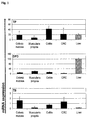
- mRNA expression for TP, DPD and TS was detected in all of the samples, but mRNA expression levels differed between tissues: High TP mRNA expression was seen in reactive lesions of chronic colitis, followed by moderate levels in normal colonic mucosa (epithelial cells) and normal liver (mixed cell population) and even lower expression in normal colonic muscularis basement (muscle cells).
- TS was highly expressed in normal mucosa > reactive lesions of chronic colitis > normal liver and muscularis propria.
- TP, DPD and TS mRNA expression levels of colon tumor samples revealed a lower DPD mRNA expression in tumor samples when compared to epithelial cells of normal mucosa.
- no significant difference of TP and TS mRNA levels was detected between normal mucosa and tumor tissues.
Landscapes
- Chemical & Material Sciences (AREA)
- Life Sciences & Earth Sciences (AREA)
- Health & Medical Sciences (AREA)
- Organic Chemistry (AREA)
- Proteomics, Peptides & Aminoacids (AREA)
- Engineering & Computer Science (AREA)
- Immunology (AREA)
- Pathology (AREA)
- Analytical Chemistry (AREA)
- Zoology (AREA)
- Genetics & Genomics (AREA)
- Wood Science & Technology (AREA)
- Physics & Mathematics (AREA)
- Biotechnology (AREA)
- Microbiology (AREA)
- Molecular Biology (AREA)
- Hospice & Palliative Care (AREA)
- Biophysics (AREA)
- Oncology (AREA)
- Biochemistry (AREA)
- Bioinformatics & Cheminformatics (AREA)
- General Engineering & Computer Science (AREA)
- General Health & Medical Sciences (AREA)
- Measuring Or Testing Involving Enzymes Or Micro-Organisms (AREA)
- Pharmaceuticals Containing Other Organic And Inorganic Compounds (AREA)
Abstract
Description
- The present invention relates to the field of prediction of susceptability for drug cancer treatment using biomarker analysis. In particular, the present invention relates to the field of prediction of susceptability of patients suffering from colorectal cancer for 5-FU and/or 5-FU analoga.
- Colorectal cancer (CRC), which remains one of the major death causing cancers in the western world, can be cured in about one-third of patients by surgical resection of the primary tumor alone. However, the remaining patients will already have developed occult or distant metastasis at the time of clinical manifestation of the primary tumor and will receive adjuvant (post-surgery) chemo- and/or radiotherapy. Together with the patient's clinical data, histopathological classification of the tumor and staging according to the TNM categories define the criteria for adjuvant therapy.
- As the current standard, nodal negative tumors (T1-4, N0, M0) are treated by complete resection of the primary tumor alone, whereas cases with histopathological evidence of lymph node involvement (T1-4, N1-2, M0) will receive chemo- and/or radiotherapy after surgical removal of the primary tumor. Despite a constant improvement of diagnostic tools and relevant markers as well as treatment strategies [Ragnhammar, P., et al., Acta Oncol. 40 (2001) 282-308], precise prognosis and/or response prediction to adjuvant therapy is still an unsolved issue [Iqbal, S., and Lenz, H.J., Curr. Oncol. Rep. 3 (2001) 102-108; Kumar, S.K., and Goldberg, R.M., Curr. Oncol. Rep. 3 (2001) 94-101].
- The enzymes thymidine phosphorylase (TP), dihydropyrimidine dehydrogenase (DPD) and thymidylate synthase (TS) are involved in the metabolism of pyrimidines, and hence eventually involved in proliferation of normal as well as pathologically transformed cells. TS is the central and limiting enzyme for de novo synthesis of pyrimidines and therefore also for RNA/DNA synthesis, DPD is involved in the degradation of uracil and thymine to inactive waste products and TP controls intracellular thymidine levels [Diasio, R.B., and Johnson, M.R., Pharmacology 61 (2000) 199-203]. Moreover, TP was shown to be identical to the molecule platelet-derived endothelial cell growth factor (PD-ECGF) [Furukawa, T., et al., Nature 356 (1992) 668; Sumizawa, T., et al., J. Biochem. 114 (1993) 9-14] and exhibits angiogenic properties in a number of solid tumors [Takebayashi, Y., et al., J. Natl. Cancer Inst. 88 (1996) 1110-1117; Griffiths, L, and Stratford, I.J., Br. J. Cancer 76 (1997) 689-693]. These properties may render TP, DPD and /or TS expression valuable prognostic and chemopredictive markers in CRC.
- Furthermore, due to their involvement in pyrimidine metabolism, all three enzymes are also important for the efficacy of 5-FU and 5-FU related chemotherapeutic agents [Diasio, R.B., and Johnson, M.R., Pharmacology 61 (2000) 199-203; WO 02/44423]. Whereas TS is the main target of such chemotherapeutics, the enzymes TP and DPD function in the activation and degradation of these agents and their intermediates, respectively. As such, the three enzymes, individually or the TS/DPD and TP/DPD ratios, have been implicated as markers for prognosis and/or response prediction to adjuvant chemotherapy in CRC [Metzger, R., et al., Clin. Cancer Res. 4 (1998) 2371-2376; Salonga, D., et al., Clin. Cancer Res. 6 (2000) 1322-1327; Takenoue, T., et al., Ann. Surg. Oncol. 7 (2000) 193-198; Araki, Y., et al., Kurume Med. J. 48 (2001) 93-98; Edler, D., et al., J. Clin. Oncol. 20 (2002) 1721-1728; Kornmann, M., et al., J. Gastrointest. Surg. 6 (2002) 331-337]. In fact, high TS levels have been linked to the resistance of tumors to 5-FU chemotherapy [Copur, S., et al., Biochem. Pharmacol. 49 (1995) 1419-1426; Wang, W., et al., Cancer Res. 61 (2001) 5505-5510; Johnston, P.G., et al., Cancer Res. 55 (1995) 1407-1412; Bathe, O.F., et al., Cancer J. Sci. Am. 5 (1999) 34-40] and low DPD expression has been correlated to severe toxicity to 5-FU chemotherapeutic agents [Wei, X., et al., J. Clin. Invest. 98 (1996) 610-615, Johnson, M.R., et al., Clin. Cancer Res. 5 (1999) 2006-2011]. The wide range of TS and DPD expression and the associated effects on chemotherapy outcome appear to be, at least in part, due to a polymorphism in the TS promotor enhancer region [Marsh, S., et al., Int. J. Oncol. 19 (2001) 383-386; Iacopetta, B., et al., Br. J. Cancer 85 (2001) 827-830] and a common point mutation within intron 14 of the DPD gene [van Kuilenburg, A.B., et al., Clin. Cancer Res. 6 (2000) 4705-4712; Raida, M., et al., Clin. Cancer Res. 7 (2001) 2832-2839], respectively. Despite a number of studies examining TP, DPD and TS expression in CRC, the role of the enzymes is still conflicting. This is mainly due to diverse study protocols, analysing TP, DPD and TS expression with respect to either 1) mRNA, protein or enzyme activity, 2) in primary tumors or distant metastases and 3) patients treated with various protocols of neo- or adjuvant radio- / chemotherapy.
- In view of the outlined prior art, the problem to be solved was the identification of those parameters, which of all potential parameters suggested in the prior art actually are indicative for susceptability to 5-FU and/or 5-FU analoga and to determine, under which conditions these parameter(s) provide for the highest possible specificity.
- Thus, the present invention is directed to a method for determining whether a patient suffering from cancer is susceptable to a treatment with 5-Fluoro-Uracil or a 5-Fluoro-Uracil analogon comprising
- a) determination of Thymidine Phosphorylase mRNA expression in a clinical sample
- b) determination of Dihydropyrimidine Dehydrogenase mRNA expression in said clinical sample
- c) determination of the ratio of the value obtained in step a) and the value obtained in step b)
- d) determination whether the ratio obtained in step c exceeds a predetermined cut off value
-
- In order to avoid too many false positve results, it has been proven to be advantageous, if said cut off value for TP/DPD ratio is at least 3 and preferably 3.7.
- On the other hand, in order to avoid too many false negative results, it has been proven to be advantageous, if said cut off value for TP/DPD ratio is not higher than 10 and preferably not higher than 8.2.
- In a particular embodiment, there is an additional determination of the absolute or relative expression level of Dihydropyrimidine Dehydrogenase and expression value below a certain cut off value is additionally indicative for susceptablity to 5 Fluoro-Uracil or a respective analogon.
- The inventive method is particularly usefull for determing susceptability of patients suffering from colorectal cancer.
- In the study underlying the invention, TP, DPD and TS mRNA expression was examined in a unique group of 102 patients with CRC, using microdissected, formalin-fixed and paraffin-embedded primary tumor samples for quantitative RT-PCR (QRT-PCR) in the LightCycler® system. We specifically address the correlation of TP, DPD and TS mRNA expression and the TS/DPD and TP/DPD ratios to tumor histology as well as to patient prognosis and response prediction to 5-FU adjuvant chemotherapy.
- The inventors investigated in detail thymidine phosphorylase (TP), dihydropyrimidine dehydrogenase (DPD) und thymidilate synthase (TS) mRNA expression in CRC with emphasis on their value as prognostic markers in general and as predictive markers for 5-FU chemotherapy. For this, a novel approach of TP, DPD and TS mRNA quantification, RT-PCR using the LightCycler® system (Roche Applied Science), was developed and applied to microdissected, formalin-fixed, paraffin-embedded tumor tissues of 102 cases with CRC. In contrast to other studies [Johnston, P.G., et al., Cancer Res. 55 (1995) 1407-1412] [Metzger, R., et al., Clin. Cancer Res. 4 (1998) 2371-2376; Salonga, D., et al., Clin. Cancer Res. 6 (2000) 1322-1327], the inventors retrospectively examined TP, DPD and TS mRNA expression in primary tumors and evaluated the progostic impact and clinical response of patients to 5-FU chemotherapy by correlation of enzyme levels to patient follow up. Although TP, DPD and / or TS expression have been analysed in primary CRC tumors with respect to prognosis [Takebayashi, Y., et al., J. Natl. Cancer Inst. 88 (1996) 1110-1117; Araki, Y., et al., Kurume Med. J. 48 (2001) 93-98; Edler, D., et al., J. Clin. Oncol. 20 (2002) 1721-1728; Sanguedolce, R., et al., Anticancer Res. 18 (1998) 1515-1520; Paradiso, A., et al., Br. J. Cancer 82 (2000) 560-567; Findlay, M.P., et al., Br. J. Cancer 75 (1997) 903-909; Allegra, C.J., et al., J. Clin. Oncol. 20 (2002) 1735-1743], our study is the first to examine the prognostic and predictive value of TP, DPD and TS mRNA expression in a group of CRC cases of unique sample size, treatment sub-groups, follow-up data and standardised tissue sampling and preservation.
- Detailed analysis of TP, DPD and TS mRNA expression in 102 cases of CRC revealed a wide range of expression levels for all three enzymes. This has been reported before [Iqbal, S., and Lenz, H.J., Curr. Oncol. Rep. 3 (2001) 102-108; Metzger, R., et al., Clin. Cancer Res. 4 (1998) 2371-2376; Mori, K., et al., Int. J. Oncol. 17 (2000) 33-38] and together these results underline the concept of intertumor heterogeneity.
- Finally, the association of TP and TS mRNA levels with a particular tumor histopathology were also reflected by the TP/DPD and TS/DPD ratios. One explanation for these findings may relate to the biological functions of these enzymes: Whereas TP, also known as platelet-derived endothelial cell growth factor [Furukawa, T., et al., Nature 356 (1992) 668; Sumizawa, T., et al., J. Biochem. 114 (1993) 9-14], is associated with angiogenesis in a number of solid tumors [Takebayashi, Y., et al., J. Natl. Cancer Inst. 88 (1996) 1110-1117; Griffiths, L, and Stratford, I.J., Br. J. Cancer 76 (1997) 689-693], TS may be regarded as a marker of metabolic activity and cellular proliferation [Pestalozzi, B.C., et al., Br. J. Cancer 71 (1995) 1151-1157; Backus, H.H., et al., J. Clin. Pathol. 55 (2002) 206-211; Pestalozzi, B.C., et al., Br. J. Cancer 71 (1995) 1151-1157]. Therefore, higher TP and TS mRNA expression in "early" tumors may reflect their activity in promoting vascular support and tumor cell proliferation, which is reduced upon progression to favour, for example, tumor cell invasion and metastasis. In fact, low levels of TP, DPD and TS mRNA expression levels have been associated with a favourable response to 5-FU chemotherapy [Metzger, R., et al., Clin. Cancer Res. 4 (1998) 2371-2376; Salonga, D., et al., Clin. Cancer Res. 6 (2000) 1322-1327]. Indeed, also from our data it is exactly this group of tumors with progressed UICC stages, i.e. those patients receiving adjuvant chemotherapy, which express lower TP and TS mRNA levels.
- Previous reports have discussed TP, DPD and TS mRNA expression, alone or in combination, as potential markers for prognosis [Takenoue, T., et al., Ann. Surg. Oncol. 7 (2000) 193-198; Edler, D., et al., J. Clin. Oncol. 20 (2002) 1721-1728; Sanguedolce, R., et al., Anticancer Res. 18 (1998) 1515-1520; Paradiso, A., et al., Br. J. Cancer 82 (2000) 560-567; Allegra, C.J., et al., J. Clin. Oncol. 20 (2002) 1735-1743] and / or response prediction to 5-FU chemotherapy [Metzger, R., et al., Clin. Cancer Res. 4 (1998) 2371-2376; Salonga, D., et al., Clin. Cancer Res. 6 (2000) 1322-1327; Araki, Y., et al., Kurume Med. J. 48 (2001) 93-98; Johnston, P.G., et al., Cancer Res. 55 (1995) 1407-1412] in CRC. In addition, the TP/DPD and / or TS/DPD ratios have recently been implicated as prognostic and / or predictive markers [Kornmann, M., et al., J. Gastrointest. Surg. 6 (2002) 331-337; Ishikawa, T., et al., Cancer Res. 58 (1998) 685-690]. In the present study, the inventors could identify the TS/DPD ratio as a potential prognostic marker, with higher TS/DPD ratios correlating with poorer overall survival in CRC patients receiving resection alone.
- More important, the present study revealed a significant correlation of DPD mRNA levels and the TP/DPD ratio with disease-free survival after 5-FU chemotherapy, whereby low DPD mRNA levels and a high TP/DPD ratio predict for a longer disease-free survival. This may be related to the fact that low DPD levels alone or low DPD levels and high TP levels (high TP/DPD ratio) will stabilize the active level of 5-FU. In contrast, neither TP, DPD or TS mRNA levels or the TP/DPD or TS/DPD ratio had any predictive value for overall survival.
- Whereas previous studies have addressed TP, DPD or TS protein expression in primary CRC tumors by immunohistochemistry [Takebayashi, Y., et al., J. Natl. Cancer Inst. 88 (1996) 1110-1117; Edler, D., et al., J. Clin. Oncol. 20 (2002) 1721-1728; Paradiso, A., et al., Br. J. Cancer 82 (2000) 560-567; Findlay, M.P., et al., Br. J. Cancer 75 (1997) 903-909; Allegra, C.J., et al., J. Clin. Oncol. 20 (2002) 1735-1743], protein content [Sanguedolce, R., et al., Anticancer Res. 18 (1998) 1515-1520] or enzyme activity [Araki, Y., et al., Kurume Med. J. 48 (2001) 93-98], the inventors decided on TP, DPD and TS mRNA analysis by quantitative RT-PCR, as this method is fast, reliable, easy to standardize and works well for large series of formalin fixed, paraffin embedded, microdissected tissue samples. A difficulty to detect any prognostic and / or predictive value of these enzymes on the RNA level might have been expected, due to post-transcriptional, fixation related (and associated functional) modifications [Kawakami, K., et al., Clin. Cancer Res. 7 (2001) 4096-4101].
- However, several investigators have shown a good correlation of, for example, DPD and TS gene and protein expression [Johnston, P.G., et al., Cancer Res. 55 (1995) 1407-1412; Uetake, H., et al., Clin. Cancer Res. 5 (1999) 2836-2839; Tanaka-Nozaki, M., et al., Clin. Cancer Res. 7 (2001) 2783-2787]. In order to validate our approach, the inventors initially screened microdissected cells from control tissues. The results did reflect previously published data, with, for example, high TP levels in inflammatory cells [Fox, S.B., et al., J. Pathol. 176 (1995) 183-190] and high DPD levels in the liver [Guimbaud, R., et al., Cancer Chemother. Pharmacol. 45 (2000) 477-482; Johnston, S.J., et al., Clin. Cancer Res. 5 (1999) 2566-2570]. Furthermore, tumors were reported to have lower DPD [Johnston, S.J., et al., Clin. Cancer Res. 5 (1999) 2566-2570; Miyamoto, S., et al., Int. J. Oncol. 18 (2001) 705-713] and higher TP [Takebayashi, Y., et al., Eur. J. Cancer 32 (1996) 1227-1232; Miwa, M., et al., Eur. J. Cancer 34 (1998) 1274-1281] levels than "normal" tissues, a concept underlying tumor-specificity for 5-FU pro-drugs.
- Whereas the inventors also detected lower DPD levels in the "tumor" cell than "normal epithelial" cell isolates, the results did not reveal differences between TP and TS mRNA levels in tumor and "normal" cells. This most likely reflects the fact of how precisely one defines a "normal" cell population. For interpretation of TP, DPD and TS expresssion, morphologically controlled tissue acquisition is important, as non-epithelial cells may significantly influence the results. Thus, when the inventors compared "normal colonic smooth muscle cells" (as opposed to the "normal epithelial cell" samples) with "tumor" cells, the latter exhibited higher TP and TS mRNA expression, as previously reported [Takebayashi, Y., et al., Eur. J. Cancer 32 (1996) 1227-1232; Miwa, M., et al., Eur. J. Cancer 34 (1998) 1274-1281].
- In summary, the present invention is directed to a novel, quantitative RT-PCR approach for determing 5-FU and/or 5-FU analogon susceptability in cancer patients. The new method is characterized in that determination of the TP/DPD ratio and optionally DPD mRNA expression in FFPE biopsies from patients. TP/DPD ratio has a predictive value for disease-free survival in adjuvant 5-FU treated colorectal cancer patients.
- The following examples, references, and figures are provided to aid the understanding of the present invention, the true scope of which is set forth in the appended claims. It is understood that modifications can be made in the procedures set forth without departing from the spirit of the invention.
- Figure 1 TP, DPD and TS mRNA expression in microdissected tissues. Normal colonic mucosa (n=8) and muscularis propia (n=3), chronic colitis (n=3), colorectal cancer (CRC; n=102) and normal liver (n=1, duplicate). mRNA levels are expressed as relative ratio (mean +/- stdev.;).
- Figure 2 TP, DPD and TS mRNA expression in 102 CRC patients. Each symbol reflects one case, with bars and numbers indicating median mRNA levels (relative ratio) for: all cases (squares, n=102), "no CTX" (triangles, n=40) and "CTX" (circles, n=52).
- Figure 3 Association of TP, DPD and TS mRNA expression with tumor histology. Graphical overview of the statistically significant correlations, with columns representing the median level within each sub-group. Y-axis denotates relative mRNA levels or enzyme ratios. For p-values refer to Table 2.
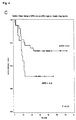
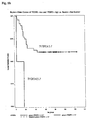
- Figure 4 Correlation of TP/DPD ratio with overall and disease-free survival. Kaplan-Meier analysis with respect to overall survival for the "no CTX" (n=40) and "CTX" (n=52) groups (A). Neither TP, DPD nor TS mRNA levels were of predictive value for overall survival in 5-FU treated ("CTX") patients (B, with cut-off = median mRNA expression). However, low DPD mRNA levels ratio were significantly correlated to disease-free survival in 5-FU treated patients (C, with cut-offs as indicated).
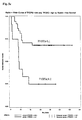
- Figure 5 Correlation of TP/DPD ratio mRNA levels with overall and disease-free survival. Kaplan-Meier analysis with respect to disease free survival and its correlation with the TP/DPD ratio. High TP/DPD ratios were significantly correlated to disease-free survival in 5-FU treated patients (Cut off values: A=0.39, B=3.7, C=5.0, D=6,2, E=8.1).
- Colorectal cancer specimens were obtained from the archive of the Institute of Pathology, Klinikum rechts der Isar, Munich, Germany. Resected primary tumor specimens from a total of 102 patients (Table 1; median clinical follow up = 63.5 months, range 8-125 months), were analysed after microdissection of tumor cells.
Summary of patient characteristics. All No CTX CTX No. % No. % No. % Patients 102 40 52 Age: 62 yrs 68 yrs 60 yrs Sex: Male 67 65.7 25 62.5 35 67.3 Female 35 34.3 15 37.5 17 32.7 Tumor Site: Colon 65 63.7 21 52.5 42 80.8 Rectum 37 36.3 19 47.5 10 19.2 T Category: T1 4 3.9 3 7.5 1 1.9 T2 14 13.7 9 22.5 5 9.6 T3 64 62.8 26 65 29 55.8 T4 20 19.6 2 5 17 32.7 N Category: N0 52 51 38 95 4 7.7 N1 32 31.4 1 2.5 31 59.6 N2 18 17.6 1 2.5 17 32.7 UICC Stage: I 12 11.8 12 30 - - II 40 39.2 26 65 4 7.7 III 50 49 2 5 48 92.3 Diff. Grade: 2 70 68.6 31 77.5 31 59.6 3 31 30.4 9 22.5 20 38.5 4 1 1 - - 1 1.9 Clinical Data Recurrent disease 33 32.4 11 27.5 22 42.3 Disease free survival 59 mo. 64 mo. 56 mo. Overall survival 63.5 mo. 65.5 mo. 57 mo. Follow up 63.5 mo. 65.5 mo. 57 mo. (8-125) (14-125): (8-125) - 40 patients underwent tumor resection only ("no CTX" group), 52 patients had received adjuvant chemotherapy after resection ("CTX" group) and 10 patients had received a combined adjuvant chemo- / radiotherapy. The adjuvant regimens in the "CTX" group were as follows: 25/52 patients Mayo protocol (6 months of 425mg/m2 5-FU and 20mg /m2 leucovorin) [O'Connell, M.J., et al., J. Clin. Oncol. 15 (1997) 246-250], 7/52 "Mörtel" regimen [450 mg/m2 5-FU and 50 mg/m2 levamisol) [Moertel, C.G., et al., N. Engl. J. Med. 322 (1990) 352-358], 5/52 patients Ardalan protocol (24 hours of 2,600mg/m2 5-FU and 500mg/m2 Leucovorin) [Ardalan, B., et al., J. Clin. Oncol. 9 (1991) 625-630], 14/52 patients modified Ardalan protocol and 1/52 patients SAKK protocol (500mg/m2 5-FU and 10mg/m2 mitomycin C) [SAKK, Lancet 345 (1995) 349-353]. For control purposes, tissue specimens of normal colon, chronic colitis (see below) and normal liver were obtained. All tissues had been formalin-fixed (10% buffered formalin, 24 hrs) and paraffin-embedded (FFPE) according to routine guidelines. Before analysis, histopathology of each specimen was confirmed on hematoxylin stained serial sections.
- Prior to RNA extraction from FFPE-tissues, microtom sections (5µm) were treated with xylene and graded alcohols under RNase-free conditions. For subsequent microdissection, sections were individually stained with instant hematoxylin (Shandon, Frankfurt, Germany) and tumor cells were dissected under microscopic observation using fine needles (gauge 18). The purity of the dissected tumor cell population was 80-90%.
- Control tissues were dissected under equal conditions and included normal colonic mucosa (n=8; epithelial cells) and colonic muscularis propria (n=4; muscle cells), reactive lesions of chronic colitis (n=3; Crohn's disease, ulcerative colitis and diverticulitis of the sigmoid) and normal liver (n=1; all cell populations). For the latter two control groups, duplicate analysis was performed by processing two serial sections of each tissue specimen separately.
- In 52 CRC cases, microdissected tissue samples were subjected to RNA isolation as described previously[Lassmann, S., et al., J. Pathol. 198 (2002) 198-206]. In brief, microdissected tumour cells were immediatly placed into Eppendorf tubes, containing digestion buffer (10 mM TrisHCl, 0.1 mM EDTA, 2 % SDS and 0.5 mg Proteinase K, all from Sigma, Taufkirchen, Germany). Incubation was overnight (60°C, 350-400 rpm), followed by phenol:choroform extraction and precipitation of nucleic acids in isopropanol. The resulting RNA pellet was further purified by incubation (45 min, 37°C) with 10 U DNase I (Roche Diagnostics GmbH, Mannheim, Germany), 20 µl DNase buffer (0.4 M TrisHCl, 60 mM MgCl2, 0.1 M NaCl) and H2O up to 200 µl. Thereafter RNA was re-extracted by phenol:chloroform extraction, precipitation and resuspension in H2O. In 50 CRC cases and the control specimens, microdissected tumor or control cells were isolated with the "HighPure RNA Paraffin Kit" (Roche Diagnostics GmbH, Mannheim, Germany) according to the supplied protocol. This method also consists of a Proteinase K digestion step, purification of nucleic acids, a DNase digestion step and re-purification of the RNA. In preliminary experiments similar results were obtained from 3 serial tissue sections of each a normal mucosa and a tumor sample isolated by the two methods (data not shown). RNA was stored at -70°C until further use.
- Reverse transcription and quantitative PCR in the LightCycler® system was performed with reagents and kits from Roche Applied Science according to the supplier's instructions. In brief, RNA samples were distributed to four equal aliquots, all receiving the same mix of cDNA reagents and either TP, DPD, TS or reference gene specific primers (Cat. Nos. 3 302 946, 3 302 938, 3 302 954). A positive control RNA (calibrator, from the "LC - mRNA quantification Kits for TP, DPD and TS") was included in this step. Always one calibrator RNA together with 4 unknown samples was treated as a separate "set" in order to control for quality and reproducibility. Always 3 cDNA "sets" were then analysed together in one run of quantitative PCR, using the "LC - mRNA quantification kits for TP, DPD and TS". For data analysis, the "Relative Quantification Software" (Roche Diagnostics GmbH, Mannheim, Germany) was applied. This calculates the relative ratio of Cp(enzyme : reference gene)sample to Cp(enzyme : reference gene)calibrator, thereby controling both for sample loading (RNA input) and PCR efficiency due to the constant reference point (calibrator). To ensure accurate quantification, only data of RNA preparations with crossing points of 20 to max. 33 (linear amplification range) were included. The variance of TP, DPD, TS and reference gene mRNA expression (mean +/- stdev. of crossing point) was minimal, with 26.62 +/- 0.36, 28 +/-0.51, 22 +/-0.23 and 23.19 +/-0.7 for 29 calibrators (accounting for 29 x 4 = 116 tissue samples), respectively.
- Quantitative parameters were described using mean or median with standard deviation and ranges, respectively. Qualitative parameters were examined by frequency tables. Non-parametric tests were performed (SAS® software; version 8.02), as a deviation from the normal distribution was observed for all markers.
- In the group of all 102 cases, TP, DPD and TS mRNA expression as well as the TS/DPD and TP/DPD ratio were correlated to 1) patient age and gender, and 2) primary tumor localisation, TNM classification, UICC stage and differentiation grade. This was done by the Spearman correlation coefficient and the test on zero correlation. For comparison of individual subgroups, the Wilcoxon-test for unpaired samples and the Kruskal-Wallis-test were applied. In order to evaluate the prognostic impact and / or response prediction value of the three enzymes, the 102 cases were divided into the "no CTX" (n=40) and the "CTX" (n=52) group. Patients who had received a combined radio- / chemotherapy (n=10) were excluded. Within the two subgroups separate statistical analysis was performed for correlation of TP, DPD and TS mRNA expression and the TS/DPD and TP/DPD ratios with: incidence of recurrent disease, incidence of death as well as disease-free and overall survival. The survival analysis was achieved by both a Cox-regresssion and a log-rank-test, setting the significance level to 5%.
- Initially, TP, DPD and TS mRNA levels were examined in a series of microdissected, FFPE control specimens by quantitative RT-PCR using the LightCycler® system. As shown in Figure 1, mRNA expression for TP, DPD and TS was detected in all of the samples, but mRNA expression levels differed between tissues: High TP mRNA expression was seen in reactive lesions of chronic colitis, followed by moderate levels in normal colonic mucosa (epithelial cells) and normal liver (mixed cell population) and even lower expression in normal colonic muscularis propria (muscle cells). DPD mRNA expression was greatest in normal liver, followed by normal muscularis propria > reactive lesions of chronic colitis >/= normal mucosa. TS was highly expressed in normal mucosa > reactive lesions of chronic colitis > normal liver and muscularis propria.
- In comparison, the mean TP, DPD and TS mRNA expression levels of colon tumor samples (n=102, see below) revealed a lower DPD mRNA expression in tumor samples when compared to epithelial cells of normal mucosa. In contrast, no significant difference of TP and TS mRNA levels was detected between normal mucosa and tumor tissues.
- The group of patients examined included 102 cases of CRC of various stages (Table 1, Materials and Methods), either treated with resection alone (40 cases; "no CTX" group), with resection and subsequent 5-FU chemotherapy (52 cases; "CTX" group) or with resection and a combination of radio- and chemotherapy (10 cases).
- Analysis of the mRNA expression ofTP, DPD and TS in all 102 CRC cases showed a wide range of enzyme expression patterns (Figure 2). Expressed as a relative ratio, the ranges for TP, DPD and TS were 1.52-166.29, 0-24.39 and 0.21-3.71, respectively. Upon division of the cases into groups of "no CTX" and "CTX", TP, DPD and TS mRNA expression was similar in both groups, except for a trend to lower TP mRNA expression in the "CTX" group. This is reflected by the statistical median of TP, DPD and TS mRNA expression levels (Figure 2).
- As summarized in Table 2A, no statistically significant correlation was revealed between TP, DPD or TS mRNA levels or the TS/DPD and TP/DPD ratios with patient age or gender and the location of the primary tumor (colon or rectum).

- However, significant differences were seen with respect to 1) TP mRNA expression with tumor T (p=0,03) and N (p=0,04) category and UICC stage (p=0,009); 2) TS mRNA expression with differentiation grade (p=0,001), 3) the TS/DPD ratio with tumor T category (p=0.014) and differentiation grade (p=0.033) and 4) the TP/DPD ratio with tumor T (p=0,007) and N (p=0,001) category and UICC stage (p=0,001). As shown in Figure 3, TP mRNA expression and the TP/DPD ratio significantly decreased with higher tumor T and N categories as well as with higher UICC stages. TS mRNA expression was significantly lower in
differentiation grade 3 thangrade 2 tumors. Finally, the TS/DPD ratio was lower in tumors with higher T category as well as indifferentiation grade 3 thangrade 2 tumors. - In order to correlate TP, DPD and TS mRNA expression with prognosis, patients who had received adjuvant chemo- and radiotherapy (n=10) were excluded from statistical analysis. Moreover, as patients with lymphnode involvement ("N+") have in general a poorer prognosis than those who are classified as "N0" [1], the remaining 92 patients were divided into those without adjuvant therapy (n=40; "no CTX") and those with adjuvant chemotherapy (n=52; "CTX"), as shown in Figure 4A. Statistical analysis was then performed separately within the two groups with respect to incidence of recurrent disease and death as well as disease-free and overall survival. First, no significant correlation was revealed between either TP, DPD or TS mRNA expression or the TS/DPD and TP/DPD ratios and the incidence of recurrent disease or death (Table 2B).
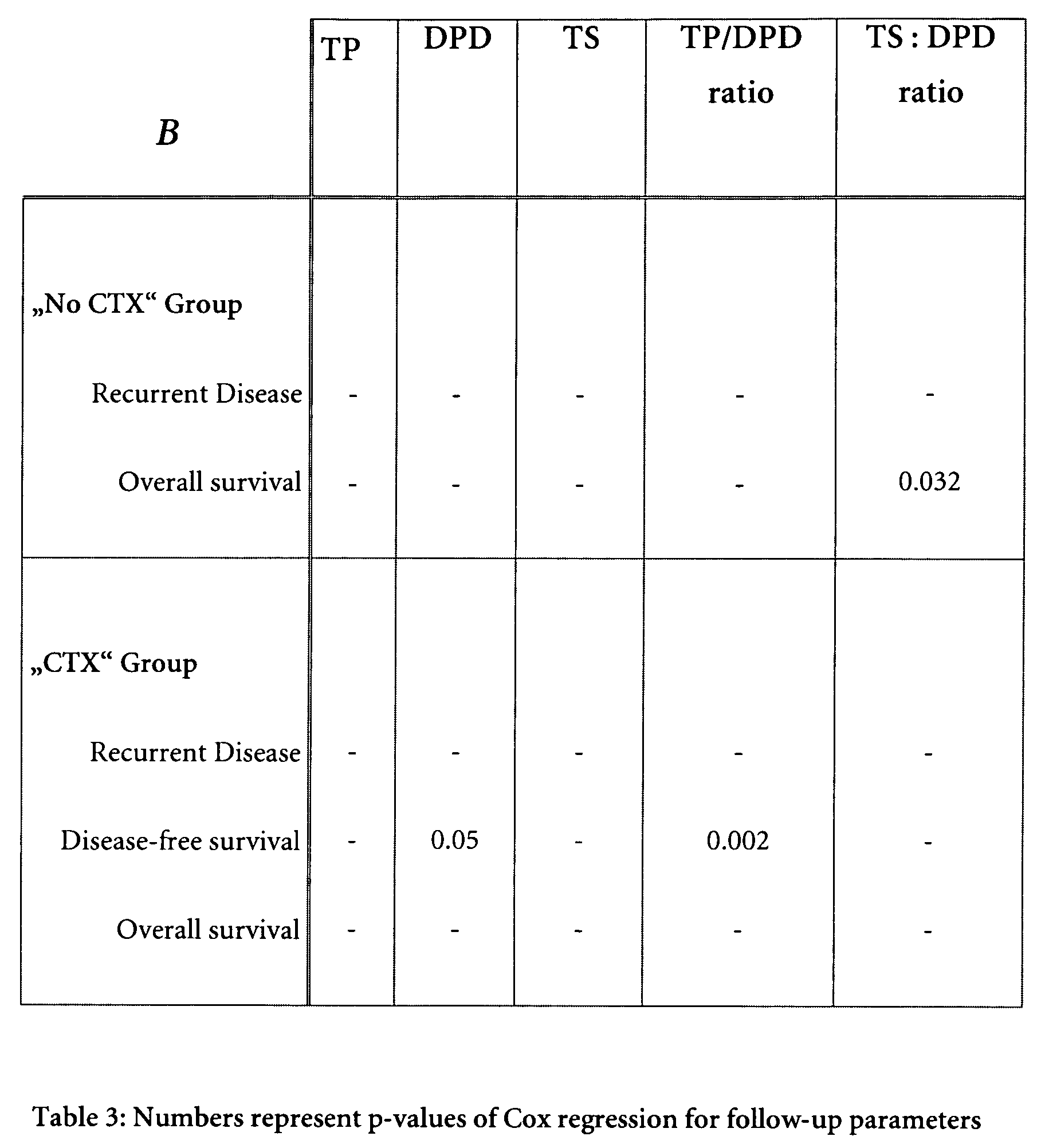
- Second, none of the enzymes or the TP/DPD ratio had a significant influence on overall survival (Kaplan-Meier analysis). Third, multivariate analysis of TP, DPD and TS mRNA expression and overall survival did not reveal any significant correlation, even though TP and DPD mRNA expression were significantly (p <0.0001) correlated in the "CTX" group. These findings were true for both the "no CTX" or "CTX" group (Table 2).
- In contrast, within the "no CTX" group overall survival significantly correlated to the TS/DPD ratio (p=0.032), whereby the risk of death increases with higher TS/DPD ratios.
- To evaluate whether TP, DPD and/or TS mRNA levels or the ratio of TP/DPD or TS/DPD can predict the clinical response to 5-FU chemotherapy, detailed statistical analysis was performed for patients within the "CTX" group. Upon sub-division of the "CTX" patients into those with "low" and "high" TP, DPD and TS mRNA levels (cut off =median, as indicated in Figure 2) and subsequent Kaplan Meier analysis, no correlation was found with respect to overall survival (Figure 4B). Similarly, neither low or high TP/DPD or TS/DPD ratios did predict for overall survival in the two "CTX" sub-groups (not shown).
- However, significant correlations were seen for DPD mRNA levels and the TP/DPD ratio with respect to disease-free survival (Figure 4C). Thus, using a cut-off mRNA level of 8.2, low DPD mRNA expression was correlated to disease-free survival with p = 0.05.
- Moreover, a positive correlation between disease free survival and TP/DPD ratio has been identified. As it is shown in Figure 5, using cut-off values of 3.7 (fig. 5b), 5.0 (fig. 5c), 6.2 (fig. 5d), and 8.1 (fig. 5e), a high TP/DPD ratio was significantly correlated to disease-free survival with p =0.002.
-
- Allegra, C.J., et al., J. Clin. Oncol. 20 (2002) 1735-1743
- Araki, Y., et al., Kurume Med. J. 48 (2001) 93-98
- Ardalan, B., et al., J. Clin. Oncol. 9 (1991) 625-630
- Backus, H.H., et al., J. Clin. Pathol. 55 (2002) 206-211
- Bathe, O.F., et al., Cancer J. Sci. Am. 5 (1999) 34-40
- Copur, S., et al., Biochem. Pharmacol. 49 (1995) 1419-1426
- Diasio, R.B., and Johnson, M.R., Pharmacology 61 (2000) 199-203
- Edler, D., et al., J. Clin. Oncol. 20 (2002) 1721-1728
- Findlay, M.P., et al., Br. J. Cancer 75 (1997) 903-909
- Fox, S.B., et al., J. Pathol. 176 (1995) 183-190
- Furukawa, T., et al., Nature 356 (1992) 668
- Griffiths, L, and Stratford, I.J., Br. J. Cancer 76 (1997) 689-693
- Guimbaud, R., et al., Cancer Chemother. Pharmacol. 45 (2000) 477-482
- Iacopetta, B., et al., Br. J. Cancer 85 (2001) 827-830
- Iqbal, S., and Lenz, H.J., Curr. Oncol. Rep. 3 (2001) 102-108
- Ishikawa, T., et al., Cancer Res. 58 (1998) 685-690
- Johnson, M.R., et al., Clin. Cancer Res. 5 (1999) 2006-2011
- Johnston, P.G., et al., Cancer Res. 55 (1995) 1407-1412
- Johnston, S.J., et al., Clin. Cancer Res. 5 (1999) 2566-2570
- Kawakami, K., et al., Clin. Cancer Res. 7 (2001) 4096-4101
- Kornmann, M., et al., J. Gastrointest. Surg. 6 (2002) 331-337
- Kumar, S.K., and Goldberg, R.M., Curr. Oncol. Rep. 3 (2001) 94-101
- Lassmann, S., et al., J. Pathol. 198 (2002) 198-206
- Marsh, S., et al., Int. J. Oncol. 19 (2001) 383-386
- Metzger, R., et al., Clin. Cancer Res. 4 (1998) 2371-2376
- Miwa, M., et al., Eur. J. Cancer 34 (1998) 1274-1281
- Miyamoto, S., et al., Int. J. Oncol. 18 (2001) 705-713
- Moertel, C.G., et al., N. Engl. J. Med. 322 (1990) 352-358
- Mori, K., et al., Int. J. Oncol. 17 (2000) 33-38
- O'Connell, M.J., et al., J. Clin. Oncol. 15 (1997) 246-250
- Paradiso, A., et al., Br. J. Cancer 82 (2000) 560-567
- Pestalozzi, B.C., et al., Br. J. Cancer 71 (1995) 1151-1157
- Pestalozzi, B.C., et al., Br. J. Cancer 71 (1995) 1151-1157
- Ragnhammar, P., et al., Acta Oncol. 40 (2001) 282-308
- Raida, M., et al., Clin. Cancer Res. 7 (2001) 2832-2839
- SAKK, Lancet 345 (1995) 349-353
- Salonga, D., et al., Clin. Cancer Res. 6 (2000) 1322-1327
- Sanguedolce, R., et al., Anticancer Res. 18 (1998) 1515-1520
- Sumizawa, T., et al., J. Biochem. 114 (1993) 9-14
- Takebayashi, Y., et al., Eur. J. Cancer 32 (1996) 1227-1232
- Takebayashi, Y., et al., J. Natl. Cancer Inst. 88 (1996) 1110-1117
- Takenoue, T., et al., Ann. Surg. Oncol. 7 (2000) 193-198
- Tanaka-Nozaki, M., et al., Clin. Cancer Res. 7 (2001) 2783-2787
- Uetake, H., et al., Clin. Cancer Res. 5 (1999) 2836-2839
- van Kuilenburg, A.B., et al., Clin. Cancer Res. 6 (2000) 4705-4712
- Wang, W., et al., Cancer Res. 61 (2001) 5505-5510
- Wei, X., et al., J. Clin. Invest. 98 (1996) 610-615
- WO 02/44423
-
Claims (7)
- Method for determining whether a patient suffering from cancer is susceptable to a treatment with a 5-Fluoro-Uracil and/or 5-FU analogon comprisinga) determination of Thymidine Phosphorylase mRNA expression in a clinical sampleb) determination of Dihydropyrimindine Dehydrogenase mRNA expression in said clinical samplec) determination of the ratio of the value obtained in step a) and the value obtained in step b)d) determination whether the ratio obtained in step c exceeds a predetermined cut off value
- Method according to claim 1, wherein said cut off value is at least 3 and preferably at least 3.7
- Method according to claim 2, wherein said cut off value is not higher than 10 and preferably not higher than 8.2
- Method according to claims 1-3, further characterized in that an absolute or relative mRNA expression level of Dihydropyrimidine Dehydrogenase is determined and an expression value below a certain cut off value is additionally indicative for suspceptablity to a 5 Fluoro-Uracil and/or 5-FU analogon.
- Method according to claims 1-4, characterized in that said cancer is colorectal cancer.
- Method according to claims 1-5, characterized in that mRNA expression of Thymidine Phosphorylase and/or Dihydropyrimindine Dehydrogenase is determined by means of Reverse Transciptase PCR.
- Method according to claim 6, characterized in that a sequence specific Thymidine Phosphorylase and/or a sequence specific Dihydropyrimindine Dehydrogenase primer is elongated during the cDNA synthesis step.
Applications Claiming Priority (2)
| Application Number | Priority Date | Filing Date | Title |
|---|---|---|---|
| EP03018783 | 2003-08-28 | ||
| EP03018783 | 2003-08-28 |
Publications (2)
| Publication Number | Publication Date |
|---|---|
| EP1510588A1 true EP1510588A1 (en) | 2005-03-02 |
| EP1510588B1 EP1510588B1 (en) | 2007-01-31 |
Family
ID=34259138
Family Applications (1)
| Application Number | Title | Priority Date | Filing Date |
|---|---|---|---|
| EP04020100A Expired - Lifetime EP1510588B1 (en) | 2003-08-28 | 2004-08-25 | Correlation of the ratio of thymidine phosphorylase and dihydropyrimidine dehydrogenase mRNA expression levels in colorectal cancer with disease-free survival in 5-FU treated patients |
Country Status (7)
| Country | Link |
|---|---|
| US (1) | US20050100936A1 (en) |
| EP (1) | EP1510588B1 (en) |
| JP (1) | JP4032047B2 (en) |
| AT (1) | ATE353107T1 (en) |
| CA (1) | CA2479446C (en) |
| DE (1) | DE602004004571T2 (en) |
| ES (1) | ES2279266T3 (en) |
Cited By (4)
| Publication number | Priority date | Publication date | Assignee | Title |
|---|---|---|---|---|
| WO2006128463A3 (en) * | 2005-05-31 | 2007-02-15 | Dako Denmark As | Compositions and methods for predicting outcome of treatment |
| EP2047271B1 (en) * | 2006-08-02 | 2012-11-14 | Sanoxsys GmbH | Method for establishing the sensitivity of tumours to capecitabin |
| US11802874B2 (en) | 2015-03-11 | 2023-10-31 | Fundacio Institut D'investigació Biomèdica De Bellvitge (Idibell) | PD-ECGF as biomarker of cancer |
| US12366508B2 (en) | 2015-07-30 | 2025-07-22 | Qiagen Gmbh | Method of preparing a frozen biological sample |
Families Citing this family (7)
| Publication number | Priority date | Publication date | Assignee | Title |
|---|---|---|---|---|
| RU2367489C1 (en) * | 2008-05-26 | 2009-09-20 | Государственное учреждение Российский онкологический научный центр им. Н.Н. Блохина РАМН | Therapy of rectal cancer |
| GB0900555D0 (en) * | 2009-01-14 | 2009-02-11 | Topotarget As | New methods |
| RU2398608C1 (en) * | 2009-05-13 | 2010-09-10 | Федеральное государственное учреждение "Московский научно-исследовательский онкологический институт им. П.А. Герцена Федерального агентства по высокотехнологичной медицинской помощи" | Method of treating rectal cancer |
| WO2011052748A1 (en) * | 2009-10-30 | 2011-05-05 | 学校法人慶應義塾 | Method for determining sensitivity to an anticancer agent |
| EP2495569B1 (en) * | 2009-10-30 | 2016-06-15 | Keio University | Method for determination of sensitivity to anti-cancer agent |
| WO2011157678A1 (en) * | 2010-06-14 | 2011-12-22 | Qiagen Gmbh | Method for determination of target cells or tissue for extraction of biomolecules from fixed biological samples |
| ES2393984B1 (en) * | 2011-02-24 | 2013-11-21 | Servicio Andaluz De Salud | Method of obtaining useful data to evaluate the response to treatment with 5-fluorouracil (5-FU) |
Citations (1)
| Publication number | Priority date | Publication date | Assignee | Title |
|---|---|---|---|---|
| WO2002070750A2 (en) * | 2001-03-02 | 2002-09-12 | Response Genetics, Inc. | Method of determining dihydropyrimidine dehydrogenase gene expression |
Family Cites Families (1)
| Publication number | Priority date | Publication date | Assignee | Title |
|---|---|---|---|---|
| DE19837391A1 (en) * | 1997-08-22 | 1999-02-25 | Hoffmann La Roche | Monoclonal antibody specific for dihydropyrimidine dehydrogenase |
-
2004
- 2004-08-25 EP EP04020100A patent/EP1510588B1/en not_active Expired - Lifetime
- 2004-08-25 ES ES04020100T patent/ES2279266T3/en not_active Expired - Lifetime
- 2004-08-25 DE DE602004004571T patent/DE602004004571T2/en not_active Expired - Lifetime
- 2004-08-25 CA CA2479446A patent/CA2479446C/en not_active Expired - Lifetime
- 2004-08-25 AT AT04020100T patent/ATE353107T1/en not_active IP Right Cessation
- 2004-08-26 US US10/927,669 patent/US20050100936A1/en not_active Abandoned
- 2004-08-26 JP JP2004247413A patent/JP4032047B2/en not_active Expired - Lifetime
Patent Citations (1)
| Publication number | Priority date | Publication date | Assignee | Title |
|---|---|---|---|---|
| WO2002070750A2 (en) * | 2001-03-02 | 2002-09-12 | Response Genetics, Inc. | Method of determining dihydropyrimidine dehydrogenase gene expression |
Non-Patent Citations (6)
| Title |
|---|
| COLLIE-DUGUID ELAINA S R ET AL: "Thymidine phosphorylase and dihydropyrimidine dehydrogenase protein expression in colorectal cancer", INTERNATIONAL JOURNAL OF CANCER, vol. 94, no. 2, 15 October 2001 (2001-10-15), pages 297 - 301, XP002266542, ISSN: 0020-7136 * |
| FUJIWAKI R ET AL: "Gene expression for dihydropyrimidine dehydrogenase and thymidine phosphorylase influences outcome in epithelial ovarian cancer.", JOURNAL OF CLINICAL ONCOLOGY: OFFICIAL JOURNAL OF THE AMERICAN SOCIETY OF CLINICAL ONCOLOGY. UNITED STATES 1 DEC 2000, vol. 18, no. 23, 1 December 2000 (2000-12-01), pages 3946 - 3951, XP008026200, ISSN: 0732-183X * |
| HIRANO YASUHIRO ET AL: "Thymidine phosphorylase and dihydropyrimidine dehydrogenase in renal cell carcinoma: Relationship between histological parameters and chemosensitivity to 5-fluorouracil.", EUROPEAN UROLOGY, vol. 43, no. 1, January 2003 (2003-01-01), pages 45 - 52, XP001184101, ISSN: 0302-2838 (ISSN print) * |
| ISHIKAWA T ET AL: "Positive correlation between the efficacy of capecitabine and doxifluridine and the ratio of thymidine phosphorylase to dihydropyrimidine dehydrogenase activities in tumors in human cancer xenografts.", CANCER RESEARCH. UNITED STATES 15 FEB 1998, vol. 58, no. 4, 15 February 1998 (1998-02-15), pages 685 - 690, XP008025976, ISSN: 0008-5472 * |
| SALONGA D ET AL: "Colorectal tumors responding to 5-fluorouracil have low gene expression levels of dihydropyrimidine dehydrogenase, thymidylate synthase, and thymidine phosphorylase", CLINICAL CANCER RESEARCH, THE AMERICAN ASSOCIATION FOR CANCER RESEARCH, US, vol. 6, no. 4, April 2000 (2000-04-01), pages 1322 - 1327, XP002245518, ISSN: 1078-0432 * |
| TERASHIMA M ET AL: "Role of thymidine phosphorylase and dihydropyrimidine dehydrogenase in tumour progression and sensitivity to doxifluridine in gastric cancer patients", EUROPEAN JOURNAL OF CANCER, PERGAMON PRESS, OXFORD, GB, vol. 38, no. 18, December 2002 (2002-12-01), pages 2375 - 2381, XP004395675, ISSN: 0959-8049 * |
Cited By (6)
| Publication number | Priority date | Publication date | Assignee | Title |
|---|---|---|---|---|
| WO2006128463A3 (en) * | 2005-05-31 | 2007-02-15 | Dako Denmark As | Compositions and methods for predicting outcome of treatment |
| US8679746B2 (en) | 2005-05-31 | 2014-03-25 | Dako Denmark A/S | Compositions and methods for predicting outcome of treatment |
| EP2047271B1 (en) * | 2006-08-02 | 2012-11-14 | Sanoxsys GmbH | Method for establishing the sensitivity of tumours to capecitabin |
| US11802874B2 (en) | 2015-03-11 | 2023-10-31 | Fundacio Institut D'investigació Biomèdica De Bellvitge (Idibell) | PD-ECGF as biomarker of cancer |
| US12298307B2 (en) | 2015-03-11 | 2025-05-13 | Fundació Institut D'investigació Biomèdica De Bellvitge (Idibell) | PD-ECGF as biomarker of cancer |
| US12366508B2 (en) | 2015-07-30 | 2025-07-22 | Qiagen Gmbh | Method of preparing a frozen biological sample |
Also Published As
| Publication number | Publication date |
|---|---|
| CA2479446A1 (en) | 2005-02-28 |
| JP2005073698A (en) | 2005-03-24 |
| ES2279266T3 (en) | 2007-08-16 |
| DE602004004571T2 (en) | 2007-11-08 |
| CA2479446C (en) | 2013-05-07 |
| DE602004004571D1 (en) | 2007-03-22 |
| EP1510588B1 (en) | 2007-01-31 |
| US20050100936A1 (en) | 2005-05-12 |
| JP4032047B2 (en) | 2008-01-16 |
| ATE353107T1 (en) | 2007-02-15 |
Similar Documents
| Publication | Publication Date | Title |
|---|---|---|
| Hassler et al. | Molecular characterization of upper tract urothelial carcinoma in the era of next-generation sequencing: a systematic review of the current literature | |
| Bonome et al. | Expression profiling of serous low malignant potential, low-grade, and high-grade tumors of the ovary | |
| EP1836629B1 (en) | Predicting response to chemotherapy using gene expression markers | |
| AU2005304878B2 (en) | Molecular indicators of breast cancer prognosis and prediction of treatment response | |
| Maxwell et al. | Microarray analysis of endometrial carcinomas and mixed mullerian tumors reveals distinct gene expression profiles associated with different histologic types of uterine cancer | |
| Cheung et al. | Exploiting gene expression profiling to identify novel minimal residual disease markers of neuroblastoma | |
| Le Guellec et al. | Validation of the Complexity INdex in SARComas prognostic signature on formalin-fixed, paraffin-embedded, soft-tissue sarcomas | |
| US20080305473A1 (en) | Propagation of primary cells | |
| Ida et al. | BRAF alterations are frequent in cerebellar low-grade astrocytomas with diffuse growth pattern | |
| AU2004248120A1 (en) | Gene expression markers for predicting response to chemotherapy | |
| EP1510588B1 (en) | Correlation of the ratio of thymidine phosphorylase and dihydropyrimidine dehydrogenase mRNA expression levels in colorectal cancer with disease-free survival in 5-FU treated patients | |
| Yao et al. | Mutation analysis of IDH1 in paired gliomas revealed IDH1 mutation was not associated with malignant progression but predicted longer survival | |
| Gross et al. | Identification of BRCA1-like triple-negative breast cancers by quantitative multiplex-ligation-dependent probe amplification (MLPA) analysis of BRCA1-associated chromosomal regions: a validation study | |
| Theophile et al. | Amplification of mRNA from laser-microdissected single or clustered cells in formalin-fixed and paraffin-embedded tissues for application in quantitative real-time PCR | |
| Rulcová et al. | The effect of total-ABL, GUS and B2M control genes on BCR-ABL monitoring by real-time RT-PCR | |
| Duchnowska et al. | Brain metastasis prediction by transcriptomic profiling in triple-negative breast cancer | |
| KR102348837B1 (en) | Methods for predicting the prognosis of esophageal squamous cell carcinoma | |
| EP3333268A1 (en) | Biomarker panel for prognosis of bladder cancer | |
| CA3085464A1 (en) | Compositions and methods for diagnosing lung cancers using gene expression profiles | |
| EP2446053A1 (en) | Methods of scoring gene copy number in a biological sample using in situ hybridization | |
| EP2138589A1 (en) | Molecular signature of liver tumor grade and use to evaluate prognosis and therapeutic regimen | |
| Farshid et al. | Validation of the multiplex ligation-dependent probe amplification (MLPA) technique for the determination of HER2 gene amplification in breast cancer | |
| KR20210036676A (en) | Biomarkers for prognosis prediction of ovarian cancer and uses thereof | |
| EP1772521A1 (en) | Methods for the prognosis of cancer patients | |
| Liu et al. | MiR-362-5p targets CDK2 and inhibits tumorigenesis in renal cell carcinoma |
Legal Events
| Date | Code | Title | Description |
|---|---|---|---|
| PUAI | Public reference made under article 153(3) epc to a published international application that has entered the european phase |
Free format text: ORIGINAL CODE: 0009012 |
|
| AK | Designated contracting states |
Kind code of ref document: A1 Designated state(s): AT BE BG CH CY CZ DE DK EE ES FI FR GB GR HU IE IT LI LU MC NL PL PT RO SE SI SK TR |
|
| AX | Request for extension of the european patent |
Extension state: AL HR LT LV MK |
|
| 17P | Request for examination filed |
Effective date: 20050902 |
|
| AKX | Designation fees paid |
Designated state(s): AT BE BG CH CY CZ DE DK EE ES FI FR GB GR HU IE IT LI LU MC NL PL PT RO SE SI SK TR |
|
| GRAP | Despatch of communication of intention to grant a patent |
Free format text: ORIGINAL CODE: EPIDOSNIGR1 |
|
| GRAS | Grant fee paid |
Free format text: ORIGINAL CODE: EPIDOSNIGR3 |
|
| GRAA | (expected) grant |
Free format text: ORIGINAL CODE: 0009210 |
|
| AK | Designated contracting states |
Kind code of ref document: B1 Designated state(s): AT BE BG CH CY CZ DE DK EE ES FI FR GB GR HU IE IT LI LU MC NL PL PT RO SE SI SK TR |
|
| PG25 | Lapsed in a contracting state [announced via postgrant information from national office to epo] |
Ref country code: DK Free format text: LAPSE BECAUSE OF FAILURE TO SUBMIT A TRANSLATION OF THE DESCRIPTION OR TO PAY THE FEE WITHIN THE PRESCRIBED TIME-LIMIT Effective date: 20070131 Ref country code: SI Free format text: LAPSE BECAUSE OF FAILURE TO SUBMIT A TRANSLATION OF THE DESCRIPTION OR TO PAY THE FEE WITHIN THE PRESCRIBED TIME-LIMIT Effective date: 20070131 Ref country code: NL Free format text: LAPSE BECAUSE OF FAILURE TO SUBMIT A TRANSLATION OF THE DESCRIPTION OR TO PAY THE FEE WITHIN THE PRESCRIBED TIME-LIMIT Effective date: 20070131 Ref country code: FI Free format text: LAPSE BECAUSE OF FAILURE TO SUBMIT A TRANSLATION OF THE DESCRIPTION OR TO PAY THE FEE WITHIN THE PRESCRIBED TIME-LIMIT Effective date: 20070131 Ref country code: PL Free format text: LAPSE BECAUSE OF FAILURE TO SUBMIT A TRANSLATION OF THE DESCRIPTION OR TO PAY THE FEE WITHIN THE PRESCRIBED TIME-LIMIT Effective date: 20070131 Ref country code: AT Free format text: LAPSE BECAUSE OF FAILURE TO SUBMIT A TRANSLATION OF THE DESCRIPTION OR TO PAY THE FEE WITHIN THE PRESCRIBED TIME-LIMIT Effective date: 20070131 |
|
| REG | Reference to a national code |
Ref country code: GB Ref legal event code: FG4D |
|
| REG | Reference to a national code |
Ref country code: CH Ref legal event code: EP |
|
| REG | Reference to a national code |
Ref country code: IE Ref legal event code: FG4D |
|
| RIN2 | Information on inventor provided after grant (corrected) |
Inventor name: KRAUSE, FRIEDMANN, DR. Inventor name: PORSTMANN, BAERBEL, PROF. DR. Inventor name: POIGNEE-HEGER, MANUELA, DR. Inventor name: WALTER, THOMAS, DR. Inventor name: LUTZ, VERENA, DR. Inventor name: LASSMANN, SILKE, DR. Inventor name: WERNER, MARTIN, PROF. DR. |
|
| REF | Corresponds to: |
Ref document number: 602004004571 Country of ref document: DE Date of ref document: 20070322 Kind code of ref document: P |
|
| PG25 | Lapsed in a contracting state [announced via postgrant information from national office to epo] |
Ref country code: SE Free format text: LAPSE BECAUSE OF FAILURE TO SUBMIT A TRANSLATION OF THE DESCRIPTION OR TO PAY THE FEE WITHIN THE PRESCRIBED TIME-LIMIT Effective date: 20070430 |
|
| PG25 | Lapsed in a contracting state [announced via postgrant information from national office to epo] |
Ref country code: BG Free format text: LAPSE BECAUSE OF FAILURE TO SUBMIT A TRANSLATION OF THE DESCRIPTION OR TO PAY THE FEE WITHIN THE PRESCRIBED TIME-LIMIT Effective date: 20070501 |
|
| PG25 | Lapsed in a contracting state [announced via postgrant information from national office to epo] |
Ref country code: PT Free format text: LAPSE BECAUSE OF FAILURE TO SUBMIT A TRANSLATION OF THE DESCRIPTION OR TO PAY THE FEE WITHIN THE PRESCRIBED TIME-LIMIT Effective date: 20070702 |
|
| NLV1 | Nl: lapsed or annulled due to failure to fulfill the requirements of art. 29p and 29m of the patents act | ||
| ET | Fr: translation filed | ||
| REG | Reference to a national code |
Ref country code: ES Ref legal event code: FG2A Ref document number: 2279266 Country of ref document: ES Kind code of ref document: T3 |
|
| PG25 | Lapsed in a contracting state [announced via postgrant information from national office to epo] |
Ref country code: SK Free format text: LAPSE BECAUSE OF FAILURE TO SUBMIT A TRANSLATION OF THE DESCRIPTION OR TO PAY THE FEE WITHIN THE PRESCRIBED TIME-LIMIT Effective date: 20070131 |
|
| PLBE | No opposition filed within time limit |
Free format text: ORIGINAL CODE: 0009261 |
|
| STAA | Information on the status of an ep patent application or granted ep patent |
Free format text: STATUS: NO OPPOSITION FILED WITHIN TIME LIMIT |
|
| PG25 | Lapsed in a contracting state [announced via postgrant information from national office to epo] |
Ref country code: CZ Free format text: LAPSE BECAUSE OF FAILURE TO SUBMIT A TRANSLATION OF THE DESCRIPTION OR TO PAY THE FEE WITHIN THE PRESCRIBED TIME-LIMIT Effective date: 20070131 Ref country code: BE Free format text: LAPSE BECAUSE OF FAILURE TO SUBMIT A TRANSLATION OF THE DESCRIPTION OR TO PAY THE FEE WITHIN THE PRESCRIBED TIME-LIMIT Effective date: 20070131 Ref country code: RO Free format text: LAPSE BECAUSE OF FAILURE TO SUBMIT A TRANSLATION OF THE DESCRIPTION OR TO PAY THE FEE WITHIN THE PRESCRIBED TIME-LIMIT Effective date: 20070131 |
|
| 26N | No opposition filed |
Effective date: 20071101 |
|
| PG25 | Lapsed in a contracting state [announced via postgrant information from national office to epo] |
Ref country code: MC Free format text: LAPSE BECAUSE OF NON-PAYMENT OF DUE FEES Effective date: 20070831 Ref country code: GR Free format text: LAPSE BECAUSE OF FAILURE TO SUBMIT A TRANSLATION OF THE DESCRIPTION OR TO PAY THE FEE WITHIN THE PRESCRIBED TIME-LIMIT Effective date: 20070501 |
|
| PG25 | Lapsed in a contracting state [announced via postgrant information from national office to epo] |
Ref country code: IE Free format text: LAPSE BECAUSE OF NON-PAYMENT OF DUE FEES Effective date: 20070827 |
|
| PG25 | Lapsed in a contracting state [announced via postgrant information from national office to epo] |
Ref country code: EE Free format text: LAPSE BECAUSE OF FAILURE TO SUBMIT A TRANSLATION OF THE DESCRIPTION OR TO PAY THE FEE WITHIN THE PRESCRIBED TIME-LIMIT Effective date: 20070131 |
|
| PG25 | Lapsed in a contracting state [announced via postgrant information from national office to epo] |
Ref country code: CY Free format text: LAPSE BECAUSE OF FAILURE TO SUBMIT A TRANSLATION OF THE DESCRIPTION OR TO PAY THE FEE WITHIN THE PRESCRIBED TIME-LIMIT Effective date: 20070131 |
|
| PG25 | Lapsed in a contracting state [announced via postgrant information from national office to epo] |
Ref country code: LU Free format text: LAPSE BECAUSE OF NON-PAYMENT OF DUE FEES Effective date: 20070825 |
|
| PG25 | Lapsed in a contracting state [announced via postgrant information from national office to epo] |
Ref country code: TR Free format text: LAPSE BECAUSE OF FAILURE TO SUBMIT A TRANSLATION OF THE DESCRIPTION OR TO PAY THE FEE WITHIN THE PRESCRIBED TIME-LIMIT Effective date: 20070131 Ref country code: HU Free format text: LAPSE BECAUSE OF FAILURE TO SUBMIT A TRANSLATION OF THE DESCRIPTION OR TO PAY THE FEE WITHIN THE PRESCRIBED TIME-LIMIT Effective date: 20070801 |
|
| REG | Reference to a national code |
Ref country code: FR Ref legal event code: PLFP Year of fee payment: 12 |
|
| REG | Reference to a national code |
Ref country code: FR Ref legal event code: PLFP Year of fee payment: 13 |
|
| REG | Reference to a national code |
Ref country code: FR Ref legal event code: PLFP Year of fee payment: 14 |
|
| REG | Reference to a national code |
Ref country code: FR Ref legal event code: PLFP Year of fee payment: 15 |
|
| PGFP | Annual fee paid to national office [announced via postgrant information from national office to epo] |
Ref country code: IT Payment date: 20230720 Year of fee payment: 20 Ref country code: GB Payment date: 20230720 Year of fee payment: 20 Ref country code: ES Payment date: 20230901 Year of fee payment: 20 Ref country code: CH Payment date: 20230902 Year of fee payment: 20 |
|
| PGFP | Annual fee paid to national office [announced via postgrant information from national office to epo] |
Ref country code: FR Payment date: 20230720 Year of fee payment: 20 Ref country code: DE Payment date: 20230720 Year of fee payment: 20 |
|
| REG | Reference to a national code |
Ref country code: DE Ref legal event code: R071 Ref document number: 602004004571 Country of ref document: DE |
|
| REG | Reference to a national code |
Ref country code: CH Ref legal event code: PL Ref country code: ES Ref legal event code: FD2A Effective date: 20240830 |
|
| REG | Reference to a national code |
Ref country code: GB Ref legal event code: PE20 Expiry date: 20240824 |
|
| PG25 | Lapsed in a contracting state [announced via postgrant information from national office to epo] |
Ref country code: GB Free format text: LAPSE BECAUSE OF EXPIRATION OF PROTECTION Effective date: 20240824 |
|
| PG25 | Lapsed in a contracting state [announced via postgrant information from national office to epo] |
Ref country code: ES Free format text: LAPSE BECAUSE OF EXPIRATION OF PROTECTION Effective date: 20240826 |
|
| PG25 | Lapsed in a contracting state [announced via postgrant information from national office to epo] |
Ref country code: GB Free format text: LAPSE BECAUSE OF EXPIRATION OF PROTECTION Effective date: 20240824 Ref country code: ES Free format text: LAPSE BECAUSE OF EXPIRATION OF PROTECTION Effective date: 20240826 |