EP1510526A1 - Multimerer Leptinrezeptor - Google Patents
Multimerer Leptinrezeptor Download PDFInfo
- Publication number
- EP1510526A1 EP1510526A1 EP03102622A EP03102622A EP1510526A1 EP 1510526 A1 EP1510526 A1 EP 1510526A1 EP 03102622 A EP03102622 A EP 03102622A EP 03102622 A EP03102622 A EP 03102622A EP 1510526 A1 EP1510526 A1 EP 1510526A1
- Authority
- EP
- European Patent Office
- Prior art keywords
- receptor
- leptin
- domain
- activation
- signaling
- Prior art date
- Legal status (The legal status is an assumption and is not a legal conclusion. Google has not performed a legal analysis and makes no representation as to the accuracy of the status listed.)
- Withdrawn
Links
Images


Classifications
-
- C—CHEMISTRY; METALLURGY
- C07—ORGANIC CHEMISTRY
- C07K—PEPTIDES
- C07K14/00—Peptides having more than 20 amino acids; Gastrins; Somatostatins; Melanotropins; Derivatives thereof
- C07K14/435—Peptides having more than 20 amino acids; Gastrins; Somatostatins; Melanotropins; Derivatives thereof from animals; from humans
- C07K14/705—Receptors; Cell surface antigens; Cell surface determinants
-
- C—CHEMISTRY; METALLURGY
- C07—ORGANIC CHEMISTRY
- C07K—PEPTIDES
- C07K14/00—Peptides having more than 20 amino acids; Gastrins; Somatostatins; Melanotropins; Derivatives thereof
- C07K14/435—Peptides having more than 20 amino acids; Gastrins; Somatostatins; Melanotropins; Derivatives thereof from animals; from humans
- C07K14/705—Receptors; Cell surface antigens; Cell surface determinants
- C07K14/70503—Immunoglobulin superfamily
-
- C—CHEMISTRY; METALLURGY
- C07—ORGANIC CHEMISTRY
- C07K—PEPTIDES
- C07K14/00—Peptides having more than 20 amino acids; Gastrins; Somatostatins; Melanotropins; Derivatives thereof
- C07K14/435—Peptides having more than 20 amino acids; Gastrins; Somatostatins; Melanotropins; Derivatives thereof from animals; from humans
- C07K14/705—Receptors; Cell surface antigens; Cell surface determinants
- C07K14/72—Receptors; Cell surface antigens; Cell surface determinants for hormones
-
- A—HUMAN NECESSITIES
- A61—MEDICAL OR VETERINARY SCIENCE; HYGIENE
- A61K—PREPARATIONS FOR MEDICAL, DENTAL OR TOILETRY PURPOSES
- A61K38/00—Medicinal preparations containing peptides
-
- C—CHEMISTRY; METALLURGY
- C07—ORGANIC CHEMISTRY
- C07K—PEPTIDES
- C07K2319/00—Fusion polypeptide
Definitions
- the present invention relates to a multimeric leptin receptor, which is at least trimeric, preferably tetrameric, even more preferably homotetrameric.
- the invention relates further to a domain that is involved in the leptin-dependent multimerization of the receptor, and the use of that domain to modulate the signalling of the receptor.
- Leptin the product of the ob gene (1), is a key player in energy homeostasis and body weight control. It is a 16-kDa circulating protein with a structure resembling 4- ⁇ -helical bundle cytokines (2). It is mainly secreted by adipose cells, and the circulating level of this hormone strongly correlates with white adipose tissue mass. Leptin regulates energy expenditure and food intake by activating its receptor in certain nuclei of the hypothalamus (3-5). Loss-of-function mutations within the genes for leptin (1, 6), or for its receptor (7-9) cause complex syndromes characterized by morbid obesity, hyperglycemia, hyperinsulinemia, and reduced fertility. Numerous data suggest that leptin also has direct effects on tissues outside the brain, which may help explain its role on basal metabolism, reproduction and hematopoiesis (10-13).
- the leptin receptor (LR) is composed of a single subunit, encoded by the db gene (7, 8, 14, 15), and which is a member of the class I cytokine receptor family. It contains two so-called CRH modules, which are formed by two barrel-like domains, each 100 amino acids (aa) in length, and which resemble the fibronectin type III (FN III) and immunoglobulin (Ig) folds. Two conserved disulfide bridges are found in the N-terminal domain, while a WSXWS motif is characteristic for the C-terminal domain. Both LR CRH modules are separated by an Ig-like domain, and are followed by two membrane proximal FN III domains (Fig. 1).
- LRa through LRf six isoforms of the LR generated by alternative mRNA splicing have been recognized and termed LRa through LRf.
- the LR long form (LRIo, or LRb) has an intracellular chain length of 302 aa, and is the only isoform capable of efficient signaling. It is this LRIo isoform that is primarily expressed in specific nuclei of the hypothalamus (17-19), but expression at lower levels in other cell-types has also been observed (20-22).
- LRa is a variant lacking most of the cytosolic domain.
- This LR short form (LRsh) is much more widely expressed, often at higher levels compared to LRIo, e.g. in the choroid plexus, kidney, lung, and liver (23).
- the LR has no intrinsic kinase activity, and uses cytoplasmic associated Janus kinases (JAKs) for intracellular signaling.
- JAKs cytoplasmic associated Janus kinases
- Two short conserved sequences in the membrane proximal region (box1 and a putative box2) are thought to mediate binding and activation of the JAK kinases (i.e. JAK2 in the case of the LRIo (24)).
- JAK2 cytoplasmic associated Janus kinases
- leptin mediated STAT1 and STAT5B activation was also shown (27).
- the other mouse LRIo cytoplasmic tyrosine residues (on position 985 and 1077) are involved in negative feedback of LR signaling, by recruitment of the SH2-containing tyrosine phosphatase-2 (SHP-2) (25, 28), or SOCS-3 (suppressor of cytokine signaling-3) (29-31), or in coupling to other signaling molecules such as mitogen-activated protein kinase (MAPK) (32) and phosphoinositide 3 kinase (PI3K) (33).
- MAPK mitogen-activated protein kinase
- PI3K phosphoinositide 3 kinase
- the leptin receptor occurs as a dimer (34, 35).
- the LR becomes activated upon mere ligand-induced dimerization, i.e. one leptin molecule clusters two receptors chains, or if a pre-existing dimer becomes subject to conformational changes upon ligand binding (34, 35).
- the dimer is the generally accepted model, White and co -workers (34) did not exclude higher order clustering of the leptin receptor. This higher order clustering may help to explain why the LRIo is only to a moderate extent sensitive to the presence of excess LRsh.
- This short isoform is signaling-deficient, but is often co-expressed with LRIo, accounting for up 95% of LR mRNA in many tissues (7), and may function in leptin clearance or transport through the blood-brain barrier (14).
- LRIo LRIo homodimers.
- the number of signaling complexes would increase to 60%.
- said multimeric activated leptin receptor complex is tetrameric, comprising four receptor subunits.
- Activated as used here means that the receptor complex is in an active state by ligand binding, and that the signaling pathway is induced.
- the terms tetrameric and multimeric are only used to indicate the number of receptor molecules in the complex, and do not include the ligand.
- Another aspect of the invention is the use of a domain consisting of SEQ ID N°1 to modulate the leptin-dependent multimerization and activation of the leptin receptor.
- this domain plays an essential role in the activation of the receptor, by allowing the higher order oligomerization and consequently the activation of the receptor.
- Said domain can be used in several ways. It can be used as target for mutagenesis, resulting in an unfunctional domain, whereby the receptor is not longer able to multermerize. Such a receptor functions as a dominant negative mutation.
- the domain may be presented as soluble peptide, and will disturb the normal ligand receptor interaction. Presenting the soluble domain will therefore inhibit the multimerization and activation of the receptor.
- peptidomimetics can be used. Said domain may also be fused to a leptin antagonist, enhancing the inhibiting action of the antagonist.
- Leptin-dependent multimerization as used here implies the multimerization step, i.e. the formation of a receptor complex comprising more than 2 receptor subunits, is dependent upon the presence of leptin.
- Another aspect of the invention is the use of an antibody directed against a domain consisting of SEQ ID N°1 to modulate the leptin-dependent multimerization and activation of the leptin receptor. It is known to the person skilled in the art how to generate antibodies against a certain domain.
- Said antibody may be any kind of antibody, including but not limited too polyclonal or a monoclonal antibodies, single chain antibodies, or camelid antibodies. Said antibody will bind to the domain and prevent the multimerization and activation of the receptor.
- Leptin-dependent multimerization as used here implies the the multimerization step, i.e. the formation of a receptor complex comprising more than 2 receptor subunits, is dependent upon the presence of leptin.
- Said antibody may be fused to a leptin antagonist, to enhance the inhibiting action of said antagonist.
- a peptide was synthesized according to the primary sequence of the mouse LR at position aa. 942 to 953.
- the KLH-coupled peptides were emulsified in TiterMax Gold Adjuvant (cytRx Corporation) and injected intradermally into New Zealand rabbits. Animals were boosted several times subcutaneously and intramuscularly. The final antisera were passed over Protein-A Sepharose (Amersham-Pharmacia-Biotech) and eluted with 100 mM glycine, 50 mM NaCl, pH 3.0. The IgG fraction was further affinity purified by binding to the corresponding peptide coupled to EAH-Sepharose (Amersham-Pharmacia-Biotech). Final elution was performed with 50 mM diethylamine, 10% glycerol, 50 mM NaCl, pH 11.7.
- the pMET7-mouse LR (NCBI Nucleotide accession number U46135) long form (pMET7-mLR) was kindly provided by L. Tartaglia.
- the mutant leptin receptor LR-F3 was generated as described (31).
- the three cytoplasmic tyrosine residues (Y985, Y1077 and Y1138) were mutated to phenylalanines using the Quick Change site-directed mutagenesis procedure (Stratagene).
- LR-FFY- ⁇ box1 the tyrosines on position 985 and 1077 were mutated to phenylalanines in order to reduce the negative feedback of the signal to a similar level as for the LR-F3.
- EpoR-mLR chimera containing the extracellular part of EpoR, and the transmembrane and intracellular parts of the mLR, as well as generation of the derived EpoR-LR-F3, has been described previously (61).
- the EpoR-LR- ⁇ box1 was constructed in a similar way as the LR-FFY- ⁇ box1 mentioned above.
- LR variants lacking the membrane distal CRH module were generated using a site-directed mutagenesis strategy.
- a Xhol site was introduced at position 90, just after the signal-peptide encoding sequence.
- a second Xhol site was generated at position 966 (nucleotides 5'-GACTGGAGTTCACCTCGAGTCTTTACCACACAAG-3', and 5'-CTTGTGTGGTA-AAGACTCGAGGTGAACTCCAGTC-3').
- the resulting construct was digested with Xhol, and the smallest fragment (228 bp) was ligated back into the opened vector. Deletion of the membrane distal CRH and the neighbouring Ig-like domain (Aa. 309 to 447) was performed along a similar strategy.
- a third Xhol restriction site was introduced at position 1275 (nucleotides 5'-GCTGAATTATACGTGCTCGAGCCGTCAATATCAAT-ATATC-3' and 5'-GATATATTGATATTGACGGCTCGAGCACGTATAATTCAGC-3'), and the vector was circularised after digestion with Xho I. All constructs were verified by DNA sequence analysis.
- HEK293T cells were cultured in 10% CO 2 humidified atmosphere at 37°C, and grown using DMEM medium with 4500 mg/l glucose, 10% fetal bovine serum and 50 ⁇ g/ml gentamicin (all from Invitrogen).
- HEK293T cells were freshly seeded and cultured overnight. Cells were transfected overnight with approximately 2 ⁇ g (unless stated otherwise) plasmid DNA using a standard calcium phosphate precipitation procedure. One day after transfection, cells were washed with PBS-A (phosphate buffered saline without calcium, magnesium and sodium bicarbonate), and cultured until further use.
- PBS-A phosphate buffered saline without calcium, magnesium and sodium bicarbonate
- Lysates were prepared (lysis buffer: 25 mM Tris, pH 7.8; 2 mM EDTA; 2 mM DTT; 10% glycerol; 1% Triton X-100), and 35 ⁇ l luciferase substrate buffer (20 mM Tricine; 1.07 mM (MgCO 3 ) 4 Mg(OH) 2 .5H 2 O; 2.67 mM MgSO 4 .7H 2 O; 0.1 mM EDTA; 33.3 mM DTT; 270 ⁇ M Coenzyme A; 470 ⁇ M Luciferin; 530 ⁇ M ATP; final pH 7.8) was added per 50 ⁇ l lysate. Light emission was measured for 5 seconds in a TopCount Chemiluminescence Counter (Packard).
- lysis buffer 1% TritonX-100, 10 mM Tris-HCl pH 7.4.
- Endogenous phosphatases in the lysates were inactivated (65°C, 30 min), and secreted alkaline phosphatase activity was measured using the CSPD substrate method (PhosphaLight, Tropix) in a TopCount Chemiluminescence Counter (Packard).
- LR constructs were revealed using an in-house made polyclonal antibody directed against the intracellular part of the receptor (see above), and a donkey-anti-rabbit horseradish peroxidase coupled antibody.
- HEK293T cells were transfected with the appropriate LR variants. 65 Hours later cells were starved in serum-free medium for 5 hours, and were left untreated or stimulated with 100 ng/ml leptin for 15 minutes. Gel electrophoresis and blotting were as described above. STAT3 phosphorylation was checked using the phospho-STAT3-Tyr705 antibody (Cell signaling), according to the manufacturer's guidelines. STAT3 expression levels were verified using an anti-STAT3 antibody (Transduction Laboratories).
- JAK2 phosphorylation and expression 0.01 ⁇ g pRK5-JAK2 was co-transfected and JAK2 was revealed using an anti-phospho-JAK2 (Y1007, Y1008) antibody (Upstate Biotechnology), or an anti-JAK2 antibody (Upstate Biotechnology).
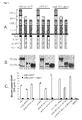
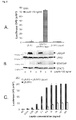
- EpoR-LR chimeras containing similar LR-F3 and LR-FFY- ⁇ box1 mutations, but with the extracellular part of the LR replaced by that of the EpoR. It is generally accepted that the EpoR functions as a homodimer. As observed for the full-length LR mutants, cytoplasmic mutations in the EpoR chimeras did not significantly alter expression, as could be shown by immuno-precipitation with an antibody directed against the extracellular domain of the EpoR, and Western blot analysis with an anti-LR antibody. As shown in Fig. 3, neither EpoR chimera separately, nor in combination, were able to generate a STAT3-dependent signal even at Epo concentration of 50 ng/ml.
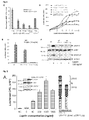
- EpoR-LR As a positive control, EpoR-LR, with an intact box1 motif and the critical tyrosine 1138, showed a clear Epo-mediated activation of the rPAP1-luciferase reporter, illustrating that simple dimerization of the LR cytoplasmic domains was sufficient for JAK2 and STAT3 activation. It is of note that stimulation of cells expressing the Epo-LR chimera with 50 ng/ml Epo - the concentration used to test the complementation of signaling - results in an optimal STAT3 dependent signal. Together these data show that receptor dimerization does not allow complementation and lends further support to the LR being a higher order complex.
- Example 4 Role of the CRH1 and Ig-like modules in LR activation and clustering
- Example 5 Different roles for receptor chains in an activated LR complex
- Example 6 The LR complex is a higher order complex
Landscapes
- Health & Medical Sciences (AREA)
- Life Sciences & Earth Sciences (AREA)
- Chemical & Material Sciences (AREA)
- Organic Chemistry (AREA)
- Immunology (AREA)
- General Health & Medical Sciences (AREA)
- Zoology (AREA)
- Gastroenterology & Hepatology (AREA)
- Cell Biology (AREA)
- Biochemistry (AREA)
- Biophysics (AREA)
- Toxicology (AREA)
- Genetics & Genomics (AREA)
- Medicinal Chemistry (AREA)
- Molecular Biology (AREA)
- Proteomics, Peptides & Aminoacids (AREA)
- Endocrinology (AREA)
- Peptides Or Proteins (AREA)
Priority Applications (1)
| Application Number | Priority Date | Filing Date | Title |
|---|---|---|---|
| EP03102622A EP1510526A1 (de) | 2003-08-21 | 2003-08-21 | Multimerer Leptinrezeptor |
Applications Claiming Priority (1)
| Application Number | Priority Date | Filing Date | Title |
|---|---|---|---|
| EP03102622A EP1510526A1 (de) | 2003-08-21 | 2003-08-21 | Multimerer Leptinrezeptor |
Publications (1)
| Publication Number | Publication Date |
|---|---|
| EP1510526A1 true EP1510526A1 (de) | 2005-03-02 |
Family
ID=34089723
Family Applications (1)
| Application Number | Title | Priority Date | Filing Date |
|---|---|---|---|
| EP03102622A Withdrawn EP1510526A1 (de) | 2003-08-21 | 2003-08-21 | Multimerer Leptinrezeptor |
Country Status (1)
| Country | Link |
|---|---|
| EP (1) | EP1510526A1 (de) |
-
2003
- 2003-08-21 EP EP03102622A patent/EP1510526A1/de not_active Withdrawn
Non-Patent Citations (4)
| Title |
|---|
| CHOW D ET AL: "Structure of an extracellular gp130 cytokine receptor signaling complex.", SCIENCE. UNITED STATES 16 MAR 2001, vol. 291, no. 5511, 16 March 2001 (2001-03-16), pages 2150 - 2155, XP002267060, ISSN: 0036-8075 * |
| DATABASE EMBL [online] 1 February 1996 (1996-02-01), XP002267061, retrieved from EMBL Database accession no. P48356 * |
| WHITE D W ET AL: "Leptin receptor (OB-R) signaling. Cytoplasmic domain mutational analysis and evidence for receptor homo-oligomerization.", THE JOURNAL OF BIOLOGICAL CHEMISTRY. UNITED STATES 14 FEB 1997, vol. 272, no. 7, 14 February 1997 (1997-02-14), pages 4065 - 4071, XP002267059, ISSN: 0021-9258 * |
| ZABEAU L ET AL: "The ins and outs of leptin receptor activation", FEBS LETTERS, ELSEVIER SCIENCE PUBLISHERS, AMSTERDAM, NL, vol. 546, no. 1, 3 July 2003 (2003-07-03), pages 45 - 50, XP004433618, ISSN: 0014-5793 * |
Similar Documents
| Publication | Publication Date | Title |
|---|---|---|
| Zabeau et al. | Functional analysis of leptin receptor activation using a Janus kinase/signal transducer and activator of transcription complementation assay | |
| Sanchez-Margalet et al. | Human leptin signaling in human peripheral blood mononuclear cells: activation of the JAK-STAT pathway | |
| Devos et al. | Ligand-independent dimerization of the extracellular domain of the leptin receptor and determination of the stoichiometry of leptin binding | |
| Trupp et al. | Multiple GPI-anchored receptors control GDNF-dependent and independent activation of the c-Ret receptor tyrosine kinase | |
| RU2642302C1 (ru) | Комбинированное применение ловушек gdf и активаторов рецепторов эритропоэтина для повышения содержания эритроцитов | |
| Hörtner et al. | A new high affinity binding site for suppressor of cytokine signaling‐3 on the erythropoietin receptor | |
| White et al. | Leptin and OB-R: body weight regulation by a cytokine receptor | |
| ES2652318T3 (es) | Variantes procedentes de ActRIIB y sus usos | |
| JP2022009561A (ja) | 赤血球レベルを高めるためのgdfトラップの使用 | |
| CA2585549A1 (en) | Novel type leptin receptor antagonist | |
| EP1771557B1 (de) | GDF3-Propeptide und damit zusammenhängende Verfahren | |
| Kelly et al. | Different forms of the prolactin receptor insights into the mechanism of prolactin action | |
| US10172918B2 (en) | SorCS1 for the treatment of obesity | |
| Gualillo et al. | Leptin promotes the tyrosine phosphorylation of SHC proteins and SHC association with GRB2 | |
| EP1510526A1 (de) | Multimerer Leptinrezeptor | |
| Zabeau et al. | Functional analysis of leptin receptor activation using a JAK/STAT complementation assay | |
| Hauache et al. | Functional interactions between the extracellular domain and the seven-transmembrane domain in Ca2+ receptor activation | |
| EP1272514A1 (de) | Für den menschlichen vanilloid-rezeptor vr3 kodierende dns | |
| Murphy et al. | Clarification of the role of N-glycans on the common β-subunit of the human IL-3, IL-5 and GM-CSF receptors and the murine IL-3 β-receptor in ligand-binding and receptor activation | |
| US7235629B2 (en) | Functional fragment of the leptin receptor | |
| Morris | SH2B1 regulates insulin sensitivity and glucose homeostasis by multiple mechanisms | |
| Takata et al. | The dominant negative effect of a kinase-defective insulin receptor on insulin-like growth factor-I-stimulated signaling in Rat-1 fibroblasts | |
| Molecular characterization of RET activation | ||
| Ding et al. | A novel TGFβ receptor-interacting protein that is also a light chain of the motor protein dynein | |
| Liu | Structural basis and functional impact of ligand-independent dimerization for human prolactin receptor |
Legal Events
| Date | Code | Title | Description |
|---|---|---|---|
| PUAI | Public reference made under article 153(3) epc to a published international application that has entered the european phase |
Free format text: ORIGINAL CODE: 0009012 |
|
| AK | Designated contracting states |
Kind code of ref document: A1 Designated state(s): AT BE BG CH CY CZ DE DK EE ES FI FR GB GR HU IE IT LI LU MC NL PT RO SE SI SK TR |
|
| AX | Request for extension of the european patent |
Extension state: AL LT LV MK |
|
| AKX | Designation fees paid | ||
| REG | Reference to a national code |
Ref country code: DE Ref legal event code: 8566 |
|
| STAA | Information on the status of an ep patent application or granted ep patent |
Free format text: STATUS: THE APPLICATION IS DEEMED TO BE WITHDRAWN |
|
| 18D | Application deemed to be withdrawn |
Effective date: 20050903 |