EP1510402A2 - Fahrzeugs-Rückwärtsfahren-Warnungssystem - Google Patents
Fahrzeugs-Rückwärtsfahren-Warnungssystem Download PDFInfo
- Publication number
- EP1510402A2 EP1510402A2 EP04255123A EP04255123A EP1510402A2 EP 1510402 A2 EP1510402 A2 EP 1510402A2 EP 04255123 A EP04255123 A EP 04255123A EP 04255123 A EP04255123 A EP 04255123A EP 1510402 A2 EP1510402 A2 EP 1510402A2
- Authority
- EP
- European Patent Office
- Prior art keywords
- vehicle
- sensor
- reverse gear
- moving backwards
- response
- Prior art date
- Legal status (The legal status is an assumption and is not a legal conclusion. Google has not performed a legal analysis and makes no representation as to the accuracy of the status listed.)
- Withdrawn
Links
Images



Classifications
-
- G—PHYSICS
- G08—SIGNALLING
- G08B—SIGNALLING SYSTEMS, e.g. PERSONAL CALLING SYSTEMS; ORDER TELEGRAPHS; ALARM SYSTEMS
- G08B3/00—Audible signalling systems, e.g. audible personal calling systems
- G08B3/10—Audible signalling systems, e.g. audible personal calling systems using electric transmission; using electromagnetic transmission
-
- E—FIXED CONSTRUCTIONS
- E02—HYDRAULIC ENGINEERING; FOUNDATIONS; SOIL SHIFTING
- E02F—DREDGING; SOIL-SHIFTING
- E02F9/00—Component parts of dredgers or soil-shifting machines, not restricted to one of the kinds covered by groups E02F3/00 - E02F7/00
- E02F9/24—Safety devices, e.g. for preventing overload
-
- A—HUMAN NECESSITIES
- A41—WEARING APPAREL
- A41D—OUTERWEAR; PROTECTIVE GARMENTS; ACCESSORIES
- A41D13/00—Professional, industrial or sporting protective garments, e.g. surgeons' gowns or garments protecting against blows or punches
-
- A—HUMAN NECESSITIES
- A42—HEADWEAR
- A42B—HATS; HEAD COVERINGS
- A42B3/00—Helmets; Helmet covers ; Other protective head coverings
- A42B3/04—Parts, details or accessories of helmets
- A42B3/0406—Accessories for helmets
- A42B3/0433—Detecting, signalling or lighting devices
-
- B—PERFORMING OPERATIONS; TRANSPORTING
- B60—VEHICLES IN GENERAL
- B60Q—ARRANGEMENT OF SIGNALLING OR LIGHTING DEVICES, THE MOUNTING OR SUPPORTING THEREOF OR CIRCUITS THEREFOR, FOR VEHICLES IN GENERAL
- B60Q1/00—Arrangement of optical signalling or lighting devices, the mounting or supporting thereof or circuits therefor
- B60Q1/02—Arrangement of optical signalling or lighting devices, the mounting or supporting thereof or circuits therefor the devices being primarily intended to illuminate the way ahead or to illuminate other areas of way or environments
- B60Q1/22—Arrangement of optical signalling or lighting devices, the mounting or supporting thereof or circuits therefor the devices being primarily intended to illuminate the way ahead or to illuminate other areas of way or environments for reverse drive
-
- B—PERFORMING OPERATIONS; TRANSPORTING
- B60—VEHICLES IN GENERAL
- B60Q—ARRANGEMENT OF SIGNALLING OR LIGHTING DEVICES, THE MOUNTING OR SUPPORTING THEREOF OR CIRCUITS THEREFOR, FOR VEHICLES IN GENERAL
- B60Q9/00—Arrangement or adaptation of signal devices not provided for in one of main groups B60Q1/00 - B60Q7/00, e.g. haptic signalling
Definitions
- This disclosure relates generally to vehicle alarm systems and more specifically to a vehicle back-up alarm system, vehicle, transmitter module, and method.
- a typical back-up alarm warns when a vehicle has been shifted into reverse gear or is actually moving backwards.
- a conventional back-up alarm includes an audible device placed on a construction vehicle or other vehicle, such as a horn placed on a forklift, dump truck, or golf cart. The audible device produces warning sounds when the vehicle is placed in reverse gear or begins moving backwards.
- This disclosure provides a vehicle back-up alarm system, vehicle, transmitter module, and method.
- a vehicle back-up alarm system includes a sensor capable of determining when a vehicle is at least one of in a reverse gear and moving backwards.
- the vehicle back-up alarm system also includes a transmitter module capable of transmitting a warning signal in response to the sensor determining that the vehicle is at least one of in the reverse gear and moving backwards.
- a method in another aspect, includes determining when a vehicle is at least one of in a reverse gear and moving backwards. The method also includes transmitting a wireless warning signal in response to determining that the vehicle is at least one of in the reverse gear and moving backwards.
- a transmitter module in yet another aspect, includes an alarm sensor capable of detecting that a sensor has determined that a vehicle is at least one of in a reverse gear and moving backwards.
- the transmitter module also includes a transmitter capable of transmitting a warning signal in response to the alarm sensor detecting that the sensor has determined that the vehicle is at least one of in the reverse gear and moving backwards.
- a vehicle in still another embodiment, includes a transmission that has a reverse gear.
- the vehicle also includes a vehicle back-up alarm system that is capable of determining when the vehicle is at least one of in the reverse gear and moving backwards.
- the vehicle back-up alarm system is also capable of transmitting a warning signal in response to determining that the vehicle is at least one of in the reverse gear and moving backwards.
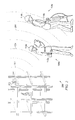
- FIGURE 1 illustrates an example vehicle back-up alarm system according to one embodiment of this disclosure
- FIGURE 2 illustrates an example evacuation alarm system according to one embodiment of this disclosure
- FIGURE 3 illustrates an example transmitter module according to one embodiment of this disclosure
- FIGURE 4 illustrates example receiver modules according to one embodiment of this disclosure
- FIGURE 5 illustrates additional details of one embodiment of a receiver module according to one embodiment of this disclosure
- FIGURE 6 illustrates an example placement of components of a receiver module according to one embodiment of this disclosure
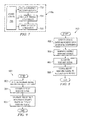
- FIGURE 7 illustrates additional details of another embodiment of a receiver module according to one embodiment of this disclosure.
- FIGURE 8 illustrates an example method for generating a vehicle back-up alarm according to one embodiment of this disclosure.
- FIGURE 9 illustrates an example method for providing a warning indicator to a user according to one embodiment of this disclosure.
- FIGURE 1 illustrates an example vehicle back-up alarm system 100 according to one embodiment of this disclosure.
- the alarm system 100 is used in a vehicle 102 to warn one or more users 104a-104b that the vehicle 102 has been shifted into a reverse gear or is moving backwards or in the reverse direction.
- Other embodiments of the alarm system 100 may be used without departing from the scope of this disclosure.
- warning sounds produced by the alarms may not be heard by users 104a-104b around a vehicle 102.
- the warning sounds produced by the alarm may not be heard by a hearing-impaired person.
- a person working in a noisy environment such as a jackhammer operator who is wearing earplugs or other noise muffling devices, may have difficulty hearing the warning sounds.
- the inability to hear the warning sounds produced by the back-up alarms may place these or other people in danger.
- the vehicle 102 represents any suitable vehicle.
- the vehicle 102 may represent a vehicle regulated by Occupational Safety and Health Administration (OSHA) regulations, such as 29 C.F.R. ⁇ 1926.601(a) and ⁇ 1926.602 (a) (9)(i). Under these regulations, a regulated vehicle 102 needs an audible alarm system that is activated when the vehicle 102 is placed into reverse gear or is moving backwards or in the reverse direction.
- OSHA Occupational Safety and Health Administration
- a regulated vehicle 102 needs an audible alarm system that is activated when the vehicle 102 is placed into reverse gear or is moving backwards or in the reverse direction.
- the vehicle 102 represents a construction vehicle, although other types of vehicles could be used.
- the vehicle 102 includes a sensor 106 that detects when the vehicle 102 is placed into reverse gear or begins moving backwards.
- the terms “reverse” and “backwards” include total and partial backwards or reverse movement by all or a portion of a vehicle or other object or person.
- the sensor 106 determines that the vehicle 102 has been placed in reverse gear or is moving backwards, the sensor 106 generates an output signal.
- the sensor 106 includes any device or structure, such as an electrical circuit, capable of detecting when a vehicle 102 has been placed in a reverse gear or is moving backwards.
- the sensor may represent a circuit capable of detecting when a driver has shifted a transmission 118 of the vehicle 102 into one of one or more reverse gears.
- the output signal generated by the sensor 106 is received by and activates an audible warning device 108.
- the audible warning device 108 represents any device or devices for producing audible warning sounds, such as a horn or beeper.
- the sounds emitted by the audible warning device 108 may be heard by users 104a-104b around the vehicle 102, which helps the users 104a-104b to avoid the vehicle 102.
- Some of the users 104a-104b around the vehicle 102 may be unable to hear the warning sounds produced by the audible warning device 108.
- the warning sounds may not be heard by a hearing-impaired person or by a person working in a noisy environment, such as a jackhammer operator who is wearing earplugs.
- the vehicle 102 includes a transmitter module 110.
- the transmitter module 110 transmits warning signals 112 to the users 104a-104b.
- the transmitter module 110 includes any hardware, software, firmware, or combination thereof for transmitting warning signals 112.
- the transmitter module 110 transmits radio frequency (“RF") signals 112 to the users 104a-104b.
- RF radio frequency
- the warning signals 112 are received by one or more receiver modules 114a-114b, 116a-116b.
- the receiver modules 114a-114b, 116a-116b are worn or otherwise in the possession of one or more users 104a-104b.
- the receiver modules 114a-114b, 116a-116b notify the users 104a-104b that the vehicle 102 is in reverse gear or is moving backwards.
- the receiver modules 114a-114b may produce visual indicators or stimuli that are detected by the users' sense of sight, and the receiver modules 116a-116b may produce tactile indicators or stimuli that are detected by the users' sense of touch.
- the receiver modules 114a-114b may include flashing lights such as light emitting diodes (LEDs), and the receiver modules 116a-116b may vibrate.
- LEDs light emitting diodes
- Other or additional types of stimuli could be used to warn users 104a-104b, and a single receiver module could provide multiple forms of stimuli to a user.
- the visual and tactile indicators or stimuli produced by the receiver modules 114a-114b, 116a-116b allow the users 104a-104b to determine when the vehicle 102 is in reverse gear or is moving backwards.
- the users 104a-104b may make this determination even when the users 104a-104b cannot hear the warning sounds produced by the audible warning device 108. This helps to improve the safety and effectiveness of the vehicle back-up alarm system 100.
- Each of the receiver modules 114a-114b, 116a-116b includes any hardware, software, firmware, or combination thereof for notifying a user that a vehicle 102 has been placed in reverse gear or is moving backwards.
- each of the receiver modules 114a-114b, 116a-116b may represent a portable module that includes a device to produce vibrations, an electromechanical tapping device, an electrical or visual stimulation device, or any other suitable device.
- the effective range between the transmitter module 110 and receiver modules 114a-114b, 116a-116b may be limited.
- the effective range may be limited to between 30 and 50 meters.
- the receiver modules 114a-114b, 116a-116b may detect signals 112 from vehicles 102 that are closer to the users 104a-104b. This may reduce power consumption and limit or prevent the receiver modules 114a-114b, 116a-116b from receiving signals 112 from vehicles 102 that are not a danger to the users 104a-104b.
- the transmitter module 110 and the audible warning device 108 are illustrated as separate components in the vehicle 102.
- the transmitter module 110 and the audible warning device 108 could also be combined into a single unit. This may allow, for example, the individual transmitter module 110 to be installed on existing vehicles 102 that already have audible warning devices 108, while a combined audible warning device 108/transmitter module 110 can be installed in new vehicles 102.
- FIGURE 1 illustrates one example of a vehicle back-up alarm system 100
- the transmitter module 110 could be placed on any other suitable type of vehicle 102.
- each of the users 104a-104b may use any number of receiver modules 114a-114b, 116a-116b, such as by using a single receiver module.
- FIGURE 2 illustrates an example evacuation alarm system 200 according to one embodiment of this disclosure.
- the alarm system 200 is used to warn one or more users 104a-104b to evacuate a particular location, such as a construction site.
- Other embodiments of the alarm system 200 may be used without departing from the scope of this disclosure.
- the users 104a-104b in FIGURE 2 wear or otherwise possess one or more receiver modules 114a-114b, 116a-116b.
- a transmitter module 202 communicates evacuation signals 204 to the users 104a-104b.
- the receiver modules 114a-114b, 116a-116b receive the evacuation signals 204 and notify the users 104a-104b that the evacuation signals 204 have been received.
- the transmitter module 202 transmits RF signals 204 to the users 104a-104b.
- the effective range between the transmitter module 202 and receiver modules 114a-114b, 116a-116b may extend over the entire area where the users 104a-104b may be located, such as over the entire area of a construction site.
- the transmitter module 202 includes any hardware, software, firmware, or combination thereof for transmitting evacuation signals 204.
- the transmitter module 202 could transmit any other or additional signals to the users 104a-104b.
- the transmitter module 202 could transmit signals to the users 104a-104b indicating that the users' shift is over or that a break period has begun or ended.
- FIGURE 2 illustrates one example of an evacuation alarm system 200
- various changes may be made to FIGURE 2.
- FIGURE 2 illustrates one transmitter module 202 as being placed on a building, one or more transmitter modules 202 could be placed in any suitable location or locations.
- each of the users 104a-104b may use any number of receiver modules 114a-114b, 116a-116b, such as by using a single receiver module.
- FIGURE 3 illustrates an example transmitter module 110 according to one embodiment of this disclosure.
- the transmitter module 110 includes a power line 302, a warning signal line 304, an alarm sensor 306, a transmitter controller 308, a transmitter 310, and an antenna 312.
- Other embodiments of the transmitter module 110 may be used without departing from the scope of this disclosure.
- the transmitter module 110 receives operating power through the power line 302.
- the transmitter module 110 receives operating power from the power supply used by the vehicle 102.
- the transmitter module 110 could receive power through the power line 302 from a battery used by the vehicle 102.
- the transmitter module 110 may receive operating power from an internal power supply such as a battery, solar cell, or fuel cell, and the power line 302 would not be needed.
- the transmitter module 110 receives an input signal through the warning signal line 304.
- the input signal indicates that the vehicle 102 has been placed in reverse gear or is moving backwards and that a signal 112, 204 should be transmitted to the users 104a-104b.
- the warning signal line 304 could be coupled to the sensor 106 of FIGURE 1, and the input signal may represent the output signal generated by the sensor 106 that activates the audible warning device 108.
- the term "couple” refers to any direct or indirect communication between two or more components, whether or not those components are in physical contact with one another.
- the warning signal line 304 carries the output signal from the sensor 106 to the transmitter module 110.
- the warning signal line 304 may be coupled directly to the sensor 106 or between the sensor 106 and the audible warning device 108.
- the alarm sensor 306 detects the signal. The alarm sensor 306 then informs the transmitter controller 308 that the input signal has been received.
- the alarm sensor 306 includes any hardware, software, firmware, or combination thereof for detecting a signal received over the warning signal line 304.
- the transmitter controller 308 receives and acknowledges that the alarm sensor 306 has detected the input signal.
- the transmitter controller 308 also generates or causes the transmitter 310 to generate warning signals 112 for one or more receiver modules 114a-114b, 116a-116b.
- the transmitter controller 308 includes any hardware, software, firmware, or combination thereof for controlling the operation of the transmitter module 110.
- the transmitter controller 308 may represent a microprocessor or other processing device, operational amplifiers, memory circuits, or other circuitry.
- the transmitter 310 transmits the warning signals 112 to the users 104a-104b.
- the transmitter 310 includes any hardware, software, firmware, or combination thereof for generating wireless signals.
- the transmitter 310 may represent a RF transmitter.
- the warning signals 112 are communicated to the receiver modules 114a-114, 116a-116b through the antenna 312.
- the antenna 312 represents any suitable structure for transmitting wireless signals.
- the antenna 312 represents a RF antenna.
- the transmitter 310 and antenna 312 represent a low power RF transmitter and antenna that are capable of transmitting the warning signals 112 to the receiver modules 114a-114b, 116a-116b.
- the transmitter 310 may use any suitable modulation scheme to facilitate communication with the receiver modules 114a-114b, 116a-116b.
- the modulation schemes could include On/Off Key (“OOK”) modulation, Frequency Shift Key (“FSK”) modulation, Amplitude Modulation (“AM”), and Frequency Modulation ("FM”).
- the range of the transmitted signals 112 may be controllable, such as by establishing a maximum range of 30 meters, 50 meters, 1000 meters, or other suitable distance or distances.
- FIGURE 3 illustrates a transmitter module 110
- the same or similar structure may be used as the transmitter module 202 in FIGURE 2.
- the alarm sensor 306 may detect any suitable input.
- the alarm sensor 306 could detect when a user has depressed an evacuation button or when a monitoring system has sensed a fire, chemical spill, or other dangerous condition.
- the transmitter module 202 could also be coupled to and receive power from an electrical outlet or other suitable power source.
- the transmitter 310 may generate the evacuation signal 204, and the transmitter module 202 may have any suitable effective range such as 1000 meters.
- FIGURE 3 illustrates one example of a transmitter module 110
- various changes may be made to FIGURE 3.
- the functional division of FIGURE 3 is for illustration only.
- Various components of FIGURE 3 can be combined or omitted and additional components could be added according to particular needs.
- FIGURE 4 illustrates example receiver modules 114a-114b, 116a-116b according to one embodiment of this disclosure.
- the receiver modules 114a-114b, 116a-116b shown in FIGURE 4 are for illustration only. Other embodiments of the receiver modules 114a-114b, 116a-116b may be used without departing from the scope of this disclosure.
- the receiver modules 114a-114b are incorporated into hardhats worn by the users 104a-104b.
- the receiver modules 116a-116b are incorporated into watches, wristbands, or other devices worn around the wrists of the users 104a-104b.
- the receiver modules 114a-114b, 116a-116b use different mechanisms for informing the users 104a-104b that warning signals 112, 204 have been received.
- the receiver modules 114a-114b may include LEDs or other light-generating elements that produce visual stimuli seen by the users 104a-104b.
- the receiver modules 116a-116b may generate mechanical signals, electrical signals, or other tactile stimuli that can be felt by the users 104a-104b. This represents example embodiments of the receiver modules 114a-114b, 116a-116b.
- Each of the receiver modules 114a-114b, 116a-116b could produce one or both of these stimuli and/or other or additional stimuli.
- the receiver modules 114a-114b, 116a-116b are capable of receiving multiple types of signals, such as when the receiver modules 114a-114b, 116a-116b receive both the vehicle back-up warning signals 112 and the evacuation signals 204.
- the receiver modules 114a-114b, 116a-116b could perform different actions depending on the type of signal received. For example, the receiver modules 114a-114b could produce different flashes of light depending on whether the vehicle back-up warning signal 112 or the evacuation signal 204 has been received. Similarly, the receiver modules 116a-116b could produce different vibration patterns depending on whether the vehicle back-up warning signal 112 or the evacuation signal 204 has been received. In this way, the users 104a-104b may easily identify the type of warning signal or other signal that has been received.
- FIGURE 4 illustrates examples of the receiver modules 114a-114b, 116a-116b
- FIGURE 4 illustrates receiver modules embodied in hardhats and wristbands
- the receiver modules could be embodied in any other structure, device, or system.
- the receiver modules could be embodied in mobile telephones, pagers, personal digital assistants, pendants worn around the neck, or clip-on units worn on the users' clothing.
- FIGURE 5 illustrates additional details of one embodiment of a receiver module 114a according to one embodiment of this disclosure.
- the receiver module 114a includes a receiver/antenna 502, a receiver module controller 504, a sense of sight stimulator 506, and a power source 508.
- Other embodiments of the receiver module 114a may be used without departing from the scope of this disclosure.
- the receiver/antenna 502 receives the signals 112, 204 transmitted by the transmitter modules 110, 202.
- the receiver/antenna 502 transfers the received signals 112, 204 to the receiver module controller 504.
- the receiver/antenna 502 may also demodulate the received signals 112, 204 before transferring the received signals 112, 204 to the receiver module controller 504.
- the receiver/antenna 502 represents any hardware, software, firmware, or combination thereof for receiving wireless signals.
- the receiver/antenna 502 may represent a RF receiver and antenna.
- the sensitivity of the receiver/antenna 502 may be established to allow reception up to a maximum distance such as 1000 meters, and the selectivity of the receiver/antenna 502 may be established to minimize reception of unwanted RF or other transmissions.
- the receiver module controller 504 receives the signals 112, 204 provided by the receiver/antenna 502 and acknowledges the signals. In response to the signals 112, 204, the receiver module controller 504 generates an activation signal to activate the stimulator 506. In particular embodiments, the receiver module controller 504 identifies the type of signal received by the receiver module 114a, such as by determining whether a vehicle back-up warning signal 112 or an evacuation signal 204 was received. Based on the type of signal received, the receiver module controller 504 causes the stimulator 506 to operate in a particular mode associated with the type of signal received.
- the receiver module controller 504 includes any hardware, software, firmware, or combination thereof for controlling the operation of the receiver module 114a. As a particular example, the receiver module controller 504 represents a microprocessor or other processing device, operational amplifiers, memory circuits, or other circuitry.
- the stimulator 506 responds to the activation signal from the receiver module controller 504 by producing visual stimuli perceived by the user's sense of sight. This allows the stimulator 506 to warn the user 104a of possible danger, even when the user 104a cannot hear an audible warning signal.
- the stimulator 506 may represent any device or structure for producing visual stimuli that can be detected by a user 104a.
- the stimulator 506 may include one or multiple LEDs capable of generating visual signals.
- the stimulator 506 may include LEDs of different colors corresponding to different types of signals received by the receiver module 114a.
- the receiver/antenna 502, receiver module controller 504, and stimulator 506 are connected internally within the receiver module 114a to the power supply 508.
- the power supply 508 represents any suitable power supply for the receiver module 114a.
- the power supply 508 could represent a battery, fuel cell, solar cell, or other source of operating power.
- the receiver module 114a may be contained in a small lightweight package.
- the receiver package may be of a type of construction to sustain operation in a harsh use environment, such as a construction environment.
- FIGURE 5 illustrates one example of additional details of one embodiment of the receiver module 114a
- various changes may be made to FIGURE 5.
- the functional division of FIGURE 5 is for illustration only.
- Various components of FIGURE 5 can be combined or omitted and additional components could be added according to particular needs.
- FIGURE 6 illustrates an example placement of components of a receiver module 114a according to one embodiment of this disclosure.
- FIGURE 6 illustrates placement of the components illustrated in FIGURE 5 within a hardhat for use by a user 104a.
- Other placements of components may be used in the receiver module 114a without departing from the scope of this disclosure.
- the sense of sight stimulator 506 generates visual signals that can be seen by a user 104a.
- the sense of sight stimulator 506 is located generally at the front of the hardhat. In this way, the sense of sight stimulator 506 is located within a field of view of the user 104a.
- the sense of sight stimulator 506 is located on a rim 602 of the hardhat and to one side of the rim 602. This represents one example placement of the sense of sight stimulator 506 in the hardhat.
- the sense of sight stimulator 506 could be placed at any other suitable location in the hardhat.
- FIGURE 6 shows all three components 502, 504, 508 integrated into a single unit in the hardhat, the various components 502, 504, 508 could reside separate from each other in the hardhat.
- FIGURE 6 illustrates one example of the placement of components of a receiver module 114a
- various changes may be made to FIGURE 6.
- the various components 502-508 may be placed in any other suitable location or locations.
- FIGURE 7 illustrates additional details of another embodiment of a receiver module 116a according to one embodiment of this disclosure.
- the receiver module 116a includes a receiver/antenna 702, a receiver module controller 704, a sense of touch stimulator 706, and a power source 708.
- Other embodiments of the receiver module 116a may be used without departing from the scope of this disclosure.
- the receiver/antenna 702, receiver module controller 704, and power source 708 may be the same as or similar to the receiver/antenna 502, receiver module controller 504, and power source 508, respectively, of FIGURE 5.
- the sense of touch stimulator 706 is controlled by the receiver module controller 704 and produces mechanical, electrical, or other signals perceived by the user's sense of touch. This allows the stimulator 706 to warn the user 104a of possible danger.
- the stimulator 706 may represent any suitable device or structure for producing tactile signals that can be detected by a user 104a.
- the stimulator 706 may include a device to produce vibrations, an electromechanical tapping device, or an electrical stimulation device.
- the stimulator 706 may be similar to the stimulators used on pagers, mobile telephones, and other mobile devices to notify a user of an incoming page, call, or other communication.
- the stimulator 706 produces different types of tactile signals corresponding to different types of wireless warning signals received by the receiver module 116a.
- the receiver module 116a may be contained in a small lightweight package, such as a wristband, that allows convenient contact with the user's skin.
- the stimulator 706 may be placed in the package such that it provides a maximum stimulation to the user's sense of touch.
- the receiver package may be of a type of construction to sustain operation in a harsh use environment, such as a construction environment, although other possible receiver packages may be used.
- FIGURE 7 illustrates additional details of another embodiment of the receiver module 116a
- various changes may be made to FIGURE 7.
- the functional division of FIGURE 7 is for illustration only.
- Various components of FIGURE 7 can be combined or omitted and additional components could be added according to particular needs.
- FIGURE 8 illustrates an example method 800 for generating a vehicle back-up alarm according to one embodiment of this disclosure.
- the method 800 is described with respect to the vehicle back-up alarm system 100 shown in FIGURE 1.
- the method 800 could also be used with any other suitable vehicle back-up alarm system.
- the vehicle back-up alarm system 100 detects a vehicle entering a reverse gear or moving backwards or in the reverse direction at step 802. This may include, for example, the sensor 106 determining whether the vehicle 102 has been placed into reverse gear or has begun to move backwards.
- the vehicle back-up alarm system 100 generates audible warning sounds at step 804. This may include, for example, the sensor 106 generating an output signal that triggers the audible warning device 108. This may also include the audible warning device 108 generating any suitable warning sounds.
- the vehicle back-up alarm system 100 generates a wireless warning signal at step 806.
- This may include, for example, the alarm sensor 306 in the transmitter module 110 detecting the output signal produced by the sensor 106.
- This may also include the transmitter controller 308 generating or causing the transmitter 310 to generate a RF signal or other signal 112.
- the vehicle back-up alarm system 100 communicates the warning signal to any receiver modules in the vicinity of the vehicle 102 at step 808.
- This may include, for example, the transmitter 310 in the transmitter module 110 communicating the warning signal 112 through the antenna 312.
- This may also include the transmitter module 110 communicating the warning signal 112 to any receiver modules 114a-114b, 116a-116b within a specified area around the vehicle 102, such as to any receiver modules 114a-114b, 116a-116b within 30 to 50 meters of the vehicle 102.
- FIGURE 8 illustrates one example of a method 800 for generating a vehicle back-up alarm
- the warning signal may be communicated over a wide area and need not be limited to the vicinity near a vehicle 102.
- the vehicle back-up alarm system 100 may only transmit a wireless warning signal and need not generate audible warning sounds.
- FIGURE 9 illustrates an example method 900 for providing a warning indicator to a user according to one embodiment of this disclosure.
- the method 900 is described with respect to the receiver modules 114a-114b, 116a-116b of FIGURES 5 and 7 operating in the systems 100, 200 of FIGURES 1 and 2.
- the method 900 could also be used by any other suitable receiver module and in any other suitable system.
- the receiver module 114a-114b, 116a-116b receives a warning signal at step 902. This may include, for example, the receiver/antenna 502, 702 receiving a warning signal 112, 204 transmitted by a transmitter module 110, 202. This may also include the receiver/antenna 502, 702 forwarding the warning signal to the receiver module controller 504, 704.
- the receiver module 114a-114b, 116a-116b identifies the type of warning signal received at step 904. This may include, for example, the receiver module controller 504, 704 determining whether the received warning signal represents a vehicle back-up warning signal 112 or an evacuation signal 204.
- the receiver module 114a-114b, 116a-116b generates a perceptible indicator for a user at step 906.
- This may include, for example, the receiver module controller 504, 704 triggering a sense of sight stimulator 506 and/or a sense of touch stimulator 706.
- This may also include the receiver module controller 504, 704 triggering the stimulator 506 and/or the stimulator 706 differently based on the type of warning signal received.
- FIGURE 9 illustrates one example of a method 900 for providing a warning indicator to a user
- various changes may be made to FIGURE 9.
- the receiver module 114a-114b, 116a-116b could only be able to provide a single indicator or stimulus to a user, and the receiver module 114a-114b, 116a-116b need not identify the type of warning signal received.
- controller means any device, system, or part thereof that controls at least one operation.
- a controller may be implemented in hardware, software, firmware, or combination thereof. It should be noted that the functionality associated with any particular controller may be centralized or distributed, whether locally or remotely.
Landscapes
- Engineering & Computer Science (AREA)
- Mechanical Engineering (AREA)
- Health & Medical Sciences (AREA)
- General Health & Medical Sciences (AREA)
- Physical Education & Sports Medicine (AREA)
- Textile Engineering (AREA)
- Mining & Mineral Resources (AREA)
- Civil Engineering (AREA)
- General Engineering & Computer Science (AREA)
- Structural Engineering (AREA)
- Human Computer Interaction (AREA)
- Physics & Mathematics (AREA)
- Electromagnetism (AREA)
- General Physics & Mathematics (AREA)
- Emergency Alarm Devices (AREA)
- Alarm Systems (AREA)
- Traffic Control Systems (AREA)
Applications Claiming Priority (4)
| Application Number | Priority Date | Filing Date | Title |
|---|---|---|---|
| US49837403P | 2003-08-26 | 2003-08-26 | |
| US498374P | 2003-08-26 | ||
| US818132 | 2004-04-05 | ||
| US10/818,132 US7148794B2 (en) | 2003-08-26 | 2004-04-05 | Vehicle back-up alarm system, vehicle, transmitter module, and method |
Publications (2)
| Publication Number | Publication Date |
|---|---|
| EP1510402A2 true EP1510402A2 (de) | 2005-03-02 |
| EP1510402A3 EP1510402A3 (de) | 2006-04-19 |
Family
ID=34108120
Family Applications (1)
| Application Number | Title | Priority Date | Filing Date |
|---|---|---|---|
| EP04255123A Withdrawn EP1510402A3 (de) | 2003-08-26 | 2004-08-25 | Fahrzeugs-Rückwärtsfahren-Warnungssystem |
Country Status (5)
| Country | Link |
|---|---|
| US (1) | US7148794B2 (de) |
| EP (1) | EP1510402A3 (de) |
| JP (1) | JP2005071377A (de) |
| KR (1) | KR20050021316A (de) |
| TW (1) | TW200513400A (de) |
Cited By (2)
| Publication number | Priority date | Publication date | Assignee | Title |
|---|---|---|---|---|
| EP1775192A1 (de) * | 2005-10-13 | 2007-04-18 | Siemens Schweiz AG | Warnsystem für einen Gleisbereich |
| CN103692971A (zh) * | 2013-12-13 | 2014-04-02 | 常州联力自动化科技有限公司 | 矿用车辆报警器 |
Families Citing this family (13)
| Publication number | Priority date | Publication date | Assignee | Title |
|---|---|---|---|---|
| US8299905B2 (en) * | 2005-02-10 | 2012-10-30 | Quentin King | System for applying tactile stimulation to the controller of unmanned vehicles |
| US20060226973A1 (en) * | 2005-03-30 | 2006-10-12 | Ranco Incorporated Of Delaware | Device, system, and method for providing hazard warnings |
| US20060244313A1 (en) * | 2005-04-28 | 2006-11-02 | Sullivan Scott L | Safety systems for automobiles |
| US7463165B1 (en) * | 2005-08-31 | 2008-12-09 | Preco Electronics, Inc. | Directional back-up alarm |
| US7567167B2 (en) | 2006-04-24 | 2009-07-28 | Reverse Control, Inc. | Wireless signal apparatus for assisting drivers to back large vehicles |
| US8013720B2 (en) * | 2007-11-02 | 2011-09-06 | Reverse Control, Inc. | Signal apparatus for facilitating safe backup of vehicles |
| US9230419B2 (en) | 2010-07-27 | 2016-01-05 | Rite-Hite Holding Corporation | Methods and apparatus to detect and warn proximate entities of interest |
| US20120249342A1 (en) * | 2011-03-31 | 2012-10-04 | Koehrsen Craig L | Machine display system |
| US9989636B2 (en) | 2015-03-26 | 2018-06-05 | Deere & Company | Multi-use detection system for work vehicle |
| CN104905425A (zh) * | 2015-05-08 | 2015-09-16 | 苏州市吴中区大明针织漂染有限公司 | 一种环卫工服装 |
| RU2706859C2 (ru) | 2015-09-28 | 2019-11-21 | ФОРД ГЛОУБАЛ ТЕКНОЛОДЖИЗ, ЭлЭлСи | Система и способ обнаружения препятствий |
| JP7114559B2 (ja) * | 2019-12-16 | 2022-08-08 | 住友建機株式会社 | ショベル、建設機械用の端末及び端末用プログラム |
| CA3163133C (en) | 2020-02-21 | 2025-05-27 | Crown Equipment Corporation | Position assistance system for a materials handling vehicle |
Family Cites Families (15)
| Publication number | Priority date | Publication date | Assignee | Title |
|---|---|---|---|---|
| US4937795A (en) * | 1987-07-06 | 1990-06-26 | Tokyo Keiki Co., Ltd. | Access alarming method and apparatus for working vehicle |
| JP2700710B2 (ja) * | 1990-06-21 | 1998-01-21 | 新キャタピラー三菱株式会社 | 建設機械の警報装置 |
| US5132665A (en) | 1990-06-27 | 1992-07-21 | Dominion Automotive Industries Corp. | Hub-mounted vehicle back-up alarm |
| US5727758A (en) * | 1997-03-26 | 1998-03-17 | Penza; George Gregory | Tactile and audible warning system for railroad workers |
| FR2761501A1 (fr) | 1997-04-01 | 1998-10-02 | Armand Juan | Installation de protection des individus se trouvant sur un chantier |
| US6044632A (en) | 1998-02-05 | 2000-04-04 | Eaton Corporation, Cutler-Hammer Products | Backup proximity sensor for a vehicle |
| US6400308B1 (en) * | 1998-02-20 | 2002-06-04 | Amerigon Inc. | High performance vehicle radar system |
| US6025778A (en) | 1998-07-10 | 2000-02-15 | Caterpillar Inc. | Apparatus and method for providing an automated back-up alarm |
| US6208260B1 (en) * | 1999-11-02 | 2001-03-27 | Jill West | Personal warning method and apparatus for traveling loads |
| AU2001225247A1 (en) | 2000-12-07 | 2002-06-18 | Alexia Bellone | Multiple-triggering alarm system by transmitters and portable receiver-buzzer |
| US20040113774A1 (en) | 2000-12-20 | 2004-06-17 | Wilson Dennis Alexander | Personal proximity warning system |
| US20020145522A1 (en) | 2001-04-05 | 2002-10-10 | Kevin Pembroke | Buddy communicator |
| WO2003029045A2 (en) | 2001-10-03 | 2003-04-10 | Sense Technologies, Inc. | Multi-technology object detection system and method |
| US20030098785A1 (en) | 2001-11-28 | 2003-05-29 | Hugh Bishop | Vehicle back-up alarm sensor for electrical trailer contact |
| US6917300B2 (en) | 2001-11-30 | 2005-07-12 | Caterpillar Inc. | Method and apparatus for tracking objects at a site |
-
2004
- 2004-04-05 US US10/818,132 patent/US7148794B2/en not_active Expired - Lifetime
- 2004-08-25 EP EP04255123A patent/EP1510402A3/de not_active Withdrawn
- 2004-08-26 KR KR1020040067526A patent/KR20050021316A/ko not_active Withdrawn
- 2004-08-26 JP JP2004247046A patent/JP2005071377A/ja active Pending
- 2004-08-26 TW TW093125611A patent/TW200513400A/zh unknown
Cited By (2)
| Publication number | Priority date | Publication date | Assignee | Title |
|---|---|---|---|---|
| EP1775192A1 (de) * | 2005-10-13 | 2007-04-18 | Siemens Schweiz AG | Warnsystem für einen Gleisbereich |
| CN103692971A (zh) * | 2013-12-13 | 2014-04-02 | 常州联力自动化科技有限公司 | 矿用车辆报警器 |
Also Published As
| Publication number | Publication date |
|---|---|
| KR20050021316A (ko) | 2005-03-07 |
| EP1510402A3 (de) | 2006-04-19 |
| JP2005071377A (ja) | 2005-03-17 |
| US7148794B2 (en) | 2006-12-12 |
| TW200513400A (en) | 2005-04-16 |
| US20050046560A1 (en) | 2005-03-03 |
Similar Documents
| Publication | Publication Date | Title |
|---|---|---|
| US7167082B2 (en) | System, method, and receiver module for alerting users of warning signals | |
| US7148794B2 (en) | Vehicle back-up alarm system, vehicle, transmitter module, and method | |
| US6078260A (en) | Method and apparatus for keeping track of children | |
| US7042361B2 (en) | Child monitoring, communication and locating system | |
| US7511627B2 (en) | Child locator | |
| EP3172479B1 (de) | Persönliches wearable-system zur detektion von gefährlichen spannungen und zur anzeige der richtung der quelle | |
| DE602004022455D1 (de) | Schmuck mit drahtloser signalalarmeinrichtung | |
| EP3314589B1 (de) | Alarmsystem und -verfahren | |
| JP2003506772A (ja) | 可動性物体間の空間関係を監視するためのシステム及び方法 | |
| US20200008757A1 (en) | EARS: Emergency Alert Response System Monitoring Device | |
| GB2389216A (en) | Anti-theft or anti-loss proximity alarm | |
| US12488668B2 (en) | Wearable safety device | |
| TW200520445A (en) | Electronic apparatus and communication control method | |
| JP2017215915A (ja) | トランシーバを用いた騒音環境下作業者間安全システム,作業者間安全装置および該装置を用いた情報伝達方法 | |
| GB2383666A (en) | Proximity alarm and positioning system | |
| US20030034894A1 (en) | Electronic monitoring system | |
| JP2021140547A (ja) | 接近警告システム | |
| CN213601320U (zh) | 无线头戴式报警装置 | |
| KR20020077716A (ko) | 용변 자동 감지장치 | |
| US5774054A (en) | Synchronous receiving/transmitting departure alarm | |
| WO2004095396A1 (en) | Toddler/child training monitor | |
| KR20110025427A (ko) | 소형무선단말기의 분실 경보장치 | |
| KR102754754B1 (ko) | 운전자 졸음 예측 시스템 및 방법 | |
| JP3104799U (ja) | 警報装置 | |
| JPH08273070A (ja) | 呼び戻し装置 |
Legal Events
| Date | Code | Title | Description |
|---|---|---|---|
| PUAI | Public reference made under article 153(3) epc to a published international application that has entered the european phase |
Free format text: ORIGINAL CODE: 0009012 |
|
| AK | Designated contracting states |
Kind code of ref document: A2 Designated state(s): AT BE BG CH CY CZ DE DK EE ES FI FR GB GR HU IE IT LI LU MC NL PL PT RO SE SI SK TR |
|
| AX | Request for extension of the european patent |
Extension state: AL HR LT LV MK |
|
| PUAL | Search report despatched |
Free format text: ORIGINAL CODE: 0009013 |
|
| AK | Designated contracting states |
Kind code of ref document: A3 Designated state(s): AT BE BG CH CY CZ DE DK EE ES FI FR GB GR HU IE IT LI LU MC NL PL PT RO SE SI SK TR |
|
| AX | Request for extension of the european patent |
Extension state: AL HR LT LV MK |
|
| 17P | Request for examination filed |
Effective date: 20061005 |
|
| AKX | Designation fees paid |
Designated state(s): AT BE BG CH CY CZ DE DK EE ES FI FR GB GR HU IE IT LI LU MC NL PL PT RO SE SI SK TR |
|
| 17Q | First examination report despatched |
Effective date: 20070430 |
|
| STAA | Information on the status of an ep patent application or granted ep patent |
Free format text: STATUS: THE APPLICATION IS DEEMED TO BE WITHDRAWN |
|
| 18D | Application deemed to be withdrawn |
Effective date: 20070911 |