EP1503589A1 - Apparatus and method for providing advertisements on digital tv - Google Patents
Apparatus and method for providing advertisements on digital tv Download PDFInfo
- Publication number
- EP1503589A1 EP1503589A1 EP04254391A EP04254391A EP1503589A1 EP 1503589 A1 EP1503589 A1 EP 1503589A1 EP 04254391 A EP04254391 A EP 04254391A EP 04254391 A EP04254391 A EP 04254391A EP 1503589 A1 EP1503589 A1 EP 1503589A1
- Authority
- EP
- European Patent Office
- Prior art keywords
- data
- information
- channel
- channel information
- advertisement data
- Prior art date
- Legal status (The legal status is an assumption and is not a legal conclusion. Google has not performed a legal analysis and makes no representation as to the accuracy of the status listed.)
- Withdrawn
Links
Images

Classifications
-
- H—ELECTRICITY
- H04—ELECTRIC COMMUNICATION TECHNIQUE
- H04N—PICTORIAL COMMUNICATION, e.g. TELEVISION
- H04N21/00—Selective content distribution, e.g. interactive television or video on demand [VOD]
- H04N21/40—Client devices specifically adapted for the reception of or interaction with content, e.g. set-top-box [STB]; Operations thereof
- H04N21/43—Processing of content or additional data, e.g. demultiplexing additional data from a digital video stream; Elementary client operations, e.g. monitoring of home network or synchronising decoder's clock; Client middleware
- H04N21/433—Content storage operation, e.g. storage operation in response to a pause request, caching operations
-
- H—ELECTRICITY
- H04—ELECTRIC COMMUNICATION TECHNIQUE
- H04N—PICTORIAL COMMUNICATION, e.g. TELEVISION
- H04N21/00—Selective content distribution, e.g. interactive television or video on demand [VOD]
- H04N21/40—Client devices specifically adapted for the reception of or interaction with content, e.g. set-top-box [STB]; Operations thereof
- H04N21/43—Processing of content or additional data, e.g. demultiplexing additional data from a digital video stream; Elementary client operations, e.g. monitoring of home network or synchronising decoder's clock; Client middleware
-
- H—ELECTRICITY
- H04—ELECTRIC COMMUNICATION TECHNIQUE
- H04N—PICTORIAL COMMUNICATION, e.g. TELEVISION
- H04N21/00—Selective content distribution, e.g. interactive television or video on demand [VOD]
- H04N21/20—Servers specifically adapted for the distribution of content, e.g. VOD servers; Operations thereof
- H04N21/23—Processing of content or additional data; Elementary server operations; Server middleware
- H04N21/235—Processing of additional data, e.g. scrambling of additional data or processing content descriptors
-
- H—ELECTRICITY
- H04—ELECTRIC COMMUNICATION TECHNIQUE
- H04N—PICTORIAL COMMUNICATION, e.g. TELEVISION
- H04N21/00—Selective content distribution, e.g. interactive television or video on demand [VOD]
- H04N21/20—Servers specifically adapted for the distribution of content, e.g. VOD servers; Operations thereof
- H04N21/23—Processing of content or additional data; Elementary server operations; Server middleware
- H04N21/236—Assembling of a multiplex stream, e.g. transport stream, by combining a video stream with other content or additional data, e.g. inserting a URL [Uniform Resource Locator] into a video stream, multiplexing software data into a video stream; Remultiplexing of multiplex streams; Insertion of stuffing bits into the multiplex stream, e.g. to obtain a constant bit-rate; Assembling of a packetised elementary stream
- H04N21/2362—Generation or processing of Service Information [SI]
-
- H—ELECTRICITY
- H04—ELECTRIC COMMUNICATION TECHNIQUE
- H04N—PICTORIAL COMMUNICATION, e.g. TELEVISION
- H04N21/00—Selective content distribution, e.g. interactive television or video on demand [VOD]
- H04N21/20—Servers specifically adapted for the distribution of content, e.g. VOD servers; Operations thereof
- H04N21/23—Processing of content or additional data; Elementary server operations; Server middleware
- H04N21/236—Assembling of a multiplex stream, e.g. transport stream, by combining a video stream with other content or additional data, e.g. inserting a URL [Uniform Resource Locator] into a video stream, multiplexing software data into a video stream; Remultiplexing of multiplex streams; Insertion of stuffing bits into the multiplex stream, e.g. to obtain a constant bit-rate; Assembling of a packetised elementary stream
- H04N21/2365—Multiplexing of several video streams
-
- H—ELECTRICITY
- H04—ELECTRIC COMMUNICATION TECHNIQUE
- H04N—PICTORIAL COMMUNICATION, e.g. TELEVISION
- H04N21/00—Selective content distribution, e.g. interactive television or video on demand [VOD]
- H04N21/40—Client devices specifically adapted for the reception of or interaction with content, e.g. set-top-box [STB]; Operations thereof
- H04N21/43—Processing of content or additional data, e.g. demultiplexing additional data from a digital video stream; Elementary client operations, e.g. monitoring of home network or synchronising decoder's clock; Client middleware
- H04N21/433—Content storage operation, e.g. storage operation in response to a pause request, caching operations
- H04N21/4331—Caching operations, e.g. of an advertisement for later insertion during playback
-
- H—ELECTRICITY
- H04—ELECTRIC COMMUNICATION TECHNIQUE
- H04N—PICTORIAL COMMUNICATION, e.g. TELEVISION
- H04N21/00—Selective content distribution, e.g. interactive television or video on demand [VOD]
- H04N21/40—Client devices specifically adapted for the reception of or interaction with content, e.g. set-top-box [STB]; Operations thereof
- H04N21/43—Processing of content or additional data, e.g. demultiplexing additional data from a digital video stream; Elementary client operations, e.g. monitoring of home network or synchronising decoder's clock; Client middleware
- H04N21/434—Disassembling of a multiplex stream, e.g. demultiplexing audio and video streams, extraction of additional data from a video stream; Remultiplexing of multiplex streams; Extraction or processing of SI; Disassembling of packetised elementary stream
-
- H—ELECTRICITY
- H04—ELECTRIC COMMUNICATION TECHNIQUE
- H04N—PICTORIAL COMMUNICATION, e.g. TELEVISION
- H04N21/00—Selective content distribution, e.g. interactive television or video on demand [VOD]
- H04N21/40—Client devices specifically adapted for the reception of or interaction with content, e.g. set-top-box [STB]; Operations thereof
- H04N21/43—Processing of content or additional data, e.g. demultiplexing additional data from a digital video stream; Elementary client operations, e.g. monitoring of home network or synchronising decoder's clock; Client middleware
- H04N21/434—Disassembling of a multiplex stream, e.g. demultiplexing audio and video streams, extraction of additional data from a video stream; Remultiplexing of multiplex streams; Extraction or processing of SI; Disassembling of packetised elementary stream
- H04N21/4347—Demultiplexing of several video streams
-
- H—ELECTRICITY
- H04—ELECTRIC COMMUNICATION TECHNIQUE
- H04N—PICTORIAL COMMUNICATION, e.g. TELEVISION
- H04N21/00—Selective content distribution, e.g. interactive television or video on demand [VOD]
- H04N21/40—Client devices specifically adapted for the reception of or interaction with content, e.g. set-top-box [STB]; Operations thereof
- H04N21/43—Processing of content or additional data, e.g. demultiplexing additional data from a digital video stream; Elementary client operations, e.g. monitoring of home network or synchronising decoder's clock; Client middleware
- H04N21/435—Processing of additional data, e.g. decrypting of additional data, reconstructing software from modules extracted from the transport stream
-
- H—ELECTRICITY
- H04—ELECTRIC COMMUNICATION TECHNIQUE
- H04N—PICTORIAL COMMUNICATION, e.g. TELEVISION
- H04N21/00—Selective content distribution, e.g. interactive television or video on demand [VOD]
- H04N21/40—Client devices specifically adapted for the reception of or interaction with content, e.g. set-top-box [STB]; Operations thereof
- H04N21/43—Processing of content or additional data, e.g. demultiplexing additional data from a digital video stream; Elementary client operations, e.g. monitoring of home network or synchronising decoder's clock; Client middleware
- H04N21/438—Interfacing the downstream path of the transmission network originating from a server, e.g. retrieving encoded video stream packets from an IP network
- H04N21/4383—Accessing a communication channel
-
- H—ELECTRICITY
- H04—ELECTRIC COMMUNICATION TECHNIQUE
- H04N—PICTORIAL COMMUNICATION, e.g. TELEVISION
- H04N21/00—Selective content distribution, e.g. interactive television or video on demand [VOD]
- H04N21/40—Client devices specifically adapted for the reception of or interaction with content, e.g. set-top-box [STB]; Operations thereof
- H04N21/43—Processing of content or additional data, e.g. demultiplexing additional data from a digital video stream; Elementary client operations, e.g. monitoring of home network or synchronising decoder's clock; Client middleware
- H04N21/44—Processing of video elementary streams, e.g. splicing a video clip retrieved from local storage with an incoming video stream or rendering scenes according to encoded video stream scene graphs
- H04N21/44016—Processing of video elementary streams, e.g. splicing a video clip retrieved from local storage with an incoming video stream or rendering scenes according to encoded video stream scene graphs involving splicing one content stream with another content stream, e.g. for substituting a video clip
-
- H—ELECTRICITY
- H04—ELECTRIC COMMUNICATION TECHNIQUE
- H04N—PICTORIAL COMMUNICATION, e.g. TELEVISION
- H04N21/00—Selective content distribution, e.g. interactive television or video on demand [VOD]
- H04N21/80—Generation or processing of content or additional data by content creator independently of the distribution process; Content per se
- H04N21/81—Monomedia components thereof
- H04N21/812—Monomedia components thereof involving advertisement data
-
- H—ELECTRICITY
- H04—ELECTRIC COMMUNICATION TECHNIQUE
- H04N—PICTORIAL COMMUNICATION, e.g. TELEVISION
- H04N21/00—Selective content distribution, e.g. interactive television or video on demand [VOD]
- H04N21/80—Generation or processing of content or additional data by content creator independently of the distribution process; Content per se
- H04N21/83—Generation or processing of protective or descriptive data associated with content; Content structuring
- H04N21/84—Generation or processing of descriptive data, e.g. content descriptors
-
- H—ELECTRICITY
- H04—ELECTRIC COMMUNICATION TECHNIQUE
- H04N—PICTORIAL COMMUNICATION, e.g. TELEVISION
- H04N7/00—Television systems
- H04N7/08—Systems for the simultaneous or sequential transmission of more than one television signal, e.g. additional information signals, the signals occupying wholly or partially the same frequency band, e.g. by time division
-
- H—ELECTRICITY
- H04—ELECTRIC COMMUNICATION TECHNIQUE
- H04N—PICTORIAL COMMUNICATION, e.g. TELEVISION
- H04N7/00—Television systems
- H04N7/16—Analogue secrecy systems; Analogue subscription systems
- H04N7/162—Authorising the user terminal, e.g. by paying; Registering the use of a subscription channel, e.g. billing
- H04N7/163—Authorising the user terminal, e.g. by paying; Registering the use of a subscription channel, e.g. billing by receiver means only
-
- H—ELECTRICITY
- H04—ELECTRIC COMMUNICATION TECHNIQUE
- H04N—PICTORIAL COMMUNICATION, e.g. TELEVISION
- H04N21/00—Selective content distribution, e.g. interactive television or video on demand [VOD]
- H04N21/40—Client devices specifically adapted for the reception of or interaction with content, e.g. set-top-box [STB]; Operations thereof
- H04N21/47—End-user applications
- H04N21/478—Supplemental services, e.g. displaying phone caller identification, shopping application
-
- H—ELECTRICITY
- H04—ELECTRIC COMMUNICATION TECHNIQUE
- H04N—PICTORIAL COMMUNICATION, e.g. TELEVISION
- H04N21/00—Selective content distribution, e.g. interactive television or video on demand [VOD]
- H04N21/40—Client devices specifically adapted for the reception of or interaction with content, e.g. set-top-box [STB]; Operations thereof
- H04N21/47—End-user applications
- H04N21/485—End-user interface for client configuration
-
- H—ELECTRICITY
- H04—ELECTRIC COMMUNICATION TECHNIQUE
- H04N—PICTORIAL COMMUNICATION, e.g. TELEVISION
- H04N5/00—Details of television systems
- H04N5/44—Receiver circuitry for the reception of television signals according to analogue transmission standards
- H04N5/50—Tuning indicators; Automatic tuning control
Definitions
- the present invention relates to an apparatus and method for providing advertisements on digital TV. More particularly, the present invention relates to an apparatus and method for providing advertisements on digital TV, wherein when a user selects a new channel, advertisement data can be displayed on the screen together with information on the new channel as changed.
- digital broadcast TV offers viewers currently broadcast service and event information by transmitting additional system information as well as basic MPEG-2 (Moving Picture Experts Group - 2) audio/video data to the viewers.
- MPEG-2 Microving Picture Experts Group - 2
- the present invention is conceived to solve the aforementioned problems.
- an apparatus and method for providing advertisements on digital TV wherein the channel information and advertisement data are displayed on the screen of the digital TV when a user selects a new channel as changed.
- an apparatus and method for providing advertisements on digital TV wherein the channel information and advertisement data are displayed on the screen of the digital TV by using system information (SI) data containing advertisement data, when a user selects a new channel as changed.
- SI system information
- an apparatus for providing advertisements on digital TV which comprises a system information processing unit for receiving system information data transmitted by a broadcast station and extracting channel information and advertisement data from the received system information data, and a display unit for displaying the extracted channel information and advertisement data.
- a method for advertisements on digital TV which comprises the steps of receiving system information data transmitted by a broadcast station, extracting channel information and advertisement data from the received SI data and storing the extracted channel information and advertisement data, and displaying the stored channel information and advertisement data on screen when a user changes channels.
- the PSIP Program and System Information Protocol
- ATSC Advanced Television Systems Committee
- SI system information
- the PSIP is composed of various tables so that the A/V data formed in MPEG-2 video and AC-3 audio formats can be received/transmitted and information about the channels of respective broadcasting stations and the programs in the channels can be transmitted. Further, the PSIP can support a main function of providing A/V services for the desired broadcast through the channel selection and an additional function of providing EPGs for the desired broadcast programs, i.e., broadcast guide services.
- channel information for use in channel selection and information on the packet identification number (PID) for receiving the A/V data are transmitted via a Virtual Channel Table (hereinafter, referred to as "VCT"), whereas EPG information about the broadcast programs of the respective channels is transmitted via an Event Information Table (EIT).
- the PSIP includes a System Time Table (STT) for the time information, a Rating Region Table (RRT) for transmitting program rating information on geographical regions and program review councils, an Extended Text Table for providing additional descriptions on the channels and broadcast programs, a Master Guide Table (MGT) for managing the versions of tables and the PID, and the like.
- STT System Time Table
- RRT Rating Region Table
- MTT Master Guide Table
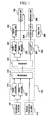
- FIG. 1 is a block diagram schematically illustrating an apparatus for providing advertisements on digital TV according to an embodiment of the present invention.
- the advertisement providing apparatus of the present invention comprises a broadcast program 100, a system information providing unit 110 for providing system information ("SI"), a data transmitting unit 200, a data receiving unit 300, an output unit 400 for outputting audio signals, an input unit 500, a memory unit 600, a display unit 700 and a control unit 800.
- SI system information
- the data transmitting unit 200 includes audio and video encoders 210 and 220 for encoding audio and video data for the broadcast program 100, respectively, and a multiplexer 230 for transmitting the encoded audio and video data and the SI data in the form of a MPEG-2 stream over satellite, terrestrial, cable broadcasts, and the like.
- the data receiving unit 300 includes a separator 310 for separating the audio and video data and the SI data from the MPEG-2 stream transmitted by the multiplexer 230 and sending the separated data, audio and video decoders 320 and 330 for decoding the encoded audio and video data and outputting the decoded data, and a SI processor 340 for processing the SI data.
- the SI processor 340 extracts channel information and advertisement data from the SI data transmitted from the separator 310.
- the SI data refer to additional service information other than the audio and video data.
- the SI data can be understood as detailed information about the broadcast programs (for example, channel number, channel name, program title, date/time, playing time and recording time), advertisement data (for example, simple text advertisements and living information), and the like.
- the input unit 500 recognizes commands issued in response to operations of the user for respective input devices and receives the recognized commands.
- the memory unit 600 functions to store the channel information and advertisement data extracted by the SI processor 340 and provide the desired channel information and advertisement data at the request of the control unit 800 for the channel information and advertisement data when a user selects a new channel.
- the display unit 700 displays the data received from the data receiving unit 300. More specifically, the display unit 700 causes the channel information and advertisement data to be simultaneously displayed at a specific location on screen when the user selects a new channel, and then causes them to disappear after a predetermined period of time.
- the control unit 800 controls the operation of a digital TV. More specifically, the control unit 800 causes both the broadcast signals received in the data receiving unit 300 and the channel information and advertisement data when the user selects a new channel to be displayed on the screen and also causes the channel information and advertisement data extracted by the SI processor 340 to be stored in the memory unit 600.
- the present invention may further comprise an additional POD (Point of Deployment) to allow the broadcast data transmitted from a broadcast station to be delivered to the data receiving unit 300. More specifically, the POD receives and decrypts the broadcast data that have been encrypted and transmitted by a broadcast station. Then, the POD itself is encrypted relative to the decrypted broadcast data and sends the encrypted data to the data receiving unit 300, thereby allowing only the user with the specific POD to view the relevant broadcast data.
- POD Point of Deployment
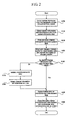
- FIG. 2 is a flowchart schematically illustrating a method for providing advertisements on digital TV in accordance with the present invention.
- audio and video data from the broadcast programs are encoded by the audio and video encoders 210 and 220, respectively, and the encoded audio and video data and the SI data are then transmitted in the form of a stream by the multiplexer 230.
- the SI data include the VCT, and the advertisements are transmitted as embedded in the "short_name" and "long_name" fields within the VCT.
- the broadcast station name, classification code and advertisement texts are transmitted as embedded in the name fields within the VCT, or the advertisement data are transmitted as embedded in a configured advertisement-information-table.
- the separator 310 separates the audio and video data and the SI data, and then transmits the audio data, video data and SI data to the audio decoder 320, video decoder 330, and SI data processor 340, respectively.
- the transmitted encoded audio and video data are decoded via the audio and video decoders 320 and 330, respectively, and the channel information and advertisement data are extracted from the transmitted SI data by the SI data processor 340 (S100 and S110). Subsequently, the extracted channel information and advertisement data are stored in the memory unit 600 (S120).
- the input unit 500 receives input signals produced according to the user's selection and sends them to the control unit 800. Subsequently, the control unit 800 requests the memory unit 600 to search for channel information on the selected channel (for example, channel number, channel name, and the like) and the advertisement data (S130).
- channel information on the selected channel for example, channel number, channel name, and the like
- advertisement data for example, channel number, channel name, and the like
- control unit 800 delivers the searched desired channel information and the advertisement data to the display unit 700, which in turn causes the received channel information and advertisement data to be displayed on the screen (S140 and S150).
- control unit 800 requests the data receiving unit 300 to send the SI data and extracts the desired channel information from the received SI data (S170 and S180), and then displays the extracted channel information and advertisement data on the screen.
- the displayed channel information and advertisement data will disappear after a predetermined period of time (for example, about 3 to 5 seconds) (S160).
- a predetermined period of time for example, about 3 to 5 seconds
- the channel information and advertisement data are simultaneously displayed upon the channel change, and the displayed channel information and advertisement data simultaneously disappear after the predetermined period of time.
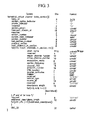
- FIG. 3 is a diagram illustrating bit stream syntax of the general VCT for terrestrial applications, which is specified in A/65.
- the basic information contained in the VCT table includes Transport Stream ID, channel number (major and minor), short channel name, carrier frequency, program number, and the like, whereas the additional information is contained in a VCT descriptor.
- a table identifier "table_id” for the VCT has a value of 0xC8 and the PID for the VCT has a value of 0x1FFB.
- Terms “version_number”, “section_number”, and “last_section_number” represent the version number of the VCT, the number of the VCT section, and the number of the last section of the complete VCT, respectively.
- a term “num_channels_in_section” specifies the total number of virtual channels present in the VCT section.
- short_name in an iteration statement of a 'for' loop represents the name of virtual channel
- major_channel_number represents the 'major' channel number associated with the virtual channel defined in the iteration statement.
- the respective virtual channels should be associated with the major and minor channel numbers which act as a user reference number for the relevant virtual channel.
- program_number is used to reference the virtual channel in which MPEG-2 PAT (Program Association Table) and PMT (Program Map Table) are defined, and is equal to a program number in the PAT/PMT.
- the PAT describes the components of the program corresponding to each program number, which indicates the PID of a transport packet for carrying the PMT.
- the PMT describes the program identification number, the list of the PIDs of the transport packet in which the individual bit streams including video and audio data of the program are carried, and the other related information.
- source_id represents a program source associated with the relevant virtual channel.
- a source refers to a specific source such as a video, text, data or audio source.
- the value of "source_id” will be unique within the Transport Stream that carries the VCT.
- the term “descriptor_length” represents the total length of the descriptor for the relevant virtual channel
- the term “additional_descriptor_length” represents the total length of all the accompanying VCT descriptors. That is, the VCT carries data for each of the virtual channels through the iteration statement of the 'for' loop.
- FIG. 4 is a diagram illustrating the bit stream syntax of the VCT according to an embodiment of the present invention, in which the advertisement information table is inserted in the bit stream syntax of the VCT.
- the advertisement data are incorporated into the iteration statement of the 'for' loop, which carries data of the virtual channels, in the general VCT described in Figures. 3.
- the "version_number” represents the version number of the VCT
- the “section_number” represents the number of the VCT section
- the “last_section_number” specifies the number of the last section of the complete VCT.
- a term “num_advertisement_in_section” specifies the number of all the advertisements present in the VCT section.
- advertisement_length defined in the iteration statement of the 'for' loop represents the total length of the advertisement
- descriptor_length represents a total length of the descriptor for the desired advertisement.
- the advertisements are repeatedly displayed as many times as the length specified in the iteration statement of the 'for' loop.
- the present invention is configured in such a manner that the advertisement data are displayed together with the channel information by inserting the advertisement data into the bit stream syntax of the VCT.
- the advertisements can be provided to the user even in a short period of time.
- any advertisement text and living information can be advantageously provided to the user without offending the user. Therefore, there is an advantage in that the user can obtain some useful information from the advertisements and living information displayed.
- spot advertisement can be provided for a short period of time while the channel information is displayed, there is another advantage in that the broadcast service provider can make additional profit through the spot advertisement.
Landscapes
- Engineering & Computer Science (AREA)
- Multimedia (AREA)
- Signal Processing (AREA)
- Computer Security & Cryptography (AREA)
- Business, Economics & Management (AREA)
- Marketing (AREA)
- Two-Way Televisions, Distribution Of Moving Picture Or The Like (AREA)
Abstract
Description
- The present invention relates to an apparatus and method for providing advertisements on digital TV. More particularly, the present invention relates to an apparatus and method for providing advertisements on digital TV, wherein when a user selects a new channel, advertisement data can be displayed on the screen together with information on the new channel as changed.
- To provide advertisements on digital broadcast TV, a method for providing advertisements using audio/video data has been heretofore proposed. In such a case, however, since the volume of data is very large, the transmission of data may be delayed due to the transmission load. As a result, there is a problem in that the advertisements cannot be rapidly displayed on the screen of a user.
- Further, another method for providing specific advertisements that have been beforehand determined depending on the channel the user views has been also disclosed. In this case, it depends on the channel selection by the user whether the specific advertisements are provided. Therefore, there is another problem in that the advertisements cannot be effectively provided to the user, since the previously determined advertisement is not displayed when the user does not select a specific channel.
- On the other hand, in order to provide TV viewers with better service, digital broadcast TV offers viewers currently broadcast service and event information by transmitting additional system information as well as basic MPEG-2 (Moving Picture Experts Group - 2) audio/video data to the viewers.
- The present invention is conceived to solve the aforementioned problems.
- According to the present invention there is provided an apparatus and method as set forth in the appended claims. Preferred features of the invention will be apparent from the dependent claims, and the description which follows.
- According to an aspect of the present invention there is provided an apparatus and method for providing advertisements on digital TV wherein the channel information and advertisement data are displayed on the screen of the digital TV when a user selects a new channel as changed.
- According to another aspect of the present invention there is provided an apparatus and method for providing advertisements on digital TV wherein the channel information and advertisement data are displayed on the screen of the digital TV by using system information (SI) data containing advertisement data, when a user selects a new channel as changed.
- According to another aspect of the present invention, there is provided an apparatus for providing advertisements on digital TV, which comprises a system information processing unit for receiving system information data transmitted by a broadcast station and extracting channel information and advertisement data from the received system information data, and a display unit for displaying the extracted channel information and advertisement data.
- According to another aspect of the present invention, there is also provided a method for advertisements on digital TV, which comprises the steps of receiving system information data transmitted by a broadcast station, extracting channel information and advertisement data from the received SI data and storing the extracted channel information and advertisement data, and displaying the stored channel information and advertisement data on screen when a user changes channels.
- For a better understanding of the invention, and to show how embodiments of the same may be carried into effect, reference will now be made, by way of example, to the accompanying diagrammatic drawings in which:
- Figure 1 is a block diagram schematically illustrating an apparatus for providing advertisements on digital TV in accordance with an embodiment of the present invention;
- Figure 2 is a flowchart schematically illustrating a method for providing advertisements on digital TV in accordance with an embodiment of the present invention;
- Figure 3 is a diagram illustrating a bit stream syntax of a general VCT (Virtual Channel Table) for terrestrial applications; and
- Figure 4 is a diagram illustrating the bit stream syntax of the VCT with an advertisement information table applied thereto in accordance with an embodiment of the present invention.
-
- First, system information data will be briefly described. The PSIP (Program and System Information Protocol) has been proposed as one of the ATSC (Advanced Television Systems Committee) standards for digital broadcast TV. The PSIP integrates electronic program guide (hereinafter referred to as "EPG") and system information (SI).
- More specifically, the PSIP is composed of various tables so that the A/V data formed in MPEG-2 video and AC-3 audio formats can be received/transmitted and information about the channels of respective broadcasting stations and the programs in the channels can be transmitted. Further, the PSIP can support a main function of providing A/V services for the desired broadcast through the channel selection and an additional function of providing EPGs for the desired broadcast programs, i.e., broadcast guide services.
- At this time, channel information for use in channel selection and information on the packet identification number (PID) for receiving the A/V data are transmitted via a Virtual Channel Table (hereinafter, referred to as "VCT"), whereas EPG information about the broadcast programs of the respective channels is transmitted via an Event Information Table (EIT). Moreover, the PSIP includes a System Time Table (STT) for the time information, a Rating Region Table (RRT) for transmitting program rating information on geographical regions and program review councils, an Extended Text Table for providing additional descriptions on the channels and broadcast programs, a Master Guide Table (MGT) for managing the versions of tables and the PID, and the like. Hereinafter, an exemplary embodiment of the present invention will be described in detail with reference to the accompanying drawings.
- Figures. 1 is a block diagram schematically illustrating an apparatus for providing advertisements on digital TV according to an embodiment of the present invention. Referring to this figure, the advertisement providing apparatus of the present invention comprises a
broadcast program 100, a systeminformation providing unit 110 for providing system information ("SI"), adata transmitting unit 200, adata receiving unit 300, anoutput unit 400 for outputting audio signals, aninput unit 500, amemory unit 600, adisplay unit 700 and acontrol unit 800. - The
data transmitting unit 200 includes audio andvideo encoders broadcast program 100, respectively, and amultiplexer 230 for transmitting the encoded audio and video data and the SI data in the form of a MPEG-2 stream over satellite, terrestrial, cable broadcasts, and the like. - The
data receiving unit 300 includes aseparator 310 for separating the audio and video data and the SI data from the MPEG-2 stream transmitted by themultiplexer 230 and sending the separated data, audio andvideo decoders SI processor 340 for processing the SI data. Here, theSI processor 340 extracts channel information and advertisement data from the SI data transmitted from theseparator 310. The SI data refer to additional service information other than the audio and video data. For example, the SI data can be understood as detailed information about the broadcast programs (for example, channel number, channel name, program title, date/time, playing time and recording time), advertisement data (for example, simple text advertisements and living information), and the like. - The
input unit 500 recognizes commands issued in response to operations of the user for respective input devices and receives the recognized commands. - The
memory unit 600 functions to store the channel information and advertisement data extracted by theSI processor 340 and provide the desired channel information and advertisement data at the request of thecontrol unit 800 for the channel information and advertisement data when a user selects a new channel. - The
display unit 700 displays the data received from thedata receiving unit 300. More specifically, thedisplay unit 700 causes the channel information and advertisement data to be simultaneously displayed at a specific location on screen when the user selects a new channel, and then causes them to disappear after a predetermined period of time. - The
control unit 800 controls the operation of a digital TV. More specifically, thecontrol unit 800 causes both the broadcast signals received in thedata receiving unit 300 and the channel information and advertisement data when the user selects a new channel to be displayed on the screen and also causes the channel information and advertisement data extracted by theSI processor 340 to be stored in thememory unit 600. - In the meantime, the present invention may further comprise an additional POD (Point of Deployment) to allow the broadcast data transmitted from a broadcast station to be delivered to the
data receiving unit 300. More specifically, the POD receives and decrypts the broadcast data that have been encrypted and transmitted by a broadcast station. Then, the POD itself is encrypted relative to the decrypted broadcast data and sends the encrypted data to thedata receiving unit 300, thereby allowing only the user with the specific POD to view the relevant broadcast data. - Figures. 2 is a flowchart schematically illustrating a method for providing advertisements on digital TV in accordance with the present invention. First, if broadcast programs and SI data are received from a broadcast station, audio and video data from the broadcast programs are encoded by the audio and
video encoders multiplexer 230. Here, the SI data include the VCT, and the advertisements are transmitted as embedded in the "short_name" and "long_name" fields within the VCT. In other words, the broadcast station name, classification code and advertisement texts are transmitted as embedded in the name fields within the VCT, or the advertisement data are transmitted as embedded in a configured advertisement-information-table. - Thereafter, the
separator 310 separates the audio and video data and the SI data, and then transmits the audio data, video data and SI data to theaudio decoder 320,video decoder 330, andSI data processor 340, respectively. - The transmitted encoded audio and video data are decoded via the audio and
video decoders - If the user changes channels using the input device, the
input unit 500 receives input signals produced according to the user's selection and sends them to thecontrol unit 800. Subsequently, thecontrol unit 800 requests thememory unit 600 to search for channel information on the selected channel (for example, channel number, channel name, and the like) and the advertisement data (S130). - If it is determined from the search result that the desired channel information is present in the
memory unit 600, thecontrol unit 800 delivers the searched desired channel information and the advertisement data to thedisplay unit 700, which in turn causes the received channel information and advertisement data to be displayed on the screen (S140 and S150). - If the desired channel information is not stored in the
memory unit 600, thecontrol unit 800 requests thedata receiving unit 300 to send the SI data and extracts the desired channel information from the received SI data (S170 and S180), and then displays the extracted channel information and advertisement data on the screen. - The displayed channel information and advertisement data will disappear after a predetermined period of time (for example, about 3 to 5 seconds) (S160). Here, the channel information and advertisement data are simultaneously displayed upon the channel change, and the displayed channel information and advertisement data simultaneously disappear after the predetermined period of time.
- Figures. 3 is a diagram illustrating bit stream syntax of the general VCT for terrestrial applications, which is specified in A/65. The basic information contained in the VCT table includes Transport Stream ID, channel number (major and minor), short channel name, carrier frequency, program number, and the like, whereas the additional information is contained in a VCT descriptor.
- As illustrated in this figure, a table identifier "table_id" for the VCT has a value of 0xC8 and the PID for the VCT has a value of 0x1FFB. Terms "version_number", "section_number", and "last_section_number" represent the version number of the VCT, the number of the VCT section, and the number of the last section of the complete VCT, respectively. Further, a term "num_channels_in_section" specifies the total number of virtual channels present in the VCT section.
- Furthermore, the term "short_name" in an iteration statement of a 'for' loop represents the name of virtual channel, and a term "major_channel_number" represents the 'major' channel number associated with the virtual channel defined in the iteration statement. The respective virtual channels should be associated with the major and minor channel numbers which act as a user reference number for the relevant virtual channel.
- The term "program_number" is used to reference the virtual channel in which MPEG-2 PAT (Program Association Table) and PMT (Program Map Table) are defined, and is equal to a program number in the PAT/PMT. Here, the PAT describes the components of the program corresponding to each program number, which indicates the PID of a transport packet for carrying the PMT. The PMT describes the program identification number, the list of the PIDs of the transport packet in which the individual bit streams including video and audio data of the program are carried, and the other related information.
- The term "source_id" represents a program source associated with the relevant virtual channel. Here, a source refers to a specific source such as a video, text, data or audio source. The value of "source_id" will be unique within the Transport Stream that carries the VCT. Further, the term "descriptor_length" represents the total length of the descriptor for the relevant virtual channel, and the term "additional_descriptor_length" represents the total length of all the accompanying VCT descriptors. That is, the VCT carries data for each of the virtual channels through the iteration statement of the 'for' loop.
- Figures. 4 is a diagram illustrating the bit stream syntax of the VCT according to an embodiment of the present invention, in which the advertisement information table is inserted in the bit stream syntax of the VCT.
- In the exemplary embodiment of the present invention, the advertisement data are incorporated into the iteration statement of the 'for' loop, which carries data of the virtual channels, in the general VCT described in Figures. 3.
- Referring to this figure, the "version_number" represents the version number of the VCT, the "section_number" represents the number of the VCT section, and the "last_section_number" specifies the number of the last section of the complete VCT. In addition, a term "num_advertisement_in_section" specifies the number of all the advertisements present in the VCT section.
- The term "advertisement_length" defined in the iteration statement of the 'for' loop represents the total length of the advertisement, and the term "descriptor_length" represents a total length of the descriptor for the desired advertisement. Here, the advertisements are repeatedly displayed as many times as the length specified in the iteration statement of the 'for' loop.
- Consequently, the present invention is configured in such a manner that the advertisement data are displayed together with the channel information by inserting the advertisement data into the bit stream syntax of the VCT. Thus, the advertisements can be provided to the user even in a short period of time.
- According to the present invention so configured, since the advertisements and channel information are displayed on the screen for a short period of time when the user changes channels, any advertisement text and living information can be advantageously provided to the user without offending the user. Therefore, there is an advantage in that the user can obtain some useful information from the advertisements and living information displayed.
- Further, since a spot advertisement can be provided for a short period of time while the channel information is displayed, there is another advantage in that the broadcast service provider can make additional profit through the spot advertisement.
- Furthermore, there is a further advantage in that a variety of advertisements can be provided to the user merely by adding the advertisement data to the SI data.
- Although a few preferred embodiments have been shown and described, it will be appreciated by those skilled in the art that various changes and modifications might be made without departing from the scope of the invention, as defined in the appended claims.
- Attention is directed to all papers and documents which are filed concurrently with or previous to this specification in connection with this application and which are open to public inspection with this specification, and the contents of all such papers and documents are incorporated herein by reference.
- All of the features disclosed in this specification (including any accompanying claims, abstract and drawings), and/or all of the steps of any method or process so disclosed, may be combined in any combination, except combinations where at least some of such features and/or steps are mutually exclusive.
- Each feature disclosed in this specification (including any accompanying claims, abstract and drawings) may be replaced by alternative features serving the same, equivalent or similar purpose, unless expressly stated otherwise. Thus, unless expressly stated otherwise, each feature disclosed is one example only of a generic series of equivalent or similar features.
- The invention is not restricted to the details of the foregoing embodiment(s). The invention extends to any novel one, or any novel combination, of the features disclosed in this specification (including any accompanying claims, abstract and drawings), or to any novel one, or any novel combination, of the steps of any method or process so disclosed.
Claims (13)
- An apparatus for providing advertisements on digital TV, comprising:a system information processing unit (340) for receiving system information data transmitted by a broadcast station and extracting channel information and advertisement data from the received system information data; anda display unit (700) for displaying the extracted channel information and advertisement data.
- The apparatus as claimed in claim 1, further comprising:a memory unit (600) for storing the channel information and advertisement data extracted by the system information processing unit; anda control unit (800) for, when a user selects a new channel, causing the stored advertisement data and information on the new channel to be displayed.
- The apparatus as claimed in claim 1 or claim 2, further comprising an input unit (500) for receiving a signal that is generated when a user selects a new channel.
- The apparatus as claimed in any preceding claim, wherein the advertisement data are displayed when a user selects a new channel.
- The apparatus as claimed in any preceding claim, wherein the advertisement data are displayed simultaneously with the channel information.
- The apparatus as claimed in any preceding claim, wherein if desired channel information is stored in the memory unit (600), the channel information stored in the memory unit (600) is displayed; 'or if it is not stored in the memory unit (600), the channel information obtained by requesting a data receiving unit (300) to receive the system information data and extract desired channel information from the received system information data is displayed.
- A method for providing advertisements on digital TV, comprising the steps of:receiving system information data transmitted by a broadcast station;extracting channel information and advertisement data from the received system information data and storing the extracted channel information and advertisement data; anddisplaying the stored channel information and advertisement data on a screen when a user selects a new channel.
- The method as claimed in claim 7, wherein the advertisement data are displayed simultaneously with the channel information.
- The method as claimed in claim 7 or claim 8, wherein the displaying step comprises the steps of:searching a memory unit (600) for desired channel information when a user selects a new channel;searching the memory unit (600) for the advertisement data corresponding to the searched channel information; anddisplaying the search channel information and advertisement data on the screen.
- The method as claimed in claim 9, wherein the displaying step comprises the steps of:requesting a data receiving unit (300) to receive the system information data if desired channel information is not stored in the memory unit (600); andextracting the channel information from the received system information data and displaying the desired channel information.
- A method for providing advertisements on digital TV, comprising the steps of:generating system information data with advertisement data contained therein; andmultiplexing and transmitting the generated system information data and encoded audio and video data.
- The method as claimed in claim 11, wherein the system information data are constructed in compliance with a standard specification.
- The method as claimed in claim 12, wherein the advertisement data are inserted into a virtual channel table in the system information data.
Applications Claiming Priority (2)
| Application Number | Priority Date | Filing Date | Title |
|---|---|---|---|
| KR1020030052843A KR100568230B1 (en) | 2003-07-30 | 2003-07-30 | Apparatus and method for providing advertising in digital TV |
| KR2003052843 | 2003-07-30 |
Publications (1)
| Publication Number | Publication Date |
|---|---|
| EP1503589A1 true EP1503589A1 (en) | 2005-02-02 |
Family
ID=33536461
Family Applications (1)
| Application Number | Title | Priority Date | Filing Date |
|---|---|---|---|
| EP04254391A Withdrawn EP1503589A1 (en) | 2003-07-30 | 2004-07-22 | Apparatus and method for providing advertisements on digital tv |
Country Status (4)
| Country | Link |
|---|---|
| US (1) | US20050028202A1 (en) |
| EP (1) | EP1503589A1 (en) |
| KR (1) | KR100568230B1 (en) |
| CN (1) | CN1585466A (en) |
Cited By (5)
| Publication number | Priority date | Publication date | Assignee | Title |
|---|---|---|---|---|
| WO2006096021A1 (en) * | 2005-03-10 | 2006-09-14 | Electronics And Telecommunications Research Institute | Pod identification method in digital content providing system |
| EP2018022A2 (en) | 2007-07-19 | 2009-01-21 | Lg Electronics Inc. | Broadcast receiver, broadcast data transmitting method and broadcast data receiving method |
| EP1737242A3 (en) * | 2005-06-20 | 2009-12-02 | LG Electronics Inc. | Digital television signal, method of processing a digital television signal in a transmitter and a receiver, and receiver |
| EP1868307A3 (en) * | 2006-05-04 | 2011-03-09 | LG Electronics Inc. | Transmitting and outputting content triggered by an event at the receiver |
| EP1848133A3 (en) * | 2006-04-21 | 2011-05-25 | Lg Electronics Inc. | Apparatus and method for transmitting a broadcast signal, method of reproducing a broadcast signal and apparatus for receiving a broadcast signal |
Families Citing this family (19)
| Publication number | Priority date | Publication date | Assignee | Title |
|---|---|---|---|---|
| KR100727063B1 (en) * | 2005-02-25 | 2007-06-12 | 주식회사 케이티프리텔 | Self advertisement output method during broadcasting service and user terminal performing the method |
| US8352979B2 (en) * | 2005-04-22 | 2013-01-08 | At&T Intellectual Property I, L.P. | Methods and apparatus to broadcast advanced television system committee video in switched digital video systems |
| KR20070016273A (en) * | 2005-08-02 | 2007-02-08 | 엘지전자 주식회사 | Digital broadcasting terminal and channel information display method |
| CN101098445B (en) * | 2006-06-30 | 2010-05-12 | 株式会社日立制作所 | TV program receiving device and method for receiving and playing TV program |
| KR100831959B1 (en) * | 2006-07-31 | 2008-05-23 | 티유미디어 주식회사 | Digital broadcasting system and method for providing a channel switching screen |
| KR100864847B1 (en) * | 2006-08-18 | 2008-10-23 | 주식회사 알티캐스트 | Advertising system and method for digital broadcasting |
| KR20080045843A (en) * | 2006-11-21 | 2008-05-26 | 삼성전자주식회사 | Method and apparatus for providing digital multimedia broadcasting service in portable terminal |
| KR100851317B1 (en) * | 2007-04-02 | 2008-08-08 | 티유미디어 주식회사 | Digital broadcasting system and method |
| CN101662614B (en) * | 2008-08-26 | 2012-11-21 | 海尔集团公司 | Advertisement inserting method and advertisement inserting control device of digital program |
| WO2014022403A1 (en) * | 2012-07-30 | 2014-02-06 | Specific Media Llc | Volume bar advertising |
| CN105100909A (en) * | 2014-05-05 | 2015-11-25 | 四达时代通讯网络技术有限公司 | Tween interaction-type ad placement method and device based on intelligent terminal |
| US10547903B2 (en) * | 2015-10-26 | 2020-01-28 | Arris Enterprises, Inc. | Advertisement display based on channel switch |
| CN105491430A (en) * | 2015-12-01 | 2016-04-13 | 兴天通讯技术有限公司 | Smart television with offline self-processing function |
| WO2017120900A1 (en) * | 2016-01-15 | 2017-07-20 | 常平 | Method for pushing information when switching channels, and voice-controlled television |
| CN105979292A (en) * | 2016-06-07 | 2016-09-28 | 无锡天脉聚源传媒科技有限公司 | Method and device for presenting number of advertisement in program channel |
| CN106792000A (en) * | 2016-12-09 | 2017-05-31 | 深圳市纽格力科技有限公司 | Digital television advertisement playing method and system |
| CN106791940B (en) * | 2016-12-21 | 2020-02-14 | 北京四达时代软件技术股份有限公司 | Advertisement content display method and system |
| CN110310592A (en) * | 2019-06-28 | 2019-10-08 | 杭州勇电照明有限公司 | A kind of Intelligent LED lamp control system |
| KR102318660B1 (en) * | 2020-02-28 | 2021-10-28 | (주)재플 | Broadcast receiving apparatus, method and system for providing video zapping advertisement thereof |
Citations (6)
| Publication number | Priority date | Publication date | Assignee | Title |
|---|---|---|---|---|
| EP0822718A1 (en) * | 1992-12-09 | 1998-02-04 | Discovery Communications, Inc. | Network controller for cable television delivery systems |
| WO2000021287A1 (en) * | 1998-10-02 | 2000-04-13 | Starsight Telecast, Inc. | Method and apparatus for supplying video clips to viewer terminals |
| WO2000040015A1 (en) * | 1998-12-28 | 2000-07-06 | Thomson Licensing S.A. | Method for selecting a program displayed in an advertisement in an application software program |
| WO2000048395A1 (en) * | 1999-02-08 | 2000-08-17 | Koninklijke Philips Electronics N.V. | Method and apparatus for displaying an electronic program guide |
| US20010052124A1 (en) * | 1998-10-28 | 2001-12-13 | Samsung Electronics Co., Ltd. | Method and apparatus for displaying channel information and selecting channel on digital television |
| US20030084449A1 (en) * | 2001-09-19 | 2003-05-01 | Chane Lena D. | Interactive user interface for television applications |
Family Cites Families (5)
| Publication number | Priority date | Publication date | Assignee | Title |
|---|---|---|---|---|
| US5900905A (en) * | 1996-06-05 | 1999-05-04 | Microsoft Corporation | System and method for linking video, services and applications in an interactive television system |
| US6564379B1 (en) * | 1998-04-30 | 2003-05-13 | United Video Properties, Inc. | Program guide system with flip and browse advertisements |
| US7237251B1 (en) * | 1999-03-02 | 2007-06-26 | Bigband Networks, Inc. | Method and apparatus for using delay time during switching events to display previously stored information elements |
| JP2002232793A (en) * | 2001-01-31 | 2002-08-16 | Funai Electric Co Ltd | Channel tuning apparatus of digital/analog broadcasting receiver and the receiver with the apparatus |
| KR20020078585A (en) * | 2001-04-06 | 2002-10-19 | 엘지전자 주식회사 | Method for transmitting/receiving additional information |
-
2003
- 2003-07-30 KR KR1020030052843A patent/KR100568230B1/en not_active Expired - Fee Related
-
2004
- 2004-07-12 CN CNA2004100635716A patent/CN1585466A/en active Pending
- 2004-07-14 US US10/890,171 patent/US20050028202A1/en not_active Abandoned
- 2004-07-22 EP EP04254391A patent/EP1503589A1/en not_active Withdrawn
Patent Citations (6)
| Publication number | Priority date | Publication date | Assignee | Title |
|---|---|---|---|---|
| EP0822718A1 (en) * | 1992-12-09 | 1998-02-04 | Discovery Communications, Inc. | Network controller for cable television delivery systems |
| WO2000021287A1 (en) * | 1998-10-02 | 2000-04-13 | Starsight Telecast, Inc. | Method and apparatus for supplying video clips to viewer terminals |
| US20010052124A1 (en) * | 1998-10-28 | 2001-12-13 | Samsung Electronics Co., Ltd. | Method and apparatus for displaying channel information and selecting channel on digital television |
| WO2000040015A1 (en) * | 1998-12-28 | 2000-07-06 | Thomson Licensing S.A. | Method for selecting a program displayed in an advertisement in an application software program |
| WO2000048395A1 (en) * | 1999-02-08 | 2000-08-17 | Koninklijke Philips Electronics N.V. | Method and apparatus for displaying an electronic program guide |
| US20030084449A1 (en) * | 2001-09-19 | 2003-05-01 | Chane Lena D. | Interactive user interface for television applications |
Cited By (8)
| Publication number | Priority date | Publication date | Assignee | Title |
|---|---|---|---|---|
| WO2006096021A1 (en) * | 2005-03-10 | 2006-09-14 | Electronics And Telecommunications Research Institute | Pod identification method in digital content providing system |
| EP1737242A3 (en) * | 2005-06-20 | 2009-12-02 | LG Electronics Inc. | Digital television signal, method of processing a digital television signal in a transmitter and a receiver, and receiver |
| EP1848133A3 (en) * | 2006-04-21 | 2011-05-25 | Lg Electronics Inc. | Apparatus and method for transmitting a broadcast signal, method of reproducing a broadcast signal and apparatus for receiving a broadcast signal |
| US8531607B2 (en) | 2006-04-21 | 2013-09-10 | Lg Electronics Inc. | Apparatus for transmitting broadcast signal, method thereof, method of producing broadcast signal and apparatus for receiving broadcast signal |
| EP1868307A3 (en) * | 2006-05-04 | 2011-03-09 | LG Electronics Inc. | Transmitting and outputting content triggered by an event at the receiver |
| EP2018022A2 (en) | 2007-07-19 | 2009-01-21 | Lg Electronics Inc. | Broadcast receiver, broadcast data transmitting method and broadcast data receiving method |
| EP2018022A3 (en) * | 2007-07-19 | 2009-01-28 | Lg Electronics Inc. | Broadcast receiver, broadcast data transmitting method and broadcast data receiving method |
| US8291462B2 (en) | 2007-07-19 | 2012-10-16 | Lg Electronics Inc. | Broadcast receiver, broadcast data transmitting method and broadcast data receiving method |
Also Published As
| Publication number | Publication date |
|---|---|
| CN1585466A (en) | 2005-02-23 |
| KR100568230B1 (en) | 2006-04-07 |
| US20050028202A1 (en) | 2005-02-03 |
| KR20050014275A (en) | 2005-02-07 |
Similar Documents
| Publication | Publication Date | Title |
|---|---|---|
| US20050028202A1 (en) | Apparatus and method for providing advertisements on digital TV | |
| KR101215747B1 (en) | Non-real time services | |
| US9860611B2 (en) | Broadcast service transmitting method, broadcasting service receiving method and broadcast service receiving apparatus | |
| KR100348249B1 (en) | Data architecture of VCT and method for transmit/receiving service information | |
| KR100837580B1 (en) | Transmission method, transmission system and receiving device | |
| CA2692770C (en) | Method of transmitting and receiving a broadcasting signal and an apparatus for receiving a broadcasting signal | |
| CN103975602B (en) | Broadcast service receiving method and broadcast service receiving device | |
| CA2834046C (en) | Method for transmitting a broadcast service, apparatus for receiving same, and method for processing an additional service using the apparatus for receiving same | |
| CN1531346B (en) | System for formatting and processing multimedia program data and program guide information | |
| US20060184965A1 (en) | Method for providing electronic program guide for digital broadcasting | |
| US9723362B2 (en) | Method for transmitting and receiving broadcast service and receiving device thereof | |
| KR101147736B1 (en) | Method and Apparatus for digital data broadcasting | |
| US7057669B2 (en) | Language displaying apparatus for digital TV and method for the same | |
| EP3288277A1 (en) | Broadcast signal transmitting device, broadcast signal receiving device, broadcast signal transmitting method, and broadcast signal receiving method | |
| KR20010082261A (en) | APPLICATION PROGRAMMING INTERFACE FOR ENABLING A DIGITAL Television RECEIVER TO ACCESS SYSTEM INFORMATION IN AN ABSTRACT FORMAT | |
| KR100430997B1 (en) | Digital broadcast receiving device and a method using the same | |
| KR100462899B1 (en) | apparatus and method for display controlling a channel information of electronic program guide | |
| CN101385341B (en) | Broadcast receiving apparatus, method of transmitting/receiving broadcast program information | |
| JP2005516492A (en) | Incorporation of TVAnytimeCRIDS | |
| US20030148734A1 (en) | Methods for broadcasting music and reproducing the broadcasting in digital broadcasting system | |
| KR101325802B1 (en) | Digital Broadcasting Transmitter, Digital Broadcasting Receiver and System and Method for Serving Digital Broadcasting | |
| KR20070013788A (en) | How to arrange channel information using viewership information | |
| JP2004193856A (en) | Interactive data broadcasting system and information providing method | |
| KR101650382B1 (en) | A method for searching/accessing a channel and a digital broadcasting receiver | |
| KR101092443B1 (en) | Method and apparatus for receiving digital broadcasting |
Legal Events
| Date | Code | Title | Description |
|---|---|---|---|
| PUAI | Public reference made under article 153(3) epc to a published international application that has entered the european phase |
Free format text: ORIGINAL CODE: 0009012 |
|
| 17P | Request for examination filed |
Effective date: 20040804 |
|
| AK | Designated contracting states |
Kind code of ref document: A1 Designated state(s): AT BE BG CH CY CZ DE DK EE ES FI FR GB GR HU IE IT LI LU MC NL PL PT RO SE SI SK TR |
|
| AX | Request for extension of the european patent |
Extension state: AL HR LT LV MK |
|
| AKX | Designation fees paid |
Designated state(s): AT BE BG CH CY CZ DE DK EE ES FI FR GB GR HU IE IT LI LU MC NL PL PT RO SE SI SK TR |
|
| 17Q | First examination report despatched |
Effective date: 20090630 |
|
| STAA | Information on the status of an ep patent application or granted ep patent |
Free format text: STATUS: THE APPLICATION IS DEEMED TO BE WITHDRAWN |
|
| 18D | Application deemed to be withdrawn |
Effective date: 20091111 |