EP1503285A1 - Kommunikationssystem und Verfahren - Google Patents
Kommunikationssystem und Verfahren Download PDFInfo
- Publication number
- EP1503285A1 EP1503285A1 EP03291898A EP03291898A EP1503285A1 EP 1503285 A1 EP1503285 A1 EP 1503285A1 EP 03291898 A EP03291898 A EP 03291898A EP 03291898 A EP03291898 A EP 03291898A EP 1503285 A1 EP1503285 A1 EP 1503285A1
- Authority
- EP
- European Patent Office
- Prior art keywords
- rule
- rules
- service
- service request
- characteristic
- Prior art date
- Legal status (The legal status is an assumption and is not a legal conclusion. Google has not performed a legal analysis and makes no representation as to the accuracy of the status listed.)
- Withdrawn
Links
Images

Classifications
-
- G—PHYSICS
- G06—COMPUTING OR CALCULATING; COUNTING
- G06F—ELECTRIC DIGITAL DATA PROCESSING
- G06F9/00—Arrangements for program control, e.g. control units
- G06F9/06—Arrangements for program control, e.g. control units using stored programs, i.e. using an internal store of processing equipment to receive or retain programs
- G06F9/46—Multiprogramming arrangements
- G06F9/50—Allocation of resources, e.g. of the central processing unit [CPU]
- G06F9/5005—Allocation of resources, e.g. of the central processing unit [CPU] to service a request
- G06F9/5027—Allocation of resources, e.g. of the central processing unit [CPU] to service a request the resource being a machine, e.g. CPUs, Servers, Terminals
-
- G—PHYSICS
- G06—COMPUTING OR CALCULATING; COUNTING
- G06F—ELECTRIC DIGITAL DATA PROCESSING
- G06F9/00—Arrangements for program control, e.g. control units
- G06F9/06—Arrangements for program control, e.g. control units using stored programs, i.e. using an internal store of processing equipment to receive or retain programs
- G06F9/46—Multiprogramming arrangements
- G06F9/54—Interprogram communication
-
- H—ELECTRICITY
- H04—ELECTRIC COMMUNICATION TECHNIQUE
- H04L—TRANSMISSION OF DIGITAL INFORMATION, e.g. TELEGRAPHIC COMMUNICATION
- H04L67/00—Network arrangements or protocols for supporting network services or applications
- H04L67/50—Network services
- H04L67/51—Discovery or management thereof, e.g. service location protocol [SLP] or web services
-
- H—ELECTRICITY
- H04—ELECTRIC COMMUNICATION TECHNIQUE
- H04L—TRANSMISSION OF DIGITAL INFORMATION, e.g. TELEGRAPHIC COMMUNICATION
- H04L9/00—Cryptographic mechanisms or cryptographic arrangements for secret or secure communications; Network security protocols
- H04L9/40—Network security protocols
-
- H—ELECTRICITY
- H04—ELECTRIC COMMUNICATION TECHNIQUE
- H04L—TRANSMISSION OF DIGITAL INFORMATION, e.g. TELEGRAPHIC COMMUNICATION
- H04L69/00—Network arrangements, protocols or services independent of the application payload and not provided for in the other groups of this subclass
- H04L69/30—Definitions, standards or architectural aspects of layered protocol stacks
- H04L69/32—Architecture of open systems interconnection [OSI] 7-layer type protocol stacks, e.g. the interfaces between the data link level and the physical level
- H04L69/322—Intralayer communication protocols among peer entities or protocol data unit [PDU] definitions
- H04L69/329—Intralayer communication protocols among peer entities or protocol data unit [PDU] definitions in the application layer [OSI layer 7]
Definitions
- the present invention relates to a data communication system and method and, more particularly, to a system and method for associating a request for a service with an appropriate service in a flexible manner.
- an entity of that network, or a caller can submit a request to a service provider or router for a service to be performed or for routing information to be retrieved and returned.
- a service provider or router for a service to be performed or for routing information to be retrieved and returned.
- a fixed format request is usually used, especially in the case of network PDU type routing.
- a limited, that is, a restrained, property set or action set is made available to respond to the request.
- TCAP Transaction capabilities application part
- AIN advanced intelligent network
- an SCP might use TCAP to query a further SCP to determine the routing number for an 800 number.
- calling codes might be validated using a TCAP query and associated response messages.
- VLR integrated visitor location register
- HLR home location register
- a first aspect of embodiments of the present invention provides a system comprising an analyser to identify at least one characteristic of a self-descriptive service request; and a rule processor to apply at least one rule to the at least one characteristic and to invoke a service associated with the at least one rule in response to applying the rule to the at least one characteristic.
- using embodiments of the present invention provides a developer with significant development flexibility, that is, the developer does not need to establish in advance a fixed set of parameters used to respond to requests for a service. It will be appreciated by those skilled in the art that using the rules provides significant flexibility as compared to static routing or servicing schemes. This allows network entities to distribute calls according to any set of call parameters or criteria and is not restricted to, for example, dealing with telephone calls.
- a network entity or communication system will usually offer a number of services.
- the at least one rule is one of a plurality of rules having respective services and in which the rule application engine comprises means to apply at least selectable rules of the plurality of rules to the at least one characteristic and means to invoke appropriate services of the respective services according to applying the at least selectable rules to the at least one characteristic.
- the plurality of rules have associated priorities governing an order of application of the at least selectable rules by the rule application engine.
- a rule configuration manager for configuring the at least one rule.
- the rule configuration manager is arranged to configure the plurality of rules.
- embodiments of the present invention provide a communication system further comprising a modifier having means to derive the self-descriptive service request, having the at least one characteristic, from a further self-descriptive service request having a respective at least one characteristic.
- the derivation of the self-descriptive service request performed by the modifier is responsive to application of the at least one rule to the respective at least one characteristic of the further self-descriptive service request.
- a further aspect of embodiments of the present invention provides a communication method comprising the step of invoking a service in response to application of a configurable rule set comprising at least one rule to a self-descriptive service request.
- a still further aspect of embodiments of the present invention provides a communication system comprising means to invoke a service in response to application of a configurable rule set comprising at least one rule associated with the service, to a self-descriptive service request.
- a further aspect of embodiments of the present invention provides a communication system comprising a receiver for receiving a service request, having a plurality of properties; an analyser for identifying the plurality of properties of the received service request and a configurable rule application processor for subjecting the identified plurality of properties to a number of configurable rules, each associated with at least one service, to identify an association between at least one of the rules and at least one property of the identified plurality of properties; and an invocation mechanism for invoking a service corresponding to any such identified rule.
- embodiments provide a communication system in which the configurable rule application processor comprises means to output an indication of a failure to identify a predeterminable association between at least one of the rules and at least one property of the identified plurality of properties.
- Embodiments also provide a communication system further comprising an assessor to assess the service request in response to the output containing an indication of the failure; means to create at least one further rule having an association with at least one of the properties of the service request and means for making the at least one further rule available to the configurable rule application processor for use in processing service requests.
- the rules can be updated to accommodate new objects, that is, new service requests for which a match with one of the existing rules could not be found. It will be appreciated that this gives embodiments of the present invention great flexibility in that new requests for previously unsupported services can be readily accommodated.
- Embodiments provide a communication system in which the invocation mechanism comprises means to create a modified service request having a further property associated with the service request; and an iteration mechanism for subjecting the modified service request to further processing.
- embodiments provide a communication system in which the iteration mechanism comprises means to forward the modified service request to at least one of the receiver, the analyser and the configuration rule application processor.
- Preferred embodiments provide a communication system further comprising means to create, and associate, at least one further property with the identified properties of the service request and means to output the at least one further property for further processing by at least the configurable rule application processor.
- the means to output the at least one further property comprises means to output the at least one further property together with at least one of the identified properties of the plurality of properties of the service request.
- rules that might have been previously inapplicable might become applicable in light of the newly generated characteristic or property, when that property, either alone or together with previously identified characteristics or properties, is subjected to the rules by the rule processor.
- Embodiments provide a communication system in which the means to output the at least one further property comprises means to output the at least one further property together with at least a number of the identified properties.
- the iteration mechanism comprises means to forward newly generated characteristics or a property to the configurable rule application processor for further processing.
- Preferred embodiments provide a communication system in which the configurable rules are prioritised such that the identified properties are subjected to the rules according to the priority of the rules.
- a further aspect of embodiments of the present invention provides a communication method for processing a service request having a plurality of characteristics; the method comprising the step of identifying at least one of the plurality of characteristics; and subjecting the at least one identified characteristic to a plurality of rules to identify an association between at least one rule of the plurality of rules and the at least one identified characteristic; and invoking a service associated with the at least one rule of the plurality of rules.
- Preferred embodiments provide a communication method further comprising the step of modifying the plurality of rules, or at least one of the plurality of rules.
- the step of modifying comprises the step of modifying the plurality of rules in response to the at least one identified characteristic.
- Embodiments provide a communication method in which the step of modifying the plurality of rules comprises the steps of creating a further rule in response to the at least one identified characteristic and adding the further rule to the plurality of rules.
- Embodiments provide a communication method further comprising the step of creating a further characteristic and subjecting at least the further characteristic to at least one rule of the plurality of rules to identify a predeterminable association between the at least one rule and the further characteristic.
- embodiments provide a communication method further comprising the step of subjecting the further characteristic and at least one of the identified characteristic to the plurality of rules to identify an association between at least one of the plurality of rules and the further characteristic and the at least one of the identified characteristic.
- a still further aspect of embodiments of the present invention provides a computer program comprising computer program code means to implement a system or method as described or claimed in this application.
- a yet further aspect of embodiments of the present invention provides a computer program product comprising computer readable storage storing such a computer program.
- the medium might take the form of an optical or magnetic storage medium or, for example, a device such as a chip or other programmable device.
- a further aspect of embodiments of the present invention provides a communication system for responding to a service request, having associated request properties or characteristics, by providing, or providing access to, a corresponding service of a plurality of services; the communication system comprising an introspection entity arranged to identify the request properties or characteristics and to forward data associated with the identified request properties or characteristics to a configurable rule application processor comprising a set of, preferably, prioritised rules used to compare or match the identified request characteristics or properties with an appropriate or corresponding service.
- a communication system 100 comprising a network entity 102 that communicates with a service platform or other network entity 104 via a communication network 106.
- the network entity 102 uses the service platform 104 to obtain communication or network services.
- the services are provided by respective service provider entities 108 to 112 that form part of, or are accessible via, the service platform 104.
- a request for a service 114 is forwarded to the service platform 104 usually via an appropriate service specific line of a number of such service specific lines 116.
- the service platform 104 comprises, for example, a call code identifier 118 for identifying the calling code of the incoming service request 114.
- the call code identifier 118 uses a table 120 that maps a number of call codes 122 to corresponding service identifiers 124.
- the service identifiers 124 are used to identify the available services 108 to 112.
- the call code identifier 118 having found a match for the identified call code (not shown) in the table 120, uses the corresponding service identifier 124 to provide the requested service to the network entity 102.
- the network entity 102 might be any element or entity of a communication network or system that requires a service to be made available or to be performed by another network element or entity. Therefore, the network entity 102 might comprise, for example, a telephone handset using DTMF tones to obtain a corresponding service.
- the services performed or accessed by the service platform 104 might comprise, for example, DTMF tone processing and detection, voice recognition or response services, provision of voice menus or any other network, routing, provision of a voice portal, network announcements or other network or data processing services.
- call code identifier 118 can straight forwardly perform or respond to a service request 114 since the service request has a fixed format and the data needed to identify the appropriate service can be readily extracted from the service request.
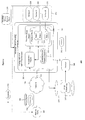
- the communication system 200 comprises a network entity 202 that can communicate with an advanced service routing component 203 via a network 206 using a service request 208 having at least one discoverable characteristic or property, and, preferably a number of discoverable properties or characteristics 210.
- the service request in preferred embodiments, takes the form of a Java object.
- the service request might take other forms such as, for example, an XML file or other self-descriptive element or data entity, that is, some other element or entity whose properties are discoverable.
- the advanced service routing component 203 might provide any, or selected services, of the services described above in relation to the service platform 104.
- the advanced service routing component 203 comprises a configurable rule application processor 204 having an introspection engine 212 that performs introspection upon the service request 208 to identify its properties or characteristics 210 or at least one such property or characteristic.
- the introspection engine 212 in preferred embodiments, is realised using the Java class Introspector and represents a realisation of at least part of an analyser.
- the identified service request properties or characteristics 214 are processed by a rule application engine 216 of the configurable rule application processor 204.
- the rule application engine 216 comprises a number of prioritised rules 218. For the purposes of illustration, only three rules are shown; namely, a first rule 220, a second rule 222 and an N th rule 224. Each of the rules 220 to 224 are associated with services 226.
- the rules 218 represent an embodiment of a configurable rule set, that is, a set of rules for which at least one rule can be configured or modified or for which the set of rules can be configured or modified. For example, a new rule can be added to the set of rules 218, a rule can be removed from the set of rules, an existing rule can be modified, or, alternatively or additionally, the order of application of the rules can be modified.
- each rule is shown as being associated with a single service. However, embodiments can be realised in which each rule is associated with more than one service and in which a single service is associated with more than one rule.
- the first rule 220 is associated with a first service 228, the second rule 222 is associated with a second service 230 and the N th rule 224 is associated with an N th service 232.
- Each, or selectable services, of the services 228 to 232 can perform a function on behalf of the network entity 202 and, optionally, provide a response 234 to the service request 208.
- the configurable rule application processor 204 and the rule processing engine 216 represent a realisation of at least part of a rule processor or configurable rule processor for subjecting properties of service requests to various rules.
- the properties or characteristics of the service request 208 are inherent to the service request and are preferably discovered by the process of introspection rather than actually existing as a separate entity or collection within, or as part of, the service request.
- a service request object in preferred embodiments, does not contain a separate object that is a collection of all of the properties of the service request object.
- the properties 210 have been presented in the manner depicted in the drawings to facilitate ease of explanation.
- the identified service request properties or characteristics 214 are subjected to the prioritised rules 218 according to a predetermined order. Therefore, in some embodiments, the identified service request properties or characteristics 214 might be applied to the first rule 220 and if a condition associated with the first rule 220 is fulfilled by the identified service request characteristics, the first service 228 would be performed. However, if the condition (not shown) associated with the first rule 220 is not fulfilled by the identified service request properties or characteristics 214, those characteristics 214 are subjected to a condition of the second rule 222. Again, if that condition is met, the second service 230 is invoked.
- the identified service request characteristics are processed in this prioritised manner until a rule is encountered for which the corresponding condition is fulfilled and therefore, for which an appropriate service provider 228 to 232 is invoked.
- the rules comprise conditions comprise Boolean expressions that form part of, for example, if...then constructs.
- the services might be invoked via a function or service call or calls that follow the then statement.
- Such function or service calls represent, at least in part, an invocation mechanism via which the services providers 228 to 232 can be invoked.
- the service providers 228 to 232 can be arranged to modify at least one of the identified service request characteristics 214 to a produce modified service request object 235.
- the modified service request object 235 is returned to the configurable application processor engine 204 for subsequent processing, that is, to allow the prioritised rules 218 to be applied, in turn, to the modified service request object 235.
- an appropriate one of the services 228 to 232 might be identified by the rules 220 to 224 in accordance with at least one characteristic of the modified service request object 235.
- Any such service provider 228 to 232 that modifies a service request and re-routes that service request to the configurable application processor 204 for processing represents, at least in part, an embodiment of an iteration mechanism.
- the service request might be modified by adding a further, that is, new characteristic to the service request either in addition to, or separate from, modifying an existing characteristic.
- Any such newly added characteristic or modified characteristic represents, at least in part, an embodiment of a further characteristic or property associated with the service request.
- the rule processing engine 216 notifies the configurable rule application processor 204 of the inability to find a match.
- the configurable application processor 204 stores data associated with the match failure on an HDD 236 in a match failure log 238.
- the match failure log 238 stores an indication of the entity 202 from which the request 208 was received together with an indication or a copy of that request 208 for later analysis by an assessor 240.
- the subsequent analysis can be used to identify a service that is appropriate to the network entity 202 or, more particularly, that is appropriate to the service request 208 issued by the network entity 202.
- This assessment might result in a new rule 242 being created and incorporated into the prioritised rules 218 used by the rule processing engine 216.
- at least one of the existing rules might be modified to allow the configurable application processor 204 to respond to the service request using any modified rules.
- the prioritised of the rules might be changed. It will be appreciated that the assessor might represent, at least in part, an embodiment of a rule configuration manager.
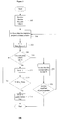
- the service request 208 is received by the configurable application processor 204.
- the introspection engine 212 analyses the service request 208, at step 304, to determine its properties or characteristics. As indicated above, the introspection engine 212 preferably uses the introspection or reflection facilities of the Java programming language to identify the characteristics or properties of the service request 208.
- a count, X is set to 1 at step 306. Also a constant, Max_Rules, is set to a value equal to the number of rules of the prioritised rules 218.
- step 311 it is determined whether or not the service corresponding to rule X invoked at step 310 modified the service request 208. If the determination at step 311 is positive, the modified service request object is analysed at step 304 where processing continues as previously described but using the modified service request object characteristics or properties.
Landscapes
- Engineering & Computer Science (AREA)
- Software Systems (AREA)
- Theoretical Computer Science (AREA)
- Physics & Mathematics (AREA)
- General Engineering & Computer Science (AREA)
- General Physics & Mathematics (AREA)
- Computer Networks & Wireless Communication (AREA)
- Signal Processing (AREA)
- Computer Security & Cryptography (AREA)
- Computer And Data Communications (AREA)
- Data Exchanges In Wide-Area Networks (AREA)
Priority Applications (2)
| Application Number | Priority Date | Filing Date | Title |
|---|---|---|---|
| EP03291898A EP1503285A1 (de) | 2003-07-30 | 2003-07-30 | Kommunikationssystem und Verfahren |
| US10/909,268 US20050063417A1 (en) | 2003-07-30 | 2004-07-29 | Communication system and method |
Applications Claiming Priority (1)
| Application Number | Priority Date | Filing Date | Title |
|---|---|---|---|
| EP03291898A EP1503285A1 (de) | 2003-07-30 | 2003-07-30 | Kommunikationssystem und Verfahren |
Publications (1)
| Publication Number | Publication Date |
|---|---|
| EP1503285A1 true EP1503285A1 (de) | 2005-02-02 |
Family
ID=33522463
Family Applications (1)
| Application Number | Title | Priority Date | Filing Date |
|---|---|---|---|
| EP03291898A Withdrawn EP1503285A1 (de) | 2003-07-30 | 2003-07-30 | Kommunikationssystem und Verfahren |
Country Status (2)
| Country | Link |
|---|---|
| US (1) | US20050063417A1 (de) |
| EP (1) | EP1503285A1 (de) |
Families Citing this family (4)
| Publication number | Priority date | Publication date | Assignee | Title |
|---|---|---|---|---|
| US8170539B2 (en) * | 2006-05-30 | 2012-05-01 | Hewlett-Packard Development Company, L.P. | Messaging with proprietary attributes |
| EP2656598B1 (de) * | 2010-12-20 | 2018-08-08 | Telefonaktiebolaget LM Ericsson (publ) | Verfahren zur auswahl eines zusammengesetzten dienstes aus einer mehrzahl von zusammengesetzten diensten |
| US9804890B1 (en) * | 2013-02-15 | 2017-10-31 | Amazon Technologies, Inc. | Termination policies for scaling compute resources |
| EP4014572A4 (de) * | 2019-08-15 | 2023-08-09 | Telefonaktiebolaget Lm Ericsson (Publ) | Verfahren und vorrichtung zur entdeckung eines netzwerkfunktionsdienstes |
Citations (6)
| Publication number | Priority date | Publication date | Assignee | Title |
|---|---|---|---|---|
| US5204939A (en) * | 1989-12-14 | 1993-04-20 | Fujitsu Limited | Rule base processing system and rule evaluation control method therein |
| US5893911A (en) * | 1996-04-17 | 1999-04-13 | Neon Software, Inc. | Method for defining and applying rules for message distribution for transaction processing in a distributed application |
| US6256771B1 (en) * | 1997-10-16 | 2001-07-03 | At&T Corp. | Method and apparatus for providing a dynamic service composition software architecture |
| WO2001056234A1 (en) * | 2000-01-28 | 2001-08-02 | Softwired Inc. | Messaging system |
| US20020143934A1 (en) * | 2000-09-28 | 2002-10-03 | Barker Geoffrey T. | System and method for providing configurable security monitoring utilizing an integrated information system |
| US20020173295A1 (en) * | 2001-05-15 | 2002-11-21 | Petri Nykanen | Context sensitive web services |
Family Cites Families (5)
| Publication number | Priority date | Publication date | Assignee | Title |
|---|---|---|---|---|
| US6311151B1 (en) * | 1999-07-28 | 2001-10-30 | International Business Machines Corporation | System, program, and method for performing contextual software translations |
| EP1379983A2 (de) * | 2001-02-23 | 2004-01-14 | Mobilitec, Inc. | System und verfahren zur gebührenerfassung für die gerichtete bereitstellung von benutzeranwendungen an geräten mit eingeschränkten betriebsmitteln |
| US6781962B1 (en) * | 2002-02-26 | 2004-08-24 | Jetque | Apparatus and method for voice message control |
| US20030172291A1 (en) * | 2002-03-08 | 2003-09-11 | Paul Judge | Systems and methods for automated whitelisting in monitored communications |
| US7062564B2 (en) * | 2002-09-13 | 2006-06-13 | Cingular Wireless Ii, Llc | Systems and methods for an e-mail clearing house |
-
2003
- 2003-07-30 EP EP03291898A patent/EP1503285A1/de not_active Withdrawn
-
2004
- 2004-07-29 US US10/909,268 patent/US20050063417A1/en not_active Abandoned
Patent Citations (6)
| Publication number | Priority date | Publication date | Assignee | Title |
|---|---|---|---|---|
| US5204939A (en) * | 1989-12-14 | 1993-04-20 | Fujitsu Limited | Rule base processing system and rule evaluation control method therein |
| US5893911A (en) * | 1996-04-17 | 1999-04-13 | Neon Software, Inc. | Method for defining and applying rules for message distribution for transaction processing in a distributed application |
| US6256771B1 (en) * | 1997-10-16 | 2001-07-03 | At&T Corp. | Method and apparatus for providing a dynamic service composition software architecture |
| WO2001056234A1 (en) * | 2000-01-28 | 2001-08-02 | Softwired Inc. | Messaging system |
| US20020143934A1 (en) * | 2000-09-28 | 2002-10-03 | Barker Geoffrey T. | System and method for providing configurable security monitoring utilizing an integrated information system |
| US20020173295A1 (en) * | 2001-05-15 | 2002-11-21 | Petri Nykanen | Context sensitive web services |
Also Published As
| Publication number | Publication date |
|---|---|
| US20050063417A1 (en) | 2005-03-24 |
Similar Documents
| Publication | Publication Date | Title |
|---|---|---|
| US5983217A (en) | Apparatus and method for querying replicated databases | |
| CN101656928B (zh) | 短消息处理方法、系统及组装程序单元 | |
| WO1999029128A1 (en) | Remote procedure calls using short message service | |
| WO1999016227A2 (en) | Generic wireless telecommunications system | |
| CN111865881A (zh) | 一种接口转换方法、装置、介质及计算机设备 | |
| US7212621B1 (en) | Feature interactions | |
| WO1999009723A2 (en) | Method for implementing programmable transaction capabilities application part (tcap) protocol | |
| CA2125239A1 (en) | Network service provisioning | |
| JP2004519168A (ja) | 統合化された通信サーバおよび方法 | |
| US6504852B1 (en) | Intelligent gateway between a service control point and a signalling network | |
| EP1503285A1 (de) | Kommunikationssystem und Verfahren | |
| US8904000B2 (en) | Provision of services over a common delivery platform such as a mobile telephony network | |
| CN117289906A (zh) | 低代码应用开发方法、设备及介质 | |
| JP4473119B2 (ja) | 音声xmlを用いて電話サービス機能を実施する方法およびシステム | |
| CN105100117B (zh) | 一种用于访问组合服务的方法及装置 | |
| US7924838B1 (en) | Advanced service architecture for next generation network services and intelligent data network router | |
| US7813491B2 (en) | AIN query redirection | |
| US7085821B2 (en) | TCAP event processing environment | |
| Blair et al. | Handling policy conflicts in call control | |
| CN1946197B (zh) | 用于合成全局码转换的ss7电信节点及方法 | |
| CN115357298B (zh) | 第三方接口的调用方法、处理器及存储介质 | |
| US7249178B2 (en) | Non-intrusive recursive dispatching of nested service collections for aggregating web services | |
| WO2000038397A1 (en) | System and method for adding services to computer telephone systems | |
| WO2003107691A1 (en) | Service logic context cache for signaling events | |
| US7356038B2 (en) | Systems and method for a communications broker |
Legal Events
| Date | Code | Title | Description |
|---|---|---|---|
| PUAI | Public reference made under article 153(3) epc to a published international application that has entered the european phase |
Free format text: ORIGINAL CODE: 0009012 |
|
| AK | Designated contracting states |
Kind code of ref document: A1 Designated state(s): AT BE BG CH CY CZ DE DK EE ES FI FR GB GR HU IE IT LI LU MC NL PT RO SE SI SK TR |
|
| AX | Request for extension of the european patent |
Extension state: AL LT LV MK |
|
| 17P | Request for examination filed |
Effective date: 20050712 |
|
| AKX | Designation fees paid |
Designated state(s): AT BE BG CH CY CZ DE DK EE ES FI FR GB GR HU IE IT LI LU MC NL PT RO SE SI SK TR |
|
| 17Q | First examination report despatched |
Effective date: 20051129 |
|
| GRAP | Despatch of communication of intention to grant a patent |
Free format text: ORIGINAL CODE: EPIDOSNIGR1 |
|
| STAA | Information on the status of an ep patent application or granted ep patent |
Free format text: STATUS: THE APPLICATION IS DEEMED TO BE WITHDRAWN |
|
| 18D | Application deemed to be withdrawn |
Effective date: 20090203 |